



Bantu knots on relaxed hair can look sharp in a way that feels almost tailored. They can also go sideways fast if the sections are sloppy or the base is pulled too tight.
Relaxed hair changes the rules a little. The strands usually have less spring than natural hair, and the line where new growth meets straightened lengths can be a weak spot if you yank on it. That’s why the prettiest relaxed-hair knot styles are rarely the tightest ones. They’re the ones with clean parts, smart section sizes, and enough product to hold the shape without turning the hair stiff or flaky.
I’ve always thought the best Bantu knot styles are the ones that look deliberate from every angle. Not fussy. Not crunchy. Just neat, balanced, and secure enough to survive a busy day, a scarf at bedtime, or a full take-down for curls later on. The styles below lean into that balance, and they each solve a different problem — too much volume, not enough lift, awkward parts, a special event, a rushed morning, or hair that needs a little extra kindness.
1. Clean Center-Part Bantu Knots for Relaxed Hair
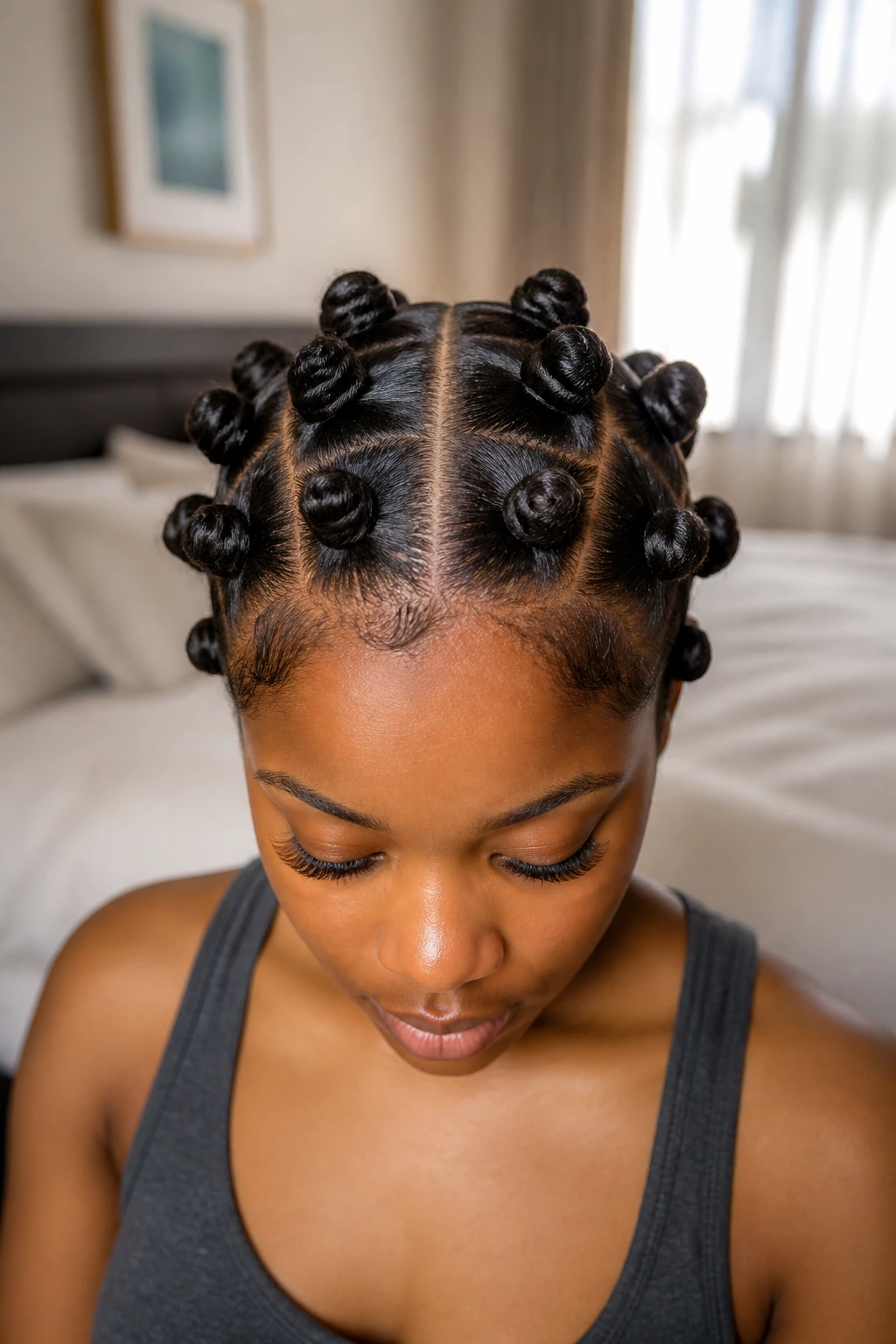
A center part is the calmest way to wear Bantu knots on relaxed hair, and it’s the one I’d hand to someone who wants a clean finish without a lot of drama. The symmetry does most of the work. When the part runs straight from forehead to nape, the knots fall into a pattern that looks planned even if the sections are small and simple.
The trick is to keep the parts crisp and the sections even. On relaxed hair, that matters more than people think. Uneven sections make the style feel lopsided, and lopsided knots tend to sag at different rates as the day goes on.
What to watch for: a rat-tail comb, a light setting foam, and a mirror that lets you check the back. The hair should feel smooth but not slippery. If it’s coated in too much oil, the knots can loosen before they set.
A clean center part also gives you options later. Wear the knots as-is, or take them down after a few hours for soft, bouncy curls with a neat frame around the face.
2. Deep Side-Part Bantu Knots
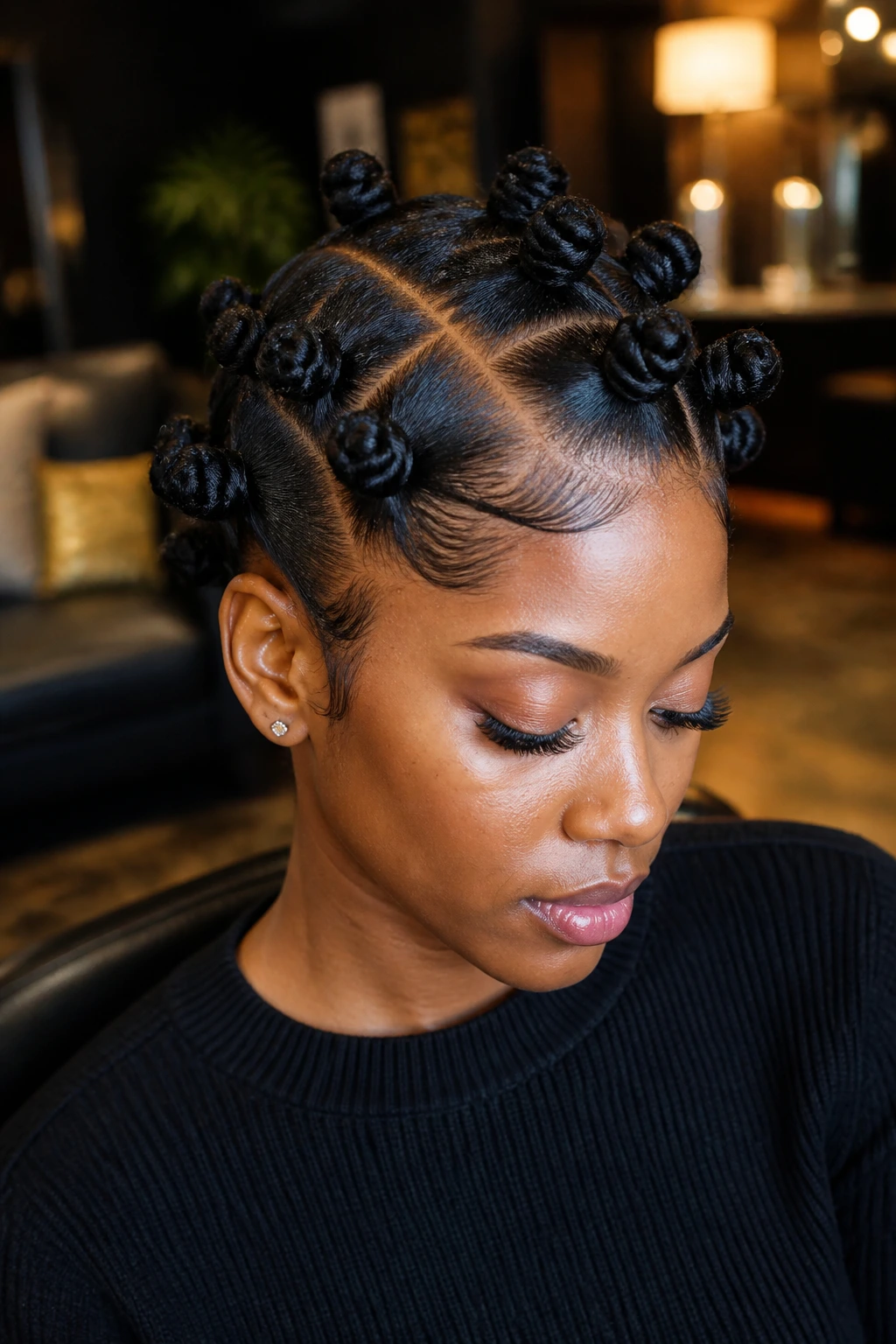
A deep side part changes the whole mood. It gives relaxed-hair Bantu knots a little attitude, and I like that the shape feels less rigid than a straight-down-the-middle layout. One side gets more visual weight, so the knots look fuller even when the sections stay medium-sized.
This works especially well if your relaxed hair lies flat at the roots. A deep part creates lift where you need it, and the front knot on the heavier side can sit slightly forward for a more polished line. Don’t make the part too jagged. A strong side part should look clean, not choppy.
The best versions keep the knots close enough to the scalp to hold their shape, but not so tight that the temples feel pulled. That’s a bad trade. You want the style to frame the face, not tug at it.
If you like a little asymmetry, this is a smart place to start. It reads bold without asking for a lot of extra work.
3. Jumbo Bantu Knots
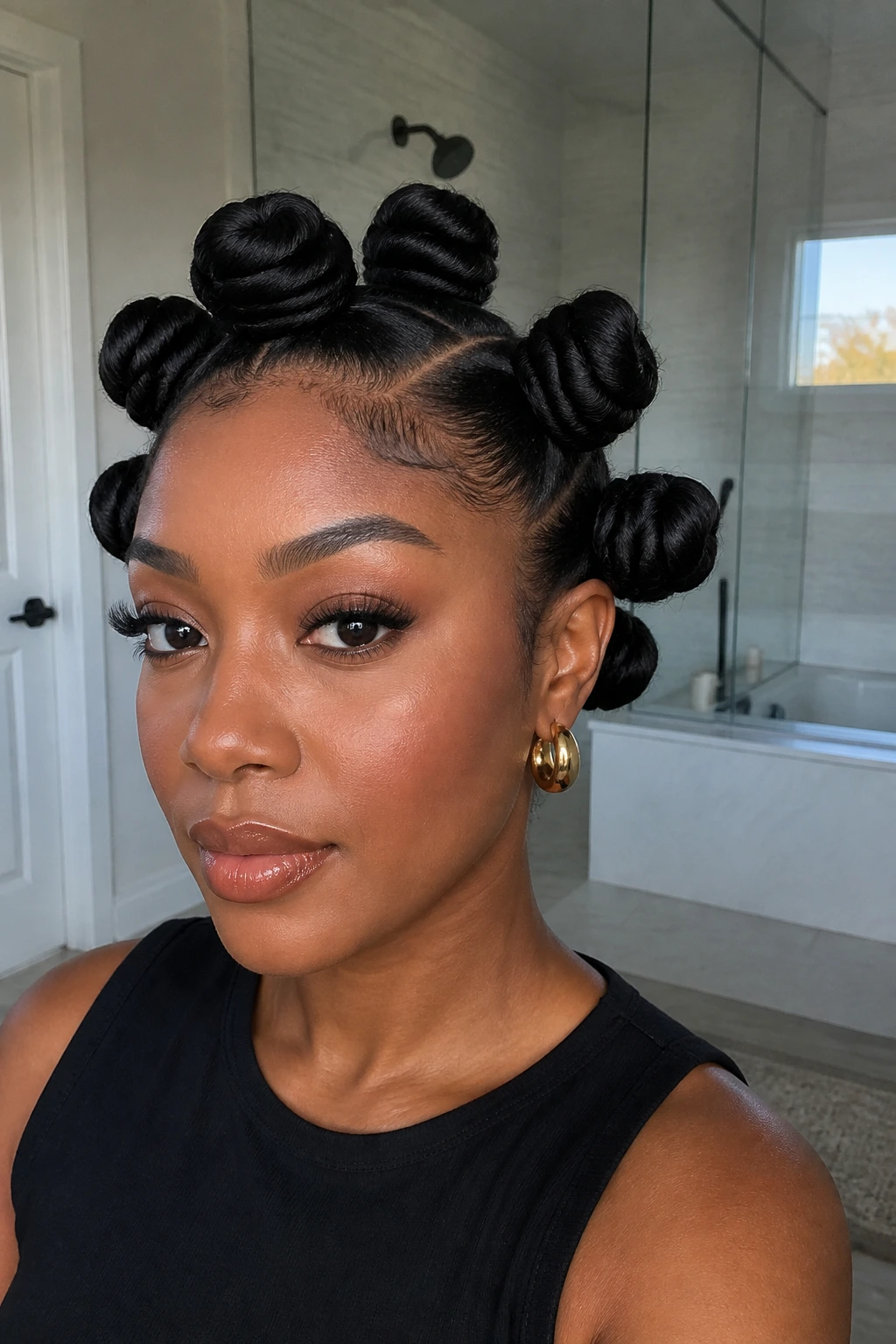
Jumbo knots are for days when you want the style to look big and sculpted instead of tiny and detailed. On relaxed hair, that can be a smart move because larger sections are often easier to handle and less likely to fray at the ends while you twist. Less fuss. More shape.
The downside is simple: jumbo knots need a strong base. If the sections are too loose, they flatten fast. If they’re too tight, the scalp complains. I usually think in terms of walnut- to golf-ball-sized sections, depending on density and length. That’s a useful range, not a law.
Best for: thicker relaxed hair, shoulder-length cuts, and anyone who wants the knots to be visible from across the room.
Jumbo knots also take product differently. A light mousse or setting lotion usually gives enough grip without leaving the hair sticky. Heavy cream can make these collapse at the roots, and that ruins the shape.
4. Mini Bantu Knots
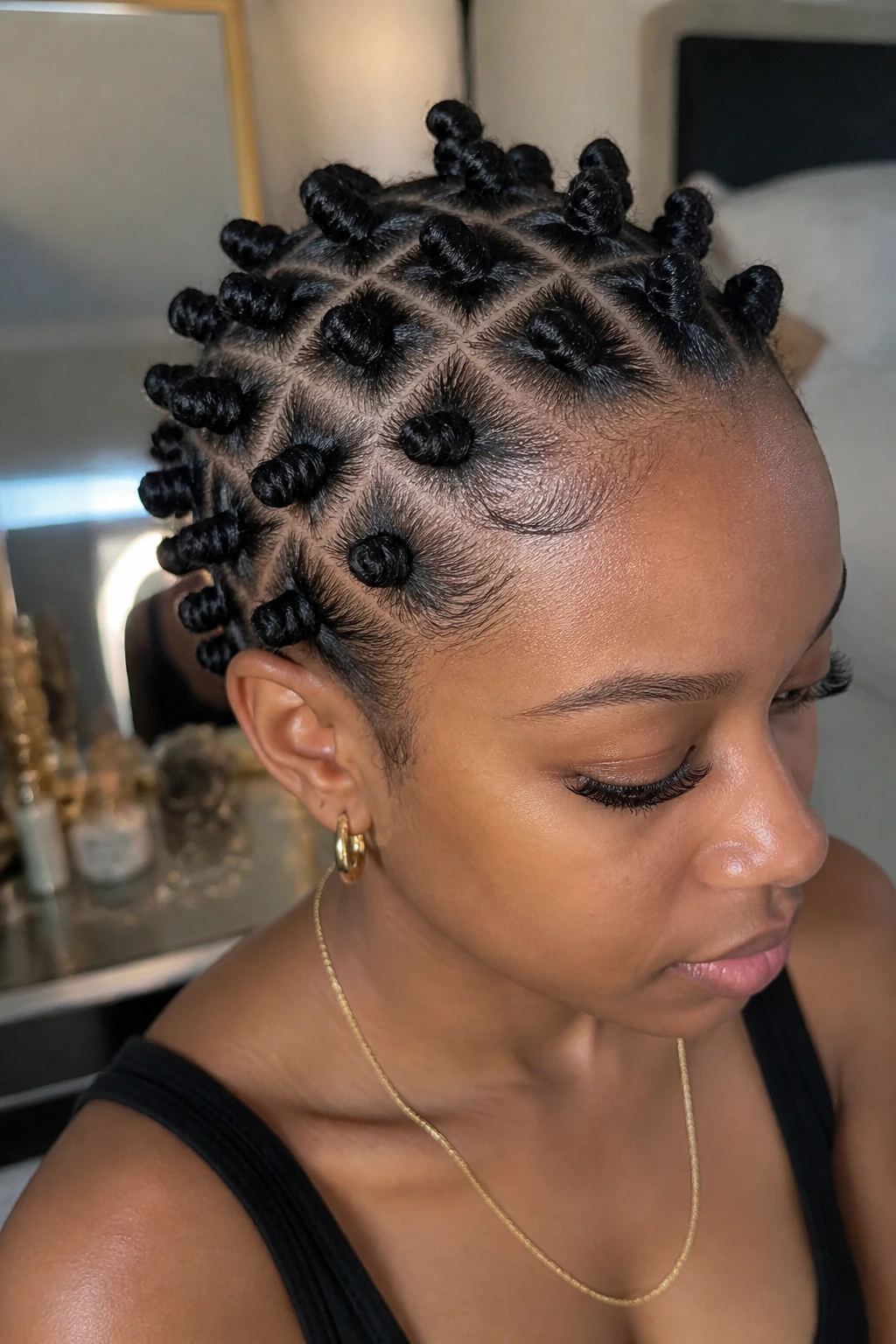
Mini knots are tiny, neat, and a little bit demanding. They look fantastic on relaxed hair when you want detail, shine, and a style that keeps the hair tucked in close. The smaller the section, the more precise the parting needs to be. No shortcuts there.
I like mini knots best on hair that’s already stretched a bit, because very soft, freshly relaxed strands can slip if the section is too small and too slick. A touch of setting mousse helps, but keep the product light. If the hair feels gummy, the knots won’t hold the way they should.
- Use a comb tail for parts about the width of a pencil.
- Smooth each section with your fingers before twisting.
- Keep the base flat so the knot sits neatly.
- Finish with a satin scarf for 10 to 15 minutes.
Mini knots aren’t the fastest style in the bunch. They take time. But they also give one of the cleanest take-down curls if you plan to wear the style out later.
5. Half-Up, Half-Down Bantu Knots
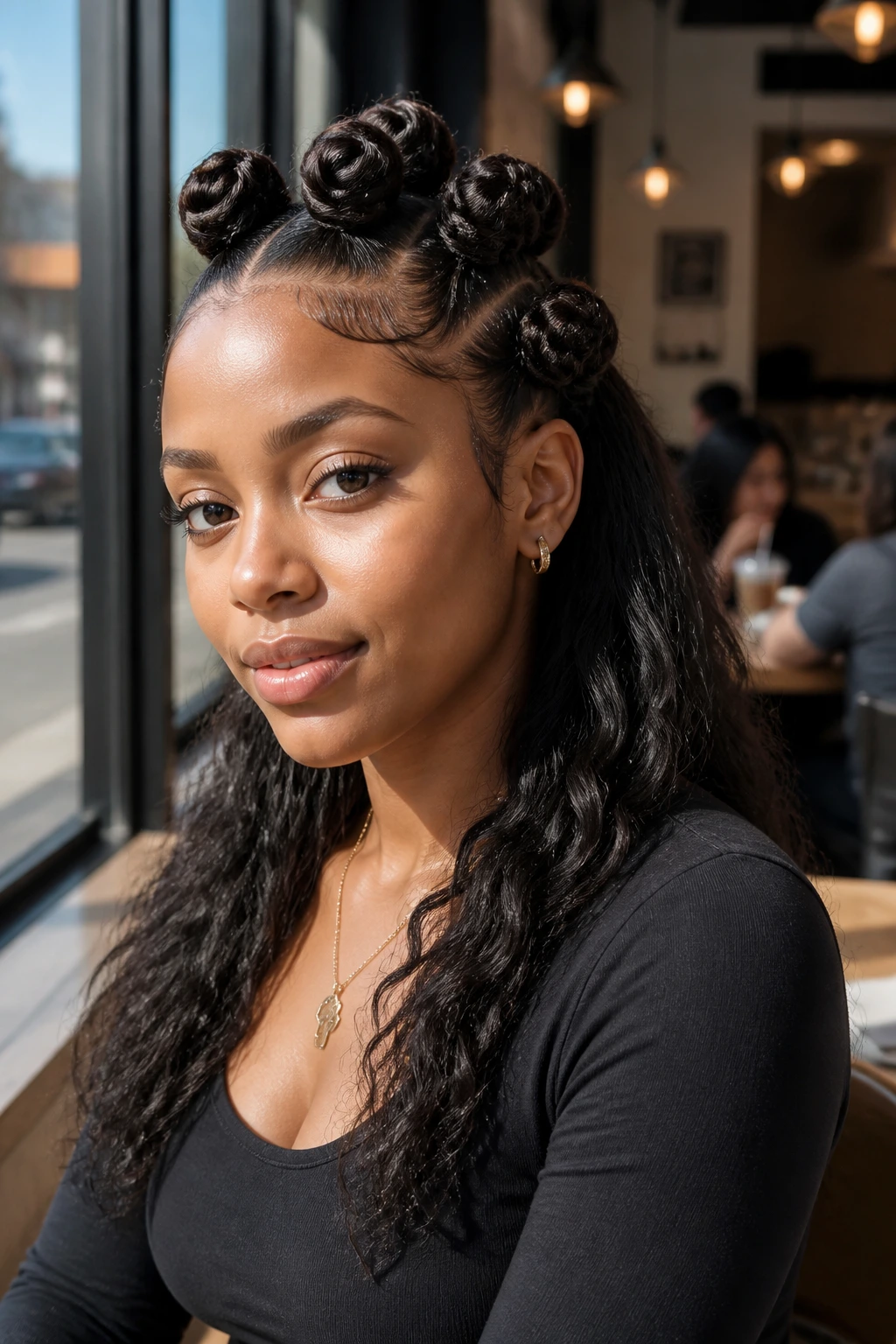
A half-up look is one of my favorite ways to wear Bantu knots on relaxed hair because it gives you shape without putting every strand up at once. The front and crown do the styling heavy lifting, while the back stays free. That makes the style feel lighter, especially if your hair is medium to long.
The front knots can be medium or jumbo, depending on how dramatic you want the top half to feel. The back can stay straight, curled, or lightly stretched. I like this style most when the front section has a crisp part and the back has a soft curve, because the contrast keeps it from looking stiff.
It’s also kinder on busy mornings. You can refresh the front with a little water and mousse, then leave the back alone. That’s a nice deal when you don’t want to remake the whole head.
If you wear a side part in the back, the style gets a little more movement. If you wear it center-parted, it looks sharper. Both work.
6. Crown Halo Bantu Knots
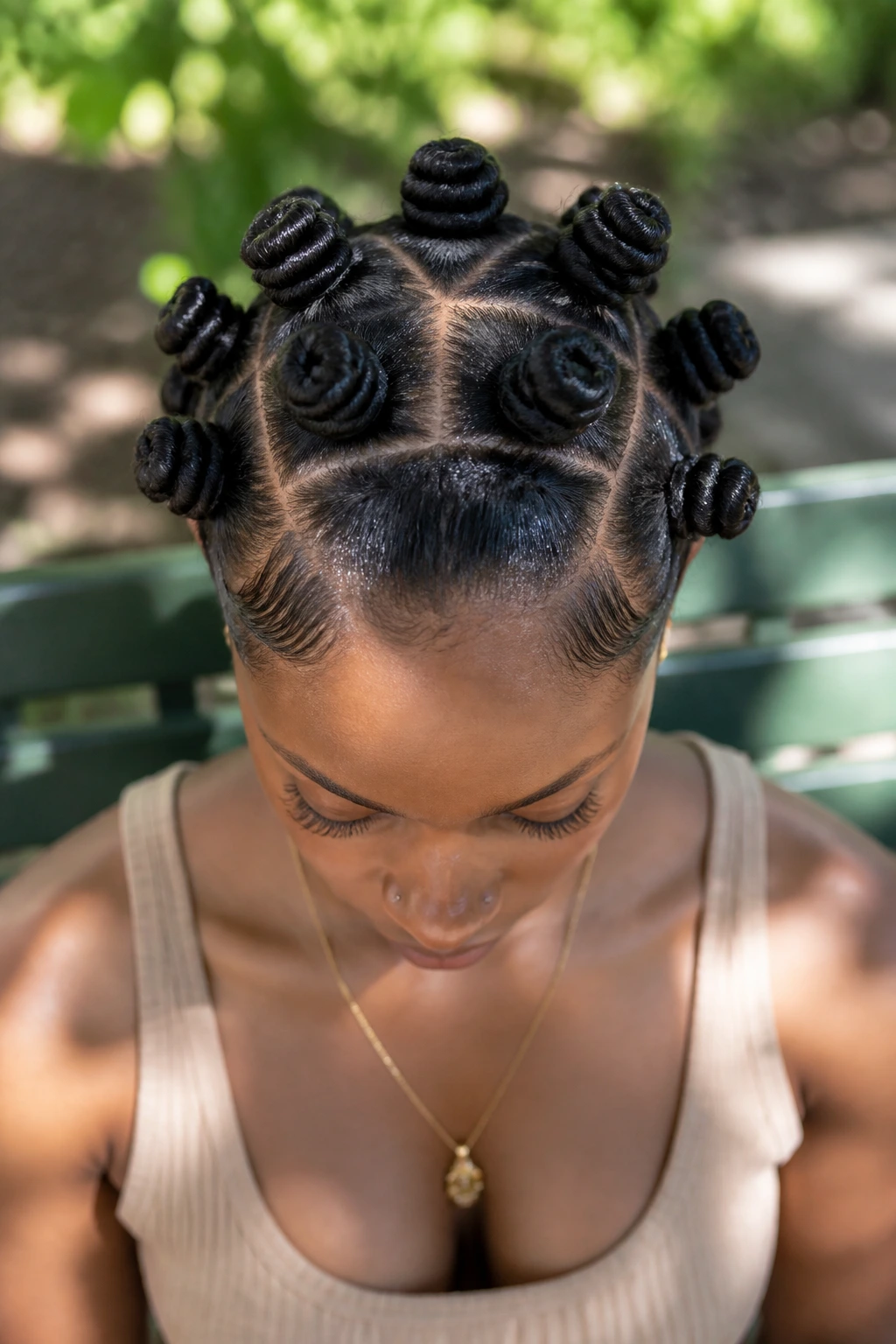
Crown halo knots wrap the eye around the head in a circle, and that shape flatters relaxed hair more than people expect. The style pulls attention upward, which is useful when you want height without teasing or a lot of product. It also keeps the ends tucked away in a way that feels tidy.
The layout matters here. Instead of placing knots in straight rows, angle them around the crown so the front ones sit a little higher and the side knots taper back toward the nape. That curved path gives the style its halo effect. Straight rows don’t do the same thing. They look fine, but they lose the softness.
This is a good choice for special occasions or for days when you want the face to feel open. Add a small earring, a bold lip, and the whole style comes alive without extra effort.
One small warning: keep the knots evenly spaced. A halo only works when the circle feels intentional. If one side is crowded, the shape breaks.
7. Bantu Knots with Braided Bases
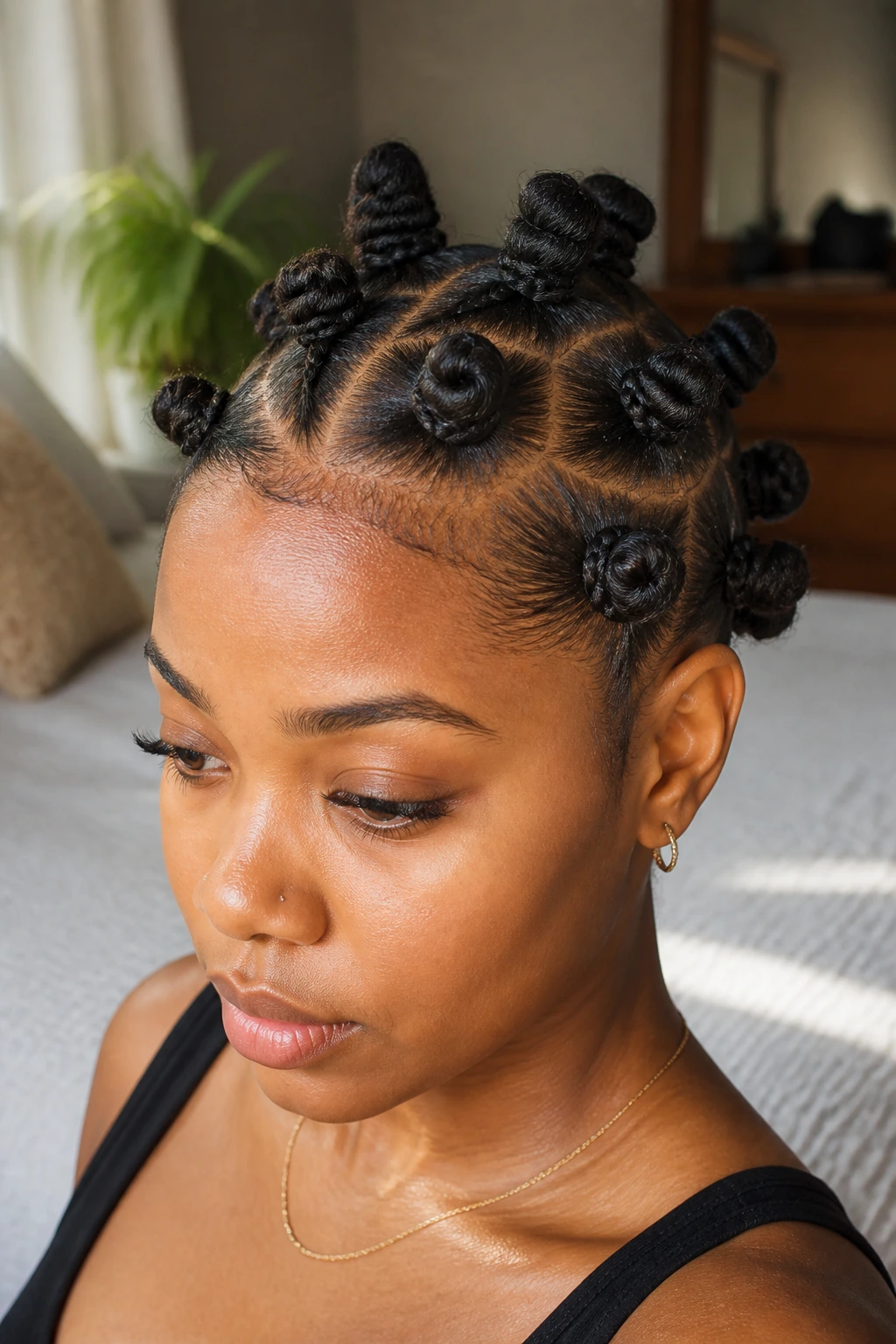
Braiding the base before you form each knot changes the whole texture of the style. It gives relaxed hair a stronger foundation, which is useful if your strands are fine or if the ends slip when you try to twist straight into a knot. The braid acts like a little anchor.
Why the Braid Helps
A short three-strand braid at the root adds grip where relaxed hair sometimes needs it most. The knot sits on top of that braid, so the style stays neater and holds better overnight. It also gives the finished look a bit more detail, even when the knots are small.
How I’d Wear It
- Braid each section for 1 to 2 inches.
- Stop before the ends start to fray.
- Coil the braided length into a knot at the base.
- Seal the look with a dab of mousse, not a heavy cream.
This version is especially useful if you’re planning to take the knots down later. The braid can create a prettier curl pattern and a little extra bend at the roots. That’s a bonus, not a gimmick.
8. Sleek Back-Swept Bantu Knots for Relaxed Hair
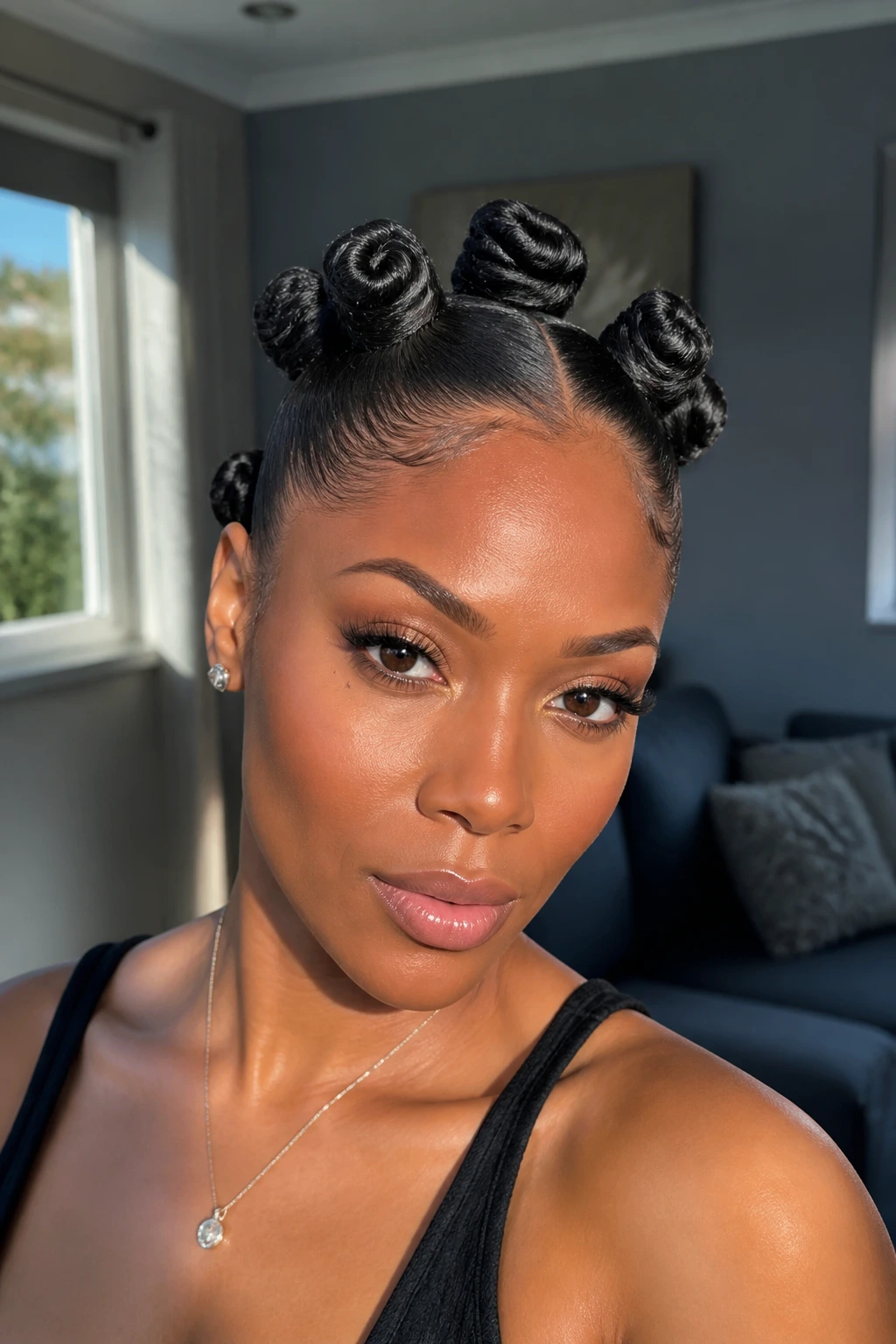
Sleek back-swept knots have a cleaner, more dressed-up feel than center-part versions. The hair is smoothed backward from the hairline, so the front stays flat and the knots become the main event. On relaxed hair, that can look polished fast, which is half the appeal.
The real job here is the surface prep. A little gel at the front, brushed back with a soft-bristle brush, gives the style a smooth finish. Don’t drown the roots. Too much gel turns the hair hard and sticky, and then the knots lose their soft edge.
I like this style for evenings because it leaves the forehead open and makes cheekbones stand out. It also behaves well under a scarf or hood, which is underrated. Some styles fall apart the second you leave the mirror. This one usually doesn’t.
If your hairline is delicate, keep the tension low. The look should be sleek, not strained.
9. Zigzag-Part Bantu Knots
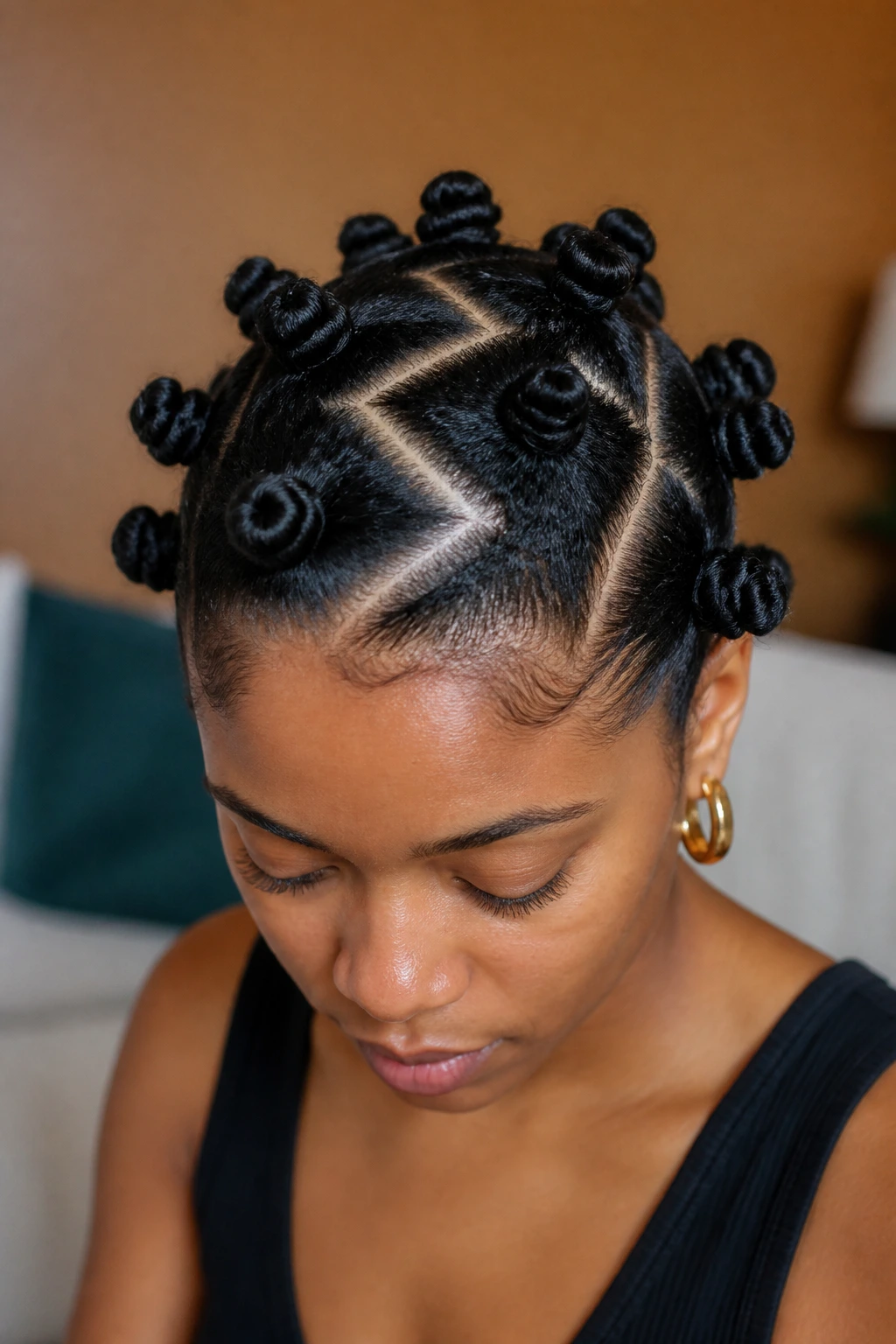
A zigzag part makes Bantu knots feel playful without turning childish. The pattern breaks up the straight lines and gives relaxed hair a little movement at the scalp, which is useful if your hair lies flat and you want the style to look fuller.
The parting takes patience. A rat-tail comb and a steady hand matter more than a lot of product here. Once the zigzag line is set, the knots can be medium or small, depending on how dramatic you want the finish. I usually lean medium because tiny knots can make the parting work harder than the style itself.
- Keep the zigzag shallow if your hair is fine.
- Use clips to hold each section while you work.
- Smooth the roots before twisting.
- Check the pattern from above before moving on.
This is one of those styles that looks more expensive than it actually is, because the parting does the visual heavy lifting. Nice payoff. Not much extra hair stress.
10. Two-Row Bantu Knots
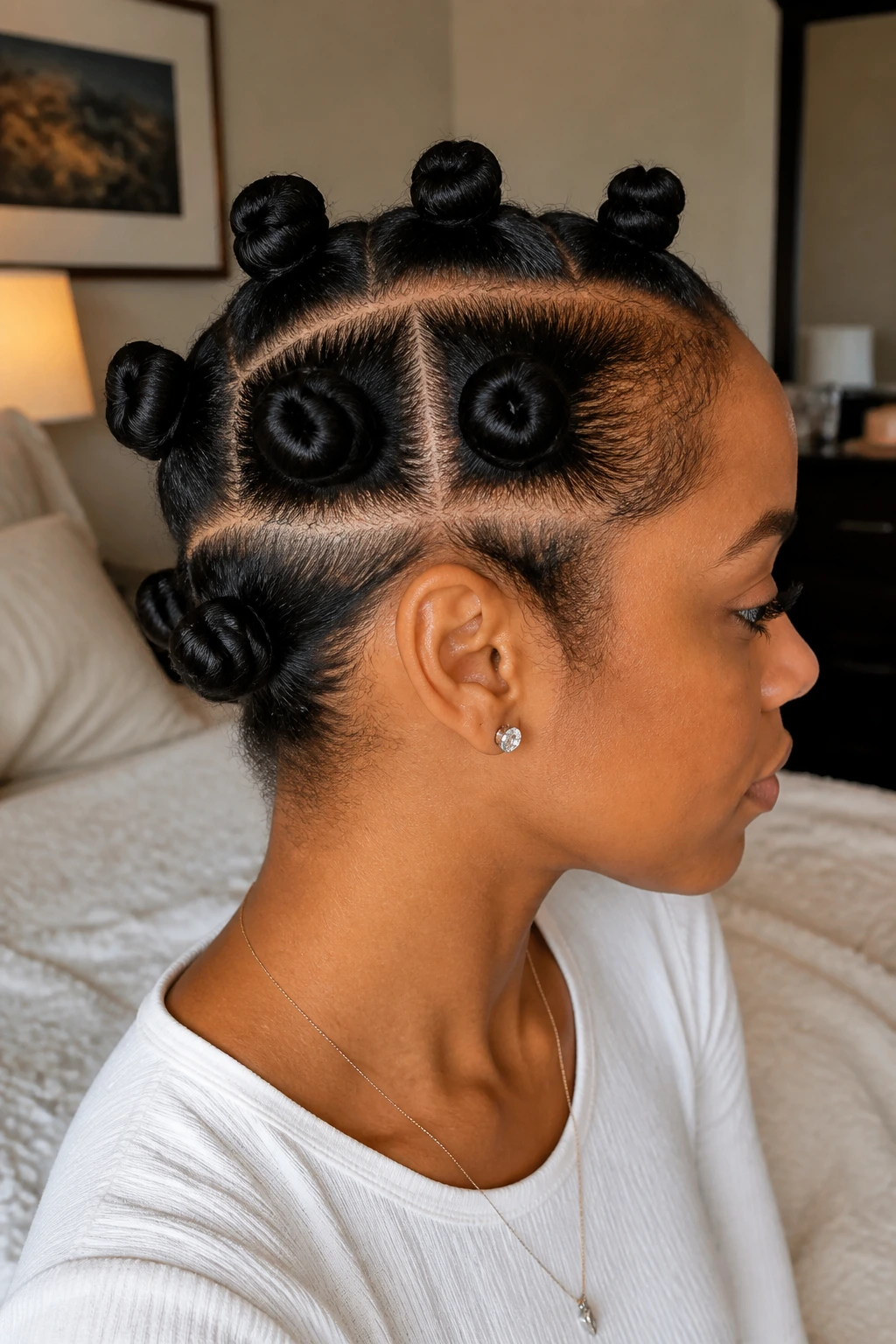
Two rows are a clean answer when you want Bantu knots but don’t want the whole head packed tight. The style leaves space between the rows, which makes relaxed hair feel lighter and gives the eye room to rest. It’s a strong option for shorter relaxed cuts too, since you don’t need a ton of length to make it work.
The top row usually sits closer to the crown, while the lower row runs across the back or near the nape. You can keep both rows the same size, or make the top row slightly smaller so the style doesn’t tip too far upward. I prefer that small size shift. It keeps the shape balanced.
This style is practical when you’re testing how Bantu knots suit your face. You get the shape, the texture, and the hold without committing to a full head of sections. That makes it easier to live with if your scalp is touchy.
A neat two-row set also looks good when the back is tucked into a low ponytail. Clean. Easy. No fuss.
11. Asymmetrical Bantu Knots
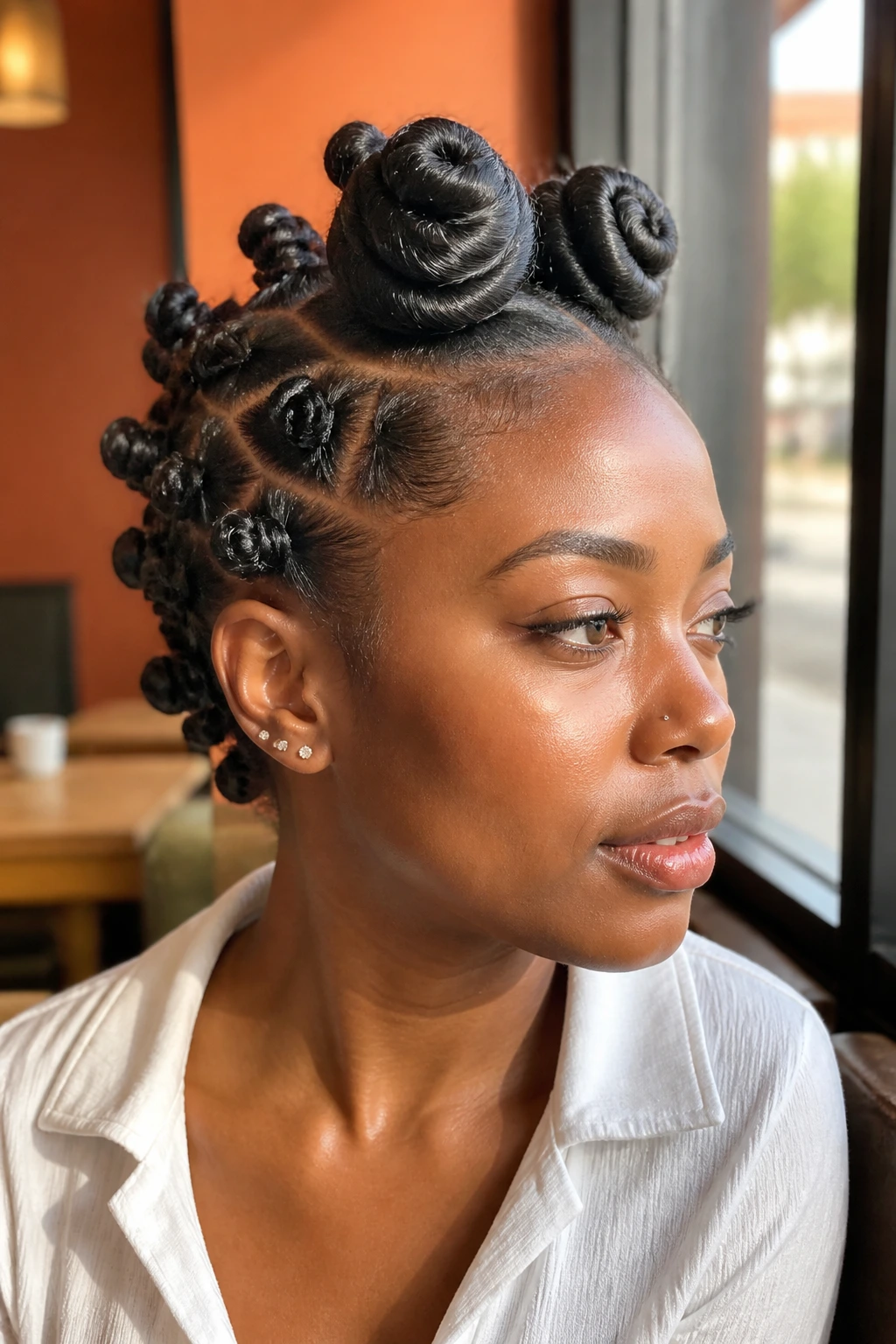
Asymmetry can save a style that feels too neat. One side with more knots, or larger knots, makes relaxed hair look modern without needing a lot of accessories. It’s a useful trick when your parting is off by a little or when the hair naturally sits heavier on one side anyway.
The shape should feel intentional, though. That’s the part people miss. Random imbalance looks unfinished. Deliberate imbalance looks styled. Put the larger knots where you want the eye to land, usually near the front or along the side with more face framing.
This style works well if one side of your hair is denser or slightly longer. Instead of fighting that difference, use it. I like a deeper side with three medium knots and a lighter side with four smaller ones. The contrast feels alive.
No need to over-accessorize here. The asymmetry is the point. Keep the finish smooth and let the shape do the talking.
12. Bantu Knots with Gold Cuffs
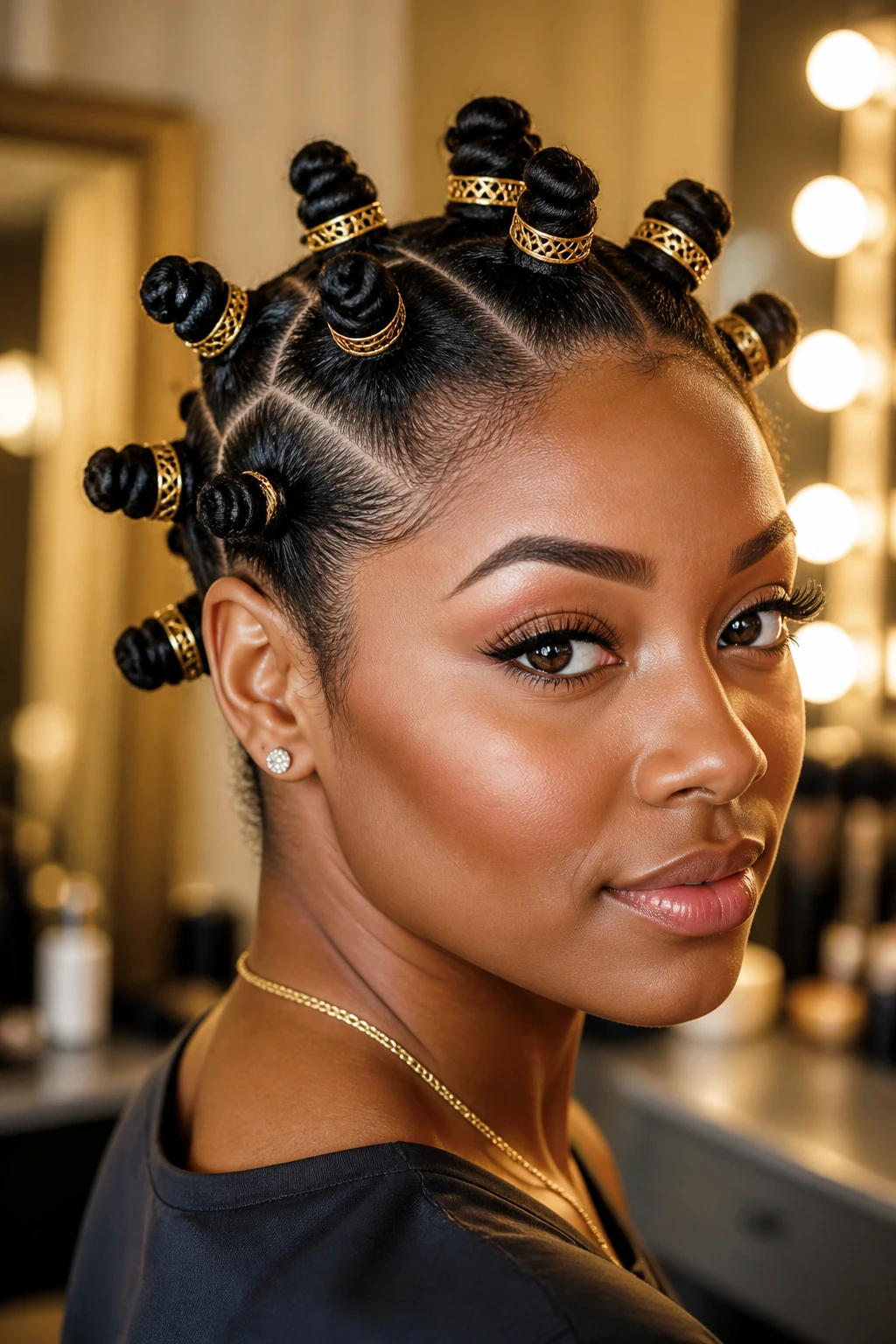
Gold cuffs turn plain knots into something sharper, and they do it fast. On relaxed hair, that matters because the hair itself already gives you a smooth surface. A few cuffs can add shine and structure without adding bulk.
The key is restraint. One cuff per knot is usually enough. Too many and the style starts to look crowded. I like placing the cuffs on the front knots or on the knots closest to the face, because that’s where the light hits first and where the detail reads best.
- Choose cuffs that open and close easily.
- Place them after the knots are fully set.
- Keep them away from the ends if the hair is fragile.
- Match the metal tone to your earrings or belt for a cleaner look.
This style is good when you want the knots to feel dressed up without changing the actual technique. It’s a small edit, but it changes the whole read of the style.
13. Glossy Knots with Smoothed Edges
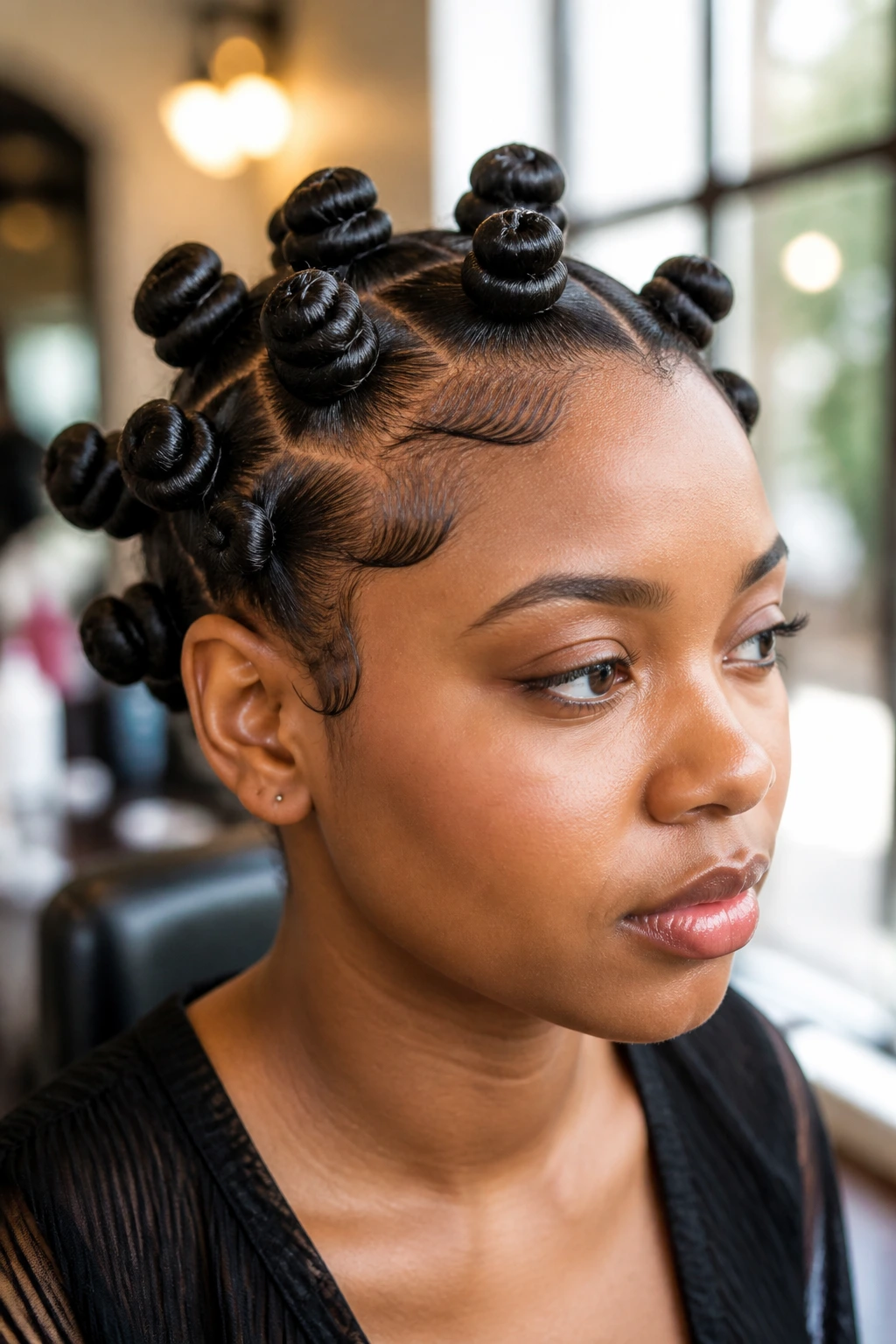
Glossy knots have a neat, finished look that relaxed hair wears well. The shine makes the parts look cleaner and the knots themselves look more sculpted. I’m talking about healthy-looking sheen, not wet, sticky hair. There’s a difference, and you can spot it from a mile away.
The edges matter here. Use a small brush and a tiny amount of edge control or gel to smooth the hairline, then leave the rest of the knot soft. If you smooth everything, the style can look flat and hard. A better move is to polish the front and let the body keep its shape.
This style is a good choice for photos, events, or any day when your hair needs to look finished with minimal extra drama. It’s also one of the easier ways to make relaxed hair look intentional after a long week.
A little shine goes a long way. Too much product does not.
14. Flat-Twist and Knot Combo
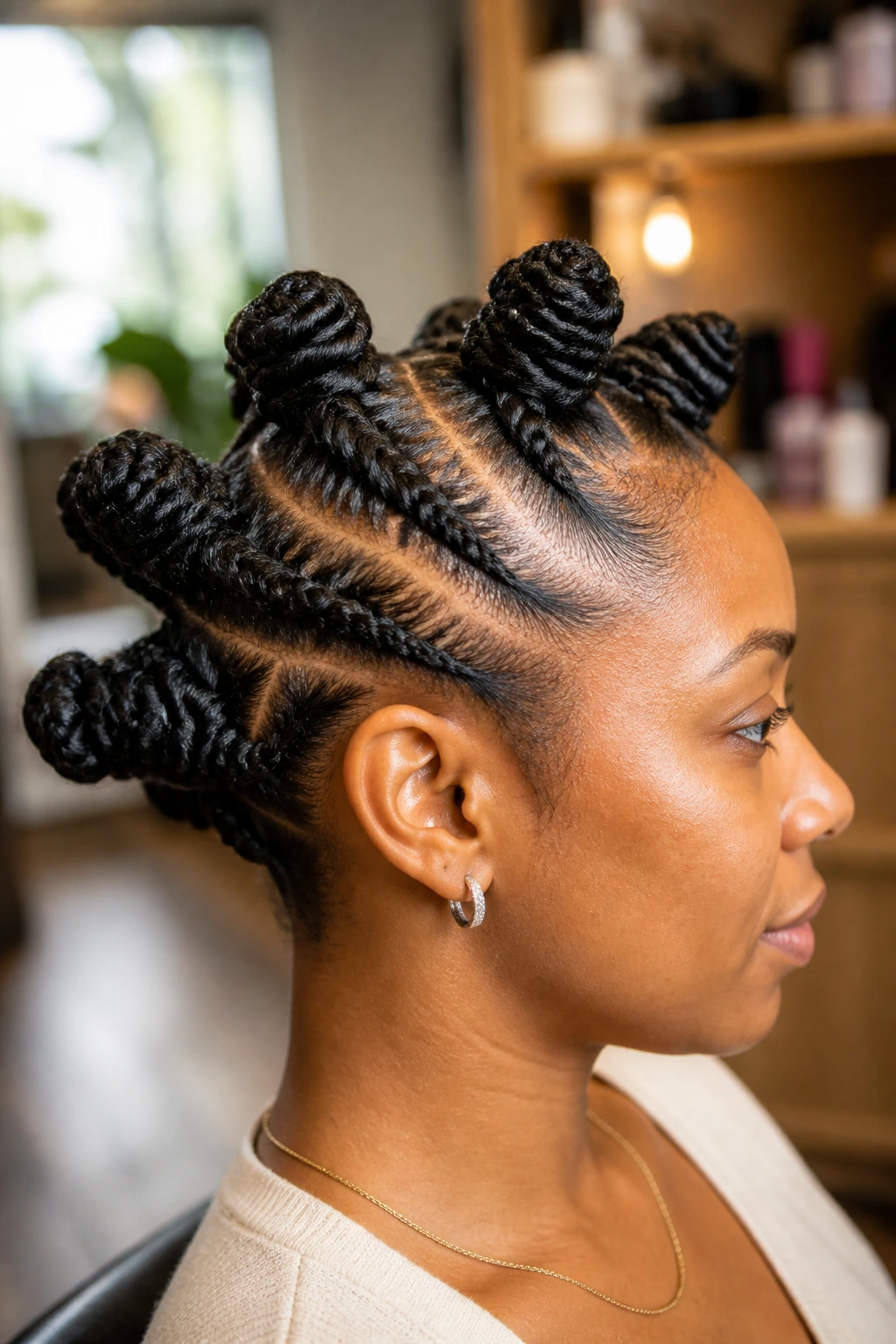
A flat-twist base gives this style a richer texture than a plain part-and-knot set. Instead of going straight from section to knot, the hair is twisted close to the scalp first, then coiled into the Bantu knot. That small change makes relaxed hair look fuller at the roots and adds a nice pattern when you view the style from the side.
How to Build It
Start with a clean part, then flat-twist each section for the first inch or two. Stop once the hair is snug against the scalp. From there, coil the remaining length into a knot and tuck the ends underneath. The twist should lie flat. If it puffs up, the knot can feel bulky.
This combo works well when you want a style that holds up for more than one wear. The twist keeps the root neat, and the knot keeps the ends protected. It’s a solid option for weekend styling when you want more detail than a simple knot gives you.
It does take more time. Worth it, though.
15. Low-Nape Bantu Knots
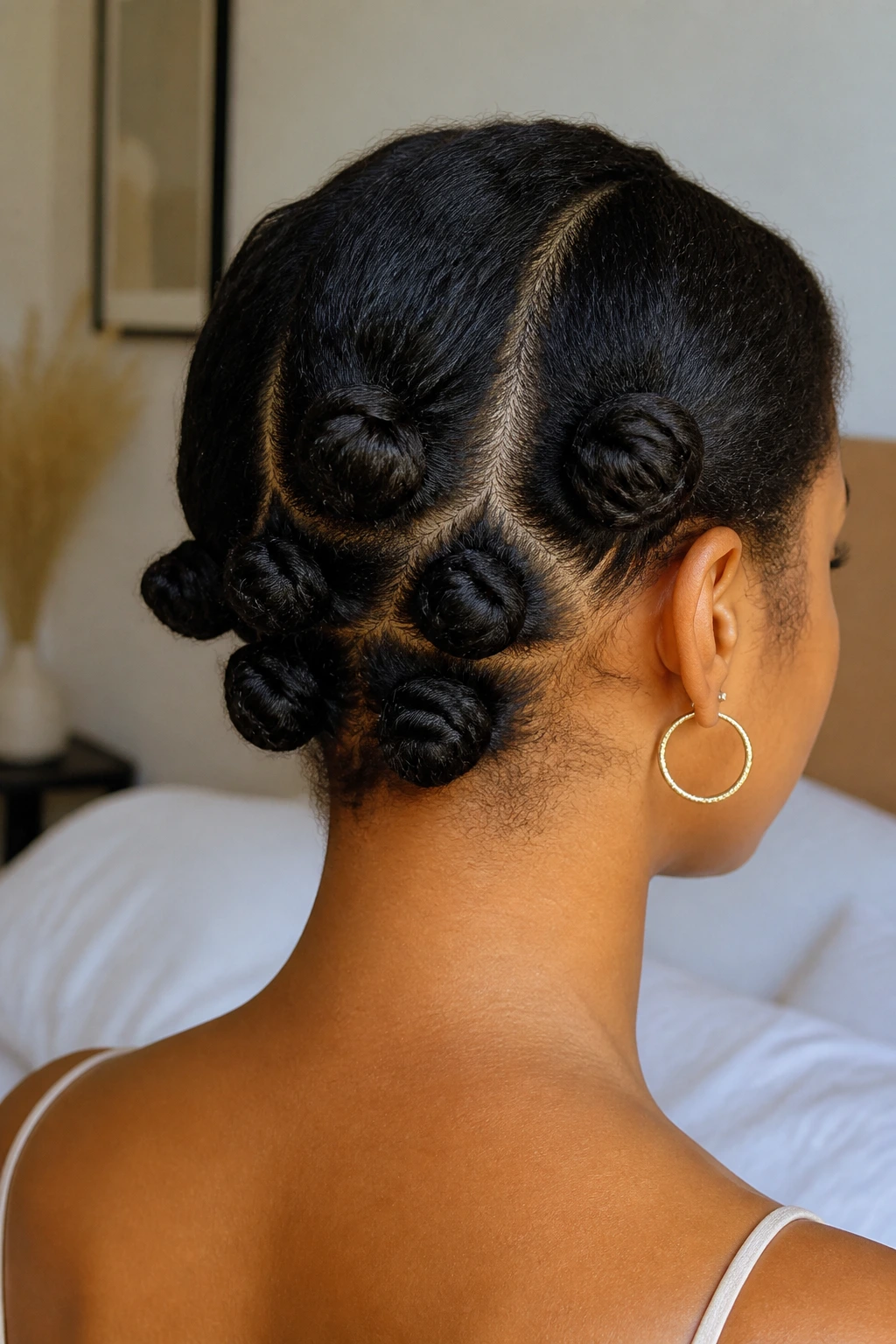
Low-nape knots sit close to the neck and feel quieter than high or center-heavy versions. I like them on relaxed hair because they keep the top of the head smooth and let the style tuck in neatly under scarves, collars, or jackets. Practical matters.
The shape is also flattering on shorter relaxed cuts. You don’t need a lot of length to make the low placement look good, and the knots don’t have to fight gravity as much as higher styles do. That makes the finish hold better, especially if the hair tends to slip when it’s placed too high.
One small thing: the nape can be sensitive. Don’t pack the knots too tightly back there. A snug fit is enough. The goal is to keep the style neat while the neck stays comfortable.
Low-nape knots have a clean, grown-up feel. They’re not flashy. That’s why they work.
16. High-Ponytail Bantu Knots
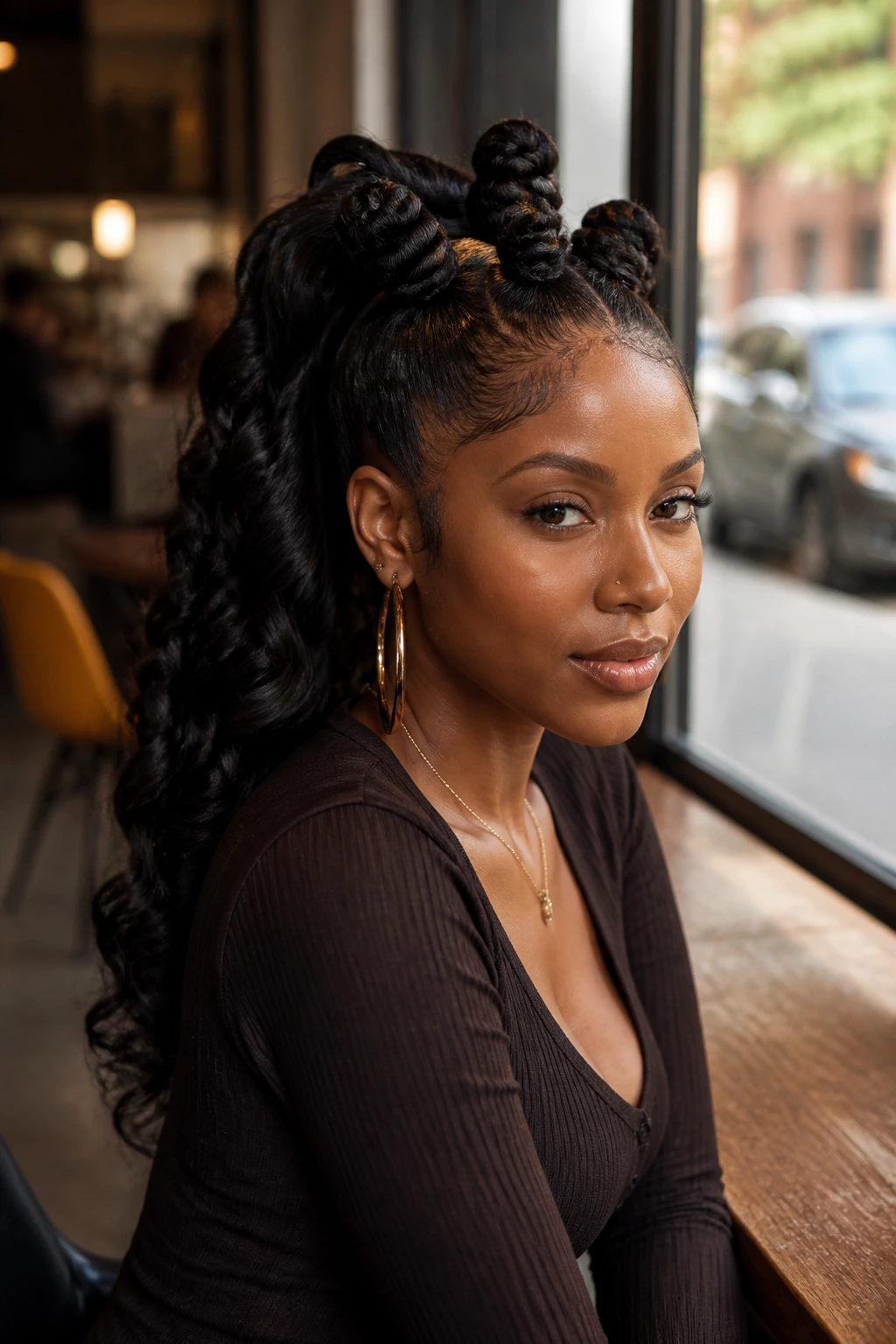
A high ponytail base gives the knots lift before they even begin. The style starts with the hair pulled up toward the crown, then divided into sections that form the knots at the top. On relaxed hair, that can create a nice stretch through the face and a more playful silhouette.
The ponytail itself needs to be secure, but not yanked tight. That’s where people get into trouble. A high style can look crisp without feeling strained. Use a soft elastic, smooth the perimeter, then fan the sections out from the pony base so the knots don’t crowd each other.
This is a strong pick if you like volume at the crown. It also works well with longer relaxed hair because the lifted base helps keep the ends from hanging awkwardly. The whole head looks more shaped.
If you want a bit of drama, this is one of the easiest ways to get it. Tall. Clean. Done.
17. Side-Bun Knot Mix
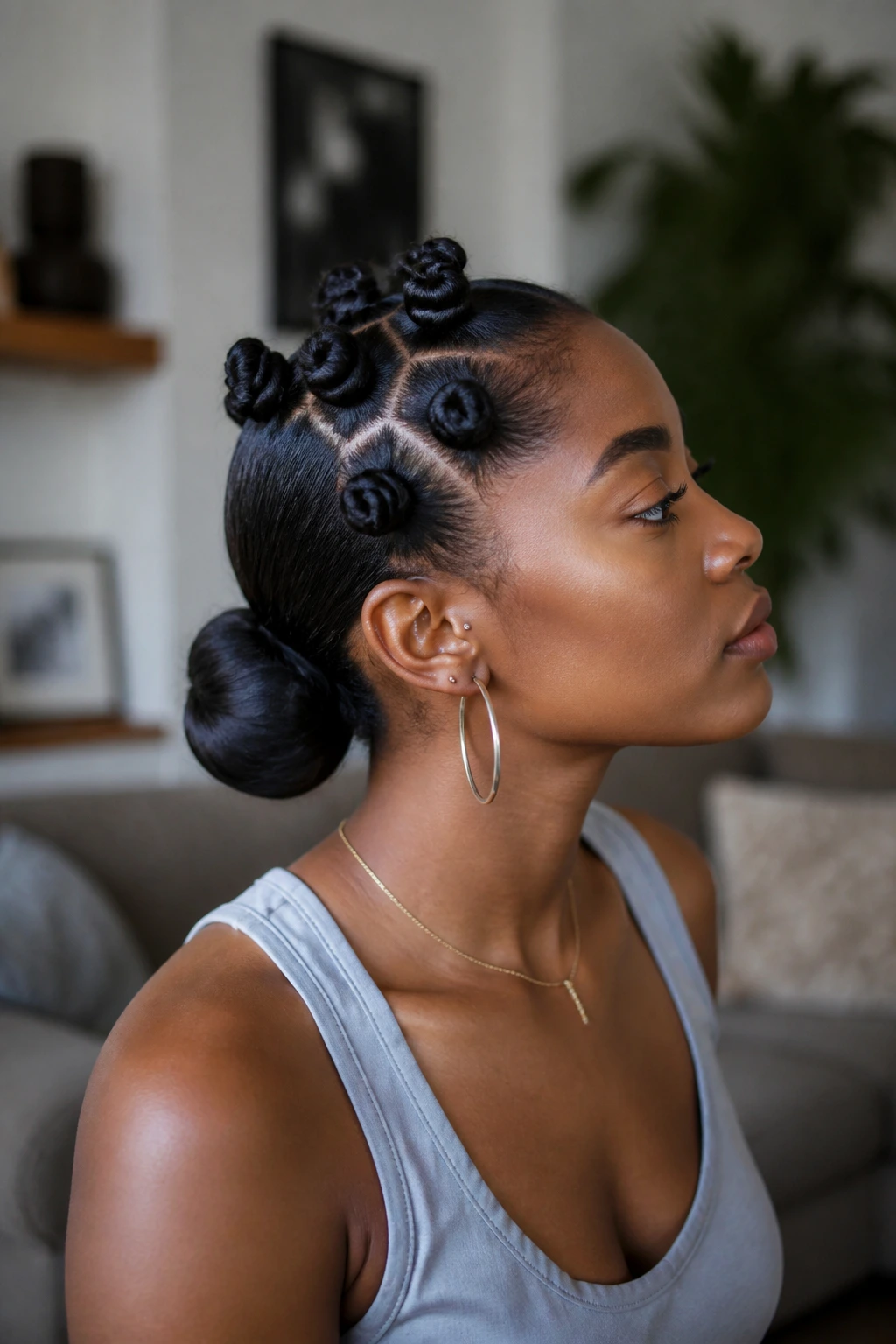
A side-bun knot mix is for the days when you want Bantu knots but don’t want the full head to read symmetrical. One side can hold a cluster of knots, while the other side is pulled into a smooth low bun or tucked coil. The contrast makes relaxed hair look styled without needing a crowded part map.
I like this look because it solves a common problem: some hair lengths don’t sit evenly around the head, and forcing every section into the same size knot can make the style look awkward. A side bun lets one side stay calm while the knot side carries the visual weight.
Keep the bun low and close to the ear or jawline. If it sits too high, the silhouette turns lopsided in a bad way. A soft pin or two is often enough to hold it.
This is one of those styles that looks better after a few minutes of adjustment. Play with the angle. Then stop.
18. Stretched Blowout Bantu Knots for Relaxed Hair
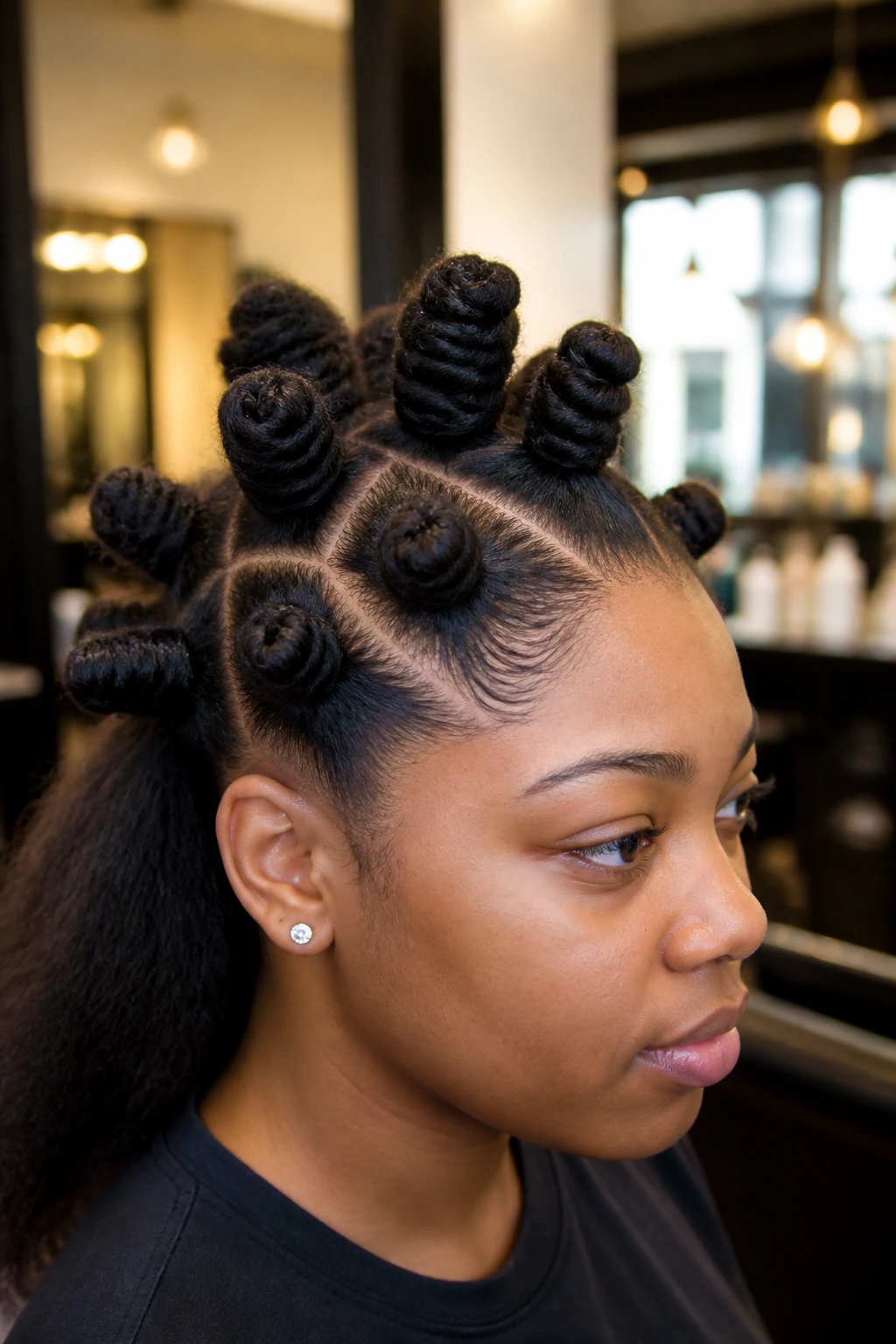
A stretched blowout base gives relaxed hair a little more body before the knots go in, and that changes the way the finished style sits. The sections feel fuller, the knots stack with more height, and the take-down curls often look softer. If your hair is fine or tends to collapse at the roots, this version is a real help.
Prep Notes
- Start with dry, stretched hair.
- Use a heat protectant if you blow-dry.
- Keep the airflow downward so the cuticle lies flat.
- Let the hair cool before parting.
The benefit is mostly shape. Stretched hair grips the knot a bit better and tends to frizz less during wear. The downside is that you need to be gentle with heat and tension. That tradeoff is worth it if your goal is a fuller-looking style.
This version is one of my favorites when the hair needs body more than hold. It gives the knots room to breathe.
19. Defined Knot-Out Prep Knots
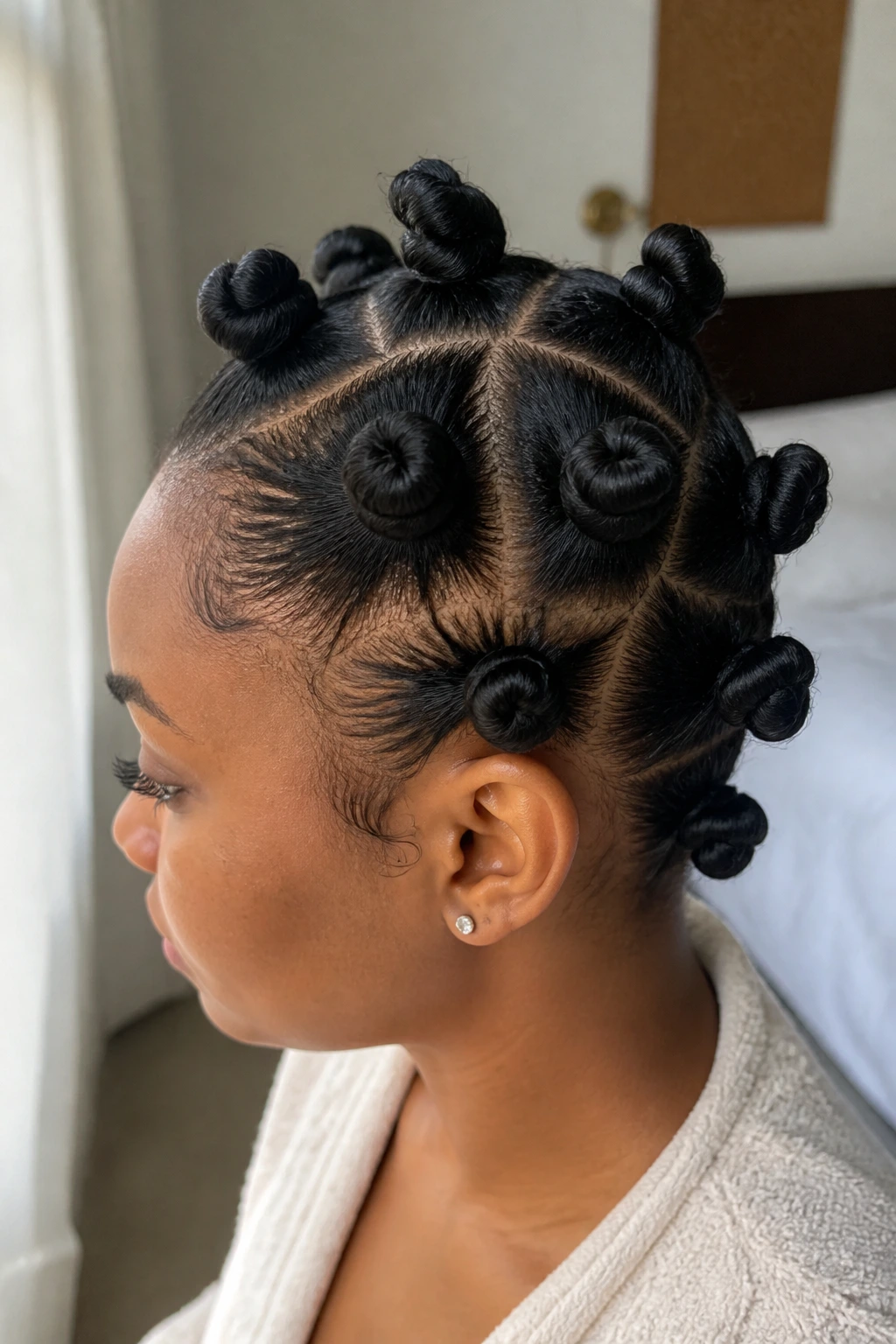
Sometimes the knots are the style. Sometimes they’re the setup for the next style. Defined knot-out prep knots fall into that second camp. They’re placed with enough care to look good on their own, but the real payoff comes after you take them down and separate the curls.
Relaxed hair can hold a decent bend from a knot set if you prep it right. Light mousse, smooth sections, and even twisting pressure are the basics. Don’t make the knots too tight at the ends. That can leave you with flat, awkward bends once the hair is released.
The best part of this style is the transition. Wear the knots for a day, then uncoil them and let the curls settle. The result is softer than a flat iron look and usually lasts through a decent stretch of the week if you keep your hands out of it.
If you enjoy two styles from one effort, this is the one to try.
20. Bedtime Protective Bantu Knots
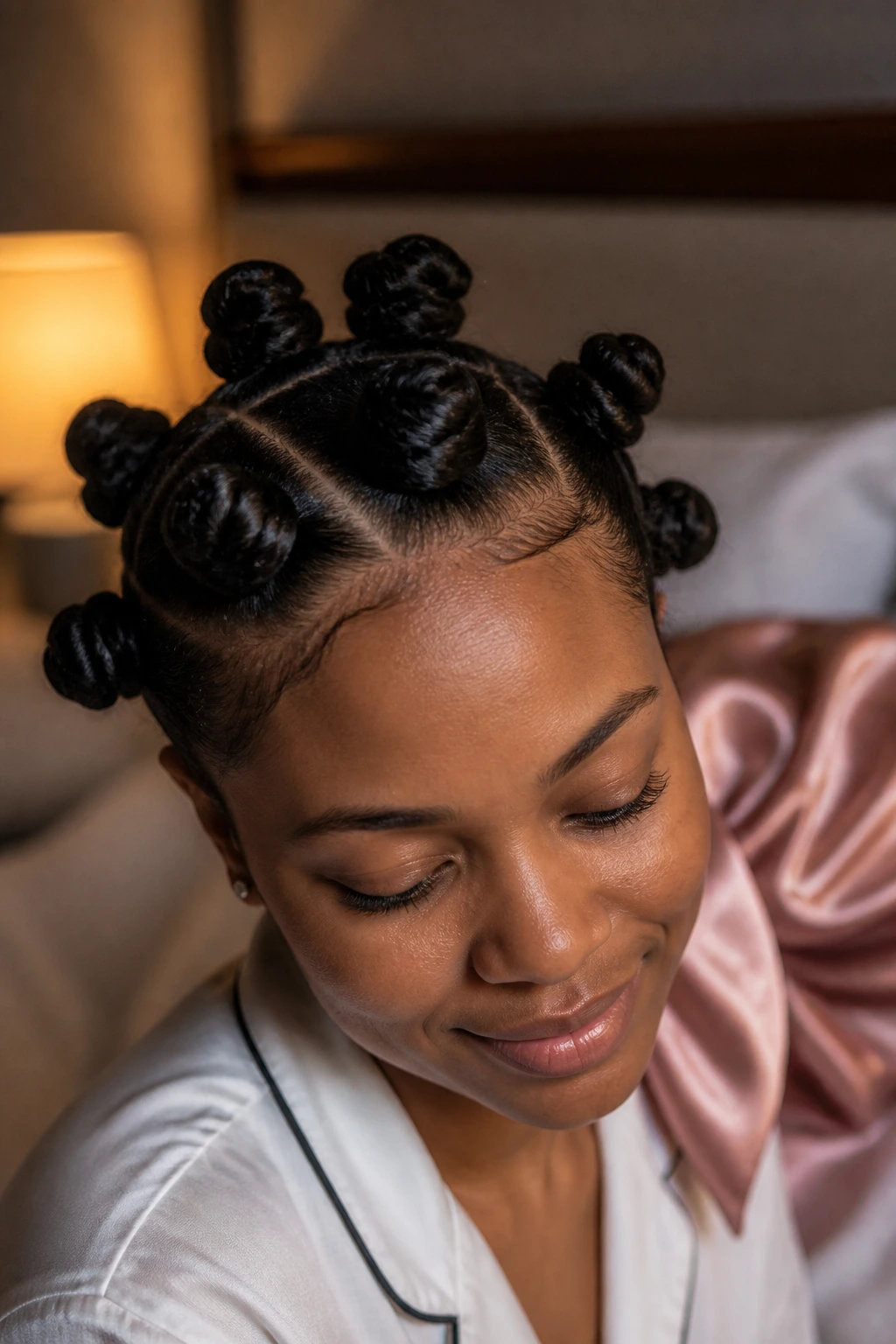
Bedtime knots are less about drama and more about preservation. They keep relaxed hair tucked, reduce friction, and help you wake up with less fuzz around the ends. That matters if your hair tangles easily or if the relaxer has left the lengths a little dry.
The style should be looser than an all-day knot set. You want enough hold to keep the section together, but not so much tension that sleep turns into a tug-of-war. A satin scarf or bonnet helps a lot here. A cotton pillowcase does not.
A small amount of leave-in on the ends can help the knots stay smooth overnight, but keep it light. Heavy creams tend to flatten the style and make the roots slide. The goal is control, not weight.
This is the kind of style I’d call unglamorous and useful. Which is fine. Useful wins sometimes.
21. Faux-Hawk Bantu Knots
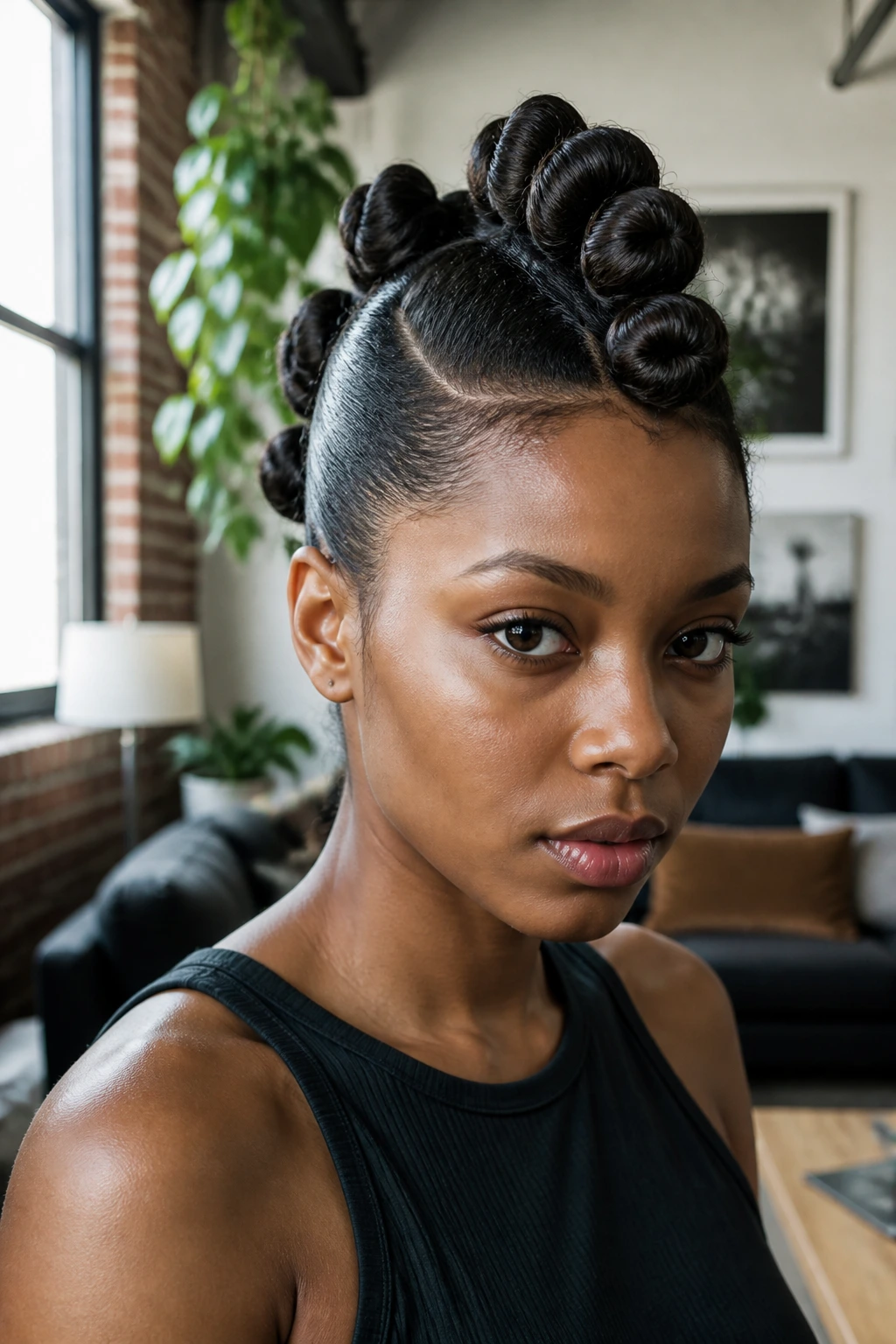
A faux-hawk shape gives relaxed hair a sharper line and a little edge. The knots sit down the center of the head, while the sides are smoothed or pinned close, so the eye runs straight through the middle. It’s a strong shape. No kidding around.
This style works best when the center row has medium or jumbo knots and the sides stay sleek. If you put knots everywhere, you lose the hawk effect. The contrast is what makes it work. That contrast can come from gelled sides, flat-twisted sides, or even side sections tucked under.
I like this one for days when a regular knot set feels too soft. The silhouette is narrower, taller, and more dramatic. It’s also a good way to make shorter relaxed hair look longer at the center, since the raised middle draws attention up and down.
If you like clean lines and a little attitude, this is a strong pick.
22. Formal Updo Bantu Knots
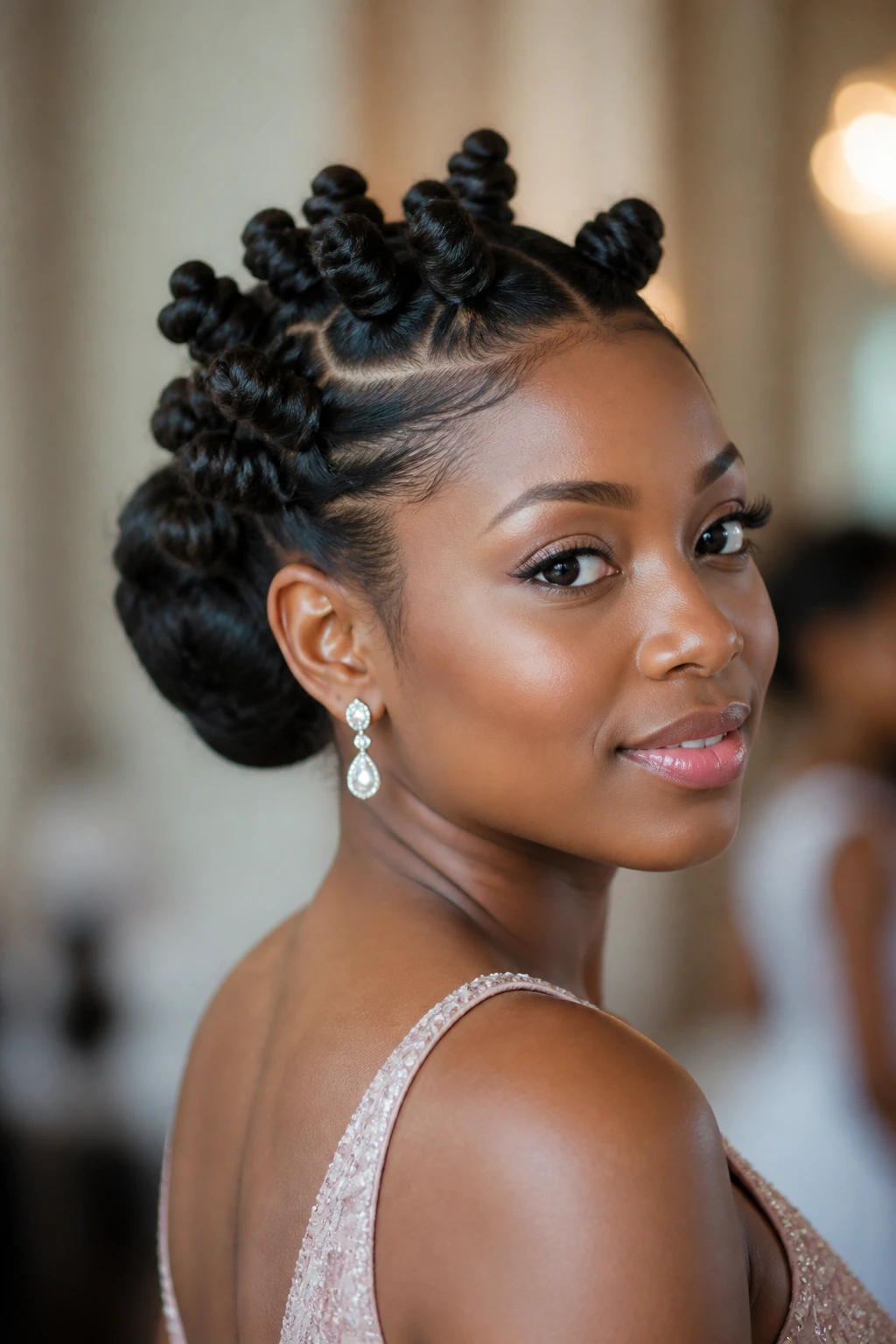
A formal updo with Bantu knots can look far more finished than people expect. The knots become design elements instead of the whole story. You can place them around a pinned chignon, stack them near the crown, or let them frame a low roll at the back. That mix gives relaxed hair structure without turning it stiff.
The Shape Matters
For a formal setting, I’d keep the knots smaller and neater, then smooth the rest of the hair into a tidy base. The transition between the knots and the updo should feel clean. If the parts are messy, the whole style looks rushed.
What Makes It Work
- Small to medium knots read more polished.
- A low bun or roll anchors the style.
- Pins should disappear into the hair.
- A satin finish product is better than a heavy gloss.
This is the style I’d choose for a dinner, a ceremony, or any event where you want something a little different from a plain bun. It has structure without looking severe.
23. Five-Minute Knots for Busy Mornings
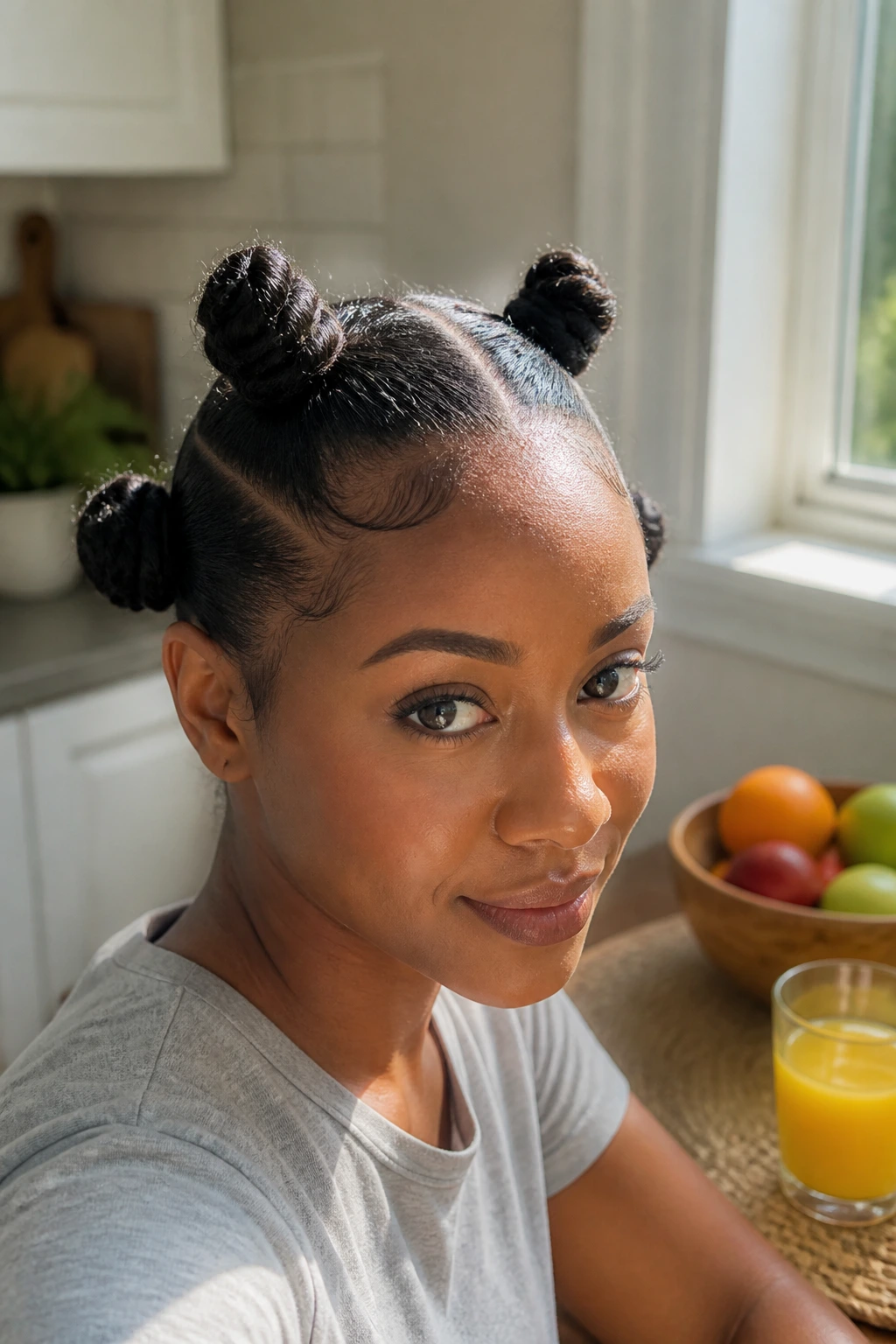
Five-minute knots are not about perfection. They’re about getting relaxed hair into something neat fast, with enough shape to leave the house feeling put together. That means larger sections, fewer knots, and a clear parting pattern that does not require three mirrors and a long argument with yourself.
The best shortcut is a simple four-section layout. Front left, front right, back left, back right. Twist each section, coil it into a knot, and move on. If the parts are clean, the style still looks intentional. If they’re a little rough, it just reads casual. That’s fine for a workday.
A light mousse or setting foam helps the hair cooperate without making it stiff. Skip thick creams when time is tight. They take longer to smooth in, and the style can end up looking weighed down before lunch.
Fast does not have to mean messy. It just has to be tidy enough to hold.
24. Polished Face-Framing Bantu Knots
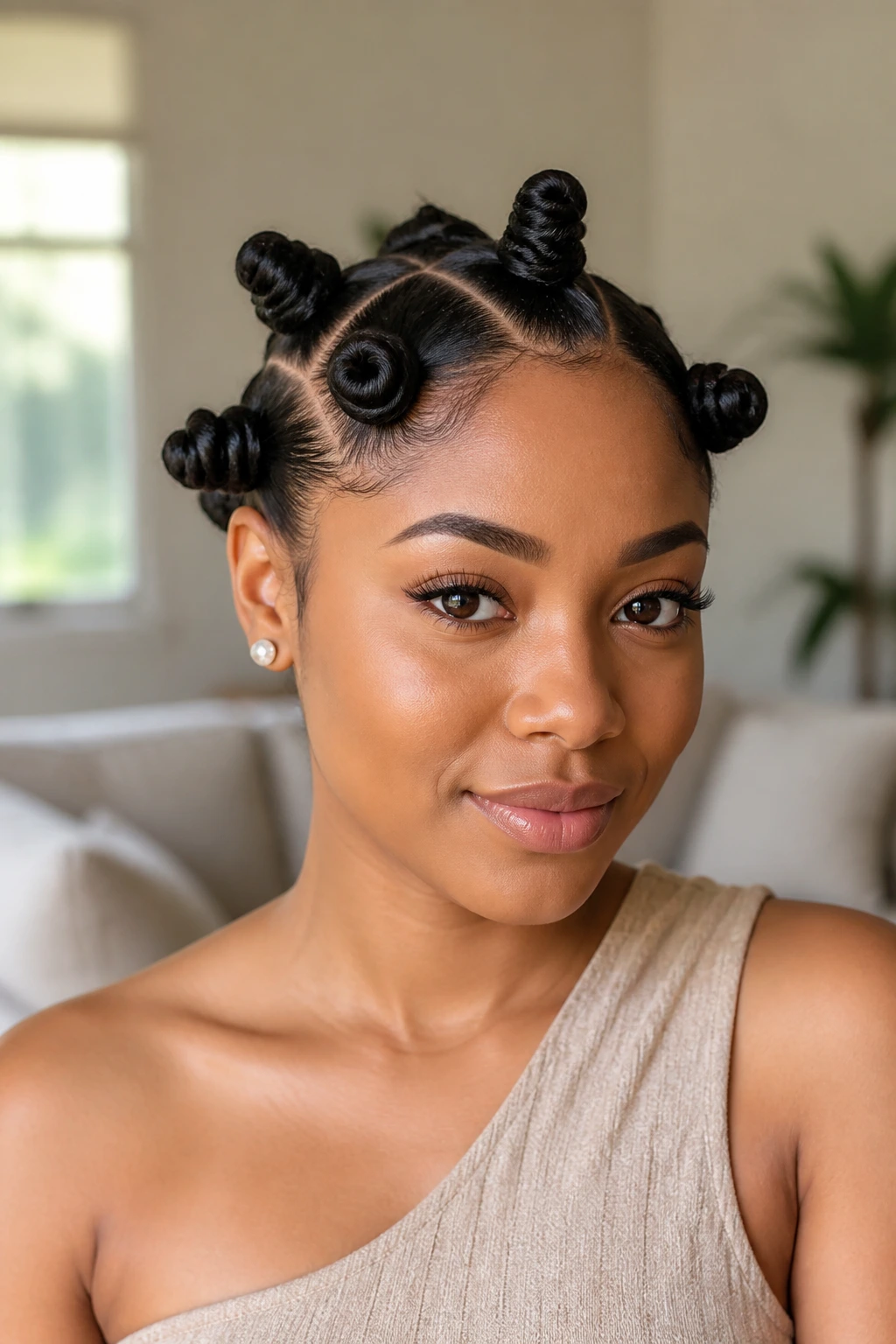
Face-framing knots pull the eye toward the front of the style, which is handy when you want the relaxed-hair look to feel softer and more flattering around the cheeks. Usually that means two or four knots placed around the hairline, with the rest of the hair tucked back or left low.
The front pieces should be the most careful part of the set. Clean parts. Smooth roots. No stray ends hanging out. Those front knots are the first thing anyone sees, and they do a lot of the visual work. I like them slightly smaller than the back sections because smaller knots around the face tend to look neater and less bulky.
This style is a good compromise if you like Bantu knots but do not want your whole head exposed. It gives you shape near the face and a calmer silhouette everywhere else. That balance is easier to wear than a full-head knot set on a long day.
If you want the style to feel polished, keep the front crisp and the rest soft.
25. Soft Curved-Part Bantu Knots for Relaxed Hair
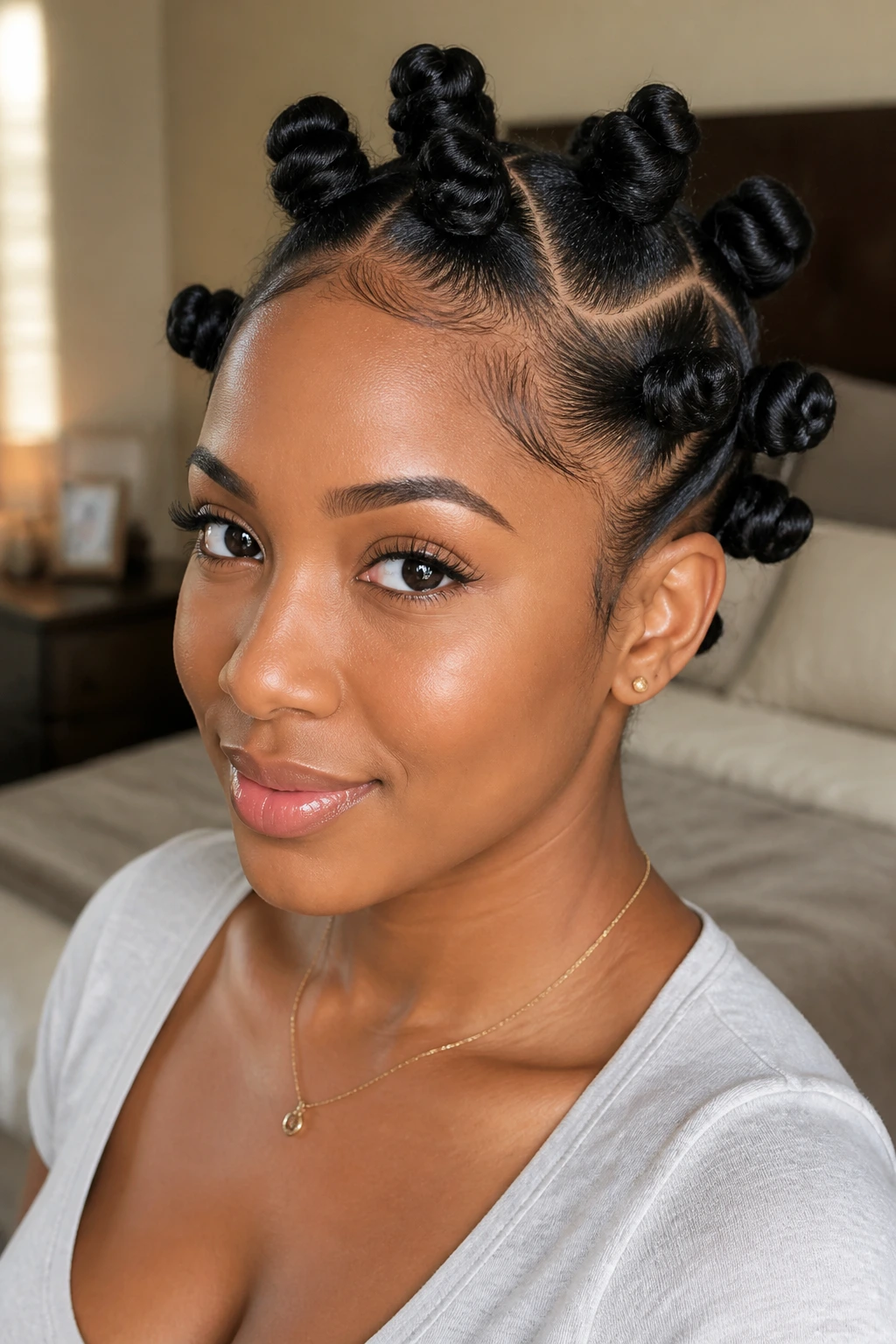
A curved part line changes the whole personality of the style. Instead of straight rows, the sections flow around the head in a gentle arc, and that softens the look on relaxed hair in a way I really like. It feels less boxy. Less strict.
This style works especially well if your face shape benefits from movement at the hairline. The curve can guide the eye toward the center or sweep it away from a strong part, depending on where you place the knots. It’s a small detail that pays off in a big way.
I’d keep the knots medium-sized here so the parting stays visible. Tiny knots can hide the curve. Jumbo knots can crowd it. Medium sections let the shape breathe, which is the whole point.
If you’re tired of straight rows and want something softer, this is the one I’d reach for first. It still has structure, but it doesn’t feel boxed in.
Final Thoughts
Bantu knot styles for relaxed hair work best when the parts are clean and the tension stays kind. That’s the short version. Everything else is styling choice.
Some days call for a sharp center part. Other days want a side sweep, a crown shape, or a knot set you can take down later for curls. The good styles are the ones that fit the hair you actually have, not the hair you wish you had in your head.
Start with the version that feels easiest to wear, then move toward the bolder shapes once you know how your relaxed strands behave. That’s where the style starts to feel like yours.
