



Bantu knot and braid combos have a way of looking deliberate even when they’re playful. A clean braid pattern gives the style structure; the knots bring the shape and the personality. When both parts are done well, the result sits somewhere between protective style and statement hair — which is why sloppy parting can sink the whole look faster than dry ends ever will.
I’ve always liked these styles because they solve a real problem. Braids keep hair tucked away. Knots break up the length, add height, and stop the look from reading as “just another braid install.” The strongest versions also work with your texture instead of fighting it, which matters more than shiny photos ever will.
The balance is the tricky part. Too many knots, and the style turns busy. Too few, and the braids do all the work. The sweet spot changes with hair length, density, and face shape, so the best ideas are the ones that make those variables work in your favor.
Some of the looks below are polished. Some are a little edgy. A few are the kind you can wear to brunch, then keep for several days without feeling like you need to tear everything out and start over. The details matter, so let’s start with the styles that do the most with the least fuss.
1. Six Feed-In Cornrows Into Small Crown Knots
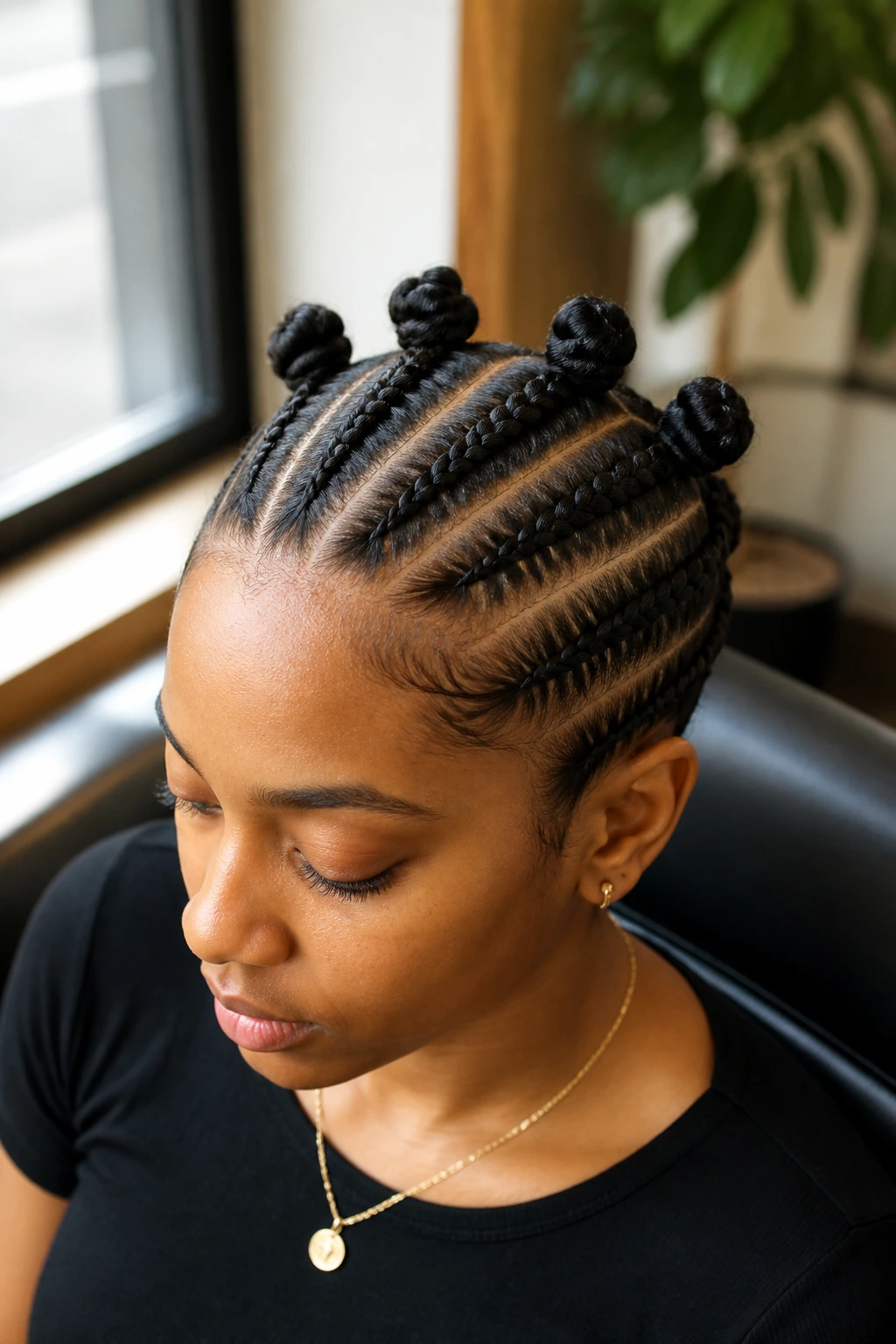
A line of six slim feed-in cornrows ending in small Bantu knots looks precise fast. The parting does half the work here. Clean, narrow rows keep the style light at the scalp, while the knots sit high enough to give the whole look shape without taking over.
Why it works
Small knots are easier to keep neat than giant ones, especially if your hair has a lot of shrinkage. They also sit flatter, which helps if you want the braids to stay the main feature. I like this version on medium-density hair because it gives you structure without too much bulk at the crown.
- Use a light styling foam before braiding to keep flyaways down.
- Keep each knot roughly the size of a walnut.
- Wrap the ends firmly, but not so tight that the base buckles.
Best tip: sleep in a satin scarf the first night. The knot shape sets better than you’d think.
2. Side-Swept Braids With Three Jumbo Knots
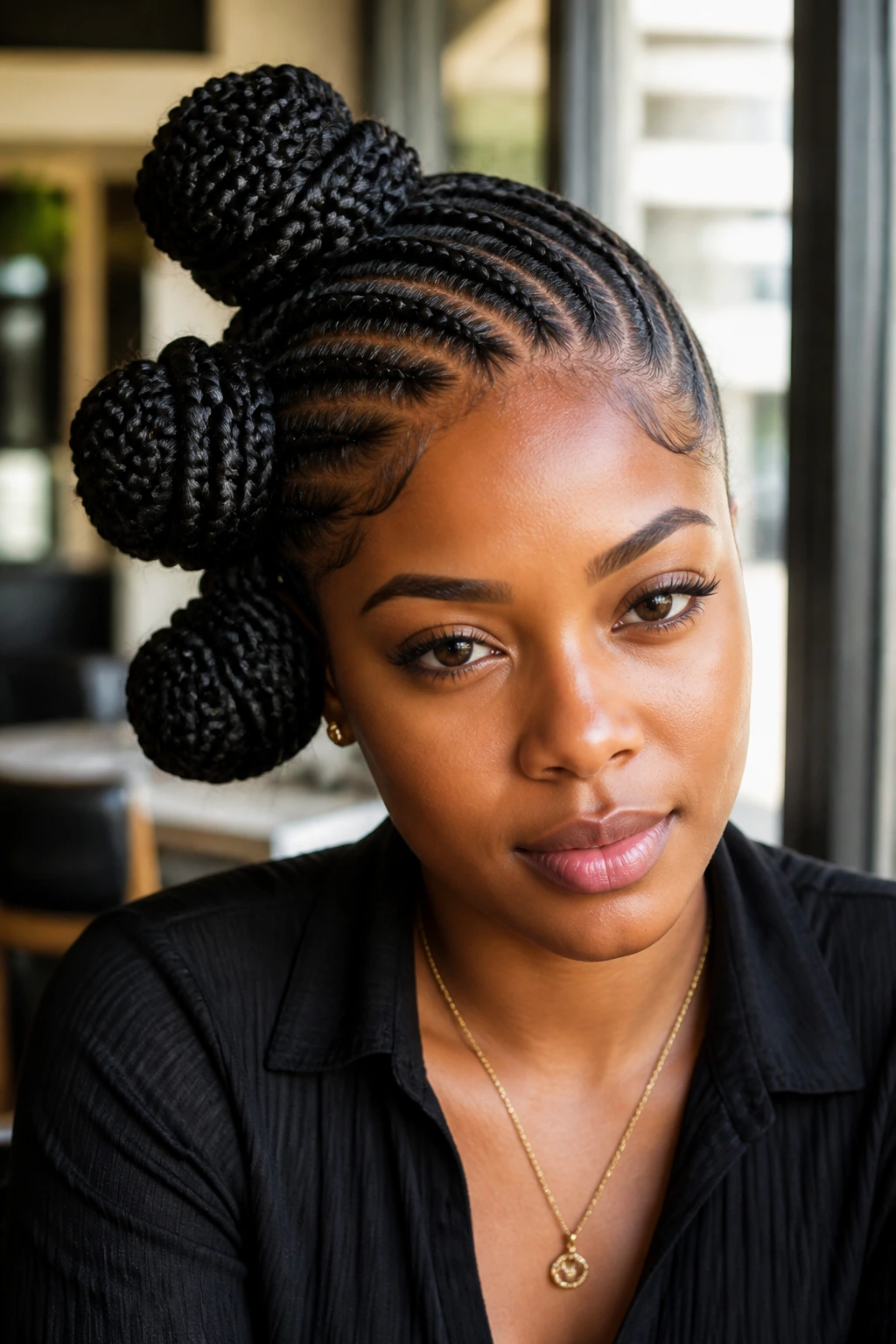
Three jumbo side knots can carry a whole style on their own. That asymmetry gives the look some swagger, and it’s a smart move if you like drama without wearing a full head of large knots.
The braid pattern should sweep in the same direction as the knots. Otherwise the style starts to look accidental, and nobody wants that. This combo works well on thicker hair because the larger knots need enough hair to hold their shape without looking patchy.
I’d wear this when the hair itself is meant to be the outfit. Big earrings help. So does a clean neckline. Keep the edges sleek, but don’t turn them into a helmet.
3. Half-Up Knot Crown Over Long Box Braids
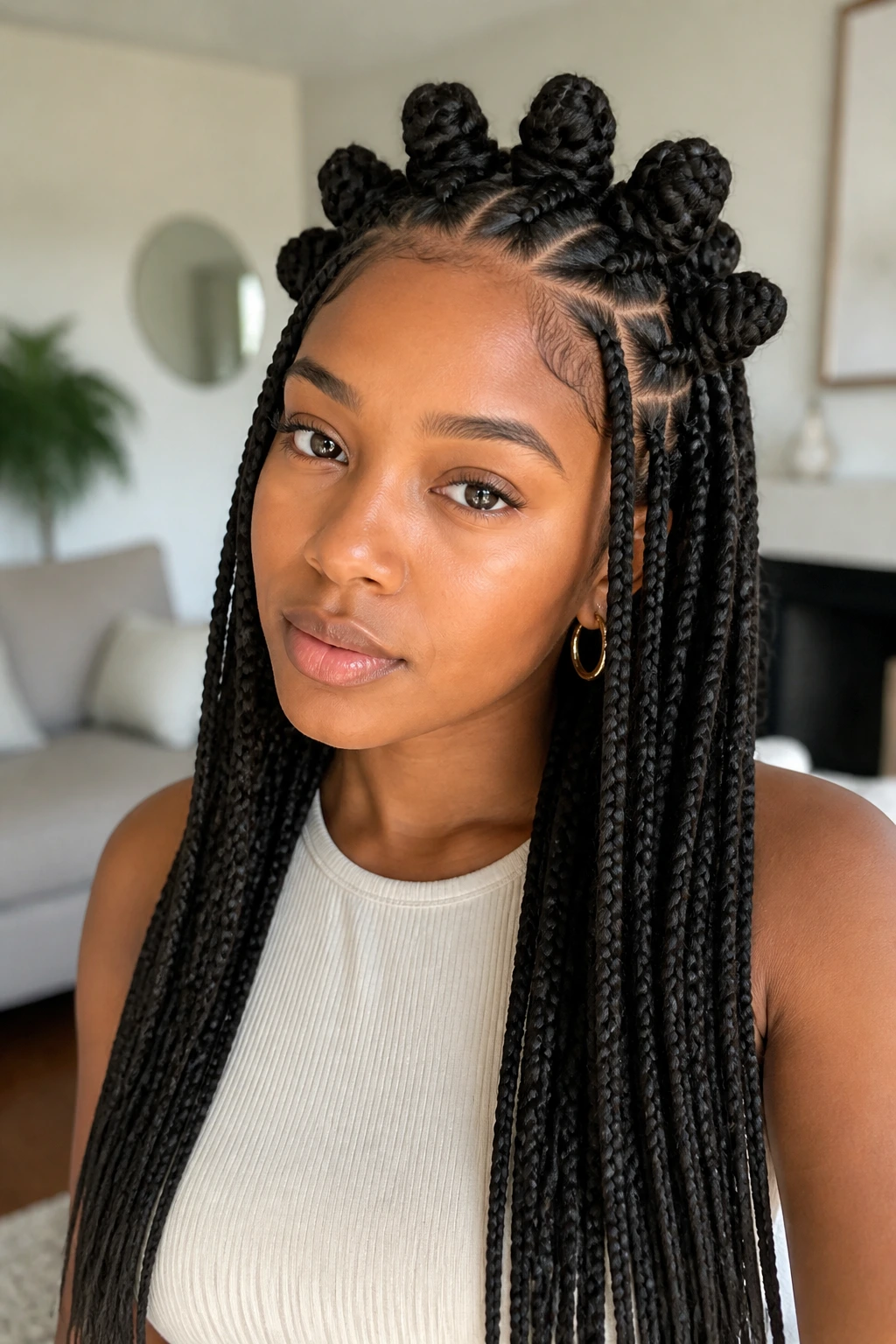
Want a style that stays polished even after the braids loosen a little? A half-up knot crown does that job nicely. The top section gets gathered into Bantu knots, while the rest of the braids fall long and free down the back.
How to wear it
This one makes sense if you like length but hate hair in your face. The top half gives you lift near the crown, which opens up the face, and the loose braids keep it from feeling stiff. It’s also one of the easier combos to refresh midweek because you only need to retighten the top half.
Use this if your braids are already installed and you want a small change that feels bigger than it is. A little mousse on the ends helps. So does a few minutes with a tail comb to reset the part.
4. Curved Stitch Braids Feeding Into Low Knots
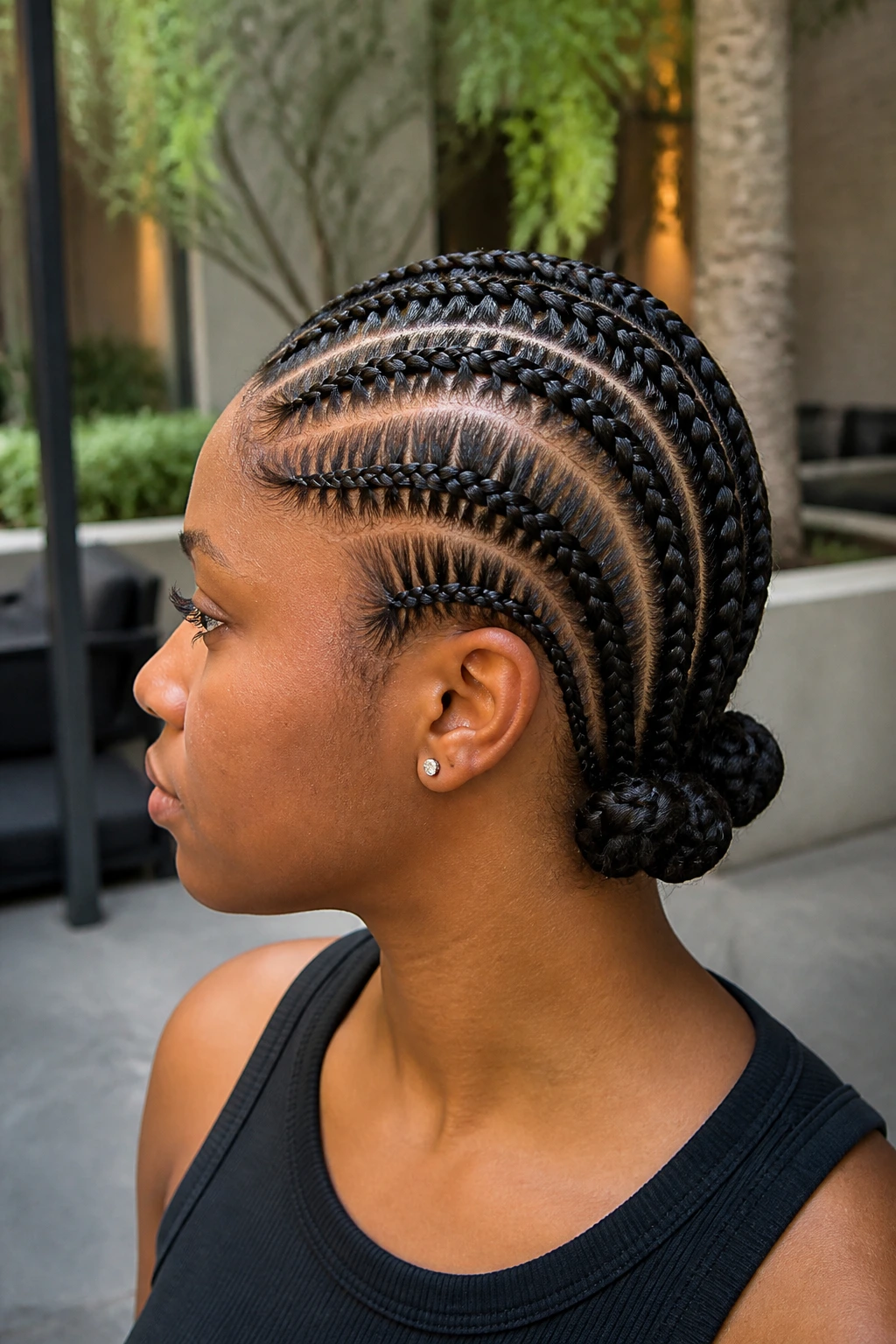
Picture a braid pattern that curves like a smile across the head, then tucks into low knots at the nape. That shape gives the style movement before the knots even show up, and movement is half the point.
The low placement keeps the style wearable. High knots can feel top-heavy. These sit closer to the neck, which makes them easier to pin, easier to sleep on, and easier to hide under a scarf if you need to. Curved stitch braids also make the scalp parting look more intentional, which matters when the style is meant to stand out.
- Ask for smooth, curved parts rather than hard corners.
- Keep the knots compact so they don’t swell at the base.
- A light shine spray helps the braid pattern read cleanly.
5. Center-Part Braids With Four Rounded Knots
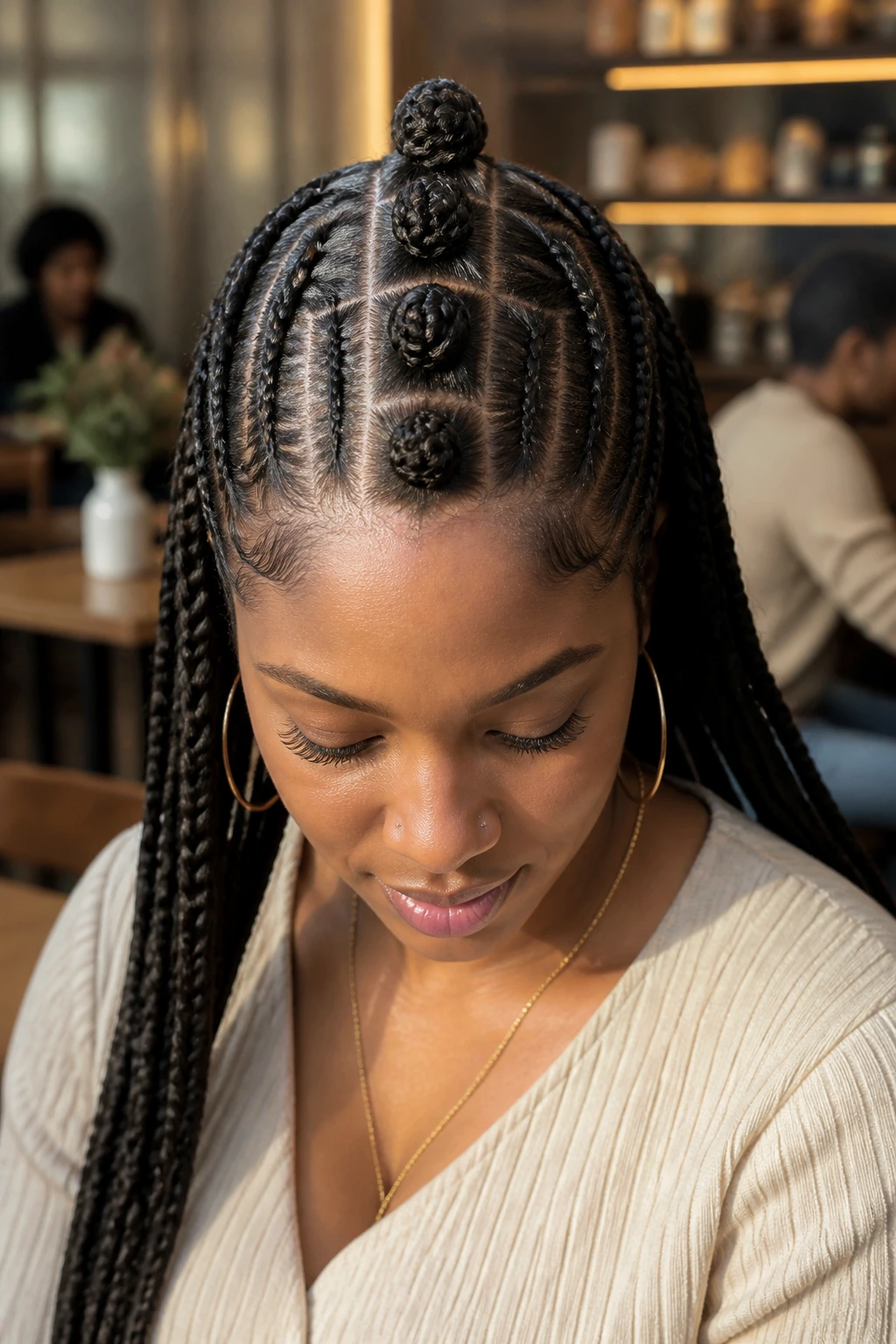
Center-part Bantu knot and braid combos have a calm, even look that does not beg for attention. That can be a good thing. Four rounded knots placed symmetrically along the part make the whole head feel balanced, and the braids between them keep the style grounded.
I’m partial to this one on oval and heart-shaped faces because the center line draws the eye down in a clean way. It also works if you like a style that looks neat from every angle. No side looks unfinished. No section feels accidental.
The trick is spacing. Leave enough room between each knot so the braid segments can breathe. Too close together and the style starts to bunch up. Too far apart and the rhythm disappears.
6. A Mohawk Braid Row With Mini Knot Ends
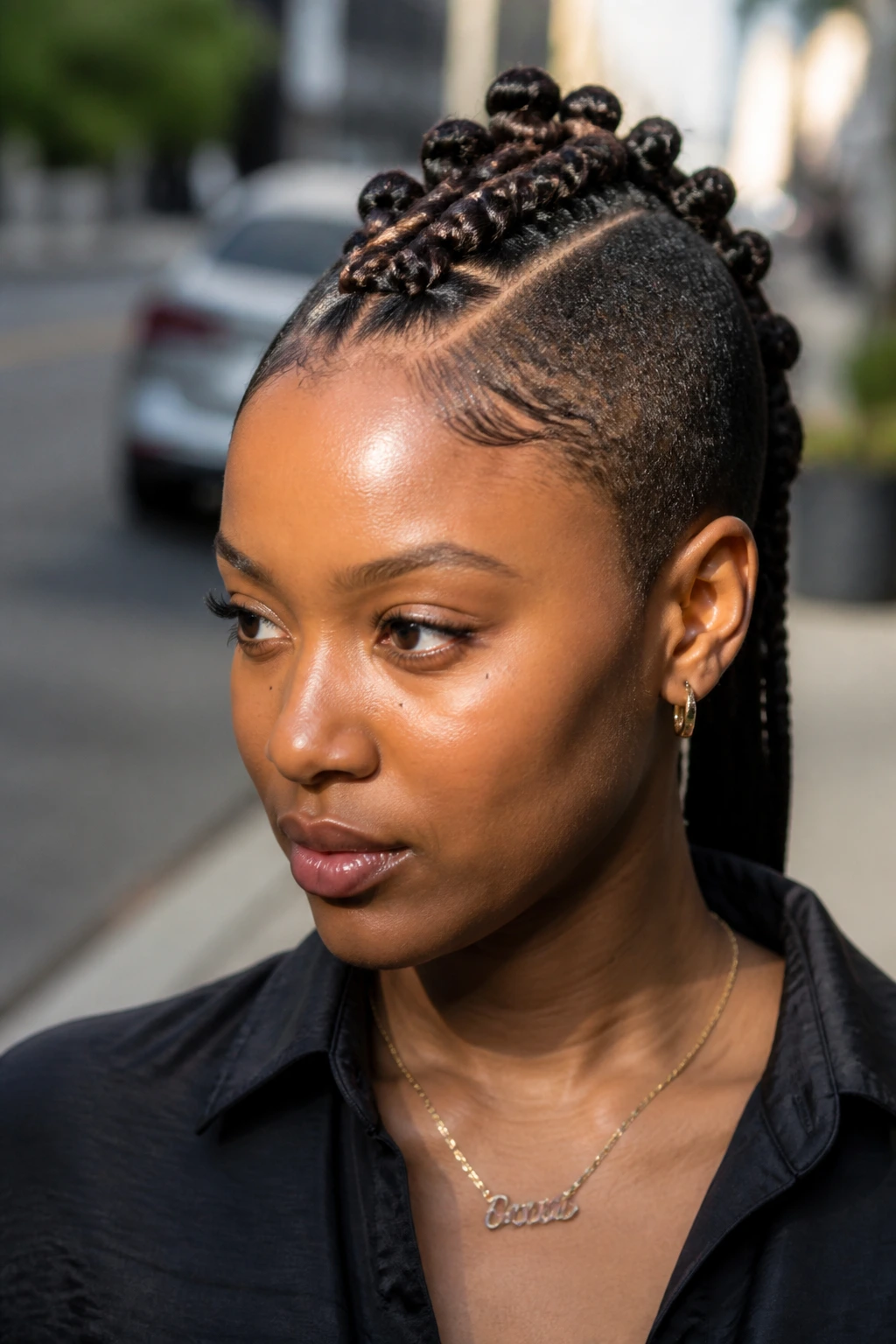
A mohawk braid row gives you more lift than a full head of knots ever will. That central ridge creates a bold line, and the mini knots at the ends keep it from looking too severe. It’s a strong choice when you want height without adding a lot of width.
Unlike styles that spread across the whole scalp, this one keeps the attention on the center strip. That makes it a good pick for people who like a little edge but still want the sides to stay clean. It’s also one of the easier combos to frame with makeup or statement earrings because the hair leaves your face open.
This style suits longer braids best. Shorter lengths can work, but the row needs enough length to arch without collapsing.
7. Triangle Parts and Tiny Knots
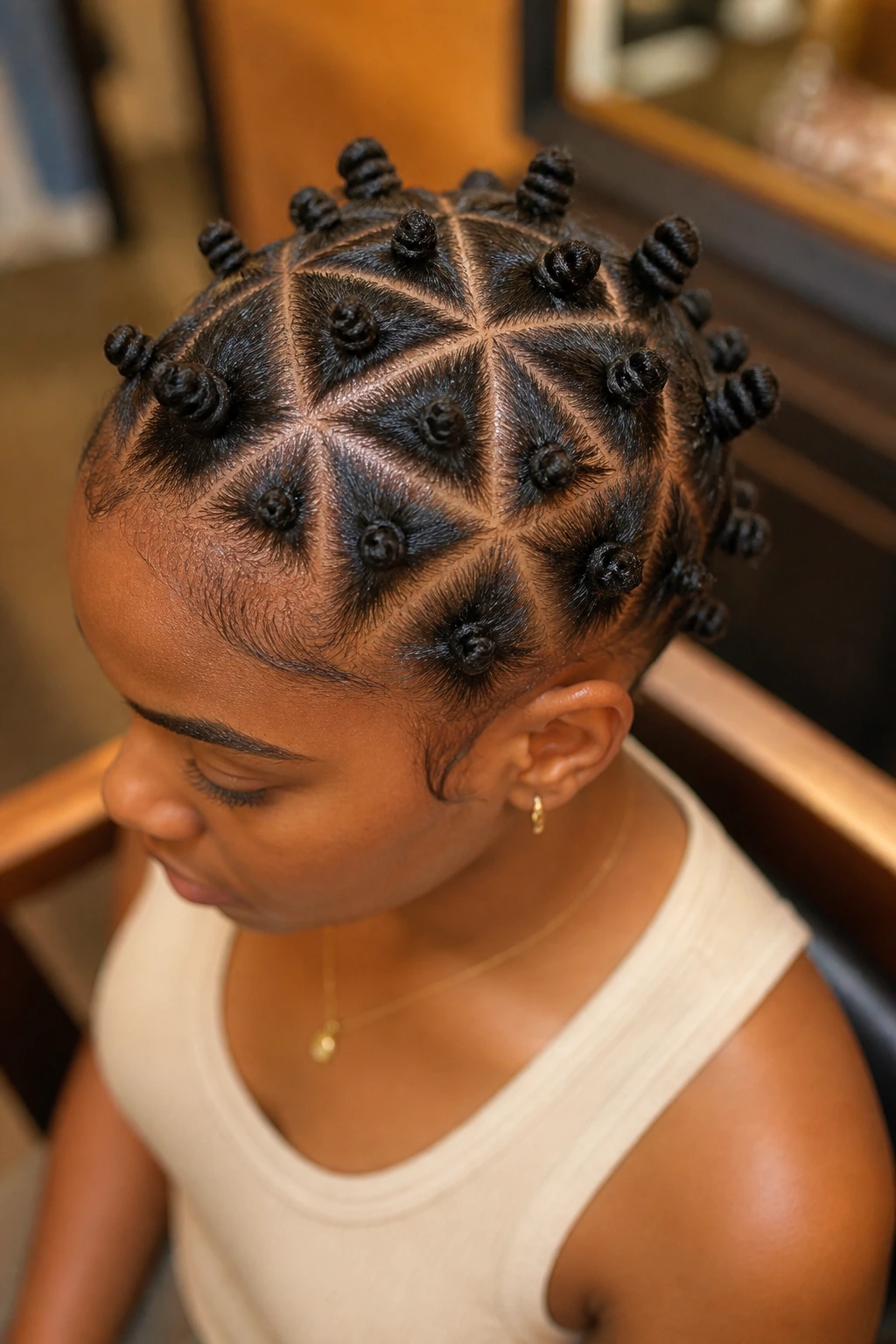
Triangle parts change the whole mood of mini knot styles. Straight parts can be tidy, sure, but triangles give the scalp pattern more life, and that extra shape makes even small Bantu knots feel thought-through.
What to ask for
Ask for a triangle grid rather than square sections if you want the parting to show. That tiny change gives the braids a less rigid feel. It also helps the knots sit in a staggered rhythm, which looks better than a flat row in styles with lots of little pieces.
- Best on fine to medium hair.
- Works well with shorter braids.
- Great for people who like neatness without looking too polished.
My favorite part: the triangles keep the roots interesting even after the style softens a bit.
8. Fulani-Inspired Braids With Temple Knots
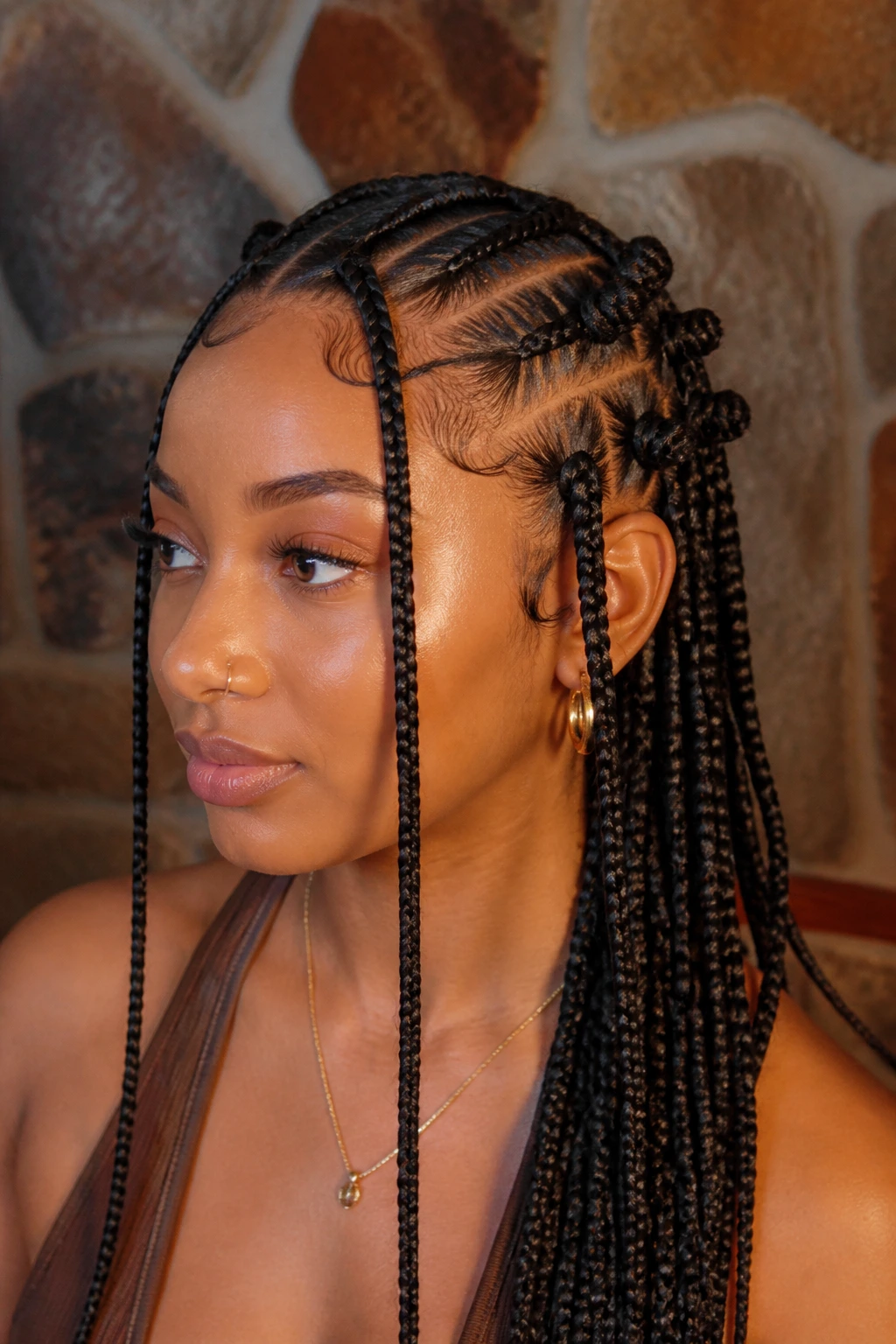
A Fulani-inspired braid set with temple knots always reads a little bolder than a plain center part. The face-framing braids bring attention forward, and the knots near the temples give the style a strong side view, which matters more than people think.
This version feels especially good when you want accessories. Beads, cuffs, or a few wrapped threads can fit in without crowding the style. The key is restraint. If every braid has a decoration, the knots lose their impact.
I like this combo for round or square faces because the side braids add length around the cheeks. Keep the temple knots smaller than the main back sections so the front doesn’t get heavy.
9. Knotless Braids Gathered Into Puffed Knots
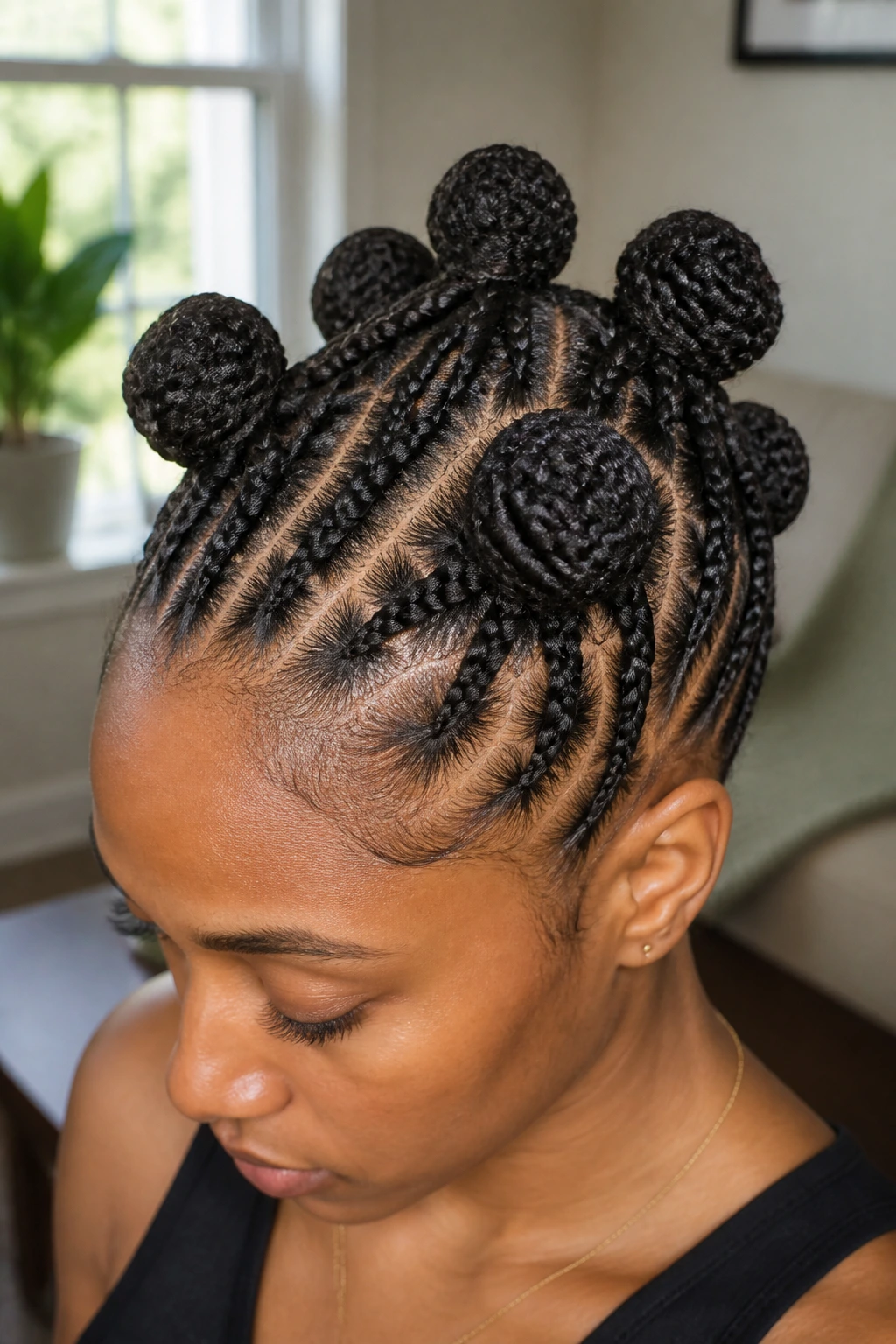
Can knotless braids still look sculpted once they’re gathered into knots? Absolutely. That’s the charm here. The knotless base gives the scalp a lighter feel, and the puffed knots add shape without making the roots feel packed.
This style is smart if you like wearing braids for a while but want a softer edge around the hairline. Knotless braids already ease tension at the scalp. Putting them into knots later keeps that comfort while changing the silhouette.
How to use it
Keep the braids a little flexible before you wrap them. If they’re too stiff from product buildup, the knots fight back. A touch of mousse on the lengths and a satin wrap at night keep the puff from turning frizzy too fast.
10. Two-Strand Twists Mixed With Braided Sections
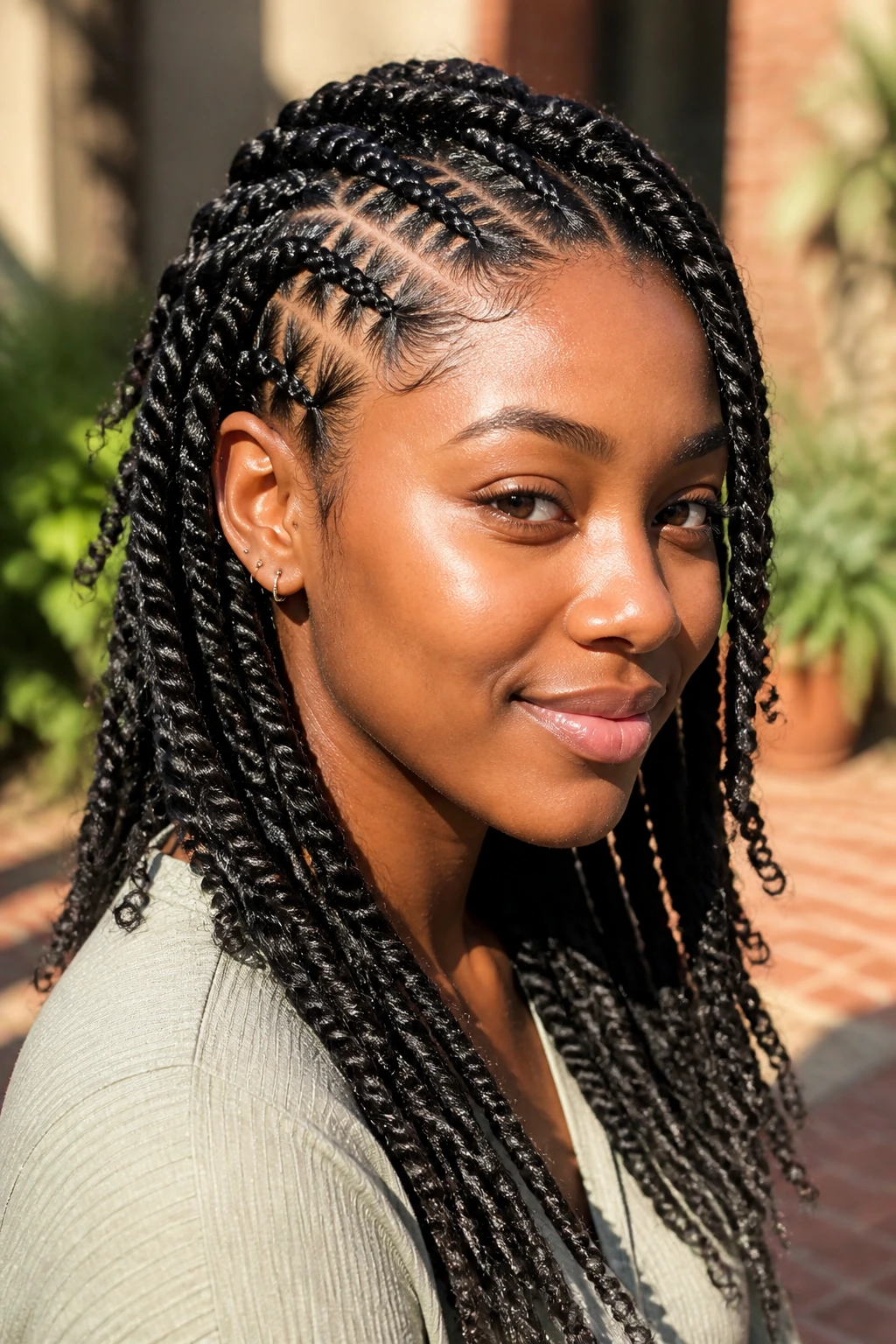
Two-strand twists and braids can share one head without fighting each other. In fact, that mix is what makes this combo interesting. The twists bring softness and movement, while the braided sections give the style more grip and a cleaner line into the knots.
I like this when someone wants texture but not uniform texture. It keeps the eye moving. One section looks rope-like, the next looks tight and sleek, and the Bantu knots pull the whole thing together at the ends or crown.
Use the twists where you want fullness and the braids where you need control. That little bit of contrast is the whole point. If everything is identical, the style loses its spark.
11. A Braided Bob With Four Rounded Knots
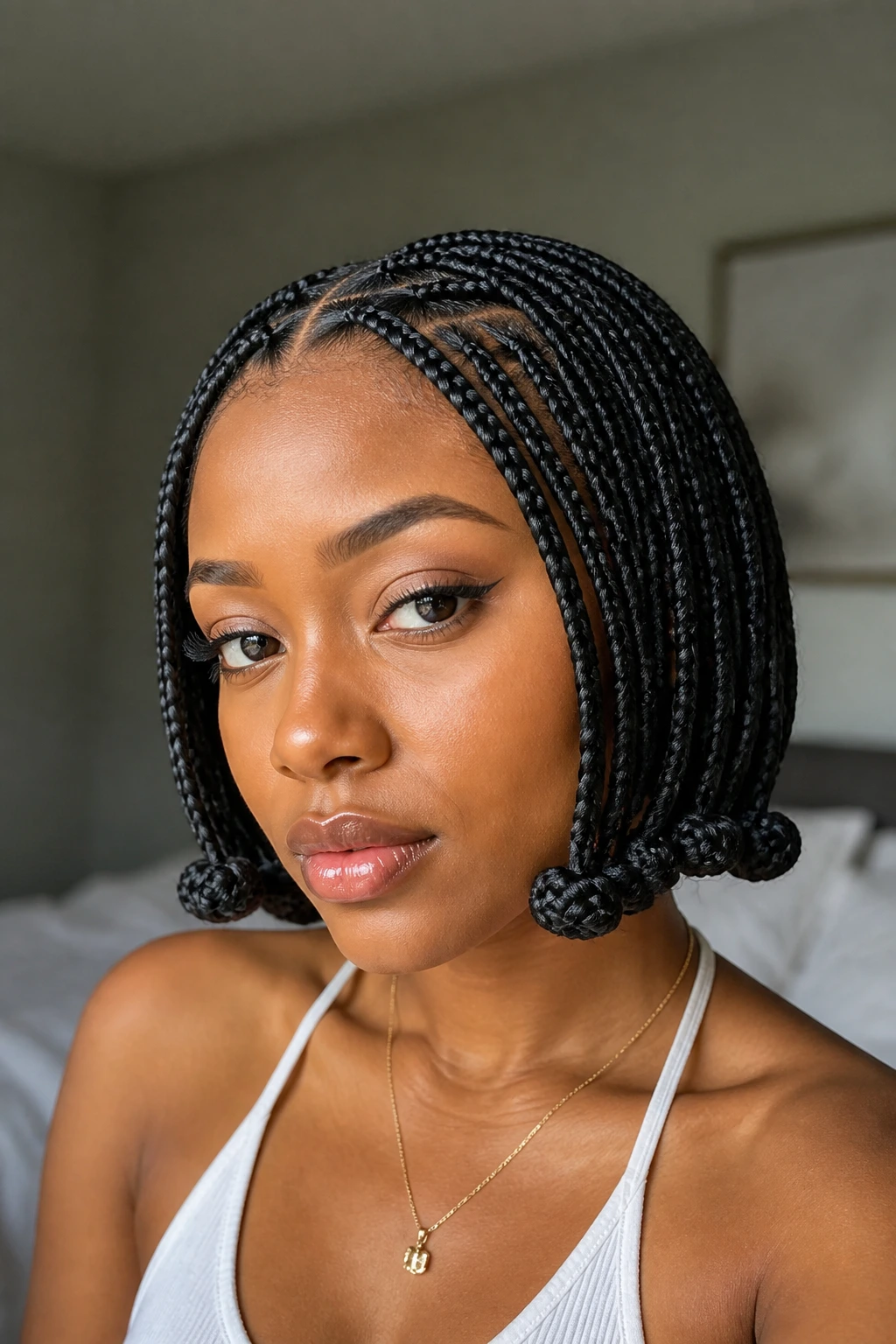
A braided bob with four rounded knots feels neat, not stiff. The shorter length keeps the style close to the neck and jawline, which gives the knots a chance to read as accents instead of dominating the whole head.
This is one of my favorite shapes for people who want a lighter wearing experience. Long braids can feel gorgeous, but they also drag. A bob stays easier to pin down, easier to wash around, and easier to sleep on. The knots at the top or sides give you enough personality that the short length doesn’t feel plain.
Keep the ends blunt or slightly tapered. If the bob gets too wispy, the knot structure loses its clean edge.
12. A High Pony Braid Tail With Knot Cluster
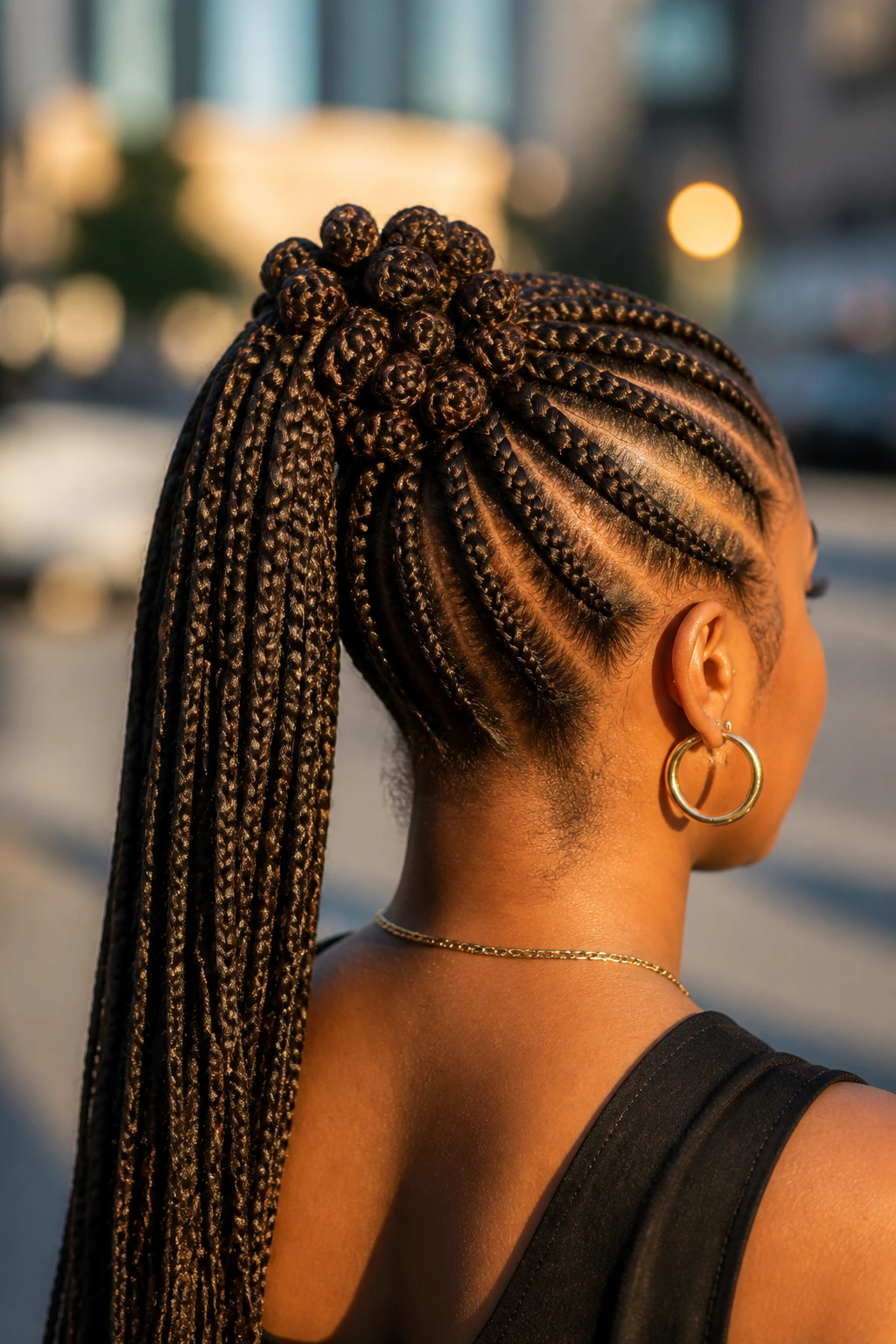
If you want height, start at the crown and build the ponytail around the knots. A high pony braid tail with a knot cluster gives you lift right away, and the pony tail itself helps stretch the look vertically.
The big advantage here is versatility. Wear the pony sleek for a sharper feel, or let the knot cluster sit a little looser if you want a softer finish. The style also opens up the face, which makes it a strong choice for busy days when hair should stay out of the way.
Unlike a standard ponytail, this combo has a built-in focal point. The knots make the back interesting even when the front is pulled tight. That matters more than people admit.
13. Zig-Zag Parts With Scattered Knots
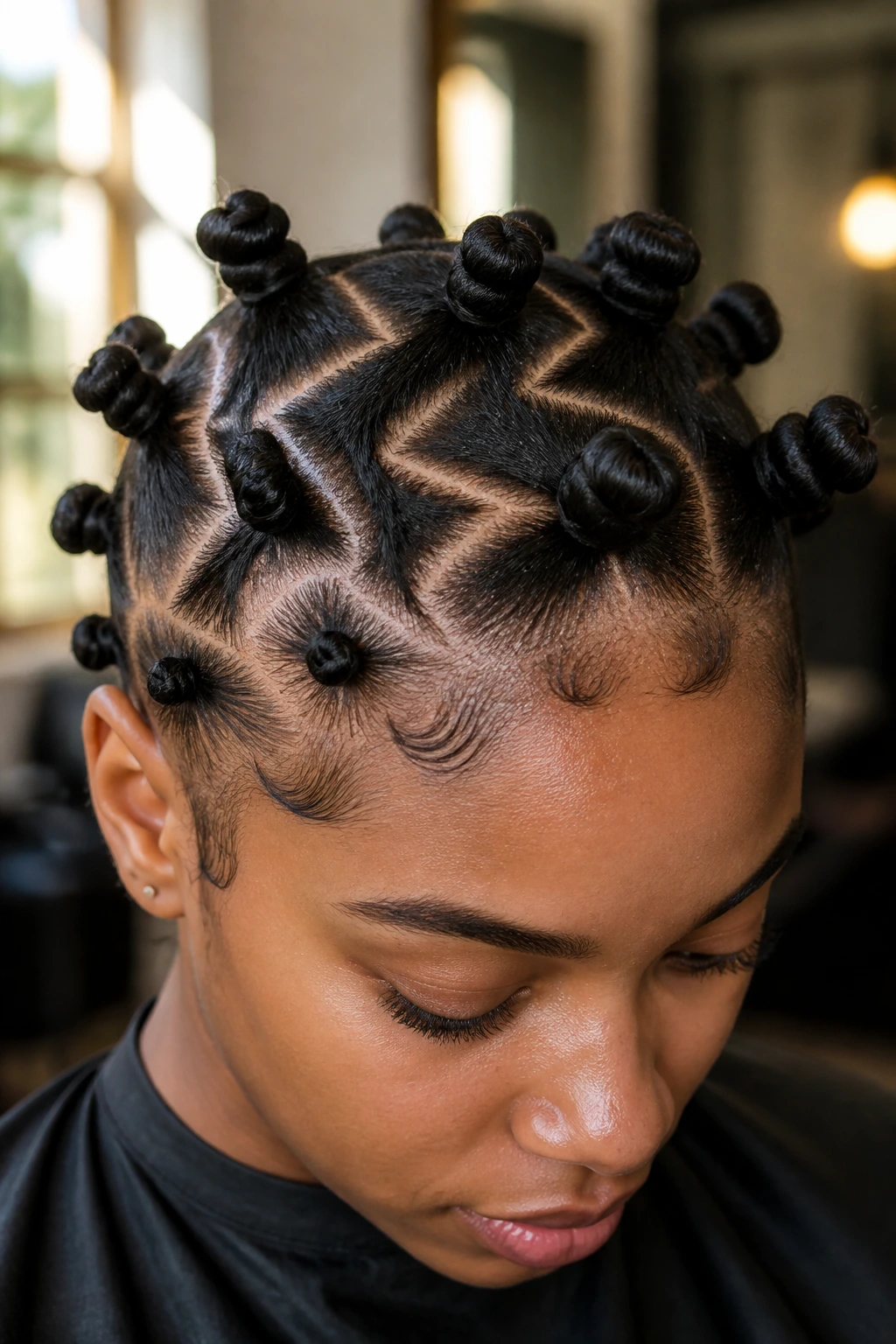
Zig-zag parts make even simple knots look planned. They’re not fussy, either. A clean zig-zag pattern gives the scalp a little motion, and that motion keeps the braid sections from feeling too boxy.
What makes it different
The scattered knots should not line up in a strict row. Stagger them. That break in rhythm is what gives the style its edge. It’s a better fit for people who like playful details but don’t want the hair to look crowded.
- Zig-zag parts work best when the lines stay crisp.
- Use small sections near the front and slightly larger ones in back.
- A narrow rat-tail comb makes the pattern easier to control.
Watch out for this: if the parts drift too far apart, the zig-zag stops reading cleanly.
14. Low Knot Rows Sitting at the Nape
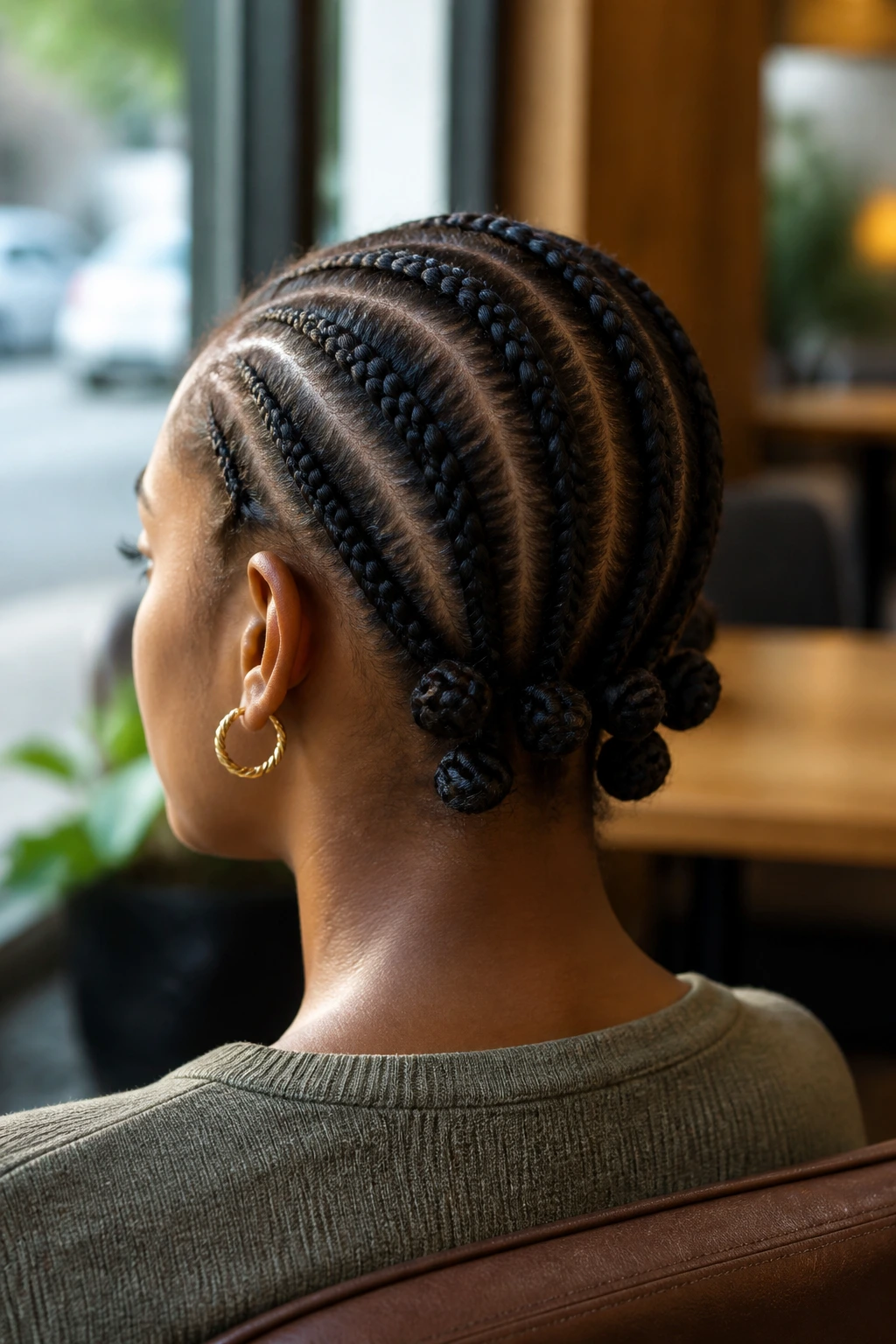
Low knot rows sitting at the nape have a cleaner finish than most people expect. The placement feels almost understated until you catch the side view, where the row shape starts to do its work.
This is a smart style if you want something wearable under jackets, scarves, or high collars. High knots can clash with all of that. Low rows sit close to the neck and keep the profile neat. They also make sleeping easier, which is not glamorous, but it matters.
A sleek nape line works best when the braids feeding into it are tight and even. Don’t overstuff the knots. Small mistakes show more at the back because that area gets rubbed and flattened faster than the front.
15. Jumbo Knot Buns With Slim Feed-In Braids
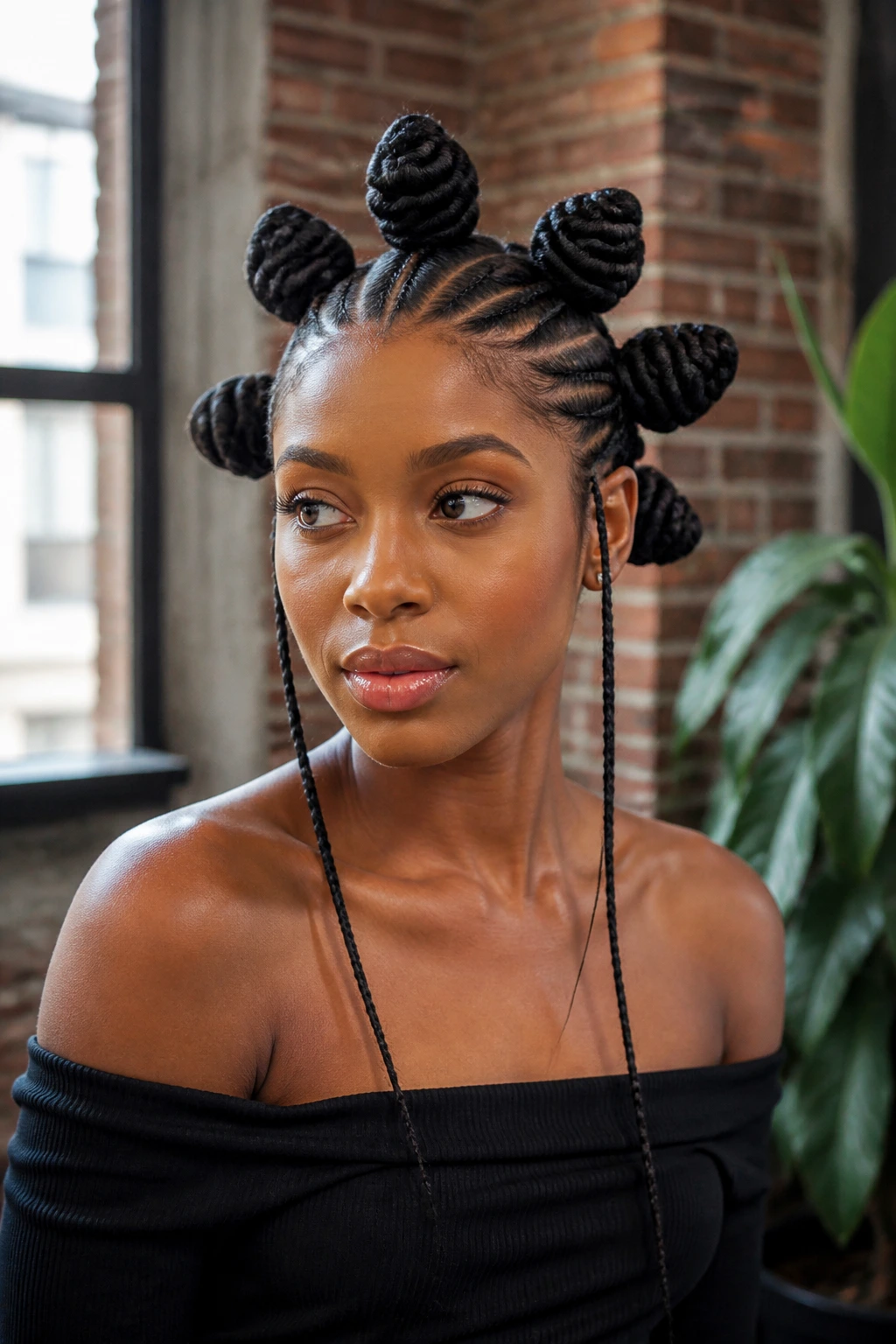
What happens when the knots get bigger and the braids stay slim? You get contrast, and that contrast is doing a lot of heavy lifting here. Jumbo knot buns make the style feel bold, while the slim feed-in braids keep the scalp from looking crowded.
How to get the balance right
This works best when the braid section is precise and the knot section is intentionally fuller. If both parts are chunky, the style can feel top-heavy. If both parts are tiny, the whole thing goes flat.
- Use pre-stretched braiding hair if you want smoother wrapping.
- Keep the knots rounded, not flat.
- Leave a little space between the buns so each one reads clearly.
The style is dramatic in a good way. Not subtle. That’s the appeal.
16. A Micro Braid Grid With Tiny Knot Accents
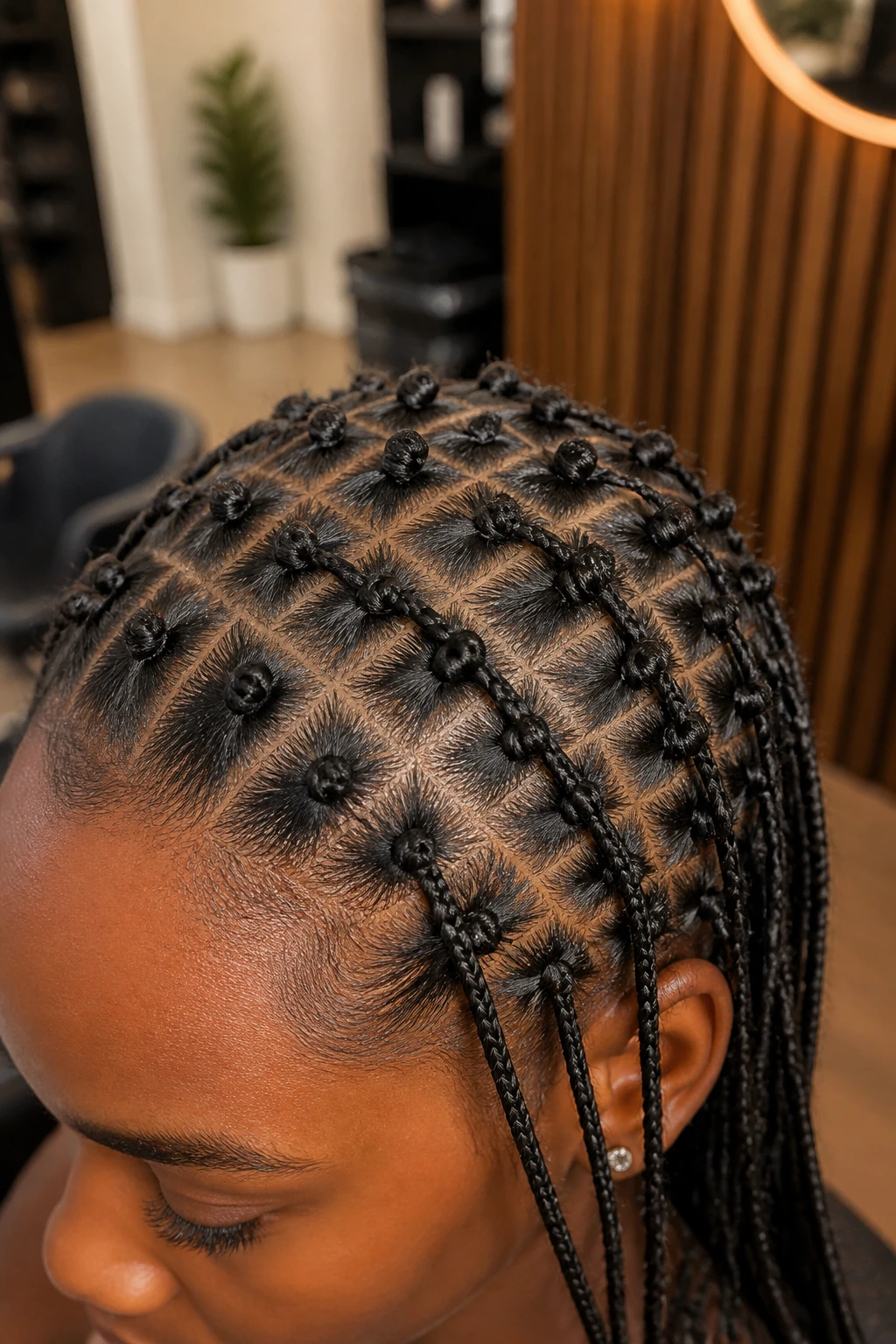
A micro braid grid turns tiny knot accents into the whole point. The grid gives you control, and the small knots break up what could otherwise look like a very dense braid set. It’s detailed hair. Busy, but in a good way.
This style is for the person who likes precision. Every section matters. If the parts are uneven, you’ll see it immediately, so the installation has to be patient and clean. The upside is that the finished look can stay interesting for a long stretch because there’s so much pattern on the scalp itself.
Tiny knots are best here. Large ones would overwhelm the grid and make the style feel crowded. Keep the accents light and let the parting do the talking.
17. Braided Mohawk With Knot-Pinned Sides
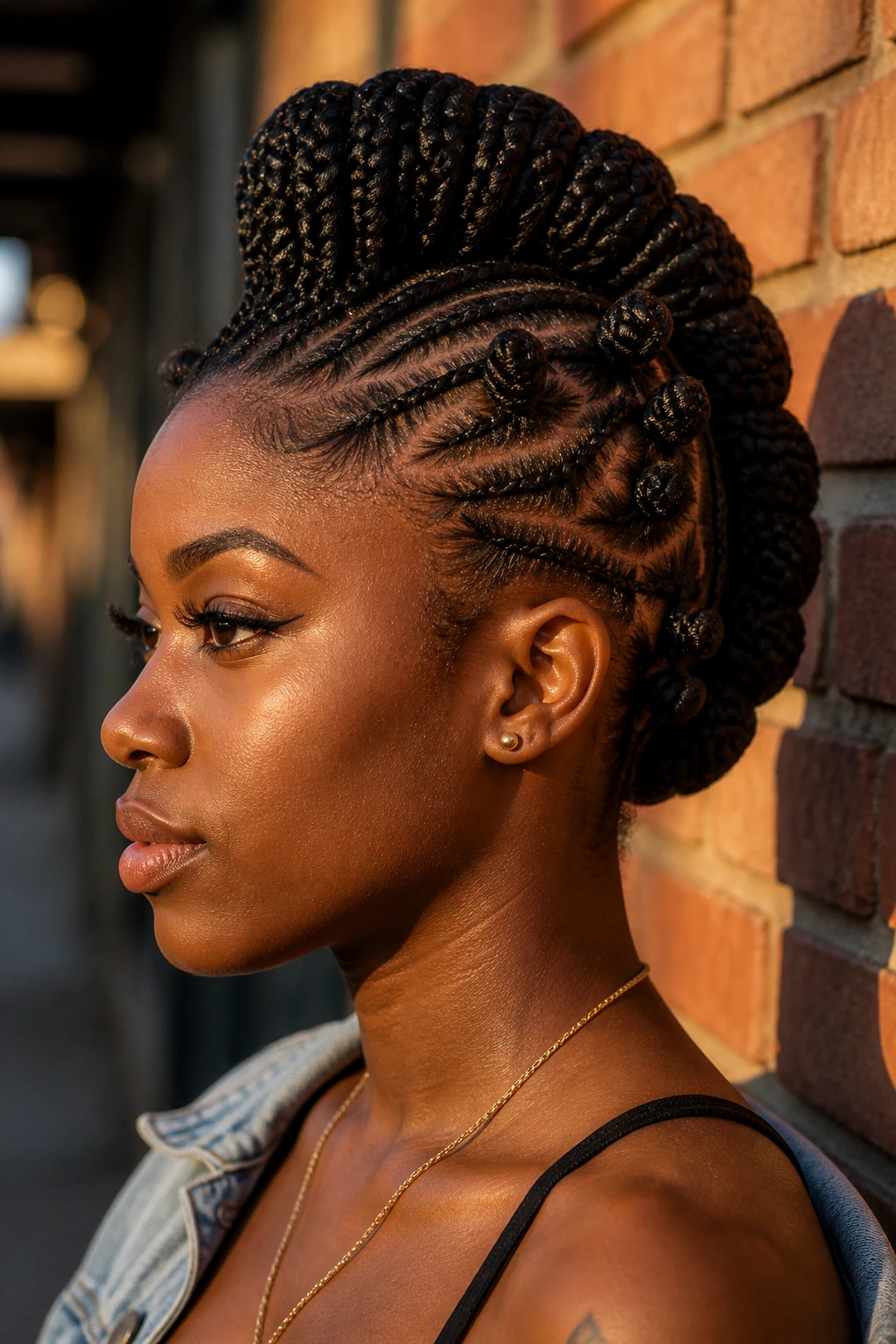
A braided mohawk with knot-pinned sides leans harder into shape than softness. That’s the point. The center strip gets the drama, while the sides stay tucked and controlled, almost like they’re holding the frame for the rest of the style.
This version works well if you like your hair to read from across the room. The silhouette is strong. The knots on the sides act like anchors, so the mohawk doesn’t drift into chaos after a few days. A little edge control at the temples helps, but the real shape comes from the braid direction.
If your face is longer, this style adds width in a flattering way. If your face is rounder, keep the center braid row narrow so the shape stays balanced.
18. Color-Tipped Braids Feeding Into Knots
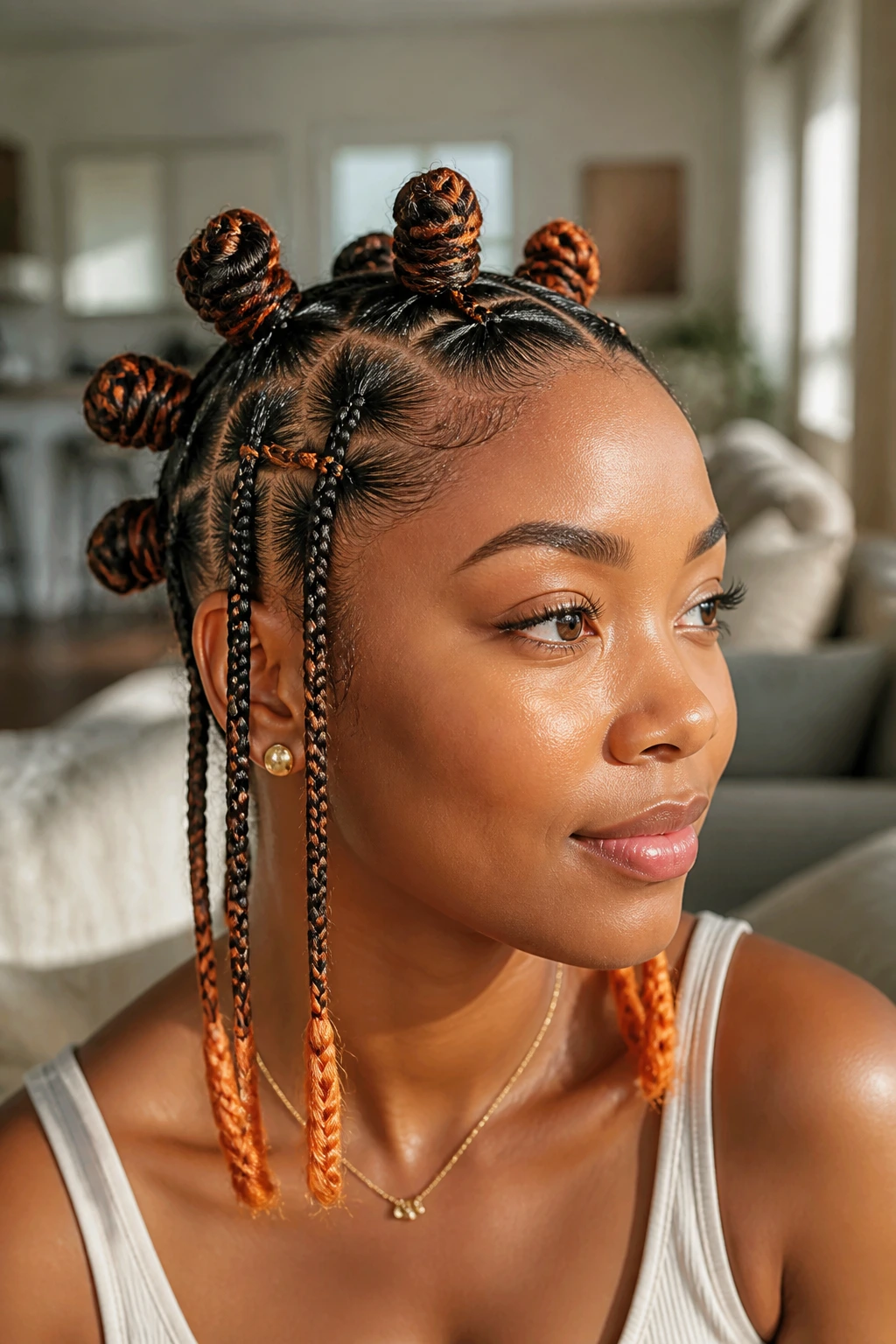
Color-tipped braids change the feel of every knot in the set. Even a tiny bit of copper, burgundy, honey blonde, or deep blue at the ends makes the knots pop in a way plain hair sometimes can’t.
Unlike a full-color install, this version lets the base stay natural-looking while the knot ends carry the fun. That makes it a good choice for people who want color without committing to a fully saturated look. The contrast is more obvious when the braids are tucked into knots because the ends gather in one place.
I’d recommend keeping the color near the tips, not halfway up the braid. The knots need a clean wrap, and too much color in the body can muddy the shape.
19. Heart Parts With Symmetrical Knots and Side Braids
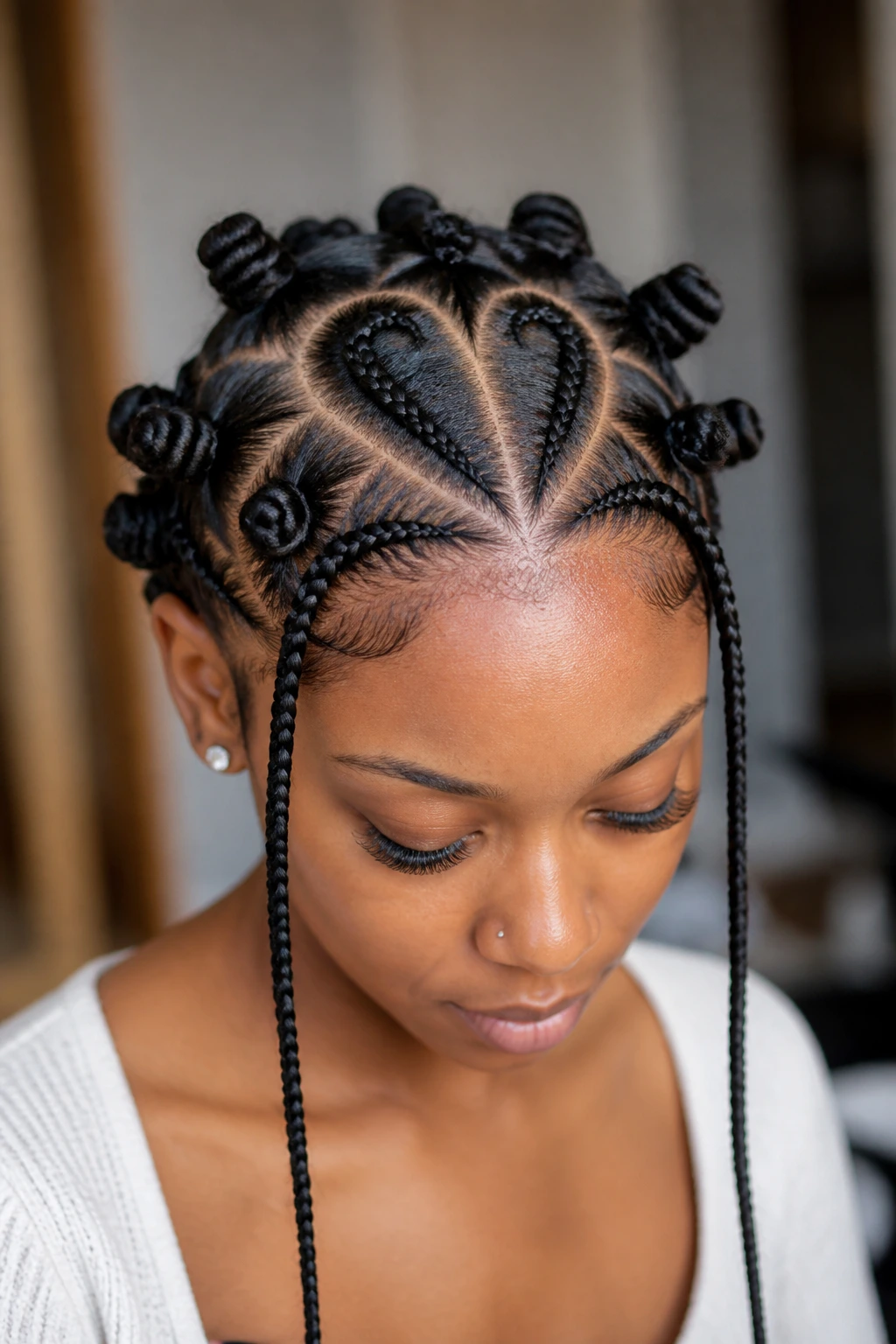
Heart parts are hard to miss, and that is exactly why this combo works. The parting becomes part of the design, not just the setup, and the symmetrical knots make the whole style feel intentional from the first glance.
What to watch for
The heart shape needs to stay crisp or the style loses its charm. Pair it with slim side braids so the scalp design doesn’t get buried under too much hair. A heart part also looks best when the knot size stays even on both sides.
- Keep the center of the heart slightly wider than the points.
- Use small clips while sectioning so the shape stays clean.
- Finish with a lightweight mousse to smooth the rows.
This one is playful, but not childish. That line matters.
20. Stacked Knot Crown With Long Back Braids
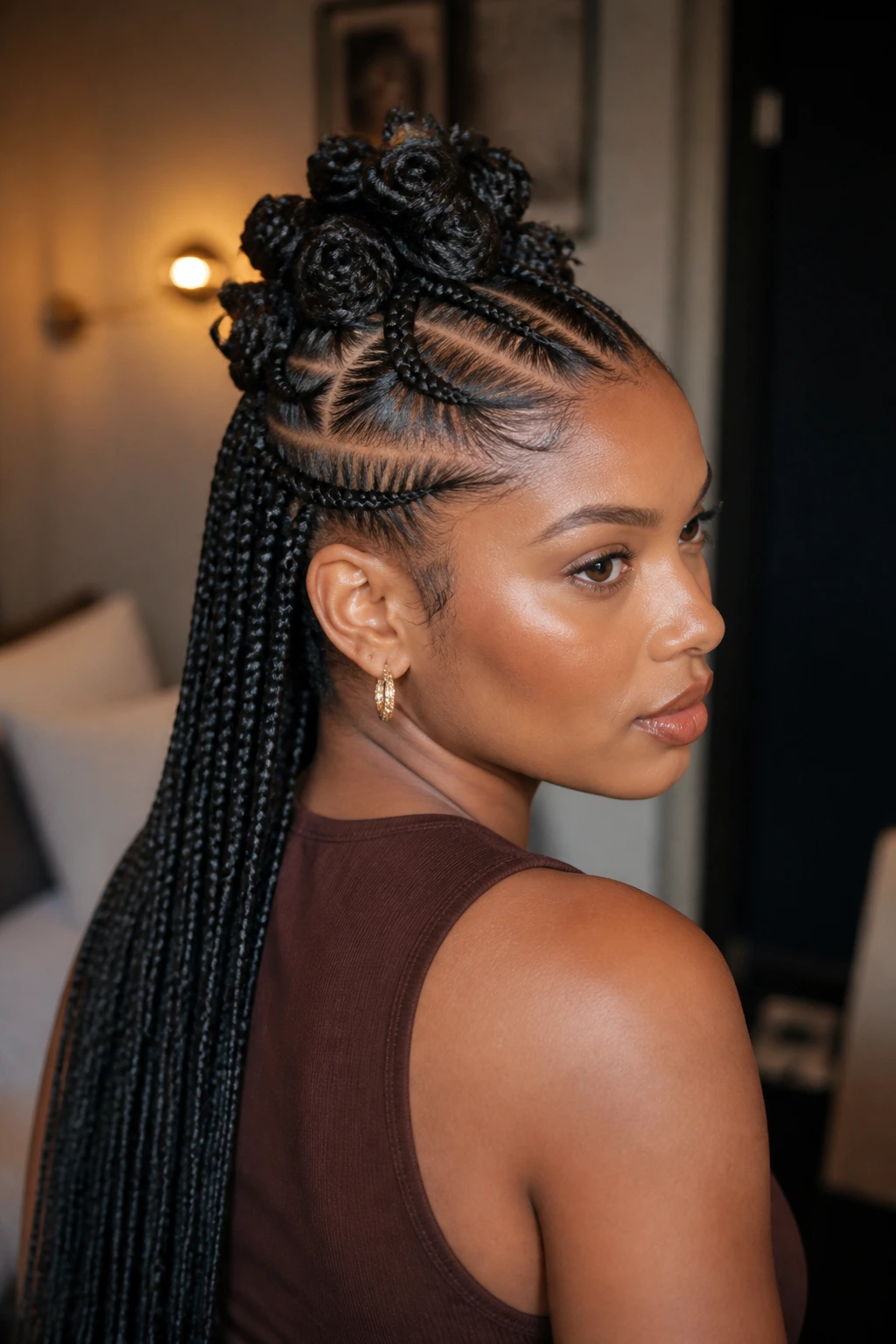
Stacked knots at the crown push the eye upward before the braids even come into play. That makes the head look taller, which is handy if you like a little lift and a little drama at once.
The long back braids stop the style from feeling like a full updo. They add weight in the right place and keep the crown from looking too top-heavy. I’d wear this when I want something that photographs clearly from the side. The stacked shape has a strong profile, and the trailing braids keep it from feeling rigid.
Use this combo when you want a style that changes as you move. Front, side, and back all do something different.
21. A Protective Updo With Knots in Back and Braids Up Front
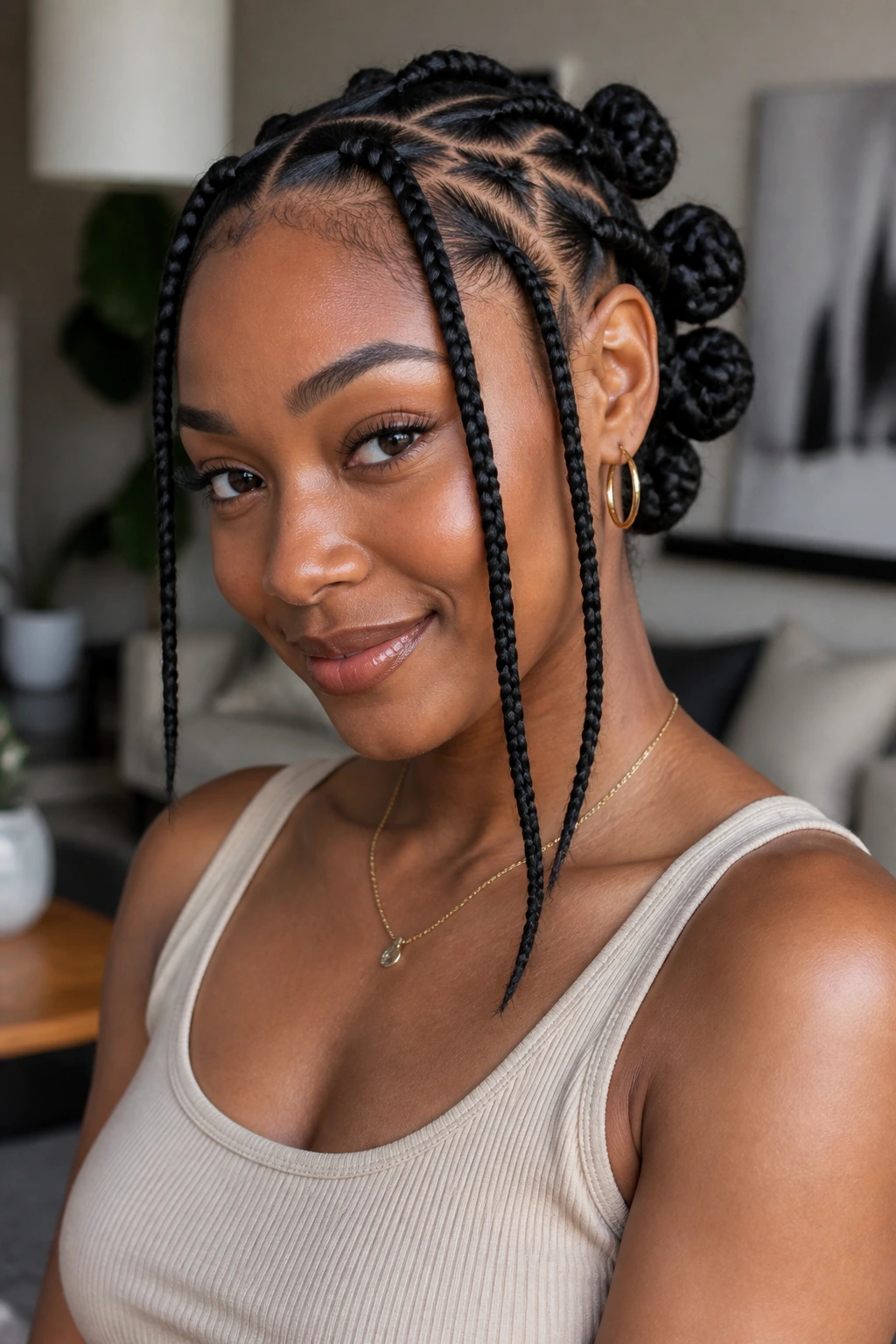
A protective updo works best when the front and back carry different jobs. In this version, the braids up front frame the face, while the knots in back keep the length tucked away and manageable.
That split is useful. The front gets to be neat and visible, which matters if you like seeing the style in a mirror. The back stays contained, which helps with collars, coats, and long days when hair should stay out of your hands. It also tends to feel lighter than a full knot set.
Best for
This is a solid choice if you want structure without a heavy crown.
- Great for medium to long hair.
- Easier to pin for evening wear.
- Works nicely with small decorative cuffs near the front.
The style holds up best when the back knots are close enough to the scalp that they do not swing around.
22. Short-Hair Knot and Braid Combo With Added Length
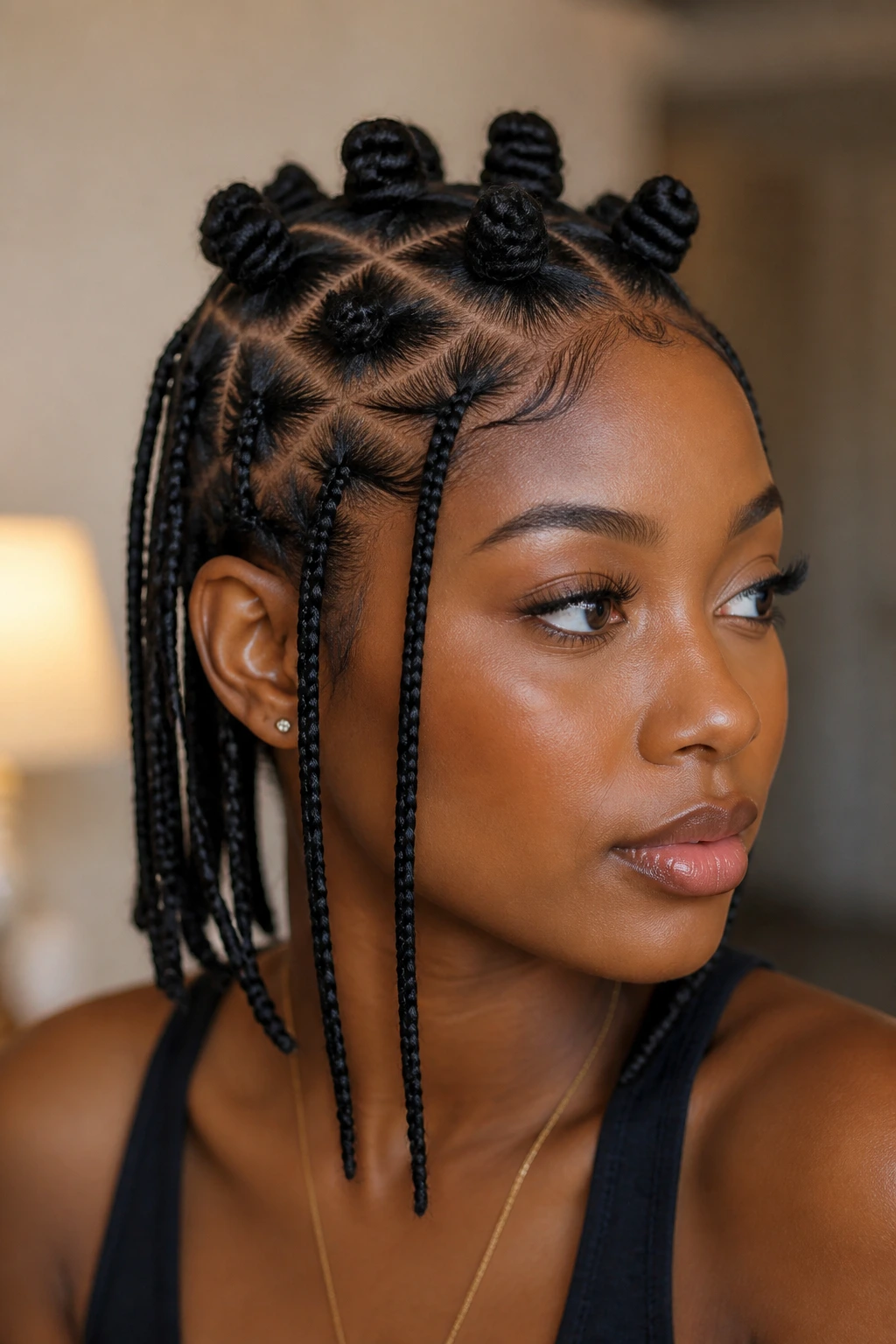
Short hair does not rule out Bantu knot braid combos. It just changes the game. Here, the braids add length where the natural hair stops, and the knots give the short cut a shape it would not have on its own.
This style is useful if you’re growing out a cut or just want a change without committing to long extensions. The trick is to keep the added length believable. If the extensions are too heavy, the base starts slipping. If they’re too short, the knots lose definition.
I like this on tapered cuts and cropped natural hair because it gives you contrast between the tight sides and the fuller top. It feels intentional, not improvised.
23. Vacation-Ready Knot Rows With Loose Ends
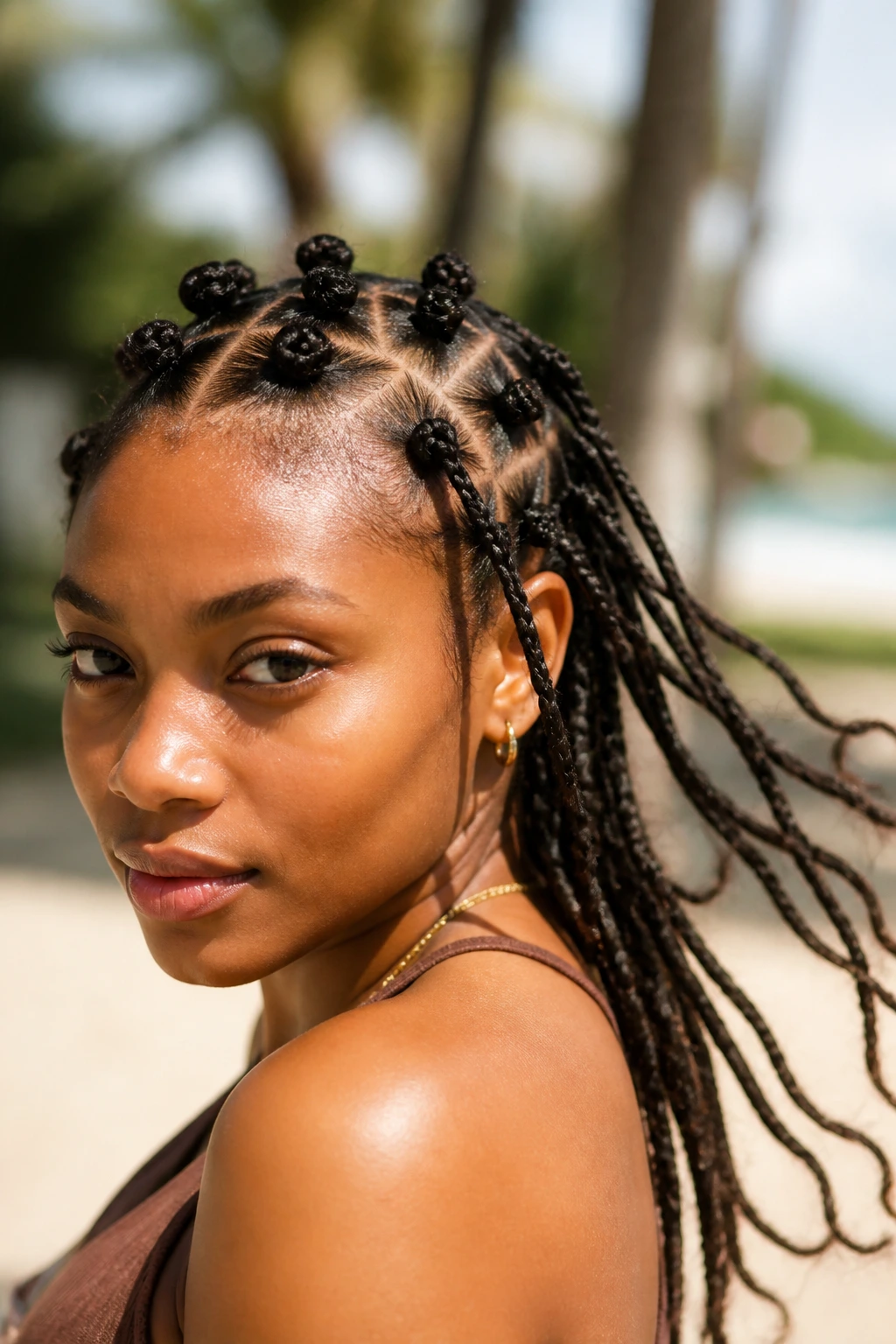
Salt, wind, and sweat ask for a style that can take a little abuse. Knot rows with loose braid ends do that job well. The knots stay neat near the scalp, while the loose ends give you some movement when the hair gets damp or windswept.
That looseness is not a flaw here. It’s the appeal. You want a style that can look a little undone and still hold together. A touch of lightweight oil on the ends helps keep them from drying out after sun exposure, and a satin scarf at night keeps the parting from frizzing up too fast.
This combo works because it never tries too hard. The structure is there, but it can handle a messy day.
24. A Formal Knot Chignon With Braided Base
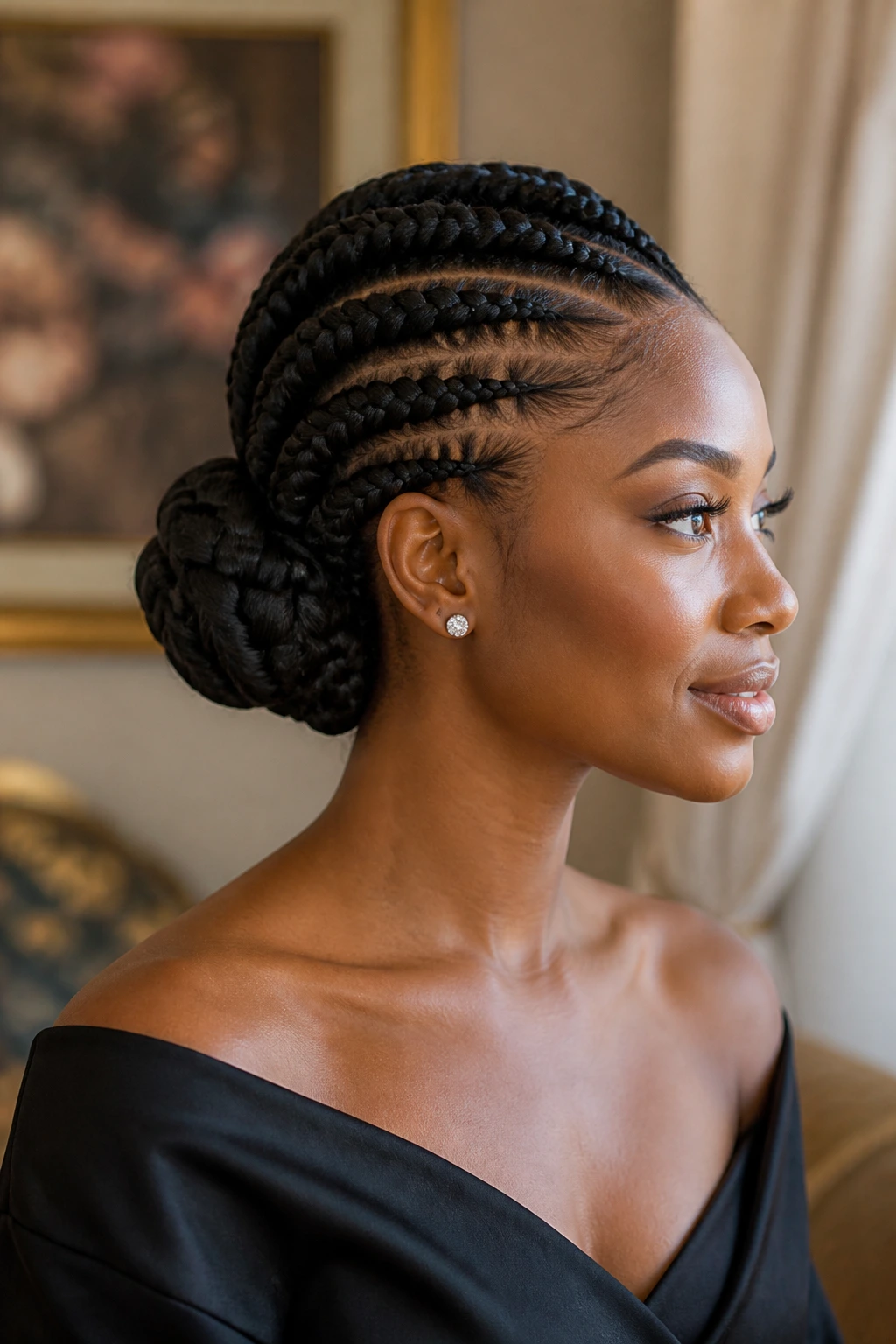
A formal knot chignon looks sharper when the braid base is visible. That little bit of pattern keeps the updo from becoming a plain bun, and it gives the style a more finished line at the back of the head.
This is a smart pick for dressier events because it holds shape without looking fragile. The braid base gives you grip, so the chignon stays secure, and the knots help create a shape that feels more sculpted than soft. I’d keep the accessories minimal here. Maybe one cuff. Maybe a subtle pin. Too much decoration turns the style fussy fast.
The best version is smooth at the crown and deliberate at the nape. Nothing loose. Nothing sloppy.
25. Chunky Rope Braids Into Oversized Knots
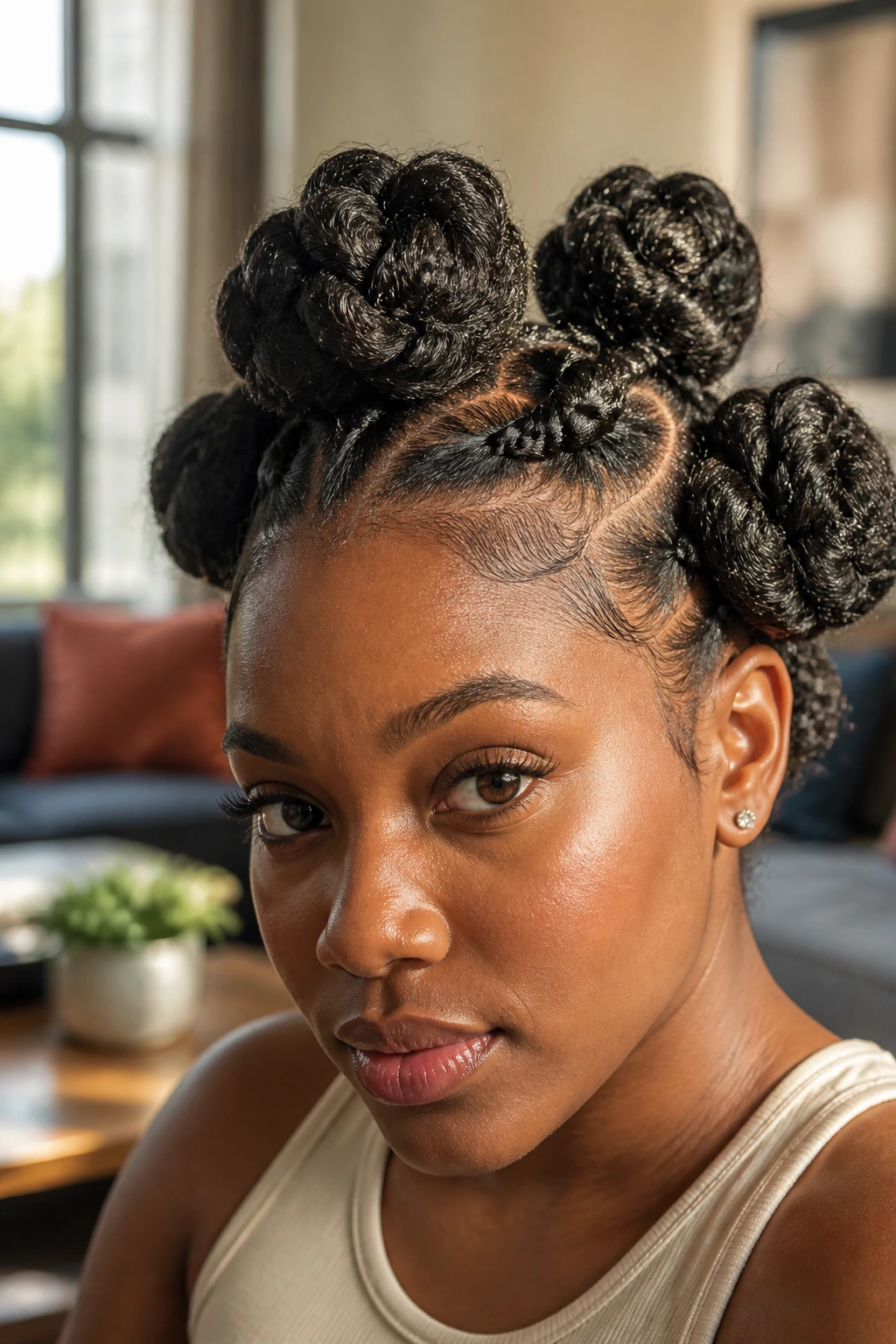
Chunky rope braids into oversized knots make no attempt to hide. Good. A style like this should have presence. The rope braid texture adds thickness without looking flat, and the large knots make the silhouette unmistakable.
Why it stands out
The texture is doing more than the color or length ever could. Rope braids twist light in a way standard three-strand braids don’t, so the knots catch the eye even when the rest of the style is simple.
- Best on thicker hair or with added extensions.
- Keep the knots evenly rounded so they don’t sag.
- Use a firm hold product near the base, then stop. Too much and the style gets sticky.
This combo is bold, but not messy. There’s a difference.
26. Tapered Knot Set With Clean Side Cornrows
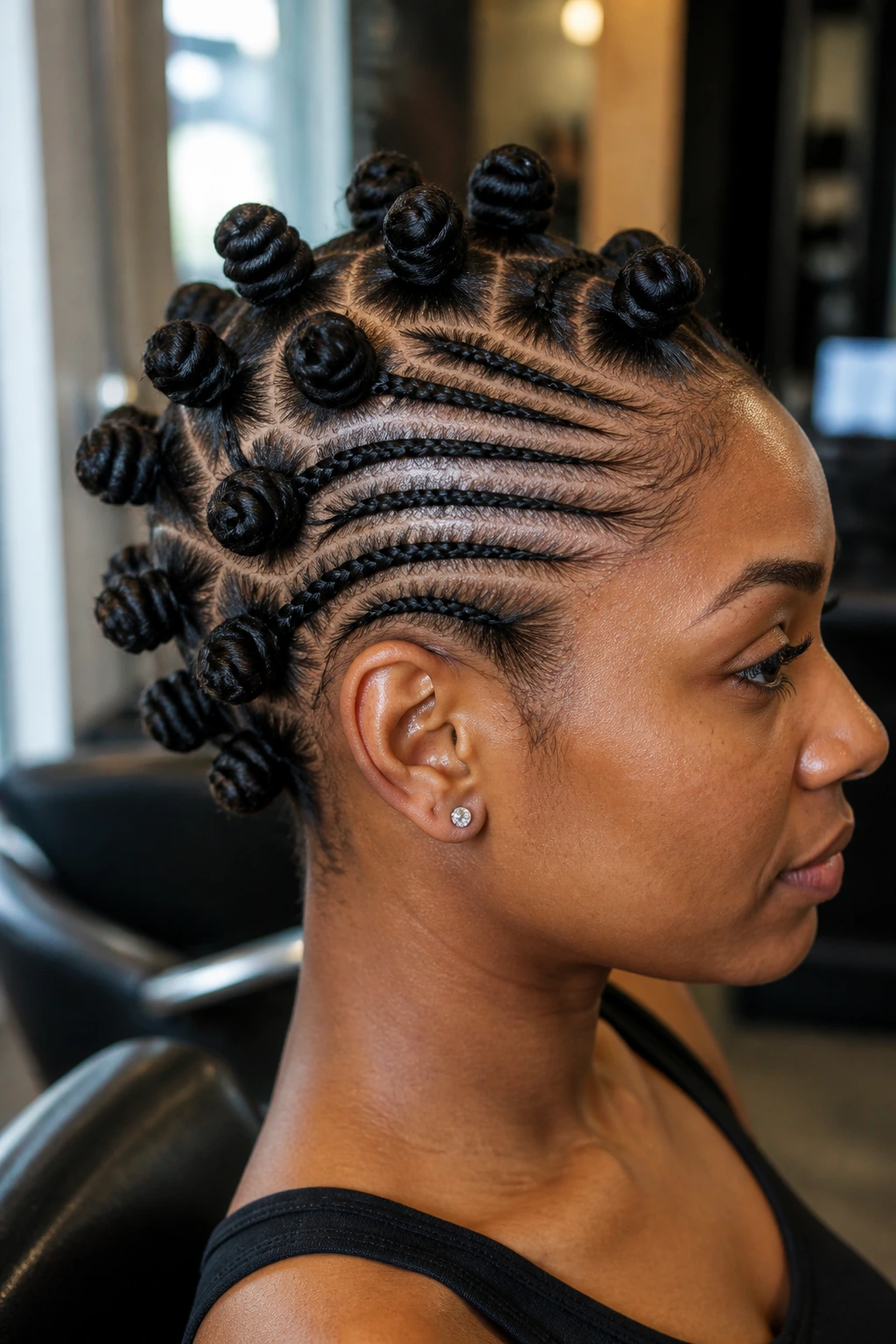
Tapered knot sets create a shape that gets slimmer as it moves toward the back. That tapering gives the style a clean finish and keeps the head from looking boxy, which is a problem with some fuller braid-knot mixes.
The side cornrows are the quiet hero here. They pull the eye inward and help the knot sections look more refined. I like this style on people who want the knots to stand out without making the whole head feel overloaded. It’s controlled. Almost sharp.
A taper works best when the knot sizes decrease slightly as they move back. That small shift keeps the shape natural instead of symmetrical in a stiff way.
27. Braids and Knots With Curved Feed Lines
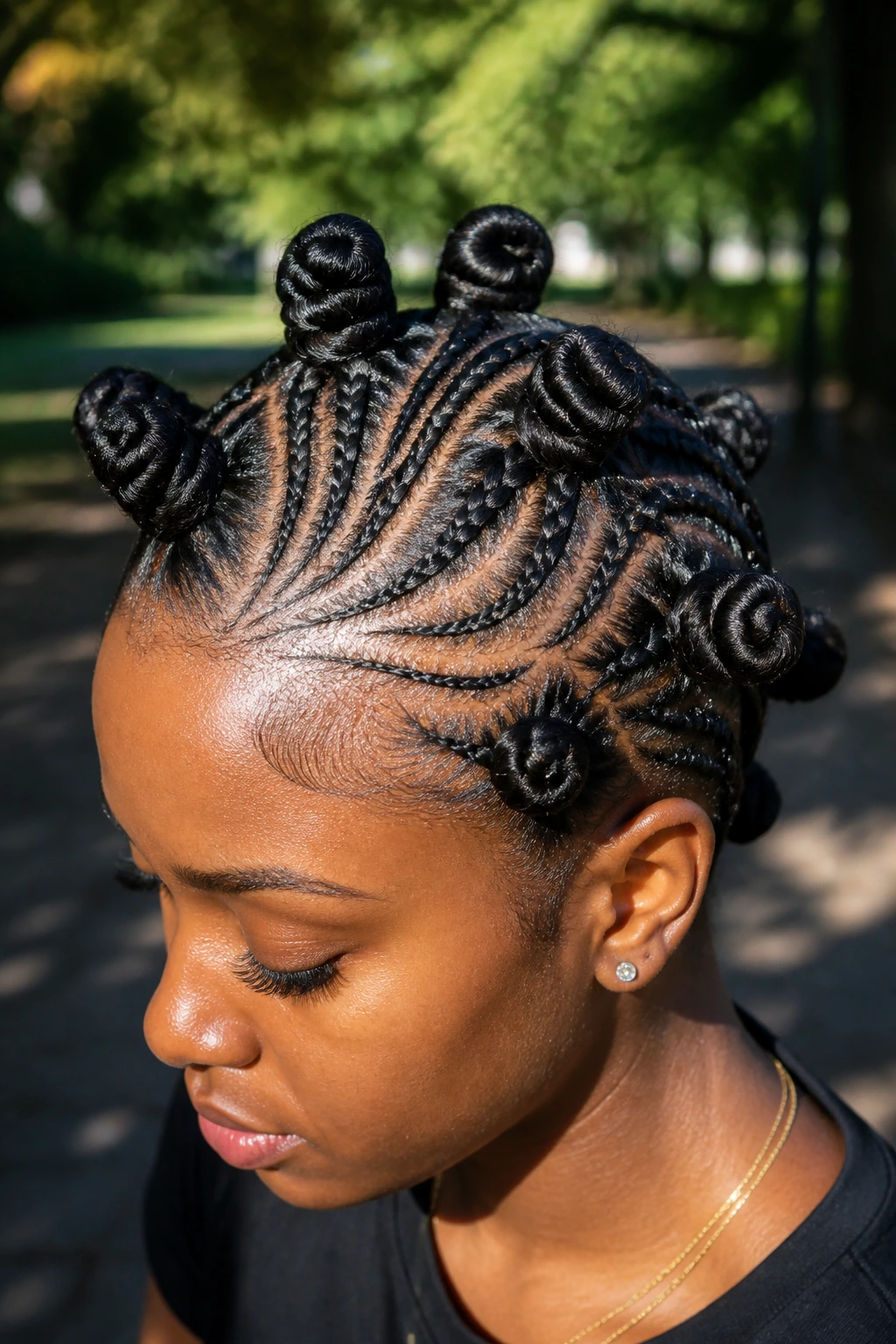
Curved feed lines are the trick when you want a braid pattern that feels softer than straight rows. The braids follow the shape of the head more closely, and the knots can sit wherever the curves naturally lead them.
This style has a nice flow to it. Nothing feels boxed in. The curved lines keep the scalp pattern from looking too severe, which is useful if you want the knots to feel like part of a larger design rather than little add-ons. A good stylist can make the curves sweep around the head in a way that flatters the face and the braid length.
If your hair is dense, this kind of pattern helps break up the weight. If it’s finer, the curves add visual fullness without needing huge knots.
28. Knots Wrapped With Gold Cuffs and Braids
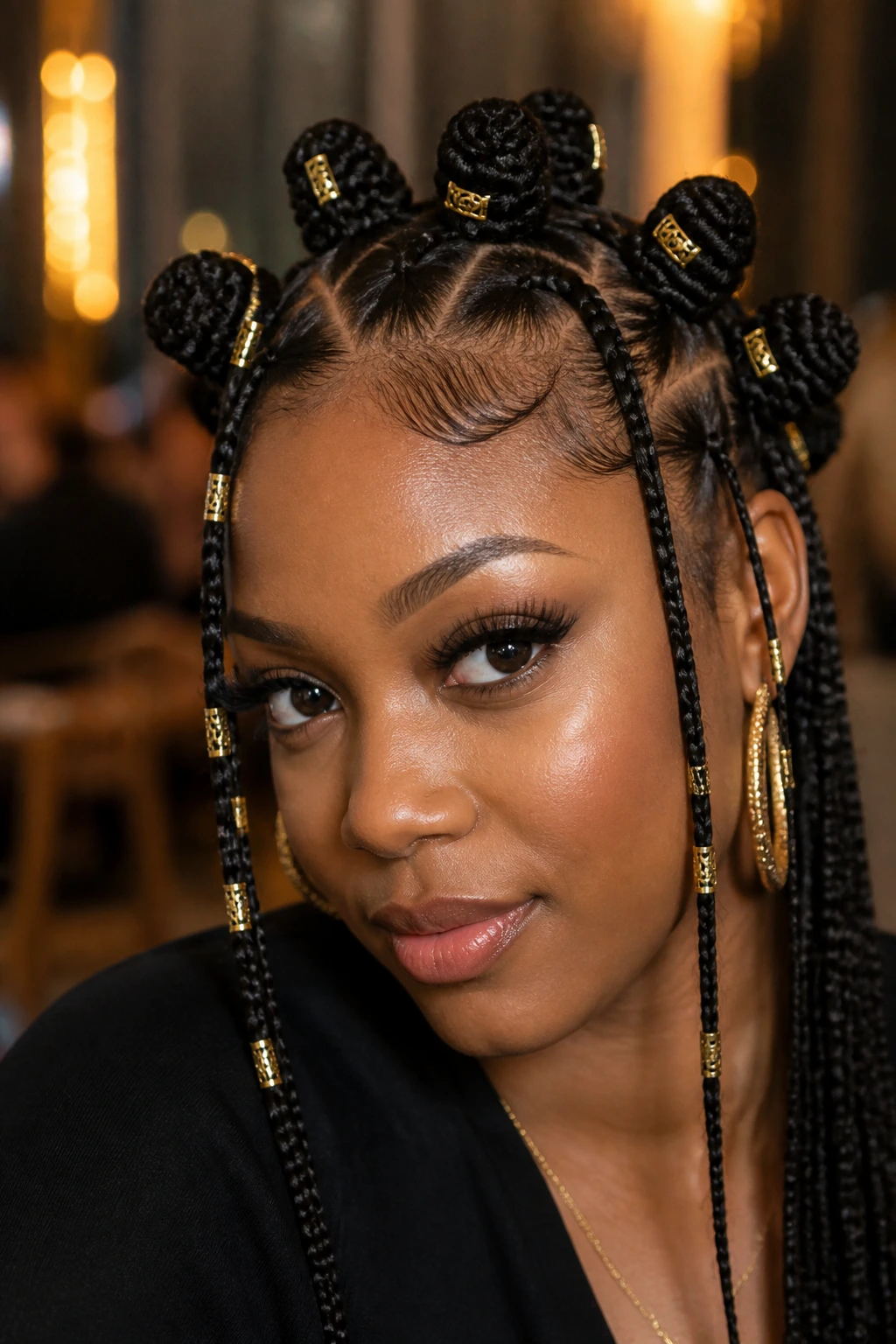
Gold cuffs change the entire read of a knot-and-braid style. They catch the eye right away, but the real point is structure: cuffs make the braid sections feel finished, and they frame the knots instead of competing with them.
This combo works best when the accessories are placed with restraint. One cuff on every braid is too much for most heads. A few well-placed cuffs near the front or around the knot base give you enough shine without clutter. The hair itself should still be the main event.
I’d wear this for a dressy night out or any event where you want the style to read polished from across a room. Keep the rest of the look simple and let the metal do some of the talking.
29. Mini Knot and Braid Mix for Low-Key Office Wear
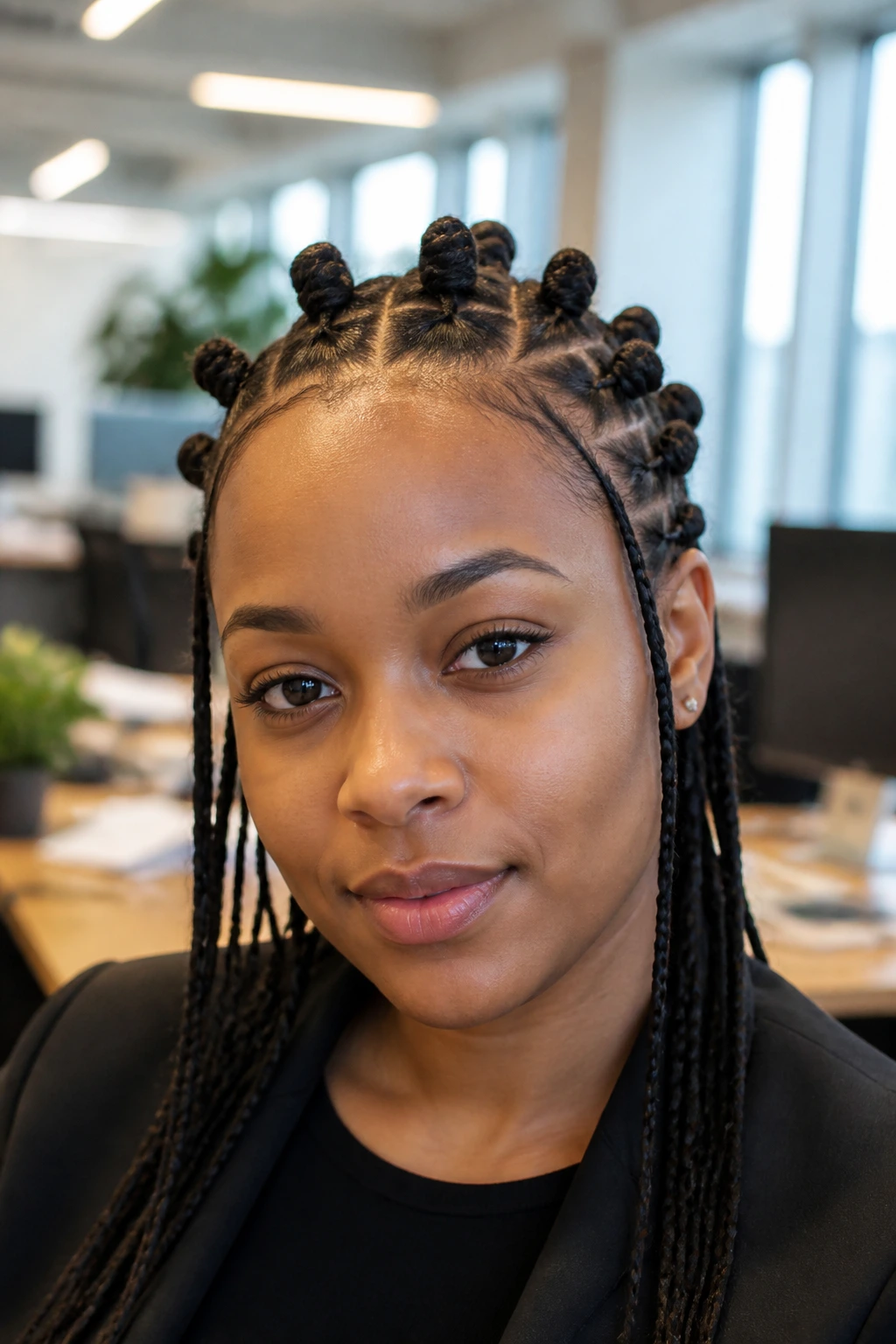
Some styles need to sit quietly and still look good at work. Mini knots and slim braids do that nicely. The shape is neat, the profile stays close to the head, and the whole style reads intentional without looking loud.
This is the combo I’d choose if I wanted something easy to wear with a blazer, a cardigan, or a plain button-down. It does not need a lot of accessories. In fact, too many accessories would spoil the point. Keep the parts crisp, the knots small, and the edges smooth enough that the style looks finished from a few feet away.
A light mist of mousse in the morning helps with flyaways. That’s enough. No heavy shine spray, no extra drama.
30. Long-Wear Weekend Combo With Tucked Ends and Braided Crown
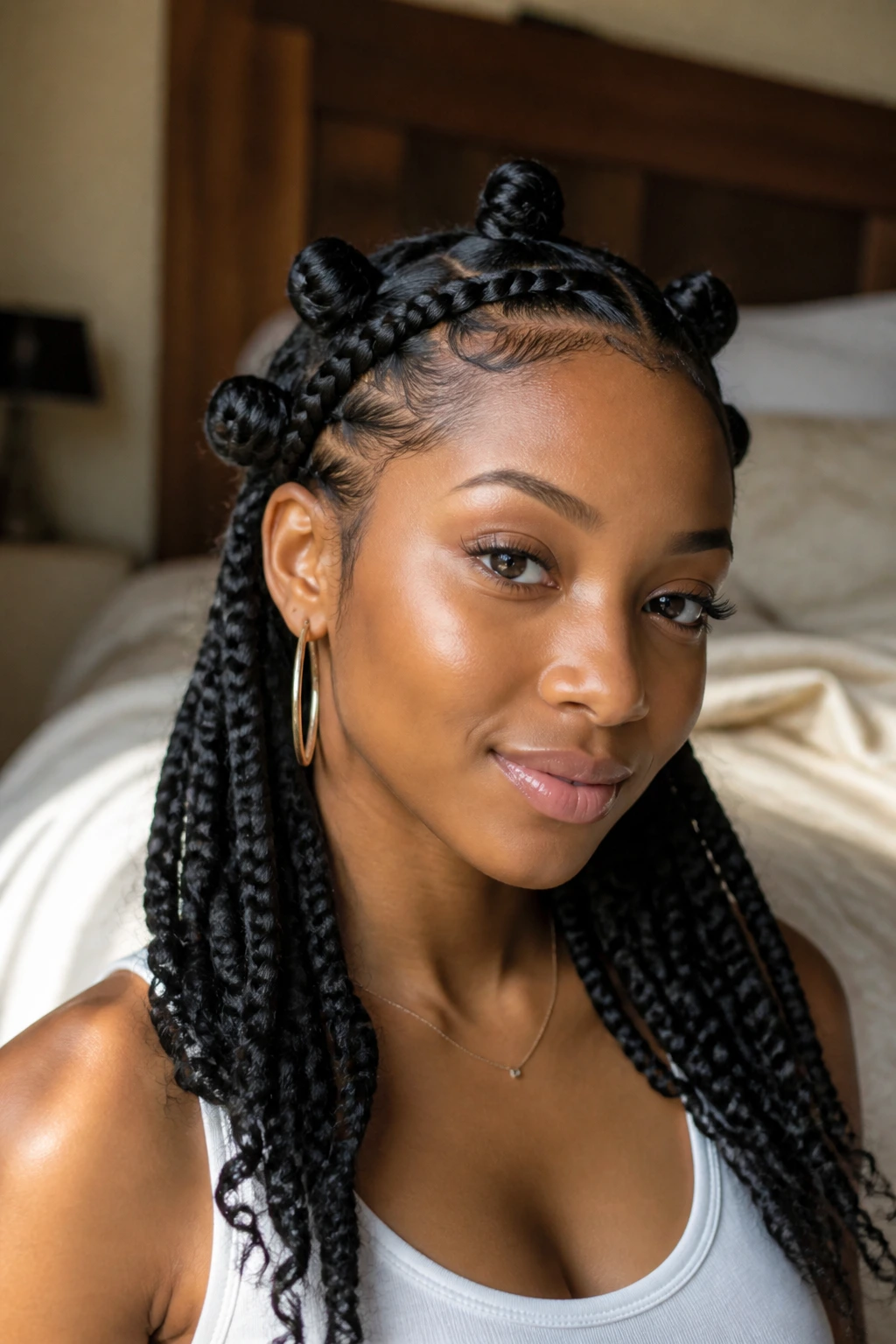
A long-wear weekend combo needs two things: tucked ends and a crown that does not collapse by lunch. This style gives you both. The braided crown keeps the top controlled, while the tucked ends sit low and protected, so the whole look survives sleeping, errands, and long days without a full reset.
I like this one because it’s practical without looking plain. The crown creates shape near the face, and the tucked back sections make maintenance easier. If you’re someone who wears a style hard for several days, this is the kind of setup that pays off. Wrap it at night, refresh the front with a little foam, and leave the rest alone.
Best tip: if the crown starts to lift, pin it before it gets sloppy. Catching it early keeps the whole style looking fresh longer.
