



A soft layered bob can do something rare: it looks polished without looking stiff. That’s the whole charm. The shape sits close to the head, but the layers keep it from turning into a heavy helmet, and that little bit of movement is what makes the cut feel expensive instead of dated.
I’ve always thought the best bob cuts are the ones that behave well in real life. Not runway-life. Real life. The good ones still look tidy when you tuck one side behind your ear, when the ends flip out a little, or when you only have six minutes and a round brush before you leave the house. A layered bob haircut earns its keep when it gives you shape without making styling feel like a project.
The trick is knowing where the layers should start. Too high, and the hair gets choppy fast. Too low, and you keep all the bulk but lose the softness that makes a bob flattering in the first place. The sweet spot is usually around the cheekbone, jawline, or just below the chin, depending on how much movement you want and how dense your hair is.
1. Chin-Length Soft Layered Bob with Tucked Ends
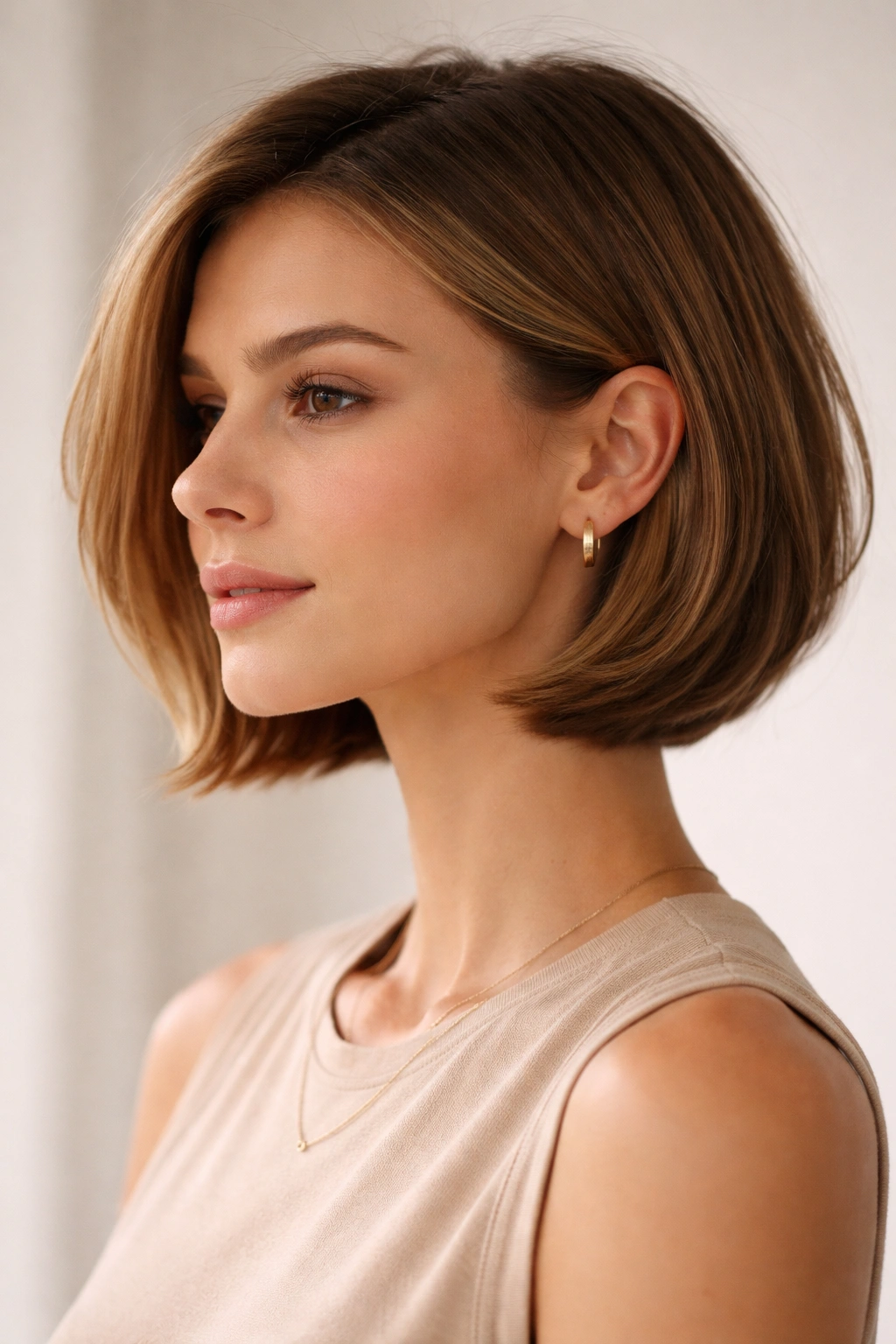
A chin-length soft layered bob is one of those cuts that quietly does a lot of work. It sharpens the jaw, opens up the neck, and keeps the whole style feeling neat even when the rest of your look is casual. The reason it reads as polished is simple: the line is short enough to feel intentional, but the layers stop it from looking boxy.
Why It Sits So Nicely
The best version has layers that begin just below the cheekbone, then taper toward the ends. That keeps the bottom edge light enough to bend inward with a brush or a quick pass of a flat iron. If your hair tends to puff out at the sides, this shape helps. If your hair is fine, it gives the illusion of more body without forcing a lot of teasing or product.
- Best for: oval, heart, and longer face shapes.
- Styling cue: tuck the front pieces behind the ears while the hair is still warm from blow-drying.
- Ask your stylist for: a blunt baseline with soft interior layers, not a stack of short chops.
- Maintenance: trim every 6 to 8 weeks to keep the chin-length edge clean.
Tiny tip: if the ends keep flipping away from your face, let the brush sit under the last 1 inch of hair for a beat longer before you release it. That little pause matters.
2. Collarbone-Grazing Layered Bob with Side Part
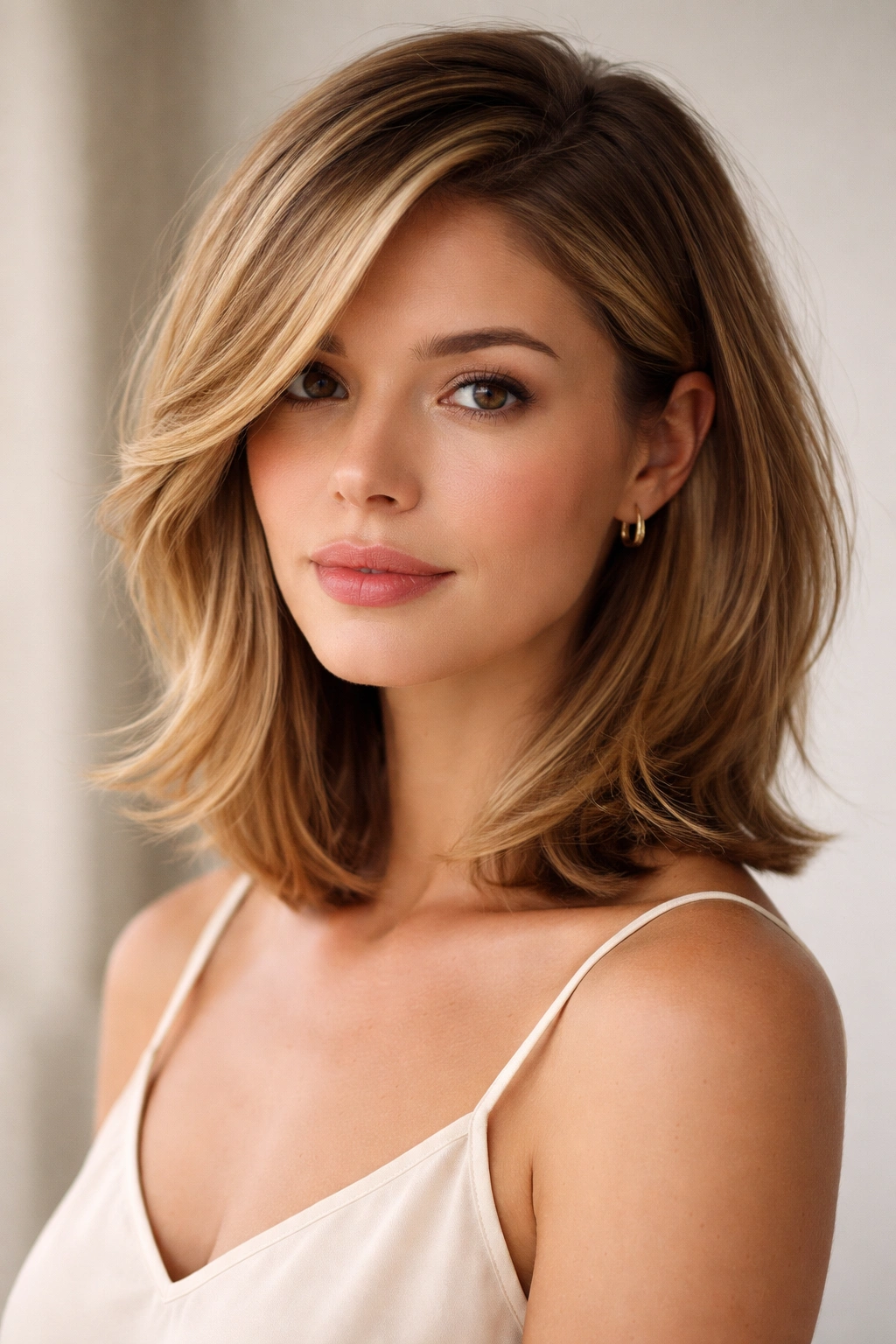
This is the cut for someone who wants a bob but doesn’t want to give up the feeling of hair. The collarbone length makes it easy to tie back, clip up, or wear loose without hitting that awkward in-between zone. A side part gives the whole thing a calmer, more tailored shape.
The soft layers here should be long enough that they move when you turn your head, not so short that they kick out in odd places. I like this length on hair that needs a little weight left in it. Too much removal and the cut starts behaving like a different haircut every time the weather changes.
A deep side part, even just 2 or 3 inches off center, can make this bob look more deliberate. It gives height at the crown and keeps the front from falling flat against the cheeks. If you wear glasses, this shape is especially good because it frames the face without crowding it.
One nice thing about a collarbone bob is that it grows out with grace. The shape softens instead of collapsing. That’s useful if you hate strict salon schedules.
3. French Bob with Airy Internal Layers
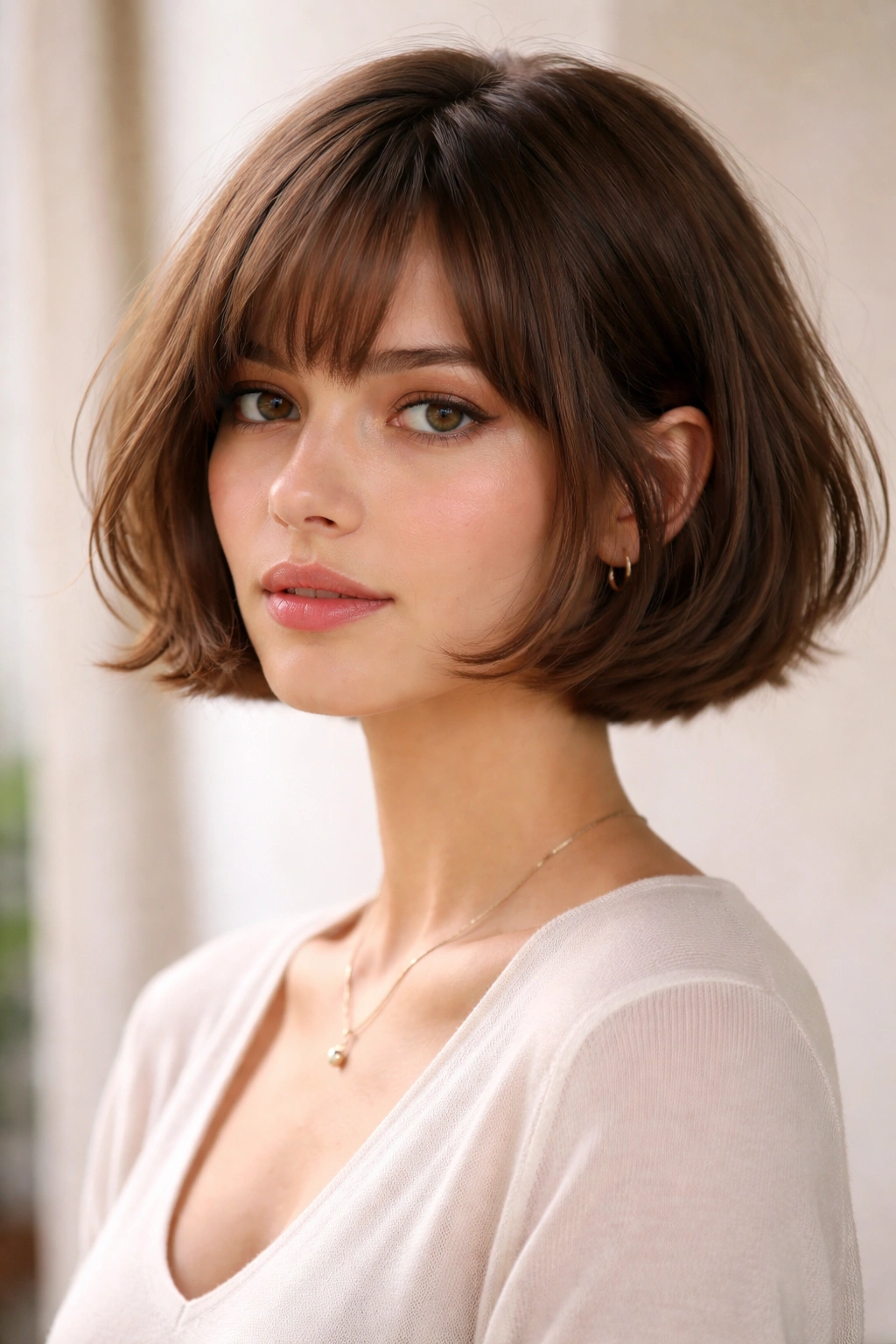
Why does a French bob look chic even when it’s barely styled? Because the cut does the heavy lifting. The silhouette is short, usually around lip to chin length, and the ends are kept light enough that the hair bends naturally instead of sitting in one hard block.
What Keeps It From Feeling Too Severe
Internal layers are the quiet hero here. They remove weight from the middle of the shape, which gives the bob that airy, slightly undone feel people love. The outer line stays neat. The inside gets softer. That contrast is the whole point.
If your hair is thick, this version can feel like a relief. If your hair is fine, it needs a careful hand, because too much thinning will make the ends look wispy in a bad way. A good French bob should still have a clean edge when it’s tucked, brushed, or air-dried.
How to Style It
- Use a pea-sized amount of styling cream through damp hair.
- Rough-dry to about 80 percent before touching the ends.
- Bend the front pieces under with a round brush or your fingers.
- Finish with a light mist of texture spray, not a heavy hairspray.
The best French bob has a bit of swing at the bottom. Not fluff. Swing.
4. Rounded Bob with Jawline Face-Framing Pieces
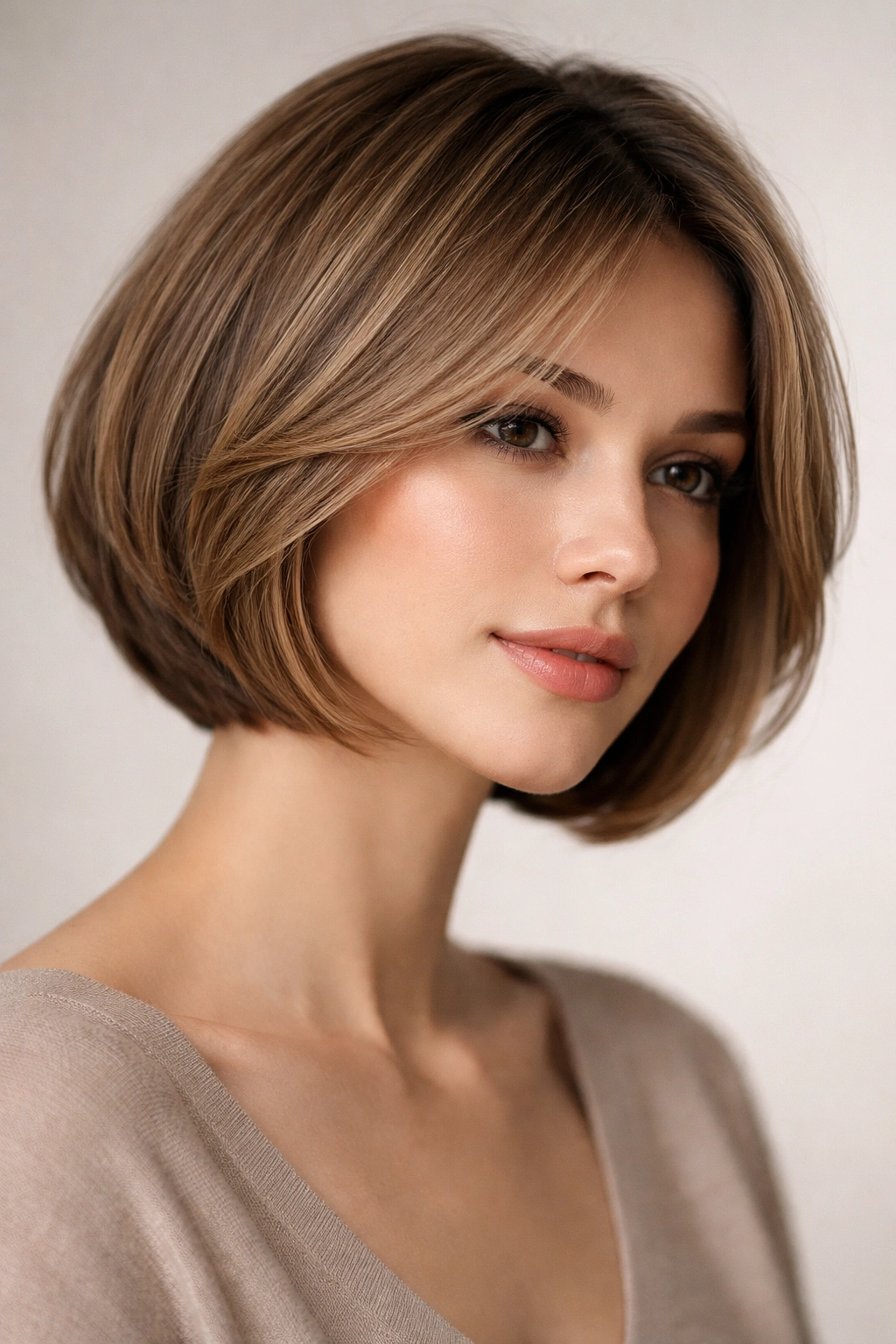
You can spot this cut from across a room. The perimeter curves softly toward the jaw, and the front pieces sit just long enough to skim the corners of the face. That curve is what makes the style feel polished instead of blunt.
It’s a smart choice if your hair has a lot of density or if the bottom tends to spread out. The rounded shape reins that in. A stylist usually builds this look by keeping the back compact and letting the front corners fall a touch longer, maybe by half an inch to 1 inch depending on face shape.
The magic happens in the face-framing pieces. They should start around the cheekbone or just below it, then taper smoothly into the rest of the cut. If they start too high, you get that old-school “two-strands-hanging-forward” problem. Nobody wants that.
- Works well on medium to thick hair.
- Looks best with a slight bend, not stiff curls.
- Ask for soft graduation through the back, not dramatic stacking.
- Keep the ends blunt enough to hold shape.
Rounded bobs are good when you want your haircut to feel finished even on low-effort days. They do not need a ton of product to make sense.
5. Layered Bob with Curtain Bangs
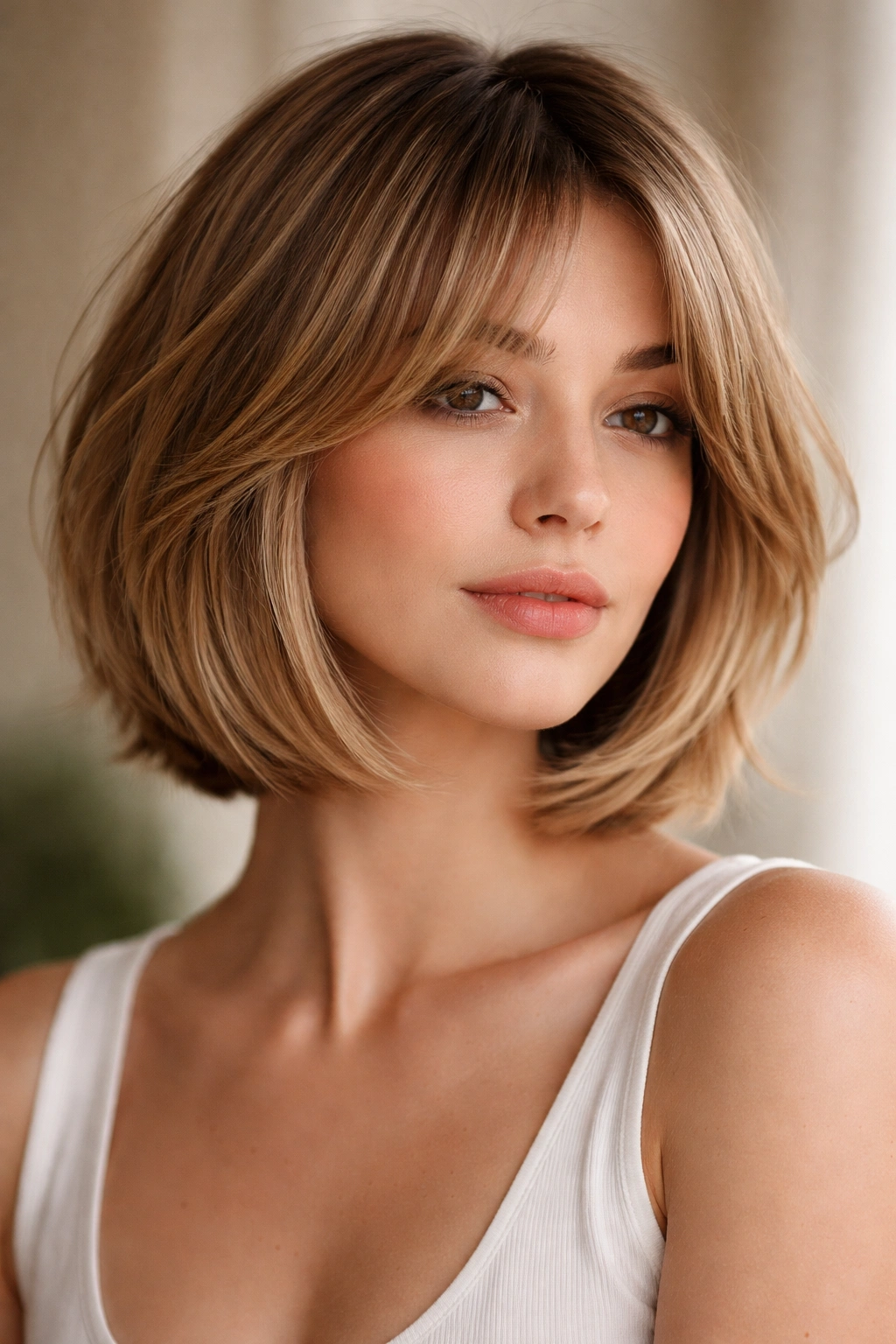
Curtain bangs and a soft layered bob are a good match because they solve the same problem from two angles: both soften the face, and both keep the shape moving. The bang line falls open in the middle, then blends into the side pieces, which makes the whole haircut feel less rigid.
The easiest way to ruin this cut is to make the bangs too short. Curtain bangs that stop high on the forehead can fight the bob instead of joining it. I prefer them long enough to hit somewhere between the eyebrow and cheekbone when brushed down, because that length gives you room to part them, sweep them, or tuck them back.
The layers in the bob itself should stay gentle. You want the bangs to be the softest part, not the loudest. If both the fringe and the body of the hair are heavily textured, the cut can get busy fast.
A round brush helps, but not in a fussy way. Blow the bangs away from your face first, then let them fall back into place. That gives them curve without making them look curled. A little root lift at the front does more than a full head of styling ever will.
6. Blunt-Edge Bob with Hidden Layers
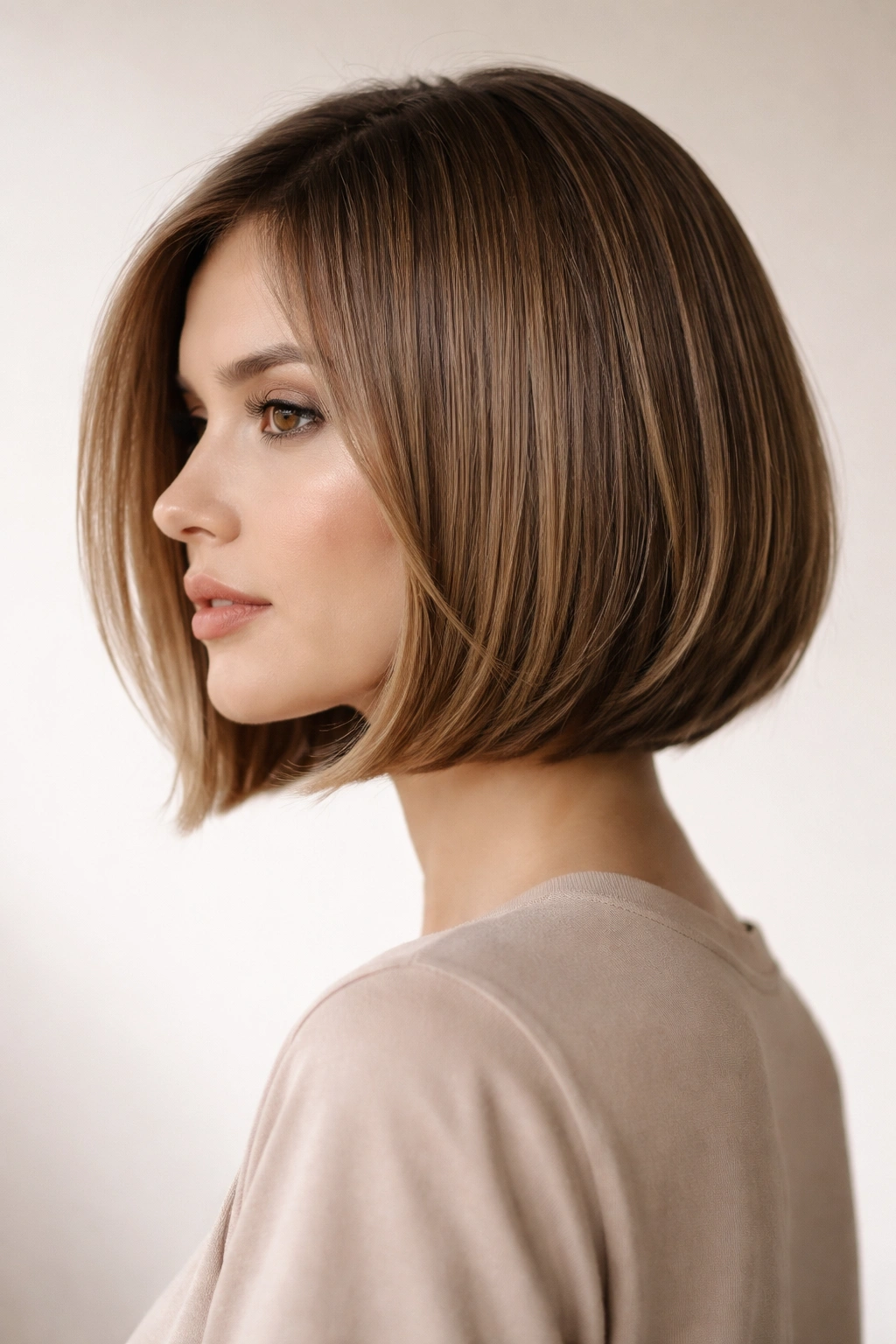
Unlike a heavily choppy bob, this one keeps the outside line clean and hides the layering inside the haircut. That means you get movement without losing the crisp edge that makes a bob look expensive. It’s a nice middle ground if you like structure but hate hair that feels too blunt and wide at the bottom.
Hidden layers are cut under the top veil of hair, so they don’t interrupt the silhouette. You can think of them as support, not decoration. They remove weight where the hair needs to bend, especially through the back and under the cheekbones, but the outer shape still looks smooth.
This version suits people who want their bob to air-dry with a bit of shape. The top layer falls over the shorter pieces and keeps the haircut from showing every single texture change. That matters if your hair is wavy in some places and straighter in others. Mixed textures can be a pain. This cut handles them better.
A blunt edge also grows out well if you keep the internal layers modest. Ask for quiet layering, not aggressive thinning. That wording matters more than people think.
7. Wavy Bob with Soft Razor Ends
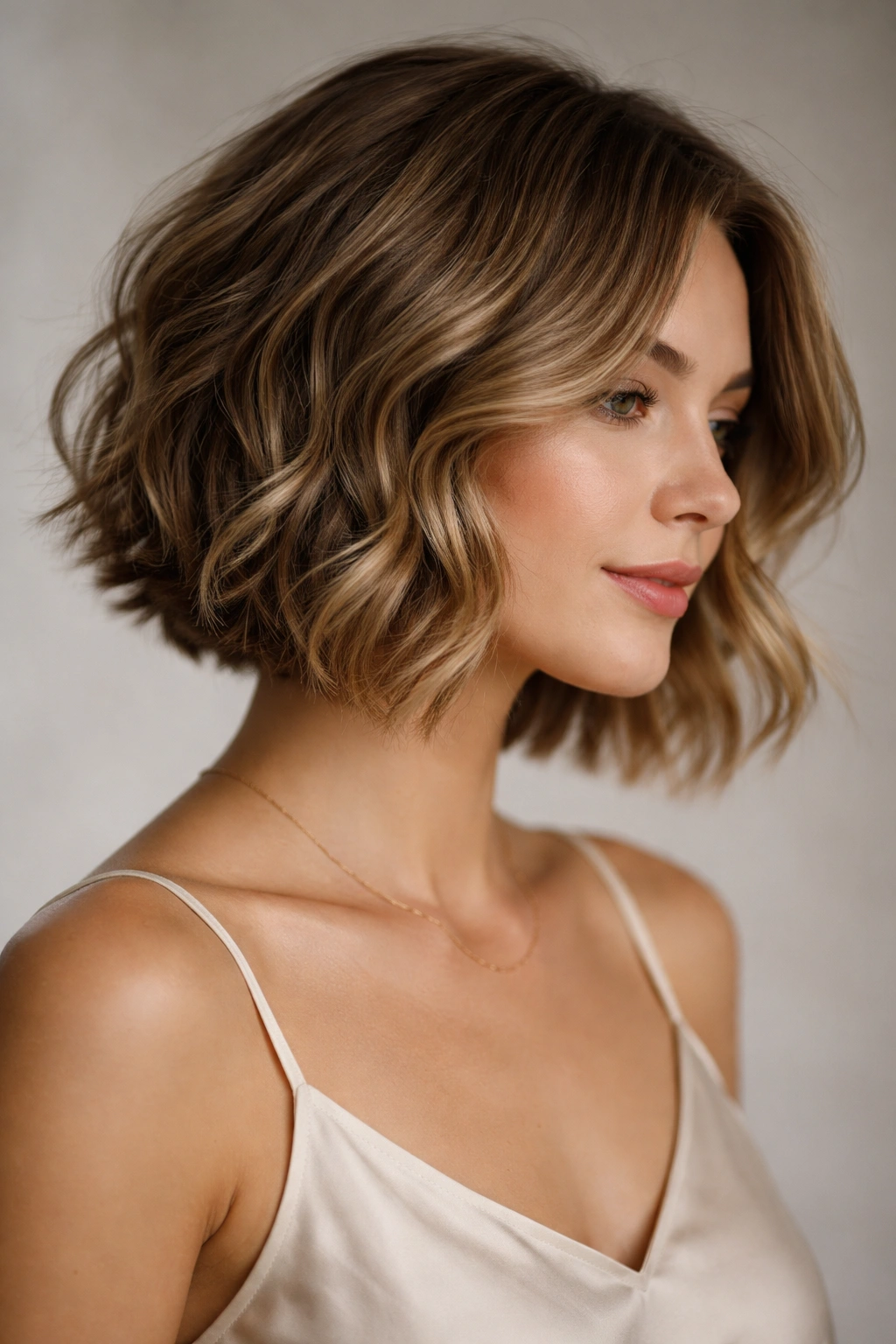
I’ve seen this cut work especially well on hair that refuses to lie flat. The soft razor ends keep the bob from looking puffy, while the waves give the shape some bounce. It’s less polished in a strict sense and more polished in the “my hair has movement and I didn’t fight it” sense.
Razor cutting can be tricky. Done badly, it frays the ends and makes the bob look thin in daylight. Done well, it breaks up dense hair so the waves can sit in loose, separate pieces instead of clumping into one round mass. That’s the difference between airy and ragged.
What to Ask For
- A bob that hits just below the chin or at the jawline.
- Soft razored ends, especially if your hair is thick.
- Longer layers around the face to keep the front from puffing.
- A light texture spray or sea-salt mist if your waves need help.
This cut tends to look best when the waves are imperfect. A 1-inch curling wand or a quick twist with a diffuser is usually enough. Leave the last inch straight if you want a more modern finish. Too much curl at the ends can tip it into pageant hair, and that is not the vibe here.
8. Inverted Bob with Gentle Graduation
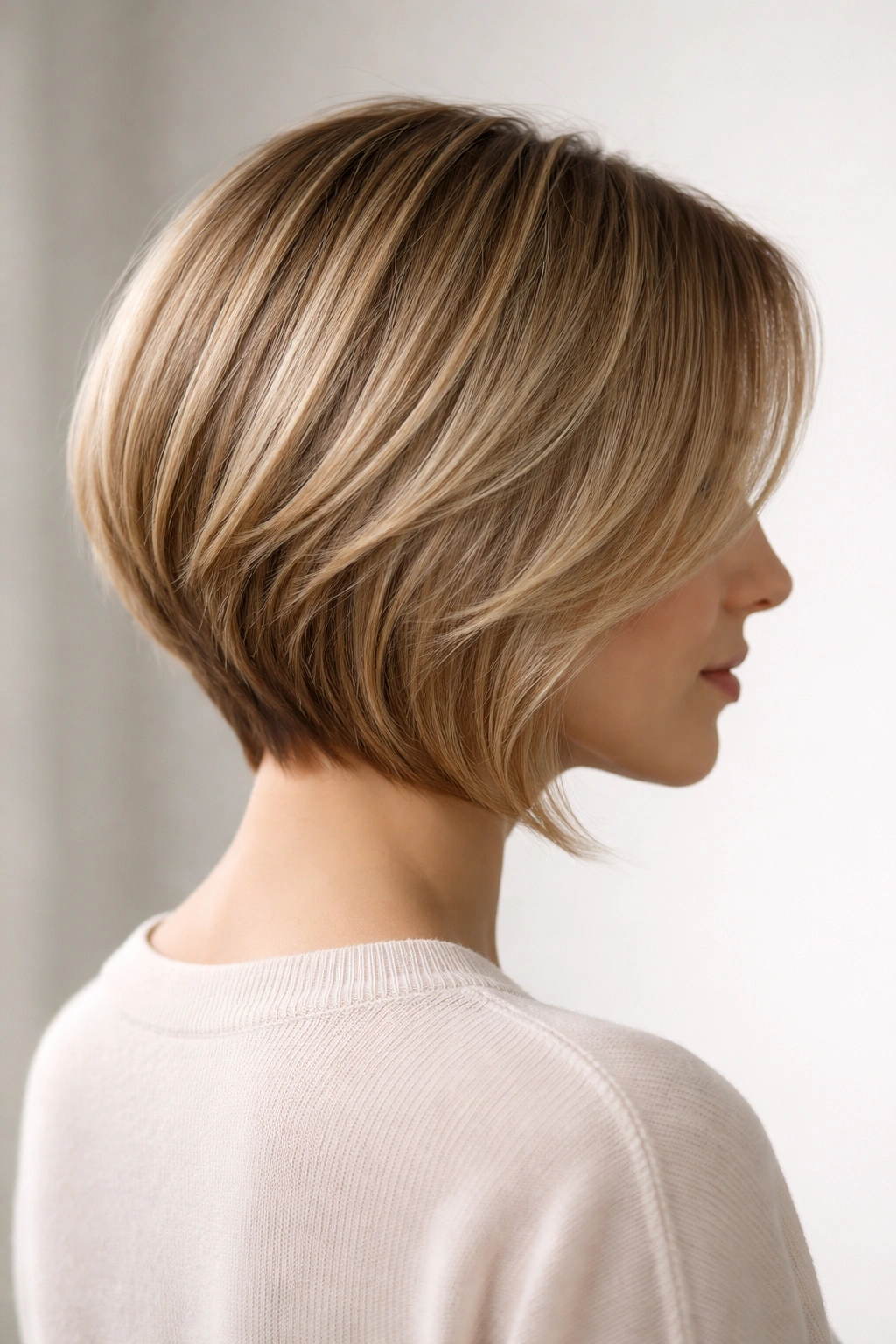
A gentle inverted bob gives you shape at the back without the hard, stacked look that can feel too severe. The nape sits a little shorter, then the length gradually increases toward the front. The result is sleek, but not flat.
The graduation should be soft enough that you only notice it when the hair moves. That’s the sweet spot. If the back is cut too tight, the style can look dated fast. If the difference between back and front is too small, you lose the lift that makes an inverted bob useful in the first place.
How the Shape Works
The shorter back creates lift at the crown and removes bulk from the neckline. The longer front pieces slim the cheeks and keep the haircut from feeling boxy. On straight hair, it gives a sharp line. On wavy hair, it gives a little swing.
- Great for fine hair that needs structure.
- Also good for thick hair that wants weight removed at the back.
- Best styled with a blow-dry directed downward in back and forward at the sides.
- Keep the nape trim neat every 5 to 7 weeks.
The trick is not to overstyle it. A smooth blowout is enough. If you flatten the crown too much, the shape loses the whole point.
9. Shaggy Bob with Piecey Layers
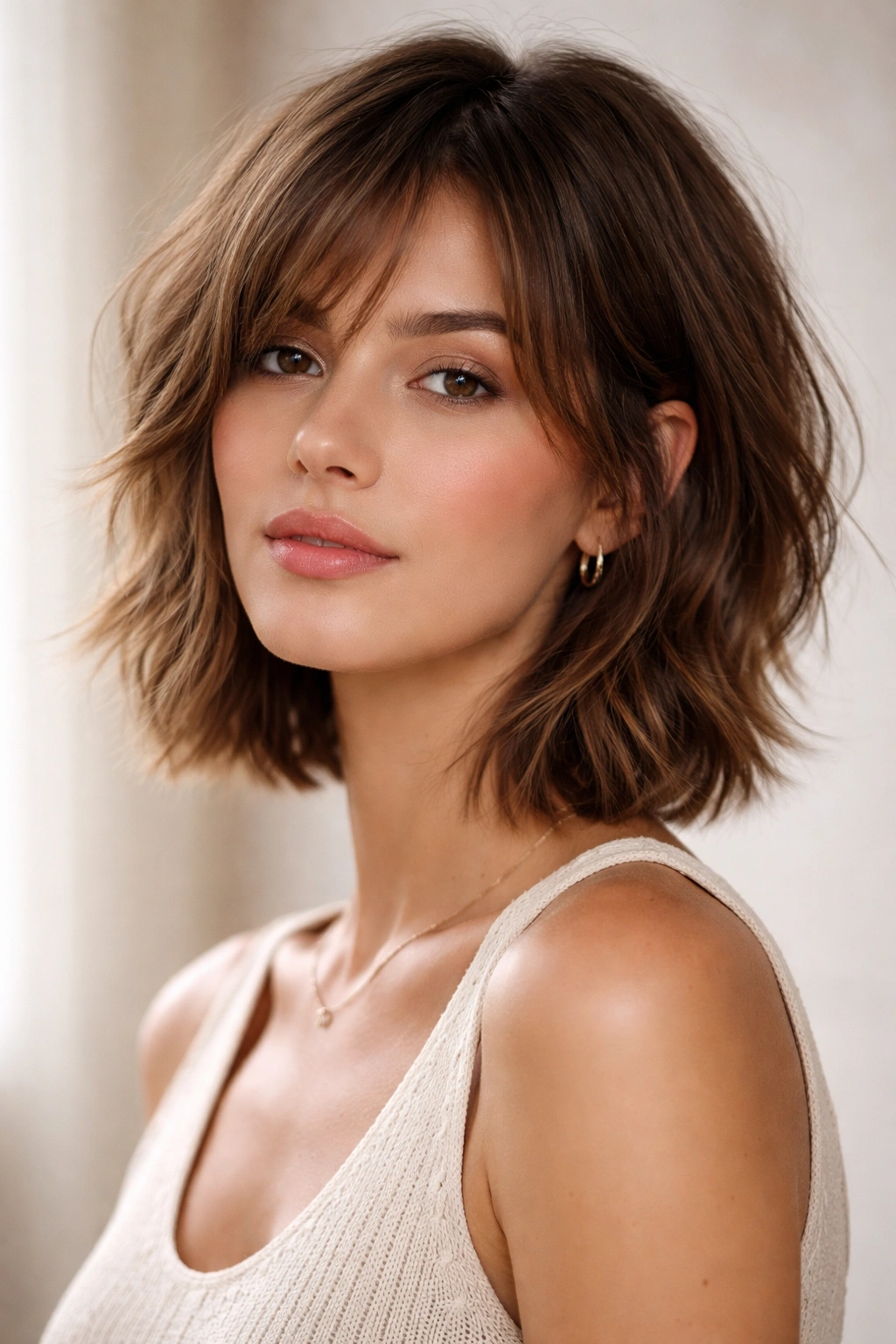
This bob is for people who like polish with a little edge. The piecey layers keep the shape broken up, which means the haircut reads as relaxed even when the outline is tidy. It’s one of my favorites for hair that gets heavy fast, because it removes bulk without making the bottom disappear.
The key is restraint. A shaggy bob is not a mullet in disguise. The layers should still support the bob shape, not swallow it. I like piecey ends that sit around the cheekbone and jawline, with enough length left at the perimeter to keep the haircut grounded.
If your hair is naturally wavy, this cut wakes up quickly. A touch of mousse at the roots and a diffuser can bring out the separation without much fuss. Straight hair can wear it too, but it needs a little bend at the mid-lengths or the layers can look flat.
Don’t pile on product. A small amount of cream or lightweight wax is enough. Too much and the pieces stick together, which is the opposite of the airy, polished finish you want.
10. Sleek Bob with Long Top Layers
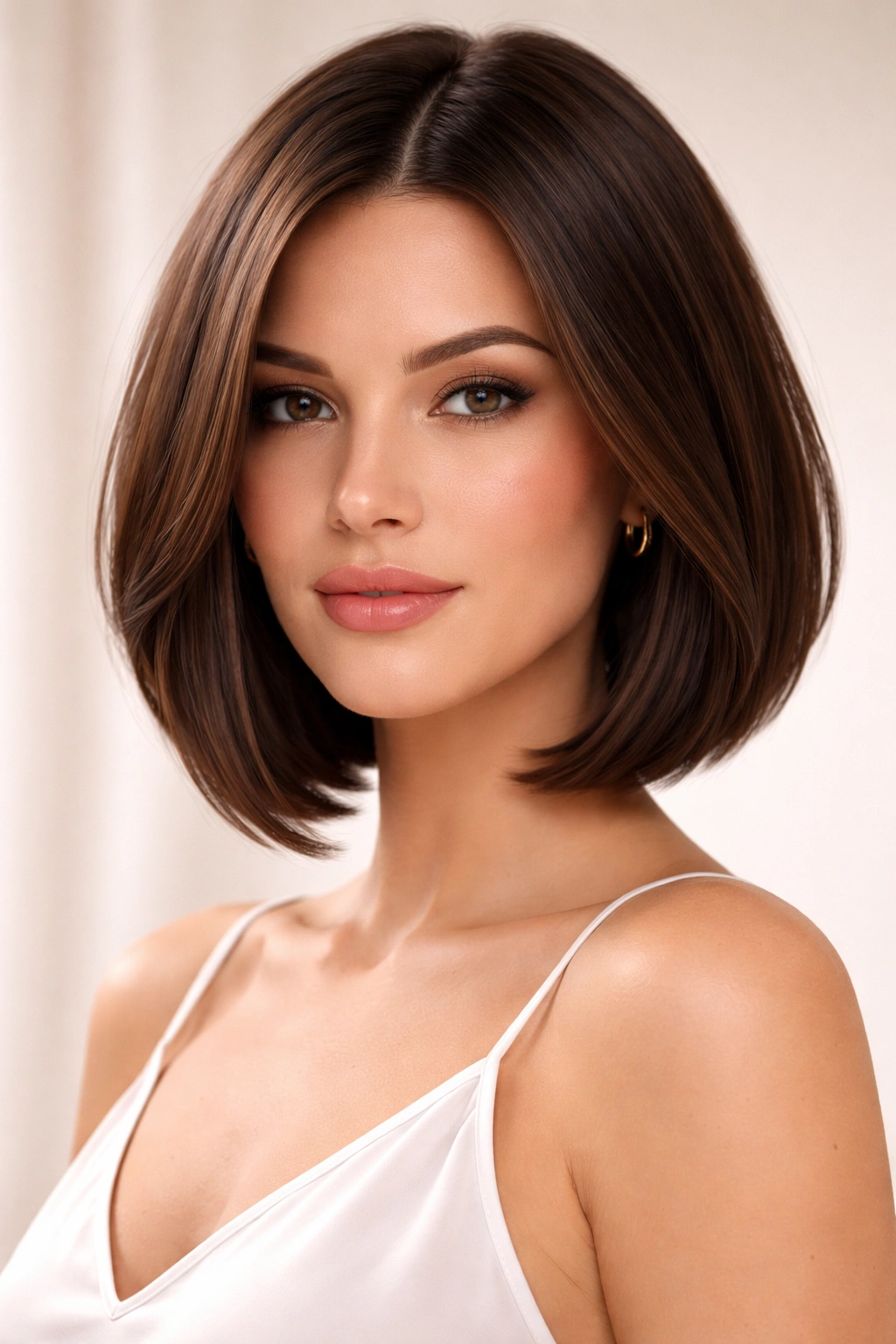
A sleek bob with long top layers is the haircut I’d choose for someone who wants shine and movement at the same time. The outer shape stays smooth, but the top layers keep the hair from settling into one flat sheet. That detail matters more than people realize.
The layers are usually hidden enough that you do not see them as separate steps. You feel them when the hair moves. That means the blowout looks cleaner, the ends sit better, and the style holds shape longer between washes. It also means the cut works beautifully with straight, fine, or medium hair that tends to go limp.
A center part gives this bob a calm, controlled look. A slight side part adds lift. Either way, the long top layers should begin around the cheekbone so they can skim the face without hanging like curtains. If they’re too short, the style loses its sleekness. If they’re too long, the bob collapses into a basic shoulder cut.
I like this version with a flat brush and a little smoothing cream. Not much. Enough to tame flyaways, not enough to coat the hair.
11. Curly Layered Bob with Shape-Cutting
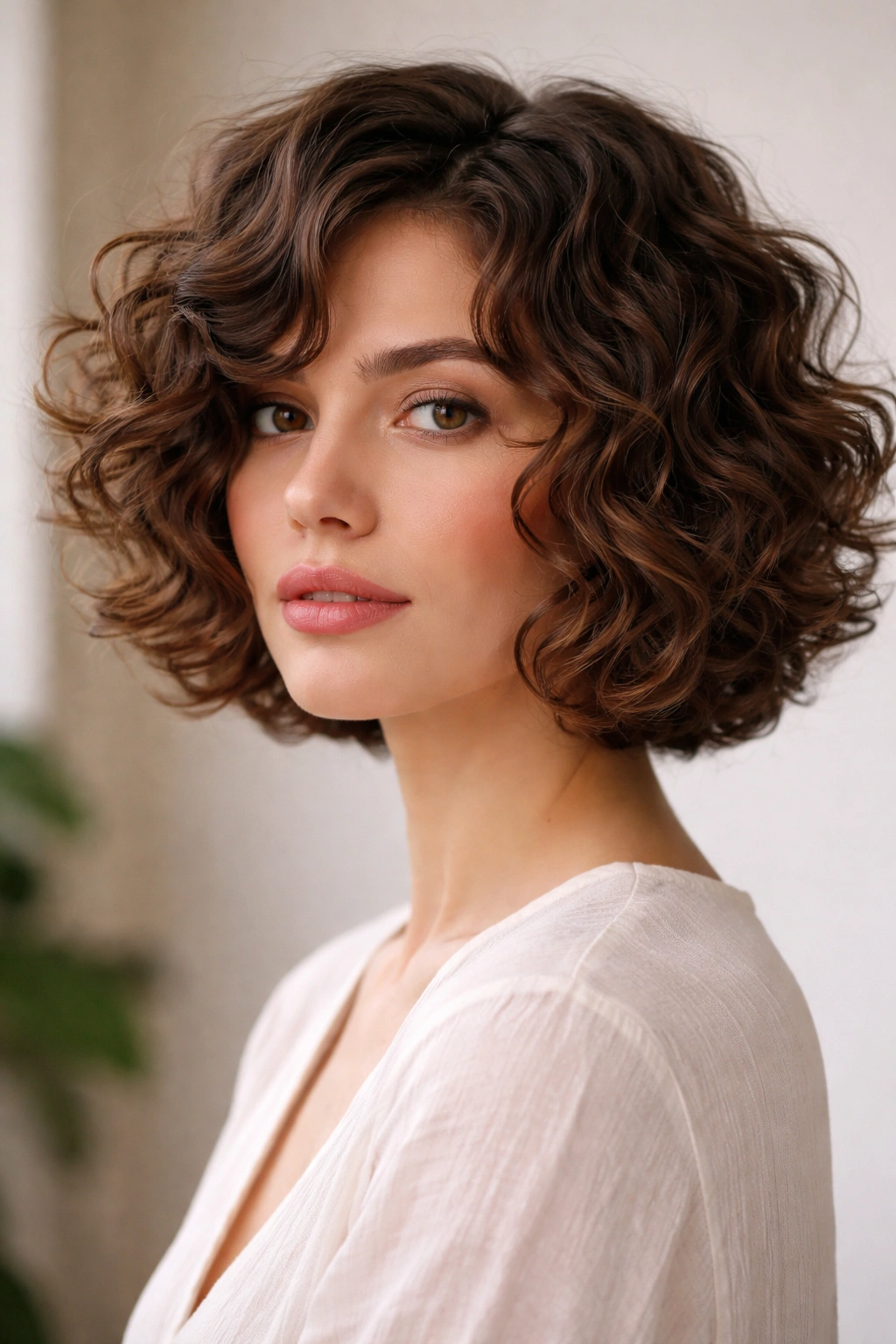
What makes a curly bob look polished instead of bulky? Shape. That’s the whole answer. Curly hair needs the layers placed where the curls actually live, not where they look good on a straight strand hanging in a chair. If the cut ignores the curl pattern, the bob can balloon out at the sides or go hollow in the middle.
How to Ask for It
Tell your stylist you want a bob that respects the curl pattern and keeps the perimeter balanced when dry. That usually means cutting the hair in a way that accounts for shrinkage, with layers placed to encourage a rounded shape rather than a pyramid.
A good curly bob usually has these features:
- Layers that follow the natural curl clumps.
- A length that lands around chin to collarbone, depending on shrinkage.
- Face-framing pieces that start lower, not high on the forehead.
- A dry check before the final trim so the shape can be adjusted.
This is one of those cuts that can look wildly different on wet hair. Do not panic. Curly bobs often look a little uneven when wet and then settle into shape as they dry. That’s normal. A curl cream and a diffuser help, but the cut itself has to be right first. Everything else is decoration.
12. Asymmetrical Layered Bob with Deep Side Sweep
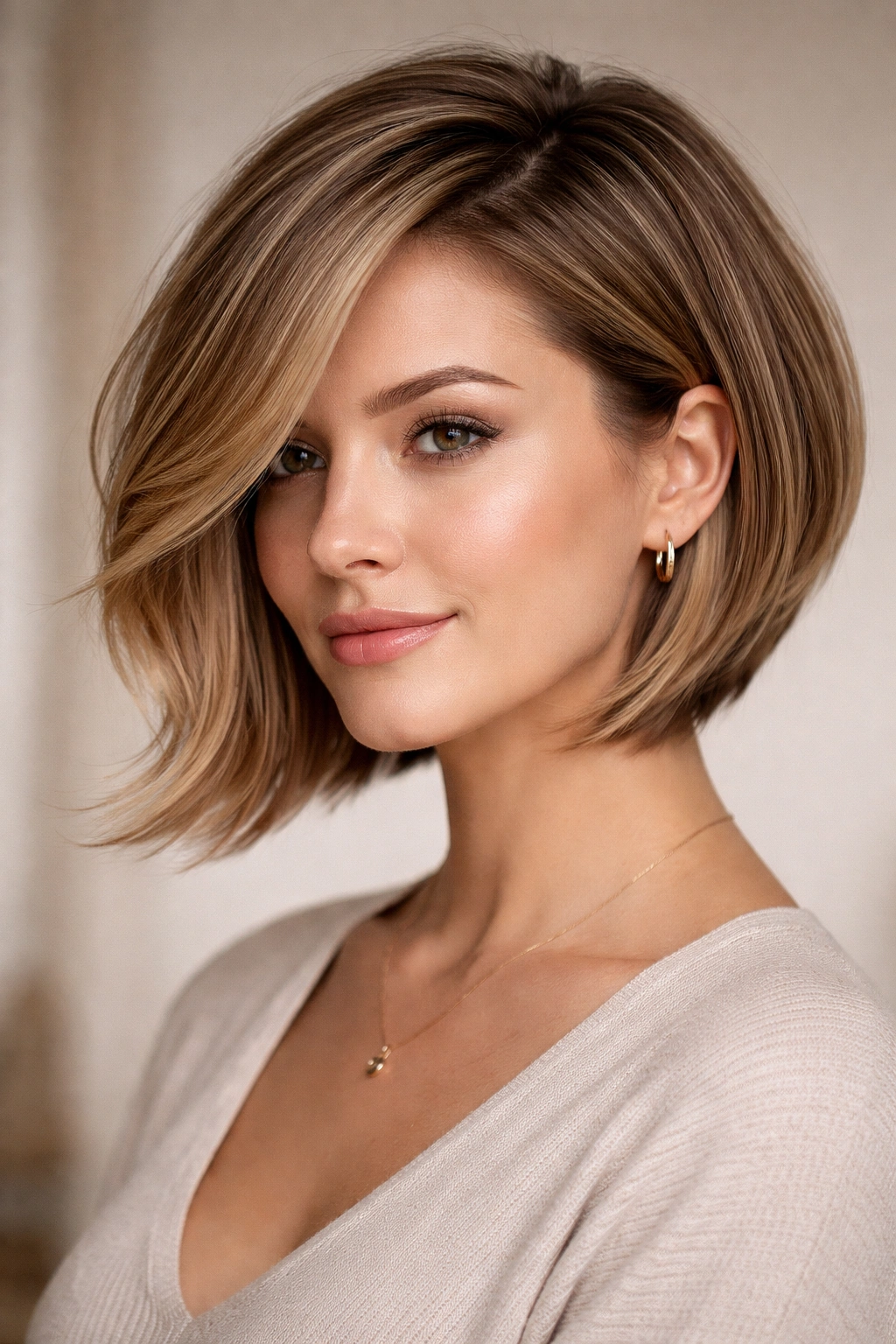
Compared with a symmetrical bob, this one has a little attitude. One side sits longer, the part is pushed deep, and the layers are cut to keep the imbalance controlled rather than messy. It’s a smart option if you want something polished that still feels a touch unexpected.
The longer side usually drops 1 to 2 inches below the shorter side, though the exact difference depends on how bold you want it. Too much gap and the haircut starts shouting. A small shift is usually enough. The point is to create visual tension, not drama for its own sake.
This style is good for softening strong jawlines or balancing out a face that feels wider on one side. It also works well if you like tucking hair behind one ear and letting the longer side fall forward on the other. That tiny asymmetry can make the whole cut feel expensive.
The layers should be blended enough that the shape still reads as a bob, not a lopsided lob. If you wear a deep side sweep, ask for the front pieces to be feathered lightly so they fall across the cheek instead of sticking out. A flat iron bend through the ends helps, but you only need a subtle curve.
13. Bob with Nape Underlayer and Soft Top Layers
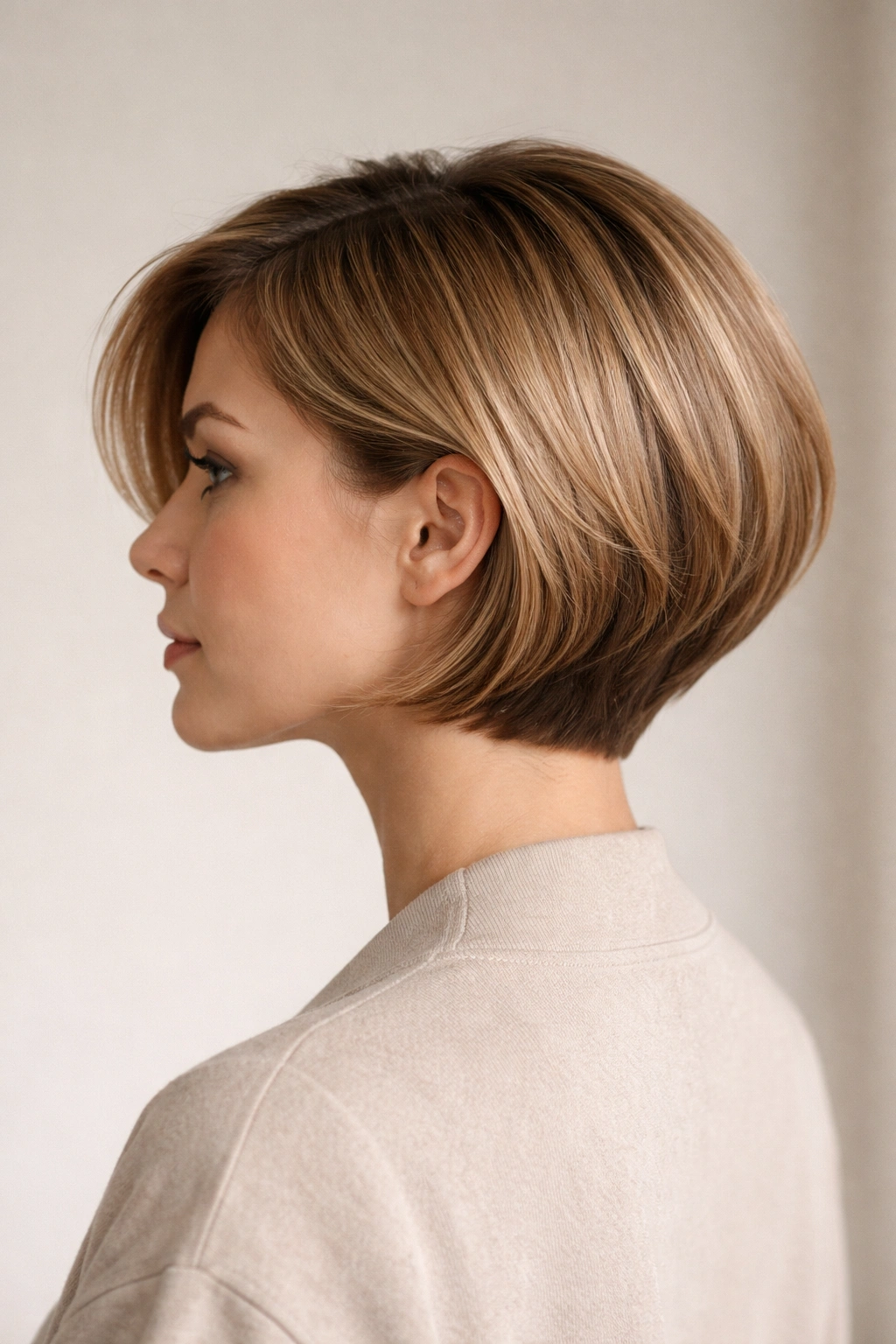
This is one of the quietest tricks in bob cutting, and it’s useful. The nape underlayer removes bulk from the back of the neck, while the soft top layers keep the top section from looking flat. You get a clean silhouette from the side and a little lift from above.
It’s especially handy for thick hair that wants to spread out. The underlayer stops the back from ballooning under collars, scarves, or jackets. That sounds minor until you’ve had to fight your own hair every time you put on a coat. Then it becomes a very big deal.
What the Shape Does
The top layers should stay long enough to cover the undercut section when the hair falls naturally. That keeps the cut polished from the outside. When you move your head, though, the shorter nape section gives the bob a lighter feel.
- Best if you want less bulk at the neck.
- Good for hair that gets hot and heavy in longer bobs.
- Ask for a hidden underlayer, not a shaved section.
- Use a small round brush at the nape so it sits neatly.
The result is tidy without looking severe. A lot of people want that and don’t know how to describe it.
14. Micro Bob with Feathered Ends
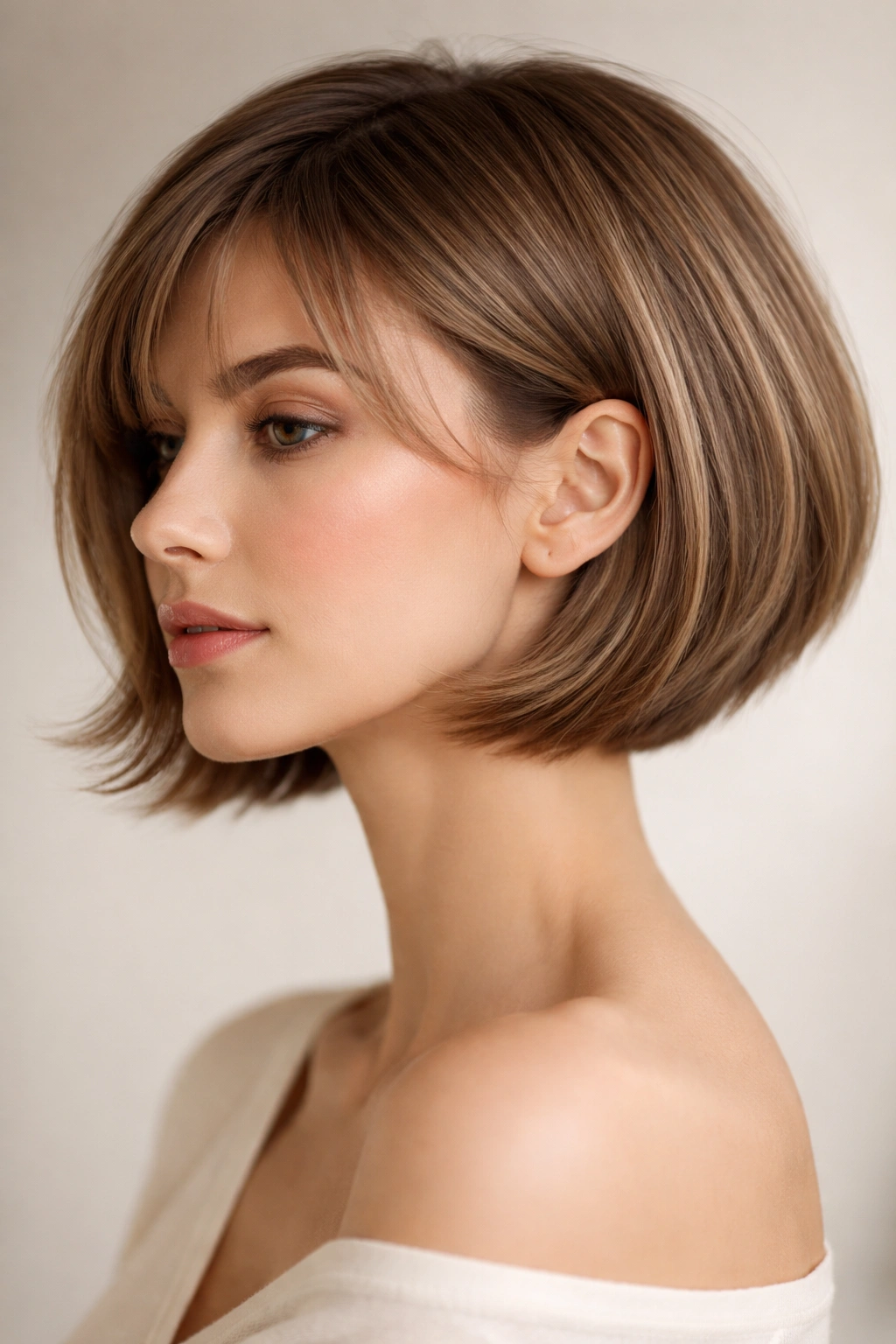
A micro bob can be sharp, but feathered ends take the edge off in the best way. The cut usually sits between the cheekbone and jawline, close enough to feel modern, short enough to show off the neck. Feathering the ends keeps it from looking like a straight line drawn across the head.
The danger with very short bobs is that they can become rigid fast. Feathering softens the perimeter and lets the hair move instead of sitting like a cap. That’s especially useful if your hair has a slight wave or if your features are strong and you want the haircut to soften them a bit.
Why It Works
The feathered finish stops the ends from competing with the face. Instead of a hard edge, you get a blurred line that feels lighter. It’s subtle, but subtle is the point here.
- Great with a side part or a tucked-behind-the-ear finish.
- Needs regular trims every 4 to 6 weeks to stay crisp.
- Looks best with a smooth blow-dry and a slight bend under the ends.
- Avoid over-thinning the perimeter, or it starts to look wispy.
This is a bold cut in a quiet way. If you like a haircut that shows off earrings, collarbones, or a good jacket collar, it’s a strong choice.
15. Polished Air-Dry Bob with Minimal Layering
A polished air-dry bob is proof that not every soft layered bob needs a lot of visible layering. Sometimes the cleanest result comes from keeping the cut simple and letting a few well-placed layers do the work. The shape falls on its own, which is exactly why it looks so put together.
I like this version for hair that behaves better when left alone. Minimal layering means fewer pieces sticking out at odd angles when the hair dries naturally. A slight internal graduation around the back and a small amount of face-framing movement are usually enough. The rest is about letting the hair settle where it wants to.
The styling is almost boring, which is a compliment. Apply a light leave-in conditioner, comb the hair into place, and let it dry with the part you actually wear. If your hair is wavy, twist the front sections once or twice while damp so they don’t dry flat against the face. That tiny move makes a difference.
This cut suits people who want a polished look without a blowout every day. It also grows out gently, which makes it one of the easiest bobs to live with. A flat, over-layered bob can get fussy fast. This one stays calm.
Soft layered bobs work best when the shape matches your hair’s natural behavior. Fight that, and the cut turns into a chore. Work with it, and even the simplest bob starts looking considered.
The best part is that none of these cuts depends on one magic styling trick. A good bob should hold up with a quick brush, a tucked ear, a little bend at the ends, or a messy air-dry when the day gets away from you. That’s the real polished look: neat enough to feel finished, relaxed enough to wear without thinking about it too hard.
