



Thick coarse hair can make a bob look crisp and expensive, or it can balloon into a wide triangle by lunchtime. The cut matters more than the photo.
Thickness and coarseness are not the same thing. Thickness is how much hair sits on your head. Coarseness is the width and strength of each strand. Put those together and you get hair that holds shape well, but also fights a soft line if the cut is too thin, too short, or sliced up with careless layers.
The best bob cuts for thick coarse hair keep a clean perimeter, place weight where the hair needs it, and leave out the aggressive thinning shears that turn the ends fuzzy. Some people need a chin-length blunt bob. Others need a lob that skims the collarbone, or a stacked shape that takes heaviness out of the back. The right cut is the one that works with how your hair falls when it dries, not the one that only looks good in a styling chair.
1. Chin-Length Blunt Bob for Thick Coarse Hair
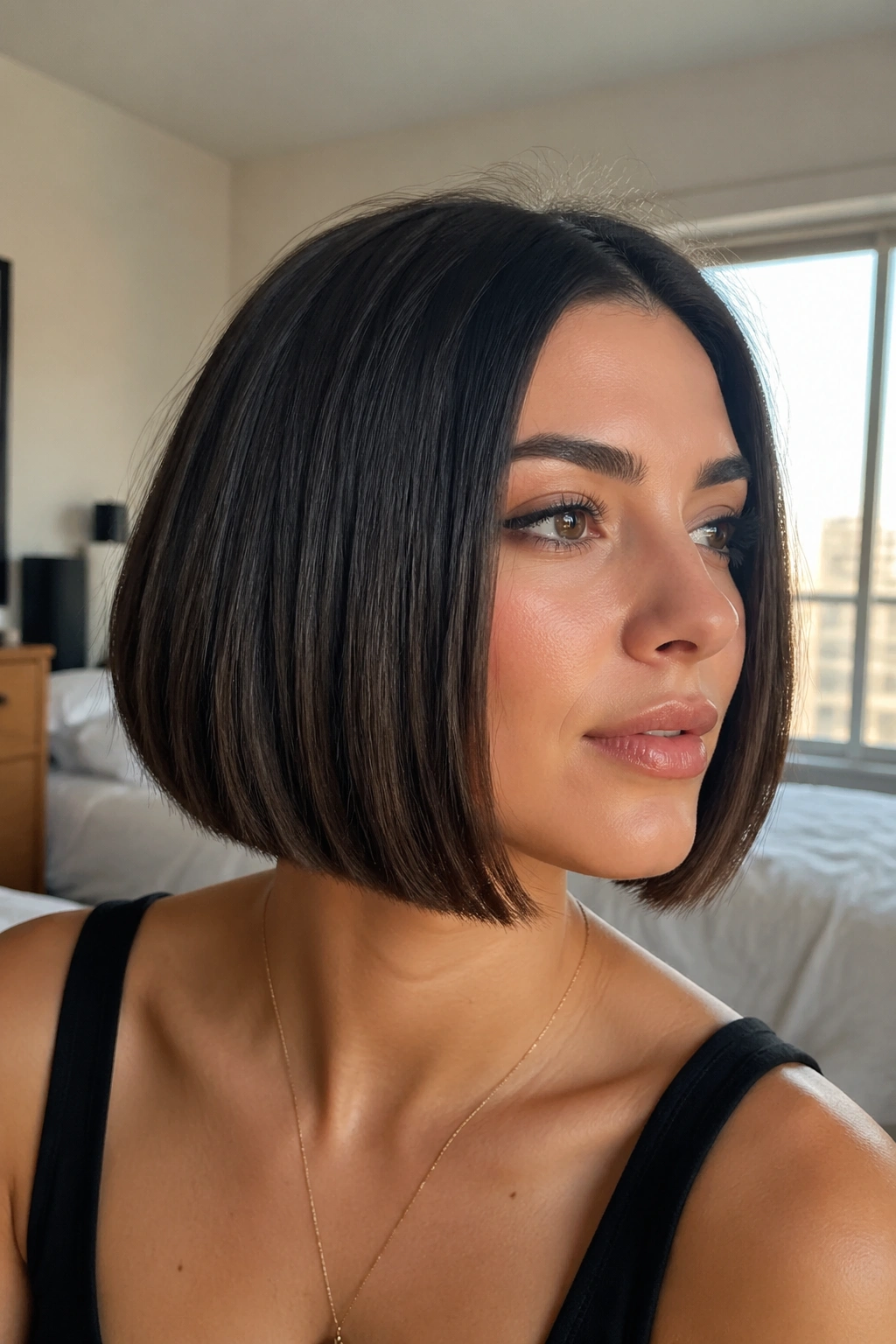
If you want the cleanest line in the room, start here. A chin-length blunt bob gives thick coarse hair one solid shape, which is exactly why it behaves better than a heavily layered cut. The weight sits at the bottom, so the hair hangs instead of spreading outward in every direction.
Why It Works
Coarse strands have enough strength to hold a blunt edge without collapsing. That means the cut can look sharp for days, not hours. The real trick is balance: keep the length just under the jaw if your hair tends to puff out, and leave the perimeter full enough that the ends do not look scraped thin.
A blunt bob also makes styling simpler. You are not chasing a million short pieces around the head. You are directing one clear shape. That alone can save you ten minutes in the morning.
What to Tell Your Stylist
- Keep the perimeter one length or nearly one length.
- Use minimal internal layering so the bottom line stays full.
- Be gentle with the ends; ask for a soft bevel, not a ragged finish.
- Avoid heavy thinning shears through the middle of the head.
Best for: people who want a polished look with very little fuss.
Watch out for: going too short at the chin if your hair expands when it dries.
Skip deep thinning shears. They can make coarse ends look frayed within a week.
2. Soft Graduated Bob
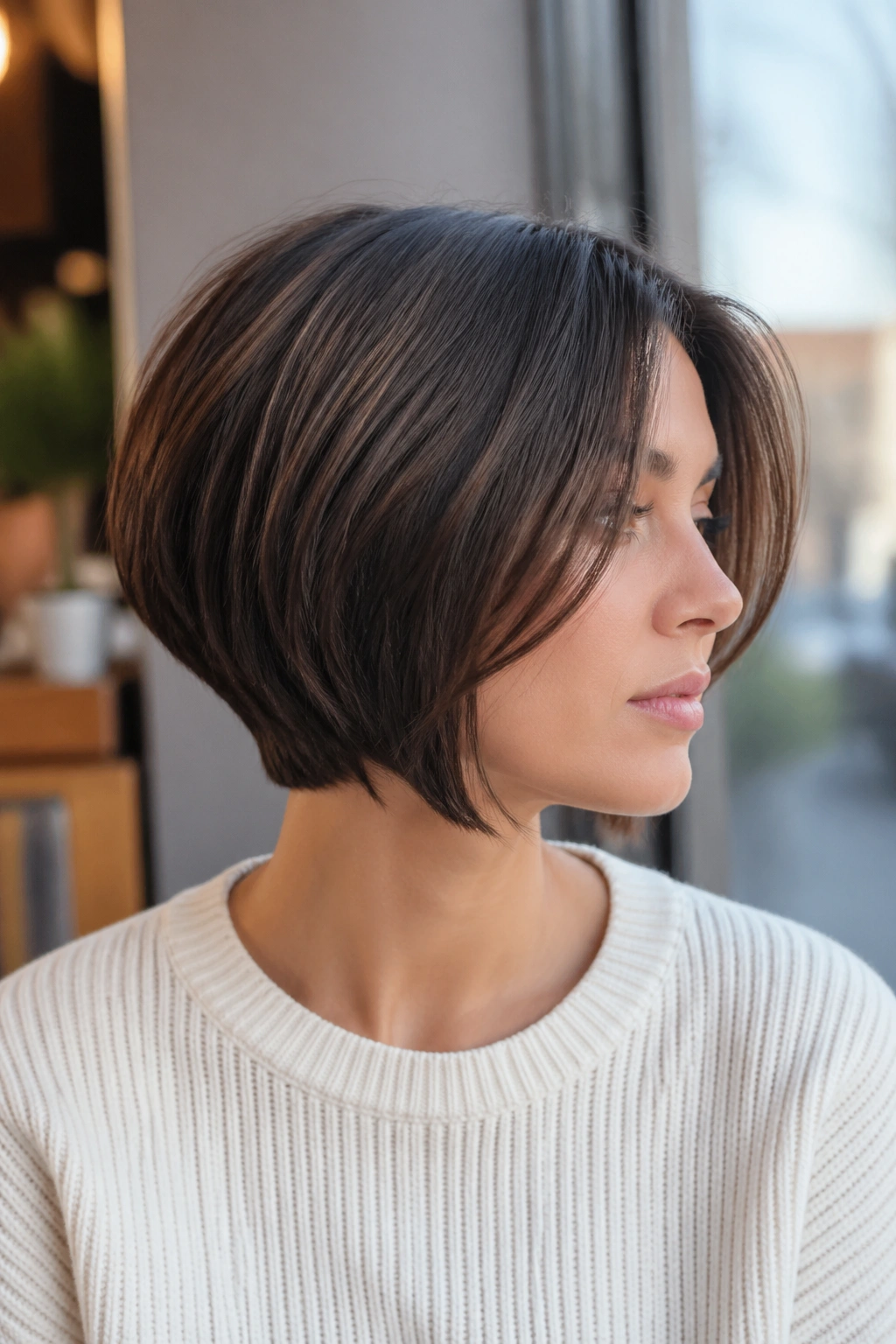
Why does the back of a thick bob feel so heavy? Because that is where the bulk piles up. A softly graduated bob solves that without making the haircut look chopped or severe. The shape is shorter through the nape, then gradually longer as it moves toward the front.
That gentle graduation gives thick coarse hair somewhere to sit. Instead of building one dense shelf across the back of the neck, the hair is lifted and guided forward. The result is easier movement and less helmet energy, which is a blessing if your hair likes to sit flat at the crown and bulky at the base.
The key word here is soft. You do not want a harsh wedge. You want a smooth slope that removes weight in the back while keeping the sides clean. A good cut will feel sculpted, not stacked in old-school chunks.
Short paragraph. This one lives or dies by the angle.
Ask for the nape to be trimmed closer, with the layers graduating quietly rather than flashing in obvious steps. If your hair is very dense, this shape can also make the neckline feel cooler and lighter without sacrificing the body you probably like.
3. A-Line Bob
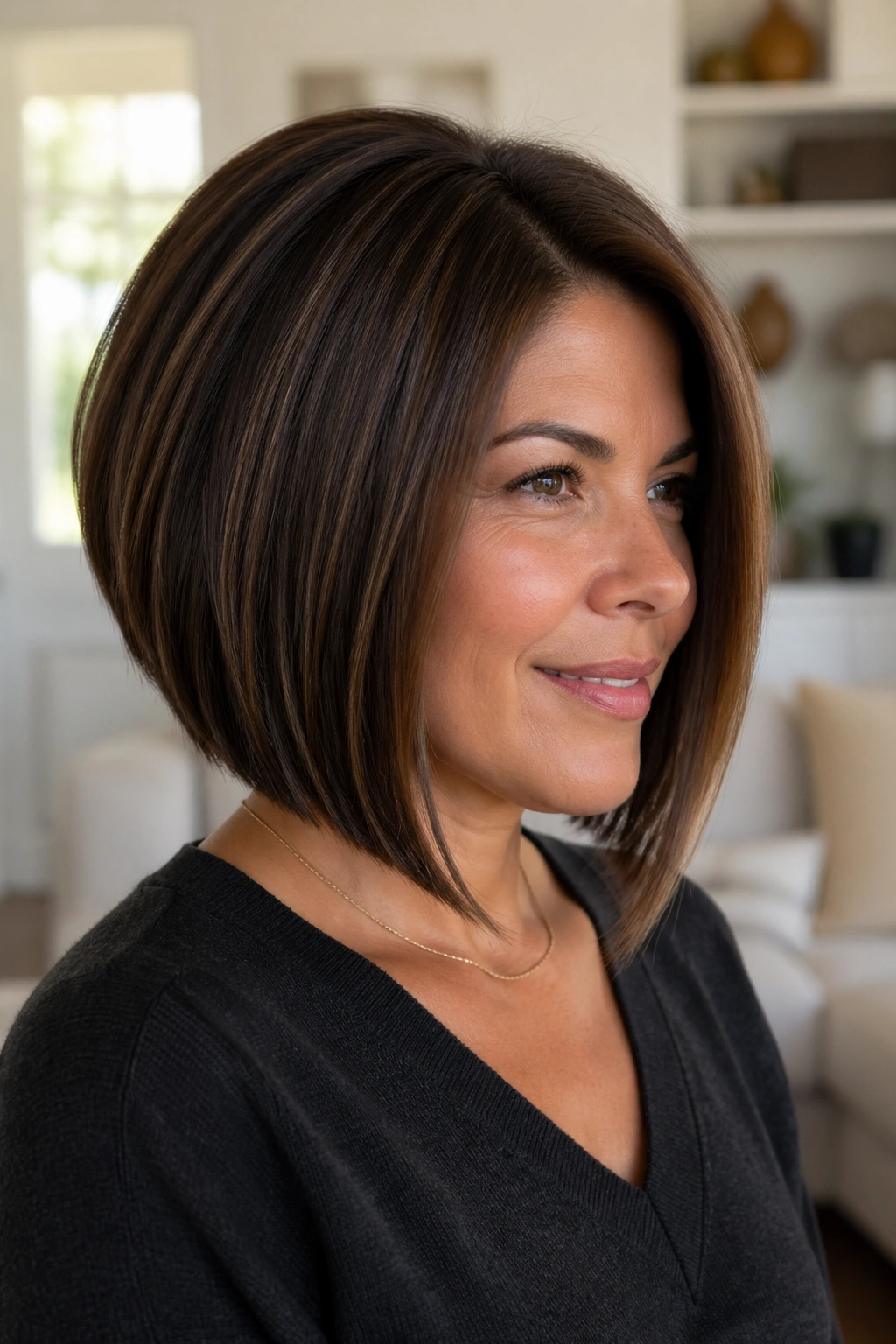
A slight angle can do more for coarse hair than people expect. A-line bobs are shorter in the back and a touch longer in the front, which draws the eye downward and stops thick hair from looking boxy around the cheeks. The front pieces usually hit somewhere between the jaw and collarbone, depending on how much length you want to keep.
That longer front edge is what makes the cut feel modern without trying too hard. It gives your hair room to fall, and room matters when you have dense strands. Straight across can sometimes make thick hair look wider than it is. A gentle angle narrows the shape and gives the cut a cleaner swing.
How to Keep the Angle Honest
- Keep the back short enough to remove weight, but not so short that it pops out.
- Let the front be 1 to 2 inches longer than the back.
- Keep layers light, or the angle gets blurry fast.
- Style with a side part if you want the front to fall forward in a softer way.
A-line bobs are especially good if your hair tends to grow out into a triangle. The front length makes the silhouette feel intentional, even on days when you only ran a brush through it. Not every bob needs drama. This one earns its keep by behaving.
4. Stacked Bob for Thick Coarse Hair
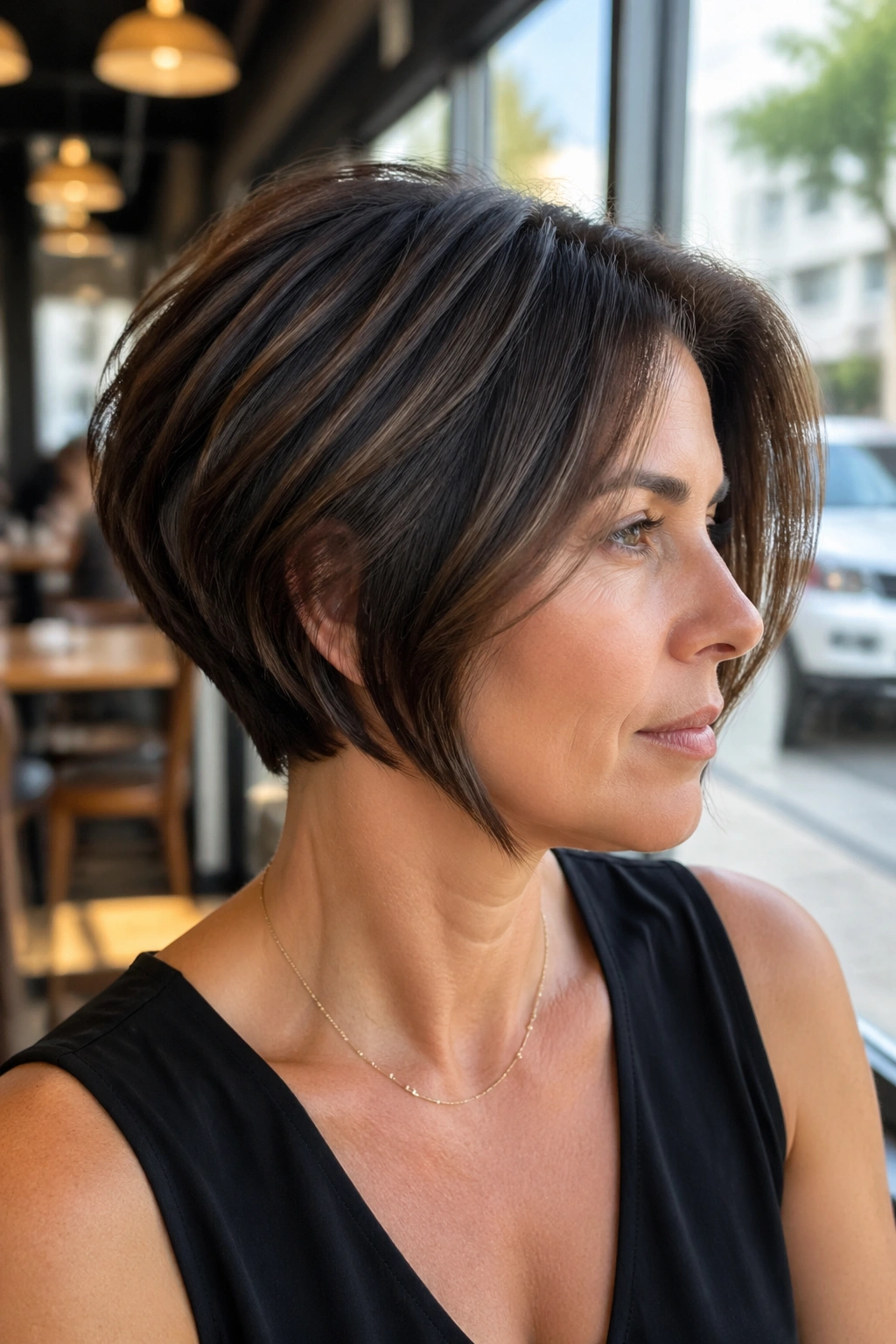
A stacked bob can make dense hair feel lighter in the nape by a full layer of bulk. That is the whole reason people love it. The back is cut with short, graduated pieces that create lift and taper the shape toward the neck, while the front stays a bit longer and softer.
The danger is obvious. Too much stacking and the cut turns into a wedge. Too little and the back still feels heavy. So the best version for thick coarse hair is controlled and close to the head, with enough graduation to make the neck area feel open but not so much that you can see every step in the haircut.
Who It Suits
- People whose hair grows thickest at the nape
- Straight or slightly wavy textures
- Anyone who wants volume at the crown but less bulk at the back of the head
What to Avoid
- A high, sharp stack that looks disconnected
- Over-thinned sides that frizz up after one wash
- A nape that is shaved too tight if your hair swells when dry
Styling is fairly direct. Blow-dry the crown up and forward for lift, then curve the ends under with a round brush. A light cream or leave-in lotion helps keep the top smooth. If your hair is coarse and stubborn, this bob can be a gift. If your stylist goes too hard on the stacking, though, it becomes a maintenance headache fast.
5. Collarbone Lob with Clean Ends
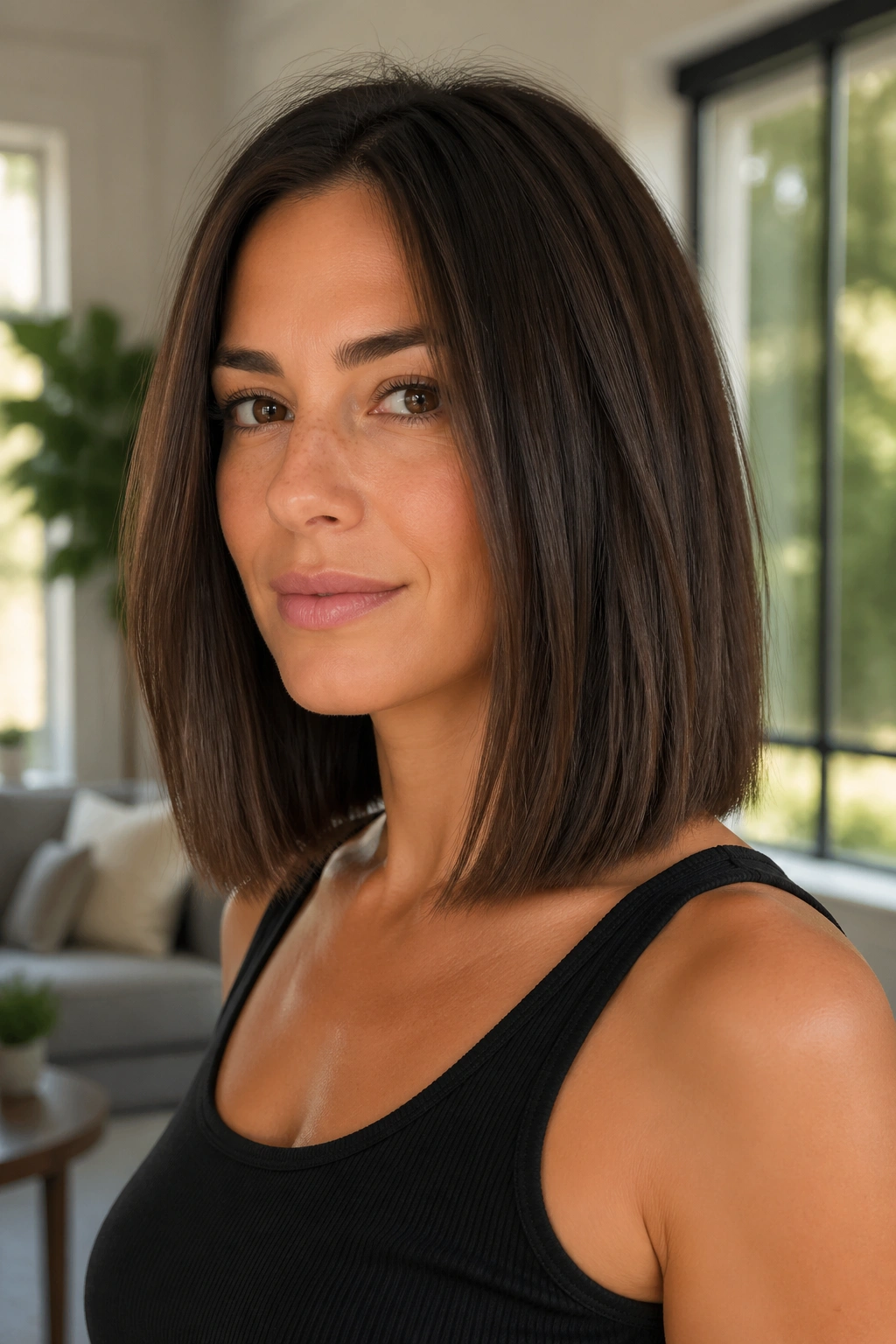
Longer hair is not laziness. Sometimes it is the smartest way to handle thick coarse hair. A collarbone lob keeps enough length to let the hair hang with weight, which is useful when your strands naturally push outward. Shorter cuts can be charming, but they are not always the easiest route when the hair is dense and powerful.
A collarbone-length bob also gives you options. You can wear it straight, tuck it behind one ear, wave it with a flat iron, or tie it back without losing the whole shape. That flexibility matters if you do not want a haircut that needs perfect styling every morning.
The best version stays clean at the ends. You want a crisp base line, maybe with a touch of face-framing if your hair needs softness near the jaw. Too many layers and the whole point is gone. The length begins to float, and coarse hair can start to puff.
One-sentence truth: weight is often your friend.
If your hair is especially thick through the mid-lengths, a lob lets the ends settle and keeps the shape from widening at the bottom. It also grows out gracefully. That alone makes it worth a look if you dislike constant trims.
6. French Bob

A short bob is not always high-maintenance. The French bob proves that. Cut near the jaw, usually with a bit of fringe or a soft face frame, it gives thick coarse hair a little attitude without asking for perfect smoothness every day. The shape is usually relaxed, not stiff, which is a big reason it works so well on hair with natural body.
This cut depends on texture. Coarse hair gives the bob structure, so it does not collapse into a limp little cap. That said, it needs thoughtful shaping. If the hair is cut too blunt around the face and too heavy through the crown, the result can feel square in the wrong way. The charm of the French bob is that it looks casually put together, not carved into a block.
What Makes It Different
- Usually jaw-length or slightly shorter
- Often paired with a soft fringe or curtain fringe
- Works best when the ends are blunt but not heavy
- Looks better with a little bend than with stiff flat-ironed shine
This cut suits people who do not want to fight their hair every morning. A dab of styling cream, a rough dry, and a small round brush at the ends is often enough. If your hair swells at the temples or poofs above the ears, ask for a slightly longer French bob. The difference is small on paper and huge in real life.
7. Rounded Bob
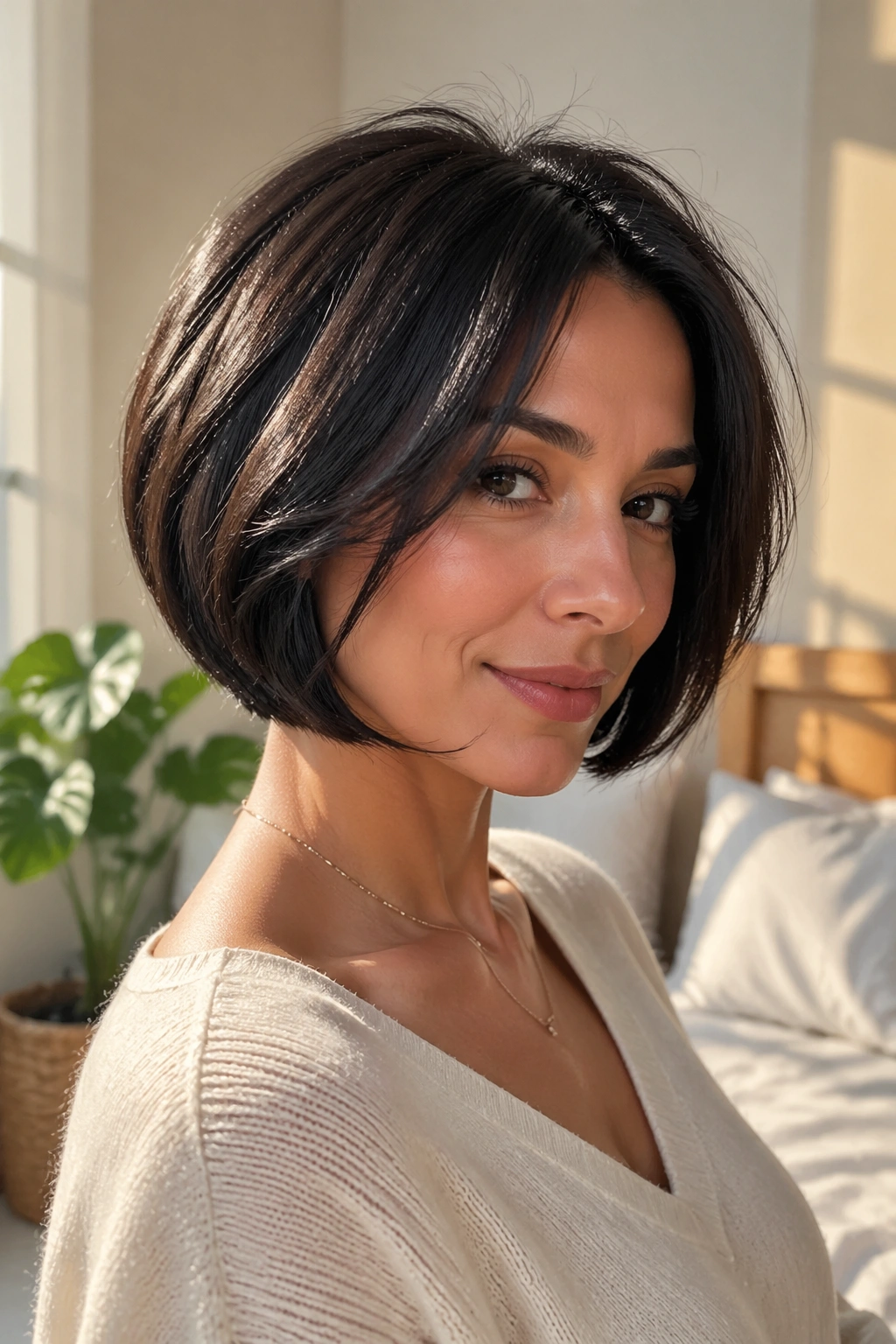
Run your hand down a rounded bob and the edges fold inward instead of sticking out. That is the magic. Instead of a straight shelf across the bottom, the haircut curves gently around the head, which helps coarse hair sit closer to the neck and jaw.
Rounded bobs work well when you want the haircut to feel softer, not sharper. The shape can be lovely on thick hair because it contains the width without making the style look severe. A boxy line can read strong; a rounded line reads smooth.
The Curve and the Crown
The curve needs to be built with care. Too much rounding and the bob starts to look like a helmet. Too little and the shape loses the point. The best version keeps the crown neat, then lets the middle and lower sections bend in just enough to take the edge off the fullness.
- Best on straight or lightly wavy coarse hair
- Useful if your hair fans out at the sides
- Easier to maintain with a round brush or hot air brush
- Needs regular trims so the curve does not collapse into fluff
I like this shape for people who want polish without stiffness. It is not flashy. It is controlled. And controlled hair often looks more expensive than hair that has been overworked.
8. Textured Bob with Invisible Layers
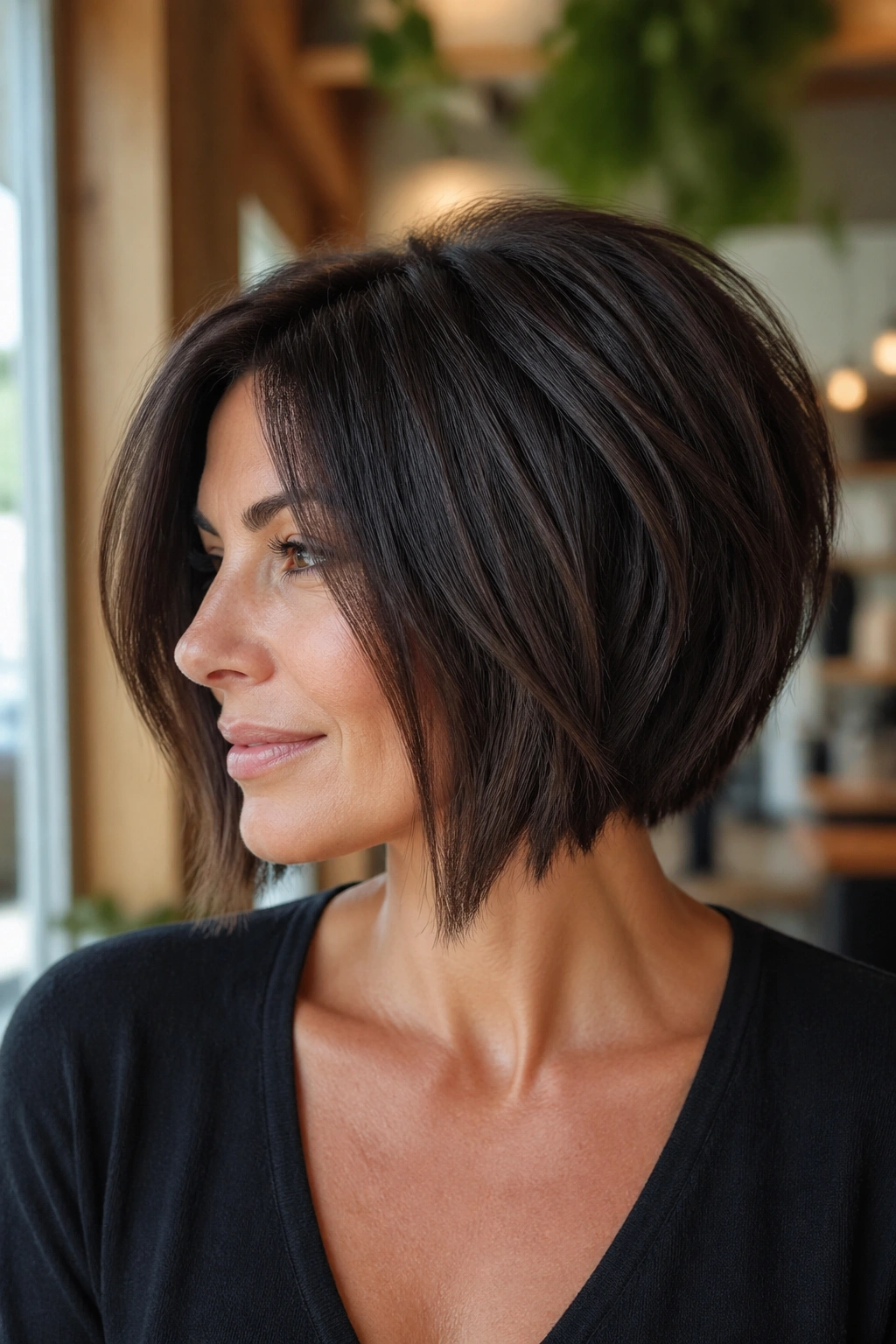
Bulk does not always need to be hacked off from the outside. A textured bob with invisible layers removes weight from inside the shape, so the perimeter still looks full while the middle stops feeling like a brick. On thick coarse hair, that can be the difference between a bob that sits and a bob that swells.
This is where good cutting matters. You want internal layers, point cutting, or soft slide cutting done with restraint. You do not want the ends shredded into tiny pieces. That look can be pretty for about ten minutes, then coarse hair starts to frizz around every cut line.
Salon Script
Ask for:
- A blunt outer line with hidden internal removal
- Weight taken out only where the hair feels bulky
- No aggressive texturizing near the perimeter
- A dry check at the end so the stylist can see how the hair settles
This bob is especially useful if your hair is dense through the sides but you still want movement. It keeps the outline clean on the outside and lighter on the inside. That means you can wear it sleek when you feel like it, or rough-dry it and let the texture show.
The catch? It needs a stylist who understands coarse hair. If someone reaches for thinning shears as a reflex, I would pause and ask what they are trying to fix. Sometimes the answer is fine. Sometimes it is not.
9. Asymmetrical Bob

Want shape without going dramatically short? An asymmetrical bob gives you that. One side sits a little longer than the other, usually by 1 to 2 inches, and that small difference breaks up the width that thick coarse hair can create around the face. It also gives the cut motion before you even touch a styling tool.
Small differences read as style. Giant differences read as effort.
That is why the best asymmetrical bob for coarse hair stays subtle. You want just enough imbalance to make the line interesting, not so much that you need a flat iron every morning to keep it from looking crooked. The longer side can skim the jaw or brush the collarbone, while the shorter side clears the neck and opens the silhouette.
This shape works well if your hair tends to sit heavy on one side, or if you usually tuck one side behind your ear anyway. It also flatters people who want to soften a broad jaw or add some movement to a square face.
No one should pick this cut just because it sounds edgy. Pick it because it solves a shape problem. That is the better reason. And on thick coarse hair, shape problems show up fast.
10. Box Bob for Thick Coarse Hair
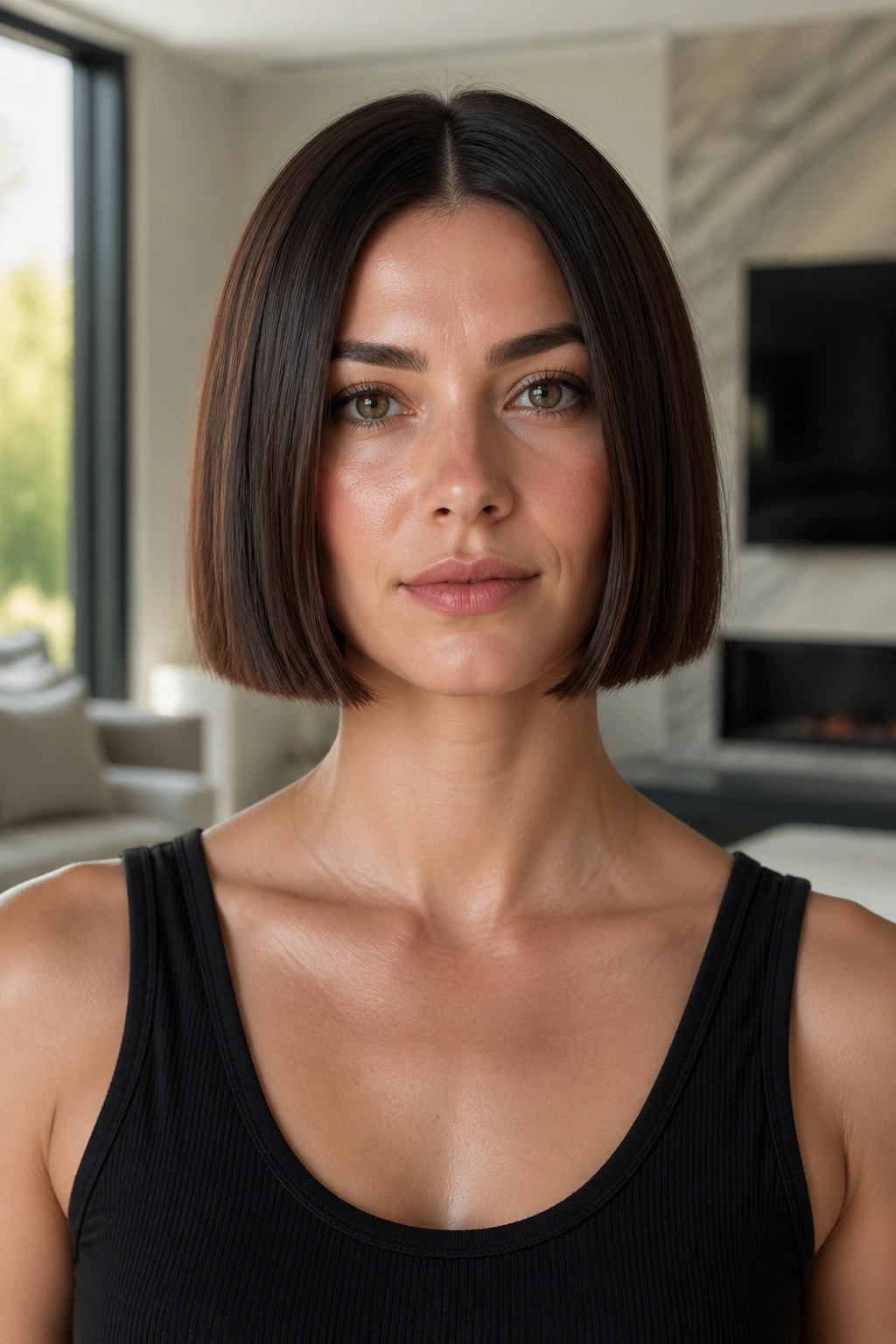
Unlike a rounded bob, a box bob keeps a straighter wall at the sides. That gives thick coarse hair a graphic shape and makes the whole cut look controlled instead of fuzzy. The perimeter usually sits at the chin or just below it, with clean corners and very little taper through the sides.
This is a strong haircut. You can feel that right away. It suits hair that has enough density to support a solid outline, and it tends to look best when the finish is smooth rather than overly broken up. If your strands are coarse but naturally straight, a box bob can be one of the easiest ways to make the hair look deliberate.
What to Ask For
- A blunt perimeter with clean sides
- Minimal rounding at the corners
- Little to no thinning through the bulk
- Enough length to keep the line from ballooning outward
A box bob can be stunning with a center part, especially if you like a sharp, modern shape. It can also be softened with a side part and a tucked ear on one side. What it does not like is random texturizing. That steals the shape and leaves you with a puffier outline than you started with.
This is the cut for someone who likes clean edges and does not mind a little maintenance at the blow-dry stage. Sharp hair needs sharp lines.
11. Curly Bob Shaped to the Curl Pattern
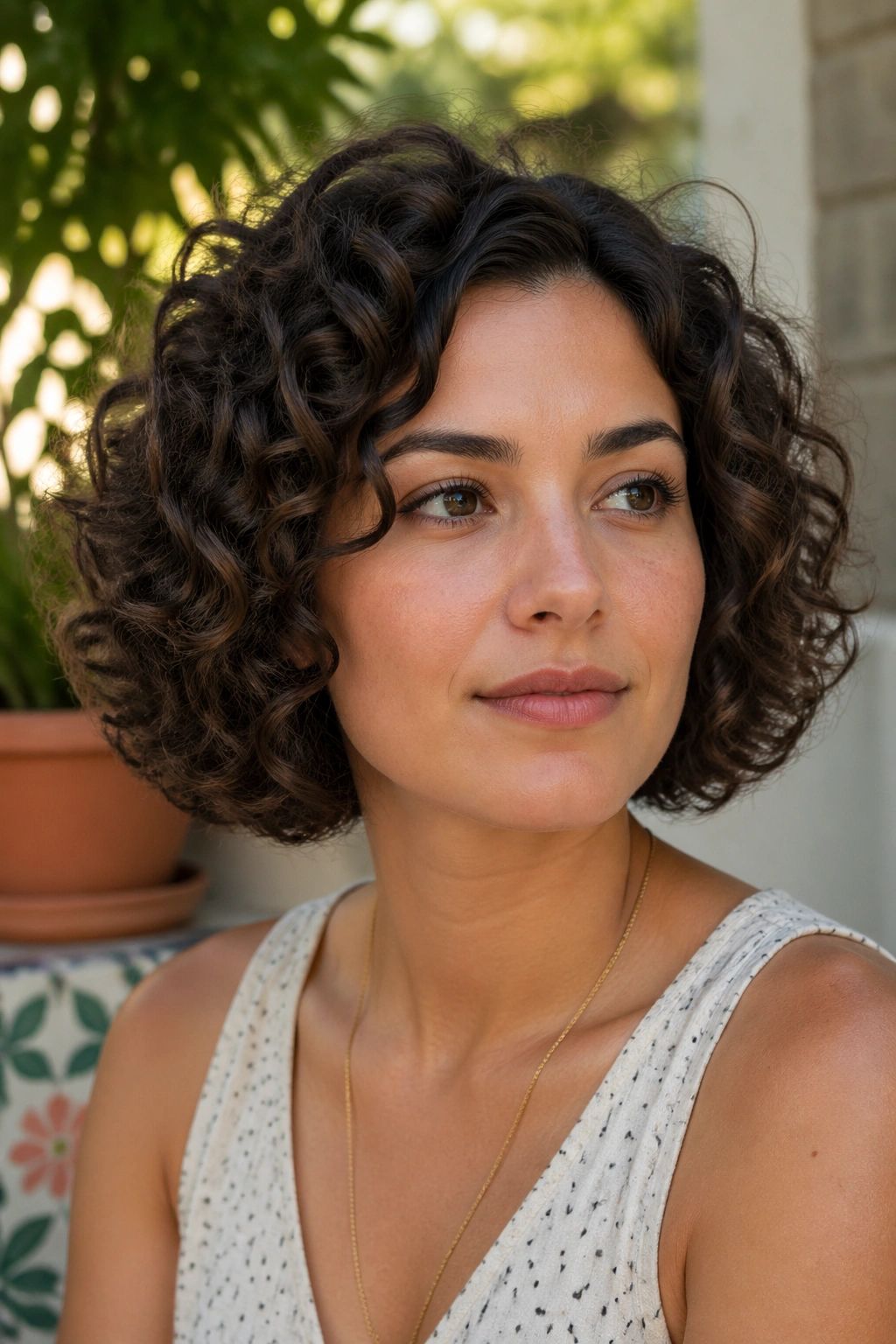
If your coarse hair is wavy or curly, the bob changes rules a bit. Cutting it straight across while it is wet can be a gamble, because coarse curls shrink and shift as they dry. A bob that looks balanced in the chair can come back as a triangle, a shelf, or a halo if the curl pattern was ignored.
A curl-shaped bob works with the hair instead of arguing with it. The stylist should look at how your curls spring in their natural state, then shape the perimeter so the curl family sits evenly around the head. That often means cutting dry, or at least checking the shape dry before the final line is set.
Dry Cutting Matters
- Curls need to be seen in their real form
- Coarse strands often spring tighter than expected
- The neckline may need to sit a little longer than you think
- Too many short layers can make the top fluffy and the bottom thin
For styling, think moisture first. A leave-in conditioner, a cream with some slip, and a diffuser on low heat usually beat a pile of heavy products. If your curls like definition, scrunch them gently and let them set without constant touching.
This bob works beautifully when the curl pattern is the main event. It is not trying to flatten or tame the texture. It is giving it a shape that looks intentional when it dries on its own.
12. Side-Part Bob with Long Face-Framing Pieces
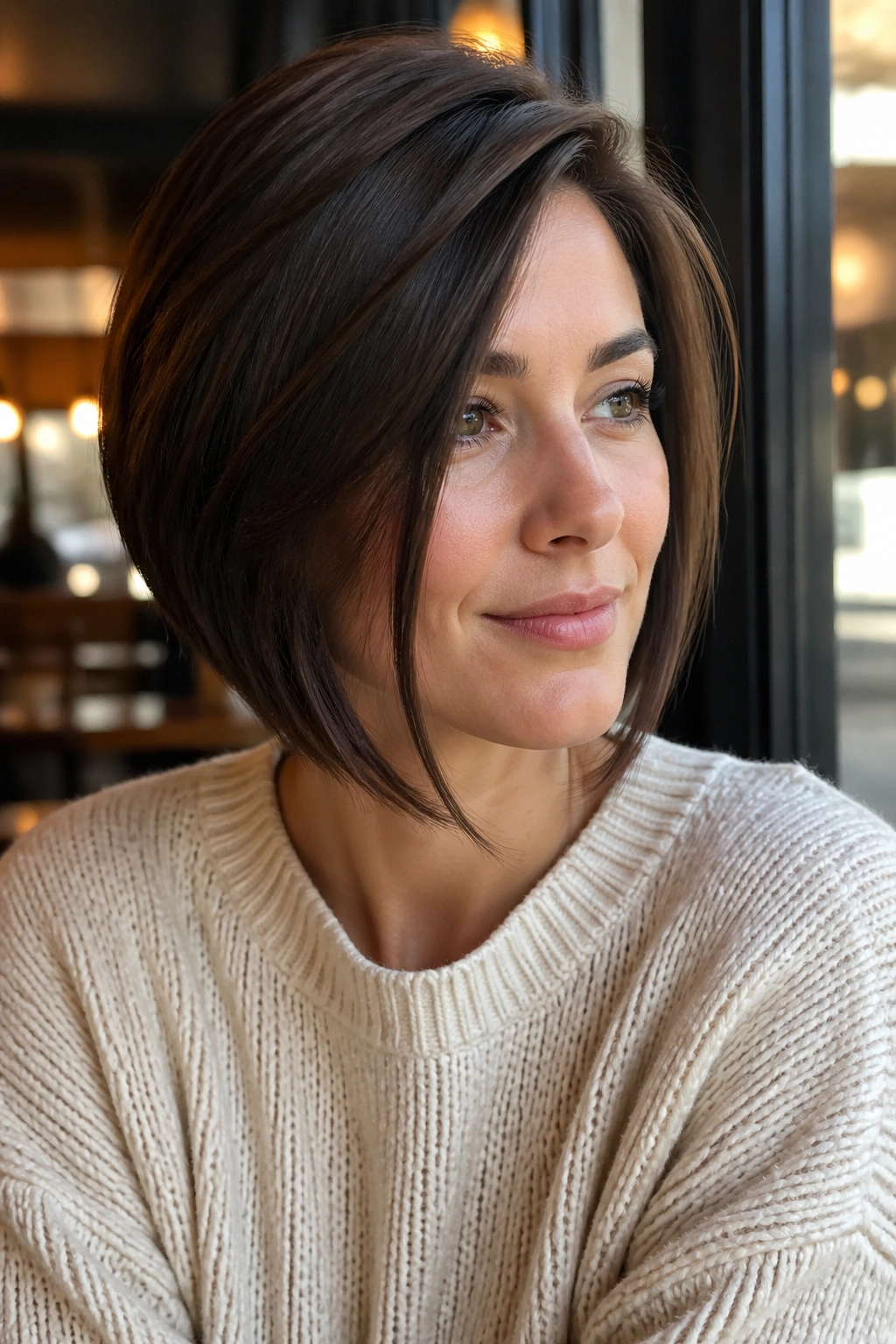
A side part does more than change the photo. It shifts where the weight lands. On thick coarse hair, that can make a huge difference. A center part sometimes splits the density in a way that makes the hair puff on both sides. A side part moves some of that width off-center and lets the haircut fall in a softer, more relaxed way.
Long face-framing pieces help too. They pull the eye down, slim the sides of the face, and keep the bob from feeling like it stops too abruptly at the jaw. The rest of the cut can stay fairly clean through the back, which is nice if you want the practical side of a bob without the severe finish.
When to Choose It
- If your hair looks flatter at the crown with a center part
- If your cheeks or jaw feel wide in a blunt bob
- If you want a bob that can be tucked, waved, or worn sleek
This shape is one of the easiest to live with because it does not demand a perfect blowout. A little root lift at the part, a round brush through the front, and a smoothing cream through the ends is often enough. Some days the side part will fall into place with almost no help.
And that matters. A bob you can actually wear is worth more than a bob that behaves for ten minutes under salon lights.
Final Thoughts
The best bob for thick coarse hair is usually the one that respects weight instead of fighting it. Sometimes that means a blunt chin-length cut. Sometimes it means keeping the length at the collarbone so the hair settles down on its own. Sometimes it means hidden internal layers, but only when the exterior line stays intact.
A simple tip makes the whole process easier: bring two photos, not one. Show your stylist the shape you want and the finish you want. Those are not always the same thing. A cut can be chin-length and blunt, or chin-length and soft, or chin-length and stacked. The details matter more than the label.
If your hair is dense, coarse, and a little stubborn, that is not a problem to fix. It is raw material. The right bob gives it shape without making it fight itself.
