



A chin-length bob can look immaculate or oddly heavy, and the difference is usually a quarter-inch. The line sits right where the face starts to narrow, so every decision matters: where the ends land, how much weight stays at the nape, whether the front swings in or kicks out. That’s why chin length bob cuts are such a favorite when someone wants a clean look without wearing their hair pin-straight every hour of the day.
The best versions do one thing well. They keep the perimeter clear, avoid random bulk, and let the haircut do the work instead of piling on product. A soft bevel at the ends can make the whole shape read neat; too many choppy layers and the cut starts to feel fussy. Too little structure and it can look like it grew out one week too far.
I’ve always thought the sweet spot for this length is its honesty. There’s nowhere to hide a bad line. If the bob is off, you see it fast. If it’s right, it frames the jaw in a way that looks tidy from the front, clean from the side, and expensive in that quiet, no-nonsense way people notice without being able to explain why.
Here are 15 versions that keep that crisp feeling, each with its own personality.
1. The Blunt Chin-Length Bob
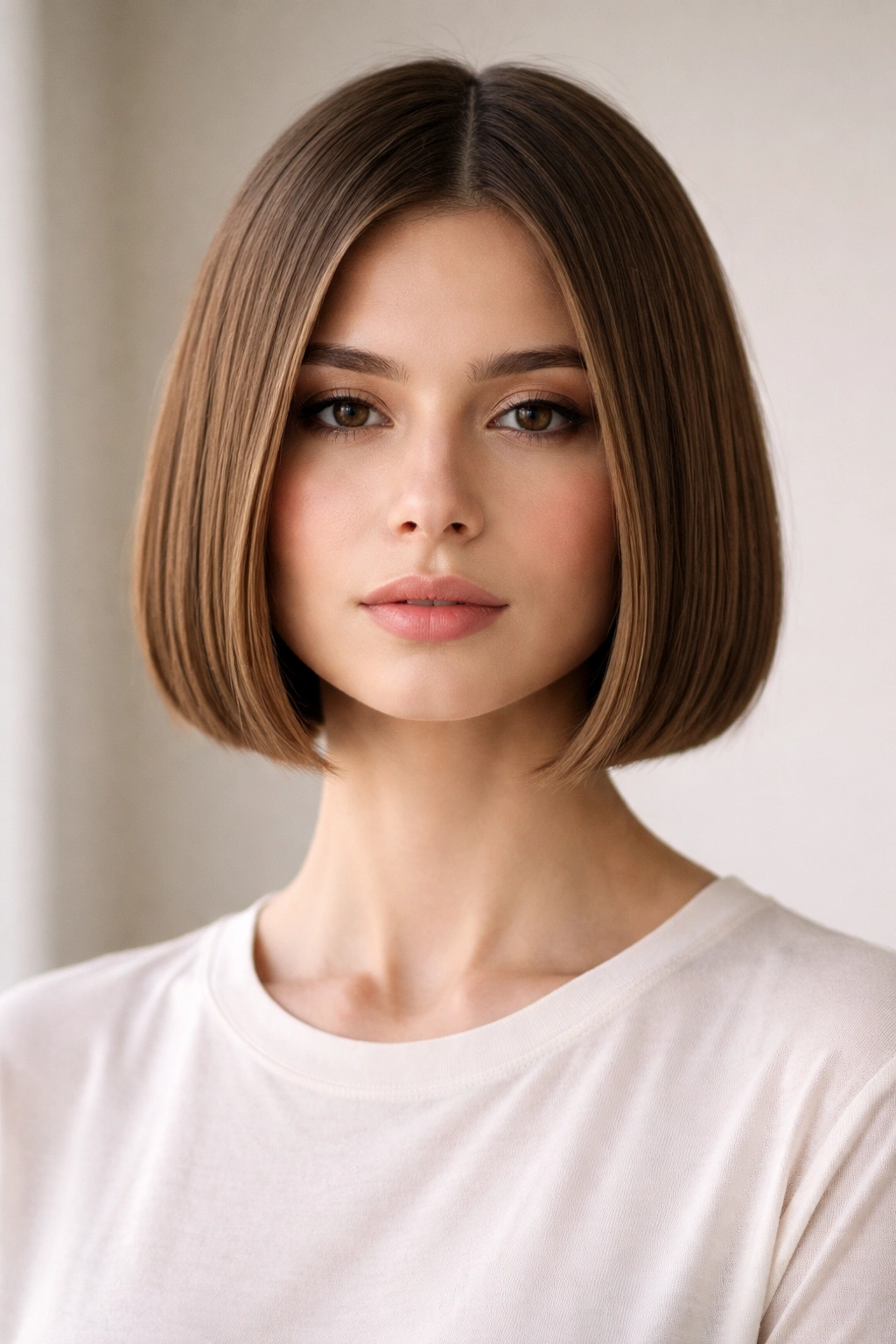
A blunt chin-length bob is the cleanest version of the cut, full stop. There’s no soft layering to distract the eye, no feathered ends to blur the shape. Just one firm line sitting at the chin, which is exactly why it looks so sharp on fine to medium hair.
Why the blunt line works
The magic is in the perimeter. When the ends are cut evenly and left mostly untouched, the haircut reads as deliberate rather than busy. That matters a lot at chin length, where even a small wobble at the bottom can make the whole style feel unfinished.
I like this version best when someone wants the haircut itself to provide the polish. It pairs well with a center part, but a slight off-center part can soften the face a touch if the symmetry feels too severe. The trick is to keep the ends straight enough that they sit as a line, not a cloud.
- Best for fine or medium hair that needs a fuller-looking edge
- Ask for minimal texturizing at the hemline
- Keep the chin point as the longest part, not the cheeks
- Trim every 6 to 8 weeks so the line stays crisp
Best tip: blow-dry it with the nozzle pointed downward and a flat brush, then stop once the ends bend under by just a little. That tiny bend is enough.
2. The Slightly Angled Bob That Tucks In Neatly
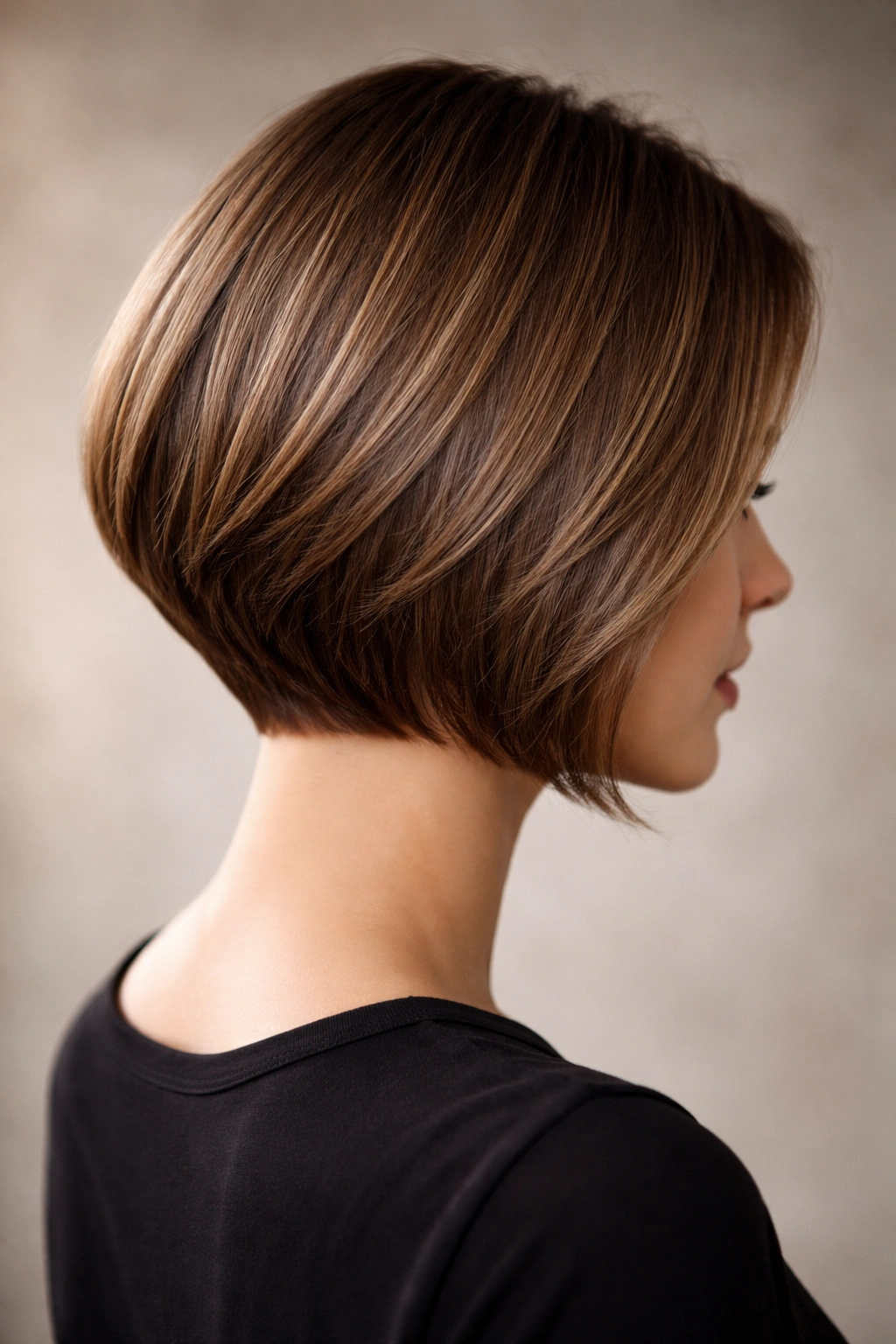
Can an angled bob still look tidy? Absolutely — if the front is only a little longer than the back. The best angled chin bob does not scream for attention. It just gives the jawline a cleaner edge and keeps the nape from looking bulky.
That small drop in the front helps the hair sit close to the neck instead of puffing outward. On round or square faces, it can make the lower half of the face feel more defined. On straighter hair, the angle looks crisp; on wavy hair, it needs a little more styling, or the shape can blur.
I prefer a subtle angle over a dramatic one for a clean look. Big angles can feel fashion-forward, which is fine if that’s the goal, but they don’t have the same quiet, neat finish. A half-inch to one inch of difference is often enough.
The other thing people miss is weight. If the back gets over-thinned, the haircut starts to flip and lose that tidy edge. Keep the back compact, keep the front controlled, and the whole shape stays easy to wear.
3. The Soft Layered Bob With Airy Ends
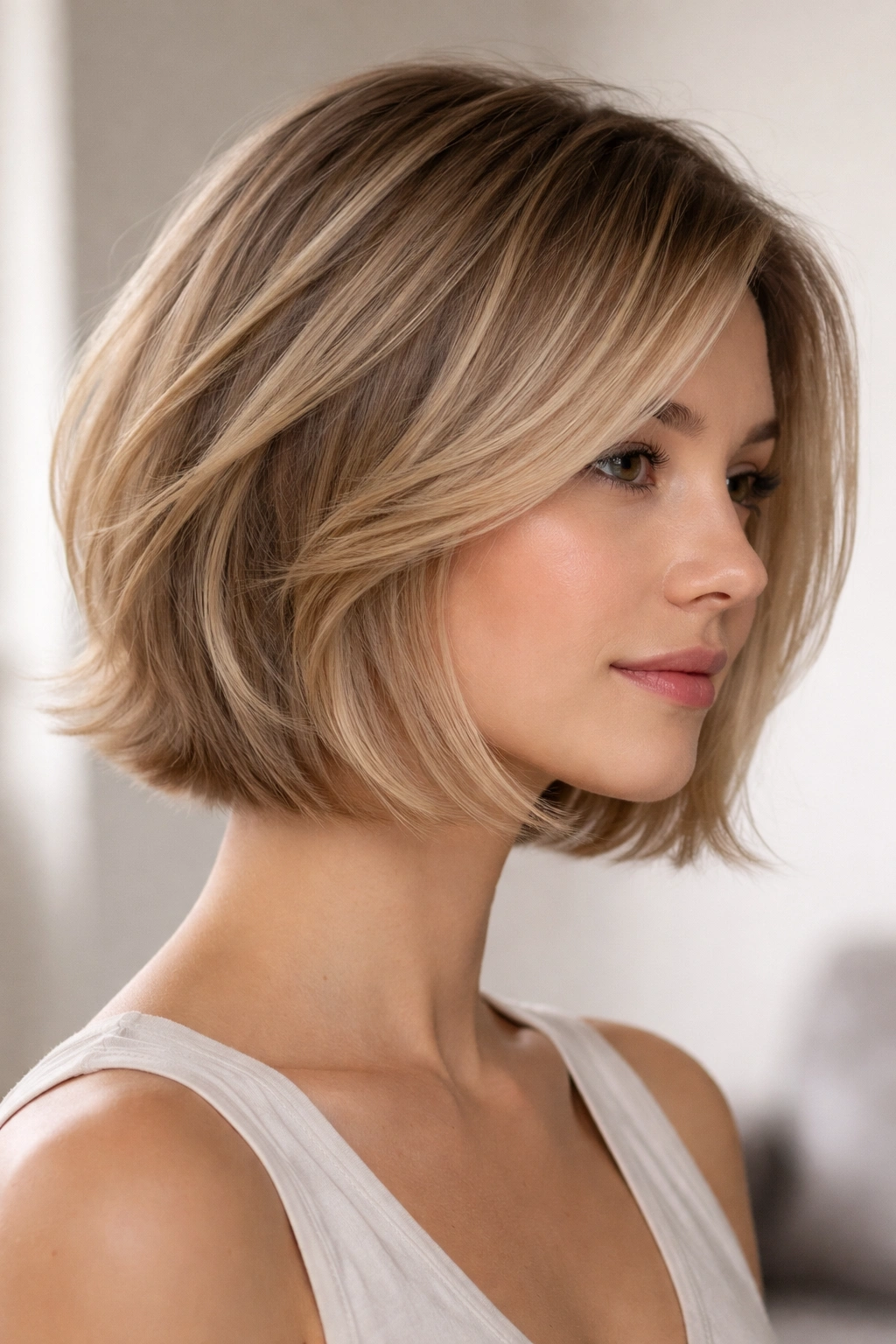
If your hair balloons at the ends the minute it dries, the problem is usually too much bulk at the perimeter. A soft layered chin bob fixes that without turning the haircut into a shag. The layers stay hidden inside the shape, so you get movement without losing the clean outline.
Where the layers should start
The best layers begin below the cheekbone or just around the lower face, not right at the jaw. That keeps the line around the chin intact while taking some weight out of thicker hair. If the layers start too high, the cut can get choppy fast.
This is one of my favorite options for dense hair that wants to sit like a helmet if you leave it one-length. A few well-placed layers let the hair fall instead of puffing. You still want the ends to look intentional, not shredded.
- Ask for internal layers, not short surface layers
- Keep the outer line visible from the front
- Use a light cream, not a heavy oil
- Diffuse only until the roots are dry if your hair is wavy
One good rule: if you can see the layers from across the room, there are too many of them.
4. The French Bob With a Tiny Fringe
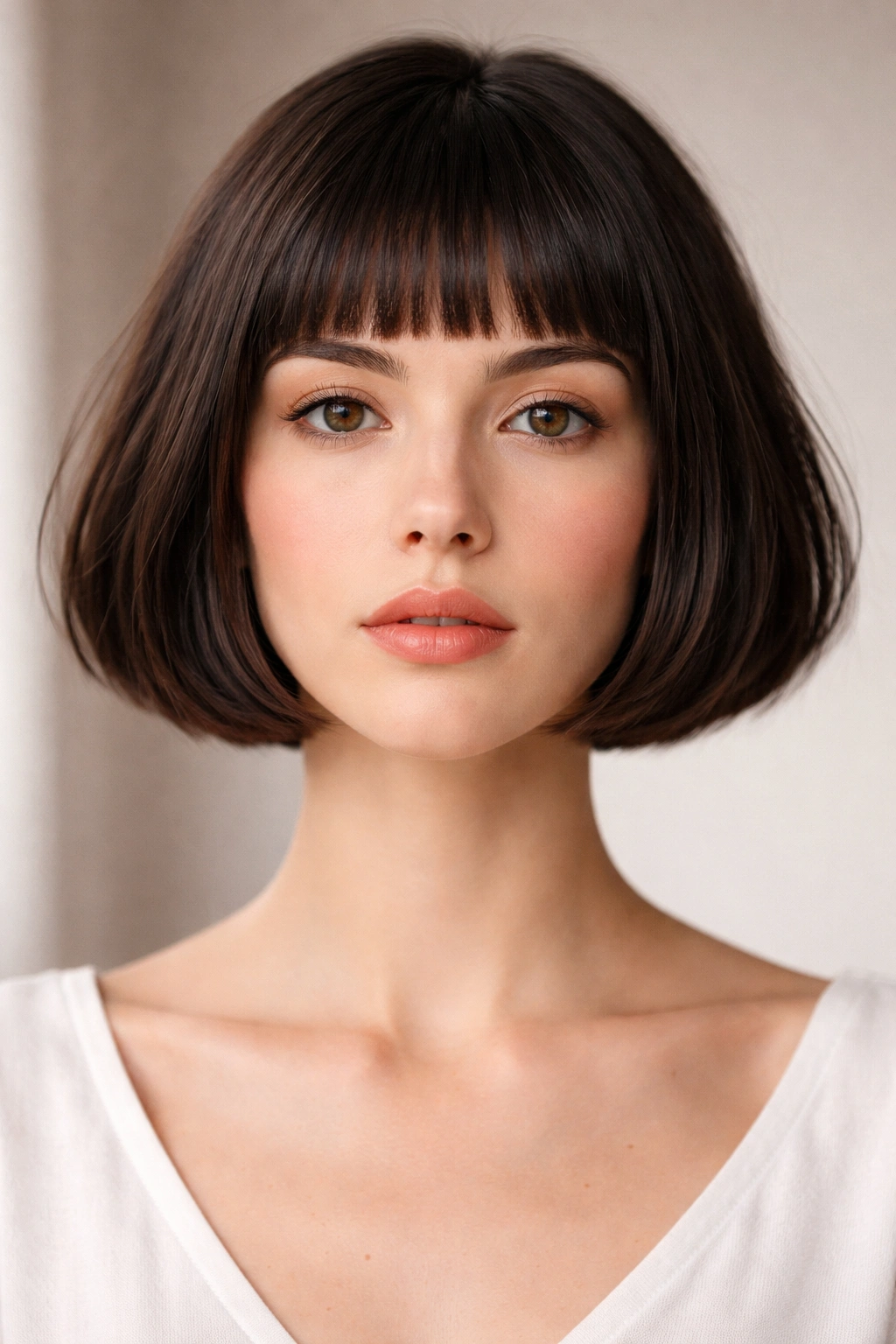
A French bob can look neater than a longer bob because the shape is short enough to stay controlled. The tiny fringe gives it character, but the clean look comes from restraint, not drama. I’m talking about a fringe that barely grazes the brow or floats a touch above it.
Fringe length matters. Too long and it falls into the eyes, which makes the whole cut feel slouchy. Too thick and it closes off the face. A softer, lightly textured fringe works better here because it keeps the forehead area light while the bob itself stays compact around the chin.
This cut is a good fit if you like hair that looks deliberate even when it’s a little imperfect. It does not need an ironed-out finish to look polished. A quick blow-dry with a small round brush and a tiny bit of smoothing cream is usually enough.
If you have a strong jaw or a long neck, this shape can look especially sharp. The line at the chin creates a clean frame, and the fringe keeps the whole thing from feeling too severe. It’s small, but it changes the mood a lot.
5. The Side-Part Bob That Sits Close to the Jaw
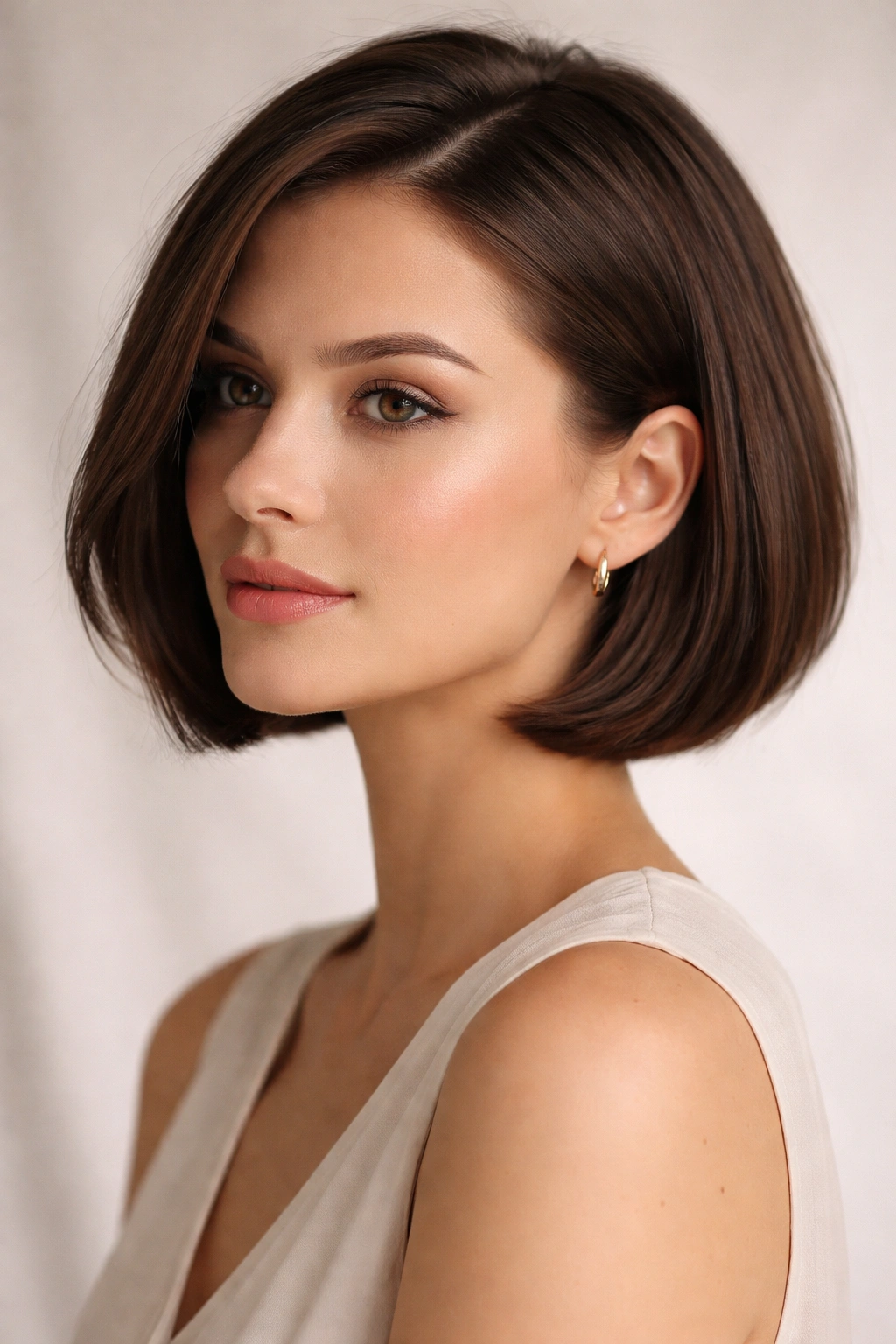
A side part changes the whole mood of a chin-length bob. The cut itself can stay simple, but the part adds lift at the crown and a little softness around the face, which keeps the style from reading too rigid. I like this version when the goal is tidy, not severe.
The best part about a side-part bob is the balance. One side can tuck behind the ear, the other can skim the cheek, and the result feels controlled without being stiff. That’s useful if your hair tends to lie flat on top, because the off-center part gives the root area some shape.
It also works well for people who do not love a center part on themselves. Some faces look sharper with a slight shift in the line, and a side part gives you that without changing the cut itself. The bob stays chin-length, the perimeter stays neat, and the styling feels a little less formal.
A small warning: don’t bury the part under too much volume. A clean side-part bob should look intentional, not accidentally windblown. Keep the crown lifted just enough that the silhouette stays smooth.
6. The Center-Part Bob for a Sharp, Even Line
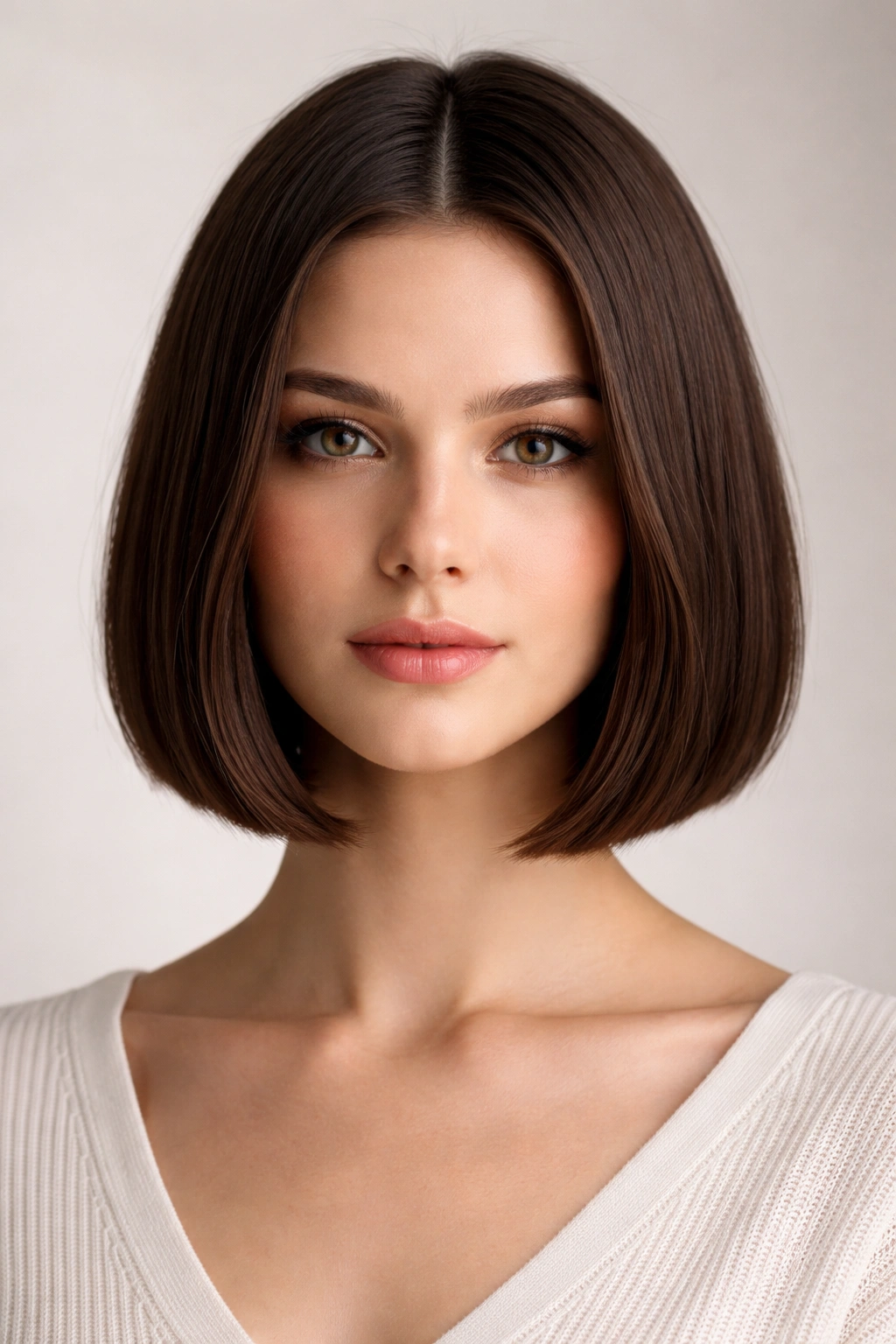
Unlike a side-part bob, the center-part version puts the whole haircut on display. There’s nowhere for the eye to wander, which is why this style works so well when the perimeter is truly good. If the line is even, the effect is crisp. If it’s not, you’ll know right away.
Straight hair wears this cut beautifully because the middle part makes the line at the chin feel almost graphic. That can sound severe, but it isn’t when the ends are softened just a touch. The trick is not to over-layer the front. Keep the face framing minimal and let the shape speak for itself.
This is also a smart choice for oval or longer faces. The even split can make the whole face feel balanced, especially when the bob sits exactly at the chin instead of slipping below it. A smoothing cream and a flat brush are usually enough to keep it tidy.
I’d avoid over-texturizing this version. A few broken pieces are fine, but too much movement destroys the clean read. The center part wants precision, and that is half the appeal.
7. The Tucked-Under Bob With Polished Ends
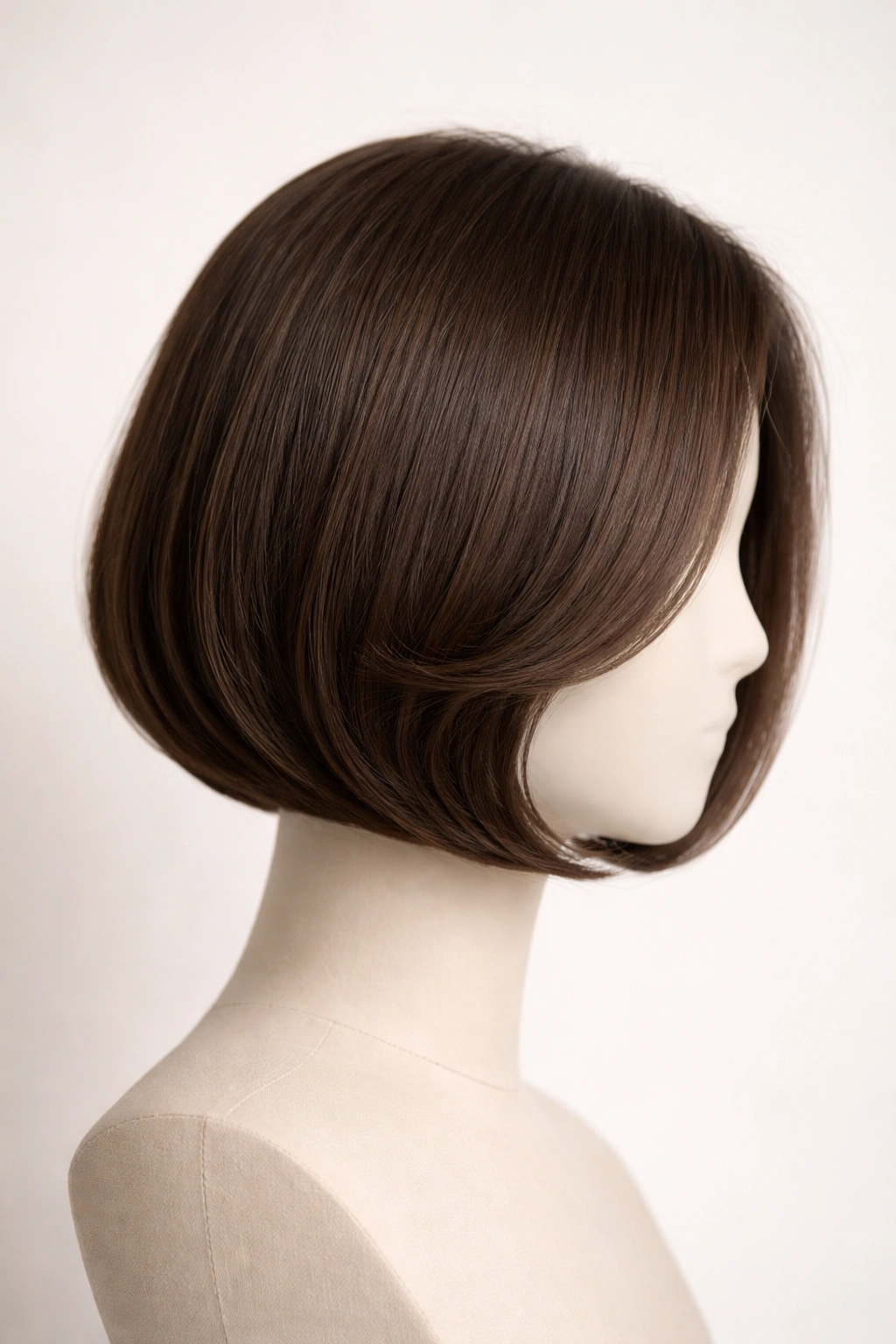
The ends should curve inward like they’ve been pressed into place. That’s the whole charm of a tucked-under bob. It feels neat from every angle, and the bend at the bottom gives the haircut a finished look without making it stiff.
How to get the bend
A round brush is your friend here, but not the huge kind that leaves the hair floppy. A medium brush, usually around 1.5 inches, gives enough control to tuck the ends under while keeping the shape close to the jaw. Point the dryer nozzle down the hair shaft and finish with a cool shot to set the bend.
This cut looks especially good on straight or slightly wavy hair that tends to stick out at the sides. The inward curve reins that in. If your hair flips away from your face, this is the version that makes it behave.
- Work in sections no wider than the brush
- Aim the ends under, not curled into a full flip
- Use a pea-sized amount of cream on damp hair
- Finish with a light spray, not a stiff helmet of hairspray
The polished ends are what make this one feel clean. No drama. No mess. Just a tidy curve that follows the shape of the chin.
8. The Textured Chin Bob for Wavy Hair
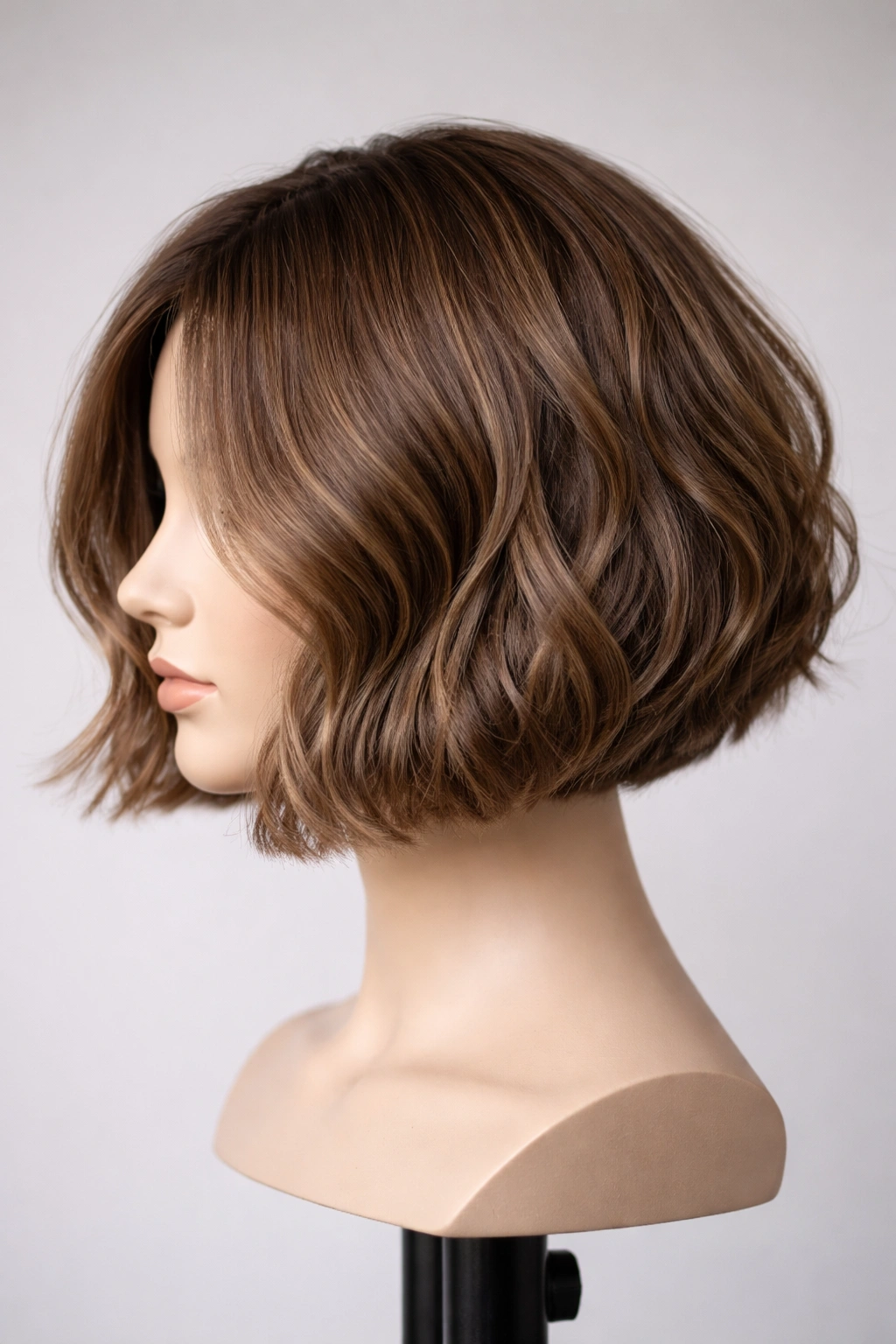
Can texture still look clean? Yes, if the waves are controlled instead of scruffy. A textured chin bob is not a messy bob. It’s a bob that respects the wave pattern and trims it so the movement sits inside the shape, not all over the place.
Keep the wave in the middle, not the ends
That’s the part many stylists get right when the cut is good. The ends should still feel contained, even if the body of the hair has bend and motion. If the last inch of hair is wildly different from the rest, the style loses its clean outline.
I like this cut for hair that fights a flat brush but looks too puffy when left totally alone. A little wave gives it life; a controlled perimeter keeps it tidy. A foam mousse or a light curl cream can help, but don’t load the hair down. You want movement, not crunch.
Diffusing on low heat helps a lot. So does scrunching only until the hair is about 80 percent dry, then leaving it alone. The more you poke at a wavy bob while it dries, the fuzzier it gets. And fuzz is the enemy here.
This version is especially good if you want a clean look that does not feel overstyled. It has a softer edge, but the shape still reads neatly around the chin.
9. The A-Line Chin Bob With a Subtle Front Drop
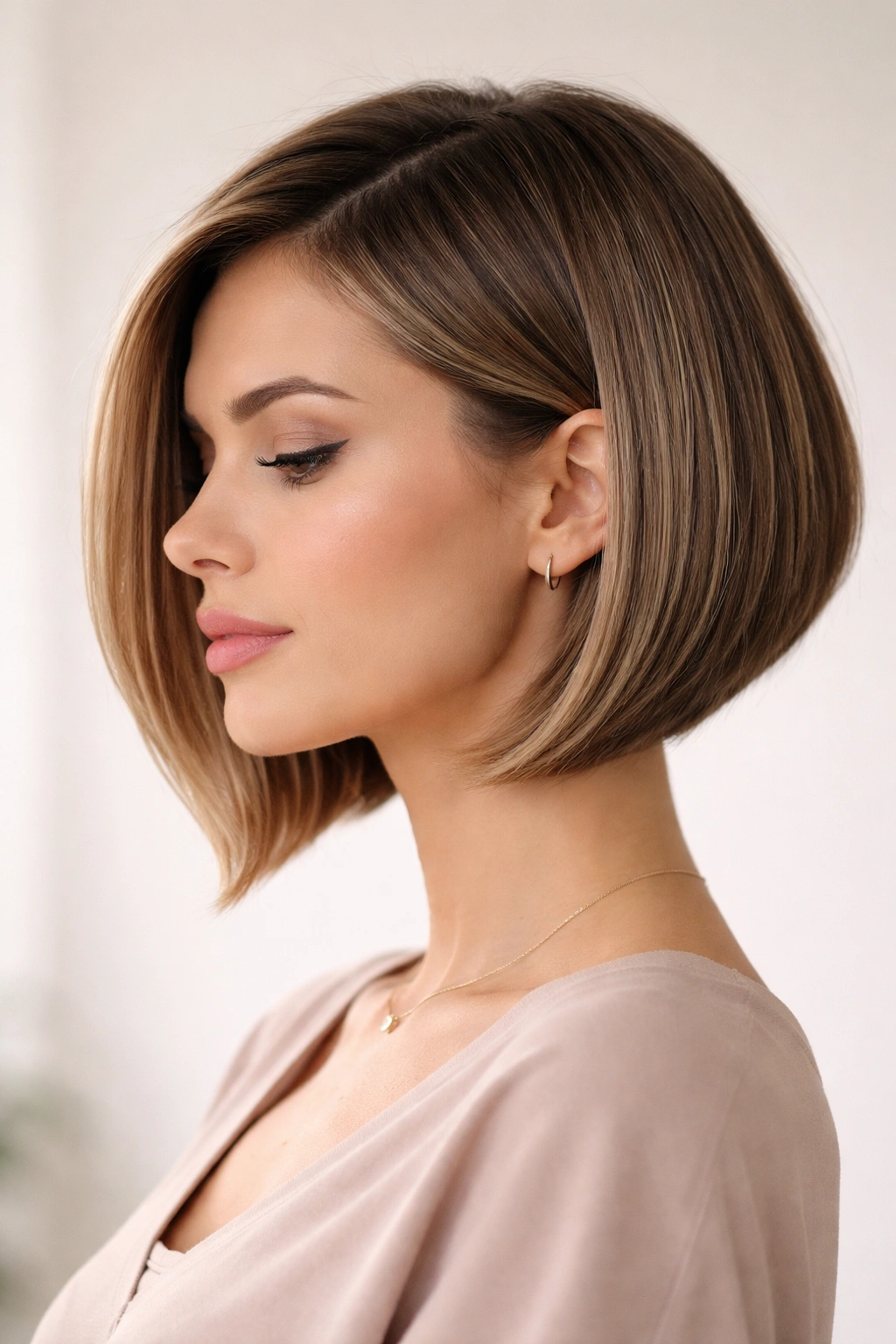
Hair that flips out at the jaw often wants a tiny bit of length in front. That’s where the A-line chin bob earns its place. The back sits a touch shorter, the front drifts forward, and the whole cut feels built rather than random.
The difference between this and a heavily angled bob is depth. An A-line bob usually has a more visible front-to-back shift, but at chin length it still works best when the angle stays calm. You do not need a dramatic triangle. A modest one is cleaner and easier to wear.
This cut is smart for thicker hair because it removes some of the bulk at the back while letting the front frame the face. It can also help if your hair naturally curls under or kicks out. The forward piece gives it somewhere to go.
- Ask for the front to sit about 1 to 1.5 inches longer than the nape
- Keep the front line smooth, not jagged
- Use a flat brush or paddle brush to guide the ends forward
- Avoid too much razor work if your hair frizzes easily
The clean look comes from the transition. When the shift from back to front is smooth, the haircut looks intentional every single time.
10. The Graduated Bob With Lifted Back
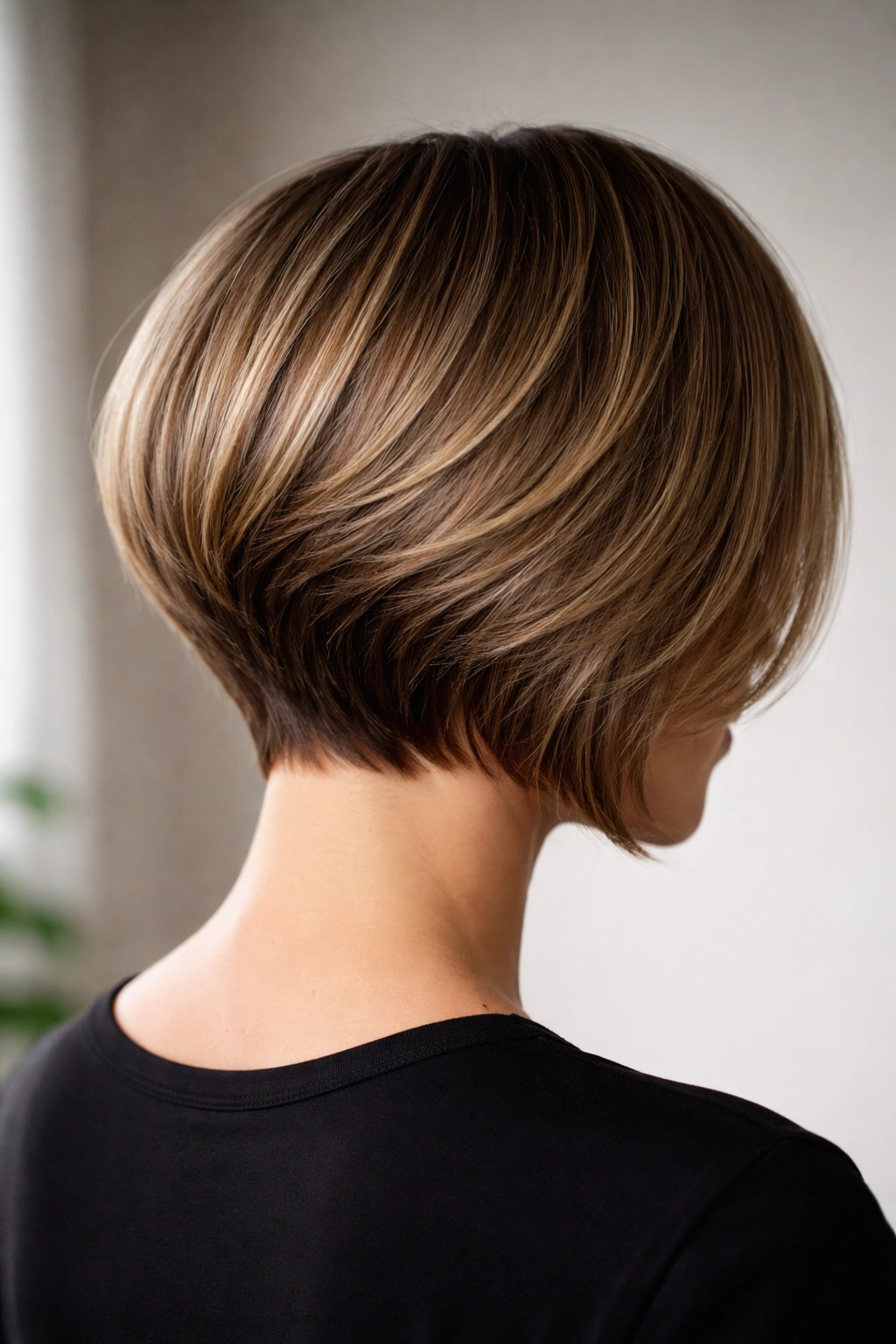
A graduated bob isn’t about drama. It’s about building a better shape at the back so the chin-length front can sit neatly. The stacked layers in the nape create lift, which keeps thick or heavy hair from hanging straight down like a curtain.
What I like here is the neckline. A good graduated bob makes the back feel tidy and compact, almost like the haircut is hugging the head. From the front, you still get the chin-length frame. From the side, you get a clean rise through the back that keeps the cut from looking flat.
This version suits hair that carries a lot of weight in the lower half. If your bob tends to spread wide at the bottom, graduation can tighten the silhouette. It is not a cut for people who want softness everywhere, though. The back needs shape, and the shape needs maintenance.
A small caution: too much stacking can look dated fast. Keep the graduation subtle and smooth, not choppy. The goal is a lifted back with a neat edge, not a wedge that feels old-school in the wrong way.
11. The Curly Chin-Length Bob
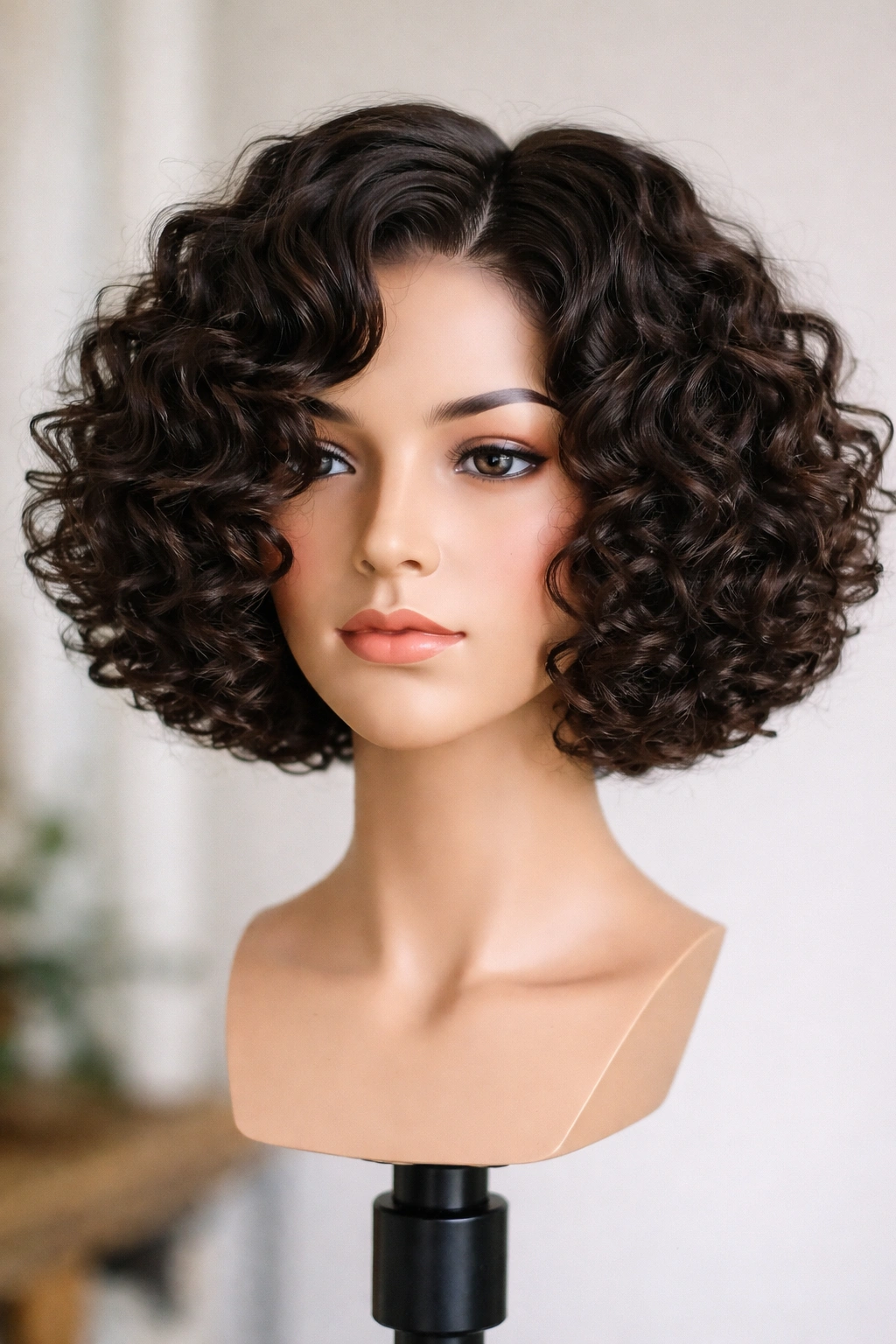
Curly hair does not need to be long to look controlled. In fact, a chin-length bob can be one of the cleanest shapes for curls when it’s cut with shrinkage in mind. The right version keeps the curl pattern round and balanced instead of letting it balloon outward.
What to ask for at the chair
The stylist should shape it dry or mostly dry, so they can see where the curls actually fall. Wet curls can lie to you. They look longer, heavier, and much less eager than they are once the hair dries.
- Ask for curl-by-curl shaping around the chin
- Keep the weight line even so the shape does not triangle out
- Use a diffuser on low heat and low airflow
- Avoid over-thinning the ends, which can make the bob frizzy
I like this style because it feels lively but still neat when the cut is done well. The curls frame the face, but the edge stays controlled. A little leave-in cream goes a long way here. Too much product, and the curls clump in a way that looks greasy instead of polished.
If your curls are springy, ask where the bob will land when dry, not when wet. That detail saves a lot of frustration.
12. The Sleek One-Length Bob
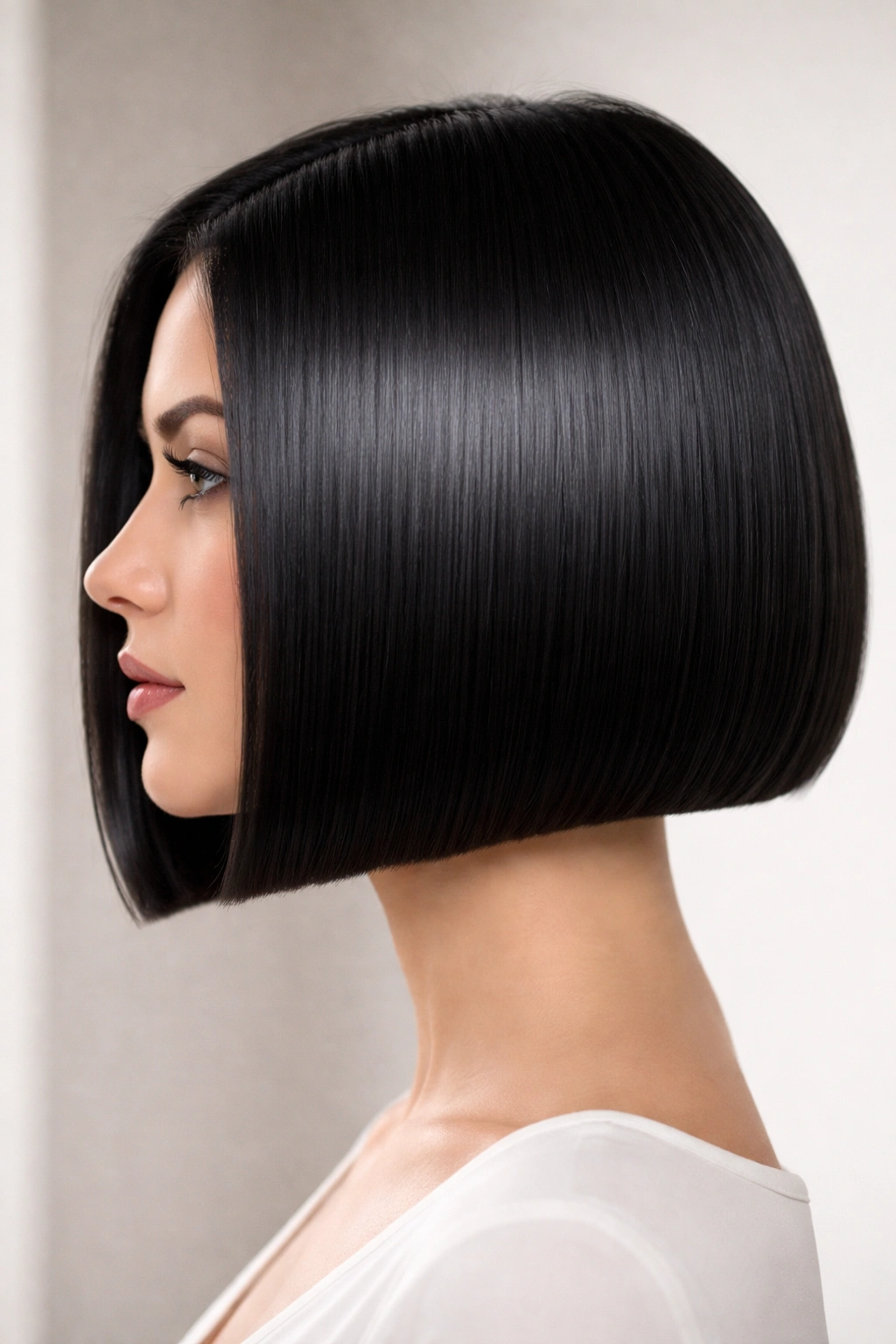
Picture a bob with one clean perimeter and a finish so smooth you can see the light move across it. That’s the sleek one-length bob, and it is a different animal from a softly textured version. This cut leans hard into polish.
The shape is simple, which is the point. A blunt line at chin length creates the frame, then heat styling sharpens it. A heat protectant, a round brush, and a flat iron used in small, careful sections usually do the job. I’d keep the iron at a moderate heat rather than cranking it up; too much heat makes the ends brittle and rough-looking.
This one works best on straight hair or on hair that can be smoothed without much effort. It also looks strong on people who like a slightly formal finish. Think clean collar, tidy earrings, and hair that sits exactly where it should.
The difference between this and the blunt bob above is the styling. The blunt bob can live a little more naturally. The sleek version is polished on purpose. Same length, different attitude.
13. The Face-Framing Bob With Light Interior Layers
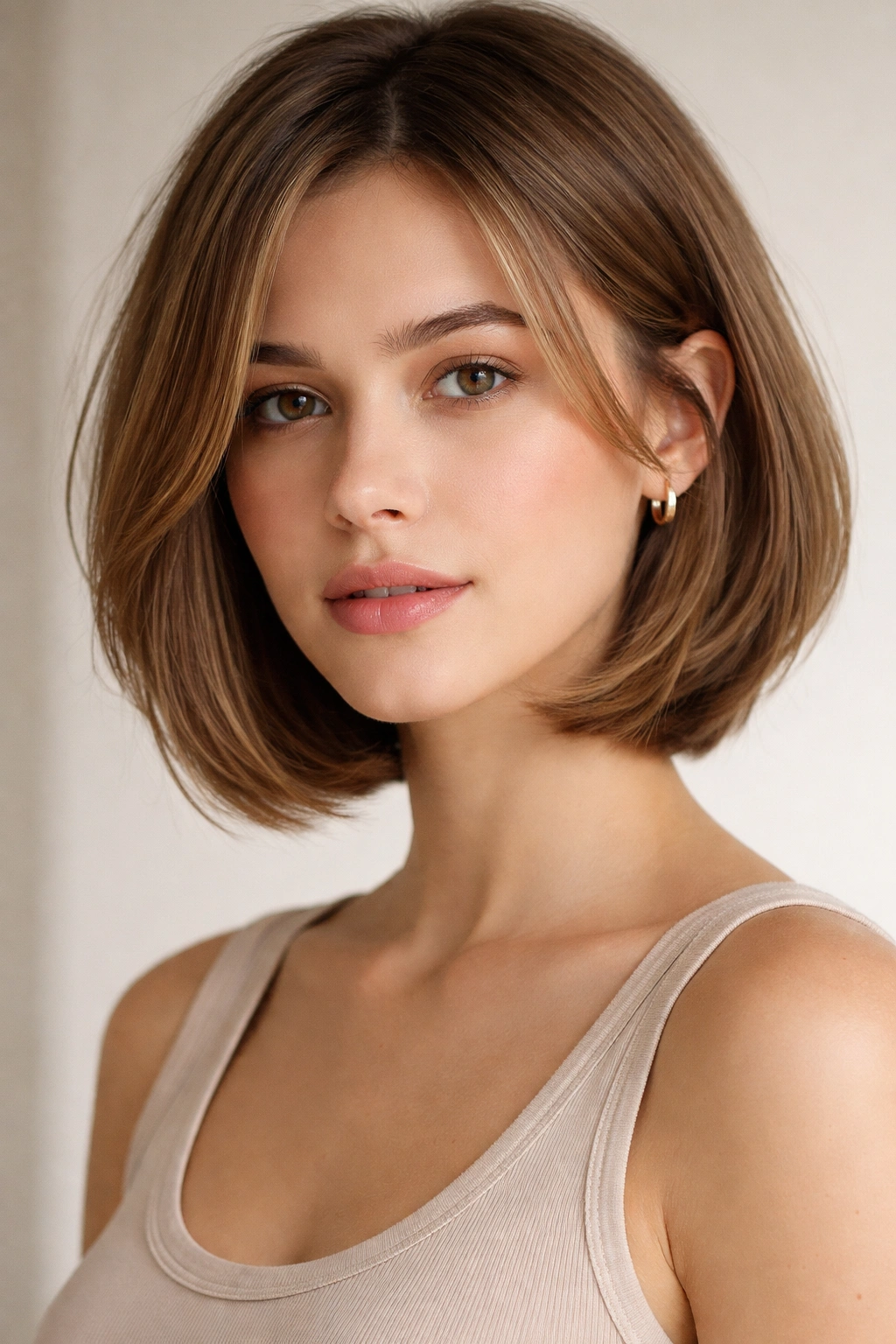
Unlike a heavily layered cut, this bob keeps the outer line intact and softens only the front. That’s what makes it so useful when you want a clean look with a little movement around the face. The perimeter still does the heavy lifting, but the front pieces take some pressure off the jaw.
The best face-framing layers begin just below the cheekbone or around the mouth, not right at the chin. That keeps the line from getting fuzzy. If the front pieces are too short, the shape can turn choppy fast. If they’re too long, you lose the effect altogether.
I like this version for people with strong jawlines, wider cheeks, or hair that feels a little too solid when cut blunt. It opens the face without making the bob look fluffy. A round brush can shape the front pieces inward while leaving the back calm and compact.
This is also a good middle ground if you want some softness but do not want the haircut to look layered in the obvious sense. The interior movement stays hidden until the hair shifts. That’s the part I like most.
14. The Undercut Bob That Removes Bulk
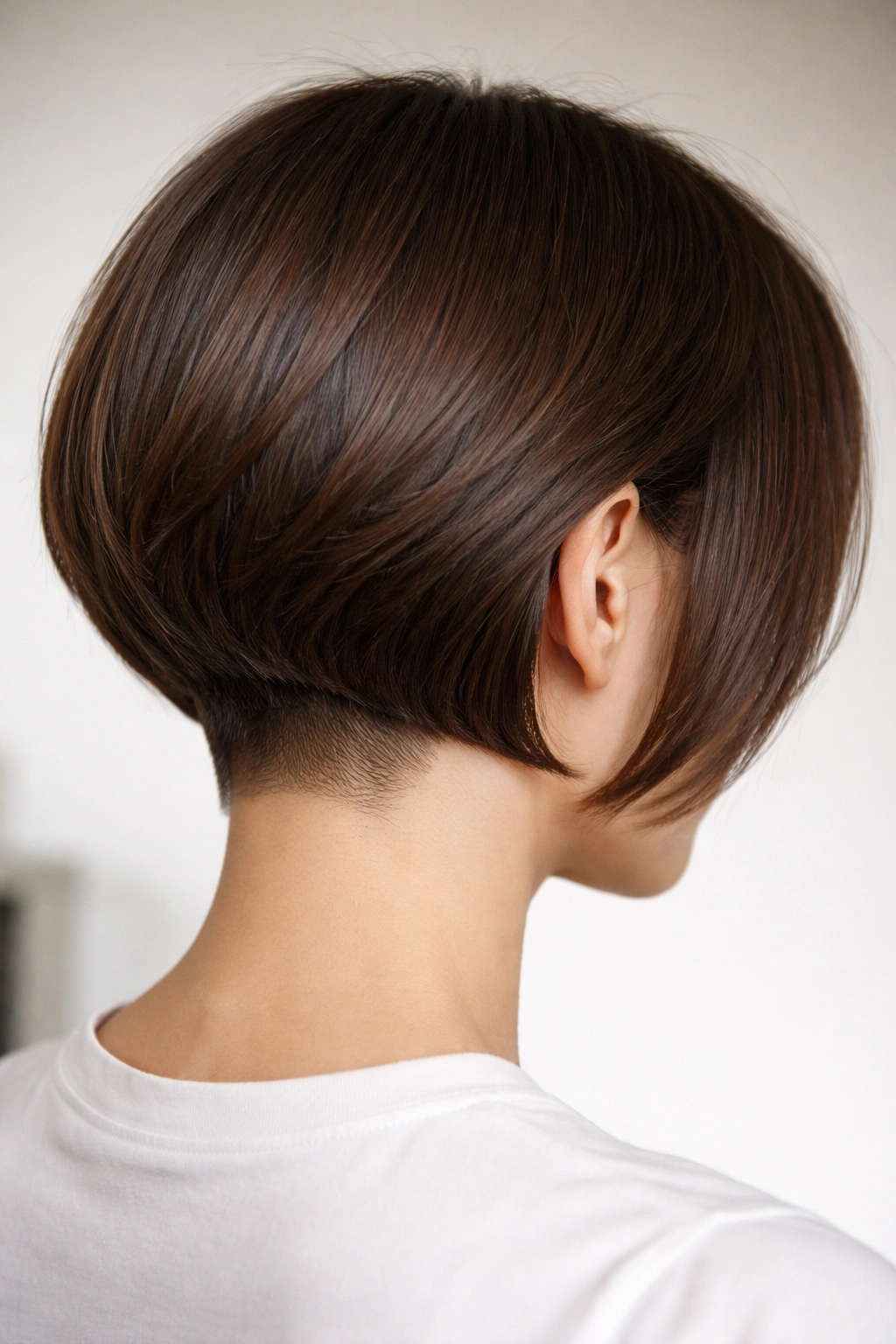
Thick hair sometimes looks cleaner with less hair underneath, not more styling on top. That is why an undercut bob can be such a smart fix for a chin-length cut that keeps puffing out at the nape. The surface shape stays bob-like and neat, while the hidden underlayer takes out weight.
What the undercut changes
The undercut does not have to be dramatic. Sometimes it’s just a shorter section at the nape or behind the ears, enough to let the top layer fall closer to the head. That can make a dense bob sit flatter and move better.
- Best for very thick or coarse hair
- Ask for the undercut to stay hidden unless the hair is tucked up
- Keep the outer line blunt or softly beveled for a tidy finish
- Trim the underlayer on a regular schedule so it doesn’t grow bulky again
I’ve seen this work especially well on hair that expands in humidity. Instead of fighting the thickness with more product, you change the structure of the cut. That’s a more honest fix. And usually a better one.
It is not the right choice if you want your bob to feel full and plush. But if your main goal is a clean silhouette with less bulk at the base, it’s hard to beat.
15. The Rounded Chin Bob With a Soft Finish
A rounded chin bob is one of those cuts that looks neat even when you do not spend forever styling it. The shape curves gently around the chin instead of stopping in a hard line, which gives it a softer read while still keeping the outline crisp enough to feel clean.
This version is especially good if a blunt bob feels too severe on your face. The rounded edge eases the line a little and helps the hair fold in toward the neck. On square faces, that softness can be useful. On straighter hair, it keeps the cut from looking boxy.
The styling is straightforward. A round brush, a touch of smoothing cream, and a light pass with the dryer are usually enough. You want the ends to bend under, not curl into a flip. If the curve gets too round, the haircut starts to look old-fashioned. Keep it subtle.
What makes this one worth considering is how forgiving it is. If you need a bob that can look tidy on a busy morning and still hold its shape by dinner, the rounded chin cut does that job without much drama. Ask for the chin to be the longest point and for the curve to stay soft rather than pillowy. That one detail keeps the whole thing sharp.
A chin-length bob works best when the shape is clear and the ends know where to go. Every version above does that in a slightly different way, which is why one bob can look sleek, soft, lifted, or precise without losing its clean feel. The trick is picking the one that suits your hair’s habits instead of trying to fight them.
If your hair is fine, a blunt or sleek version usually gives the strongest line. If it’s thick, a graduated or undercut bob may behave better. And if you want a little movement without losing the tidy outline, the layered, rounded, or face-framing versions tend to be the safest bets. The good chin bob is rarely the loudest one in the room. It’s the one that sits right the first time.
