



Short bob cuts for Black women work best when the shape respects the hair, not when the hair is bullied into some picture-perfect idea that ignores texture, shrinkage, or density. A bob on coily hair can sit at the jaw on wash day and rise closer to the cheekbone once it dries. That is not a problem to solve. It is part of the shape.
A good bob changes the whole feel of the face. It sharpens the neckline, makes earrings stand out, and gives you that clean frame around the jaw without needing long layers hanging everywhere. The bad ones usually fail for one boring reason: the cut was made for straight hair and then expected to behave the same way on Black hair.
The best short bob is really a conversation between your texture and your stylist’s scissors. Blunt cuts bring edge. Layered cuts bring movement. Stacked backs add lift. Tapered shapes calm down bulk. And a curly bob can look expensive in the best way when the perimeter is placed where the curl actually lives, not where it looks longest while wet.
Some bobs lean sleek. Some lean soft. A few do both. The first one is the cleanest of the bunch.
1. Chin-Length Blunt Bob for Black Women
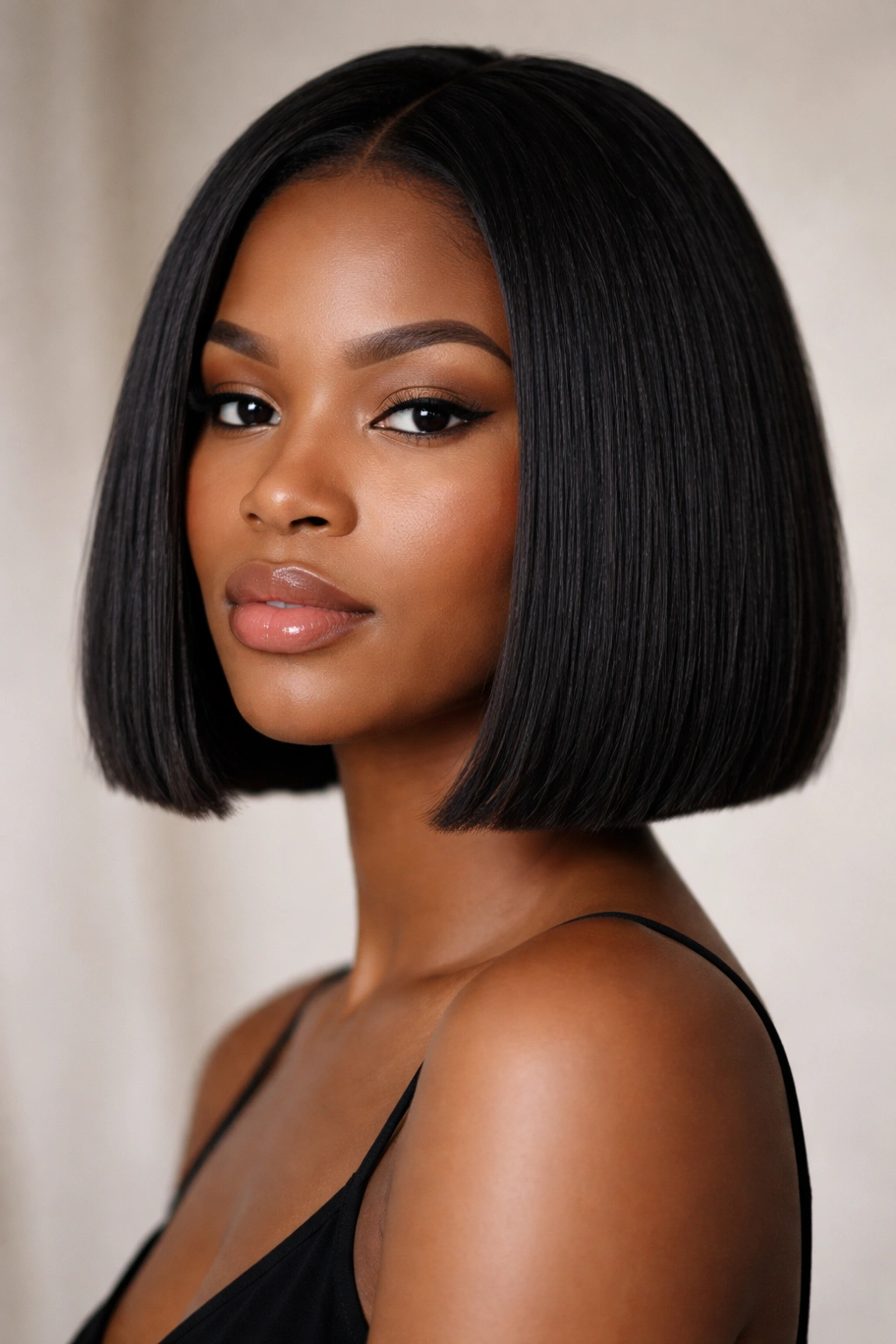
A chin-length blunt bob is the sharpest, cleanest short bob cut you can give Black hair. It sits right on the line where the jaw starts to show itself, which is why it can make the face look more defined in one cut.
The strength of this style is the edge. No feathered ends. No soft, wandering layers trying to do too much. Just a solid perimeter that looks deliberate from every angle. On coily or kinky hair, that line needs to be checked on dry or stretched hair, because shrinkage can steal a full inch or two if the cut is made too short while the hair is wet.
What to ask for at the chair
- Keep the perimeter blunt and even all the way around.
- Cut the bob at or just below the chin if your hair shrinks a lot.
- Ask for the sides to be balanced against the nape while your hair is in its natural state or fully stretched.
- Leave the ends thick, not wispy, so the shape still reads clean after a few days of wear.
It’s the kind of bob that makes hoops, a strong brow, and a glossy lip look intentional. If you want something crisp and low-drama, this is a very good place to start.
2. Side-Part Bob with Deep Sweep
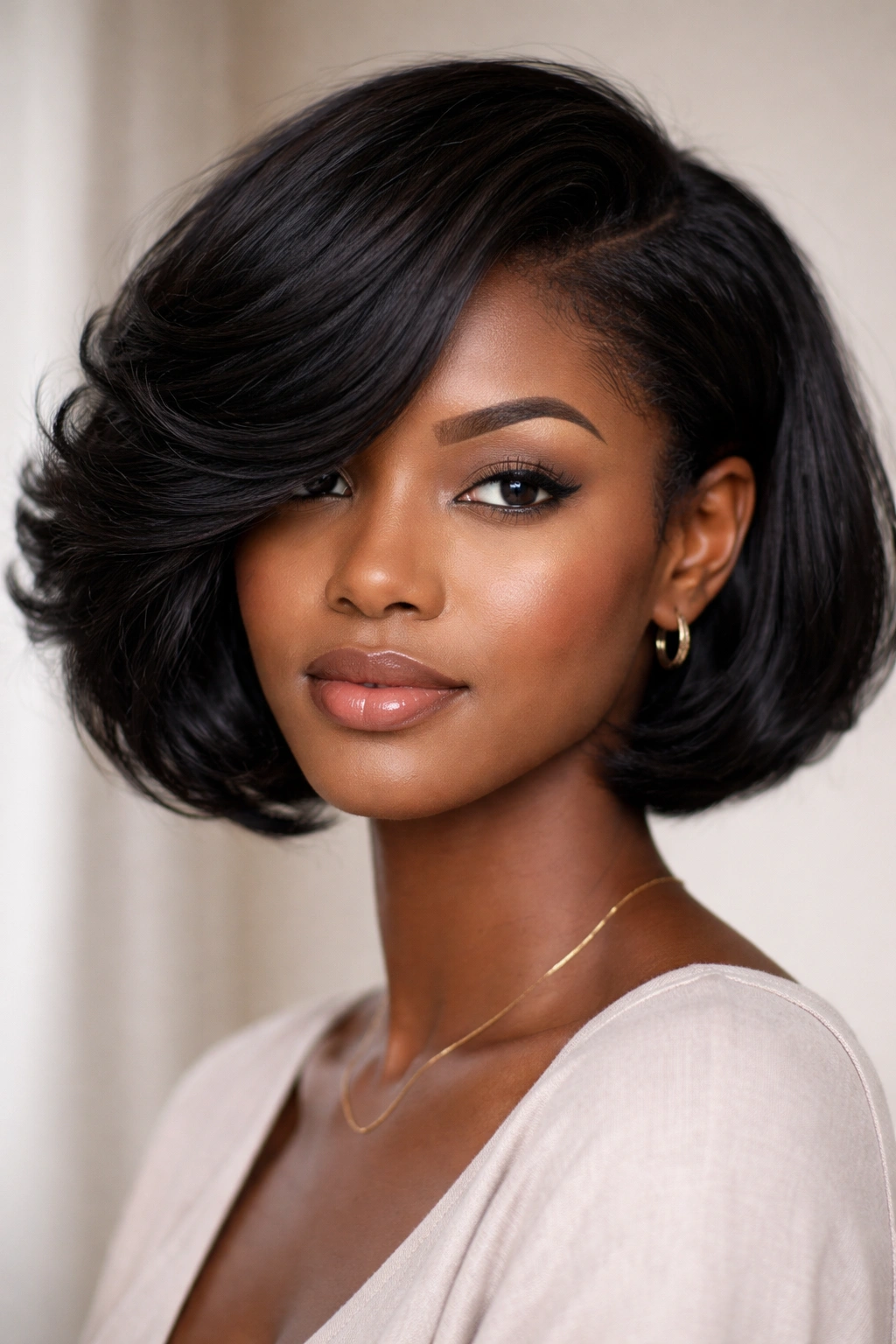
Why does a side part change a bob so much? Because it breaks the symmetry and gives the haircut a little motion before you’ve even touched a curling iron. On Black women, that matters even more, because texture can make a straight-across part feel stiff if the hair wants to lift at the roots.
A deep side-part bob works well when you want softness around the forehead and cheekbone without losing the neat outline of a bob. The heavier side gives the style some drama; the lighter side keeps it from feeling boxy. If your hair is relaxed, silk-pressed, or blown out, the part lays down quickly. If your hair is natural, a little edge control at the root and a paddle brush can go a long way, but don’t drown it in product.
Why it flatters so many faces
The sweep draws the eye diagonally. That diagonal line tends to soften round faces and give oval faces a little more contour. It also keeps the cut from looking flat in photos, which is a problem with some blunt bobs when they’re not styled with intention.
A side-part bob is especially good if you like your hair to move. It feels polished, but not frozen. And that matters. Hair that looks too locked down can read a little severe; this one has room to breathe.
3. Layered Bob That Moves Instead of Puffing
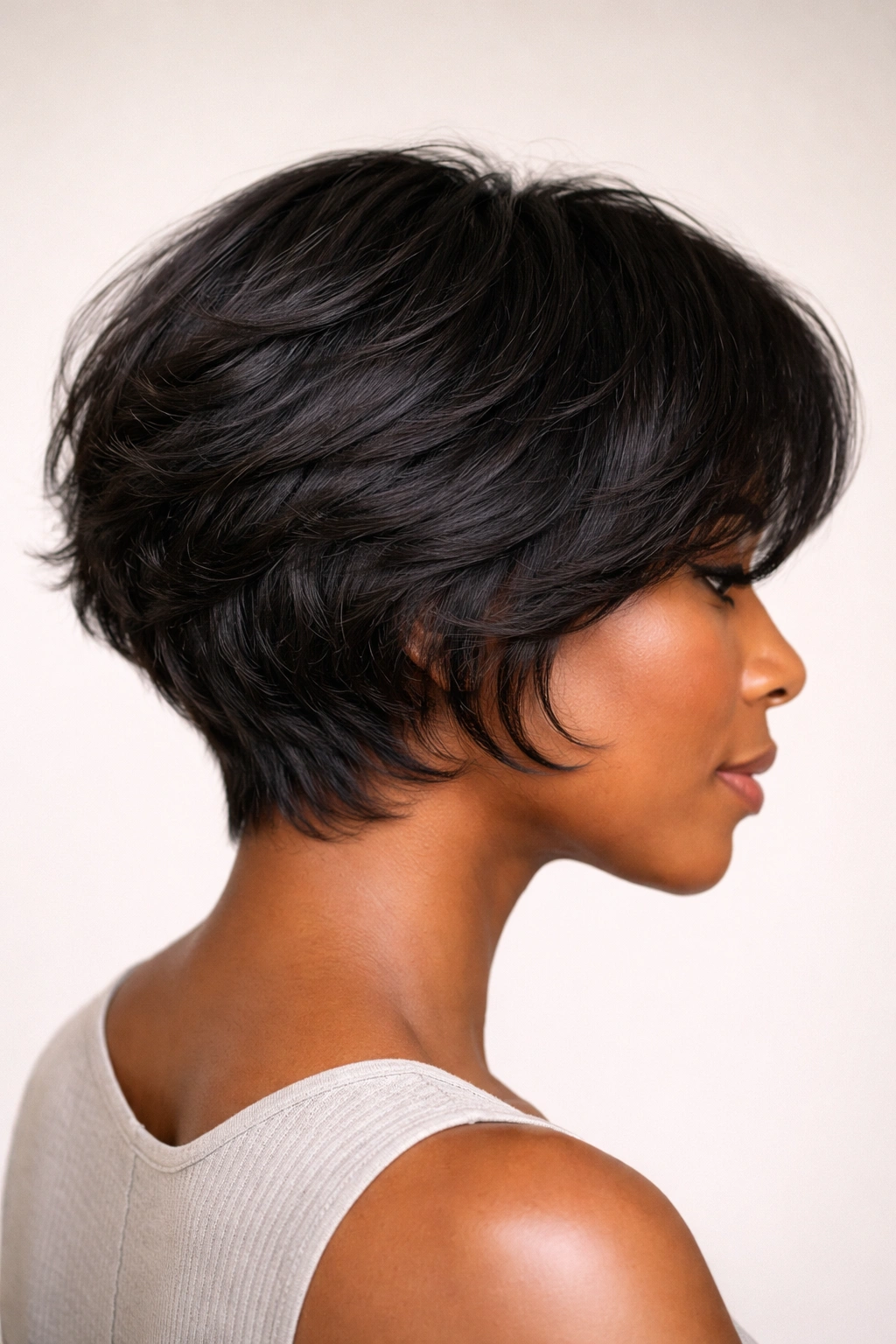
A layered bob on dense Black hair can feel like taking a weight vest off. The right layers remove bulk where the hair wants to balloon, while keeping the outline close enough to the head that the style still looks like a bob and not a mushroom.
The trick is placement. Layers should not start too high unless you want extra volume around the crown. That can be fine on some faces, but on thick hair it can also create a triangle if the stylist gets enthusiastic with the scissors. Mid-length internal layers tend to work better when the goal is movement, not fluff.
What layered bobs do better than blunt ones
- They let thick hair sit lighter around the ears and nape.
- They keep curls from stacking on top of each other in one heavy block.
- They make a bob easier to flip, tuck, or pin on the side.
- They can take a silk press or a bendy wand curl without looking stiff.
This is the bob I’d pick for someone who wants shape, but not a hard line every day. It still looks put together on a rushed morning. It just has a little more life in it.
4. Asymmetrical Bob with One Side Longer
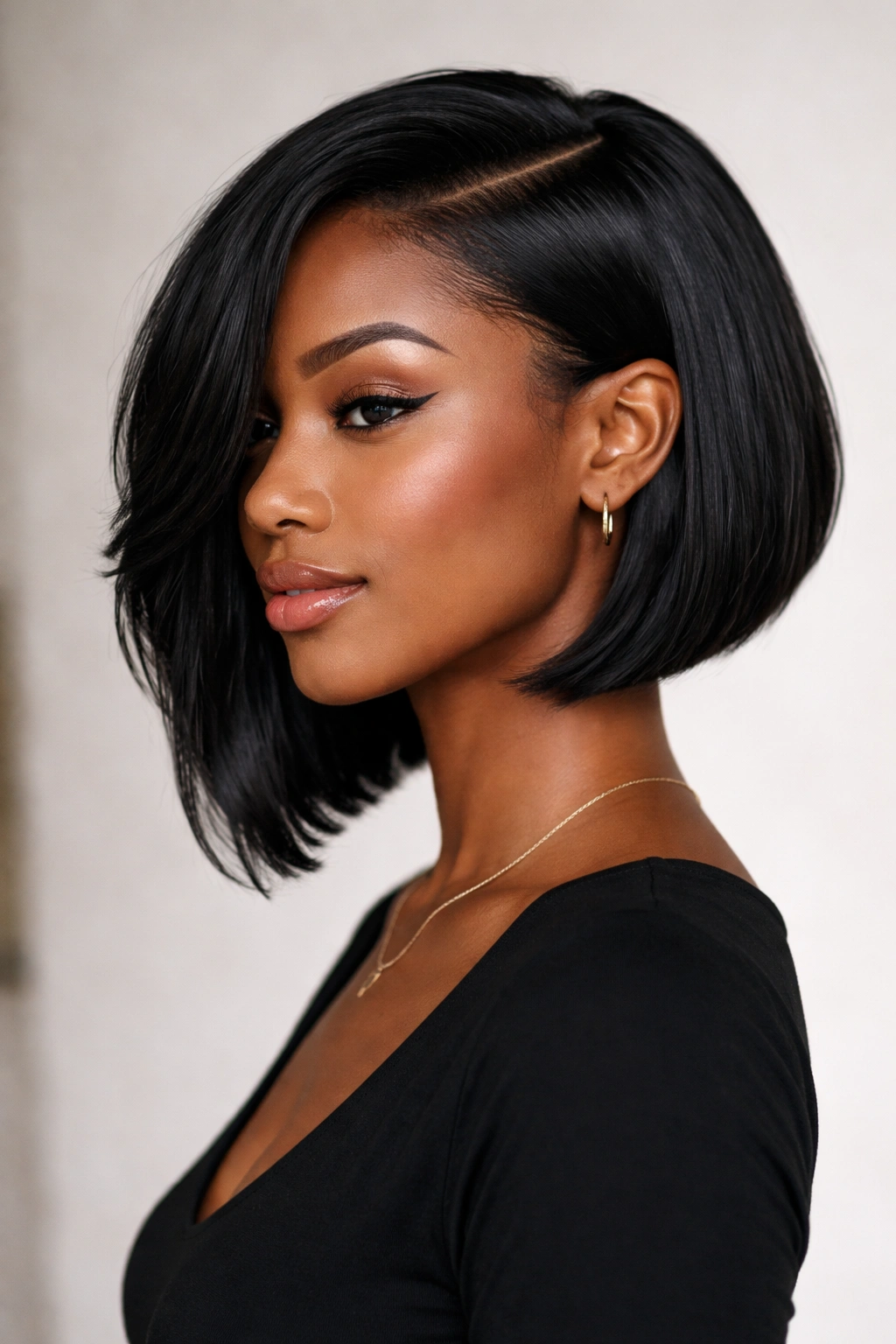
An asymmetrical bob is not drama for drama’s sake. It’s a smart way to use length in one spot and shorten it in another so the haircut feels modern without needing extra styling.
If one side of your face is a little fuller, or if you like a strong side profile, this cut works in your favor. The longer side skims the jaw or collarbone, while the shorter side opens the neck and cheek. That difference gives the eye something to follow, and the whole cut reads as more dimensional than a straight bob ever will.
The key is not making the difference too extreme unless that’s the whole point. A subtle asymmetry of one to two inches can look polished and easy to wear. A bigger gap feels sharper, which is fun if you want edge, but it also needs cleaner styling because any frizz shows faster on the shorter side.
This one looks especially good with a tucked ear on the shorter side and a soft bend on the longer side. It’s neat. It’s a little bold. And it does not ask you to spend an hour on it.
5. A-Line Bob That Swings Forward
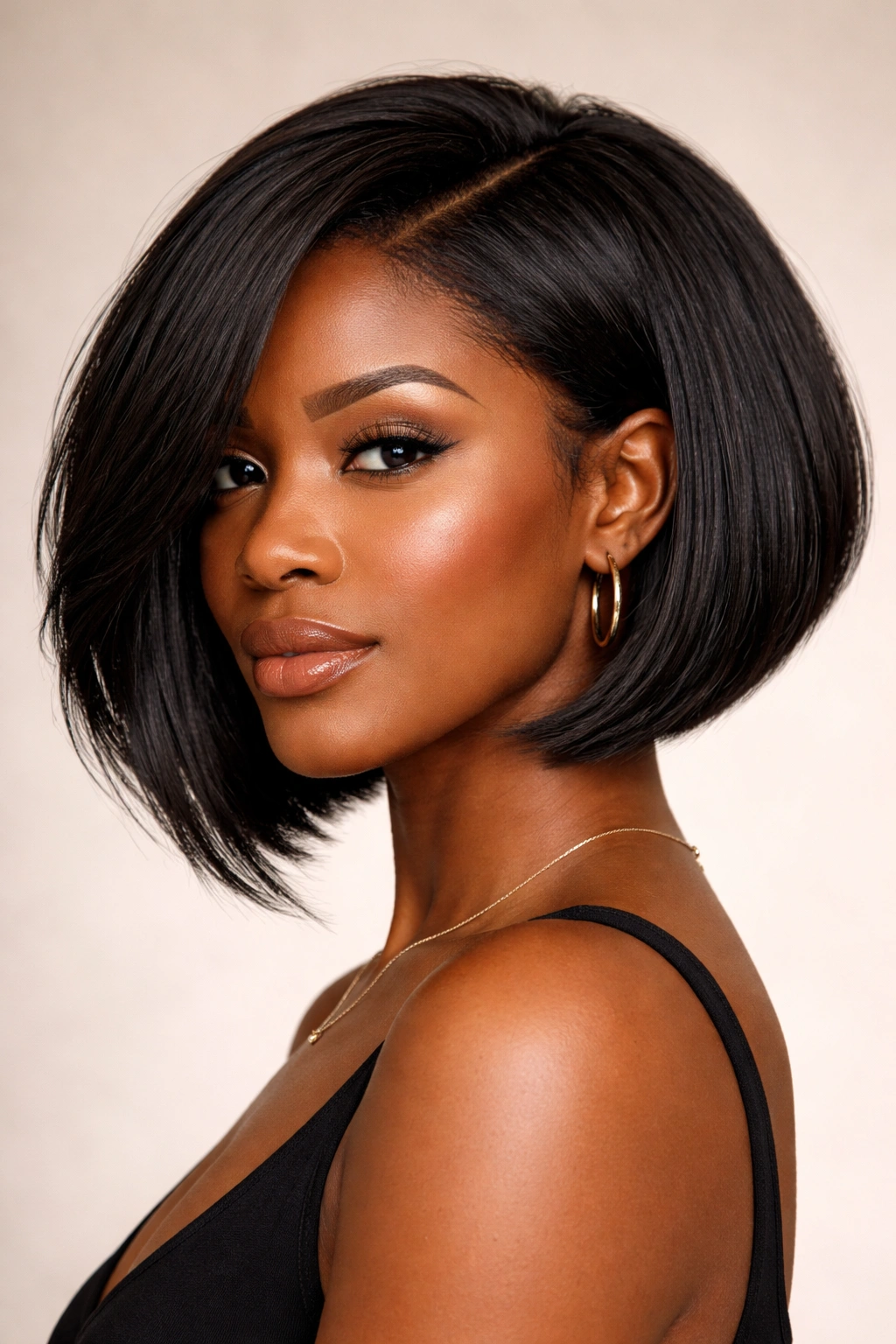
Picture a bob that sits shorter at the nape and angles longer as it moves toward the front. That’s the A-line bob, and on Black women it can give the hair a clean shape without making the back feel heavy.
The reason it works so well is the forward motion. The front pieces frame the face while the back stays close and tidy, which is useful if your hair has a lot of density in the nape. It also gives the illusion of length without actually being long, which is one of the nicest tricks in haircutting. Not magic. Just good geometry.
A-line vs. asymmetrical, in plain language
An asymmetrical bob usually has one side longer than the other. An A-line bob has the back shorter and the front longer. They can overlap a little, but they do different jobs.
The A-line is better if you want a sleek, sloping shape that still feels soft around the face. Ask for the angle to be visible but not severe. If the front drops too far, the cut stops reading like a bob and starts reading like a lob. That may be fine, but it’s a different look.
6. Curly Bob with Soft Shape
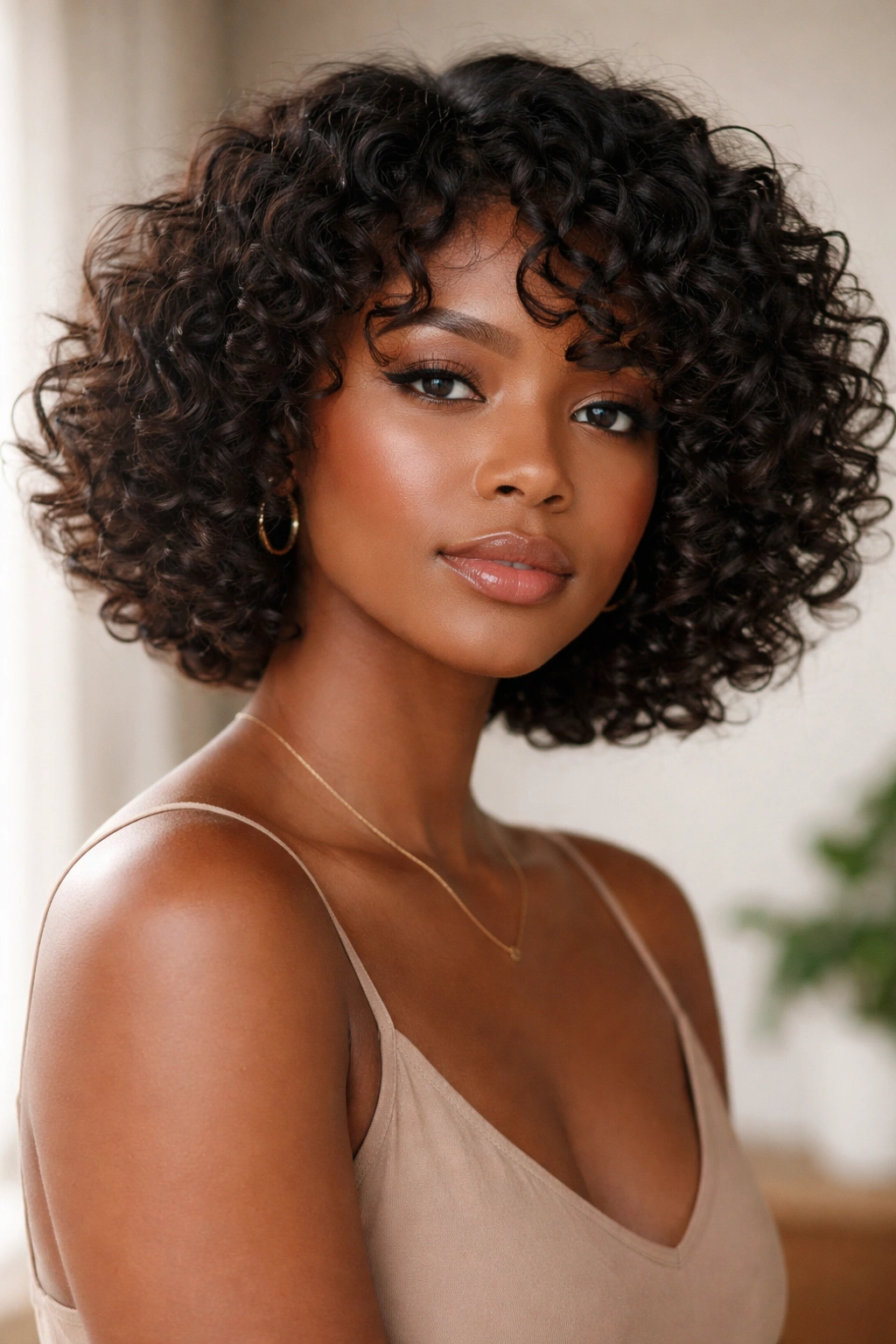
A curly bob lives or dies by the perimeter. Cut it wrong, and the curls stack into a triangle. Cut it well, and the shape sits round, lively, and full of personality without looking puffed out at the sides.
The best curly bobs on Black hair are usually cut with the curl pattern in mind, not against it. That means checking the length where the curl actually lands, not where it stretches while wet. If your curls shrink a lot, a stylist who cuts dry or in a stretched state will usually give you a better result than someone who cuts only by eyeballing wet strands.
How to keep the curl shape from collapsing
Use a leave-in that gives slip, then layer a styler with hold—gel, foam, or curl cream depending on how soft or firm you want the finish. Diffuse on low heat if you want lift without roughing up the curl. Air-drying works too, but it can leave the roots a little flat if the hair is dense.
The curly bob is best when it looks touched, not forced. A soft side part, a few face-framing curls, and a clean neckline are enough. It does not need a lot of decoration.
7. Stacked Bob with Lift in the Back
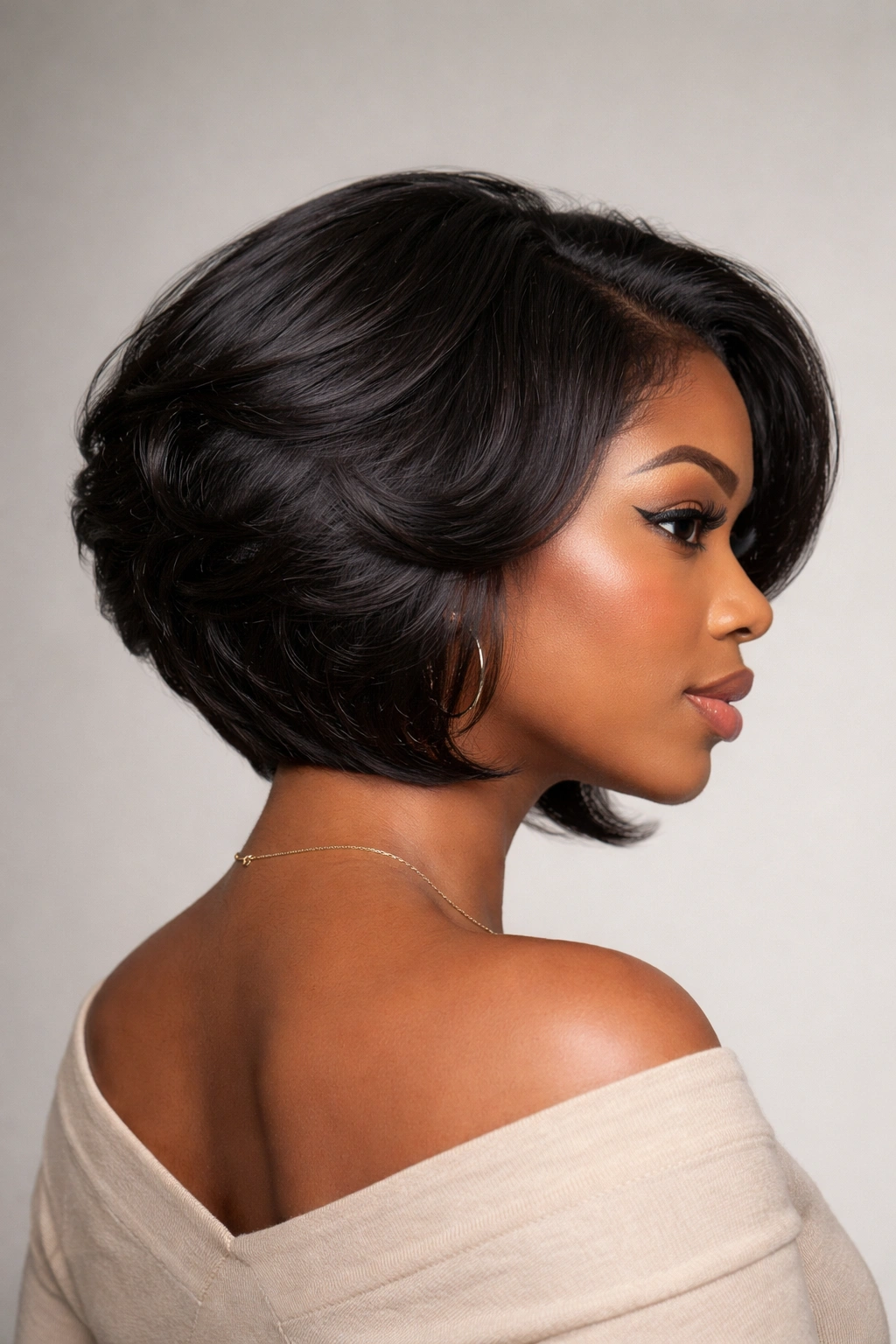
Who should choose a stacked bob? Someone who wants volume at the back without turning the sides into a giant triangle. The stacked shape builds layers higher in the nape and gradually releases weight as it moves forward, so the haircut gets lift where it needs it and stays neat everywhere else.
This is a good pick for women with thick hair that tends to hang heavy. It also flatters anyone who likes a lifted silhouette from the side. The back looks almost sculpted when it’s cut well, and the front stays soft enough to frame the face instead of crowding it.
A stacked bob does ask for upkeep. The nape grows out first, and when it does, the crisp shape starts to slump. A quick trim every 6 to 8 weeks keeps the back from turning into a blur. If you wear your hair straight, a round brush and a blow-dryer can make the layers pop. If you wear it curly, the stack gives the curls a nice spring from behind.
It’s a little sharper than a classic bob. That’s the point.
8. Tapered Natural Bob for Coily Hair
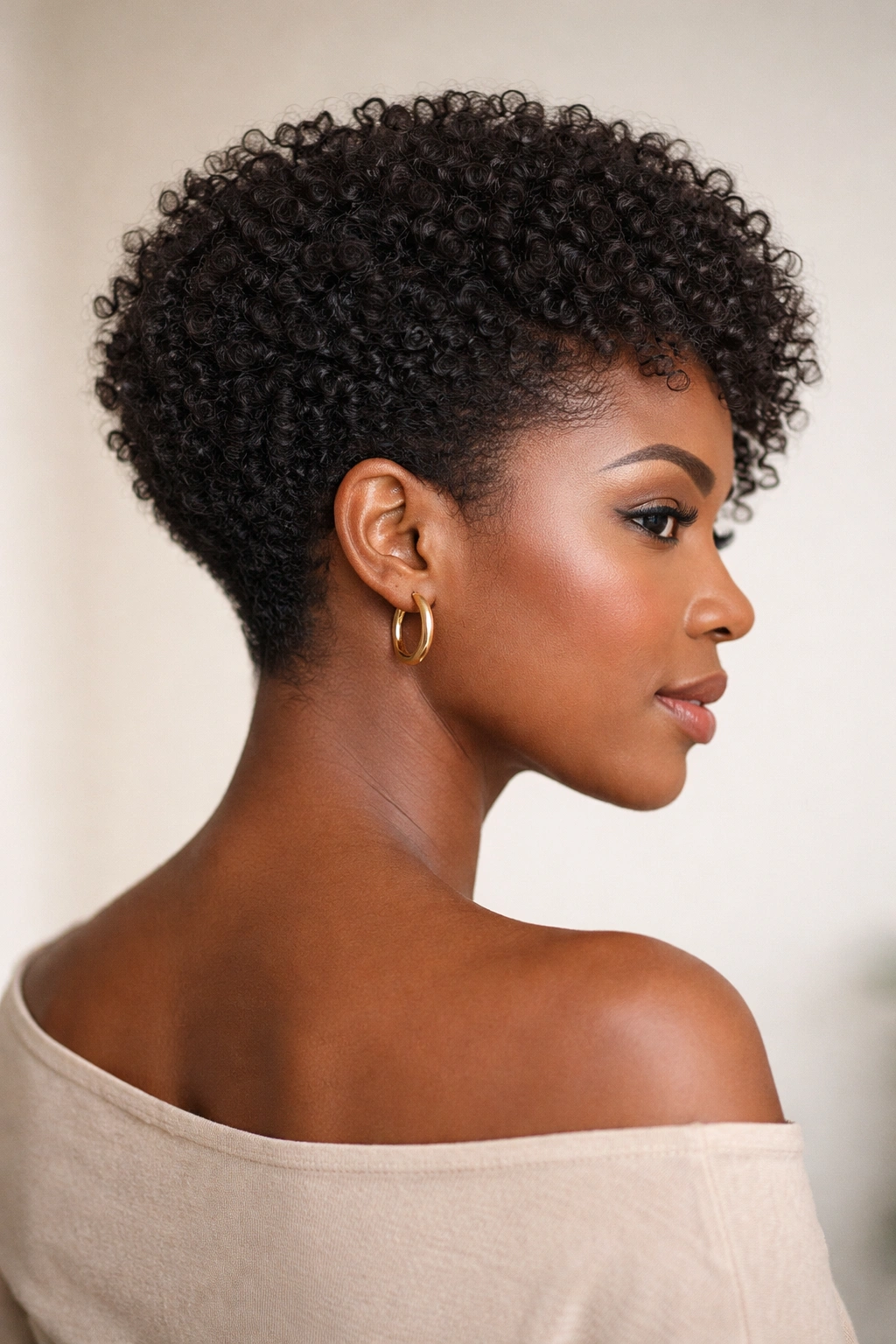
If you wear your natural hair out most weeks, the tapered bob is the one that keeps the neckline neat while letting the top and sides keep their texture. The hair stays fuller where you want shape and shorter where you want control.
The taper usually begins at the nape and around the ears. That keeps the cut from looking bulky underneath, which is a common problem with short natural styles. The top can stay longer and rounder, so the bob still has presence without turning into a helmet.
Why it works on natural hair
- It respects shrinkage instead of fighting it.
- It keeps the neck cooler and cleaner.
- It makes twist-outs, sponge sets, and wash-and-gos sit in a more defined shape.
- It is easier to refresh than a blunt cut because the outline is already built into the haircut.
A tapered bob is the one I’d suggest to someone who hates spending twenty minutes trying to flatten the back of her head. You get a shape with less fuss. That alone is worth a lot.
9. Sleek Silk-Press Bob for Black Women
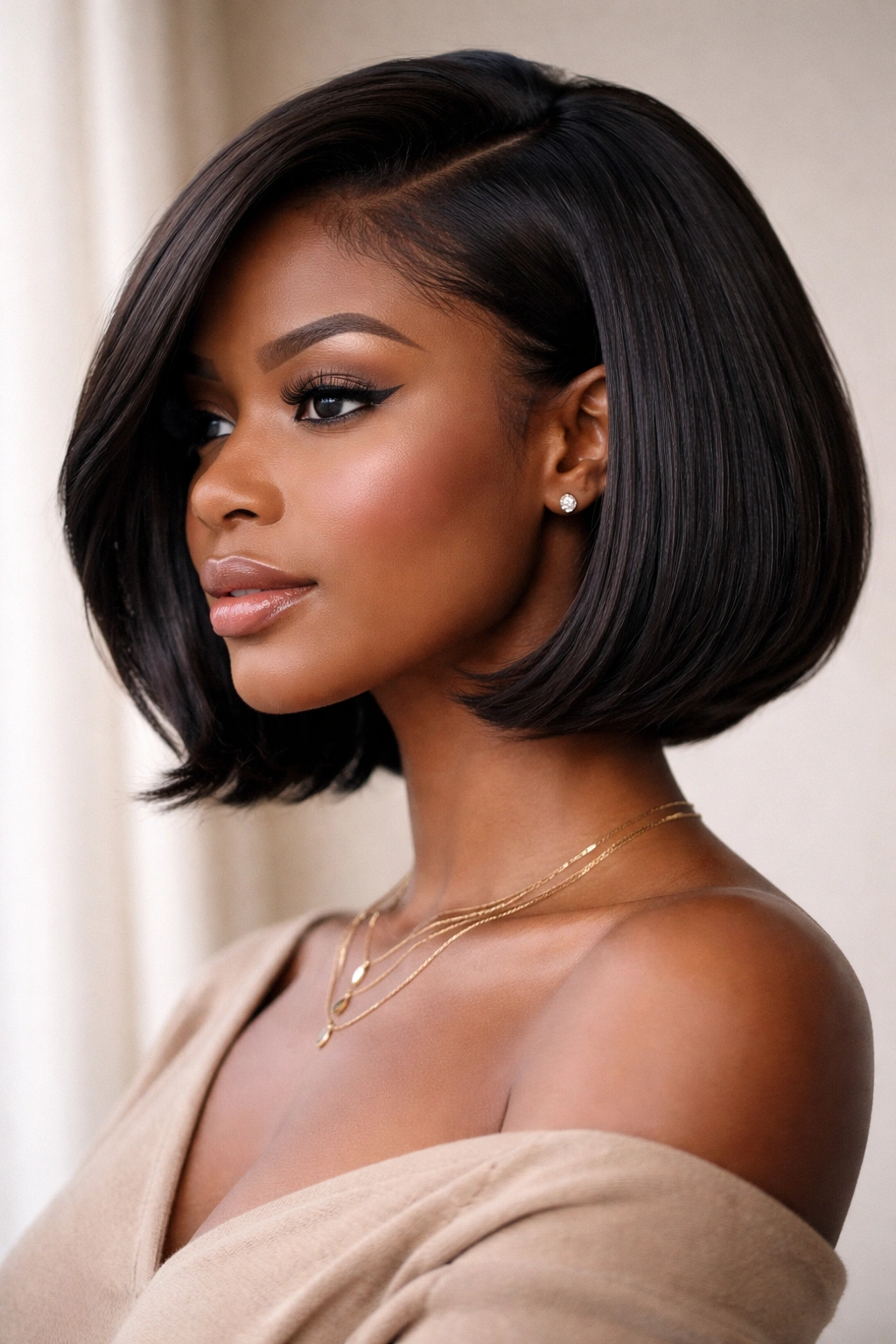
A silk-press bob is not about being pin-straight all the way to the ends. It’s about movement, shine, and a line that looks smooth without looking dead flat. That difference matters, because a stiff bob can feel like a wig if the cut is too severe and the finish is too hard.
The style works when the hair is pressed cleanly, then shaped so the ends curve just enough to show the cut. A little bend at the bottom keeps it from looking harsh. Use a heat protectant with the press, obviously, but more than that, keep the blow-dry smooth before the flat iron ever touches the hair. Sloppy prep shows up fast here.
What makes this bob hold up
- A clean blow-dry with tension.
- A flat iron pass that’s slow enough to smooth, not fry.
- A lightweight serum on the ends, not a greasy oil slick.
- A silk wrap at night so the shape does not swell up by morning.
This is one of those styles that looks expensive because it is fussy in the right way. Not difficult. Just exact. And if you like the feeling of hair swinging against your jawline when you turn your head, this one delivers.
10. Bob with Bangs and a Soft Fringe
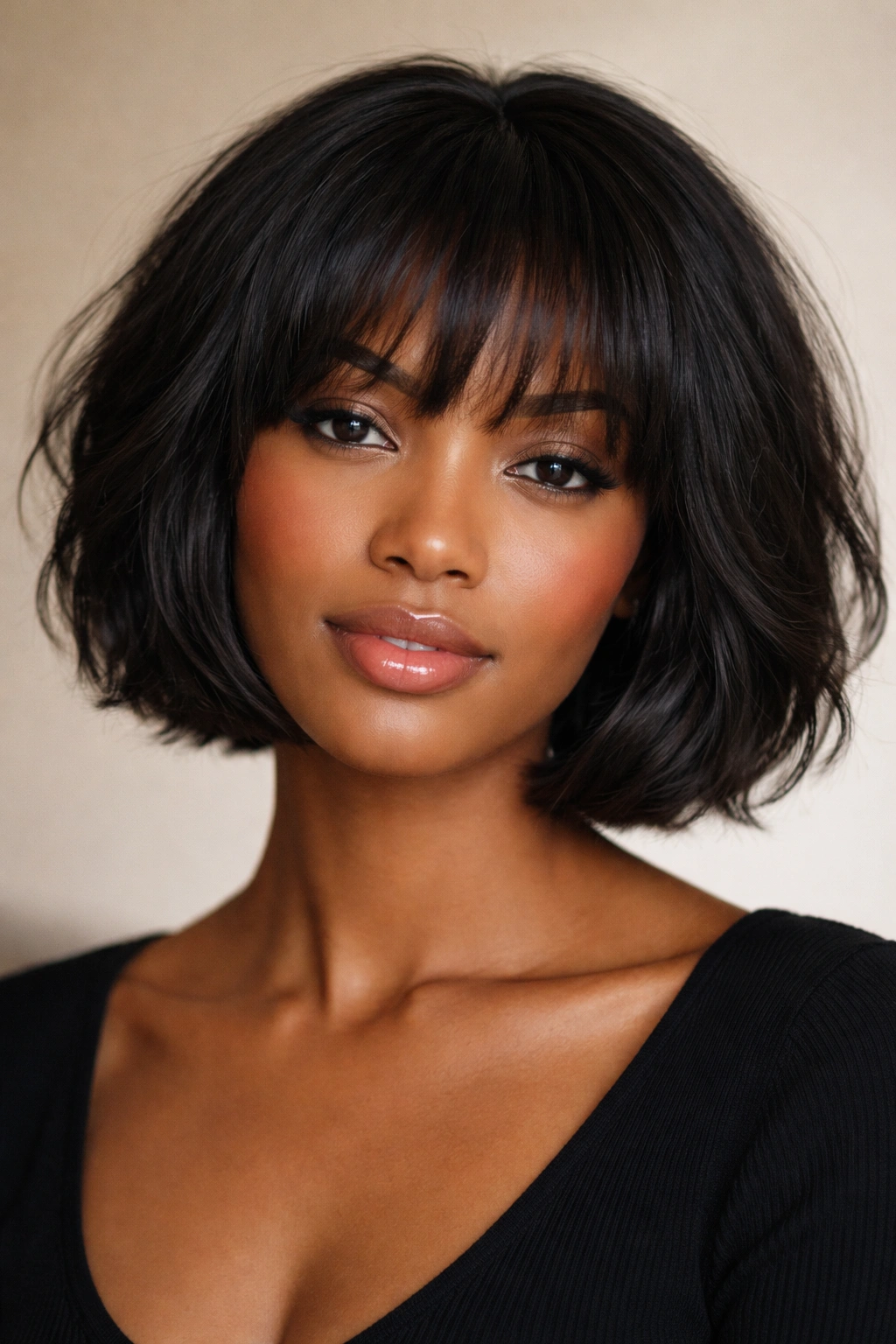
A forehead-framing bob can change your whole face in one move. Bangs shift attention upward, which makes the eyes look sharper and the cut feel a little more styled even when the rest of the hair is simple.
The trick is choosing the right fringe. A full blunt bang gives edge, but it can feel heavy on dense or curly hair if the texture isn’t trimmed often. A softer bang that lands around the brows or splits in the middle is easier to live with. On Black hair, that softness matters because too much bulk in the fringe can swallow the face.
Best bang shapes for short bobs
You can go blunt if you want boldness.
You can go wispy if you want lightness.
You can go side-swept if you want the bob to feel gentler around the forehead.
You can even pair a fringe with curls, but the curl pattern has to be shaped on purpose or the bangs will shrink too high.
A bob with bangs is not low-effort, but it is high return. The whole haircut feels styled before you add earrings, lipstick, or anything else.
11. Pixie Bob That Sits Between Two Lengths
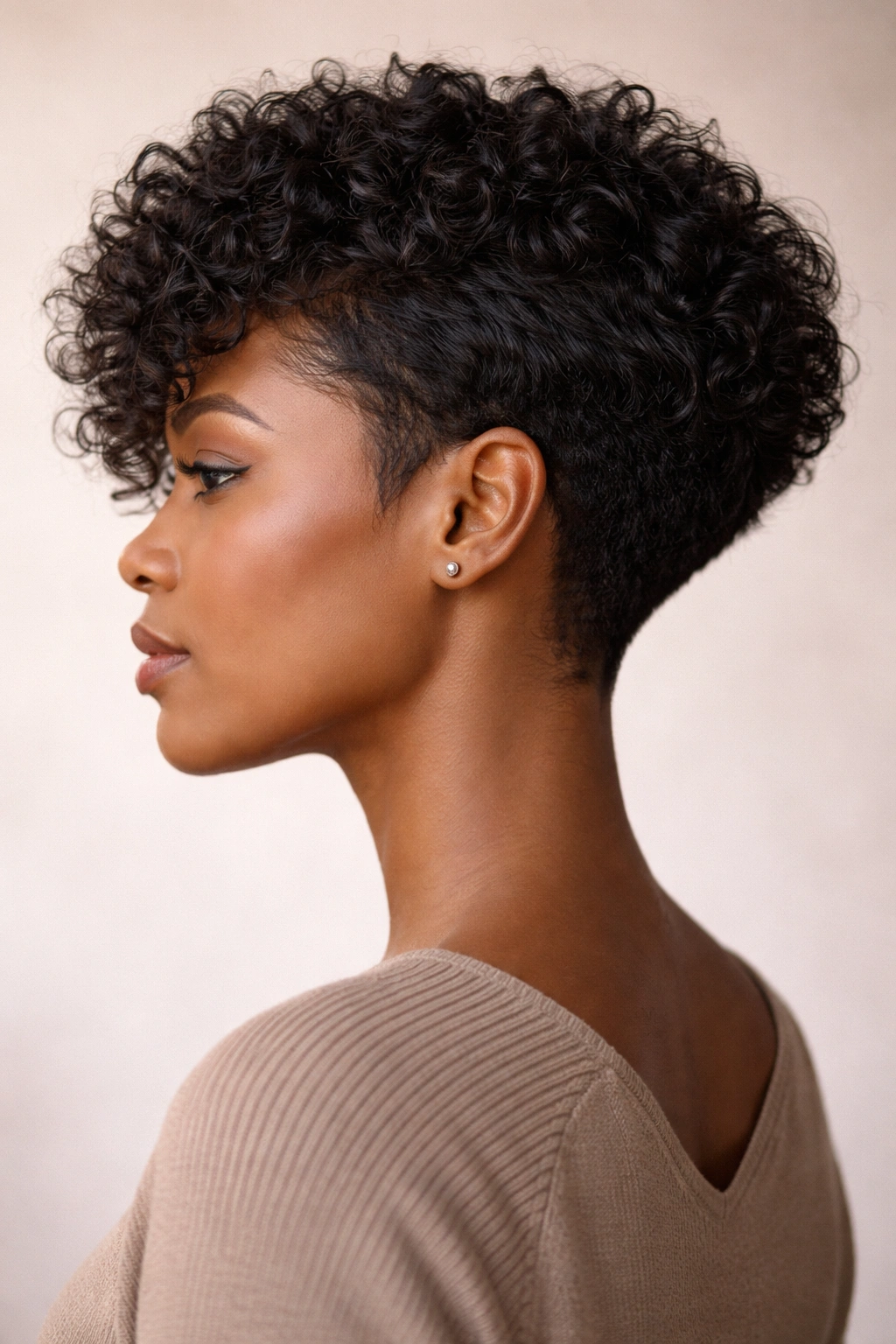
The pixie bob is the shortest style here that still reads as a bob. It usually keeps enough length around the crown and sides to frame the face, but the nape and temples are clipped or cut much shorter, so the whole shape feels crisp.
This cut is a nice fit if you want your neck visible and your hair off your shoulders, but you are not ready to go full pixie. It can be tapered, side-parted, or swept forward depending on how much softness you want around the forehead. On Black women, it looks especially good when the top has a little height and the sides stay neat, because that contrast gives the face shape.
A pixie bob needs regular shaping. The good part is that the grow-out looks graceful for a while, especially if the top stays long enough to tuck behind the ears. The less good part is that the edges around the ears and nape need cleanup before the style starts to lose its outline.
It’s short. It’s practical. It has attitude without trying too hard.
12. Rounded Bob with a Soft Curve
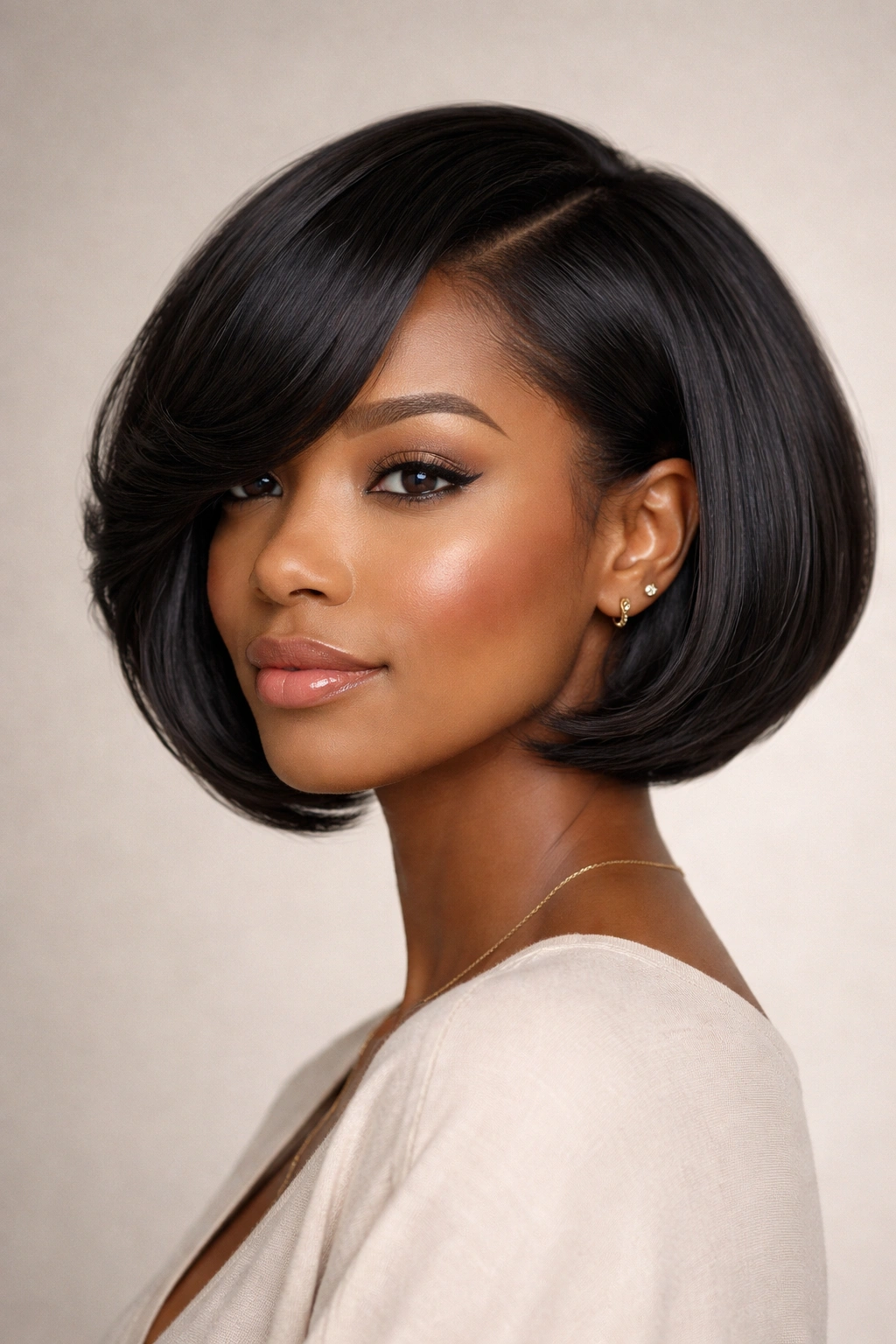
Why do some bobs look soft and expensive while others look boxy? Usually it comes down to the curve. A rounded bob follows the shape of the head instead of sitting like a straight shelf, so the silhouette feels smoother and more finished.
This works especially well when you want volume that doesn’t spread outward at the sides. The curve is usually strongest at the crown and gently tucks in toward the jaw and nape. On textured hair, that rounded shape can be built with layers and a careful blow-dry, or it can be created through curls that are shaped inward with a roller set or wand.
Where the curve should land
The roundness should support the face, not swallow it. If the curve starts too high, the haircut can look too puffed at the top. If it ends too low, it loses the bob shape altogether. The sweet spot usually sits just under the ear and along the jawline.
A rounded bob is a smart option if you want something polished for work, church, dinner, or any day when you want your hair to look finished without a ton of decoration.
13. Feathered Bob with Soft Ends
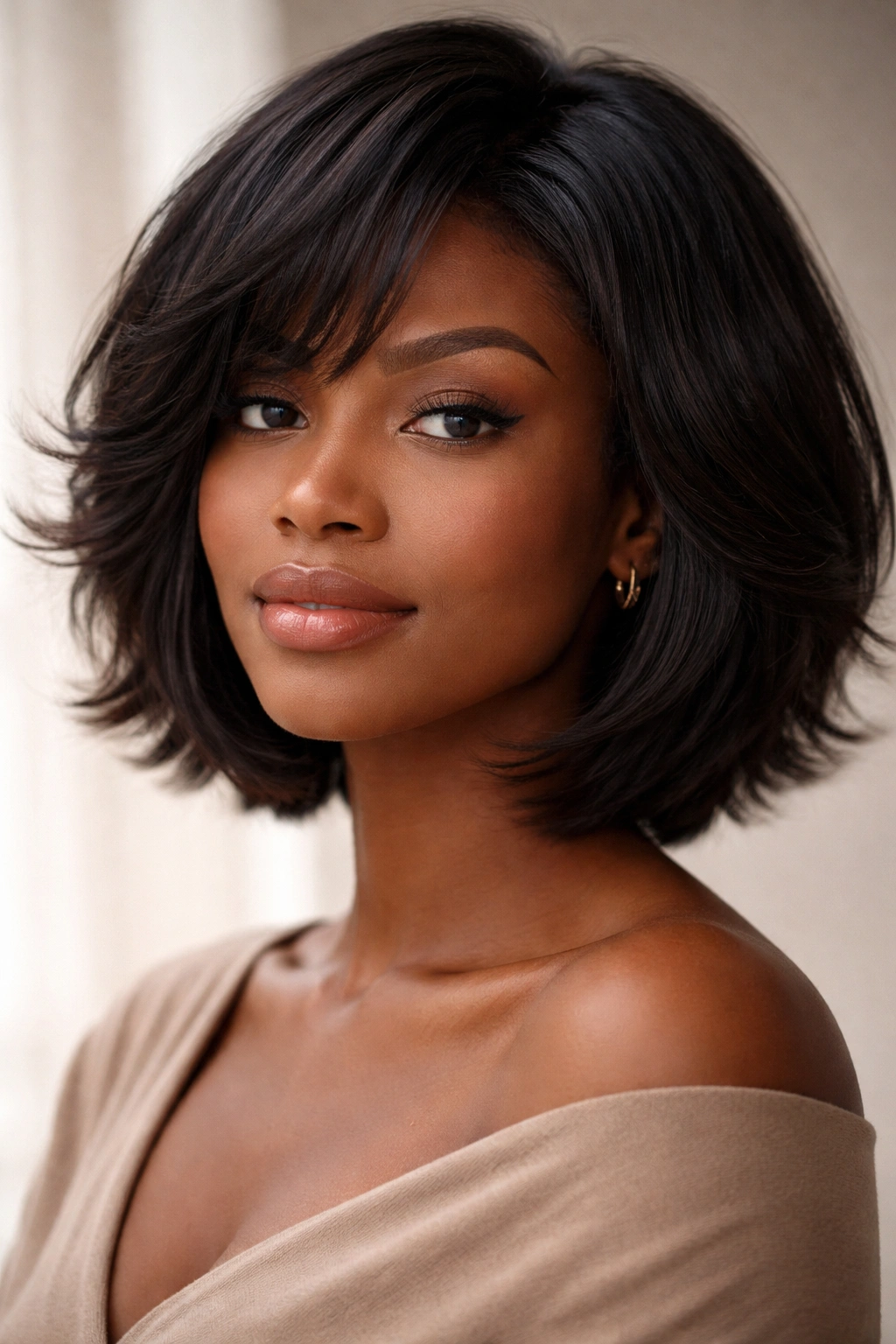
Feathered ends matter more than people think. A feathered bob takes some of the weight out of the perimeter and gives the haircut a softer finish, which helps if you hate the hard line of a blunt cut but still want the shape of a bob.
This style can be especially helpful on hair that gets bulky at the ends. Instead of one heavy shelf, the ends move a little more freely. That makes the cut feel lighter around the face and easier to tuck behind the ear. It also works well with light curls or a smooth blowout because the ends don’t fight the rest of the style.
What to ask your stylist for
- Light texturizing at the ends, not thinning shears all over the head.
- A perimeter that still has a bob shape after the feathers are cut in.
- Enough fullness at the bottom so the style does not look stringy.
- Face-framing softness around the cheek, if you want the cut to feel less severe.
The feathered bob is not the first cut I’d choose if you want a bold, graphic line. It’s the one I’d choose if you want movement and softness without losing the short length.
14. Undercut Bob for Thick Hair
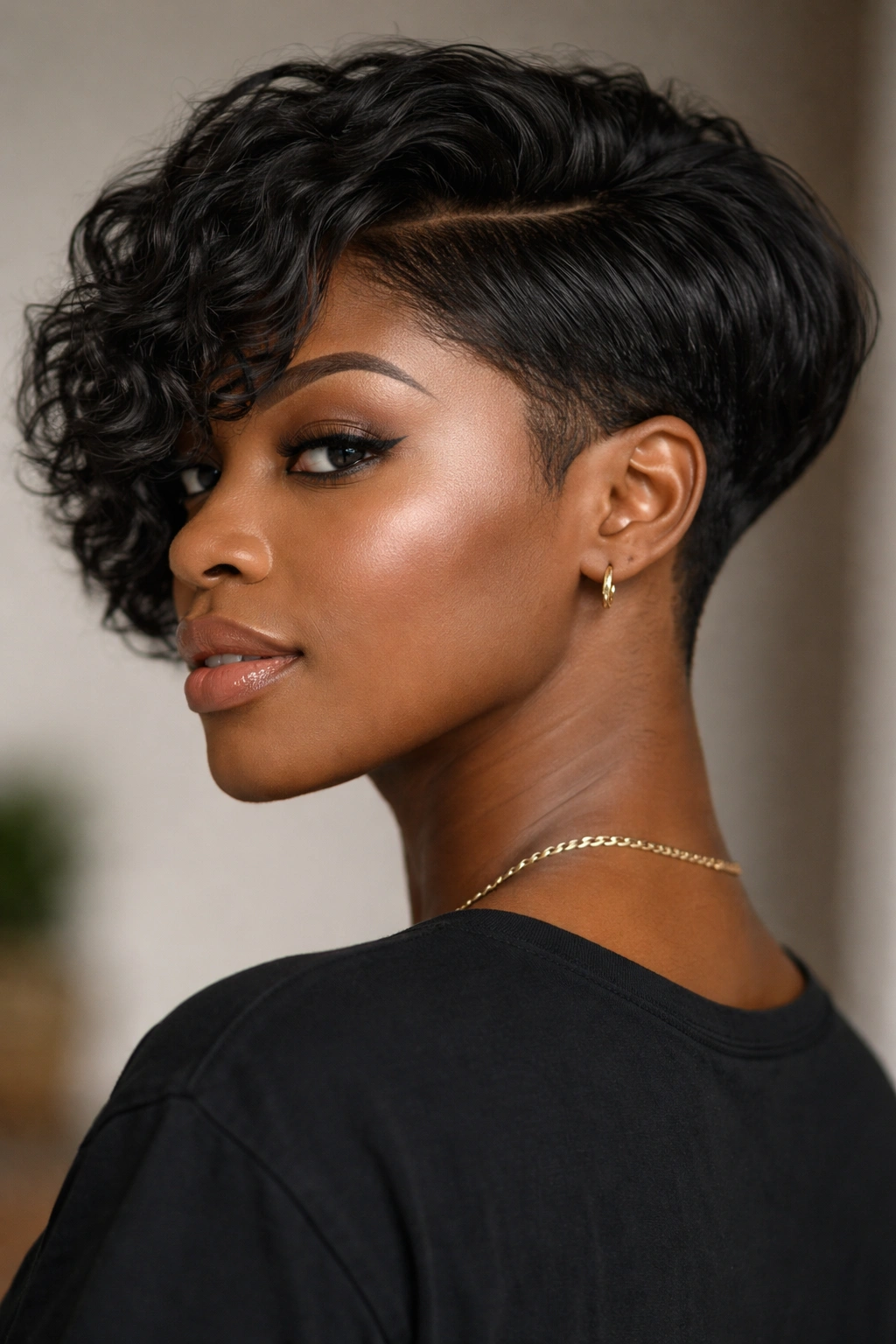
An undercut bob sounds edgy, but it can be practical too. When a lot of hair sits at the nape or underneath the crown, an undercut removes bulk where no one really sees it, which helps the top layer fall flatter and cleaner.
This is a useful move for thick, dense Black hair that keeps trying to puff out at the base. The top layer keeps its bob shape. The hidden section underneath gets trimmed shorter or clipped down, and suddenly the whole haircut lies better. If you’ve ever had a bob that looked fine for twenty minutes and then started expanding at the sides, you already understand why this matters.
It does come with a tradeoff. Grow-out needs attention, and the first time you pull the hair up, the undercut can reveal itself in a way you may or may not want. Still, for a lot of women, the payoff is worth it because the style gets lighter without giving up the outer shape.
It’s one of the smartest cuts on this list. Quietly so.
15. Twist-Out Bob for Natural Hair
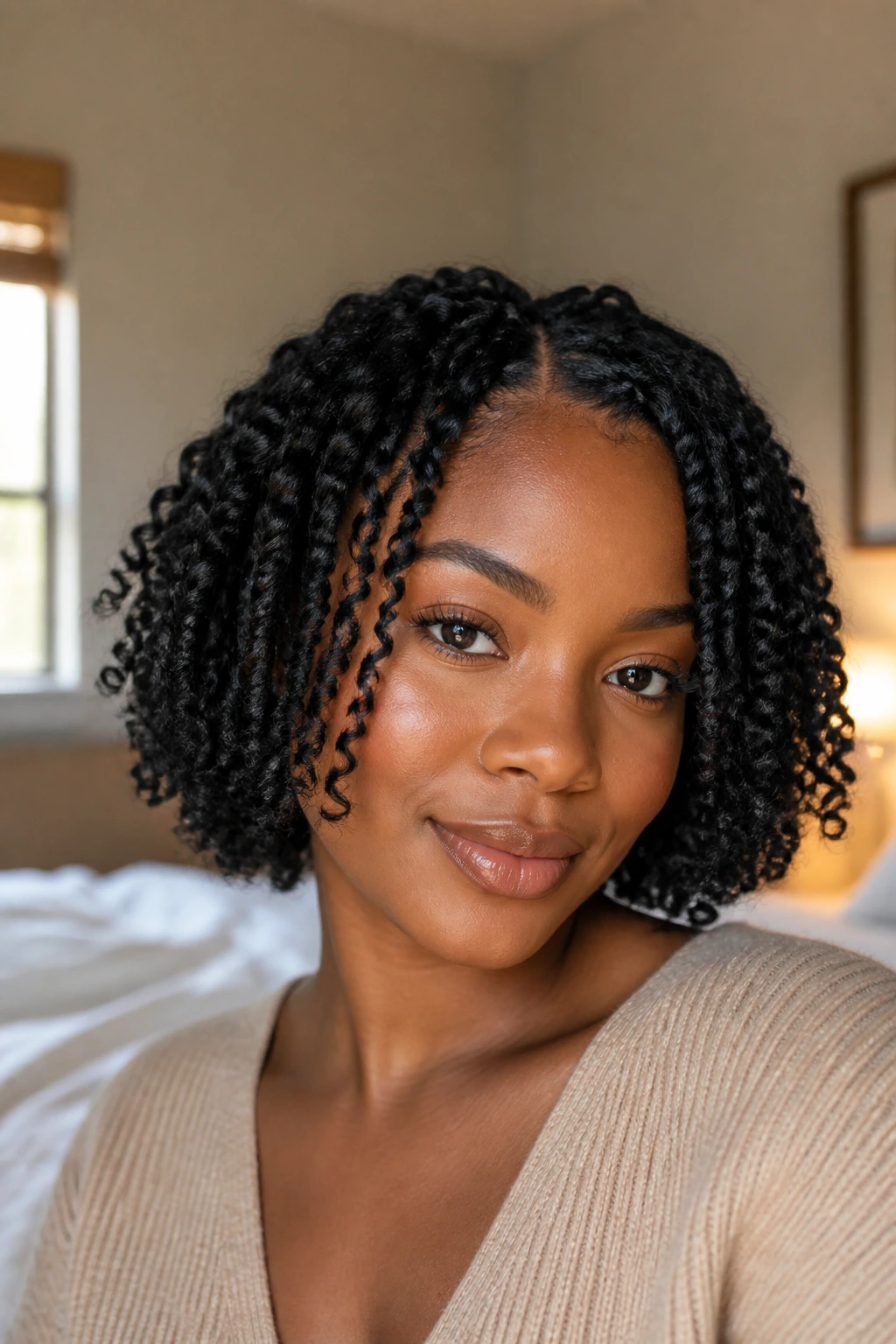
A twist-out bob is one of the most forgiving short bob cuts for natural hair because the shape gets built by the styling itself. Two-strand twists, once taken down carefully, leave a soft, defined bob that has movement and texture without needing a ton of heat.
The haircut underneath still matters. The perimeter should be shaped so the twists fall where you want the finished style to sit, usually around the chin or just below it. If the cut is too blunt or the ends are too uneven, the twist-out can land lopsided. A good trim gives the curls a place to settle.
How to make the finish last
- Twist on slightly damp hair with a leave-in and a cream or gel that gives hold.
- Let the hair dry completely before taking the twists down.
- Separate only once or twice so the style does not frizz out too fast.
- Sleep with a satin bonnet or scarf so the ends stay neat.
This is the kind of bob that looks full on day one and a little softer on day three, which is part of the charm. If you want texture, shape, and a style that does not feel too precious, this is a strong pick.
Some bob cuts are about polish. Some are about movement. The best short bobs for Black women do both without making you fight your own hair every morning. If you know your texture, your shrinkage, and how much upkeep you’ll actually tolerate, the right cut gets a lot easier to spot. And honestly, that matters more than chasing the prettiest photo on a screen.
