



Some haircuts look cute in the salon chair and then fall apart the minute real life starts. Mom bob cuts are the opposite when they’re cut with a sane shape: they sit in that sweet spot where you can air-dry, rough-dry, or do a quick bend with a flat iron and still leave the house looking pulled together.
The trick is not just length. A bob that lands at the jaw, nape, or collarbone can either behave beautifully or turn fussy fast, depending on where the weight sits, how much internal layering it has, and whether the ends are blunt or softly broken up. That’s why some bobs feel easy for months, while others become a daily negotiation with a round brush.
I’m picky about bobs because the wrong one can be annoying in tiny ways: a fringe that needs trimming every two weeks, a stacked back that flips out at the wrong spot, or layers that puff up on humid days. The good ones do the opposite. They hide a missed blow-dry, look fine after a school run, and still hold their shape when you tuck one side behind your ear.
These 15 low-maintenance bob cuts lean into that kind of practicality. Some are better for fine hair, some are better for thick hair, and a few are forgiving enough to carry you through the messy middle when a haircut is grown out but not yet ready for a reset.
1. Chin-Length Blunt Bob
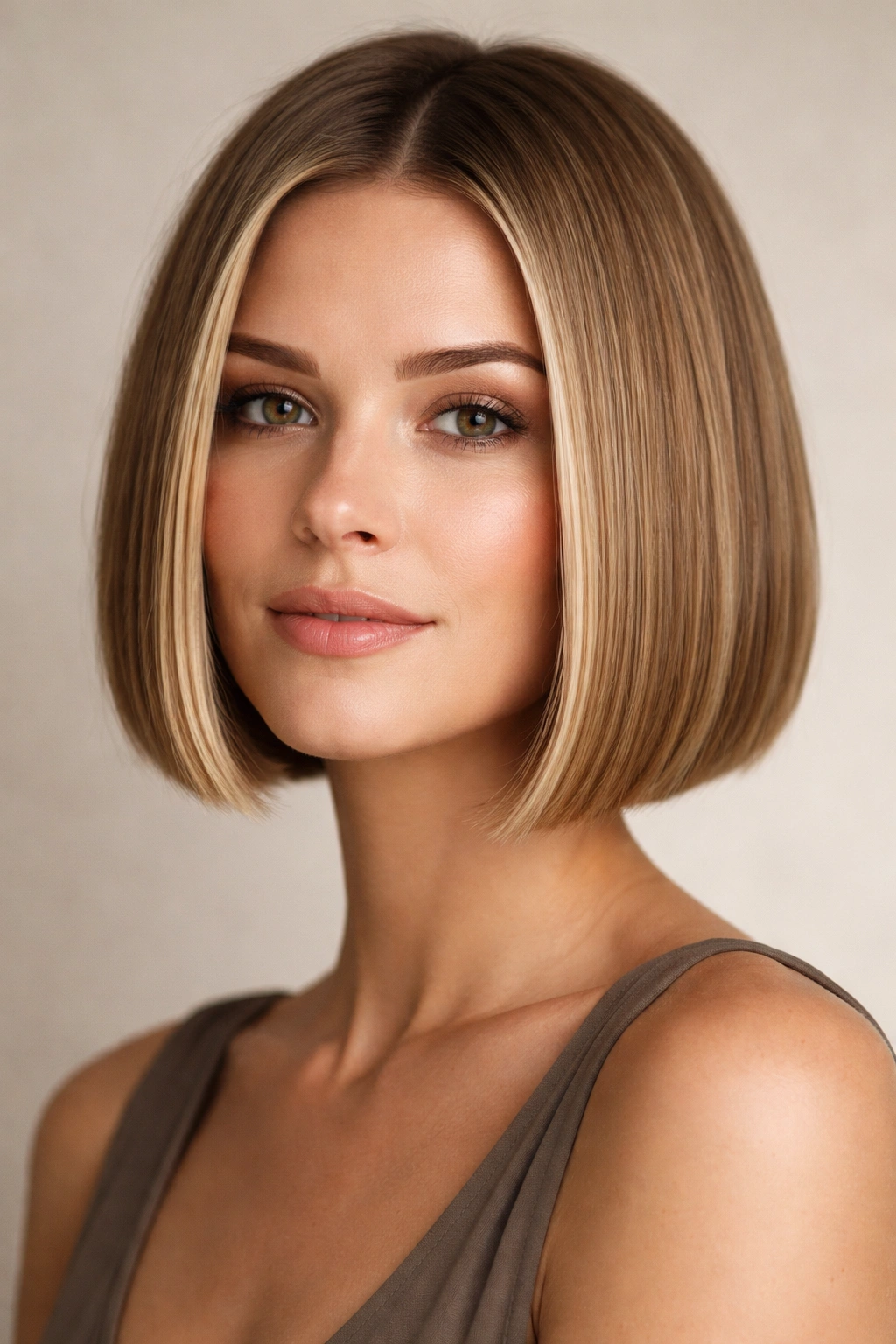
If you want the cleanest low-maintenance bob, start here. A chin-length blunt bob gives you a strong line at the bottom, which is exactly why it looks full without a lot of styling. The shape does a lot of the work for you. Hair falls into place faster, and the ends don’t need fancy layering to look intentional.
This cut sits at the jaw or just below it, so it keeps its outline even when you air-dry. Fine hair looks denser. Straight hair looks crisp. Slight waves get a little polish without losing movement. You can wear it with a center part, a soft side part, or tucked behind one ear. It still holds together.
The trade-off is simple. Blunt ends show damage sooner than feathered ones, so this is not the cut to choose if your ends are fried and you refuse trims. Ask for a tiny point-cut on the very tips if you want the line to feel softer. Not much. Just enough.
That’s the charm, really. It’s a haircut with a backbone.
2. Textured Bob With Soft Internal Layers
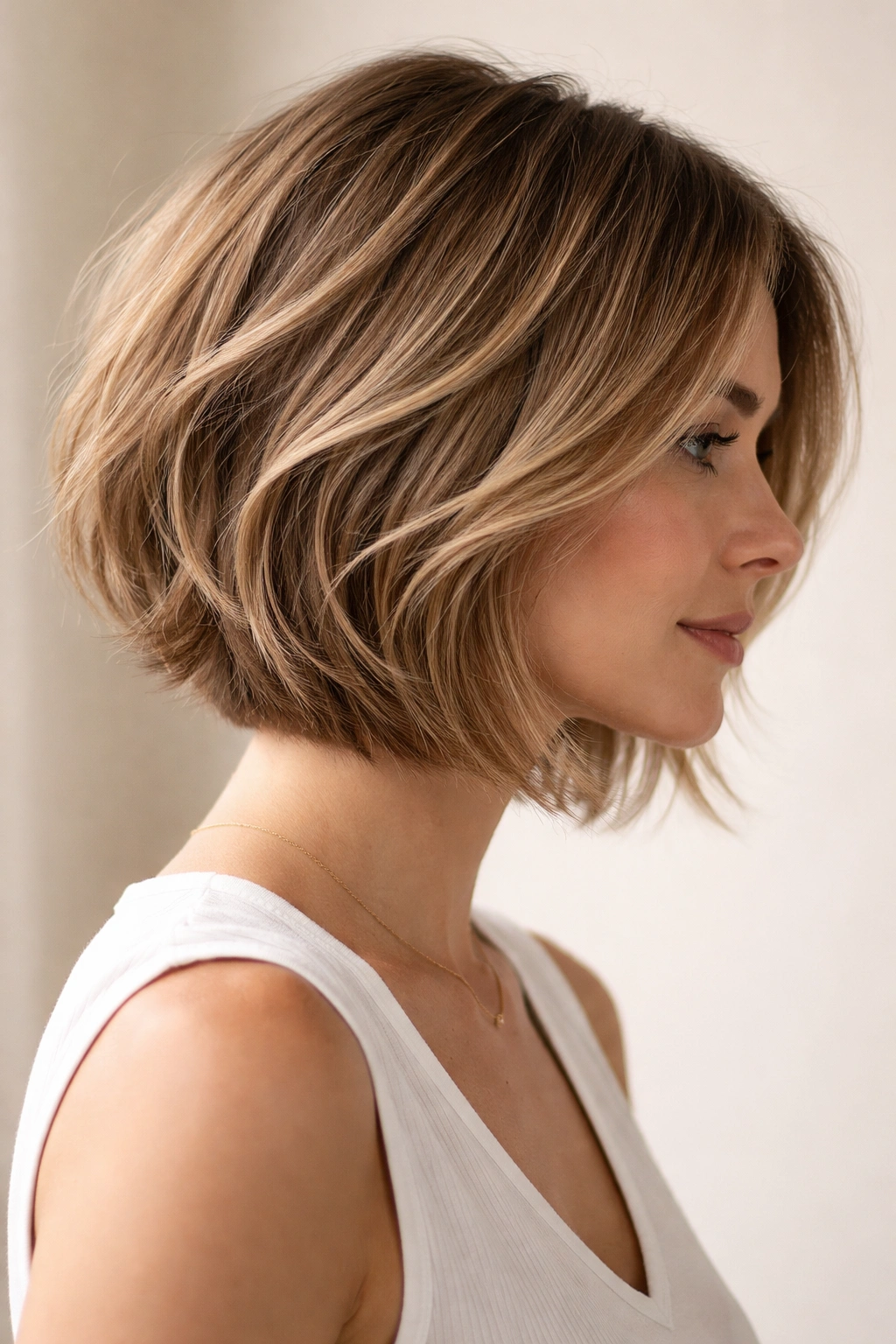
Why do some bobs collapse by lunchtime while others still look good after a grocery run and three hours of errands? The answer is usually hidden inside the cut. Soft internal layers remove weight without making the outline look choppy, and that’s what keeps this style easy to live with.
Why the Internal Layers Matter
The visible edge stays clean, but the interior gets a little breathing room. That means thick hair loses the bulky triangle effect, and medium hair gets more swing. You’re not chasing volume every morning. The haircut already has some shape built in.
A little mousse or lightweight cream is usually enough. Scrunch it in, let it dry, and resist the urge to keep touching it. The more you mess with a textured bob, the bigger and frizzier it gets. That’s not the cut’s fault. That’s hands.
- Best for medium to thick hair that puffs when it’s all one length.
- Ask for internal layers, not heavy surface layers.
- Keep the perimeter blunt enough to keep its shape.
- Use a dime-sized amount of cream or foam, not a heavy balm.
My honest take: this is one of the easiest bob cuts if you want movement without daily styling drama.
3. French Bob With Eyebrow-Grazing Fringe

Picture a bob that looks deliberate even when you barely comb it. That’s the draw here. The French bob usually sits around the jawline and comes with a fringe that skims the brows or lands just above them. It’s short enough to dry fast, but the shape has enough attitude that it never feels plain.
What Makes the Fringe Work
The fringe is the part that can make or break this haircut. Keep it soft, not helmet-like. A blunt fringe works if your hair is straight and you like structure, but a piecey fringe is easier to live with because it grows out in a nicer way.
A little texture spray at the roots and a dab of styling cream through the ends are usually plenty. That’s it. No long blow-dry session. No battle with a round brush. If your hair likes to separate a bit, even better. That slightly undone finish is part of the appeal.
- Fringe length: just at the brows or a touch above
- Bob length: jawline to upper cheek
- Works well with straight to softly wavy hair
- Needs bang trims more often than a no-fringe bob
It’s chic, yes, but more than that, it’s fast.
4. Collarbone Lob That Skips the Fussy Styling
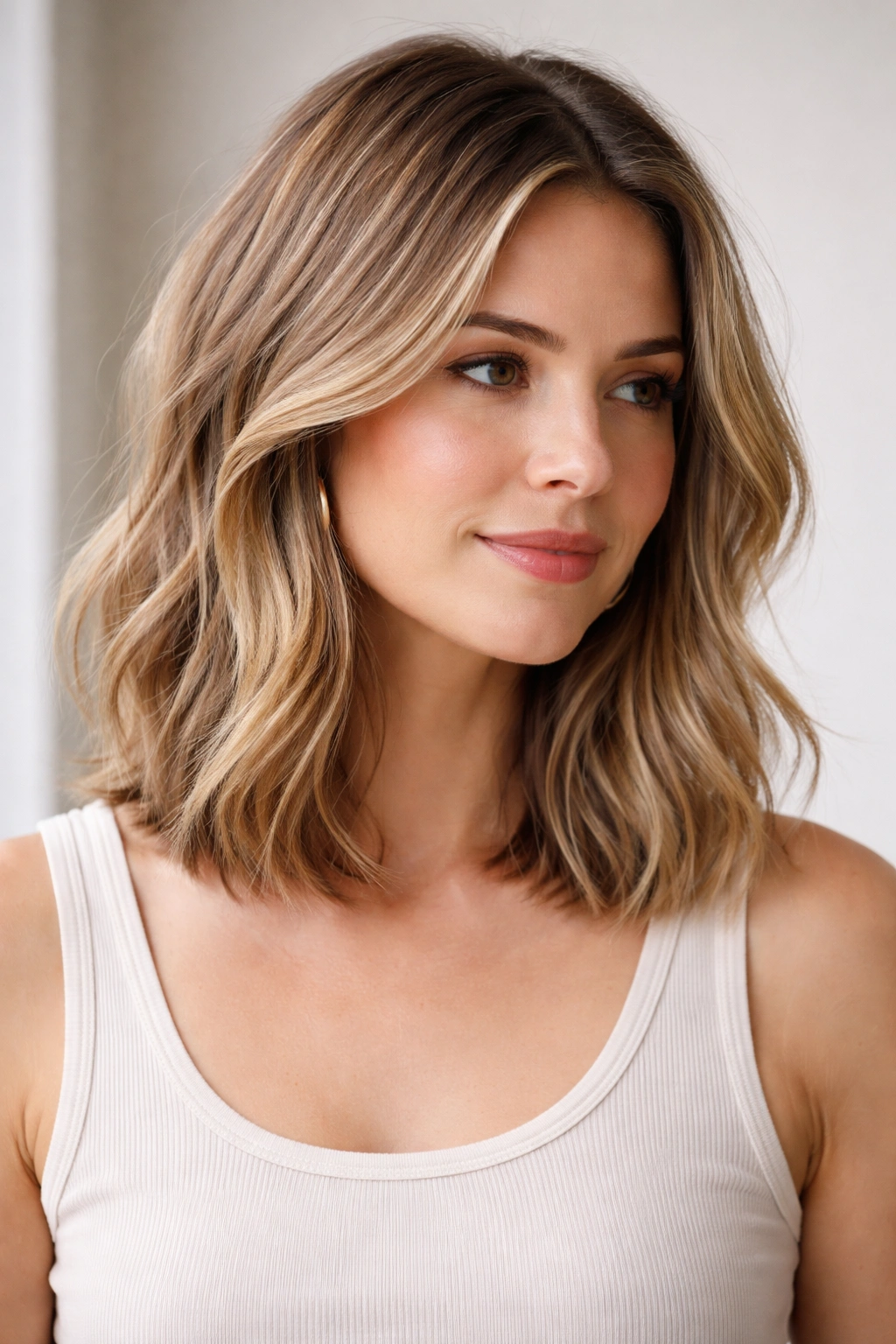
Longer isn’t lazy. Sometimes it’s smarter. A collarbone lob gives you bob energy without the constant maintenance of a shorter cut, and that matters if you want something neat but not precious. It sits right in that sweet spot where you can wear it down, clip it back, or throw it into a half-up style without much thought.
The extra length also buys you freedom on rough mornings. Air-dry it. Rough-dry the roots. Add one pass with a flat iron if you want the front pieces to bend under. You don’t need a perfect blowout for this cut to work, which is why so many people end up living in it for a long time.
I like this length for hair that is growing out of a shorter bob too. It doesn’t scream “in between.” It looks intentional. And because it clears the shoulders by a little or sits right on them, it avoids that awkward flip some shorter cuts get when they hit jacket collars.
A lob is not boring. It’s practical with good manners.
5. Layered Bob for Thick Hair
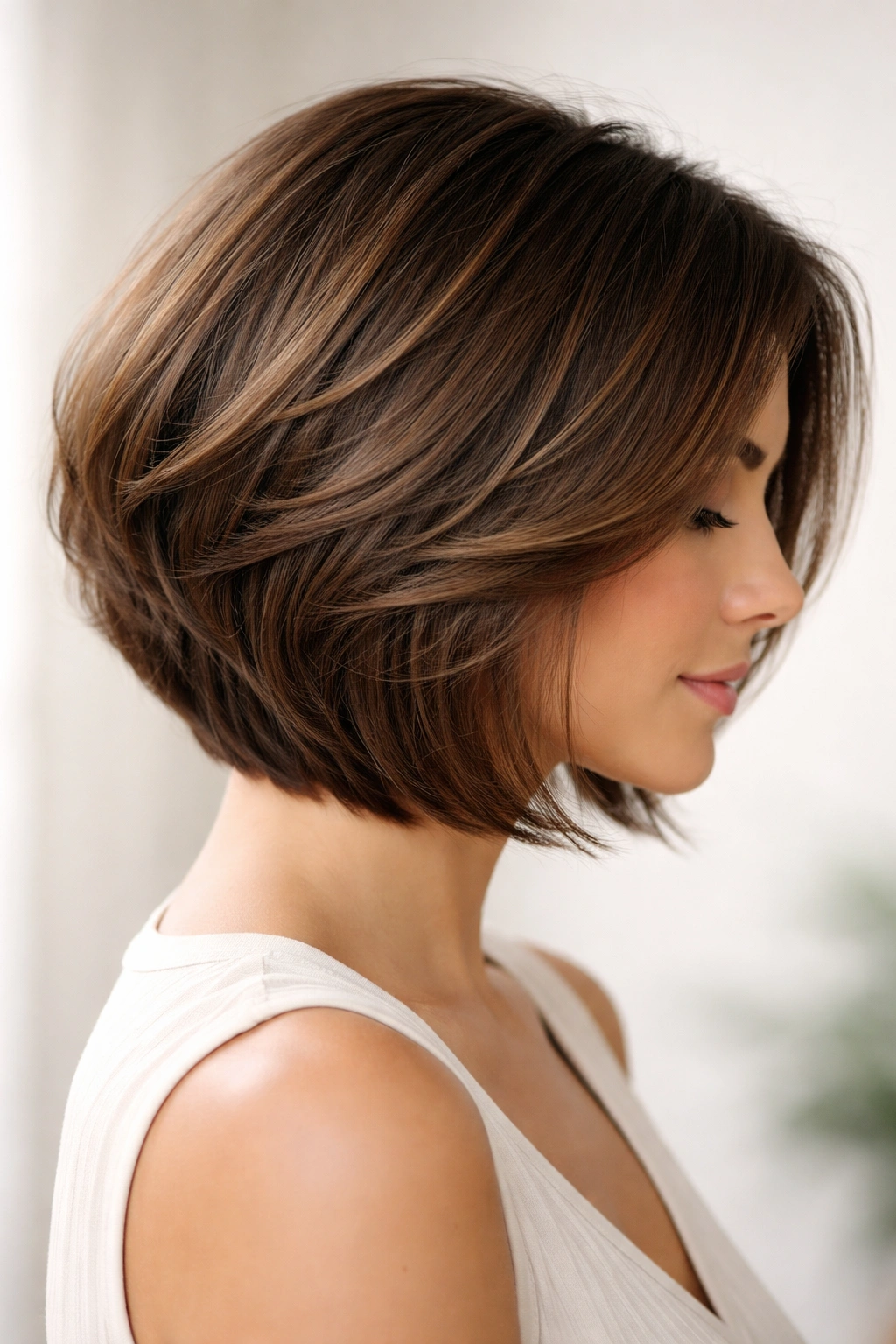
A thick bob should move. It should not sit like a bell. Layers are what keep dense hair from ballooning out at the sides, and the right kind of layering can make a bob feel lighter without thinning it into scraps.
The mistake people make is asking for too much razoring or too many short pieces near the crown. That can leave thick hair frizzy and uneven, especially when it air-dries. What you want is controlled weight removal inside the shape, plus a clean perimeter that still looks full at the bottom.
What to Ask Your Stylist
- Keep the outer line blunt enough to hold the shape.
- Add internal layers through the mid-lengths.
- Avoid over-thinning the ends.
- Leave the front a little longer if your hair poofs at the cheeks.
This cut works because it lets thick hair fall instead of fighting gravity. You can wear it smooth with a paddle brush, or let it dry a little messy and still look fine. That kind of flexibility is gold when you don’t have time to start over.
6. Stacked Bob With a Soft Back Curve
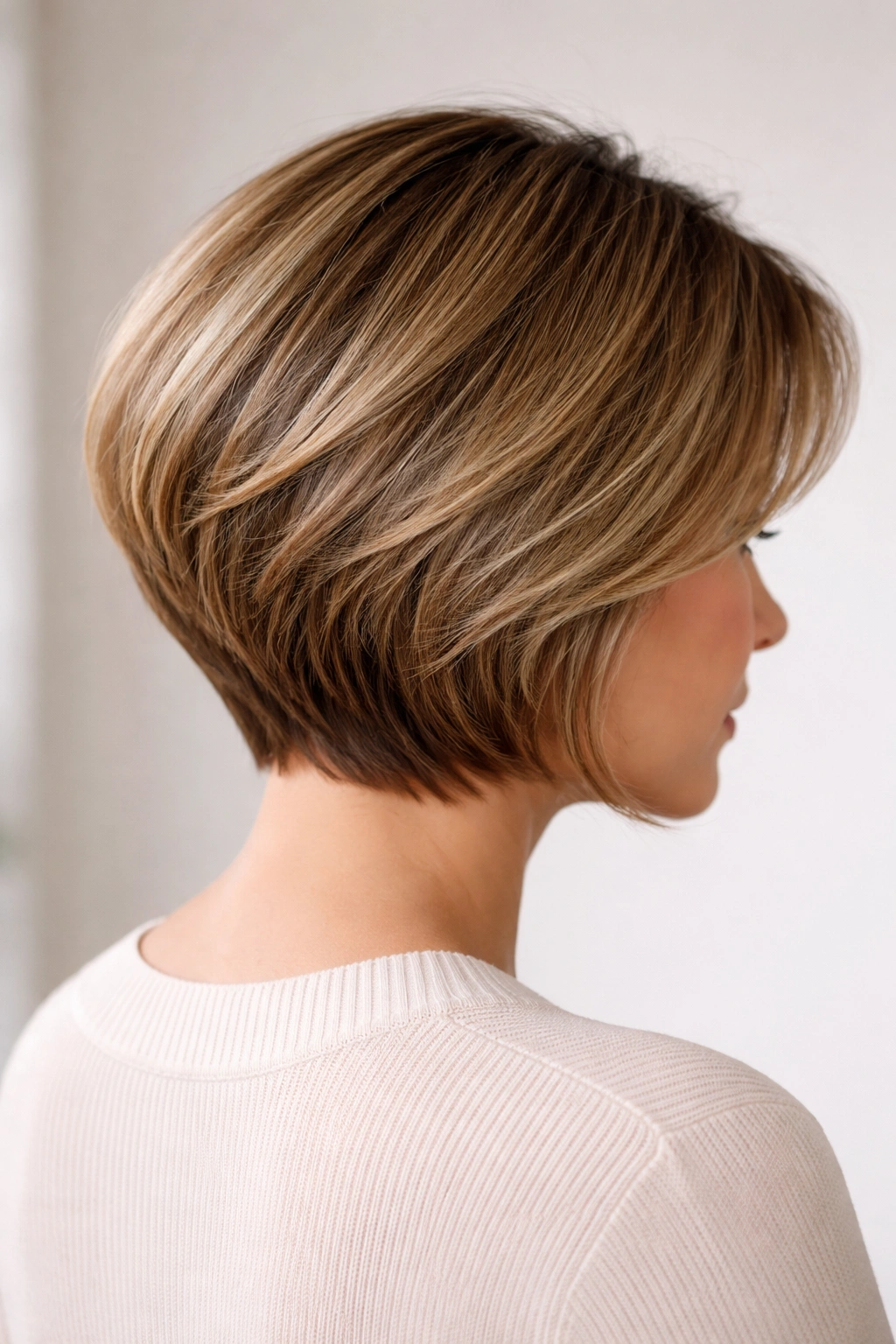
A stacked bob is one of those cuts people either love or avoid because they picture the wrong version. The severe wedge bob with a steep back can feel dated and high-maintenance. A soft stacked bob is a different animal altogether. It gives lift at the nape without turning your hair into a shape that needs constant coaxing.
The trick is in the graduation. The back is shorter, yes, but it should curve gently into the front rather than shout about it. On fine to medium hair, that little bit of lift makes the hair look fuller at the crown and cleaner around the neck. It also dries faster than longer, heavier shapes.
What to Watch For
If the stack is too high, the haircut can flip out and start looking fussy. If it’s too subtle, you lose the benefit. Somewhere in the middle is the sweet spot. You want shape, not architecture.
A root-lift spray and a quick round-brush pass at the back are usually enough. Some days, you can skip even that and let the natural bend do its thing. That’s the whole point.
7. Air-Dry Wavy Bob
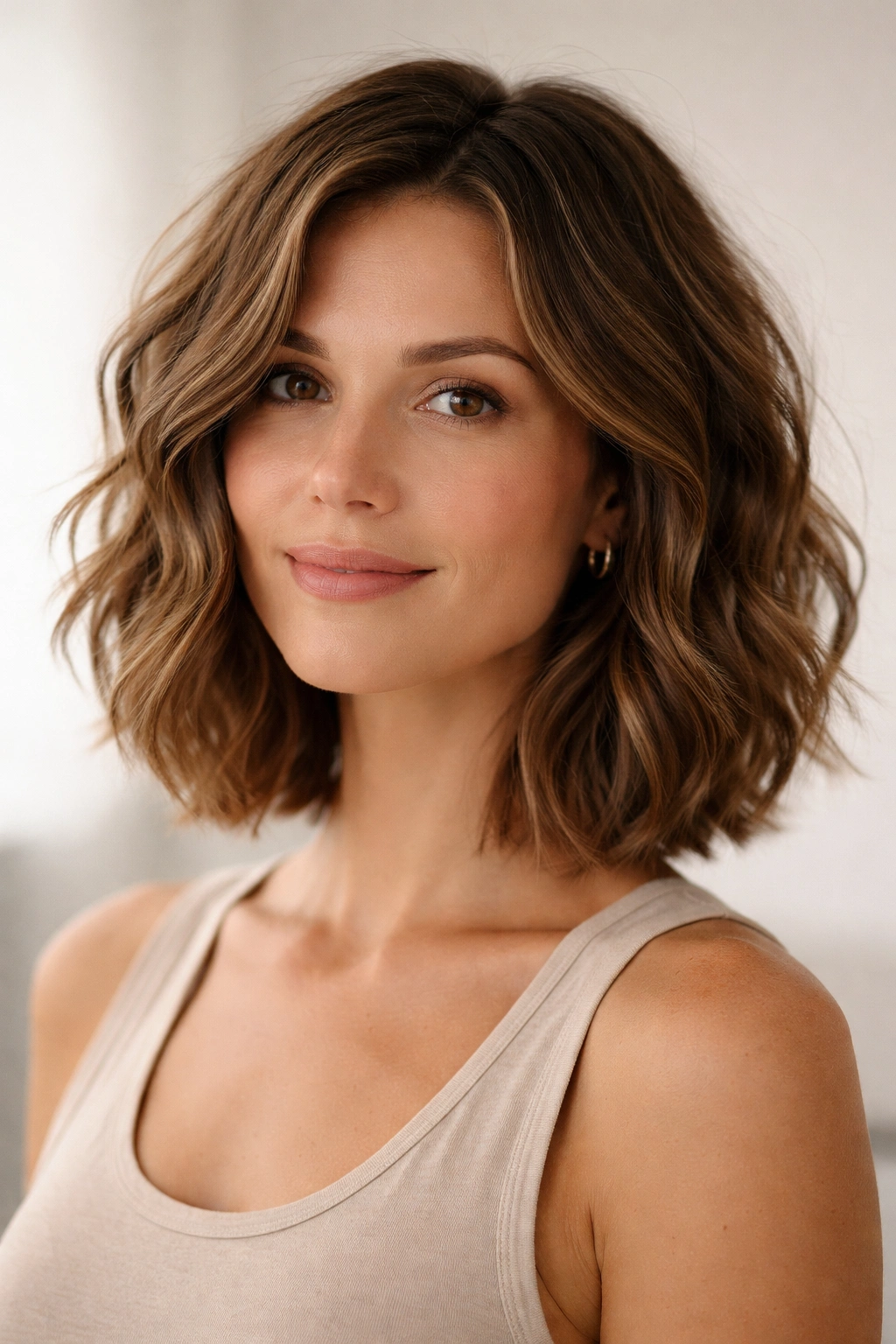
If your hair already bends on its own, stop fighting it. A bob that respects your natural wave pattern is one of the easiest cuts to live with, because the styling job gets smaller the moment the shape is cut well. You’re not forcing hair to do something foreign. You’re guiding it.
How to Air-Dry It Cleanly
Start on soaking-wet hair. Work in a leave-in conditioner, then a small amount of curl cream or lightweight gel through the mid-lengths and ends. Scrunch once or twice. Not twenty times. Then leave it alone while it dries.
If your hair gets puffy at the top, ask for the bob to be cut with the wave pattern in mind. A dry cut can help here, since the stylist sees where the hair bends and where it caves in. That matters a lot more than people think.
A wavy bob is not about perfection. It’s about a shape that still looks good when a few pieces decide to go their own way. That’s what makes it easy.
Best Products for the Bend
- Leave-in conditioner for slip
- Curl cream or light gel for hold
- Microfiber towel or T-shirt for scrunching
- A pea-sized amount of serum on the ends if they frizz
Mess with it less. That’s the honest tip.
8. Curly Bob That Keeps Its Shape
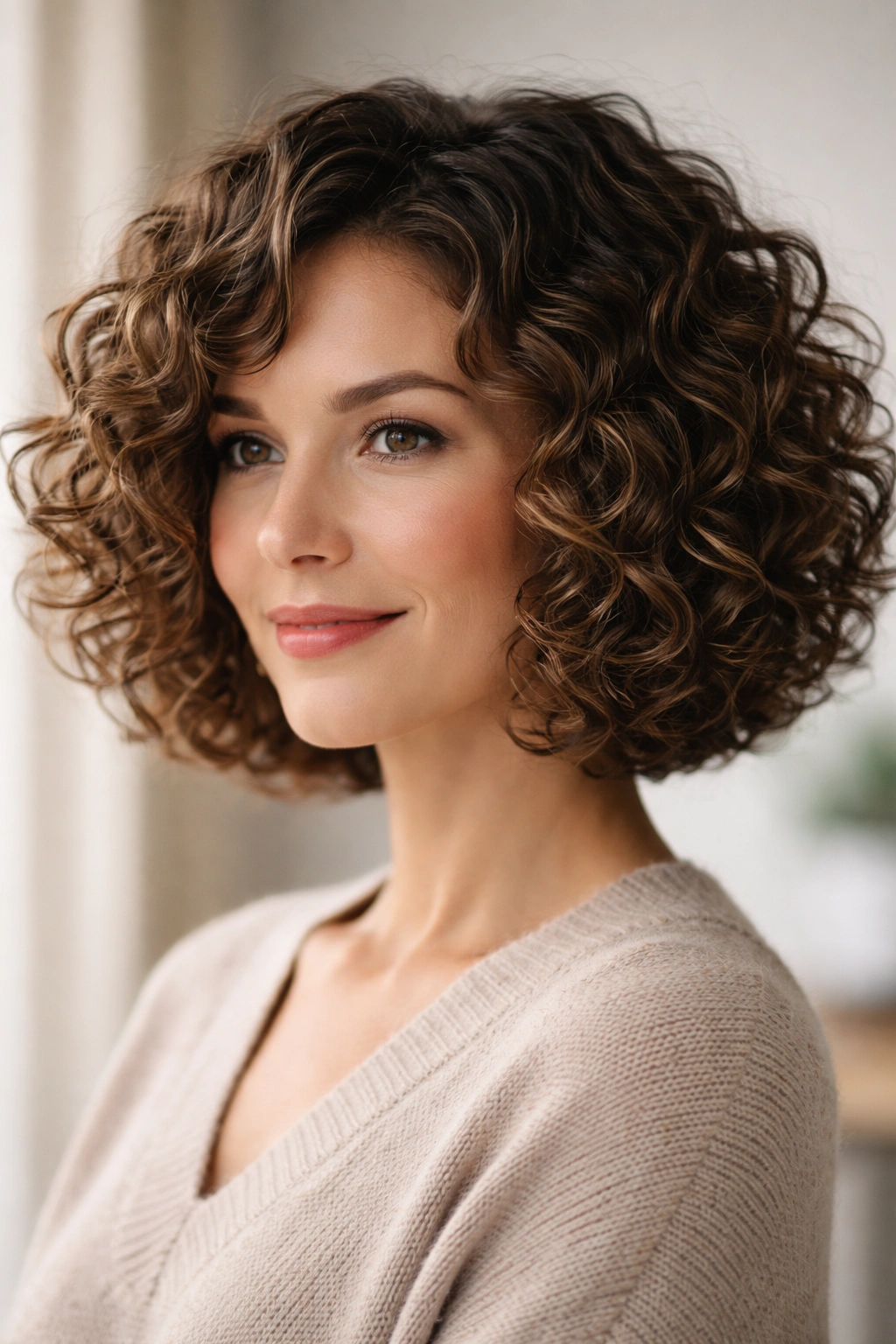
Curly hair and bob length can be friends, but only if the shape is cut for the curl, not against it. A good curly bob usually lands a little longer than you think you need, because curls spring up once they dry. Cut too short and you’ll spend weeks waiting for it to settle down.
The best versions are shaped with shrinkage in mind. Sometimes that means a dry cut. Sometimes it means curl-by-curl shaping. Either way, the goal is a rounded silhouette that follows your natural curl pattern instead of flattening it. A chin-length curly bob can be gorgeous, but a jaw-length version is often easier to wear because it doesn’t bunch up at the widest part of the face.
A diffuser helps, but you don’t need a long styling ritual. Scrunch in your product, diffuse the roots for a few minutes, then stop once the shape is set. Overdrying curls tends to make them fuzzy. I’d rather see a bob that holds its curl definition than one that’s been fried into a halo.
- Best length: chin to just below the jaw
- Best trim rhythm: every 8 to 10 weeks
- Best products: curl cream, gel, diffuser
- Best finish: soft, defined, not crunchy
9. Side-Part Bob With Crown Lift
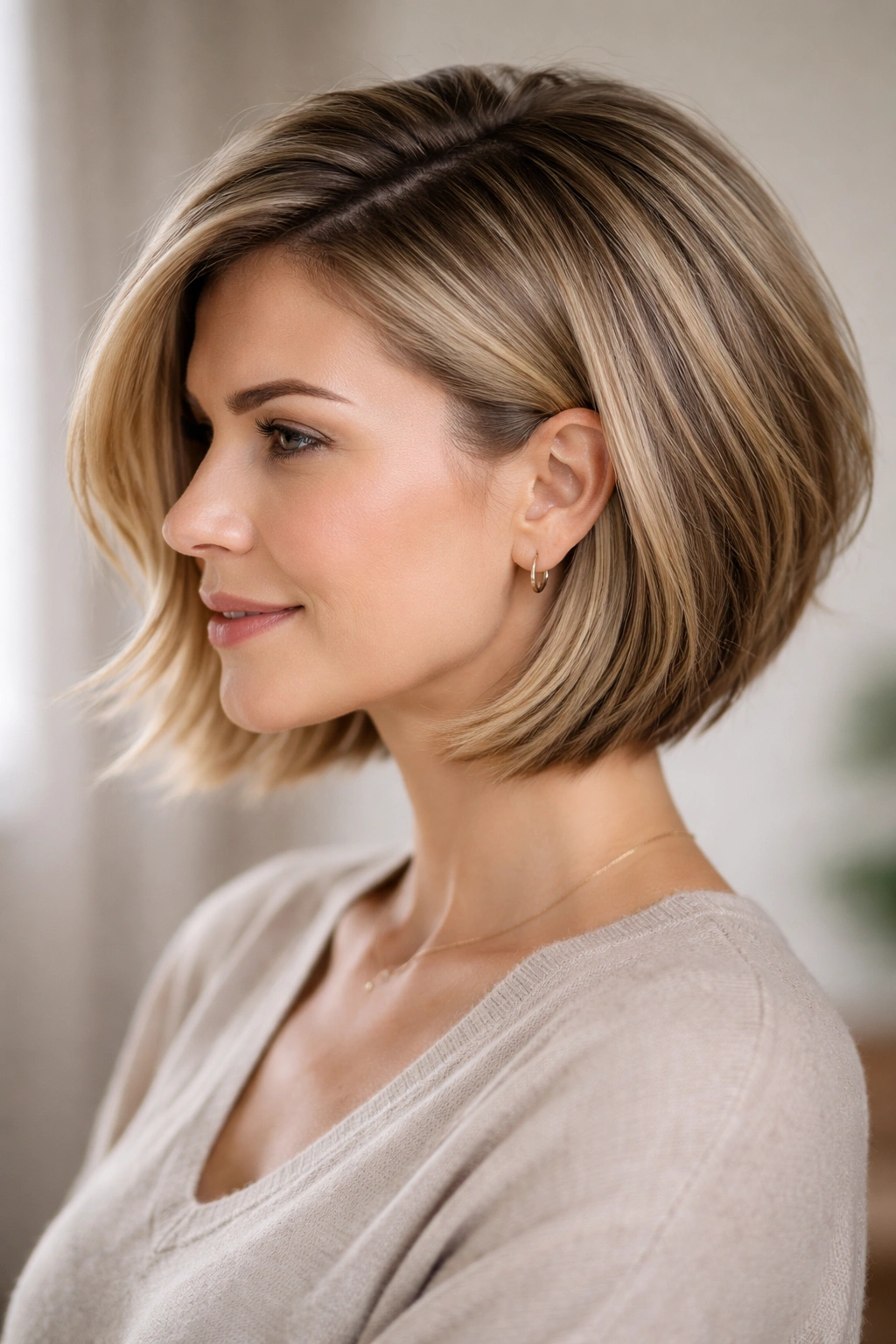
A side part does more work than people give it credit for. Shift the part a little off center, and the hair at the crown gets an instant lift without any teasing, clips, or extra tools. That makes this bob a smart pick if your hair falls flat at the roots or you want a little face-opening volume with almost no effort.
The cut itself can be simple. Chin length, collarbone length, slightly layered, or blunt. The part is what changes the whole mood. It softens round faces, gives straight hair a bit of movement, and makes fine hair look less pressed to the scalp. One small move. Big difference.
If you have a habit of wearing the same part every day, this is a nice change because it doesn’t demand a full restyle. Flip the part over, mist the roots with a touch of dry shampoo, and let the hair settle. You’ll get a little height at the top and a little swing around the face.
Simple trick. Real payoff.
10. Inverted Bob for Fine Hair
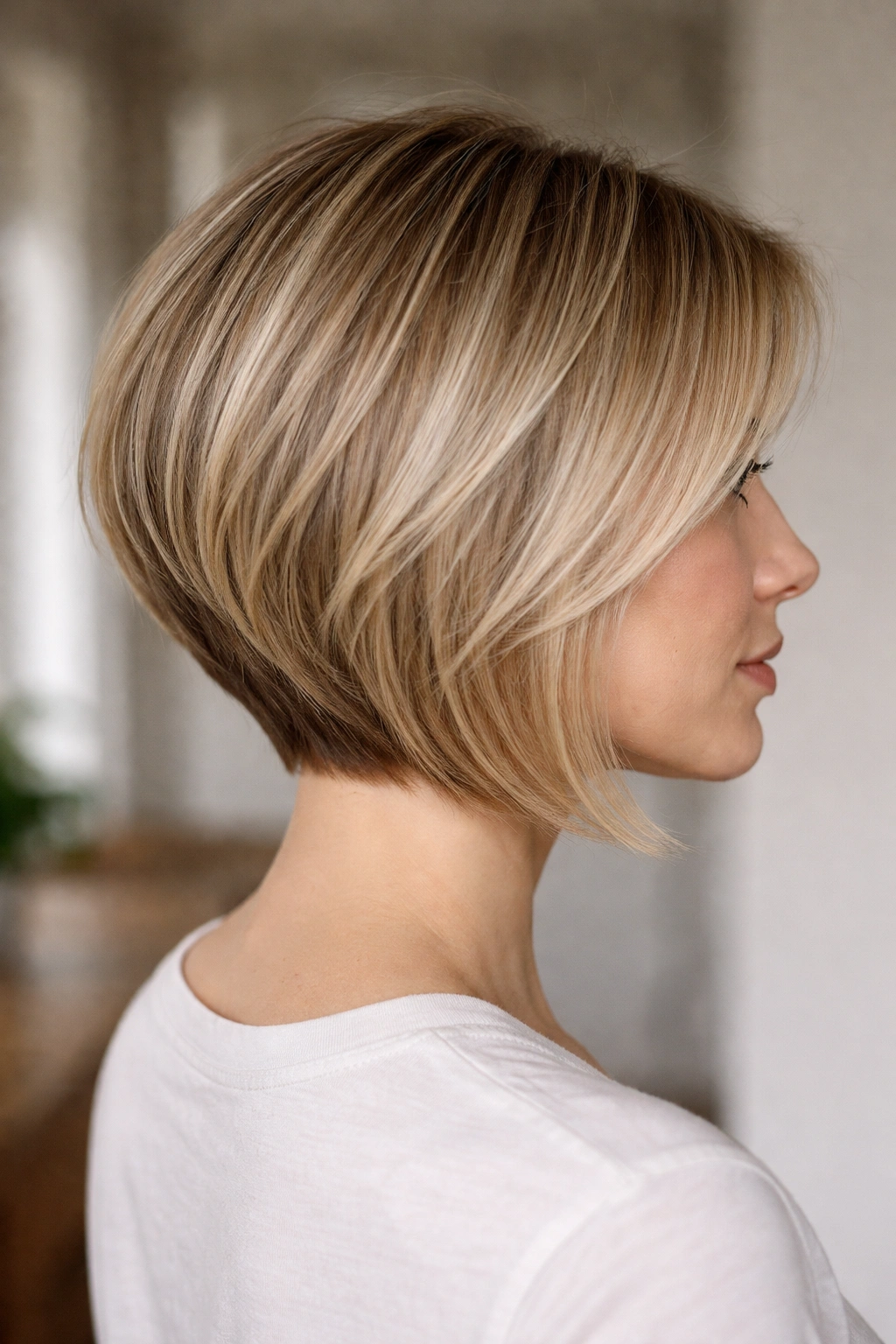
Unlike a stacked bob, the inverted bob keeps the front longer, which gives you face framing without sacrificing lift in the back. That’s why it works so well for fine hair. The angle creates the look of density, even when the individual strands are soft and lightweight.
How Much Angle Is Enough
You do not want a dramatic diagonal unless you like a sharper, more styled look. A subtle inversion is easier to live with. Think one to two inches shorter at the nape than the front, not a steep wedge. That keeps the shape modern and keeps it from looking fussy as it grows.
Fine hair often looks best when the cut creates a line the eye can follow. The inverted shape does that. It gives the illusion of fullness at the back and a clean sweep around the jaw. If your hair tends to sit flat no matter what you do, this is one of the most useful bob cuts on the list.
- Ask for a soft angle, not a sharp one.
- Keep the front long enough to tuck.
- Add a little root spray if the crown collapses.
- Use a quick blow-dry at the nape to keep the curve smooth.
It’s tidy without being stiff.
11. Boxy Blunt Bob
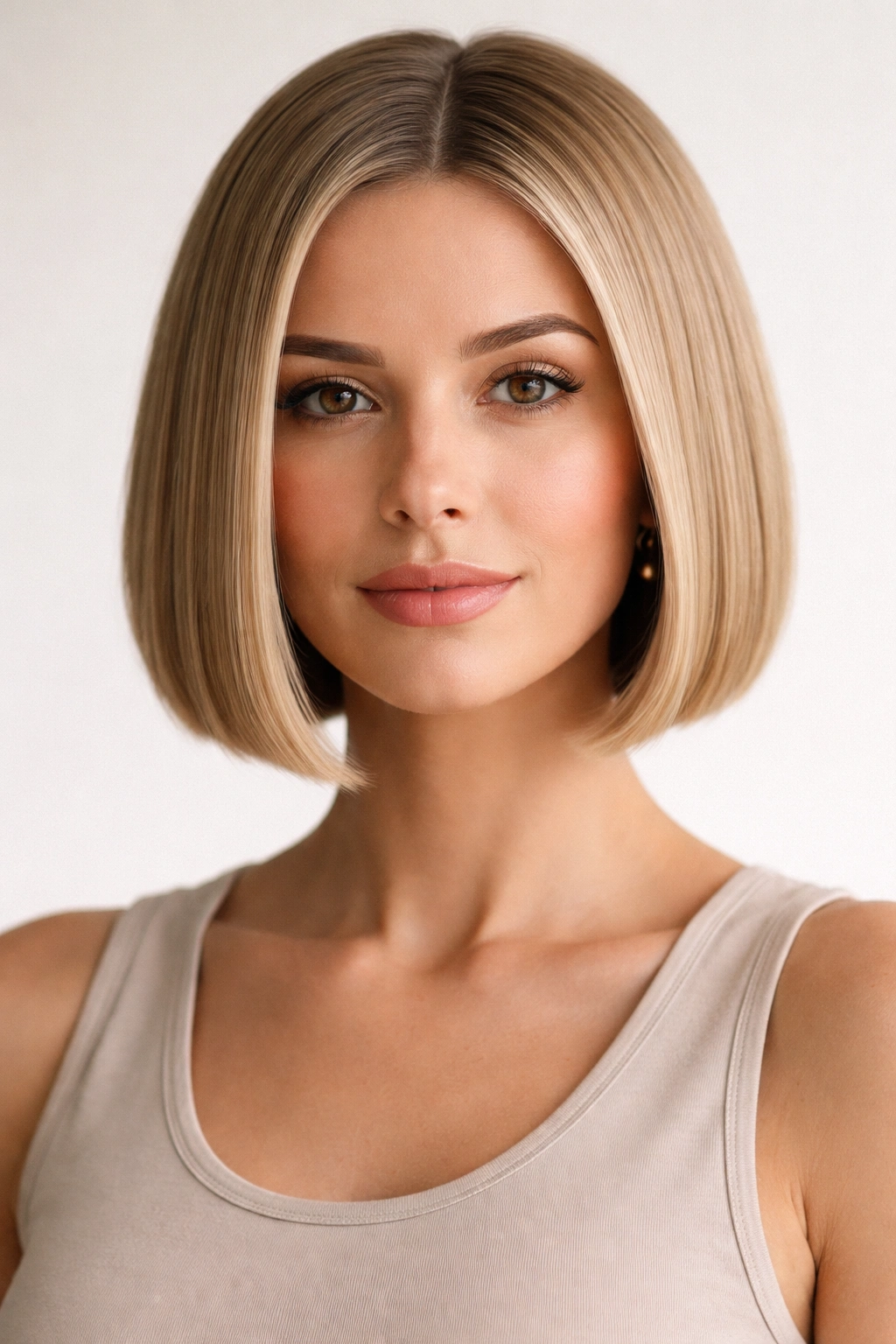
The boxy blunt bob sounds plain, and that’s exactly why it can be useful. A strong, straight edge gives the haircut structure, so you don’t have to build shape with a lot of styling. On hair that is naturally straight or only a little wavy, it can be one of the fastest bobs to get ready.
The key is balance. If the cut is too heavy, it can look like a block. If it’s too soft, you lose the clean edge that makes it easy. I like this shape when the hair is dense enough to hold a line but not so thick that the ends puff out from gravity alone.
A light smoothing cream or a few drops of serum through the last inch of hair is usually enough. You can rough-dry it and then flatten just the front pieces if you want a sharper finish. That’s a five-minute job, not a full styling routine.
If your hair is very thick, ask for a little hidden weight removal underneath. Not visible layers. Just enough to keep the boxy shape from turning bulky.
12. Shaggy Bob With Curtain Bangs
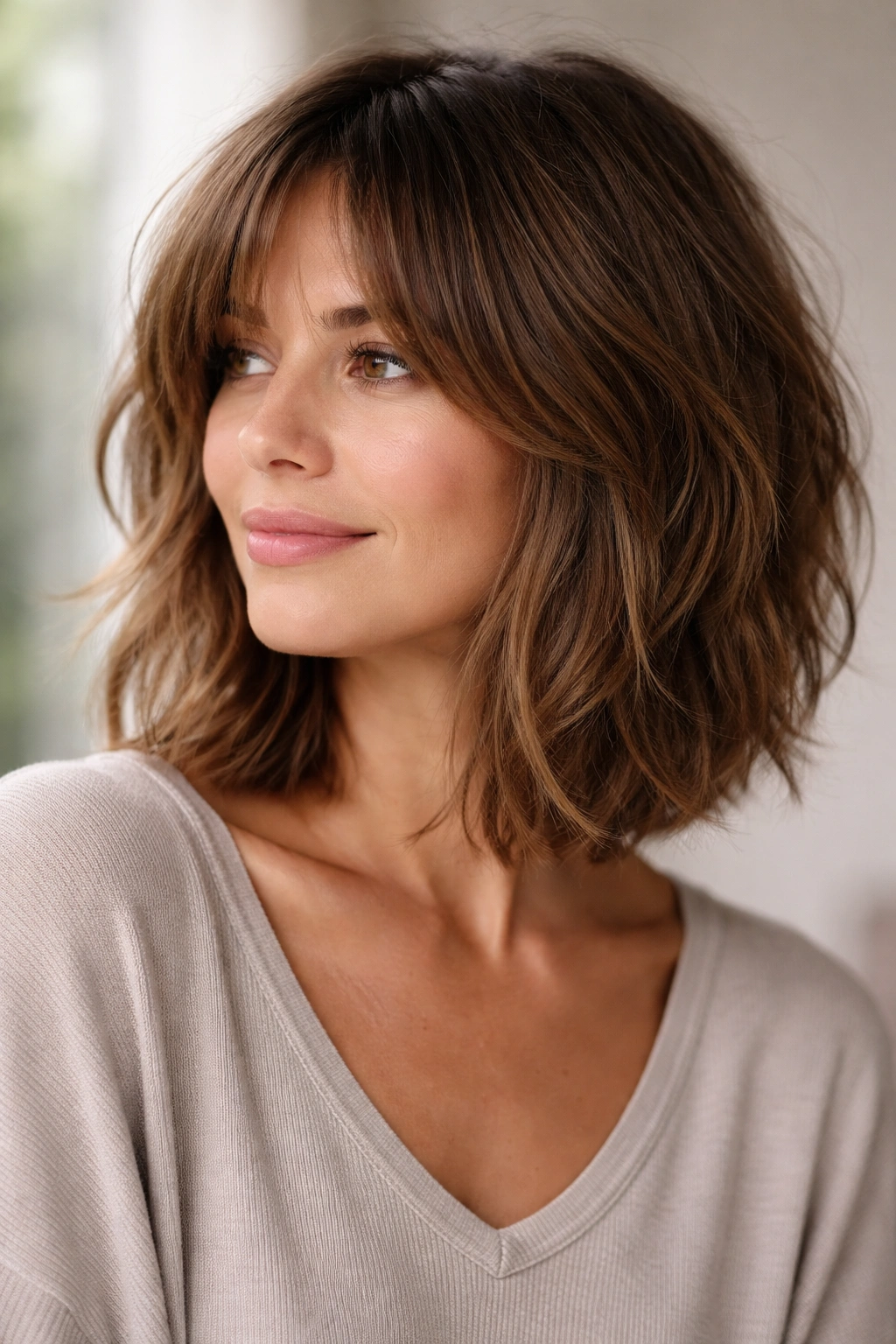
Why do curtain bangs keep showing up with bobs? Because they solve the “I want shape, but I do not want a strict haircut” problem. A shaggy bob with curtain bangs feels relaxed on purpose. It doesn’t need a perfect blowout to look right, and that alone makes it appealing.
How to Keep the Fringe from Becoming a Chore
Keep the shortest point of the bangs around the bridge of the nose or just below the brows, then let them angle outward toward the cheekbones. That way they blend into the sides instead of sitting there like a separate project. The shaggy layers should be soft, not shredded to bits, or the haircut starts to look overworked.
This is a good option if you like your hair with a little movement and don’t want to fight every bend. A bit of wave spray, a quick scrunch, and some dry shampoo at the roots are usually enough. The grow-out is kinder than a full blunt fringe, too, which matters when life gets busy and salon visits slip.
It’s messy in a flattering way. Which is the point.
13. A-Line Bob That Grows Out Gracefully
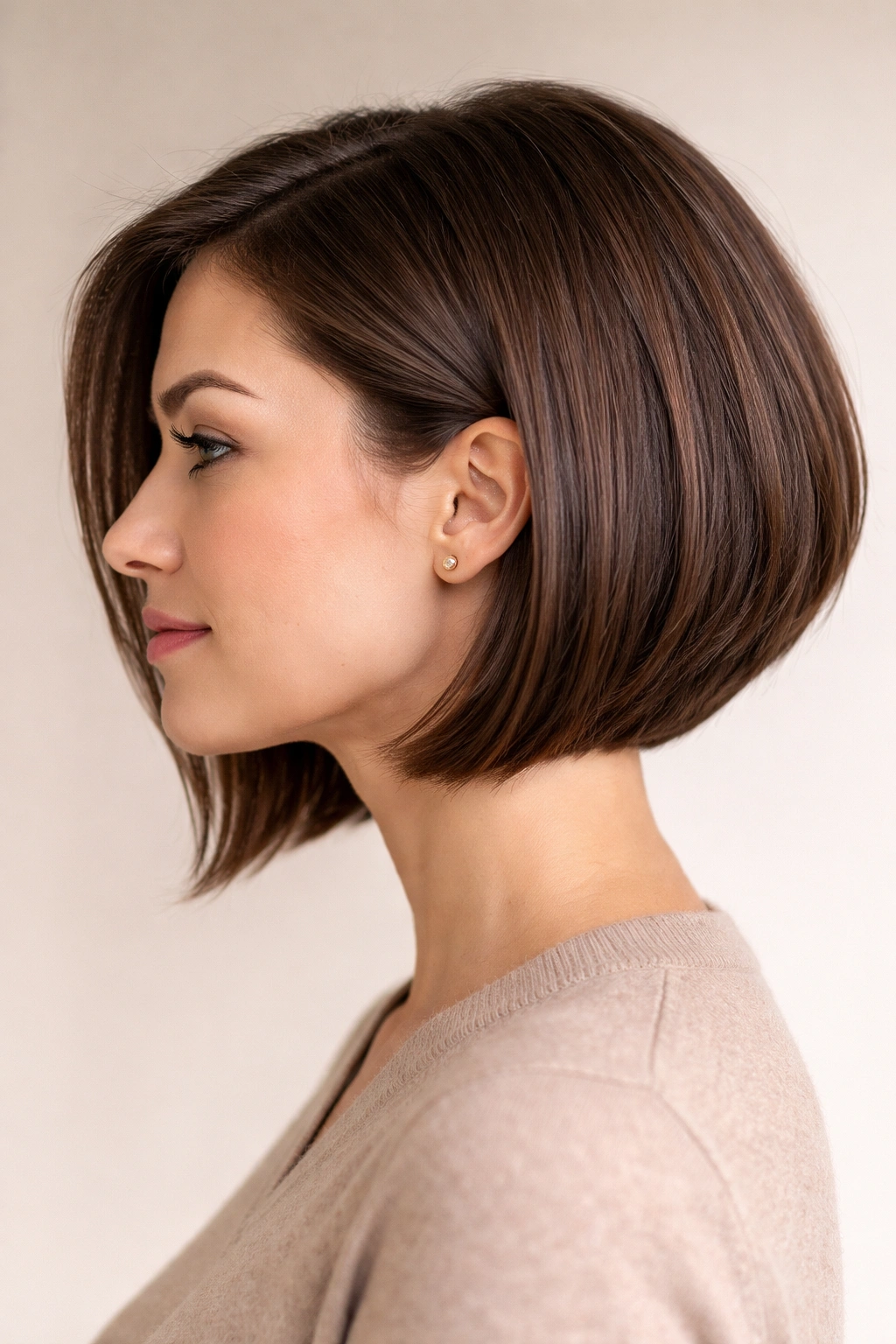
An A-line bob is shorter in the back and longer in the front, and it earns its place by staying neat longer than you’d expect. As it grows, the front pieces keep their shape, so the cut doesn’t suddenly look lost or shapeless. That makes it a strong pick if you want something easy to maintain between trims.
The slope also helps frame the face. The longer front angles the eye downward, which can soften a strong jaw or add a little length to a rounder face. The back stays clean around the neckline, so you still get the feeling of a bob without constant fuss.
Why It Ages Well Between Trims
- The front stays visible, even as it grows.
- The back keeps the neck area neat.
- The angle can be subtle or a little sharper.
- It still works when tucked behind the ears.
If you want a cut that doesn’t punish you for missing a haircut appointment, this one is hard to beat. It’s structured, but not rigid.
14. Tucked-Behind-Ear Bob
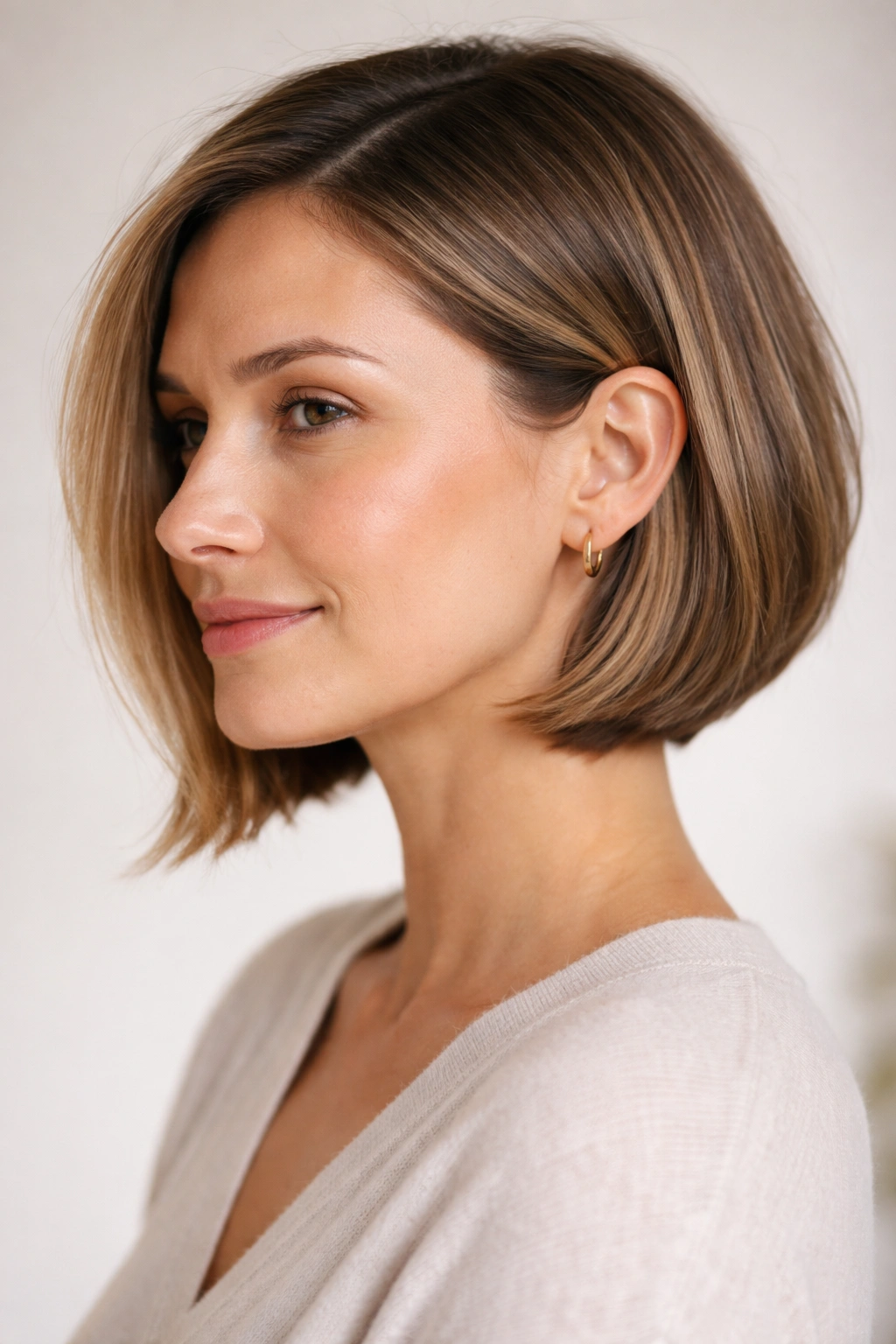
Not every easy bob needs layers or waves. Sometimes the whole point is having enough length and shape to tuck one side behind your ear and be done. That move sounds small, but it changes the face of the haircut fast. It opens the cheekbone, clears the jaw, and makes even a simple bob look considered.
This works especially well when the cut has a slightly longer front piece or a soft side part. You get a little asymmetry, a little movement, and none of the awkwardness that can happen when hair is too short to tuck properly. Add a tiny bit of cream or a smoothing mist, and the tucked side stays in place without needing a full styling session.
I like this for days when you want your hair off your face but don’t want to pin it back hard. It feels neat without being severe. And if a few pieces fall loose, that usually looks better anyway.
A little undone is enough.
15. Grown-In Bob With Invisible Layers
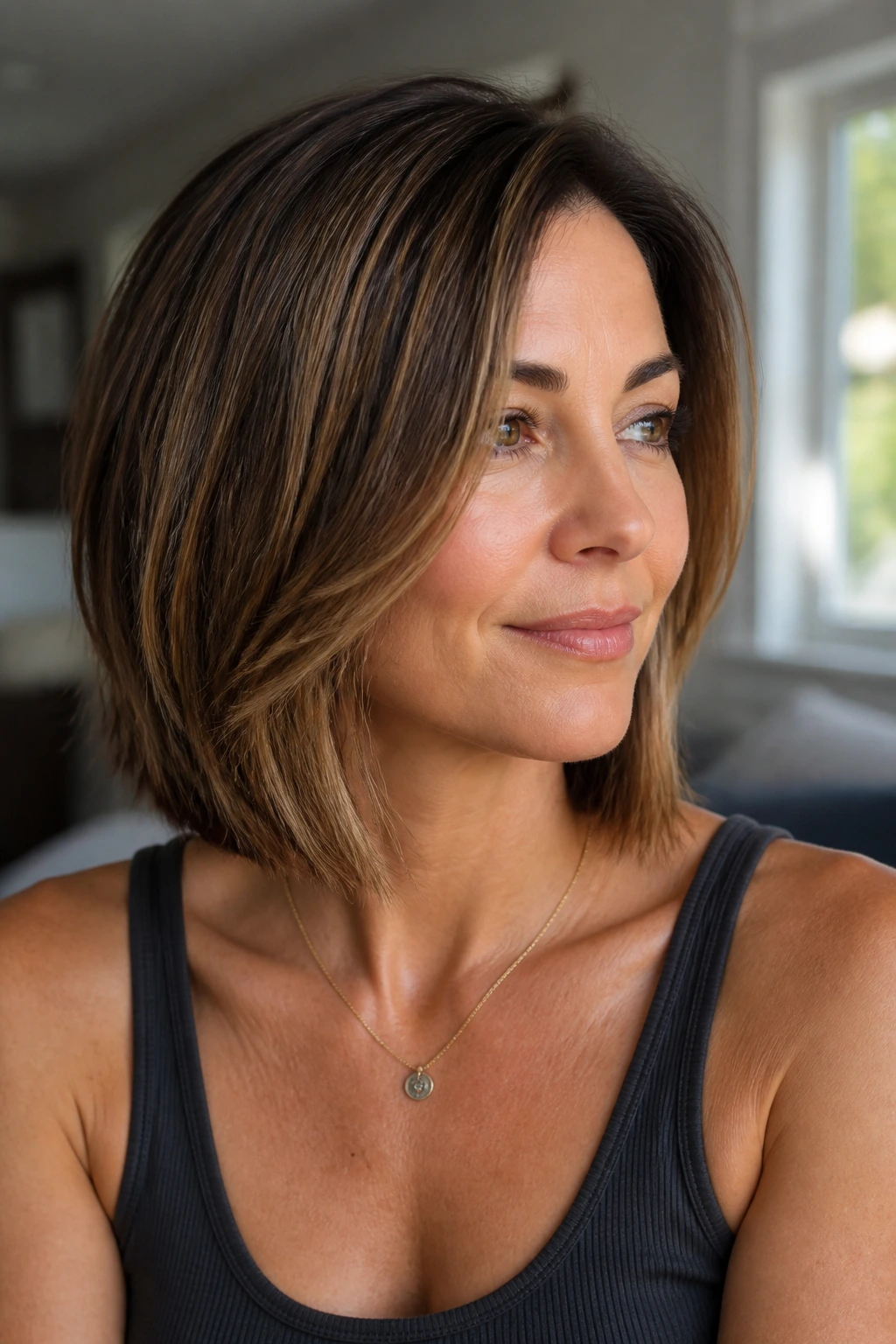
The bob I keep coming back to is the one that forgives a bad morning. Invisible layers and a soft perimeter make that possible, because the cut keeps its shape even when it’s lived in for weeks. It sits somewhere between jaw and collarbone, with enough length to tuck, clip, or air-dry, but enough shape to still read as a bob.
This is the version to ask for if you want your haircut to work with your schedule, not against it. The layers are hidden inside the shape, so the surface still looks clean. You get movement without the obvious choppiness that can make some layered bobs feel fussy. On straight hair, it bends neatly. On wavy hair, it falls with a little swing. On thicker hair, it keeps the bulk from crowding the face.
If you’re torn between lengths, I’d make one blunt recommendation: choose the version that still looks decent on day three, not the one that looks best the second you leave the chair. That’s the haircut you’ll actually enjoy living in.
