



A good bob does not ask your hair to pretend it is twenty years younger. The better bob cuts for women over 60 work with what is there now: softer density, changing texture, silver strands, maybe a cowlick that has gotten a little bossier over the years. That is not a problem. It is a design brief.
Length matters, but shape matters more. A chin-length line can sharpen the jaw; a stacked back can lift a flat crown; a few soft layers can keep fine hair from reading as thin and tired. And because the cut sits close to the face, every small choice shows — where the fringe falls, how much weight stays at the ends, whether the nape is clean or bulky.
I have seen more than a few bad bobs blamed on the wrong thing. Usually the haircut itself isn’t the issue. The problem is over-thinning, cutting the front too short for the wearer’s face shape, or pretending every bob should be styled the same way each morning. That approach wastes time and makes hair fight back.
The good versions are easier than people think. Some are polished and crisp, some are soft and airy, some lean into natural wave or gray shine. All of them have one thing in common: they make the haircut and the face shape look like they belong together.
1. Chin-Length Classic Bob for Women Over 60
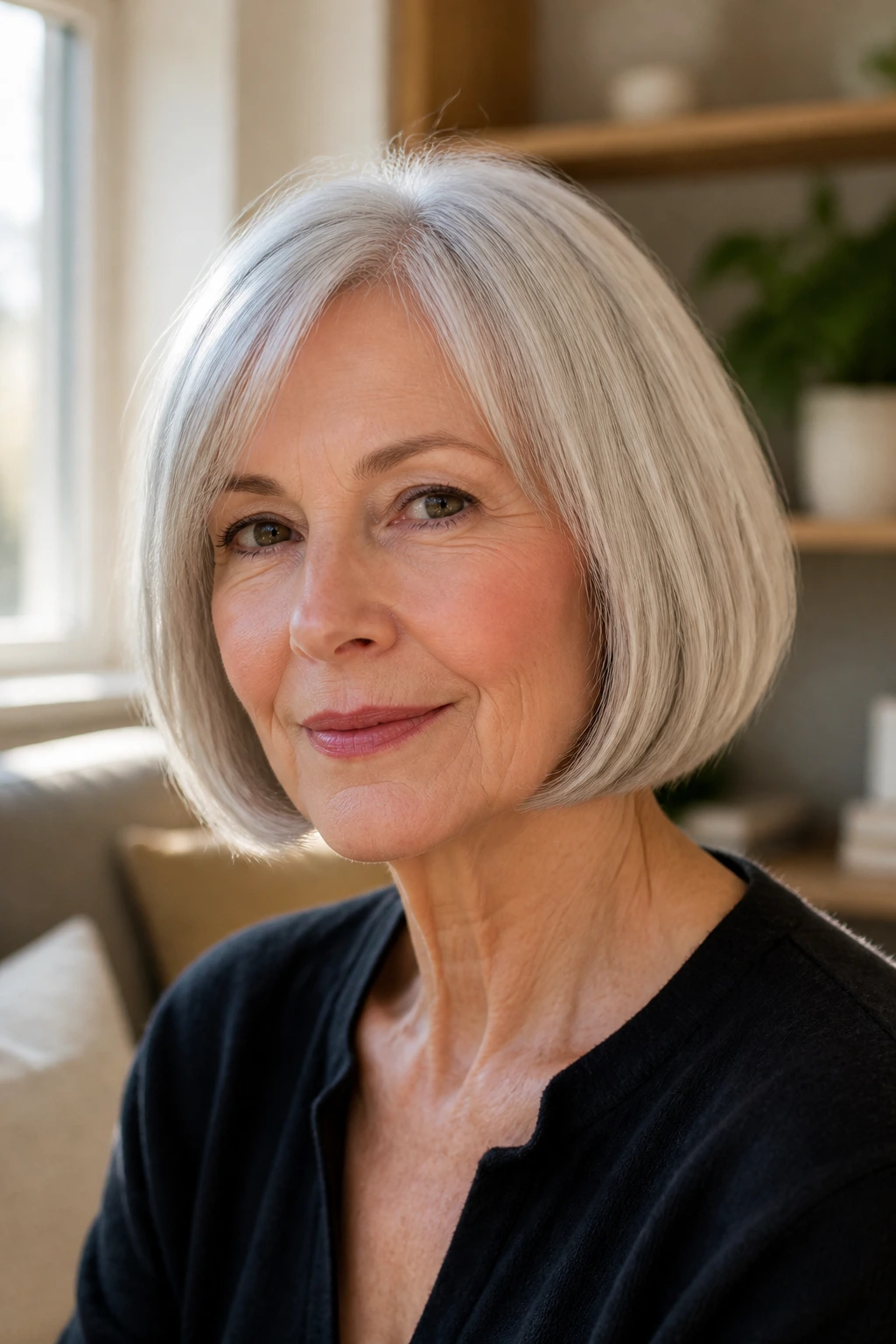
The chin-length bob is the one I keep coming back to when someone wants a clean reset without drama. It lands right where the jaw begins to curve, which is useful if hair has lost a bit of density around the temples or if the neck is where you want the eye to go. This is the sort of cut that looks calm on purpose.
Why It Flatters the Face
The line sits in a sweet spot. It gives the face a frame without burying it, and it usually plays well with glasses, earrings, and a side part. If the hair is straight or only lightly wavy, a chin-length cut also gives the ends enough weight to lie neatly instead of flipping into odd little bends.
- Ask for a soft blunt edge if your hair is fine.
- Keep the front no shorter than the chin if you want a little length in the face.
- Use a round brush only at the ends, not through the whole head.
- Trim it every 6 to 8 weeks so the shape stays clean.
This bob looks best when it is not overworked. A little bend at the ends is fine. So is a crisp blow-dry. What matters is that the outline stays tidy.
Best tip: if your hair grows out with a stubborn cowlick at the back, ask for a slightly longer nape. That tiny adjustment saves a lot of morning swearing.
2. Layered Bob for Fine Hair
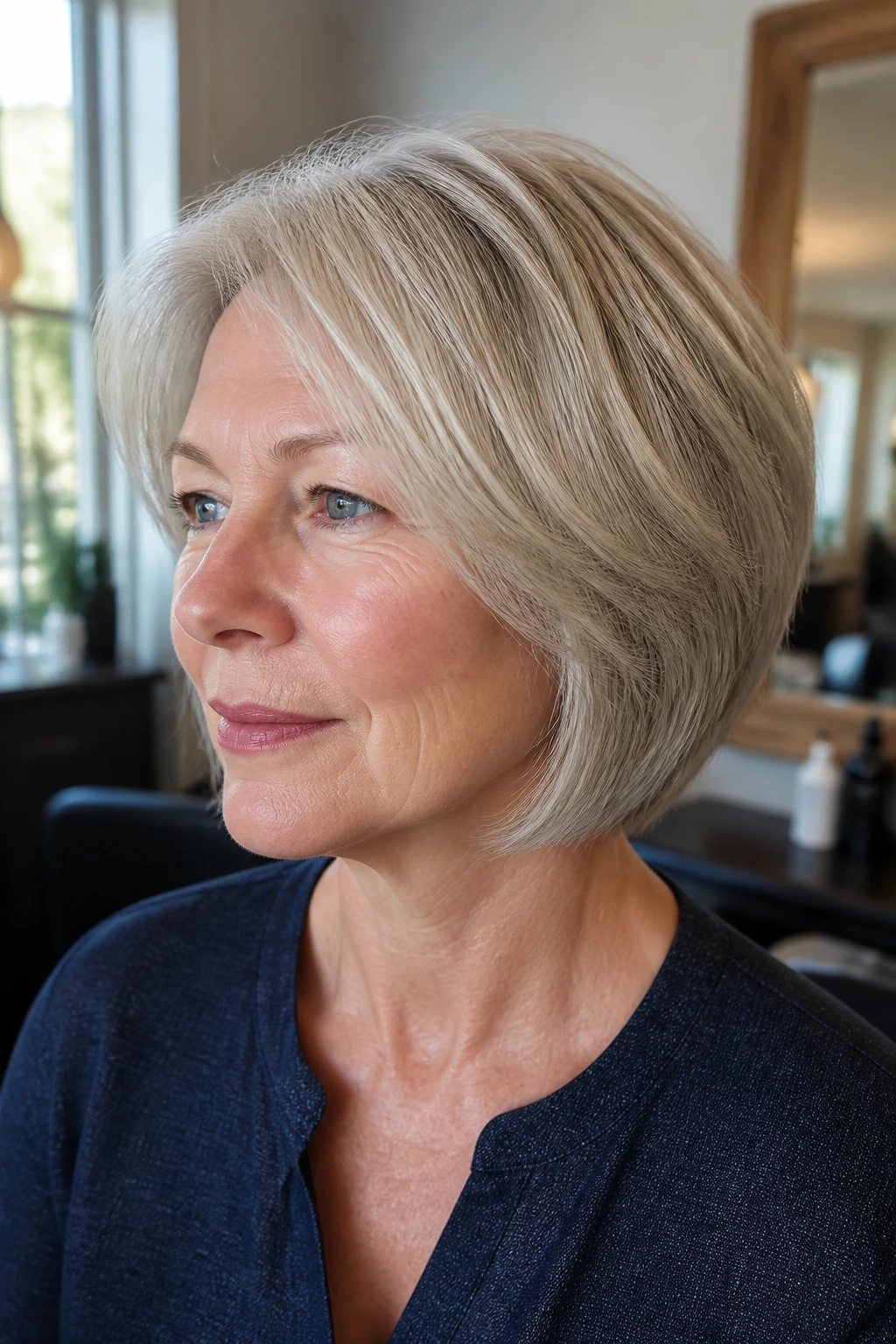
Fine hair can look flat fast, and a layered bob fixes that without turning the whole head into fluff. The trick is restraint. Too many short layers near the crown make the top airy for a week and sad by the second shampoo. A better cut keeps weight at the perimeter and adds only enough internal layers to create lift.
A layered bob works because it creates the illusion of density. The outer line still reads as a bob, but the hair underneath gets room to move. That movement matters, especially if your hair lies close to the scalp or gets limp in humidity. You want body, not a frizzy halo.
A side part helps this cut even more. It gives one side a little rise and lets the shorter top pieces fall in a way that looks natural. If you blow-dry, aim the nozzle at the roots and lift only for a few seconds at a time. Small lift. Not helmet volume.
One thing I like about this bob is how forgiving it is on days when styling energy is low. A dab of mousse, a quick rough-dry, and a finger comb through the ends are often enough. That is the whole appeal, honestly.
3. Stacked Bob at the Nape
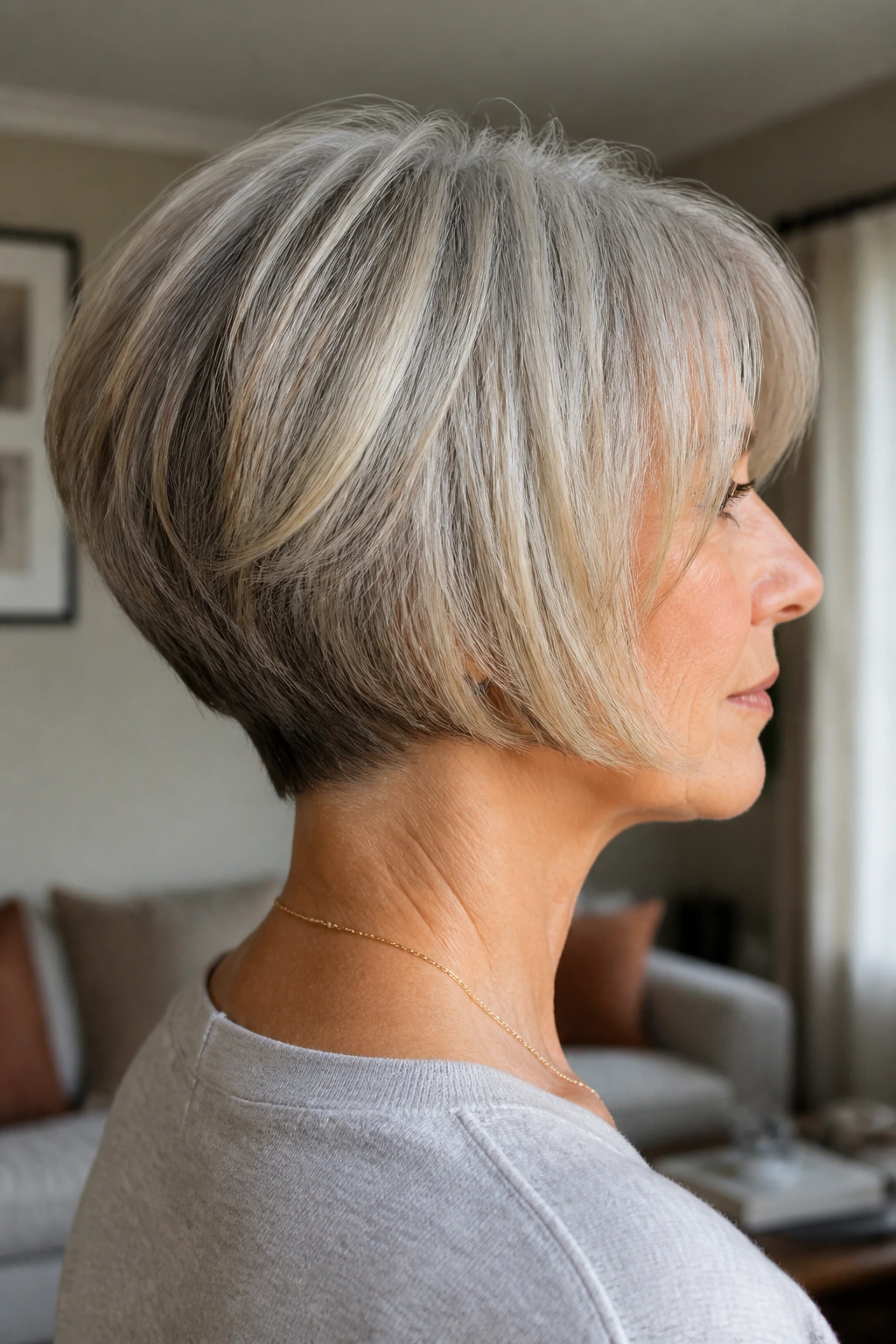
Why does a stacked bob still hold up? Because it solves a specific problem: hair that collapses at the back and makes the whole head look wider than it is. The stacked shape builds volume where you need it most, at the crown and upper back, while keeping the neckline neat.
What Makes the Back Lift
The back is cut shorter in graduated layers, then blended into longer front pieces. That graduation creates a rounded lift, almost like a small architecture detail at the nape. If your hair is straight and tends to hang heavy, this shape can make it look like you have more body than you actually do.
How to Ask for It
- Keep the stacking subtle, not severe.
- Ask for softness through the crown if your hair is fine.
- Leave the front long enough to skim the cheek, especially if you like a side part.
- Avoid razor-heavy ends if your hair frizzes easily.
This cut is especially helpful if you want the back to look polished with very little effort. A quick blow-dry with a small round brush usually does the job. The real win is that the shape does the heavy lifting for you.
And yes, it can look sharp. It should.
4. Side-Swept Bob with Soft Bangs
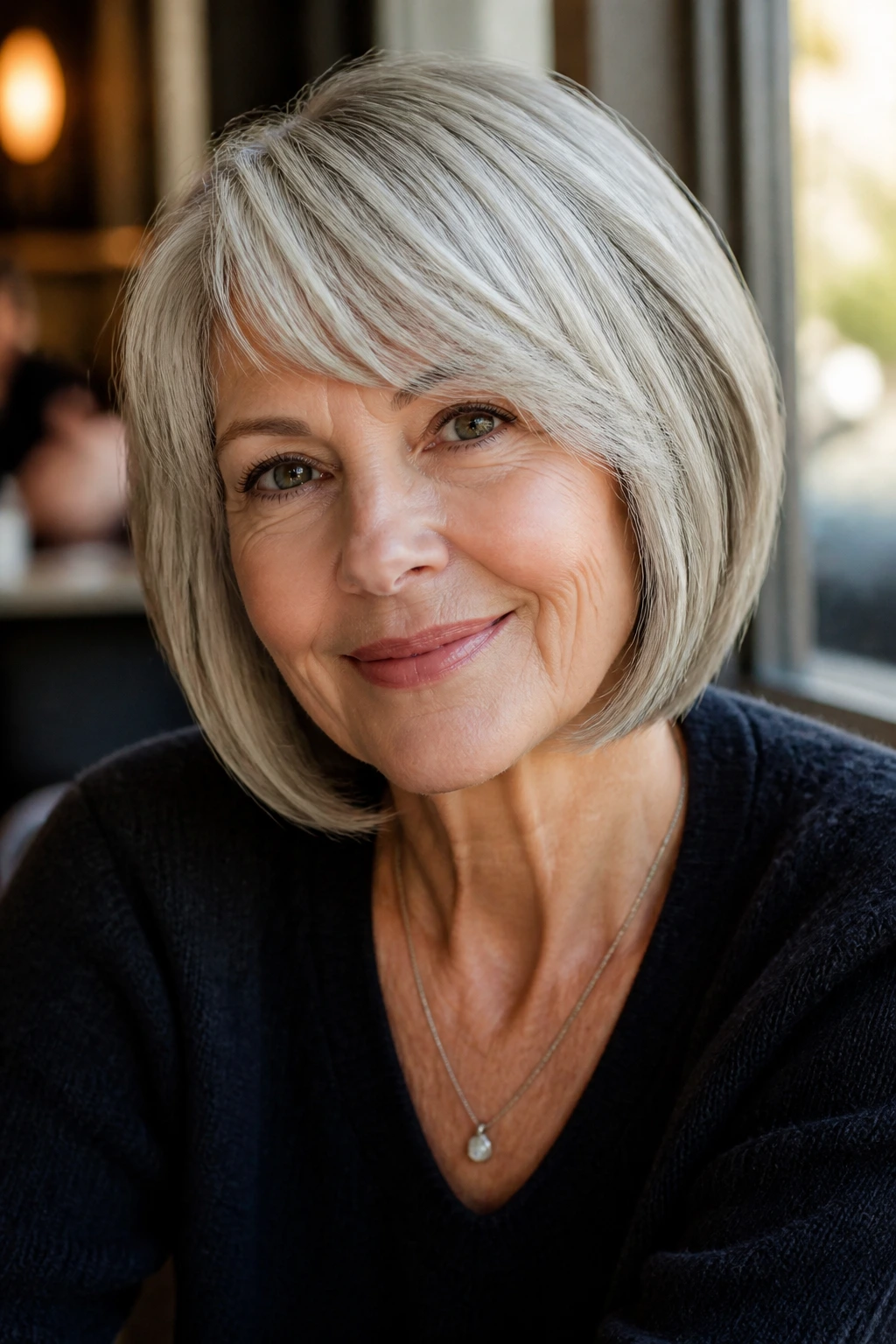
Picture a bob that softens the forehead, frames the eyes, and doesn’t scream for attention. That’s the side-swept version. It works well when you want a little face coverage without the commitment of a full fringe, which can be a blessing if your hairline has cowlicks or your brows and glasses already compete for space.
The fringe should blend, not sit like a separate curtain. That blending is what keeps the cut from looking dated. A long side sweep draws the eye diagonally, which has a gentle lifting effect across the face. It also gives you a place to tuck hair behind one ear, which is one of those tiny styling moves that makes a bob feel lived-in rather than formal.
A soft bang pairs well with hair that has a little bend. Too stiff, and it can look sharp in the wrong way. Too wispy, and it disappears. The sweet spot is a fringe that skims the brow or cheekbone and can be brushed away from the face on windy days.
If you wear glasses, this cut deserves a serious look. The side sweep keeps the front from crowding the frames, and that’s a bigger deal than people think.
5. Blunt Bob for Women Over 60
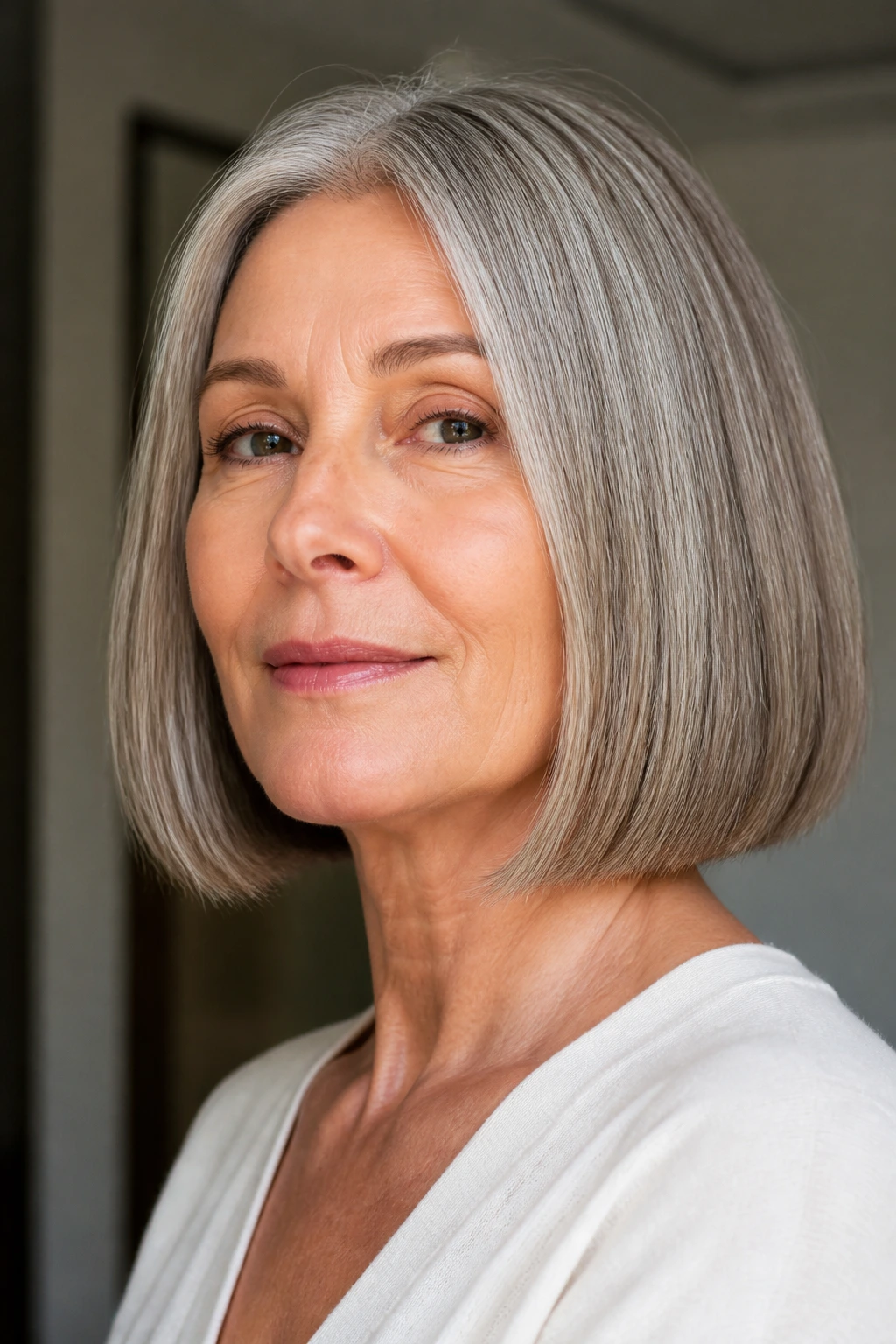
A blunt bob is not shy. That is part of the charm. The clean edge makes hair look thicker, which is useful when density has thinned a little at the ends or when layers have done too much damage over time. A blunt line also gives gray or silver hair a crisp, modern finish that can look expensive even with zero styling drama.
The important part is the edge. It has to be precise enough to look intentional, but not so hard that it feels boxy. On straight hair, a blunt bob can be almost graphic. On wavy hair, the line softens naturally and reads as polished instead of severe. Either way, it tends to make the whole haircut look denser.
This is one of the bob cuts for women over 60 that rewards regular trims. If you let it grow past its sweet spot, the clean line loses its punch and starts to look ordinary. A trim every six weeks keeps the bottom edge from fraying.
Use a lightweight smoothing cream, not a heavy serum. Heavy product can drag the ends down and make the whole thing look flatter than it should. A little shine is enough. More than that can go greasy fast.
6. Wavy Bob with Air-Dried Texture
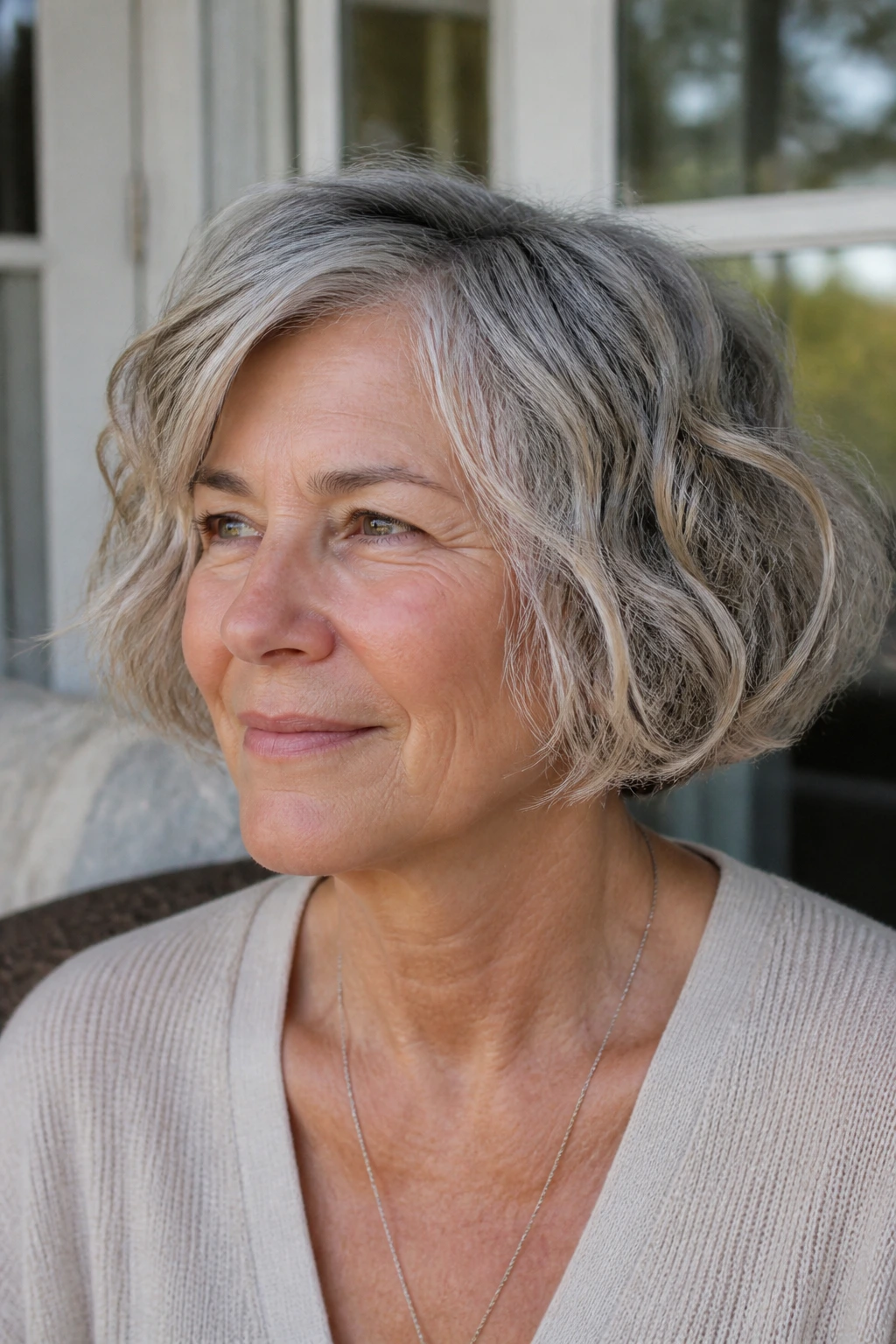
Not every bob needs a brush, and that is a relief. A wavy bob can look best when the hair keeps its own bend, especially if your natural texture has a bit of spring or if blow-drying every strand feels like a chore. This cut is about letting the wave do some of the work.
Air-dried texture is most flattering when the ends are shaped with care. You still want a clear outline, even if it’s softer than a blunt line. Without that shape, the cut can drift into fuzz. With it, the movement feels easy and modern.
A little curl cream or light mousse goes a long way. Scrunch it into damp hair, then let the hair dry with minimal touching. If you keep fiddling with it, the wave can break apart and frizz, which is usually where people start blaming the haircut instead of the styling habit.
This is the cut for someone who likes hair that looks like hair. Not a perfect blowout. Not a sprayed helmet. Just a loose, touchable shape that falls where it wants to and still looks finished.
7. Angled Bob That Narrows the Jawline
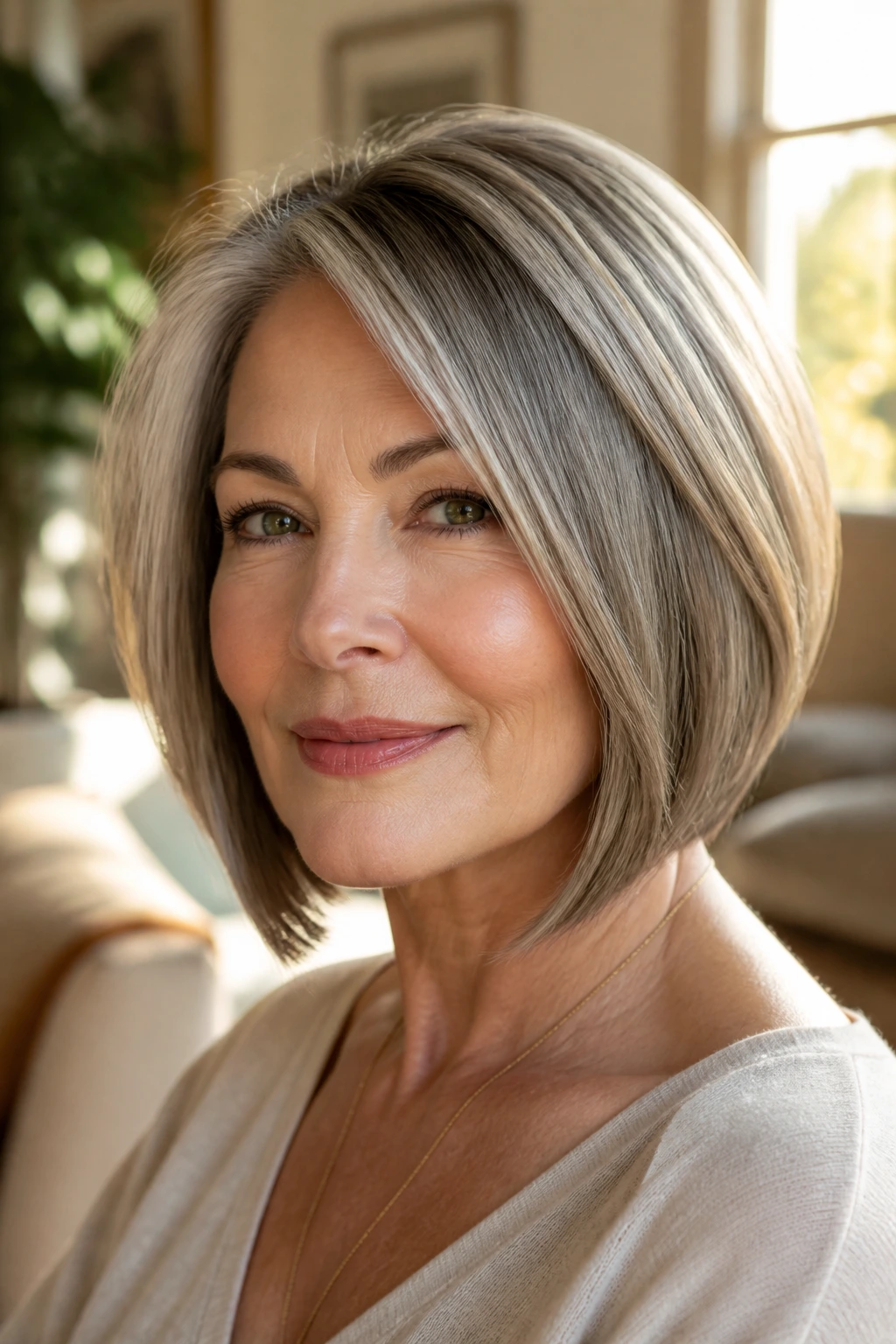
An angled bob is one of the smartest choices when you want a little shape around the face without hard lines. The front stays longer, the back sits shorter, and that gradual slope draws the eye downward in a flattering way. If the jaw feels broad or square, the angle takes some of the visual weight off the sides.
Why the Angle Matters
The front pieces usually land somewhere between the chin and collarbone, depending on how dramatic you want the cut to be. That length gives the face room, which is useful if your hair tends to puff out at the cheeks. The shorter back keeps the silhouette neat and makes the whole cut feel lighter.
What to Tell Your Stylist
- Ask for a subtle angle, not a sharp wedge.
- Keep the front pieces soft around the jaw.
- Make sure the back isn’t so short that it exposes every lump in the neck.
- Let the ends be point-cut if your hair is thick and straight.
This bob looks especially good with a side part and a little bend through the front. A flat iron can work, but I’d keep the finish soft. Too much straightening can make the angle look severe, and that is rarely the goal.
8. Curly Bob That Keeps Fullness
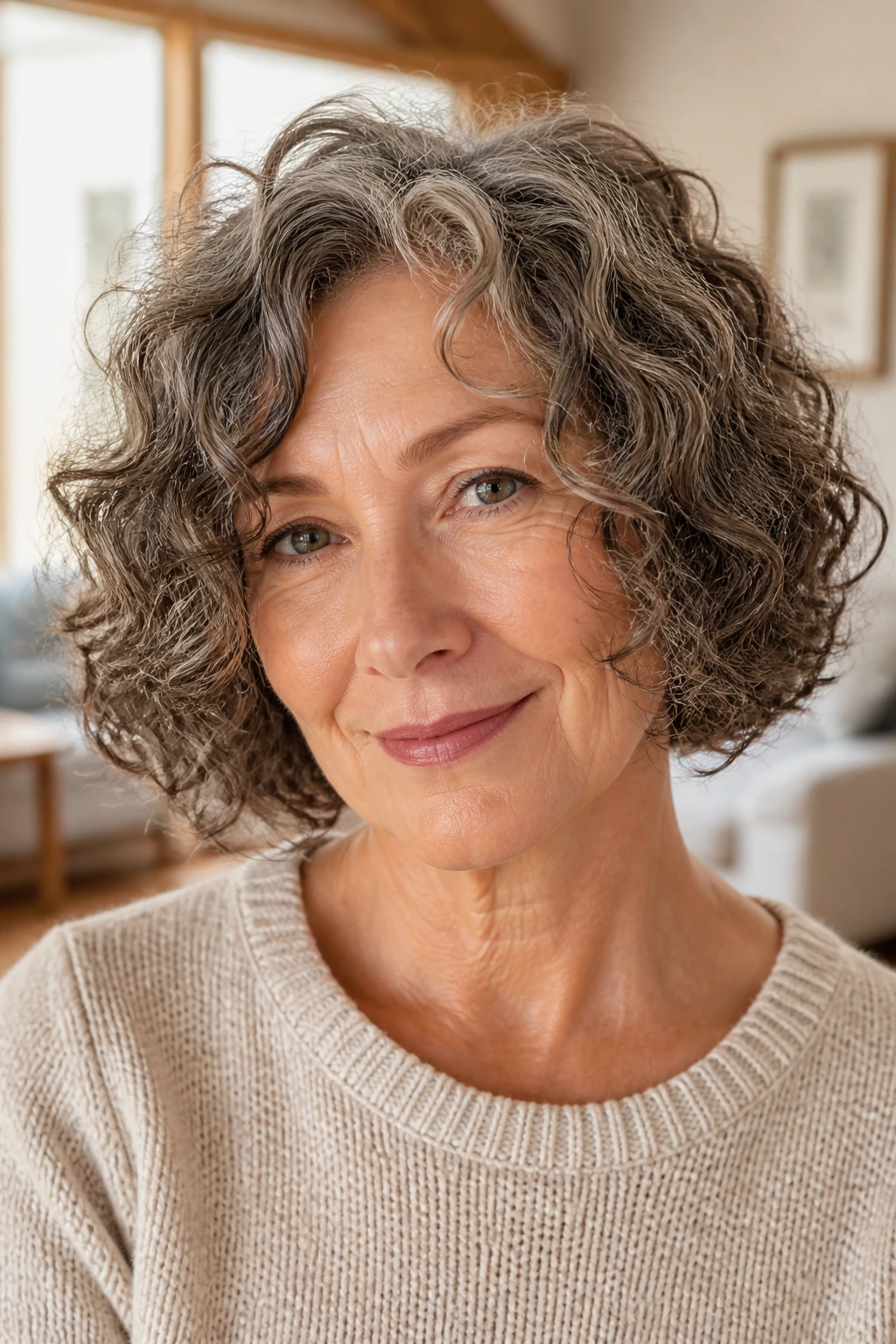
Curly hair and bob cuts have a reputation problem, mostly because people cut curls as if they were straight. That is how you end up with a triangle shape, or worse, a puff ball that looks wider at the bottom than at the top. A curly bob can be beautiful after 60, but it needs respect.
The best version is usually cut dry or nearly dry, because curls shrink in their own dramatic little way. The stylist should check how each curl falls rather than guessing. Length matters here, too. Many curly bobs sit around the chin or just below it so the curl has room to spring without stacking too high.
What I like about a curly bob is the fullness it gives back to the face. Curls bring softness, and softness can be kind. A little layering helps the curls move, but the layers should follow the curl pattern, not fight it. That distinction saves the shape.
Use a diffuser if you dry with heat. Stop touching the hair once the product is in. Curly bob hair often frizzes because it gets handled too much, not because it lacks the right cream.
9. Shaggy Bob with Choppy Layers
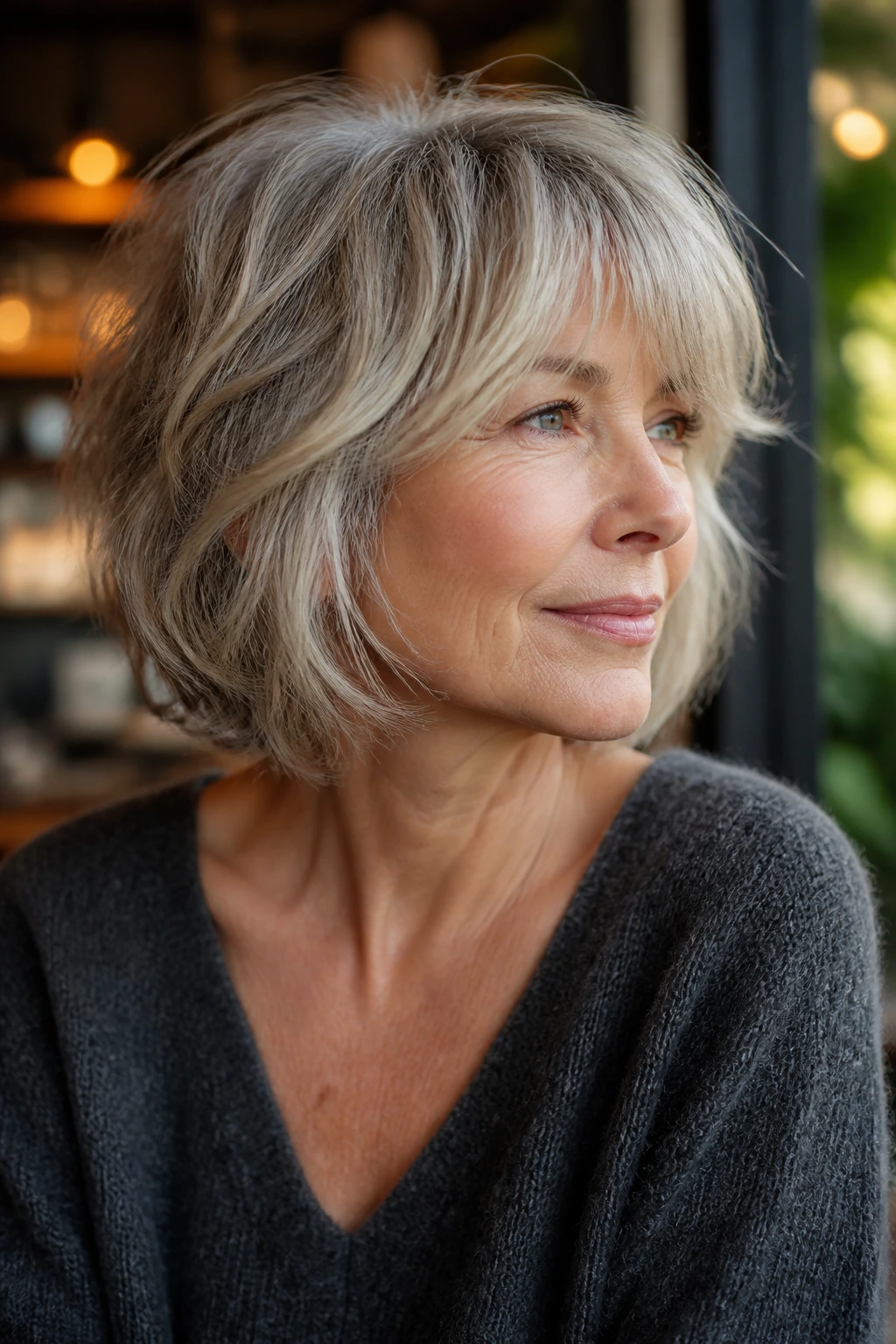
Can a bob be a little messy and still look polished? Yes, if the mess is planned. A shaggy bob uses choppy layers to create movement, which is useful when hair feels stiff, heavy, or too neatly behaved. It has more edge than a classic bob, but it does not need to look rebellious to work.
The cut usually lives somewhere between chin length and the top of the shoulders, with pieces that fall in uneven but controlled ways. That unevenness is what keeps it from looking too precious. It also helps if your hair has natural wave or if you hate spending ten minutes perfecting each side in front of the mirror.
How to Keep It From Looking Wild
Use a little texture spray at the mid-lengths. Not the roots. A rough spray of product at the top can make the cut look dusty and dry, which is not the same thing as texture. The layers should move when you turn your head, but they should not stick out in random directions.
This bob suits someone who wants a softer edge than a pixie and less polish than a sleek bob. It has personality. That matters.
10. French Bob with Short Fringe
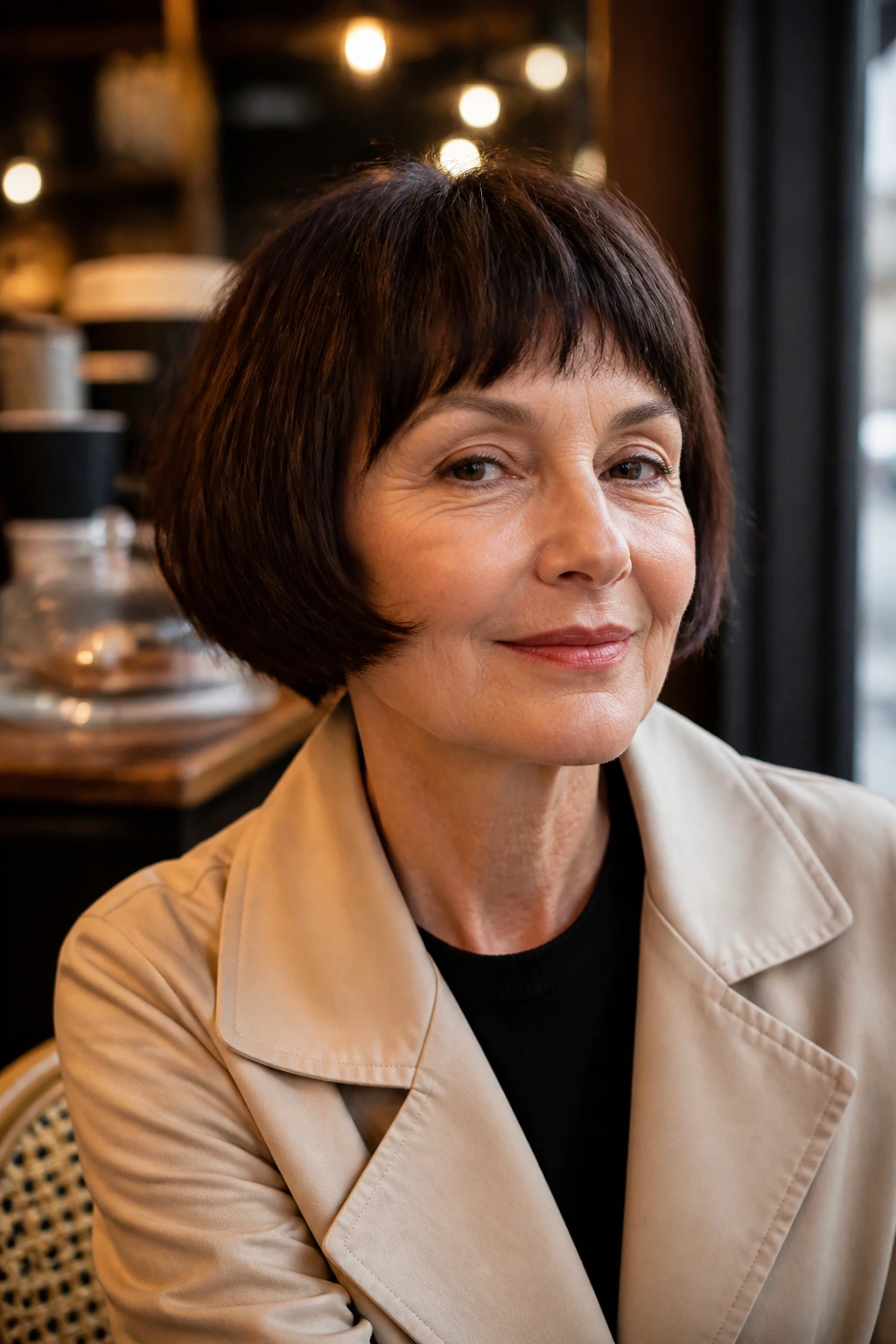
The French bob has a very specific attitude. It sits shorter, often around the cheekbone or jaw, and pairs with a fringe that looks deliberately cut, not blown out of shape by a round brush. The whole thing feels compact and chic in a way that can be flattering on smaller faces or anyone who wants their features to carry the look.
A short fringe changes the balance of the face. It draws attention upward and can make the eyes look sharper, especially if your brows are expressive. The cut works best when the fringe is soft enough to move a little. Stiff micro-bangs can feel fussy. A slightly broken line across the brow is easier to live with.
- Ask for fringe that sits just above or at the brows.
- Keep the sides a touch longer so the cut blends.
- Use a flat brush or fingers, not a big round brush.
- Trim the fringe before it starts poking into your eyes.
This is a bob with personality, so it helps if you like that compact, slightly artsy shape. It can be very flattering with red lipstick or a strong earring, but it also works with a plain sweater and almost no makeup. The haircut carries enough attitude on its own.
11. Long Bob That Skims the Shoulders
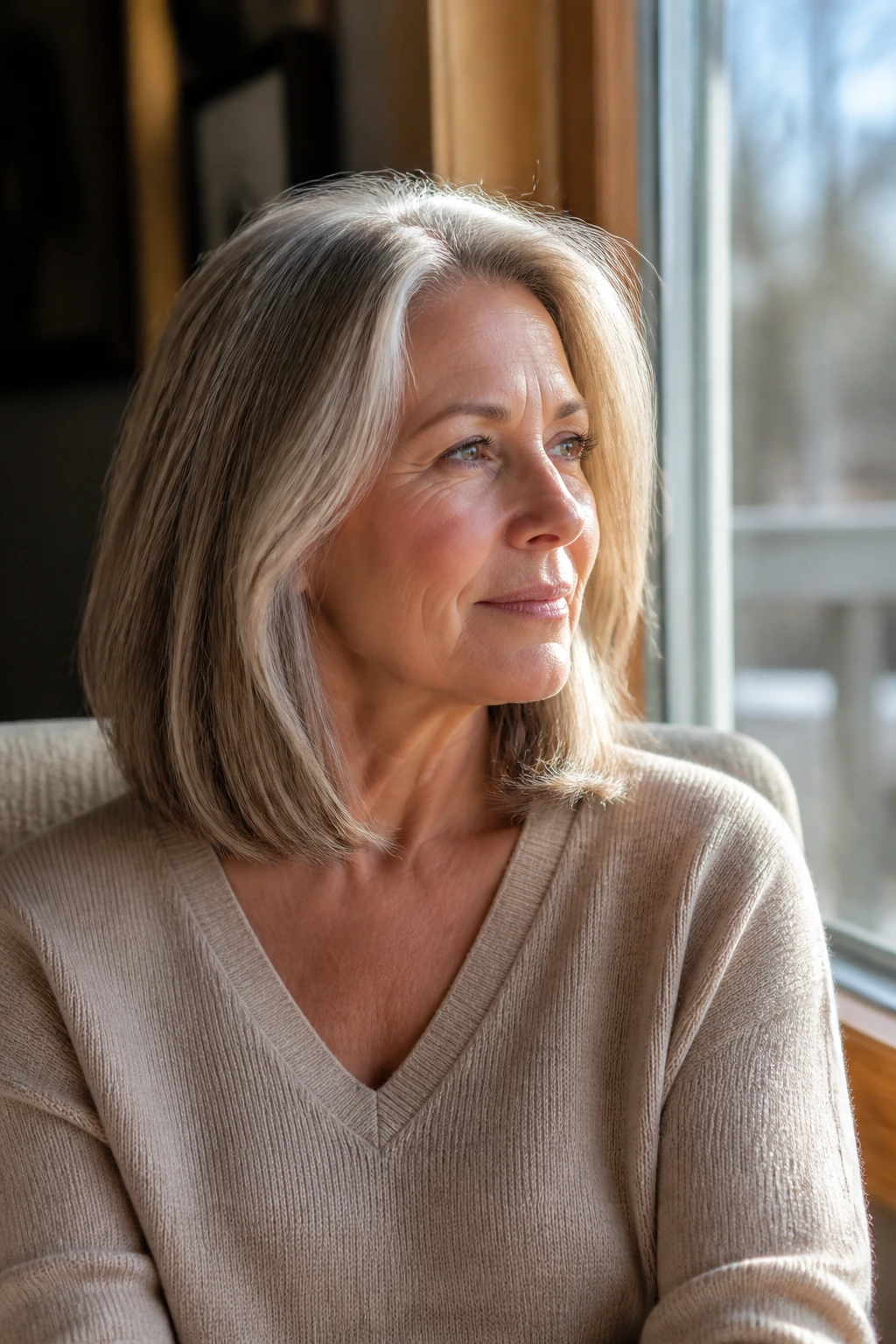
The long bob, or lob if you want the shorthand, is the safety net of bob cuts. That sounds less glamorous than it is, but I mean it as a compliment. It gives you the line of a bob without losing the option to tuck it behind the ears, clip it back, or pull part of it into a low tie on busy days.
Shoulder-skimming length is useful if you’re not ready to go shorter or if your hair needs a little more weight to lie flat. It can also be kinder to thick hair because the extra length helps control the shape. On the other hand, if your hair is very fine, a lob needs a clean edge or it can start to feel stringy.
The best lob has a clear perimeter. Too many layers and it becomes a shag that forgot its own identity. Too little shaping and it just hangs there. The sweet spot is a line that sits somewhere between the collarbone and the shoulders, with maybe a few internal pieces to keep it from looking blocky.
I like this cut for women who want options. It can be sleek, waved, tucked, or loosely curled. That flexibility is the whole point.
12. Silver Bob That Shows Off Gray Hair
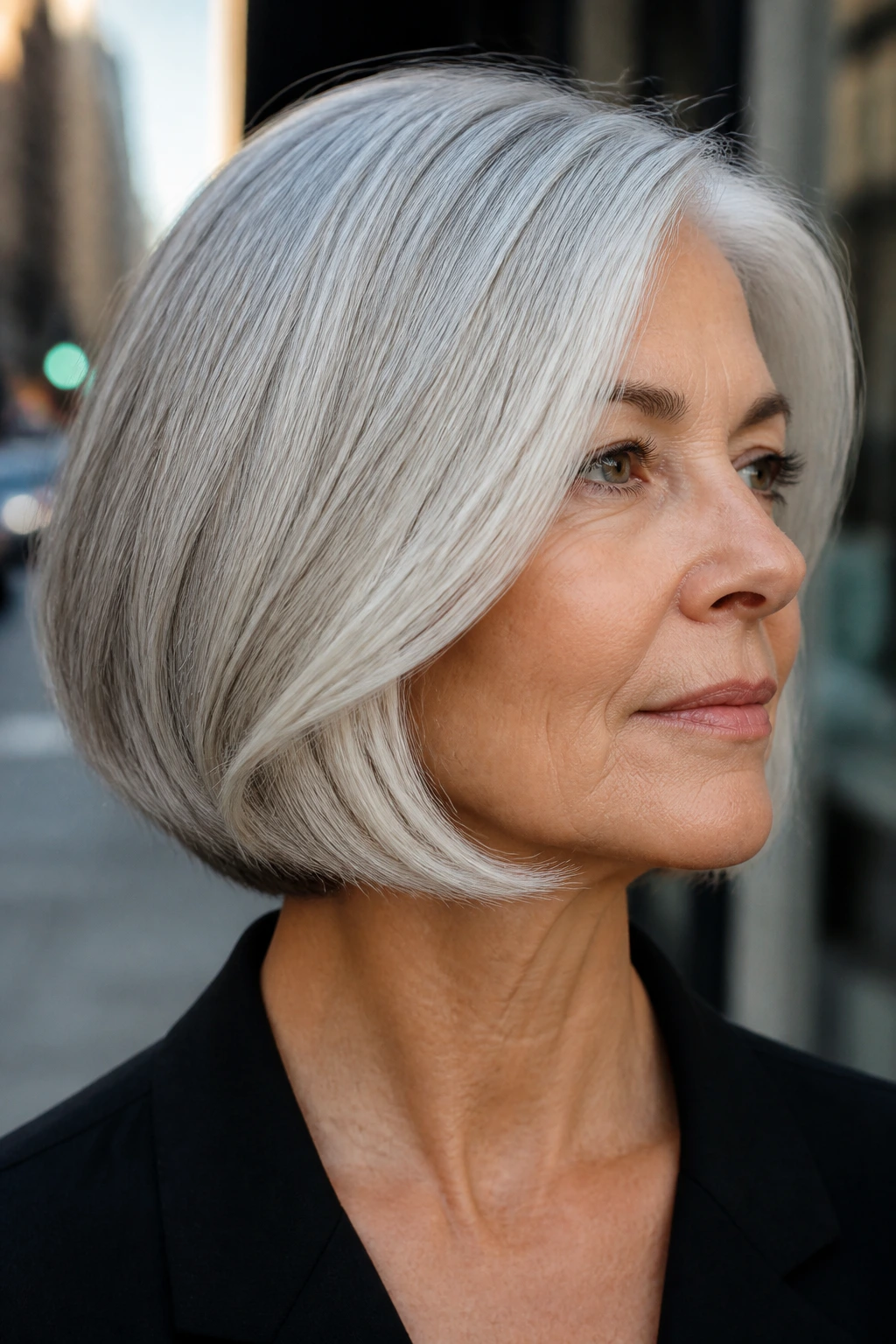
Gray hair deserves a cut with spine. When the shape is limp, silver can look accidental. When the shape is clean, it looks deliberate and bright. That’s why a silver bob is such a strong choice for women over 60: the haircut becomes part of the color story instead of hiding it.
A silver bob can be blunt, layered, chin-length, or softly rounded. What makes it work is contrast. The cut should be precise enough to show off the tone shifts in the hair, especially if the gray has streaks of white, pewter, or soft charcoal. Those variations can look rich when the line is clean.
This is also where finish matters. Gray hair can pick up yellowing or dullness if it’s overwashed with the wrong shampoo, but it can also look brittle if too much product sits on top of it. A light gloss cream or shine spray is usually enough. Heavy oils make silver hair look coated instead of luminous.
- Cool silver often looks sharp with a blunt or angled bob.
- Soft white or salt-and-pepper hair can handle a little feathering.
- Purple shampoo should be used sparingly, not every wash.
- A clean neckline keeps the look fresh.
There is nothing timid about letting gray hair be the main event. A good bob just gives it a better stage.
13. Undercut Bob for Thick Hair
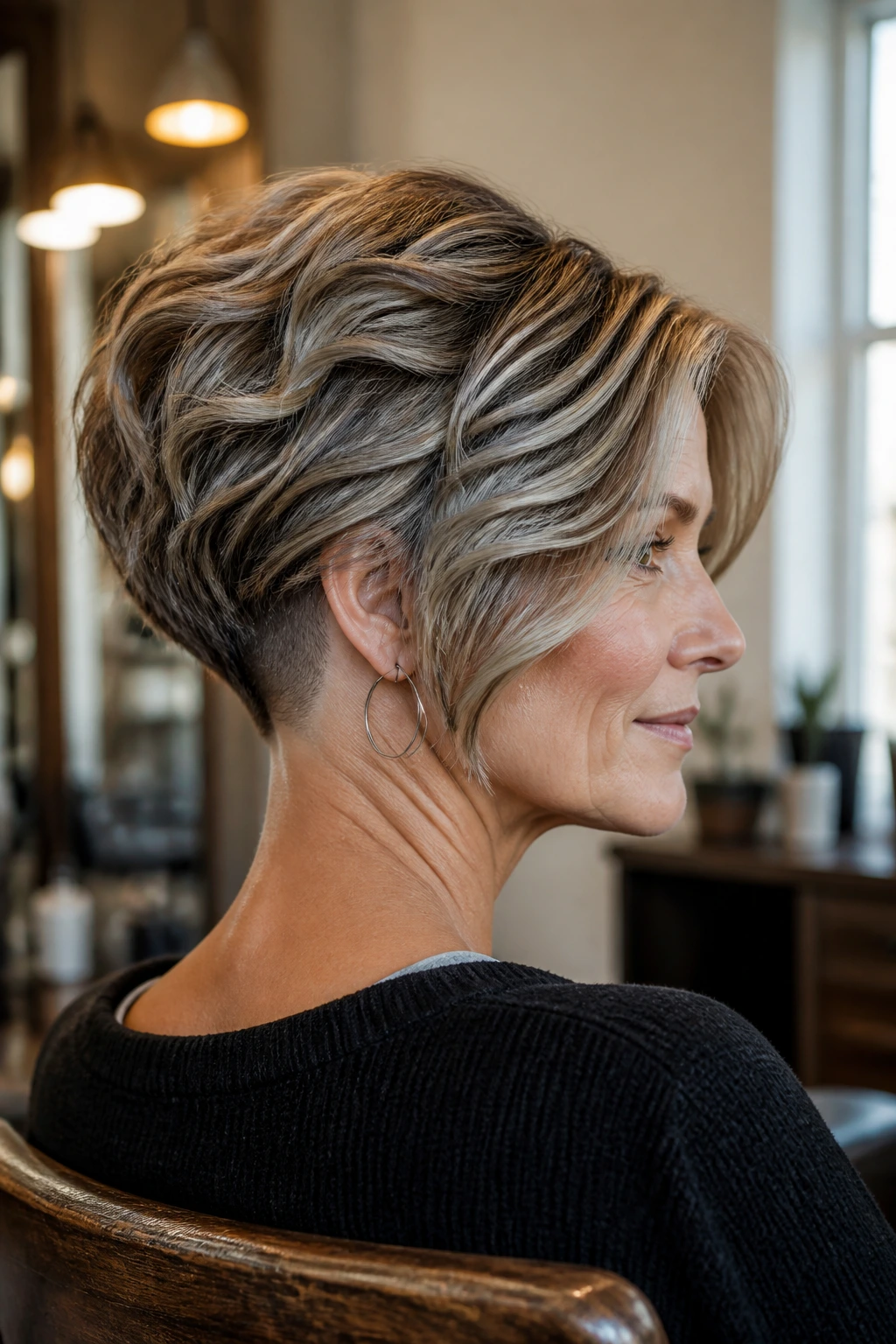
Thick hair can be glorious and exhausting at the same time. An undercut bob solves the part that gets exhausting. By removing weight underneath the top layers, the cut sits flatter at the nape and feels lighter on the head, which is a relief if your hair dries slowly or feels hot around the neck.
Why It Feels Lighter
The hidden undercut takes bulk away where nobody sees it. That lets the outer layer move more freely and keeps the silhouette from ballooning out. If you’ve ever had a bob that turned into a triangle by noon, this is the kind of fix that actually helps.
Best Ways to Wear It
- Keep the top layer long enough to cover the undercut.
- Ask for the weight removal to stay underneath, not through the visible shape.
- Pair it with a side part if you want extra softness around the face.
- Skip heavy waxes; they make thick hair feel stiff.
This cut is practical, but it doesn’t have to look practical. You can still wear it smooth, waved, or tucked behind one ear. It just won’t fight you quite as hard.
14. Asymmetrical Bob with One Longer Side
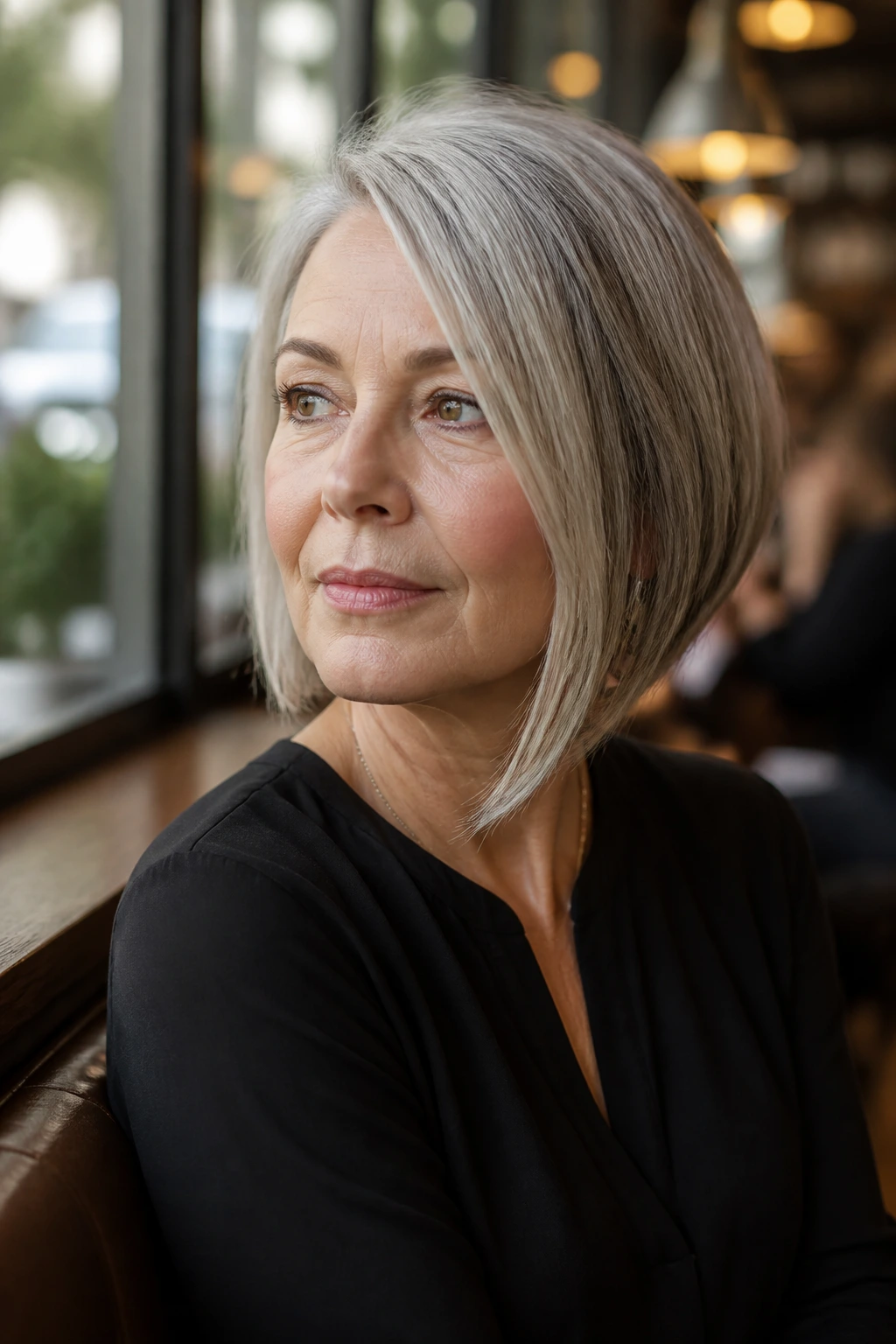
A small asymmetry can do more than people expect. One side a little longer than the other adds movement and interest without drifting into costume territory. I like the subtle version best. The one that makes people look twice, not the one that shouts for attention from across the room.
This cut is especially useful if one side of your face feels stronger than the other, or if you like side parts but want the cut itself to carry some of that diagonal energy. The longer side can skim the jaw or graze the collarbone, while the shorter side stays a touch more compact. That difference gives the bob shape even when the hair is tucked away.
The danger is going too extreme. A dramatic angle can be fun, but it can also make the haircut feel dated fast if the rest of the styling is too polished. The better approach is a whisper of asymmetry. Enough to notice. Not enough to explain.
It pairs well with straight or softly waved hair and looks especially good when the finish is smooth but not flat. If you want a bob that feels modern without looking trendy, this is a good place to land.
15. Rounded Bob for Women Over 60

Why do rounded bobs keep showing up on flattering haircut lists? Because the shape is kind to the face. It curves gently around the cheek and jaw, which can soften sharper features and make thinner hair feel fuller at the sides. The outline is a little softer than a blunt bob, but it still looks intentional.
How to Keep the Shape Soft
A rounded bob needs control at the crown and a little bend through the ends. That does not mean old-fashioned helmet hair. It means the silhouette should follow the head shape without puffing out in odd spots. A medium round brush, used mostly at the roots and ends, usually does the job.
- Keep the back neat and close to the neck.
- Let the sides curve in, not flare out.
- Use a light blow-dry cream for slip.
- Trim every 6 to 7 weeks so the curve stays clean.
This cut is a quiet one, and I mean that in the best way. It does not try to impress with tricks. It just makes the hair look settled, healthy, and shaped. For women who want a bob that feels polished on ordinary days and a little dressier on better ones, it’s a strong finish.
And that may be the nicest thing a haircut can do.
