



Orange bob cuts are not shy haircuts. They bring warmth straight to the face, and the right shade can make even a simple jaw-length bob look polished instead of plain.
The catch is that orange is not one color. Copper, tangerine, apricot, rust, coral, and burnt orange all behave differently on a bob, especially when the cut is blunt, layered, or tucked just below the chin.
I like orange hair when it has shape. A clean edge, a little shine, and a tone that plays well with the skin will always look smarter than a flat, overprocessed orange that fades to dull peach after a few washes.
These ten orange bob cuts cover the range from glossy and sharp to airy and lived-in. Some need regular glossing. Some forgive a messy blow-dry. All of them bring the kind of warmth that makes black clothes, gold earrings, and bare skin look more alive.
1. Copper Blunt Orange Bob Cut With a Mirror-Shine Finish
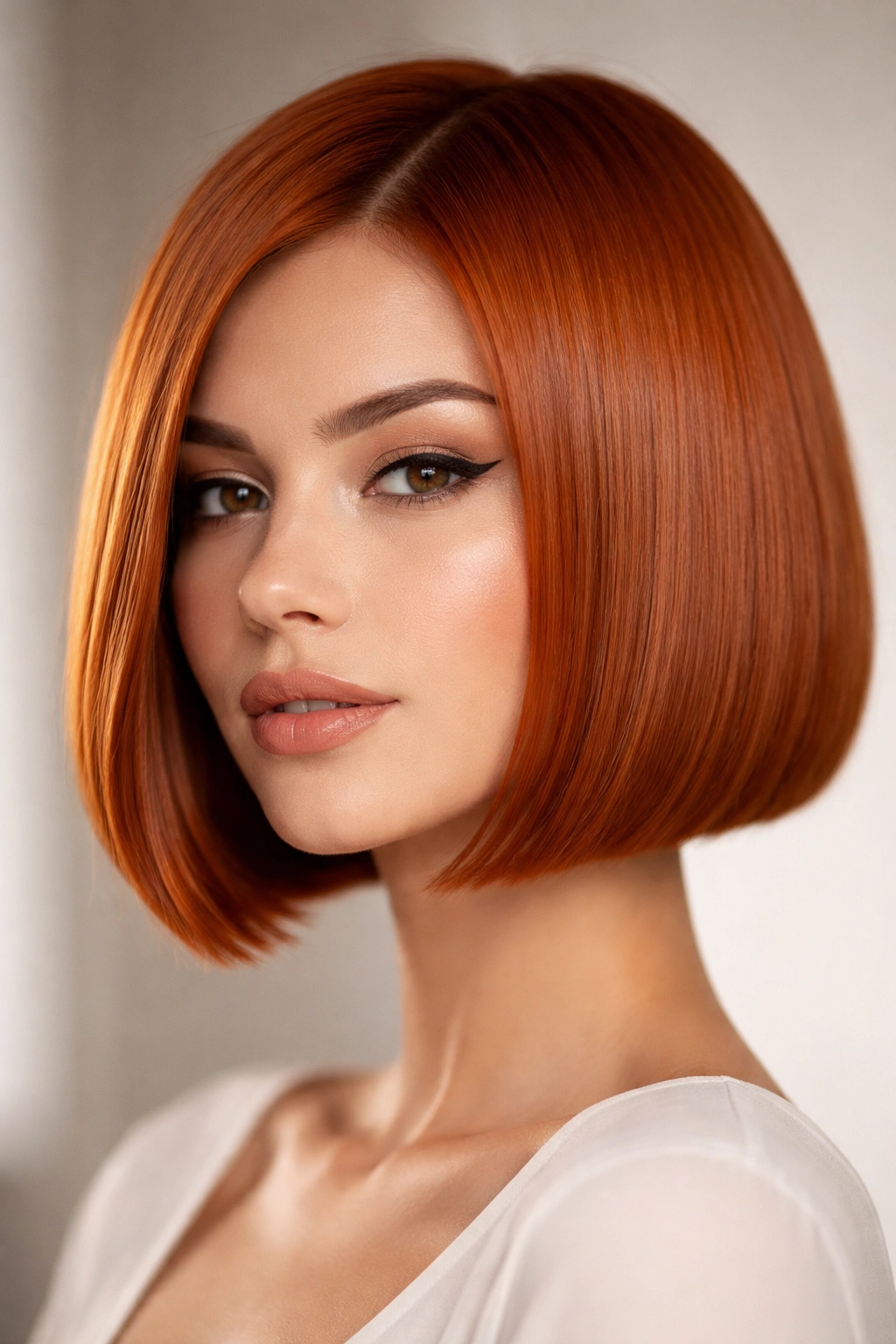
A blunt copper bob is the cleanest way to wear orange hair. The straight edge gives the color a place to sit, so the shade looks deliberate instead of accidental.
Copper works best when the cut stops right at the jaw or a touch below it. That length catches light along the cheeks and keeps the face from disappearing under too much hair. If the bob sits longer than that, the color can start to feel heavier than you want.
Why the blunt line matters
A blunt perimeter keeps the ends dense, and dense ends make orange look richer. Thin, wispy ends tend to make copper look washed out, especially if the hair has been lightened first. You can see the difference right away: one looks like a polished block of color, the other looks like it’s trying to recover from a rough bleach job.
If your hair is naturally straight, this cut is easy to live with. Blow it smooth with a paddle brush, then hit the last inch with a flat iron so the line looks crisp. If your hair bends or flips, ask for a tiny bit of internal debulking, not a pile of layers that steal the shape.
- Best on straight to slightly wavy hair
- Looks sharp at jaw length or just below
- Flatters oval, square, and heart-shaped faces
- Works with a side part or a center part
- Pair with a copper gloss every 4 to 6 weeks
My favorite detail: leave the root half a shade deeper than the mids. That tiny shadow keeps the orange from looking chalky and gives the cut more depth.
2. Tangerine French Orange Bob Cut With a Soft Fringe
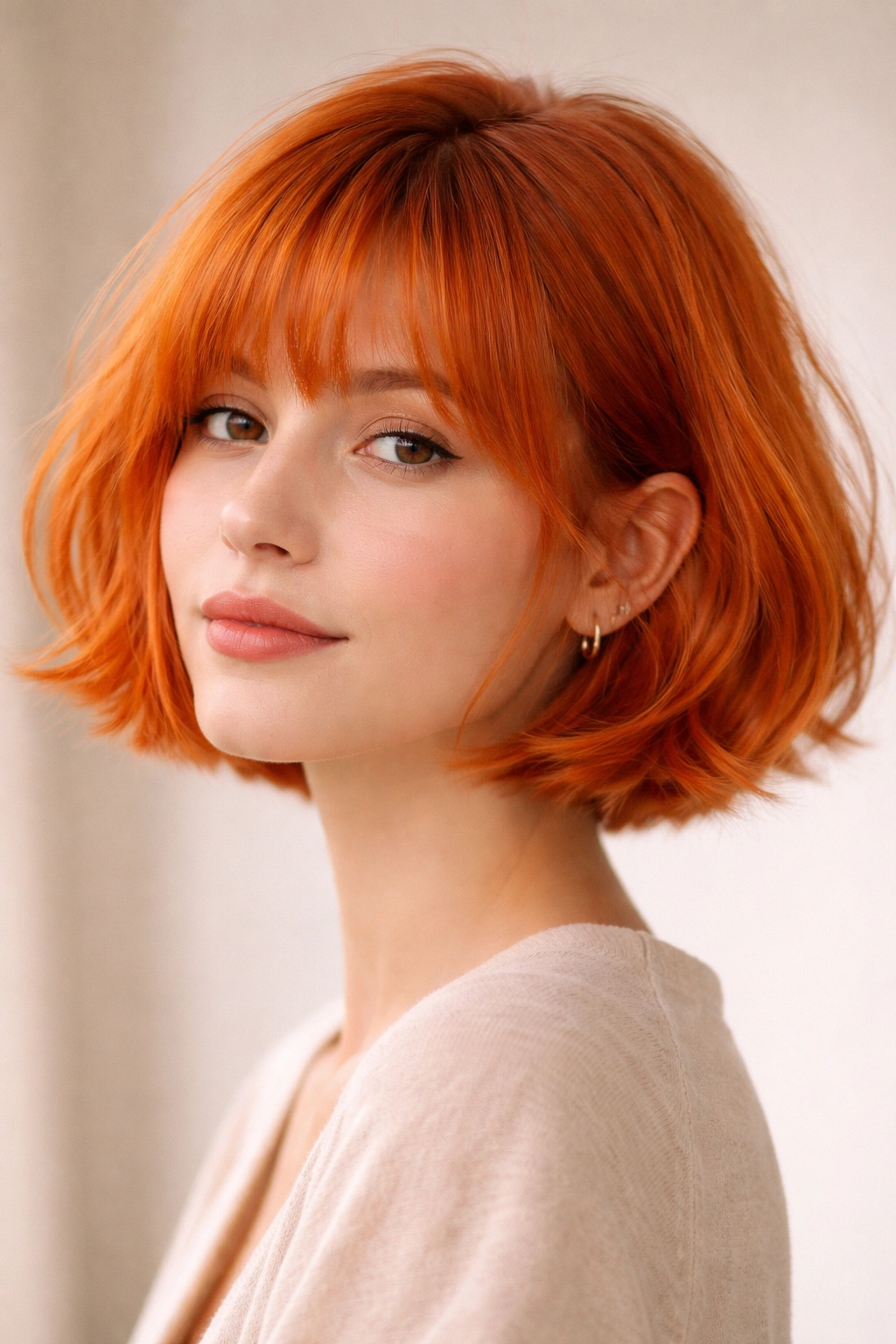
Want orange hair that feels playful instead of loud? A tangerine French bob does that better than a hard-edged cut.
The French bob sits around the cheekbone or just under it, and the short fringe breaks up the brightness right where the eye lands. That matters. Without the fringe, tangerine can feel too open and flat; with it, the color looks lively and a little artsy.
The shape is especially good if you like hair that has movement without looking messy. A soft bend through the ends and a fringe that grazes the brow make the whole cut feel easy. It is one of those styles that looks finished even when you have not spent forever on it.
A tangerine bob also works well on hair that has a natural wave. You can rough-dry it, twist a few pieces while it is still damp, and let the front fall where it wants. The fringe should feel light, not helmet-like. That is the whole point.
If you want the orange to stay bright, keep the shampoo gentle and avoid washing every day. Tangerine fades fast when the hair gets stripped, and then you are left with a soft peach that can lose the punch that made the cut exciting in the first place.
3. Burnt Orange Asymmetrical Bob for Sharp Angles
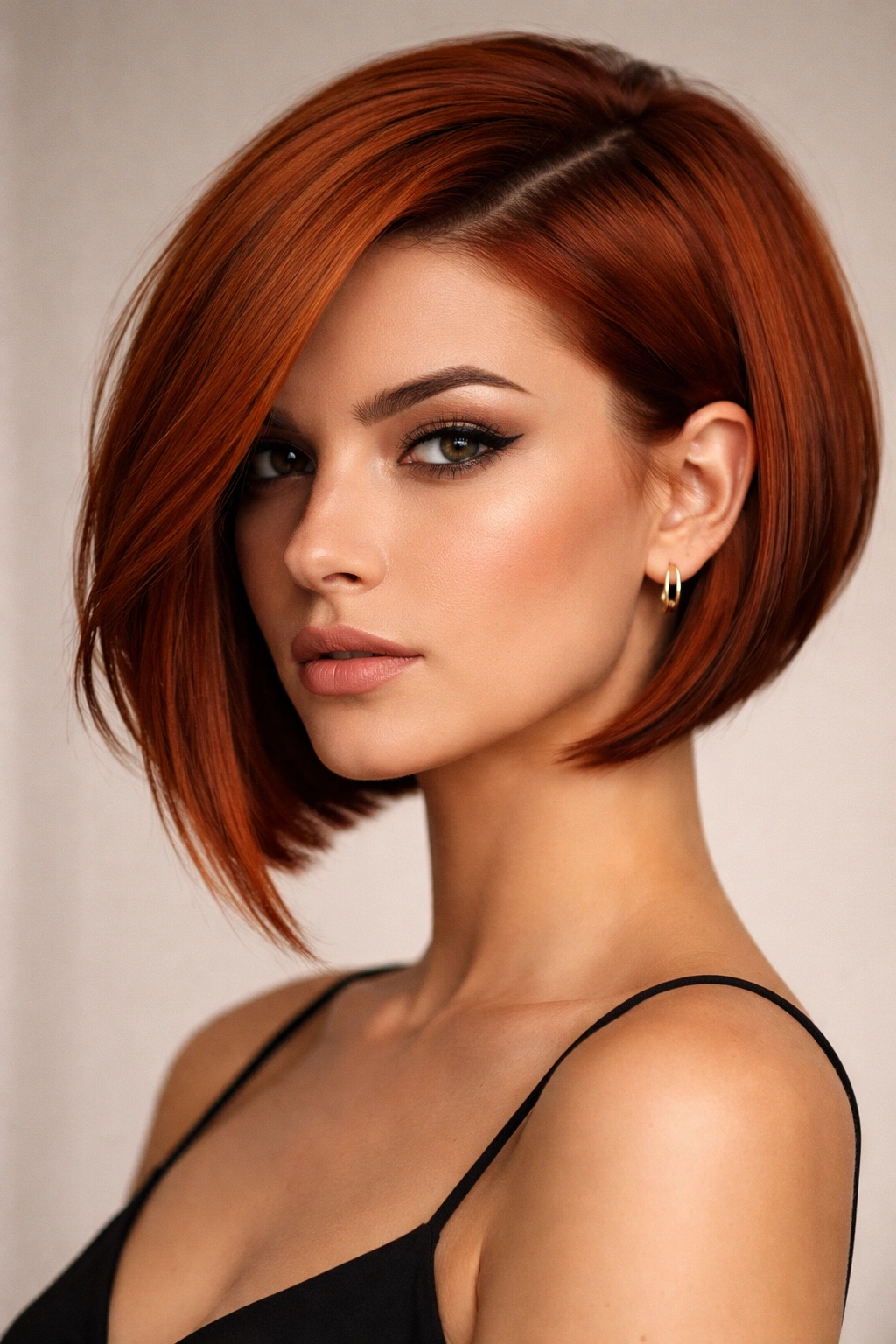
A bob does not have to be perfectly even to look polished. A slight asymmetry can make burnt orange look sharper, richer, and a lot less expected.
One side usually sits about half an inch to one inch longer. That small shift changes how the cut frames the face, especially if the longer side drops toward the jaw while the shorter side opens up the cheekbone. The shape has a little tension in it, which is exactly why it works.
What makes the angle work
The color should stay deeper and smokier here — burnt orange, auburn-orange, or rust with a brown base. Bright orange on an angled bob can look harsh if the cut is already dramatic. Deeper tones calm it down and make the shape feel expensive without turning it dull.
A side part helps the style move. Tuck the shorter side behind the ear, leave the longer side sleek, and the whole thing looks deliberate instead of fussy. If the hair has any wave, a smoothing cream and a round brush are enough; you do not need a stiff helmet blowout.
- Best for round or fuller faces
- Ask for a difference of 0.5 to 1 inch between sides
- Keep the nape neat so the shape stays modern
- Works with straight, fine, or medium hair
- Refresh the color with a gloss rather than a full recolor when you can
Small warning: too much asymmetry starts to feel try-hard fast. Keep it subtle and the cut will age better.
4. Peachy Textured Bob Cut With Choppy Ends
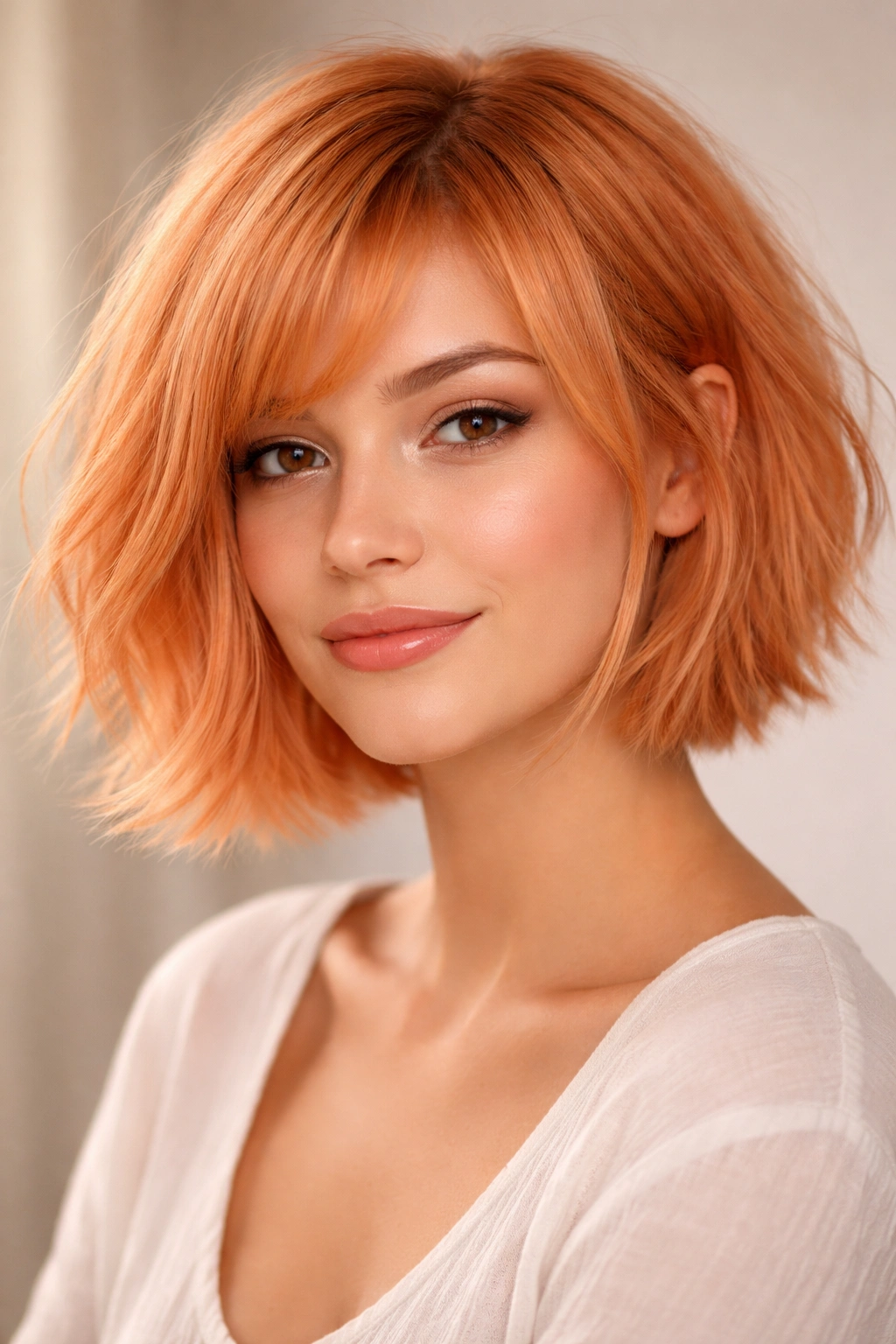
Not every orange bob needs to shout. A peachy, textured bob looks softer, lighter, and more wearable if you want warmth without the full copper punch.
The color sits in that apricot-peach zone where orange meets blush. On a bob with choppy ends, it reads airy, especially when the hair is cut to just skim the lips or sit at the chin. The broken edges stop the color from looking blocky, which is a common problem with lighter orange shades.
This version is one of my favorites for finer hair because the texture creates lift without making the bottom look thin. A salt spray or light texture mist gives the ends a little grip, and a quick bend with a flat iron at the mid-lengths keeps the shape from collapsing. It does not need perfect curls. That would defeat the point.
Peachy orange also plays nicely with softer makeup and simpler clothes. Cream knits, denim, olive, soft gray — the cut settles in fast and never feels harsh. If you like a bob that can look a little artsy, a little sweet, and still grown-up, this is a strong lane.
The best part is how forgiving the grow-out is. When peach softens, it still looks intentional, which is more than most vivid shades can say.
5. Neon Orange Micro Bob for a Graphic Finish
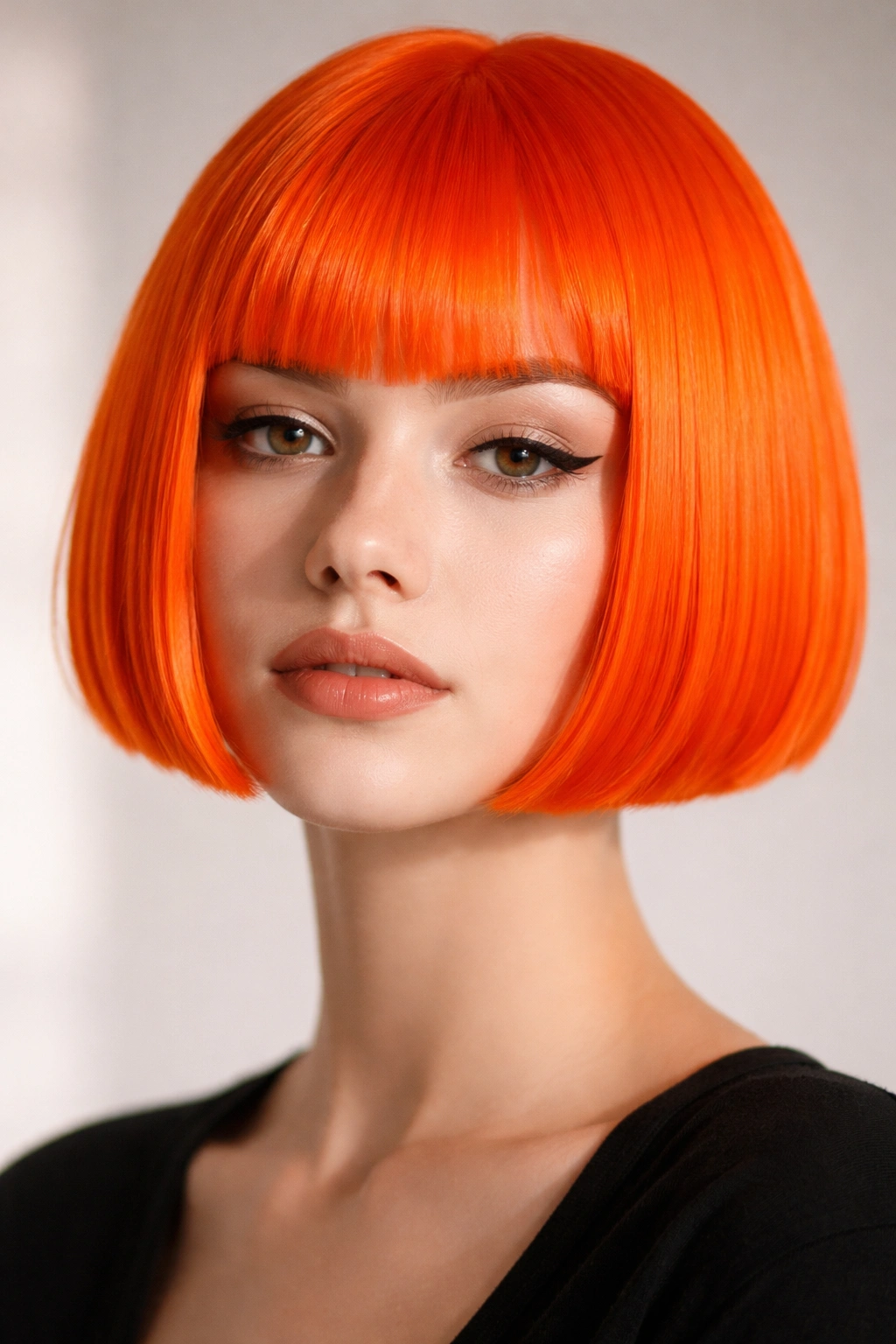
If you want the haircut to do the talking before you even style it, a neon orange micro bob does exactly that. The line is short, the color is loud, and there is no hiding behind hair that drapes past the jaw.
The cut usually sits above the chin, often with the front edge nudging the cheekbones. That short length makes the color feel intentional, not accidental, and it keeps neon orange from dragging the face down. It also works well with strong brows, sharp eyeliner, or a very simple wardrobe — the haircut becomes the focal point.
What to watch for
Micro lengths show every mistake. Uneven bleaching, dry ends, or a crooked neckline are obvious here, so the trim has to be clean. I prefer a glossy finish rather than a dry matte texture because shiny orange looks richer and less costume-like.
The color itself needs commitment. Neon orange fades fast if the hair is porous, so a root shadow and a deposit-only gloss can help stretch the life of the shade without flattening it. A heat protectant matters here too, because bright color on fried ends loses its punch in a hurry.
- Needs frequent color refreshes
- Best on hair that can be smoothed flat or cut with a subtle bend
- A root shadow softens the grow-out
- Not ideal if you dislike regular trims
My honest take: this one is for people who enjoy being noticed. If that sounds exhausting, skip it and choose a deeper copper instead.
6. Pumpkin Spice Layered Bob With Movement
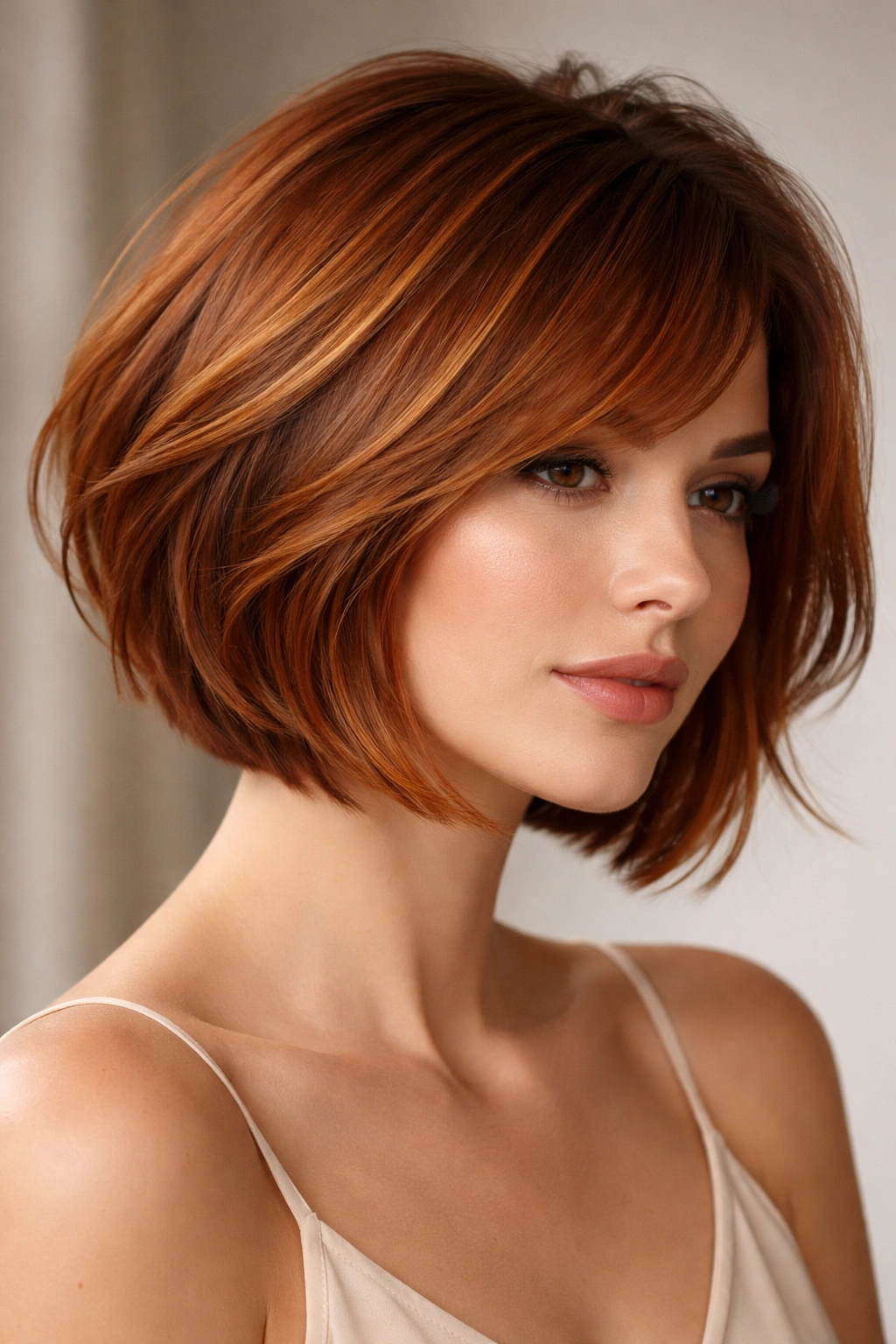
Layers are the easiest way to keep orange from sitting flat. On a pumpkin spice bob, they add lift through the crown and stop the color from looking like one heavy sheet.
This shade leans toward burnt orange with a little cinnamon and gold in it. It suits medium-density hair especially well, because the layers create movement without stripping away too much bulk. On thick hair, the shape can be thinned through the interior so the ends still fall clean.
How the layers should sit
The shortest pieces should live around the crown and cheekbones, not chopped randomly through the bottom. That keeps the silhouette soft. A round brush at the roots, then a bend through the mid-lengths, gives the cut a relaxed swing that looks better than overdone curls.
A pumpkin spice bob is also friendly to side parts and curtain bangs. The color catches on the lifted pieces, so you get depth without needing a complicated dye pattern. I like this one because it survives a little roughness — a day of air-drying does not ruin it.
Ask for movement, not volume for its own sake. Too much stacking in the back turns the bob into a triangle, and nobody wants that shape unless they are going for a very specific retro look. Keep the top soft, keep the bottom touchable, and the whole cut feels easier.
7. Coral Curly Bob With a Rounded Shape
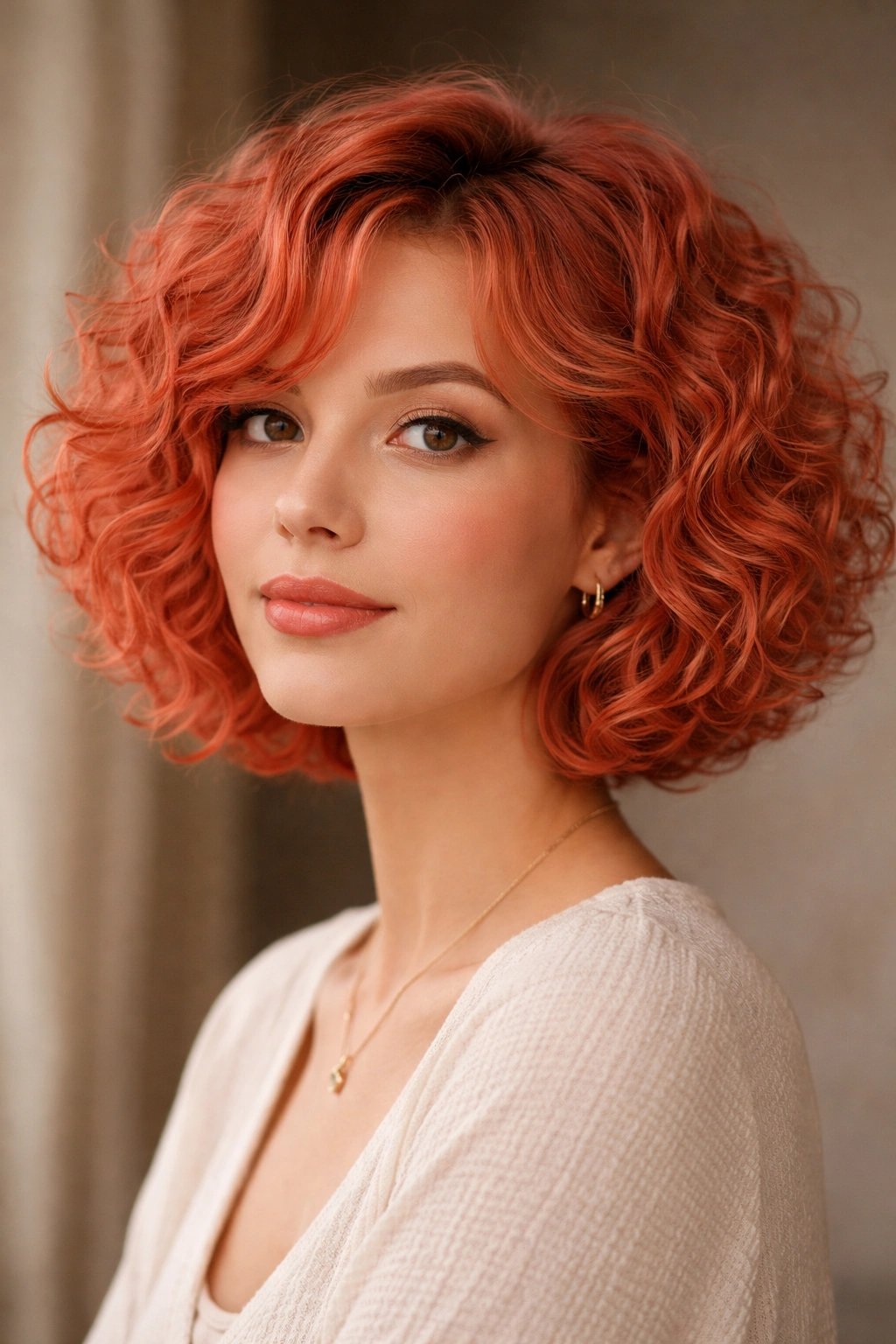
Curly orange hair should look juicy, not stiff. A coral bob with a rounded outline gives curls room to spring without turning the whole head into a pyramid.
This shape works when the cut follows the curl pattern instead of fighting it. Usually that means leaving the perimeter a little longer at the sides and keeping the top layers soft. Coral is a smart shade here because it has enough warmth to glow, but not so much depth that the curl pattern disappears.
Best curl patterns for it
Loose curls, springy ringlets, and strong waves all handle this cut well. Tight curls can wear it too, but the outline needs more layering so the bottom does not feel heavy. A diffuser on low heat, plus a curl cream and a small amount of gel, keeps the surface smooth without making it crunchy.
A curly orange bob benefits from being handled less, not more. Too much brushing breaks up the shape and makes the color look frizzy instead of vivid. Wet detangling with a wide-tooth comb is safer, and a satin pillowcase helps the curls keep their shape overnight.
One detail people miss: coral reads brighter when the curls are clumped into defined sections. If every strand is separate, the color looks flatter. If the curls sit together, the orange looks fuller and more expensive.
8. Orange Balayage Bob Cut With Root Depth
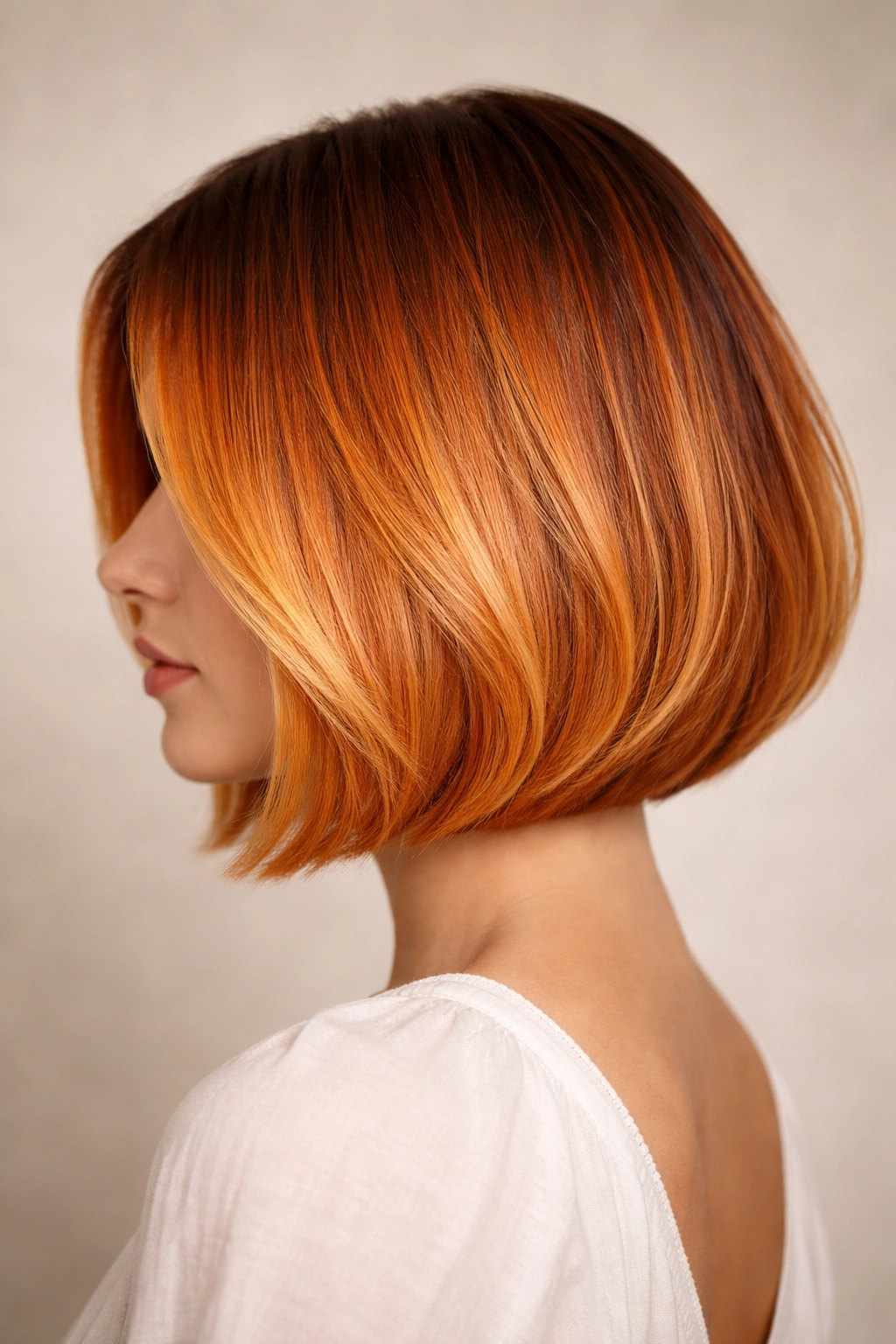
Three tones can do more than one flat shade ever will. On an orange balayage bob, the root stays deeper, the mids carry the color, and the ends brighten just enough to keep the cut from feeling heavy.
This is the version I reach for when someone wants orange but does not want to visit the salon every few weeks. A soft shadow at the root makes the grow-out look planned, and the lighter face-framing pieces keep the style from looking muddy. The best balayage on a bob never looks striped; it looks brushed through the hair.
Where the color should sit
- Keep the root one to two levels deeper than the mids
- Place the brightest orange around the front pieces and upper surface
- Let the ends stay slightly lighter for lift
- Avoid pushing too much lightness through the underlayer, or the bob can look thin
On straight hair, the contrast reads sleek. On waves, it looks sunlit without relying on blonde streaks, which is where a lot of orange color jobs go wrong. I also like that this shape gives you room to play with a middle or side part without wrecking the placement.
A gloss every few weeks keeps the orange from turning flat, and that matters more here than on a solid color. Once the root depth is gone, the whole look loses its structure fast. Keep that shadow soft, not obvious, and the bob keeps its shape as it grows.
9. Sienna Side-Part Bob for a Softer Edge
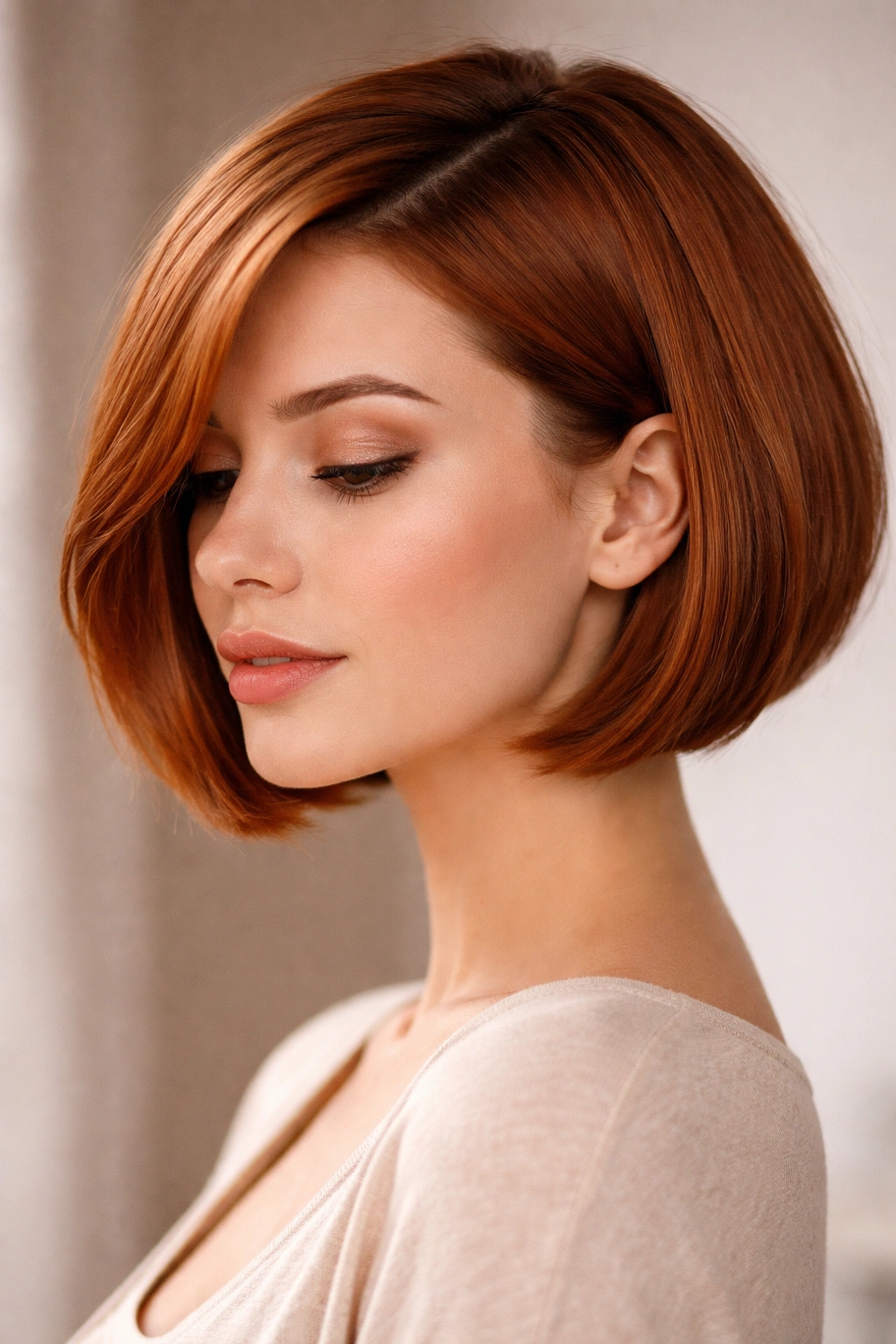
I keep coming back to this one when someone wants orange but does not want the room to stop. A sienna side-part bob feels grown-up, warm, and a little mysterious in a way that a bright tangerine cut never will.
The side part matters more than people think. It pushes one side across the forehead, softens the face, and lets the orange sit in ribbons instead of a solid wall. Sienna sits in that brown-orange lane, so it holds up nicely on hair that is already dark blond, light brown, or auburn.
The cut itself can stay simple. A chin-length bob with slightly beveled ends is enough. No heavy layers. No fussy shaping. A smoothing cream and a boar-bristle brush keep the surface polished, and a touch of shine spray at the ends makes the color look deeper.
Why the side part changes the mood
A center part makes orange hair feel symmetrical and bright. A side part breaks that symmetry and gives the hair a softer fall across the face. That shift is small, but on a bob it changes everything. The shape looks less like a salon diagram and more like a real haircut someone can wear to dinner, to work, or to a casual weekend event.
Warm makeup tones match this one well: bronze shadow, peach blush, terracotta lipstick. Gold jewelry also sits naturally against sienna, which is part of why the cut feels so easy. It does not need drama from the outfit because the color already carries enough mood.
10. Rusty Shag Bob With Airy Volume
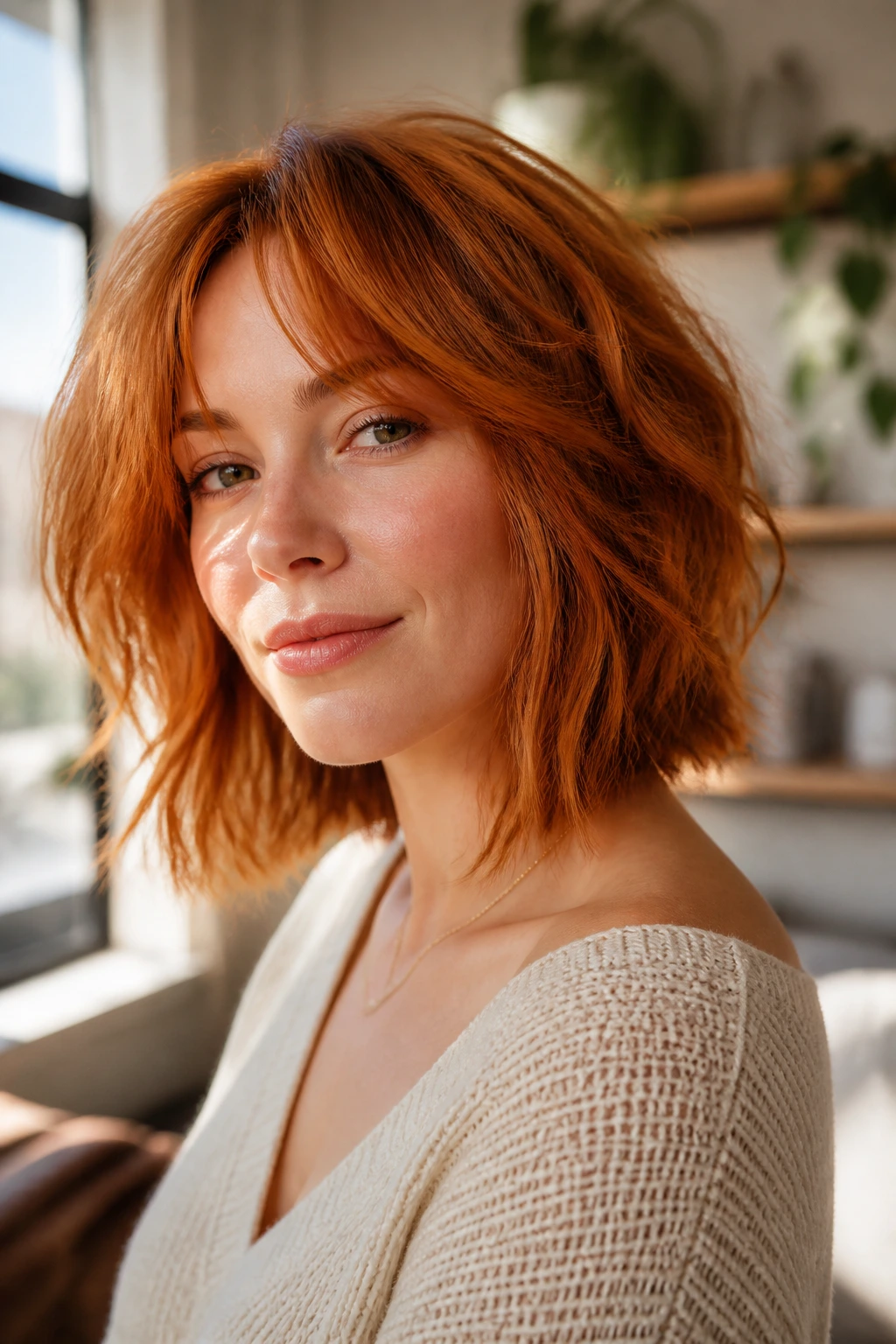
Do you want the bob to look styled even when you barely touch it? A rusty shag bob is the easiest orange cut to live with if you like movement more than precision.
This version uses soft, uneven layers and a little extra length through the front, so the orange shade breaks across the hair instead of sitting in one block. Rust gives it warmth; the shag keeps it from feeling heavy. The result is casual, but not sloppy. That is a harder line to walk than people think.
How to wear it without overdoing it
A light mousse on damp hair, a quick scrunch, and either air-drying or a diffuser on low heat are enough for most hair types. If the ends need shape, bend a few pieces with a flat iron rather than curling the whole head. You want uneven movement, not polished ringlets.
- Best for wavy hair and medium density
- Great if you hate perfect styling
- Works with curtain bangs or a long fringe
- Easy to push behind the ear or flip to one side
Rusty orange gives the shag a little more weight than bright orange would. That matters, because the layered shape can get flimsy fast if the shade is too pale. A deeper rust tone keeps the cut grounded and makes the texture look intentional even when it is a little rough.
A rusty shag bob is also one of the easiest orange cuts to grow out because the shape already accepts a little mess. If I had to choose one version for someone who wants warmth, edge, and a low-drama morning routine, this would be near the top of the list. It looks good when you care, and it still looks fine when you do not fuss with it. That earns my vote every time.
