



The best textured straight bob cuts do something a blunt one often can’t: they keep the line crisp while giving the ends enough movement to avoid that helmet-like shelf. On straight hair, that balance matters a lot. Every snip shows. Every angle shows. If the cut is off by even a little, you see it in the mirror before you’ve finished brushing.
That’s why texture in a straight bob has to be controlled, not random. Too much thinning and the shape gets wispy. Too little and the bob sits there like a block. The sweet spot is usually a clean perimeter with just enough internal softening to let the hair bend, tuck, and swing without losing its shape.
I’ve always liked bob cuts that look tidy from five feet away and a little more interesting when you move closer. A good textured bob has that effect. It feels polished, but not stiff. Sharp, but not severe. And on straight hair, the right texture can make a cut look more expensive than it really was, which is a nice bonus.
1. Soft Blunt Bob With Invisible Layers
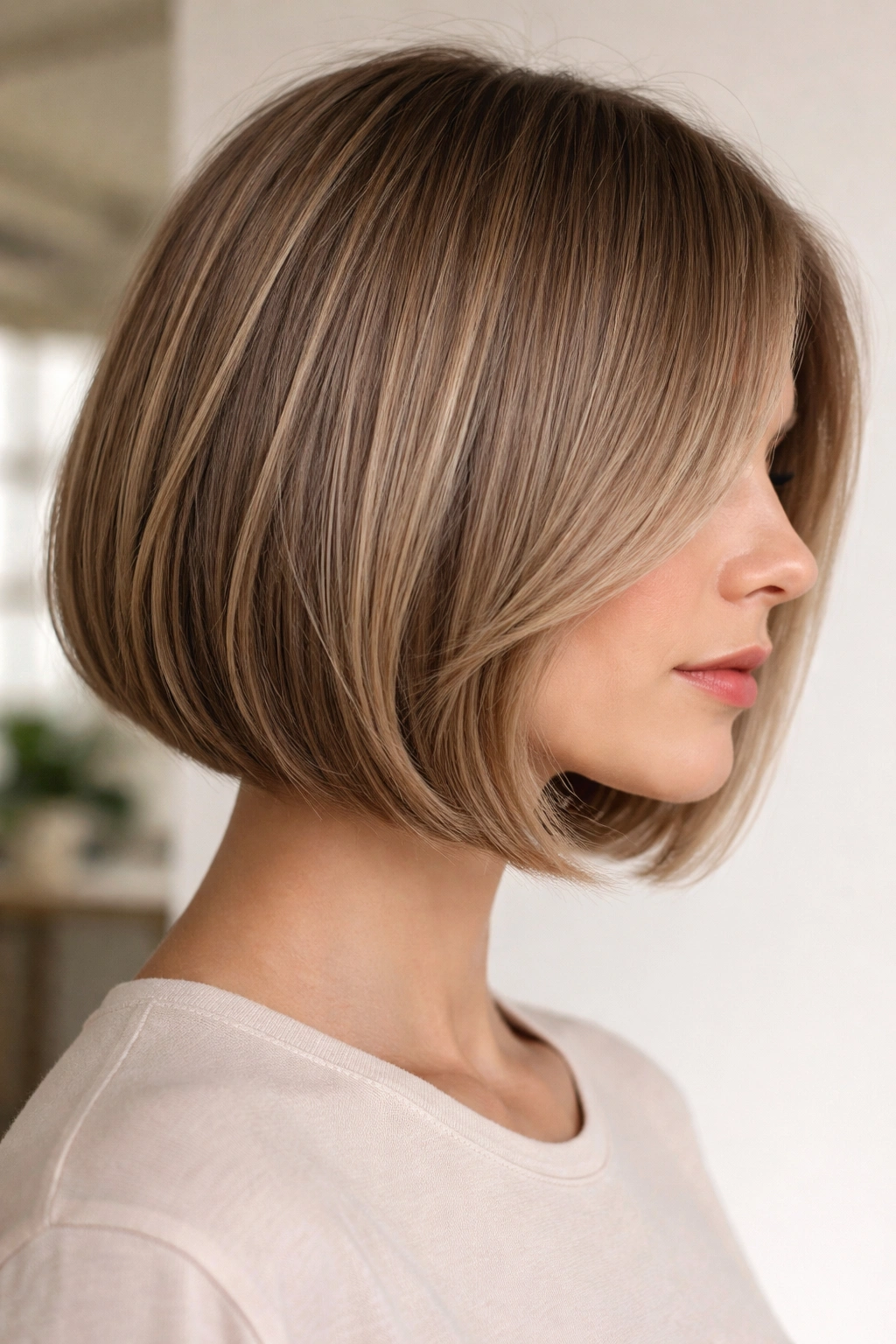
This is the bob I’d hand to someone who wants a clean line but hates the flat, cardboard look that straight hair can get when it’s cut too bluntly. The outline stays solid. The trick is inside the haircut, where the layers are so light you barely notice them until the hair moves. That tiny bit of internal removal keeps the ends from stacking on top of each other like a shelf.
Why It Feels So Clean
The shape works because the perimeter still does the visual heavy lifting. You get the sharpness of a blunt bob, but the inside has room to breathe. That means less puff at the bottom and less chance of the bob kicking out at the corners.
It’s a smart pick for fine to medium hair, especially if the hair tends to swing forward around the face. Ask for invisible layers placed below the top section and kept away from the outer edge. If the stylist starts carving into the surface, you’ll lose the clean look fast.
- Length usually sits between the chin and just under the jaw
- Internal layers are kept soft and hidden
- Ends are finished with point cutting, not heavy razor work
- Looks best with a tuck-behind-the-ear shape or a simple center part
Ask for a blunt outline first, then only the lightest internal texture. That one sentence can save you from a bob that’s been thinned to pieces.
2. Jaw-Length Bob With Tapered Ends
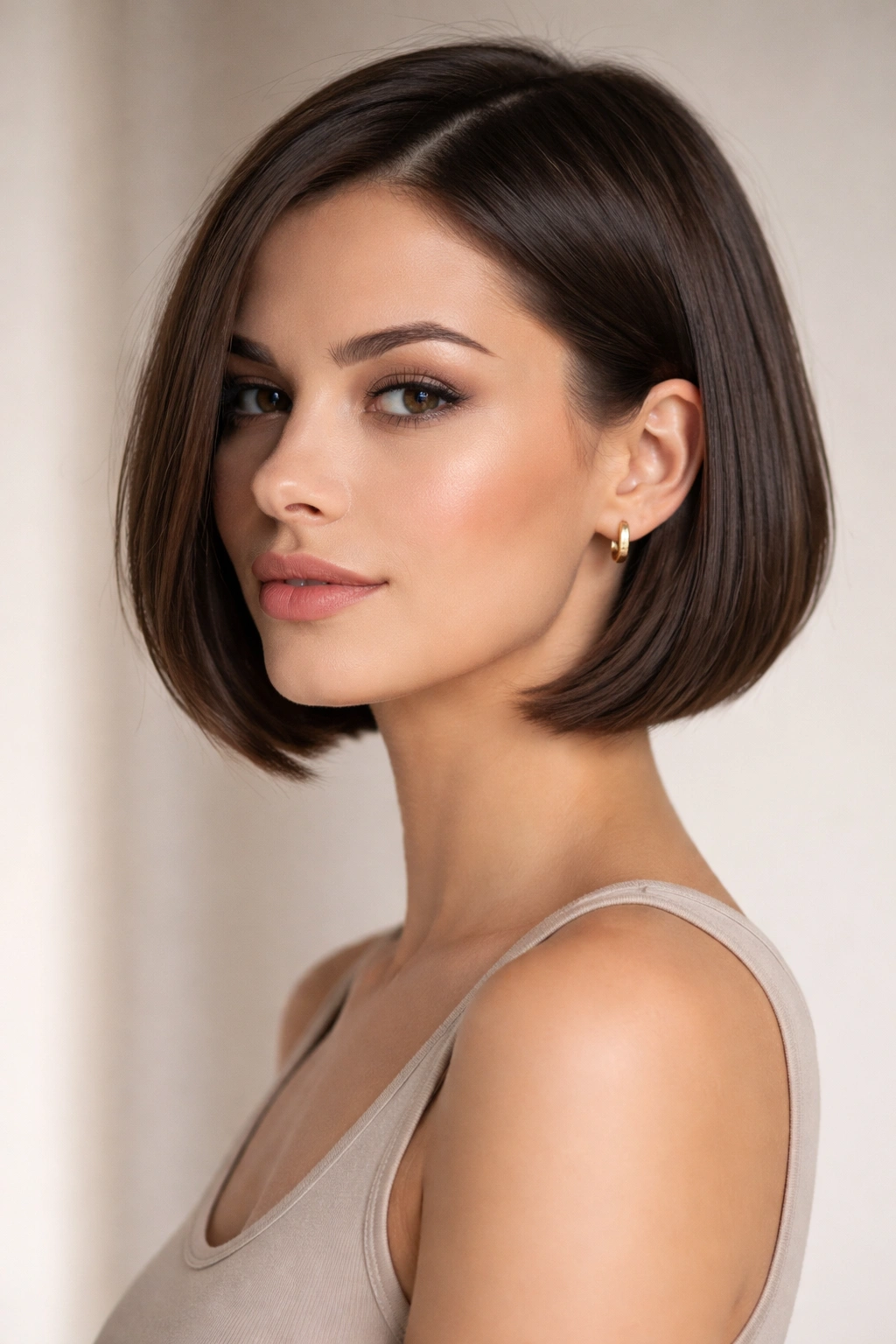
A jaw-length bob can look sharper than a longer one if the ends are tapered instead of chopped straight across. That slight taper keeps the corners from feeling too boxy, which is often the problem with short straight bobs. You still get structure. You just don’t get that heavy little shelf at the jaw.
The cut sits in a flattering spot for a reason. It draws attention to the cheekbones and jawline, which makes the whole face look a bit more defined. On straight hair, the line stays visible all day, so the taper needs to be subtle. Think of it as a quiet adjustment, not a dramatic shape change.
I like this cut on people who wear minimal makeup and want the hair to do some of the framing work. A little bend at the ends is enough. No need to curl it under until it looks stiff. In fact, that usually makes the cut look older than it is.
A paddle brush and a blow-dryer nozzle can do most of the work here. Dry the hair downward, then curve the brush just slightly at the final inch. That gives the ends a clean finish without making them flip up. A tiny bit of lightweight cream on the mid-lengths helps, but don’t overload the bottom. Straight hair remembers.
3. Collarbone Bob With Feathered Face Frame
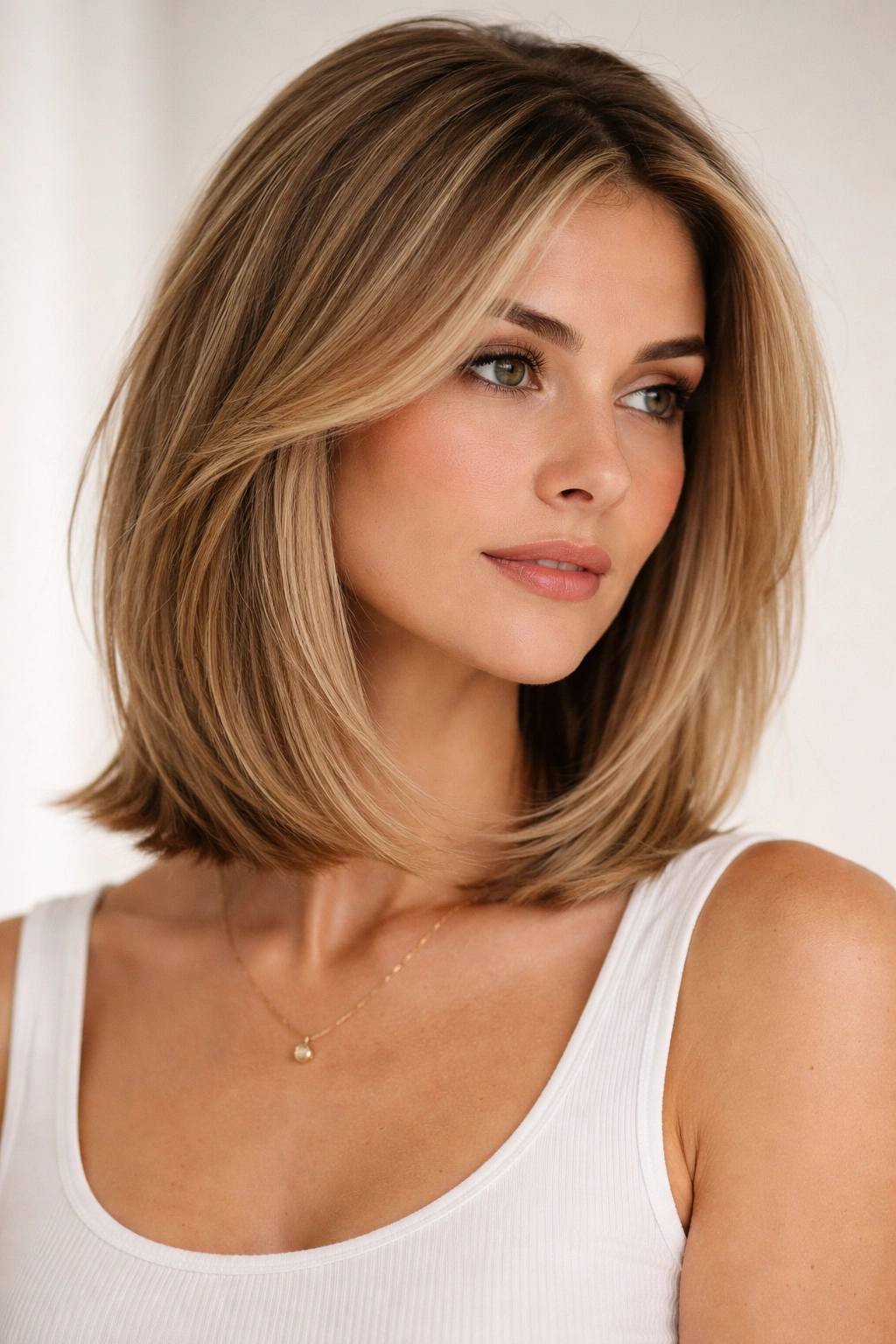
Why does a collarbone bob so often look easier to wear than a shorter one? Because it gives the hair somewhere to move. That extra length changes everything. The cut still reads as a bob, but the line has more softness, and the face frame can be feathered without swallowing the shape.
A feathered face frame is useful when you want the haircut to do two jobs at once. It opens the face a little, and it keeps the hair from sitting in one blunt curtain. The ends around the face should feel light, almost brushed-out, while the back stays a touch fuller. That contrast is what makes the cut look neat instead of limp.
How to Wear It
A center part gives this bob a clean, modern feel. A deep side part turns it more polished and a little dressier. Both work.
- Ask for long face-framing pieces that start around the chin
- Keep the perimeter soft, not heavily thinned
- Use a flat iron bend only at the ends if the hair refuses to settle
- Leave the front pieces slightly longer so they tuck behind the ears without springing out
This is one of those cuts that behaves nicely on days when you don’t want to fuss. It looks done even when you haven’t done much.
4. French Bob With Soft Edge Texture
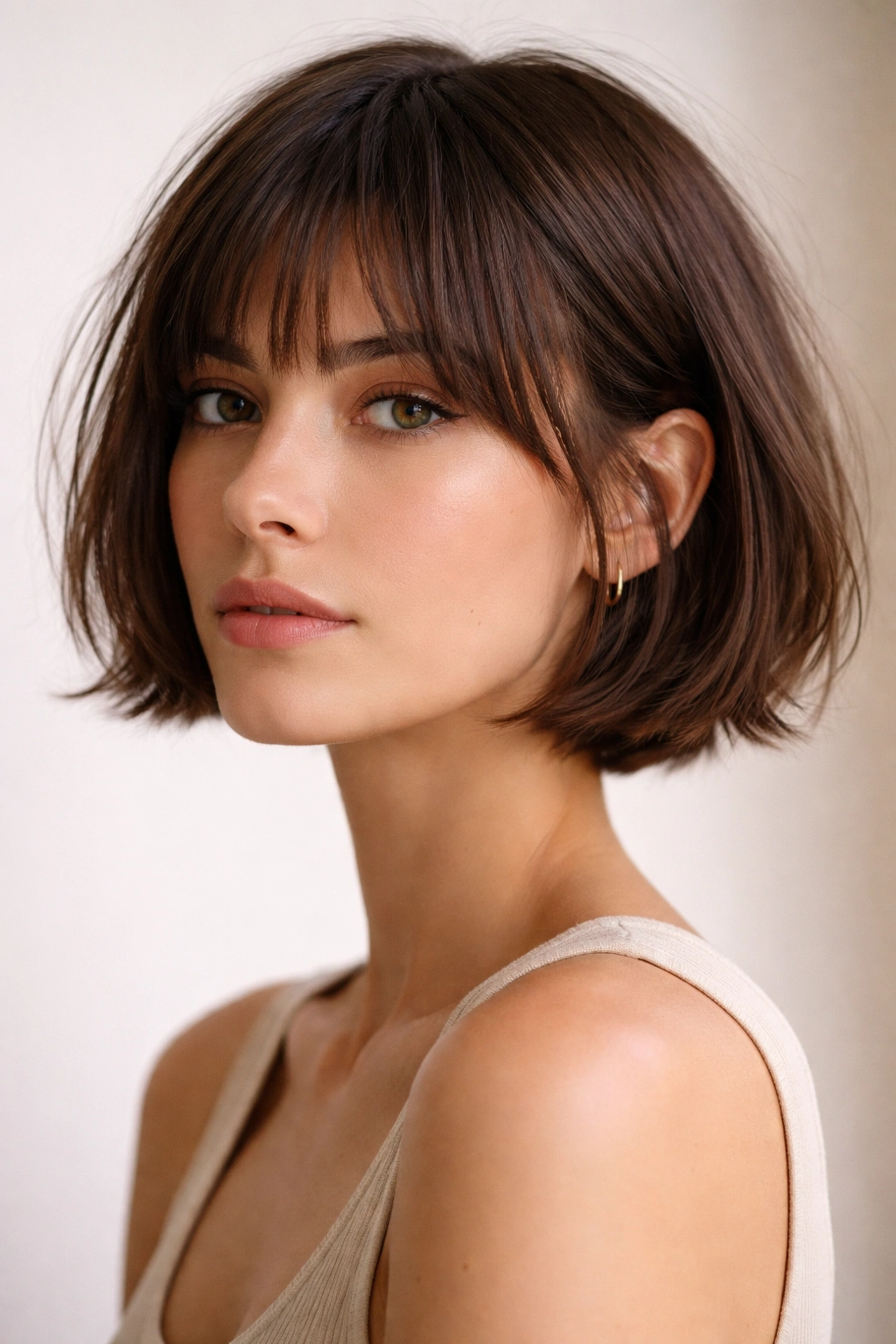
If you want a bob that looks tidy without trying to look perfect, this is the one. The French bob usually sits shorter, often around the cheekbone or just below it, and the texture lives mostly at the edge. Not in the middle. Not all over. Just enough to keep the outline from feeling severe.
The charm is in the balance. A soft edge makes the haircut feel airy, while the length keeps it from drifting into pixie territory. Add a small fringe or a piecey front, and the whole thing gets that effortless, crisp look people keep chasing but rarely get right. The clean line is still there. It’s just not shouting.
This cut likes hair that naturally falls straight or only bends a little. If your hair has a stubborn cowlick at the front, ask for the fringe to be cut a touch longer at first. Short bangs can go from chic to annoying fast. Nobody wants to fight them every morning.
What to Ask For
- A short bob with a soft perimeter
- Tiny bits of texture at the ends, not through the whole shape
- A fringe that sits slightly above or at the brow line
- Minimal layering through the crown so the top doesn’t collapse
The best French bobs look like they were cut with confidence. Messy is not the goal. Controlled ease is.
5. Side-Part Textured Bob With Hidden Movement
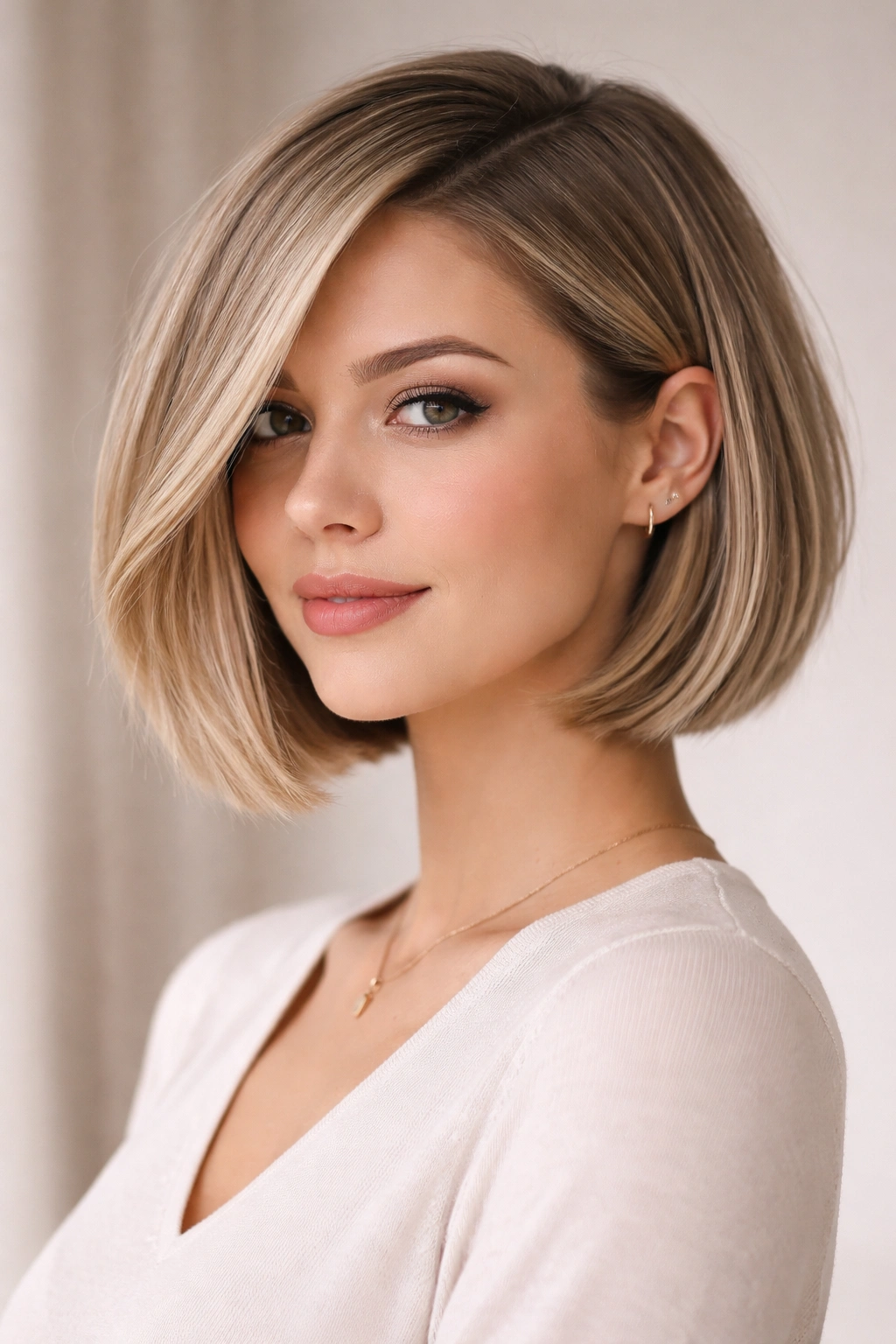
A side part changes the entire mood of a straight bob. It gives the roots a lift, breaks up symmetry, and makes even a simple cut look more intentional. The texture can stay hidden underneath, which is useful if you want movement without a shaggy finish.
Straight hair often falls flat at the crown. A side part fights that immediately. The hair has to cross over, and that tiny shift creates volume on the heavier side while the lighter side frames the cheek and eye. It’s a small trick. A good one.
This is one of my favorite bobs for people with a cowlick, because a side part often works with the natural direction of growth instead of against it. The cut can be soft or sharp; the part does most of the styling work. You still need the ends cleaned up with point cutting so they don’t look too blunt, though. A side part with harsh edges can feel lopsided in a bad way.
Use a root-lifting mousse on damp hair, then blow-dry the part first so it sets. After that, direct the lengths downward with a brush. That keeps the top lifted and the bottom clean. A tiny bit of texture spray at the mid-lengths is enough. Too much, and the bob loses its smoothness.
6. Center-Part Sleek Bob With Light Internal Cutting
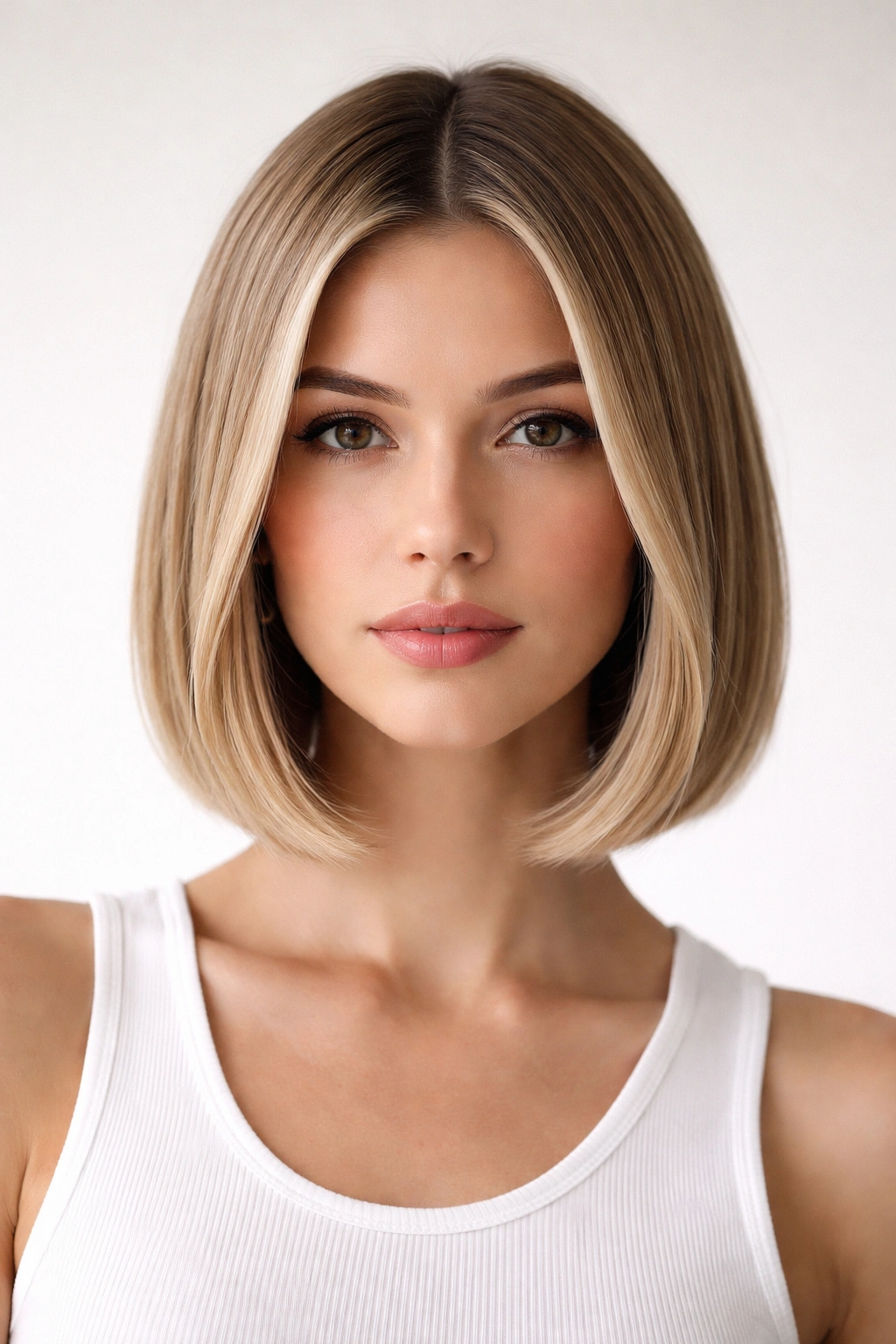
Unlike a side-part bob, this one leans on precision. The center part makes the haircut feel calm and deliberate, and the light internal cutting keeps it from turning into a flat sheet. That’s the whole game here: neat outside, controlled movement inside.
This version is especially nice if your hair is straight but not pin-straight. Slight bends in the lengths help the cut look lived-in without getting messy. The internal layers should be narrow and tucked under the surface. You should not see them unless you lift the hair. If you can spot obvious steps in the mirror, the cut is too layered.
A center-part straight bob tends to show symmetry more than any other version. That can be a blessing or a curse. If one side of your face carries more volume or you want your features balanced, this cut does that quietly. If your hairline is uneven or you have a strong cowlick, the center part may need a little coaxing with a comb and blow-dryer.
It’s a clean cut for people who like order. Glasses wearers often love it, because the line of the bob sits neatly under the frames. Keep the ends glossy, not over-textured. The cleaner the finish, the better this one looks.
7. Graduated Bob With Light Stacking at the Back
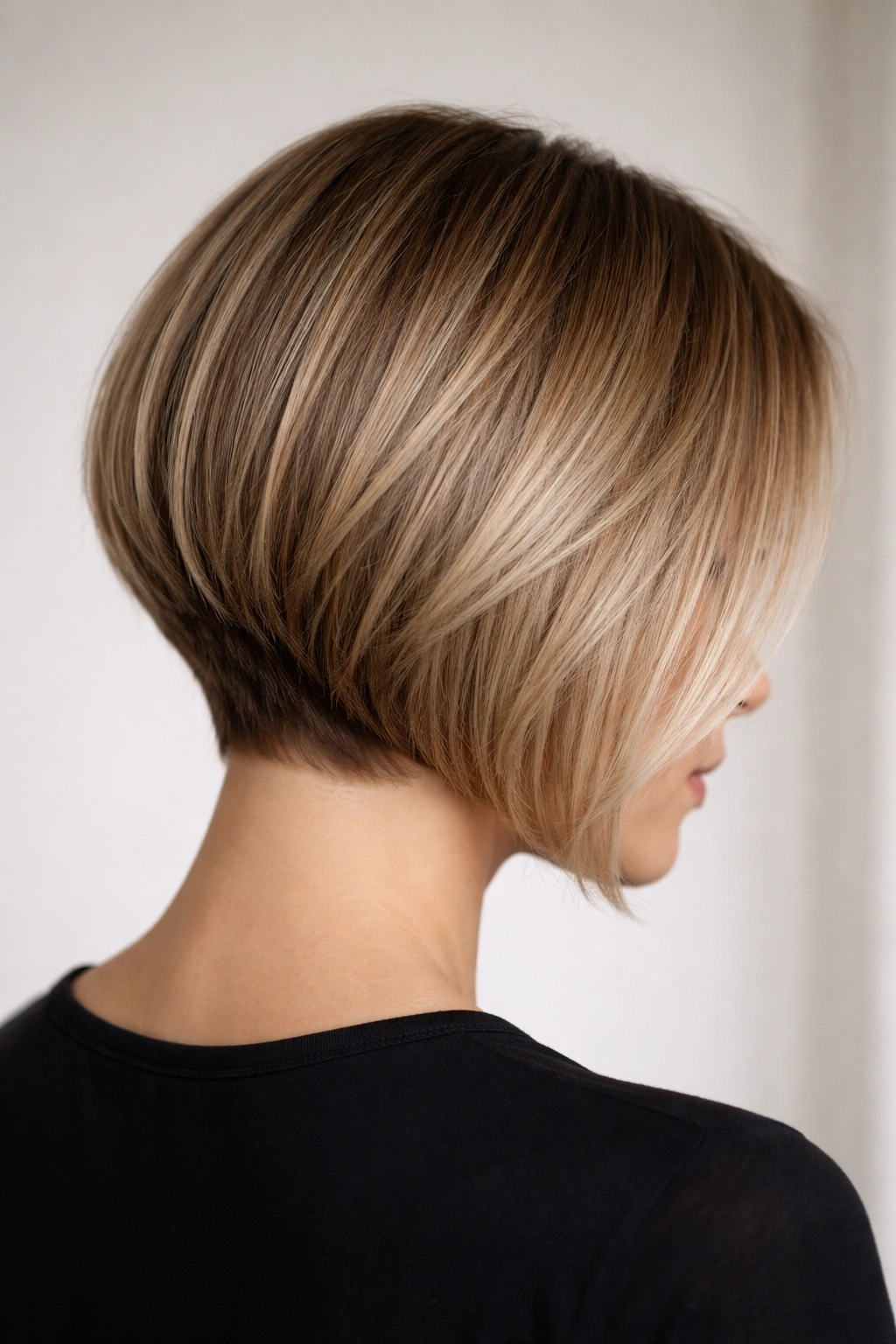
A little stacking in the back goes a long way. That’s the truth with this cut. The graduation gives the nape some lift, so the bob doesn’t collapse backward or hang like one solid panel. At the same time, the front stays long enough to feel modern, not old-fashioned.
This shape is especially helpful if the hair is dense and tends to sit heavy at the neck. The stacked back removes weight where you need it most. Not all over. Just in the right place. That means the haircut keeps its clean outline while still having a bit of shape through the crown and occipital area.
Why It Holds Its Shape
The back is cut with a slight upward angle, then softened at the surface so it doesn’t look wedge-like. That’s the part some stylists get wrong. Too much graduation and you end up with a bubble. Too little and the bob loses lift.
- Best length: below the ear and above the collar
- Works well with thicker straight hair
- Needs a smoother nape line so the stacking doesn’t show too much
- Looks best with a round brush finish at the back
If you like your neck to look longer and your haircut to stay neat for several weeks, this one earns its keep.
8. Choppy Bob With Airy Piece Ends
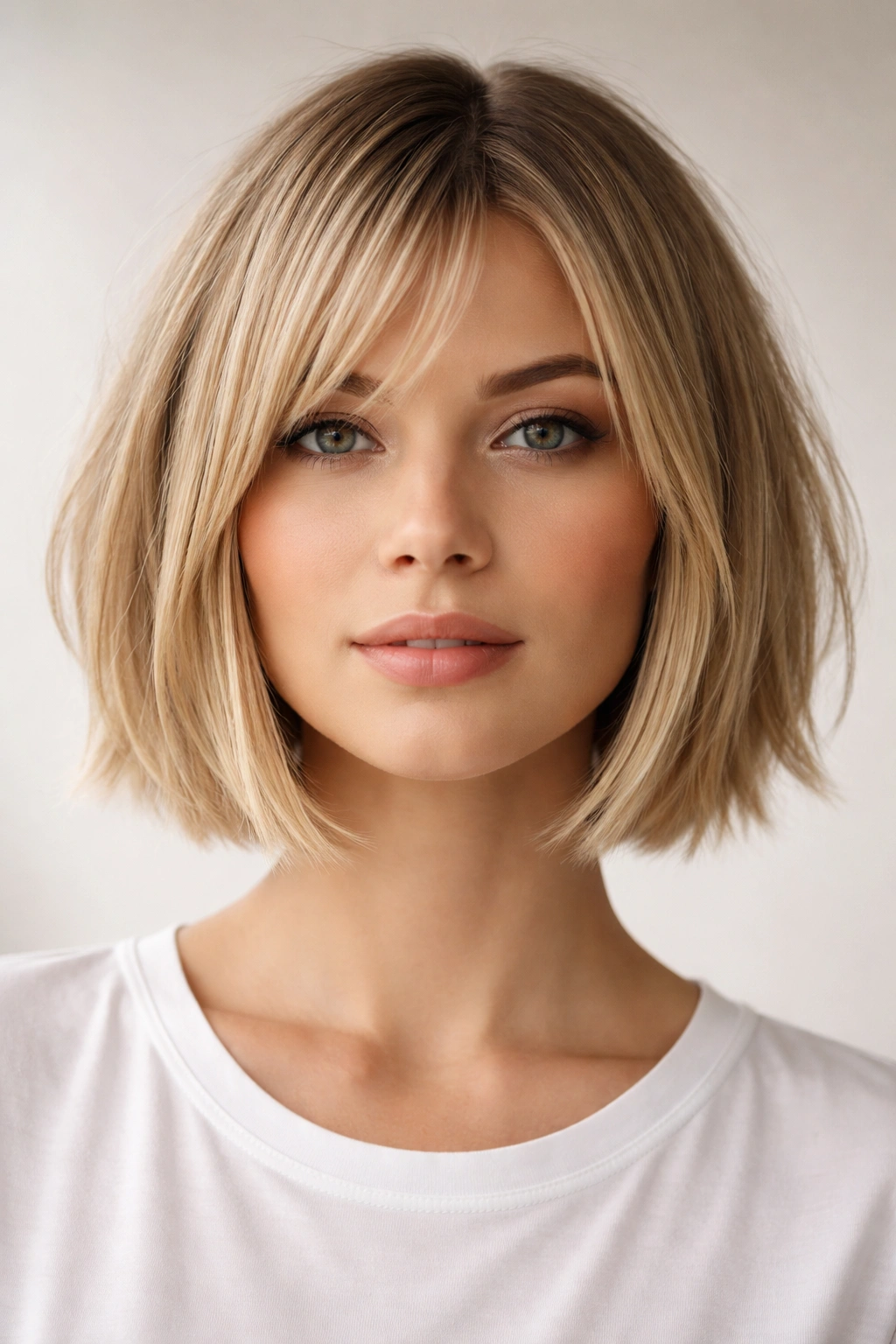
A choppy bob can still look clean if the texture is placed with some restraint. The pieces should feel separated, not shredded. That’s the difference between a tidy modern bob and a cut that looks like it was attacked with thinning shears.
The best version of this cut uses choppy ends to break up heaviness at the perimeter. Straight hair often needs that because it can bunch at the bottom and lose movement. A few uneven pieces let the line breathe. A few. Not twenty. If every part of the bob is broken up, the whole thing starts to look thin, and that is not the point.
This shape works especially well when the hair is naturally flat on top but fuller through the ends. The texture makes the bob feel lighter without removing the clean edge altogether. Dry it with a diffuser on low heat if you want a little roughness, or use your fingers and a blow-dryer to keep the movement soft. Either way, don’t pile on the spray. Choppy hair and crunchy product is a bad pairing.
A small amount of matte texture paste rubbed between the palms can help define the ends. Use it only on the last inch or two. The crown should stay smooth. That keeps the cut from drifting into messy territory.
9. Micro Bob With Point-Cut Perimeter
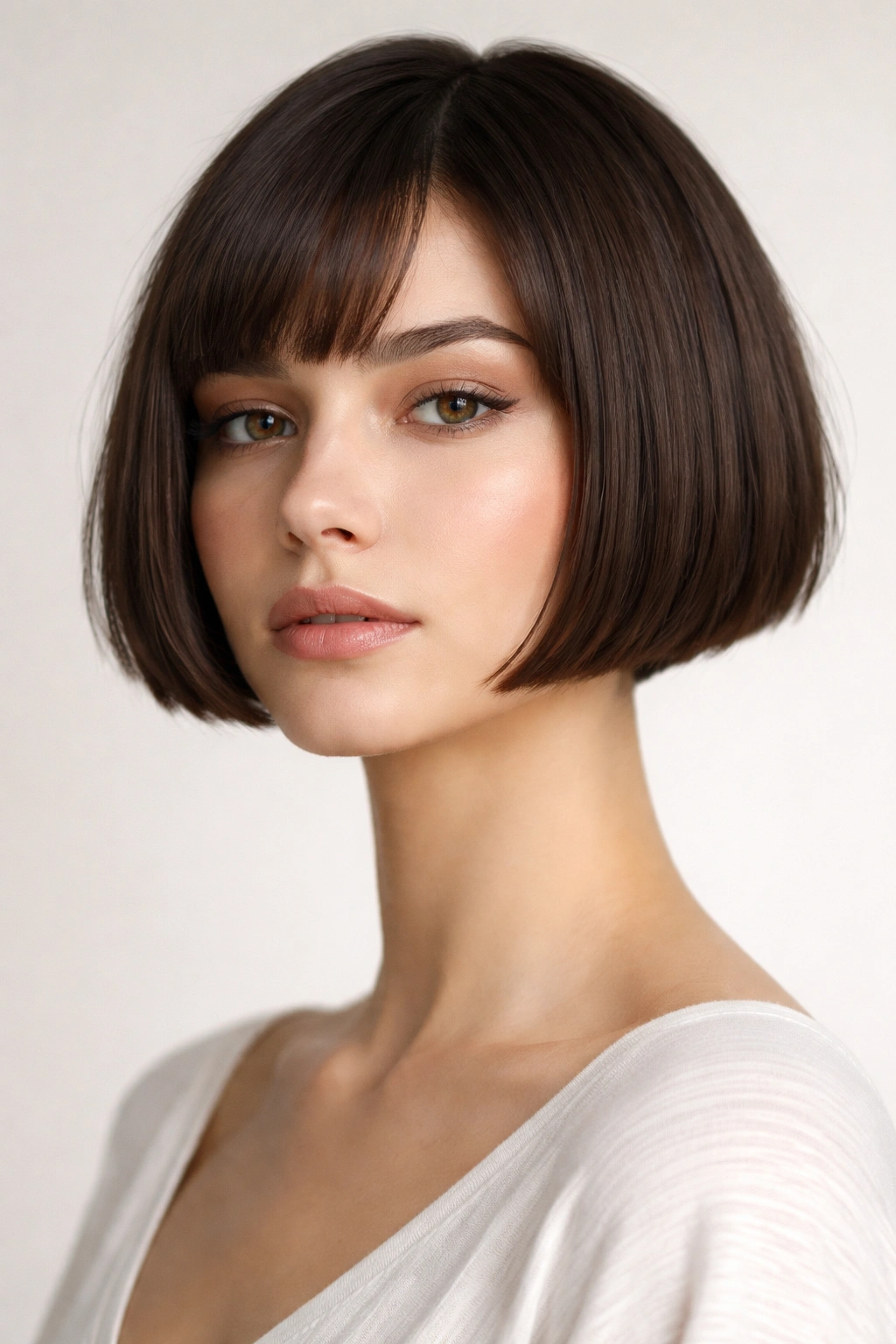
Can a very short bob still look polished? Absolutely. The micro bob proves it. The trick is the perimeter. If the ends are point-cut instead of bluntly chopped, the whole cut feels sharper and less rigid, even at a shorter length.
This is a bold little haircut. It sits above the jaw and usually kisses the lower cheek or ear area, which means it puts the face front and center. That can be fantastic if you like your features to show. It can also feel exposing if you prefer hair to act like a frame. So this is not a casual cut. It’s a deliberate one.
Best Way to Ask for It
Tell the stylist you want a tiny bob with softened ends, not a rounded bowl shape. Those are different things, and the difference matters.
- Keep the line clean around the neck
- Use point cutting on the perimeter
- Avoid heavy layering at the crown
- Leave enough length to tuck one side behind the ear
The cut looks especially good on straight hair that holds shape without much effort. It’s crisp. It’s a little bold. And on the right person, it looks so clean it almost feels architectural.
10. Bob With Curtain Bangs and Straight Lengths
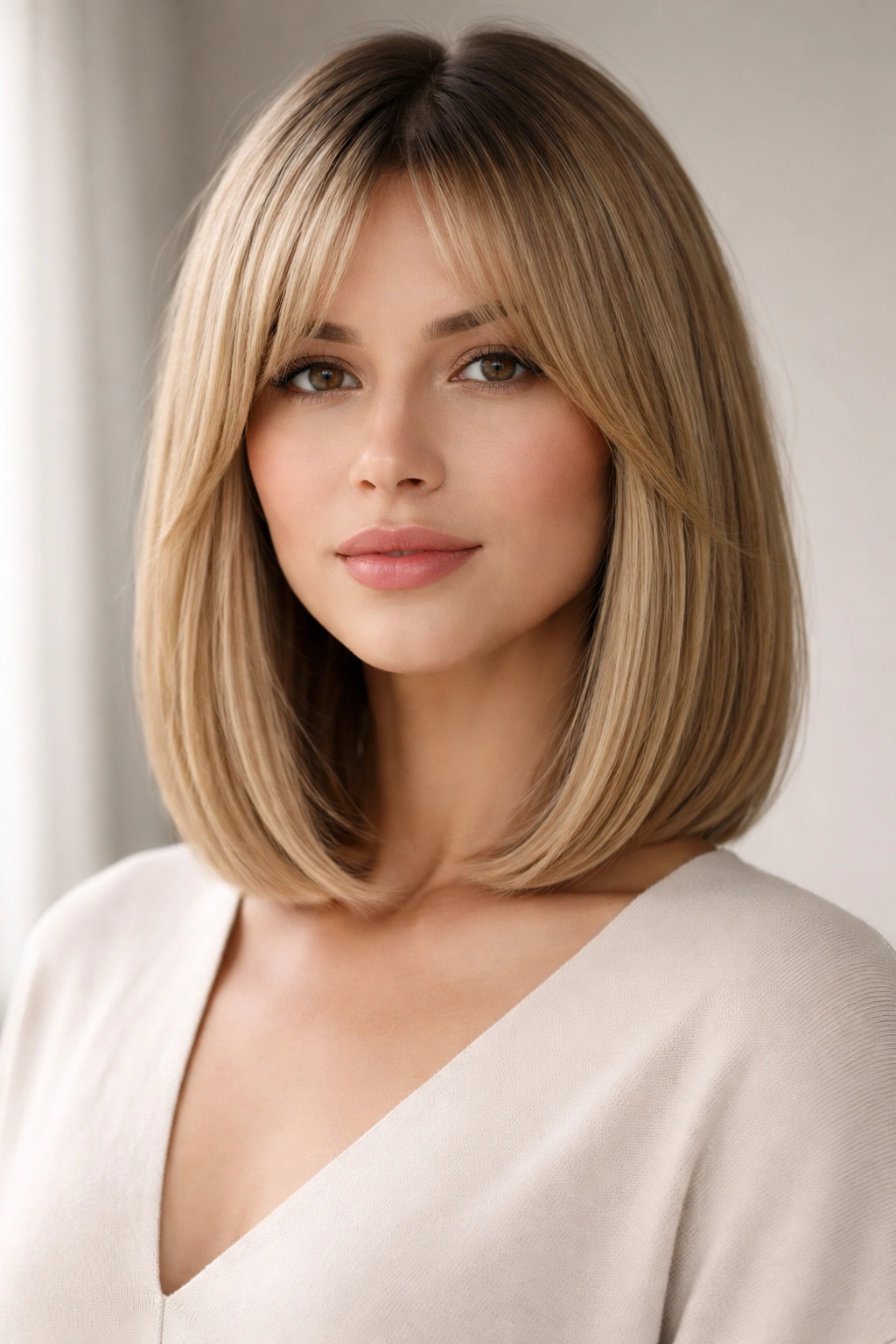
A straight bob with curtain bangs has a softer face shape than most other bobs, and that matters if you want clean lines without a severe feel. The fringe opens the front, while the rest of the haircut stays tidy and grounded. It’s a smart compromise. You get polish, but the face doesn’t look boxed in.
Curtain bangs work best when they’re cut long enough to split naturally, usually somewhere around the cheekbone or nose bridge as they grow out. Short bangs can be cute, sure, but they can also fight the rest of the bob. Longer pieces blend more easily into straight lengths and make the whole haircut move as one shape.
The styling is not hard, but it does need a little attention. Blow-dry the bangs side to side with a small round brush until they bend away from the center. That stops them from sticking straight down or separating awkwardly. The rest of the bob can stay smooth with a flat brush and light tension.
A good curtain fringe can hide a high forehead, soften stronger brows, and make a straight bob feel less formal. It also gives you something to play with on days when the rest of the hair feels too neat. That little bit of looseness helps.
11. Undercut Bob for Dense Hair
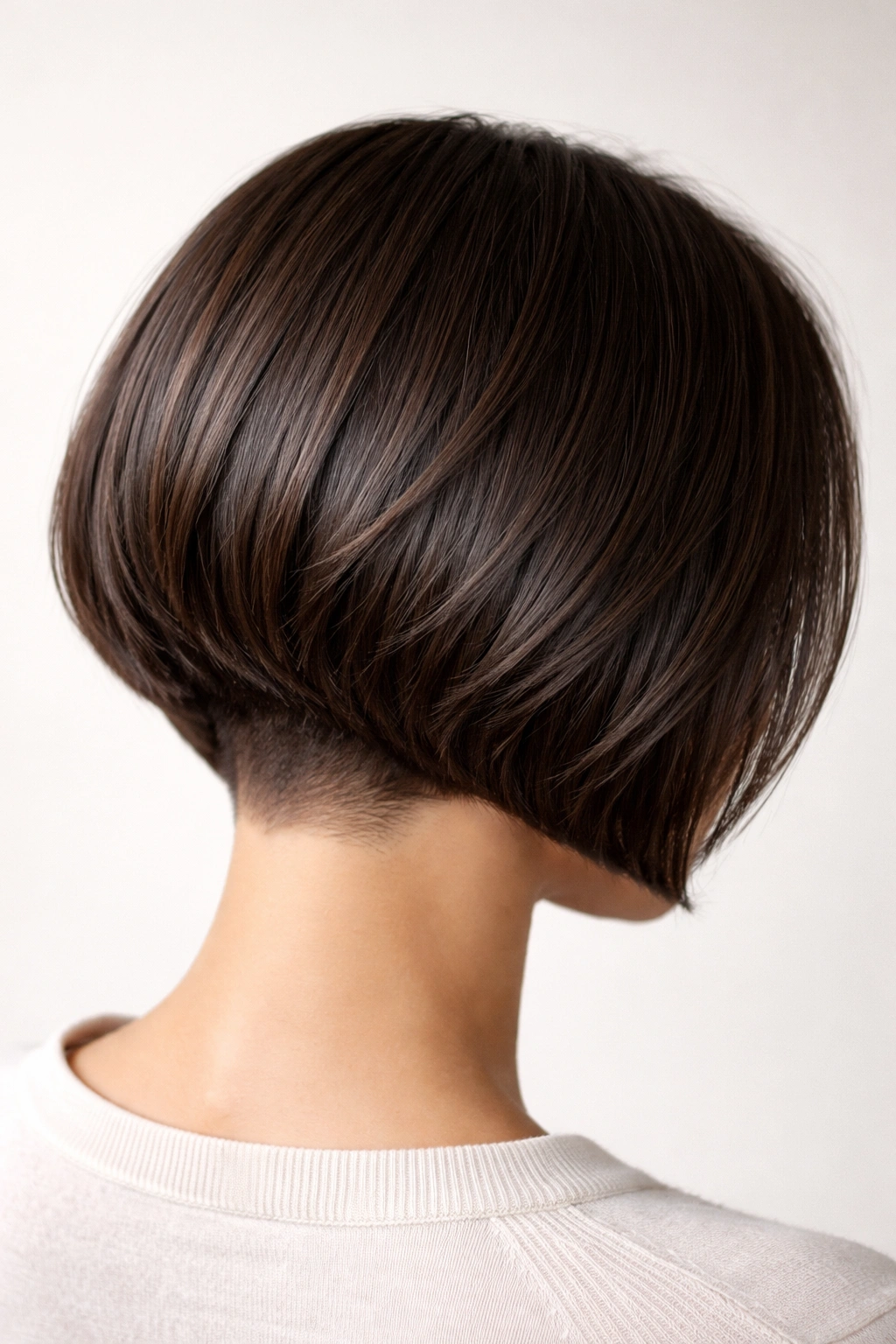
Dense hair can be gorgeous in a bob, but it turns into a brick if you don’t remove weight in the right spot. A hidden undercut solves that. It clears bulk from underneath while letting the outer layer fall in a clean, smooth shape. From the outside, the haircut still reads as a sleek bob. Underneath, it behaves much better.
This is not the kind of cut you want to overdo. A heavy undercut can make the hair swing oddly or expose too much scalp when the wind hits. Keep it hidden and narrow, usually through the nape or lower back section, where the density tends to collect. That gives the top layer a chance to sit close to the head instead of puffing out.
The payoff is real. The bob dries faster. It sits flatter at the neck. It also feels lighter when you tie half of it back or tuck it under a coat collar. That last part matters more than people think. Thick hair and winter collars are not friends.
A dense bob like this needs maintenance as it grows. The undercut will show sooner than the rest of the shape, so plan on regular clean-ups if you want the silhouette to stay sharp. If you’re okay with a little grow-out softness, though, it can be one of the easiest ways to make a blunt bob wearable.
12. Lob-Length Straight Bob With Subtle Layers
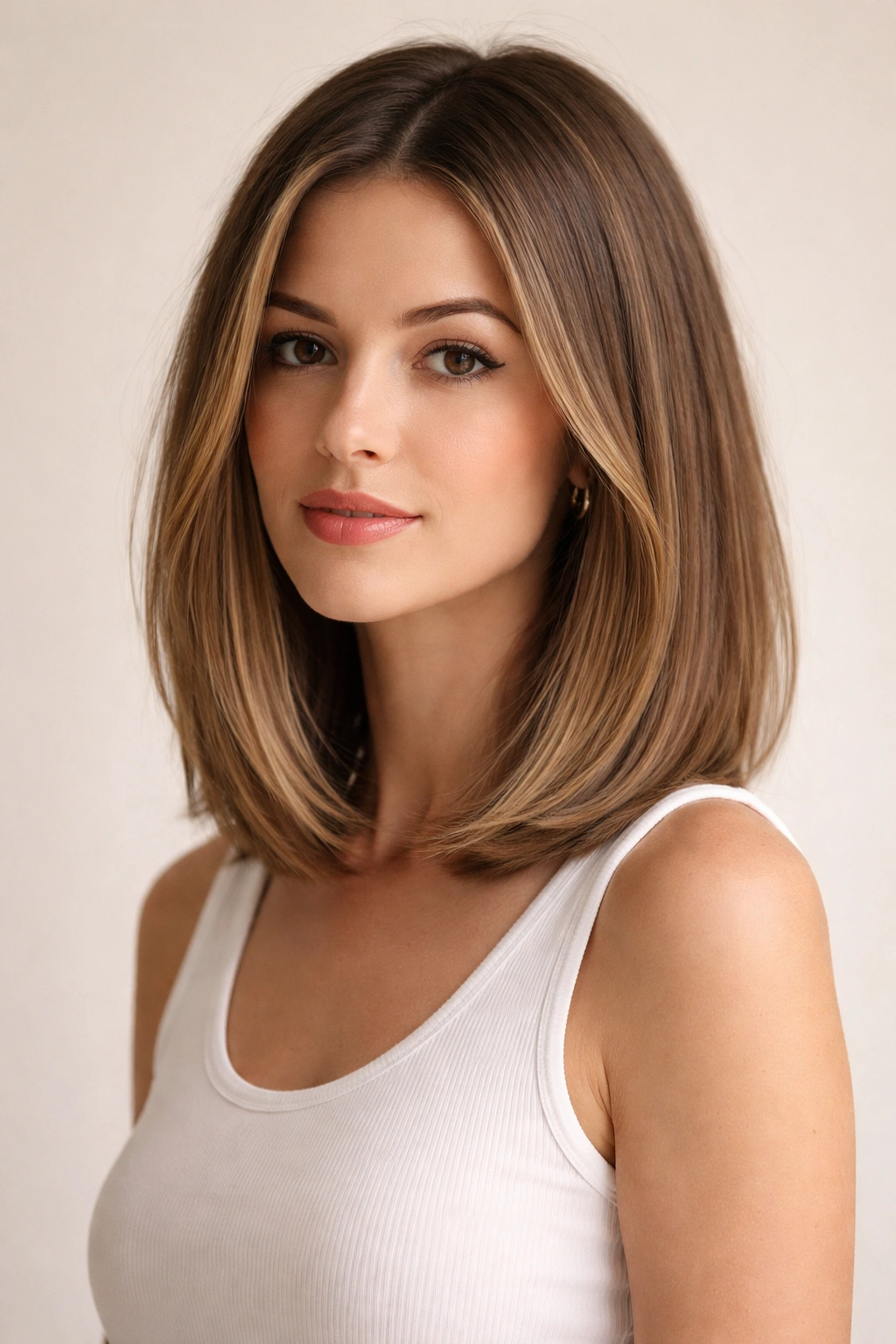
The lob earns its place because it gives you breathing room. A chin-length bob can feel precise, but a lob-length version lets the ends move a little more, and that matters if you like your hair to tuck, twist, or fall behind the shoulders without constant fixing. The subtle layers are what keep it from becoming too heavy.
Unlike shorter bobs, this one works even when you’re growing out a cut or testing shorter hair without going all the way. The line still looks neat, but the longer length makes the shape softer around the collarbone. It’s also one of the better options if you wear scarves, high collars, or blazers a lot. Shorter bobs can fight clothing. This one usually doesn’t.
The layers should be minimal, placed mostly through the lower section so the top stays smooth. You want movement at the bottom, not fluffy volume everywhere. A slight bevel toward the face can help the cut turn inward just enough to keep it tidy.
This is the haircut I’d choose for someone who wants polish during the week and flexibility on busy mornings. It holds a clip, a barrette, or a half-up twist without looking accidental. And that’s a real bonus. Not every clean haircut has to be fussy.
13. Razor-Textured Bob With Wispy Ends
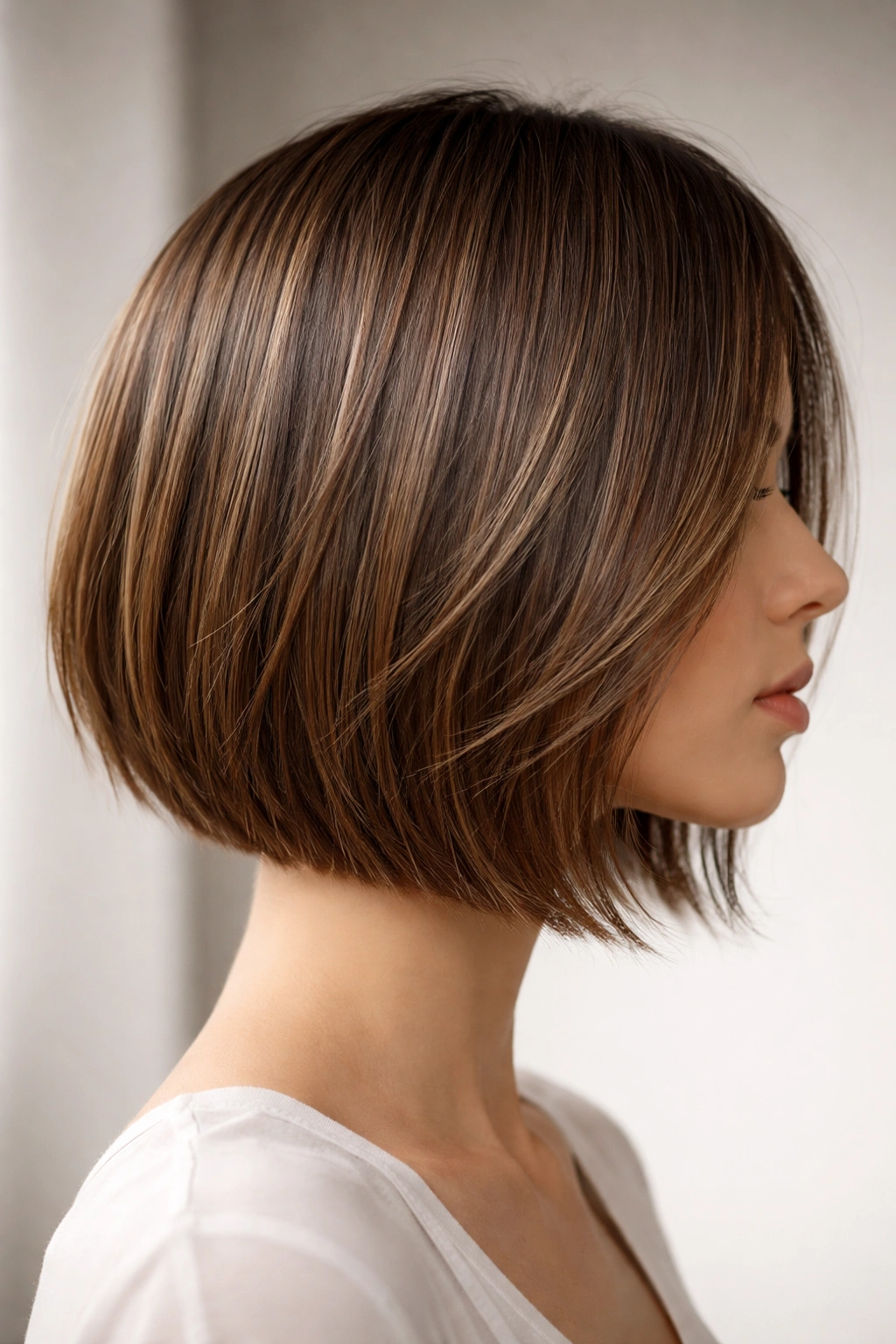
A razor can be your friend on a bob, but only when the hair can take it. Thick, straight hair often benefits because the razor softens the ends and removes a little of that blunt, heavy feel. Fine hair? Not so much. Razor work can make the ends look see-through if the stylist goes too far.
The best razor-textured bob keeps the perimeter visible while making the finish feel lighter. You should still see a line. You just shouldn’t feel like the cut has been stamped out of one solid block. Wispy ends can give the bob a little motion around the jaw and neck, which is nice if your hair tends to sit stiff.
Where the Razor Belongs
The blade should work mainly through the last inch or two, not across the whole head. That keeps the surface smooth and the base strong.
- Good for dense straight hair
- Better on healthier ends
- Not ideal if the hair is already dry or fraying
- Looks best with light serum and a blow-dry that smooths the cuticle
This cut has a softer attitude than a blunt bob, but it still looks deliberate. That’s the key. If the ends look hacked up, it’s the wrong razor cut.
14. Rounded Bob With Soft Corner Pieces
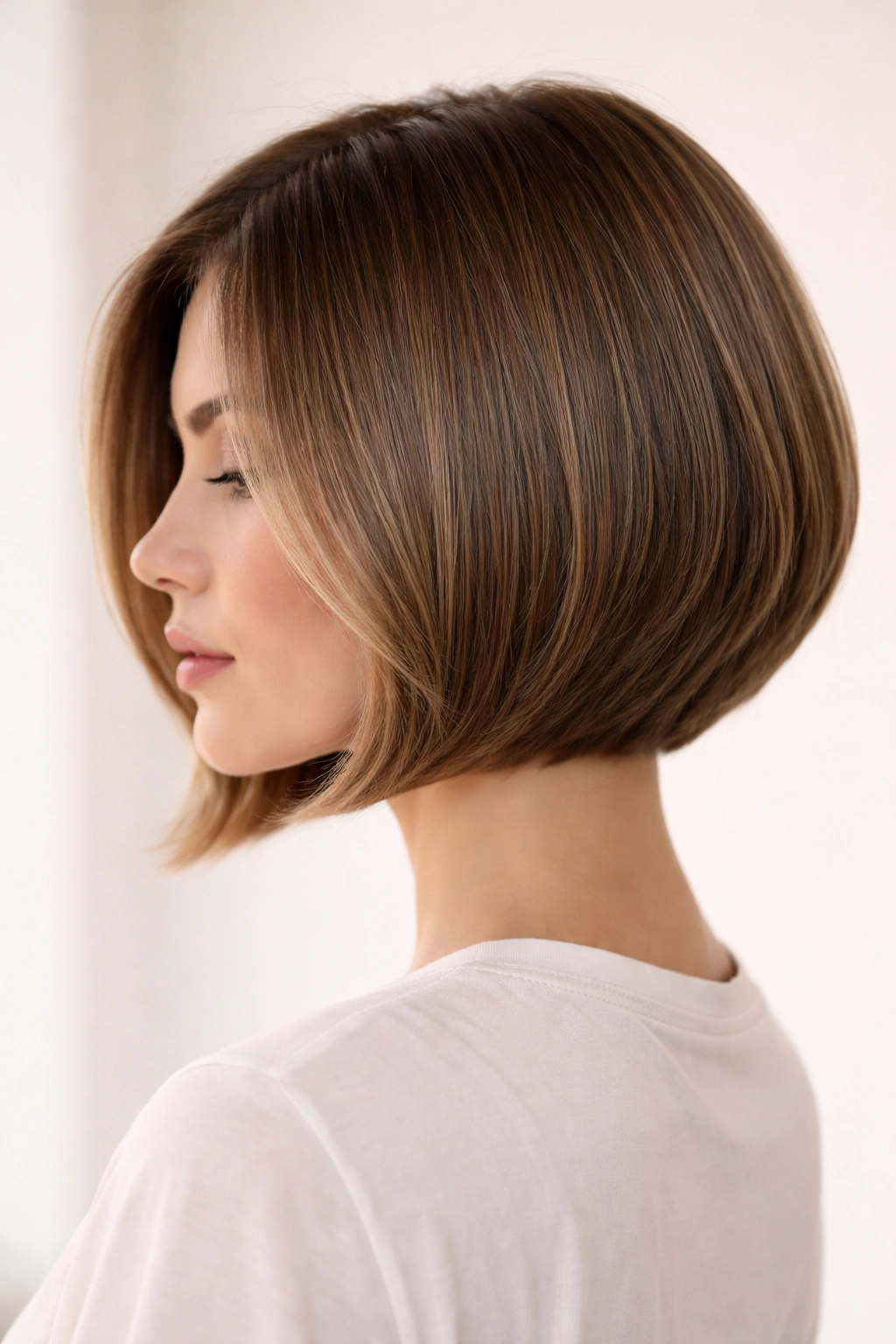
A rounded bob is a nice answer when you want clean lines without hard corners. The silhouette curves gently toward the jaw, and the little corner pieces at the front keep the cut from feeling too boxy. It’s tidy. It’s controlled. It also tends to look expensive, which is probably why people keep coming back to it.
This shape works well when the hair needs a little inward motion near the face. The corners stop the bob from turning into a perfect circle, which would be too much. You still get a soft bend, but the perimeter stays visible. That matters. A rounded bob without any edge can look vague. This one does not.
The style is especially nice for anyone who likes a neater finish at work or wants a haircut that sits close under a coat, scarf, or blazer collar. It doesn’t fight the neck. It follows it. That makes the whole head shape feel more balanced.
A blow-dry with a medium round brush usually gives this cut the right turn. Keep the brush movement gentle. You’re shaping, not curling. If the corners kick out, a quick pass with a flat iron on the last half-inch will settle them back into place.
15. Piecey Bob With Face-Framing Bends
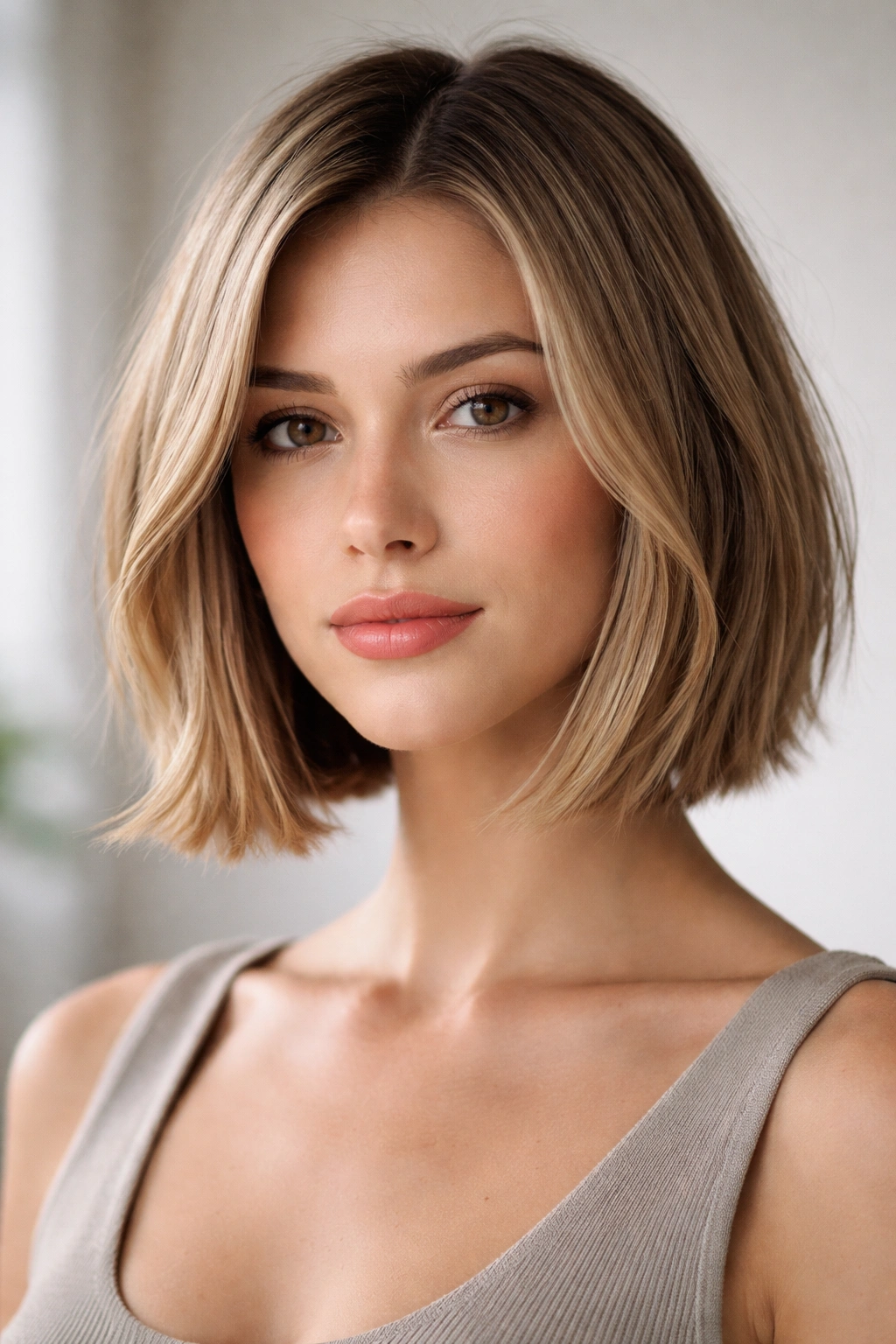
Can a bob be piecey and still look clean? Yes, if the bends are controlled and placed with a light hand. This cut uses small, separated sections around the face to keep the style from feeling heavy or too uniform. The rest of the bob stays straight, so the texture reads as detail instead of chaos.
The face-framing bends should start low enough to look intentional, usually around the cheekbone or just below it. A few soft bends around the front can brighten the face and make the haircut feel less rigid, especially when the hair naturally falls very flat. You’re not building curls here. You’re creating direction.
This cut is nice when you want a bob that looks finished but not over-styled. A straightener can make the bends quickly: clamp the section, twist the wrist slightly, then release before the ends get too curly. That tiny gesture is enough. More than that and the clean look starts to slip.
How to Style the Bend
- Work on dry hair only
- Use a heat protectant spray
- Bend just the front 2-inch sections
- Leave the back smooth so the contrast stays sharp
It’s a small detail, but it changes the whole haircut. The result feels polished with a little movement around the face, which is often exactly what a straight bob needs.
Final Thoughts
The cleanest textured straight bob cuts usually share one thing: the texture supports the shape instead of replacing it. That’s the difference between a bob that looks intentional and one that looks overworked. A good cut keeps its line. A better one moves a little when you do.
If you’re trying to choose between them, start with your hair’s real habits. Heavy hair needs removal in the right places. Fine hair needs texture that doesn’t steal density. Straight hair in particular will tell on you fast, so the cleanest result usually comes from restraint, not more cutting.
And honestly, that’s why bobs stay interesting. Small changes make a big difference. A shifted part, a softer edge, a hidden layer, a slight bend at the end — any one of those can turn a plain straight bob into something that looks thoughtful every single day.
