



Bob cuts for natural hair with color can look soft, sharp, playful, or expensive-looking in a way longer cuts sometimes can’t. The shape does a lot of the styling work for you. Add the right color placement, and a simple bob can start looking layered, lifted, and far more alive than a flat one-length cut.
What catches people off guard is how much the cut and the color depend on each other. A chin-length bob on coily hair may sit one way when stretched and a very different way when it dries in its natural state. A highlight that looks subtle on straight hair can flash hard on a dense curl pattern. That’s why the smartest colored bob isn’t only about pigment. It’s about where the color lands, how the curls fall, and how much shrinkage you’re working with.
Any color on textured hair should start with a strand test. That sounds boring. It saves headaches. Porous ends grab pigment faster than healthy mids, and a swatch behind the ear can tell you whether a copper will stay rich or drift brassy, whether a blonde panel will lift cleanly, and whether your curls can handle the process without turning dry and fuzzy.
1. Chin-Length Curly Bob with Caramel Ribbon Highlights
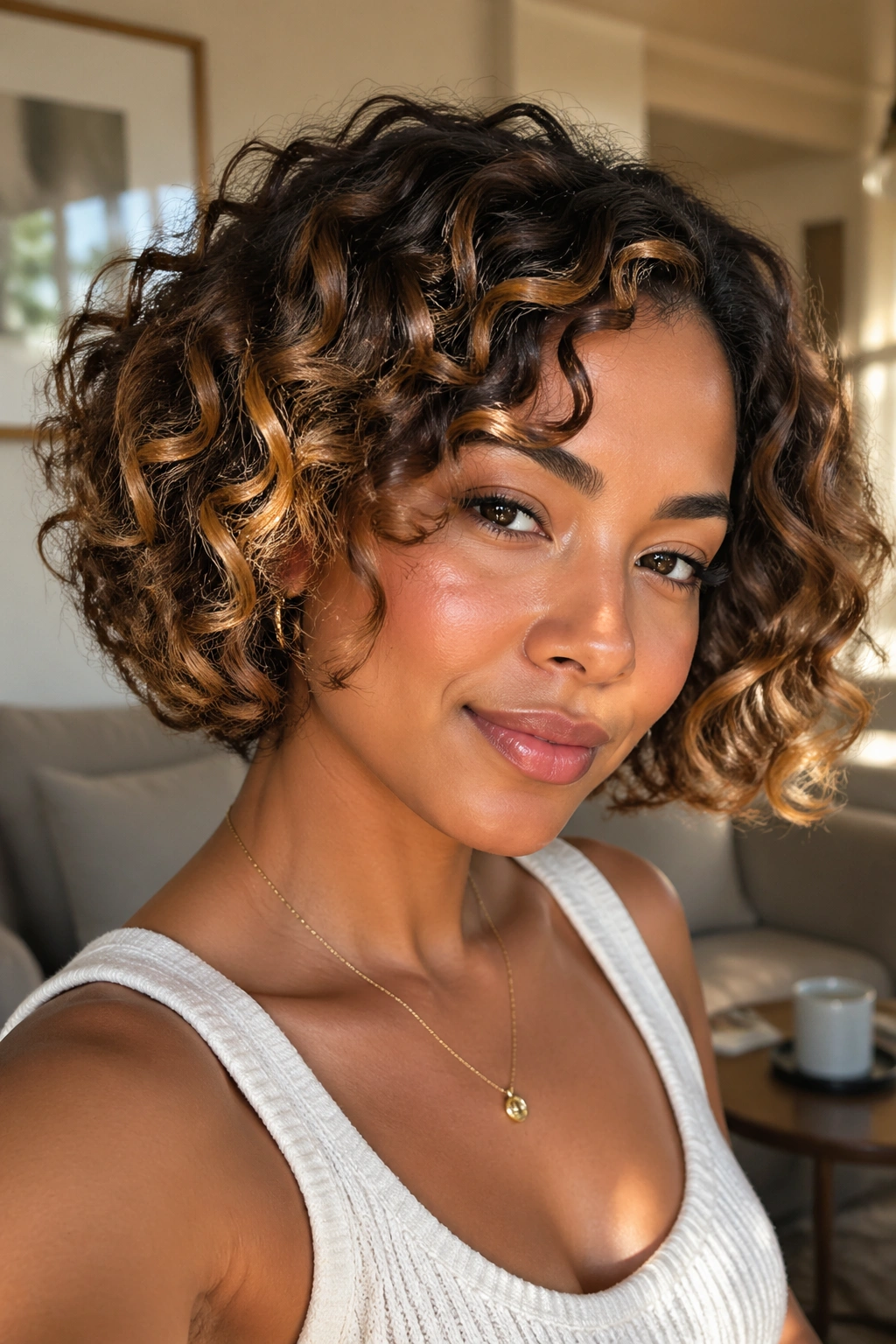
A chin-length curly bob with caramel ribbon highlights is one of those cuts that looks more styled than it actually is. The length gives your curls room to bounce, and the caramel breaks up the shape so the whole cut doesn’t read as one solid block. On dense natural hair, that matters. A little lightness placed with intent can make the curl pattern look sharper and the face look brighter.
Why the ribbons work
Caramel ribbons are not thick stripes. They’re thin, scattered pieces that follow the movement of the curls, usually around the top layers, the front, and the outer curves of the bob. That placement keeps the color visible when the hair moves, which is the whole point.
- Best on 3B to 4A curls that hold a rounded shape
- Ask for one to two levels of lift so the caramel stays soft, not orange
- Keep the lightest pieces near the front and crown
- Diffuse on low heat to keep the curl pattern from collapsing
The cut itself should sit just at the chin or a touch above it when dry. That length keeps the bob lively instead of boxy. If your curls are tighter, ask for a little extra room in the silhouette so shrinkage doesn’t turn the shape into a puff.
My favorite part: the color looks expensive even when the styling is nothing more than leave-in cream, gel, and a good diffusing pass.
2. Side-Part Sleek Bob with Copper Brown Shine
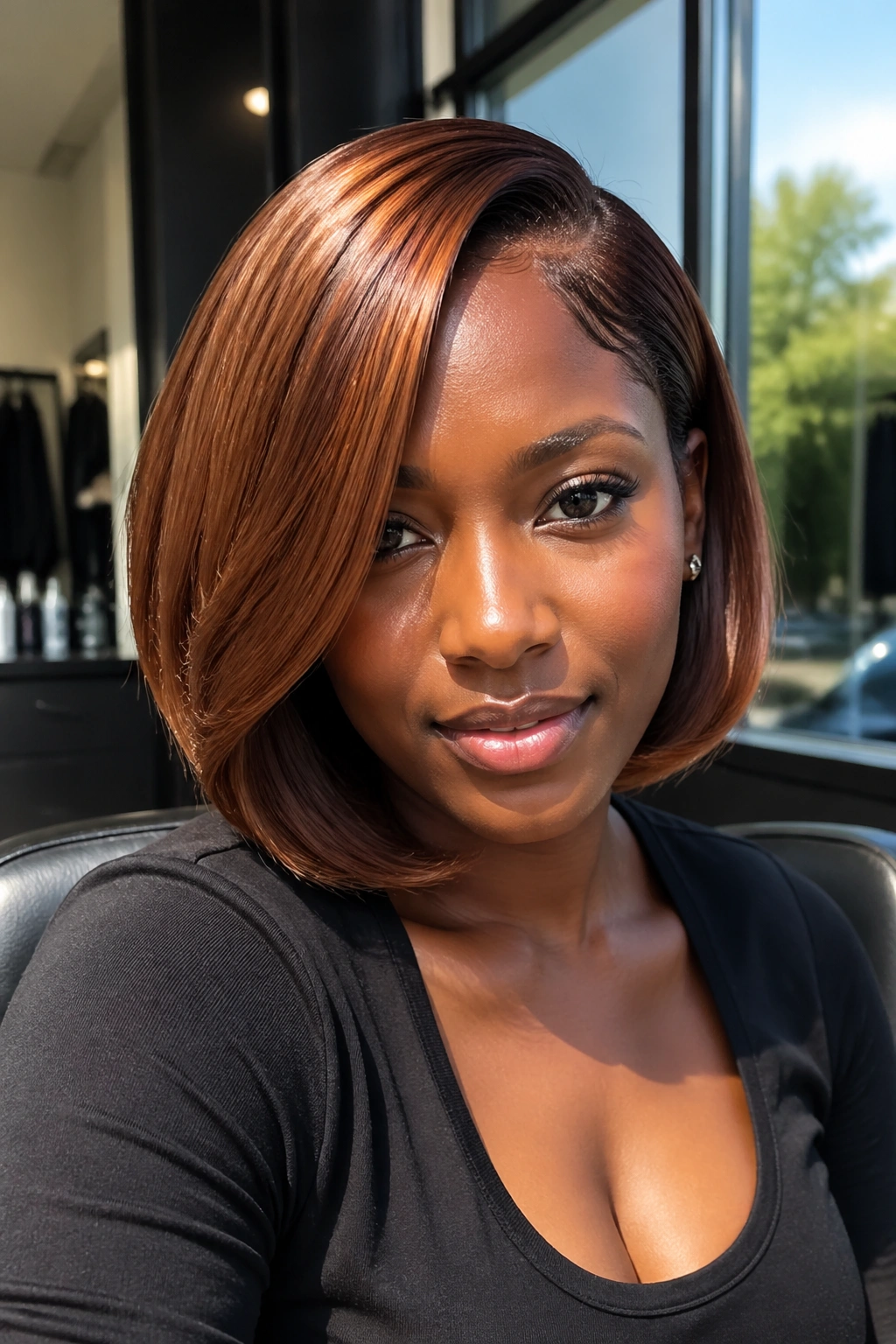
A side-part sleek bob with copper brown shine is a strong look when you want your natural hair to feel polished without losing its texture story. The side part opens the face. The copper brown adds warmth that plays well against deeper roots, and the whole cut feels deliberate in a way that a center-part bob sometimes doesn’t.
What makes this cut work is tension. Not harsh tension—controlled tension. The hair is usually stretched with a blow-dryer, tension method, or a silk press if that’s part of your routine, then shaped into a clean bob that skims the jawline. Copper brown works well here because it catches light in a softer way than a bright red or a heavy blonde. It’s rich. It moves.
A sleek bob like this asks for upkeep. You’ll want heat protectant, a wrap at night, and a light serum on the ends only. Too much product near the roots will flatten the lift you worked for. Too little, though, and the ends can look dry by day two.
The best version of this style has one small thing that people often skip: a subtle root shadow. It keeps the copper from looking painted on. When the roots stay a shade deeper, the color reads more natural, and the cut gets more depth from the top down.
3. Rounded Tapered Bob with Burgundy Underlayer
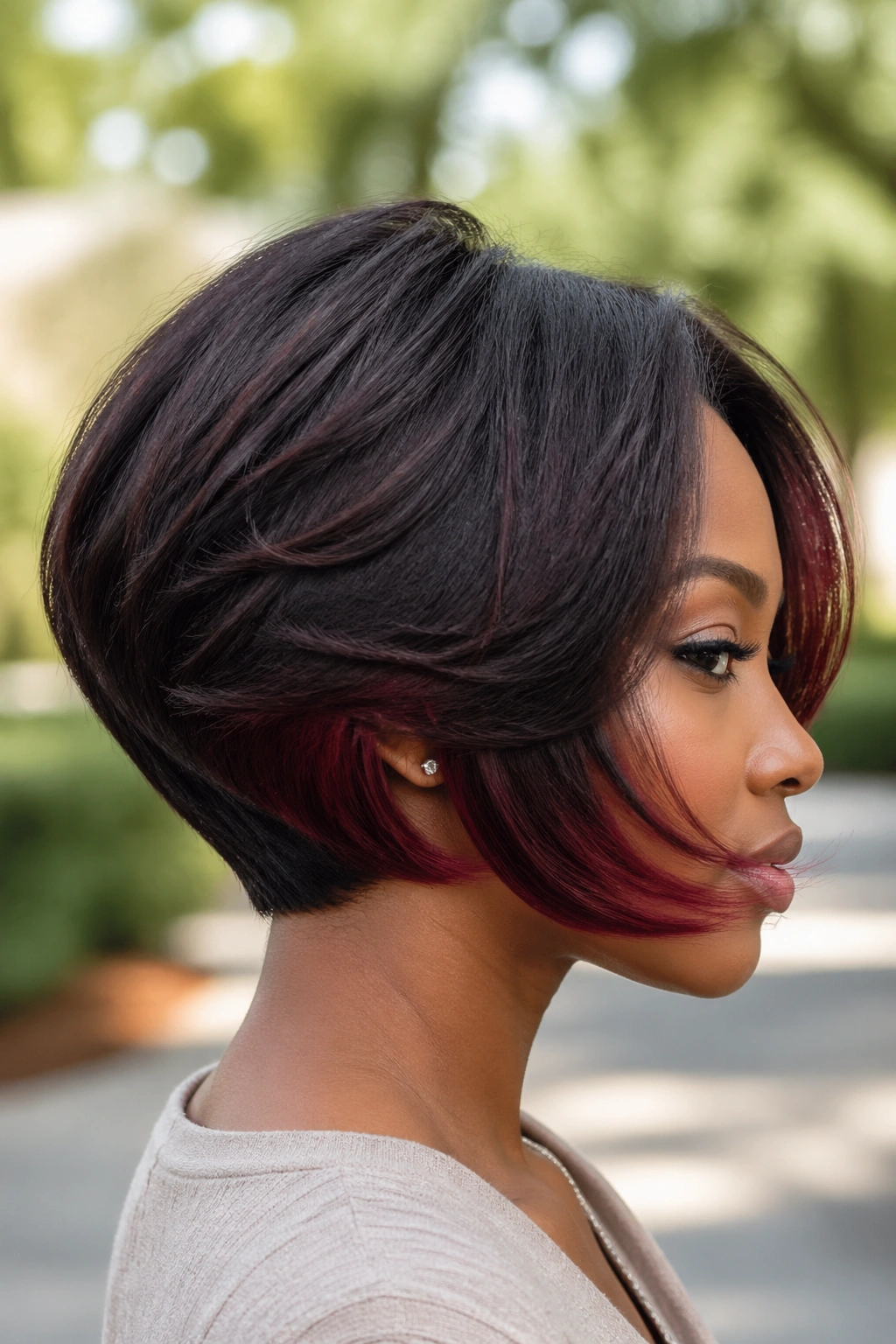
Picture a bob that looks deep and polished from the outside, then turns dramatic the second you move your head. That’s the rounded tapered bob with a burgundy underlayer. The outer shape stays close and smooth, while the hidden color flashes from underneath. It’s a neat trick, and it works especially well on natural hair because curls already create little windows of movement.
The taper at the nape keeps the bob light. The roundness at the crown keeps it from feeling severe. Burgundy underneath does the heavy lifting without shouting about it. You see it when the hair tucks behind the ear, when the wind lifts the layers, or when the bob is tucked into a scarf and peeks out at the back.
Where the color should sit
- Burgundy works best in the lower third of the haircut
- Keep the top layer dark enough to frame the face
- Ask for a soft rounded line, not a hard shelf
- Use curl cream with medium hold so the shape stays neat
This is a smart cut if you like color but don’t want to babysit it every morning. The hidden placement means your roots can grow out with less obvious contrast. And because the color lives under the surface, the style still looks professional in plain daylight.
A little gloss on the burgundy can make the whole thing look deeper. Skip flat, dusty red tones. They age fast.
4. Asymmetrical Bob with Blonde Money Piece
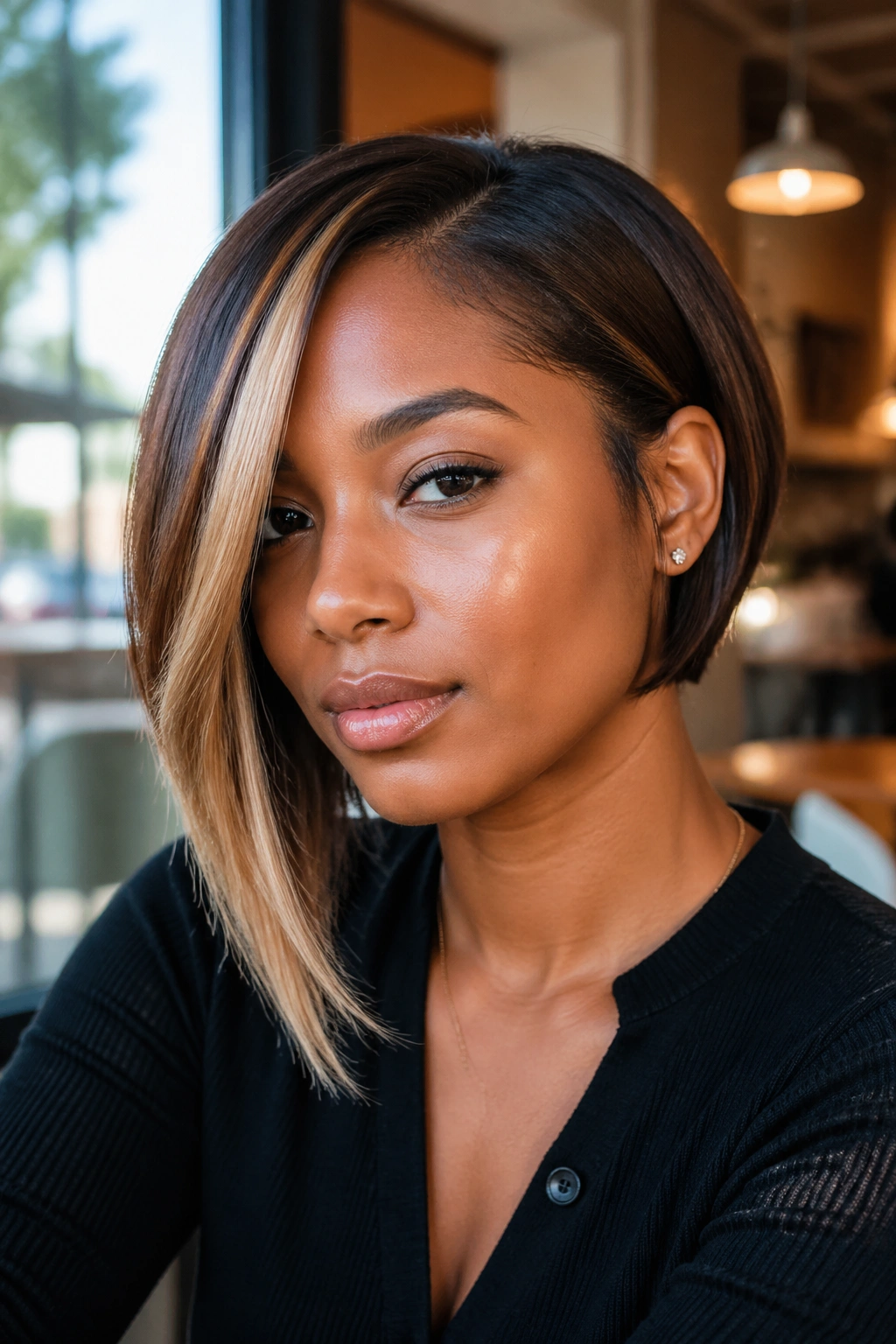
Why does an asymmetrical bob with a blonde money piece feel so fresh? Because the cut does half the drama before the color even enters the room. One side sits a little longer than the other, which gives the shape movement and edge. Then the blonde money piece drops light right where the face needs it most.
This style likes confidence, but it doesn’t need a loud color job. A soft beige blonde or warm sand blonde around the front can do more than a full head of bright pieces ever could. On textured hair, that front placement shows the curl pattern and the cut line at the same time. You get lift, brightness, and shape.
How to wear it
Keep the longer side brushing the collarbone or just below the jaw, and let the shorter side tuck closer to the cheek. The front blonde piece should sit where your part naturally opens the face. If the color is too far back, the effect gets lost.
A few notes make a big difference:
- Lift the money piece carefully; over-lightening turns it dry fast
- Ask for a toner that stays beige, not icy
- Set the rest of the bob in loose curls or a defined twist-out
- Use edge control sparingly so the front doesn’t look stiff
This cut suits people who want a bit of swagger without giving up structure. It’s the kind of bob that looks good from the front, side, and even half-tucked behind one ear.
5. Layered Wash-and-Go Bob with Auburn Balayage
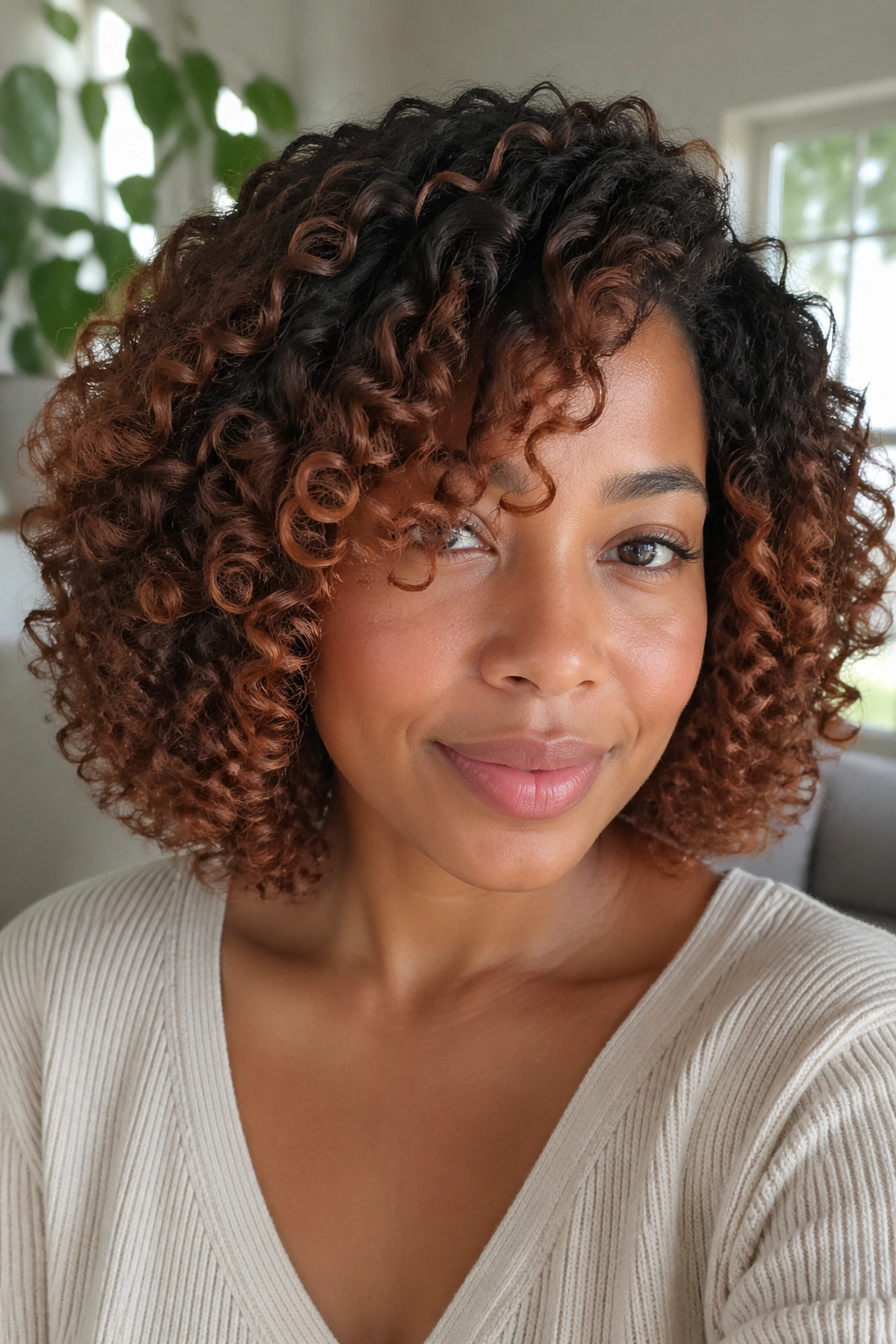
A layered wash-and-go bob with auburn balayage is one of my favorite answers to the “I want color, but I don’t want to flatten my curls” problem. The layers stop the bob from turning triangular. The balayage follows the curl pattern instead of sitting on top of it like paint. And auburn—good auburn, not flat red—gives depth without stealing the show.
The trick is placement. Lightened strands should sit where the curls bend and catch, usually around the outer layers, the front edges, and a few spots through the crown. When the hair dries, the auburn doesn’t read as one color. It looks like the curls themselves are warmer in some places and deeper in others.
A wash-and-go shape is easiest when the haircut is done with shrinkage in mind. That means the bob may be cut longer than you expect when wet. Once it dries, it settles into the right length. A blunt line can work here, but I’d still ask for soft internal layering so the curls can stack without puffing out.
Use a lightweight leave-in, then a gel that gives hold without crunch. Crunch can be broken later. Flat curls are harder to fix. Auburn balayage loves definition, so give the curls a clean finish and let the color do the rest.
6. Blunt Micro Bob with Blue-Black Gloss
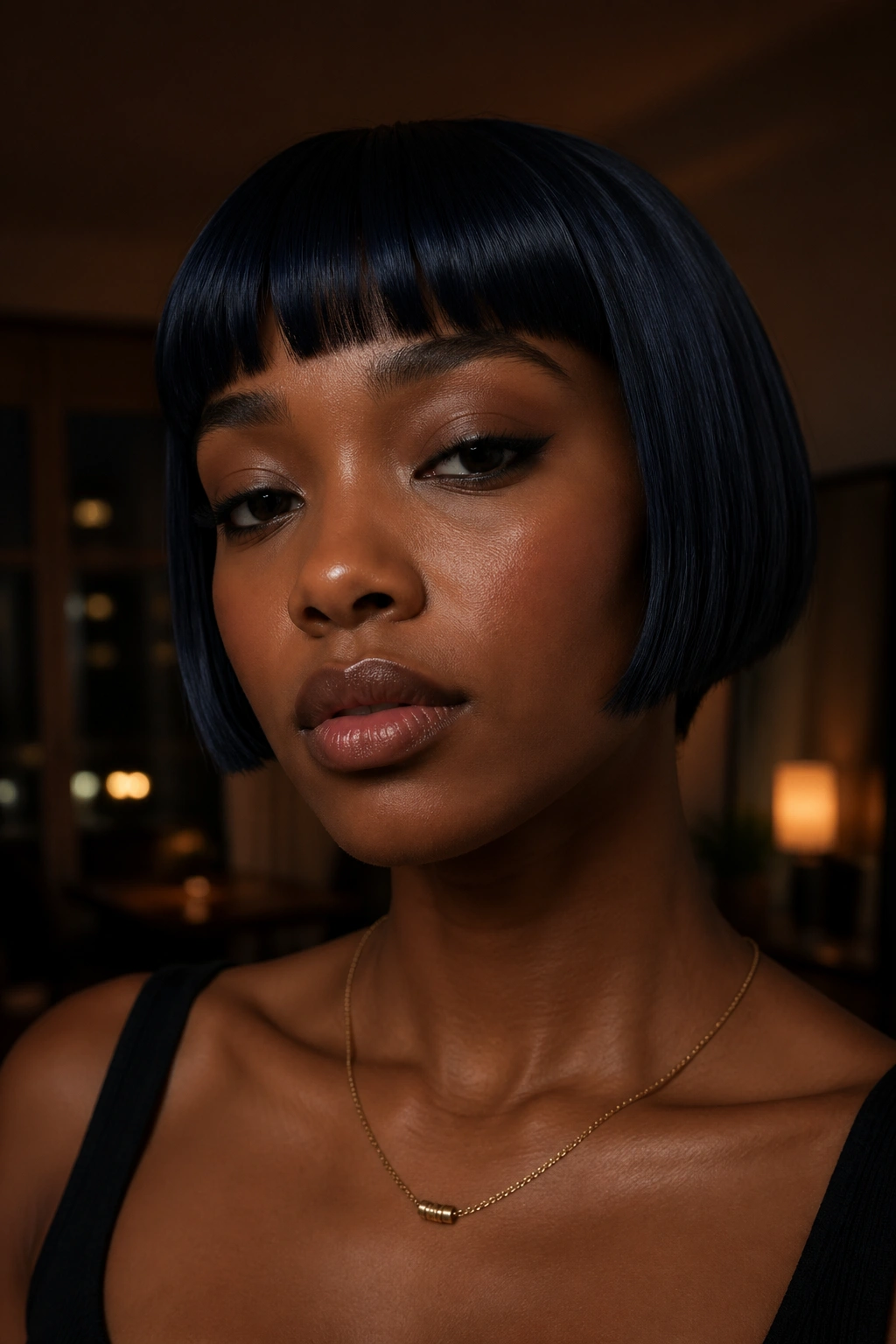
A blunt micro bob with blue-black gloss does not try to be soft. That’s the whole point. The line is crisp, the length is short, and the color sits so deep it almost looks wet in low light. On natural hair, that kind of contrast can feel very modern without leaning into anything trendy or fussy.
Compared with layered bobs, this one is all about structure. There’s less movement, more edge. That makes it a strong choice for dense curls that can hold shape after stretching or for a silk-pressed finish that gets wrapped and preserved at night. Blue-black gloss adds depth without requiring a bright lift. It’s darker than black in the right light, which gives the hair a cool sheen instead of a flat finish.
The maintenance is simpler than people expect. A gloss or demi-permanent color can refresh the tone without chewing up the hair shaft the way a heavier lightening service would. Keep the ends clipped clean every six to eight weeks if your hair grows fast, because the entire style depends on that sharp line.
This cut suits someone who likes precision. Not perfection. Precision. There’s a difference, and this bob lives in it.
7. Angled Bob with Cinnamon and Chestnut Panels
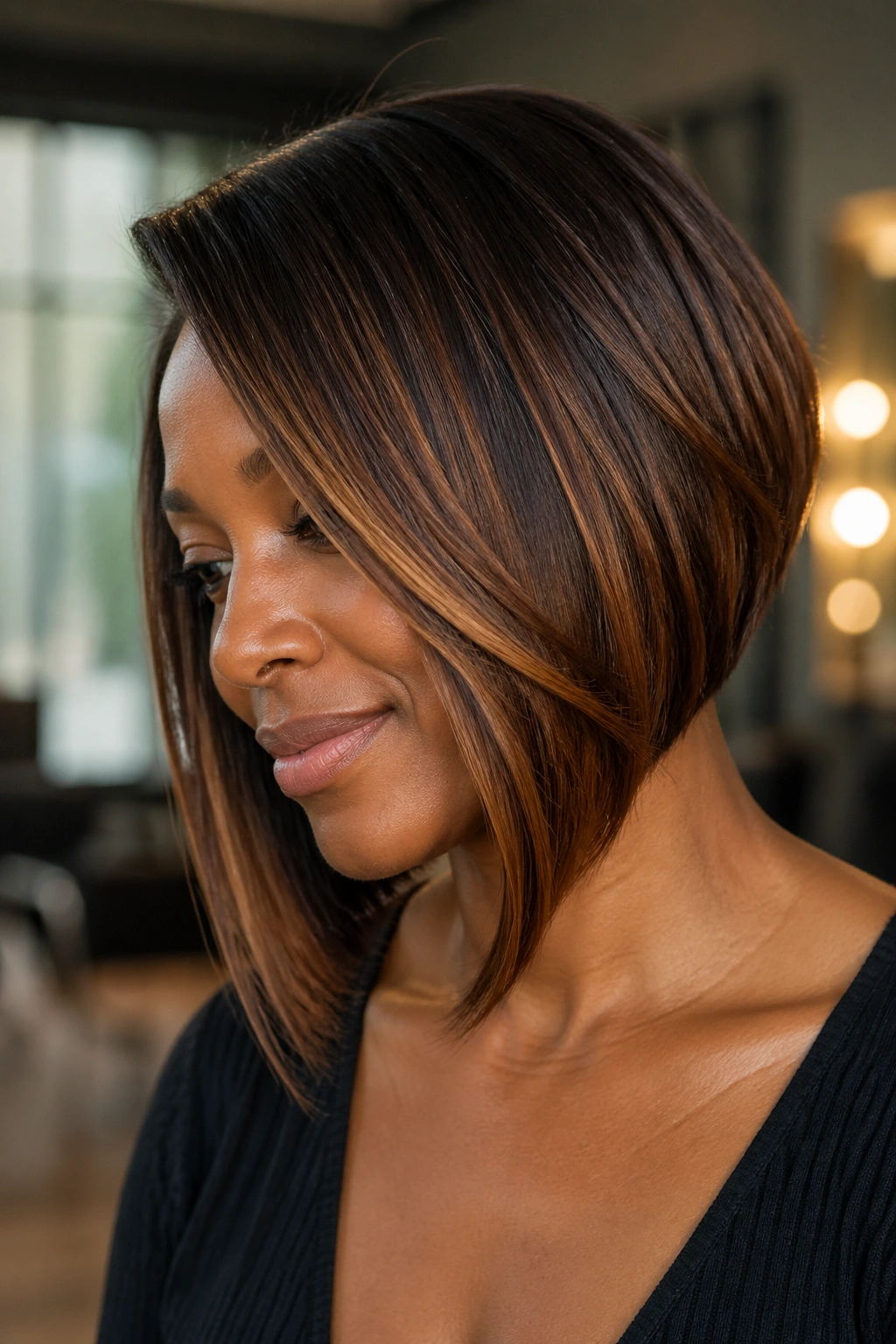
The angled bob with cinnamon and chestnut panels feels like a haircut that was made for movement. The back sits shorter, the front angles down, and the color panels give the whole thing a lifted, dimensional look. It’s especially nice on thick natural hair because the shape helps remove bulk near the nape while the front keeps a bit of length and swing.
I like this cut on clients who want more than a simple one-tone bob but don’t want the upkeep of a brighter color story. Cinnamon brings warmth. Chestnut keeps it grounded. Together, they create a soft contrast that doesn’t scream for attention. You notice it when the light hits the front sections or when the hair swings across the cheek.
A salon chair version of this look often starts with the cut first, then the color is painted into the angled pieces so the front reads brighter than the back. That’s the smart move. If every panel is equally light, the shape flattens out.
- Keep the nape shorter to avoid a heavy stack
- Paint the lighter pieces on the front angle
- Use a medium-size round brush if you’re blow-drying
- Finish with a satin scarf at night so the front doesn’t frizz up first
The result is clean, warm, and easy to wear with hoop earrings, turtlenecks, or a bare neck. Small details matter here.
8. Curly Bob with Honey Face-Framing Highlights
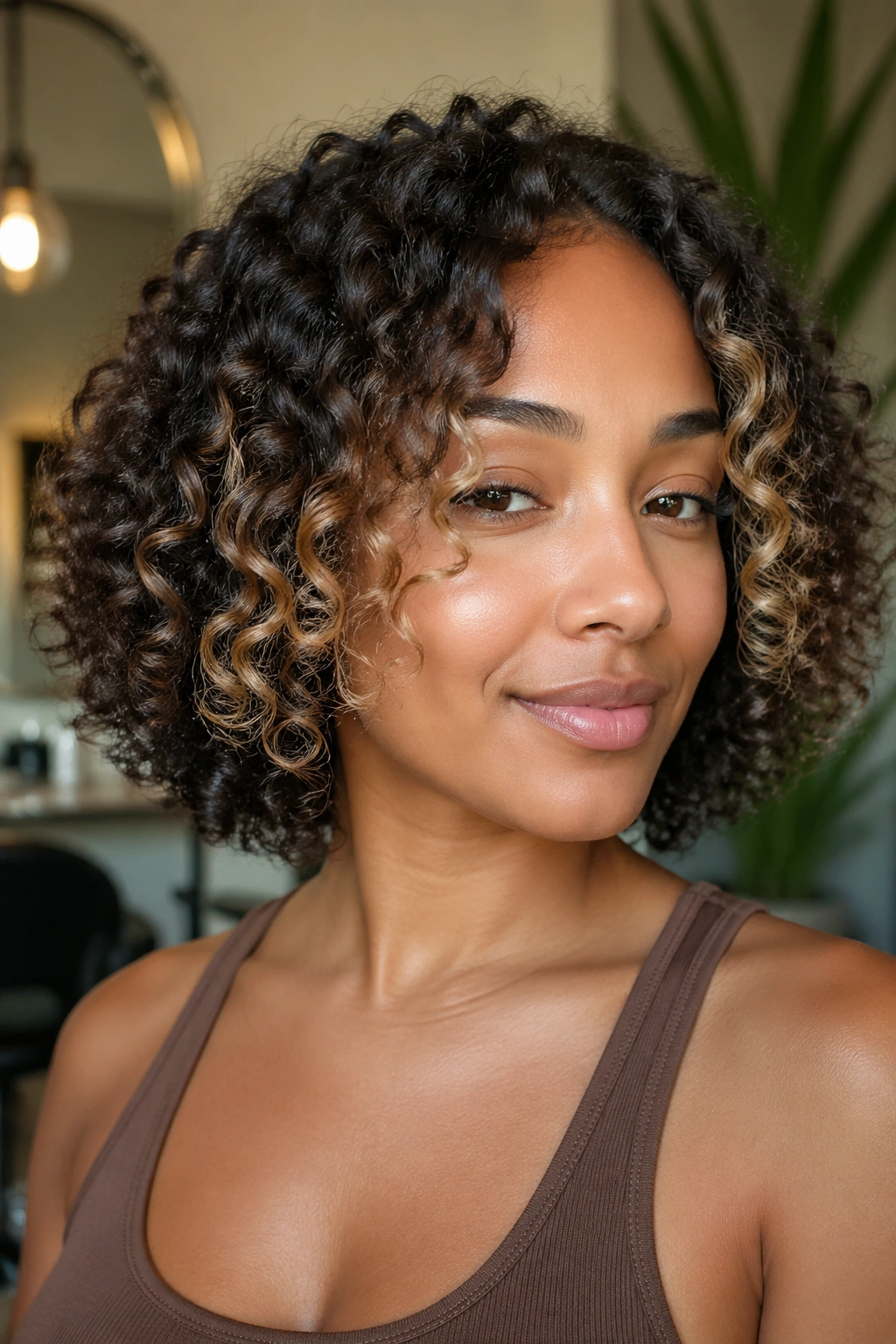
If you want color without a heavy commitment, a curly bob with honey face-framing highlights is hard to beat. The cut stays friendly and wearable. The highlights land where the eye goes first—near the temples, cheekbones, and outer curl line. That gives the face a bit of lift without changing the whole head.
What makes it different
Honey is softer than blonde and brighter than caramel. On dark curls, it warms the skin and keeps the bob from looking too dense around the edges. The effect is subtle when the curls are dry and defined, then a little brighter when the hair is stretched or tucked behind the ears.
You don’t need many pieces. In fact, too many highlight strands can crowd the cut and make it look busy. Three to six well-placed face-framing sections can do the job if they’re painted with a gentle hand.
How to get the most from it
- Place the lightest pieces around the front curl fall
- Keep the roots darker for a soft blend
- Refresh with a gloss between color services
- Use a curl custard or gel that defines without clumping
This is one of the easiest colored bob cuts to wear day after day. It works for office settings, weekend errands, and nights out, which is a rare thing. Most color choices lean one way or another. Honey highlights sit in the middle and do a lot with very little.
9. Stacked Bob with Rose Brown Tones
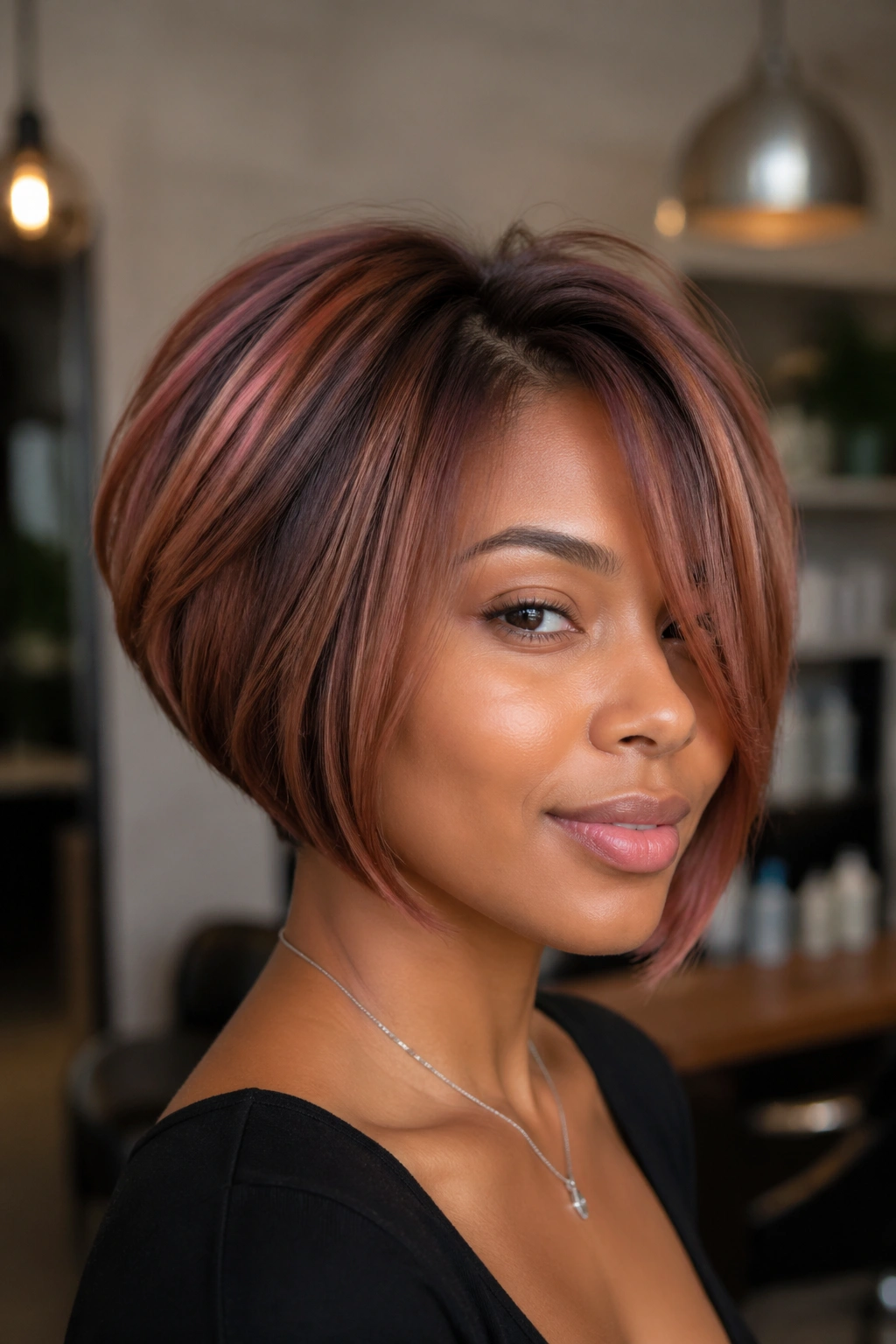
A stacked bob with rose brown tones has a softer mood than a classic dark bob, but it still feels tidy and shaped. The stacked back gives lift where natural hair can get bulky, and the rose brown color adds a muted warmth that sits somewhere between brown, mauve, and dusty copper. It’s one of those shades that looks subtle until the light changes.
The stacking matters more than the color name. The back is cut shorter and built up in layers so the crown has room to rise. That keeps the bob from sinking into the neck. Rose brown then softens the top without making the whole cut feel sugary or pastel. A lot of people assume rose-based shades are only for straight hair. They’re not. On textured hair, they can look sophisticated and a little unexpected.
If your hair is fine but dense, this cut can work well because the stack removes weight. If your hair is very coarse, the stacked shape helps, but you’ll want the layers checked often so the back doesn’t grow into a shelf.
A light hold mousse can help keep the crown from collapsing. Don’t overload the back with cream. That ruins the architecture. And in a stacked bob, the architecture is the point.
10. Shaggy Bob with Sunlit Copper Peekaboo
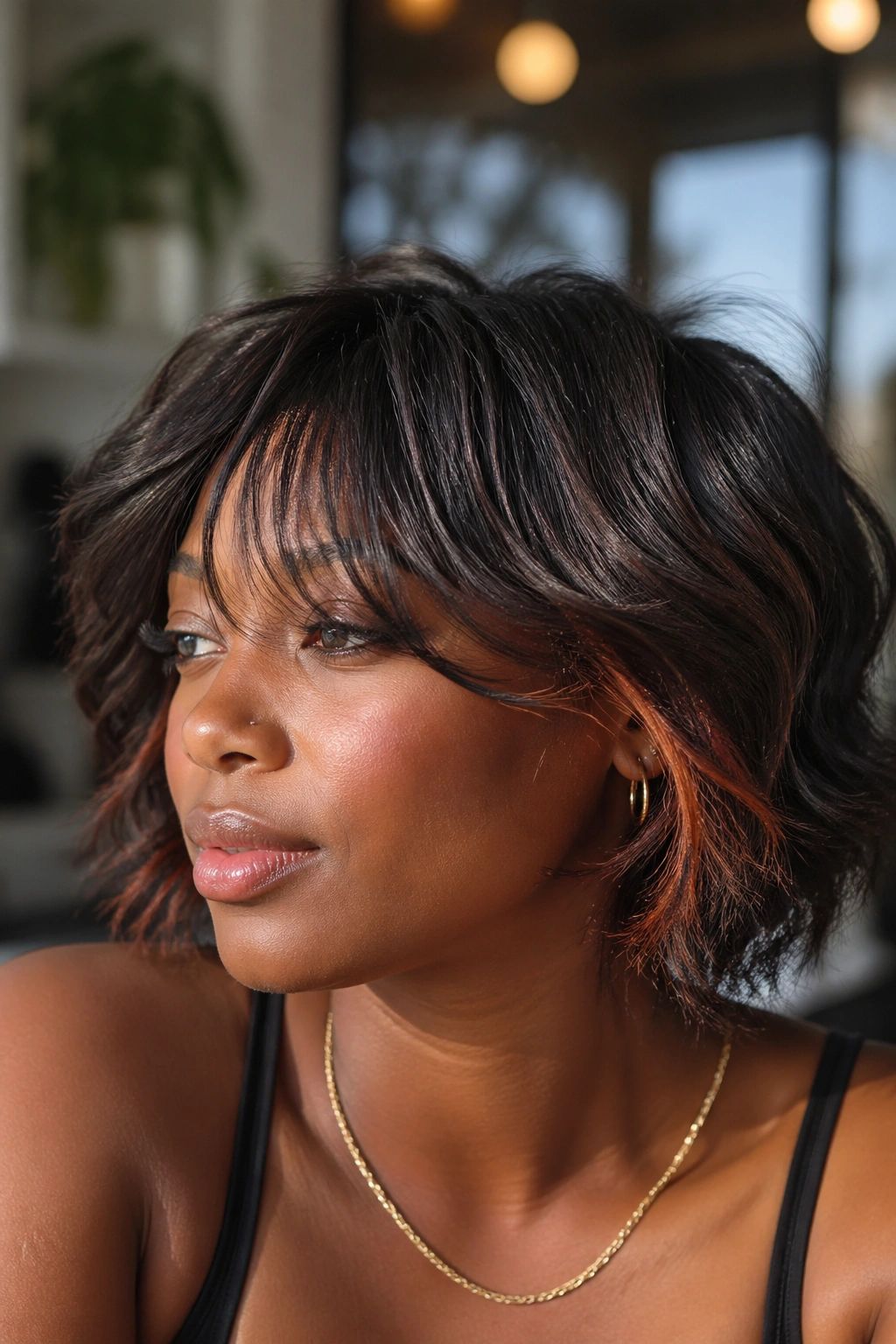
A shaggy bob with sunlit copper peekaboo color feels relaxed in the best way. The shaggy layers make the bob move. The hidden copper pieces add warmth without turning the whole haircut into a full color job. It’s the kind of style that works when you like texture first and color second.
Copper peekaboo placement should live under the top layers, not scattered everywhere. That way the color flashes when the hair shifts, lifts, or gets pinned back. On twist-outs and braid-outs, it looks especially good because the curls separate and show little glimpses of warmth underneath.
This cut is friendly to people who do not want to spend a lot of time styling every morning. The shaggy shape already has a casual feel. A soft curl cream, a diffuser, or a simple air-dry can be enough. The color does not need to be the loudest thing in the room.
A small warning: copper fades fast if you wash too often with harsh shampoo. Use a sulfate-free cleanser, keep the water lukewarm, and refresh with a gloss or color-depositing conditioner when the tone starts looking tired. That little bit of maintenance keeps the peekaboo effect from turning dull.
11. Finger-Waved Bob with Espresso and Mahogany
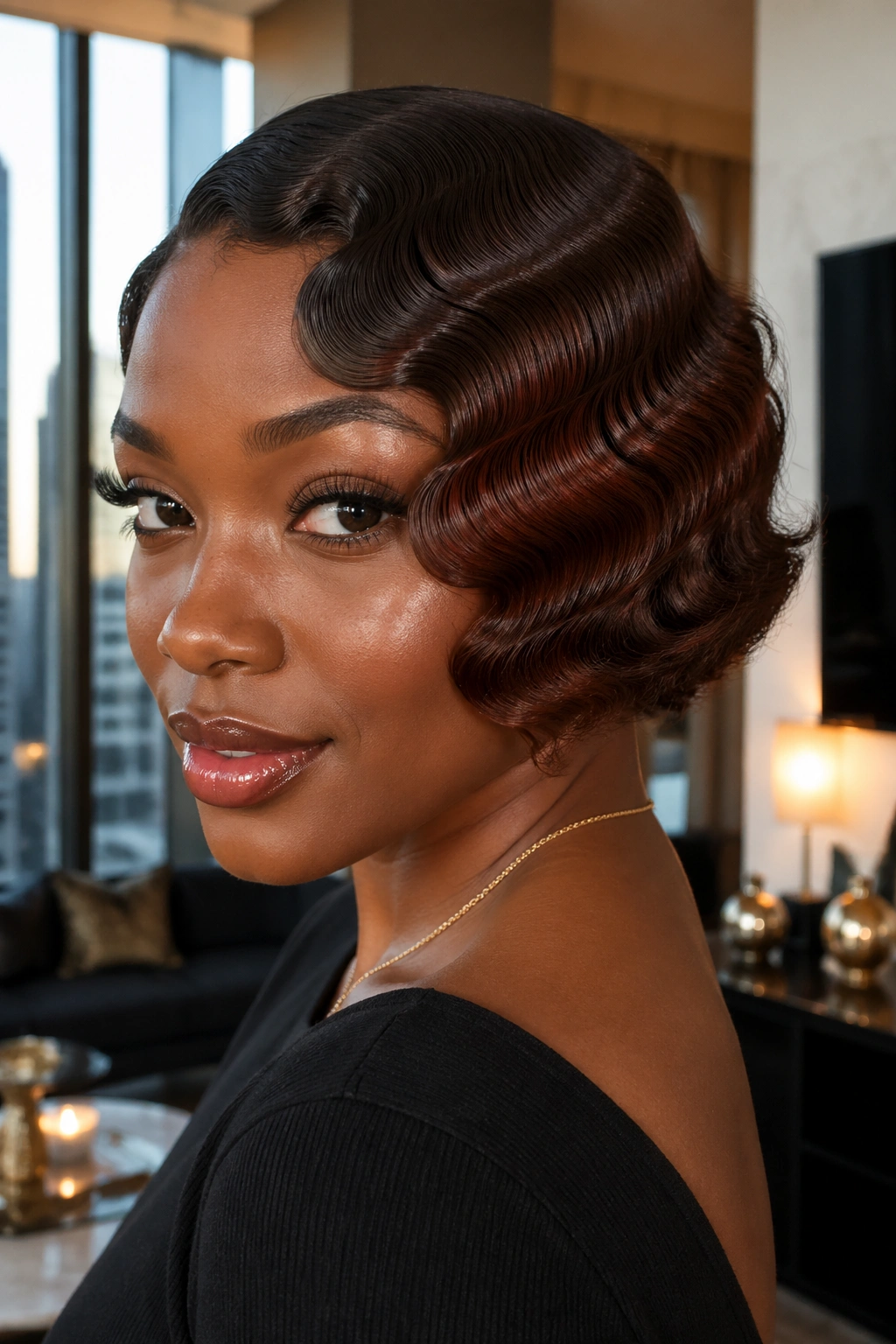
A finger-waved bob with espresso and mahogany tones is the cut I’d pick when I want polish without stiffness. Finger waves on natural hair take some setting, usually with molding foam, clips, and patience, but the payoff is worth it. The hair lies close to the head, and the color bands move from deep espresso to a softer mahogany sheen.
Unlike a fluffy wash-and-go bob, this one has a deliberate finish. That makes it a smart choice for events, photos, or any day when you want the style to feel controlled. Mahogany is subtle enough to stay classy but warm enough to keep the black-brown base from feeling flat.
The set matters. Let the waves dry all the way before touching them. If you unravel too early, you lose the ridge pattern and end up with frizz around the temples. A light shine spray on the surface can help, but go easy. Too much product makes the waves slide apart.
This style is not the fastest to do. No pretending otherwise. But when it’s done well, it looks intentional from every angle. The kind of finish that makes a bob feel dressed up without needing extra accessories.
12. Jaw-Length Bob with Peekaboo Plum
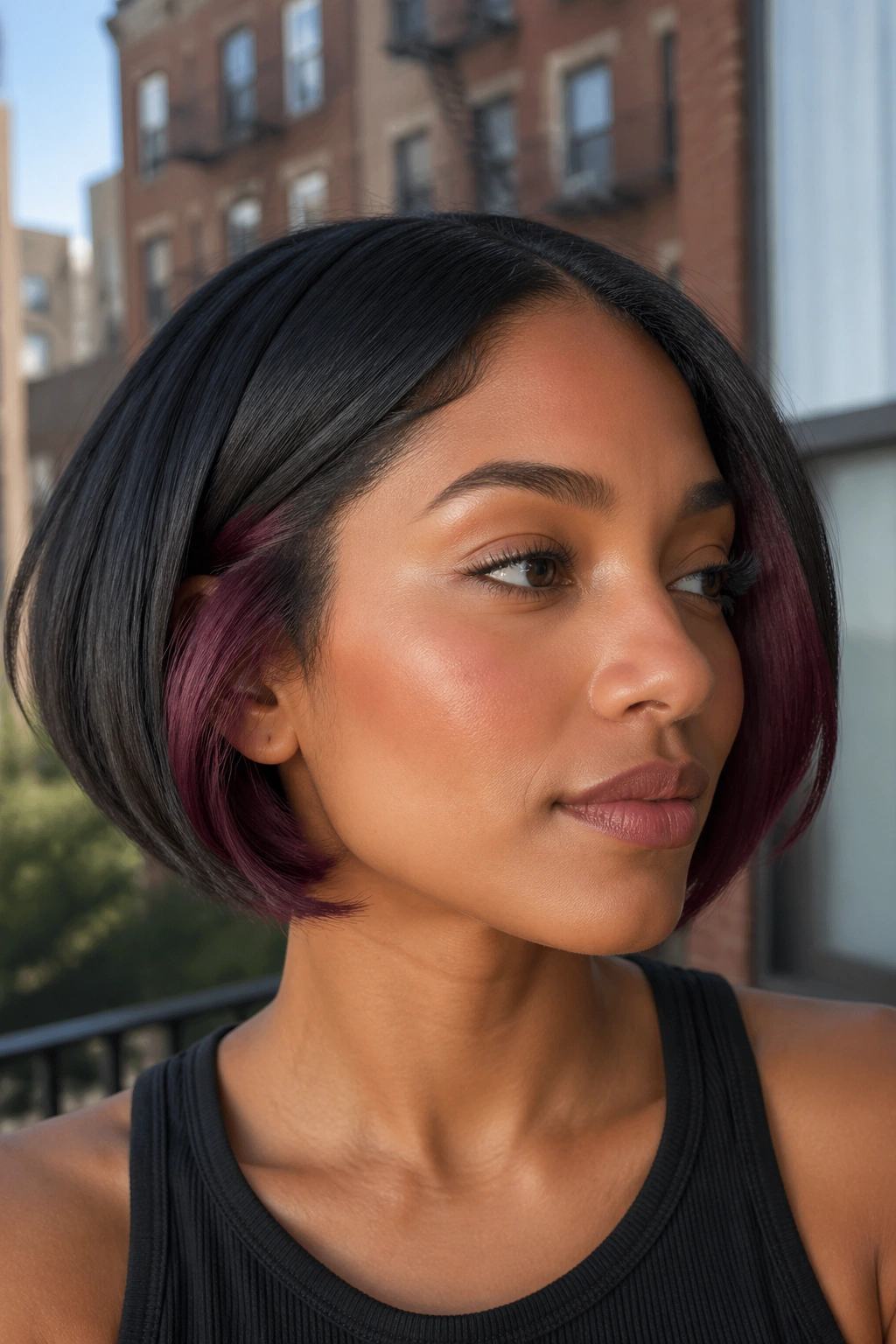
A jaw-length bob with peekaboo plum is for anyone who wants short hair with a little surprise built in. The exterior stays clean and neat. The plum sits underneath, so the color peeks out when you turn your head, tuck one side back, or let the wind work for you. It’s low commitment in the best way.
Why does this look work so well? Because plum is richer than purple and softer than violet, which means it blends into dark natural hair instead of fighting it. The short length gives the cut edge, while the hidden color keeps it playful. You get both without making the whole bob loud.
Where the plum should sit
Keep the color in the underlayer and a few pieces near the temples if you want more movement. If you place it too high, the peekaboo effect disappears. Too low, and only you will know it’s there.
A bob this short can be worn curly, blown out, or flat-ironed. Curly and defined gives it the most personality. A neat side part also helps the plum show up in little flashes. If the cut starts at the jawline and curves slightly inward, the face gets a clean frame without needing much styling.
This is the sort of bob that looks like a secret. I like that.
13. Twist-Out Bob with Bronze Ends
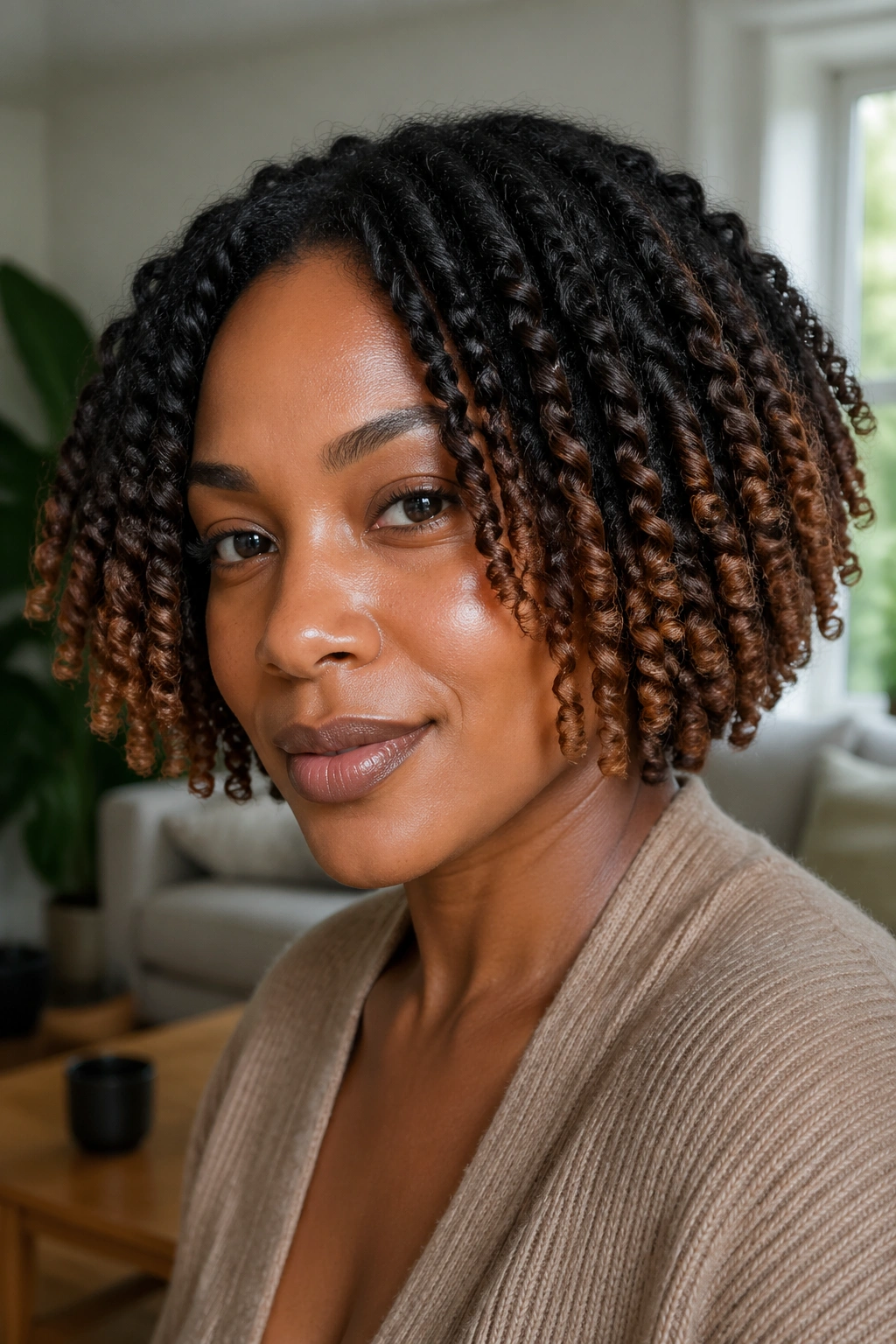
A twist-out bob with bronze ends gives natural texture a soft glow without changing the whole head of hair. The twist-out creates the shape, the bronze tips add a warm finish, and the result feels dimensional even when the styling routine stays simple. This one works especially well for coily hair because the twist pattern gives structure before the color even enters the picture.
Here’s the part people miss: bronze looks best on the ends when the roots stay deeper. That contrast keeps the cut from looking washed out. If every strand is lightened the same way, the shape gets fuzzy. Bronze on the ends only? Much better. You get movement each time a curl separates.
A few quick notes help:
- Two-strand twists hold the shape better than loose braids
- Set the twists on fully dry hair to avoid puffing
- Unravel with a light oil on the fingers, not a heavy cream
- Trim the ends often so the bronze pieces stay neat, not stringy
The style lasts longer than people expect if you pineapple it at night and keep your hands out of it. Twist-outs have a habit of getting bigger and prettier by day two, which makes the bronze ends show even more.
14. Tapered Bob with Golden Auburn Crown
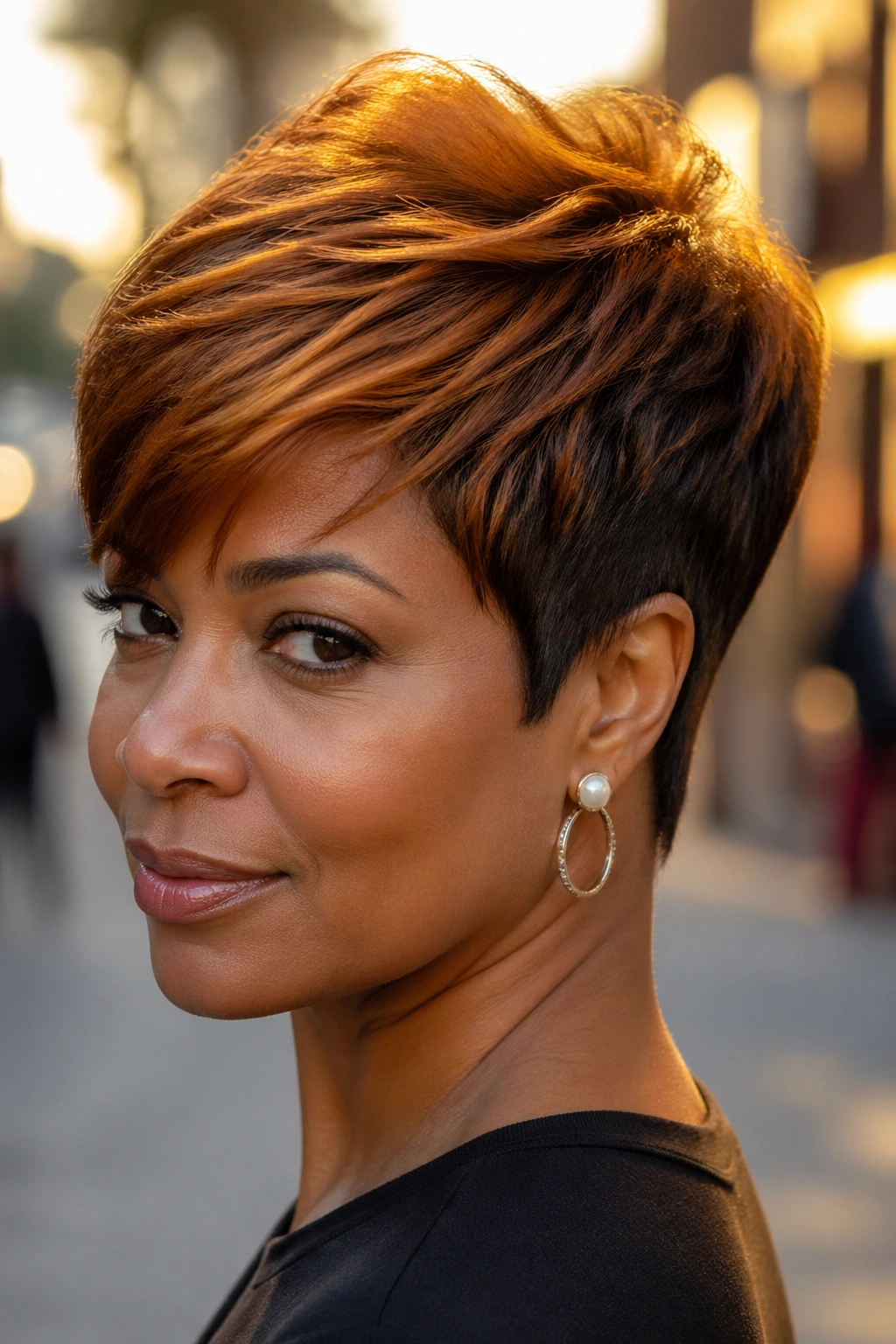
A tapered bob with a golden auburn crown can make coarse natural hair look lighter and more lifted up top. The taper shortens the back and sides, while the crown keeps a little fullness and height. That gives the cut a strong profile from the side and a clean neckline from the back. It’s practical. It’s stylish. It also makes color placement much easier to control.
Why the crown matters
Golden auburn on the crown catches the eye first, which is useful because that’s where a tapered shape needs energy. Without color, the top can sometimes look heavy or flat. With a warm auburn crown, the head looks taller and the cut feels more open.
This shape works well if you like low-maintenance mornings. The taper keeps bulk down, so you spend less time fighting the sides. The color gives the top personality, so you do not need a complicated style to make it feel finished.
- Keep the sides a shade deeper than the crown
- Ask for soft blending at the transition line
- Use a curl sponge or small flexi rods if you want more definition
- Protect the crown with satin at night, since that area shows wear first
A tapered bob can be sharp, but it does not have to feel strict. Golden auburn softens the whole thing. That’s the part I like most.
15. Sleek Middle-Part Bob with Dimensional Toffee Lowlights
A sleek middle-part bob with dimensional toffee lowlights is the quiet one in the group, and I mean that as praise. It does not shout. It sits cleanly, frames the face evenly, and lets the mix of dark and warm brown do the talking. On natural hair that has been stretched or silk pressed, the middle part gives the bob a long, neat line that feels balanced from forehead to chin.
Toffee lowlights are useful because they deepen the hair without making it look heavy. A few lowlight pieces through the mid-lengths and ends stop the cut from going flat, especially if the base color is naturally dark. On textured hair, that dimension matters more than people think. A one-tone sleek bob can look great in photos and dull in person. Lowlights fix that.
The middle part works best when the line is clean and the ends are trimmed sharp. Keep the part straight, then tuck the hair behind the ear on one side for a small shift in shape. That tiny move can change the whole mood of the cut.
If you want a colored bob that you can wear to work, dinner, or a weekend brunch without fussing over it, this is the one I’d put near the top of the list. It’s calm. It’s polished. It still has depth when you look closely, and that’s the part that keeps it interesting.
