



Beachy hair is easier to fake when the cut does half the work. The best wavy bob cuts don’t depend on curling-iron gymnastics or a thick cloud of salt spray; they start with shape, weight, and ends that move instead of sitting there like a helmet.
That’s the part people miss. A bob can be short and still look soft, but only if the length, layers, and perimeter are doing a little dance together. Too blunt and it can feel boxy. Too layered and it can puff out at the sides like it has opinions.
The sweet spot is different depending on your hair density, face shape, and how much wave you actually have to work with. A fine-haired person usually needs a cleaner outline and a little lift at the crown. Thick hair often needs weight removed in the right places, not hacked away everywhere. And if your hair already bends on its own, the cut should support that bend instead of fighting it.
Some of these bobs are polished, some are shaggy, and some look like you stepped out of salt air without pretending to be low-effort about it. That mix matters. Real beachy hair usually looks undone, but the cut underneath is doing a lot of quiet work.
1. Collarbone-Grazing Wavy Bob With Loose Ends
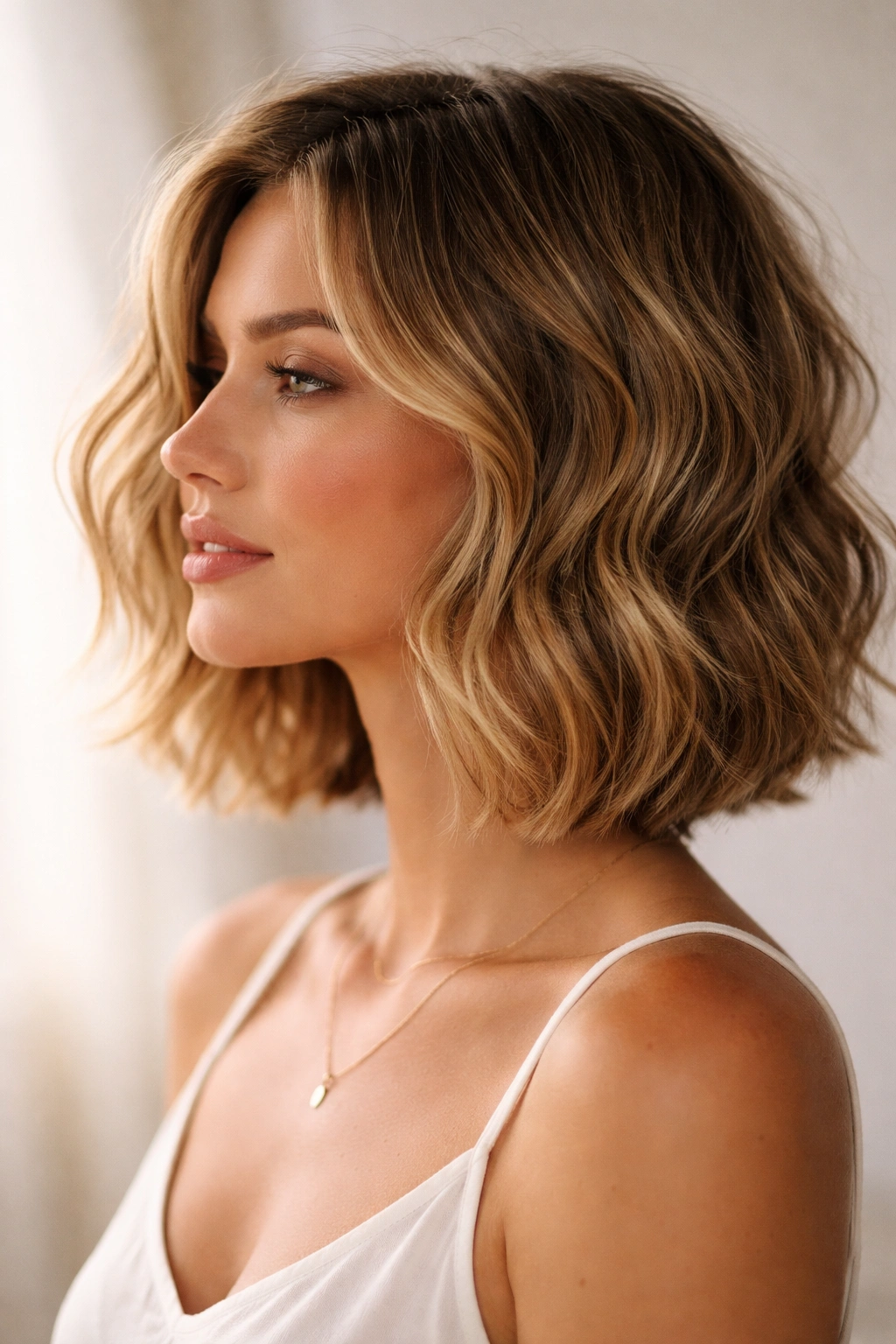
Collarbone length is the sweet spot if you want movement without the awkward puff that can happen at shorter lengths. It sits long enough to tuck behind the ears, but short enough that the wave pattern stays visible instead of dropping flat under its own weight.
Why it reads beachy
The reason this cut works is simple: the ends hover where the neck and shoulders start to bend the hair outward. That gives you a soft swing when you walk, and it keeps the bob from looking too formal. If you have natural texture, those ends usually catch a wave on their own after a rough dry.
Ask for light point cutting through the last inch if your ends are blunt and heavy. You do not want the whole shape shredded. You want the bottom edge to move. A tiny amount of internal layering near the crown can help, but too much will make the style frizzier than beachy.
- Best for fine to medium hair that needs shape without too much bulk.
- Sits nicely at the collarbone, usually around 10 to 12 inches from the root depending on neck length.
- Looks good with a 1-inch curling iron or a diffuser on low heat.
- Works especially well if you like tucking one side behind one ear.
Pro tip: keep the perimeter soft, not wispy. That one choice makes the whole cut look more expensive.
2. Chin-Length French Bob With Airy Waves
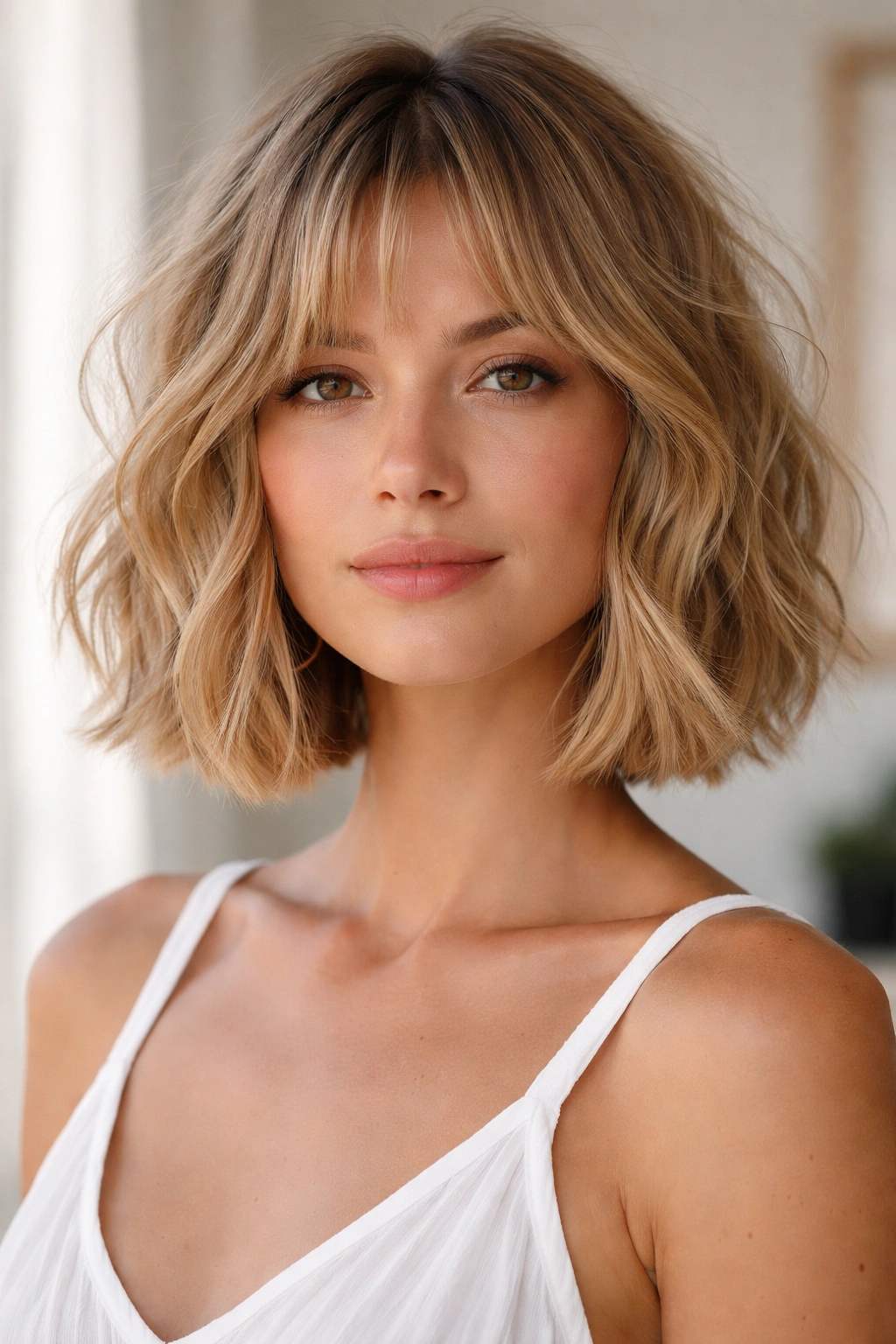
A chin-length French bob can look beachy, not severe, if the wave is soft and the edge stays blunt. That’s the trick. The line gives the style confidence, and the wave keeps it from looking too crisp for a casual day.
This cut is brilliant on hair that doesn’t love too much layering. Chin length shows off the jaw, the cheekbones, and any bend in the hair near the face. It also dries fast, which matters more than people admit. If your hair tends to go flat under hats, hoods, or humidity, this shape wakes it back up with very little effort.
The beachy part comes from styling, but the cut sets the tone. Use a lightweight mousse at the roots, rough-dry until your hair is about 80% dry, then bend a few front pieces with a wand and leave the ends a little imperfect. Don’t curl every strand. That’s how it starts looking dressed up instead of sun-tossed.
This one suits people who like structure but don’t want anything stiff. Short. Sharp. Easy to wear. That combination is hard to beat.
3. Soft A-Line Wavy Bob
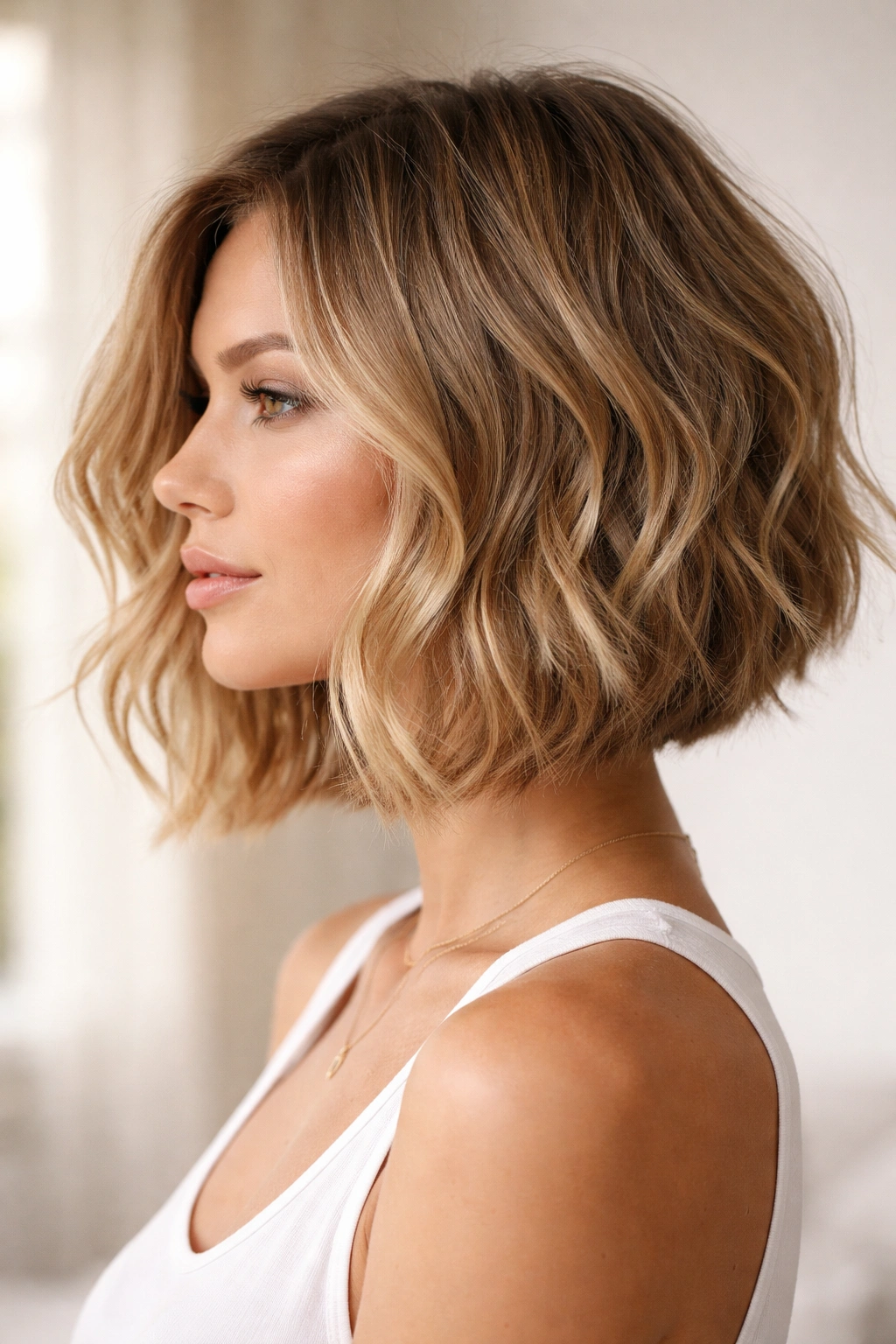
Why does a tiny drop in length matter so much? Because an A-line bob—slightly shorter in the back and a touch longer in front—builds motion into the shape before you even pick up a styling tool. That little angle keeps the front pieces skimming the jaw while the back lifts cleanly off the neck.
How to ask for it
Tell your stylist you want a gentle A-line, not a dramatic wedge. The difference is huge. A harsh angle can feel dated fast, while a soft one gives you that easy, beachy drape that works on straight and wavy hair alike.
This cut is especially useful if your hair tends to stick out at the nape. The shorter back removes weight where the hair usually collapses, and the longer front keeps the style from looking too blunt. On a windy day, it still moves. That matters.
What makes it flattering
- The longer front pieces stretch the face a little.
- The shorter back gives lift without teasing.
- The angle can be subtle enough to wear in a low ponytail.
- It plays nicely with side parts and off-center parts.
I like this shape on people who want polish without losing softness. It has a little edge, but not too much. That’s the charm.
4. Shaggy Layered Bob With Choppy Texture
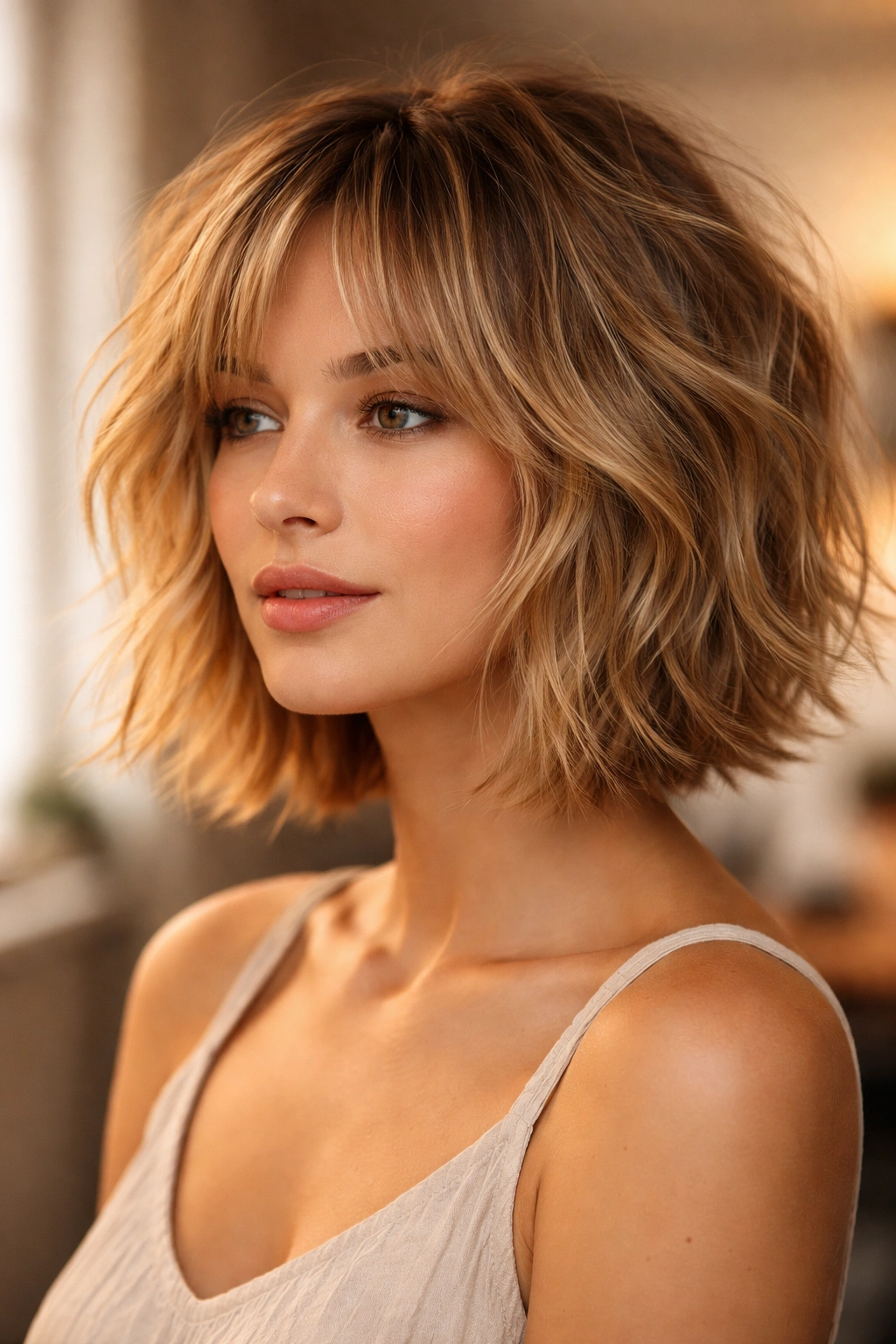
If your hair dries into a fluffy triangle by 3 p.m., this is the cut that can save you. A shaggy bob removes weight where thick hair swells and adds movement where straight hair needs help pretending it has a wave pattern. It looks relaxed because it is built to look that way.
The key is the layers. Not random layers. Strategic, uneven layers that start around the cheekbone or just below it can break up the bulk and let the ends flick out instead of hanging like a curtain. A stylist who knows how to slice or slide cut can make this look rough in the right way. Too many short pieces near the top, though, and you get a mushroom. Nobody wants that.
- Best on medium to thick hair.
- Good if your wave pattern is loose and irregular.
- Works with air-drying, scrunching, and a diffuser.
- Can be worn with bangs, but the fringe should stay soft.
A shaggy bob is not neat. That is the point. It has a bit of attitude and a lot of movement, which is exactly why it looks beachy without trying too hard.
5. Blunt Wavy Bob With Invisible Layers
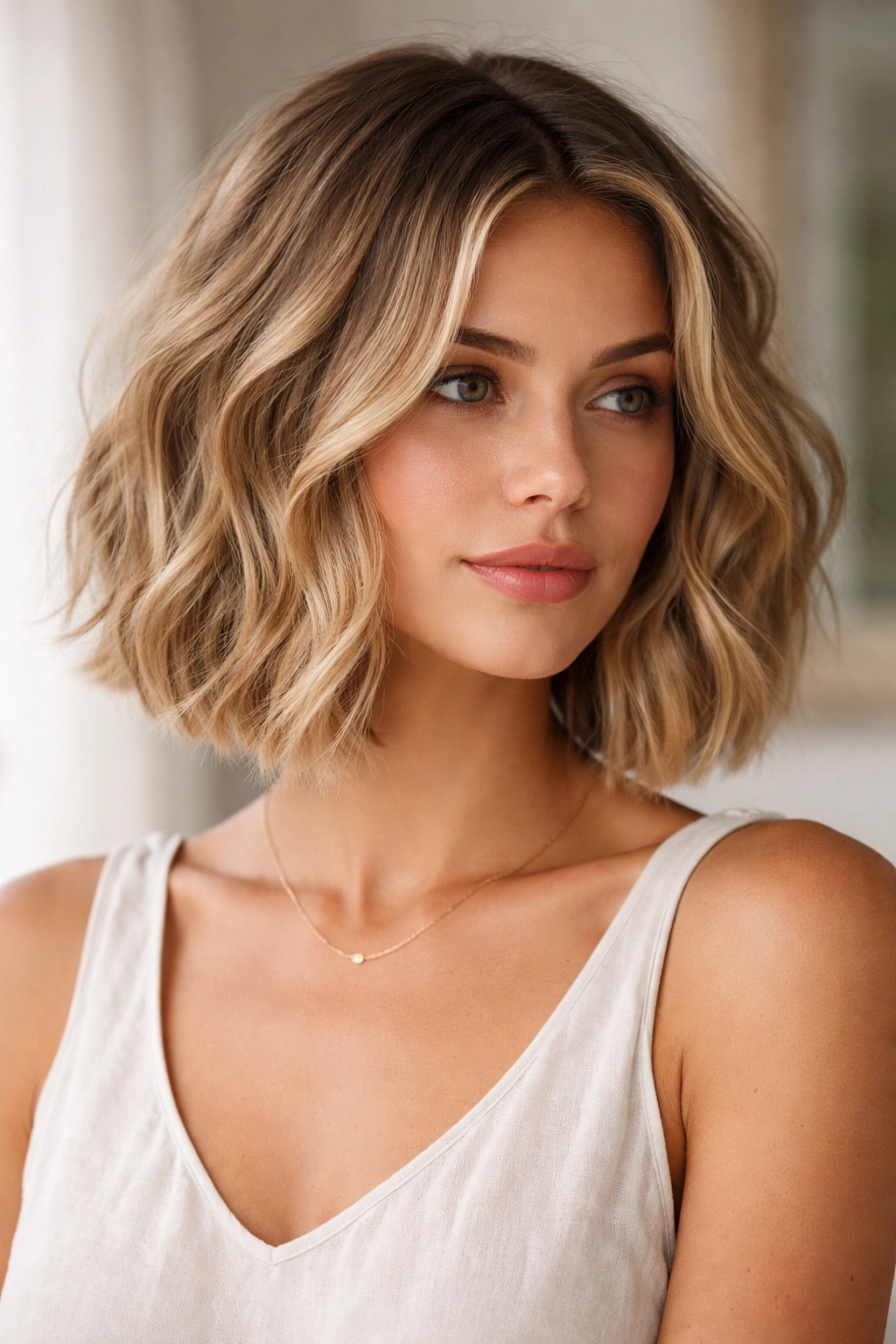
Layer-happy bobs get all the attention, but a blunt wavy bob can look even more beachy because the shape is cleaner. You get that solid line at the bottom, then the wave pattern breaks it up just enough to keep the haircut from feeling stiff.
The hidden trick is invisible layering. The perimeter stays blunt, but the stylist removes just enough weight inside the shape to let the hair bend. On hair that is fine or medium, that keeps the bob from collapsing. On hair that is thick, it keeps the bulk from turning the ends into a shelf. It sounds fussy, but it’s one of the easiest cuts to wear once it’s done correctly.
This style looks especially good when the wave is loose and a little imperfect. Think broad bends, not tight curls. A flat iron wave works if you keep the clamp loose and alternate directions, but air-dried texture is even better. Add a small amount of cream through the mids and leave the ends mostly alone.
I’m partial to this shape because it ages well. It doesn’t scream trend. It just looks like healthy hair that happens to have good movement. That matters more than people like to admit.
The downside? If your hair is very dense and you skip the internal debulking, the blunt line can sit too heavy. That’s a styling and cutting issue, not a flaw in the shape itself.
6. Asymmetrical Wavy Bob
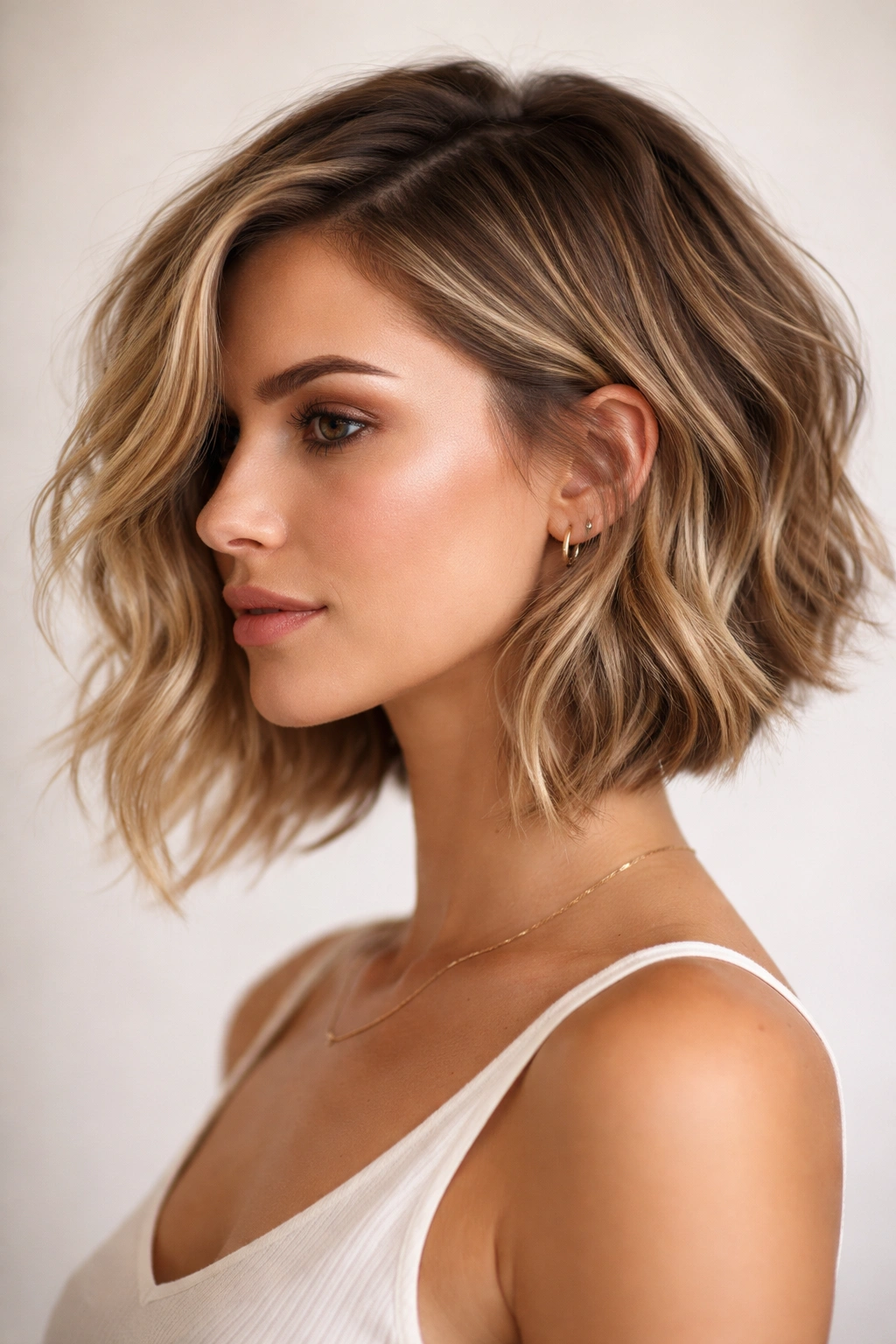
Unlike a symmetrical bob, this one leans a little, and that lean changes the whole mood. One side is usually about half an inch to an inch longer than the other, which is enough to create interest without tipping into costume territory. Subtle matters here.
The asymmetry gives the eye somewhere to go. If one side skims the jaw and the other dips lower, the wave pattern looks more intentional because it’s moving inside an uneven frame. That’s why this cut can feel so lively even when you barely style it. The shape carries some of the load.
It’s a smart pick if your face is round or square and you want a little diagonal movement. It also works well with a deep side part, because the longer side can fall forward while the shorter side opens up the cheekbone. Keep the angle soft, though. A severe slant can make the haircut feel old-fashioned fast.
Best worn with: loose bends, a light side tuck, and ends that are not over-textured.
Avoid if: you hate asymmetry in photos or you need both sides to behave the same way every morning.
7. Curly-Wavy Bob With Rounded Layers
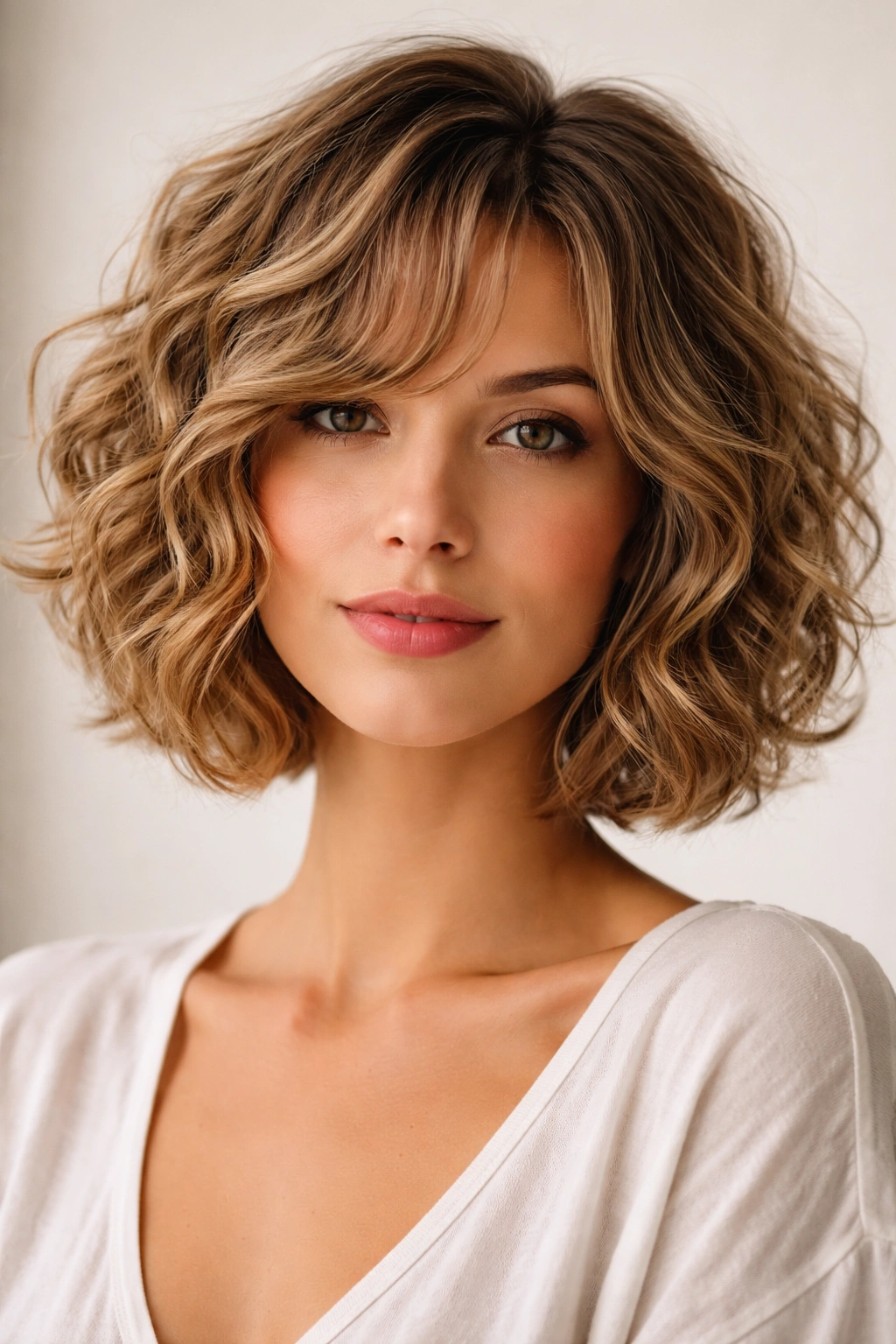
A bob for wavy hair does not have to be flat at the crown. In fact, the most flattering version often has a rounded silhouette that lets the hair rise softly from the head and then taper back in near the chin or jaw. It feels airy, not bulky.
Where the roundness comes from
The shape starts with the layers. Rounded layers help the wave fall in a curve instead of spreading outward like a triangle. That matters a lot if your hair sits between curly and wavy, because the bend pattern can get unpredictable when it’s cut too square.
This cut works well when the stylist follows the way your hair naturally dries. If a section kicks out near the cheek, that piece should probably stay a touch longer. If the crown is flat, a little elevation at the top can help. The best result usually comes from cutting the hair dry or at least partly dry, so the wave pattern is visible before the scissors finish.
- Good for 2a, 2b, and some 2c textures.
- Keeps fullness where you want it and removes puff where you don’t.
- Looks good with a diffuser, but also with simple air-drying.
- Needs trimming every 6 to 8 weeks if you want the round shape to stay clean.
The rounded version has a softer beach feel than a sharp, square bob. It’s gentler around the face, and that gentleness is what makes it feel lived-in.
8. Side-Part Beachy Bob
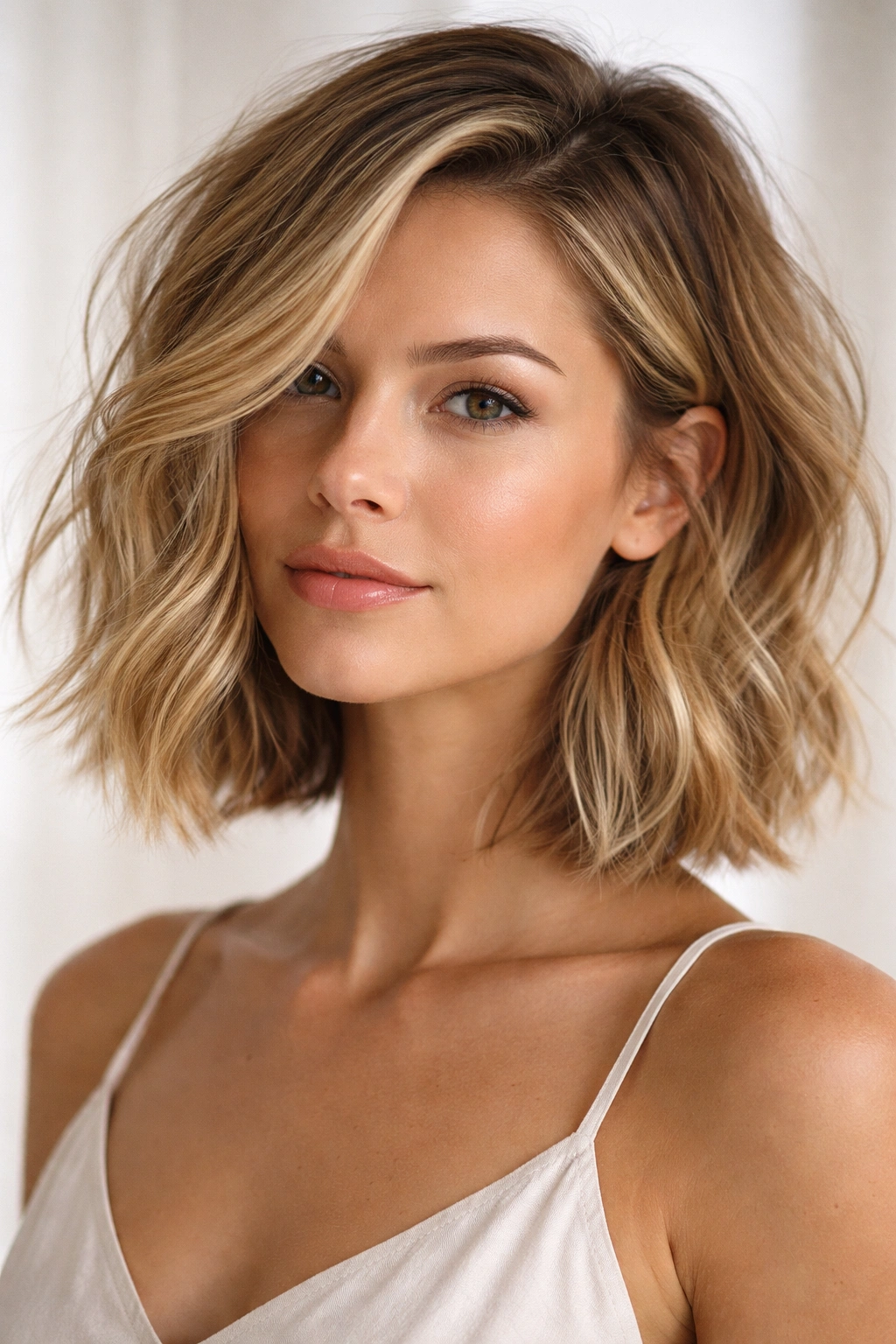
A side part does more than shift your hair. It changes the whole weight of the bob, which changes how the waves fall. One side gets more lift, the other side gets more curve, and the result looks a little less planned than a center part.
That asymmetry is exactly why this cut works so well for beachy texture. The hair never sits evenly, and that unevenness helps the style feel relaxed. If your roots are flat, a side part can also create instant volume without teasing or heavy product. Sometimes the old fixes are the best ones.
This is a strong choice for people with a cowlick or a stubborn front piece that refuses to stay put. Move the part where the hair wants to go, not where a magazine tells you it should go. Hair behaves better when you stop arguing with it.
A side-part bob pairs well with soft bends through the mids and a little extra bend around the face. Keep the root area airy and the ends loose. If the top gets too slick, the whole style loses its easy feel.
Short. Side-swept. A bit undone. That combo still works.
9. Choppy Jaw-Length Bob With Razor-Soft Ends
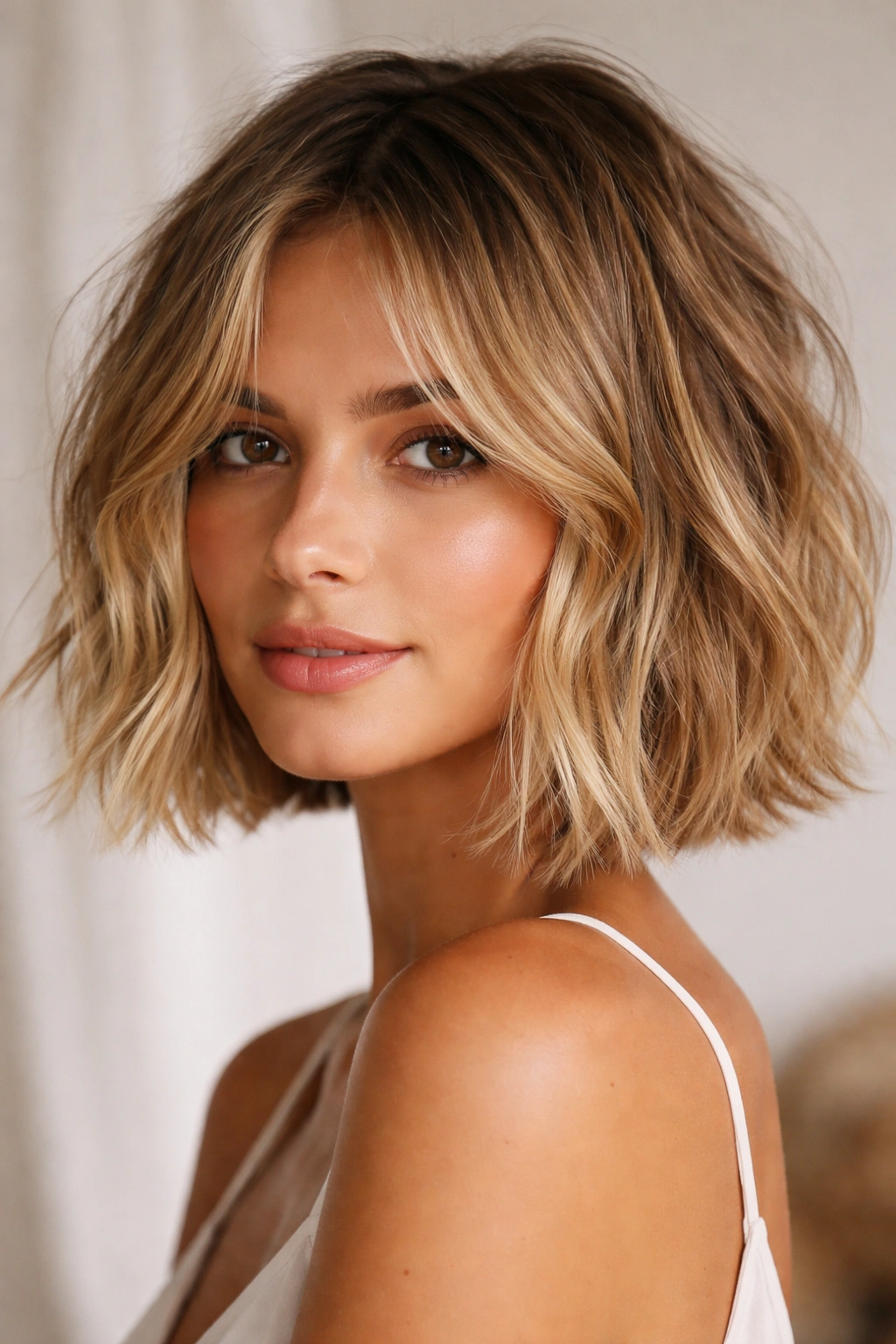
Want a bob that looks like you spent ten minutes on it and maybe also walked through salt air on the way to dinner? This is the one. A jaw-length cut with razor-soft ends has enough edge to feel cool, but the broken-up perimeter keeps it from looking blunt or hard.
What to ask for at the salon
Ask for a jaw-length bob with soft, choppy ends and light texture through the interior. Be specific about the word light. If the stylist over-thins the ends, the shape can fray and lose its line. You want the hair to move, not fall apart.
This cut works especially well when your wave pattern is uneven. A few pieces may bend more than others. Good. That inconsistency gives the style its beachy feel. If every strand is identical, the result often looks too arranged.
- Best on hair that has a natural bend or easy wave.
- Great if you like a low-maintenance morning routine.
- Easy to style with sea salt spray and finger-drying.
- Can get fuzzy in humidity if the hair is already porous.
The jaw-length version is also nice because it shows the neck. That small bit of skin changes the whole mood of the haircut. It feels lighter, cleaner, and a little more modern without trying to look futuristic. Thank goodness.
10. Long Wavy Bob With Lived-In Layers
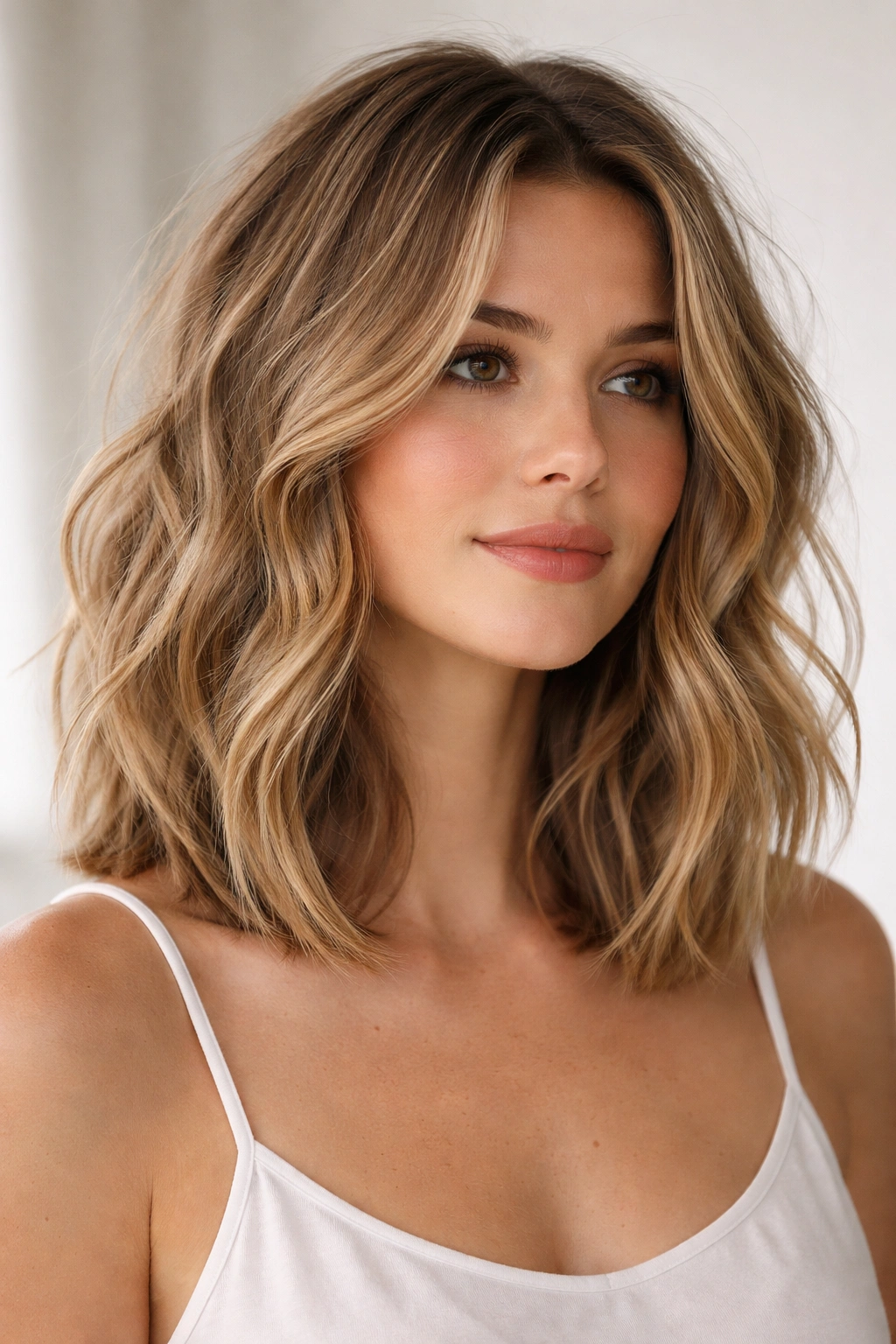
When someone wants beachy hair but refuses anything above the collarbone, the long bob is usually the answer. It keeps enough length to feel familiar, but the shoulder-skimming shape lets the wave show without dragging down the whole cut.
This version lives or dies by the layers. You don’t need a stack of short pieces. You need lived-in layers that start low enough to keep the line smooth and high enough to stop the ends from clumping together. On thick hair, that often means the first real layer sits around the cheekbone or just below the ear. On finer hair, the layers should be even lighter so the ends don’t look thin.
I like this cut for people growing out shorter hair, because it gives you room to wear it straight, waved, clipped back, or half-up without looking awkward. That flexibility is not glamorous, but it’s useful. And useful haircuts get worn more often.
This shape also pairs well with a deep side bend or a loose center part. If you want that beachy look, leave the last inch of the ends a little straighter than the mids. It creates a soft, slightly messy finish that reads as natural instead of curled.
A long wavy bob is the haircut equivalent of a good white shirt. It does a lot, and it doesn’t need to shout.
11. Textured Bob With Curtain Bangs
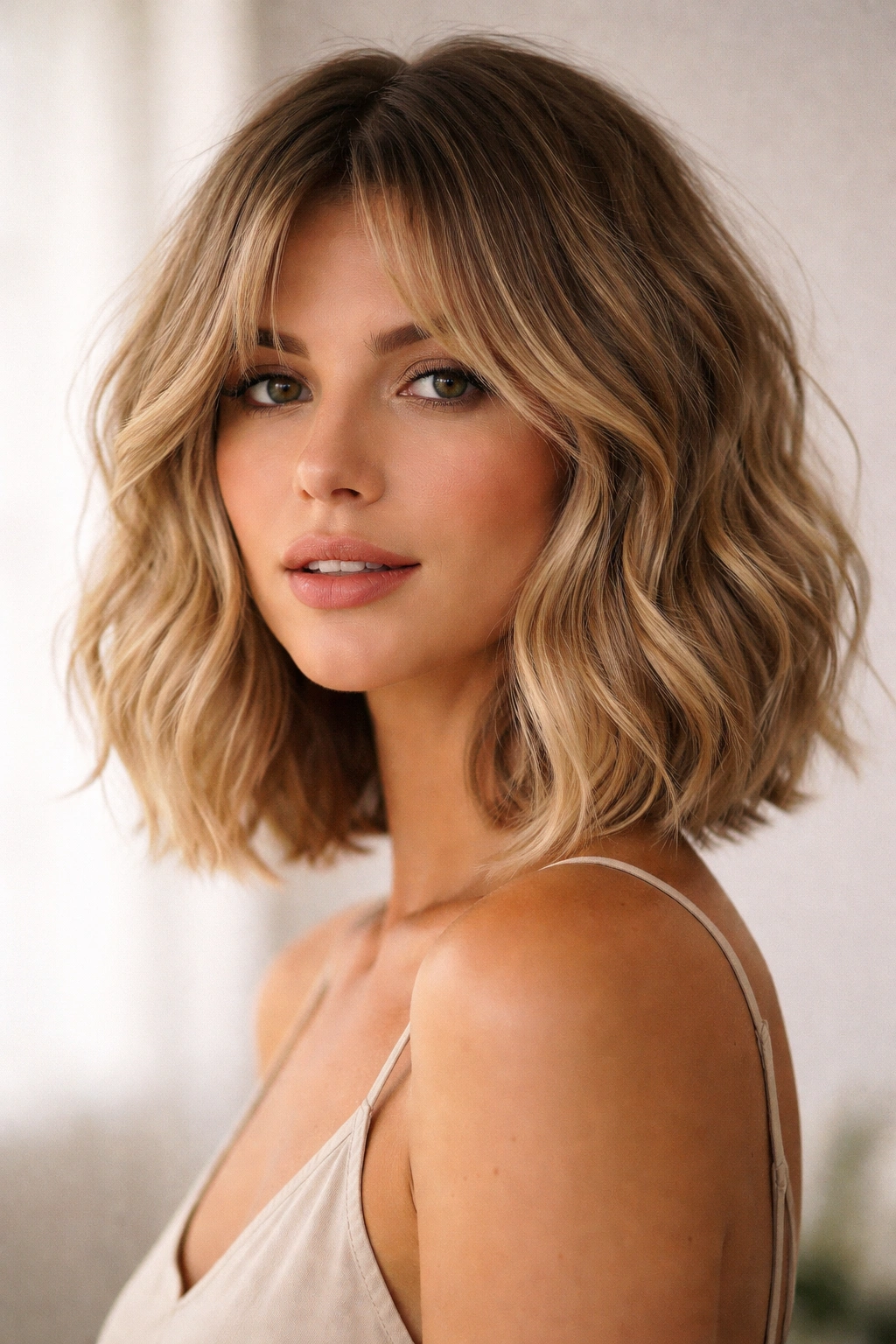
Curtain bangs change a bob fast. They soften the forehead, break up the front line, and give the haircut a little swing that straight-across fringe never quite matches. With waves, they also create a nice overlap between the face-framing pieces and the rest of the cut.
The trick is keeping the bangs long enough to part in the middle and fall to the cheekbone or just below. Too short, and they lose that breezy effect. Too thick, and they can sit on the face like a curtain nobody asked for. The best version blends into the sides so the whole shape feels connected.
This haircut works especially well if your hair has some natural bend at the front. Those front pieces usually dry with their own movement, which helps the bangs fold softly away from the face. If your hair is stick-straight, you’ll probably need a round brush or a small roller at the root for the first few minutes after drying. Not a big deal, but not nothing.
I also like curtain bangs on people who want a beachy bob without exposing the entire forehead or jawline. They add softness in a way that feels practical, not fussy. The maintenance is a little more involved than a bob with no fringe, though. Bangs need trims and a bit of daily attention. That’s the deal.
12. Nape-Length Stacked Wavy Bob
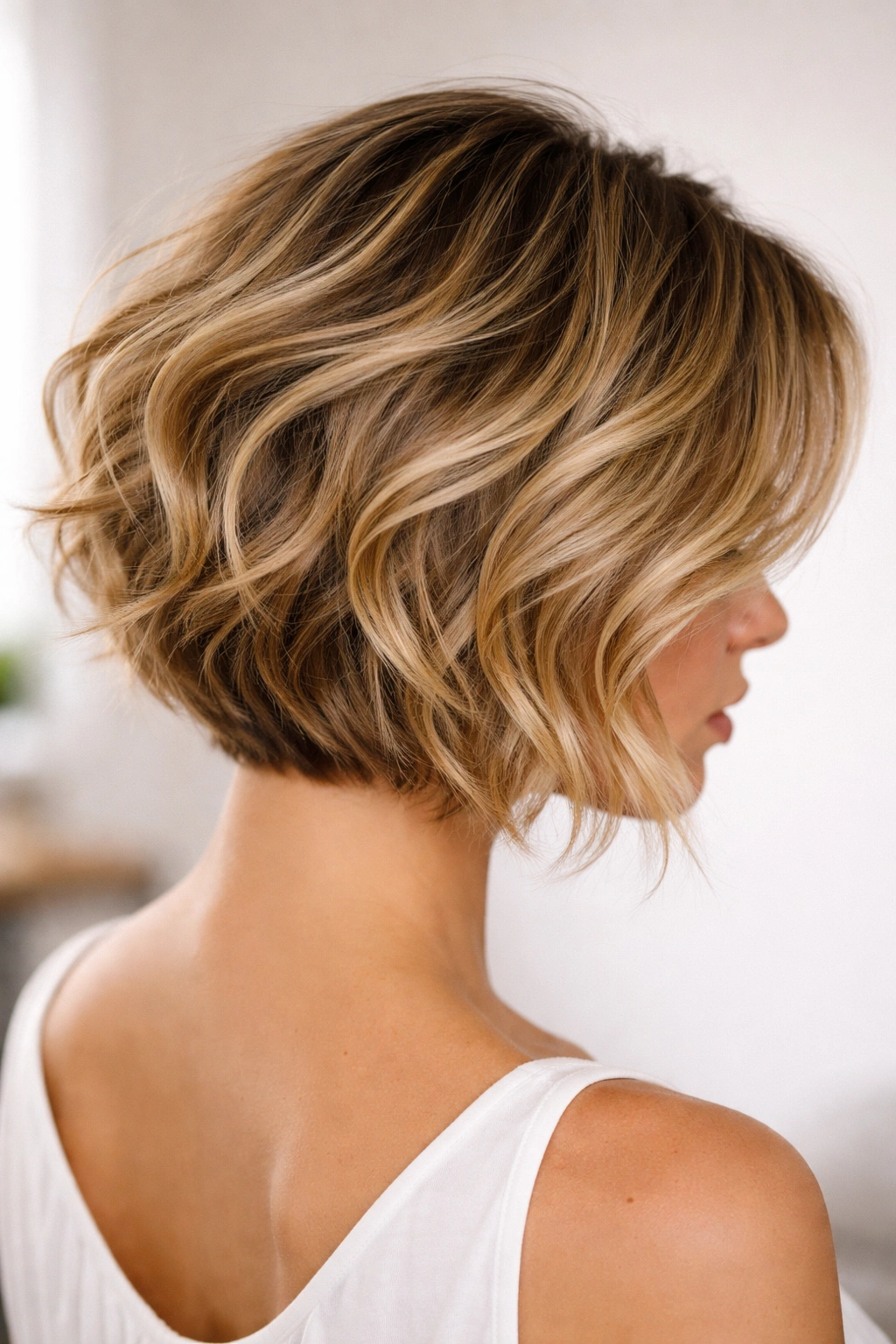
A nape-length stacked bob builds lift at the back, which makes it a good choice if your hair tends to sit flat against the head. The shorter layers near the nape create a little curve underneath, so the crown looks fuller and the front can stay soft.
Unlike a long lob, this cut has a stronger shape. The back is tucked up, the sides angle forward, and the wave pattern sits on top of that architecture. That contrast is what makes it feel beachy instead of formal. The texture breaks up the structure. The structure keeps the texture from looking messy. It’s a neat partnership.
This style is especially helpful for fine hair that needs the illusion of density. A little stack in the back gives the crown lift without requiring a ton of product. It can also be a smart option if your hair grows out heavy around the neck, because the shorter back removes that bulky line.
The warning is simple: if your hair is very thick, a stacked bob can turn puffy fast unless it’s cut with care. Ask for a soft stack, not a dramatic one. You want lift, not a pyramid.
How to wear it well: use a root-lifting spray at the crown, rough-dry with your fingers, and leave the ends slightly undone. That keeps the cut from looking too tidy, which is the exact mistake that kills the beachy effect.
Final Thoughts
Beachy bobs work because they’re not one-note. Some lean blunt and clean. Some rely on layers. Some need a side part, while others live or die by the way the ends are thinned out. The shape matters more than the product, and that’s good news for anyone tired of piling on sprays just to get a little movement.
If you’re choosing between styles, start with your hair’s natural behavior. Fine hair usually wants a cleaner outline. Thick hair usually needs weight removed in the right places. And if your wave is already there, don’t fight it with an overworked cut. That’s how you end up styling the same problem every morning.
The most wearable beachy bob is the one that looks a little better after a day of being touched, tucked, bent, and lived in. That’s the real test.
