



A bob can flatter a big forehead in a way long hair often can’t, but only when the cut is shaped with some thought. Bob cuts for big foreheads work best when the eye is pulled sideways or downward, not straight up to the hairline. That means fringe placement, parting, and where the ends land matter just as much as the length itself.
The mistake people make is treating the forehead like a problem to erase. That usually leads to heavy bangs that feel boxy, or a bob that sits too high and makes the top half of the face look even longer. Better cuts soften the temples, build shape around the cheekbones, and leave a little movement near the front so the face doesn’t look pinned open.
Hair texture changes the answer, too. A blunt bob on straight hair can look chic and compact. The same idea on wavy or curly hair needs more softness near the front, or the width can end up in the wrong place. And yes, styling time matters. A fringe that needs three hot tools and a prayer every morning is not a win.
The good news is that there are a dozen bob variations that handle a larger forehead beautifully without feeling fussy. Some use curtain bangs. Some lean on a side part. Some keep the front longer and the back shorter, which is a neat trick when you want balance without obvious bang maintenance. The cuts below each solve the problem in a different way, and that’s the fun part.
1. Chin-Length Bob With Curtain Bangs
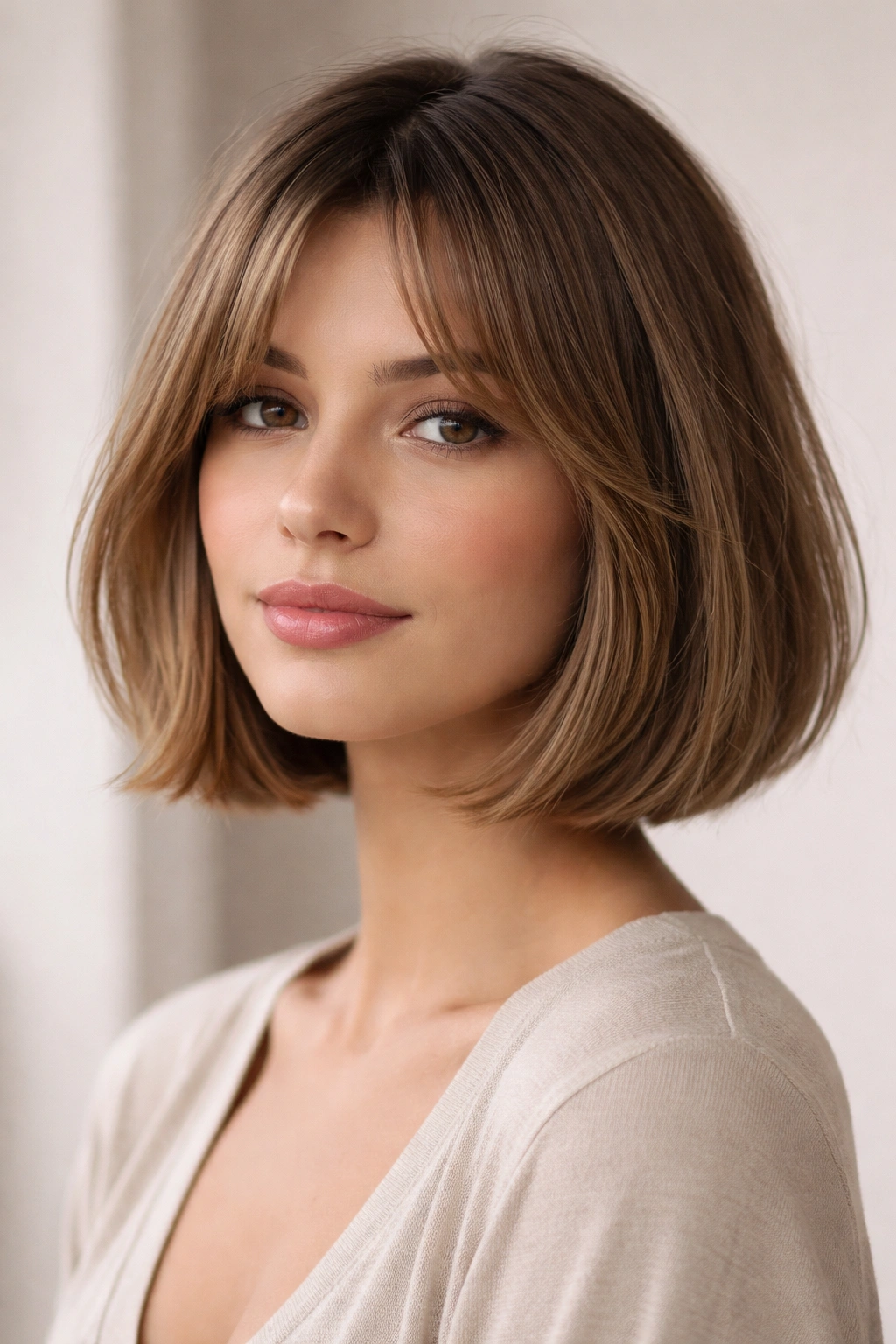
A chin-length bob is one of the easiest places to start when you want balance without making the face feel crowded. The length lands close to the jaw, so it gives the lower half of the face some weight, while curtain bangs break up the forehead in a soft, grown-in way. Nothing about it feels severe.
Why it works
Curtain bangs split down the center and arc away from the face, which keeps the forehead from becoming the main event. The little gap in the middle lets some skin show, but the longer sides draw the eye toward the cheeks. That diagonal line is doing a lot of quiet work.
This cut is especially good if you want movement without a lot of daily fuss. The bangs can be blow-dried with a medium round brush, then pushed away from the face with your fingers. You don’t need a rigid finish. In fact, a bit of bend looks better.
- Ask for bangs that hit around the cheekbone or just below the eyebrow at the shortest point.
- Keep the bob blunt at the ends if your hair is fine.
- Add soft internal texture if your hair is thick and puffy.
- Style with a light mousse at the roots so the front doesn’t collapse.
Best for: straight, wavy, or slightly bent hair that needs a little framing near the eyes.
2. French Bob With Soft Micro Bangs
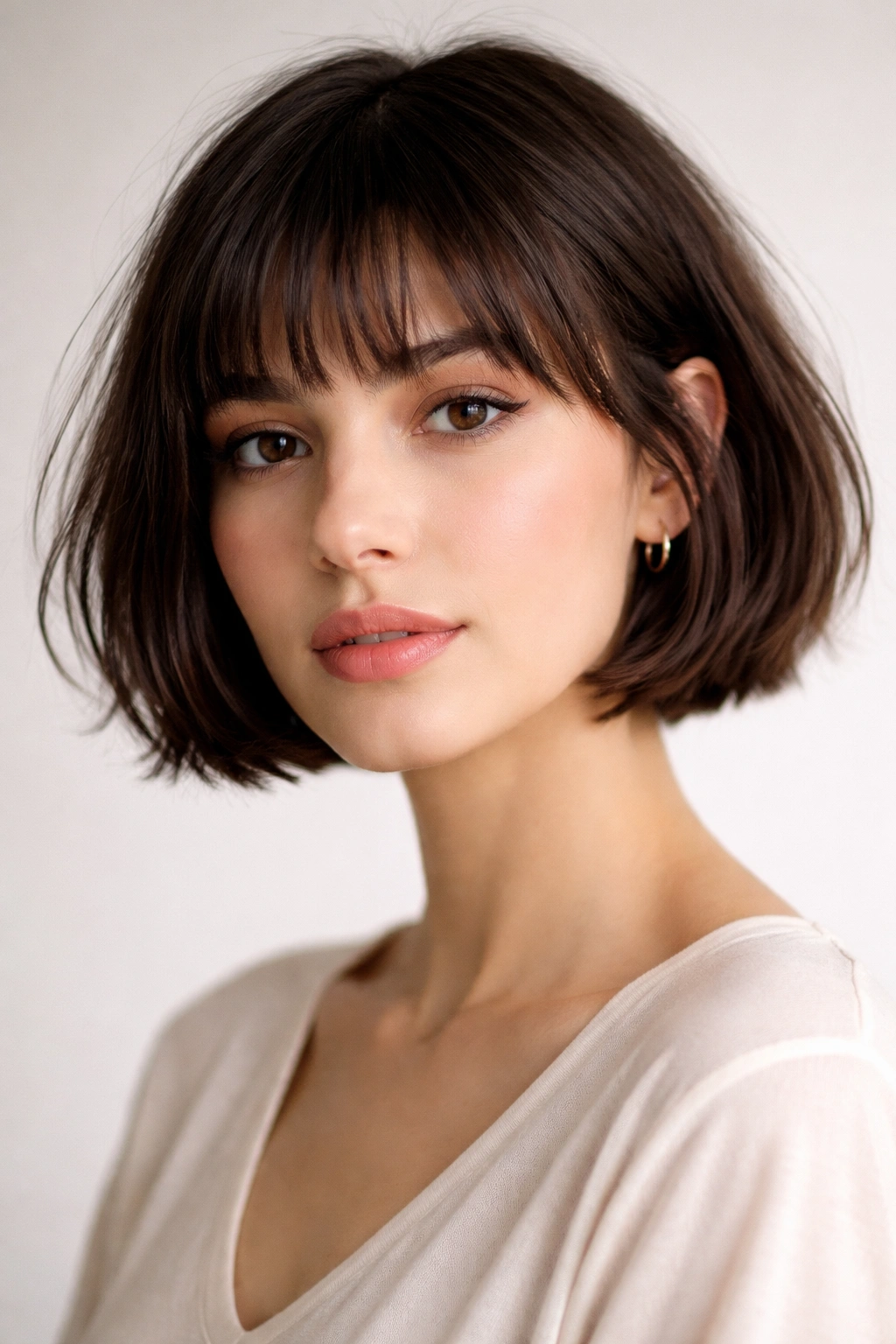
The French bob has a little attitude, and that’s part of why it works on a big forehead. It usually sits between the cheekbone and the jaw, with a short fringe that skims the brow or sits just above it. The result is neat, compact, and a little cheeky.
Micro bangs sound risky, and they can be. But when they’re soft rather than hard, they create a small horizontal break across the forehead without feeling like a helmet. That matters. You want a hint of structure, not a thick wall of hair.
The trick is keeping the fringe airy. Ask for a bit of texture through the ends so the bangs don’t sit as one dense strip. If your hair is wavy, this cut can look almost effortless. If your hair is pin-straight, it needs a touch more styling, but not much.
A French bob is best for someone who likes a clean shape and doesn’t mind a little upkeep. The fringe will need regular trimming. Shorter bangs show grow-out fast. That’s the deal.
3. Jaw-Length Bob With a Deep Side Part
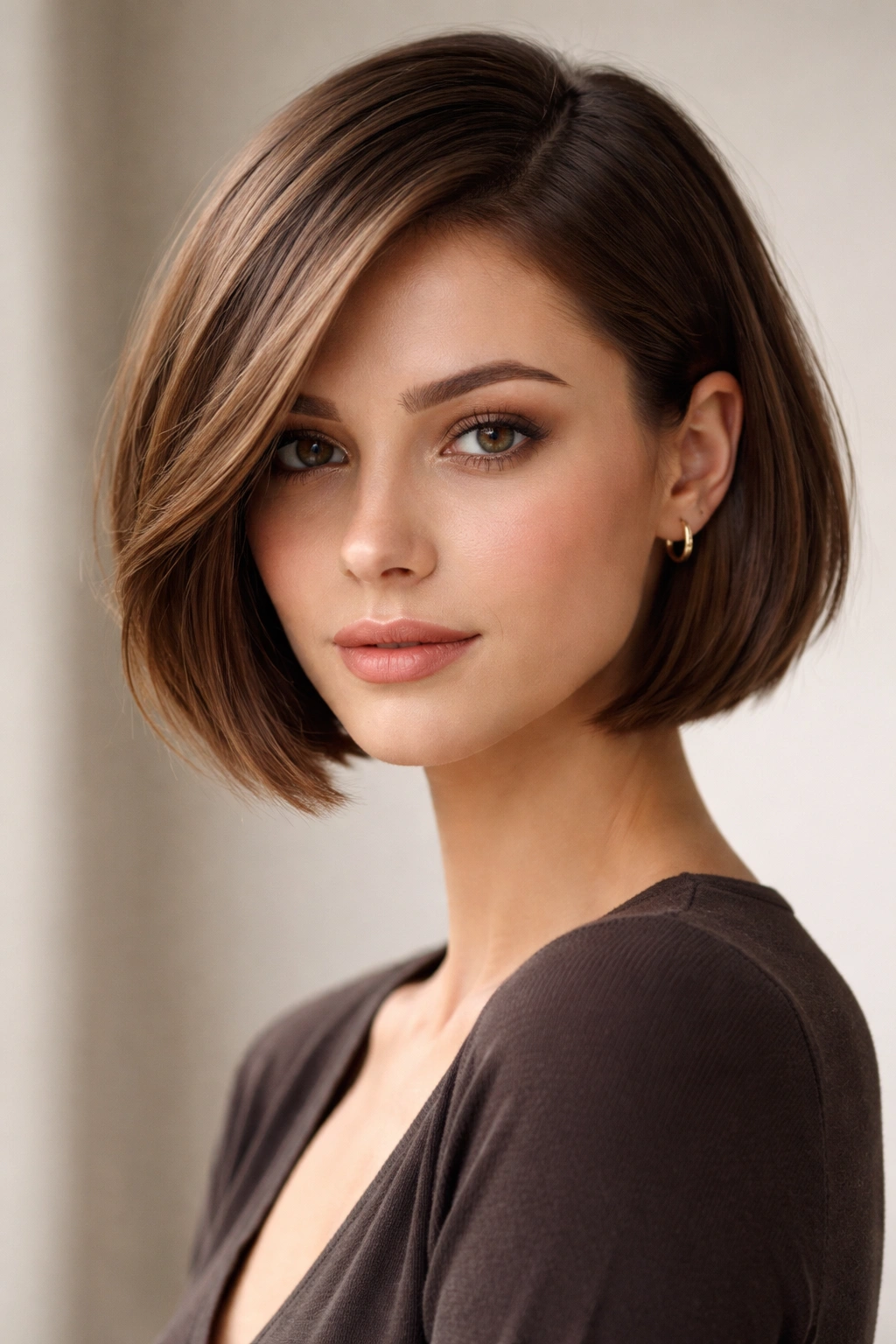
Why does a side part help so much? Because it throws the eye off center. A deep side part creates a diagonal line over the forehead, and diagonal lines are your friend when the face feels long at the top.
The jaw-length bob itself adds weight lower on the face, which helps pull the whole shape down a bit. It’s a simple cut, but not a boring one. On many face shapes, it gives enough room around the temples to soften the forehead without hiding it.
How to ask for it
Tell your stylist you want the part placed several inches off center, not just slightly shifted. That bigger offset gives the front more sweep. Then ask for the front pieces to hit at the jaw or just under it, with a tiny bit of graduation so they tuck in cleanly.
This cut is a smart pick if you wear glasses, too. The side part keeps the front open, so frames and fringe don’t fight each other. It also grows out well, which is a nice bonus if you hate strict salon timing.
A little root lift at the crown helps. Too much volume on top is the only thing that can spoil this shape. Keep the height at the side, not at the very top.
4. Blunt Bob With Long Side Sweeps
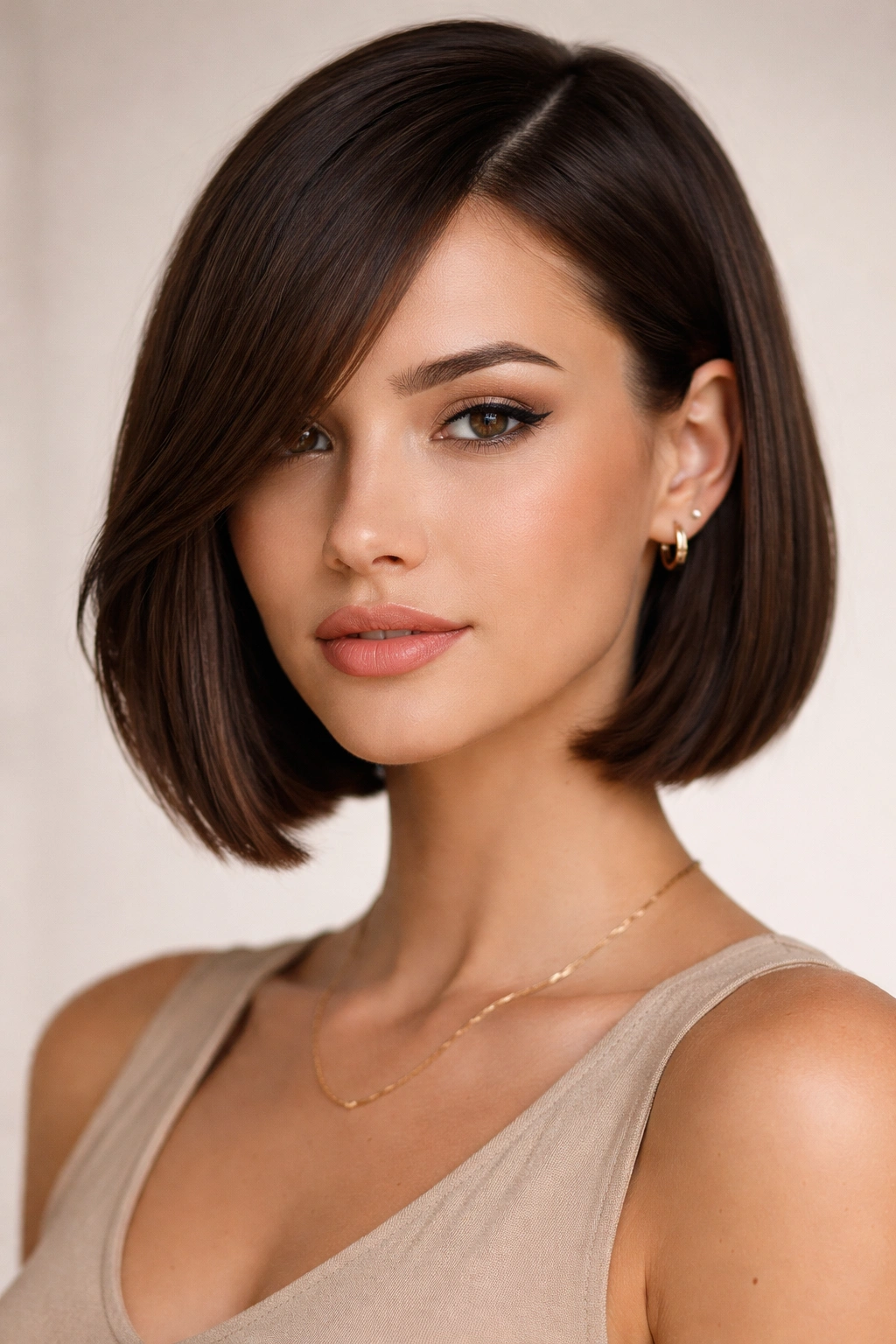
I like this one for people who want polish without a heavy bang. A blunt bob gives the bottom edge enough presence to balance a larger forehead, while long side-swept pieces soften the upper third of the face. It feels clean, not stiff.
There’s a reason this shape keeps coming back. The straight edge makes the haircut look full, and fullness at the bottom matters when the top half of the face needs less visual weight. Long side sweeps do the rest. They leave the forehead partly open, but not bare.
The cut works best when the side sweep starts high enough to graze the temple and cheekbone. If it starts too low, it just hangs there and does nothing. If it starts too high, it can look overstyled. Right in the middle is the sweet spot.
- Keep the perimeter blunt and even.
- Ask for one longer front section on the heavier side of the part.
- Blow-dry the front forward first, then sweep it over.
- Finish with a flat iron bend on the ends if your hair flips out.
One warning: this cut can look flat if you skip root volume. A little lift at the crown changes everything.
5. A-Line Bob With Face-Framing Pieces
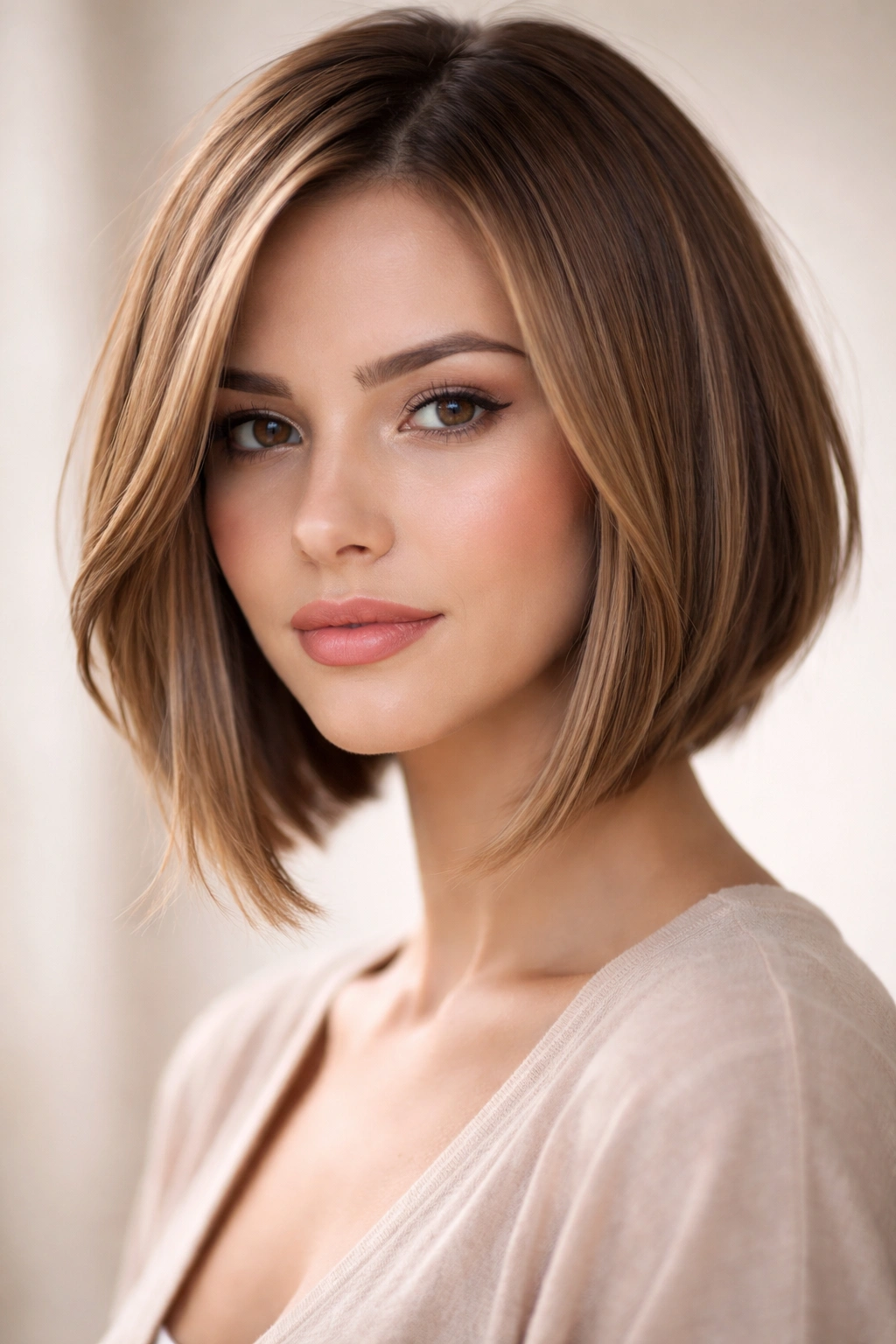
An A-line bob is a nice choice when you want the front to do more work than the back. Shorter in back, longer in front — that shape naturally pulls the eye downward and toward the jaw. On a big forehead, that downward pull matters more than people think.
The face-framing pieces are what make this cut feel softer. Without them, the A-line can be a little sharp. With them, the haircut starts to shape the face in a way that feels deliberate rather than severe. The longer front angles help balance a taller forehead by creating movement near the cheeks.
This is one of those cuts that looks better when the angles are clear. You do not want the front and back to be almost the same length. That kills the effect. Ask for a visible front drop, even if it’s subtle.
It also plays well with waves. A little bend through the front pieces makes the cheekbones look more lifted, which is useful here. Straight hair can wear it too, but the line needs to be crisp. Otherwise the whole shape gets lost.
A good A-line bob makes the face feel framed, not boxed in. That’s the whole point.
6. Wavy Collarbone Bob With Light Fringe
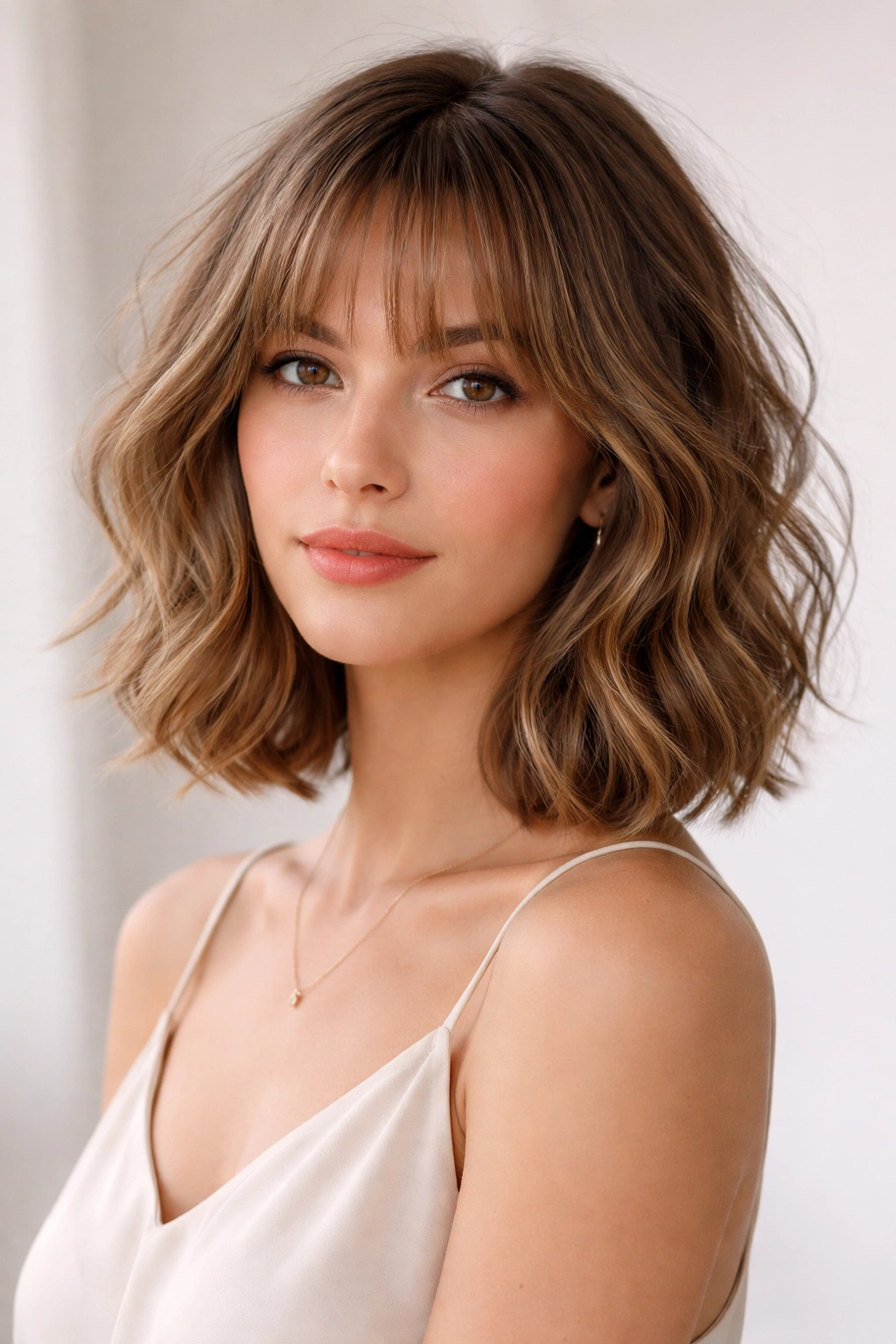
Not everyone wants a short bob, and honestly, that’s fine. A collarbone-length bob gives you a little more room to play, which is helpful if you have a big forehead and don’t want the cut sitting too close to the face. The extra length keeps the overall shape relaxed.
The light fringe matters here. Heavy bangs can make this length feel too busy, especially if the hair is already wavy. A soft fringe — piecey, a little uneven, and not too thick — gives the forehead a break without closing off the face. That balance is hard to beat.
What makes it different
Unlike a chin-length bob, this one doesn’t depend on the edge of the cut to do all the work. The waves create movement along the sides, and that movement keeps the eye from sitting up top. It’s a softer answer for people who want face-framing without a sharp line.
This cut suits people who style their hair with a diffuser, a bend through the ends, or even just a bit of salt spray and air-drying. It looks best when the front pieces don’t curl inward too tightly. A tiny flip away from the face opens things up.
If you want a low-pressure option, this is a solid one. It gives balance, but it doesn’t scream for attention.
7. Layered Bob With Bottleneck Bangs
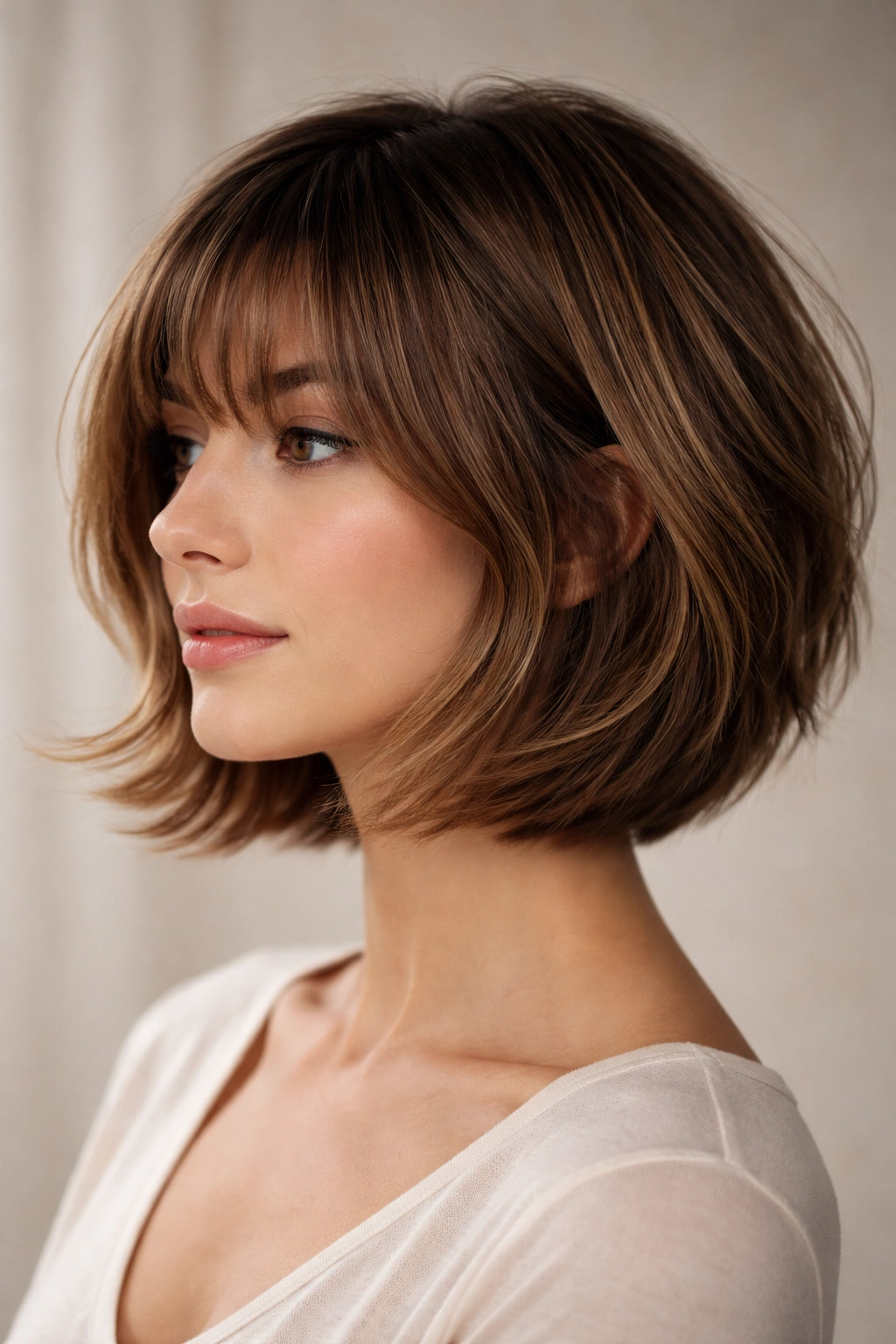
Bottleneck bangs are one of the smartest fringe shapes for a larger forehead because they start narrow at the center and widen as they move outward. That shape naturally guides the eye from the middle of the forehead toward the temples and cheeks. It’s subtle, but it works.
The layered bob underneath keeps the cut from feeling heavy. Short layers around the crown can add lift, while longer layers near the front stop the haircut from turning into a round puff. The whole point is controlled movement.
What to ask for
- A fringe that sits shorter in the center and longer at the sides.
- Layers that begin below the cheekbone, not right at the ear.
- Soft shaping near the front so the bangs blend instead of sitting like a separate piece.
- A blow-dry that lifts the roots, then bends the fringe outward.
This haircut is a good compromise if blunt bangs feel too much and curtain bangs feel too loose. Bottleneck bangs give a little structure without boxing in the face. They also grow out in a fairly forgiving way, which is more useful than people admit.
It’s a bit more styling-sensitive than a plain bob. But if you want shape and softness in one cut, it’s one of the better choices.
8. Rounded Bob With Tucked-In Ends
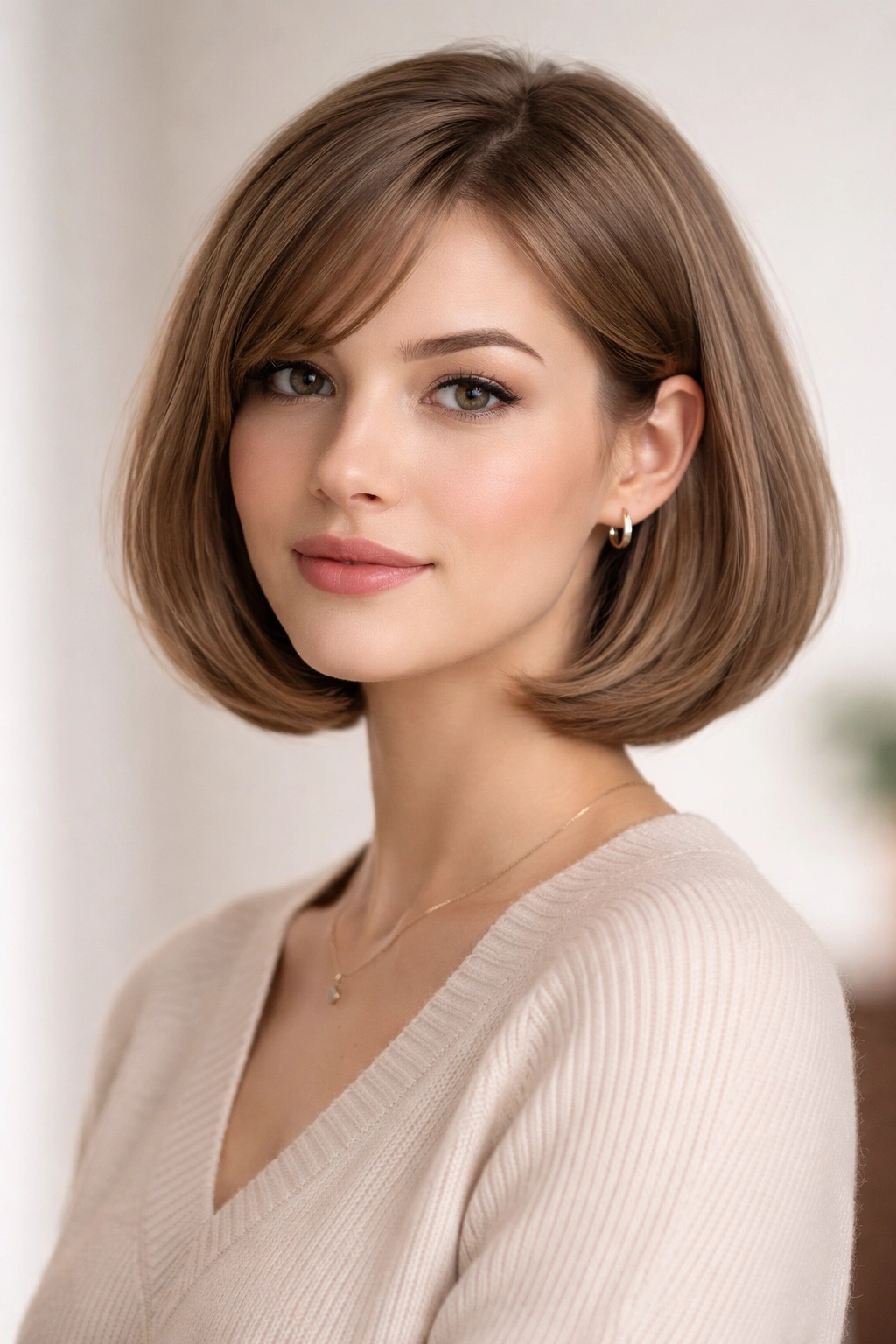
A rounded bob has a gentler feel than a straight, flat cut. The ends curve slightly inward toward the neck, which adds softness around the jaw and keeps the haircut from looking boxy. On a face with a bigger forehead, that rounded lower shape helps balance the upper half without dragging the eye upward.
I’ve seen this cut save people who thought bob haircuts made them look too top-heavy. Usually the problem wasn’t the bob itself. It was the shape. A flat perimeter can feel harsh. A rounded silhouette feels more settled.
The tucked-in ends are the real detail to watch. They should sit cleanly, not curl under in a stiff way. A round brush or a smooth blowout helps. If the ends puff out, the balance gets lost fast.
This cut pairs well with a soft side part or a light fringe. You don’t need both. One balancing move is enough.
And here’s the nice part: it grows out gracefully. As the cut gets a little longer, it stays neat instead of turning awkward. That makes it a quiet winner for people who want less maintenance and less forehead emphasis at the same time.
9. Asymmetrical Bob With Side Volume
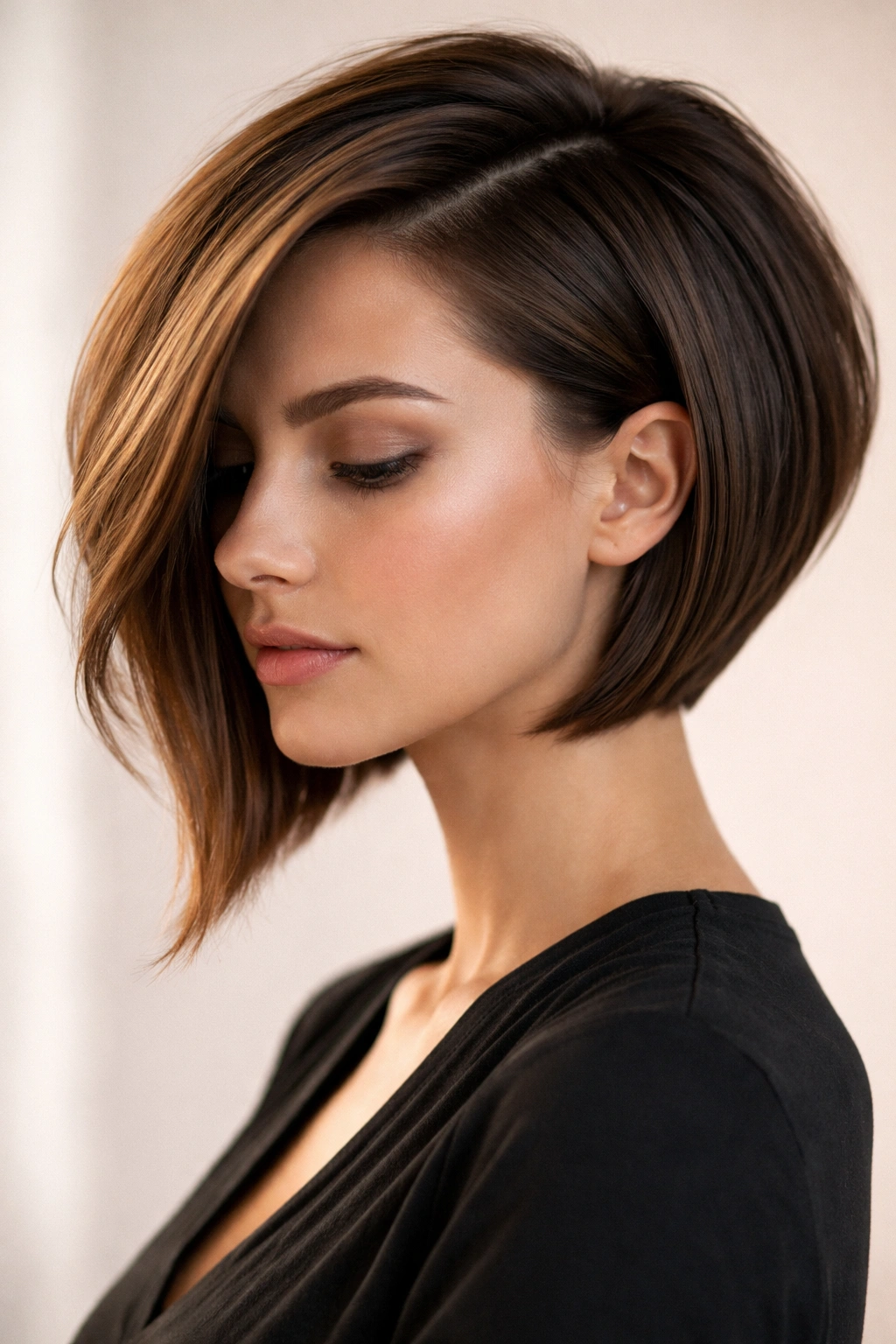
An asymmetrical bob brings drama, but not the loud kind. One side is slightly longer than the other, and that uneven line pulls attention across the face instead of straight up and down. If your forehead feels broad, that sideways movement can be a relief.
The side volume matters more than the length difference. Without volume on the heavier side, the asymmetry can look accidental. With a bit of lift near the roots and a longer front piece that skims the cheek, the shape suddenly feels intentional and sharp.
This cut is especially good if you like a strong profile. It has a little edge to it. It also works if you hate full bangs but still want something to interrupt the forehead area. A long side sweep on the longer side does the job without closing off the face.
A few practical notes:
- Keep the length difference subtle if you want it wearable every day.
- Use a root spray or mousse at the heavier side.
- Tuck the shorter side behind the ear for extra contrast.
- Keep the ends clean so the asymmetry looks crisp, not messy.
The cut is not for everyone. It has personality. But if you want the forehead to step out of the spotlight, this one knows how to do that.
10. Shaggy Bob With Wispy Bangs
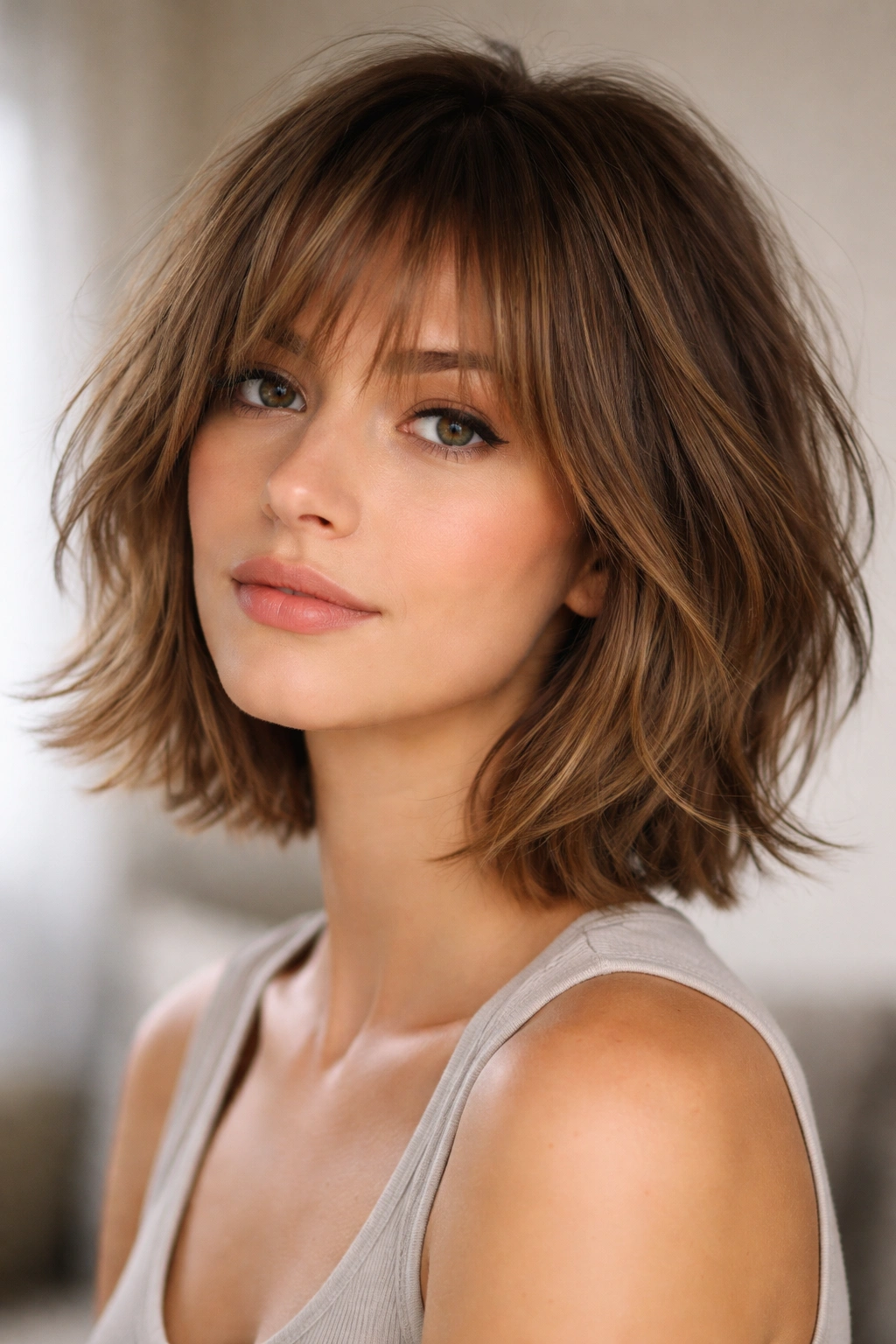
Does a shaggy bob work on a big forehead? Yes, if the bangs stay light. The point of this cut is movement. The layers break up the shape, the wispy fringe softens the top, and the whole thing feels a little lived-in in the best way.
Heavy, thick bangs can make a shaggy bob feel too busy. Wispy bangs do the opposite. They let some forehead show, but they break the line enough that the eye doesn’t sit on the hairline. That tiny bit of transparency matters.
How to get the most from it
Keep the layers soft through the mid-lengths and a little piecey at the ends. You want texture, not choppiness for the sake of it. A texturizing spray or a small amount of matte paste can give the fringe some separation without making it crunchy.
This cut is a good match for naturally wavy hair. Straight hair can wear it too, but it needs a bit of bend to avoid looking limp. Air-drying with a little scrunching is often enough. Overstyling kills the whole point.
There’s a casual charm to this bob that makes a bigger forehead feel less obvious. It doesn’t try to hide it. It just keeps the face busy in the right places. That’s a better move than pretending the forehead isn’t there.
11. Sleek Glass Bob With a Side-Swept Fringe
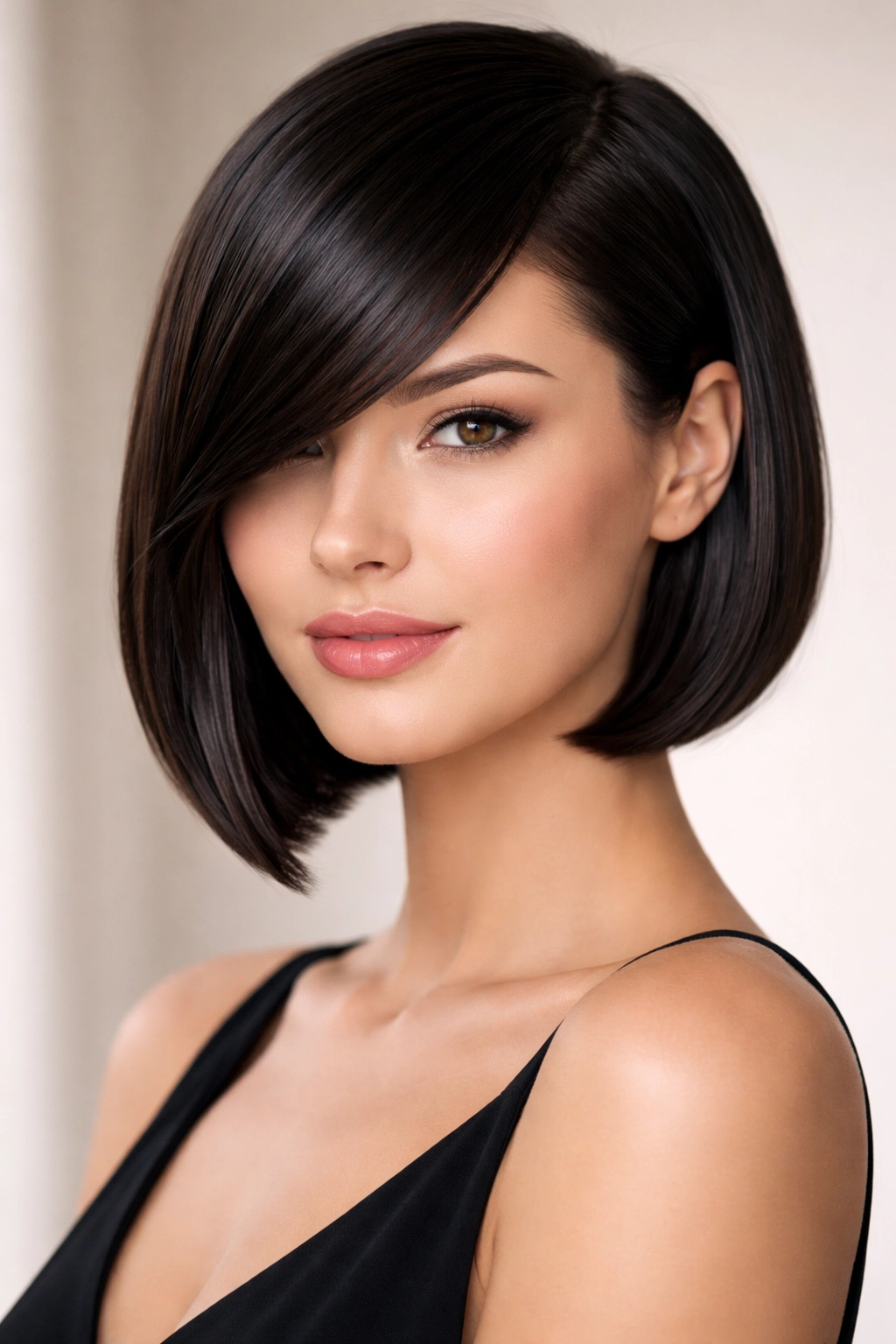
A sleek glass bob is all about shine, line, and control. It’s smooth from root to tip, with ends that sit flat and reflect light. On a big forehead, that controlled finish can work because it gives the face a clean frame instead of extra bulk.
The side-swept fringe is the part that keeps it from feeling too severe. A center-parted sleek bob can make the top of the face look longer than it is. A side sweep cuts across that space and gives the forehead a softer edge. The contrast is the whole trick.
Unlike a textured bob, this version depends on precision. The line has to be clean. The shine has to be there. Frizz can ruin the effect fast, so this is a better choice if your hair already behaves well or if you’re happy to use a smoothing cream and a flat iron.
Who should wear it? Someone who likes neat hair and doesn’t want a lot of volume around the face. It looks sharp with a bold lip, simple earrings, or even a plain white shirt. That’s the charm — the cut does the talking.
If you want a bob that feels polished without exposing too much forehead, this one is worth a close look.
12. Curly Bob With Soft Face Framing

Curly hair changes the whole conversation, because the shape of the curl matters as much as the cut. A curly bob can be excellent for a big forehead when the front is shaped to curve around the face instead of springing straight up. The goal is softness near the temples and enough length around the cheeks to keep the balance right.
Soft face framing is the key. You do not want the curls cut too short at the front, or the volume can rise straight upward and make the forehead feel more open. Slightly longer front curls — even by half an inch — can make a real difference in how the face reads.
The best curly bob usually has a little more length than a straight bob would. Shrinkage is real. Anyone with curls knows that. Ask for the shape to be cut in the dry state if possible, or at least with shrinkage in mind. That helps the final result land where you want it.
A curl cream, a diffuser, and a little patience go a long way here. Once the curls sit in the right place, the bob gives shape without stealing attention from the rest of the face. And that’s the sweet spot for a larger forehead: enough framing to balance, enough openness to keep it fresh.
If you want a bob that feels natural, not forced, this is the one I’d point to first.
