



A bob on black hair can look razor-clean, or it can land a little boxy in the wrong way. The difference is rarely the haircut alone. It’s where the weight sits, how the ends are cut, and whether the shape respects shrinkage, density, and the way your texture actually moves.
Black hair bob cuts work best when the perimeter feels deliberate. On a silk press, a blunt line can read sleek and sharp; on curls and coils, the same line needs a bit more planning so it doesn’t puff out or lose its edge the second humidity shows up. That’s not a flaw. That’s texture doing what texture does.
I like a bob when it shows the neck and jaw. I like it even more when the cut looks confident from the back, not just from the mirror.
These 15 cuts keep the silhouette clean in different ways. Some are crisp and architectural. Some soften the face without losing structure. A few lean into curls, a few work best with a flat iron, and a few sit right in that sweet spot where grow-out still looks intentional. Start with the shape that matches your texture and your patience.
1. Blunt Chin-Length Bob With a Middle Part
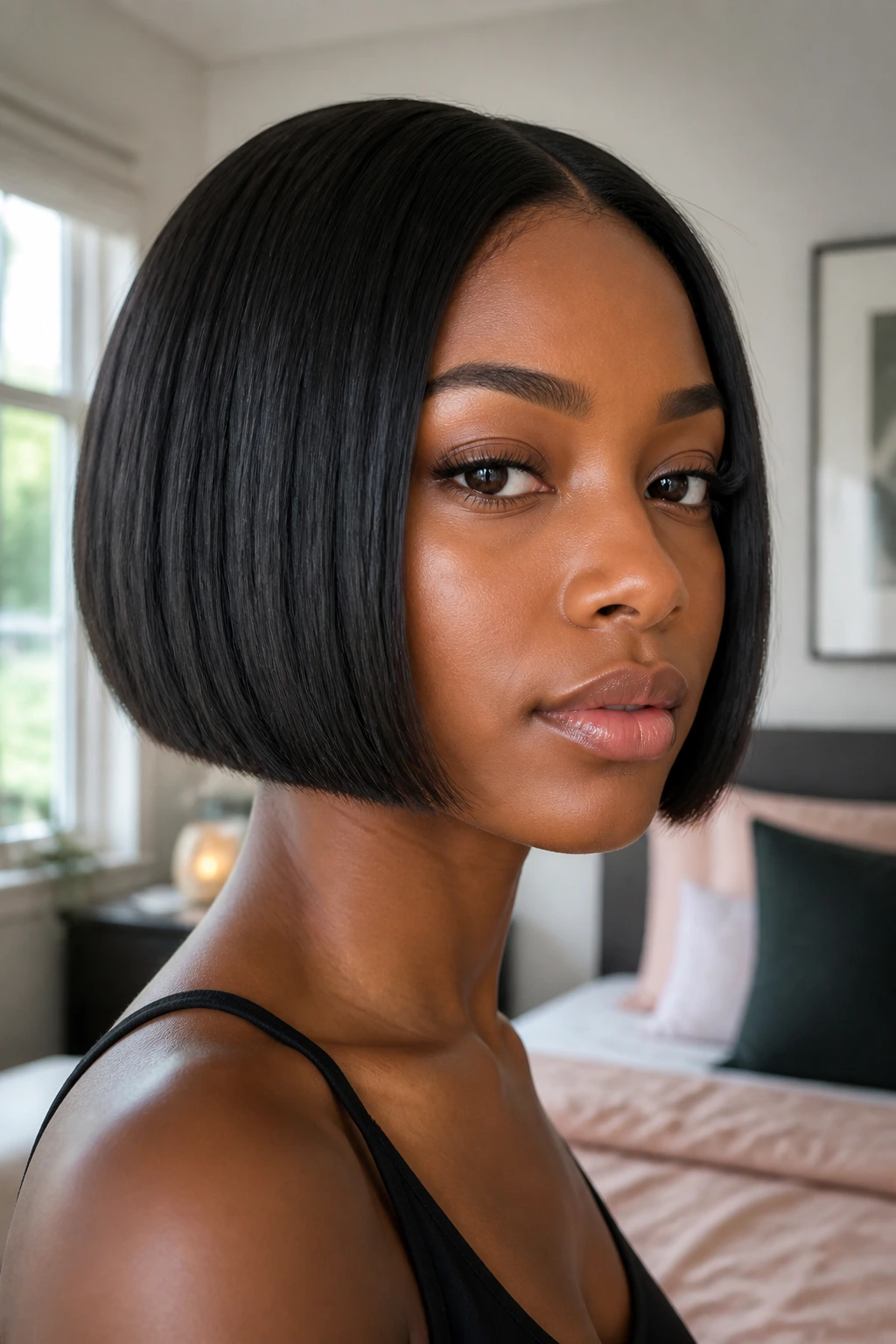
This is the bob that makes everything else look a little too busy. A blunt chin-length cut draws a hard, clean line right where the jaw starts to matter, and that’s exactly why it looks so sharp on black hair. The shape feels calm. No fluff, no extra motion, no accidental triangle.
Why the line matters
The magic is in the perimeter. A blunt edge keeps the eye locked on the shape instead of wandering through layers, and a center part gives the style a balanced, almost graphic feel. On straightened hair, the line reads crisp right away. On stretched natural hair, it still holds that same clean outline if the ends are trimmed evenly.
Ask for the length to sit at the chin or just a touch below it. Too short and it can feel boxy. Too long and the sharpness starts to soften into a generic lob.
- Keep the layers minimal so the outline stays strong.
- Ask for the nape to be neat and tucked in tight.
- Use a light serum on the ends, not a heavy oil.
- Trim every 4 to 6 weeks if you want the line to stay crisp.
Best tip: ask your stylist to check the perimeter both while your hair is wet and after it’s dry. That second look catches little uneven spots that a blow-dry can hide.
2. A-Line Bob That Stacks Up in the Back
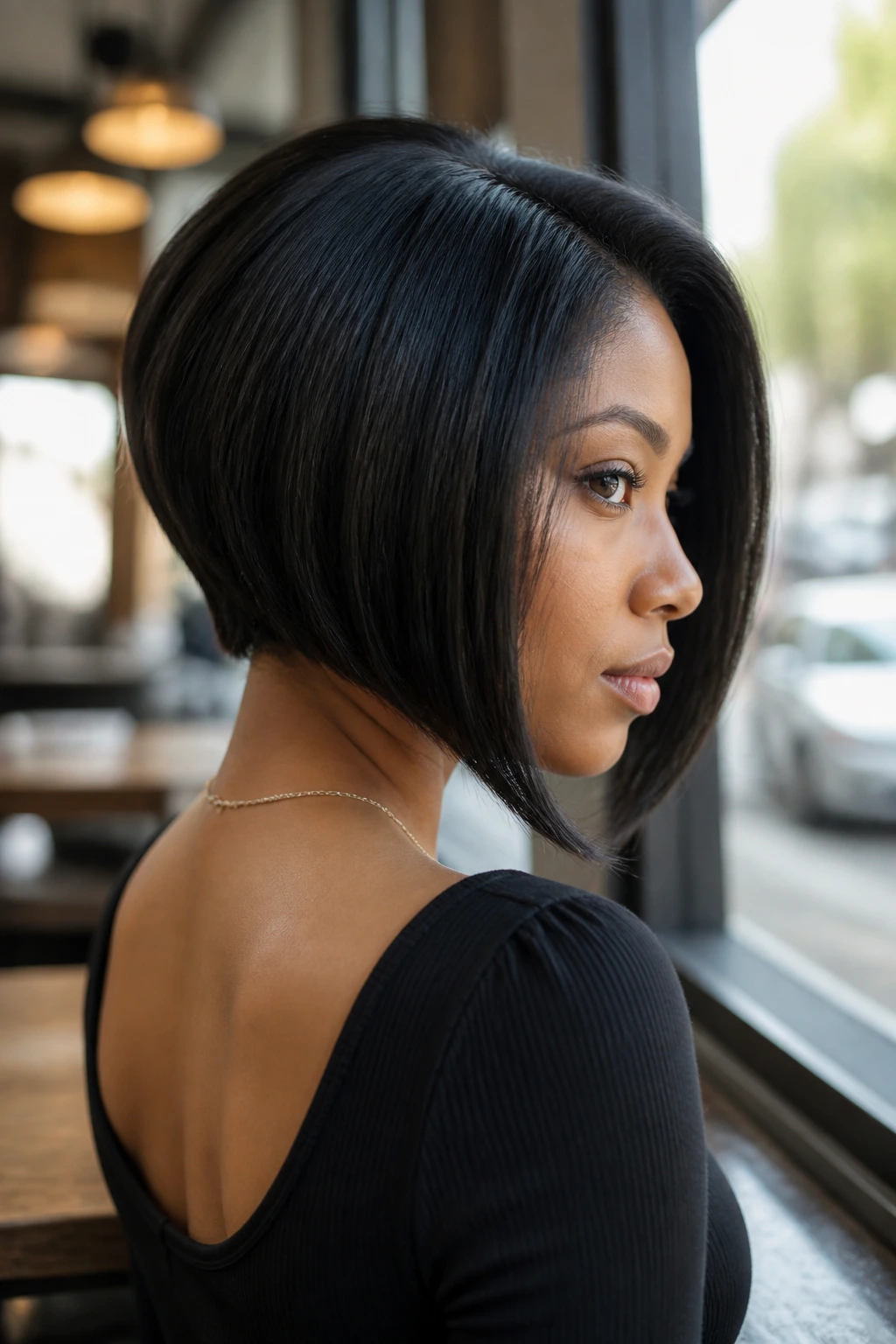
An A-line bob pulls the eye forward almost by instinct. The back sits shorter and tighter, while the front drifts longer toward the jaw or even the collarbone. That angle gives black hair a sharp profile without making the haircut feel severe.
I like this shape when someone wants movement but doesn’t want layers all through the head. It has enough geometry to feel polished, yet it still gives the face a little length. Rounder faces tend to love it, and square faces can use the forward angle to soften the corners a bit.
Too much angle looks fussy fast.
The sweet spot is subtle. If the front drops only 1 to 2 inches longer than the back, the cut keeps its edge and doesn’t start shouting. Add a center part for a cleaner finish, or shift the part slightly off center if you want the front line to fall more softly around the cheekbone.
3. Curly Bob With a Clean Jawline
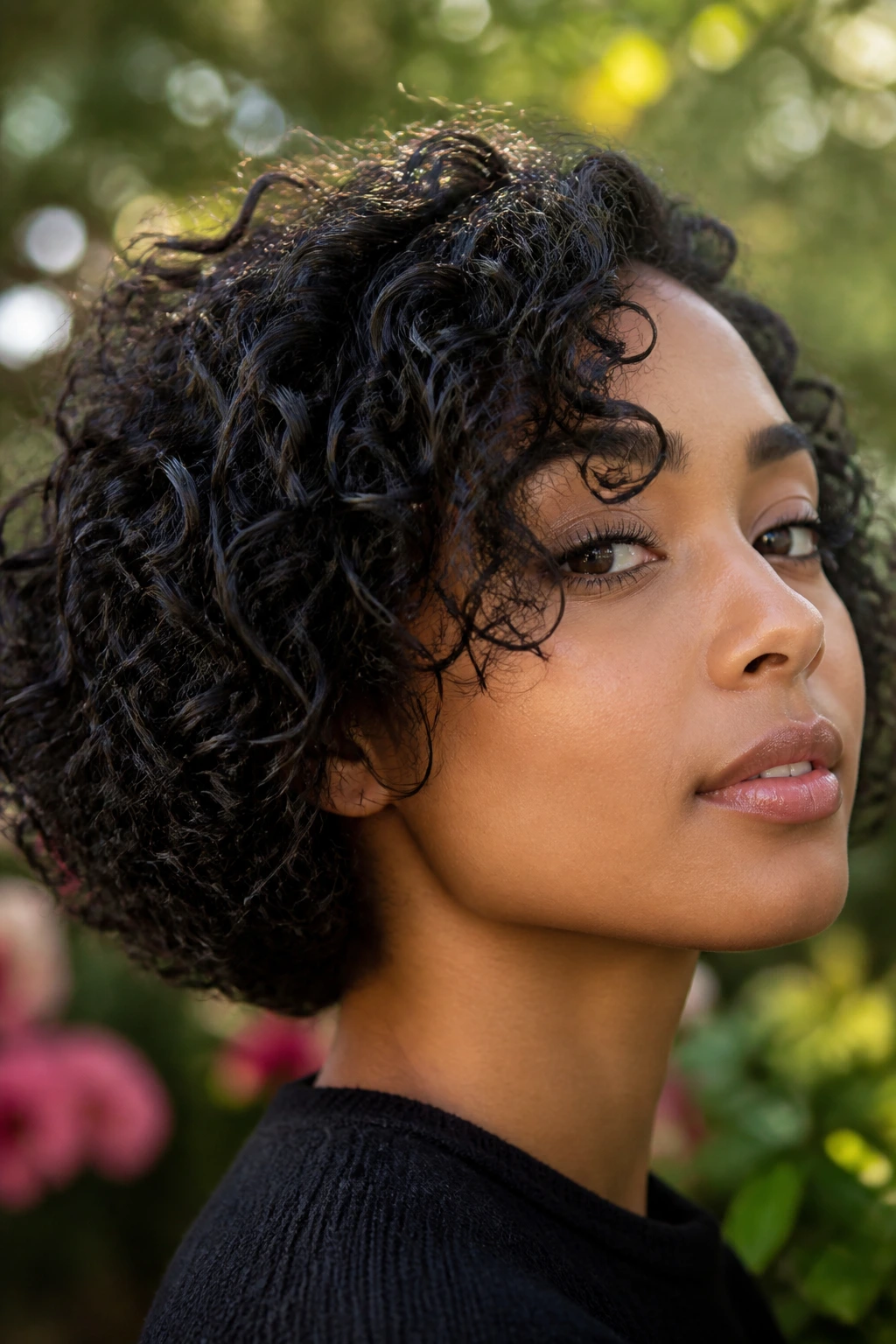
If your curls spring up the second the hair dries, the bob has to be planned for that, not blamed for it. A curly bob looks sharp when the shape is built around the curl pattern instead of against it. On black hair, that usually means cutting with the curl’s real behavior in mind, not the length it seems to have when wet.
Dry-cutting the curl pattern
Dry cutting, or cutting the hair in its usual state, helps the stylist see where the curls naturally land. That matters a lot when shrinkage can steal an inch, sometimes more, from the visual length. The goal is not to flatten the curl into obedience. The goal is to make the outline clean enough that the texture can do its thing and still look deliberate.
A bob like this needs a balanced face frame. Too much layering at the crown and the shape balloons. Too little, and the ends can sit heavy and blocky.
- Leave extra length for shrinkage, especially around the chin.
- Use a diffuser on low heat to keep curl clusters defined.
- Choose a cream or gel that gives hold without crunch.
- Ask for the front to be slightly longer if you want a slimmer jawline.
The sharp part comes from the edge, not from forcing the curls flat. That’s the whole game.
4. Asymmetrical Bob With a Deep Side Part
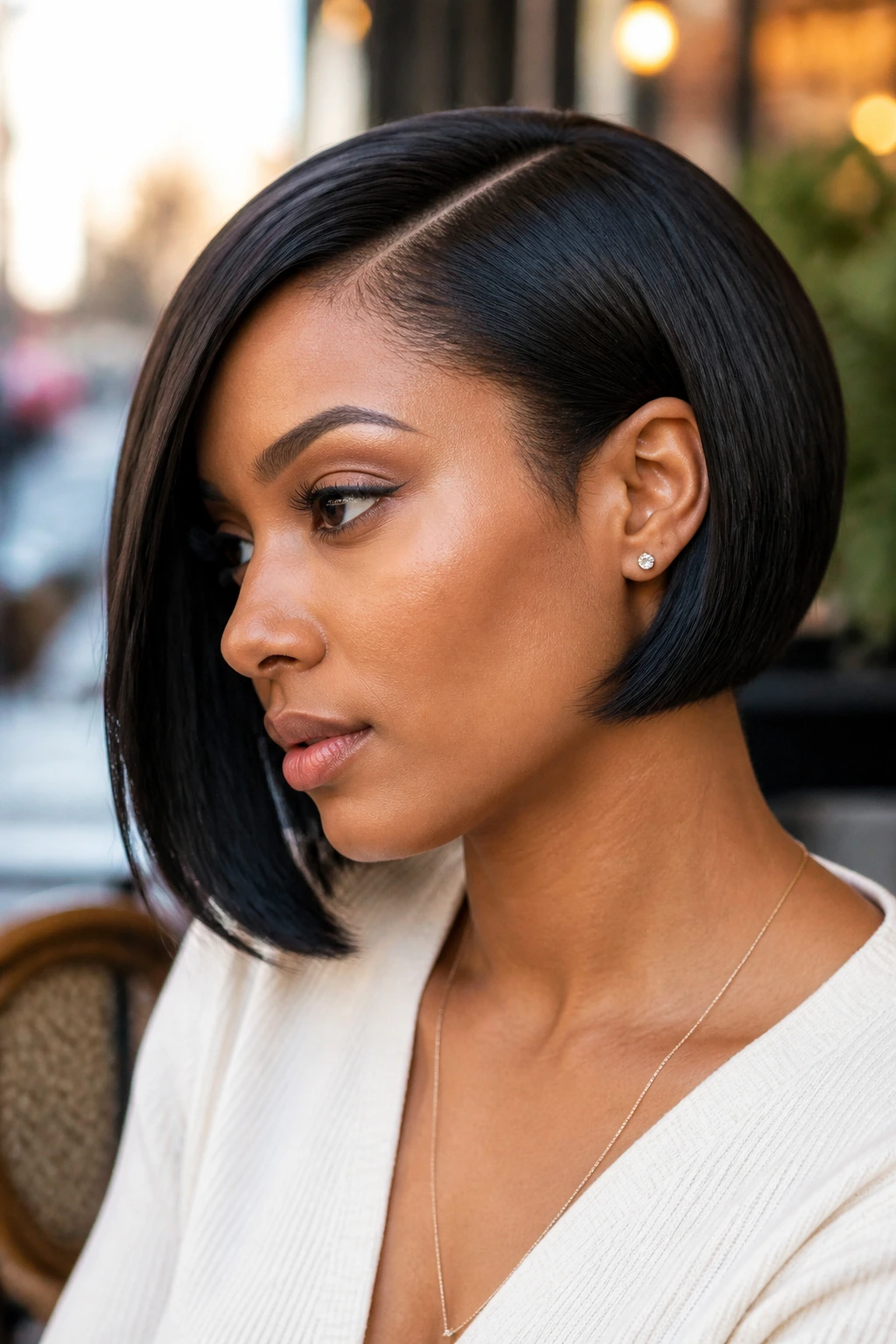
Why does one longer side feel so sharp? Because the eye follows the diagonal immediately. An asymmetrical bob uses that line to make black hair look intentional from the first glance, and it can be dramatic without becoming loud.
The trick is restraint. A difference of 1 to 2½ inches is usually enough. More than that, and the haircut can start looking like a stunt instead of a style. Keep the shorter side grazing the jaw or the ear, then let the longer side skim the cheekbone or just miss the collarbone.
How to wear it
A deep side part gives the asymmetry its attitude. Tuck the shorter side behind the ear for a cleaner profile, or leave it loose if you want the length difference to show more clearly. On straightened hair, a small bend at the ends keeps the shape from feeling stiff.
This cut suits people who like a little edge but still need the shape to work in real life. It moves nicely with a blazer, a hoop earring, or even a plain tee. That’s part of the appeal. The haircut does the talking.
5. Stacked Bob With Crown Lift
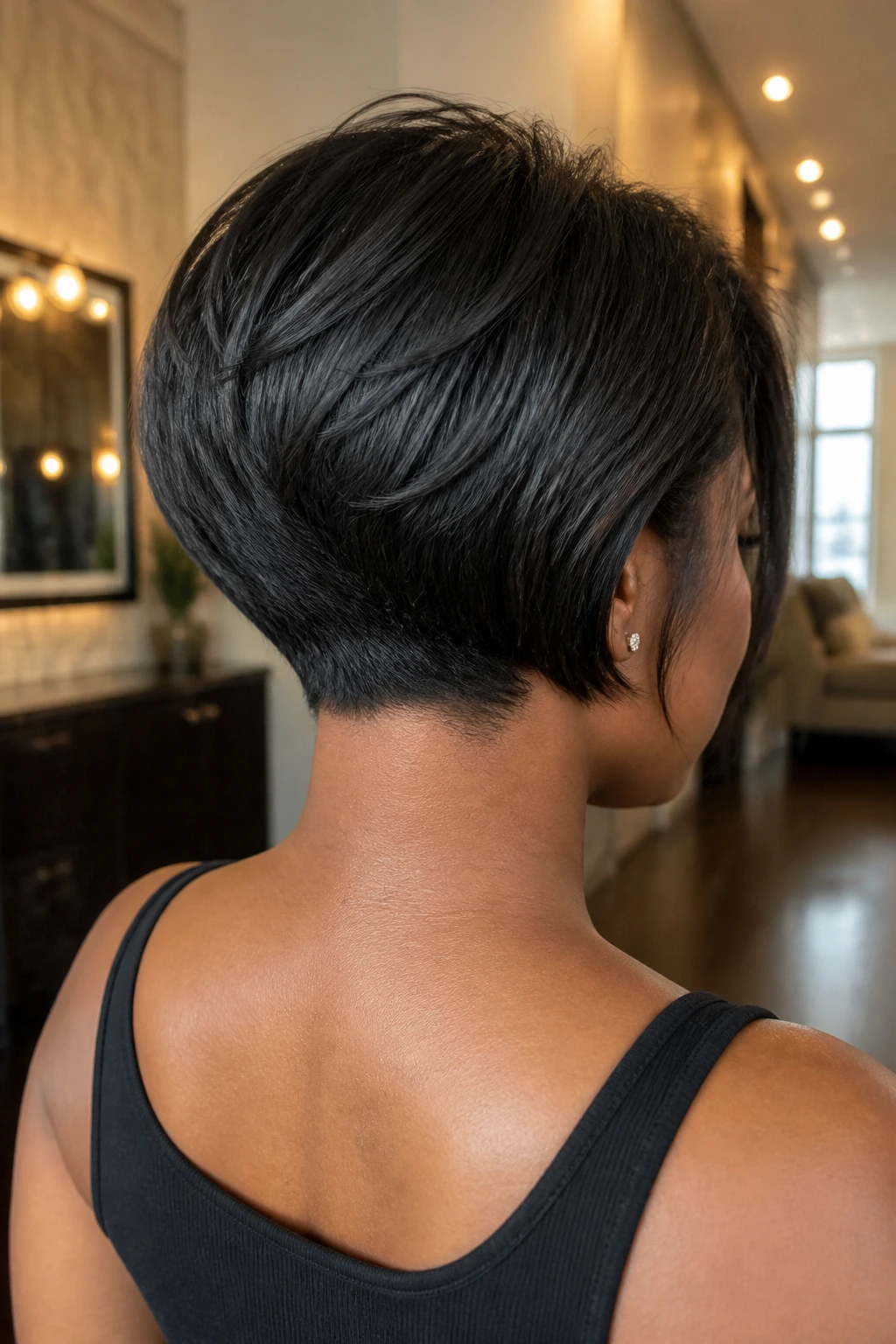
Stacked bobs live or die in the back. The haircut is built with shorter layers near the nape and more length as it climbs toward the crown, so the shape gets a little lift without looking puffy. On black hair, that extra structure can be a gift if your strands tend to sit heavy around the neck.
The best version is soft at the crown and precise at the neckline. If the stack is too high, the cut can look dated or overly round. If it’s too low, you lose the lift and end up with a regular bob that has a strange hump in the middle. Nobody wants that.
A clean stacked bob works especially well on medium to thick hair, because the weight in the back gives the shape some staying power. I like it most on hair that has been smoothed with a blow-dry or silk press, since the layers show up better when the texture is sleek.
One sentence matters here: the nape has to be neat. If the back edge is sloppy, the whole haircut looks off.
6. Layered Bob for Thick Natural Hair
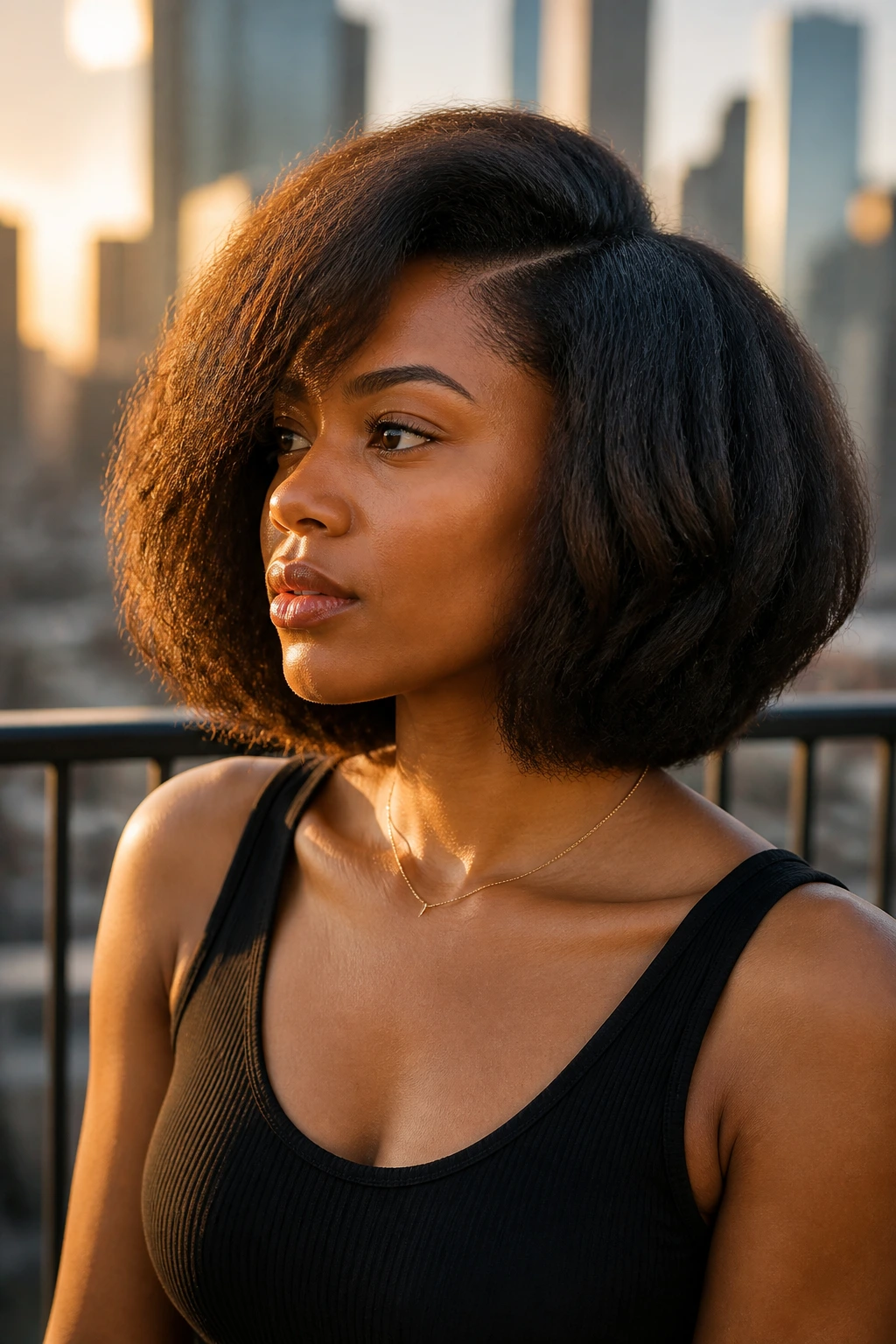
Unlike a blunt bob, a layered bob gives thick black hair room to move instead of forcing it into one heavy block. That difference matters. Thick natural hair can look gorgeous in a blunt shape, but when the density is high, the ends sometimes sit wide and push outward. A few long, thoughtful layers can fix that without stealing the shape.
What to ask for in the chair
Ask for interior layers, not a lot of short ones on top. Long layers remove bulk and let the silhouette fall better, while a blunt or softly curved outer edge keeps the haircut looking clean. The front can start around the cheekbone if you want face framing, or lower if you prefer a calmer finish.
The mistake people make is over-layering. That turns the bob into a mushroom fast. It also makes grow-out harder, because the shape can lose its outline in a weird, choppy way.
- Keep the perimeter blunt or only slightly curved.
- Ask for weight removal inside the haircut, not all over the top.
- Let the face frame begin at cheekbone level or lower.
- Use a diffuser or twist-out to keep the shape from puffing out.
A layered bob on thick natural hair should feel controlled, not thinned out. That’s the line.
7. Side-Part Bob With a Heavy Swoop
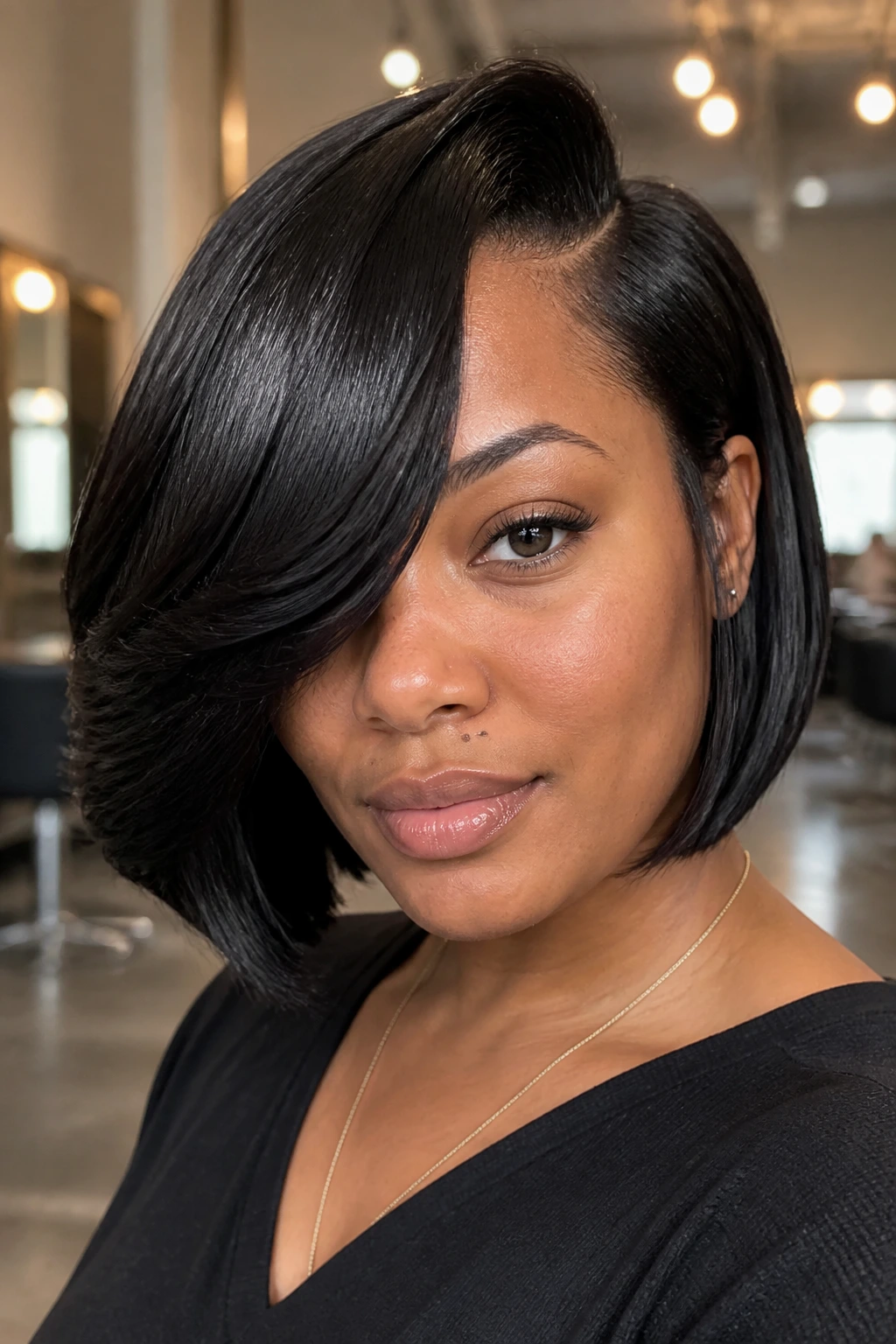
A deep side part changes the mood before the cut even gets noticed. On black hair, a side-part bob can soften a strong jaw, add instant root lift, and make a simple haircut feel a little more styled. It’s one of those shapes that looks deliberate even when you did not spend forever on it.
The part placement matters more than people think. Too shallow, and the cut just looks slightly off-center. Too deep, and the front can fall in your face and swallow the whole shape. I usually like the part to land somewhere near the arch of the eyebrow or just past it, depending on how much swoop the hair has.
Where the part should land
A good side part opens the face without making the haircut lopsided. Keep the heavier side long enough to brush the cheekbone, then let the shorter side tuck behind the ear or skim the temple. That contrast gives the style its clean line.
This cut works especially well if you want softness with a little drama. It’s not as architectural as an asymmetrical bob, and that’s the point. It feels easier to live in, but it still has shape.
8. Micro Bob That Stops at the Ear
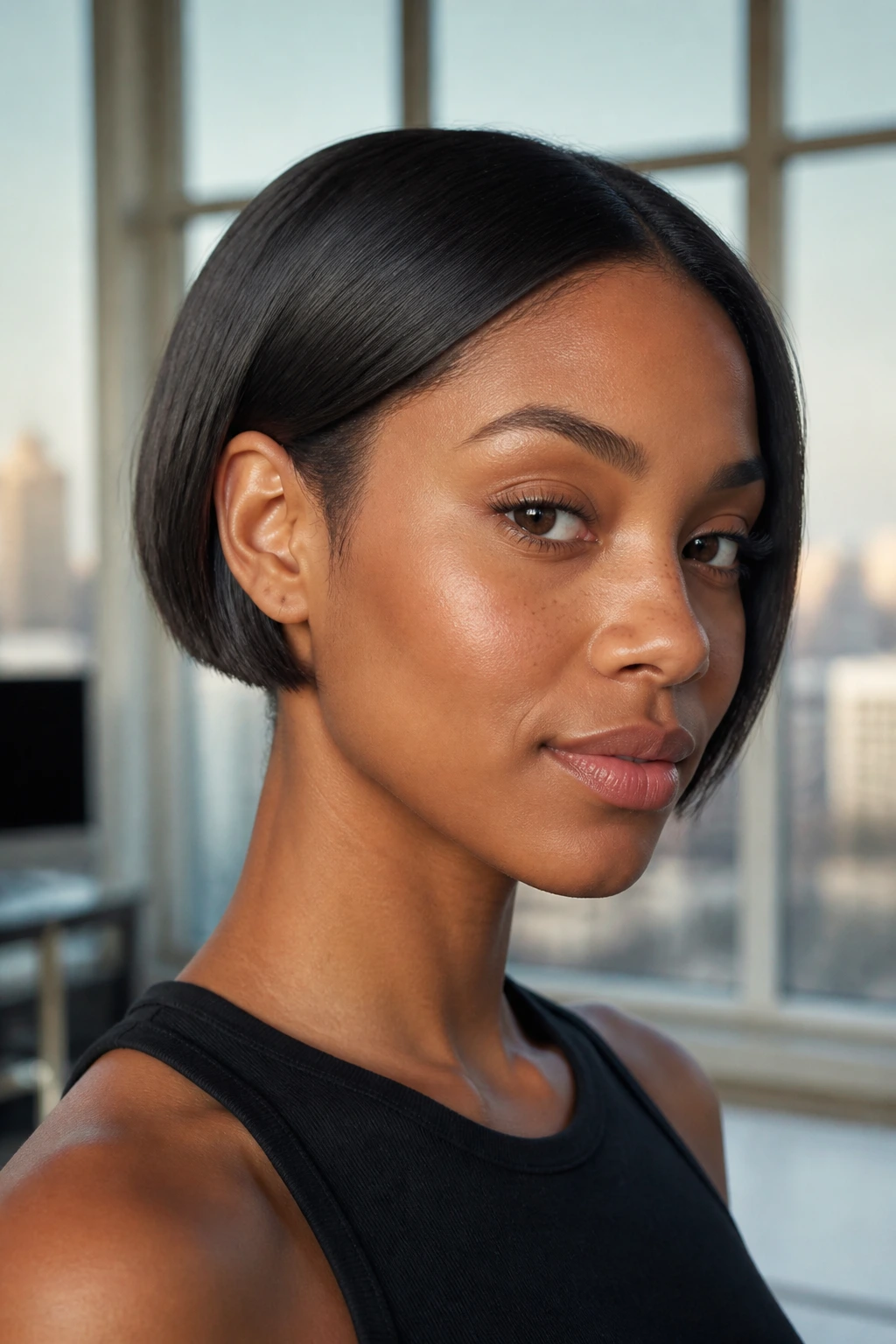
Short hair can look severe in the best way. A micro bob sits right around the ear lobe or just below it, and that tiny length gives black hair a sharp, modern edge that long bobs can’t quite match. The neck opens up. The jawline shows up. The whole face looks more awake.
This cut is not forgiving, which is part of why I respect it. If the line is off by even a little, you see it right away. It also needs regular trims because grow-out changes the silhouette fast. A micro bob looks best when the ends are trimmed cleanly and the shape is kept tight around the nape.
It suits people who like precision and do not mind a little maintenance. Fine hair can look fuller in this shape, while thicker hair may need more internal weight removal to keep the cut from ballooning out at the sides. On black hair with a silk press, the result can be razor-clean. On texture that’s left natural, it reads more sculpted and playful.
One-sentence truth: this is not a “set it and forget it” cut.
9. Rounded Bob With a Soft Under-Curve
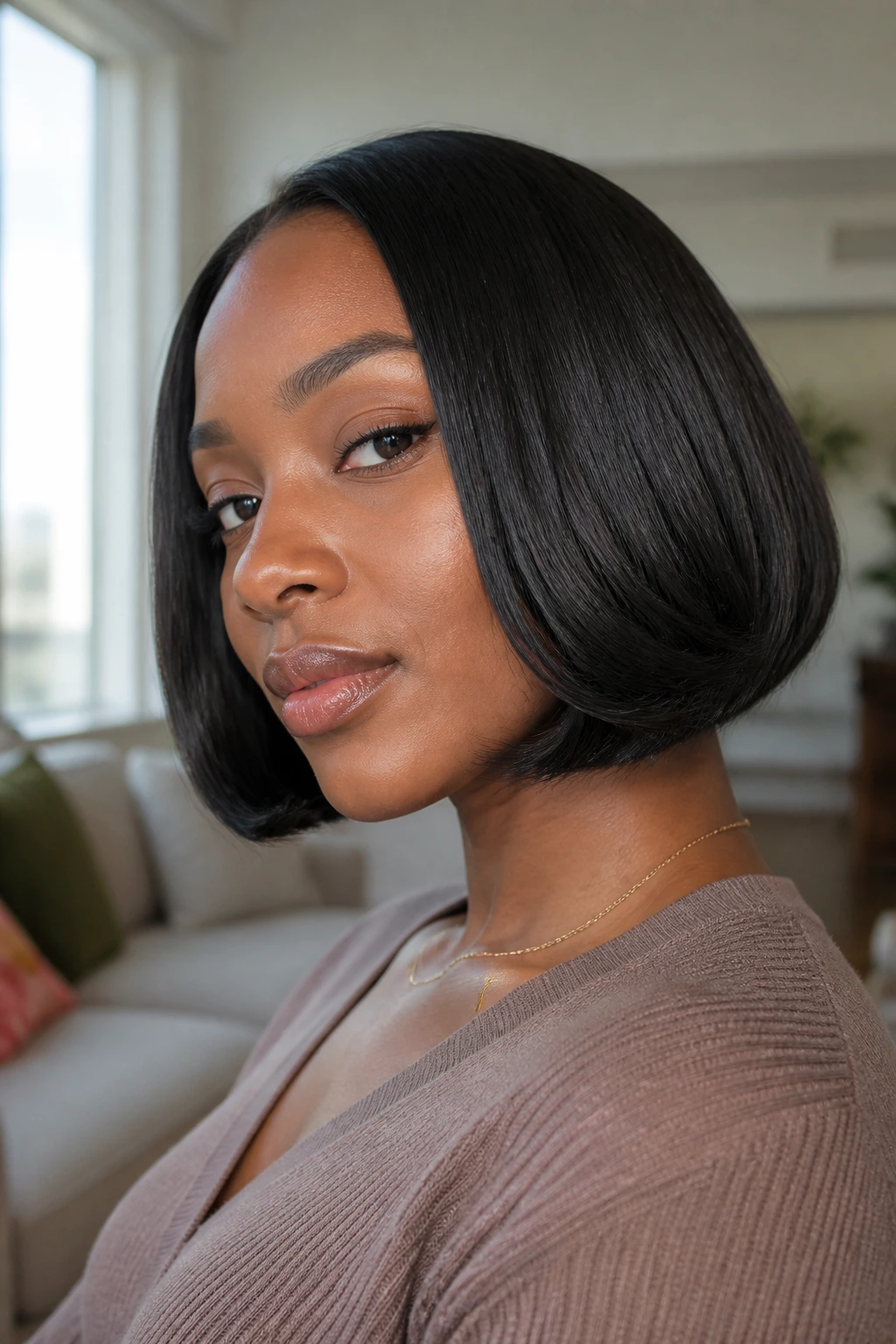
What if you want a bob that feels polished instead of hard-edged? A rounded bob is the answer most people skip because they think “sharp” has to mean straight lines only. It doesn’t. A soft under-curve can still look neat, especially on black hair that holds a shape well.
The shape follows the head a little more closely, with the ends curving under toward the chin or neck. That makes the cut feel smoother around the face. It’s a smart choice if your jaw is wide, your cheeks are full, or you just prefer a haircut that looks finished from every angle.
The curve under the chin
The curve needs help from the styling. A medium round brush or a roller set can create that slight bend at the ends, and a cool shot at the end of the blow-dry keeps the shape from collapsing. If the curve is too tight, the bob starts to feel old-fashioned. If it’s too loose, you lose the outline.
I like this cut when someone wants softness without losing discipline. It’s not loud. It is controlled, and that control is what makes it sharp.
10. Bob With Curtain Bangs
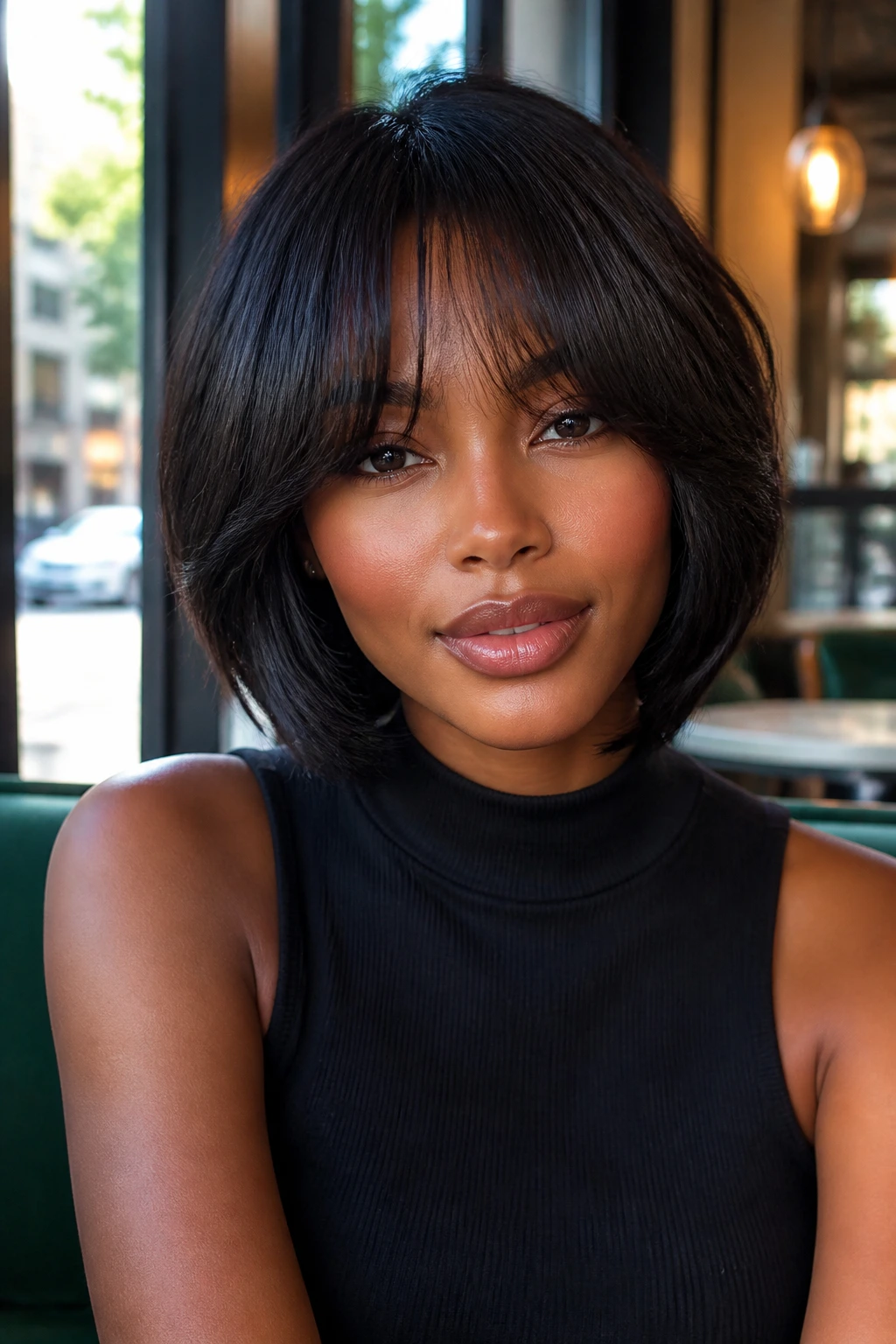
Curtain bangs can change a bob from tidy to magnetic in one snip. They break up the forehead, draw attention to the eyes, and make the haircut feel lighter around the face. On black hair, they also give you a little movement where a blunt bob might otherwise feel strict.
The bang length is the part people get wrong. Too short, and the bangs fight the bob. Too dense, and they start looking helmet-like. A better version usually opens near the brow or cheekbone and gets longer toward the temples, so the fringe can split cleanly and blend into the rest of the haircut.
How to keep the fringe from swallowing the cut
- Ask for the shortest point to sit at or just below the brow line.
- Keep the sides longer so they melt into the bob.
- Style with a small round brush or a soft bend from a flat iron.
- Avoid cutting the bangs too thick if your hair already has a lot of density.
Curtain bangs work best when you want interest without committing to a full fringe. They also grow out with less drama, which matters more than people admit. Bangs that can survive a busy week are bangs worth keeping.
11. Tapered Bob for Coily Hair
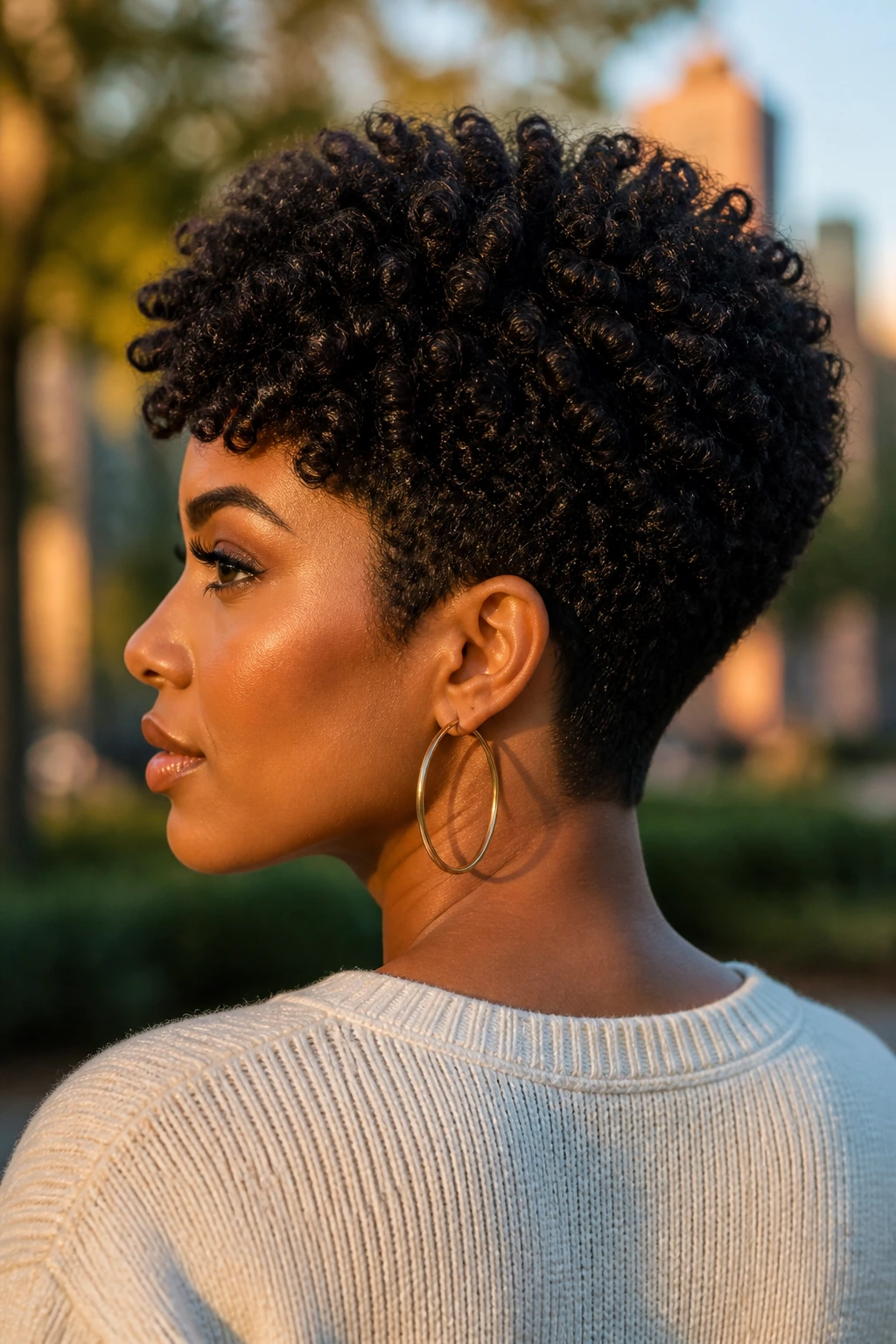
A tapered bob is the neat answer for coily hair that wants shape without a lot of fuss. The silhouette narrows toward the nape and sides, while the top keeps enough fullness to show off the curl pattern. That taper gives the haircut a clean outline and keeps the back from spreading out in an awkward triangle.
What to ask for at the nape
Ask your stylist to keep the neckline tidy and the sides slightly shorter than the top. That small adjustment makes the whole cut feel sharper. It also helps the bob sit close to the head, which is useful when you want the haircut to look intentional even on a wash-and-go day.
A tapered bob can be worn in a few different ways. Twist-out texture gives it more softness, while a finger-styled wash-and-go makes the edge look tighter. If you want the shape to stay visible, a little gel at the perimeter goes a long way. No need to drown the hair in product.
This cut is one of my favorites for coily hair because it respects the natural fullness instead of fighting it. The silhouette is neat, but the texture still gets to be itself.
12. Silk-Press Bob With a Glass Finish
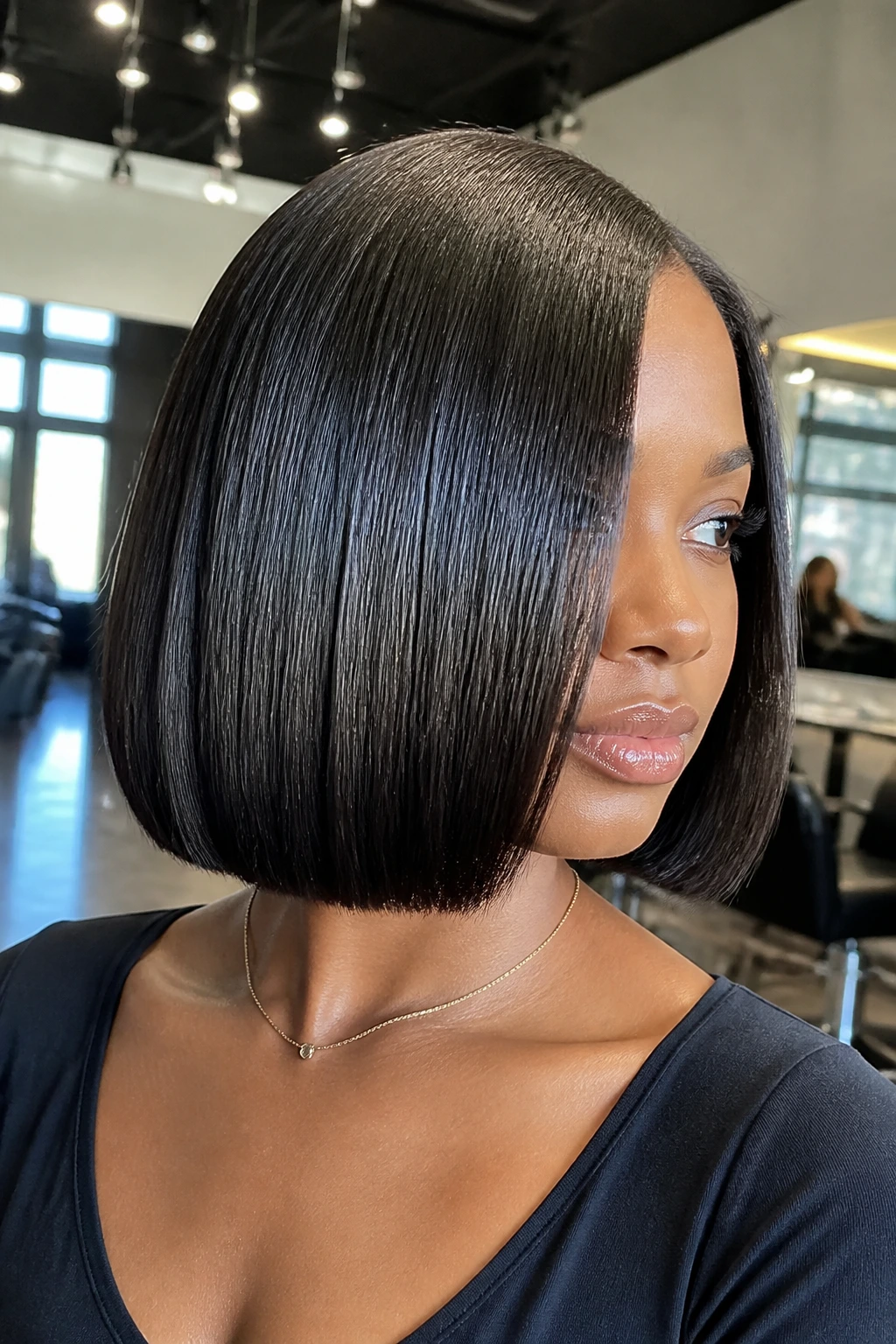
A silk-press bob is the haircut that shows every line. When the hair is smoothed correctly, the perimeter looks almost drawn on, and that’s exactly why this style can look so sharp on black hair. You see the angle, the weight, and the edge all at once.
The preparation matters more than the flat iron. A solid blow-dry with tension, a heat protectant that coats evenly, and small sections make a bigger difference than people want to admit. If the hair is too damp, the press frizzes. If the sections are too wide, the ends don’t get that crisp finish and the bob loses its clean shape.
A silk-press bob should still move. Bone-straight stiffness can make the haircut look lifeless, especially at the ends. The best version has a slight swing when you turn your head, but the line stays controlled.
Humidity is the obvious catch, and it is a real one. Wrap the hair at night with a silk or satin scarf, and keep your hands out of it during the day. The more you touch it, the faster the finish loses its edge.
13. Wavy Bob With Piecey Ends
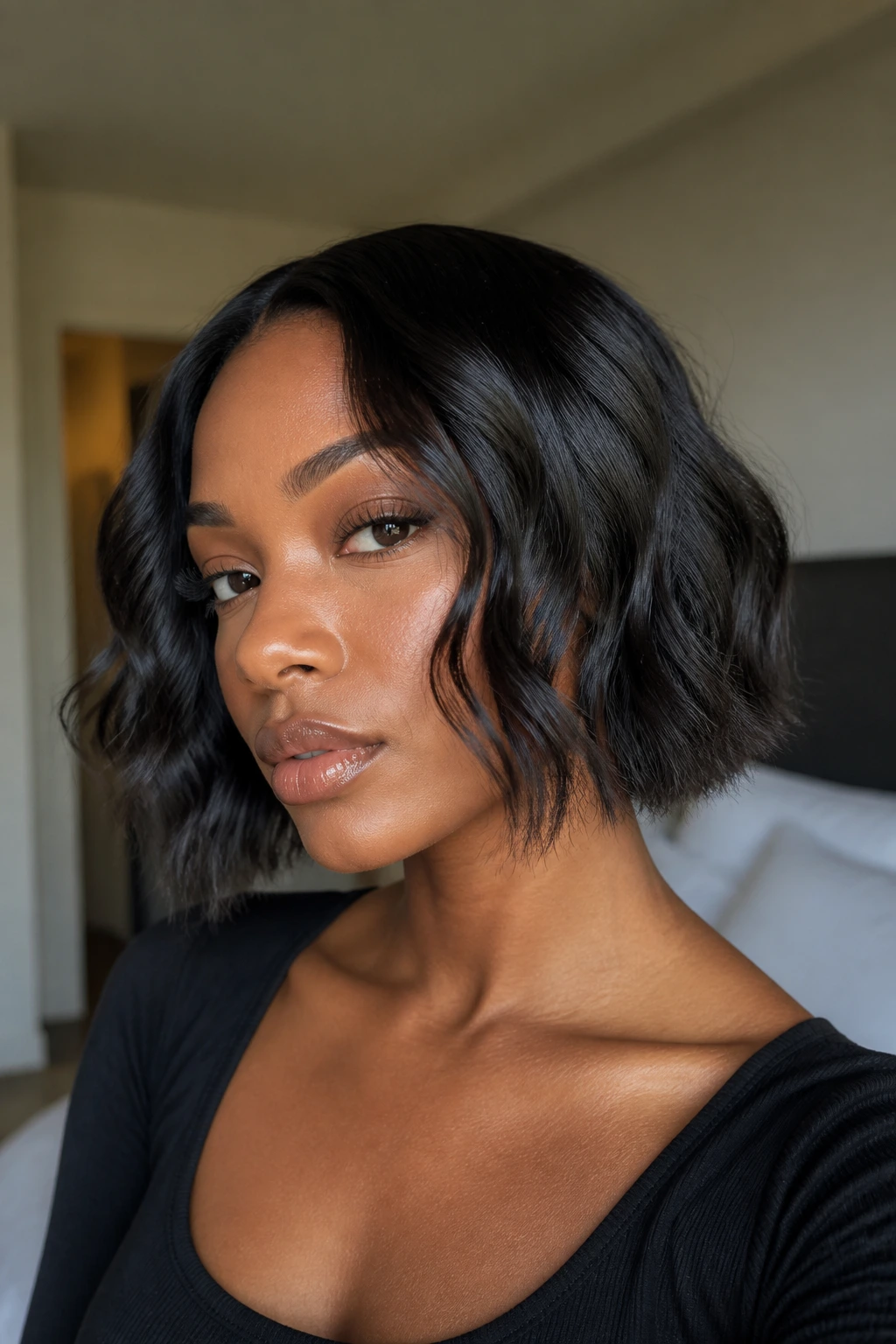
Piecey waves can make a bob feel less formal without turning it sloppy. On black hair, especially if you wear a silk press or a stretch style, a loose wave pattern gives the cut some air around the face and keeps the ends from looking too stiff. The result is softer, but still shaped.
How to get the bends right
Use a 1-inch curling iron or wand and alternate the direction of the curls so the waves do not stack into one uniform pattern. Leave the last half-inch of the ends straighter if you want the bob to read clean instead of beachy in the lazy sense. That little straight edge keeps the haircut from losing its outline.
A light mousse or foam can help the texture hold its shape without getting crunchy. After the curls cool, break them up gently with your fingers. A brush can work too, but only if you want the waves to relax a little more.
- Keep the waves loose, not ringlet-tight.
- Leave the ends a bit straighter for a sharper line.
- Use a light hold product instead of a heavy cream.
- Let the curls cool fully before touching them.
This is the kind of bob that looks calm but not plain. That’s a nice place to be.
14. Box Bob With Square Corners
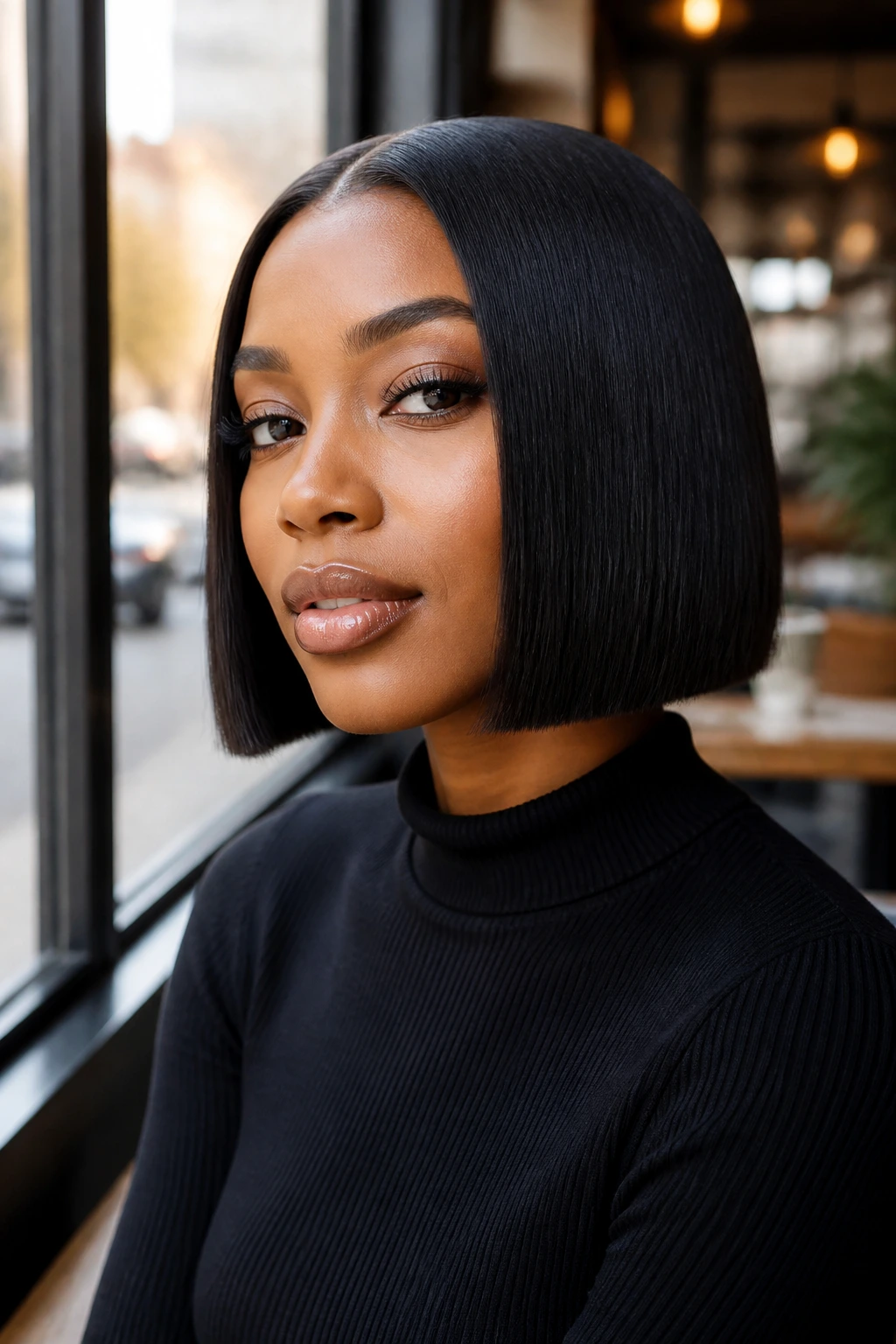
A box bob is blunt with attitude. The silhouette is straighter through the sides, with corners that sit clearly at the jaw or just below it. On black hair, that square shape can look bold and clean at the same time, especially when the texture is smoothed enough to show the exact line.
The key is the corners. If they’re soft, you lose the box effect. If they’re too sharp, the cut can feel heavy or harsh around the face. The best version keeps enough width to frame the jaw without making the head look wider than it is.
This is a haircut for people who like precision. It looks especially good on dense hair because density helps the box hold its shape. On thinner hair, the corners can look a little hollow unless the cut is done with care and the outline is checked from every angle.
A box bob pairs well with a center part, but a deep side part can make it feel less severe. Either way, the line has to stay honest. If the ends are uneven, this haircut shows it instantly.
15. Collarbone Lob With Blunt Ends
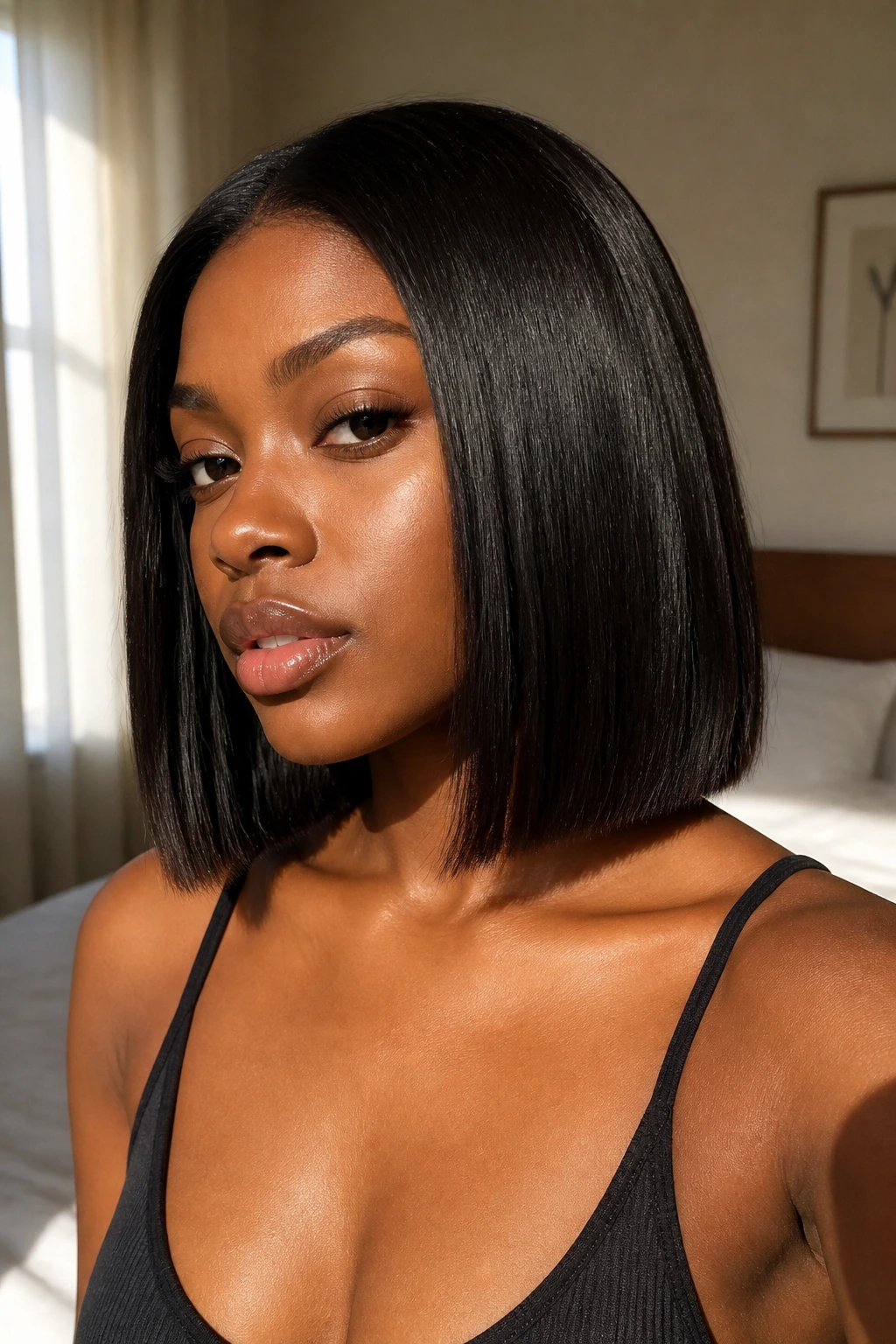
If you want length and a sharp edge, the collarbone lob is the safest bet in the bunch. It gives you the clean line of a bob, but with enough room to tuck behind the ear, curl under, or stretch out into a softer shape when you want less drama. On black hair, that extra length can be a blessing if you’re not ready to lose much.
A blunt collarbone lob works on natural hair, blown-out hair, and silk-pressed hair. It’s also easier to grow out than a shorter bob, which means the haircut keeps looking intentional for longer. The catch is that it needs real trimming. If the ends start splitting or fraying, the whole style loses its sharp edge fast.
Who should pick this length
- Choose it if you want a bob but still need some ponytail flexibility.
- Choose it if your hair is dense and you want the shape to settle a little more.
- Choose it if you like a clean line but don’t want a cut that feels too short.
- Choose it if you want the easiest grow-out among the sharper bob shapes.
I reach for this length when I want something neat without the commitment of a chin-length cut. It’s practical, but it still looks polished. And if you ask me, that’s a very good place for a bob to live.
