



Bob length braids hit a sweet spot that longer braid styles often miss. They give you shape, movement, and texture without dragging hair past your shoulders or turning every wind gust into a chore. A good braided bob feels neat around the neck, swings a little when you turn your head, and still has enough presence to look finished from every angle.
That length matters more than people think. Once braids land somewhere between the jaw and the collarbone, the whole style starts reading differently — cleaner, sharper, sometimes softer, depending on the parting and braid size. A chin-length braid bob can look crisp and structured. A collarbone-grazing one can feel a little looser, a little cooler. Same category. Very different mood.
The tricky part is that short braids are less forgiving than waist-length styles. Bad parting shows fast. Uneven ends show fast. Tight braids show even faster, because there’s nowhere for the style to hide. That’s why the details matter so much here: the braid size, the part shape, the way the ends are finished, even the little extras like beads or curls.
And that’s the fun of it. Bob length braids give you room to play without drowning the face or the shoulders, which is exactly why so many braid styles look better at this length than they do when stretched longer. The shape does half the work. The rest comes down to choosing the right finish.
1. Chin-Length Box Braid Bob With Blunt Ends
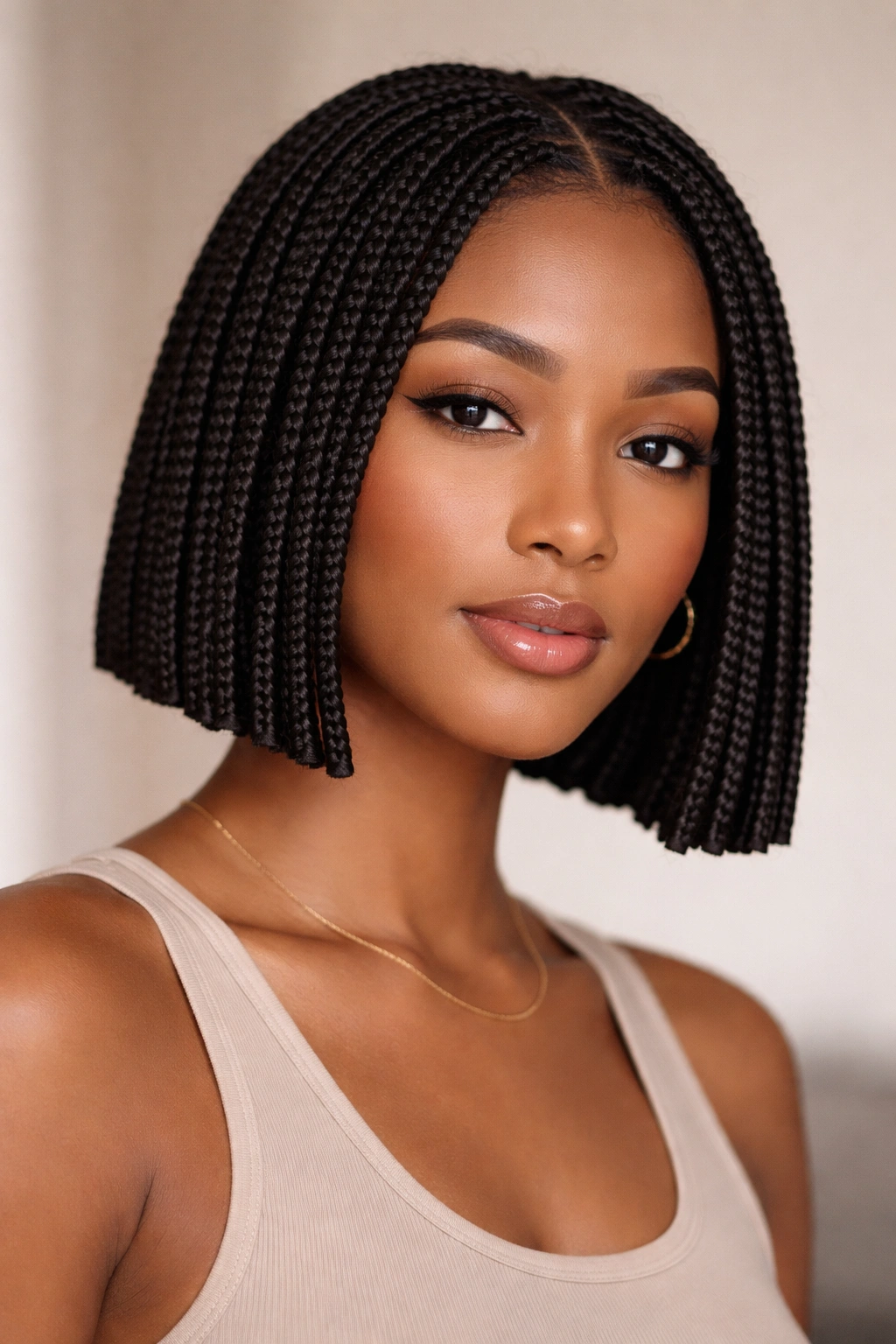
Sharp, blunt box braid bobs are the cleanest version of the whole family. They sit close to the jawline, they move in a neat block, and they look deliberate from the first glance. If you want a bob braid style that reads polished without trying too hard, this is the one I’d point to first.
What makes the blunt line work
The whole point is the edge. Every braid ends at roughly the same length, so the bottom line looks straight instead of soft or wispy. That makes the shape feel expensive in a plain, practical way — not flashy, just tidy.
- Best with medium box braids around 1/4 to 3/8 inch wide
- Looks strongest on a middle part or a clean side part
- Sits well at jaw to upper-neck length
- Works with matte or glossy braid hair, depending on the finish you want
Tip: Ask for the ends to be trimmed only after the braids are installed. That little step keeps the line even without making the bob look choppy.
A blunt bob braid also photographs well from the side, which is more useful than people admit. The shape frames the cheekbone, then drops away before the style starts feeling bulky. Nice and simple.
2. Knotless Bob Braids That Sit Softly on the Scalp
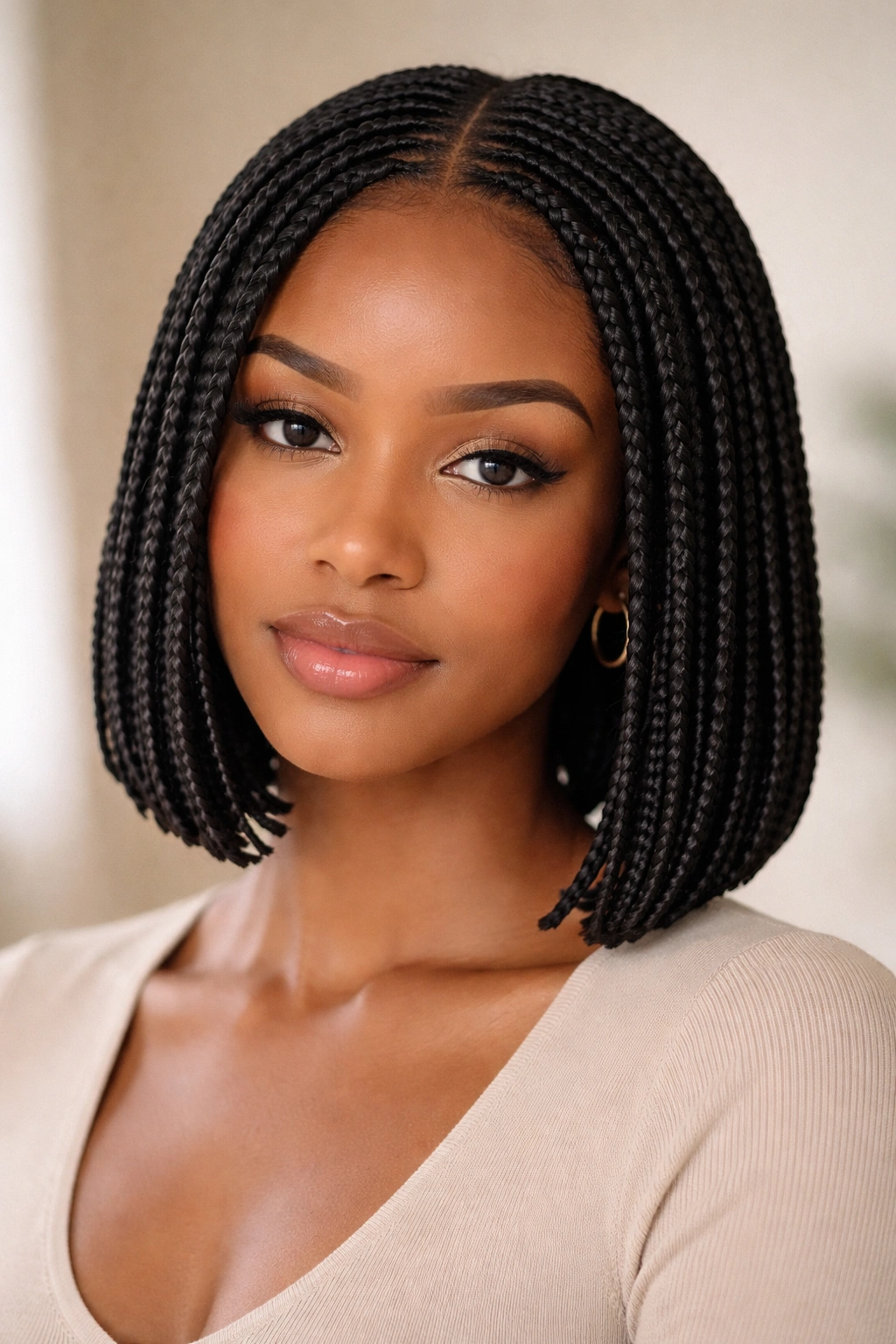
Why do knotless bob braids feel easier to wear than traditional box braids? Because the root doesn’t start with that hard little knot, so the braid lies flatter and usually feels gentler around the hairline. That matters a lot at bob length, where the style sits close to the face and every bump shows.
Knotless braids give the bob a softer start and a more natural swing. The braid grows out from your own hair, then expands gradually as added hair is fed in. The result is less bulk at the root and a smoother transition through the top half of the style. If your scalp gets sore fast, or if you’ve had braids that felt stiff for days, this is the version worth asking about.
Best when you want less root tension
This style makes sense for people who like a neat bob but do not want a heavy install. It’s also a smart pick if your hairline is fine or delicate, because the pressure tends to be distributed more evenly. That said, knotless does not mean loose. The braid still needs enough structure to hold its shape.
The look is especially good with a center part and chin-grazing length. The top lies flat, the ends move, and the whole style feels lighter than it looks.
3. Triangle-Part Bob Braids With Graphic Parting
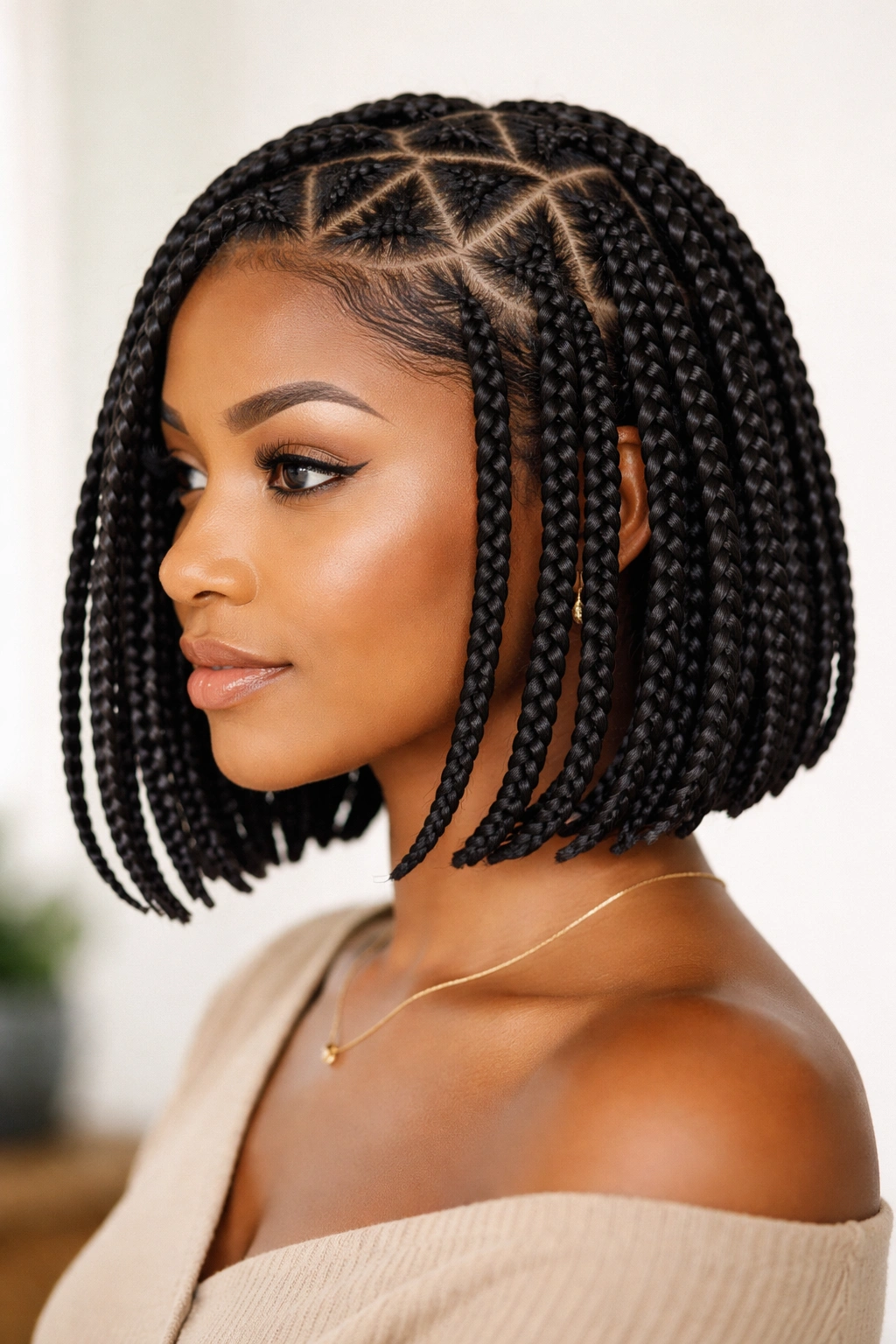
Triangle-part bob braids are what I suggest when someone wants the same short braid silhouette but refuses to wear a basic grid. The braid itself can be plain. The parting is what gives the style personality.
A triangle part changes the rhythm of the scalp pattern. Instead of square sections, each braid starts from a three-sided part, which catches the eye in a slightly irregular way. It sounds small. It isn’t. On a bob, where the braids stop before they get too heavy, the parting becomes part of the style instead of background noise.
What to ask for at the chair
- Triangle parts that are clear and evenly spaced
- Medium braid size so the parts stay visible
- Ends trimmed to the same chin or jaw length
- A clean finish around the temples so the pattern doesn’t crowd the face
This version works especially well if you like structure. It also helps on hair that’s thick enough to support a clear part pattern, because the triangles stay readable instead of disappearing into the scalp. The main mistake is going too tiny with the braids, which makes the parting busy. You want the pattern to show. You do not want a crossword puzzle on your head.
4. Fulani Bob Braids With Center Cornrows and Side Details
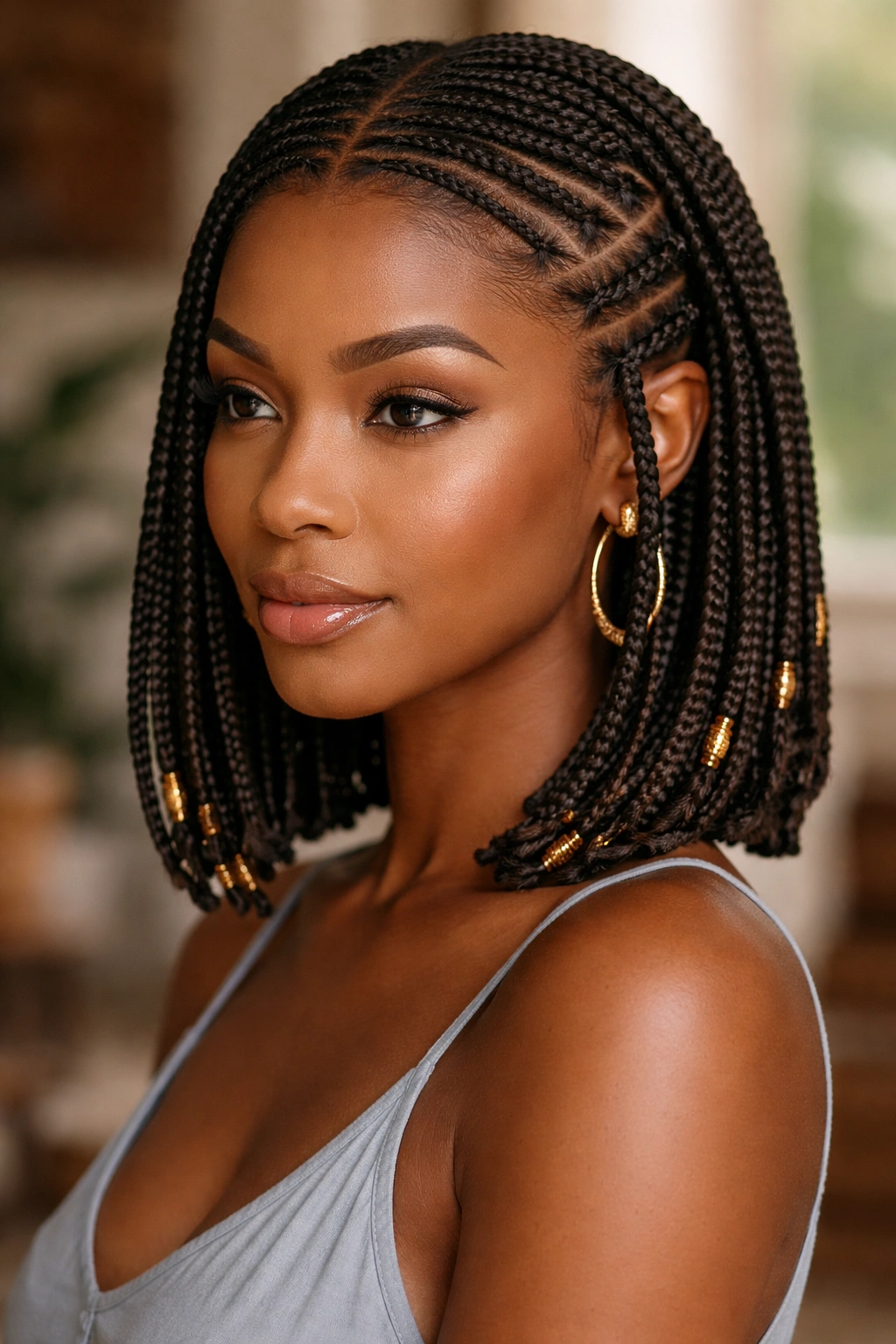
Fulani bob braids have a built-in sense of shape because the style usually starts with a center cornrow or a few central rows, then moves into hanging braids with side details. At bob length, that layout looks especially good. The shorter length keeps the braids from feeling overloaded, and the face-framing structure does a lot of the visual work.
The nice thing about this style is that it already knows where it wants to go. The middle section gives the head a clear line, while the side braids can be tucked, adorned, or left plain. I like that balance. It feels intentional without looking stiff.
You do have to watch the ornament level. Too many cuffs, shells, and wrapped pieces can crowd a short braid bob fast. One or two accents near the front is enough if the braids themselves are already detailed. The rest should breathe.
If you want a style that nods to tradition but still wears easily with a T-shirt, hoop earrings, or a button-down shirt, Fulani bob braids land in a very good place. They have shape, but they don’t shout.
5. Lemonade Bob Braids Swept to One Side
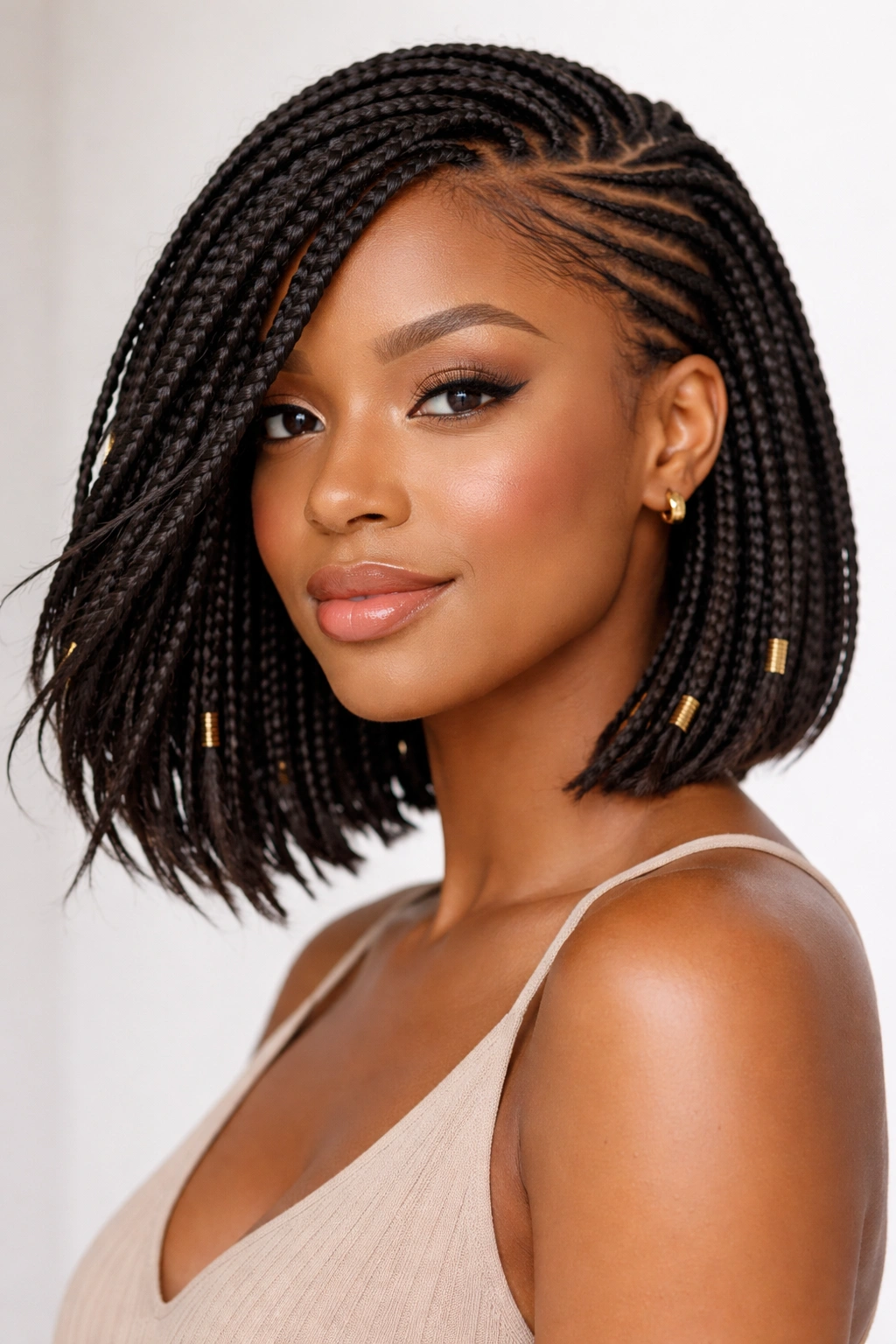
One-sided bob braids do more for the face than people expect. The sweep changes the whole attitude of the style. It softens a strong jaw, opens one side of the neck, and gives a short braid look a bit of motion instead of that straight-across line some bobs can get stuck with.
Lemonade-style bob braids work especially well when you want a little drama without extra length. The braids usually angle from one side of the head and fall across the forehead or cheek area in a controlled sweep. The effect is sharp, but not hard. That’s the nice part.
A lot of people try to make every braid land the same way and end up fighting their own parting. Don’t. Let the heavier side do the talking. Keep the opposite side tucked closer to the scalp so the shape has contrast.
This is one of those bob length braid styles that looks a touch more styled than the rest with almost no extra effort once it’s installed. If you like earrings, this one gives them room to show. Good trade.
6. Goddess Bob Braids With Curly Leave-Out Pieces
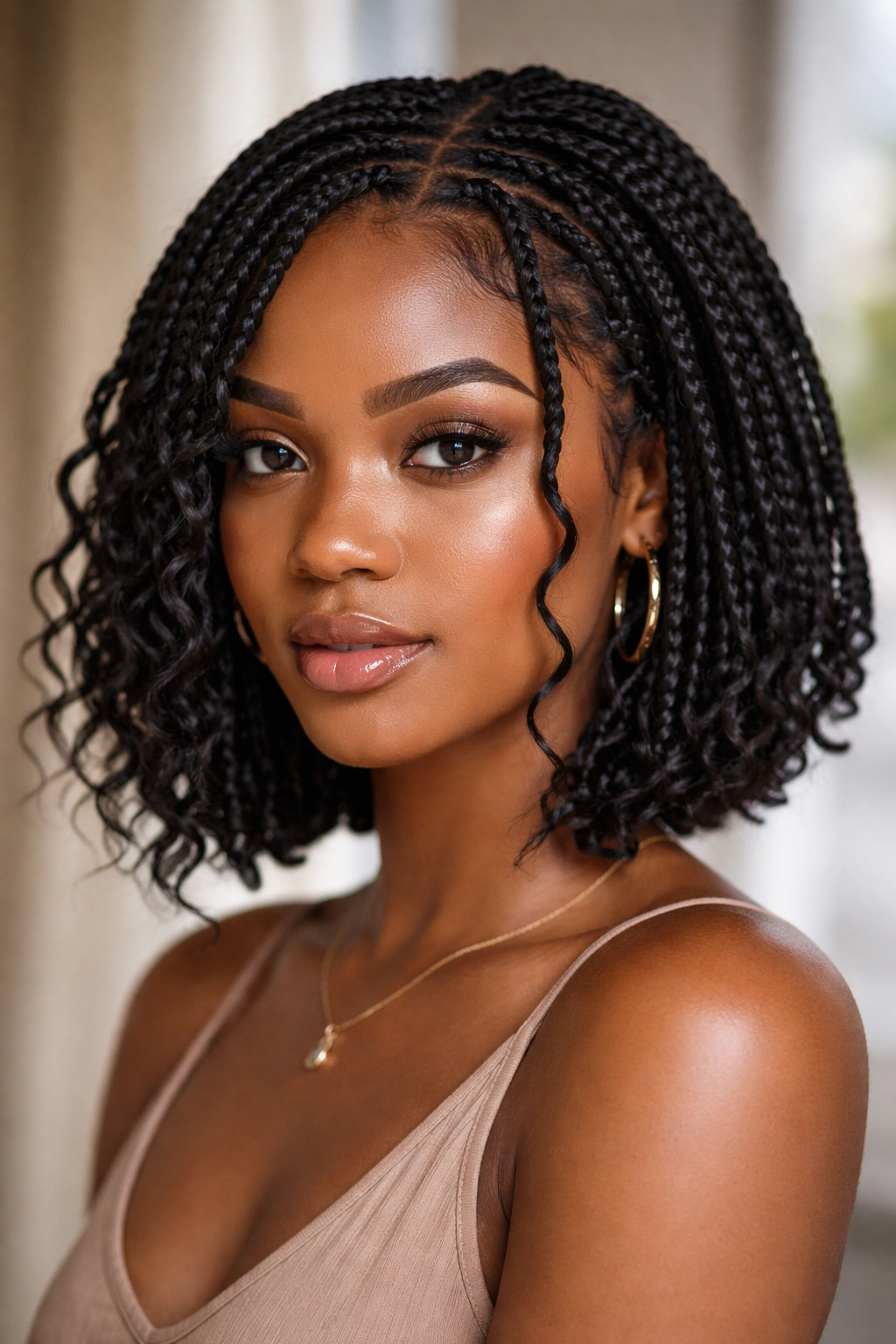
Why does a bob with curly pieces feel so different from a plain braid bob? Because the softness breaks up the straight lines. The braids still give the shape, but the curls keep it from feeling too rigid or too neat. That little mix is what makes goddess bob braids so easy to wear.
Where to place the curls
The best spot is usually around the face, through the outer layers, and sometimes near the ends. You do not need curly pieces everywhere. In fact, too many can turn the style fuzzy before you’re ready for that. A few placed curls do more work than a head full of them.
The trick is balance. Keep the braids clean and let the curly bits loosen the edges around the face and collar. On shorter braids, those pieces should feel like accents, not the main event. That keeps the bob from looking crowded or heavy.
This style is a good middle ground if you like movement but still want the braid pattern to show. It’s also a smart choice when plain braids feel a little severe. The curls take the pressure off.
7. French Curl Bob Braids for Soft Spiral Ends
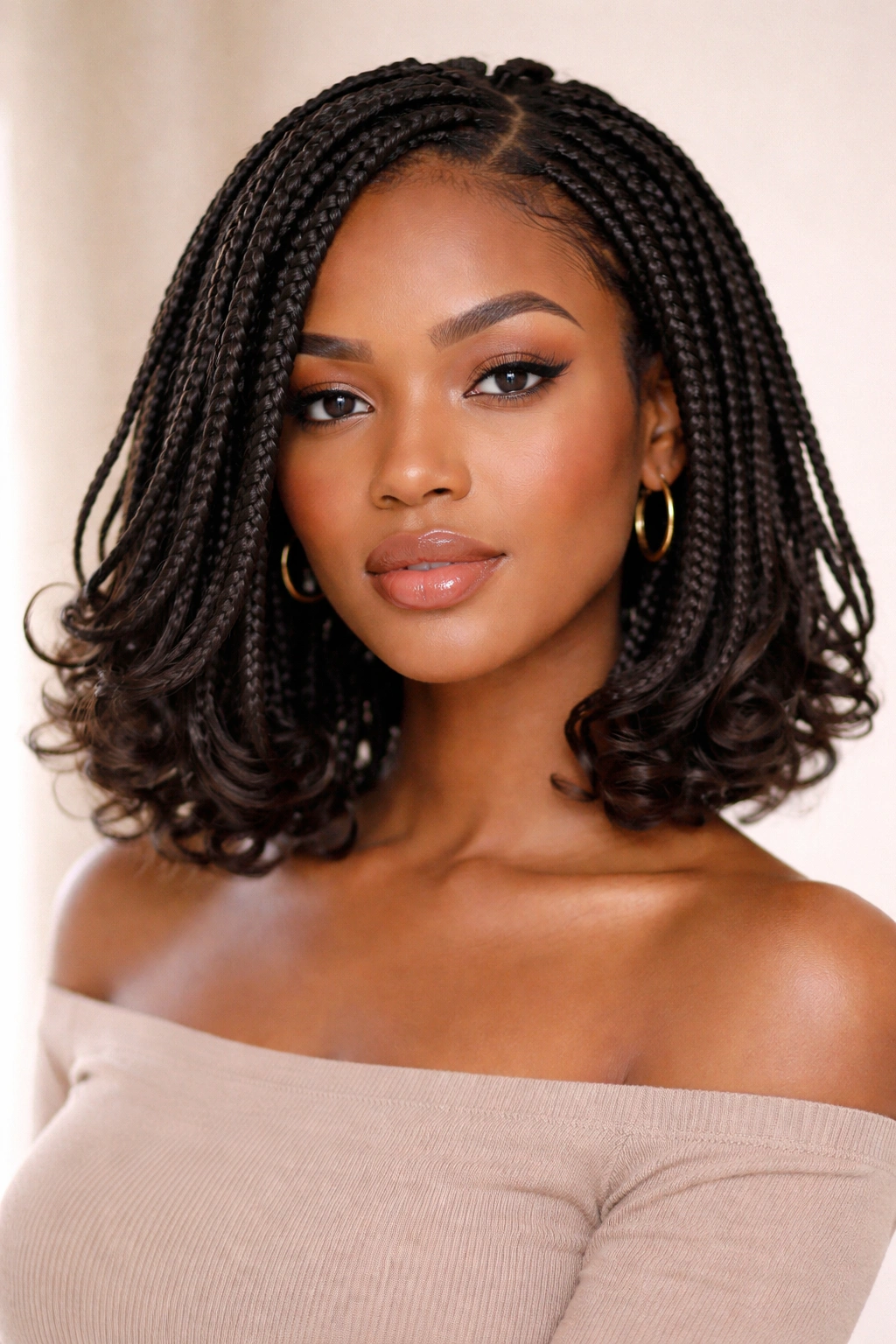
French curl bob braids have a softer finish than most braid styles, and that’s the whole reason they’re so good at bob length. The ends don’t stop abruptly. They curl. The shape drops in a spiral, which gives the cut a little bounce and keeps the bottom line from looking blunt or heavy.
The best thing about this style is the way it moves. Each braid catches a bit of air when you walk, and the curled ends sway instead of sitting flat against the neck. It feels lighter than a standard box braid bob, even when the braid count is the same.
The downside? Those curls need a gentler hand. Rough brushing will wreck the shape fast. A light mousse, careful finger separation, and a satin bonnet at night make a bigger difference here than they do with straight-ended braids.
French curl bobs work especially well if you want the style to feel dressy without adding beads or color. The finish does the job all by itself. No extra noise needed.
8. Boho Bob Braids With Loose Pieces Throughout
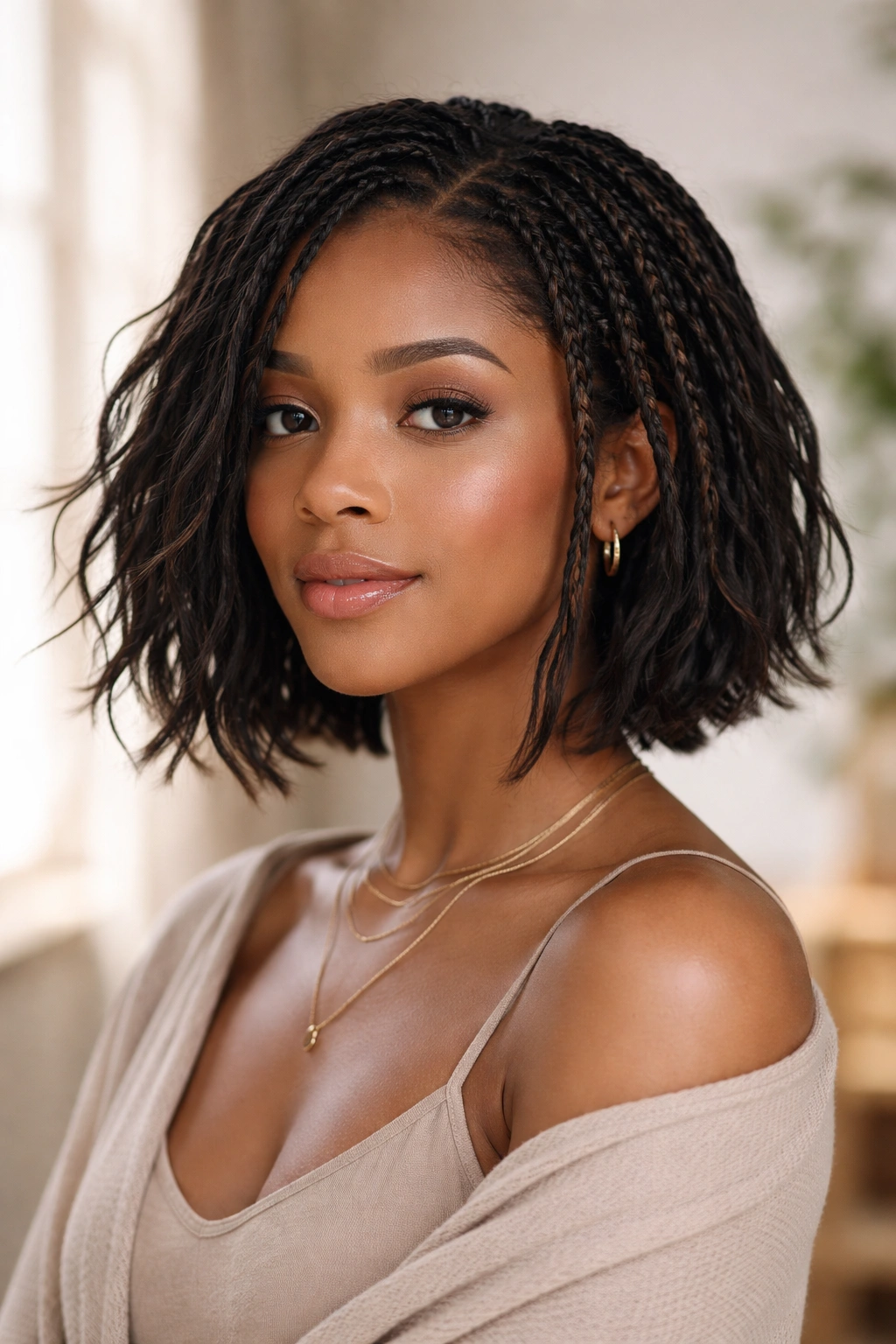
A boho bob is what I recommend when someone says they want braids, but they do not want the whole style to look too tight or too polished. The loose pieces soften the braid pattern, and at bob length that softness reads as relaxed rather than messy.
Picture a short braided cut with a few wavy or curly strands mixed in through the lengths. That’s the core of it. The braids still hold the structure, but the loose pieces interrupt the grid so the eye keeps moving. On a bob, that can be a very good thing. Short styles can look boxy fast. Boho pieces stop that.
What to watch for
- Keep the loose pieces sparse, not crowded
- Place them more through the outer layers
- Use a light mousse so the texture stays separated
- Expect a softer look around the ends after a few wears
The style is forgiving in a casual way, but it does need maintenance. The loose bits can frizz early if you sleep rough or over-handle them. Still, if you like a lived-in braid bob that feels a little less formal, this one has a nice ease to it.
9. Stitch Braid Bob With Clean, Straight Rows
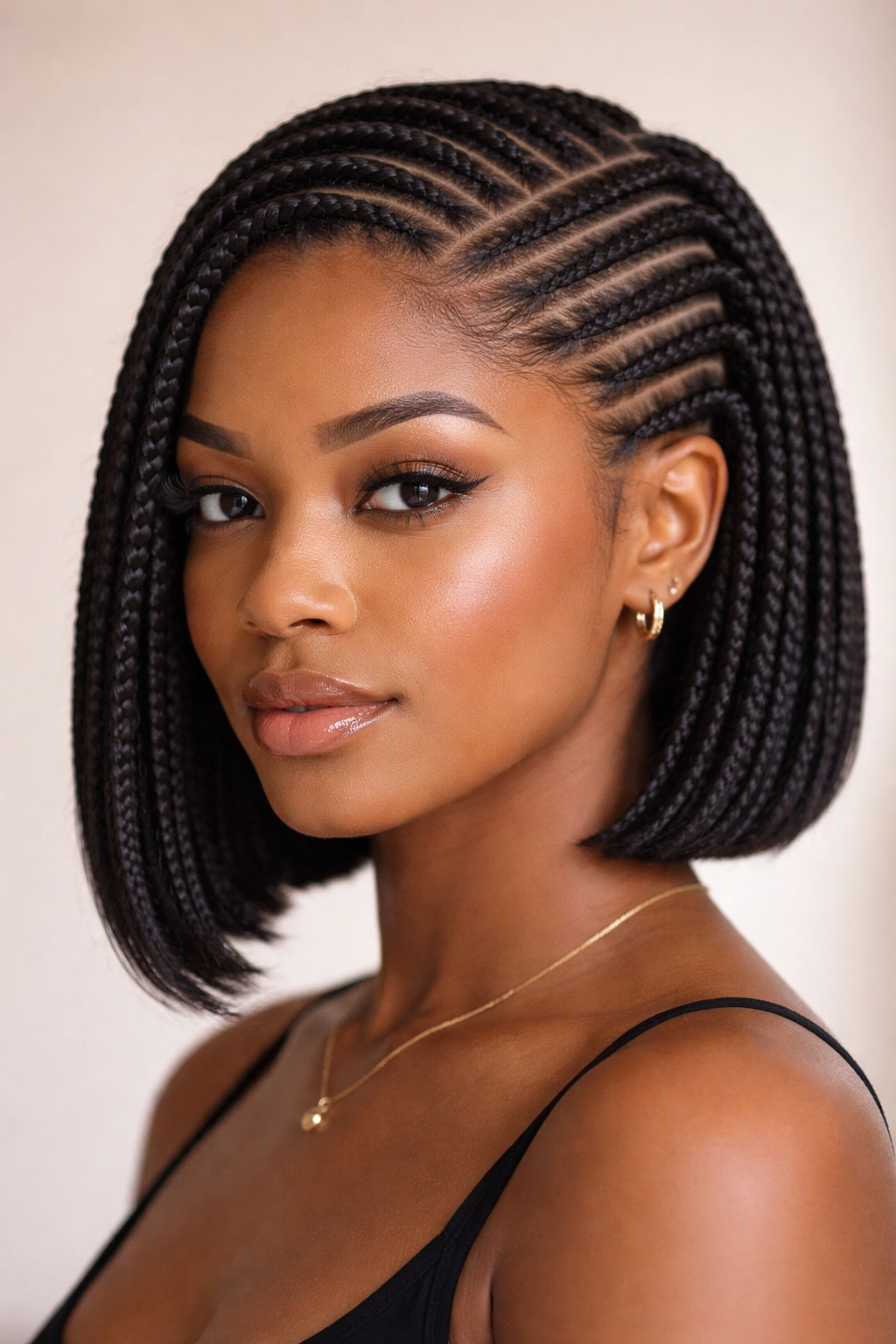
Unlike free-hanging box braids, stitch braid bobs are built to show the scalp pattern first and the hanging length second. That’s what gives them their clean, linear look. The rows lie flat, the sections are sharp, and the braid lines read almost architectural.
This style is a strong pick when you want the front and top of the head to look sleek. The stitch technique adds those neat horizontal grabs of hair along the scalp, so the braids look deliberate even before they reach the ends. At bob length, the effect is especially tidy because the style doesn’t have to compete with a lot of extra length.
It’s also one of the better choices for people who like a crisp finish around the parting. The rows are visible from a distance, and the braid fall stays controlled. If you want softness, this may feel too precise. If you want structure, it’s excellent.
I’d choose this one for a sharper wardrobe, a clean neckline, or any situation where you want the hair to look composed without looking fussy. It’s a neat bob. Very neat.
10. Micro Braid Bob for Maximum Movement
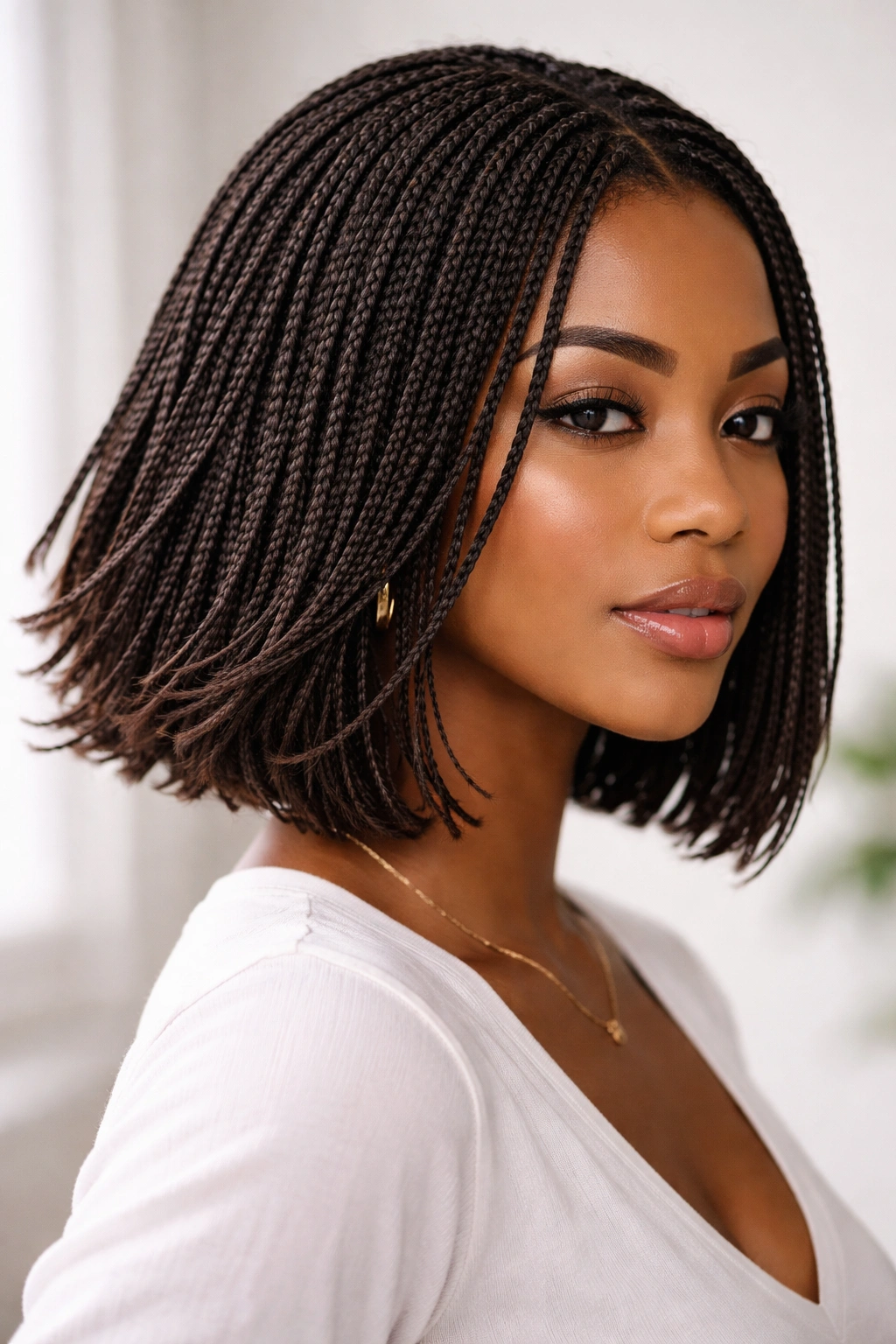
A micro braid bob feels almost like fabric once it’s installed. The individual braids are tiny, so the overall style moves in a way chunkier braids can’t match. When you turn your head, the ends shift in a soft curtain instead of swinging as single pieces.
That movement comes with a price, though. Micro braids take time. Lots of it. They also ask for more patience during washing and drying, because a dense bob can hold moisture if you rush the process. Still, the payoff is real: a lighter visual finish, more flexibility in styling, and a very fine texture that can look elegant without any extra decoration.
How to keep it from turning fuzzy early
Use a light mousse, not a heavy cream. Heavy products sit on tiny braids and make them limp. Sleep in a satin bonnet or on a satin pillowcase so the ends do not tangle overnight. And when you separate the braids, do it gently at the tips first. Pulling from the root just creates frizz faster.
Micro braid bobs are not for everyone. They’re a commitment. But if you love texture and want a bob that moves like thread, this is a beautiful lane.
11. Jumbo Bob Braids for a Fast, Chunky Finish
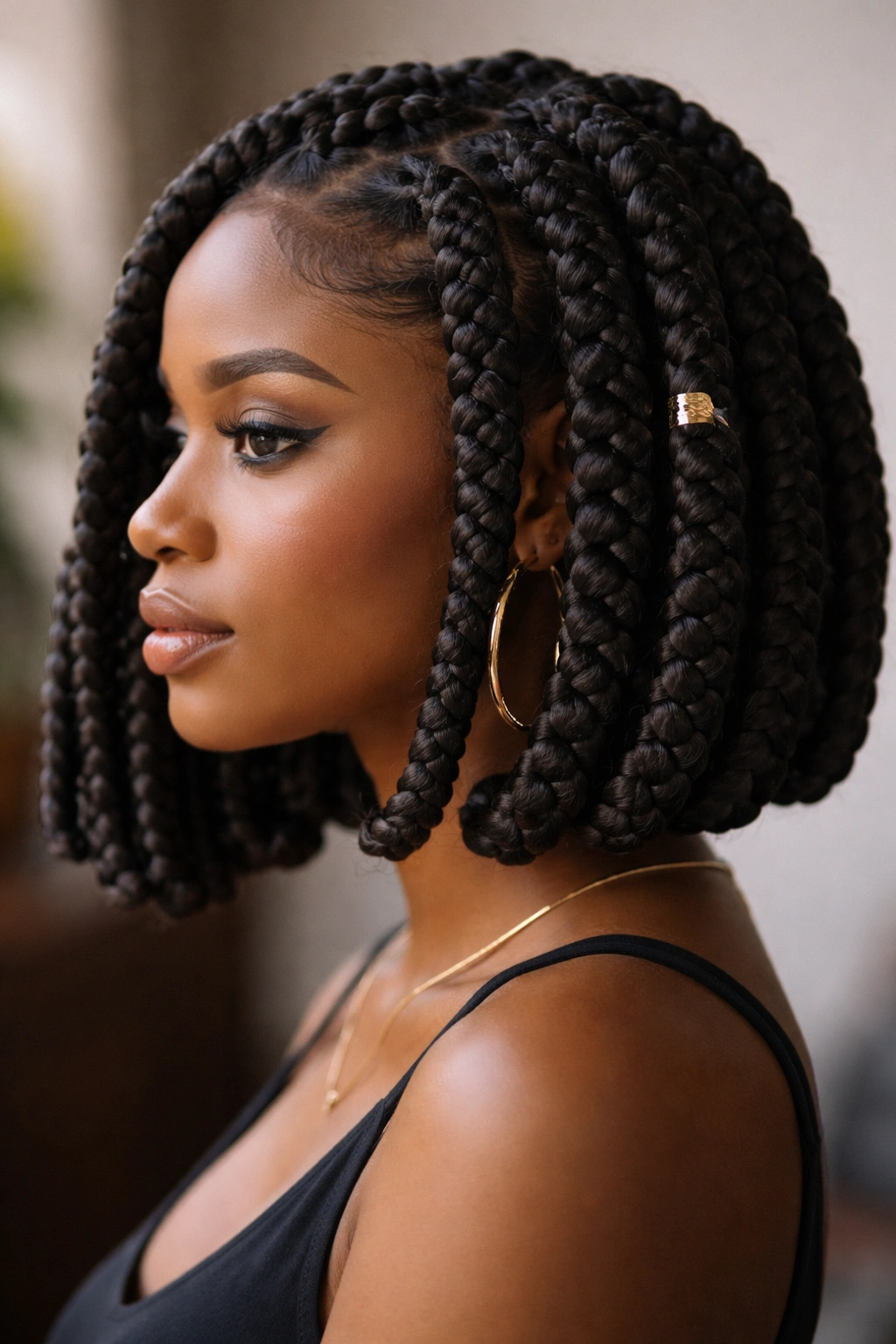
A client who wants braids for a trip, a party, or just a change without spending forever in the chair usually ends up here. Jumbo bob braids cut the install time because there are fewer sections, and the larger size gives the bob a chunkier, bolder feel right away.
The look is honest. You see the braid. You see the shape. There’s no hiding behind tiny detail work. That makes it useful for people who want the style to read from across the room, especially at chin or neck length where smaller braids can sometimes get a little lost.
The tradeoff is flexibility. Jumbo braids do not bend as easily into buns, twists, or half-up shapes, and they can feel heavier if the hair is packed too tightly. I would not push the size too far on very fine edges. A fat braid bob should feel bold, not burdensome.
If you like simple, strong lines and you do not want to sit through a marathon install, jumbo bob braids are hard to argue with. They get in, make their point, and leave.
12. Beaded Bob Braids With Cuffs and Shells
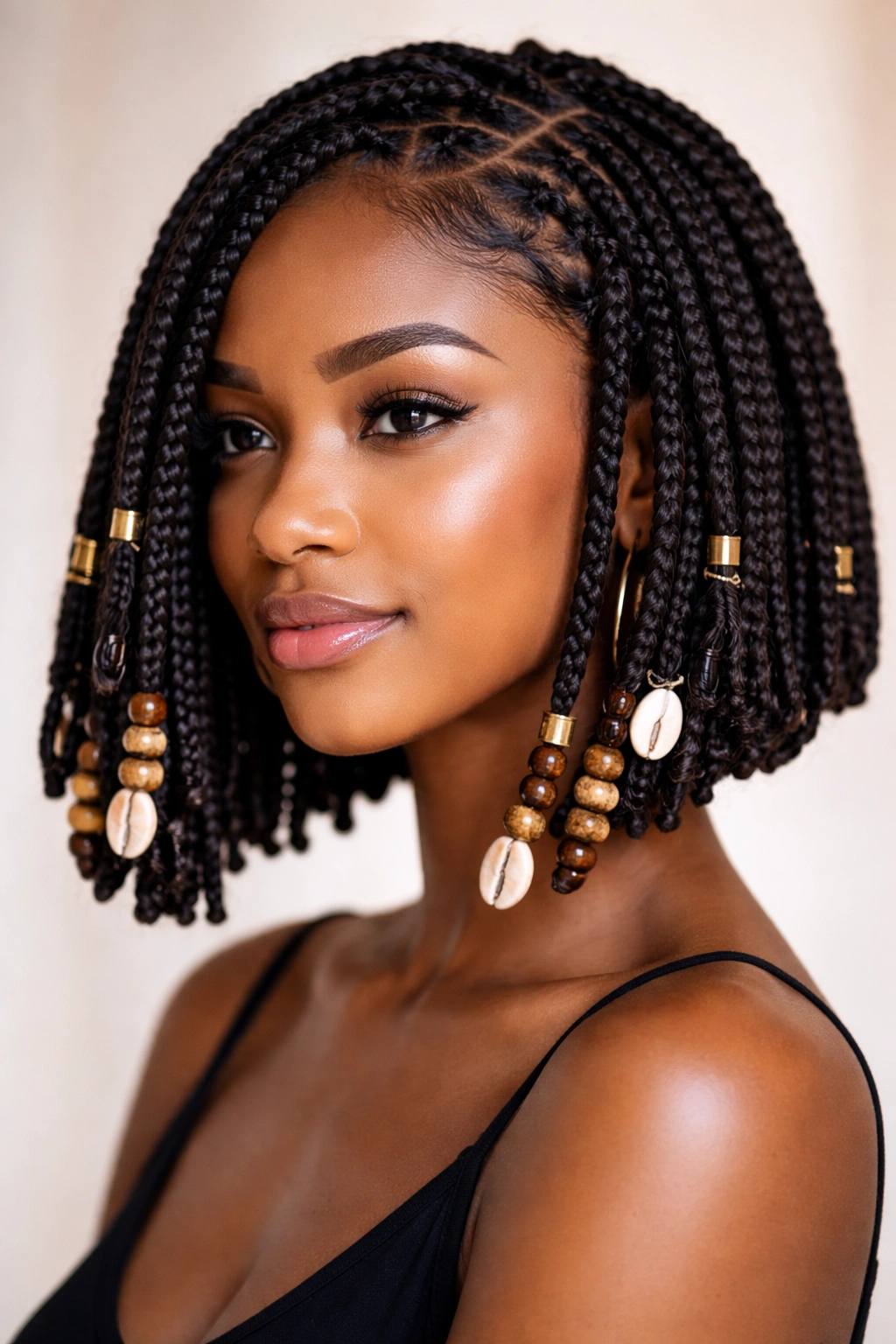
Beads change a braid bob in a way that almost nothing else does. They add sound, weight, shine, and a bit of personality all at once. On a short braid style, that decoration lands fast, so even a few beads can shift the whole mood of the cut.
How many beads is enough
Three or four rows with beads is usually plenty. You do not need every braid dressed up unless you want a much louder look. A few beads near the face or at the ends can frame the bob without making it feel busy. Shells and cuffs should stay in conversation with the braid length, not fight it.
The best use of beads at bob length is selective. Put them where they will move near the jaw or collar, then leave the rest plain. That gives you contrast. And contrast is what keeps the style from looking like a craft project.
This version is especially nice when you want the braid bob to feel playful, youthful, or a little more dressed up than usual. It’s also the one I’d skip if you hate weight near the ends. Beads can drag a short braid down faster than people expect.
13. Half-Up, Half-Down Bob Braids for Easy Shape
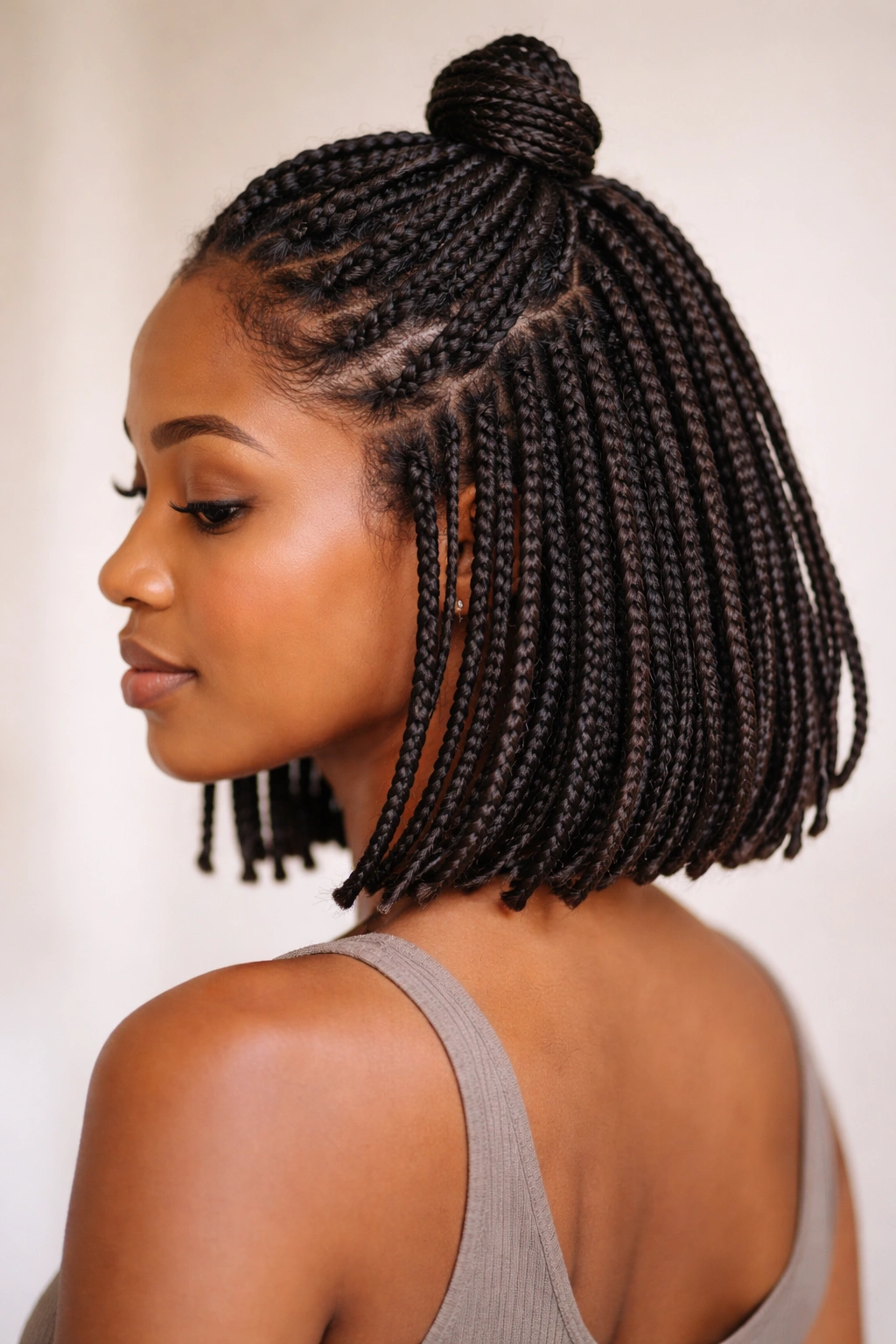
Half-up bob braids are not a lazy fix. They’re one of the easiest ways to give a short braid style height without losing the bob shape that makes the whole thing appealing in the first place.
The top section pulls the eye upward, which opens the face and keeps the cut from sitting too flat. The lower section still gives you the movement of the bob, so you get structure and looseness in the same style. That’s a useful trick when your braids are sitting right at the neck and you want a little break in the silhouette.
This style works best when the top is secured cleanly with one knot, a small wrap, or a few hidden pins. Messy top sections can make the whole thing feel unfinished. Keep the lifted portion smooth, then let the bottom hang naturally.
It’s a solid choice for days when you want the hair off your face but do not want a full updo. Honestly, that’s most days for a lot of people. Which is why this one keeps staying useful.
14. Braided Faux-Hawk Bob for Extra Height
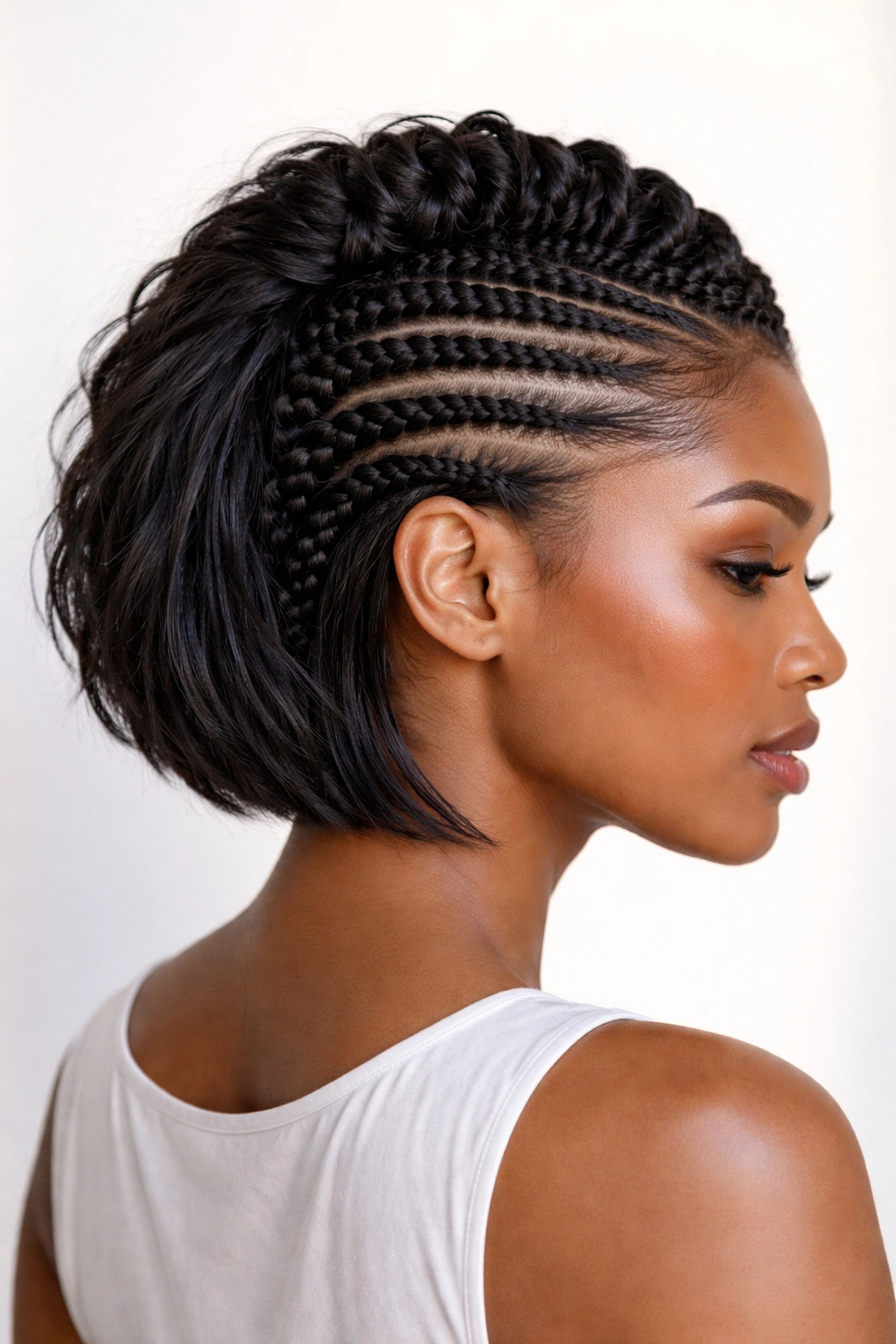
A braided faux-hawk bob gives you drama without cutting the sides short, and that’s the entire appeal. The center section gets lifted or stacked a bit higher, while the sides stay close to the head. The result looks sharp, a little rebellious, and very clear from a distance.
I like this style on bob length braids because it uses the short length to its advantage. Longer braids can make a faux-hawk sag. A bob stays compact, so the lifted center actually holds its shape instead of collapsing under its own weight.
The shape that creates the faux-hawk effect
- Keep the side rows flat and neat
- Build height through the middle section
- Pin the center braids in a loose ridge rather than a tight knot
- Let the ends fall at the nape or just above it
This is one of the more expressive looks in the bunch, and it has a little edge to it without needing color or accessories. If you like a sharper silhouette and you do not mind a style that gets noticed, it’s a strong pick. Simple outfits work well with it. So do big earrings.
15. Layered Angled Bob Braids With Face-Framing Corners
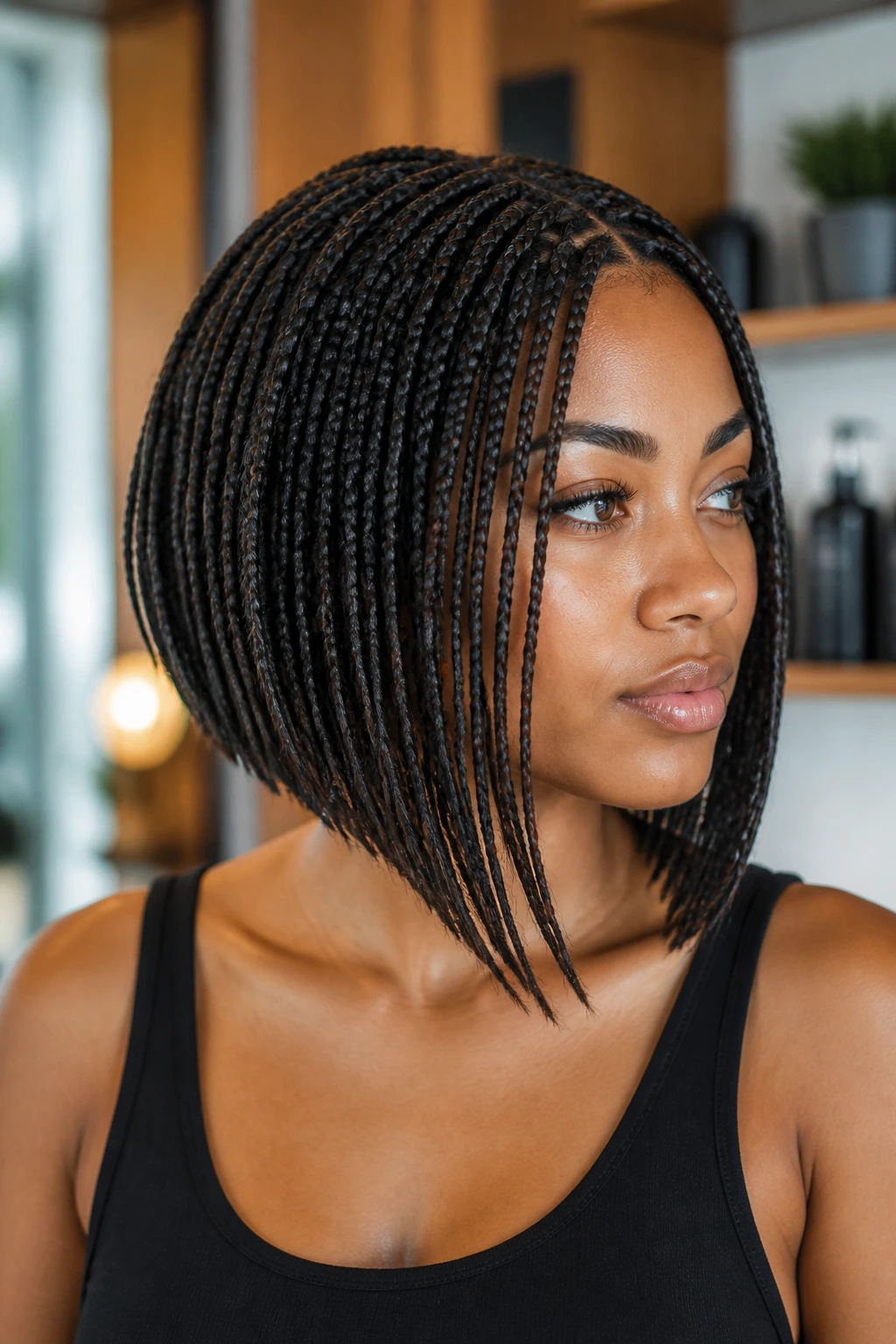
If you want bob length braids to look sculpted rather than square, an angled shape is the move. Shorter in the back, longer in the front, the cut creates a diagonal line that makes the face look a little more open and the neck a little longer. That shape sounds small on paper. It changes everything in person.
The layered version gives you even more control. Instead of one solid block of length, the braids can be trimmed so the outer corners fall a bit lower and the center sits a touch higher. The result is a bob that feels lighter around the face and less heavy at the bottom. It’s a good fix when you like the idea of a braid bob but don’t want a blunt line.
This is the style I’d point to for people who want one last, easy adjustment before they commit to a braid bob. Not every face wants the same cut line. Some want softness near the cheek. Some want a cleaner drop at the jaw. An angled bob lets you tune that instead of forcing a one-shape-fits-all finish.
If you’re choosing between the styles above, start with the shape you want to see first. Clean and sharp? Go blunt, stitch, or triangle-part. Softer? Knotless, goddess, or French curl. A little louder? Beads, faux-hawk, or a side-swept lemonade bob. That’s the real job here — not just picking braids, but picking the line they draw around your face.
