



Short natural hair doesn’t need extra length to look finished. The right Afro twist styles can give a TWA shape, turn fuzzy ends into neat sections, and buy you a few calm days when wash day is still fresh in your memory.
A lot of people overshoot the size. They grab chunks that belong on shoulder-length hair, twist them onto a shorter cut, and then wonder why the style puffs out or slips open at the roots by the next morning. Small sections, clean parting, and enough moisture on the ends usually solve half the problem.
I like twists on short to medium hair because they respect the texture instead of fighting it. A good twist set can look tidy, soft, and intentional all at once, and it does not need waist-length hair to get there.
Shape matters. So does tension. And so does the kind of morning you actually live in — school run, office chair, gym bag, quick coffee, repeat. The best styles below are the ones that sit well on real heads, not just in a photo.
Start with the style that matches your length first; the rest is mostly about how much time you want to spend in the chair.
1. Tiny Two-Strand Twists on a Tapered TWA
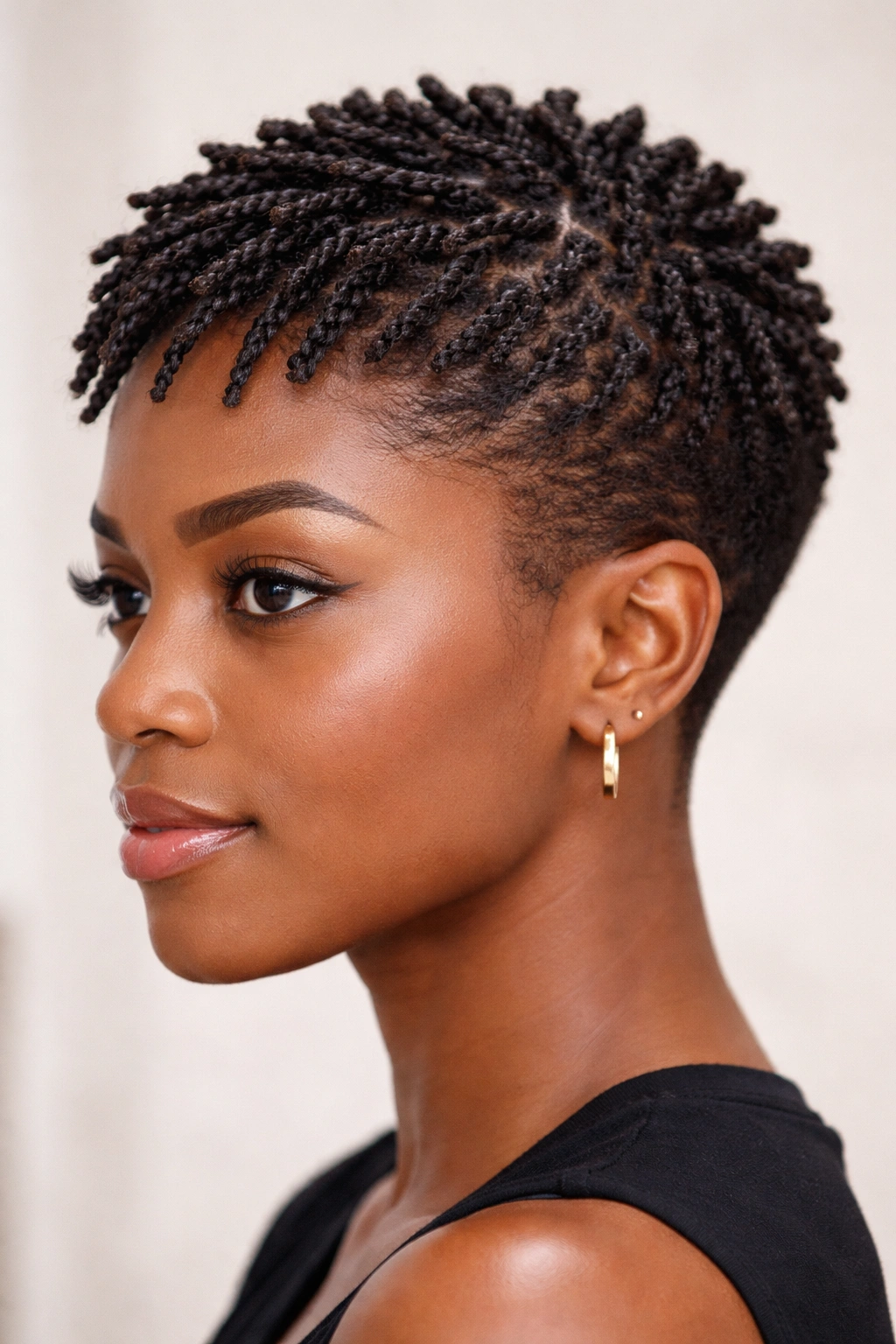
Got only a few inches of hair? Tiny two-strand twists are the first style I’d point to. On a tapered TWA, they make the shape look deliberate instead of leaving the hair to do its own wild little thing.
Why tiny twists make short hair look fuller
The smaller the section, the cleaner the twist pattern reads. That matters on short hair because there isn’t much length to hide sloppy parting or bulky roots. A section that is about 1/4 inch wide usually gives enough grip without making the twist feel heavy.
Tiny twists also help the cut show off its shape. If the sides are shorter and the top is a bit fuller, the style can follow that curve instead of flattening everything into one dull outline. I’m a fan of that. It looks like you meant it.
Quick facts that save you time
- Best length: roughly 2 to 4 inches of natural hair
- Best part size: about 1/4 inch to 3/8 inch
- Best hold: a light leave-in plus a creamy styler, not a thick butter
- Drying time: let the hair dry fully before you touch the twists
- Wear time: often 1 to 2 weeks with a satin bonnet and light scalp care
Do not overload the roots with heavy product. Tiny twists slip faster when the base is greasy.
A neat row of tiny twists on short hair can look sharp with almost no extra styling. That’s the charm here. They’re small enough to stay put, but not so small that they disappear into the hair.
2. Chunky Rope Twists with a Deep Side Part
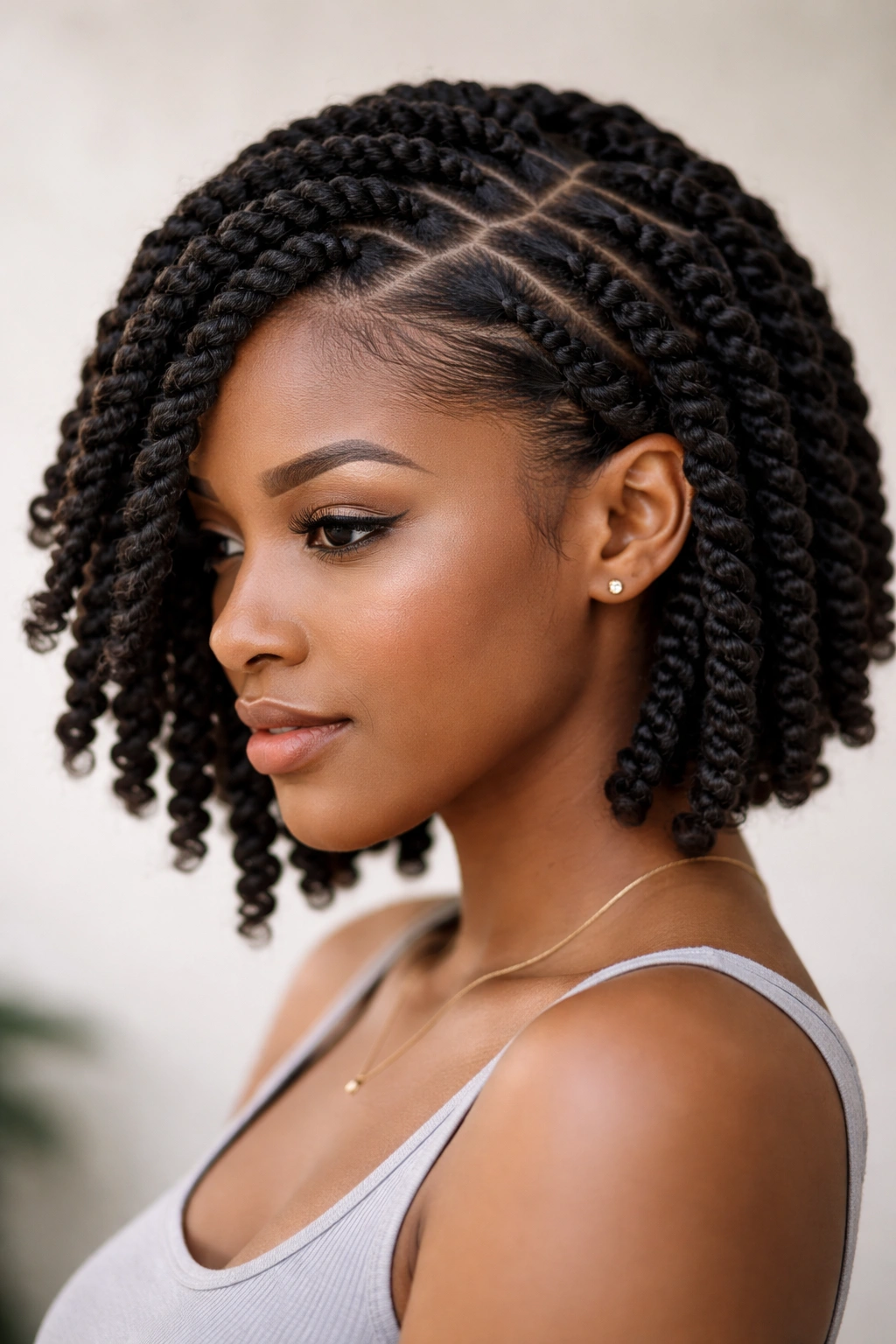
Chunky rope twists with a deep side part do one job especially well: they give short to medium hair shape fast. The side part creates movement before the first twist even starts, which is why this style looks more styled than a straight-down center part on the same hair.
If your hair sits somewhere between short and medium, thicker twists can be a smart trade. You spend less time parting, the style feels less fussy, and the twists look fuller than they would if you tried to squeeze in dozens of tiny sections. I prefer this on denser hair, where the volume can handle a bigger strand size without looking sparse.
The key is tension. Keep the root snug, not tight. Then twist with steady pressure all the way down so the rope effect stays clean. If the ends are a little dry, smooth a dab of cream or gel between your fingertips before you finish each section. That small move helps the ends stay together longer.
This style suits medium hair that still has some shrinkage but enough length to hang with shape. It’s a good pick when you want something easy to refresh in the morning: a mist of water on the ends, a quick palm-smooth, and you’re out the door.
3. Straight-Back Flat Twists That Keep the Sides Neat
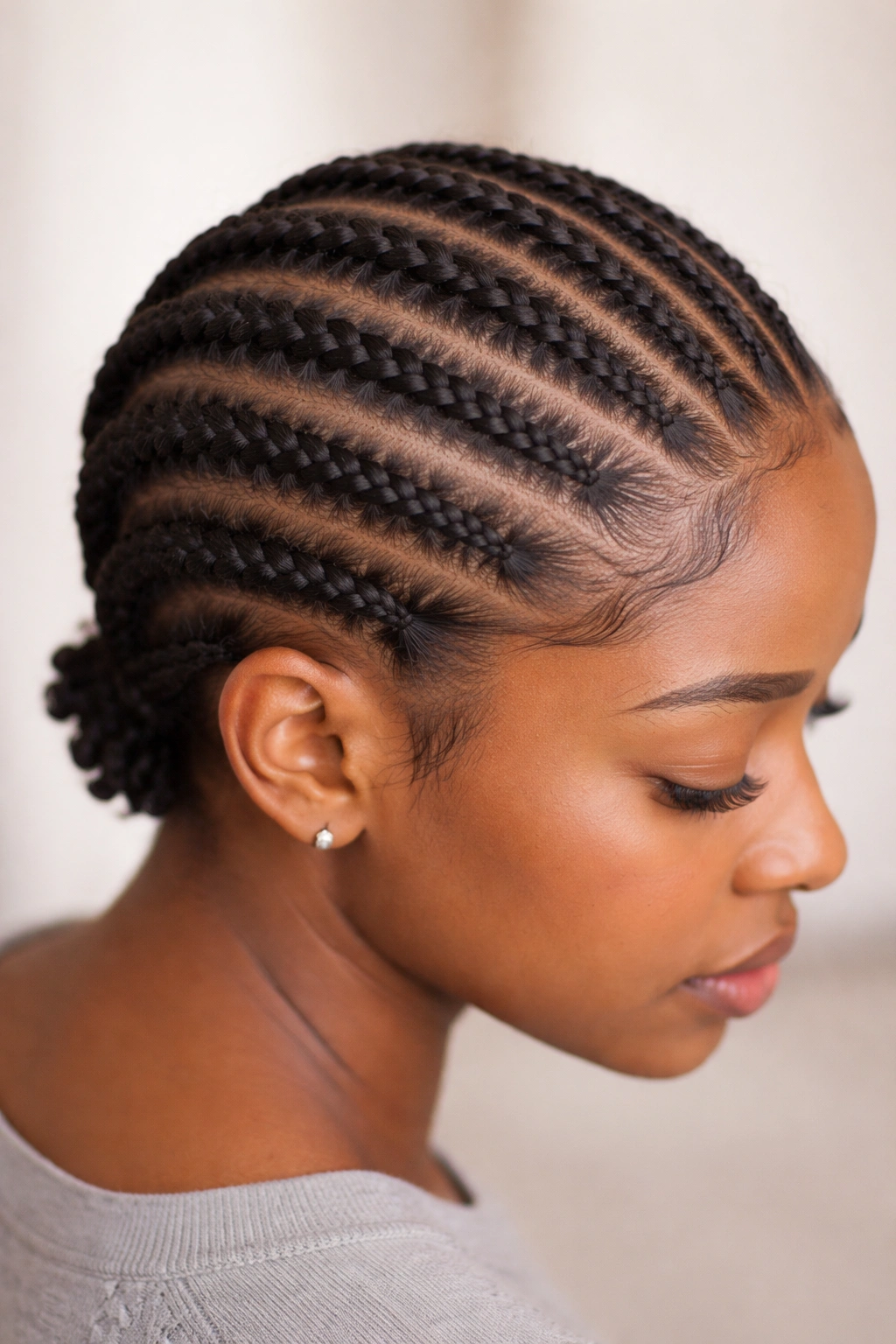
Want a style that stays close to the scalp and keeps the sides calm? Straight-back flat twists do exactly that. They’re one of the cleanest Afro twist styles for short to medium hair, and they make sense when you want the hair off your face without losing texture.
Why they work on short hair
Flat twists grip short hair better than loose hanging twists because the braid sits against the scalp. That means less bulk at the root and less chance of the style puffing up too fast. On hair that tends to shrink hard, that close fit makes a difference.
The rows can be as simple as three across the front and four or five toward the back. If your hair is shorter, keep the sections narrow. If it’s closer to medium length, you can space them a little wider and still get a neat result. Either way, the parting matters. Clean lines make the whole style look sharper.
How to wear it all week
- Start with damp, detangled hair.
- Use a light leave-in and a small amount of twisting cream.
- Keep the parts even so the rows settle at the same pace.
- Wrap the hair at night with satin or silk.
- Mist the ends only when they start to feel dry.
A style like this can look plain in the mirror and still get compliments in real life. It sits flat, lasts well, and doesn’t fight your face shape.
4. Flat Twist Crown for Short Hair
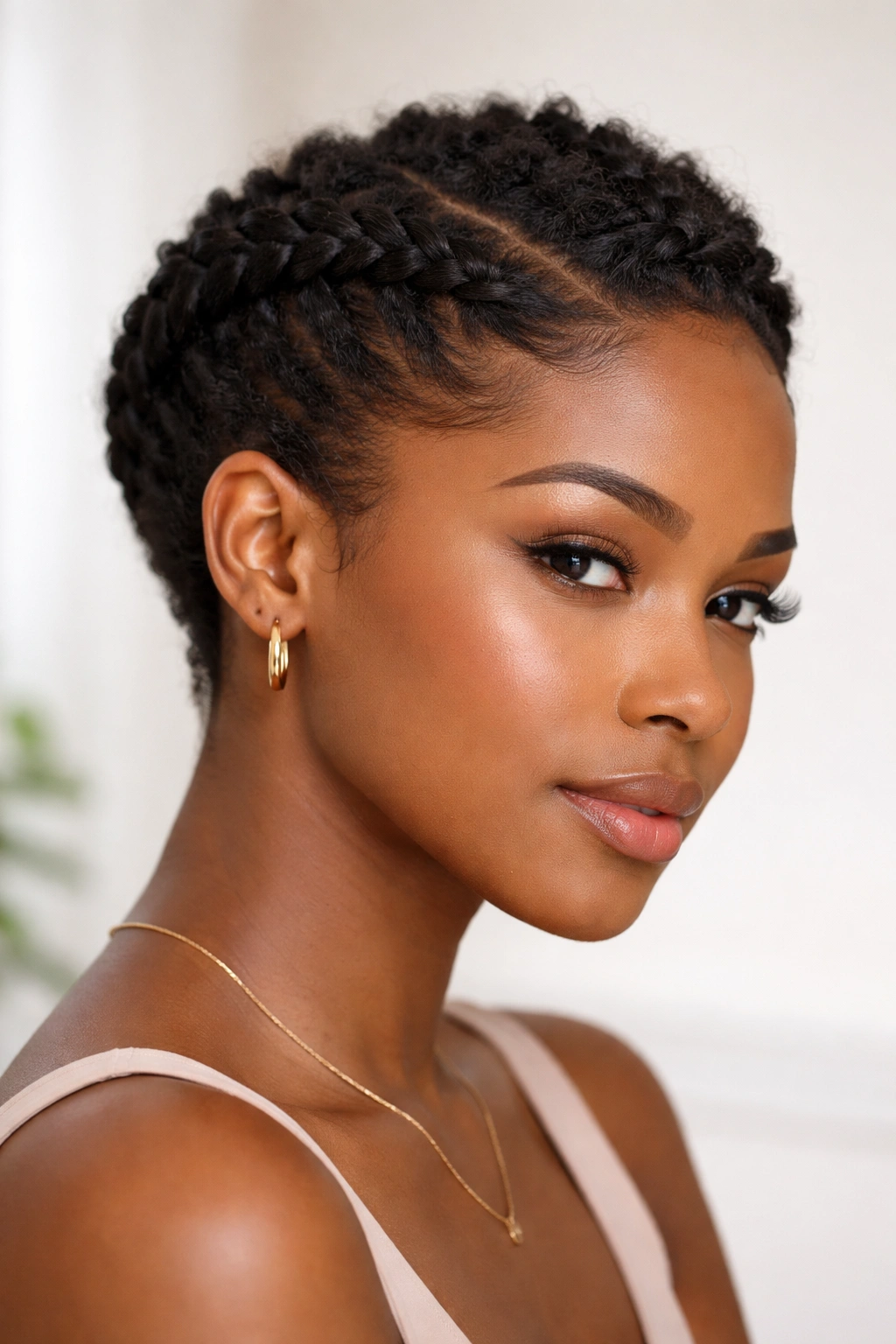
If you’re trying to look put together without spending an hour in the mirror, a flat twist crown does the job. It frames the head instead of fighting the length, which is exactly why it works so well on short hair.
The idea is simple. Twist the hair along the perimeter of the head, following the hairline from one side to the other, then pin or tuck the ends so they disappear. The center can stay loose, puffed, or lightly twisted depending on how much hair you have. That flexibility is the whole point.
What I’d ask for or do at home
- Keep the crown section about 1/2 inch wide so it has enough grip.
- Use bobby pins that match your hair color, not tiny decorative pins that slide out.
- Leave a little softness around the temples if you don’t want the look to feel severe.
- Tuck the ends under the crown rather than leaving a tail that sticks out awkwardly.
- Add small gold cuffs only if the twist line is clean; otherwise the accessories just draw attention to the mess.
This style is especially kind to short-to-medium hair that wants a break from daily styling. It gives the illusion of effort, but the maintenance stays low. And that matters more than people admit.
5. Mini Twists with Beads at the Ends
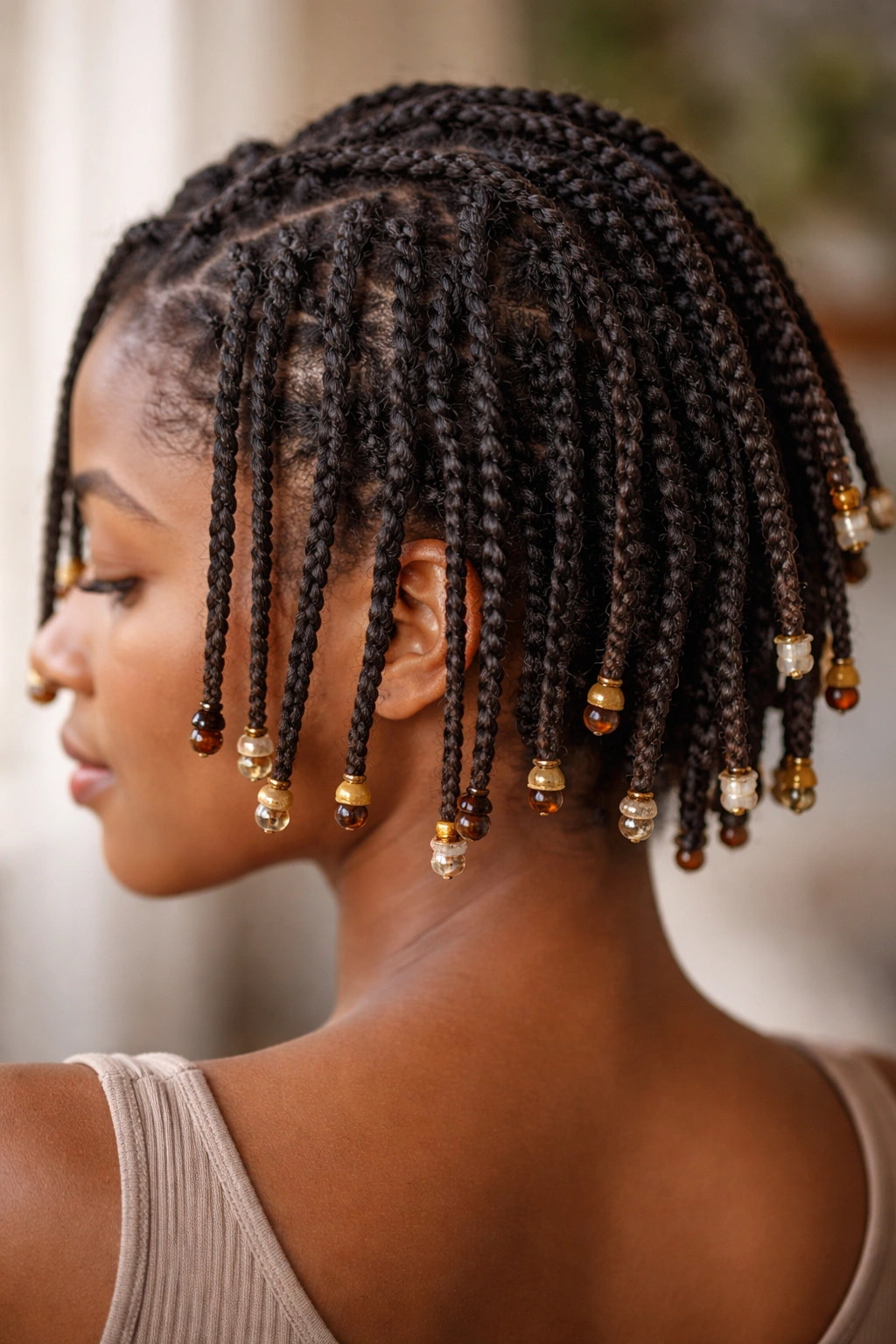
Mini twists with beads are playful, but they’re not childish. That’s the nice surprise. On short to medium hair, they give you movement, sound, and a little personality without changing the actual structure of the twist.
The trick is restraint. One or two beads at the end of each twist is usually enough. If you pile on too many, the ends get heavy and the roots start to feel strained. Short hair is the wrong place to overdecorate. You want the style to hang, not drag.
I like clear beads, wooden beads, or small metallic cuffs on this look because they don’t swallow the twist itself. The texture still shows through. If the hair is on the shorter side, keep the beads near the ends and skip the heavy stacked versions that make the twist bend out of shape.
There’s also a neat practical benefit here: beads can help you tell when a twist is loosening. If a section starts slipping, the bead line looks off fast. That makes upkeep easier, which is more useful than people think.
6. Twist-Out Definition After a Stretched Set
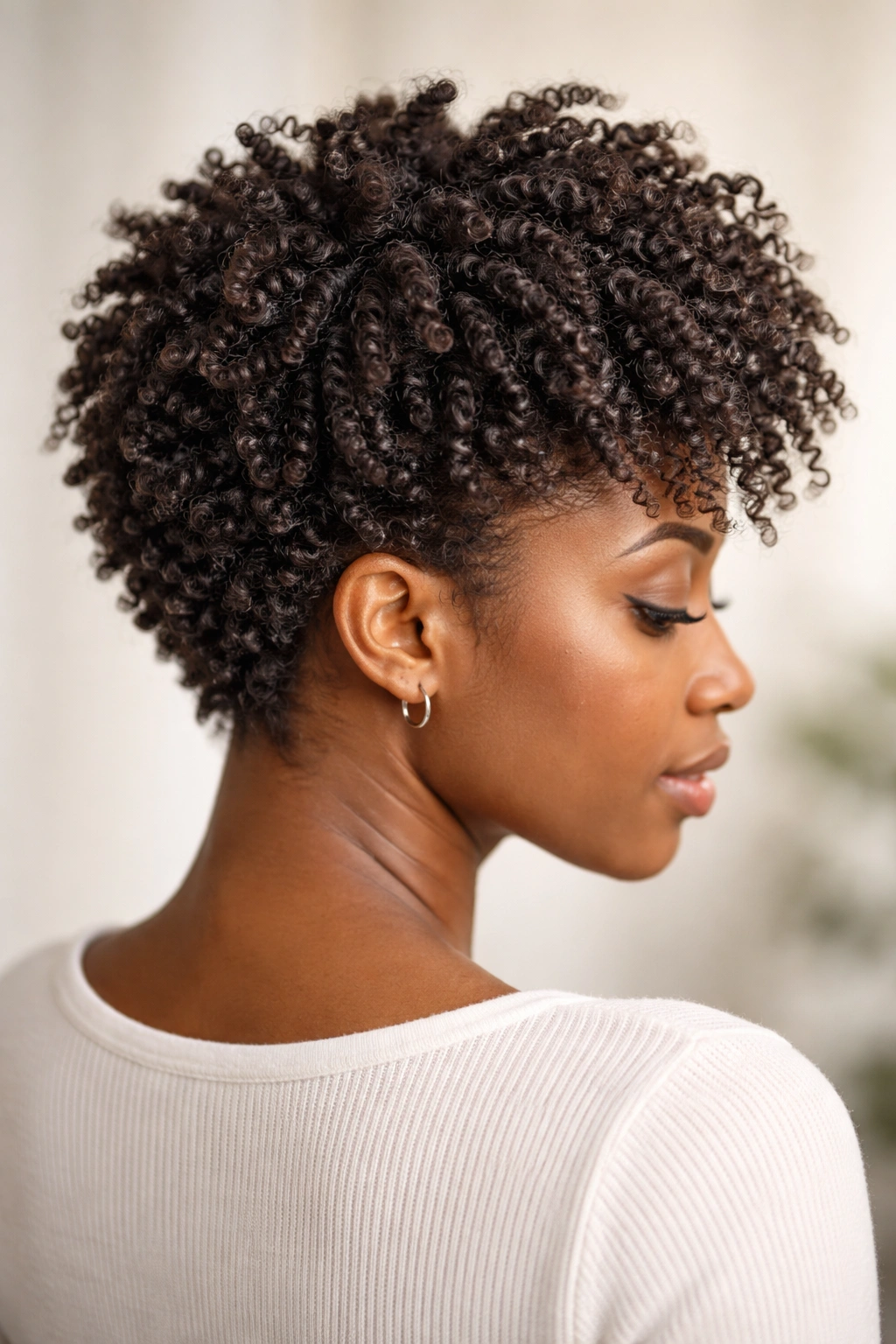
Unlike a fresh twist installation, a twist-out is all about the set. That’s why it gives medium hair such a nice lift. You’re not wearing the twists themselves for days; you’re using them to create a defined curl pattern that opens up into volume later.
What makes it different
A twist-out works best when the hair has already been stretched. Banding, African threading, a low-tension blow-dry on cool, or even an overnight twist set on damp hair can all help. The goal is simple: reduce shrinkage enough that the unraveling gives you shape instead of a small puff ball.
The size of the twists changes the end result. Smaller twists create tighter definition. Larger ones give looser texture and more width. On short-to-medium hair, I usually lean smaller than you think you need, because the curls bloom after you separate them.
How to get the most from it
- Unravel only when the hair is fully dry.
- Coat your fingertips with a tiny bit of light oil before separating.
- Stop separating once the curl shape looks even.
- Lift the roots gently with a pick if you want height.
- Sleep in a satin bonnet, then re-fluff the next morning with dry hands.
A twist-out can be a little fussy the first time. Still worth it. The payoff is movement that looks soft and real, not stiff or overly set.
7. Shoulder-Length Two-Strand Twist Bob
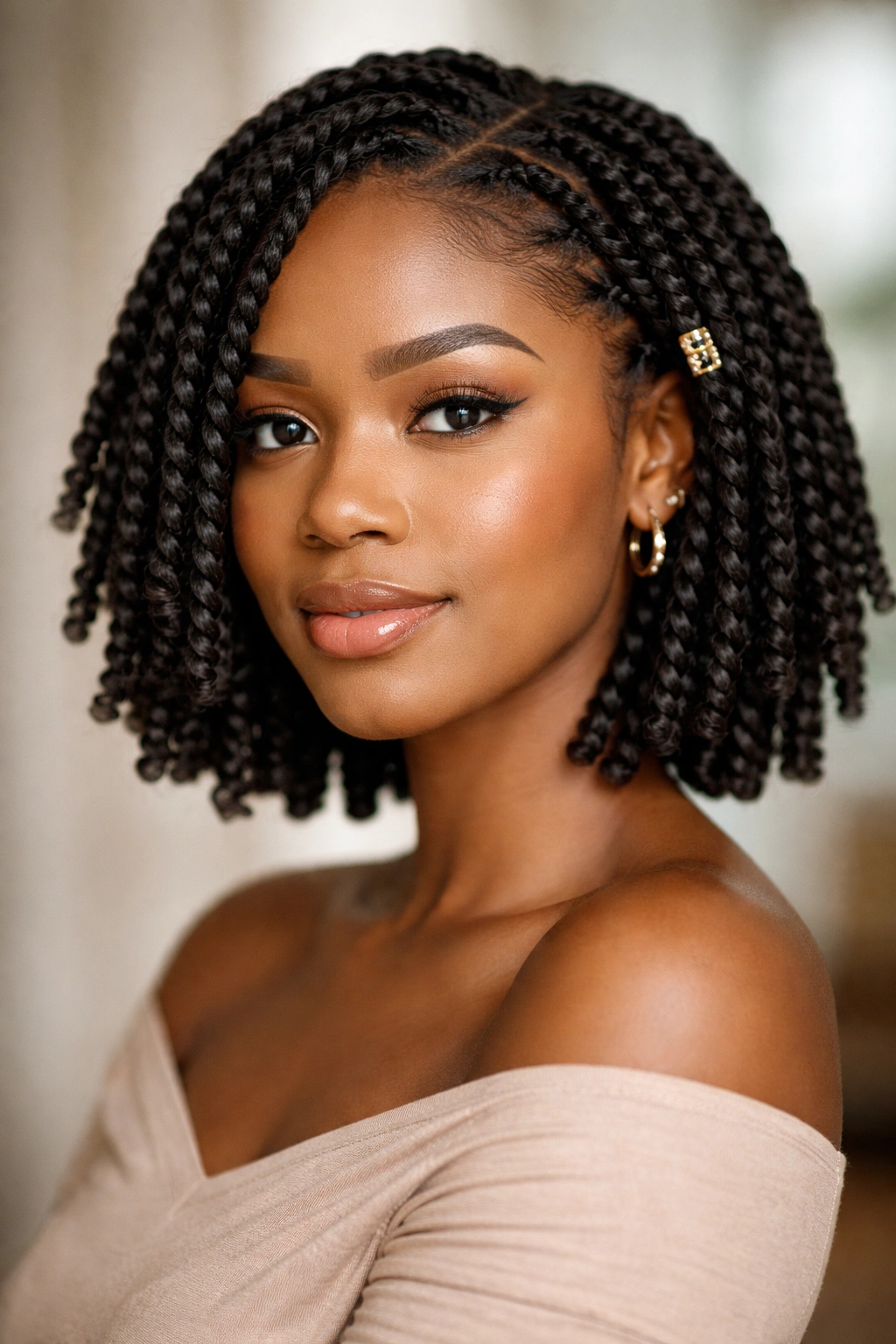
A good twist bob brushes the jaw, moves when you turn your head, and falls back into place without much effort. On shoulder-length hair, that motion is the whole appeal. It feels light, but it still looks finished.
The shape matters more here than people realize. If the twists are cut unevenly at the ends, the bottom line starts looking stringy fast. A cleaner bob shape usually comes from even sectioning and consistent twist size, not from trying to force the hair into one perfect blunt line. That’s the difference between a style that sits well and one that just sits there.
Short to medium hair can carry a bob better than people expect because the length lands in a sweet spot. It’s long enough to swing, short enough to stay neat, and easy enough to refresh with a finger roll at the front. If your hair brushes the collarbone, this style gives you that nice little bounce at the ends.
It’s also one of the easiest styles to accessorize. A single side pin, a matte gold cuff, or a narrow headband can change the whole mood. Keep the accessories small. The twist pattern should still be the star.
8. Passion Twists on Layered Medium Hair
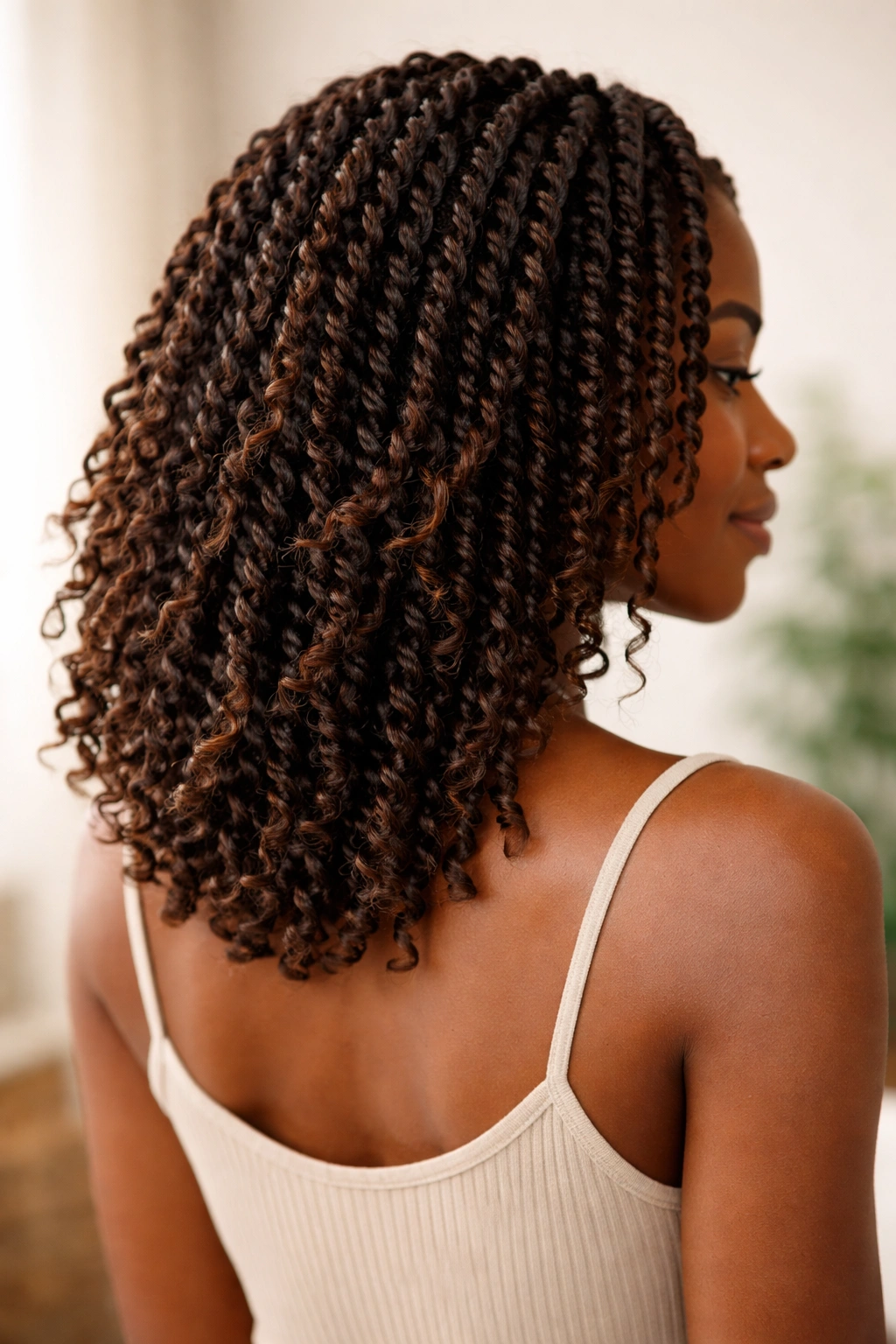
Passion twists are not the first style I’d hand to every short-haired person. They need enough length to wrap the synthetic hair cleanly, and if your natural hair is too short, the roots can look bulky or unstable. On medium hair, though, they drape in a softer way than regular twists and bring a loose, airy finish.
Where they shine
Passion twists sit best when the base has some length and the layers are not too choppy. A shoulder-skimming cut can hold them nicely, especially when the parts are kept even and the wrap hair is the right thickness. Use too much added hair and the style starts to feel heavy. Use too little and the twist looks thin and uneven. Middle ground wins here.
The other thing I like is the movement. Passion twists don’t hang stiffly. They swing a bit, which makes medium hair look fuller without adding a hard line at the bottom.
Where they get messy
- Roots can look fuzzy faster if the parts are too large.
- Heavy added hair can pull on edges.
- Very short layers may poke out unless they’re tucked carefully.
- Tight wrapping at the root can leave the scalp sore for days.
If you want this look, ask for tension that feels secure but not locked down. That part matters more than the product list. A pretty style that hurts is not a good style.
9. Half-Up, Half-Down Twists with a Puff in Back
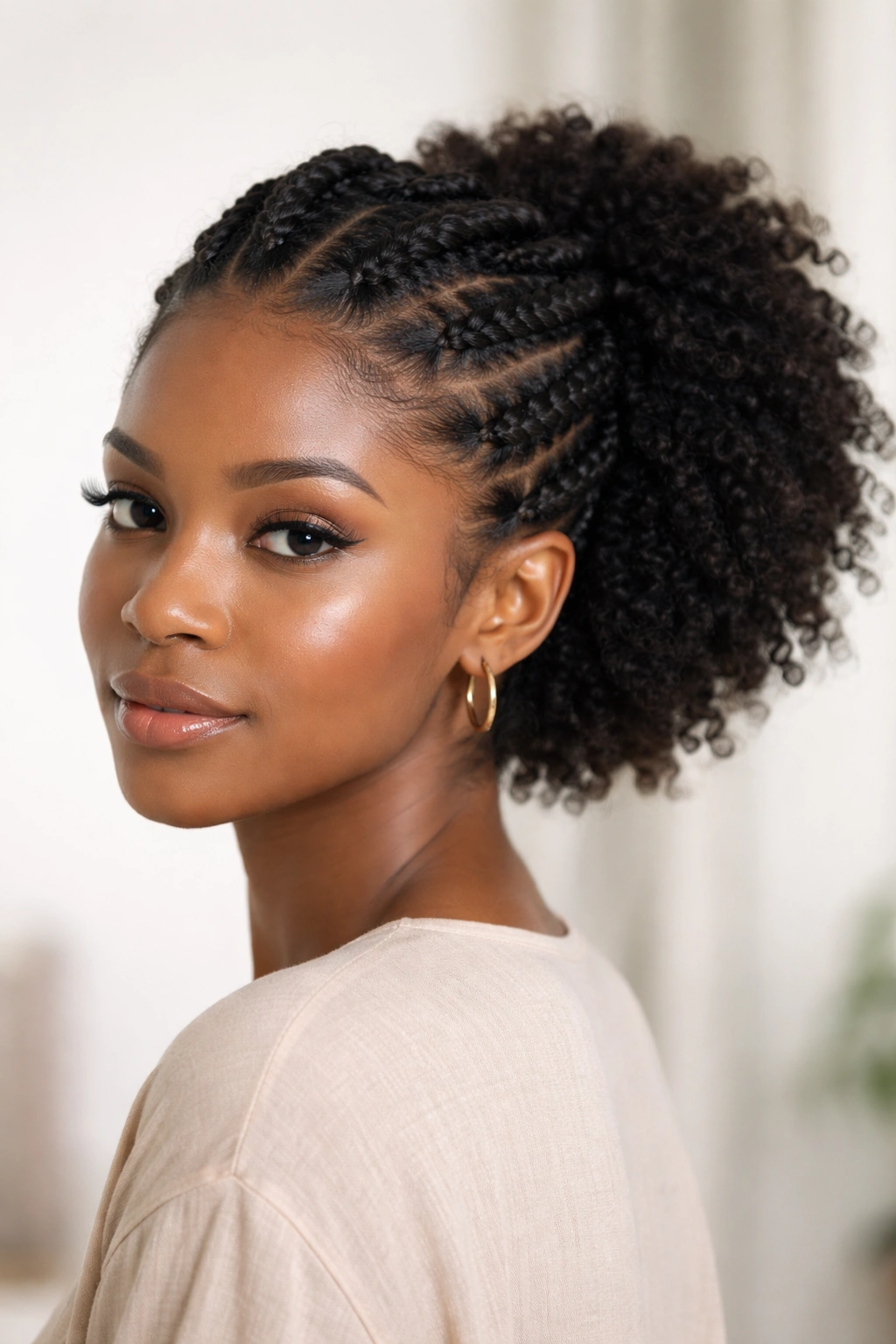
Picture a twist set that leaves the crown up and lets the back puff out. That’s the simple charm of a half-up, half-down style on short to medium hair. It gives you height at the top, texture at the back, and a face-framing front without asking the whole head to behave the same way.
The best version usually starts with the top section pulled from temple to temple. Tie it loosely with a satin scrunchie or pin it into a small bun, then leave the lower section free so it can puff or hang depending on the length. If the hair is short, the back puff can be small and still look intentional. It does not need to be huge.
A few practical details help this style hold up:
- Twist the front pieces smaller than the back so the frame looks neat.
- Keep the top tie loose enough to avoid a dent.
- Use a soft brush only on the edges, not through the twist pattern.
- Let the back section keep some stretch before you gather it.
This is one of those styles that looks casual without looking careless. That’s a hard balance to find, and this one lands it nicely.
10. Flat Twist Mohawk With Lift at the Center
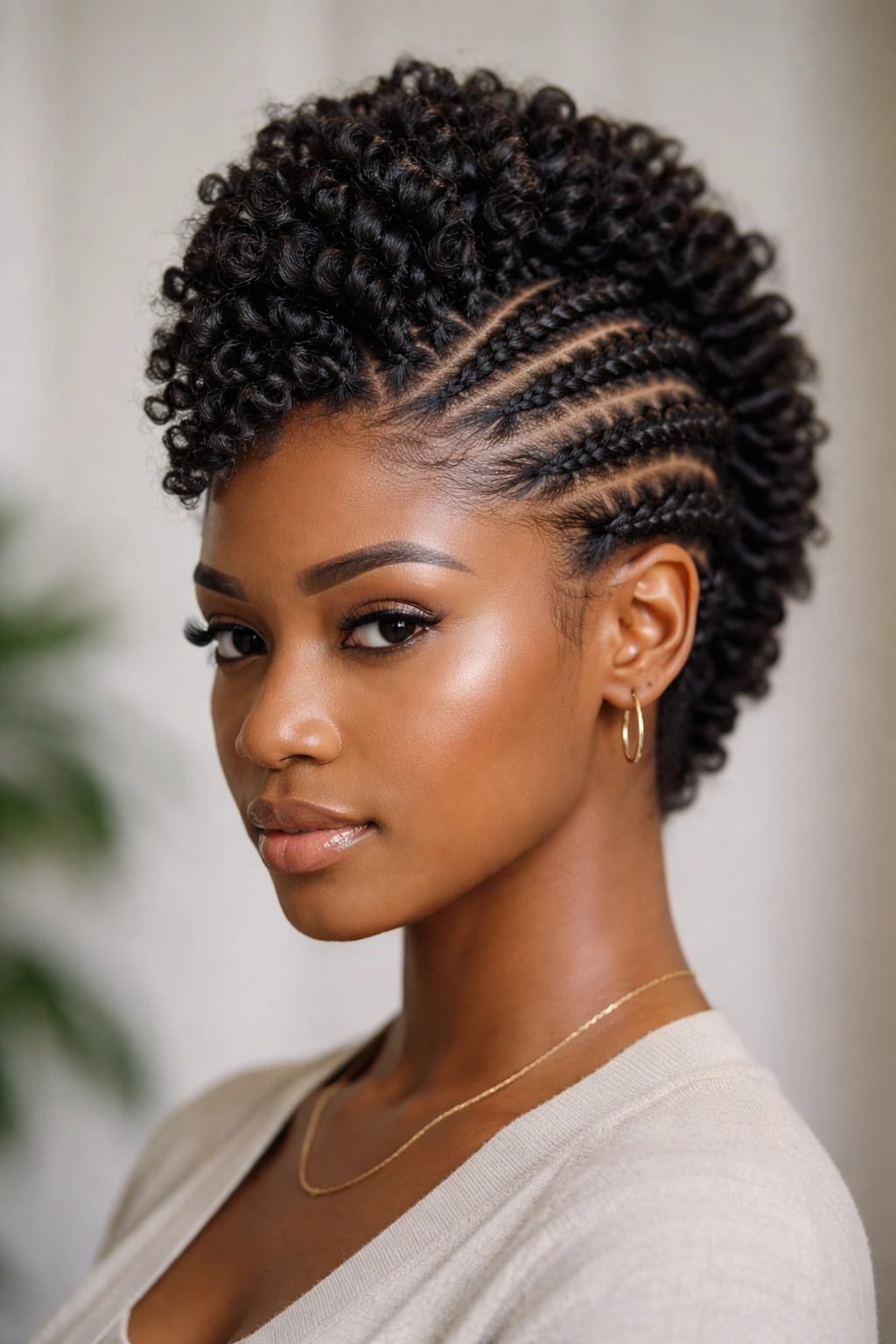
Center lift. Clean sides. That’s the whole appeal.
A flat twist mohawk gives short to medium hair shape without needing a lot of length. The sides stay close to the scalp, and the center strip gets all the height. If your hair tends to shrink around the temples or puff out at the edges, this layout puts that texture to work instead of trying to flatten it down.
Section map
Start by parting a strip from the forehead to the nape. Twist the side sections back toward the middle in neat rows, then let the center section sit loose, twist it upward, or build it into a small puff. If the hair is shorter, the center can be a row of chunky twists pinned together. If it’s medium length, you can let the center rise a little more and still keep the shape clean.
The scalp line matters here. Keep the parts even and the side twists snug enough to lie down, but not so tight that the edges protest by the end of the day. That’s the line you do not want to cross.
Finishing touches
- Add a few pins at the crown where the twist lines meet.
- Smooth the hairline with a light gel, not a thick layer.
- Leave the center textured instead of trying to make it glassy.
- Use a satin scarf for 10 to 15 minutes after styling so the sides settle.
The result has edge. Not loud edge. Just enough.
11. Side-Swept Twists with a Tuck-and-Pin Finish
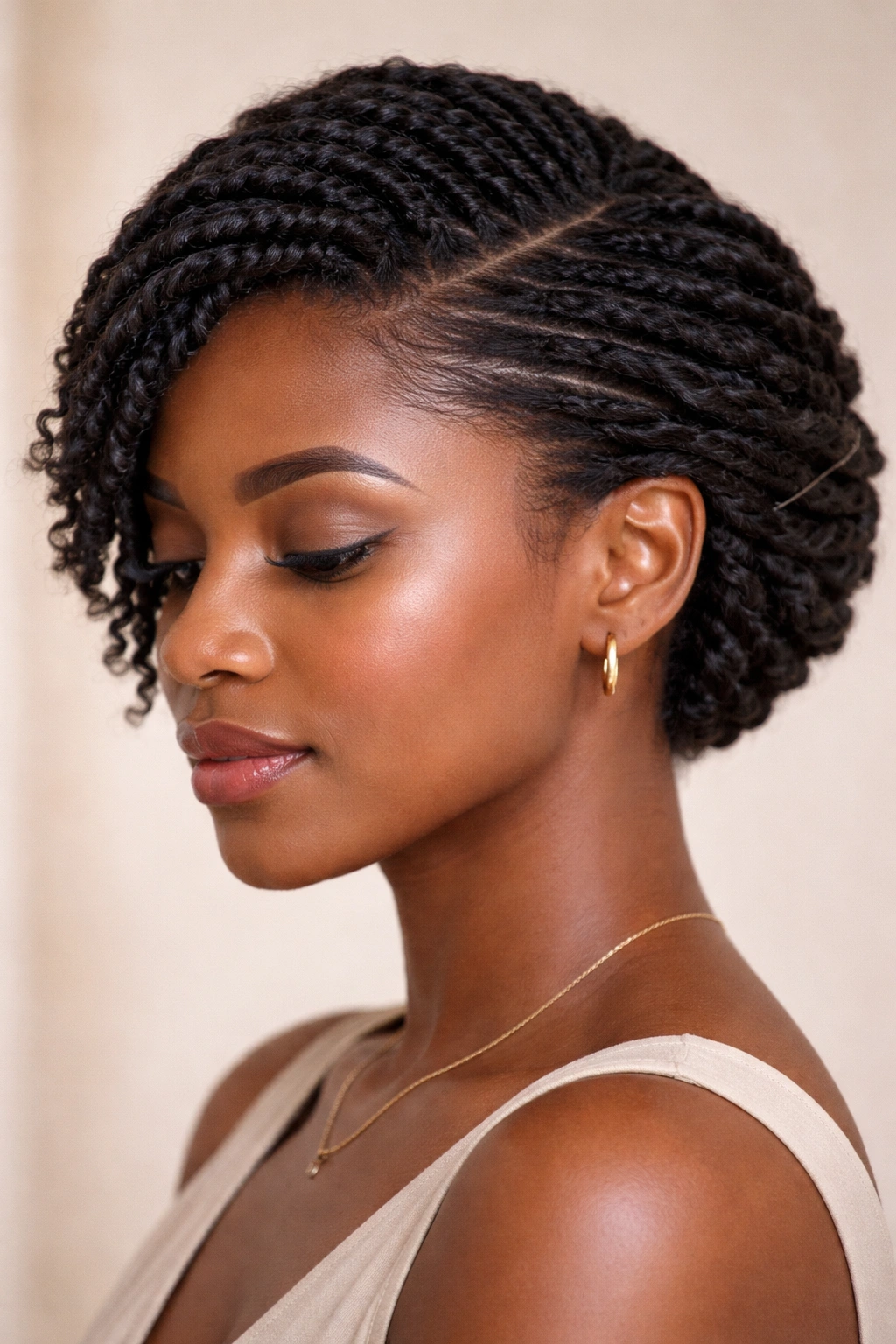
Moving twists off-center changes the whole mood. A side-swept finish makes short to medium hair look softer and a little more deliberate, especially when the twist pattern starts near a deep side part and then falls across the forehead or temple.
This style is easy to underestimate. The part does most of the work. Once the hair is shifted, the eye follows the sweep, and the whole head looks longer. That’s useful on shorter cuts where you want a bit of length illusion without adding hair or changing the shape too much.
The tuck-and-pin part is where the style becomes wearable. Instead of leaving ends out where they can frizz first, tuck them under the sweep and pin them close to the scalp. Use long bobby pins hidden inside the twist line. Short pins slide. Decorative pins can look cute, but they need a clean base or the style starts to look busy in a bad way.
I also like this for days when your hair is not doing exactly what you asked. Side-swept twists hide a lot. That’s not cheating. That’s good styling.
12. Low Bun Twists for a Clean Finish
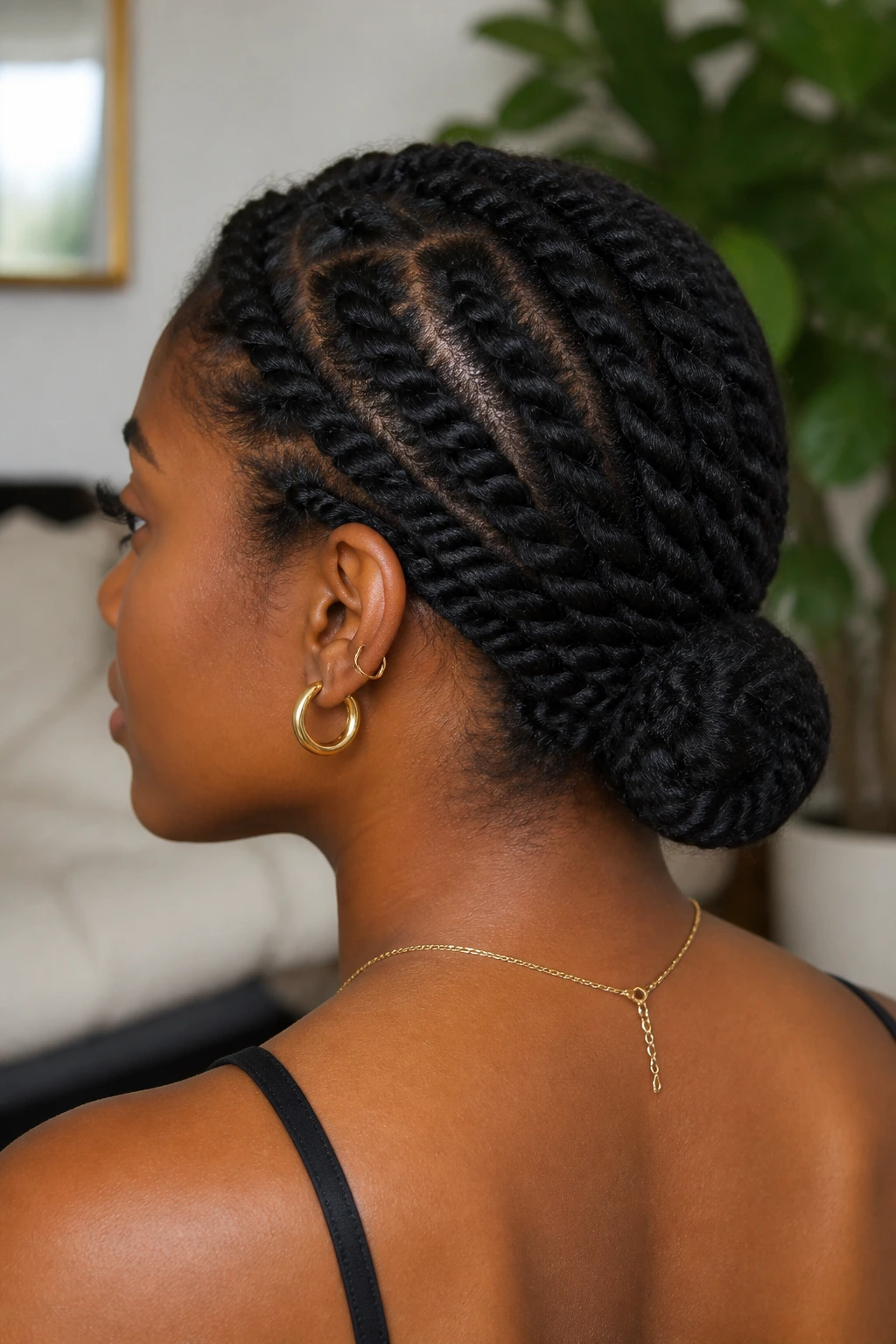
A low bun is where twists go when you want the neatest finish with the least fuss. On short to medium hair, it turns a set of twists into something that can carry you through a long day without getting in your face or falling apart by midafternoon.
The setup is simple enough. Gather the twists at the nape, twist or wrap them into a bun, and pin the base with two to four bobby pins depending on thickness. Don’t yank the hair upward to force more height. That usually just creates tension at the front and a lumpy bun in the back. A low bun should sit low. That’s the point.
It works especially well when the hair has enough length to fold under once or twice. If the twists are shorter, tuck them into a compact knot and let the ends disappear into the center. The bun can be smooth or slightly textured; both versions look good. What matters is that the shape stays tidy.
For day-to-night wear, this style is hard to beat. Add small earrings, keep the edges soft, and the whole look feels finished without shouting for attention. If your hair is only barely past a TWA, choose the styles that stay close to the head. If it brushes the shoulders, the looser shapes start to make sense, and that’s where the fun begins.
