



Afro hairstyles for women over 30 work best when they look intentional on day one and still make sense on day three. That sounds obvious, but a lot of styles miss the mark because they chase shape on one side and ignore comfort on the other. Tight edges, awkward bulk at the crown, and styles that need a full reset before lunch are the usual culprits.
By the time a lot of women settle into their style preferences, the priorities get sharper. You want movement. You want a shape that flatters your face from the front and the side. You want something that respects your texture instead of fighting it into submission, because a strong afro style should work with shrinkage, density, and coil pattern — not against them.
I’ve always had a soft spot for styles that look finished without looking fussy. Give me a cut or set that keeps the silhouette crisp, lets the hair breathe, and doesn’t ask for heroic effort every morning. That’s the sweet spot, and it shows up again and again in natural hair styling.
1. The Tapered Afro That Sharpens the Cheekbones
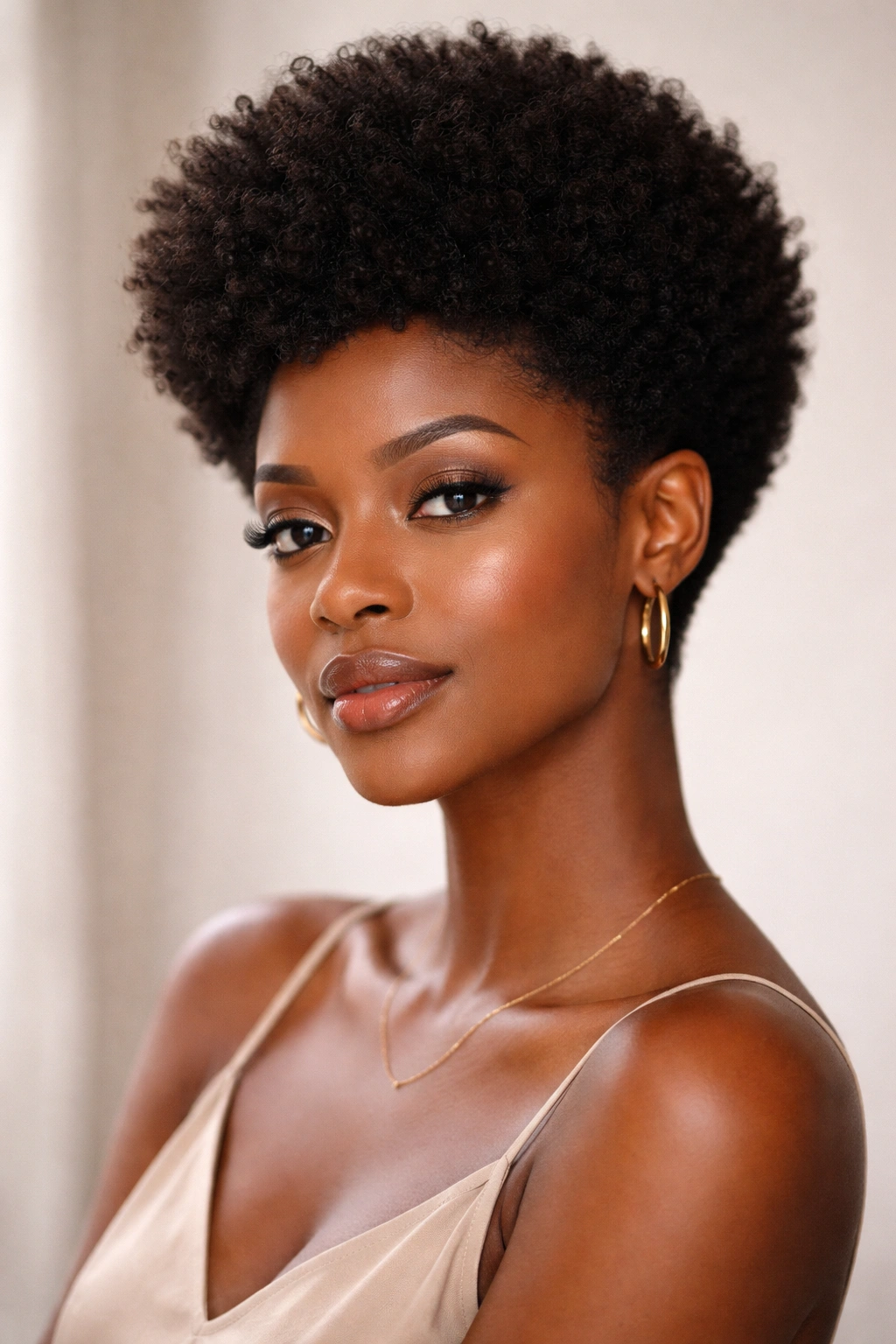
A tapered afro has a way of making everything look deliberate. The sides stay neat, the nape sits close, and the height lives where it does the most good — around the crown and top. For women over 30, that shape often feels mature without feeling stiff.
Ask for a soft taper, not a harsh fade. That small difference matters. A softer taper keeps the silhouette round enough to feel like an afro, while still removing some of the bulk that can make the shape look boxy.
Why It Works
The taper gives your face room to show. It also makes the style grow out better, because the cut does not depend on a razor-sharp outline to look good. When the texture starts to puff a little between trims, it still reads as shape, not chaos.
A good tapered afro works especially well if your hair is dense at the crown and tighter around the sides. It keeps the attention up top, which is exactly where you want it.
- Best for: women who want a short natural style with structure
- Salon note: keep the top at least 3 to 5 inches long so the coils have room to spring
- Styling note: use a wide-tooth comb or pick at the roots only; don’t rake through the ends
- Maintenance note: moisturize the hairline lightly so it doesn’t look dry against the taper
Pro tip: a satin scarf tied around the perimeter for 10 minutes after styling helps the outline stay neat without flattening the crown.
2. The Rounded Afro With Clean Edges
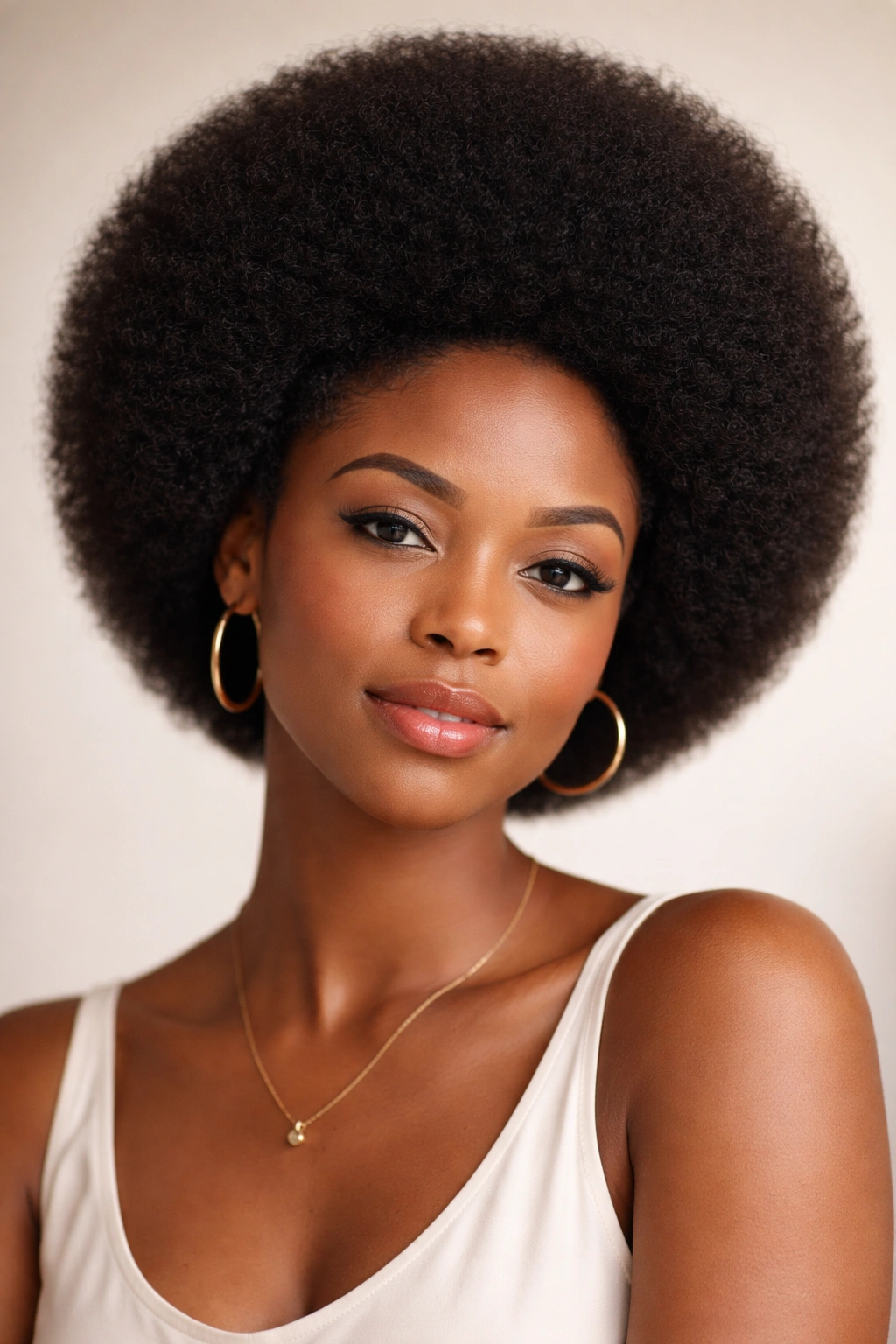
Why does a rounded afro feel so polished? Because it gives the eye a clear shape to follow. There’s no guesswork, no awkward corners, no strange flat spot on one side that makes you keep checking the mirror.
This is the classic shape a lot of people picture when they think of an afro, but the grown-up version is all about balance. The edges stay tidy, the crown stays full, and the sides curve instead of puffing straight out.
A rounded afro suits women who want texture to be the main event. It also works if you like your hair to look equally good in profile, not just straight on. That matters more than people admit.
The trick is to fluff the roots first and leave the outer layer alone until the end. If you over-pick the outside, the shape starts to fray. And once that happens, the style can look bigger in a way that feels messy rather than full.
A small amount of styling cream on damp hair, followed by a careful dry, usually gives the best result. Keep the product light. Heavy butter can weigh the front down and make the shape droop by midday.
3. Twist-Out Afro Hairstyles for Women Over 30
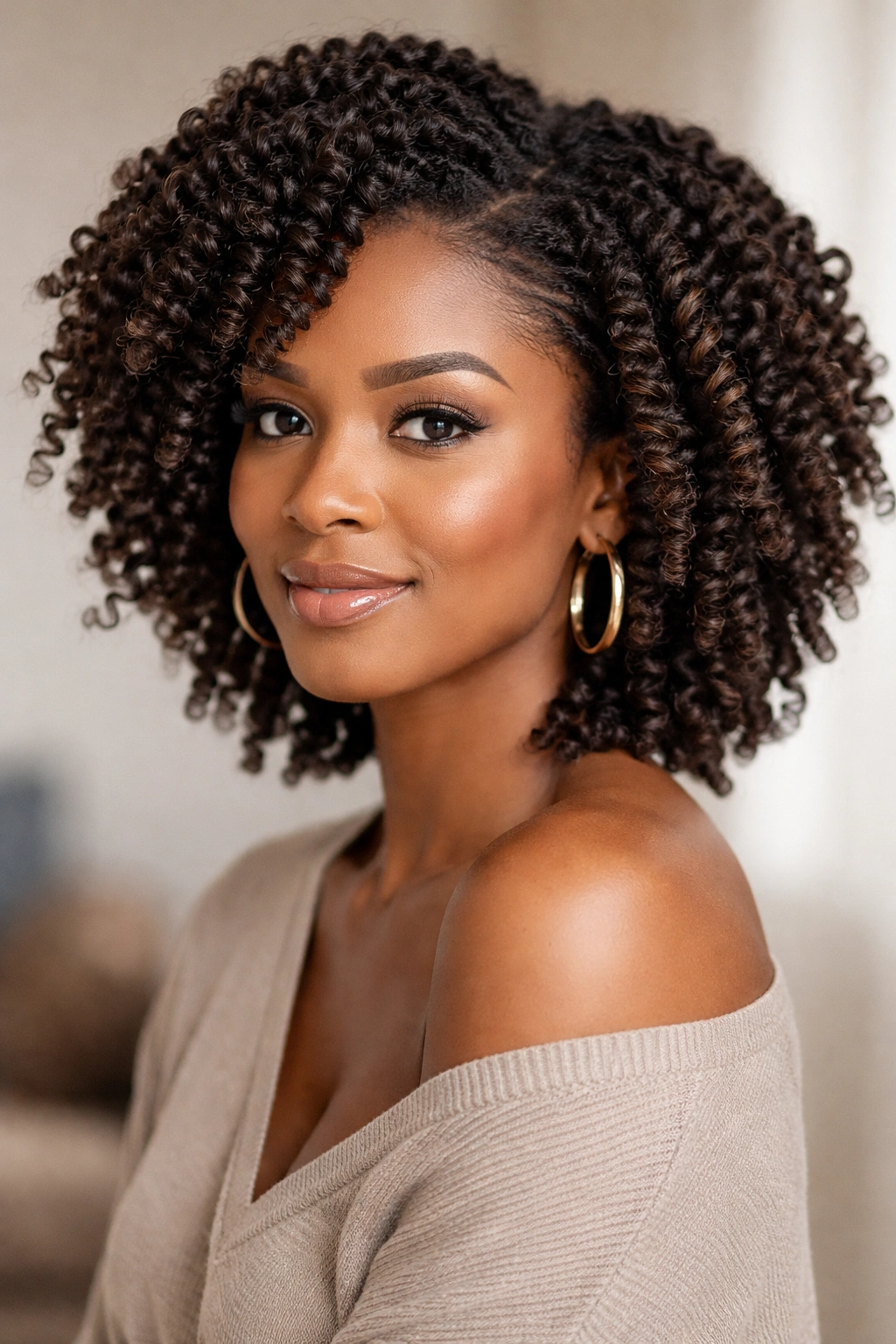
Picture this: your hair comes down in soft, springy ribbons in the morning, and by noon it still has body instead of collapsing into a puff of fuzz. That’s why a twist-out keeps earning a place in the rotation.
It gives definition without locking you into a rigid look. You can wear it wide and fluffy, or separate it a little less for a more controlled shape. Either way, the texture stays the star.
How to Set It Without Fighting Your Texture
Medium sections usually behave best. I like twists that are about 1 inch wide on damp hair, because they dry more evenly than chunky ones and hold their pattern better than tiny ones that get annoying to unravel.
If your hair is thick, set the crown in smaller parts than the sides. That helps the top dry all the way through, which is where a lot of twist-outs go wrong. They look fine at first, then puff out unevenly once you start separating them.
- Use: a leave-in, a light cream, and a little oil on the ends
- Dry fully: air-dry overnight or use a hooded dryer until the twists feel cool and dry inside
- Unravel carefully: coat your fingertips with a drop of oil so the strands separate cleanly
- Fluff last: pick only at the roots to keep the twist pattern visible
If you like definition with softness, this one is hard to beat. It has range.
4. The High Puff That Still Feels Polished
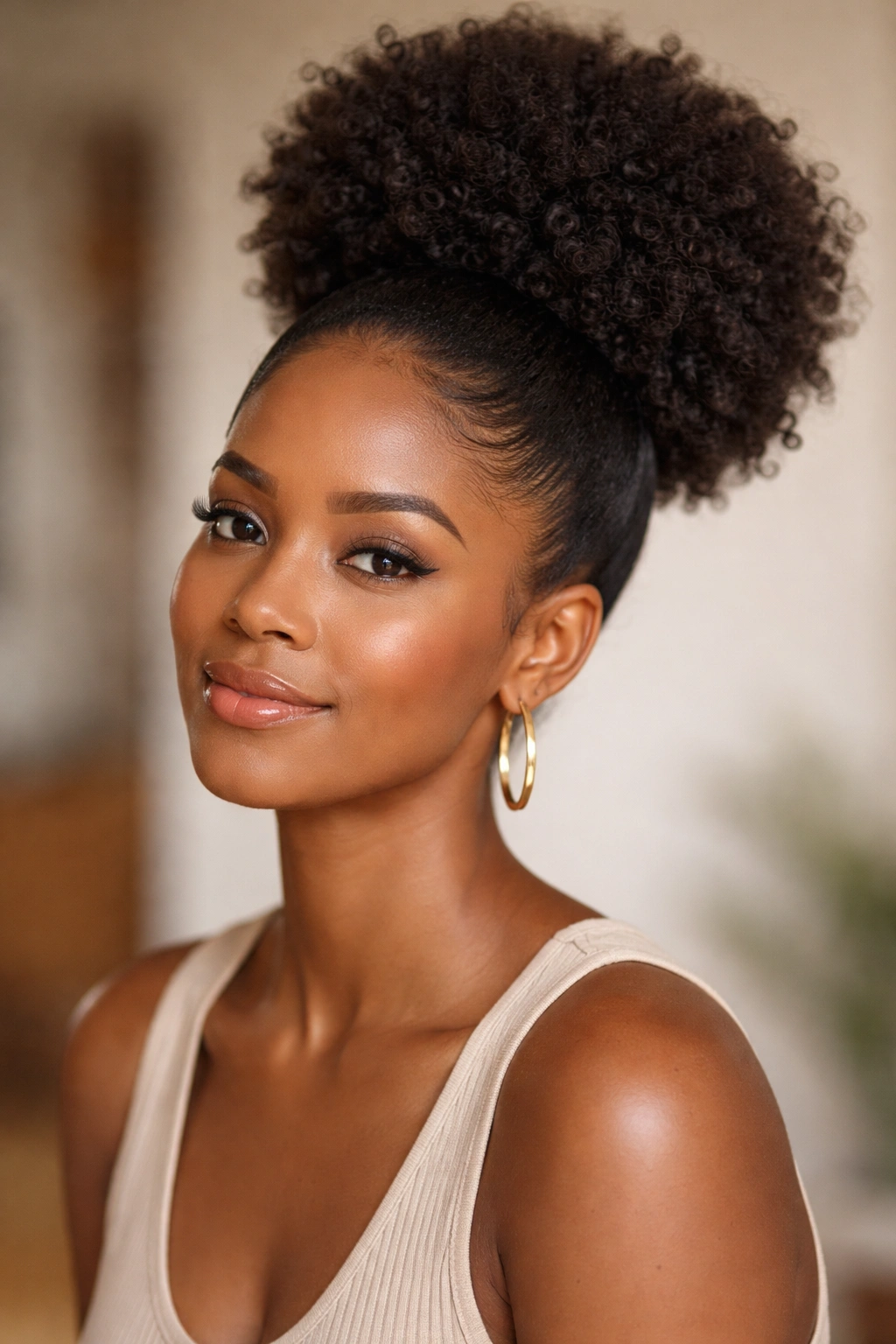
The high puff gets written off as a rushed style, and that’s lazy thinking. When it’s placed well and wrapped neatly, it looks clean, lifted, and entirely intentional.
I prefer a high puff when I want my face open and my hair off my neck. It gives height without requiring a full set or a complicated braid pattern, which is a nice break on busy weeks. And yes, it can look polished. Very polished, if the band sits snugly without digging in.
The placement changes everything. A puff worn too low can drag the whole face down a bit. A puff placed higher up near the crown lifts the eyes and gives the style a brighter, sharper shape.
Use a snag-free elastic or a soft puff band, and do not crank it tight. Tightness around the edges is the fastest way to make the style feel tired. Smooth the front with a touch of water and leave-in, then stop. Don’t drown it in gel.
A high puff also grows out gracefully. On day two or three, it can still look fine with a little reshaping at the front and a quick fluff at the back.
5. The Flat-Twist Crown With Loose Ends
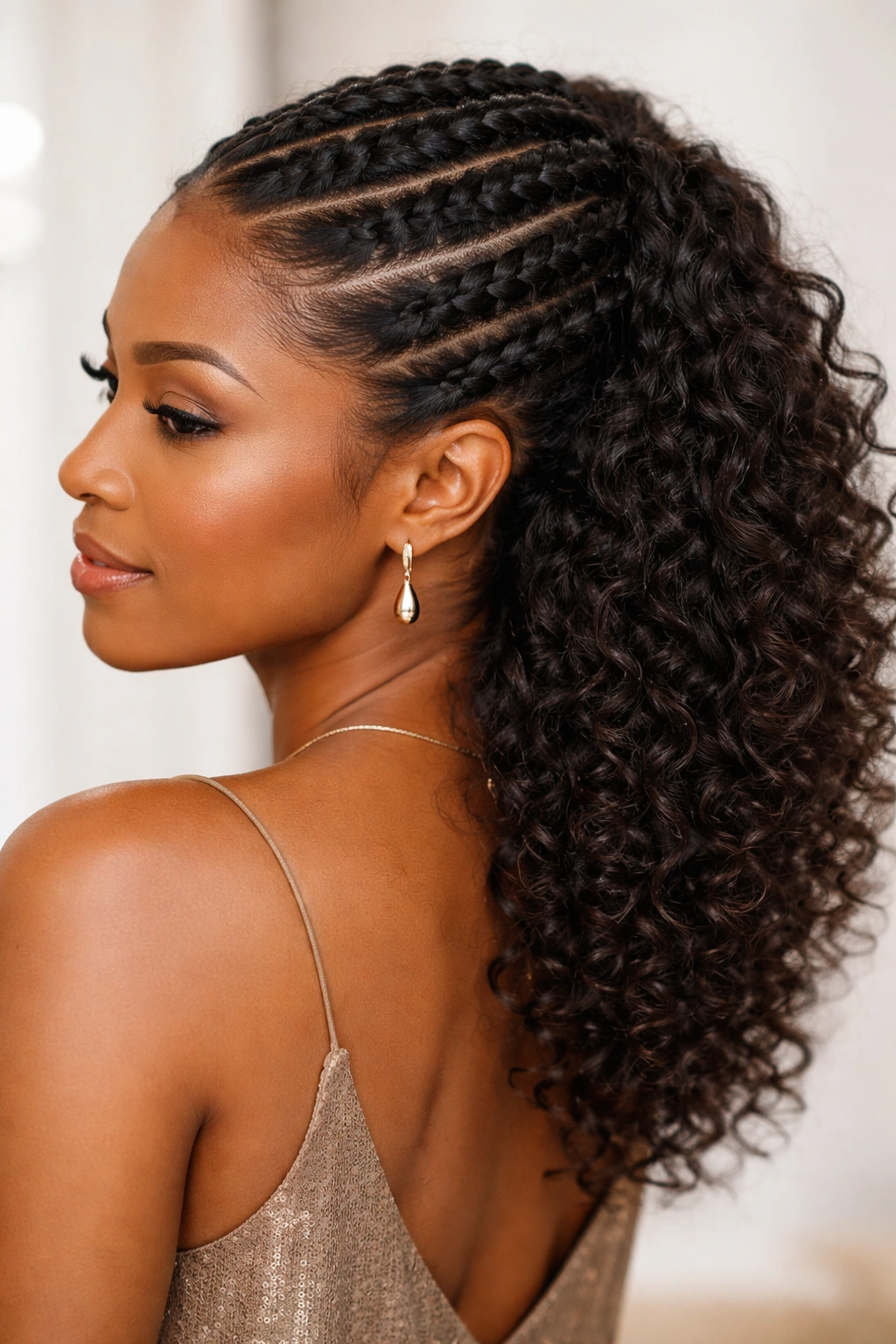
The first thing you notice with a flat-twist crown is the scalp. It looks neat, but not stiff. Then your eye moves to the loose ends, which can stay curly, coil into a puff, or tuck into a bun depending on your mood.
That mix is the appeal. The front feels controlled. The back still shows off texture.
Where to Put the Twists
Start the flat twists at the front hairline or just behind it, depending on how much forehead you want to show. Two to four twists usually do the job. More than that can start to look busy unless your hair is very thick.
The crown section should feel snug against the head, not pulled tight. If you feel tugging at the temples, the parting is too close or the tension is too high. A fine-tooth comb can make the parts neat, but a tail comb and your fingers are usually enough if you care more about comfort than perfect lines.
This style shines for work events, dinners, and family gatherings because it looks dressed up without being precious. It also plays nicely with earrings, which sounds small until you try it and realize the whole look changes.
A little edge control around the front can help, but use it sparingly. Too much product makes the twist lines look sticky instead of clean. And nobody wants that.
6. The Braid-Out Bob With Soft Volume
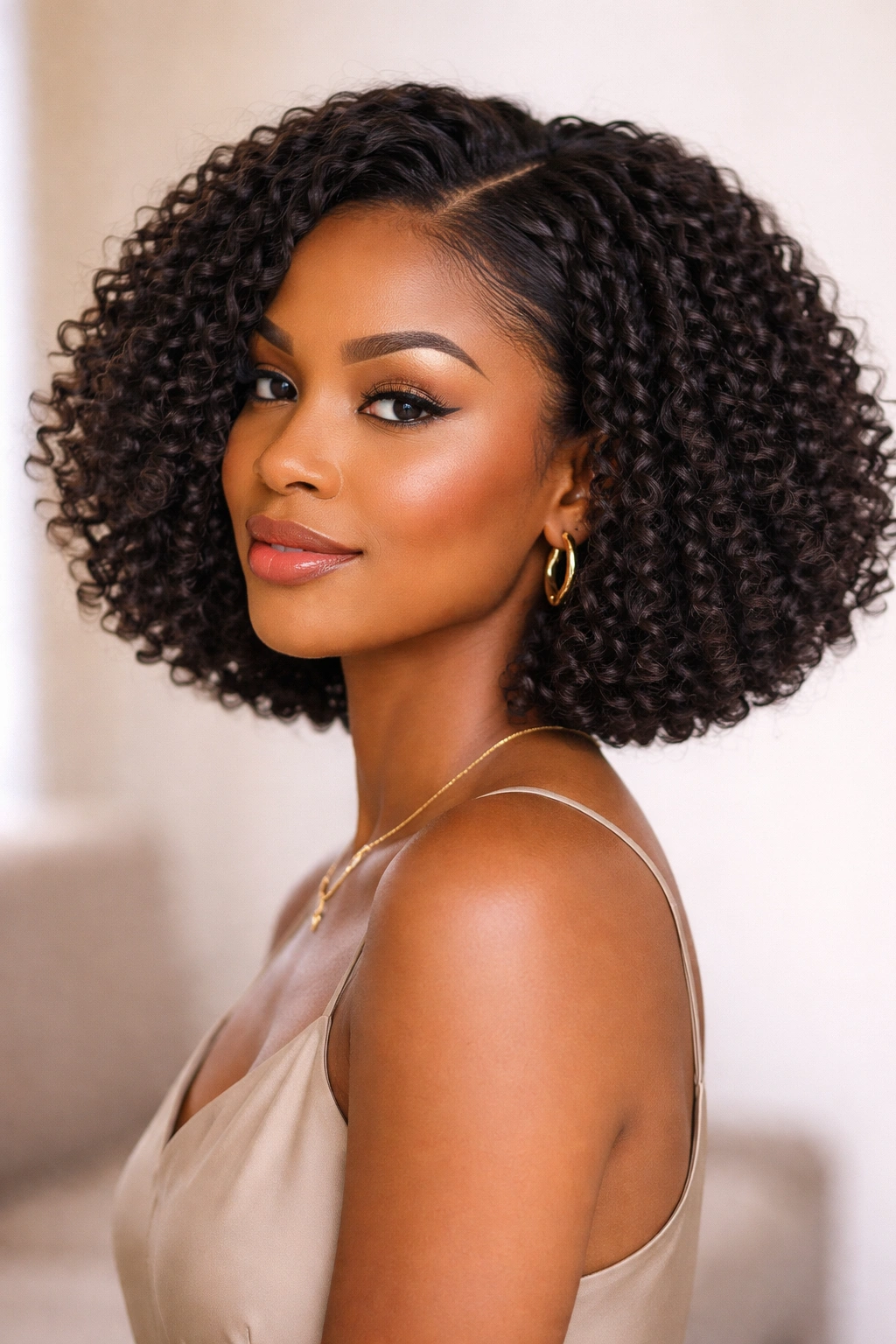
Jawline length. That’s the magic here.
A braid-out bob sits in that sweet middle ground between short and medium length. It has enough shape to feel intentional, enough movement to keep it from looking helmet-like, and enough softness to flatter fuller cheeks, longer faces, and almost everything in between.
This style works best when the hair has been stretched first. A blow-dry on cool, a banding set, or even old-school large braids can give you the extra length needed to let the bob sit where you want it. If the base is too shrunken, the bob can bunch up and lose its line.
The Cut Matters
A shaped bob cut makes the braid-out look cleaner than a random trim ever will. If the front is slightly longer than the nape, the style moves better when you turn your head. That little angle makes the whole thing feel more expensive, even when the styling itself is simple.
- Best braid size: medium, not tiny
- Best parting: side part if you want softness, middle part if you want symmetry
- Best finish: separate the braids with oiled hands, then shake the roots out lightly
- Best mood: office-friendly, brunch-friendly, date-night-friendly
The nice thing about this one is that it keeps shape as it ages. The bob may get fluffier, sure, but that usually makes it look better rather than worse.
7. The Frohawk With Side Cornrows
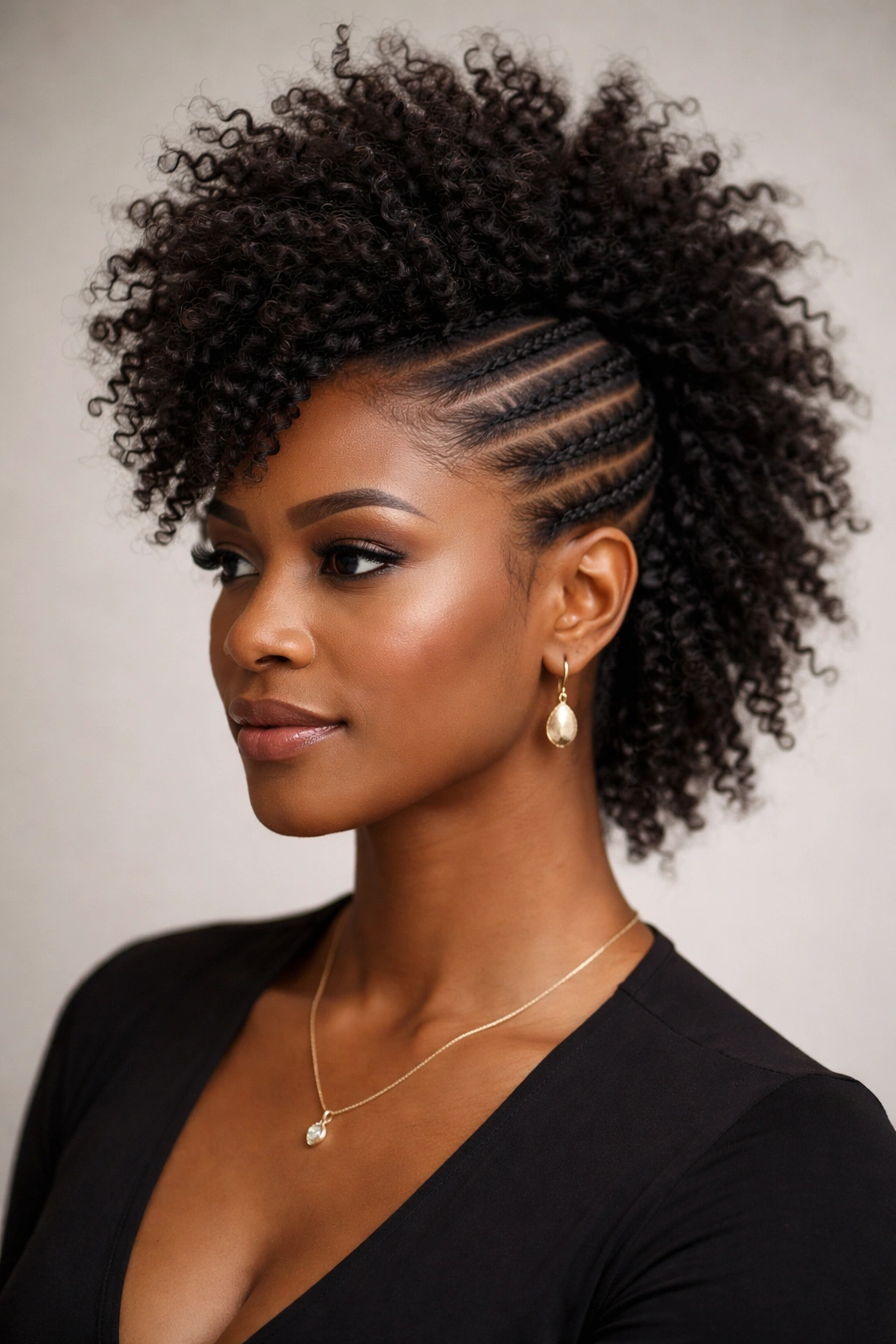
Three narrow cornrows on each side and a full center ridge can change the whole mood of a hairstyle. That’s the frohawk. It’s bold, clean, and it does a lot with a small amount of structure.
The sides pull the eye inward. The center stays textured and full. If your hair has real density, this shape can look powerful without feeling overworked.
I like frohawks on women who want something with edge but not a lot of daily fuss. The braided sides stay put. The middle can be fluffy, stretched, or picked out depending on how much height you want. And because the design is already doing work, you don’t need heavy accessories.
What Keeps It Looking Sharp
Keep the cornrows narrow enough to curve cleanly along the scalp. Too wide, and the side sections look chunky. Too thin, and they can feel fussy or take too long to install.
A frohawk also gives you room to play with the middle section. You can twist it, sponge it lightly if your texture likes that, or let it stay in a loose natural cloud. The whole point is contrast.
If you want a style that says you know exactly what you’re doing, this one has presence.
8. The Short Afro With Finger Coils
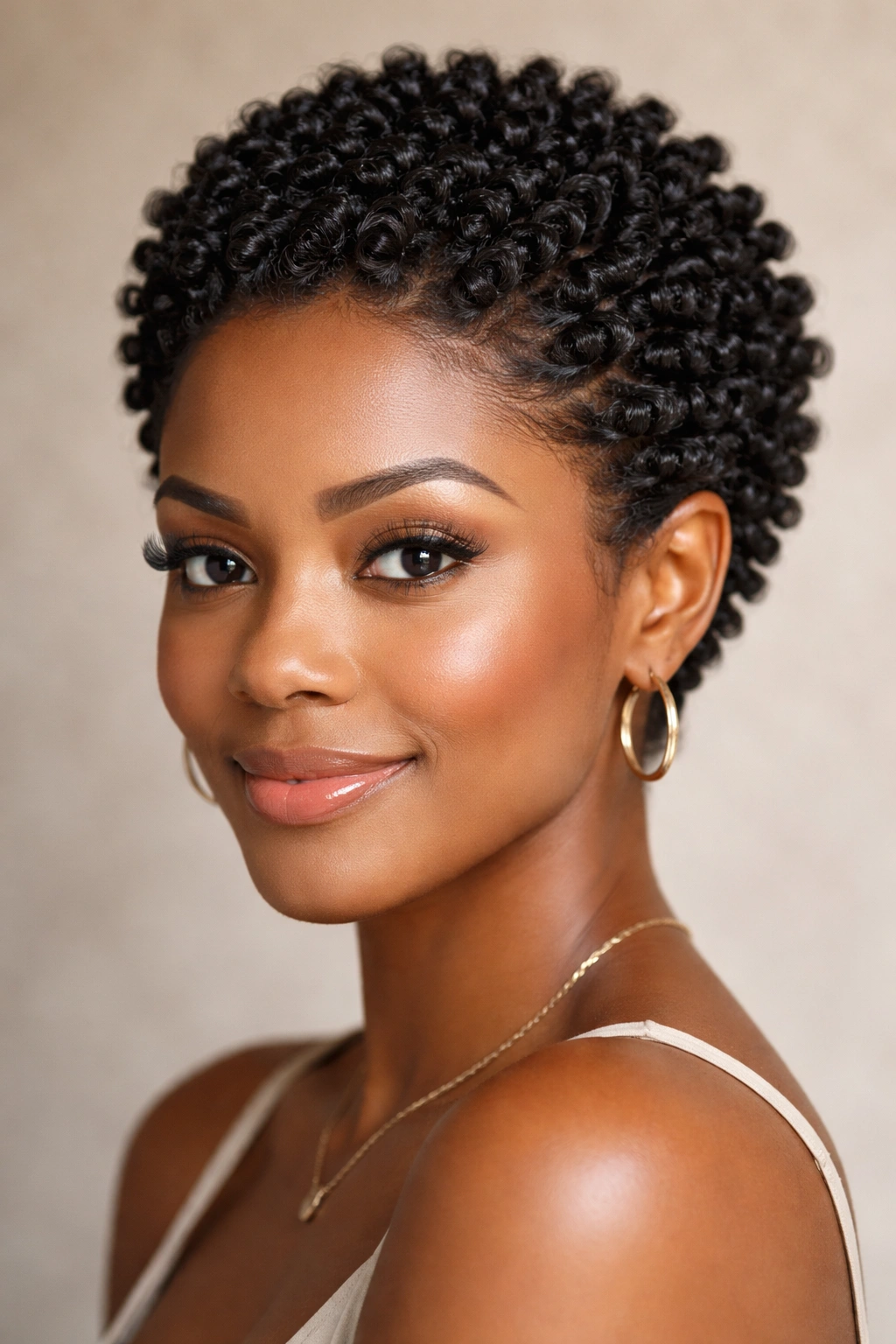
I trust finger coils when I want short hair to look finished without heat. There’s something satisfying about the way the spirals stack up and hold their pattern. The result feels neat at the root and soft at the ends, which is a nice balance on shorter natural hair.
This style works especially well on a TWA, but it can also carry you through a grow-out phase. You get shape, definition, and a little extra shine if you use a light gel or cream with slip.
The part people skip is patience. Each coil needs a firm twist around the finger and a clean release. If you rush the motion, the coil won’t hold its curve, and the style starts looking frayed before it should.
A small amount of product is enough. Too much cream makes the coils collapse. Too much gel creates flakes. You want the hair to feel coated, not drenched.
I like this style because it makes the cut itself matter. The silhouette becomes the focus, and when the shape is right, that’s all it needs.
9. The Loc Updo With a Wrapped Nape
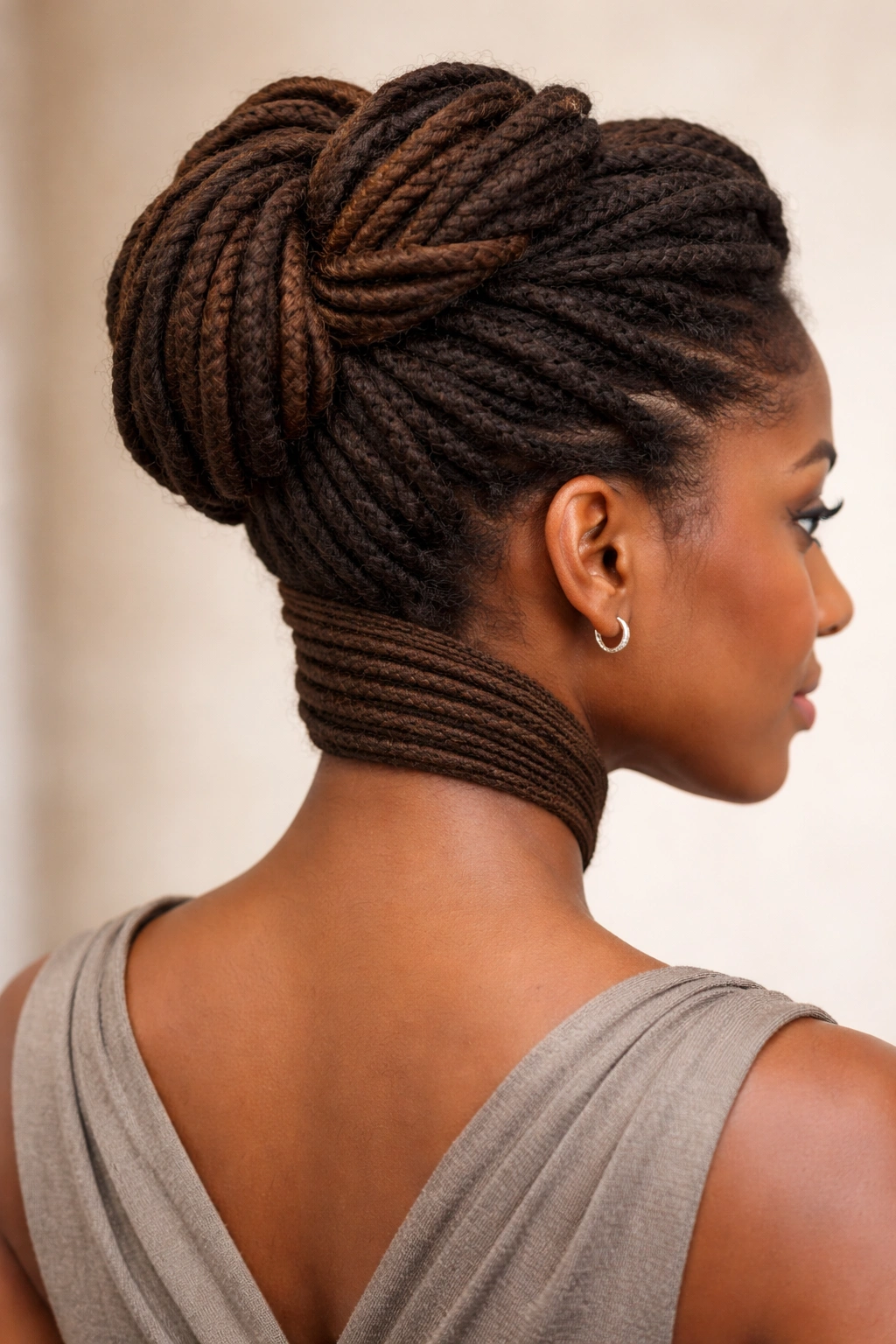
Unlike a high bun that hides everything, a loc updo can keep the length visible while still clearing the neck. That matters if you want your style to feel elegant instead of bulky.
A wrapped nape gives the whole look a calm base. The top can stay lifted, twisted, or pinned into a roll, while the ends tuck in low and stay out of the way. The shape reads grown and deliberate, not stiff.
This is one of those styles that works hard at weddings, formal dinners, work functions, and anywhere you need your hair to stay put for hours. Locs already have presence, so the updo doesn’t need a lot of extra decoration to land.
Use pins that match the color of your locs if possible. It keeps the finish cleaner. And keep the tension even across the scalp; one tight side and one loose side will throw the whole shape off by the end of the day.
A soft wrap at the nape can also hide older growth beautifully. Not everything has to be polished front and center. Sometimes the back is where the style really earns its keep.
10. The Jumbo Twist Bun
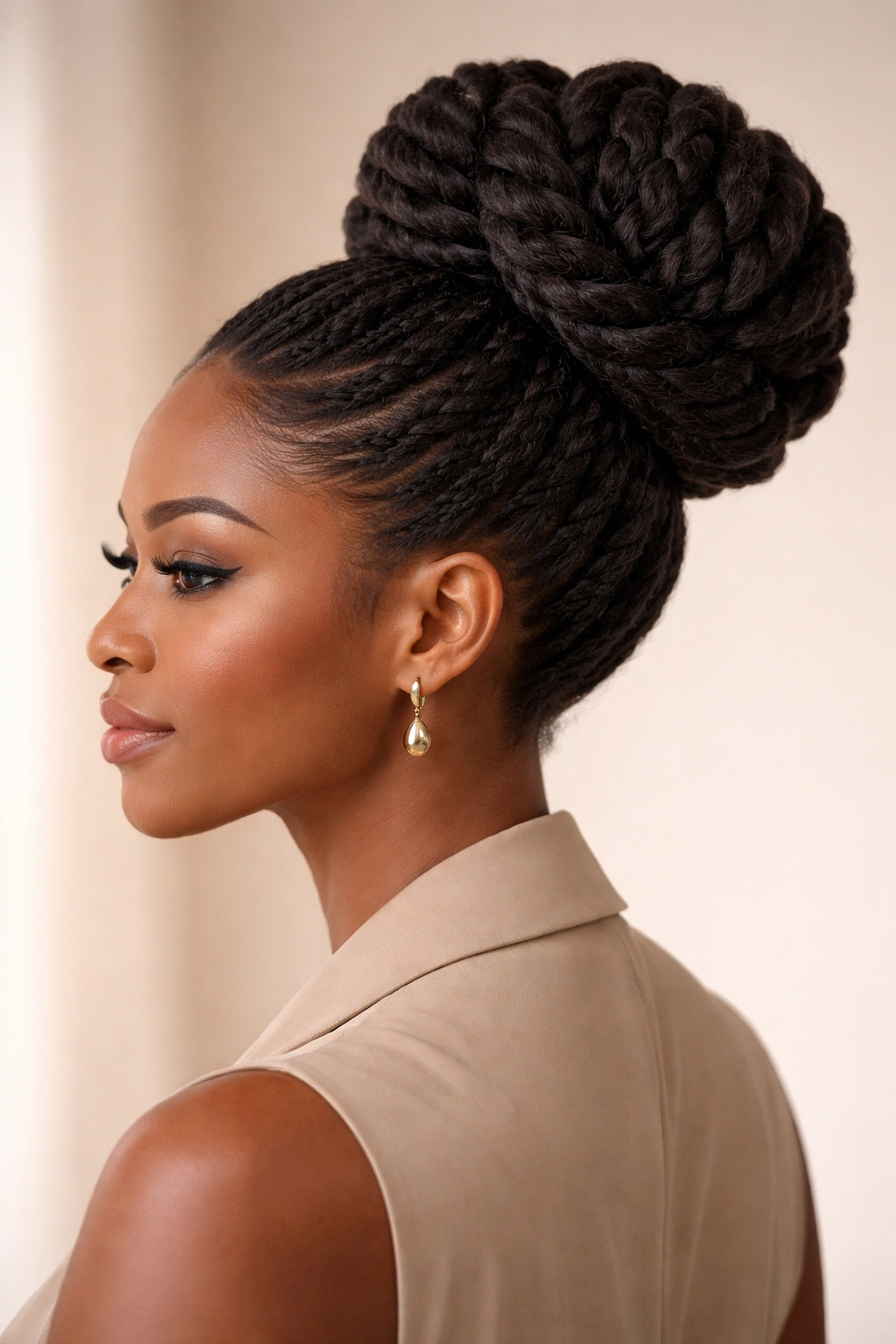
A jumbo twist bun is one of those styles that looks like effort, even when the real work took less time than a blowout. That’s the part I like. It gives you volume and structure without requiring tiny parts or a long install.
The trick is to make the twists big enough to show texture, but not so large that they unravel while you’re pinning them. Six to ten twists is usually the right zone for medium-density hair. If your hair is thicker, you may need a few more.
How to Keep the Bun From Sagging
A bun at the crown needs a strong base. Start with the twists anchored close together, then pin them in a circular shape instead of stacking them loose on top of one another. Loose stacking creates a lumpy bun, and it tends to droop.
A satin scrunchie or a soft elastic can help support the base before you pin the ends. If your hair is long enough, fold the twists under instead of wrapping them around and around. That keeps the bun from getting too heavy.
This style is a good one for women who want a professional finish without a severe look. It’s neat, but not harsh. And it leaves room for earrings, lipstick, and a little personality.
11. The Bantu Knot-Out With Big Shape
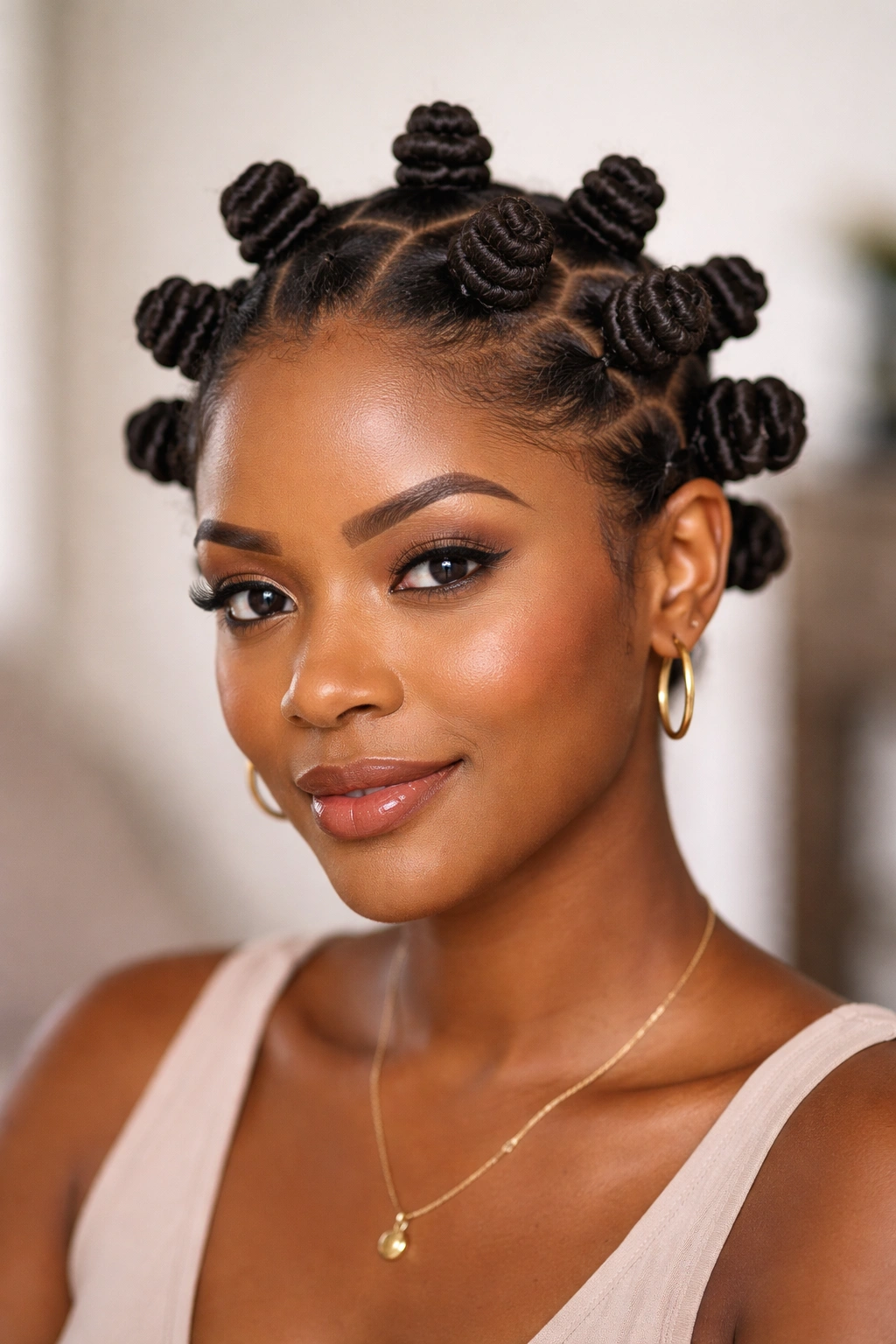
Bantu knots give you a choice before the style even comes down. Smaller knots create tighter definition. Larger knots create looser curls and a fuller halo once you unravel them. That flexibility is why the knot-out keeps showing up in natural hair rotations.
The set itself looks compact and tidy. The payoff comes later, when the knots come apart and the hair expands into a shape that feels lively and soft. If your hair likes volume, this style tends to reward you.
The one thing you cannot fake is dryness. If the knots aren’t fully dry before you take them down, the style loses definition fast and can puff unevenly. That’s why I’d rather leave them in longer than rush the reveal.
A little oil on the hands during takedown helps. So does separating the resulting curls only once, gently, instead of touching them over and over. The more you fuss, the faster the shape disappears.
This style has range. Wear the knots themselves for a sculptural look, or take them down for a fuller afro shape that still has visible curl pattern.
12. Afro Hairstyles for Women Over 30: Half-Up, Half-Down
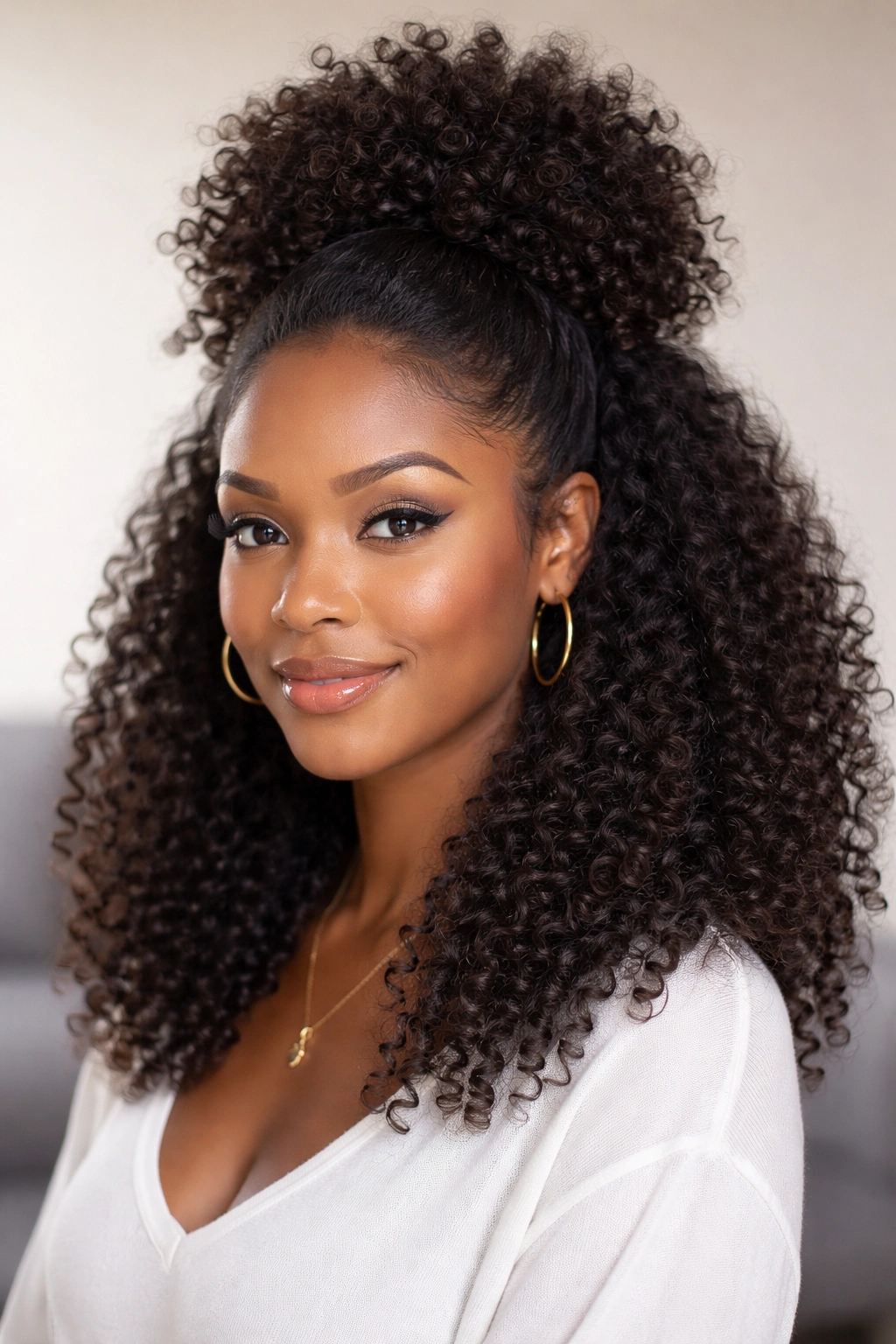
Why does the half-up style keep surviving every trend cycle? Because it solves a real problem. You get your hair away from the face without losing the body and texture that make an afro feel like an afro.
The top section can be gathered into a puff, clipped back, braided, or tied with a scarf. The lower section stays free. That split makes the style feel balanced, especially when you want structure at the top and movement at the bottom.
When to Choose It
Choose this style when your hair is too full for a total updo but you still want some control around the eyes and forehead. It works well on medium to long hair, though even shorter curls can manage a loose version with a few pins.
You can keep the top section sleek and the bottom fluffy, or do the reverse. I prefer the top to stay controlled so the shape has a clear line, but there’s room to play here.
A decorative clip can help, but the shape should stand without it. If the style only works when you pile on accessories, it’s not doing enough on its own. This one should look good before the extras.
13. The Goddess Braid Pinned Into a Low Puff
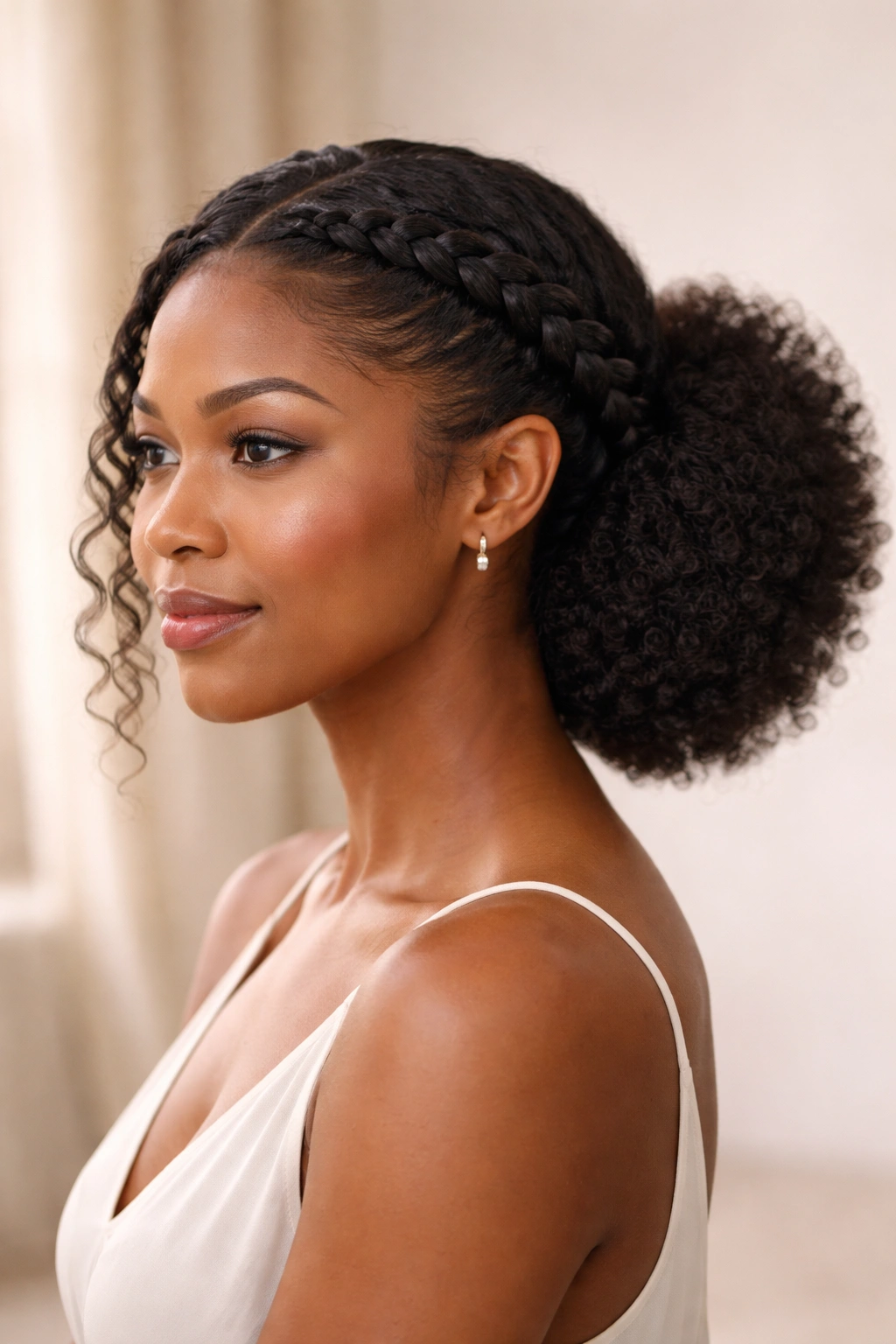
This is one of my favorite combinations because it gives you two moods at once: a clean, braided front and a soft puff at the back. The braid pulls the eye where you want it. The puff keeps the look human and textured.
A single goddess braid sweeping from the front or side can frame the face in a way that feels graceful without turning fussy. Then the rest of the hair gathers low, which keeps the shape grounded. It is a smart style for women who like polish but don’t want to look overly “done.”
The braid does not need to be huge. In fact, a medium braid usually sits better and looks more balanced against the puff. If the braid gets too thick, it can start to overwhelm the face and make the style feel top-heavy.
- Best placement: braid across one temple or just above the hairline
- Best puff position: low to mid-back of the head
- Best finish: a light mist of water on the puff, then a small amount of cream to revive the texture
- Best use: work events, dinners, formal daytime plans
This style works because it gives shape without stealing the show from your natural texture.
14. Low-Maintenance Afro Hairstyles for Women Over 30: The Wash-and-Go Shape
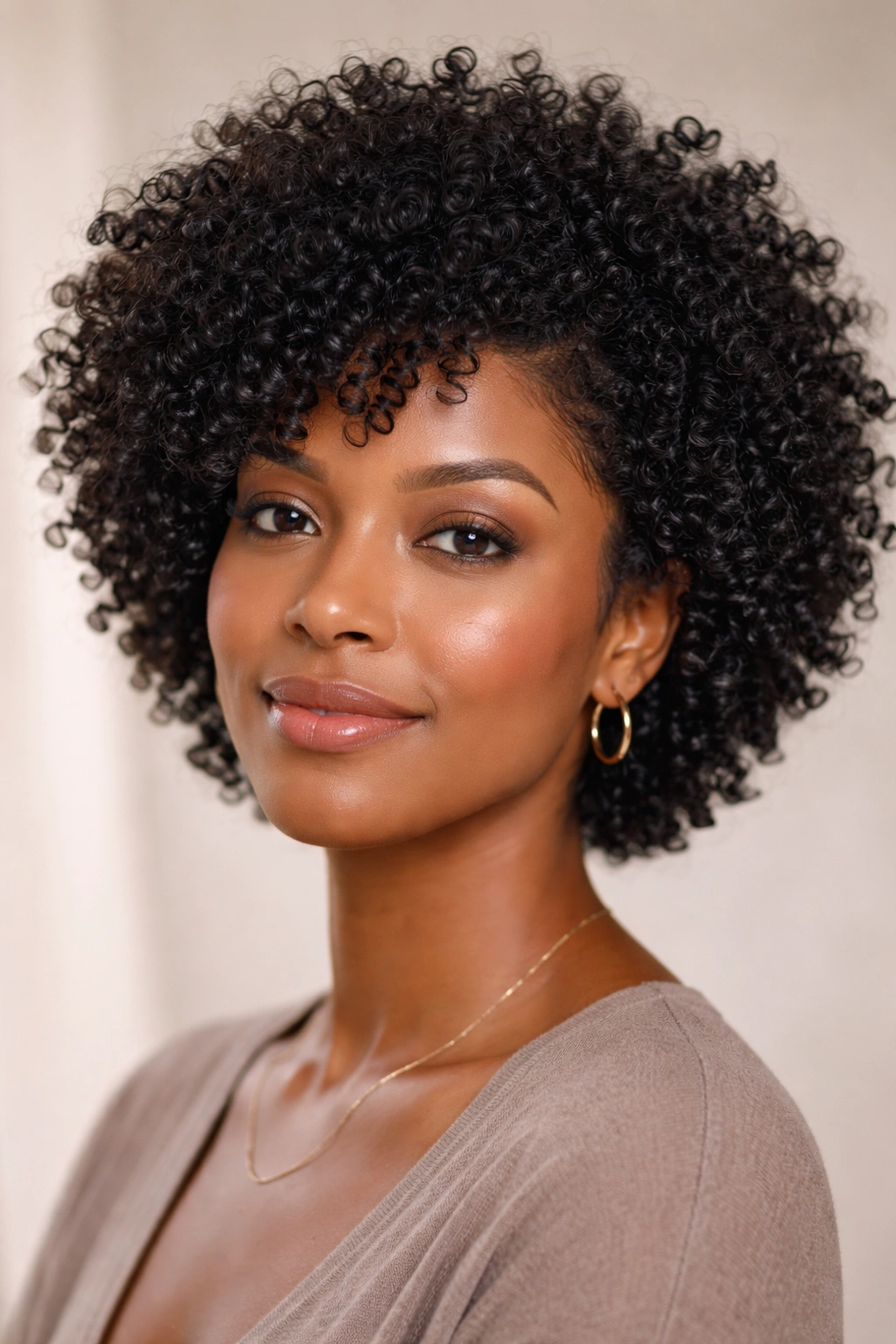
A wash-and-go is not lazy if the cut is right. That’s the part people miss. A good wash-and-go depends on shape, product placement, and patience, not on how much gel you can dump into your hair.
The best versions start with a cut that respects your curl pattern. Layers help the curls stack instead of ballooning in odd places. A shaped outline around the crown and sides makes the whole style look cleaner once it dries.
What the Right Cut Changes
If your hair is cut too blunt, the wash-and-go can sit heavy at the ends and flat near the roots. If it’s cut with a little movement, the curls fall more naturally and the silhouette feels lighter.
Product order matters too. Water first. Then leave-in if your hair likes it. Then a gel or curl custard that gives hold without turning the hair crunchy for three days. Work in small sections and smooth the product down the strand from root to tip.
Drying can take patience. Air-drying works, but a diffuser on low heat can help if you need the style to settle faster. Don’t disturb the curls while they are drying. That is how you end up with frizz where you wanted definition.
This style is a favorite for women who like their texture visible all the time. It’s honest, low-fuss, and when the cut is right, it looks better on day two than a lot of styles do on day one.
15. The Halo Braid With a Full Afro Back
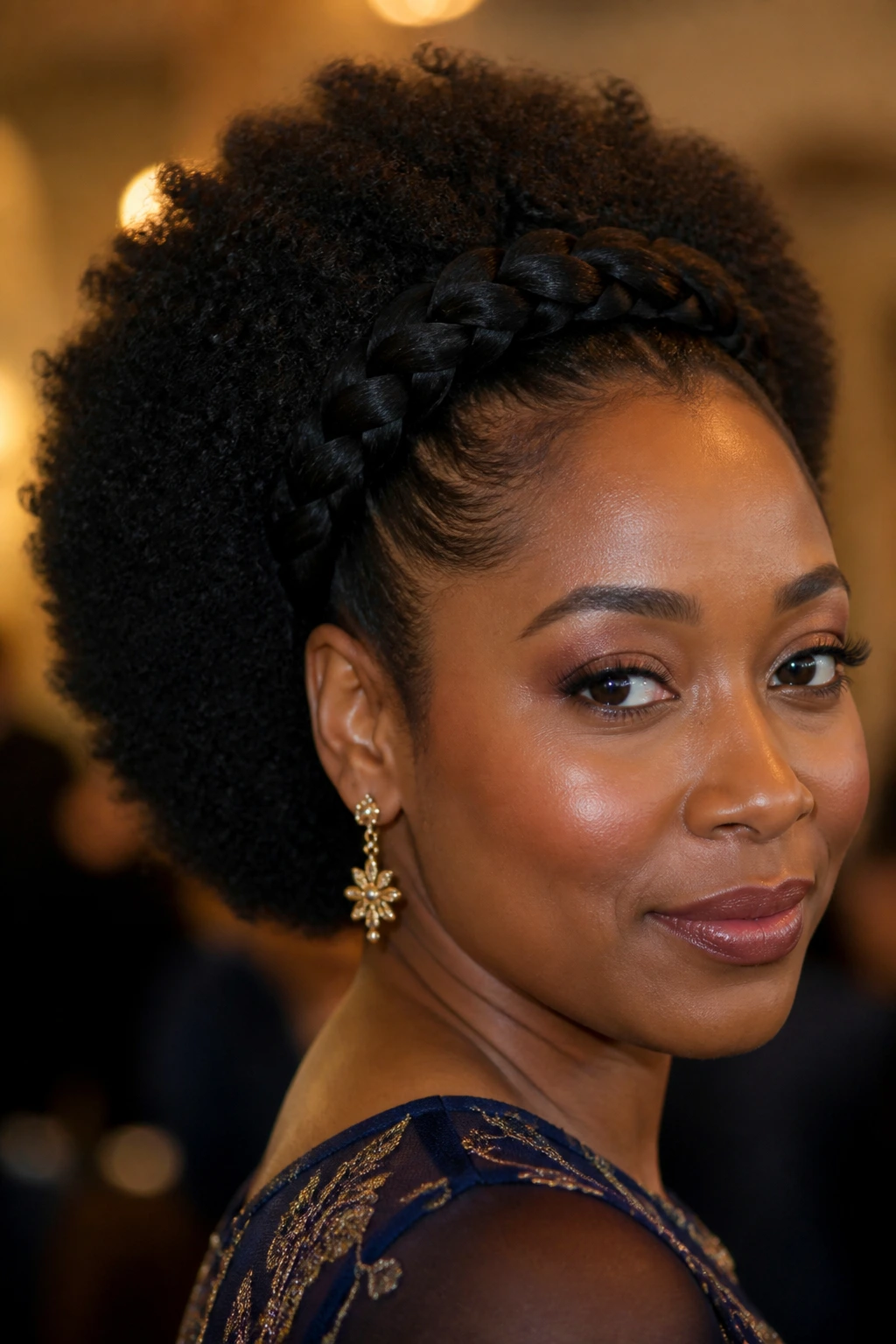
A single halo braid across the front can keep the hairline calm while the rest of the afro stays full. That’s the appeal here. You get a frame for the face, a soft lift through the top, and plenty of texture left in the back.
This is the sort of style that looks at home at a wedding, a dinner, a church service, or a work event where you want your hair to feel deliberate. The braid gives the front structure. The loose hair behind it keeps the style from feeling too stiff.
The key is placement. Let the braid sit just above the forehead or slightly higher, then pin it securely where it disappears into the rest of the hair. If it sits too low, it can crowd the face. If it sits too high, the balance gets weird fast.
The back can stay in a rounded afro, a stretched twist-out, or a soft puff depending on your length. I like the full-back version best because the contrast is strong. You see the braid first, then the texture behind it. Nice and simple.
If you want one style that can shift from day plans to evening plans without feeling boring, this is a solid choice. It keeps the front neat, leaves the natural texture visible, and avoids the trap of looking overworked.
Some hair days call for height. Others call for calm. The styles that last are usually the ones that can do both without forcing your hair into a shape it does not want.
