



Some mornings, your afro wants volume, and your face wants a break.
Half-up, half-down afro styles solve that argument fast. They keep the front lifted, the curls visible, and the whole look from sliding into that awkward middle ground where everything feels either too formal or too undone. I’ve always liked them because they respect coily hair instead of trying to force it into something flatter.
There’s a bonus people don’t talk about enough: these styles work with shrinkage, not against it. A puff that looks compact in the mirror can bloom out later, and a few twists at the front can make a plain wash-and-go look finished without demanding a long styling session. That matters when your hair has its own opinions.
The trick is choosing the version that fits your density, length, and mood. Some half-up looks want a clean part and a sleek front. Others look better a little loose, with soft edges and curls doing their own thing. The good ones don’t fight your texture. They make it look intentional.
1. High Puff with Loose Length
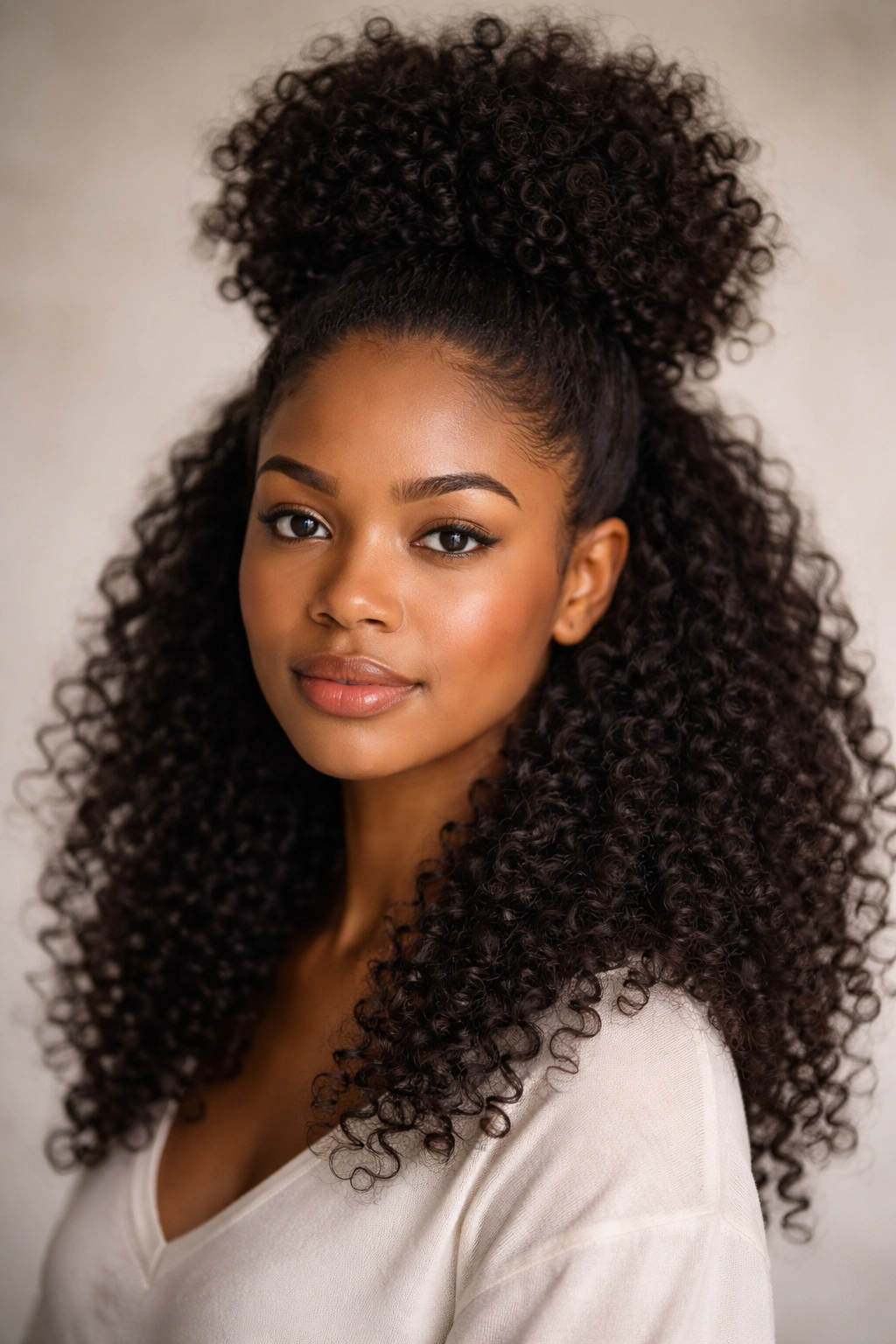
The high puff is the half-up style I recommend when someone wants impact with almost no drama. It gives you lift at the crown, keeps hair out of your eyes, and still lets the rest of your afro sit free and full.
Why It Works on Coily Hair
Coily and kinky textures have a built-in advantage here: they hold shape. A high puff gathers the top section into one focal point, while the lower hair keeps the silhouette soft and big. That contrast is the whole trick. It looks polished without needing slick perfection.
The cleanest version starts with a simple center or side part, then a top section from temple to temple. Don’t take too much hair into the puff or it starts to swallow the style. Too little, and the puff looks tiny next to the rest of your hair.
A satin scrunchie works better than a thin elastic because it grips without slicing into the strands. If your hair is dense, cross two bobby pins just under the puff to stop it from sliding back during the day.
Quick Facts That Help
- Best on twist-outs, braid-outs, and stretched wash-and-go hair.
- Use a light leave-in or cream before gathering the top section.
- Place the puff a little above the crown, not flat at the back.
- Fluff the loose hair with your fingers, not a brush.
- If the puff feels low, lift it and re-tie it. Small changes matter.
Pro tip: tilt your head forward while securing the puff. It helps the top section sit higher, which gives the whole style more shape and stops it from looking heavy on one side.
2. Flat-Twist Crown with Loose Curls
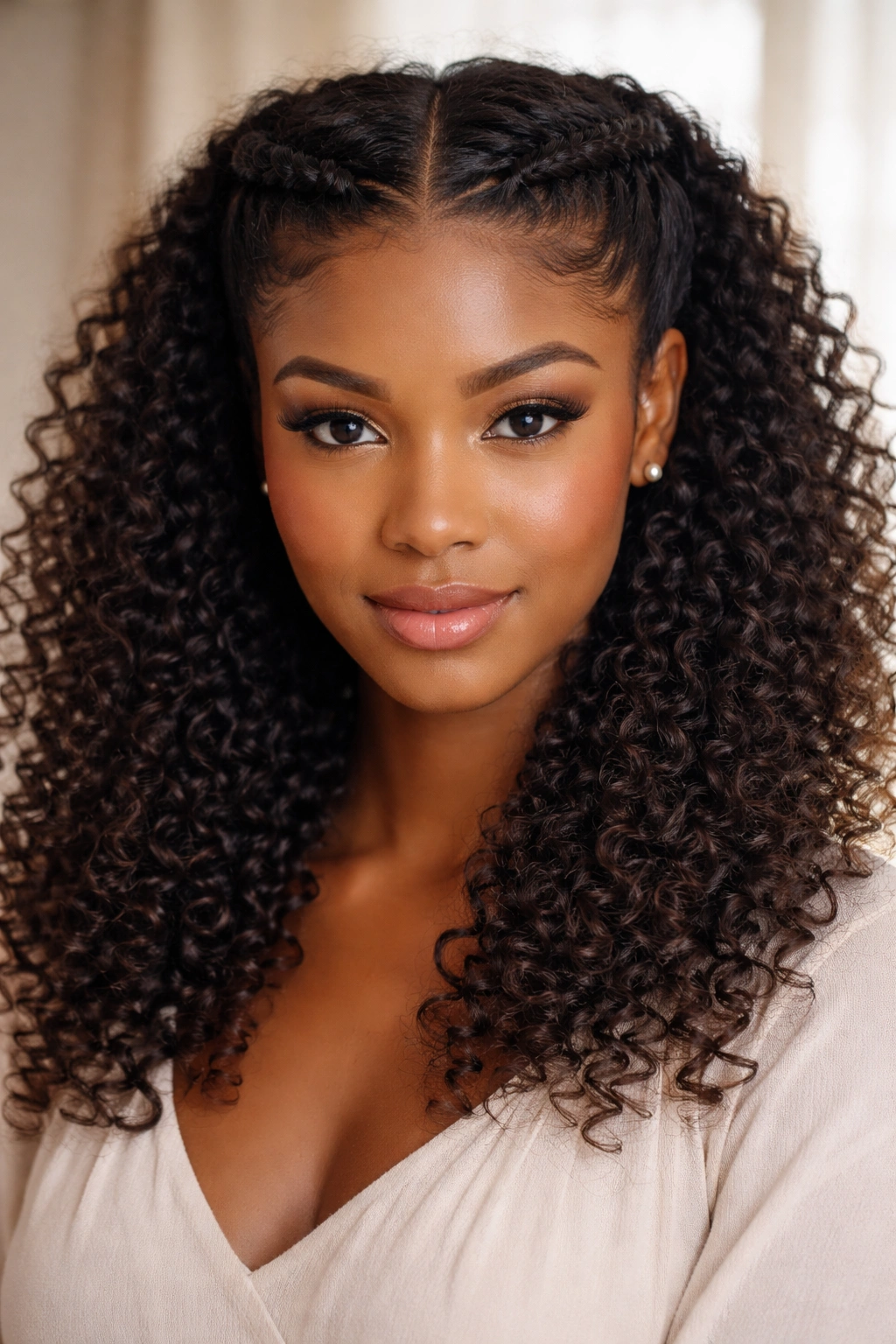
If you like a style that looks more finished with almost no fuss, flat twists across the front are hard to beat. They give you a clean frame around the face and leave the rest of the afro free to do its thing.
Two flat twists are enough. One on each side, starting at the temples and moving back toward the crown, can change the whole mood of the style. You get structure up front and fullness in back, which is a nice balance when you want something that works for school, work, or a dinner where you do not want your hair hanging everywhere.
Part the hair with a rat-tail comb, but don’t obsess over making the lines razor sharp. On afro hair, a part that is a little soft often looks better than one that feels too traced. Add a dab of gel or foam along the part if the roots are fuzzy, then twist snugly but not tight.
What Makes It Different
Flat twists sit closer to the scalp than regular two-strand twists, so they create a neater line and stay put longer. That makes them a better choice when you want the front to look controlled without flattening the whole style.
They also play well with stretched hair. Freshly blown-out hair gives a sleek twist pattern, while a twist-out or braid-out leaves more texture around the crown. Both work. The vibe changes, but the shape holds.
For a softer finish, pull a few curls loose around the hairline after the twists are secured. Just a few. Too many, and the style loses the clean frame that makes it so useful.
3. Space Buns with Floating Length
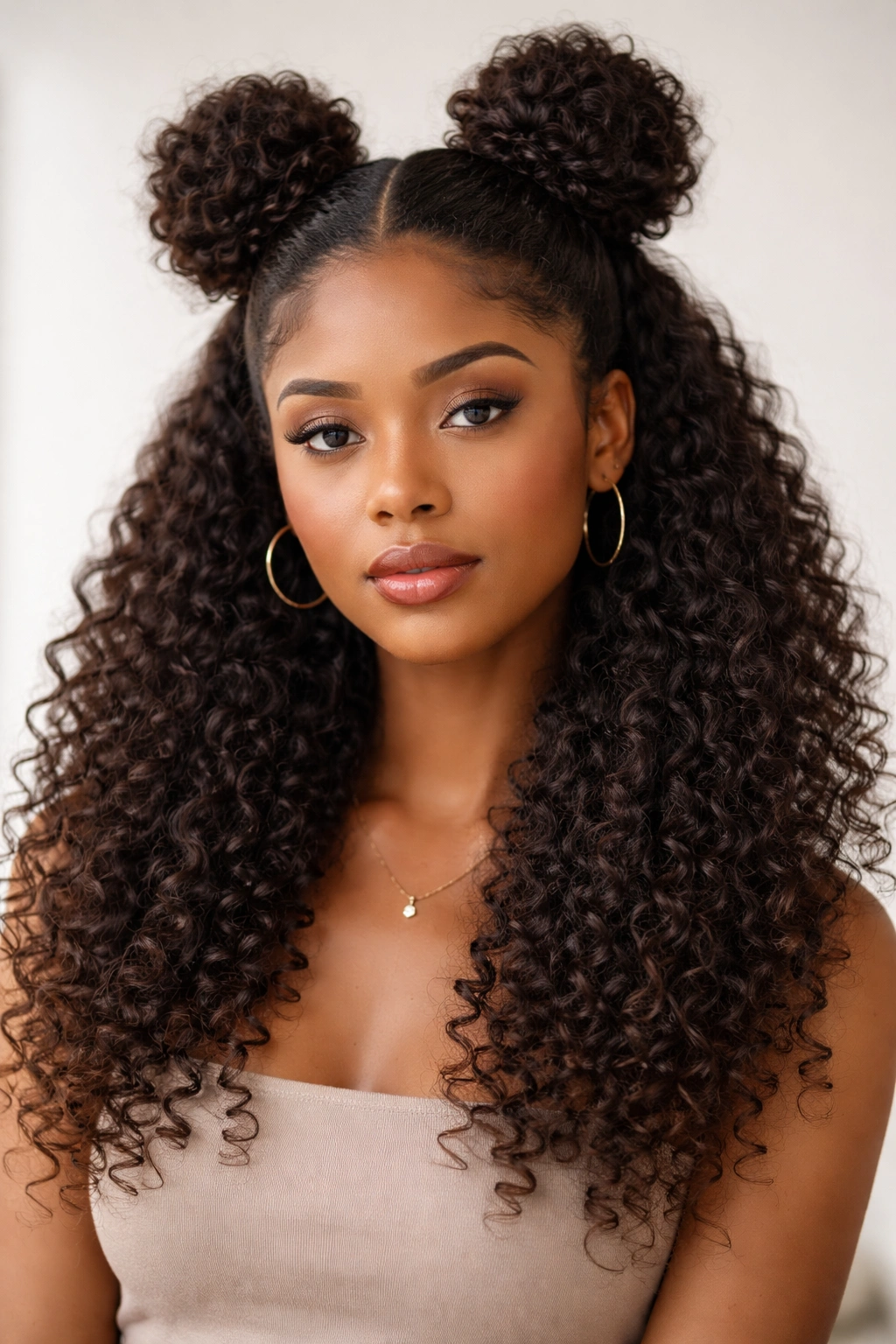
Why do space buns look so good on afro hair? Because the texture gives the buns body, not just shape. They do not need to be tiny or overly perfect to make sense.
Space buns in a half-up, half-down afro style are playful, but they can also look tidy if you keep the sections balanced. The top half becomes two round buns, and the rest of the hair hangs free underneath. That contrast is what makes the look work. It feels youthful without being childish, which is harder to pull off than people admit.
The best way to do it is to split the top section down the middle, then make two high puffs first. Once each puff is secure, twist it around its base and pin it into a bun. If your hair is thick, use more pins than you think you need. Dense hair has a habit of loosening one pin at a time until the whole thing shifts.
How to Keep the Buns Balanced
- Make both sections the same size before you touch the hair.
- Set the buns slightly above ear level so they read clearly from the front.
- Use a satin scrunchie or small coil tie for grip.
- Leave the lower hair fluffy and untouched unless it needs a quick finger detangle.
- If one bun looks larger, pull a little hair from the other side before pinning.
The style gets especially good when the loose hair has some definition. A chunky twist-out or braid-out gives the bottom half enough texture that it doesn’t look like an afterthought. And if you want a little polish, add a small gold cuff or one smooth clip near the part. That’s enough. Anything more starts to crowd the look.
4. Braided Crown with Loose Volume
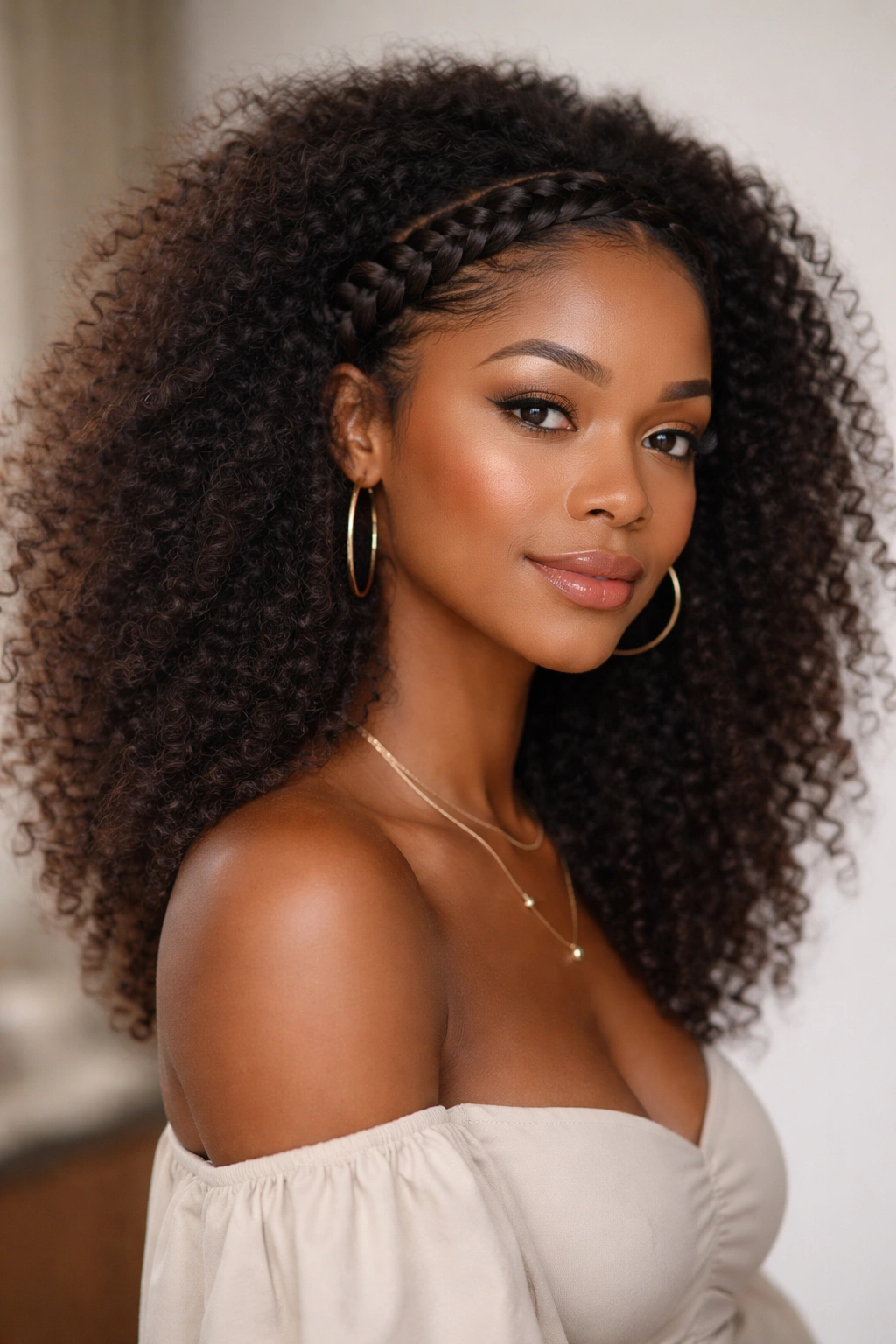
Picture a style that works for a wedding guest outfit, a birthday dinner, or any day you want your hair off your face but still big. A braided crown is one of those looks that immediately reads as put-together, even when the rest of your hair is still full and soft.
The idea is simple: braid across the front hairline or along one side of the head, then leave the rest of the afro loose underneath. It gives the top of the style structure and keeps the eyes and forehead open. That is a small thing, but it changes how the whole face looks.
I like this version best on stretched hair or a defined braid-out. The braid lies cleaner, and the loose hair keeps its shape better. If your texture is very tight and shrunken, the braid still works, but the contrast between the polished top and the fluffy bottom becomes even stronger. Not a bad thing. Just different.
Key Details to Get Right
- Braid from the heavier side of your part if you want balance.
- Keep the braid close to the scalp so it anchors the style.
- Use two crossed bobby pins at the end if the braid slips.
- Smooth the front with a small amount of cream, not a heavy gel.
- Leave the ends of the lower hair loose and full.
The useful part: this style hides a few rough days of texture at the roots. If the front section is not behaving, the braid covers a lot without looking like you are covering anything at all. That’s the kind of styling trick that earns its place.
5. Claw-Clip Half-Up Afro
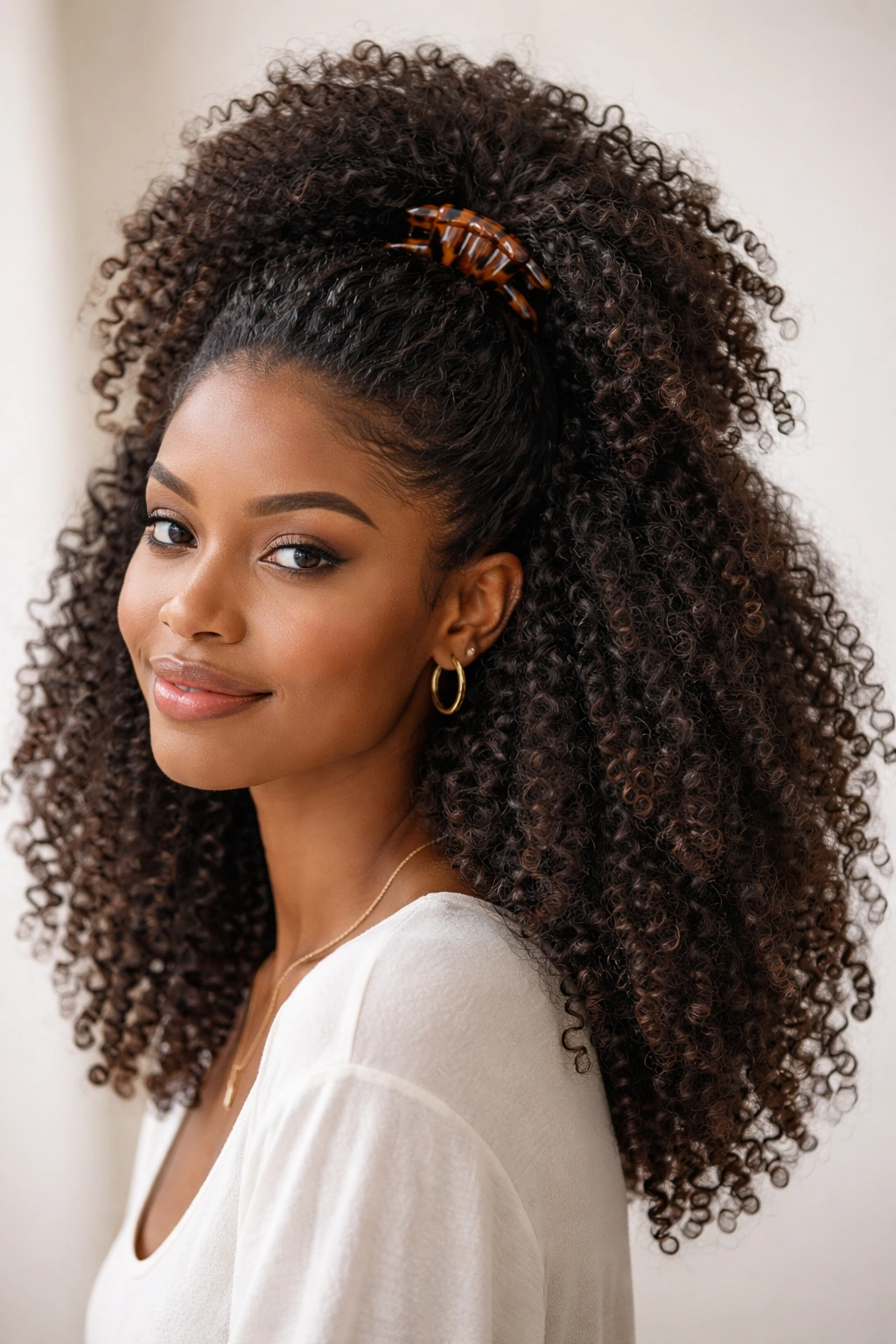
A claw clip is one of the few accessories that actually makes sense on dense natural hair. A good one can hold the top section without flattening it into something sad and narrow.
This style is fast, which is why people return to it. Gather the top half of the hair, twist it once or twice, and pin it up with a large claw clip. Leave the lower half loose and let it spread naturally. That’s it. The result depends on the clip size, though, and this is where people go wrong. Tiny clips on thick afro hair are a joke. They snap, slip, or sit there looking decorative while doing nothing.
A clip with wide teeth and a 3.5- to 4.5-inch opening usually works better for dense hair. If your hair is especially full, stack the twist higher and let the clip catch the base of the section instead of trying to clamp the whole thing at once. You want a secure grip, not a wrestle.
One nice thing about the claw clip version is that it looks better when it’s not overly neat. A little puff at the crown gives it life. If you smooth every strand flat, the style can start to feel stiff.
Another small truth: the right clip should close with a firm squeeze, not an alarming snap. If it feels like it’s fighting your hair, it probably is.
6. Sleek Half-Up Ponytail with Defined Ends
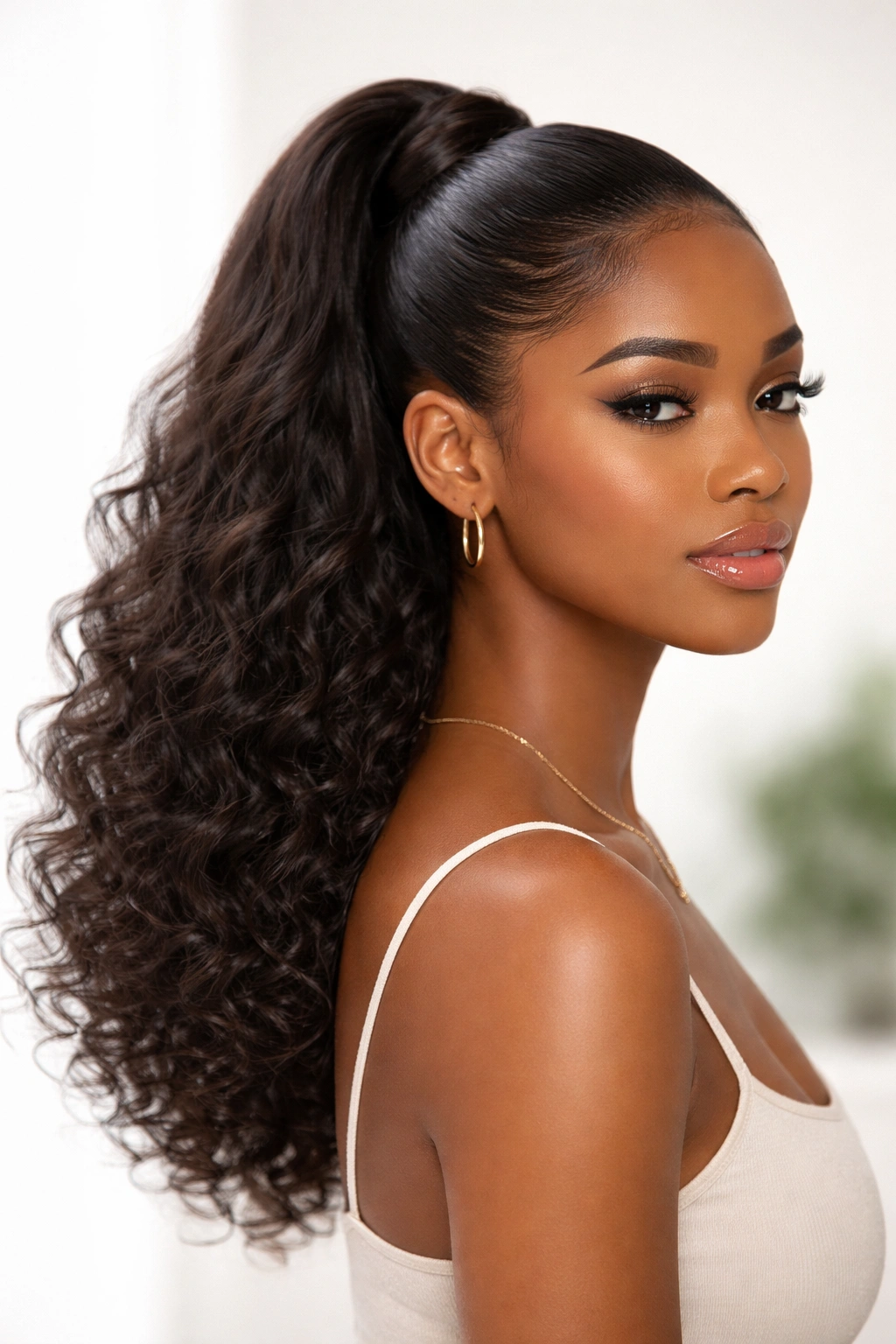
Unlike a full ponytail, this style keeps the bottom half visible, which gives the look more softness and keeps it from feeling too severe. It is the version I reach for when the goal is shape, not just convenience.
The front and crown get gathered into a smooth ponytail, while the lower hair stays loose and textured. That top section can be as sleek or as soft as you want. On a blown-out afro, it reads crisp and clean. On a twist-out, it feels softer, with more movement around the face. Both work, but they do not give the same mood.
Where This Style Shines
A deep side part or a straight center part both work here, but the ponytail should sit high enough to show the face and low enough to keep the style balanced. Too high, and it starts to look like a full updo. Too low, and it loses the point.
Use gel or edge control only where you need it. The mistake people make is coating the whole front in product, then wondering why the hair feels crunchy by the second hour. A small amount at the roots, brushed in with a soft bristle brush, is usually enough.
If the loose hair has defined ends, the whole style looks more deliberate. A wash-and-go with shaped curls gives a different finish than a stretched afro with soft texture, so decide what you want before you start. I prefer the stretched version for this one because the contrast between sleek top and airy bottom looks cleaner.
7. Deep Side-Part Afro with One-Sided Lift
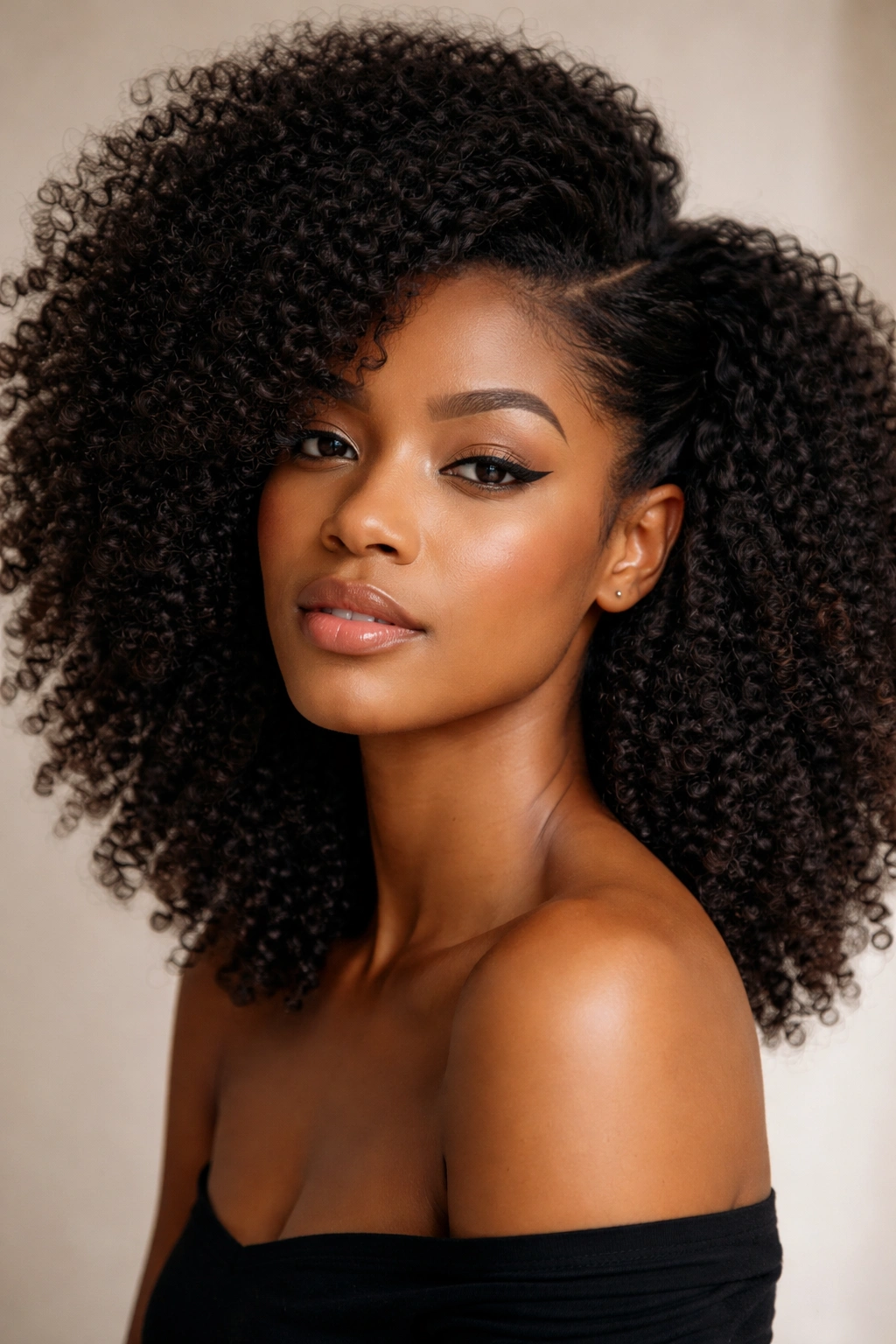
There is something about a deep side part that makes an everyday afro feel like a decision. It shifts the weight of the hair, frames one side of the face, and gives the top half of the style a little attitude.
This half-up version uses that side part as the anchor. Gather one side slightly back, twist it, clip it, or pin it just above the temple, then leave the rest open. The imbalance is the point. It feels softer than a centered style, and on afro hair that already has a lot of volume, a side part can make the shape look more intentional without taking away fullness.
I like this look when the hair has a bit of stretch. Too much shrinkage on one side and the shape can get lopsided in a way that looks accidental. A little stretch fixes that. So does fluffing the roots on the heavier side with a pick after the style is in place.
How to Place the Part
Start the part at the arch of one eyebrow and sweep it back to the crown. That line usually gives enough drama without turning into a costume. Pin the lifted side back loosely, not tight against the head. The goal is to create a line, not a helmet.
A small clip or one decorative barrette is enough here. More than that starts to distract from the shape. And the shape is the whole point. The loose side should still carry most of the volume, while the pinned side acts almost like a frame.
This one works especially well on days when you want a little polish but do not want to spend time sectioning all morning. Fast. Pretty. Useful.
8. Mini Bantu Knot Half-Up
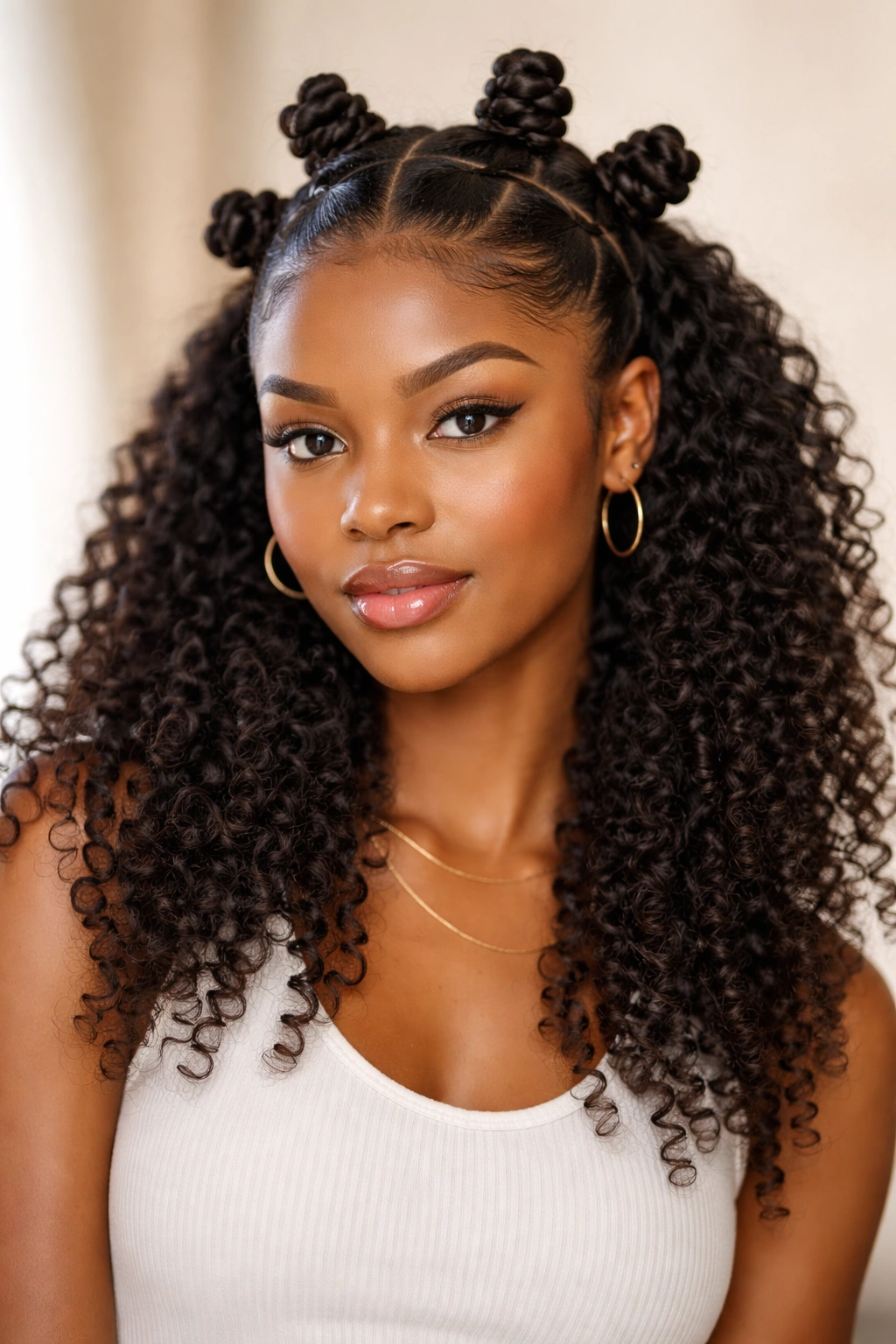
Mini Bantu knots on the top half of the head give you texture, structure, and a little bit of edge without shutting down the rest of the afro. They’re one of the more sculptural half-up styles, which is why I like them for days when plain curls feel too easy.
The top section is divided into several small parts, then each part is twisted and wrapped into a knot close to the scalp. The bottom half stays loose. You can do four knots, six knots, or even eight if the hair is dense enough. Fewer knots read bold and chunky. More knots look detailed and slightly more intricate.
What to Watch For
- Keep each section the same size or the knots will sit unevenly.
- Don’t start on soaking wet hair unless you have time for it to dry fully.
- Use a little cream to smooth each section before twisting.
- Wrap the knot snugly, but not so tight that the base pulls.
- Secure stubborn knots with a tiny pin underneath if needed.
The style looks best when the rest of the hair has some movement. A looser curl pattern underneath gives the knots room to stand out. If the bottom half is too flat, the whole look can feel top-heavy. That’s easy to fix with a quick finger fluff and a little root lift.
This is also a good style when you want a half-up look that lasts through a busy day. The knots stay in place better than loose twists, and they leave you with a nice texture pattern if you decide to take them down later. Two hairstyles in one. Hard to argue with that.
9. Double Side-Braid Halo with Loose Afro
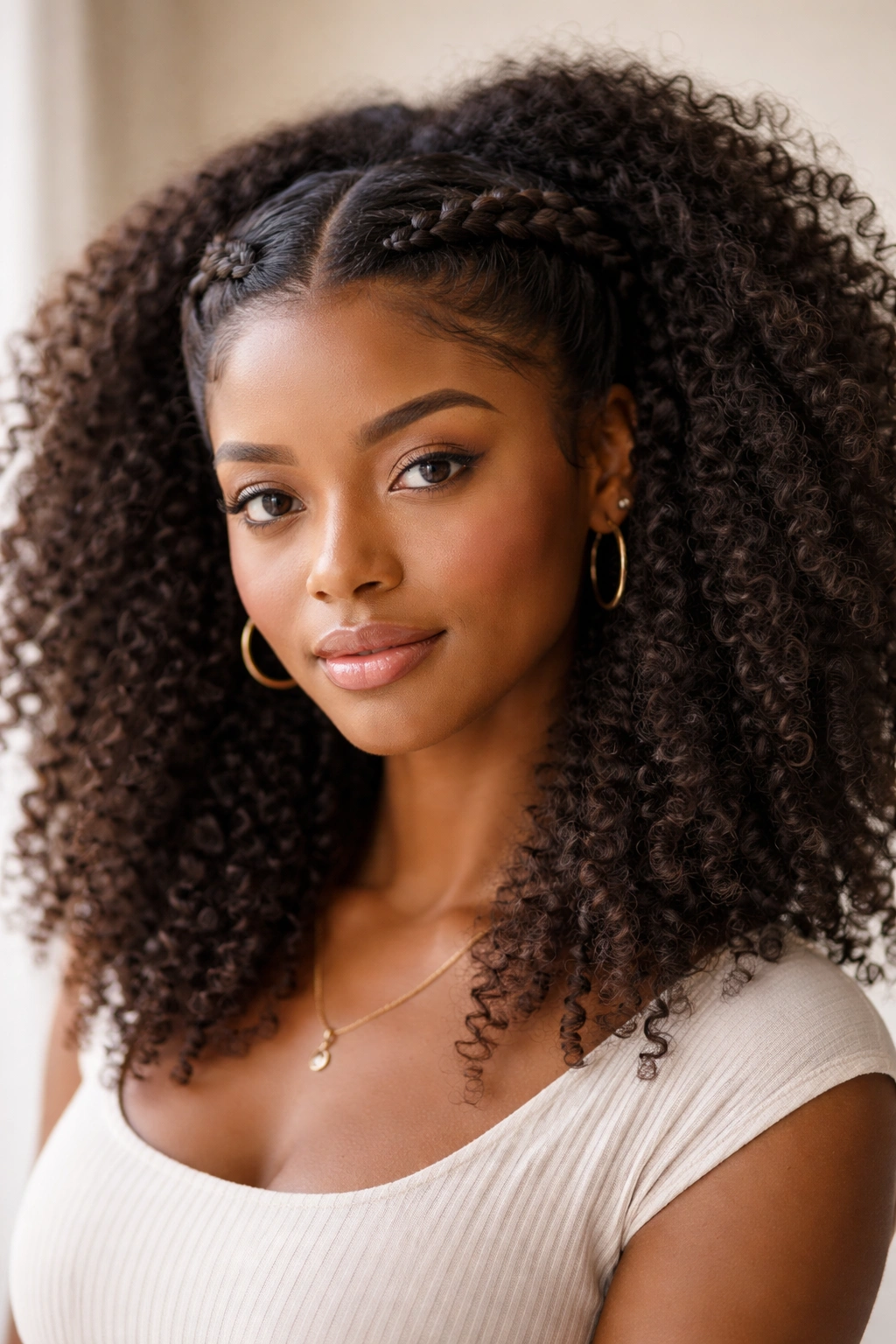
I keep coming back to this one for busy days because it looks more thoughtful than it actually is. Two braids sweep from the temples and meet at the back of the head, while the rest of the afro stays loose and full underneath.
The effect is neat around the face and soft everywhere else. That mix matters. A single braid across the front can look too small on dense hair, while a double side-braid layout gives the top half enough visual weight to hold its own. It also keeps hair off the cheeks and neck, which is a small mercy when the weather is warm or you’re just tired of fussing with strands.
You can braid tightly for a cleaner line, or keep the braids a little loose if you want the crown to look fuller. I prefer the looser version on textured hair because it keeps the style from feeling stiff. A tight braid has its place, but a half-up halo looks better when the edges of the braid still have some softness.
A few gold cuffs at the braid ends can be enough decoration. Or nothing at all. The braid pattern already gives the style enough detail, and adding too much can make it feel overworked. This one is best when it looks cared for, not engineered.
10. Afro Faux Hawk with Pinned Sides
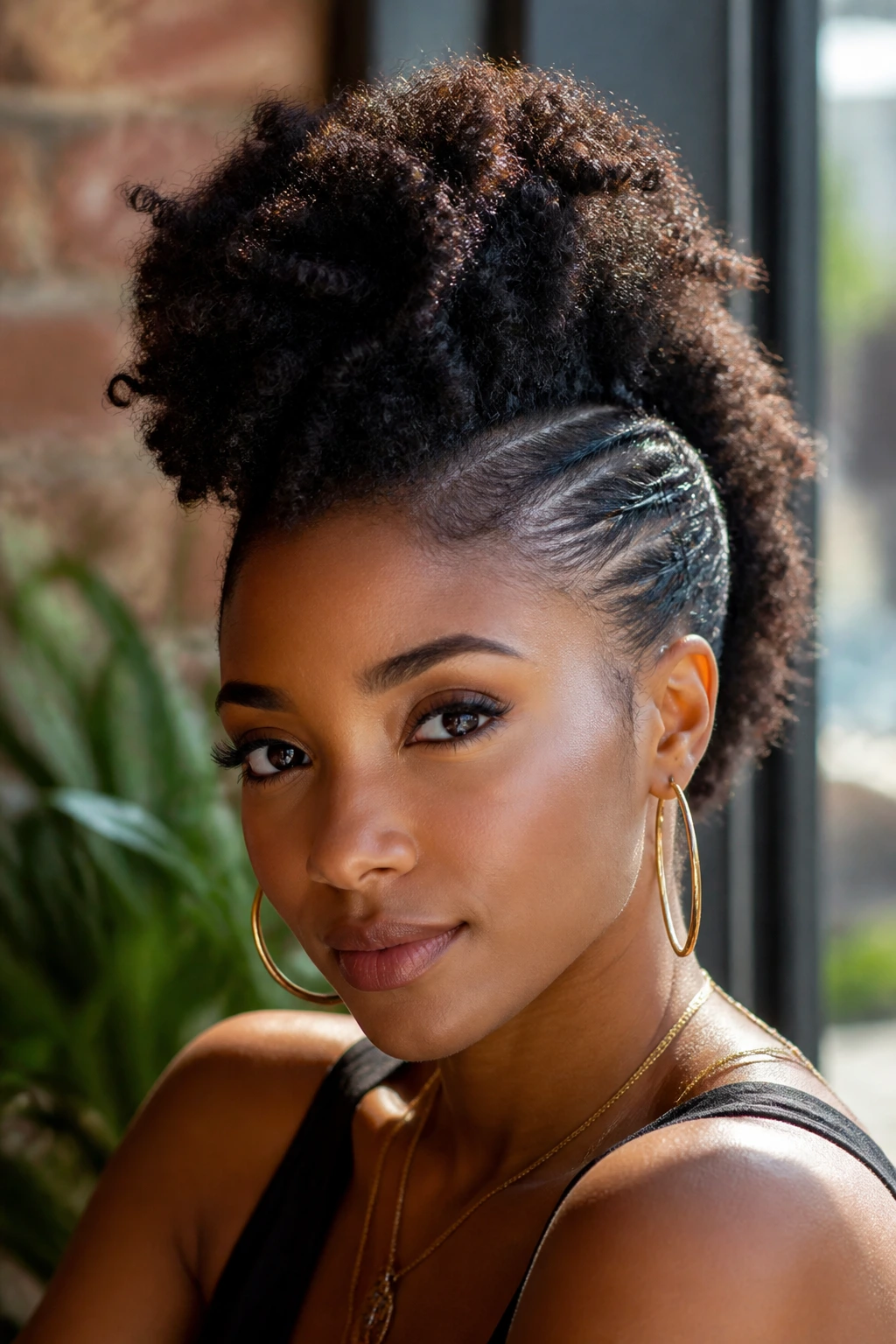
A faux hawk is the sharpest style in the bunch, and it still lets the afro keep its softness. The sides get pinned back or braided down, while the center stays high and full like a ridge of curls running from the front to the crown.
This is the half-up style for anyone who wants shape with some edge. It works beautifully on stretched hair because the middle section stands taller and the pinned sides stay flatter. On a twist-out, the ridge looks more textured and less sculpted. Both versions have their place. I lean toward the stretched version when I want the shape to read clearly from every angle.
How to Build the Shape
Start by sectioning off the center strip from forehead to crown. Clip the side sections away, then smooth them back toward the middle and secure them flat with bobby pins or small braids if you want more hold. Leave the center section loose or twist it lightly at the base to give it lift before letting the curls fall.
The important part is balance. If the sides are pinned too tightly, the style can look severe. If they are pinned too loosely, the faux hawk loses its line and turns into a messy puff. Aim for a middle ground. Firm enough to hold. Soft enough to breathe.
This style has a bit of drama, which is exactly why it works. It can dress up a plain outfit fast, and it photographs in a way that shows off the hair’s height and texture without hiding the face. If your hair is short or very tightly coiled, use extra pins near the temples and don’t fight for perfect symmetry. Slight differences on each side usually look more natural anyway.
