



A tapered afro can save a haircut that feels too wide, too flat, or too crowded at the sides. When the outline is clean and the top has room to breathe, 4C hair suddenly looks intentional instead of accidental. That shift matters more than people admit.
Tapered afro styles for 4C hair work because the cut respects shrinkage instead of fighting it. The sides and nape stay tight, the crown keeps its softness, and the whole shape reads with a lot more clarity than a bulky all-over fro. Clean structure, not stiffness. That’s the sweet spot.
4C hair has a way of exposing a lazy cut fast. Leave the perimeter uneven and it puffs in the wrong places; shape it well and it holds its attitude even on a low-effort morning. A good taper also keeps the hairline from looking swallowed, which is one reason this family of styles works so well for dense coils.
Some of these looks are sharp. Some are soft. A few are bold enough to turn heads before you even say hello.
1. Low Tapered Afro for 4C Hair
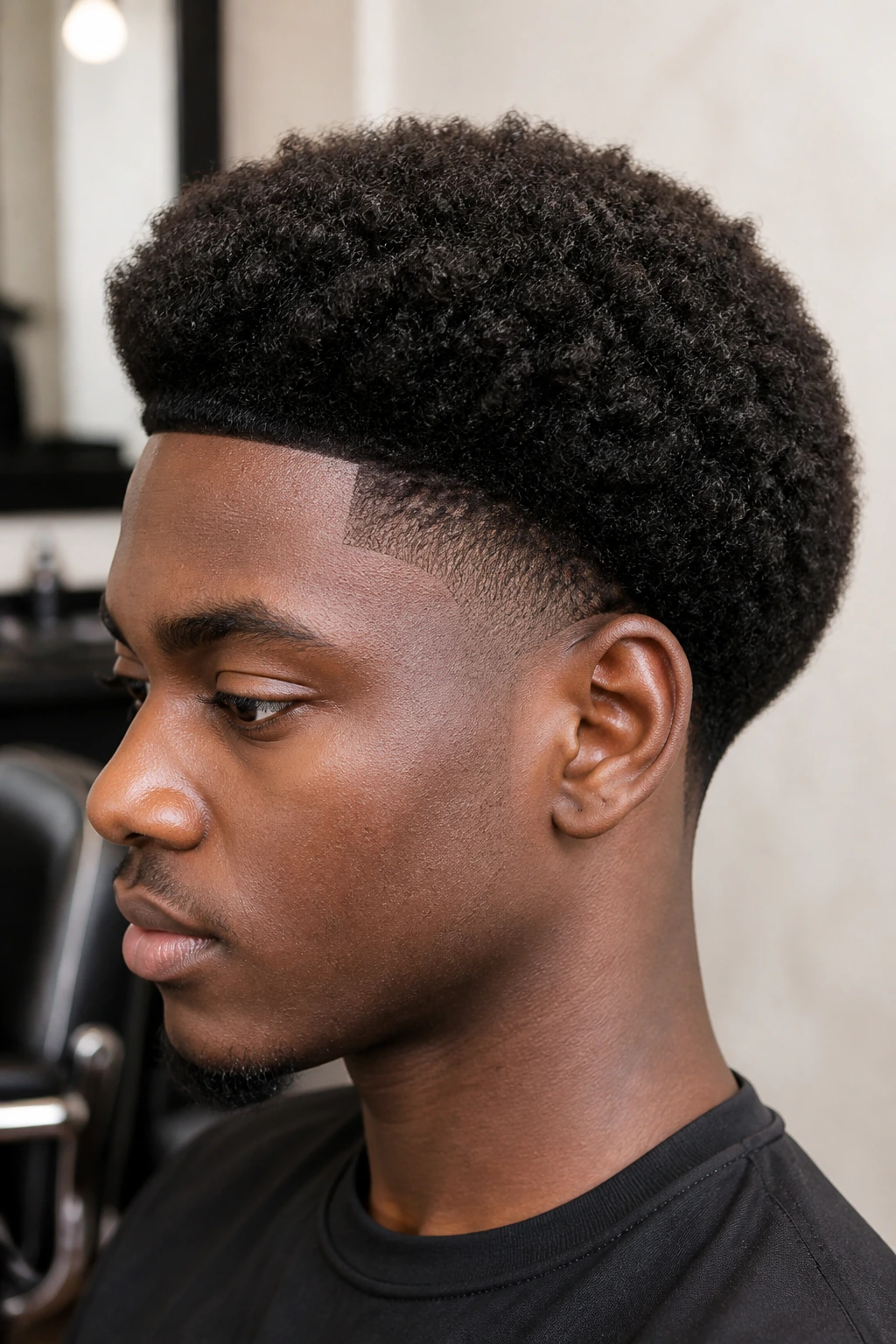
A low tapered afro is the easiest place to start if you want shape without a lot of drama. The taper sits close at the nape and temples, while the top keeps enough density to feel full and touchable. It’s the kind of cut that looks neat even when your coils have a mind of their own.
Why the Low Taper Reads So Clean
The low taper works because it keeps the eye on the top of the head, not the bulk around the ears. That matters on 4C hair, where shrinkage can turn a small grow-out into a big shape shift. When the sides are trimmed low, the afro stays compact and the outline stays easy to read.
Ask your barber or stylist for a low taper below the temple line and a soft blend into the sideburns. Keep the top somewhere around 2 to 4 inches stretched if you want a fuller afro shape. Shorter than that and it starts reading cropped; longer than that and it turns into a different look altogether.
What to Tell the Barber
- Keep the nape and temple taper low, not high.
- Leave the top dense and rounded, not boxy.
- Avoid a hard shelf at the sides.
- Clean the outline after the hair is dry or stretched, so the final shape matches real shrinkage.
Best for: people who want a tidy, low-drama afro that still has personality.
2. High-Top Tapered Afro With a Tall Crown
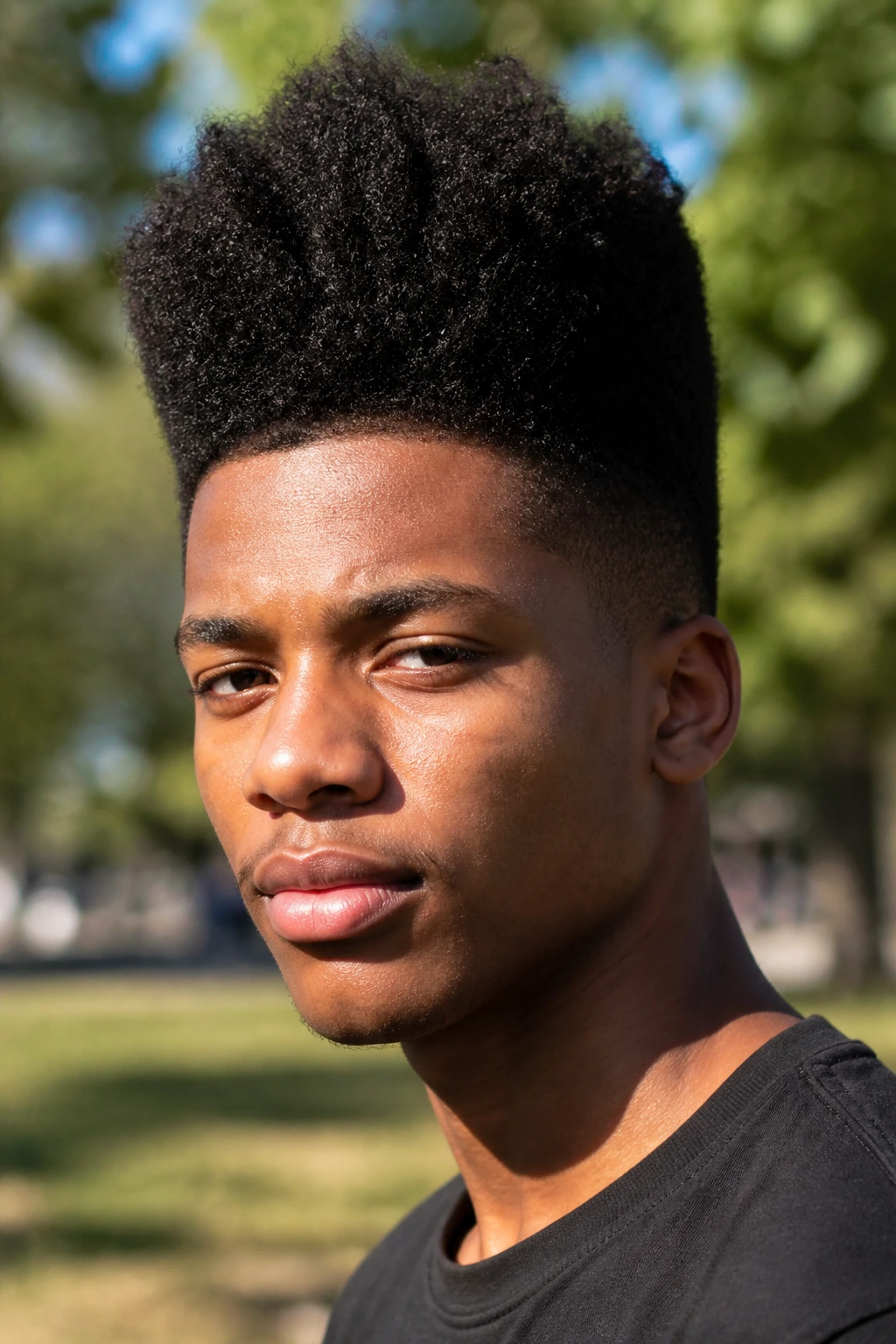
Height changes everything. A high-top tapered afro gives 4C hair a vertical shape that feels bold without needing extra tricks, because the tapered sides create a clean frame and the crown does the talking. It’s one of those styles that looks deliberate from every angle.
The key is leaving enough length on top for the hair to rise after a pick-out or stretch. I’d usually think in the 4 to 6 inch stretched range for a real high-top feel, though dense coils can cheat a little shorter and still stack up well. The sides should stay noticeably tighter than the crown so the silhouette doesn’t collapse into a round blob.
One sentence matters here: do not ask for height if you never stretch the top. 4C hair shrinks hard, and if the cut is shaped while it’s loose and dry in a shrunken state, you can lose the structure you wanted.
A high-top taper looks best when the top is brushed upward with a pick and the outline is fresh. It can be square, slightly rounded, or just a touch angled, but the crown needs room. If your face is long, the extra height can look especially sharp. If you want more softness, keep the corners rounded instead of squared off.
3. Rounded Tapered Afro With a Soft Halo
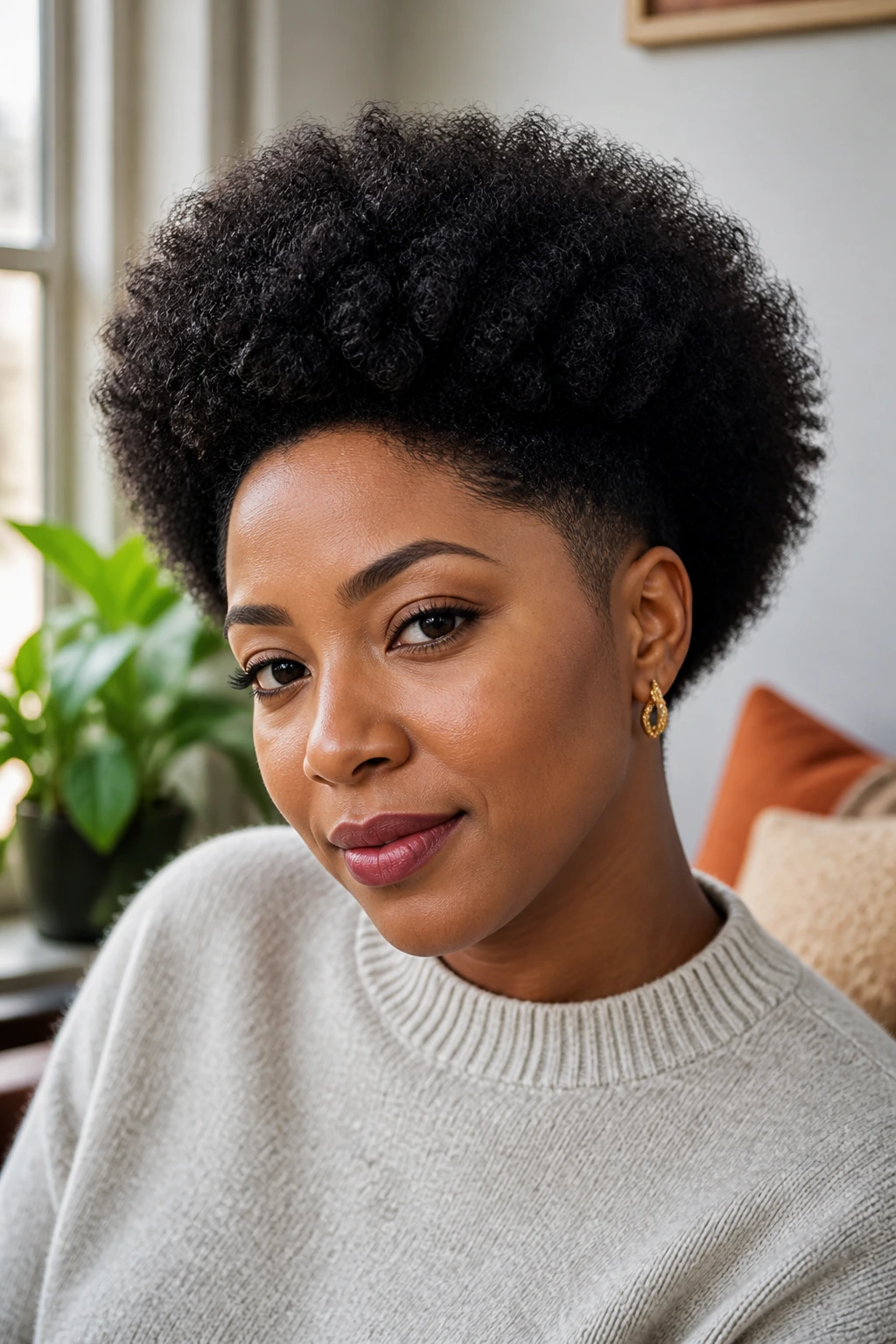
Why do some tapered afros look softer even when the cut is tight? Because the outline curves instead of boxing in the hair. A rounded tapered afro keeps the sides neat, but it lets the top roll outward in a smooth arc that feels easy on the eyes.
What Makes the Shape Different
The difference is in the corners. A square afro has stronger edges at the temples and crown; a rounded version takes those corners down just enough that the whole head reads as one continuous shape. On 4C hair, that makes the style feel plush instead of stiff.
This version works well when the top is shaped with a pick or a wide-tooth comb and then lightly separated by hand. Skip the aggressive brushing. You want the coils to lift, not stretch into fuzz.
Where to Soften the Cut
- Round the corners at the temples.
- Keep the crown full, but not flat on top.
- Let the nape taper into the neckline without a hard line.
- Ask for a soft outline around the ears, not a sharp shelf.
A rounded taper is the safer choice if you like shape but hate hard angles. It also grows out more gracefully, which is useful if you don’t want the style to look awkward after a couple of weeks.
4. Defined Coil Tapered Afro
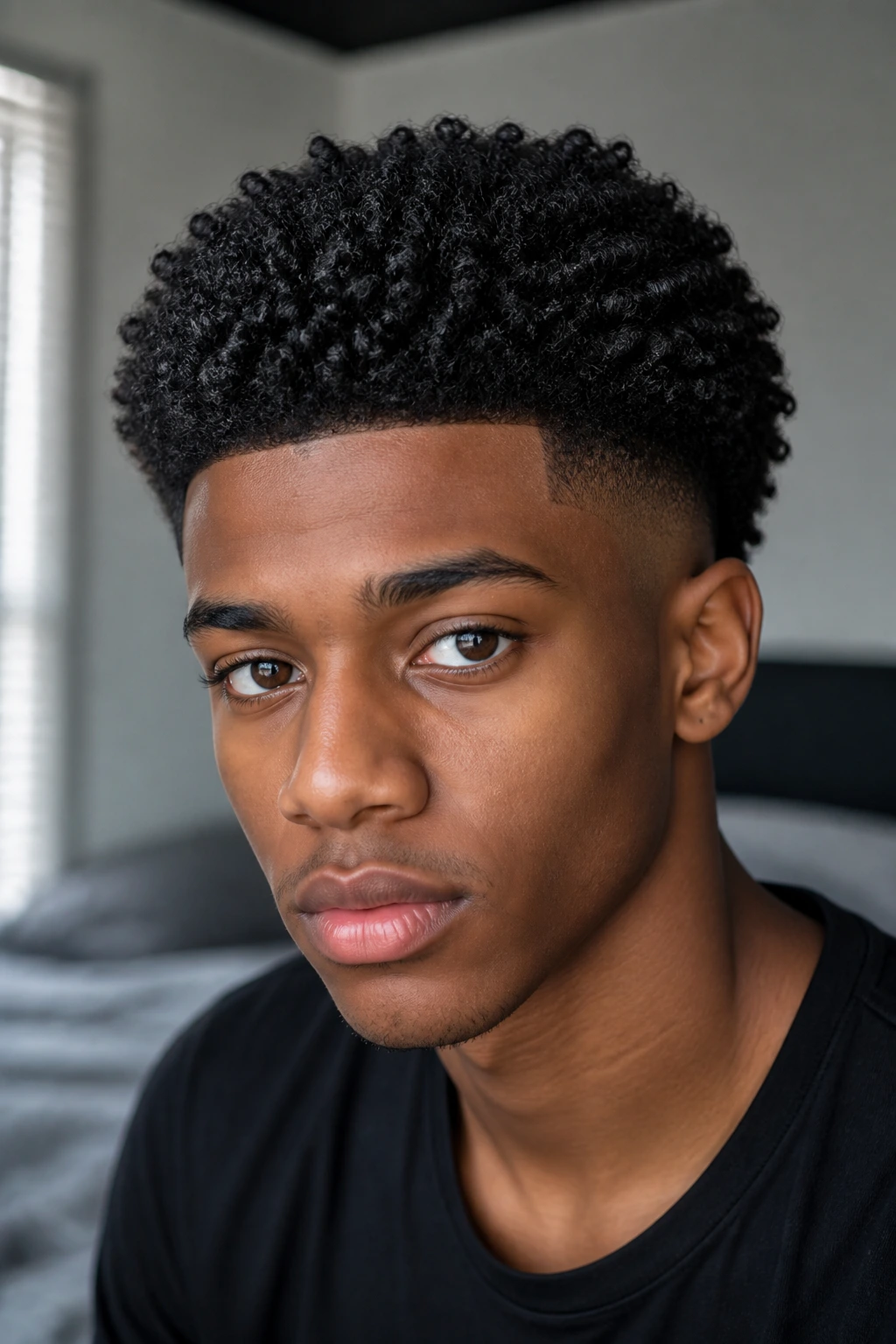
You know the look: tiny coils separated enough to see each one, with the taper underneath making the whole style feel crisp. That’s the defined coil tapered afro, and on 4C hair it gives a clean, almost polished finish without turning the hair into something it’s not.
The definition usually comes from finger coils or comb coils on damp hair, done in small sections around half an inch to three-quarters of an inch wide. A light cream or gel helps the coils hold their shape, but too much product will make the strands feel sticky and heavy. Let the hair dry fully before you touch it. That part matters.
This is not the style for rushing. If you unravel coils before they’re dry, they lose their shape fast and you end up with frizz at the exact spots you wanted to show off. Once dry, a little oil on your fingertips helps separate the coils without breaking them apart too hard.
The taper beneath the coils does the quiet work here. It keeps the style from looking oversized at the sides and turns the top into the focus. If you like detail, this cut scratches that itch.
5. Side-Part Tapered Afro for 4C Hair
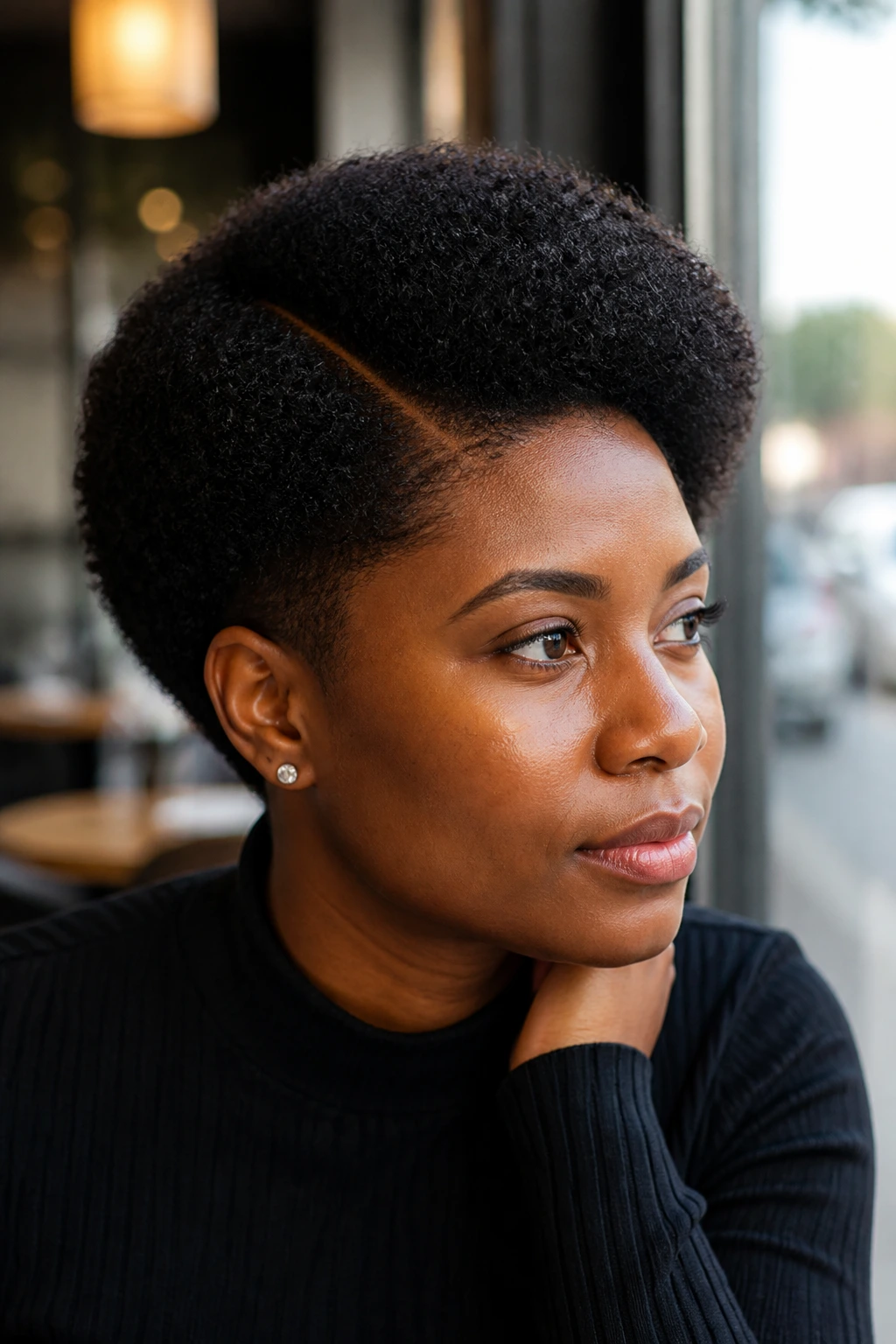
Unlike a centered afro, a side-part tapered afro gives the hair a direction. That one small shift changes the whole mood. The style feels less uniform, more lived-in, and a little sharper around the face.
A side part works especially well when the top has enough length to sweep toward one side without fighting back. On 4C hair, I prefer to create the part on stretched hair or after a careful blow-dry on low heat, because shrinkage can erase the line before you even leave the chair. The taper should stay clean on both sides, though one side can be slightly tighter if you want the part to stand out more.
This is a smart choice if you wear glasses, have a strong brow line, or like a shape that moves when you turn your head. It also keeps the style from feeling too symmetrical, which is a small detail, but a good one. Sometimes perfect symmetry looks stiff. A side part fixes that.
If you want the part to last, set it with a tail comb and then guide the top in that direction as it dries. No need to make it dramatic. A soft part often looks better than a carved trench.
6. Twist-Out Tapered Afro With Touchable Texture
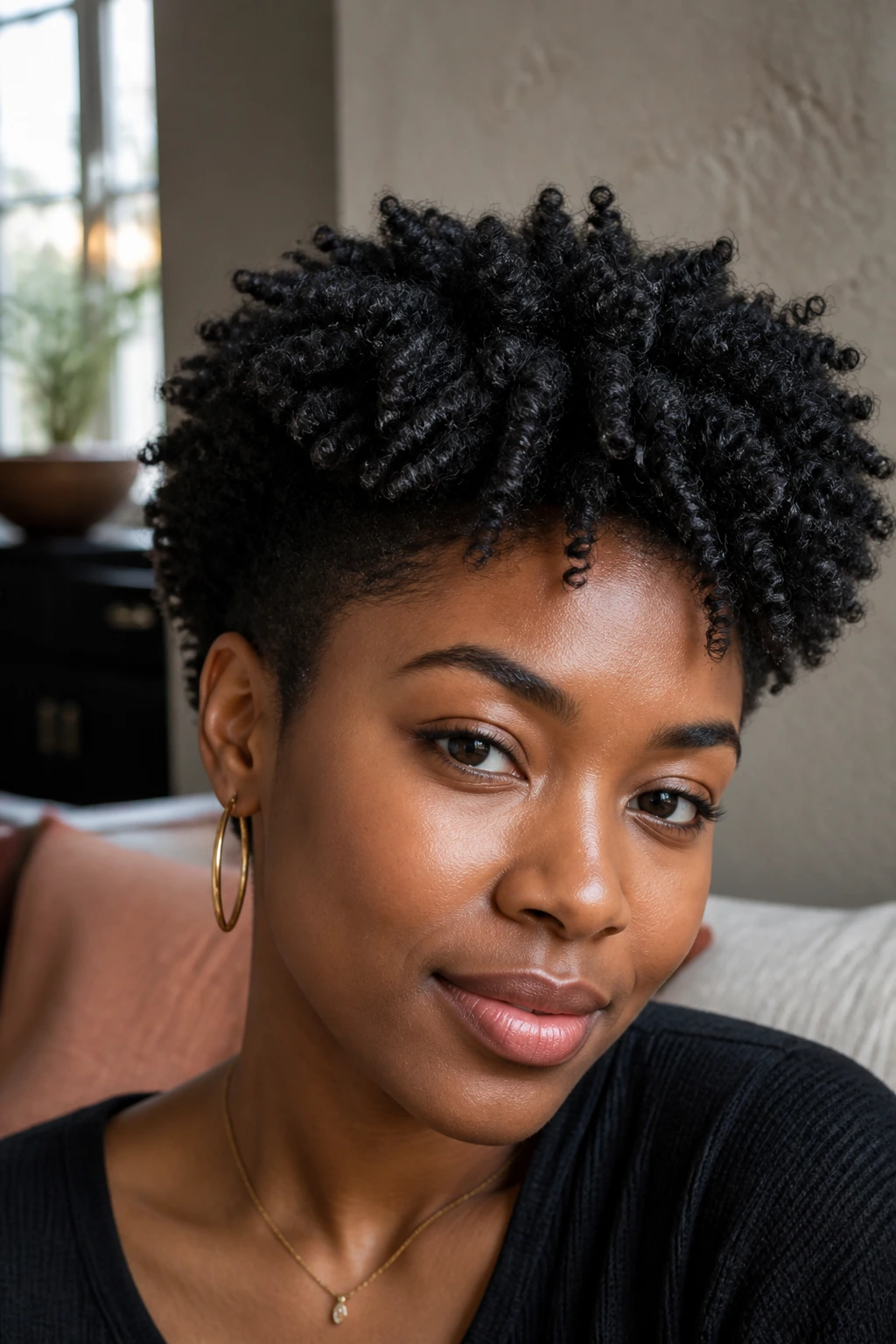
A twist-out tapered afro feels plush from the moment you fluff it. The texture sits between defined and airy, which is a nice place for 4C hair to live when you want movement without losing shape.
Start with two-strand twists on damp hair, using sections around half an inch wide if you want tighter definition or slightly larger sections if you want more volume. A leave-in and a cream with some slip are usually enough. Heavy product makes the twist-out droop, and nobody needs that.
Once the twists are dry, unravel them with oily fingertips and separate only where the hair naturally splits. Pulling too hard creates frizz in the wrong places. The good kind of mess has shape. The bad kind looks like you slept on a barbed wire pillow.
The taper on the sides makes this style work so well. It keeps the twist-out from ballooning at the temples and neck, so the top stays the star. This is one of my favorite tapered afro styles for 4C hair because it gives softness without losing the cut’s outline.
7. Frohawk Tapered Afro With a Narrow Center Ridge
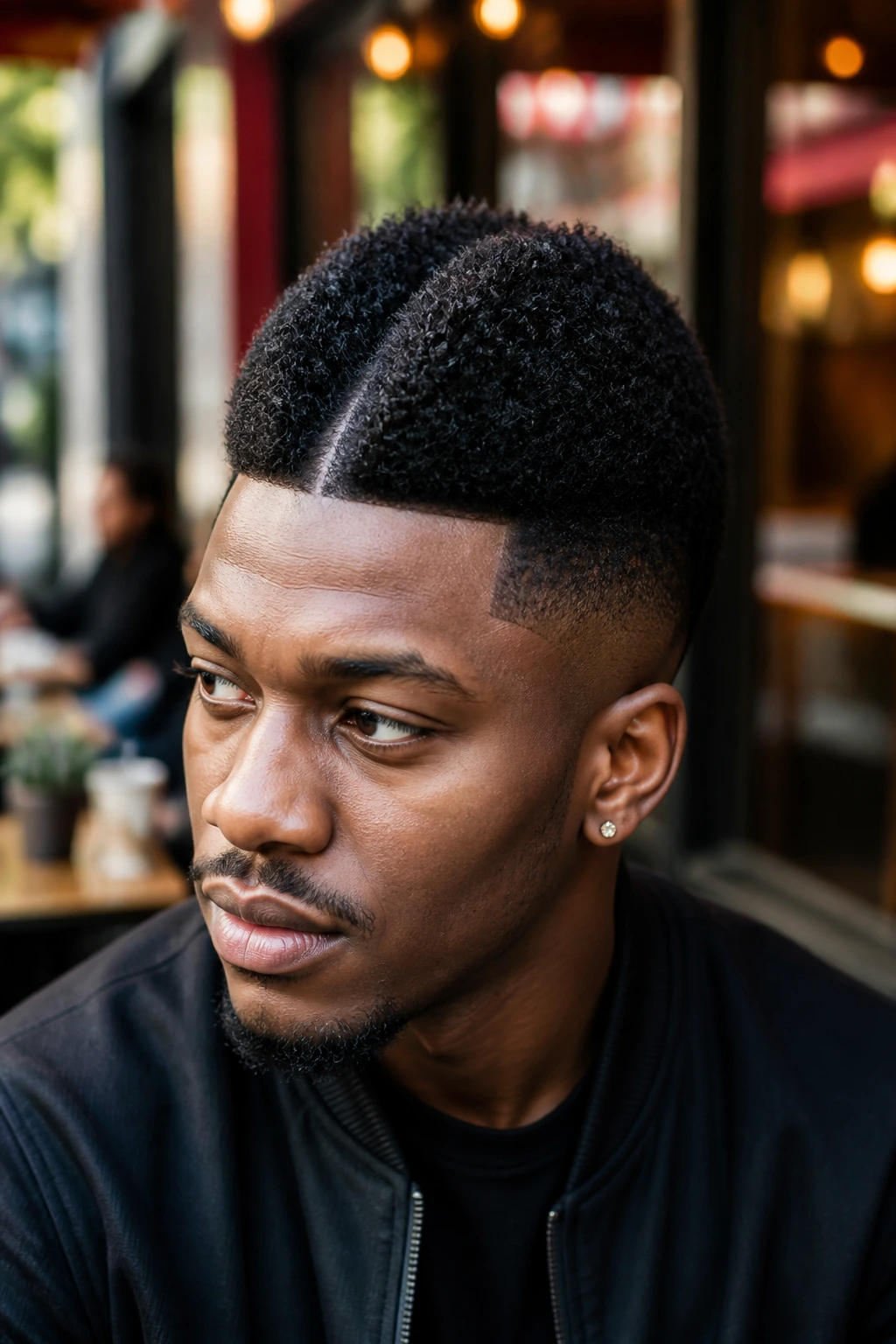
A frohawk is for days when you want your hair to look like it has an opinion. The sides stay close, the middle runs from front to back like a ridge, and the whole shape feels sharper than a regular afro without turning into a full mohawk.
What to Ask For
Ask for a tight taper or fade at the temples and nape with enough length left through the center strip to build height. The middle should be the longest section, while the sides are shaped down low enough that the ridge stands out. If your barber leaves the top too wide, it stops reading as a frohawk and just becomes a wide afro with ambition.
How to Keep It from Going Stiff
- Use a light cream or foam, not a thick layer of gel.
- Brush or pick the center strip upward, then forward slightly if you want movement.
- Keep the outline around the forehead neat, but not helmet-hard.
- Shape the ridge on dry or mostly dry hair so the curve shows clearly.
This cut has a lot of personality. It’s clean, but not quiet.
8. Short Cropped Tapered Afro for Easy Mornings
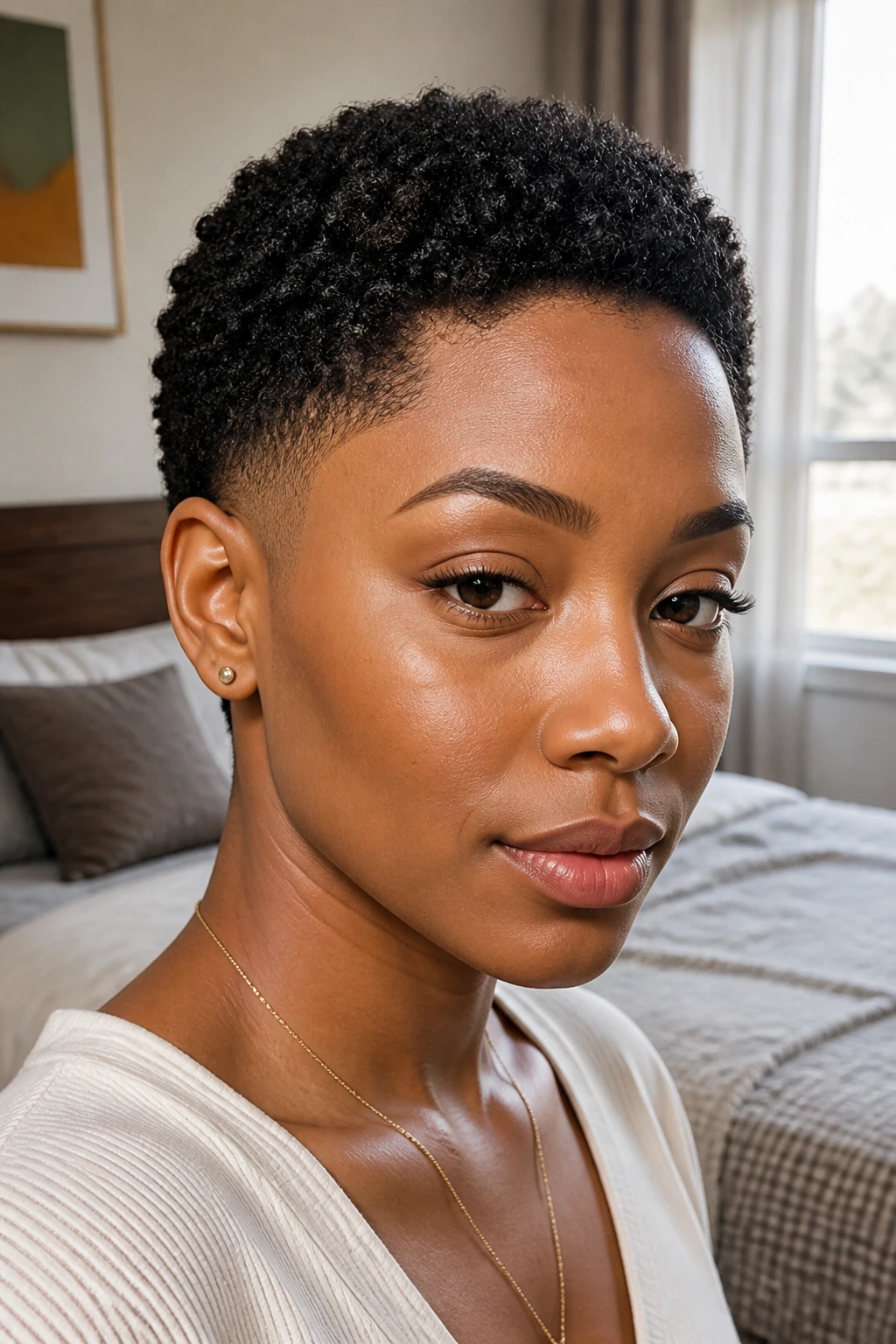
Short is underrated. A cropped tapered afro can look sharper than a bigger style because the shape stays close to the head and the taper does most of the visual work.
If you do not want to spend fifteen minutes picking and fluffing every morning, this is the move. Keep the top around 1 to 2 inches stretched, maybe a little more if your coils are loose enough to hold a tiny lift. The sides and nape should stay trimmed low so the whole cut keeps its outline.
A short crop also hides uneven growth better than people expect. The smaller silhouette means the style doesn’t explode when it gets a little fluffy. That makes it a solid pick for anyone who likes hair that can take a few days between full styling sessions.
- Less daily picking.
- Faster drying time.
- Cleaner shape with less effort.
- Easier to maintain if you like frequent trims.
The risk is that it can look unfinished if the taper is sloppy. Ask for a real shape-up around the neckline and temples, not a quick buzz with no thought behind it.
9. Tapered Afro With a Sharp Line-Up
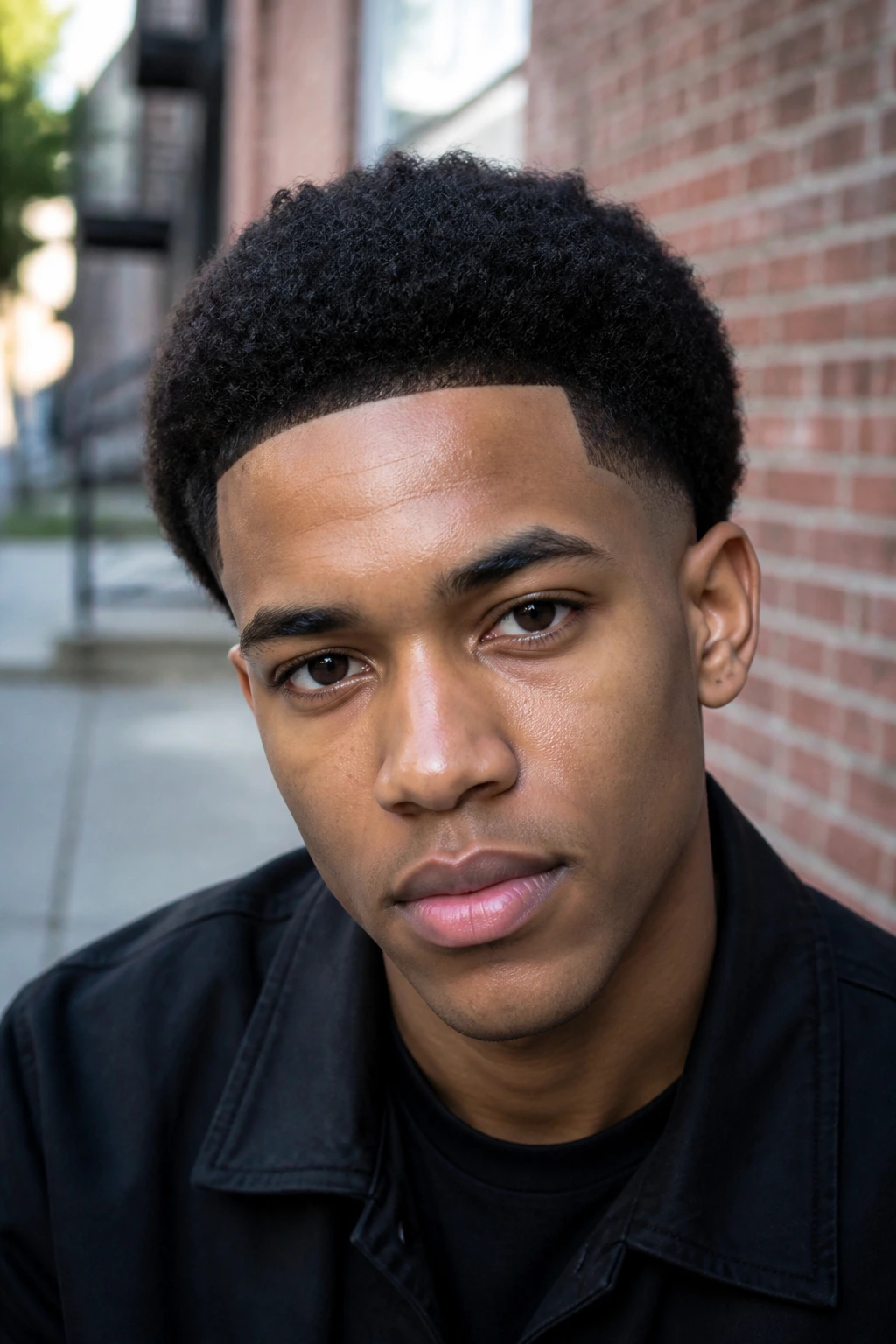
A sharp line-up can make a tapered afro look fresh in a way few other details can. The straight forehead edge, the clean temple corners, and the crisp sideburns give the afro a stronger frame, which is especially useful when the top has lots of texture and movement.
The Line-Up Detail That Matters
The front edge should be shaped to your natural hairline, not pushed back just because a barber has a heavy hand. If the line sits too deep, the cut looks forced. If it follows the hairline carefully, it looks neat and stays wearable longer. That one difference changes the whole result.
When to Skip the Hard Edge
- If your hairline is already thin, ask for a softer outline.
- If your edges break easily, avoid carving the corners too hard.
- If you like low maintenance, keep the line-up light rather than razor-sharp.
- If you want the shape to last, pair the line-up with a clean taper at the temples and nape.
The line-up works best when the rest of the afro has good volume. A sharp edge with weak shape behind it feels backwards. Give the top enough presence, then let the edges finish the sentence.
10. Color-Blocked Tapered Afro for 4C Hair
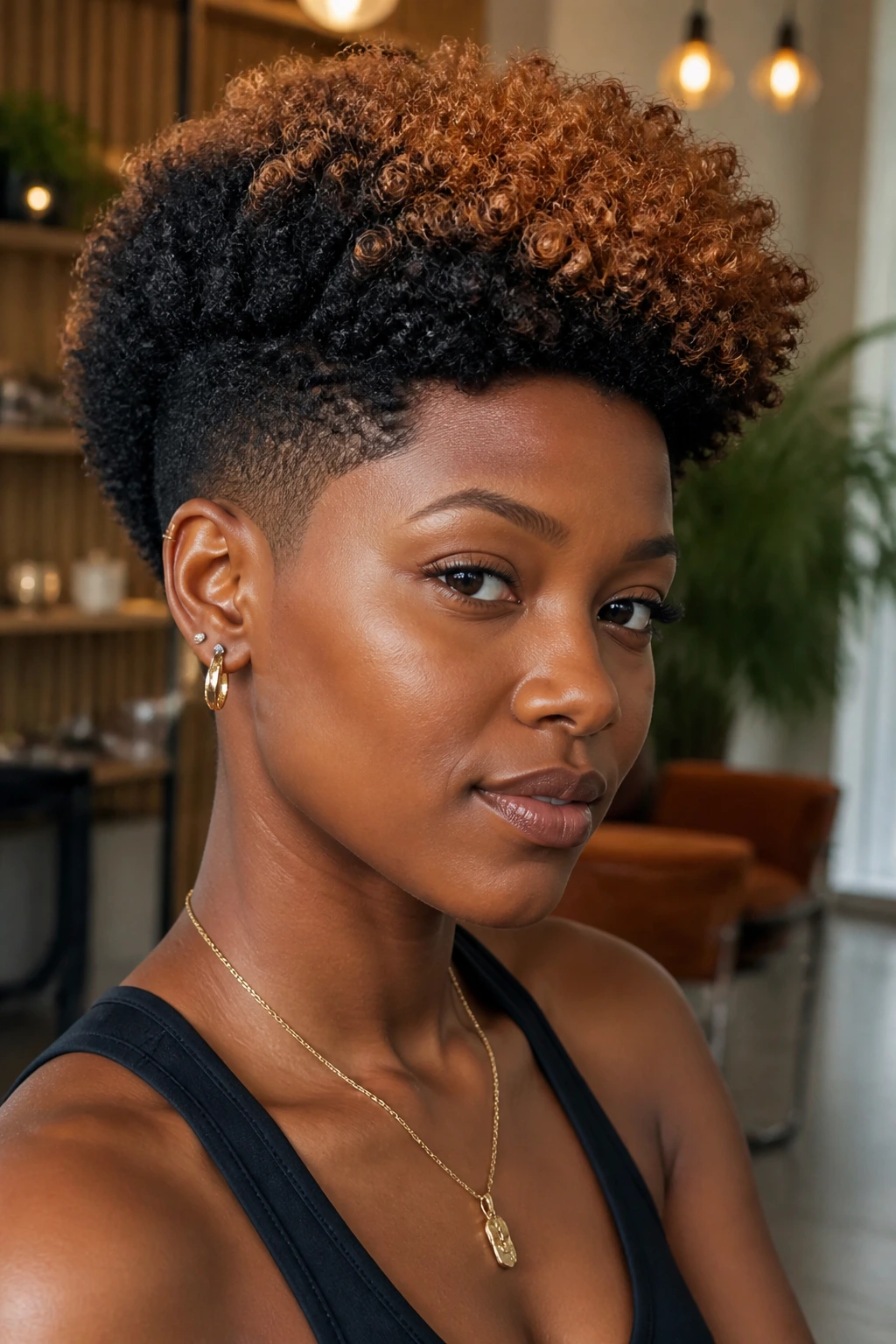
Color can change a tapered afro faster than almost anything else. A few painted curls near the crown or a warm brown panel through the front can make the shape pop without needing a huge cut change.
I like this style best when the color is placed with purpose. A small burst of copper on the top ridge, a honey-brown sweep through the front, or a single lighter section near the temple can make the taper feel more sculpted. Full-head bleach is a different story. It asks a lot from 4C hair, and dry coils do not love being pushed past their limit.
Smarter Places to Put Color
- The top crown, where the eye already lands.
- A front panel, if you want the shape to frame the face.
- The very tips, if you want a softer look.
- One side only, if you want the color to feel modern without going loud.
Keep the cut slightly longer if you plan to color it. That gives the hair room to survive repeated washing and conditioning. And if the strands already feel brittle, skip the bleach and work with semi-permanent color or a gentle tint instead.
Color-blocking is drama, but it can still be smart drama.
11. Asymmetrical Tapered Afro With a Side Sweep
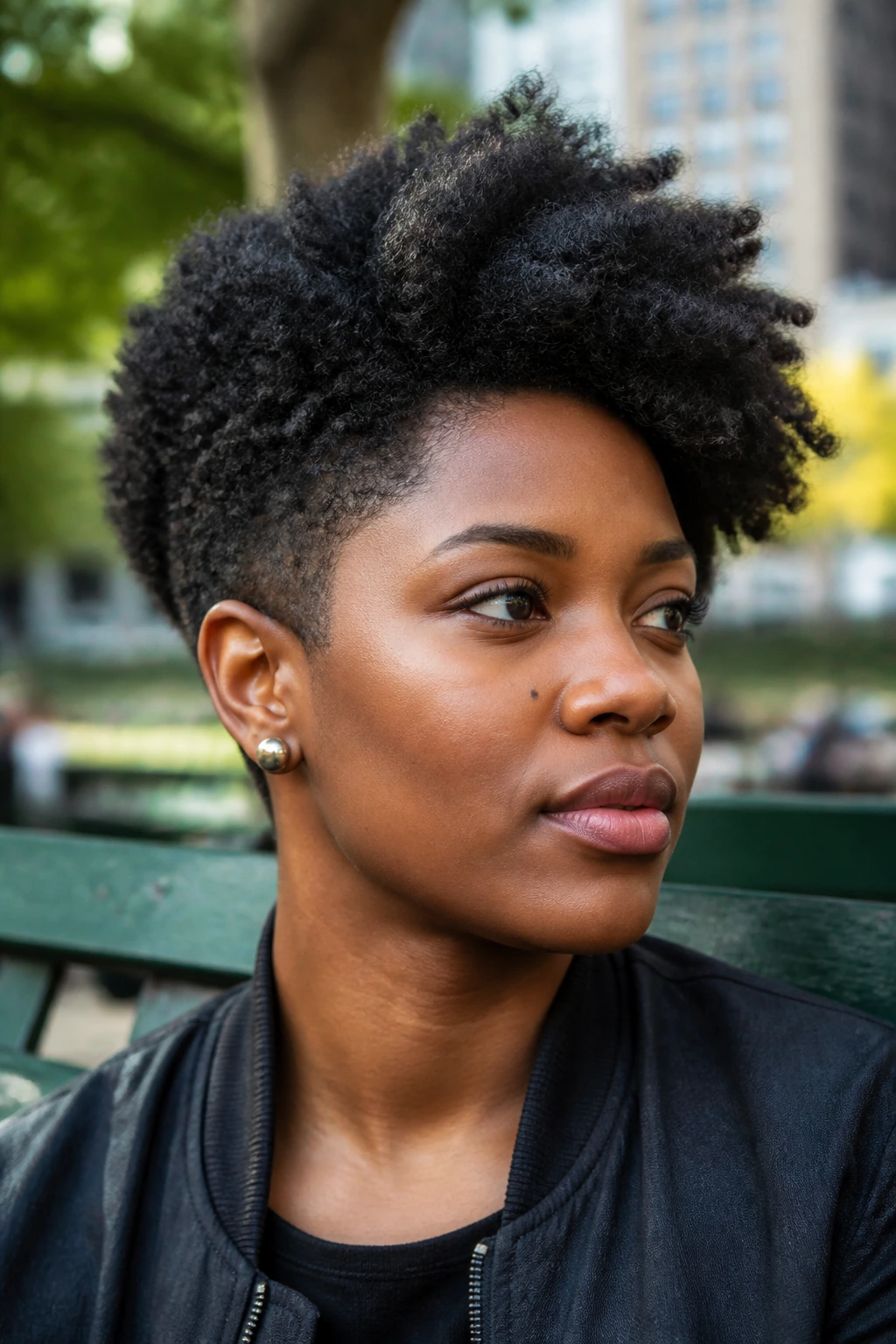
Some people want symmetry. I usually prefer a cut that leans a little. An asymmetrical tapered afro brings motion into the shape, with one side fuller or longer than the other and the top swept off-center.
This style works best when the hair is cut on dry, stretched hair, because 4C coils shrink unevenly and can hide the real silhouette. One side can sit closer to the temple while the other side keeps a bit more roundness and lift. The effect feels intentional, not lopsided, as long as the taper underneath is clean.
A side sweep helps a lot here. Use a pick or wide-tooth comb to direct the top toward the heavier side, then let the hair fall where it wants to after fluffing. If the shape feels too stiff, separate the coils with your fingers instead of brushing again. That keeps the movement soft.
This cut is good for people who like a little edge but don’t want a full frohawk. It has attitude without becoming theatrical. That’s a nice lane to live in.
12. Tapered Afro Puff With a Tapered Nape
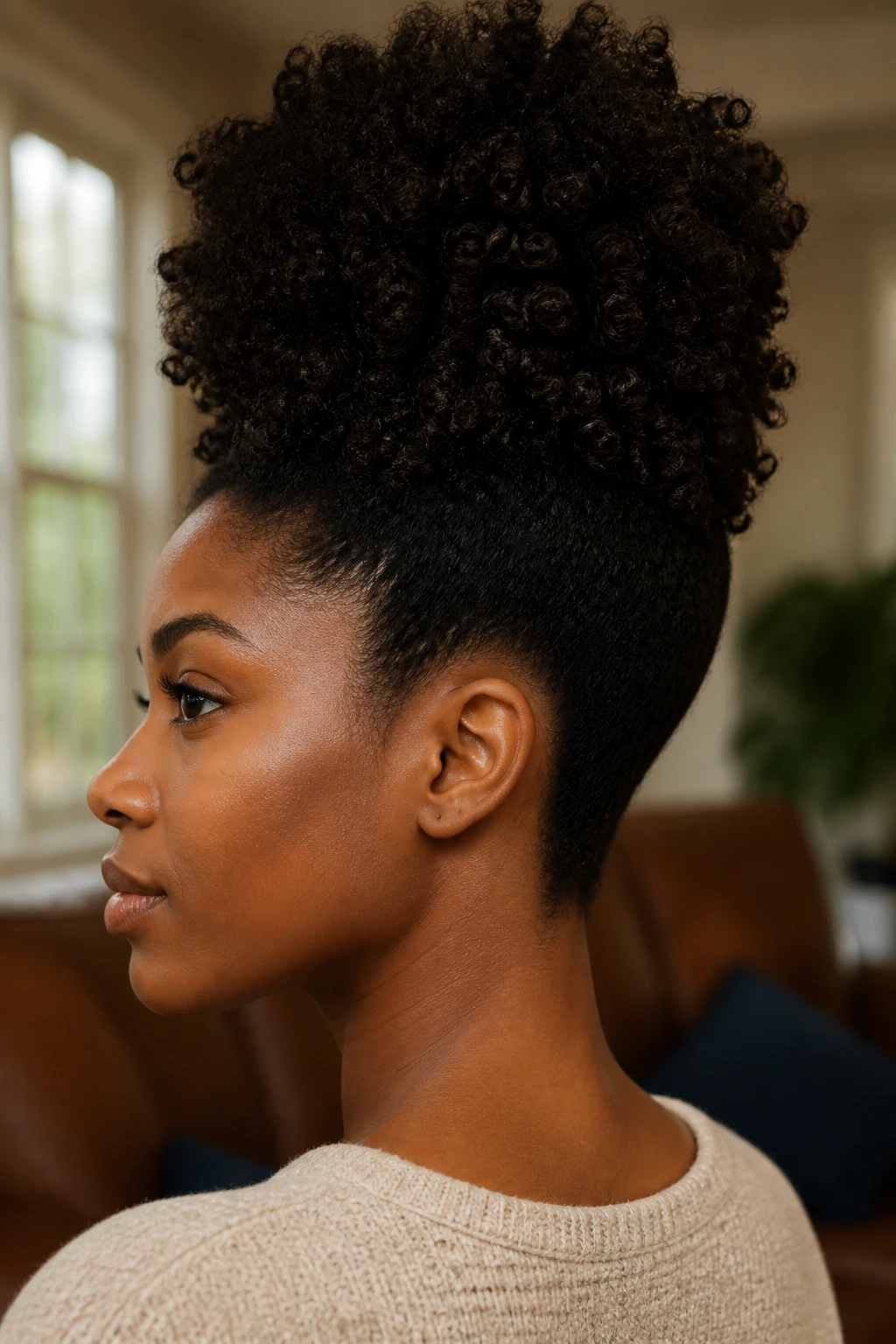
Can a puff sit on a taper without looking messy? Yes, if the shape underneath is clean and the puff has enough height to stand on its own. A tapered afro puff gives you the ease of a puff with the structure of a real cut, and that combination is useful on busy days.
The sides and nape stay low, while the top is gathered or shaped upward into a puff-like crown. You can wear it with a satin scarf at the hairline, a soft band around the base, or a stretched top section that sits loose instead of pulled tight. If your hair is dense, this style has a nice fullness that doesn’t feel overworked.
This is one of the better choices for second-day hair. The top doesn’t need to be perfectly defined; it just needs enough body to sit high. A quick mist of water, a little leave-in, and a gentle pick at the roots usually do the trick. Don’t yank the band too hard. Tight tension at the front ruins the mood fast.
The taper does the heavy lifting. The puff only has to look good on top.
Final Thoughts
The best tapered afro shape is the one that respects your coil pattern instead of fighting it. That sounds obvious, but a lot of bad cuts happen because someone tries to force 4C hair into a shape it never wanted in the first place.
A clean taper at the nape and temples changes the whole read of the style. After that, you can go soft, tall, rounded, coiled, swept, or bold with color.
Pick the version that matches your morning routine, not the one that only looks good in a single chair-side photo. That’s where the good tapered afro lives — in a shape you can actually wear.
