



A good cornrow and afro puff style solves a real problem: you want your hair off your neck, but you do not want the whole look flattened into something stiff or over-slicked. The best versions keep the scalp work neat and the puff full, so the style feels shaped rather than forced.
A lot rides on small choices. Shift the part by half an inch and the face changes; set the puff too high and it feels playful, tuck it lower and it gets calmer. Clean sections matter more than fancy braid patterns, and if the braids are pulled too hard, the style stops being wearable no matter how polished it looks in the mirror.
These looks work on stretched natural hair, old braid-outs that have lost some bounce, and wash-and-go hair that has been gently blown out. The contrast is the appeal. The puff gives you volume, the cornrows give you structure, and that mix keeps the style from collapsing into either a bun or a loose fro.
A rat-tail comb, a light gel, a snag-free band, and a satin scarf will do more for the result than any clever shortcut. Start with the style that matches your day, not the one that looks hardest to do, and the details fall into place from there.
1. Cornrow and Afro Puff Styles: Straight-Back Braids into a High Puff
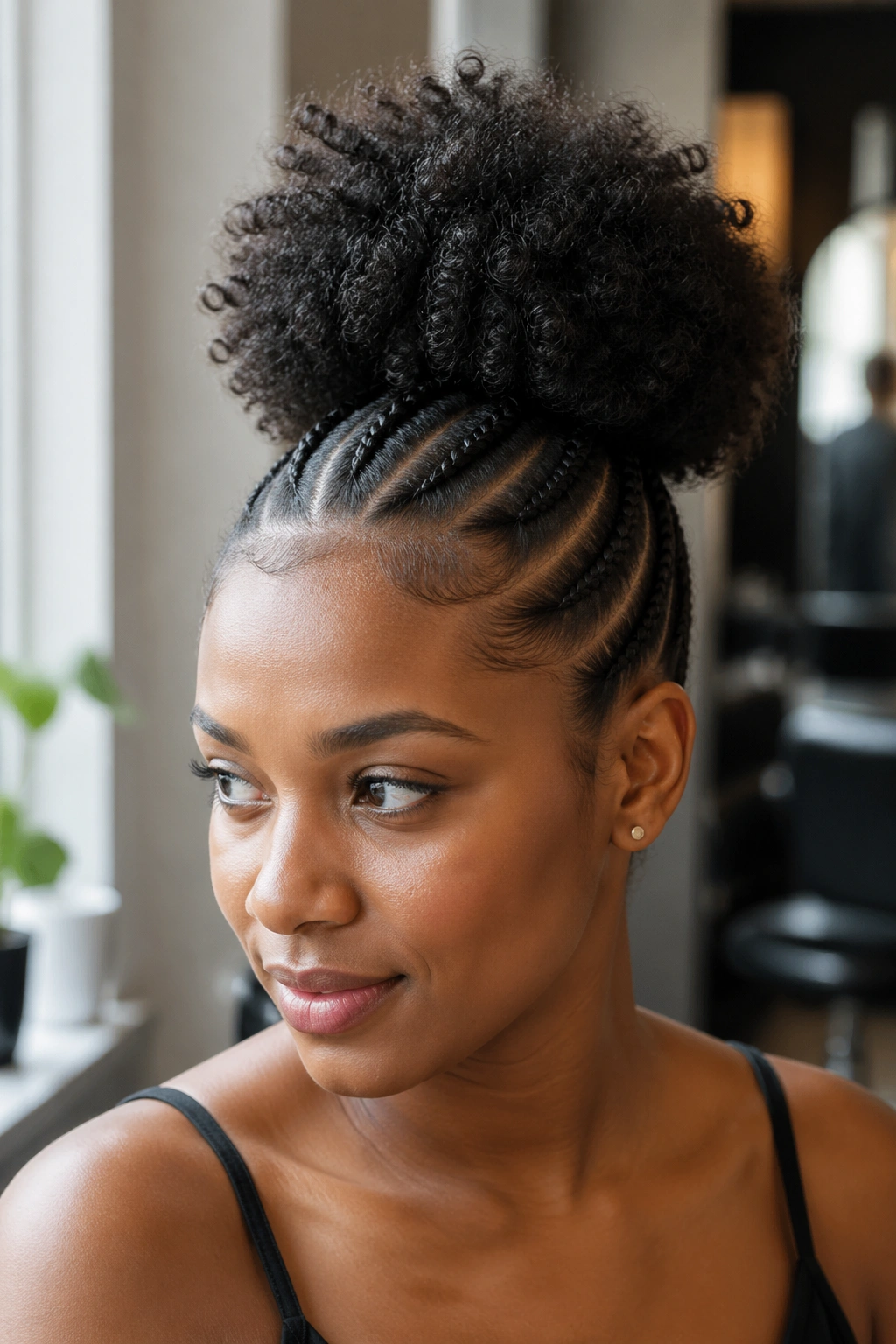
If you want the cleanest version of this whole family, start here. Straight-back cornrows pull the eye toward the crown, and the high puff gives the style lift without making it fussy. The shape is simple, but simple is the point.
This look works best when the braids stop just before the crown and the puff starts high enough to show the full curl pattern. Keep each row about 1/4 to 1/2 inch wide, depending on density. Tiny rows can look delicate, but they also take longer and can feel heavy if the hair is thick.
What to ask for
- Ask for straight-back parts that end at the upper third of the head.
- Keep the puff band hidden under a small braid or a wrapped strand if you want the front to look cleaner.
- Use edge control sparingly, because a thick layer flakes when you tie it down.
- Leave enough volume in the puff so it does not sit like a ball on top of a stick.
Tension is the deal-breaker.
If the front rows feel tight by lunch, the braids were set too close to the hairline. You should be able to move your brows without feeling that tugging line across the temples. That is the difference between a style you can wear all week and one you are counting the hours to take down.
I like this version for days when you want the style to do all the talking. The scalp pattern is easy to read from a distance, the puff keeps the silhouette soft, and the whole thing works with plain hoops, a swipe of gloss, or nothing at all. It also gives you a good base for a satin scarf at night, which matters more than people admit.
2. Side-Swept Cornrows into a Low Puff
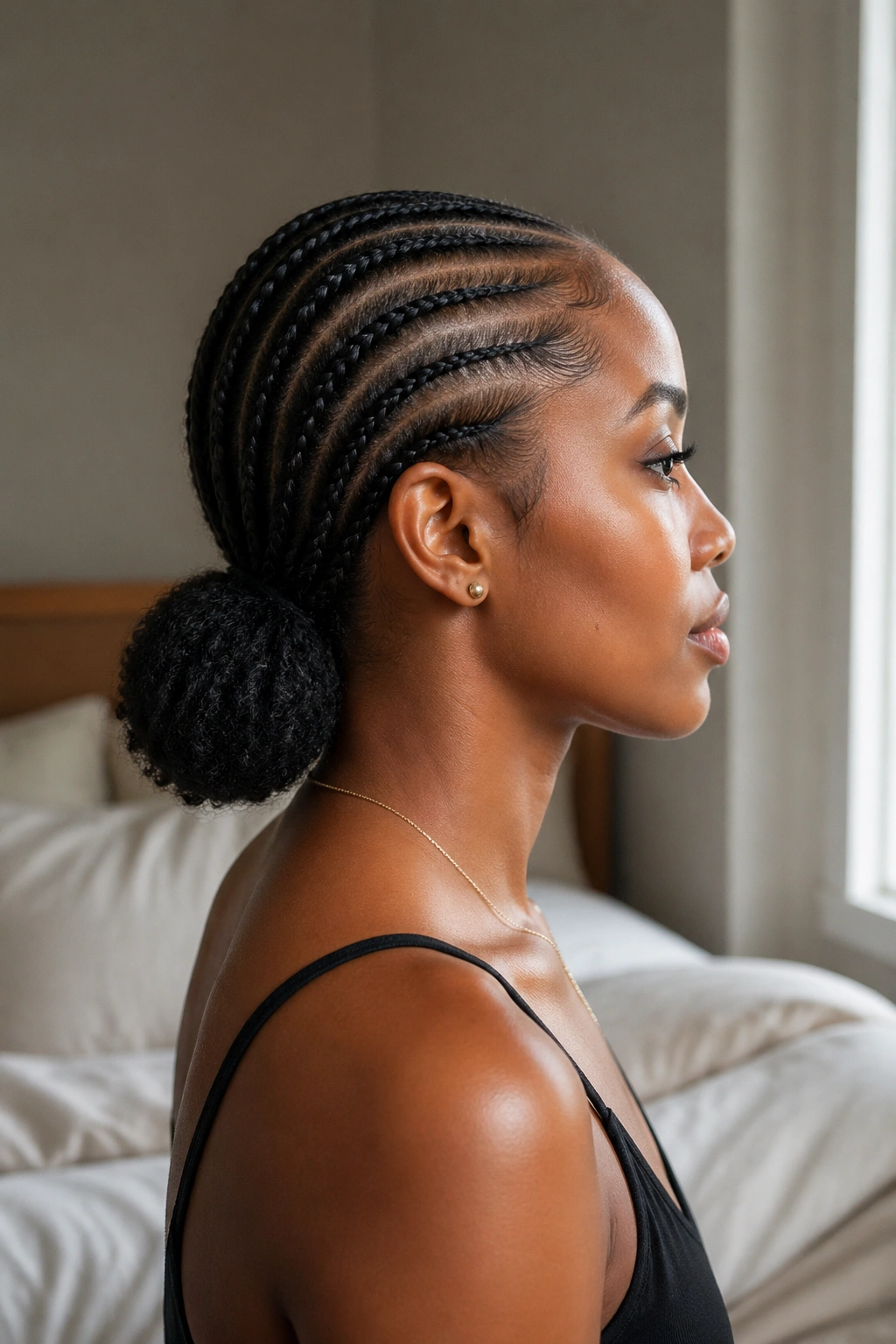
A side part changes more than the direction of the braids. It changes the whole mood. Side-swept cornrows pull the front line away from the center of the face, and that gives the low puff a gentler, more relaxed shape.
This is the style I reach for when a center part feels too exact. The braid line can start above one eyebrow and arc back toward the nape, which gives the front a little movement without making it messy. A low puff sits closer to the neck, so the style feels grounded instead of top-heavy.
No middle part needed.
That one choice helps if your face is round, long, or just plain tired and you want something less severe around the forehead. A deep side part can also make earrings and necklines stand out more because the shape of the hair does not compete with them. Small thing. Big effect.
The main trap is overbuilding the front. If the side braid is too thick, it swallows the shape and the puff starts to look like an afterthought. Keep the front section sleek, leave the puff soft and full, and let the part carry the visual weight. A little asymmetry goes a long way here, which is why this style still feels fresh even though the pieces are familiar.
3. Center-Part Cornrows with a Rounded Puff
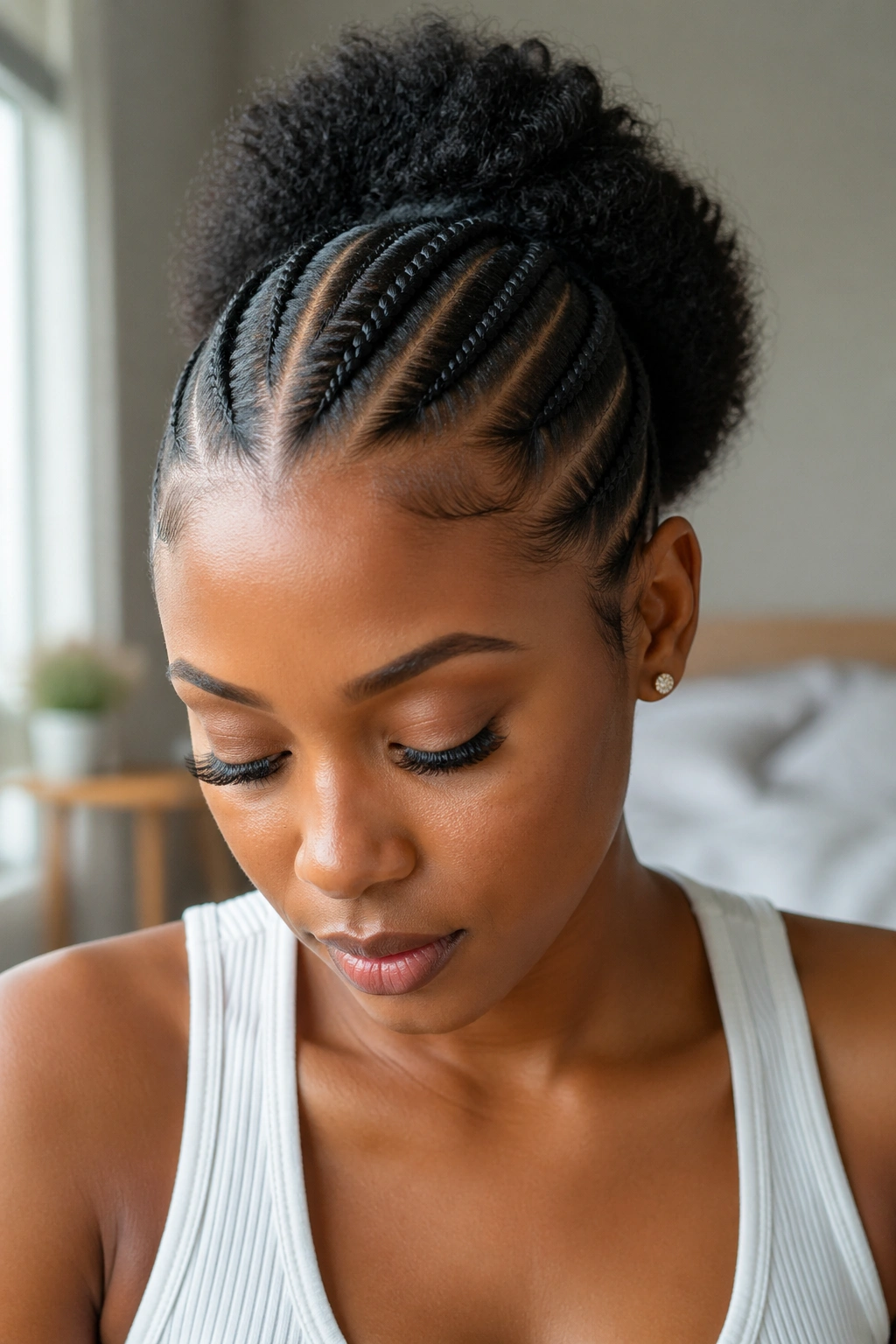
Want something tidy without feeling stiff? A center-parted cornrow set with a rounded puff is one of the easiest places to land. The middle line gives the style balance, and the puff at the back keeps it from looking too serious.
This style is a good match for days when you want your hair to sit close to the scalp at the front and still have a bit of shape at the back. If you wear glasses, the clean center split keeps the sides from crowding the frames. If you work with your hair tied away from your face, it stays neat without looking like you gave up on texture.
How to wear it
- Make the center part narrow and precise, about the width of a rat-tail comb tip.
- Keep the cornrows straight rather than curved if you want the line to look crisp.
- Place the puff low enough to rest above the nape, not on the crown.
- Add a single metal cuff or a thin ribbon if you want a small finish without clutter.
The rounded puff matters. It should look full from the back and slightly soft at the edges, not shaved down into a tight sphere. That means using enough hair at the band and not over-smoothing the curls once they are gathered. Too much gel on the puff itself can make it stiff and dull.
This is one of those styles that looks calm even when the day is not. There is structure in the front, movement in the back, and no part of it feels overworked if you keep the sections clean.
4. Curved Crown Cornrows and a Full Puff
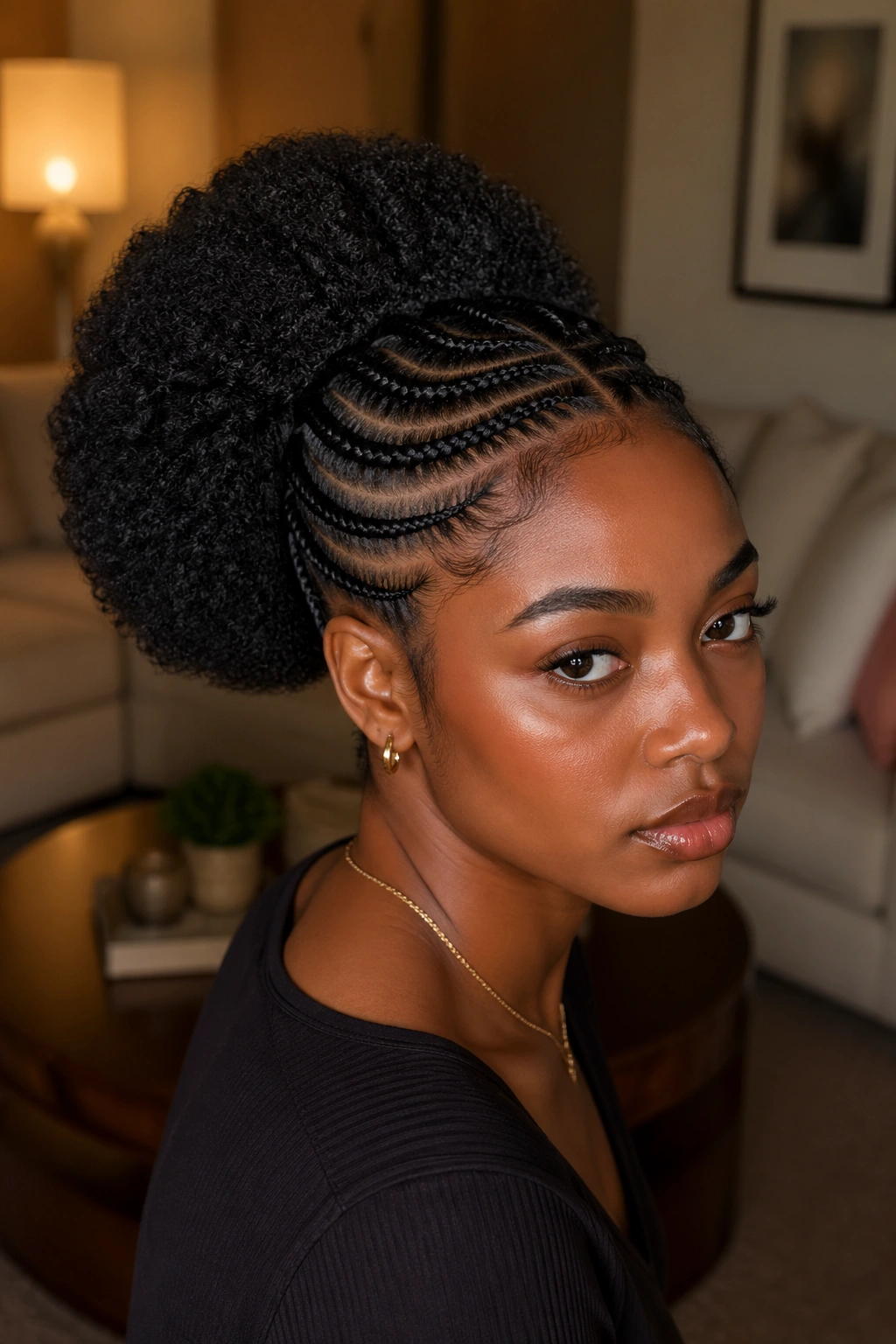
Curved cornrows feel dressier because they move. Instead of marching straight back, the braids bend around the head in soft arcs, and that curve gives the whole style a little lift before the puff even comes into play.
The shape matters. Straight lines are tidy, but curves create a frame around the face and temple area that feels more intentional. A full puff at the back balances the braid pattern so the style does not end up looking too top-heavy or too narrow. That balance is the real win here.
A lot of people think this kind of pattern needs extra hair length, and it helps, but it is not the whole story. Dense, stretched coils give the curves more definition because the sections stay visible instead of blurring together. If the hair is freshly washed and too soft, the part lines can puff up before you are finished. Slightly stretched hair is easier to control.
The best version of this style leaves the hairline untouched except for a clean, narrow row. That keeps the temples from getting pulled and gives the curve room to breathe. The puff should sit like the natural end point of the design, not like a separate add-on. When those two parts match, the look feels finished in a way that is hard to fake with accessories alone.
5. Zigzag Part Cornrows with a High Puff
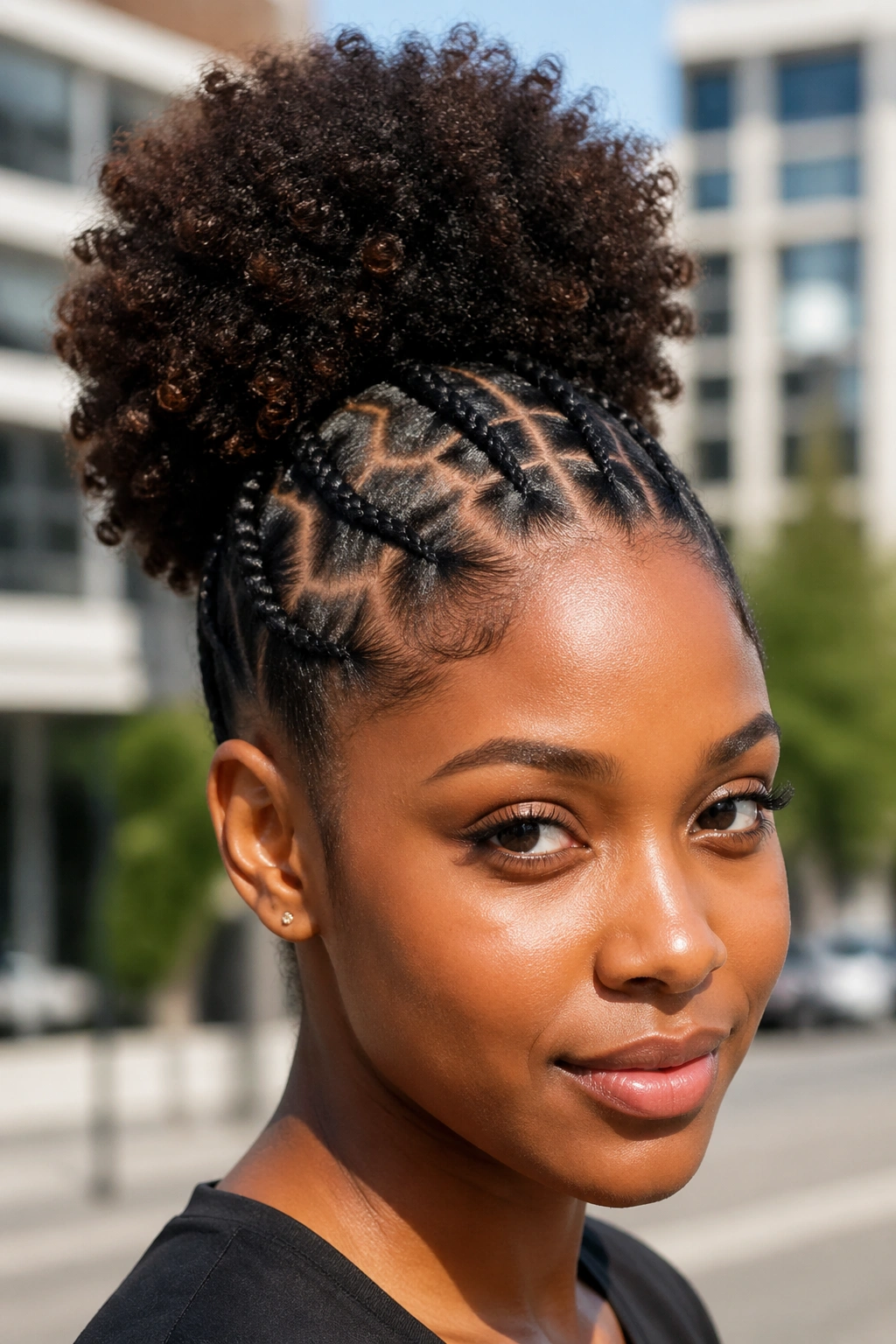
The first thing you notice is the parting. Zigzag lines break the scalp into sharp little angles, and that makes a high puff feel more playful without turning the style into noise. It is a good choice if straight rows have started to feel a little too familiar.
Why the zigzag matters
Zigzag parts work because they interrupt the straight path the eye expects. A simple side part or center part is neat, but a zigzag adds motion before the braids even begin. The pattern shows best when the parts are clean and the sections are not too wide. Once the rows get too chunky, the zigzag gets swallowed.
A high puff makes the contrast even stronger. The braids stay close to the scalp, then the curls open up at the top, so you get two different textures in one look. That contrast is the whole point. If you try to smooth the puff too hard, you lose the lift that makes the style worth wearing.
What to watch for
- Keep each zigzag angle crisp with the tail of a comb.
- Use clips while parting so the pattern does not collapse under your fingers.
- Choose medium-sized cornrows, not giant ones, or the zigzag will blur.
- Tie the puff high enough to show the full shape, but not so high that it looks strained.
Do not over-pack the front with gel.
A heavy product layer can make the zigzags look swollen at the roots, and that defeats the point. A thin line of gel at each section is enough. If the front looks glossy and the part lines still show, you got it right.
6. Feed-In Cornrows Leading to a Sleek Puff
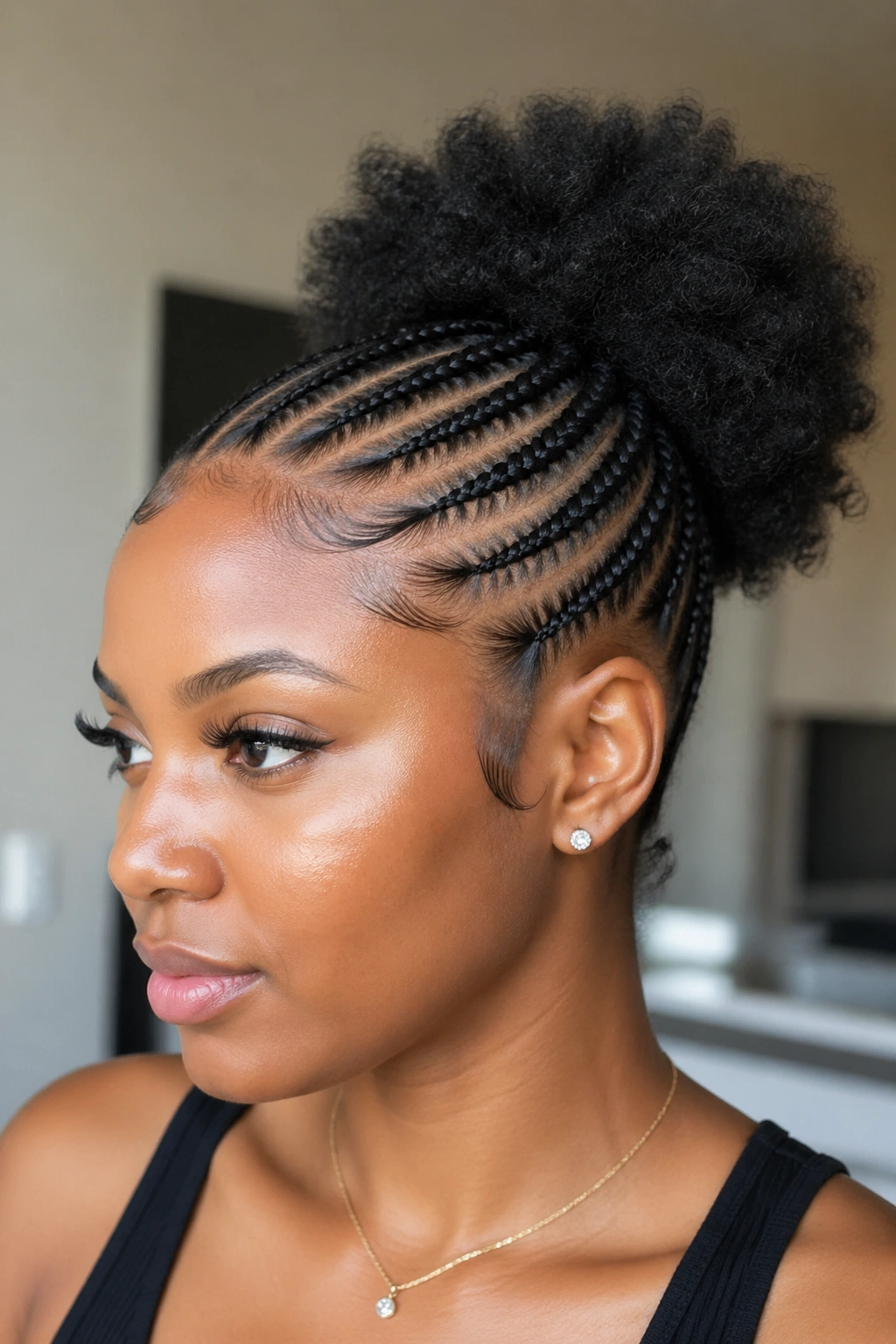
Unlike a blunt braid start, feed-in cornrows begin small and get thicker as hair is added. That gradual build is why the style looks so smooth at the front. The braid does not feel like it starts with a hard edge, and the puff behind it looks even more full because the eye has been led there slowly.
This style is for anyone who wants a polished front with a soft finish at the back. It is especially good if you do not like bulky braids around the hairline. Feed-in techniques help the rows lie flatter, which can make the whole head feel lighter, especially when the hair is dense or long.
Where feed-in braids help most
- They reduce that chunky start at the root.
- They make small braid patterns look cleaner in photos and in person.
- They sit well under scarves, hoodies, and coats because the crown stays flatter.
- They pair nicely with a puff that has a lot of texture, since the braid line stays neat.
The trick is asking for the braid to grow gradually, not all at once. If hair is added in big pieces, the front can look lumpy. Small additions keep the row smooth and help the cornrows blend into the puff instead of fighting it. I also think this style does better when the puff is left intentionally fluffy, not stretched into a perfect sphere. A little irregular curl texture keeps it honest.
This is one of the most forgiving cornrow and afro puff styles if you are trying to stretch your wash day. The front stays put, the back gives you movement, and you can refresh the puff with a little water and leave-in without touching the braids.
7. Cornrow Mohawk with a Puffy Back Section
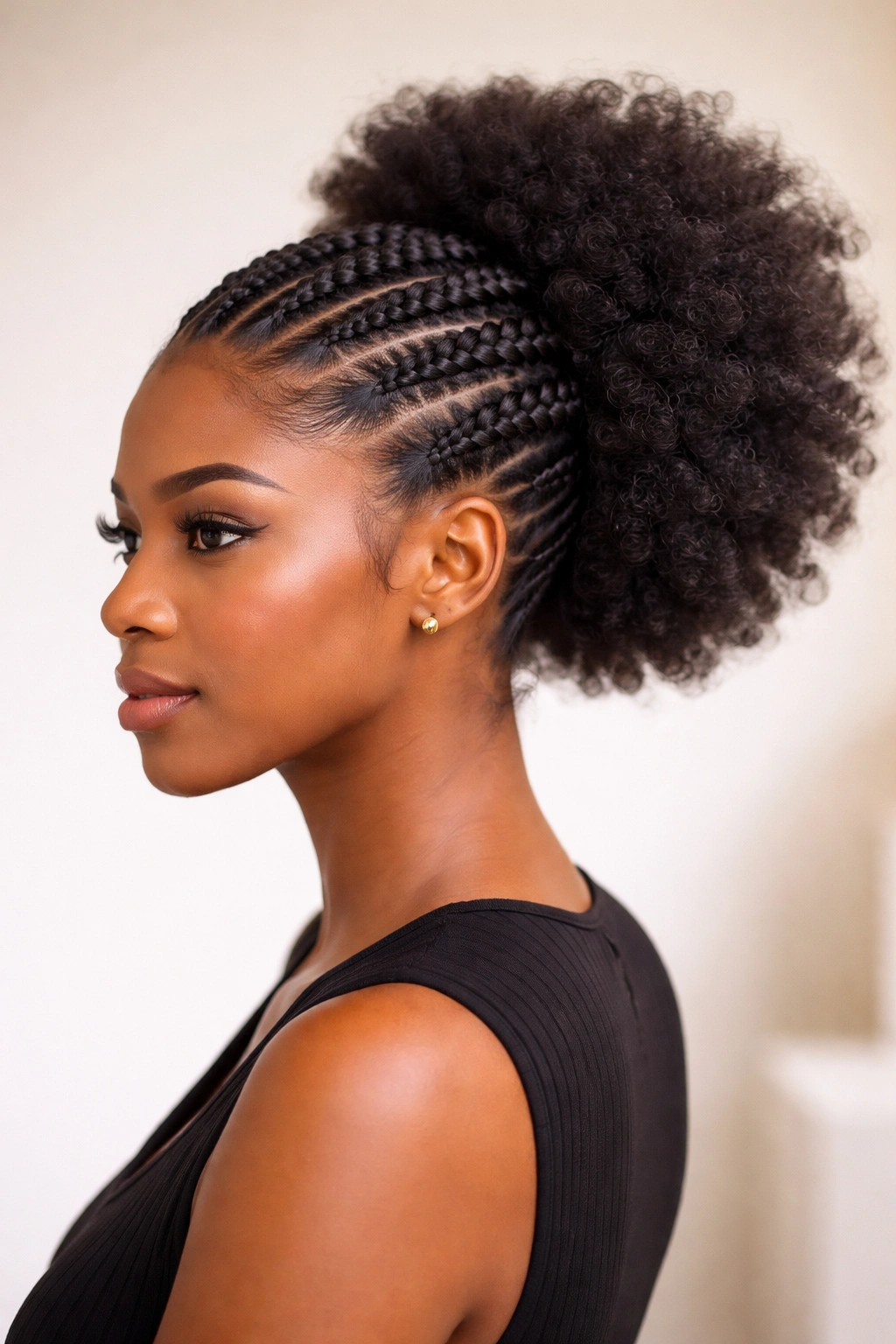
A mohawk shape does not have to shout. With narrow side cornrows and a wide center strip, it can look clean, modern, and surprisingly easy to wear. The puff at the back is what softens the whole thing. Without it, the style can feel severe. With it, the shape gets a little bounce.
This style works best when the side braids are kept close to the scalp and the middle section is left roomy enough for a strong puff. The contrast between tight sides and a full back creates height without making the crown too bulky. If your hair is dense, this is one of the easier ways to control volume where you do not want it.
A mohawk shape also gives you room to show off texture. The puff can be big and airy, or more compact and rounded, depending on how much hair you gather. Either way, the sides stay tidy. That matters on days when you want a bolder outline but do not want your hair sticking out at the temples.
If you are unsure about this look, ask for two or three narrow braids on each side instead of a packed set. That keeps the scalp visible and the center section strong. The style gets its attitude from shape, not from how many braids are crammed in. Less can look sharper here, which is not something people always expect.
8. Two Puff Pigtails with Front Cornrows
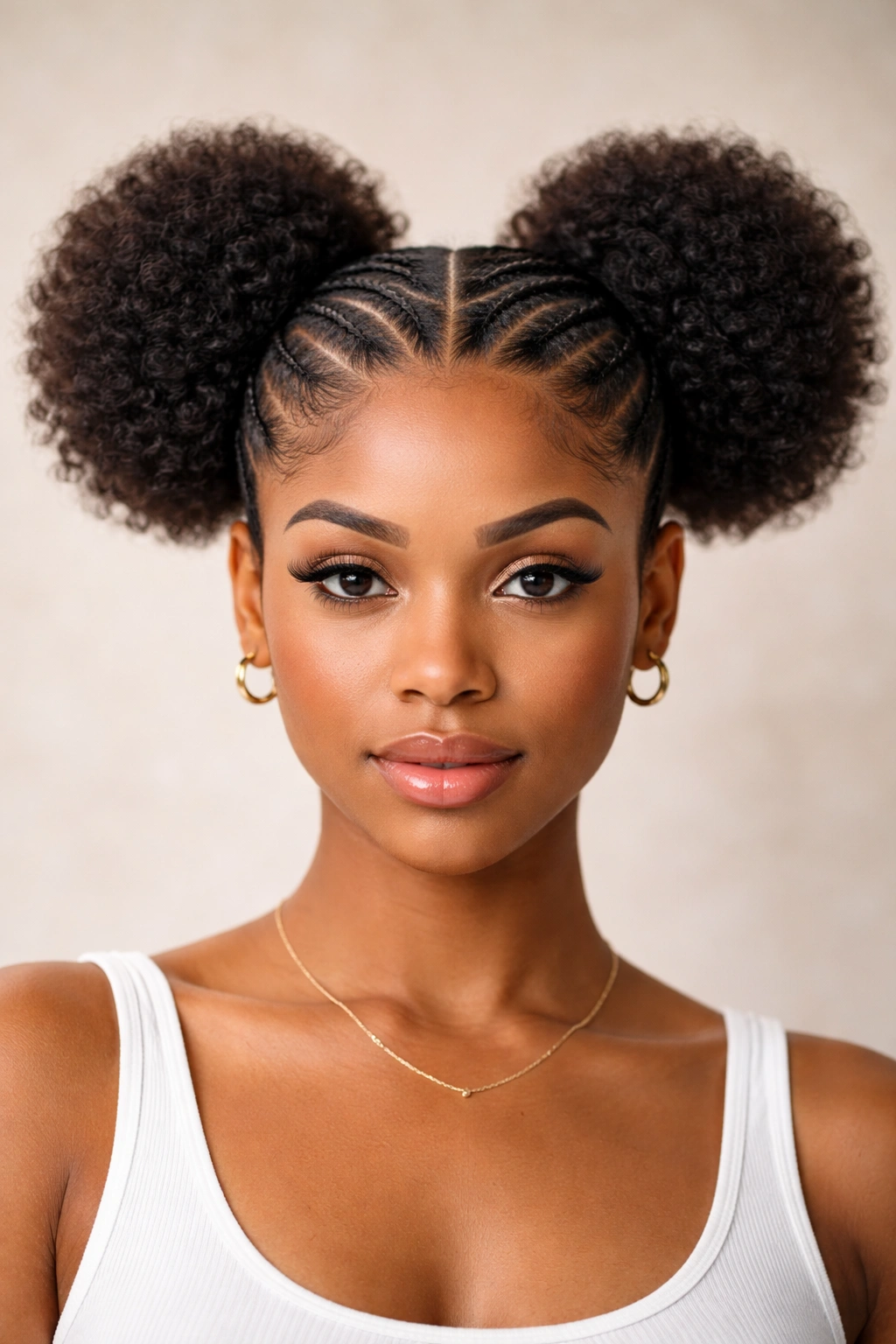
On mornings when one puff feels too plain and two puffs feel more fun, this is the move. Front cornrows guide the hair back, then the hair splits into two puff pigtails instead of one. The result is playful, but it still has structure, which is why it works far beyond childhood nostalgia.
The key is keeping the front braids neat enough that the two puffs feel intentional. If the rows are loose or uneven, the pigtails can look accidental. A clean center part helps, though a slight off-center split can look nice if you want the style to lean softer on one side.
This style is great when you want movement on both sides of the head. It also gives you a built-in way to balance proportions. If one puff ends up a little fuller than the other, shift the elastics slightly rather than trying to force both sides to match down to the last curl. Hair rarely does that, and fighting it usually makes things worse.
Small changes that matter
- Keep the puffs above ear level if you want a lifted shape.
- Use soft bands that do not snag the ends when you loosen the style.
- Leave a few face-framing coils out if you want a softer line.
- Add tiny cuffs to the front braids if you want a little shine without weighing the puffs down.
There is a cheerful honesty to this style. It does not pretend to be formal. It also does not need to. The front cornrows keep it neat, the twin puffs keep it lively, and the whole look gives you a break from the usual single-bundle silhouette.
9. Crisscross Cornrows with a Mid Puff
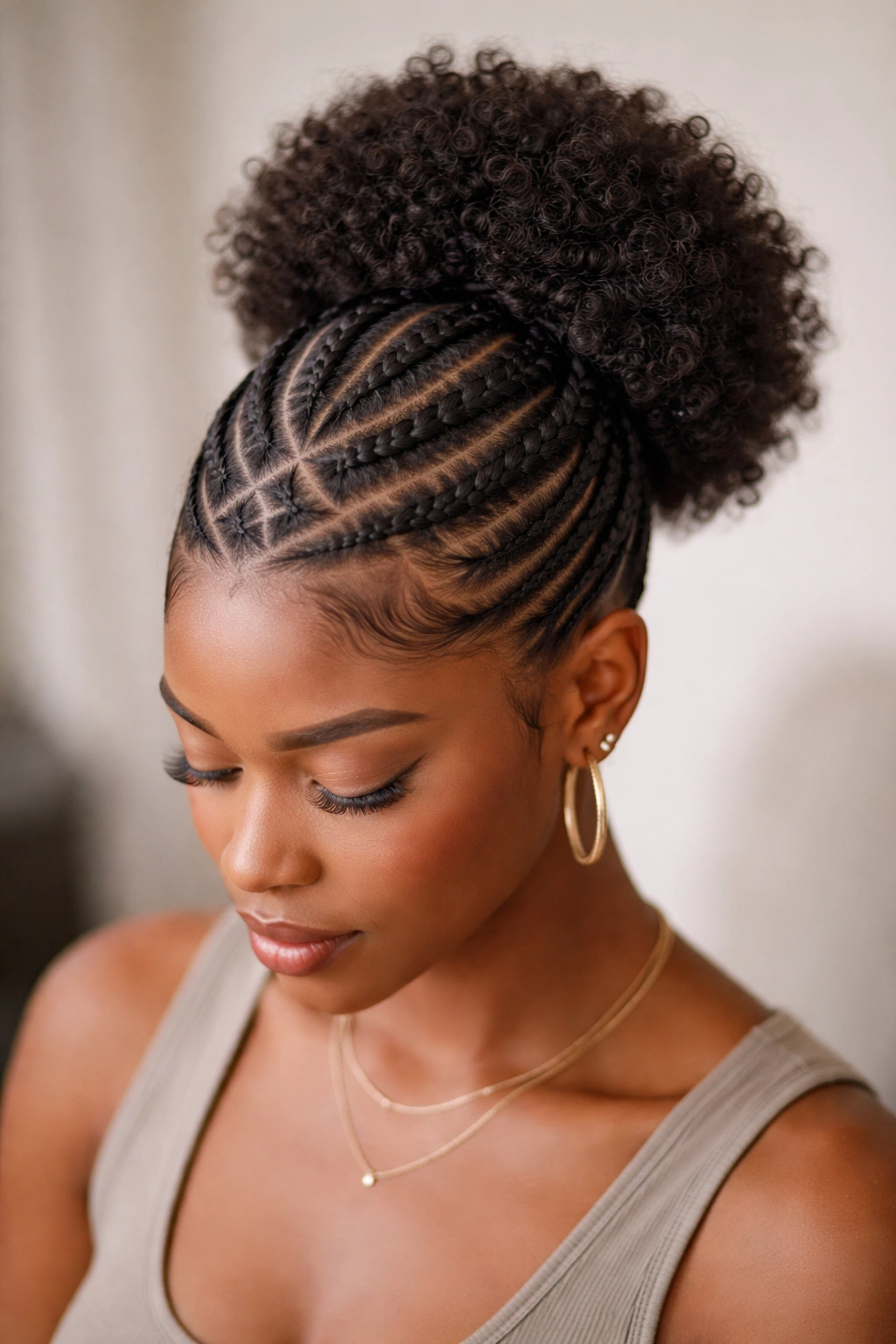
Why does a crisscross pattern look richer than straight parts? Because the eye has more to follow. The lines intersect, change direction, and build a small bit of tension across the scalp before the puff opens up in the middle or lower back of the head. It is geometric without feeling cold.
The style takes patience. Crisscross cornrows need cleaner sectioning than a standard straight-back set, because every crossed line depends on the one before it. If one part is crooked, the whole pattern starts to drift. Clips help. A rat-tail comb helps more than people expect. And a calm hand matters, because rushing the sectioning is where the style falls apart.
How to keep the pattern clean
- Map the parts before braiding, even if that means clipping four or five sections at once.
- Use a small amount of gel only at the root so the lines stay sharp.
- Keep the crossed sections even in width.
- Place the puff at mid-height so it supports the braid pattern instead of overpowering it.
The mid puff is the smart part here. A high puff can pull attention away from the crisscross work, and a low puff can make the top feel crowded. Mid placement keeps the eye moving through the design. It also suits people who want a braid style with some lift but do not want the hair sitting on top of the head all day.
This is the style I would choose when I want the scalp design to matter as much as the puff. Not louder. Just more considered. The kind of look that makes a braid pattern worth staring at for a second before you even notice the texture at the back.
10. Beaded Cornrows with a Fluffy Puff
Beads change the sound of a style before they change the look. You hear the soft click when you turn your head, and suddenly the whole thing feels more alive. Add that to cornrows with a fluffy puff, and you get one of the easiest ways to make the style feel finished without piling on extra hair or extra drama.
The puff should stay airy here. If it is too tight or too brushed out, the beads start to feel disconnected from the rest of the head. Leave enough curl pattern to show texture, and let the front braids carry the decorative detail. A few beads near the ends are enough. You do not need to load every braid with hardware for the style to work.
This version is useful when you want a little personality without changing the base style. Wooden beads, clear beads, gold cuffs, wrapped thread, or a single accent cord can all change the mood. The main thing is weight. Too many beads pull on the braid ends and can make the style uncomfortable by the end of the day. Two or three per braid is usually enough if you want movement and sound without dragging the hair down.
The other thing I like here is how easy it is to adjust the finish. Keep the cornrows simple and the puff large if you want the style to feel casual. Add sharper parting and cleaner edges if you want it to feel more dressed up. Either way, the combination of braid structure and soft texture does the work.
If you try just one style from this list, make it the one that matches your skill level and your patience. Hair should not feel like a wrestling match. It should feel like a shape you can wear.
