



Afro wedding hairstyles have one brutal job: they need to survive hugs, dancing, photos, heat, and the slow creep of the day without looking tired. The pretty style on a mood board is one thing. The style that still looks good after a long ceremony, a few happy tears, and a reception that refuses to sit still is something else.
That difference matters more on textured hair than people sometimes admit. A style that fights shrinkage, ignores density, or pulls the hairline too tight can look polished for an hour and then start acting up. A style that works with your natural texture usually holds its shape better, feels calmer on the scalp, and leaves you less distracted by your own hair.
The best bridal looks for Afro-textured hair also know how to play nice with a veil, a comb, statement earrings, or a neckline that already has enough drama. Tight edges can look sharp in the mirror and miserable in real life. Softness, structure, and a little restraint tend to age better over the course of the day.
What follows is a set of styles that do different things well. Some are sleek. Some are full of texture. A few lean protective, which is a blessing if you want your hair to look good long after the cake is gone.
1. Sleek Low Bun for Afro Wedding Hairstyles
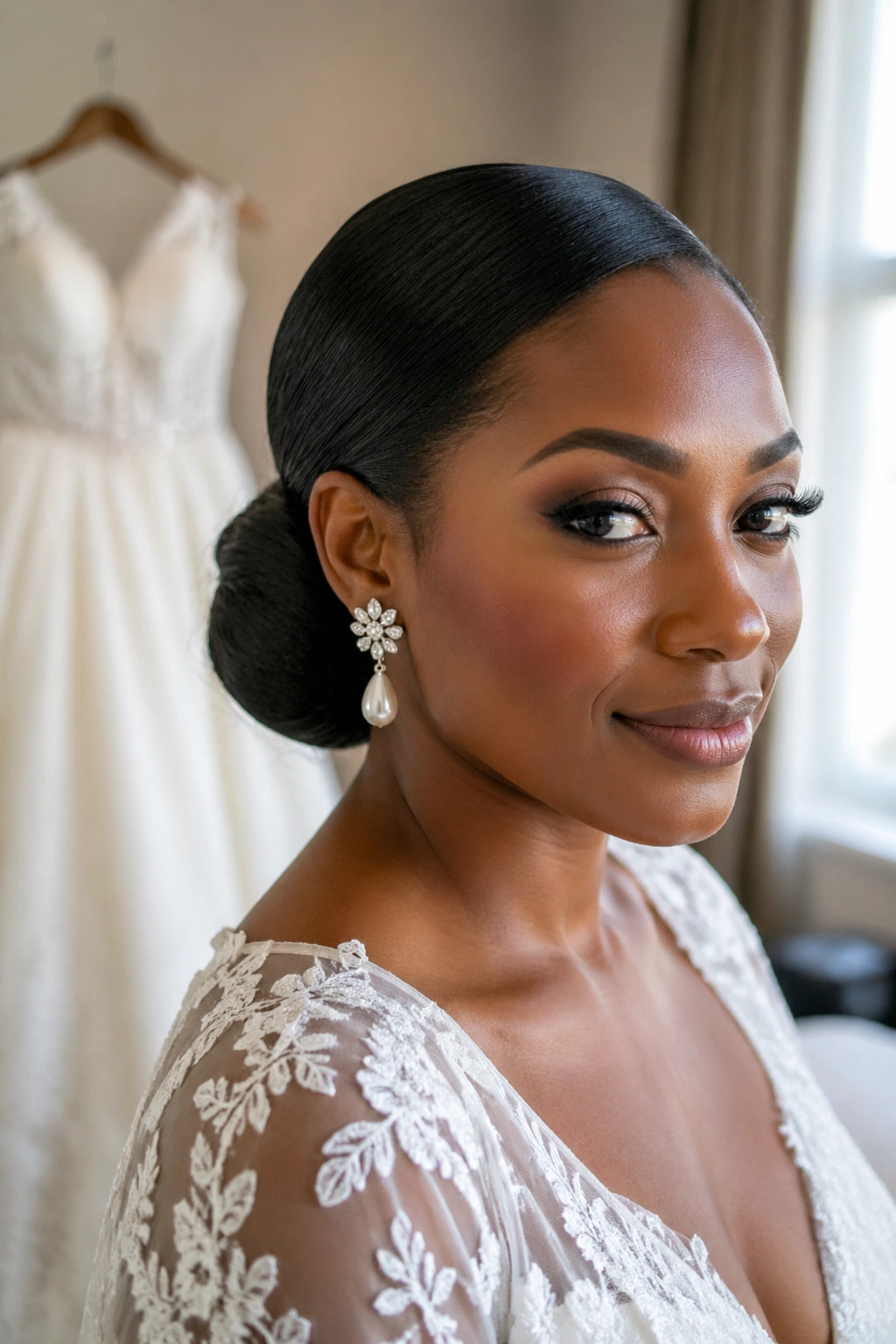
A sleek low bun is the quiet overachiever of Afro wedding hairstyles. It does not beg for attention, and that is exactly why it works so well with lace gowns, high necklines, and big earrings.
Why It Works
The shape keeps everything close to the head, which gives the face room to breathe. That matters more than people think. If your dress already has beading, volume, or a strong collar line, a low bun keeps the whole look from turning cluttered.
It also plays nicely with a veil. The comb can sit just above the bun or tuck underneath it, and the base gives pins somewhere solid to grip. If your hair is dense, ask for a smooth foundation first, then a bun built with enough structure to hold, not just a pile of hair twisted and hoped for.
A low bun looks sharp on stretched natural hair, blown-out hair, or silk-pressed hair. The finish should be smooth, but not shellacked. A little softness around the hairline goes a long way.
- Best on hair that has been stretched before styling
- Works with middle or deep side parts
- Holds earrings, veils, and hair combs without fighting them
- Looks strongest when the bun sits at the nape, not halfway up the head
Tip: keep the edge work neat, but not carved to the point that it looks stiff. The style reads more elegant when it still feels like a real head of hair.
2. Defined Twist-Out With a Deep Side Part
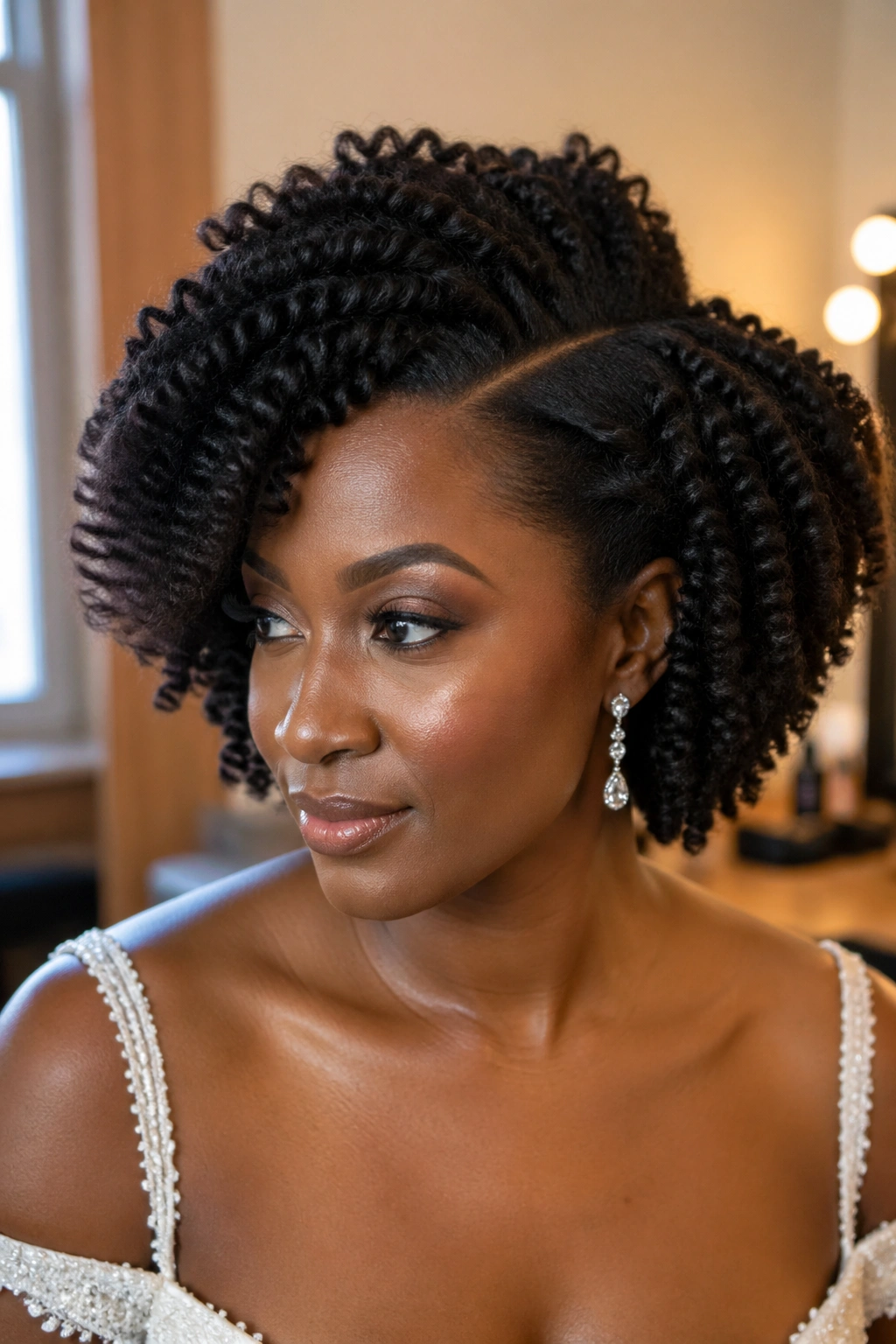
A twist-out can look just as formal as an updo if the set is clean and the part is intentional. That’s the part people miss. They treat a twist-out like a casual choice, then wonder why it falls flat beside a bridal gown.
The secret is the shape. A deep side part creates a sweep across the forehead and gives the style a little motion, which keeps it from reading flat or boxy in photos. Bigger twist sections give you a softer cloud of texture. Smaller twists give tighter definition and less frizz, which is often the smarter move if you want the style to hold its shape through a long day.
Drying matters. A twist-out that is even a little damp at the roots will puff in places you do not want. Let it dry all the way, then separate gently with oiled fingers. Not drenched. Not rushed. Just enough slip to keep the strands from fraying.
A bridal twist-out works especially well if your neckline is simple and you want the hair to carry some of the visual weight. It feels romantic without being precious.
3. High Afro Puff With a Satin-Wrapped Base
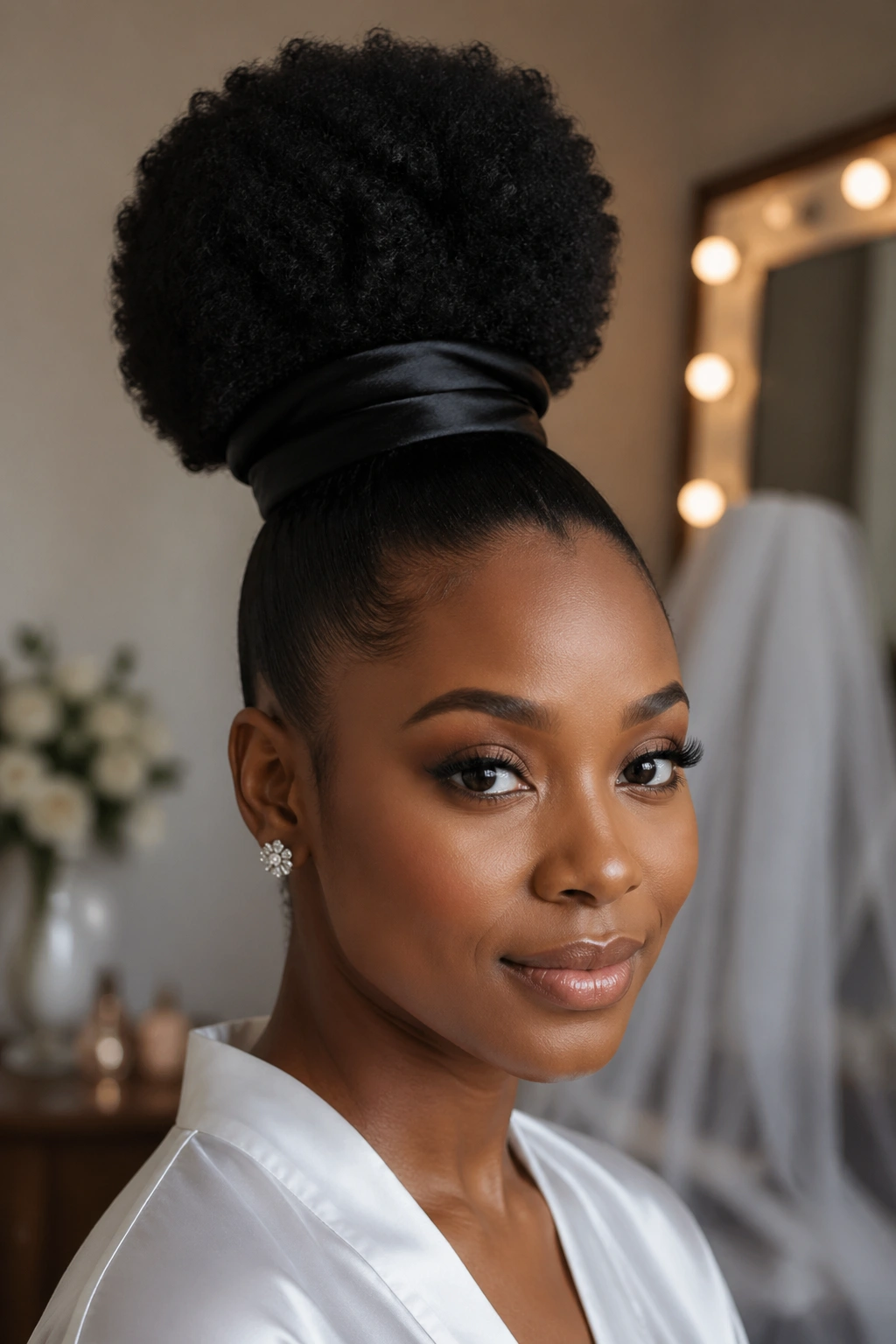
Why does a puff feel right on a wedding day? Because it gives height, texture, and a little joy without asking the rest of your look to do too much.
How to Wear It
A high puff looks especially good when the base is treated like part of the design, not an afterthought. A satin-wrapped band, a beaded wrap, or even a strip of matching fabric can turn a simple puff into something that feels dressed for the occasion. The wrap also keeps the hairline calmer than a bare elastic would.
This style works best on hair that has been stretched first, but you do not need bone-straight strands for it to hold. A banding method, a blow-dry on low heat, or a twist-out stretched at the roots all help the puff rise instead of collapsing. Place it high enough to show shape, but not so high that it feels like it is floating.
- Use a wide, gentle band instead of a thin elastic
- Smooth the front with a soft brush, not a hard scrape
- Keep the puff centered unless your dress neckline wants asymmetry
- Pair it with one strong accessory, not three
A puff can read playful or regal. The difference is all in the base and the finish.
4. Halo Braid Crown
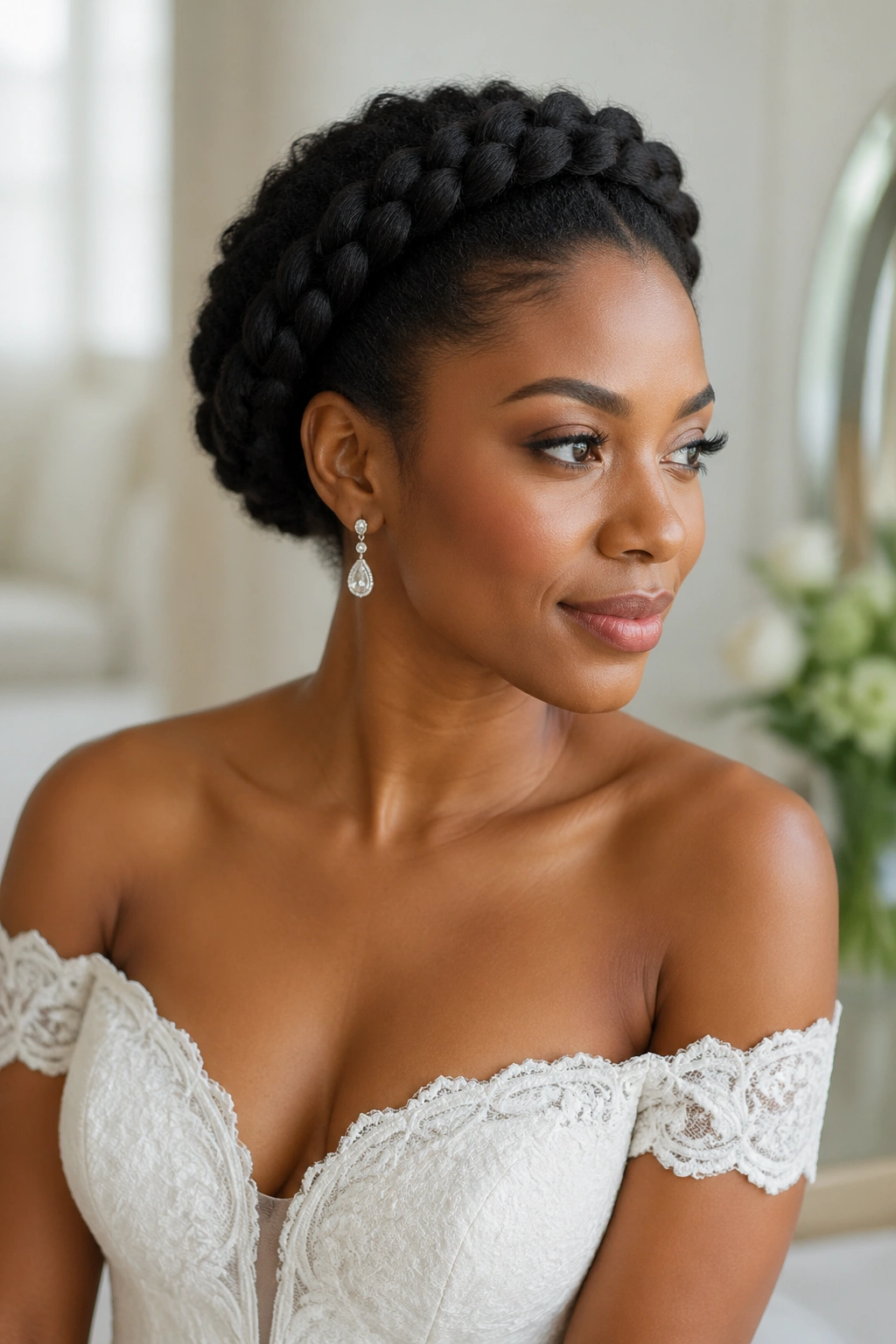
A halo braid is what happens when you want your hair to look like it already came with a headpiece. It frames the face, keeps the neck open, and gives you a very clean profile from every angle.
A lot of brides like this style because it solves a practical problem quietly. The braid holds the shape of the style, and the rest of the hair can be tucked away so you are not worrying about flyaways by the time the music starts. On thick Afro-textured hair, the braid often looks richer and fuller than it does on straighter textures. That fullness is part of the charm.
If you want flowers or tiny pins, this is one of the easiest styles to decorate. Fresh blooms should be kept small and secured close to the braid so they do not droop. If your veil needs to sit in the hair, make sure the braid leaves enough flat space near the crown for a comb or clip to stay put.
A halo braid works best with stretched hair or added hair for volume. It can feel formal, but never fussy. That balance is why it keeps showing up in wedding chairs.
5. Bantu Knot Updo
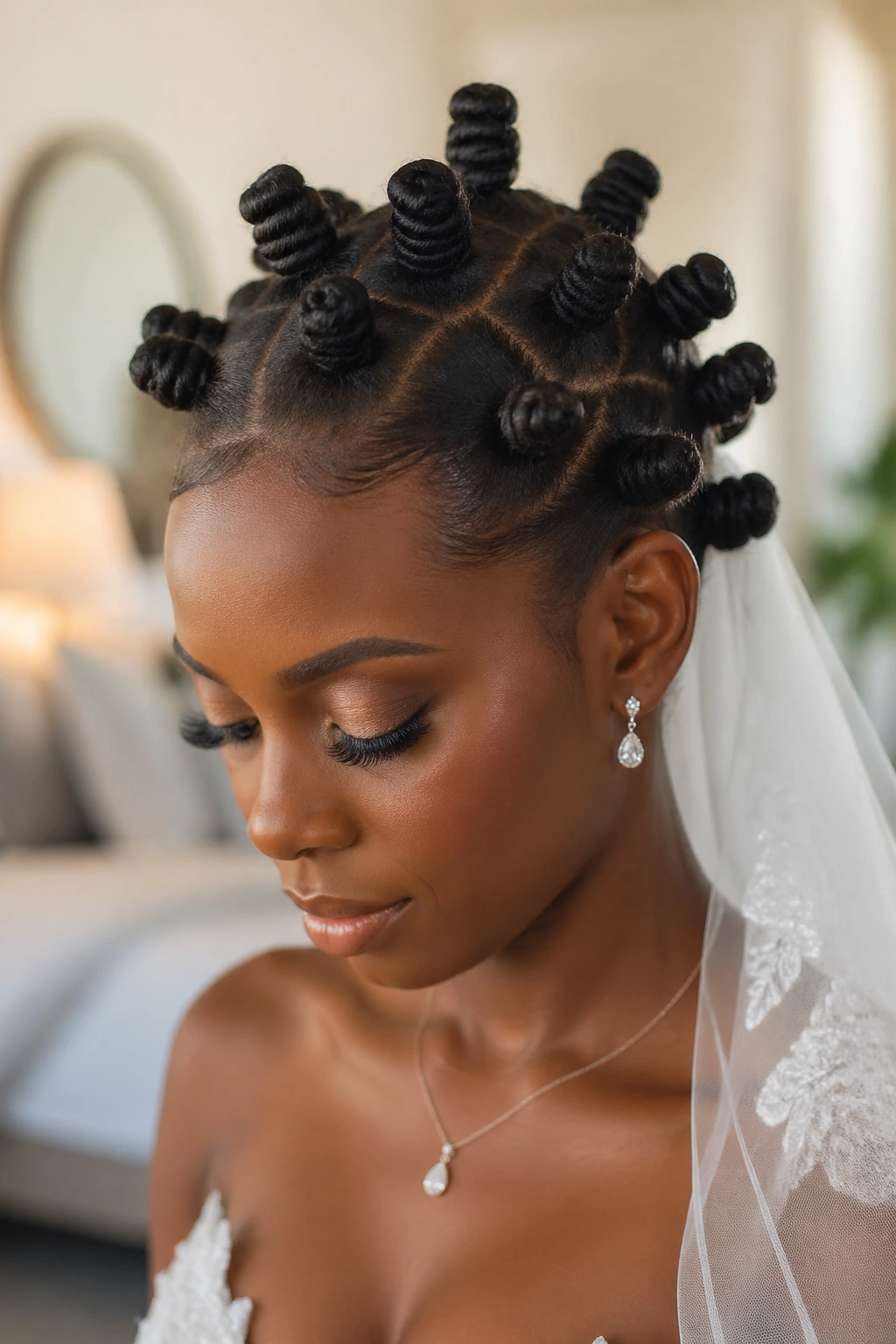
Bantu knots bring shape, rhythm, and a little bit of personality that many bridal styles lack. They are not shy. That is the whole point.
The style can look sculpted and modern when the knots are evenly spaced and the parts are clean. It can also look softer and more romantic if the sections are slightly larger and the knots sit in a more organic pattern. Small knots create a neater grid. Larger ones give more visual weight and a fuller outline around the head.
The thing to watch is moisture and tension. Hair that is too dry will snag while you twist it, and hair that is overloaded with product will sit heavy and lose the crisp shape that makes the knots look intentional. A light cream, then a small amount of styling gel on the parts, usually gives enough hold without turning the whole head shiny in a bad way.
Bantu knots also have a neat bonus: they can be worn as a knot-out later if you want a second style for another part of the celebration. That is one of those details nobody thinks about until they need it.
6. Flat-Twisted Chignon
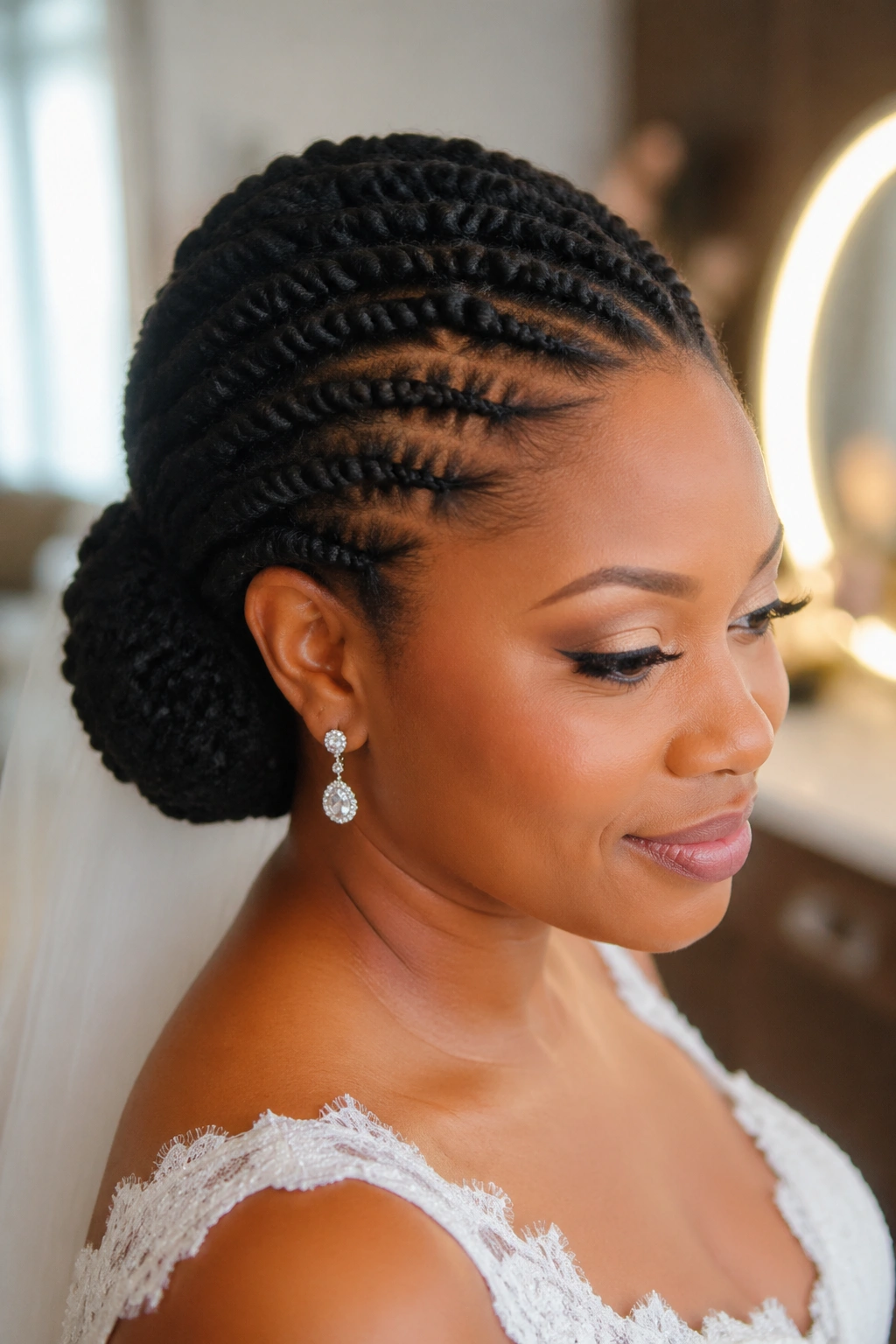
If a sleek bun feels too plain and a braid crown feels like too much, flat twists solve the middle ground. They bring texture to the front and still leave you with a low, tidy shape at the back.
The look usually starts with 4 to 6 flat twists traveling back from the hairline or from a side part. Those twists feed into a chignon at the nape, where they can be tucked into a roll or coiled into a bun. The result has clean lines, but you still get the depth and dimension that flat twists bring to Afro-textured hair.
This style is a good choice if you want the front of your hair controlled without losing all personality. It also sits beautifully under a veil because the back stays compact and the front can be shaped to follow the face.
A little shine is welcome here. A lot is not. Heavy gel can make the twists look stiff and the chignon feel hard. A soft hold product and a good set of pins do the job better than a thick coating of anything.
7. Pineapple Updo With Pinned Curls
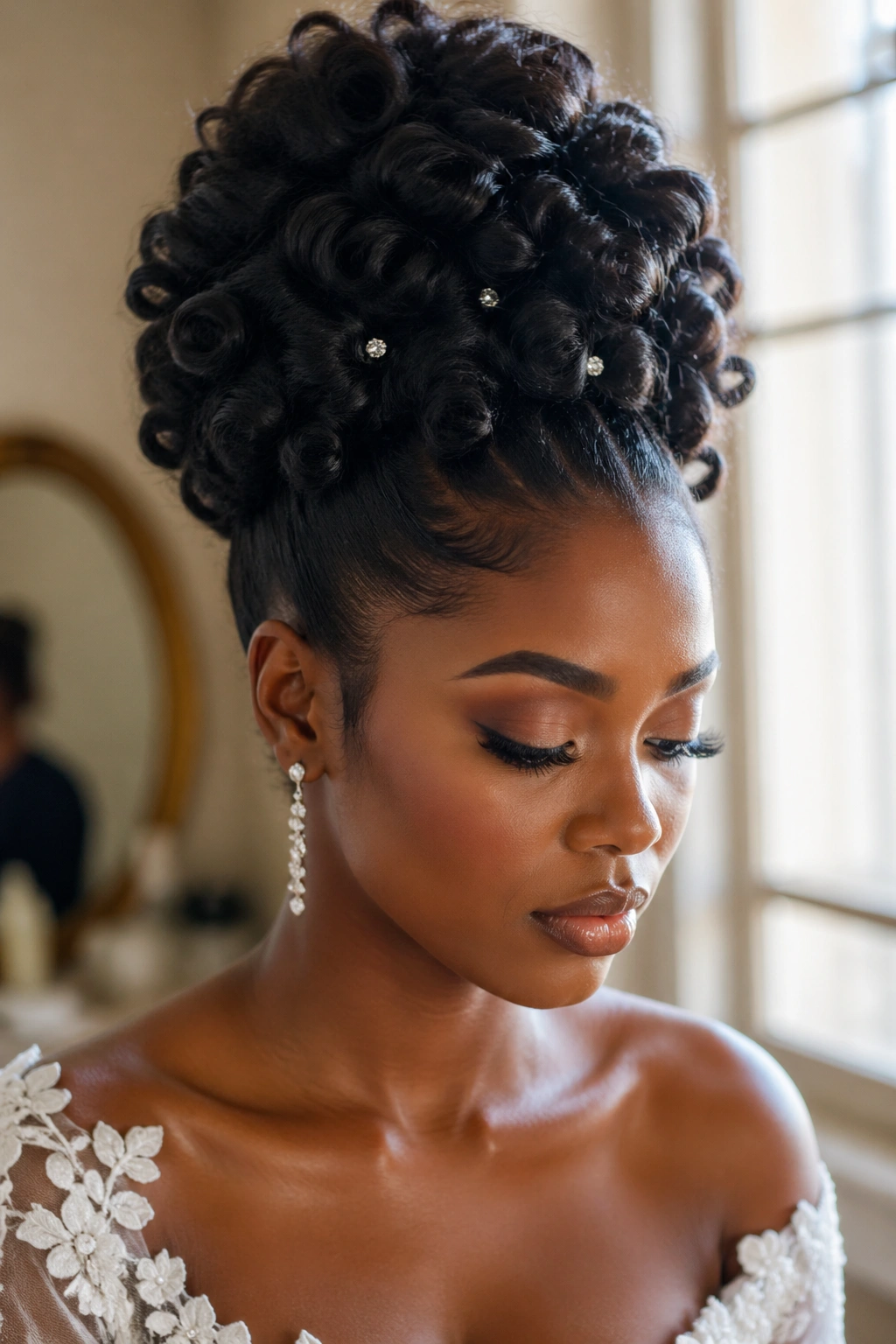
A high pineapple can look bridal when the curls are arranged on purpose instead of just gathered in a hurry. That is the difference between “I threw my hair up” and “I chose this.”
What Makes It Different
The lift at the crown gives the style drama, which is useful if your dress has a simple neckline or your earrings are doing a lot of work. The curls stay full, but the base is controlled, so the style holds its shape instead of slumping by the end of the night. A satin scrunchie or a wrapped band keeps the foundation soft and less likely to crease the hair.
- Works well on shoulder-length curls, rod sets, or stretched natural hair
- The front should be smoothed lightly, not flattened hard
- Decorative pins can sit near the base or around the crown
- A veil usually sits better below the puff than through it
The trick is not to overdecorate. One jeweled comb, a few pins, or a wrap with texture is enough. Too much sparkle starts competing with the hair itself, and that is where the style loses its charm.
Pro tip: set the puff a finger-width back from the hairline. It keeps the face open and stops the front from feeling tight.
8. Side-Swept Stretch Curls
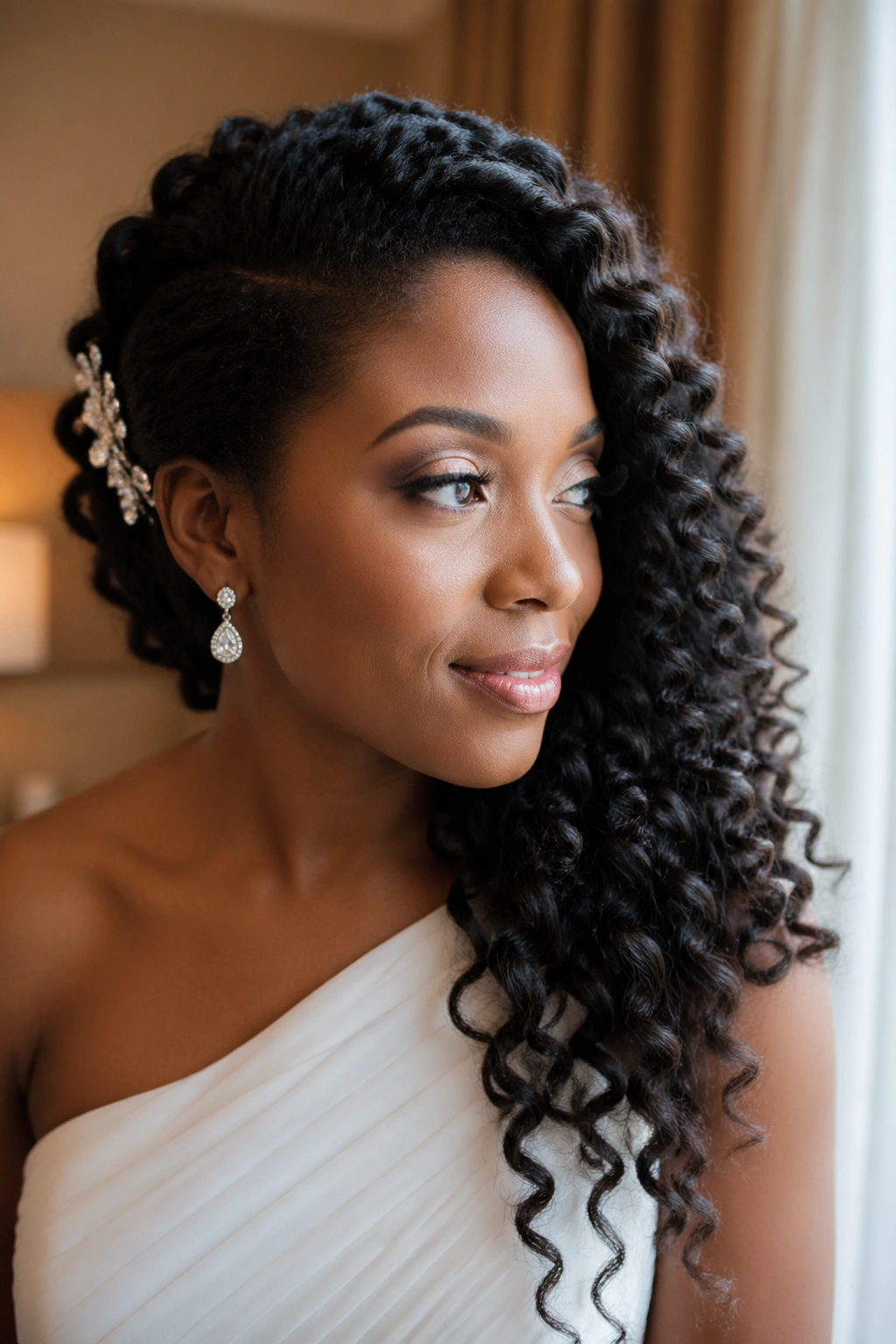
Soft curls falling over one shoulder have old-school glamour in them, and on Afro-textured hair that shape gets richer because the texture has more body. It is one of those styles that looks easy from a distance and takes a fair amount of intention up close.
The base usually needs to be stretched first. A rod set, flexi rods, twist-outs separated carefully, or wand curls on blown-out hair can all work. Once the curl pattern is set, the hair is swept to one side and pinned discreetly behind the opposite ear or at the crown. The visible side stays full, while the hidden side creates the structure.
This is the style for one-shoulder dresses, asymmetrical necklines, and brides who want movement without committing to a full updo. It also gives you room for a comb, but only if you choose one focal point. Giant earrings plus a necklace plus a hair ornament can crowd the whole look fast.
A side-swept style should feel soft, not loose. That distinction matters. You want the curls to move, but you do not want to spend the day checking whether the sweep has slipped out of place.
9. Cornrow Pattern Into a Low Bun
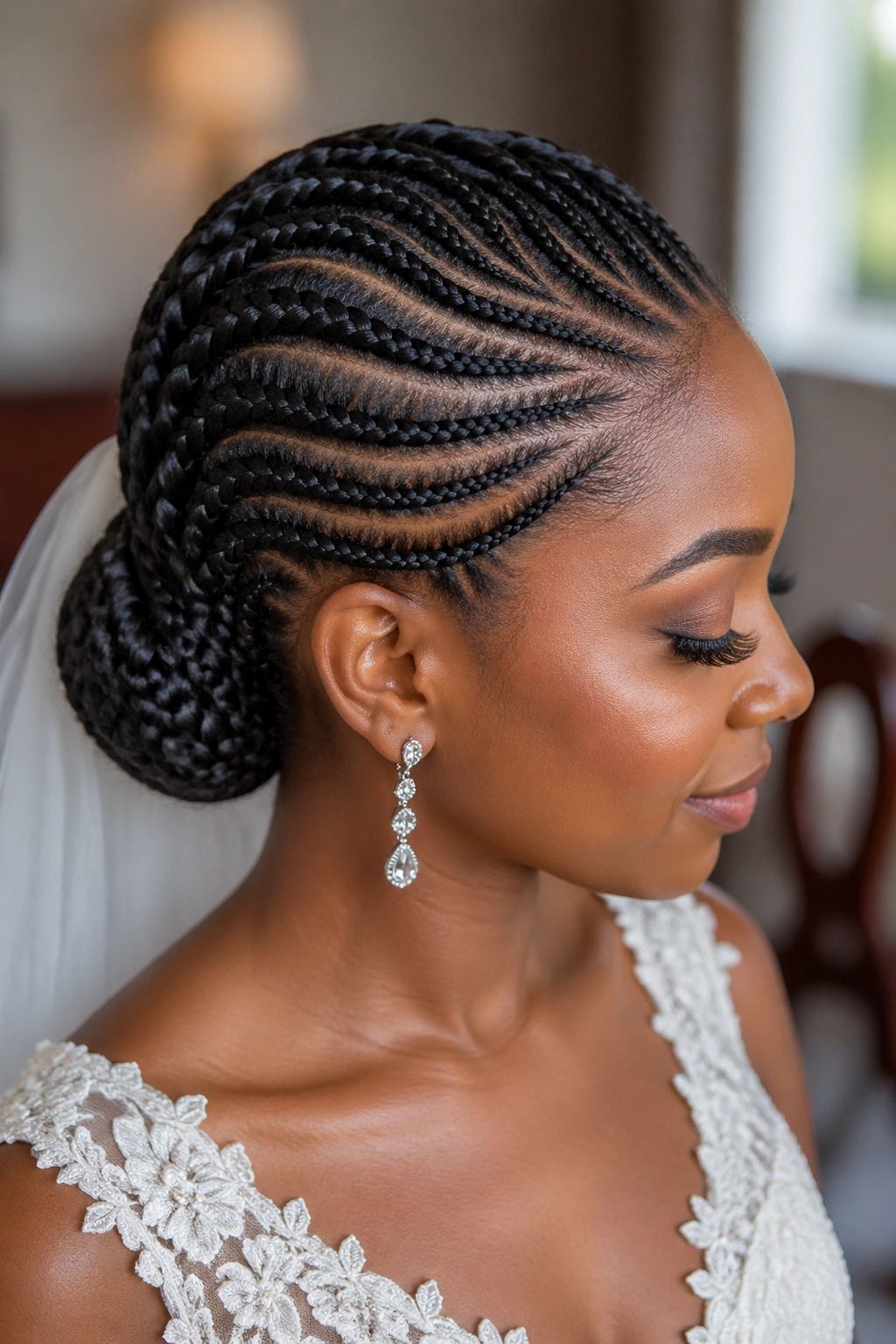
A cornrow pattern into a low bun is one of the cleanest, most secure bridal options on textured hair. It is a practical style, and I mean that in the best way.
The braids can be straight back, curved, or stitched into a design that fits the shape of your face. From there, the length feeds into a low bun at the nape. The bun can be wrapped tight and polished, or left a little fuller if you want more volume. Either way, the scalp is neatly controlled and the back stays tidy.
Best Way to Ask For It
Tell your stylist where the veil comb will sit. That detail matters more than people think. If the bun is too high, the comb may fight the shape of the style. If the braids are too tight near the temples, the whole look can start the day feeling uncomfortable. A good bridal braid style should feel secure, not punishing.
- Feed-in braids can add fullness without making the front bulky
- Curved parts soften the look if straight rows feel too severe
- A low bun leaves room for a veil and keeps the silhouette neat
- Light scalp oil belongs on the parts the day before, not right before styling
This is a strong pick if you want a style that will not collapse while you are dancing or hugging people for an hour straight.
10. Faux Loc Bun With Wrapped Ends
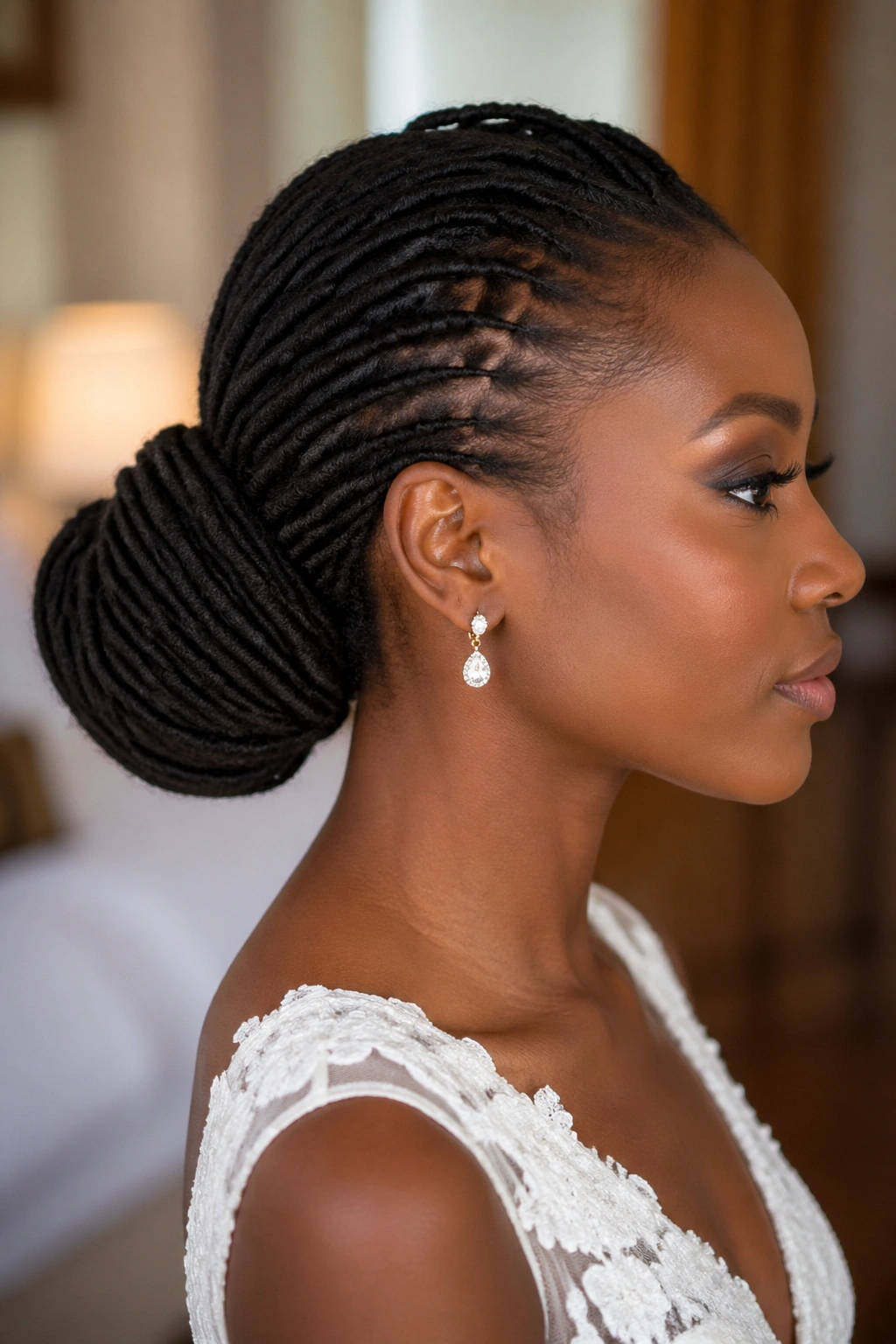
If you are already wearing faux locs, a wedding bun can look cleaner than leaving the locs loose. It is tidier, easier to secure, and it gives the whole outfit a more intentional line.
The bun can sit at the nape or slightly off-center, depending on the dress and your face shape. A low position usually feels calmer and more elegant. A side bun can look softer and a little more relaxed. Either way, the locs should be wrapped with care so the bulk is distributed evenly. A heavy clump at one side makes the style tip awkwardly.
This is one of the rare styles where the accessories do not need to do much. A few gold cuffs, one comb, or a thin vine of pearls is usually enough. Too many add-ons make the locs look busy, and busy is not the same thing as dressed up.
The real advantage is movement. Locs already have texture and presence. Wrapping them into a bun keeps that richness while taking some weight off your shoulders, which your neck may appreciate after a long ceremony.
11. Tapered Afro With Floral Pins
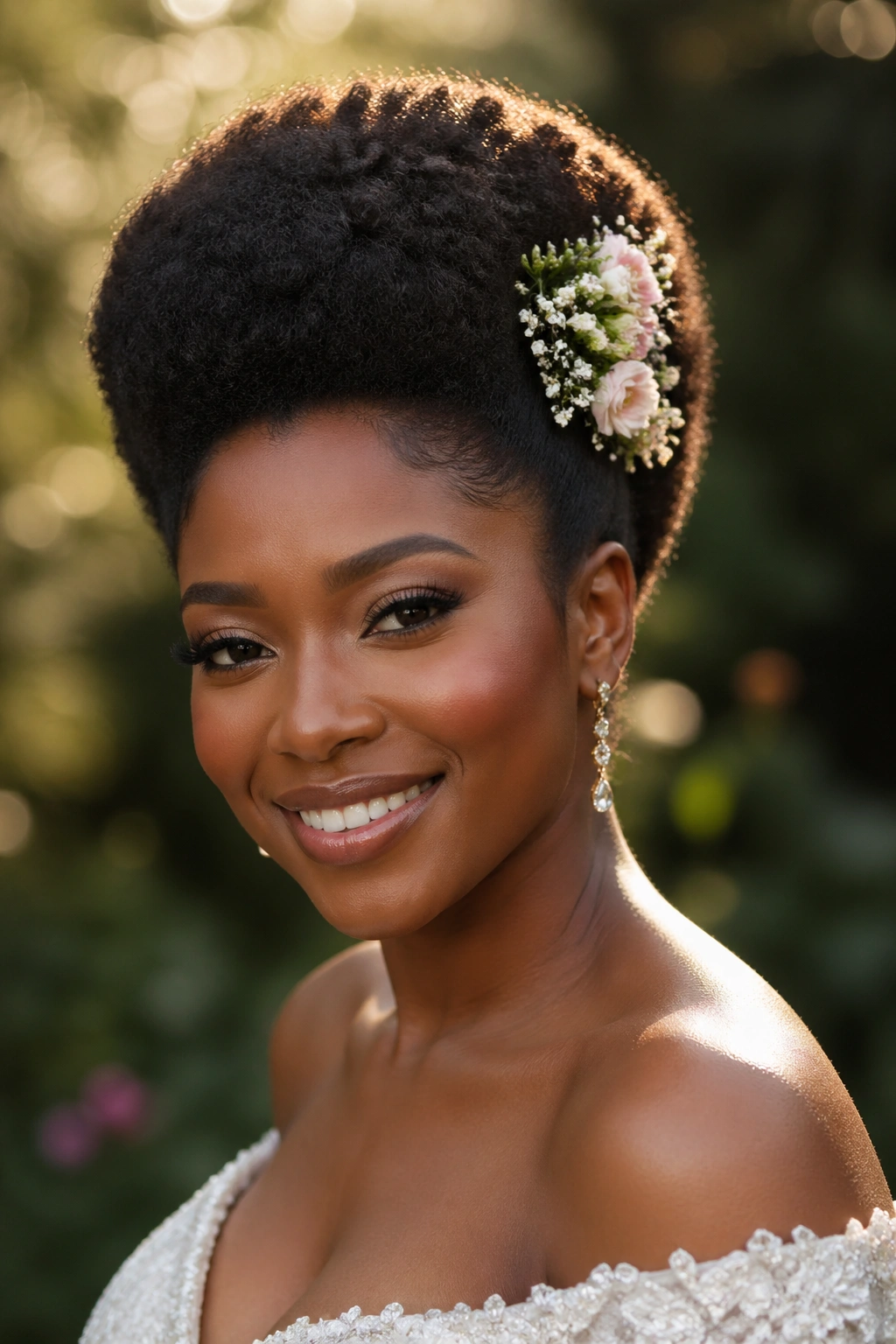
Can a short natural shape read bridal without extensions? Absolutely. A tapered afro can look polished, stylish, and soft all at once, and it does not need much extra help.
How to Style It
Shape matters more than length here. A fresh trim helps the silhouette hold its outline, but I would not cut the day before unless you already know exactly how your hair behaves after a cut. The curls should be defined, not stiff, and the crown should stay fluffy enough to feel alive.
Tiny flowers, pearl pins, or a single side comb can turn the style from everyday to ceremony-ready. Place the accessory on one side so the shape of the cut stays visible. If you scatter pins all around, the eye stops reading the haircut and starts counting decorations. That is a bad trade.
- Use a cream or mousse that defines curls without dragging them flat
- Keep the crown lifted instead of pressed down
- Choose one accessory cluster, not a full ring of decoration
- Let the side shape stay visible in profile
This style is especially good if your dress has clean lines and you want your face and shoulders to do the talking.
12. Half-Up Sculpted Curls and Mini Twists
A half-up style gives you the face-framing control of an updo and the softness of loose texture at the same time. That mix is why so many brides keep coming back to it.
The top section can be sculpted into mini twists, flat twists, or a small pinned roll, while the rest of the hair falls in curls, coils, or a defined twist-out. The contrast is the point. The top feels deliberate. The bottom moves. That contrast keeps the style from looking flat or overdone.
It also works well with a veil because the pinned top section gives the comb something stable to sit on. If you want a tiara or a jeweled clip, the half-up base offers a neat place to anchor it without burying the accessory in hair. A little height at the crown helps, but not so much that the style starts looking top-heavy.
The front pieces should be left slightly softer than the rest. That small bit of looseness keeps the face from looking boxed in, especially in close-up photos and side angles.
The smartest wedding hair is the style you can stop thinking about once it is done. If the hairline feels calm, the shape matches the dress, and the silhouette still makes sense when you move, you picked well. That is the kind of finish that lets you enjoy the day instead of checking the mirror every twenty minutes.
