



Afro space buns have a funny trick: they can look playful, polished, and a little rebellious all in the same hour. The difference lives in the details. A centered part gives calm symmetry, a side part turns the whole style sharper, and the amount of stretch in the hair decides whether the buns sit high or slump by lunchtime.
That is why the style works so well on coily and kinky textures. The hair already has body, so you are not fighting it for volume. You are shaping it. If the hair is moisturized, detangled, and not overly soft from heavy cream, the buns hold better and the parting stays cleaner.
Small choices change the result fast. A thin elastic creates a neater knot; a wider tie gives the bun more visual weight; a flat twist leading into the bun makes the front look deliberate instead of rushed. Afro space buns can read sweet, edgy, elegant, or very playful, and the difference is often two minutes and one good mirror.
That is the fun part. You can go sleek, fluffy, braided, sculpted, or accessorized and still keep the same basic structure. The first version is the classic one, and it earns that spot for a reason.
1. Classic Afro Space Buns with a Center Part
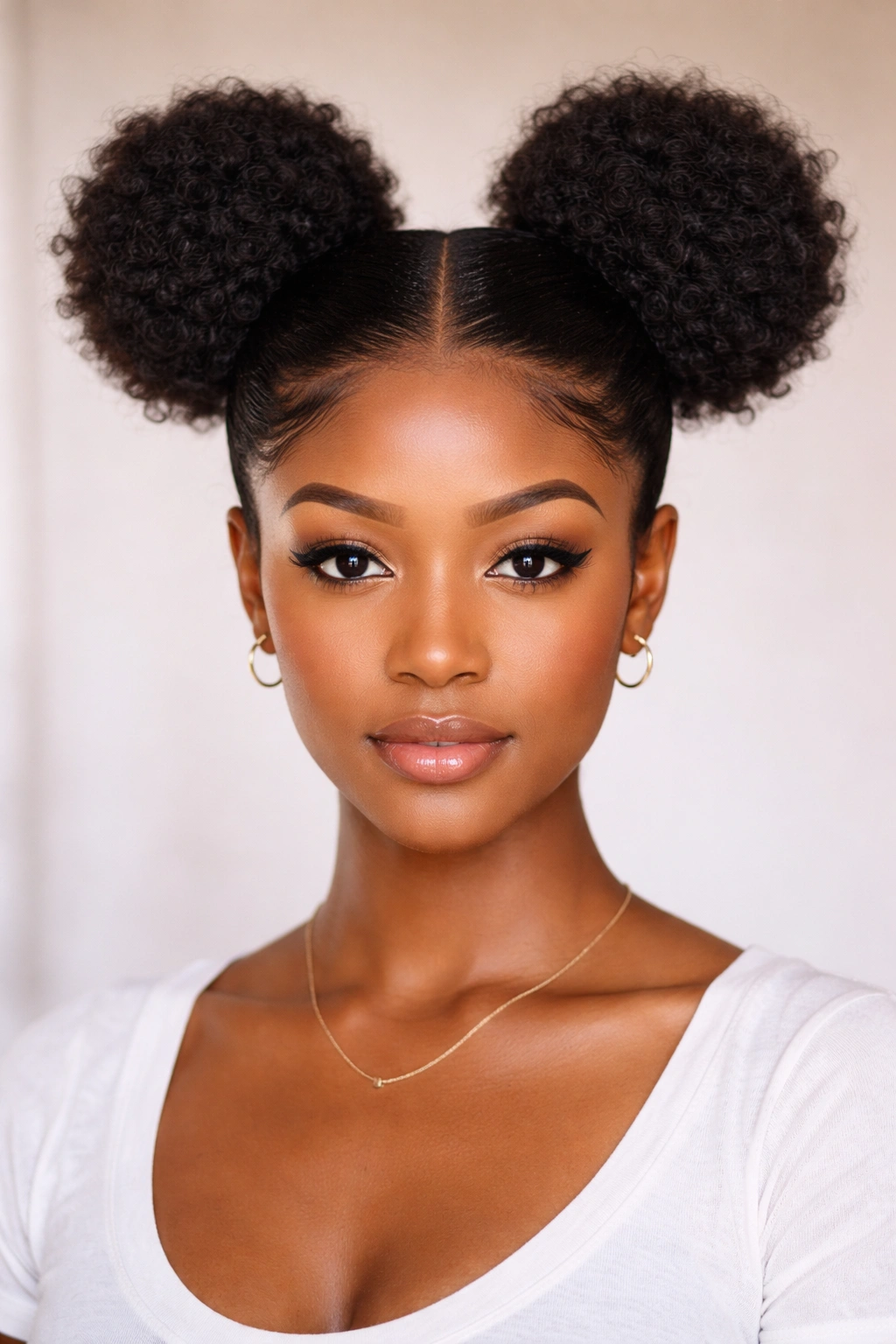
The center-part version is the one most people picture first, and it works because the shape feels instantly balanced. Two equal buns, one on each side of the crown, give the face a clean frame without making the style feel stiff.
Why It Looks Balanced
The middle part pulls the eye straight up the center of the head, then the buns widen the shape at the top. That contrast is what makes the style feel bold without needing a ton of extra pieces. On Afro-textured hair, the natural volume helps the buns look full even when each side is only wrapped once or twice.
I like this version on hair that has been stretched a little first. A twist-out, blowout, banded hair, or even a stretched wash-and-go gives enough length to make the buns sit neatly instead of puffing out sideways. If the hair is too freshly washed and shrinks hard, the buns can look tiny and the part can blur fast.
Useful details:
- Best for: medium to long natural hair with some stretch.
- Tools: rat-tail comb, two elastics, a soft brush, and a little edge control if you use it.
- Shape note: keep the buns high, but not so high that they pull on the hairline.
- Finish: wrap the ends around the base rather than stuffing them in all at once.
Tip: A clean middle part does more for this style than extra gel ever will.
2. Cornrow-Base Space Buns with Extra Hold
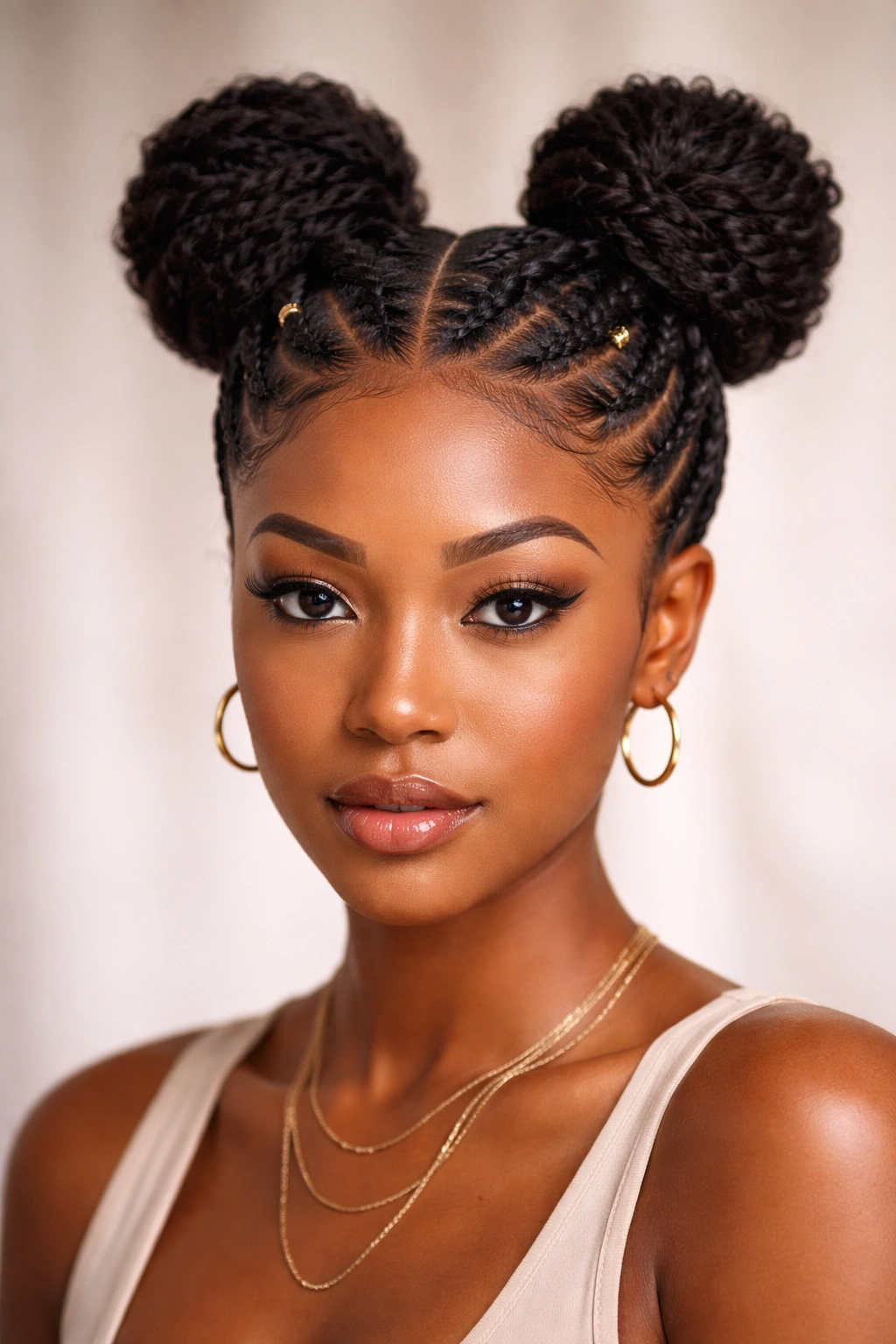
Edges do not need to do all the work. When the front section is braided into neat cornrows before it reaches the buns, the whole style holds its shape longer and looks sharper from the start.
This version is the one I reach for when the hair is dense or long enough to feel heavy. The braids act like a frame, and the buns become the payoff at the top instead of the only feature. That means less puffing at the roots and less daily fiddling with the front.
There is also a practical side to it. Cornrow bases keep the hair closer to the scalp, which helps if you are wearing the style for more than one day and you do not want to refresh the front every morning. The style can still feel playful, but it has more structure than loose buns.
The trick is tension. Too tight, and the hairline feels sore by the second day. Too loose, and the braid base starts fraying into flyaways sooner than you want. Aim for firm, even braids that lie flat, then let the buns do the dramatic part.
3. Mini Space Buns for Short Afro Hair
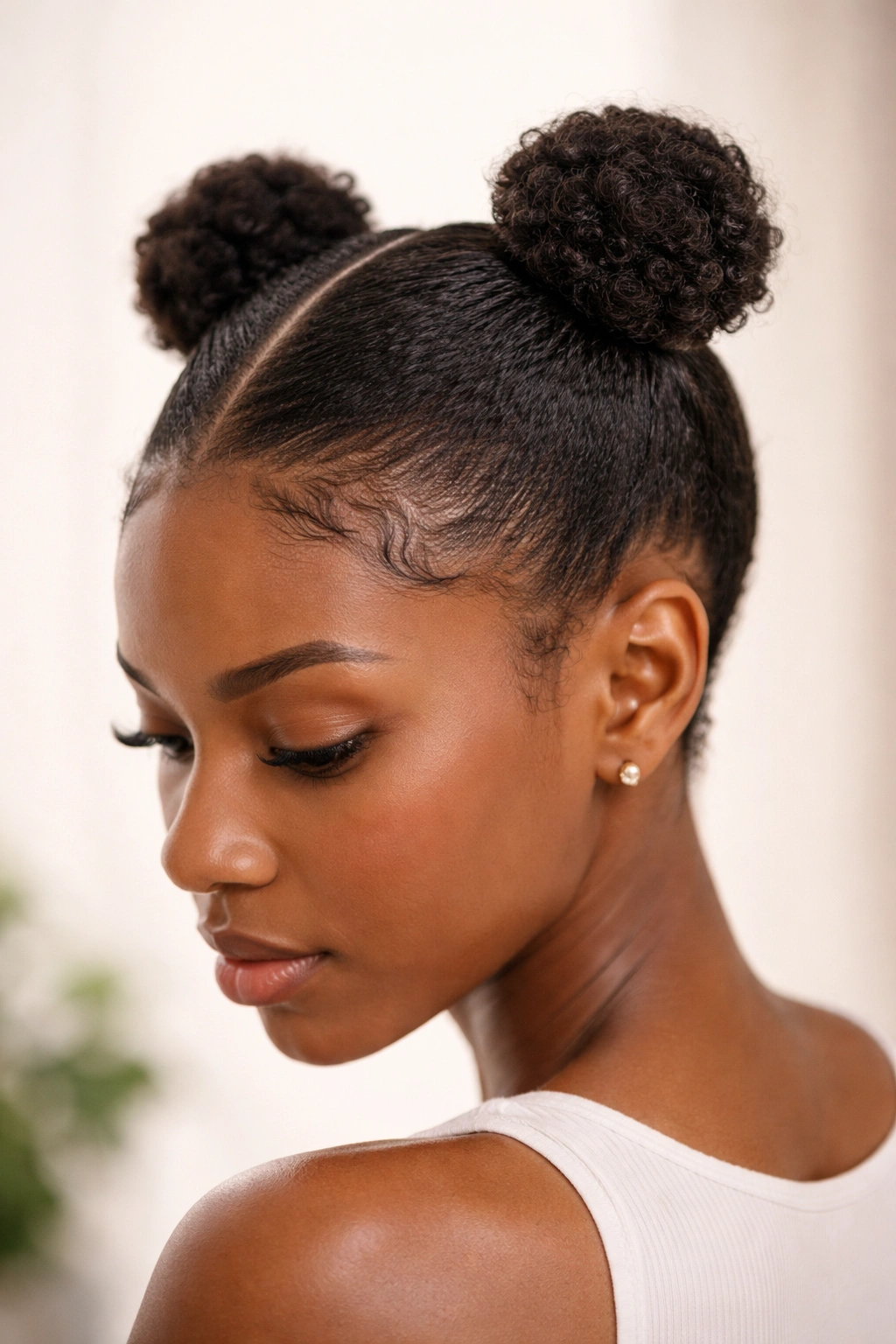
Can short Afro hair wear space buns and still look bold? Yes. It just needs a different scale.
Mini space buns sit closer to the crown and work with the hair’s own spring instead of fighting it. If your hair is short, dense, or freshly trimmed, trying to force huge buns usually ends with loose pieces sticking out in odd places. Tiny buns look cleaner. They also look sharper than people expect.
A small twist or two on each side is enough to build shape. Pull the hair upward, secure it with a small elastic, then wrap the remaining ends around the base until the bun feels compact. If the hair is very short, let the buns stay puffier and less wrapped. That does not make them messy. It makes them honest.
One-sentence truth: small buns can look more intentional than oversized ones.
A light leave-in cream helps here, but keep the product light. Heavy butter can make short sections slippery, and slippery hair is annoying when you are trying to anchor tiny buns. A few bobby pins, placed in an X shape, usually hold better than trying to force one giant elastic to do everything.
4. Flat-Twist Space Buns with a Sleek Front
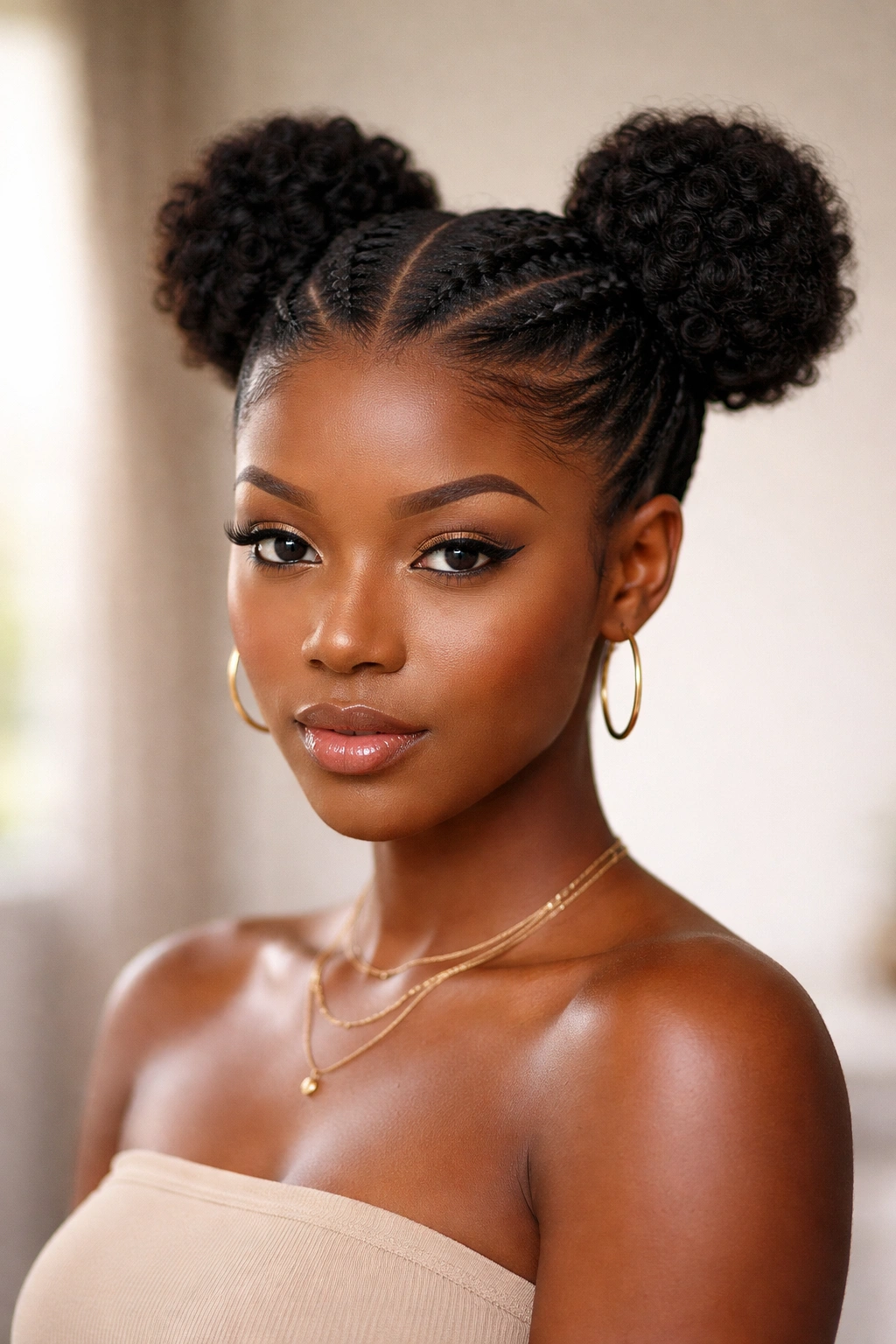
Picture a style that looks neat at the front and soft at the crown. Flat twists are the reason it works.
What Makes the Shape Different
A flat twist lays the hair close to the scalp, which gives the front half of the style a clean line without making it look severe. Then the buns sit at the end of those twists, almost like they were built on top of a braid map. The look has more detail than a plain part and ponytail base, but it is still easy to read from across a room.
I like this on hair that has a little stretch and a little grip. Too much slip, and the twists unravel. Too much dryness, and they start looking fuzzy before you even leave the house. A lightweight cream or curling custard usually works better than a heavy butter here.
What To Ask For
- Keep the twists flat and close at the root.
- Leave the ends loose enough to wrap cleanly into each bun.
- Use a satin scarf for 10 to 15 minutes after styling so the front settles.
- Avoid coating the roots in too much gel, because the twists can get stiff and flaky.
The style has a quiet kind of drama. Not soft. Not loud. Just clean and shaped in a way that makes the buns feel more sculptural than cute.
5. Half-Up Space Buns with Loose Curls
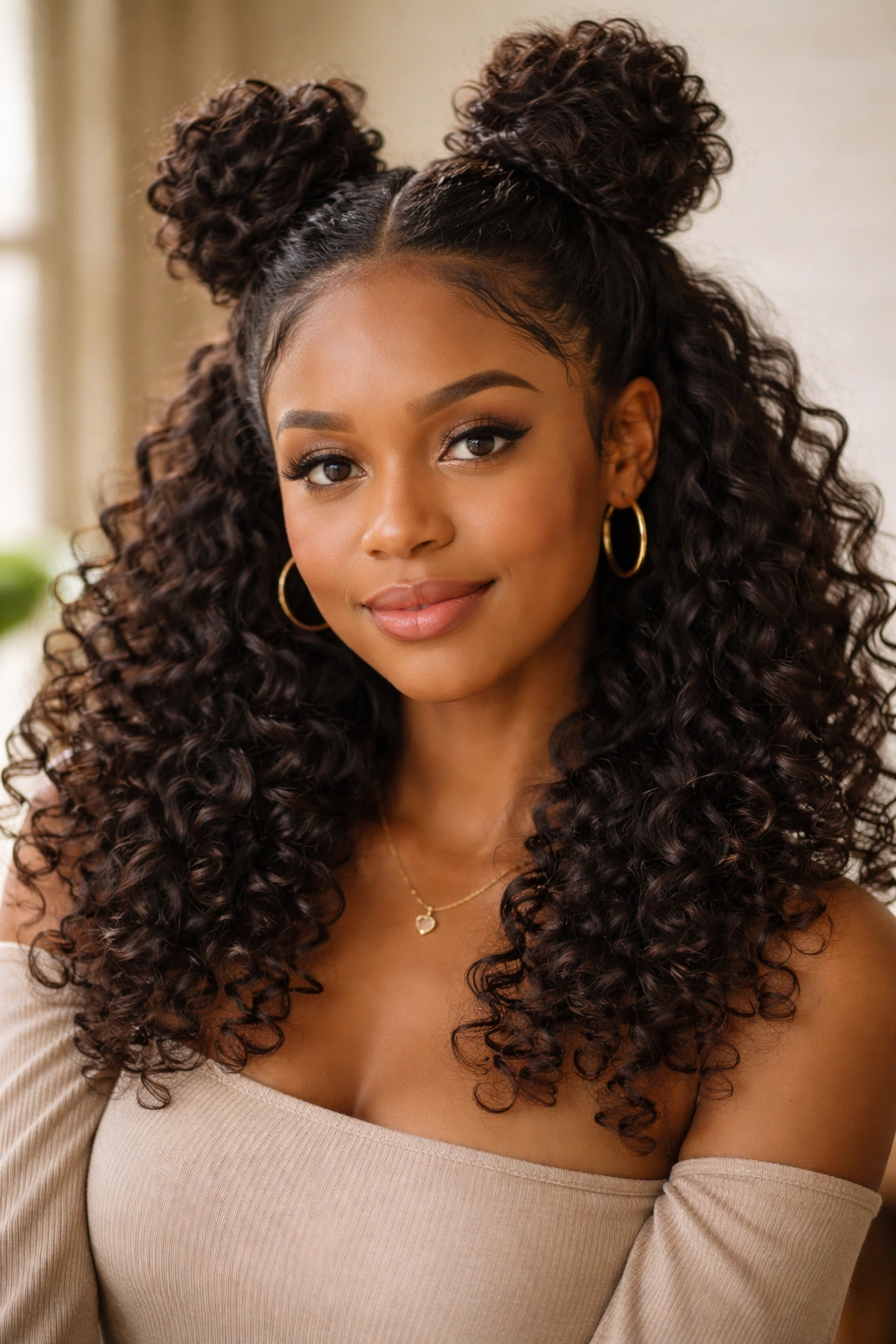
Half-up space buns are the move when you want the shape of the style without hiding all the texture. The top half gets lifted into the buns, and the rest stays down, so the hair keeps movement around the shoulders and back.
That balance changes the whole mood. Full-up space buns can feel playful or sporty, but the half-up version has more softness because the loose hair breaks up the symmetry. It is especially nice when the back is a twist-out, rod set, or defined coil pattern that you do not want to flatten under a full bun style.
How To Keep The Back Soft
- Set the back with a leave-in that keeps definition without turning the curls crunchy.
- Separate the curls with your fingers, not a comb, so the clumps stay intact.
- Clip the top sections high enough that they do not collapse into the loose hair.
- Leave a little space at the nape so the bottom section does not look squeezed.
This style has another advantage: it gives you two looks in one. The top is lifted and clean, while the rest still moves when you turn your head. If you like wearing hoops, a strong lip, or a jacket with a clean collar, this shape works well because the hair does not compete with the outfit. It frames it.
6. Afro Space Buns with Gold Cuffs and Scarves
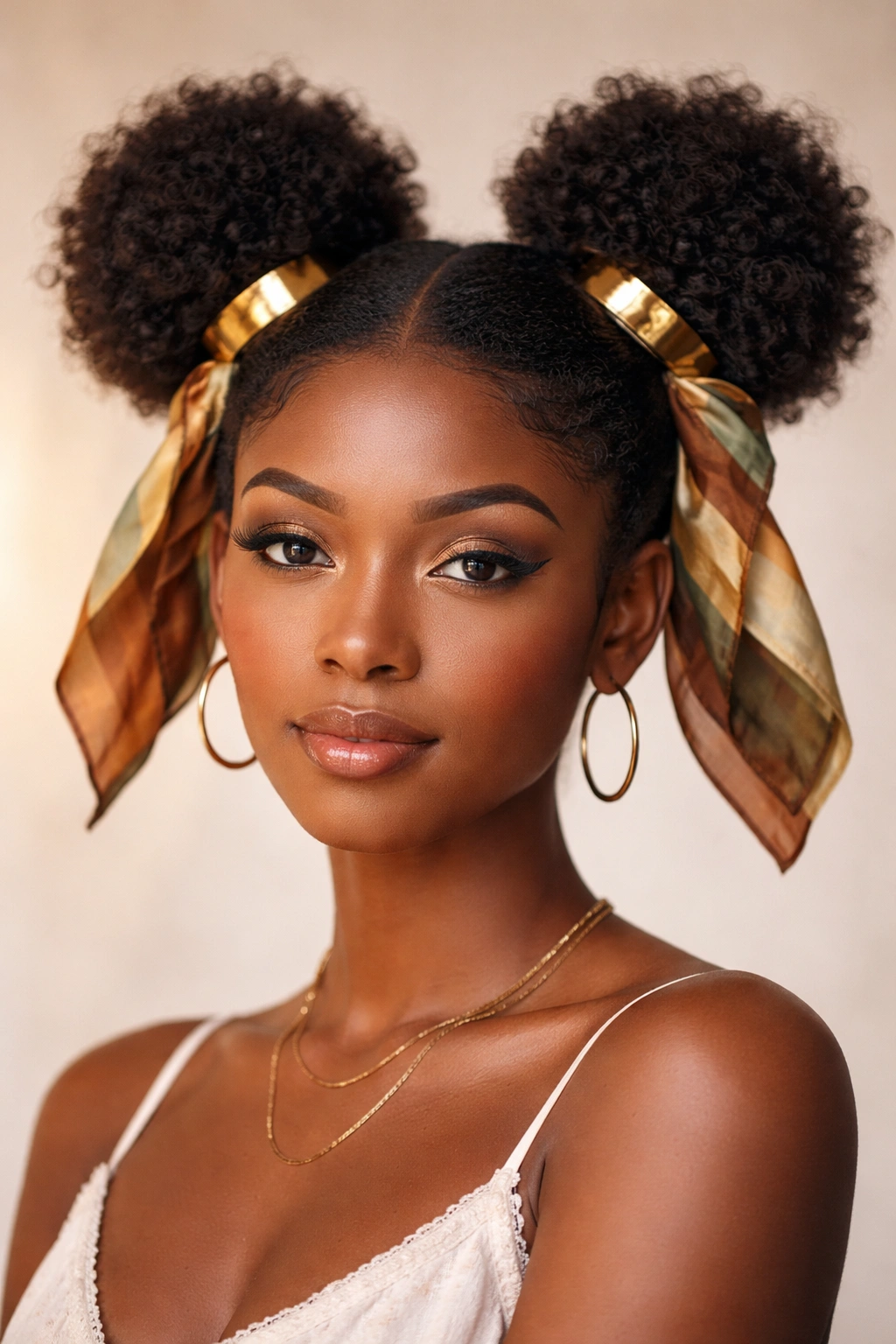
Accessories change the mood faster than extra product ever will.
Gold cuffs, fabric wraps, and slim scarves can take standard Afro space buns and push them toward polished, romantic, or a little artistic, depending on where you place them. The key is restraint. One strong accent is enough. Two can work. Six starts to look busy, and the buns lose their shape under all the extra pieces.
A scarf tied around the base of each bun gives a softer finish than a bare elastic. Gold cuffs or rings near the ends of twisted sections add contrast against dark hair without needing much size. I also like a single printed scarf pulled through the middle part and tied low in the back when the outfit is plain and the hair needs to do more of the talking.
Pick one focal point, not three.
If the buns are already large, choose smaller accessories. If the buns are compact, you can afford a little more shine or fabric. Matte metal looks different from bright gold, and that matters here; bright pieces read more festive, while matte pieces feel more grounded. Either way, the accessory should look like it belongs to the bun, not like it wandered onto the hairstyle by accident.
7. Feed-In Braid Space Buns for Long Wear
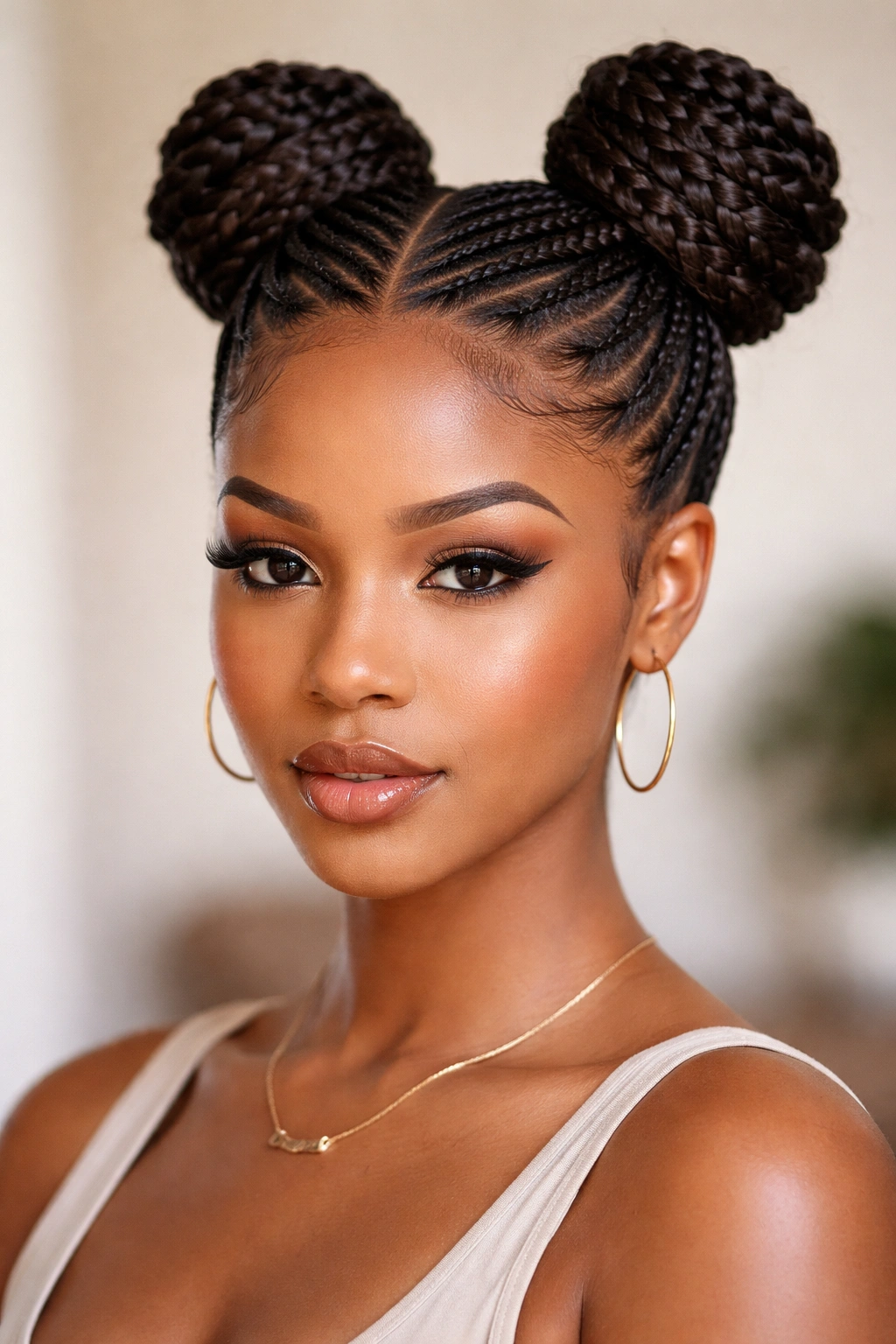
If you want a style that keeps its shape through a long day, feed-in braid space buns earn their place.
The braid starts small at the hairline and gradually picks up more hair, which means the base feels smoother and the front edge looks cleaner. That gradual build also helps with weight. A hard, thick braid right off the scalp can feel bulky fast. Feed-in braids spread that bulk out, and the buns at the top end up feeling more balanced.
Why The Base Matters
The base decides how the rest of the style behaves. If the braid is neat and even, the bun sits where you want it. If the base is lumpy, the bun tilts, and you end up fixing it every time you look in a mirror.
A few practical notes help here:
- Start with small sections at the hairline so the braid has a clean beginning.
- Add hair slowly if you are feeding in extensions or extra sectioned hair.
- Keep the bun itself wrapped tightly enough that it does not loosen, but not so tight that it feels hard.
- Sleep with a silk or satin bonnet so the braid lines stay smooth.
This style does a lot of work for people who do not want to restyle every morning. It also gives a more finished silhouette than a loose two-bun look, which makes it a good choice when the outfit is tailored, sharp, or a little dressed up.
8. Bantu-Knot-Inspired Space Buns with a Sculpted Finish
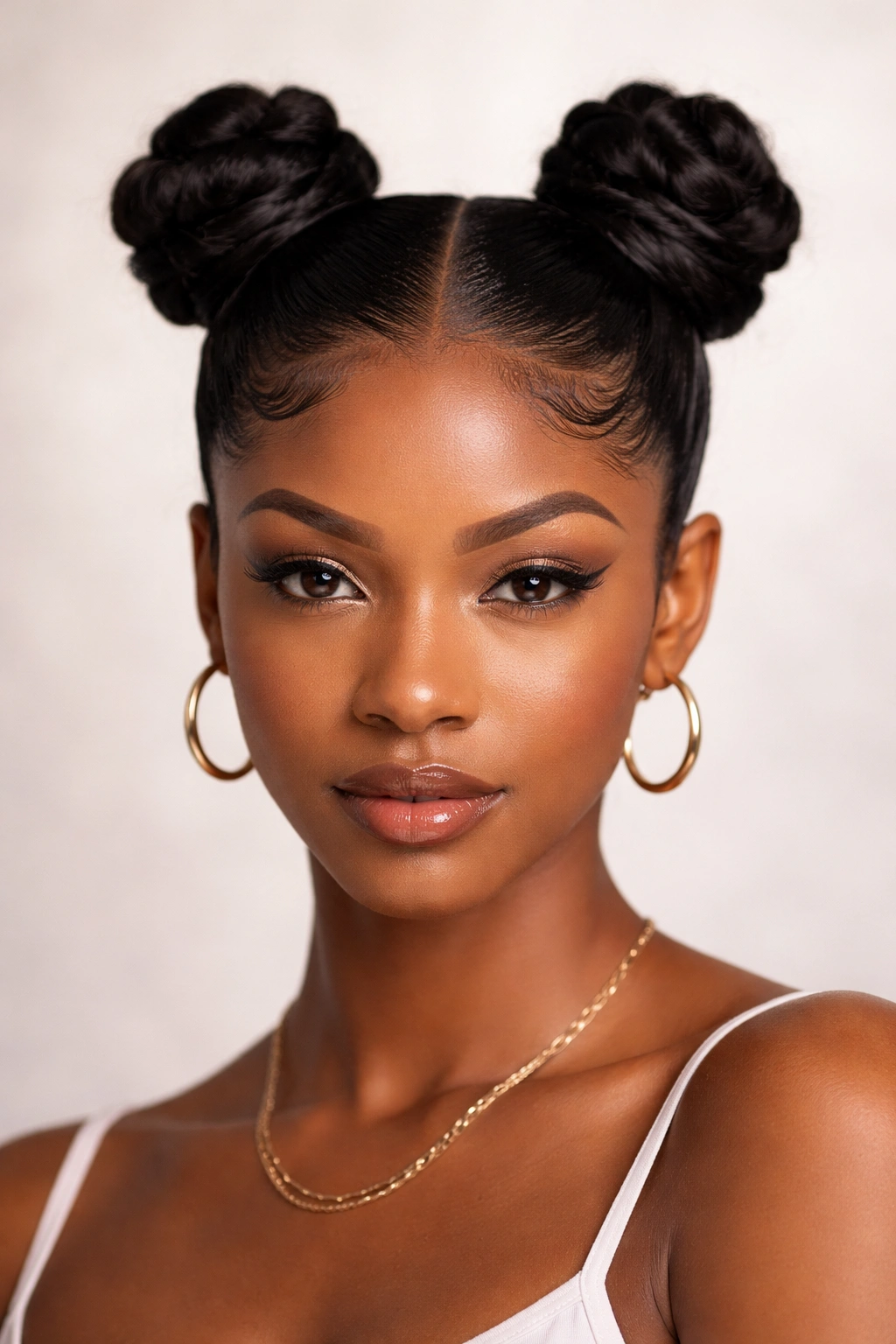
These are not full bantu knots, and that difference matters.
A bantu-knot-inspired space bun starts with a tight twist or coil, then folds into a compact bun shape instead of stopping at the knot itself. The result is more sculpted than fluffy, with a tighter silhouette that looks almost architectural. It is a good choice when you want the hairstyle to feel deliberate and a little artistic.
The style works well when the hair has enough length to wrap cleanly, but it can still be done on shorter hair if the sections are compact. The finished shape tends to sit closer to the head than the classic rounded bun, which makes it feel sharp rather than oversized. I like that. It looks grown, not fussy.
Where The Shape Lands
This version sits in a sweet spot between protective styling and statement hair. The sections are controlled, the ends are tucked, and the bun shape itself gives you the visual punch. You do not need lots of decoration for it to read as a full look.
A few things keep it from looking too tight:
- Leave enough softness at the front so the parting does not look harsh.
- Keep the base compact, but do not flatten the coils until they lose their shape.
- Use a light sheen product only on the outside, not all the way through the hair.
The whole point is that the style should look carved, not crushed. There is a difference, and you can see it the second the hair starts to move.
9. High-Volume Stretched Afro Space Buns
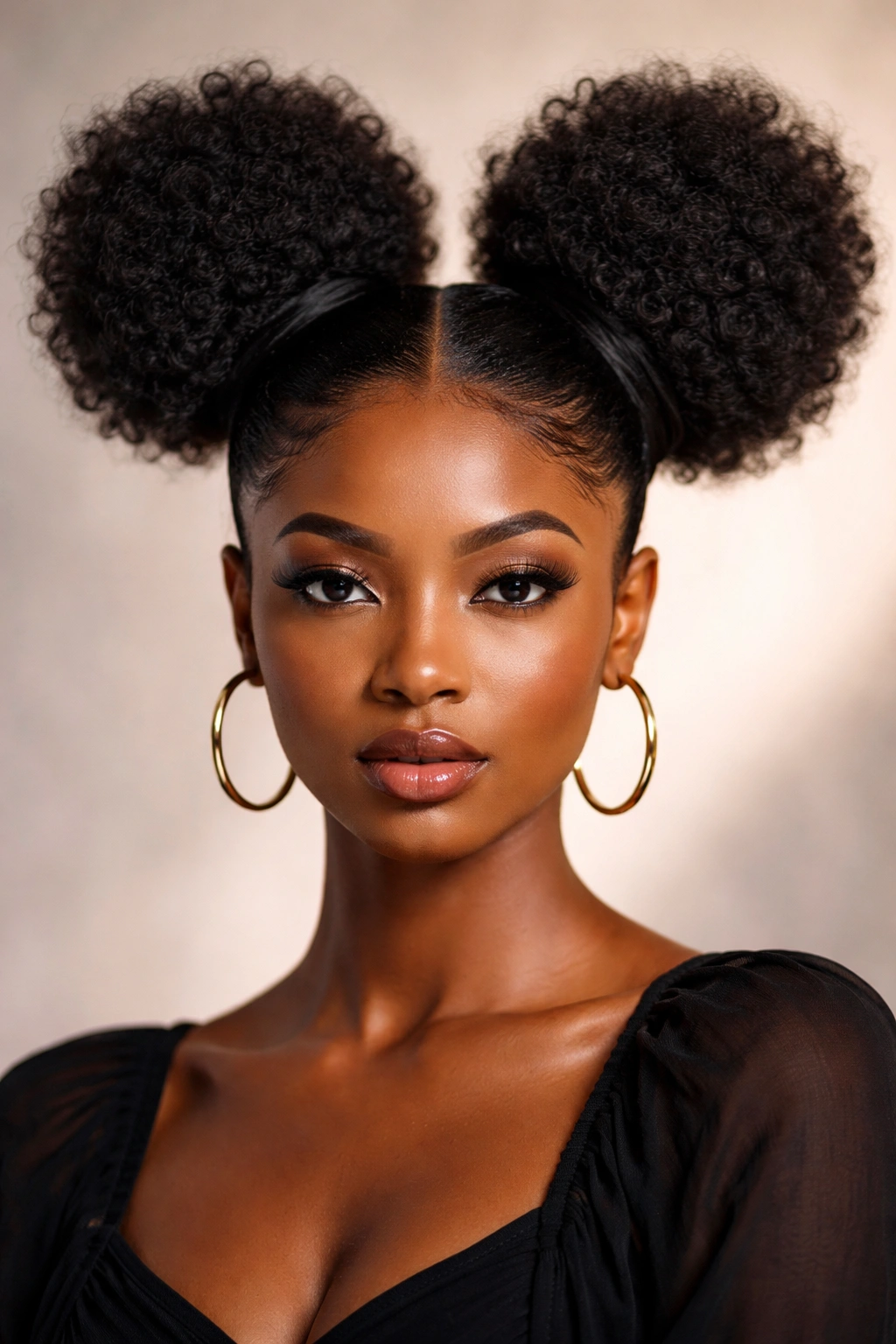
A stretched base gives Afro space buns a different attitude. Bigger. Fuller. More dramatic.
When the hair is banded, twisted out, or blow-dried on a low setting, the buns hold more height and the parting becomes easier to see. The style stops reading as tiny and cute, and starts reading as bold in a more obvious way. That works especially well if you want the buns to stand out from the rest of the hair instead of blending into it.
The best part is the shape around the buns. With stretch, you get more length to wrap and more body at the roots, which helps each bun look substantial without needing padding. But the flip side is friction. If the hair is too dry, the stretched ends can fray while you are wrapping them. That is annoying and easy to avoid.
A Few Things That Help
- Detangle while the hair is still slightly damp, not bone dry.
- Use a heat protectant if you blow-dry, and keep the heat on low or medium.
- Let the hair cool before sectioning, because warm hair shifts more.
- Wrap the ends softly so the bun stays full instead of looking smashed.
This version is the one I would pick for a weekend event, a concert, or any time you want the hair to feel like part of the outfit instead of a quiet background detail.
10. Asymmetrical Space Buns with a Side Part and Curly Fringe
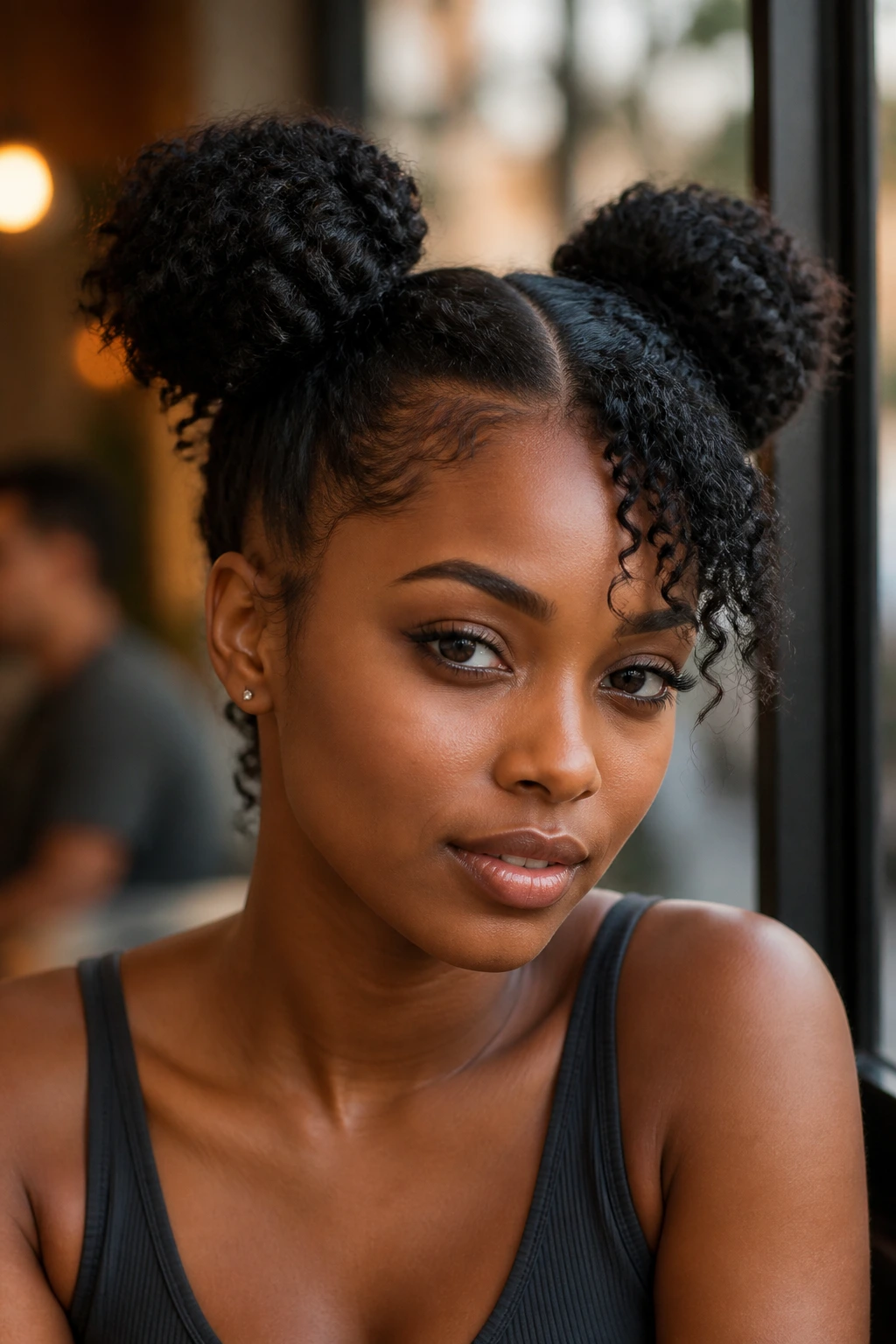
Perfect symmetry is overrated.
A side part with one bun slightly larger than the other gives Afro space buns a sharper personality, and a curly fringe in front softens the whole thing so it does not feel too severe. The look works because it breaks the expected twin-bun pattern just enough to feel intentional. One side can sit a little higher. The other can stay a touch fuller. That tiny imbalance makes the style look edited rather than copied.
I like this version when the outfit already has shape — wide sleeves, sharp shoulders, a strong neckline, or anything with clean lines. The hair gets to play a different role then. It does not need to be even. It needs to be interesting. A few coils left free around the face help a lot, especially if your hairline or forehead framing looks better with movement than with a hard slick-back.
The fringe can be soft and short, or longer and more defined. Either way, keep it separated from the buns so the front stays light. If the front pieces get pulled too tightly into the same section, the asymmetry loses its charm and the whole style turns into a regular two-bun look with a stray curl in front. That is not the goal.
This is the version I’d wear when I want the hairstyle to look deliberate from the first glance. Strong part. Uneven buns. A little texture left out. Clean, but not precious.
