



There is something uniquely satisfying about the way textured hair responds to structure. When you take a full, coiled, or kinked mane and coax it into a bun, you aren’t just styling your hair; you are engineering a sculpture. People often assume that afro hair is limited in its styling potential, but the reality is that the natural volume and elasticity of tight curls make for the most resilient, interesting, and architectural updoes you could ever ask for.
The secret to a great bun on afro-textured hair isn’t just the product you use to slick it down—though that matters—it is the underlying foundation. You are balancing tension against the natural desire of your hair to expand. When you find that equilibrium, you get a style that holds all day, stays polished, and actually protects your ends from the friction of daily life. Whether you are prepping for a boardroom presentation or just trying to get through a humid afternoon without your hair taking over the world, these styles are the blueprint.
1. The High Sleek Bun
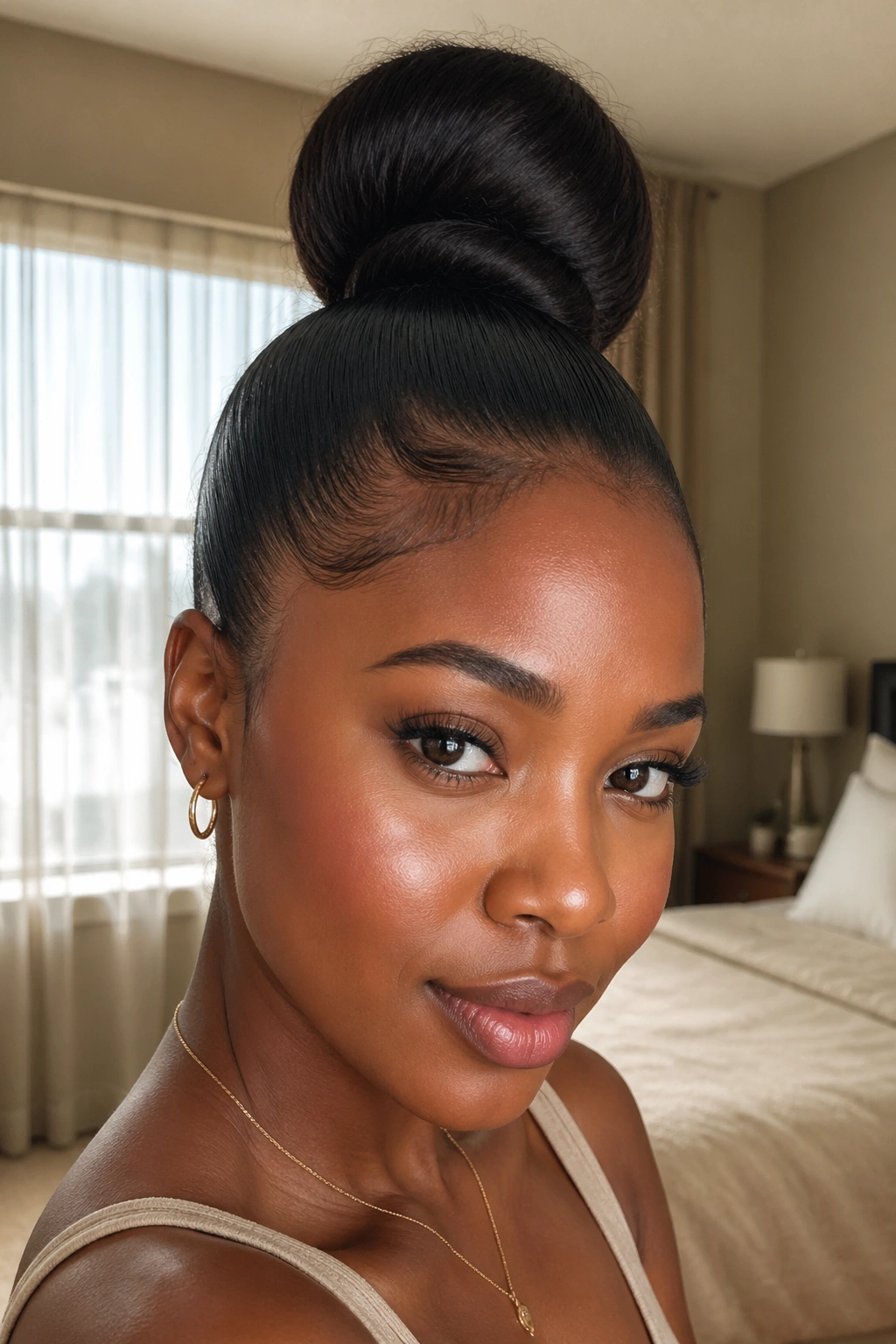
This is the gold standard of styling. It is the go-to for a reason: it instantly lifts the face, elongates the neck, and keeps your hair completely out of your way. To pull this off, you need a high-quality boar bristle brush and a pomade that actually holds. Don’t rely on water-based gels alone if your hair has a high porosity, because they will dry out and flake long before your day is done.
The Foundation of the Sleek Look
Start by moisturizing your hair with a leave-in conditioner to make it pliable. Use a generous amount of edge control or a firm-hold styling pomade around the perimeter. The trick isn’t just brushing the hair back; it is brushing it up in sections. Start at the nape of your neck and brush upward, gathering the hair into your hands as you go. Secure it with a thick, snag-free elastic band. If you want the bun itself to look sleek, wrap a small section of your hair around the base of the bun and pin it with a u-shaped hair pin. It looks intentional and finishes the look perfectly.
2. The Messy Top Knot
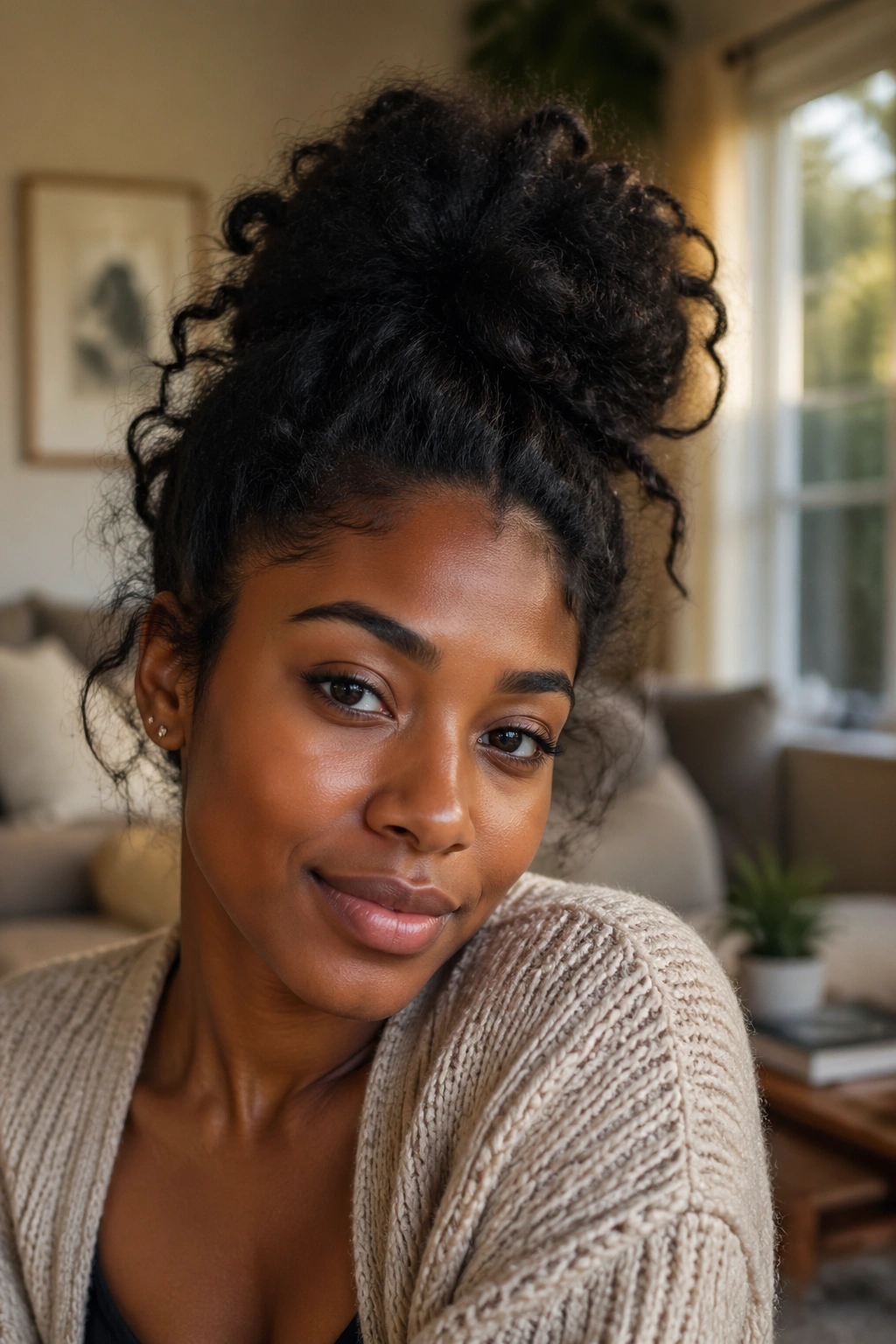
Sometimes, perfection is overrated. The messy top knot is about embracing the natural volume and chaos of afro-textured hair rather than fighting against it. This is the style you reach for when your wash day is a few days out and you need to stretch the longevity of your style without heat styling or excessive tension.
Why It Works for Texture
The natural texture of kinks and coils provides the structure that straight hair needs foam inserts to achieve. You have built-in bulk. Simply gather your hair to the crown of your head, but instead of smoothing it down, keep it loose. Loop your hair through an elastic band once, and on the second loop, pull it only halfway through. Pin the ends around the base to create a loose, architectural shape. It is effortless, chic, and puts zero strain on your hairline, which is a massive bonus if you are focusing on length retention.
3. The Braided Crown Bun
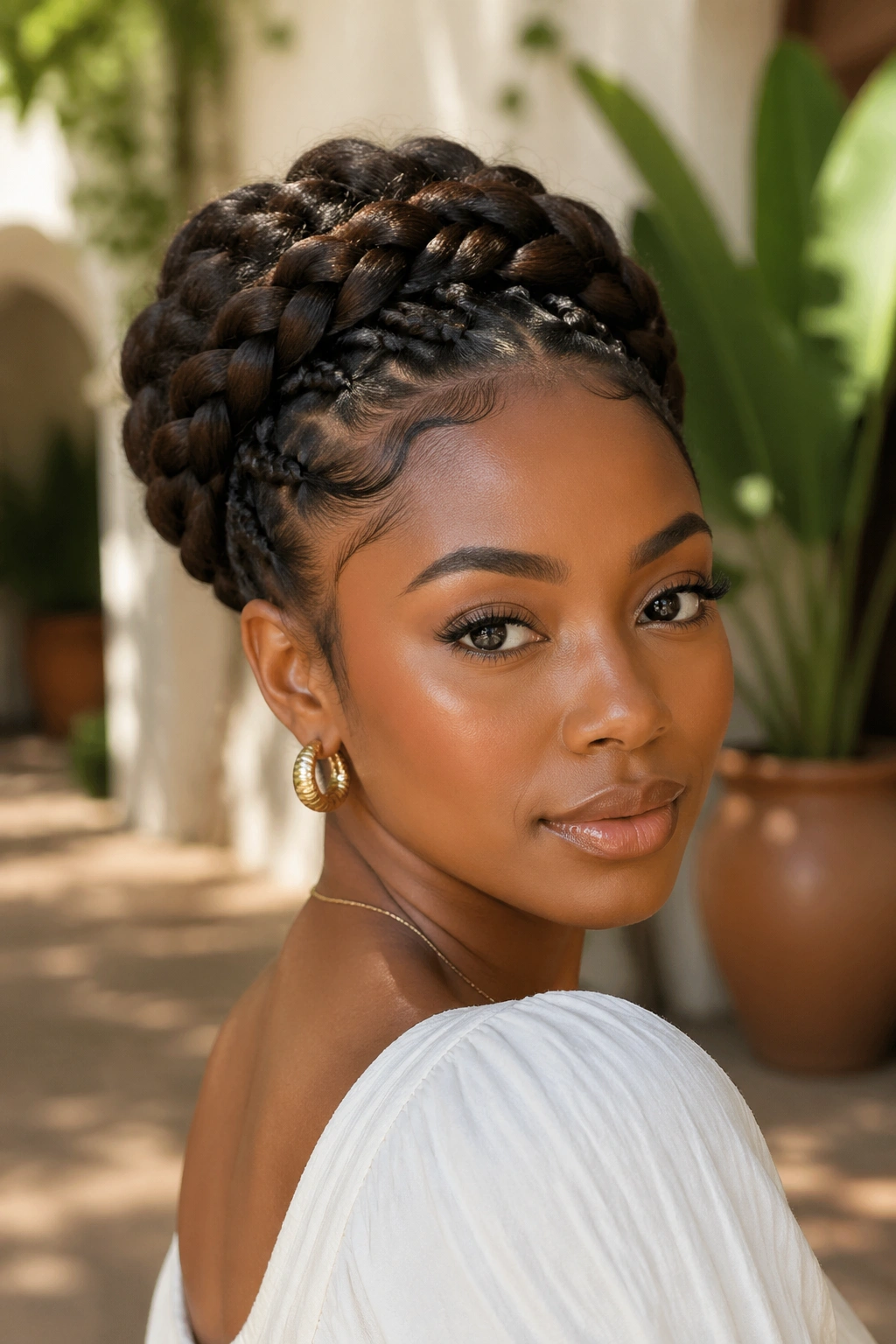
This style is a work of art. It combines the protective benefits of braiding with the elegance of a bun, making it ideal for events, weddings, or times when you simply don’t want to think about your hair for a few days. You can do this with your natural hair, but using Marley hair or kanekalon extensions can add the length and thickness needed to make the crown truly pop.
Getting the Tension Right
Part your hair in a large circle around the crown of your head. Braid the perimeter hair into a halo or a French braid that encircles the bun area. Braid the center section into a small ponytail and create a bun from that. Wrap the outer braid around the base of your central bun and secure it with bobby pins. Warning: Check your scalp tension. If the braids feel like they are pulling at your roots, they are too tight. You want a secure hold, not a headache.
4. The Low Chignon
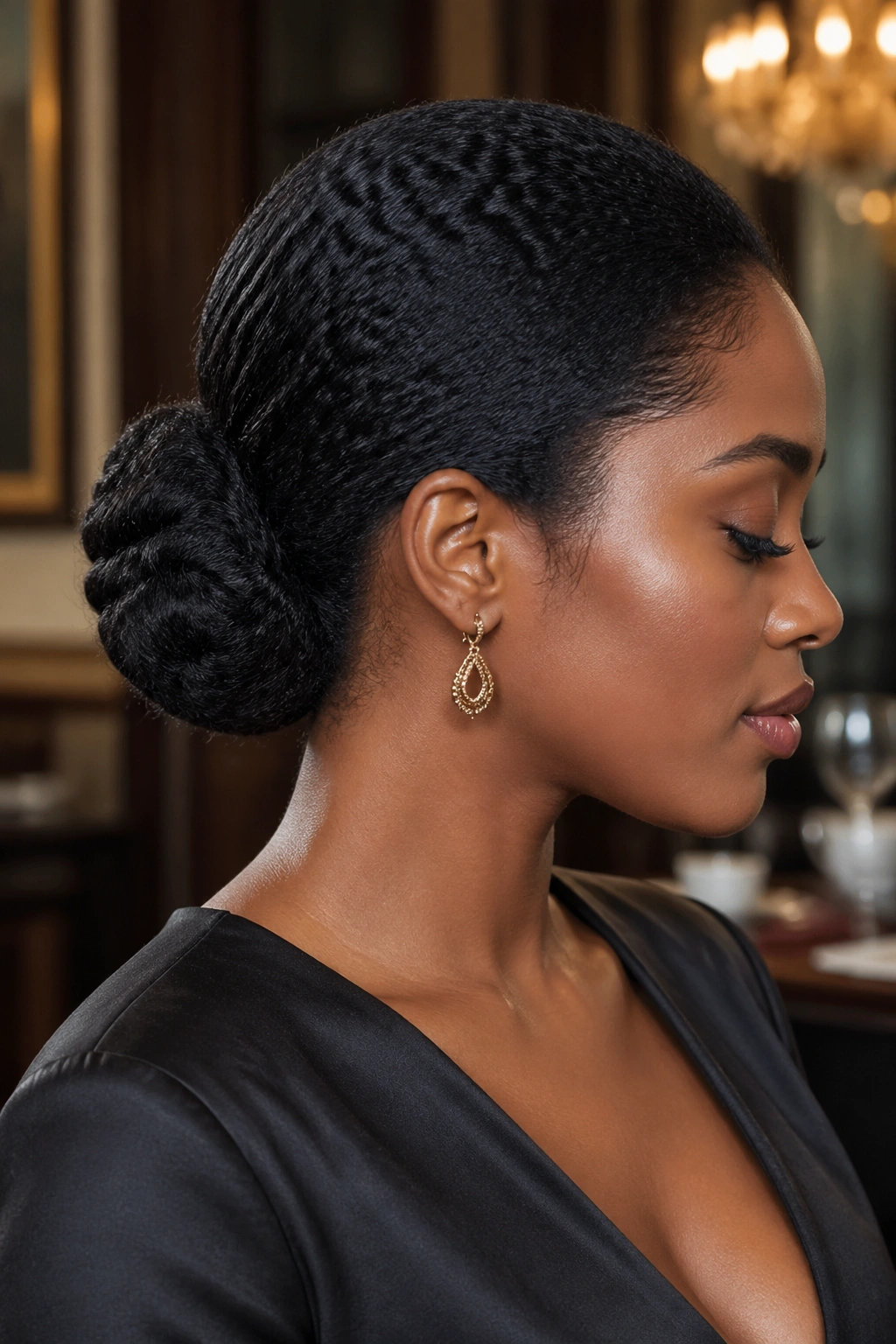
The low chignon is the definition of understated elegance. It sits right at the nape of the neck, making it perfect for office settings, formal dinners, or any occasion where you want a polished, sophisticated silhouette. This style works exceptionally well on stretched or blown-out afro hair, as it allows for a smoother, more uniform texture.
Creating the Shape
Brush your hair back into a low ponytail, but keep it loose enough that it doesn’t flatten your natural volume entirely. Once the ponytail is secure, twist the length of your hair into a rope and coil it around the base to form the chignon. Use large hairpins instead of bobby pins—they grab more hair and provide a more secure hold without disrupting the shape of the bun. If you have wispy edges, leave them out to frame your face softly; it adds a romantic touch that balances the sleekness of the bun.
5. The Half-Up Half-Down Bun
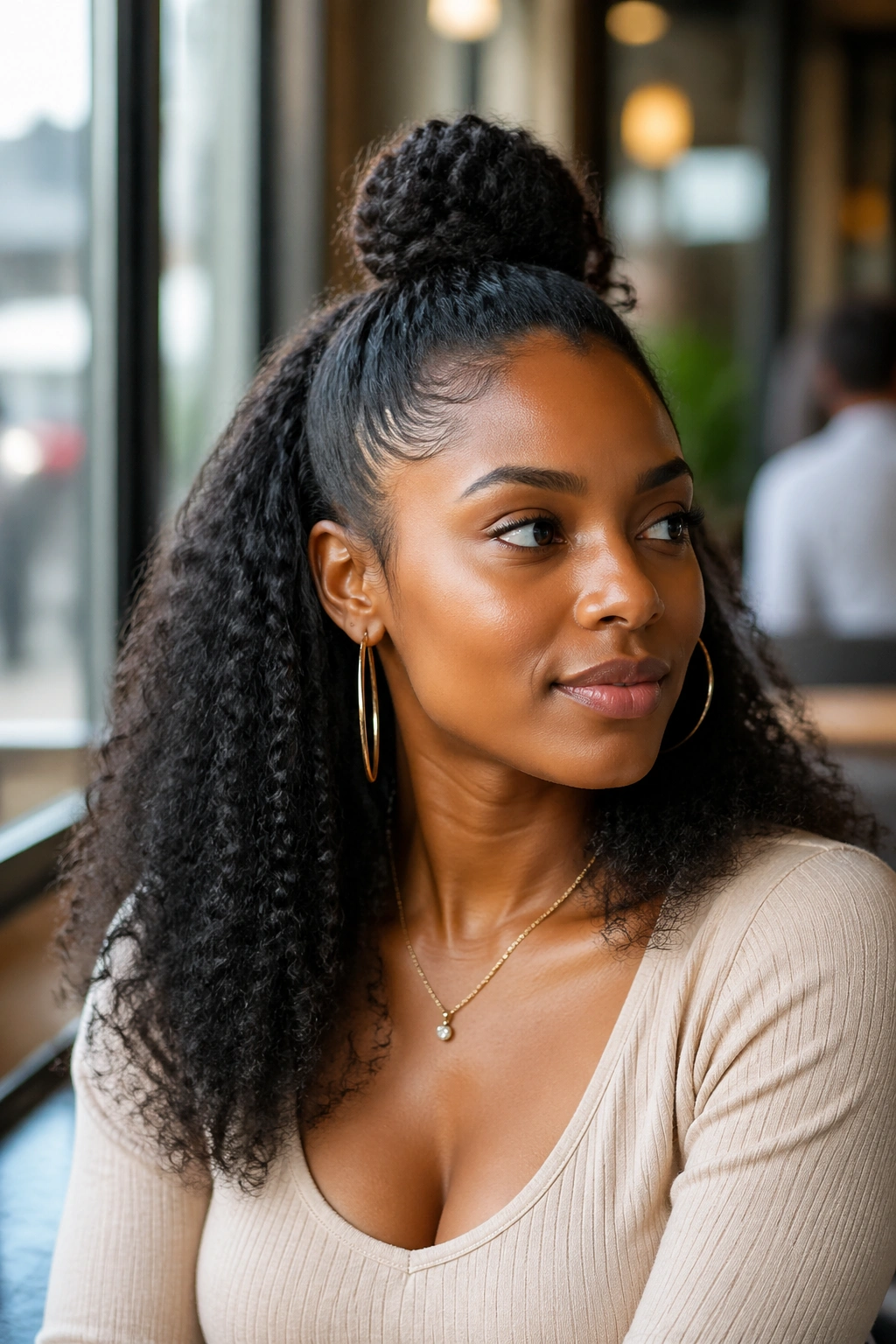
This style is arguably the most versatile of the bunch. It gives you the best of both worlds: the freedom of wearing your hair down and the neatness of a pulled-back style. It is particularly effective for showcasing the length and density of your hair without letting it obstruct your vision.
Balancing the Proportions
The key to this style is the parting. Use a rattail comb to create a clean, horizontal part from ear to ear. Gather the front section—the hair from your hairline to the crown—and pull it into a small bun at the top of your head. Leave the back section loose, defined with a bit of curl cream or a light gel. If you want a more dramatic look, make the top bun a sleek, high-positioned puff. If you want a softer look, keep the top section looser and pin it into a messy loop.
6. The Double Bantu Knot Buns
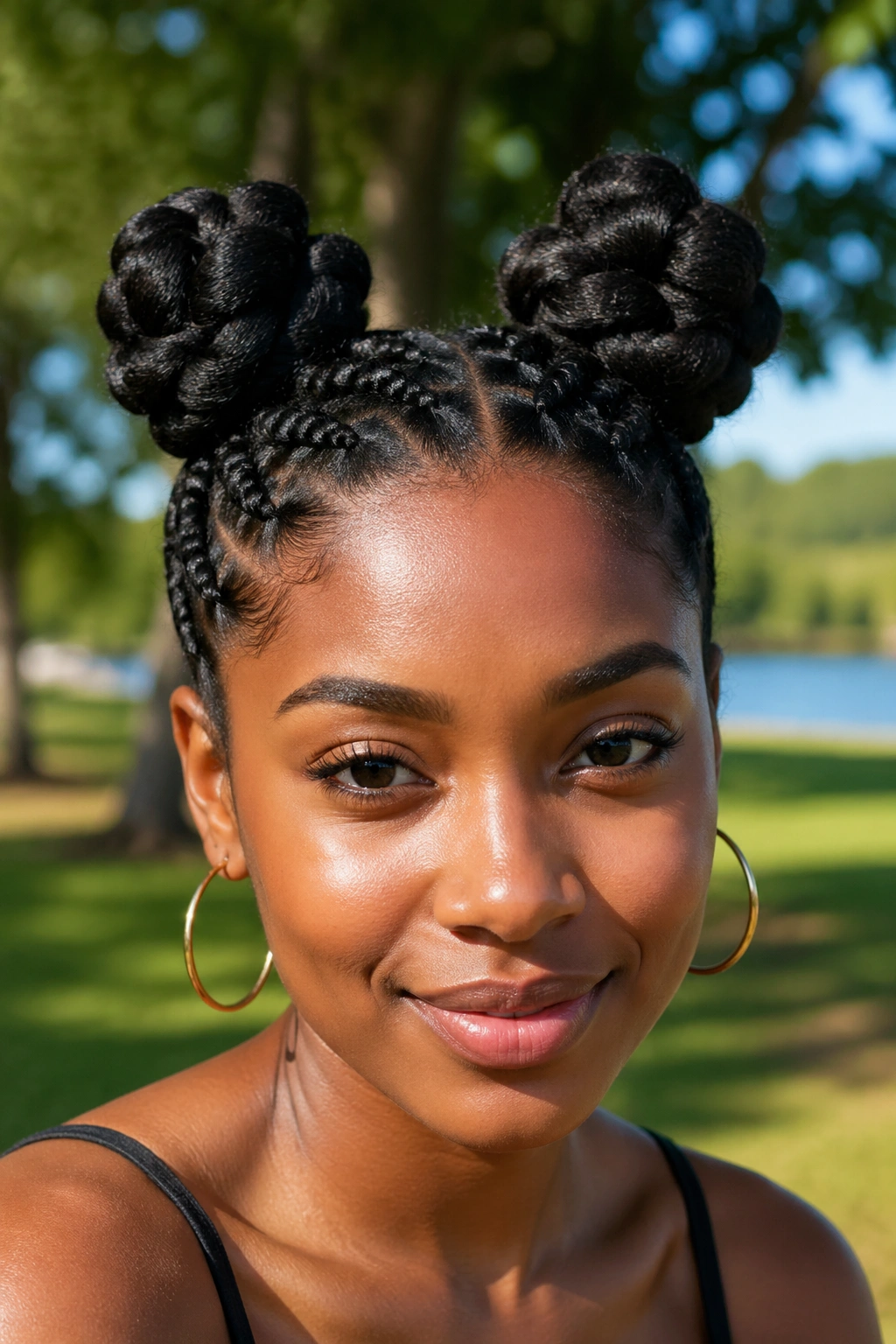
Bantu knots are a culturally rich and protective style, but they are also a fantastic fashion statement. Placing them as two larger, intentional buns on the top of the head creates a youthful, energetic look that is incredibly fun to wear. This style is best done on damp, conditioned hair to ensure the knots are smooth and clean.
Creating Uniformity
Section your hair down the middle to create two distinct sides. Apply a thick moisturizing cream to each section to eliminate frizz before you start the twisting process. Twist each section tightly until it begins to coil on itself. Wrap the rope-like twist around the base of the coil, tucking the ends underneath. Secure with a sturdy hair tie or a few pins. Because this style relies on the tension of the twist, it can last for days—just wrap it in a satin scarf at night to keep the knots from unraveling or gathering lint.
7. The Space Buns
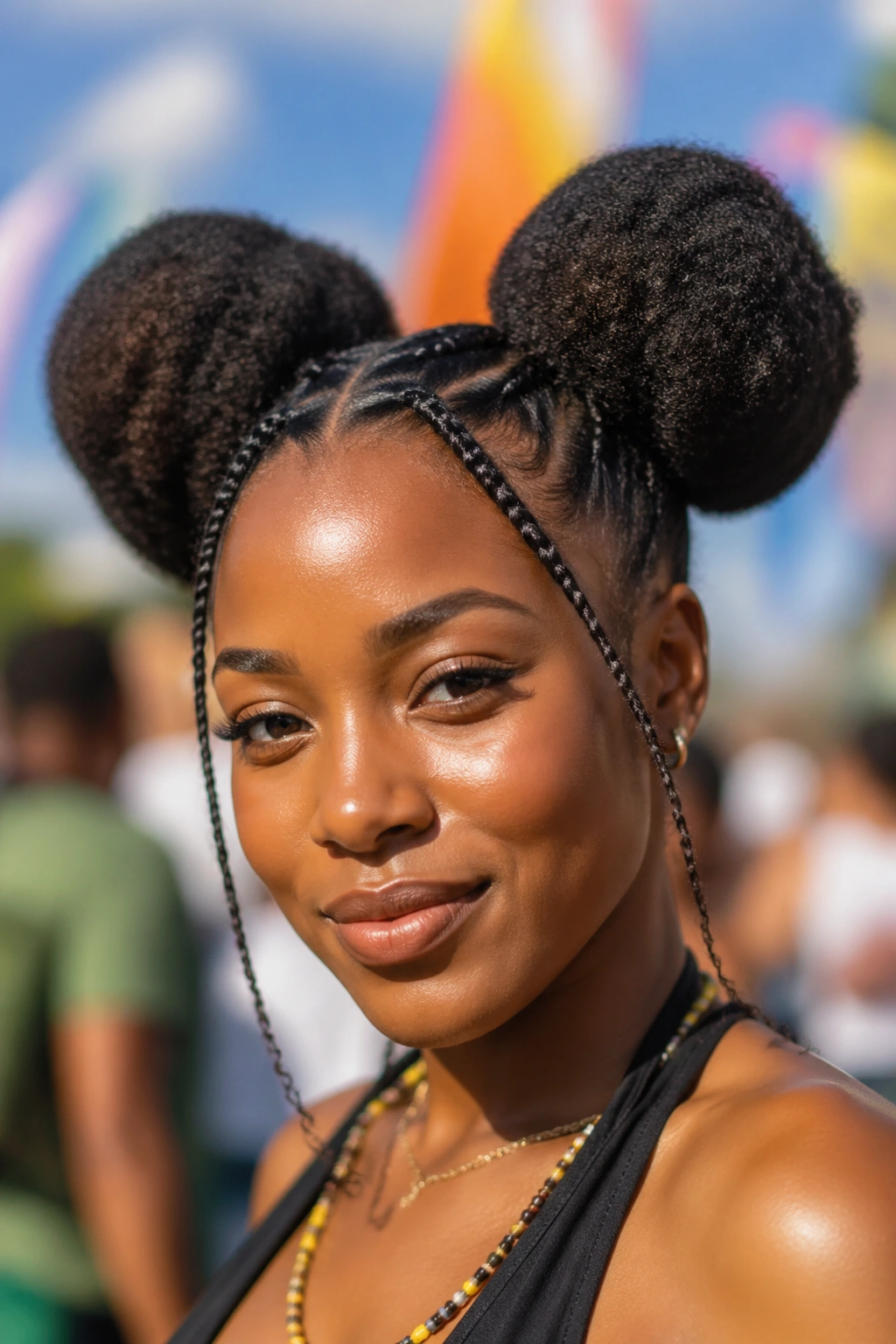
Space buns are the bolder, looser cousin of Bantu knots. Where Bantu knots are twisted tight, space buns are voluminous and airy. This style is fantastic for showing off the sheer magnitude of your hair. It is a bold aesthetic, often associated with festivals or casual, creative environments, but it can be styled cleanly enough for a weekend brunch.
Adding Volume
The trick to getting the perfect space bun on afro hair is to avoid over-combing. You want to maintain the fluffiness of your texture. Part your hair down the middle, gather each side into a high ponytail, and then fluff the ponytail with a pick or your fingers before wrapping it loosely into a bun. If your hair is on the shorter side, don’t worry about making the buns perfect; the messier and larger they are, the better. You can add cuffs or gold wire to the base of the buns for a little extra detail.
8. The Puff Bun with Bangs
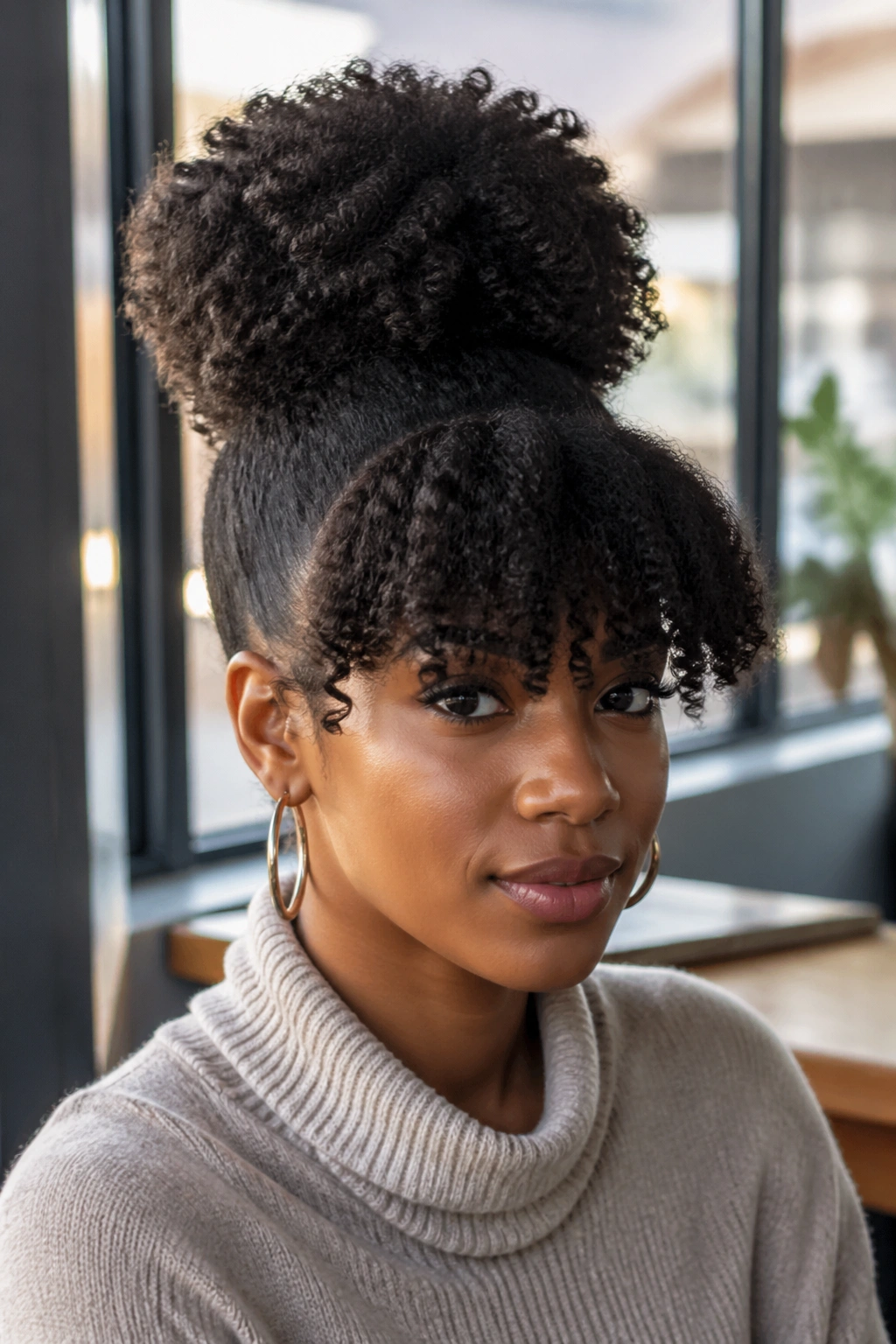
This style is the ultimate “cool girl” look. It’s dramatic, edgy, and frames the face in a way that highlights your bone structure. It works especially well if you have a faded cut or a tapered cut, but you can also fake it with longer hair by pulling the back section into a bun and leaving the front section loose.
Managing the Fringe
For the bangs, you want them to be defined but not crunchy. Apply a curl-defining custard while your hair is damp and use your fingers to coil each ringlet. Let them air dry completely without touching them—this prevents frizz. Pull the remaining hair back into a high, full bun. If you don’t have natural bangs, you can sweep a section of your hair forward and pin it near the hairline to mimic a fringe. The contrast between the sleek, pulled-back bun and the wild, textured fringe is what makes this style so visually interesting.
9. The Donut Bun
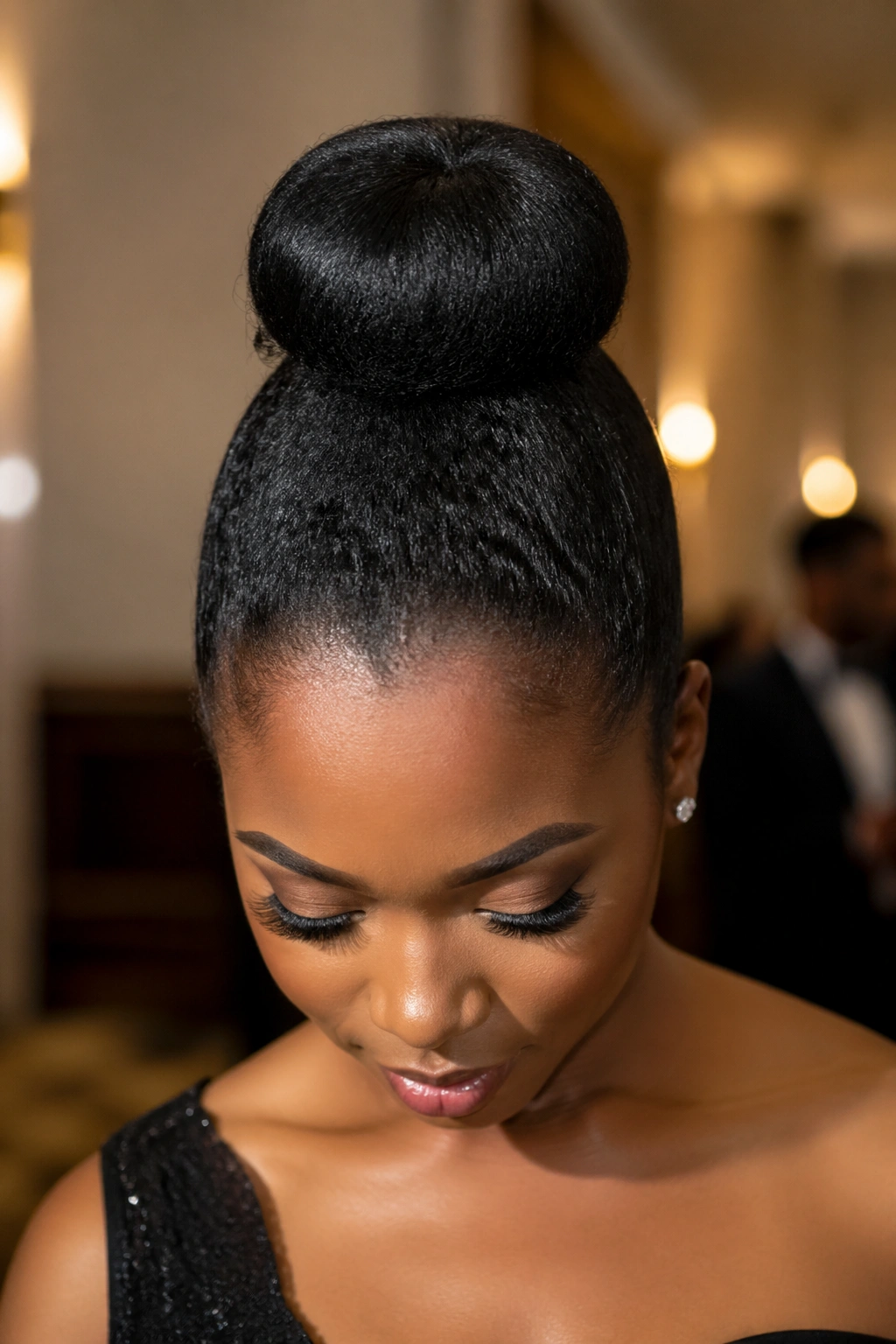
Sometimes you want size, and you want it fast. The donut bun utilizes a foam hair accessory to create a perfectly round, voluminous bun that looks like it took an hour to style, even though it takes less than five minutes. This is ideal for formal occasions where you want a uniform, classic look.
Incorporating the Tool
Pull your hair into a high ponytail. Slide the foam donut over the ponytail. Distribute your hair evenly around the donut so the foam is completely hidden. Secure the hair with a secondary elastic band around the donut, then tuck the remaining ends under the bun and pin them into place. If your hair isn’t long enough to cover the donut, don’t worry—you can wrap a clip-in hair extension around the donut instead. It provides the seamless finish you’re looking for.
10. The Twisted Bun
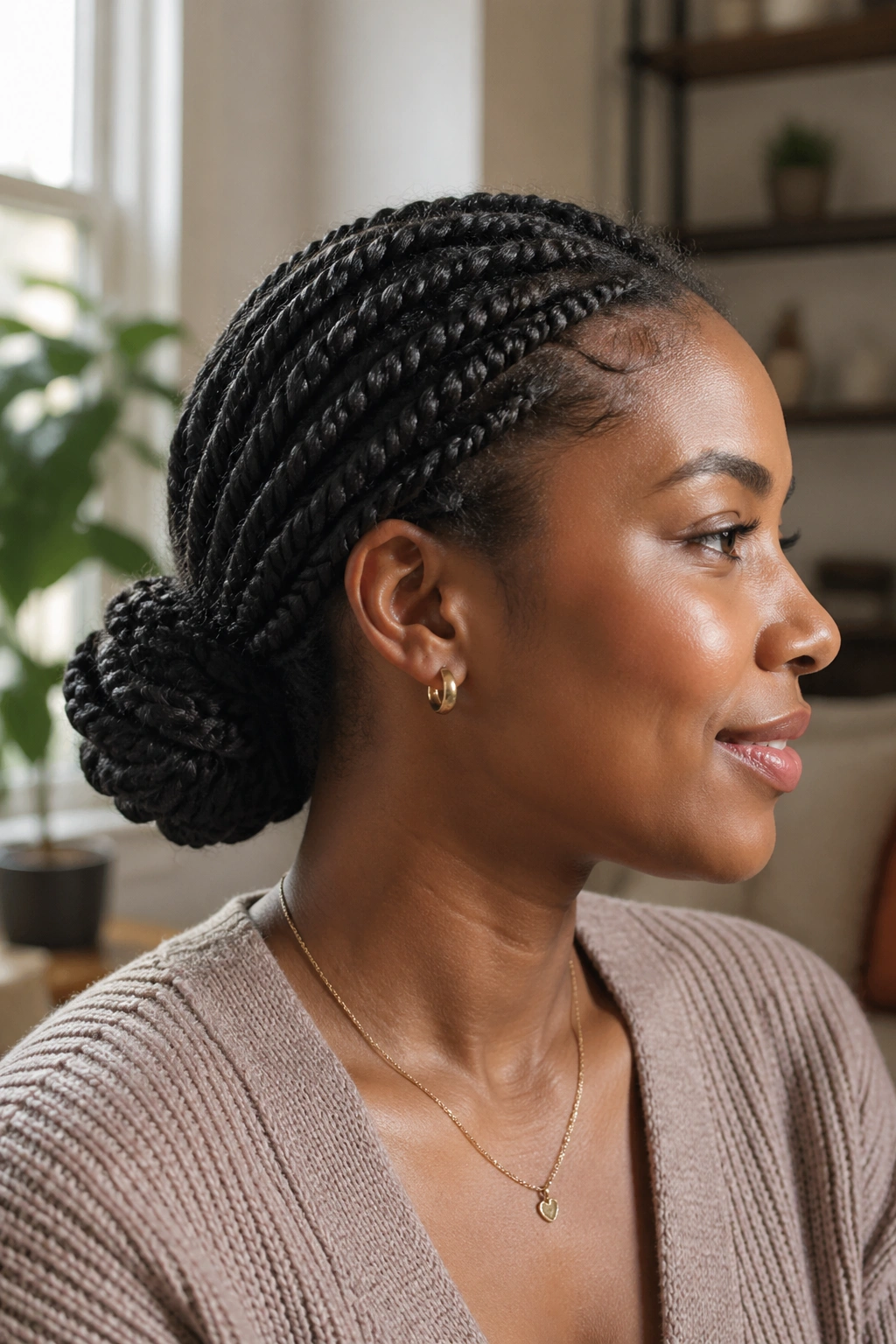
Twists are a staple in natural hair care, but they aren’t just for wearing down. A twisted bun is essentially a chignon made from hair that is already in two-strand twists. This is the ultimate protective style because your ends are completely tucked away and safe from the elements.
Longevity and Care
You can create this look using existing twists or by twisting your hair specifically for the updo. Gather the twists into a low ponytail and wrap them around each other, pinning them in place. The beauty of this style is how it ages; as the days go by, the twists might frizz slightly, but it just adds to the texture of the bun. If you want to refresh the style, just apply a light oil mist to your scalp and re-tie the bun to keep it from getting too loose.
11. The Side-Swept Bun
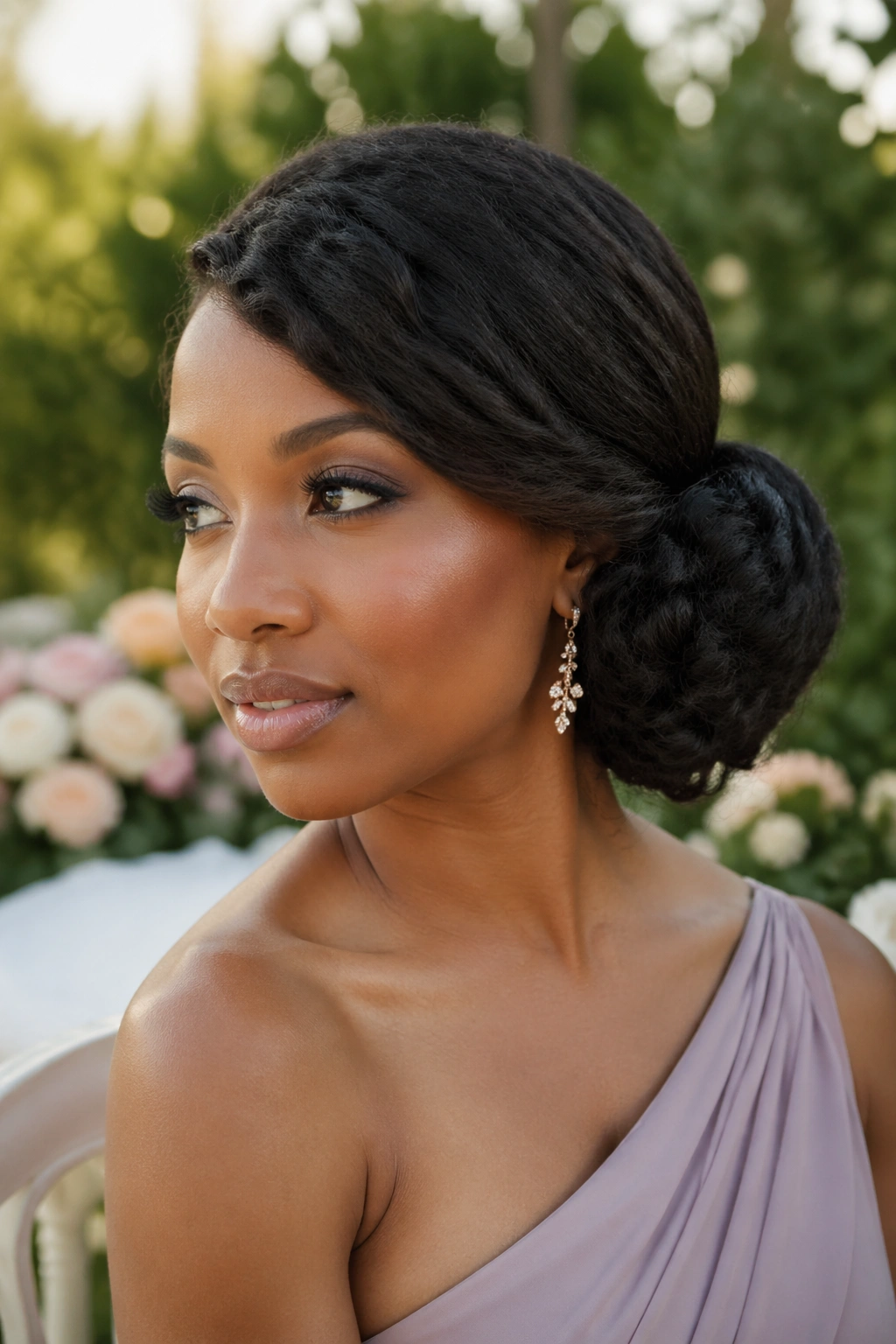
There is something inherently romantic about a side-swept style. It breaks the symmetry of your face and draws attention to your jawline. This style works best with a deep side part. It feels a bit more “finished” than a center-parted bun and is perfect for weddings or dressier evening events.
Balancing the Weight
Brush your hair toward the side opposite your part. Gather the hair behind your ear and secure it into a ponytail. Because the weight of the bun will be anchored to the side, ensure your hair tie is tight enough that the bun doesn’t sag. Create a soft, loose bun. If you want to get fancy, you can braid the front section of the hair—the part that is swept across your forehead—into a flat twist or a cornrow that leads into the bun. It adds a layer of intricate detail that really elevates the look.
12. The Bun with Accessory or Wrap
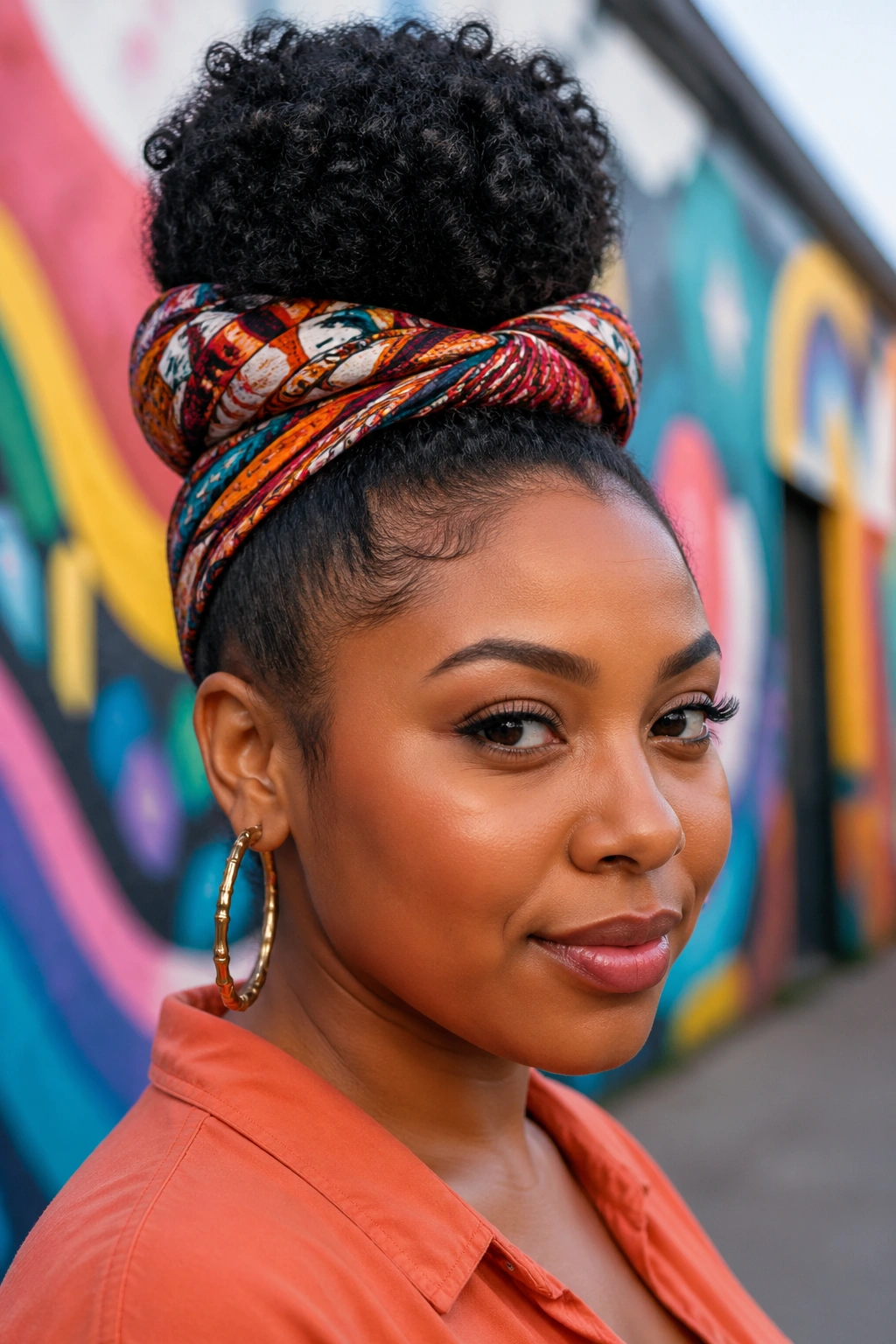
Sometimes the style isn’t about the hair manipulation, but about how you finish it. Using a headwrap or a large decorative scarf around your bun can completely change your aesthetic. This is a life-saver on days when your hair is not cooperating, or when you are trying to extend the time between wash days.
Styling the Wrap
Style your hair into a basic, messy bun at the crown. Take a long, rectangular scarf and fold it into a band. Start at the nape of your neck, bring the ends up to the front, cross them, and tie them securely. You can tuck the loose ends of the scarf into the wrap so they don’t dangle. This isn’t just about covering your hair; it’s about coordinating the color and fabric of the wrap with your outfit. Silk and satin wraps are best because they won’t dry out your hair or cause breakage along the hairline.
13. The Flat-Twisted Updo
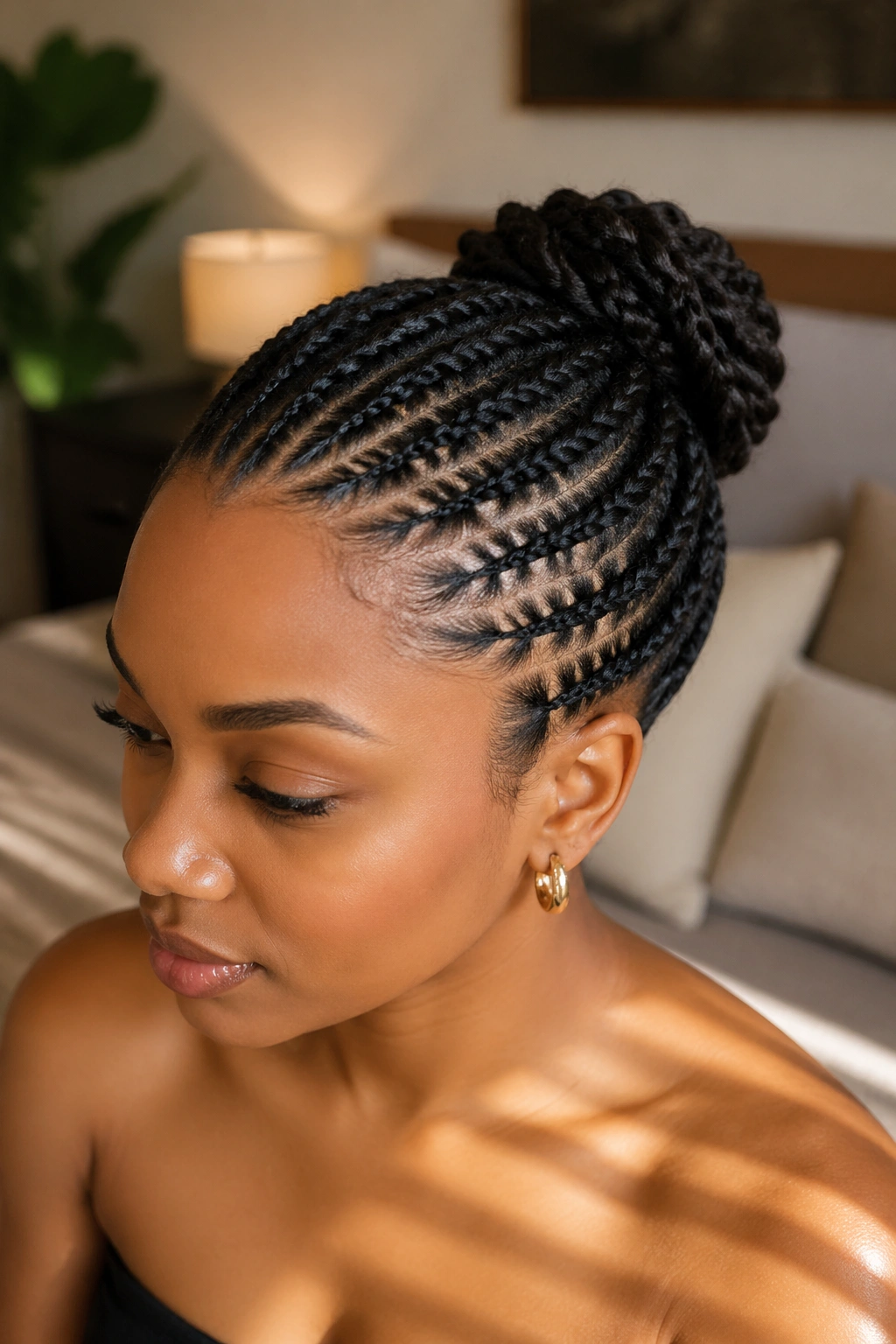
Flat twists are, in my opinion, the most underrated styling technique for natural hair. They lie flatter against the scalp than cornrows, making them easier to install yourself, and they create a stunning, intricate pattern when swept up into a bun. This is a very clean, disciplined look that commands respect.
Sectioning for Success
Part your hair in sections radiating from the center of your head, like slices of a pie. Create a flat twist in each section, working your way toward the back of your head. Once all the flat twists are done, gather the ends of the twists into a central ponytail. You can then twist these ends together to form a bun. Because the flat twists are securing the hair against your scalp, this style puts very little pressure on your hairline, making it an excellent choice for anyone dealing with thinning edges or recovering from tension-related hair loss.
14. The Pineapple Bun
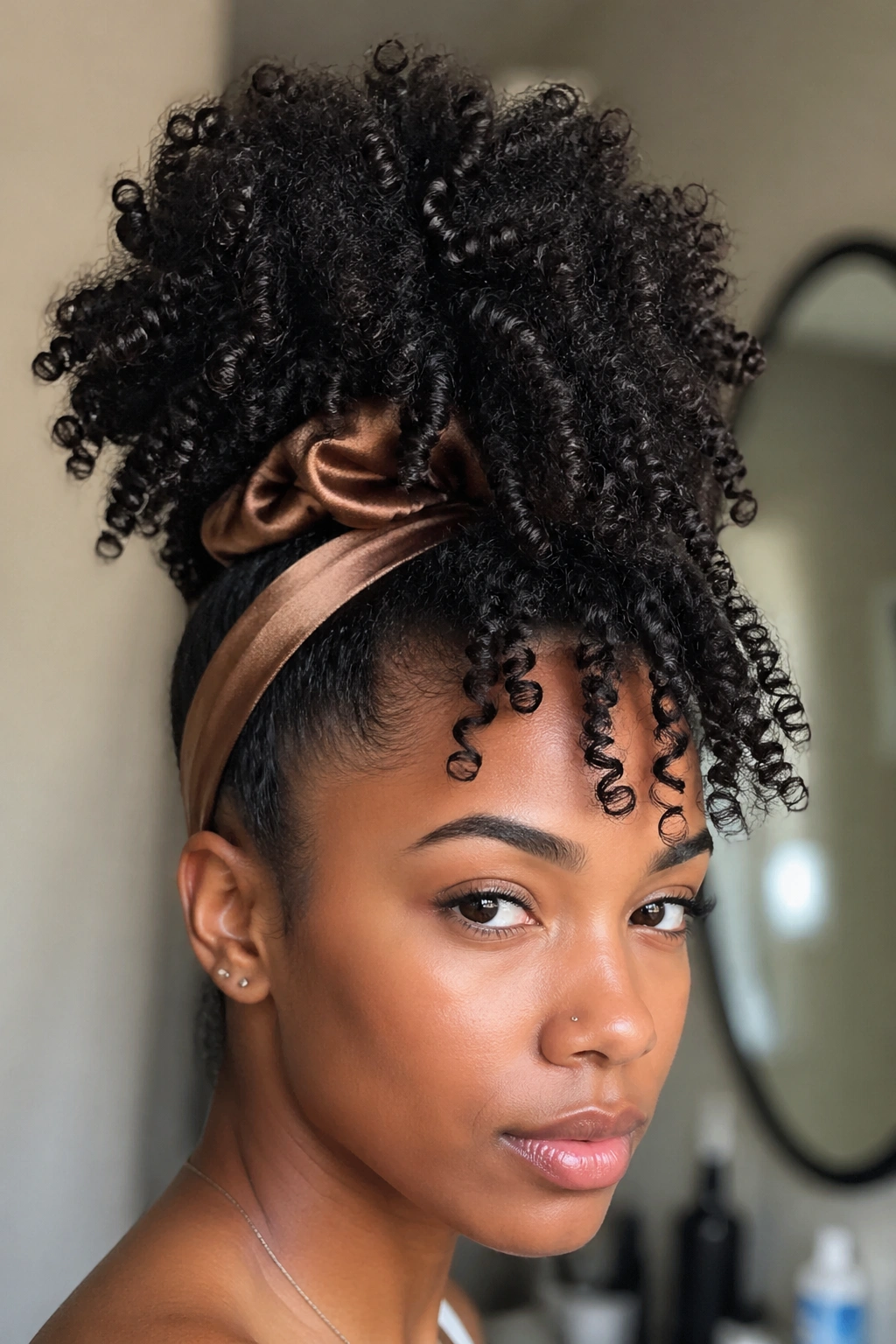
The pineapple is usually a bedtime routine, but when done with intention, it is a perfectly acceptable, relaxed day-time style. It is all about height and volume. By piling your hair at the very front of your head, you protect your curls from getting crushed while you go about your day.
Keeping It Loose
This isn’t a sleek style, so don’t reach for the edge control. Use a large satin scrunchie—this is non-negotiable, as cotton ties will sap moisture from your hair and cause breakage. Gather all your hair to the very top of your head and secure it loosely. Let the coils spill forward over your forehead like a pineapple leaf. You can add a decorative headband to keep the hair off your face if you find it getting in your eyes. It’s playful, comfortable, and keeps your hair fully defined.
15. The Sock Bun
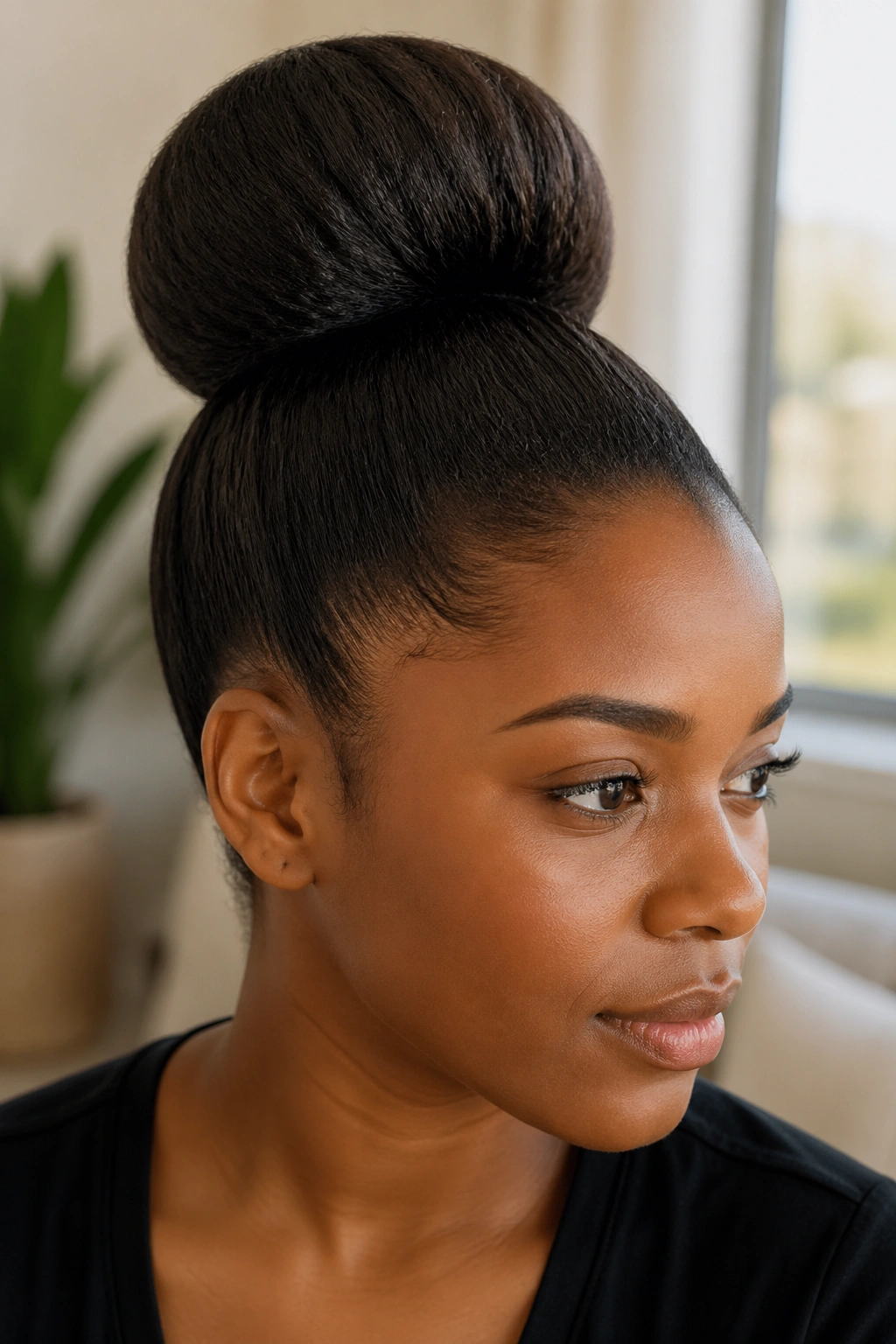
Don’t let the name fool you—this isn’t a DIY project that looks cheap. It’s actually a classic styling technique that produces an incredibly round, professional-looking bun. It relies on a tube-like structure (traditionally a rolled-up sock with the toe cut off, but a synthetic hair donut works too) to provide volume.
The Rolling Technique
Pull your hair into a high ponytail. Place the sock donut over the ponytail. Lean your head forward and spread your hair evenly over the donut so it is completely covered. Use a second elastic band to secure the hair around the donut. If you have extra hair left over, wrap it around the base of the bun and pin it. This creates a dense, heavy bun that sits perfectly centered. It’s a very clean look, often favored for formal ballet or dance, but it works equally well for a polished work look.
16. The Mini Buns (Bantu Knot Style)
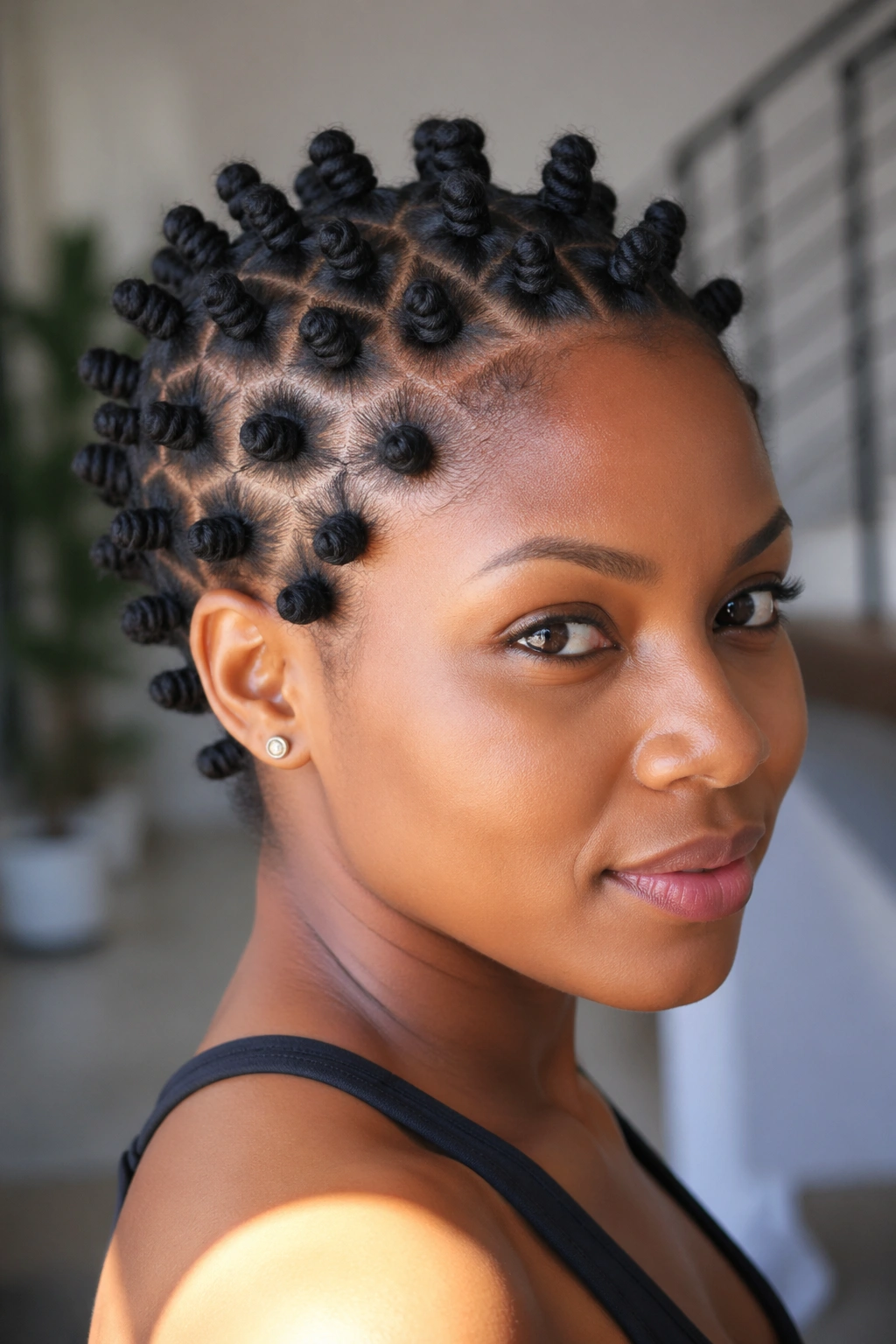
Why have one big bun when you can have a dozen mini ones? This style creates a playful, textured look that shows off your coil pattern in its most defined state. It requires a bit more time to install, but the result is a long-lasting style that looks great for several days.
Precision is Key
Section your hair into small, uniform squares across your entire head. Apply a light pomade to each section to ensure the base is smooth and the hair is easy to work with. Twist each section tightly and coil it into a small knot. Use a small, clear elastic band to secure each knot if your hair doesn’t stay coiled on its own. The beauty of this style is in the symmetry; keep the parts clean and the knots even in size, and you will have a sculptural, impressive look that draws attention.
17. The Sleek Middle-Part Bun
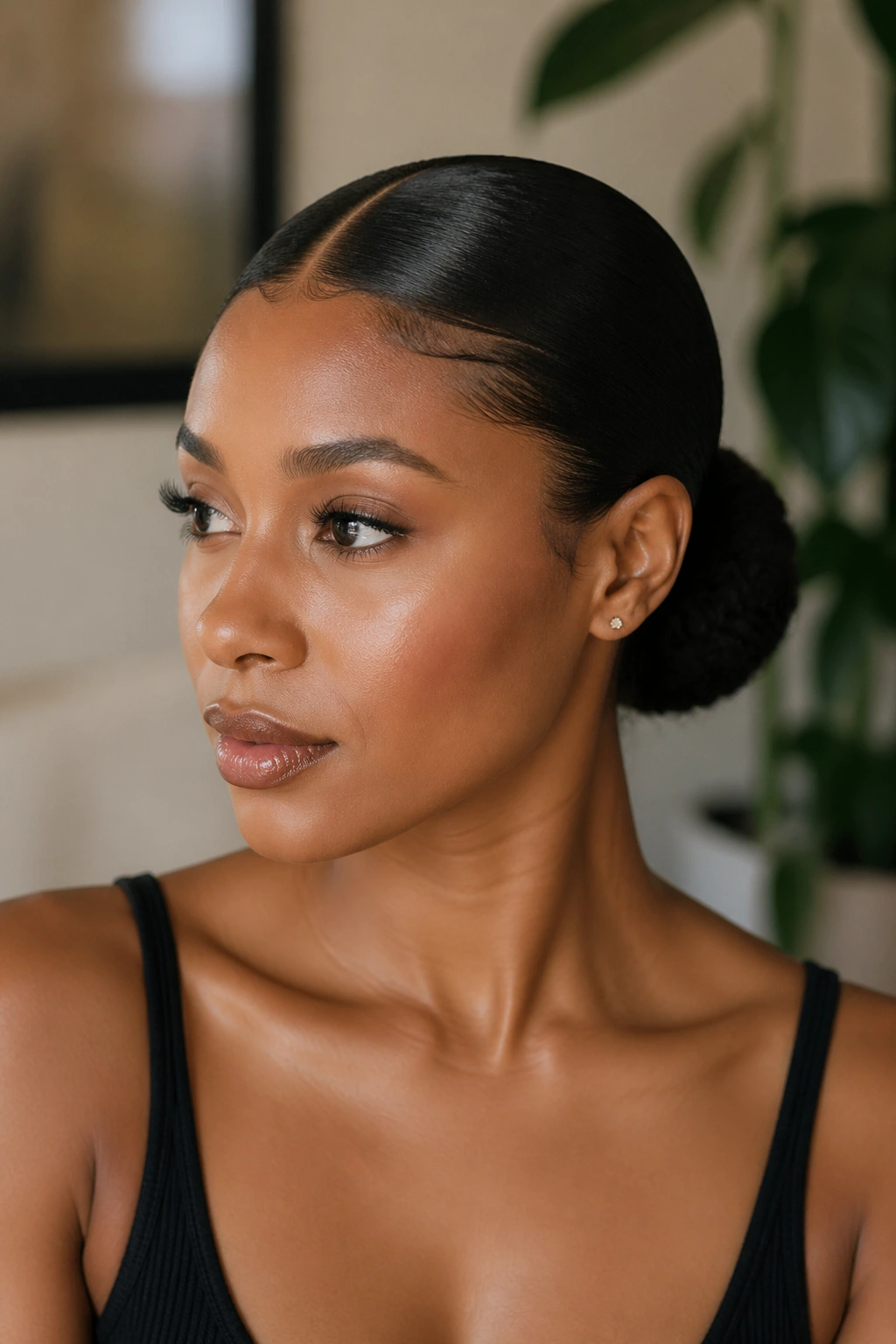
There is a stark, modern beauty to a dead-center middle part. It is minimalist, bold, and unapologetic. This style requires a bit of maintenance to keep the part crisp and the hair smooth, but when it is done right, it is one of the most sophisticated updos for afro hair.
The Parting Process
Use a fine-tooth comb to part your hair from your forehead to the nape of your neck. Use a strong-hold gel to slick each side back, working from the hairline toward the back. Because you are pulling from both sides, you have to be careful not to create a “bump” in the middle. Use a brush to smooth the hair down flat. Gather the hair into a low or mid-height ponytail. Twist the hair into a bun and pin it securely. This style highlights your facial symmetry, so it’s a perfect look for when you want to wear bold earrings or dramatic makeup.
18. The Afro Puff with Headband
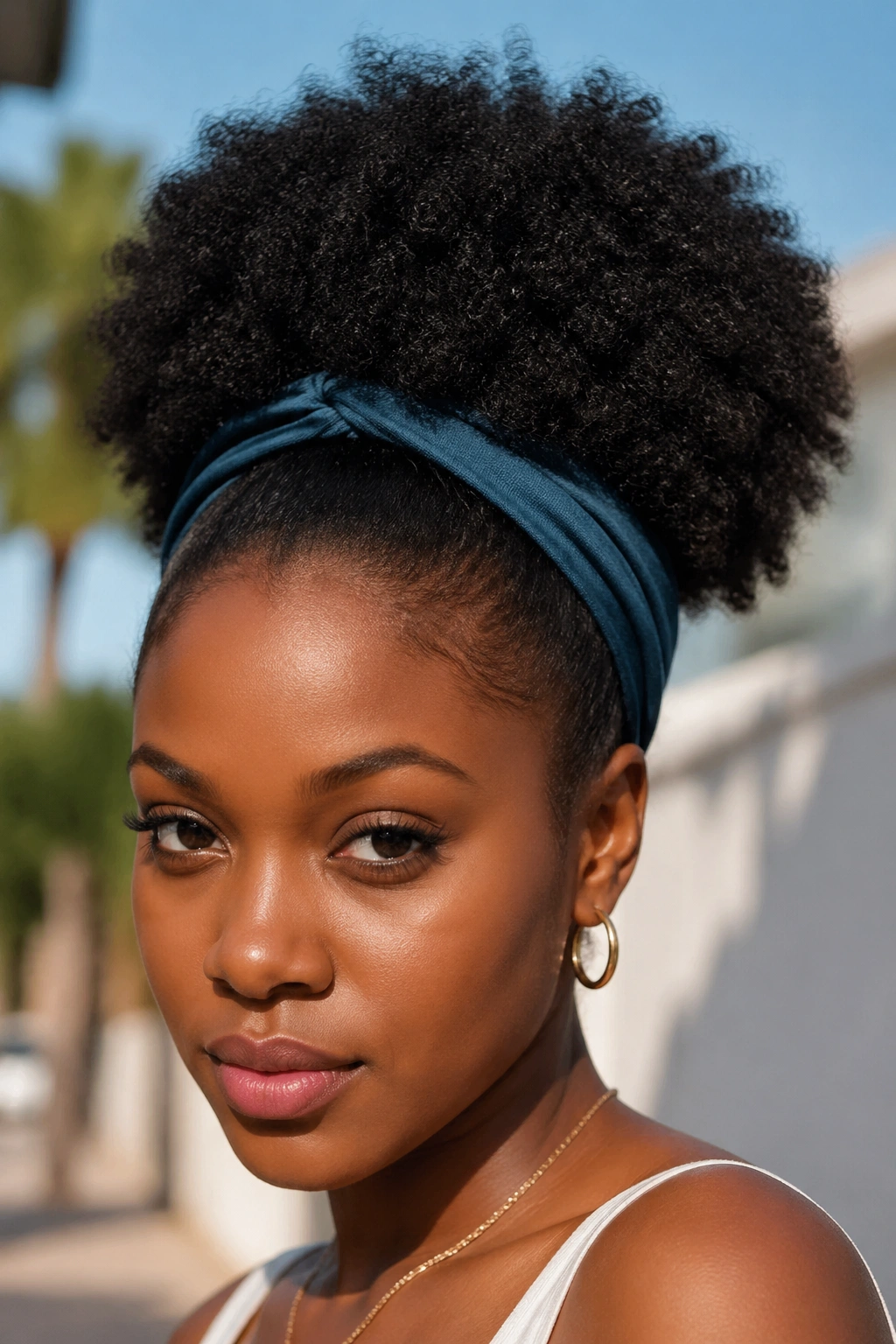
Sometimes, simplicity is the ultimate sophistication. An afro puff is basically an unformed bun, and adding a headband creates a boundary that makes it look styled rather than just “pulled up.” It takes about thirty seconds to do and is the best way to handle day-five hair that has lost its definition.
The Accessory Matters
Gather your hair into a high puff using a sturdy elastic band. Do not try to smooth the hair down perfectly—you want the volume of the puff to contrast with the headband. Slide a thick, fabric headband over your head and position it just behind your hairline. The headband acts as a frame. If you want a bit more flair, use a patterned silk scarf instead of a standard headband. It adds color and a sense of effort to a style that is actually incredibly low-maintenance.
Final Thoughts
At the end of the day, the best bun is the one that fits your hair’s current mood. Afro hair is alive; it changes based on the humidity, how long it has been since your last deep condition, and how much tension it can comfortably handle. There is no point in forcing your hair into a sleek, tight bun if your scalp is tender or your hair is dry.
Listen to your texture. If it feels brittle, go for a looser style like the messy top knot or the pineapple. If you have plenty of moisture and want to make a statement, go for the sleek, high-tension styles. The versatility of these 18 options means you never have to be bored, and you certainly never have to feel like your hair is an obstacle. Treat your hair like the sculptural medium it is, and you will find that a simple hair tie is all you need to change your entire silhouette.
