



A straight layered bob can look razor-clean, or it can look like three different haircuts arguing with one another on the same head. The difference usually isn’t the bob itself. It’s where the layers start, how much weight gets removed, and whether the ends are left blunt enough to keep that sleek finish intact.
That’s why some straight layered bob cuts fall flat while others look expensive without trying too hard. A good one has a clear perimeter, controlled movement, and enough shape that the style still looks deliberate when you tuck one side behind your ear. A sloppy one loses the line, frizzes at the corners, and ends up needing more styling than it should.
Straight hair shows everything. Every tiny snip. Every uneven corner. Every layer that starts too high. So if you’re choosing a bob for shine, polish, and easy movement, the shape matters as much as the length. The right cut can make fine hair look fuller, thick hair feel lighter, and a plain blow-dry look like you spent twenty extra minutes on it.
1. Center-Part Collarbone Bob With Invisible Layers
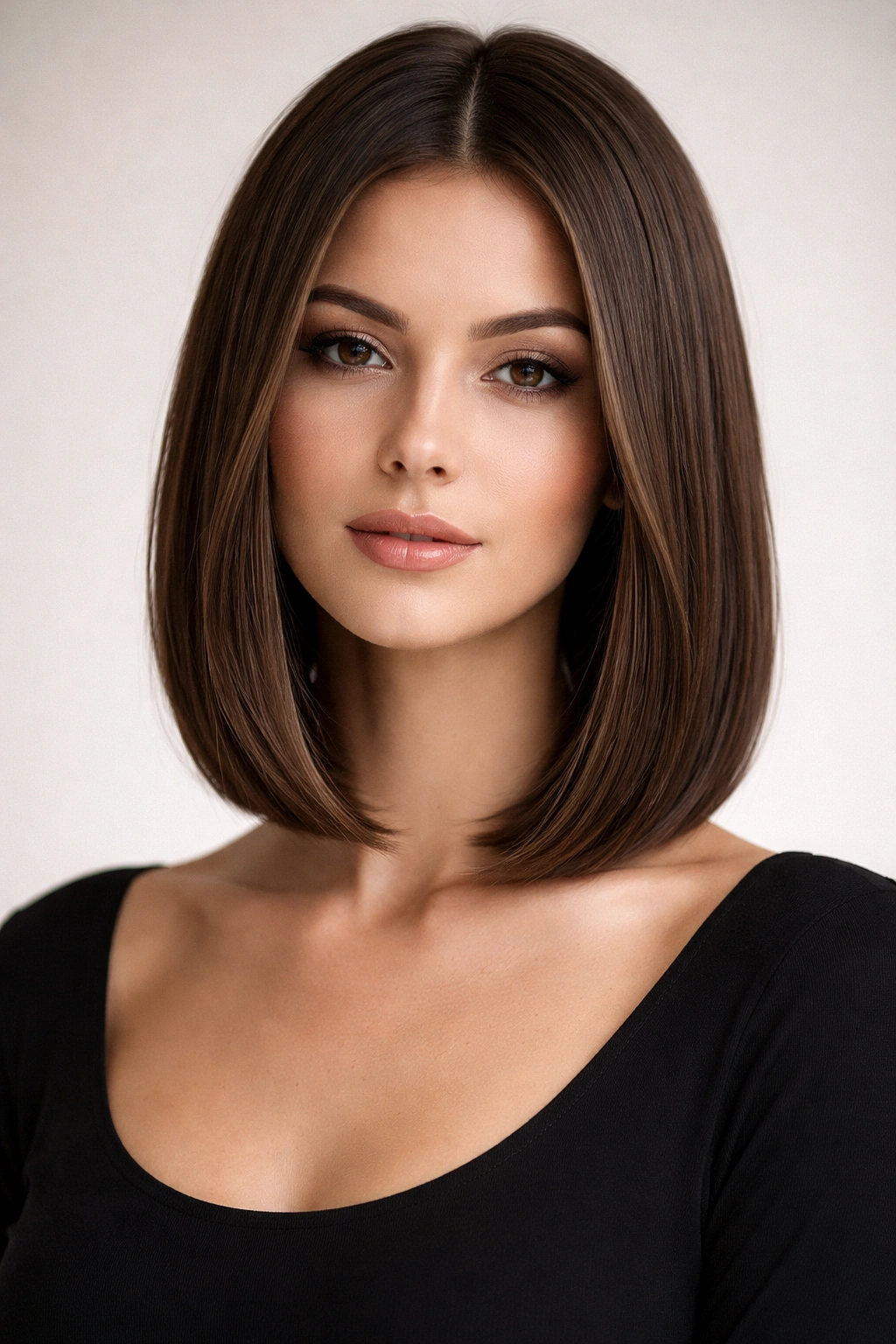
This is the safest sleek bob to wear if you want movement without giving up that tidy, straight silhouette. The length sits right around the collarbone, which gives the hair a little swing when you walk, but not so much that it starts looking floppy. The layers are tucked low and kept soft, so the outline still reads clean.
The trick is restraint. A stylist will usually keep the top section mostly untouched and build shape only in the lower half of the cut. That keeps the front from collapsing and helps the ends lie flat instead of flipping out in random directions. On straight hair, that matters more than people think.
Why It Stays Sleek
The center part helps split the weight evenly, so the haircut sits in a calm, balanced way around the face. It’s a good choice if your hair grows out fast and you want the shape to survive the awkward middle stage. It also plays nicely with a quick round-brush blowout or a flat iron pass at the ends.
- Best for fine to medium hair
- Good if you like a polished, quiet look
- Works on oval, heart, and long faces
- Ask for layers that begin below the cheekbone
Pro tip: keep the finish very light. A pea-sized amount of smoothing cream is enough on most shoulder-length hair. More than that and the ends can look greasy instead of glossy.
2. Chin-Length Blunt Bob With Soft Interior Layers
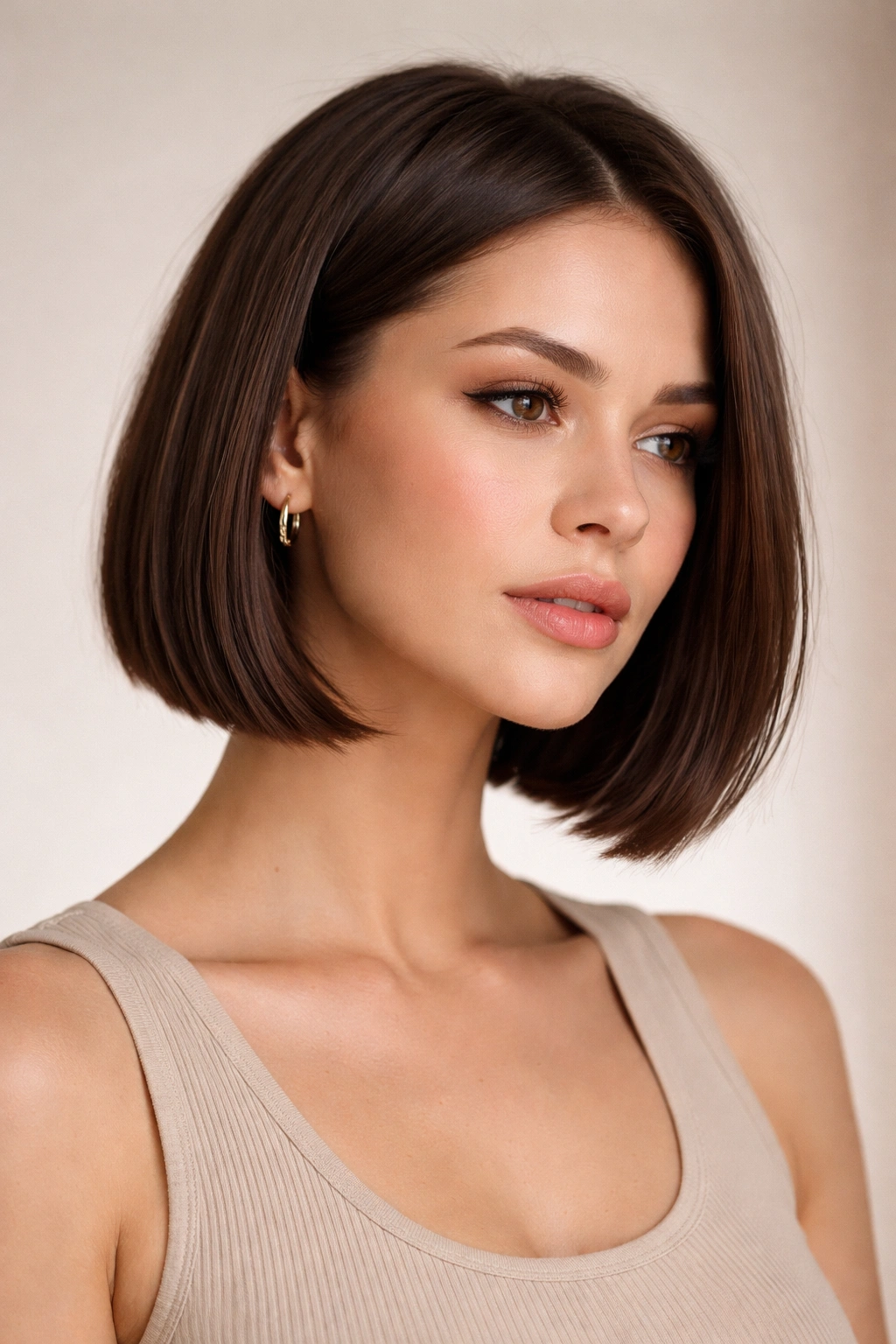
The blunt edge does most of the work here. That’s the appeal. A chin-length bob looks crisp on straight hair because the line lands right where the jaw can show it off, and the hidden layers underneath keep it from turning into a heavy block. You get shape without losing the clean edge people want from a sleek cut.
This version is one of my favorites for straight hair that tends to sit flat at the roots but puff a little through the mid-lengths. The perimeter stays solid, which keeps the haircut sharp in photos and in real life. Interior layers remove just enough bulk to stop the sides from bulging out when you tuck the hair behind the ears.
What To Ask For At The Salon
Ask for a blunt bob with internal layering only. That phrase matters. It tells the stylist you want movement inside the shape, not a choppy exterior that breaks the line.
- Keep the length at the chin or just below it
- Maintain a square or softly rounded outline
- Use point cutting only on the hidden layers
- Skip heavy texturizing on the surface
Short hair is unforgiving. So if the cut gets over-thinned, it starts to look wispy around the corners and loses the sleek finish that made it appealing in the first place. A flat iron can polish it, sure, but the cut has to carry the shape on its own.
3. A-Line Bob With Longer Front Pieces
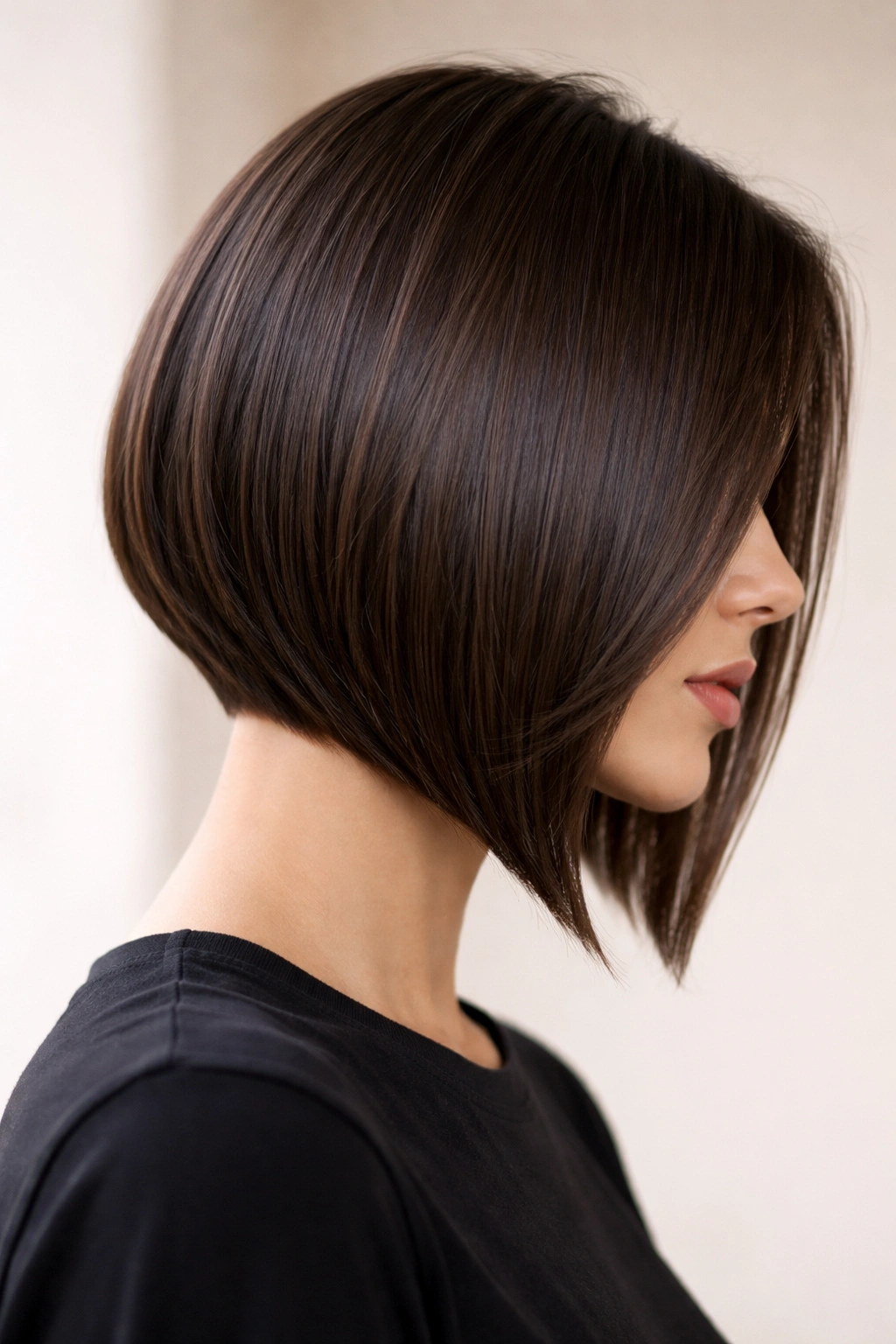
A good A-line bob does something clever: it makes the face look a little longer while keeping the back neat and controlled. The front sits slightly longer than the nape, so the eye follows that diagonal line and the whole style feels sharper. On straight hair, that angle reads clean instead of dramatic.
The layers here should be subtle. Very subtle. If the cut gets too broken up, the diagonal loses its edge and the style starts looking like an unfinished bob instead of a sleek one. The best versions keep the front pieces swinging just below the chin while the back hugs closer to the neck.
The Shape Works Because It’s Precise
A-line bobs are a smart pick for anyone who wants structure without the stiffness of a classic one-length bob. The longer front pieces soften a square jaw and make round faces look a touch narrower. They also give you something to tuck behind one ear without the whole style losing its shape.
A few details make or break this cut:
- The angle should be visible, not extreme
- The back should stay snug to the neck
- Layers need to stay low and controlled
- Ends should be beveled, not feathered out
If you want a sleek finish, blow-dry the front forward first, then curve the ends in with a round brush. One pass with a flat iron at the very end is enough. Overdoing it kills the movement and makes the longer front pieces look stiff.
4. Stacked Bob With a Smooth Nape
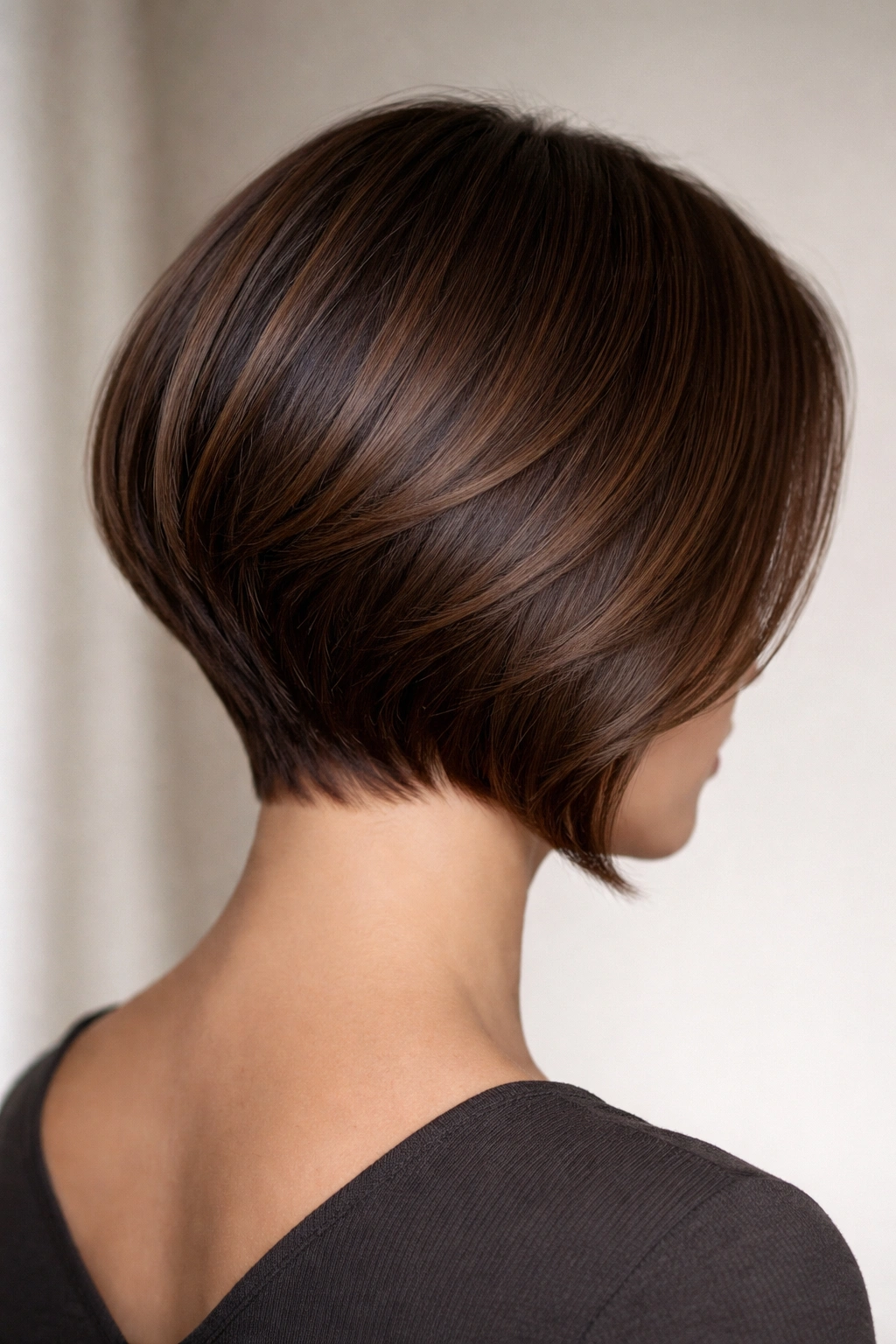
This is the bob for people who want lift in the back. A stacked bob creates that rounded shape at the nape by layering the back shorter and gradually lengthening toward the front. On straight hair, it can look polished and tidy in a way that softer cuts sometimes cannot. The silhouette has real architecture.
The danger, of course, is too much stacking. When the back is cut too aggressively, the crown can look puffy and dated. A modern stacked bob keeps the graduation clean and close to the head, with enough softness at the sides to prevent a helmet effect. That balance is what gives it a sleek finish instead of a stiff one.
It’s especially useful for thick hair that wants to sit wide at the back of the head. A controlled stack pulls the shape in and gives the haircut a neat curve. Fine hair can wear it too, but the layers need to be lighter so the crown doesn’t look sparse.
Best Styling Habits
- Blow-dry the nape first with a paddle brush
- Aim the airflow downward to keep the cut smooth
- Finish with a small flat brush at the crown
- Use a light serum only on the mid-lengths and ends
The back is the whole point here. If it’s frizzy, the cut loses its edge fast. Keep the nape trimmed regularly, because stacked shapes show growth faster than longer bobs do. A little extra upkeep pays off.
5. Italian Bob With Long, Polished Layers
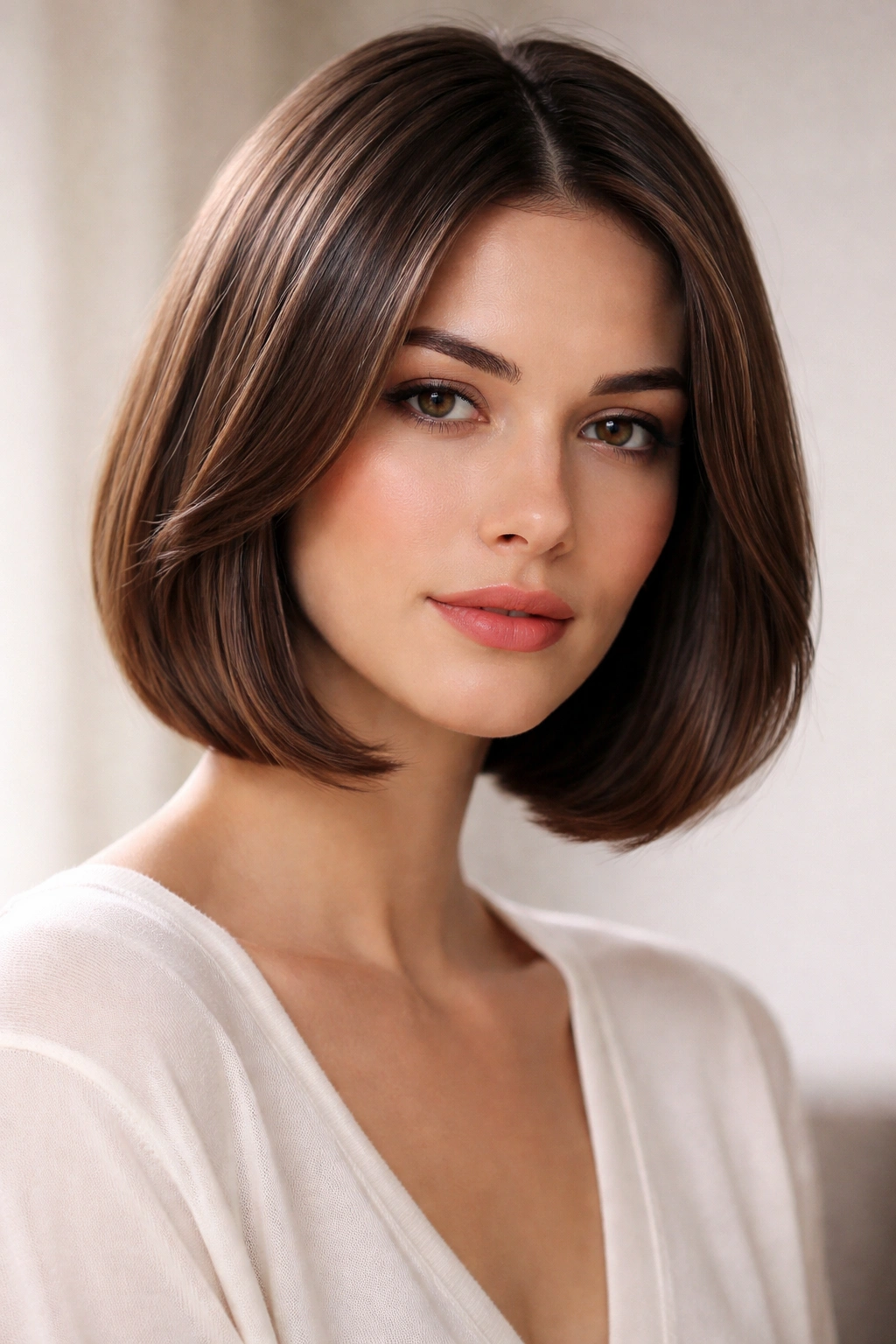
Why does the Italian bob look so put together? Because it keeps fullness at the ends while still showing movement through the mids. The length usually lands around the jaw or just below it, and the layers are long enough to bend, not break, the line. It’s a glossy haircut. That’s the whole idea.
This version works beautifully on straight hair that has some density and natural body. The surface stays smooth, but the interior layers create a soft swing that keeps the style from feeling boxy. You see the shape first, then the movement. Not the other way around.
How To Style It So It Stays Polished
A large round brush is the easiest tool here. Pull the hair under at the ends, but keep the lift at the root very gentle. You want bend, not curl. If the ends flip too much, the silhouette gets playful when the cut is trying to read refined.
What Makes It Different
- Slightly fuller than a classic bob
- Less stacked than a wedge
- More movement than a blunt cut
- Easier to grow out than a short geometric shape
This haircut is one of the better choices if you hate the feeling of hair stuck to your neck but still want a strong outline. It looks especially nice with a middle or soft off-center part. A tiny bit of shine spray on the outer layer is enough. Too much and it starts looking slick in the wrong way.
6. Side-Part Bob With Cheekbone-Grazing Layers
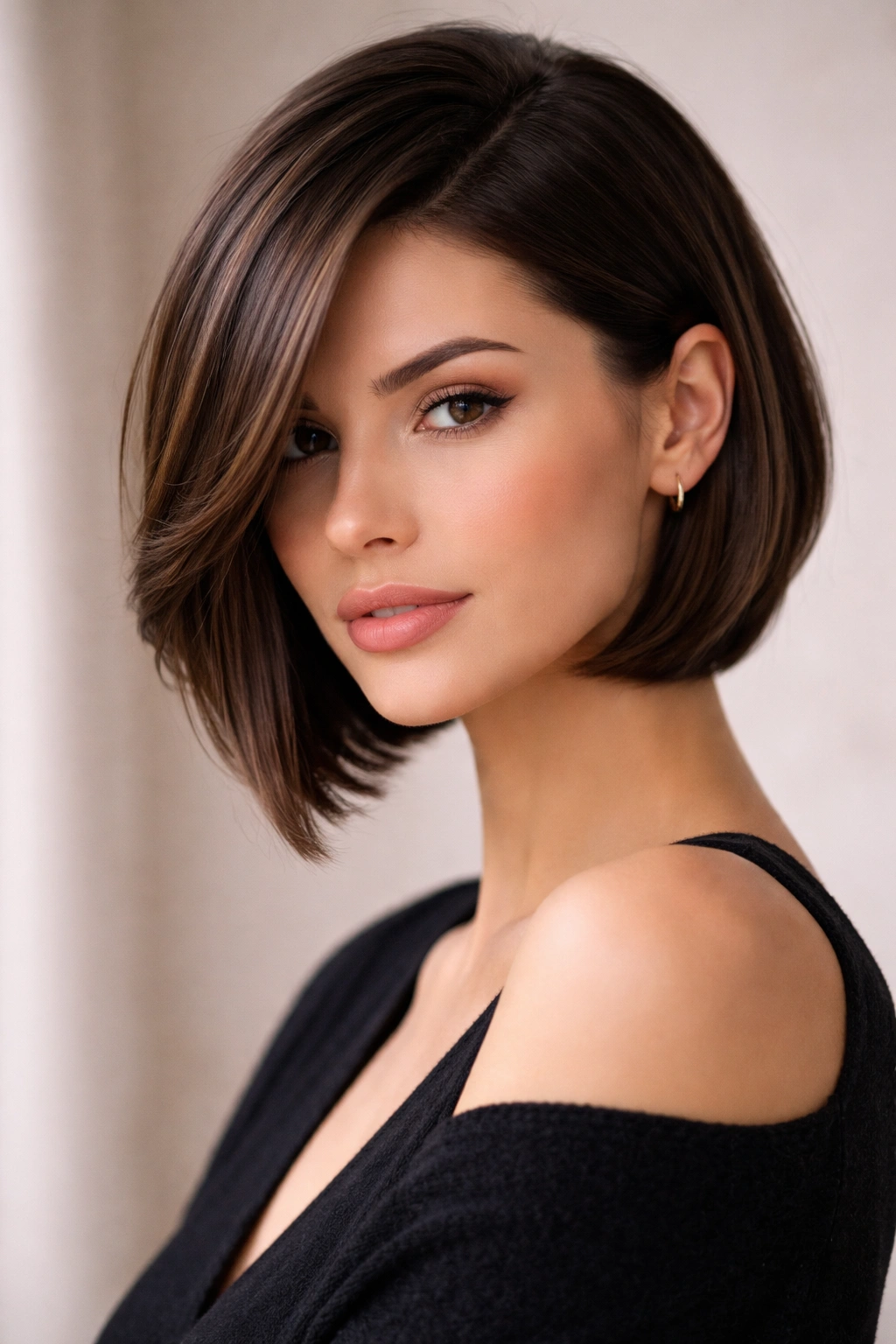
A deep side part changes everything. It gives a straight layered bob some lift at the root, and that little bit of height can be enough to make the cut feel richer and more alive. The layers usually start around the cheekbone or just below it, where they can frame the face without breaking the shape.
This is a smart cut if your hair falls flat in a middle part. The side part builds asymmetry, which helps the bob avoid that predictable, school-photo look some straight cuts can fall into. The longer side often sits just a touch below the jaw, while the shorter side opens the face and shows off earrings, cheekbones, and a clean neckline.
What To Watch For
A side-part bob can turn lopsided fast if the layers are too short. You want movement, not a fringe that fights the rest of the haircut. The ends should still sit in a smooth line, even when one side is tucked behind the ear.
- Great for softening strong jawlines
- Useful on fine hair that needs a little lift
- Works best with a round brush or velcro rollers at the crown
- Keep the shortest face-framing layers around cheek level
The finish is sleek when the part is intentional. Random side parts look tired. A crisp one, paired with a smooth bend at the ends, looks elegant in a way that feels easy instead of overdone.
7. French Bob With Airy, Tucked-In Ends
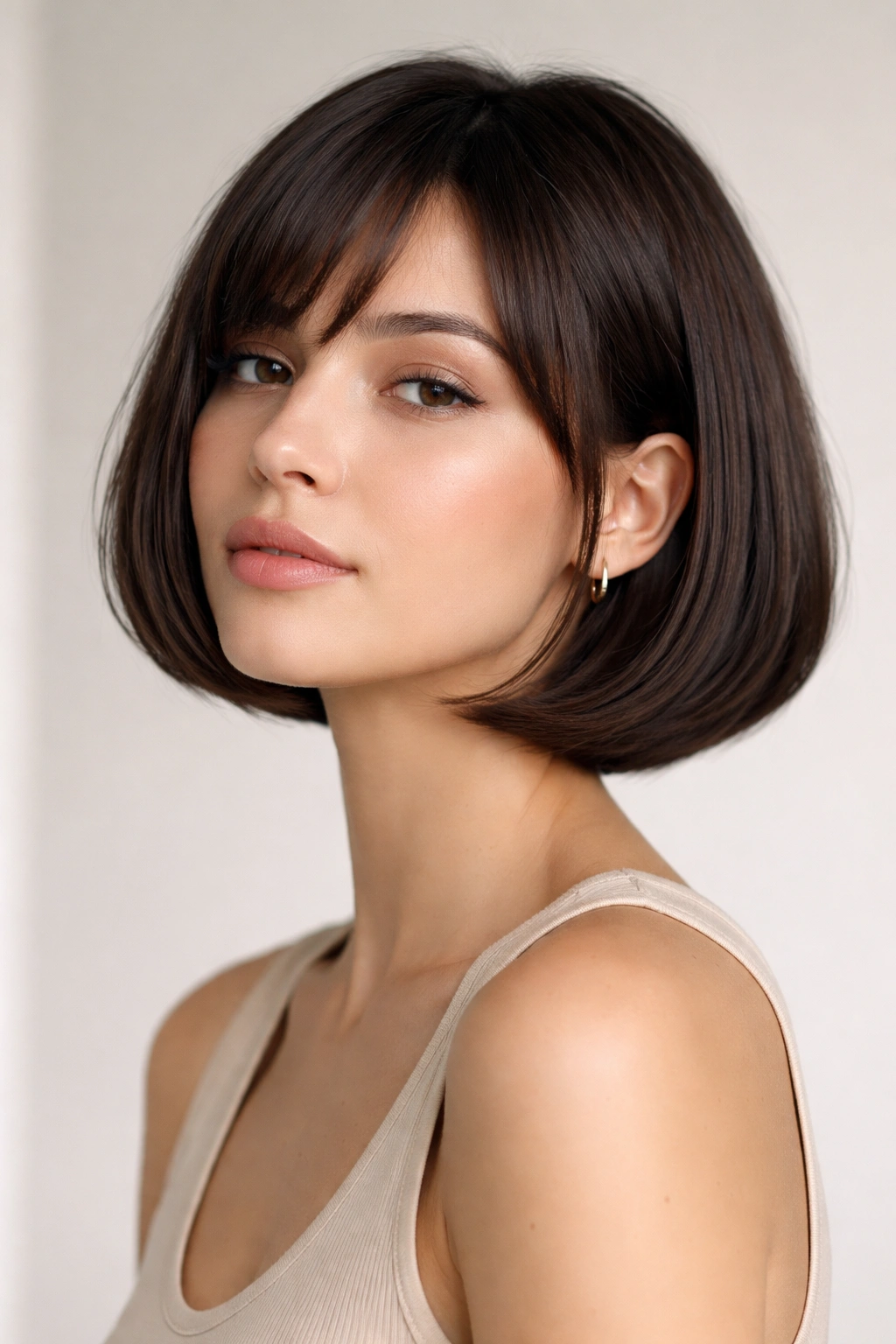
A French bob is short, sharp, and a little cheeky. The length usually sits somewhere between the mouth and the jaw, and the ends are cut to sit close to the face with a soft inward bend. When the hair is straight, that tucked-in shape gives the bob a sleek finish that feels compact and clean.
What makes this version work is the lack of bulk. The layers are minimal, but they’re there just enough to keep the style from puffing out at the sides. The result is light, but not flimsy. That’s the line you want to hold onto.
If you like hair that looks good with almost no effort, this cut has real appeal. It doesn’t need a huge blowout. A quick smoothing pass and a bit of cream at the ends can be enough. The shorter length also brings attention to the neck and jawline, which is part of the charm.
Best Products For The Finish
- Smoothing cream for damp hair
- Lightweight heat protectant
- Tiny amount of pomade for flyaways
- Shine mist only on the outer layer
The French bob is not for someone who wants hair hiding behind them. It’s a face-forward cut. If your hair grows outward at the ends, ask for the line to be cut a touch longer so the shape has room to settle. Too short, and it can look boxy. Too blunt, and it loses its easy movement.
8. Fine-Hair Bob With Beveled Layers
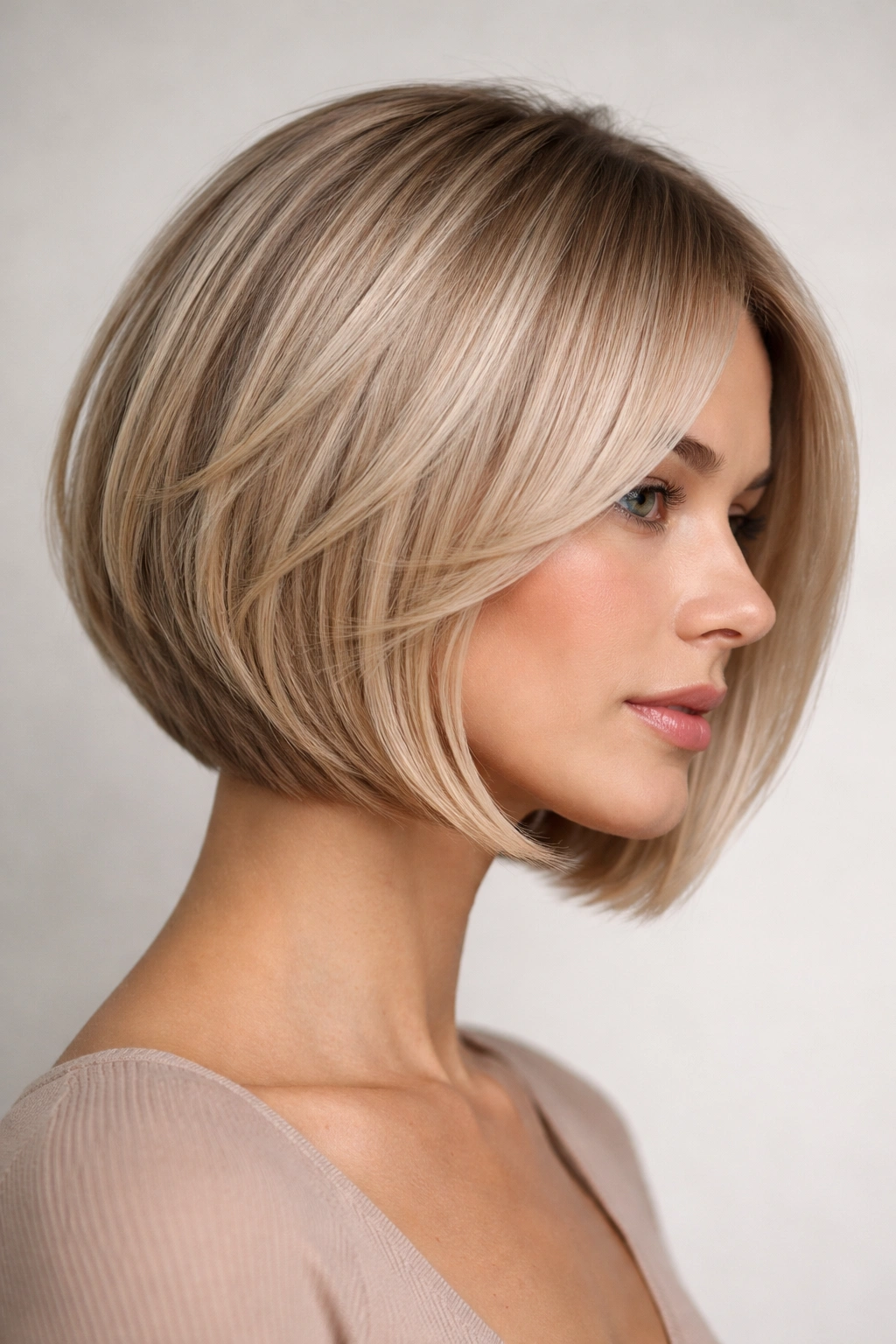
Can fine hair wear layers and still look full? Yes — if the layers are beveled instead of chopped up. That’s the difference. A beveled bob keeps the perimeter strong while softening the interior just enough to stop the hair from lying like a flat curtain. The ends curve inward a little, which makes the hair look denser.
This cut is especially good when the goal is a sleek finish that still has body. Fine hair often loses shape if the layers start too high, so the safest approach is to keep them low and let the line do most of the visual work. The bob should still look like one haircut, not separate pieces floating around the head.
The Line To Ask For
Tell your stylist you want weight at the ends and movement inside the shape. Those two things sound like they fight each other, but they don’t. Done well, they support each other.
H3 — What to ask for
- Layers that start below the ear
- A blunt perimeter with soft internal movement
- Light point cutting at the ends only
- No aggressive texturizing near the crown
A blow-dryer and a round brush usually give this style enough life. Work the ends under, then let the hair cool before touching it. That cooling step matters. It helps the bend stay in place instead of falling limp five minutes later. Fine hair needs that little bit of patience.
9. Thick-Hair Bob With Hidden Weight Removal
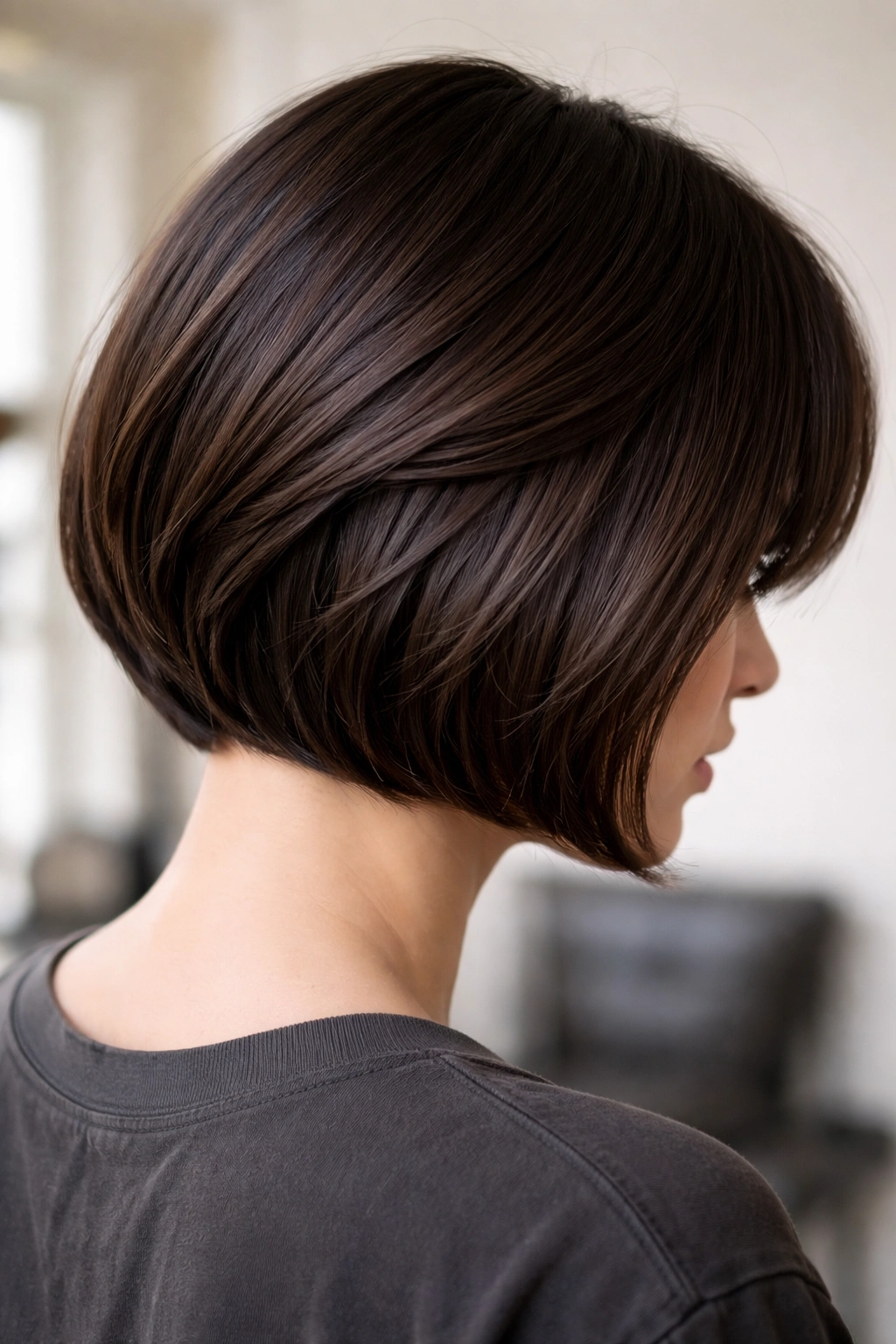
Thick hair is generous. Also annoying. It can hold a beautiful bob shape, but only if the stylist removes bulk in the right places. The best straight layered bob cuts for thick hair keep the outer line clean and hide the weight removal inside the haircut, where it won’t show as rough patches or frayed ends.
Unlike a fine-hair bob, this version benefits from more internal structure. The layers can be more active, but they should still live mostly inside the shape. That keeps the outside sleek while taking pressure off the crown and sides. If the haircut is all blunt edge and no weight removal, thick hair can balloon out in humidity and feel heavy by mid-afternoon.
What To Avoid
- Too many short layers near the top
- Heavy razor work on dry, coarse hair
- Over-thinning the ends until they look see-through
- Cutting the back too short, which creates a shelf
A good thick-hair bob often needs a stronger blowout to settle the shape. Use a smoothing cream, dry the roots first, and stretch the mid-lengths with a paddle brush before finishing the ends with a round brush. You do not need a mountain of product. Thick hair can get greasy at the root fast if you pile on oils.
The best sleek finish here comes from control, not from making the haircut lighter at any cost. Lighter is not always better. Cleaner usually is.
10. Asymmetrical Bob With a Clean Diagonal Line
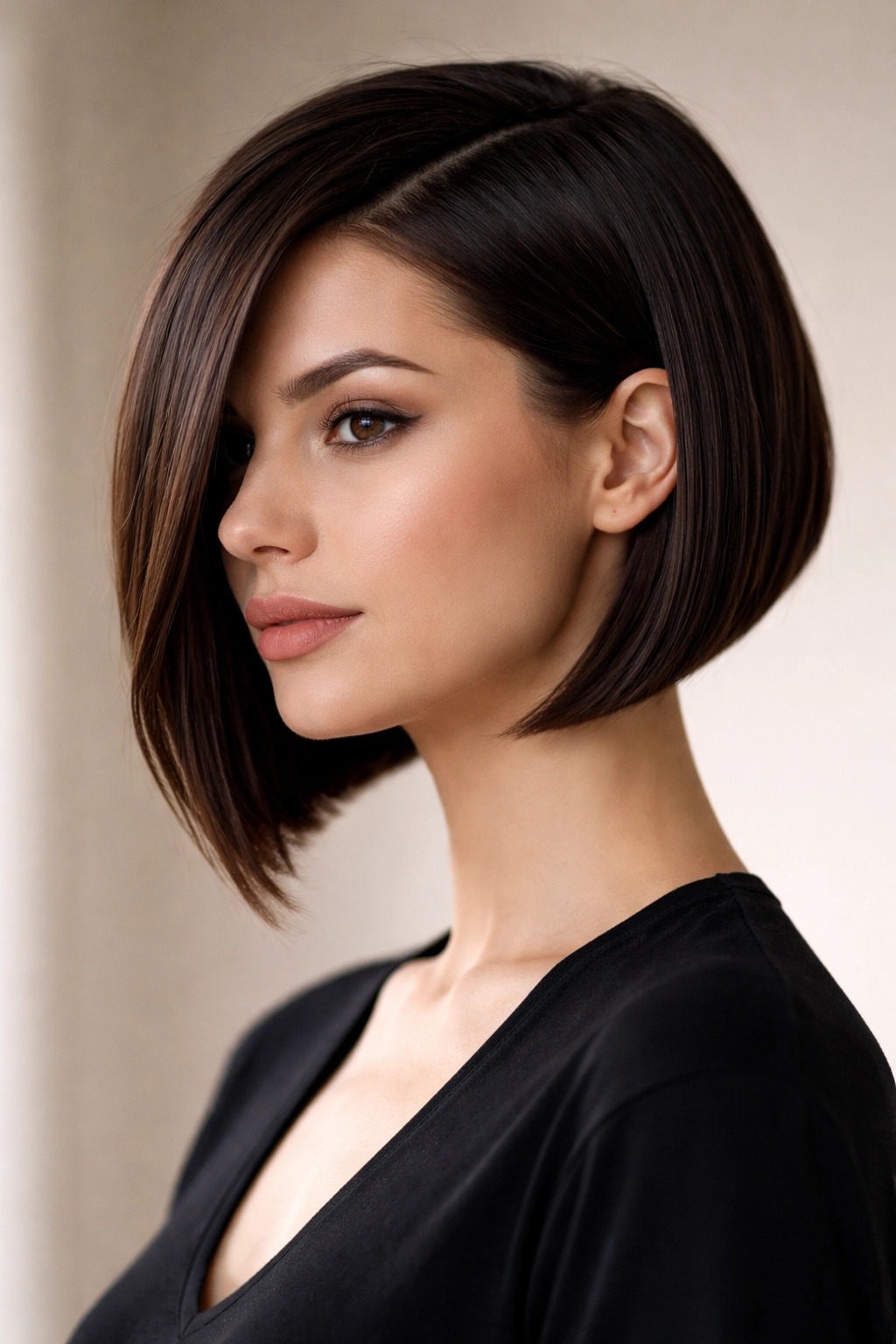
An asymmetrical bob can look sharper than a symmetrical one. That surprises people, because asymmetry sounds messy on paper. In real life, though, a deliberate diagonal line can be one of the most polished shapes you can wear. One side lands slightly longer, and the eye follows that angle down in a way that feels crisp and modern.
The layers should stay minimal. If you add too much texture, the asymmetry loses its tension and starts looking accidental. The cleanest version keeps one side grazing the chin and the other side slightly shorter, with the back tightly controlled so the shape reads as intentional from every angle.
This is a strong haircut for straight hair that tends to sit very still. The diagonal gives it motion without requiring curls, waves, or a lot of styling tricks. It also suits people who like a haircut with personality but don’t want a loud finish.
Who It Suits Best
- Oval and heart-shaped faces
- Hair that lies naturally smooth
- Anyone who wants edge without a shaggy look
- People who like a clear side profile
A flat iron helps, but only a little. Bend the ends inward just enough to soften the line. If you smooth it too much, the angle can look severe. The goal is sharp, not severe. There’s a difference, and it shows.
11. Lob-To-Bob Hybrid With Sleek Movement
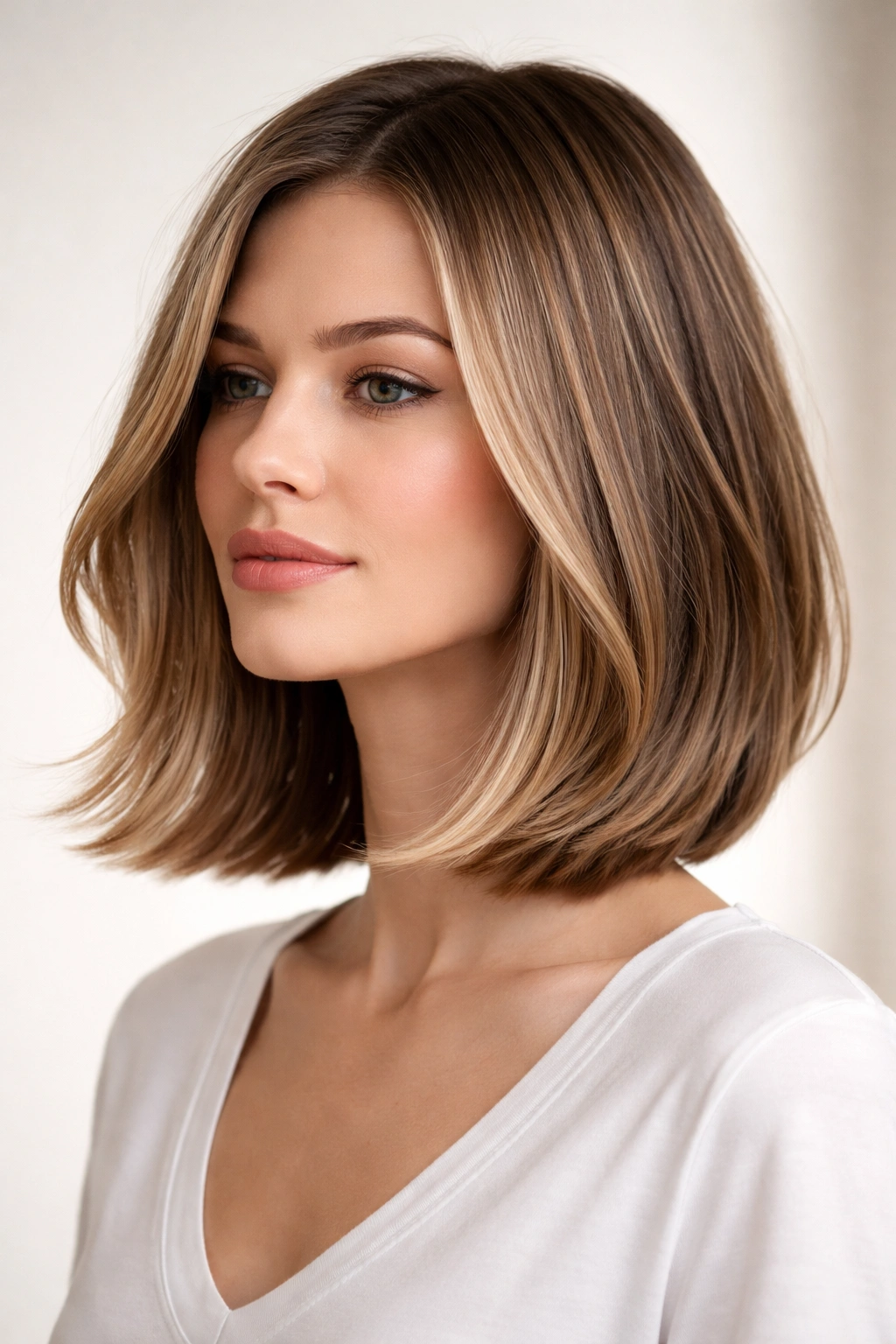
If you’re not ready to go full bob, this is the comfortable middle ground. The lob-to-bob hybrid lands around the top of the collarbone, but the internal layers bring it closer to a bob in spirit. It gives straight hair that sleek, airy movement people want from a shorter cut, without taking the length all the way up to the jaw.
The beauty of this shape is how easy it is to wear. It can be tucked, bent, waved lightly, or blown straight, and it still looks intentional. The longer length means the layers can be more forgiving, which is useful if your hair grows in a way that makes shorter bobs a little fussy around the face.
Why It’s Easy To Live With
A hybrid cut gives you room to change your part, clip one side back, or wear the hair half tucked behind the ears. It also grows out more gracefully than a strict chin-length bob, which matters if you don’t want a trim every five minutes.
H3 — Styling notes that help
- Use a heat protectant with a light hold
- Blow-dry with a medium round brush for bend
- Finish the ends with one pass of a flat iron
- Keep serum to the lower third of the hair
This is one of those cuts that looks expensive when it’s kept simple. The line is the point. Don’t drown it in curl, and don’t over-layer the crown. A soft, straight finish gives the haircut its quiet strength.
12. Razor-Soft Bob With Barely-There Texture
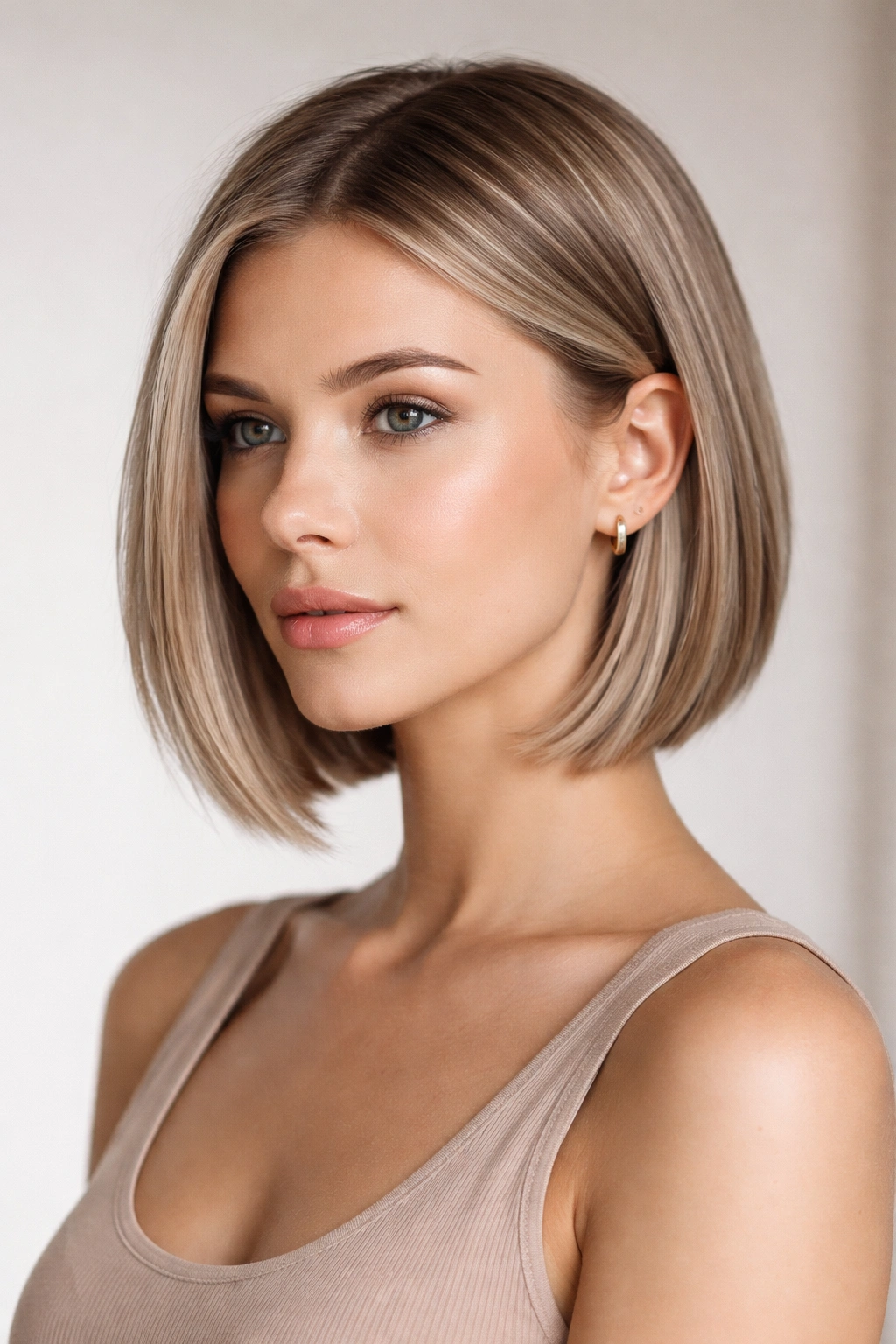
Can a razor be sleek? Yes, if it’s used with restraint. A razor-soft bob relies on whisper-light texturizing at the ends, usually on straight hair that can handle a little movement without fraying. The trick is to soften the perimeter just enough to keep it from looking hard-edged, while still holding a smooth overall line.
This cut is not for everyone. Coarse or very frizz-prone hair can puff up if the razor work is too heavy. But on straighter textures, or on hair that already lies close to the head, the result can be polished and airy at the same time. The bob still looks clean. It just breathes a little more.
Where It Works Best
- Straight, medium-density hair
- Faces that want softness around the jaw
- People who dislike stiff, blunt ends
- Cuts that need a little movement without losing length
The finish matters here. Use a smoothing cream before blow-drying, then keep the brush tension light so the ends don’t splay out. If the ends start looking wispy, the razor work went too far. That’s the danger. A sleek finish comes from controlled softness, not from making the haircut feel feathered to pieces.
This is the kind of bob I’d choose for hair that already behaves well and just needs a cleaner edge. It’s calm, subtle, and a little more relaxed than the ultra-blunt versions. Not fancy. Just good.
Final Thoughts
The strongest straight layered bob cuts have one thing in common: they respect the line. The layers help the shape move, but they do not bully the haircut into looking shredded or overworked. That’s the whole game.
Pick the version that matches your density, your face shape, and how much styling you’re actually willing to do on a regular morning. A sleek bob should make life easier, not turn into a daily battle with a round brush.
And if your stylist reaches for the scissors with too much enthusiasm, slow them down. A good bob is often about what gets left in place.
