



A bob can look sharp in the chair and oddly stiff by the time you get home. The fix is often not more layers, but a smarter edge: point cut bobs for textured ends.
Point cutting is one of those small salon moves that changes the whole mood of a haircut. Instead of slicing a clean, blunt line across the hair, the stylist uses the tips of the shears to nick into the perimeter and soften the edge. Done well, the bob keeps its shape but stops looking helmet-like. Done badly, it turns wispy at the wrong spots and never quite settles.
That difference matters more than people think. A good textured bob has movement when you turn your head, not holes. It keeps weight where the cut needs it, then breaks up the ends just enough to keep the finish from feeling hard or boxy.
The styles below all use that idea in a different way. Some are crisp and polished. Some are airy and a little messy. All of them depend on the same basic truth: the ends decide whether a bob looks expensive or accidental.
1. The Classic Chin-Length Point Cut Bob
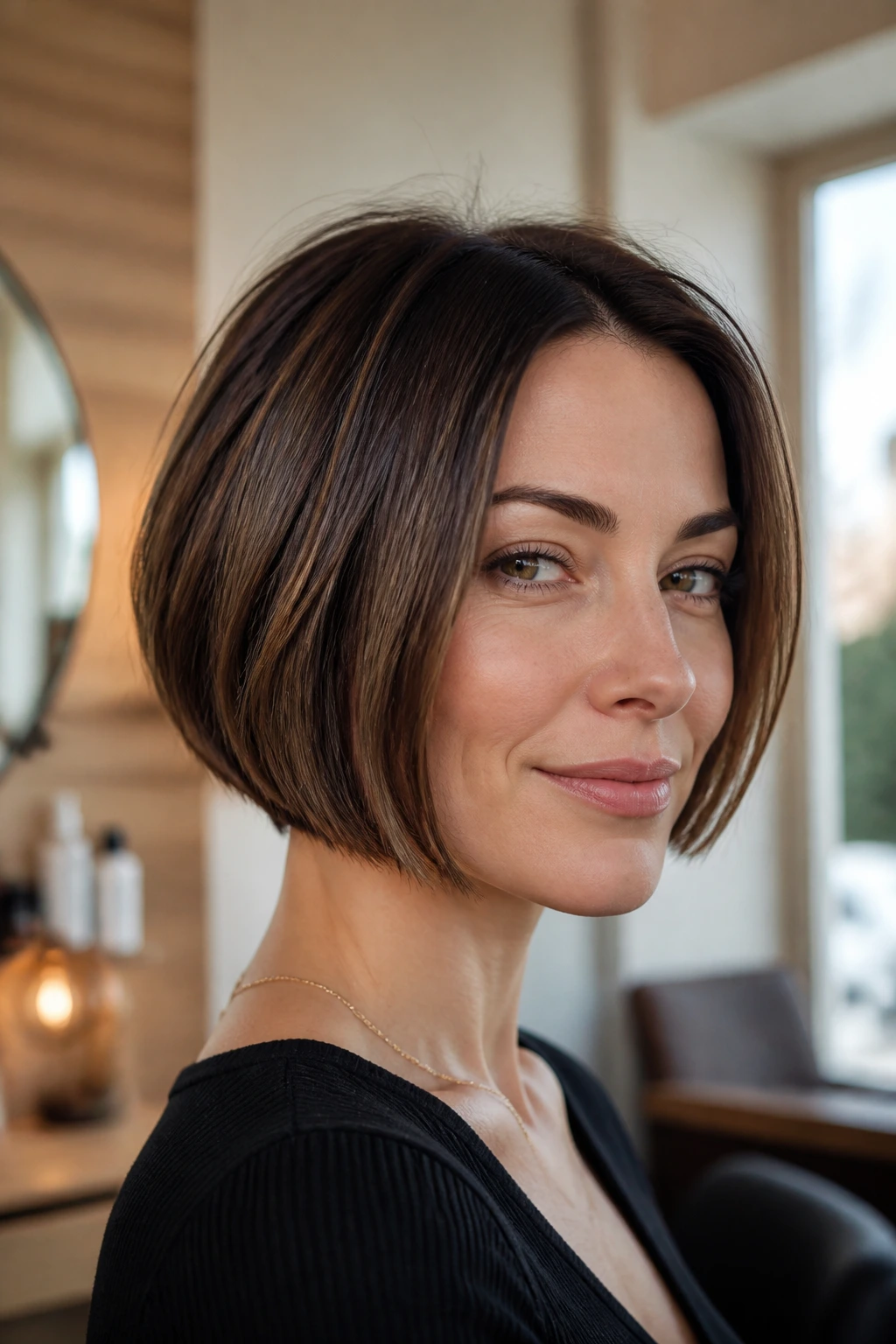
This is the bob I reach for when someone wants texture but does not want to look like they got talked into a shag. The shape sits right around the chin, which gives the jawline a clean frame, and the point cutting happens only at the very edge of the outline. You get movement, but you do not lose the bob.
Why It Works
The chin-length version is forgiving because it sits in that sweet spot where the hair can still tuck behind the ears, flip slightly outward, or sit flat on a humid day without turning into a mess. The texture lives in the last half-inch or so, not halfway up the head. That keeps the cut neat.
I like this version on straight and slightly wavy hair because the ends show the point cutting without needing a lot of styling. Blow it smooth with a round brush, or let it air-dry with a little cream. Either way, the shape stays clear.
- Best length: chin to just below the jaw
- Best texture level: light to medium end-softening
- Best styling tool: 1-inch round brush or paddle brush
- Best finish: a clean bend, not big waves
Pro tip: ask for point cutting on dry hair or a dry recheck after the cut. Wet hair stretches, and a bob can look more balanced than it really is until it dries.
2. The Soft Blunt Bob with Tapered Ends
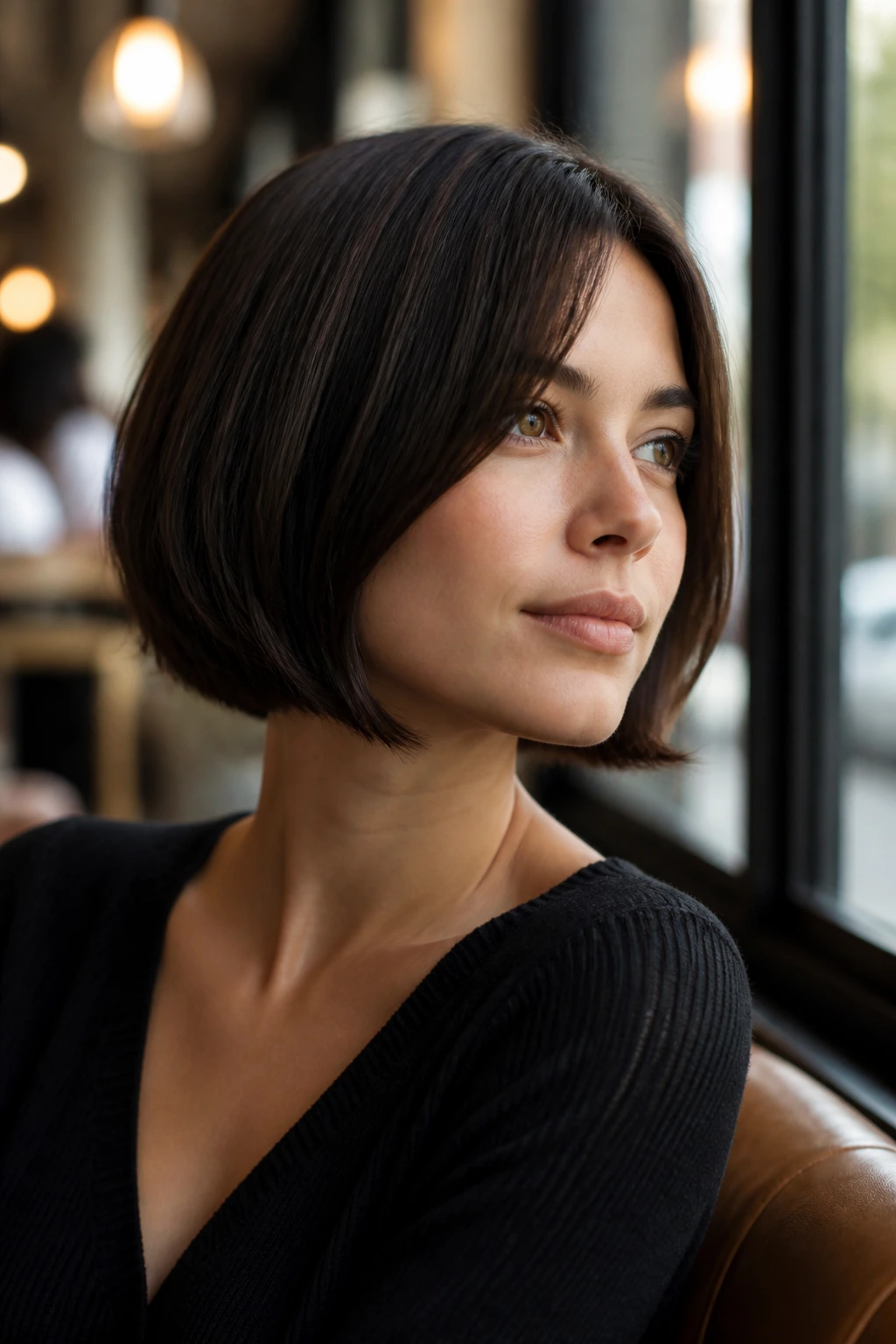
A blunt bob does not have to feel hard. That’s the part people miss.
Keep the perimeter straight, keep the weight, then let the very ends be softened with tiny, controlled point cuts. The result is a bob that still reads as blunt from a distance but moves better when you get close. It’s a good choice if you like polish and hate that stiff, shelf-like look some bobs get.
The trick is restraint. Too much texturizing in the middle of the line will make the bob fray. Too little, and you’re back to a rigid block. I prefer this cut on hair that has a little natural body already, because the tapered ends let that movement show instead of fighting it.
If you wear your hair with a center part, this style looks especially clean. If you prefer a side part, the softened ends keep the front from looking too heavy.
What to ask for: a blunt bob with light point cutting only at the perimeter, especially around the corners near the chin. That keeps the line intact while taking the edge off the finish.
3. The French Bob with Cheekbone Framing
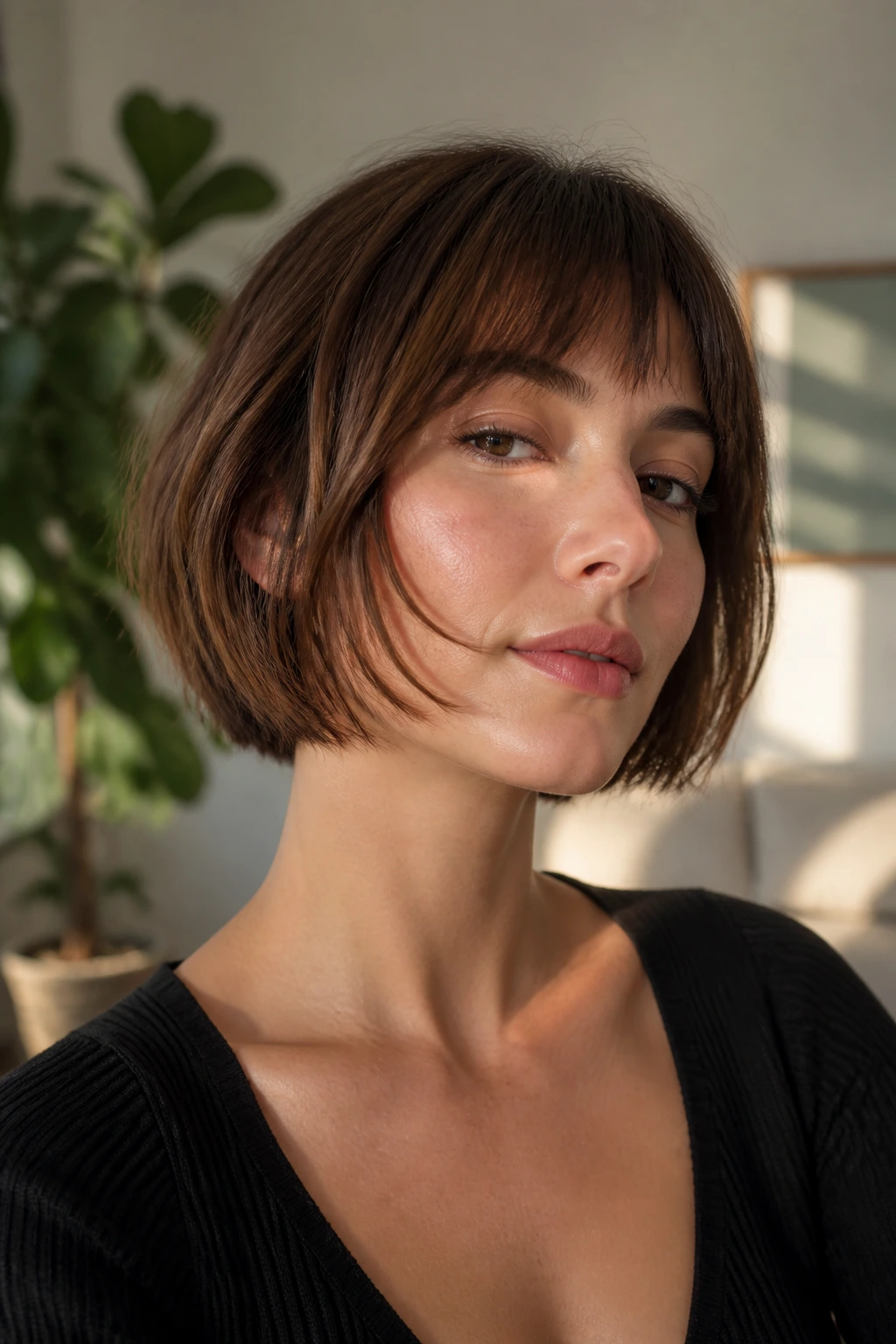
Why does a French bob look so good when it’s a little imperfect?
Because the cut is built to handle a bit of mess. It usually sits shorter than a standard bob, often around the cheekbone or just under it, and the textured ends keep it from looking like a toy helmet. The point cutting is subtle, but it matters. It lets the hair bend, separate, and fall into that lived-in shape people try to fake with styling products.
How to Ask for It
Tell your stylist you want a short bob that grazes the cheekbones, with softly broken ends rather than a blunt line. If you want fringe, keep it light. Heavy bangs with a short bob can feel too dense fast.
A good French bob works when the hair around the face has a little movement. Not curls. Not chaos. Movement. The ends should look lightly chipped, almost like the cut was touched with a careful hand after the main shape was finished.
Styling Notes
- Use a small round brush or fingers and a little mousse.
- Keep product off the roots if your hair is fine.
- Let the front fall slightly forward before tucking it back.
- Skip heavy oils on the ends; they flatten the texture.
I like this cut best on people who enjoy a style with personality. It doesn’t whisper. It makes a point.
4. The Jawline Bob with Chipped Perimeter
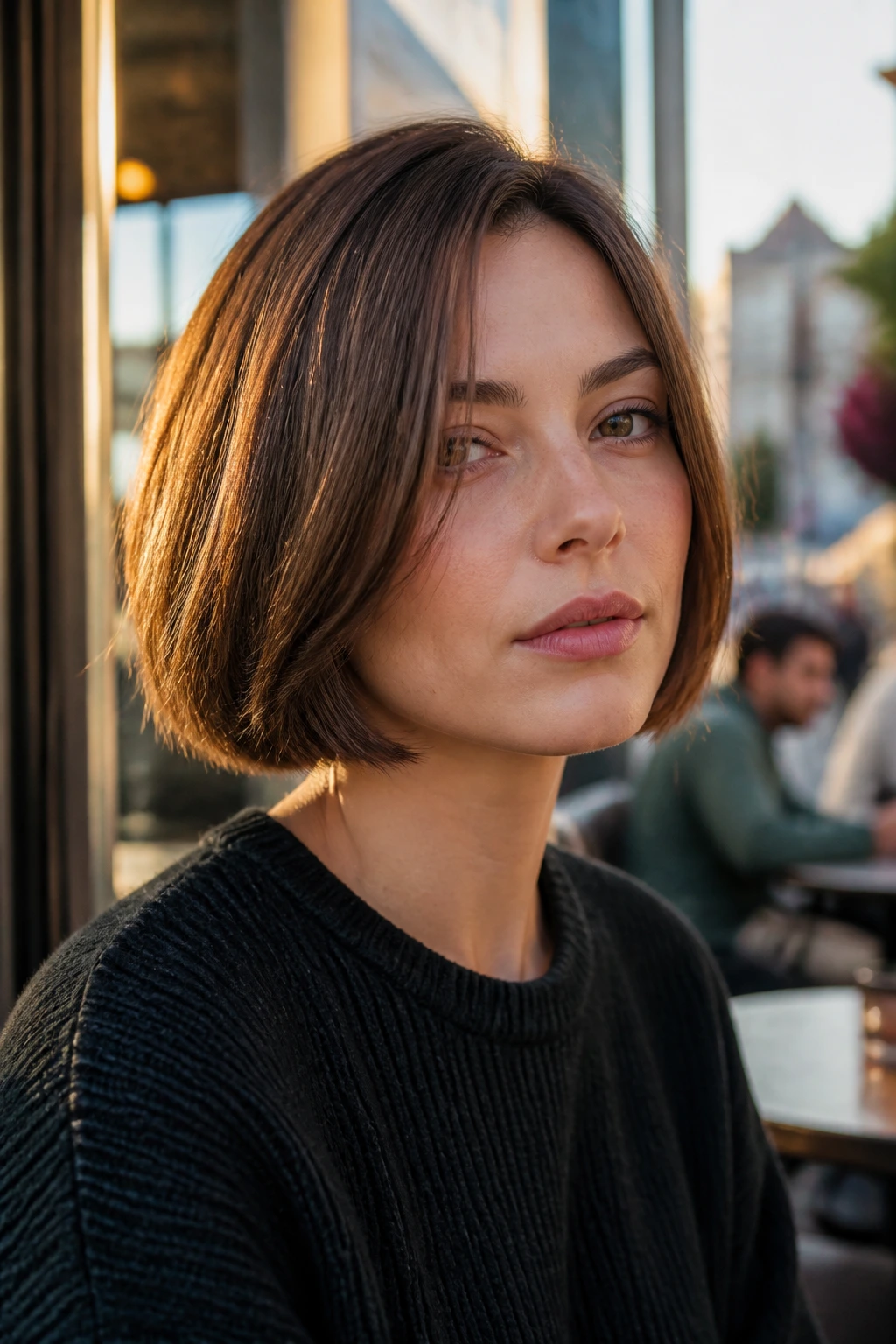
I’ve seen this cut rescue more triangle-shaped bobs than I can count.
The jawline bob sits right where the face needs framing, and the point cut ends break up the heavy edge that can make shorter bobs flare out in the wrong way. You still get a strong shape. You just lose the puffy, triangular look that happens when dense hair piles up at the bottom.
This one works especially well if your hair is thick or if the ends tend to bounce outward. A little point cutting at the perimeter lets the cut settle closer to the neck and jaw. The haircut feels neater, but not severe.
What Makes It Work
- The length should hit the jaw or a hair below it.
- The edges should be softened more at the corners than the center back.
- The front can stay slightly longer to keep the face open.
- The interior should keep enough weight so the bob does not frizz out.
A lot of people think they need more layers when they really need better edge work. Usually they need less. Or at least less in the wrong places.
Watch for this: if the stylist starts hacking too far up the shaft, the ends will fray and the bob will lose its clean line. You want controlled softness, not shredded hair.
5. The Curly Point Cut Bob
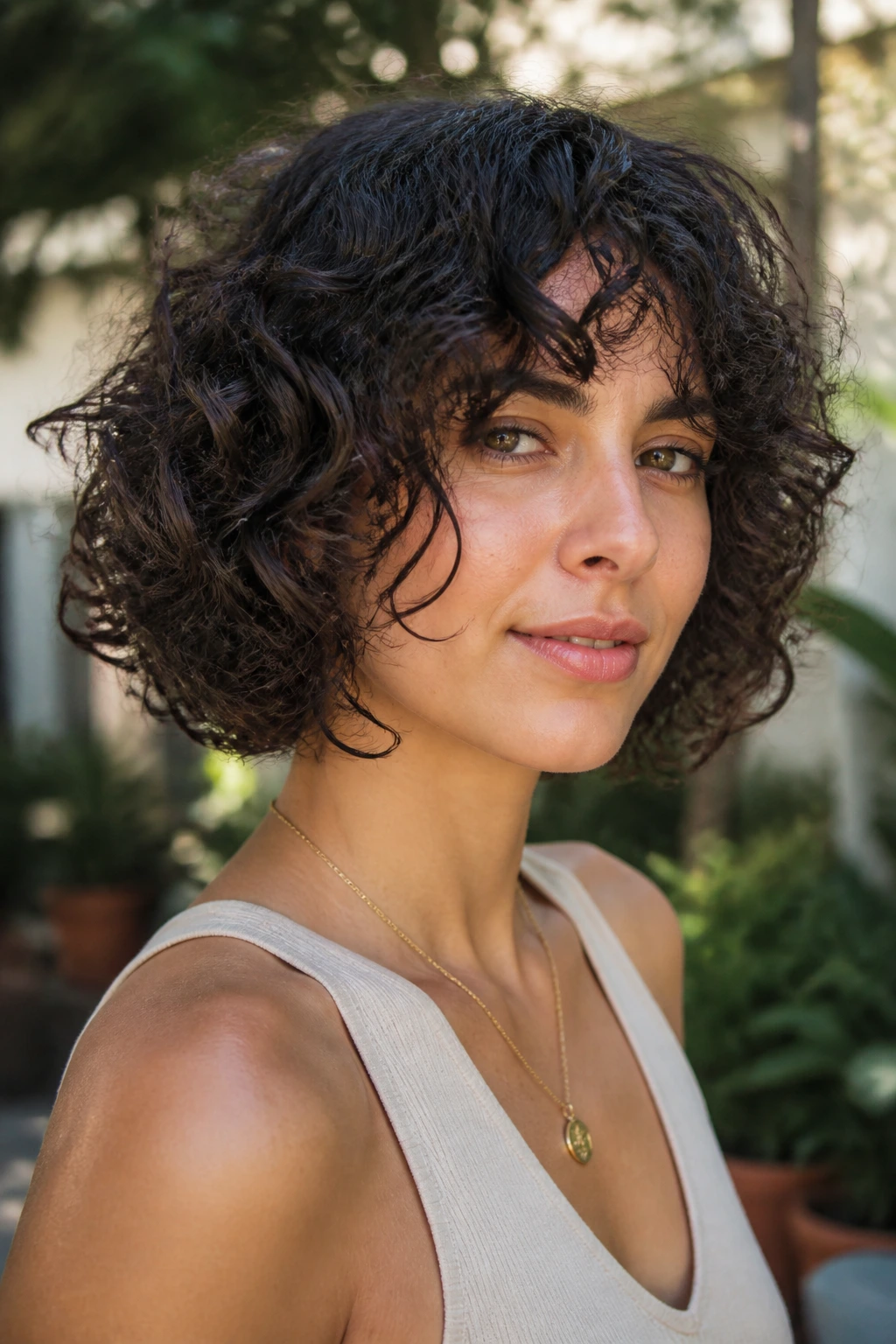
Curly hair changes the rules, and that is a good thing.
A point cut bob on curls should be shaped with the curl pattern in mind, not against it. The ends need enough texture to avoid the dreaded triangle, but they also need enough weight to keep the curl clumps defined. Cut too aggressively and the shape blooms outward in the oddest way. Cut too bluntly and the bob can sit heavy, especially at the sides.
I prefer this cut done dry or mostly dry, because curls lie. They can look one way wet and another way entirely when they spring up. A dry shape lets the stylist see where the curl falls naturally and where the perimeter needs softening.
The best curly bob usually lands somewhere between chin and neck length. Shorter can work, but it depends on the curl type and how much shrinkage you get. That part is not theoretical. It shows up the minute the hair dries.
Point cutting on curls should be light, almost cautious. The goal is to break up the hard edge at the end of the curl clumps, not thin the whole head. When it’s done right, the bob feels springy and round, with pieces that sit where they belong instead of puffing out in a halo.
Keep the styling simple. A curl cream, a light gel, and scrunching while the hair is damp are usually enough. Heavy brushing ruins the shape fast.
6. The Collarbone Bob with Loose Texture
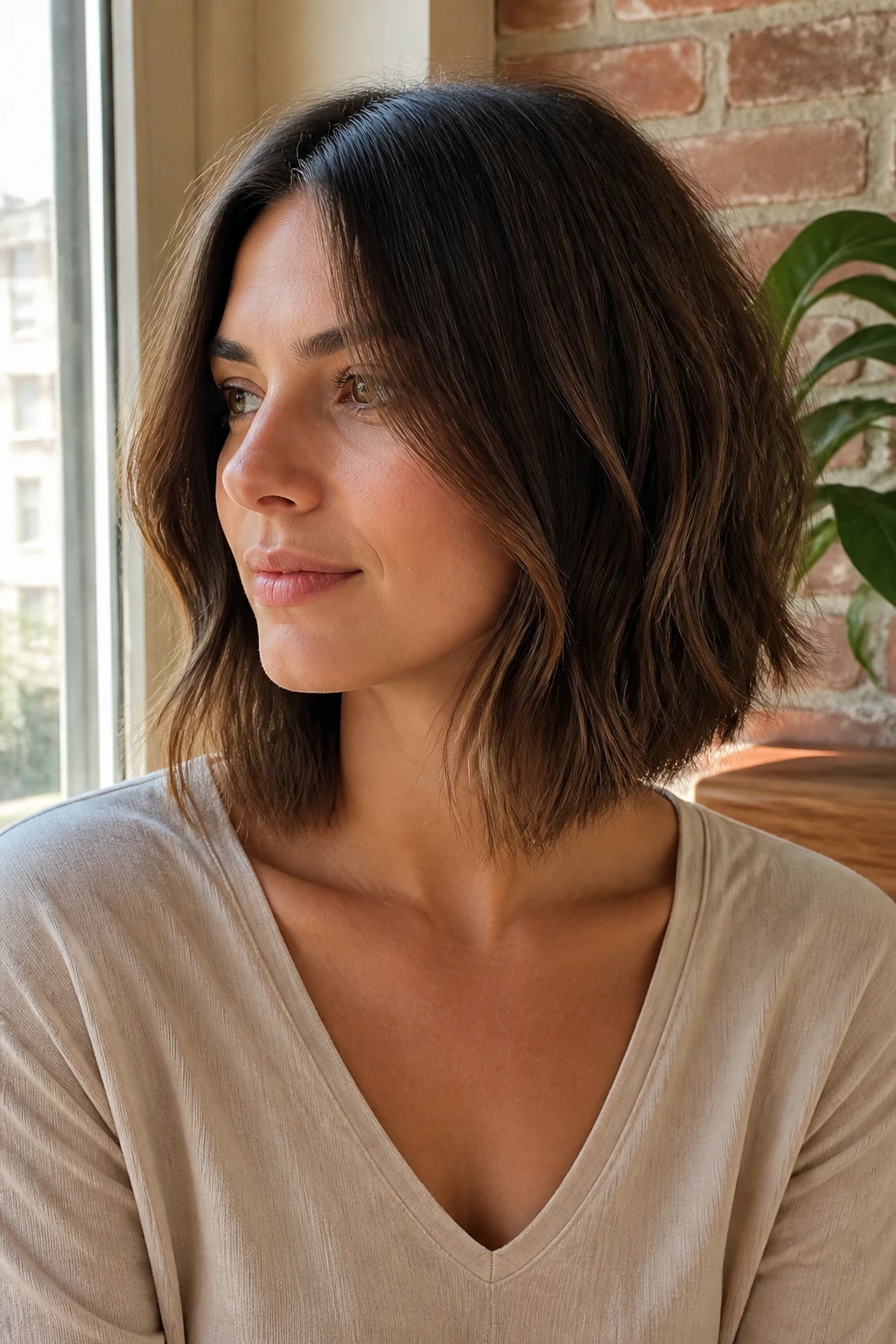
This is the version I recommend when someone says they want a bob but also wants room to grow it out without a crisis.
A collarbone bob is longer than the classic chin-length shape, so the textured ends read softer by default. Point cutting here has a different job. It doesn’t need to rescue a heavy line as much as it needs to keep the length from dragging. The cut should swing when you turn your head. Not flick. Swing.
Compared with a one-length lob, this version feels less flat at the bottom. That is the whole point. The perimeter stays visible, but the ends are gently broken up so the hair doesn’t sit in one heavy curtain across the shoulders.
Best For
- People growing out a shorter bob
- Hair that looks limp when it gets too blunt
- Anyone who wants a low-maintenance shape with a little movement
- Wavy hair that expands when it dries
If you want the most wearable result, keep the front pieces just a touch longer than the back. That gives the cut a soft diagonal when you tuck it behind the ears, and it stops the whole thing from feeling boxy.
I’m a fan of this one because it behaves. It looks styled even on a lazy day.
7. The Asymmetrical Point Cut Bob
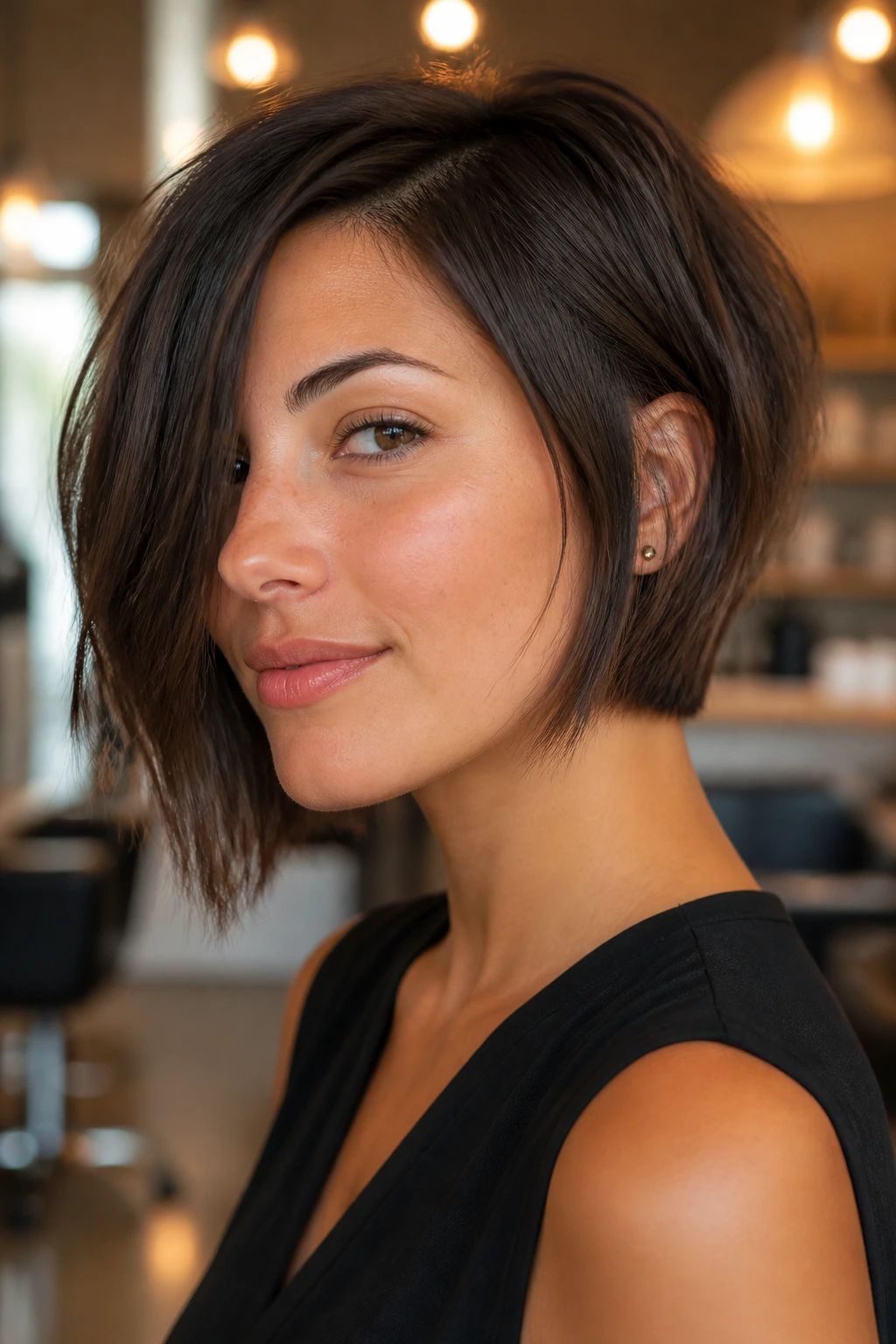
A slight imbalance can be the whole point.
An asymmetrical bob uses length difference to create interest, and point cutting keeps that difference from looking harsh. One side may skim the chin while the other sits a half inch lower or higher, depending on the direction you want the eye to go. The textured ends stop the cut from looking too graphic.
This style is best when the asymmetry is subtle. I’m not talking about a dramatic art-school slice unless that’s your thing. I mean enough difference to make the shape feel alive. A quarter-inch can matter. So can the way the front pieces are softened.
The point cut here should follow the direction of the longer side. If the stylist cuts the ends too evenly, the asymmetry loses energy and looks like a mistake. If they rough it up too much, the cut stops feeling deliberate.
A side part usually helps this bob. It gives the longer side a little more room and keeps the shorter side from sticking out.
Who It Suits
People with straight or slightly wavy hair tend to wear this best, because the line stays visible. It also works on fine hair that needs a stronger shape at the base.
My rule: keep the asymmetry obvious enough to notice, but soft enough that nobody can point to one end and say, “That side looks off.”
8. The Shaggy Bob with Invisible Internal Layers
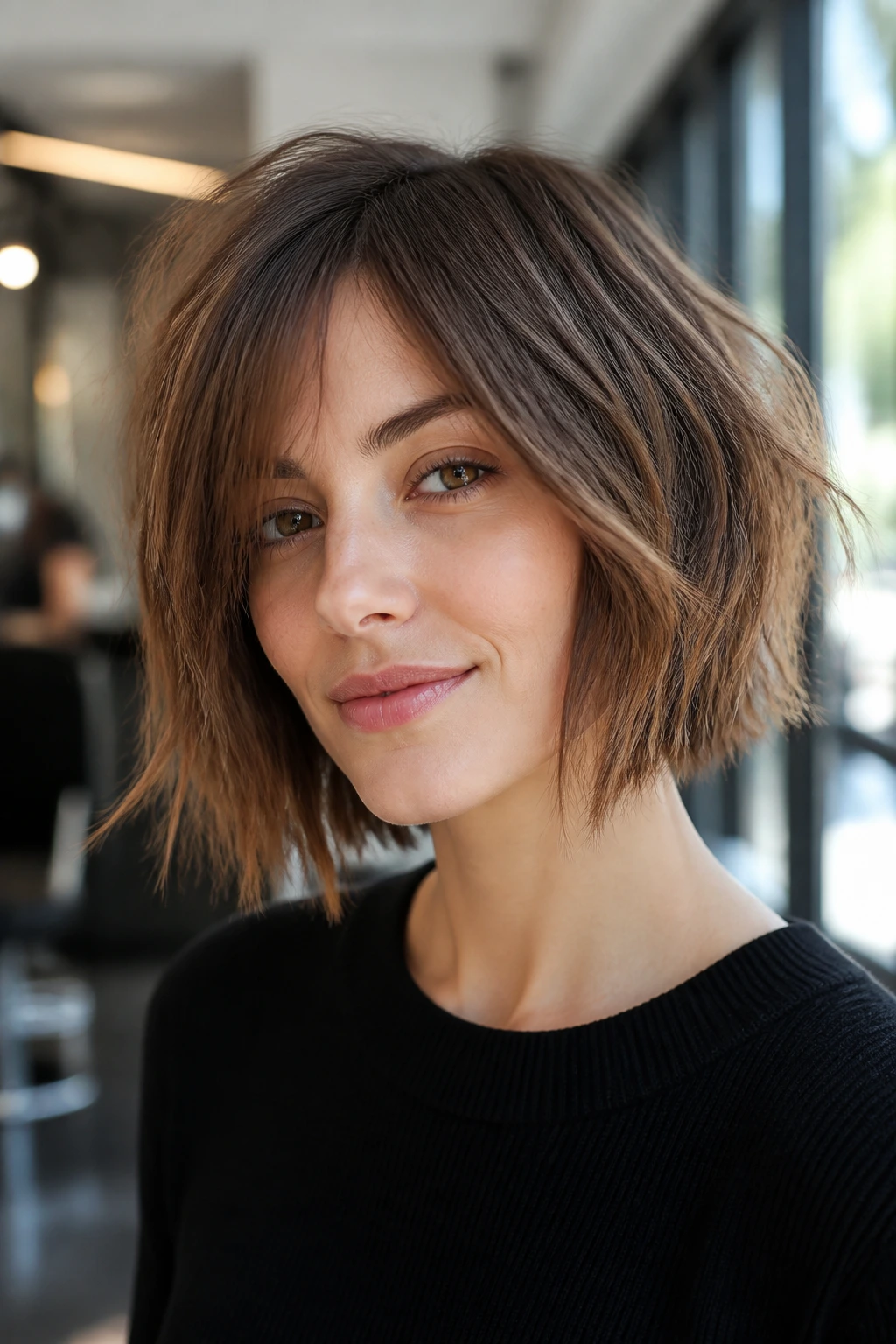
A shaggy bob is where point cutting earns its keep.
The best version is not a mini shag with a bob label slapped on it. It’s a bob with hidden internal movement that lets the ends separate a little and the top stay light. The perimeter still matters. You can see it. You can feel it. But the interior has enough removal to keep the shape from puffing out.
What to Look For
- Shorter pieces inside the haircut that remove bulk
- A perimeter that remains readable from the front
- Soft ends that move, not fray
- Face-framing pieces that blend instead of hanging like strips
This cut makes sense on hair that wants volume but not too much volume in the wrong place. Thick, wavy hair does well here. So does medium-density hair that gets stiff if left too blunt.
The word “shaggy” can scare people, and I get it. Nobody wants to leave the salon looking like they got caught in a hedge trimmer. A good shaggy bob is controlled. The internal layers are invisible until you move. Then they show themselves.
That movement is the whole point. When you shake your head, the ends should separate a little, then settle back. No gaps. No choppiness. Just air.
9. The Bob with Curtain Bangs and Broken-Up Ends
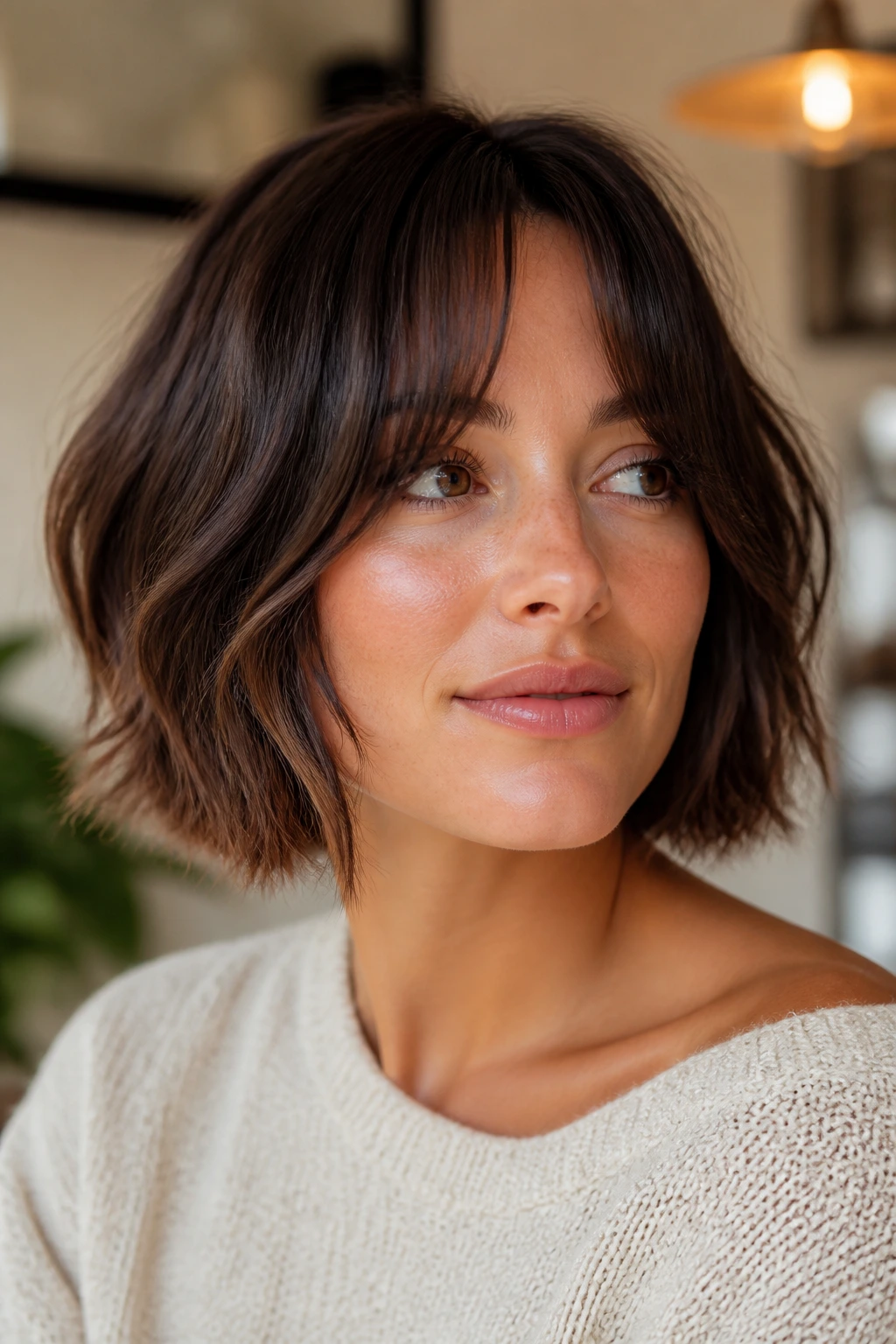
Why do curtain bangs change a bob so much?
Because they draw the eye upward and give the cut a second focal point. Without textured ends, the combo can look too round or too forced. With point cutting at the perimeter, the bob and the fringe feel connected. The face opens, the sides move, and the style stops looking like two separate haircuts wearing the same shirt.
What to Tell Your Stylist
Ask for curtain bangs that start soft and blend into the sides, not a blunt fringe that lands like a curtain rod. Then ask for light point cutting through the ends only, especially around the front corners where the bangs meet the bob.
That meeting point matters. A lot.
If the fringe is airy and the bob ends are too crisp, the haircut splits in half visually. If both are too shredded, it all goes limp. The sweet spot is a clean outline with a few broken-up pieces around the face.
Styling It Well
Blow-dry the bangs forward and then sweep them apart with a round brush or your fingers. Keep the ends of the bob smooth enough to show shape, but not so smooth that the texture disappears. A soft cream or a pea-sized amount of styling balm is usually enough.
This one suits people who like a little softness near the eyes. It can be romantic without turning precious.
10. The Graduated Bob with a Tight Nape
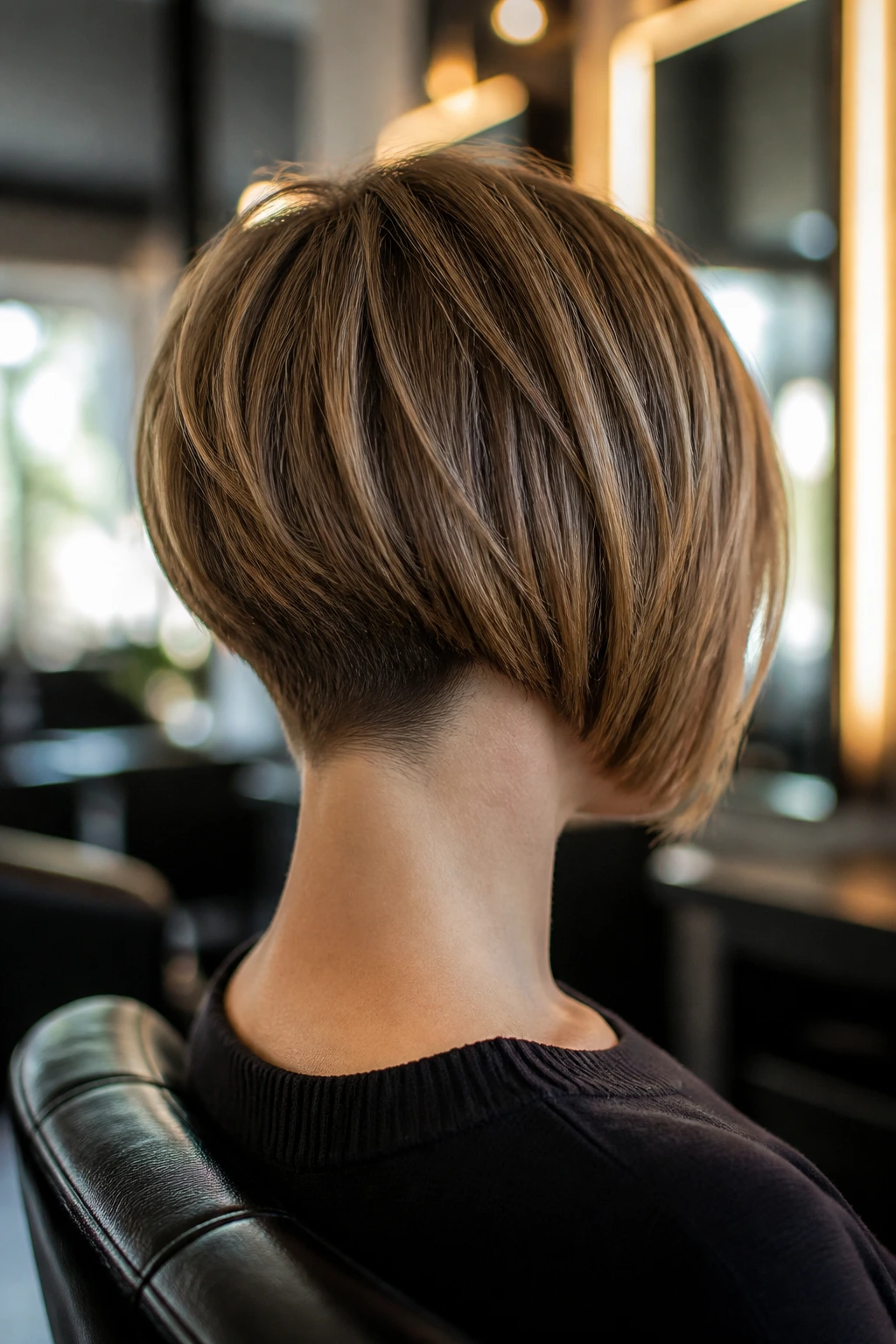
A stacked or graduated bob can look either elegant or boxy. There isn’t much middle ground.
The nape is the whole game here. A tighter graduation lifts the back and gives the neckline a neat curve, while point cutting at the lower edge keeps the finish from getting bulky. The sides then taper into the front in a way that feels precise, not puffy.
I like this style on hair that grows out fast at the nape. A clean graduation keeps the back from collapsing, and the textured ends prevent the whole shape from feeling too formal. It’s a sharp cut, but it doesn’t have to feel severe.
What Can Go Wrong
If the graduation is too steep, the back can look stacked in an old-fashioned way. If the point cutting is too heavy, the ends lose their density and the bob starts to fray around the jaw. That’s not a cute mistake. It looks like the haircut ran out of plan halfway through.
The better version keeps the line crisp from the crown to the nape, then softens the very edge so the haircut can move. That’s a narrow zone of work, but it changes everything.
This bob is especially good if you wear structured clothes, earrings, or collars that sit close to the neck. It frames that area cleanly and doesn’t fight with it.
11. The Fine-Hair Bob Built for Lift, Not Bulk
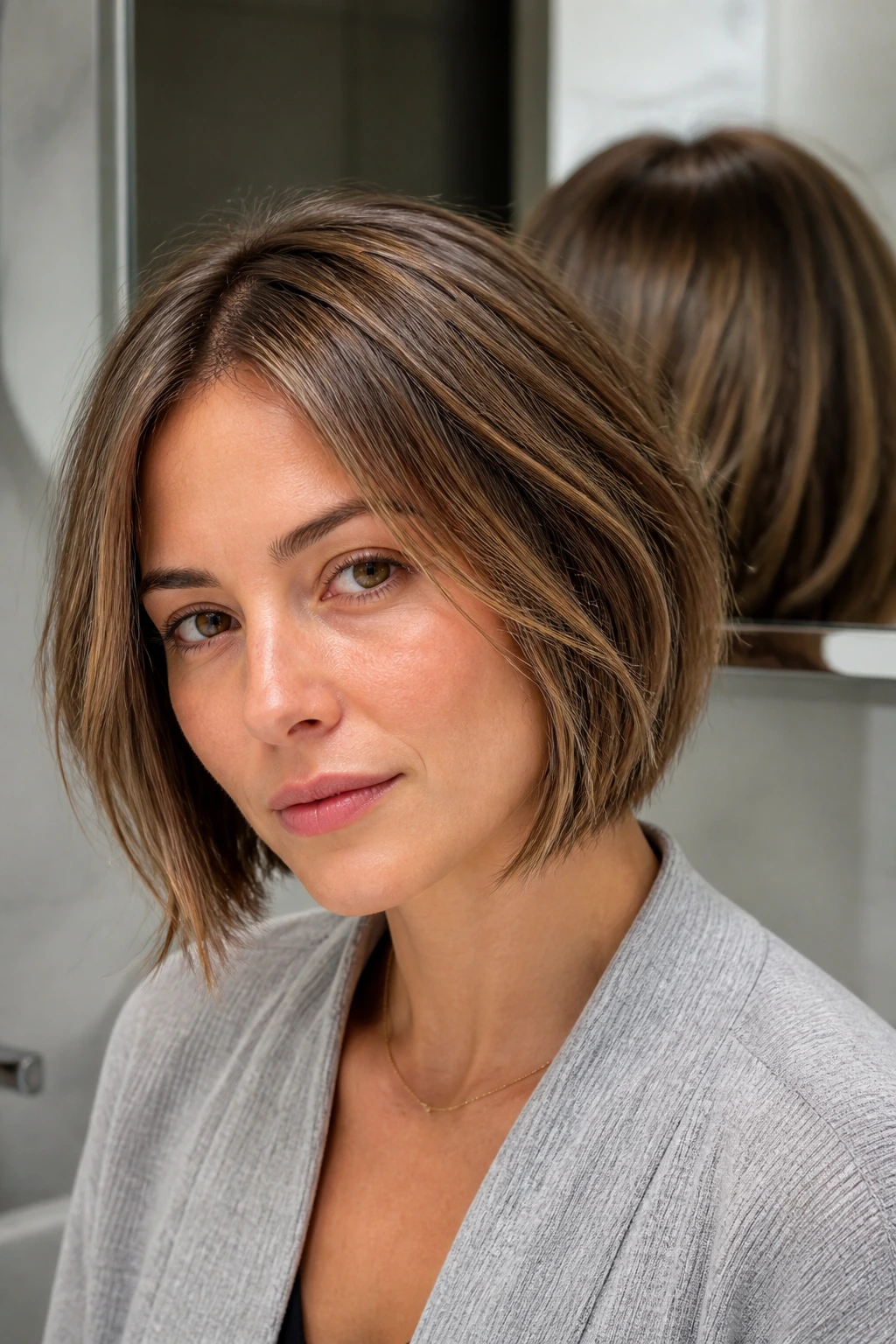
Fine hair needs a different kind of care. Too much point cutting and it starts looking see-through at the ends.
That’s the mistake people make. They want texture, so they keep asking for more texture, and soon the bob has lost the weight it needed to look full. Fine hair usually does better with a controlled bob shape and just enough point cutting to stop the ends from looking blunt and stringy.
The Right Balance
Keep the cut around jaw or chin length, where the hair can still hold a line. Ask for very light point cutting on the outer perimeter only. The goal is to make the ends softer, not thinner. A tiny amount of texture goes a long way on fine strands.
A root-lifting mousse or lightweight spray can help the shape hold for the day, but don’t coat the ends in anything heavy. Fine hair shows product fast. A shiny, separated finish can turn greasy in about ten minutes if you overdo it.
Useful Details to Mention
- Ask your stylist not to remove too much density at the bottom.
- Keep the interior work minimal.
- Style with a round brush at the crown for lift.
- Finish with a light mist, not an oil slick.
I’m blunt about this because I’ve seen too many fine-haired people walk out with a cute bob that falls flat by lunch. Texture should help the cut. It should never swallow it.
12. The Thick-Hair Bob with Soft, Separated Ends
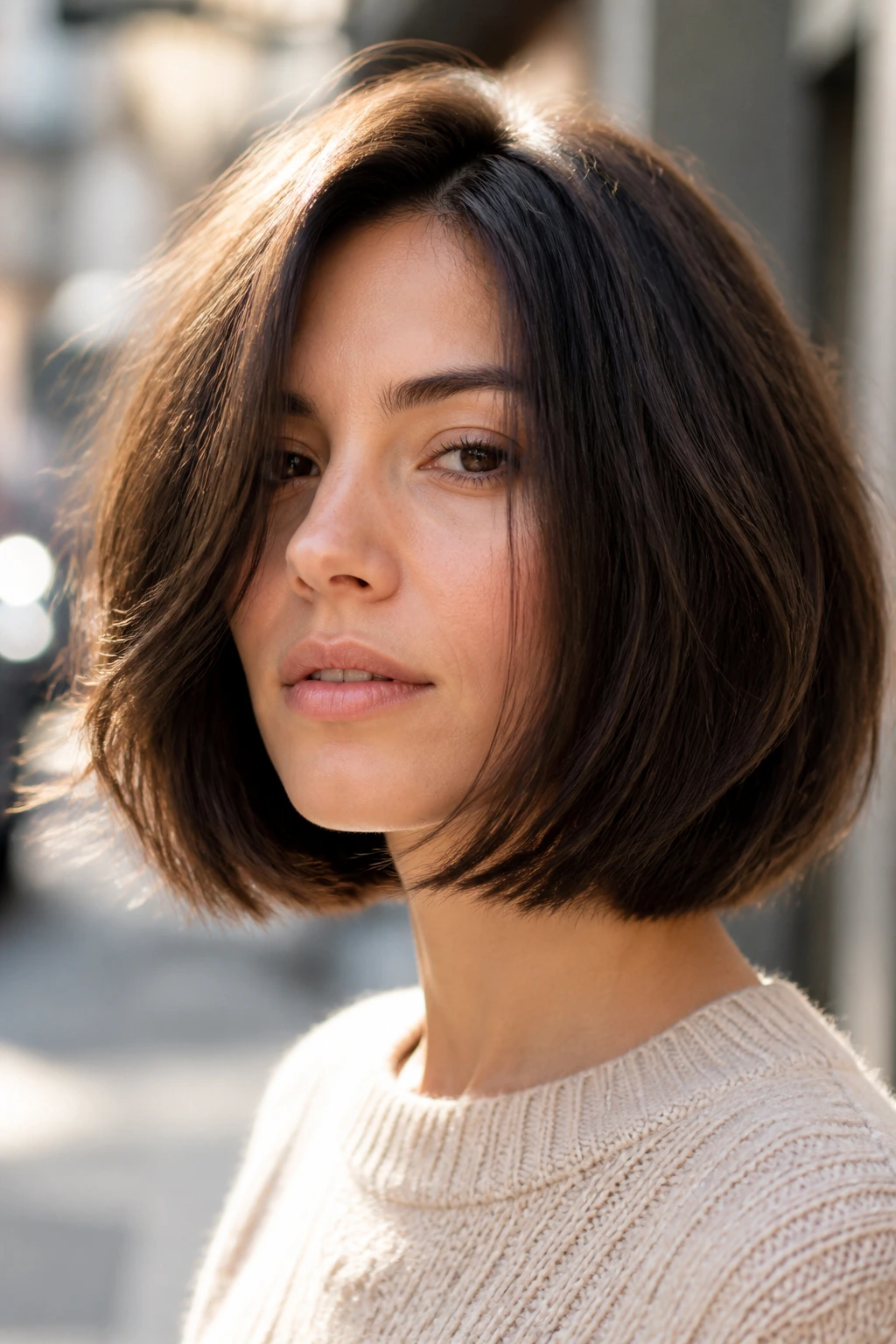
Thick hair is both a gift and a problem. It gives you body, yes. It also gives you a bottom edge that can look like a brick if nobody pays attention.
A textured bob for thick hair needs disciplined point cutting. Not random snips. Not overthinning. Disciplined, careful softening at the ends and, sometimes, a little internal reduction to stop the perimeter from ballooning. The best version keeps the mass but breaks the line enough that the bob can bend around the face instead of standing away from it.
The key is where the softness happens. At the very edge, the ends should look lightly separated, almost feathered. Farther up, the shape should still hold together. Thick hair looks best when it still feels like hair, not air.
I also like this version with a slightly longer bob length, often just below the jaw or grazing the neck. That extra length gives the thickness somewhere to live. A super-short thick bob can get stubborn fast. It wants to kick out, puff, or sit like a shelf unless the haircut is extremely well built.
One practical note: thick hair often needs a stronger blow-dry to show the texture. A paddle brush, a nozzle, and a little tension do more than a basket of products ever will. Use a smoothing cream on damp hair, rough-dry to about 80 percent, then polish the ends so the point cutting actually shows.
If you want the most honest version of a textured bob, this is it. It has weight. It has movement. It grows out with manners. And that, frankly, is the part people remember after the compliments wear off.
