



A military bob looks sharp because it has nowhere to hide. The outline does the talking. Clean neck. Clean edge. Clean intent.
That’s why this haircut hits harder than a softer bob when you want hair that reads neat from the first glance. The shape stays visible even when you’re not spending twenty minutes with a round brush, and that matters more than people admit. A crisp perimeter can make simple clothes look more finished, too.
But the cut has rules. Too many layers and it turns fluffy. Too much texturizing and the line goes mushy. Too little planning at the nape, and the whole thing kicks out in the back like it never got the memo.
Hair texture changes the story as well. Fine hair often needs a little stacking or a blunt edge to feel full. Thick hair usually needs weight removal in the right places, not a random thinning shears session. And if your hair bends or waves on its own, the shape has to be chosen with a steady hand, because a military bob is only as clean as its outline.
1. Blunt Chin-Length Military Bob
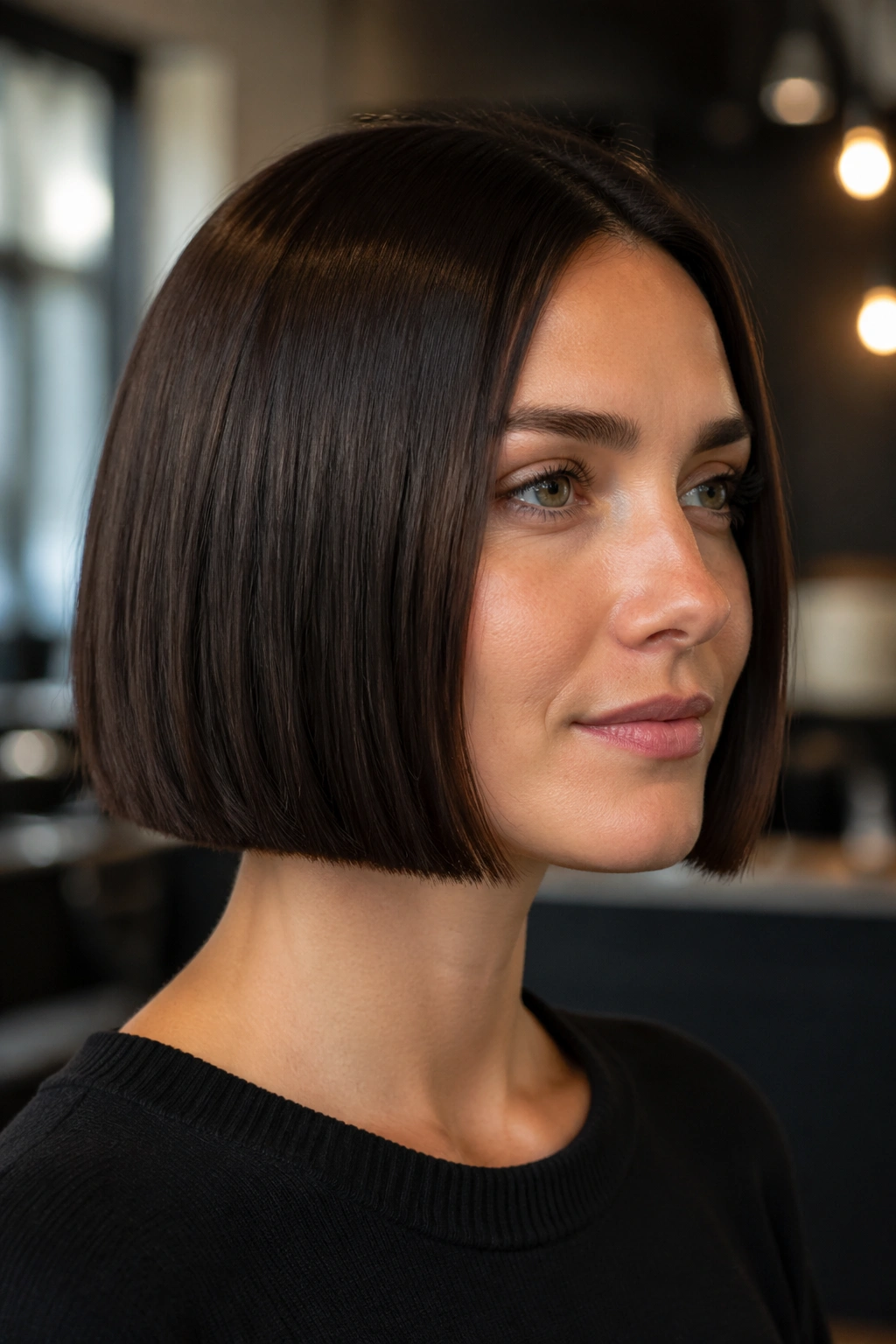
The blunt chin-length military bob is the one I’d hand to someone who wants the haircut to look decisive without looking fussy. It sits right at the chin or just below it, and that length draws a hard, tidy frame around the face. No soft fluff. No wispy ends floating away from the shape.
What gives it that disciplined feel is the perimeter. A one-length line makes the jaw look cleaner, and the bob keeps its structure even when you wear it with a simple center part or tuck one side behind the ear. On straight hair, the effect is nearly instant. On wavy hair, you need a smoother finish or the line gets lost under texture.
What to ask for at the chair
- A one-length bob that lands at the chin or just under it.
- Minimal layering through the interior so the outline stays solid.
- Soft point cutting only at the ends if the hair feels heavy, not a full texturizing pass.
- A trim schedule of about every 5 to 6 weeks if you want the edge to stay crisp.
A blunt bob like this can also be easier to live with than it looks. The styling is straightforward: heat protectant, a paddle brush or flat brush, and a small amount of smoothing cream or light serum. If the ends flip out, a 1-inch flat iron can tuck them back in with one pass. Do not go heavy on oil, though. Too much shine product can make the haircut look greasy instead of polished.
This is the version that works when you want your hair to say “put together” without speaking too loudly.
2. Tapered-Nape Micro Bob
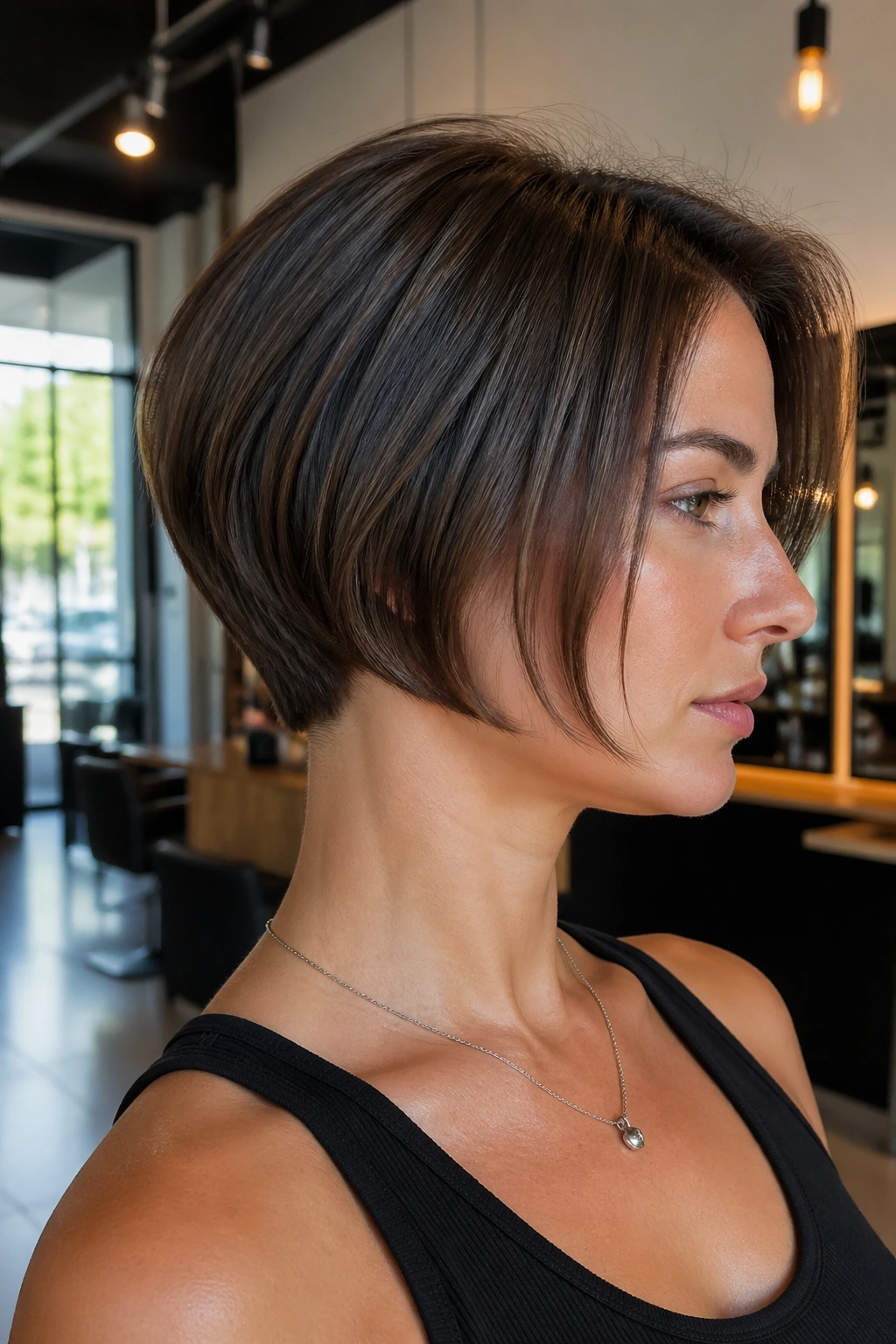
A tapered-nape micro bob is shorter, tighter, and a little more severe in a good way. The back hugs the neck closely, while the front usually stops somewhere between the cheekbone and the jaw. That contrast gives the haircut a sharp side profile, which is where this shape really earns its keep.
The nape is the important part here. If the back sits too high or too loose, the bob stops looking deliberate and starts looking like a grown-out crop. If the taper is too aggressive, though, you can lose the softness that makes a bob feel wearable. I like a taper that follows the curve of the neck and leaves just enough length to avoid a shaved feel.
Who it flatters most
- Hair that is fine to medium and lies fairly flat.
- Straight or lightly wavy texture.
- People who like a clean neckline with less bulk around scarves, collars, and high necklines.
- Faces that can handle a shorter front without feeling boxed in.
Cowlicks matter here. A lot. If the hair flips at the nape, the cut can kick outward no matter how neatly it is shaped, and then the whole thing loses that neat military mood. A good stylist will cut with the growth pattern in mind and usually leave a tiny bit of length where the hair wants to bend.
This is one of those cuts that looks effortless only after a careful salon visit. A quick blow-dry with a vent brush usually does the job, but if you want the nape to stay close, finish with the nozzle of the dryer pointed downward and keep your wrist steady. No rough drying. It shows.
3. Box Bob With a Center Part

The box bob is blunt in a way that feels almost stubborn. The shape is square, the ends are even, and the sides carry enough weight to make the whole haircut look grounded. Add a center part, and the result becomes even more precise. It’s calm, almost graphic.
What I like about a box bob is that it doesn’t pretend to be soft. That honesty works. The haircut sits close to the face and gives you that tidy, straight-ahead look that feels disciplined without trying too hard. On dense hair, the box shape has real presence. On thinner hair, the stylist has to be careful not to over-layer or the ends start to look see-through.
A center part can be unforgiving if the hair is uneven or if one side naturally wants to lift more than the other. Still, when the balance is right, the cut looks neat from every angle. It reads especially well on longer faces and on anyone who wants the lower half of the face to feel a little more anchored.
How to keep the shape from puffing out
- Blow-dry with the brush pointing the hair straight down so the ends stay flat.
- Use a light serum, not a heavy cream, or the box shape gets muddy.
- Let the hair cool before tucking it behind the ears; that helps the line set.
- Ask for a blunt edge that is cleaned up every 5 to 7 weeks.
This cut is not the one for people who want movement and bounce. It’s for people who want control. That’s the point.
4. Angled Bob With a Short Back
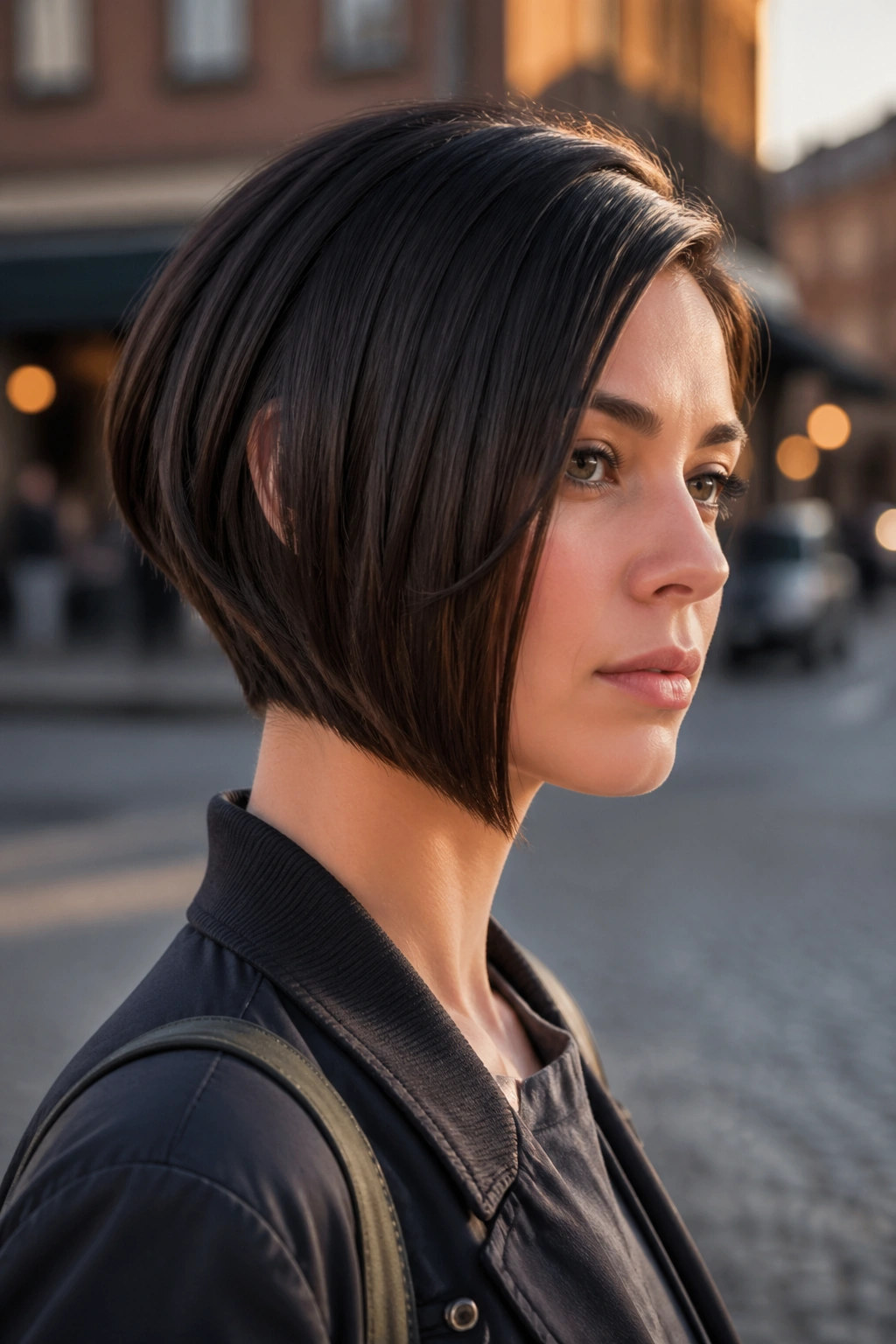
An angled bob makes the military look a little sharper because it sends the eye forward. The back stays shorter and neater, while the front lengthens toward the chin or even the top of the collarbone. That diagonal line creates a clear shape without needing extra styling tricks.
The angle itself matters more than many people think. Too steep, and the haircut starts to feel flashy. Too gentle, and you’ve just got a regular bob that happened to be cut by someone with a ruler. The sweet spot is a visible slope that still looks tidy when the hair is tucked, tucked, or tossed behind one ear.
I like this cut for thick hair because the shorter back helps the bulk sit where it should instead of ballooning at the neck. Fine hair can wear it too, but the angle has to be controlled so the back doesn’t get too sparse. The front length should look intentional, not like it was left long by accident.
A good angled bob also gives you a little movement when you walk. That sounds small, but it matters. The shape has enough structure to feel strict and enough length variation to stop it from looking stiff.
What to watch for
- The front should be long enough to frame the jaw, not drag down the neck.
- The back should stay clean and compact, not over-stacked.
- If you wear glasses, check how the side pieces land near the frame.
- If the stylist thins the ends too much, the angle loses its strength fast.
This is the bob for people who want precision with a little energy in it. Not soft. Not severe. Just exact.
5. Sleek Bob With a Hidden Undercut
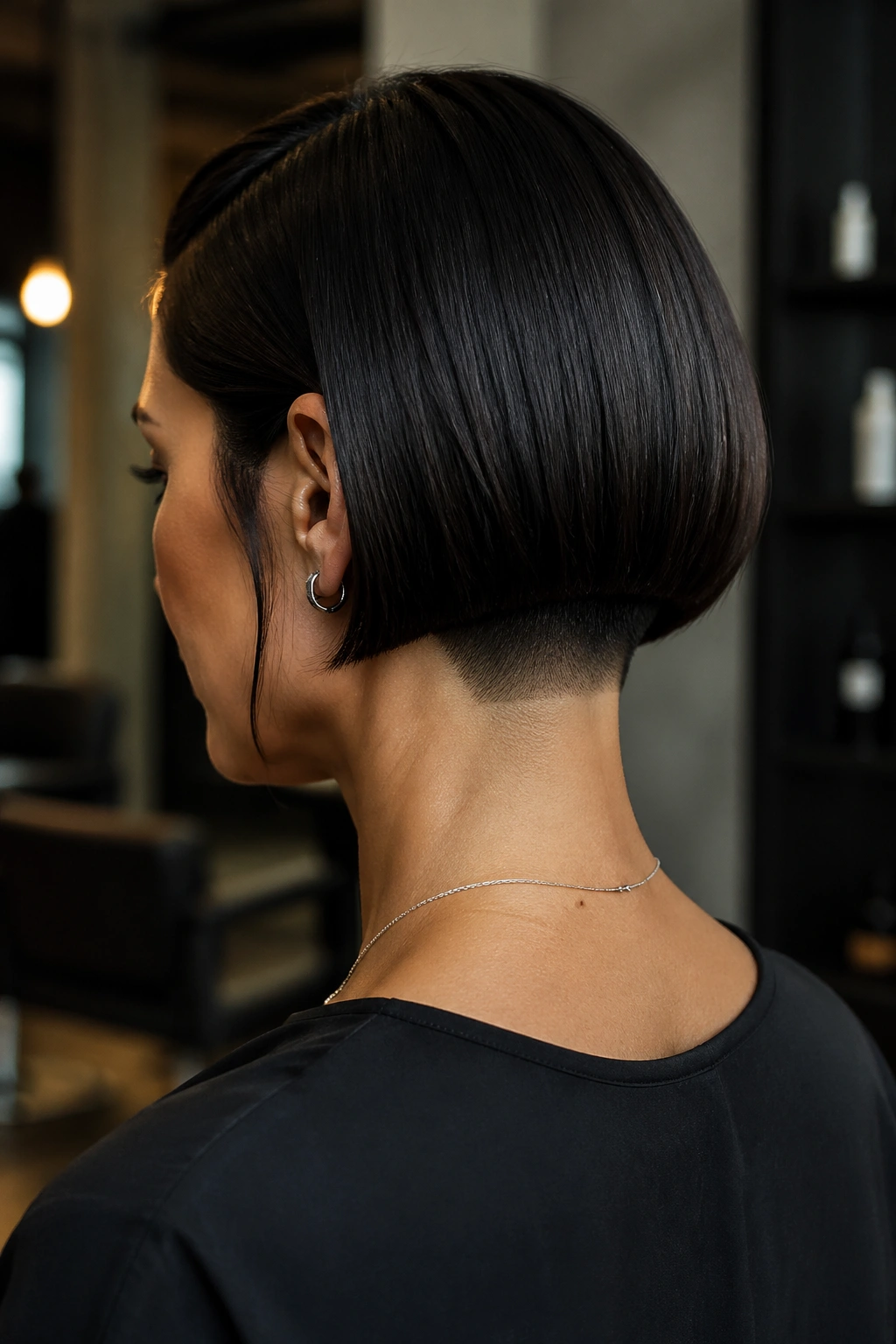
A sleek bob with a hidden undercut is the quiet fix for hair that keeps swelling at the nape. From the outside, it still looks like a smooth, blunt bob. Underneath, a slice of bulk has been removed so the hair can sit flatter and cleaner against the head.
That hidden bit is especially useful when hair is thick, coarse, or stubborn behind the ears. Instead of fighting that heaviness with more product, you take weight out where it causes problems. The difference shows in profile first. The back stops puffing. The collar area looks neat. The whole haircut feels less crowded.
Where the undercut helps most
- Nape hair that flips outward by mid-day.
- Dense hair behind the ears that makes the bob widen.
- A bob that looks heavy even after a proper blow-dry.
- Clients who want a clean shape without shaving the sides visibly.
The catch is maintenance. If the hidden undercut grows too long, the bump comes back and the line starts to sit funny at the base. That’s why this cut works best for people who can keep up with trims. It also needs a careful hand with styling products. Too much wax or paste near the nape can make the hair stick in odd places and ruin the smooth finish.
A round brush, a dryer nozzle, and a small amount of smoothing cream are usually enough. If your hair is very dense, a flat iron over the top layers can help, but only after the hair is fully dry. Wet heat styling here is a bad idea. It leaves the shape puffy and the ends bent in all the wrong places.
This is one of the smartest military bob cuts because it solves a problem most people have and almost nobody mentions out loud.
6. Straight-Fringe Military Bob
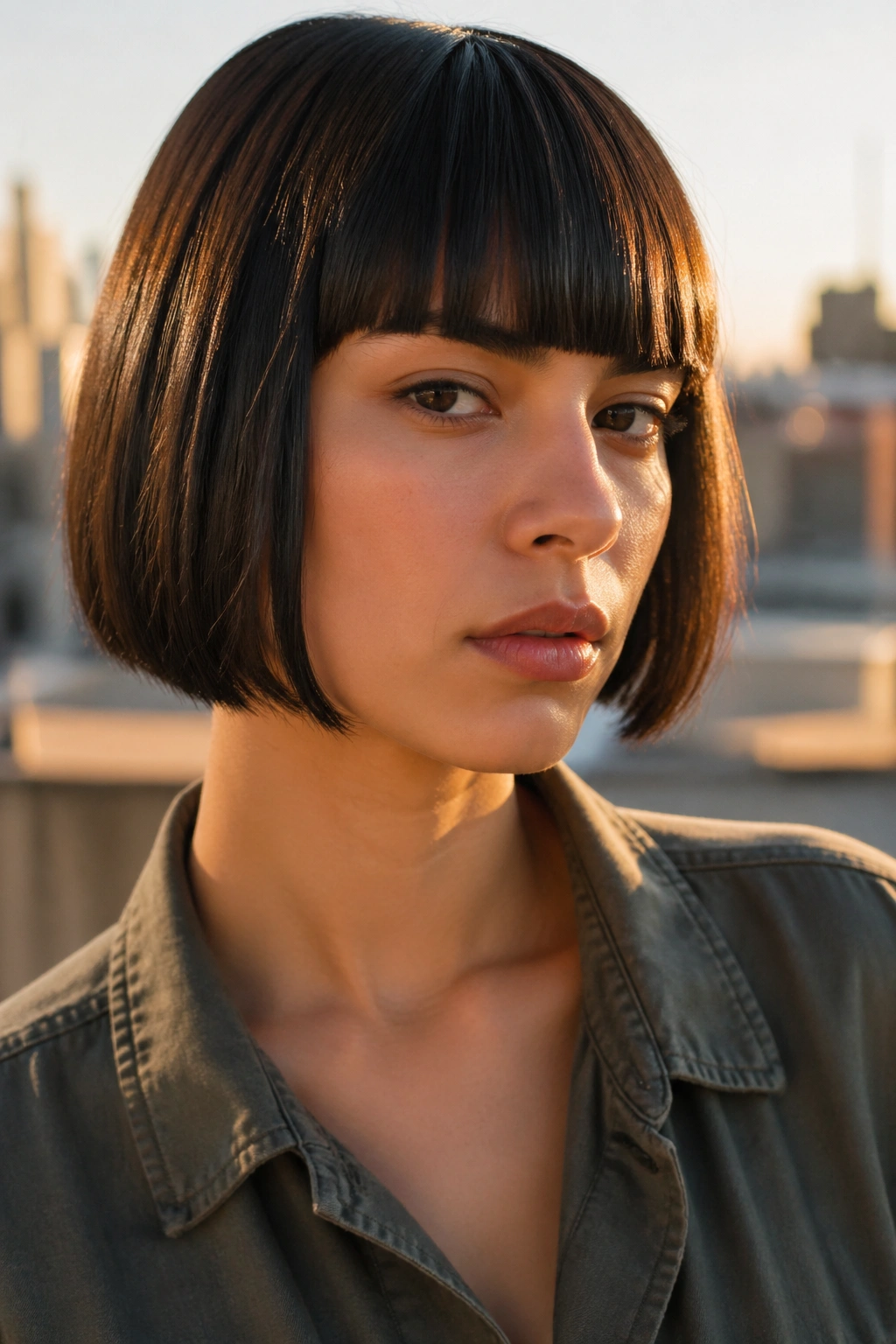
A straight-fringe military bob has a strong front edge, and that edge changes the whole haircut. The bangs draw a horizontal line across the face, then the bob continues that line around the jaw. It feels compact, tidy, and a little serious in the best way.
The fringe has to be cut with care. Brow level is a common starting point, though many stylists leave the temples a touch longer so the bangs don’t box in the face too hard. When the fringe is too short, the look turns severe fast. When it’s too wispy, the line disappears and the haircut loses its sharpness.
Bangs that stay neat
- Dry the fringe first, before the rest of the hair.
- Aim the dryer downward from the roots so the bangs sit close to the forehead.
- Trim the fringe more often than the bob itself; it shows growth quickly.
- Keep the texture light near the brow line so the edge stays visible.
This cut is not forgiving if you hate styling your bangs. If the fringe splits, bends the wrong way, or fights your cowlicks, you’ll spend too much time fixing it. On the other hand, if your hair takes a smooth set easily, the payoff is strong. The eyes look more focused. The face feels framed. The bob suddenly has a front-of-head presence that a plain one-length cut doesn’t offer.
I’m fond of this shape on straight hair because it feels direct. On wavy hair, it can still work, but the fringe needs more daily attention, which is fine if you enjoy that sort of thing and not fine if you don’t. Simple truth.
7. Graduated Stack Bob
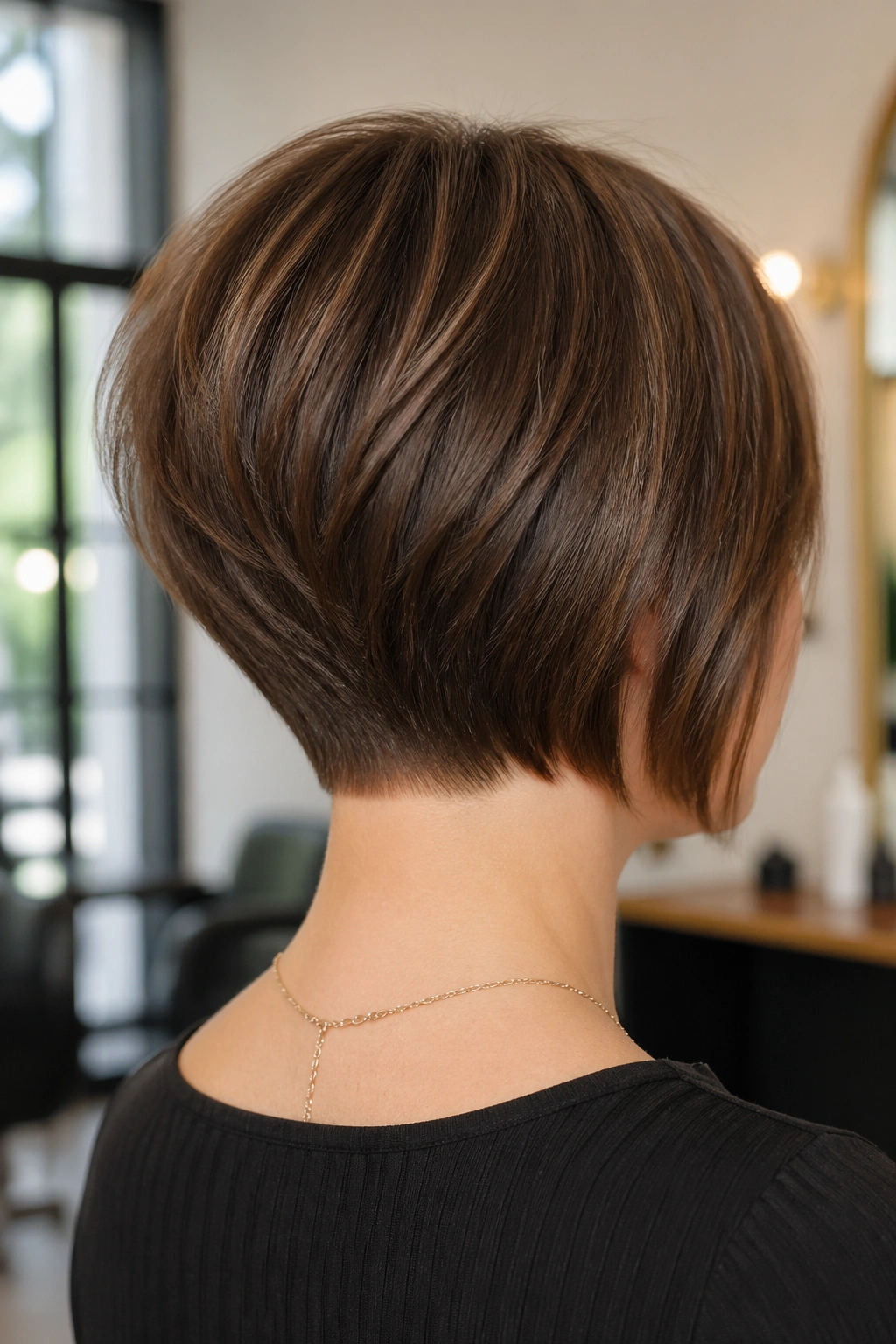
The graduated stack bob is the one to choose when you want lift without fluff. The back is built with a subtle stack, so the hair curves under cleanly and the crown gets a little height. The overall effect is polished, not puffy.
Fine hair benefits a lot here. The graduation creates the feeling of density near the back of the head, which stops the bob from collapsing flat. Thick hair can wear it too, but the stack should stay controlled or the silhouette turns round too fast. You want a compact shape, not a retro helmet.
Where the stack earns its keep
- It gives the crown a little lift without teased roots.
- It helps the back curve inward instead of hanging straight.
- It keeps the nape neat when the hair is naturally flat.
- It adds shape for fine hair that needs structure.
The mistake people make with a stacked bob is asking for too much of it. A dramatic stack can look dated fast, and it pulls the eye backward instead of forward. A cleaner version keeps the graduation low and the perimeter blunt. That way, you still get a disciplined finish.
Styling is fairly simple. Blow-dry the back with a round brush only at the roots, then keep the ends smooth. A dab of root lift at the crown can help, but don’t flood the top with mousse. Too much product makes the stack feel heavy and sticky instead of neat. And if the back starts to grow out, the shape loses its reason for being. This one likes regular trims.
8. Side-Part Precision Bob
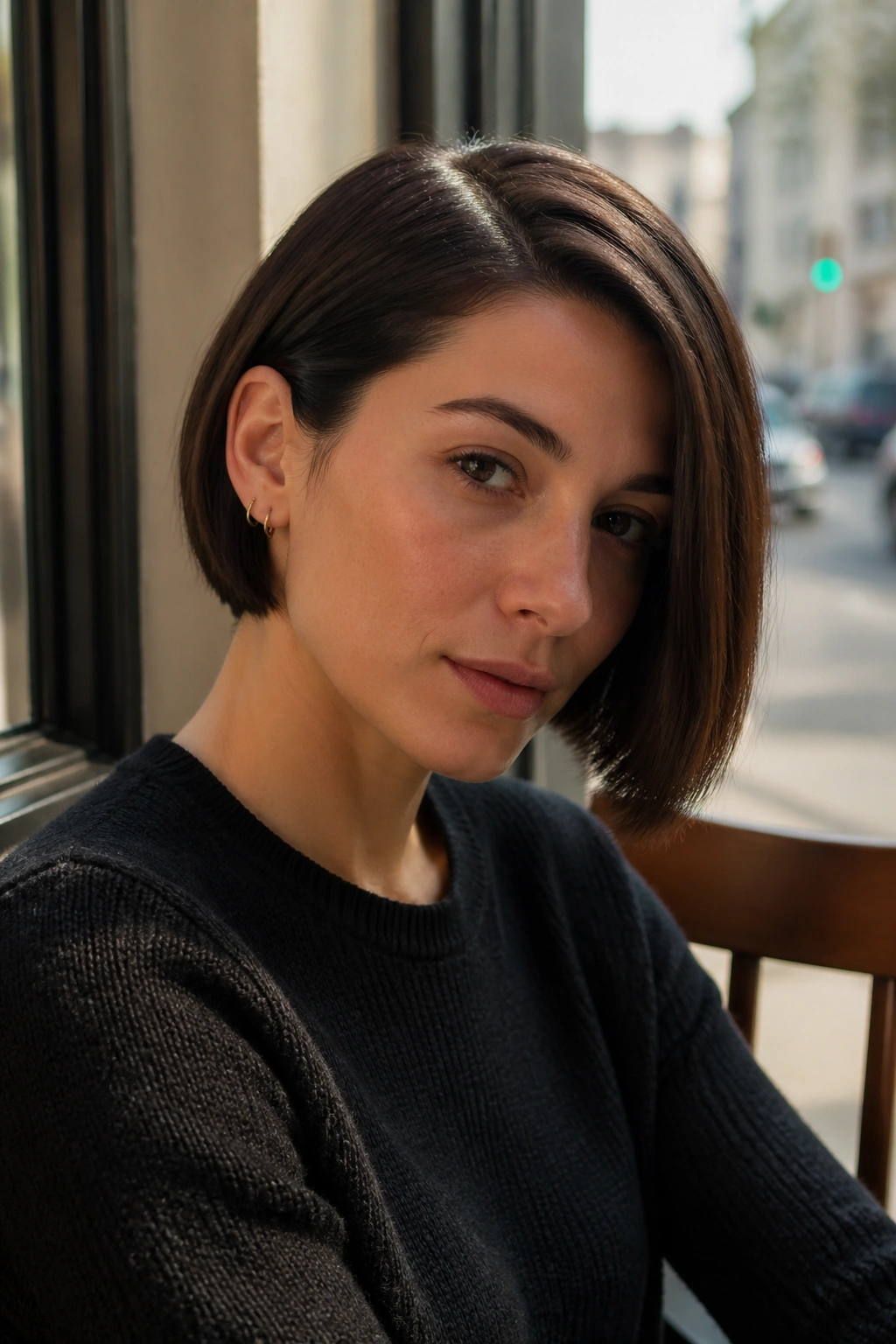
A side-part precision bob softens the military feel without giving up the clean outline. The part shifts the weight of the hair, which changes the whole mood of the cut. One side gets a little more room; the other side sits closer to the cheek or ear. That small shift makes the haircut feel sharper in a different way.
This is one of my favorite options for a face that needs a bit more movement near the forehead. A deep side part can shorten a long face, soften a broad forehead, or create a cleaner diagonal across the front of the bob. The shape still stays tidy because the ends remain controlled and the overall length stays disciplined.
A side part also helps if you want the haircut to look less formal than a blunt center part. The bob can still be neat, but it won’t feel as rigid. A tucked side works especially well here. One side goes behind the ear, the other side falls forward, and the contrast gives the haircut a tailored feel.
Subtle roots are enough. You do not need giant volume at the crown, and in fact too much lift can make the style drift away from its clean roots. A soft bend through the front is fine. Big waves are not the point. The point is balance, and the part does a lot of that work for you.
9. Razor-Clean Asymmetrical Bob
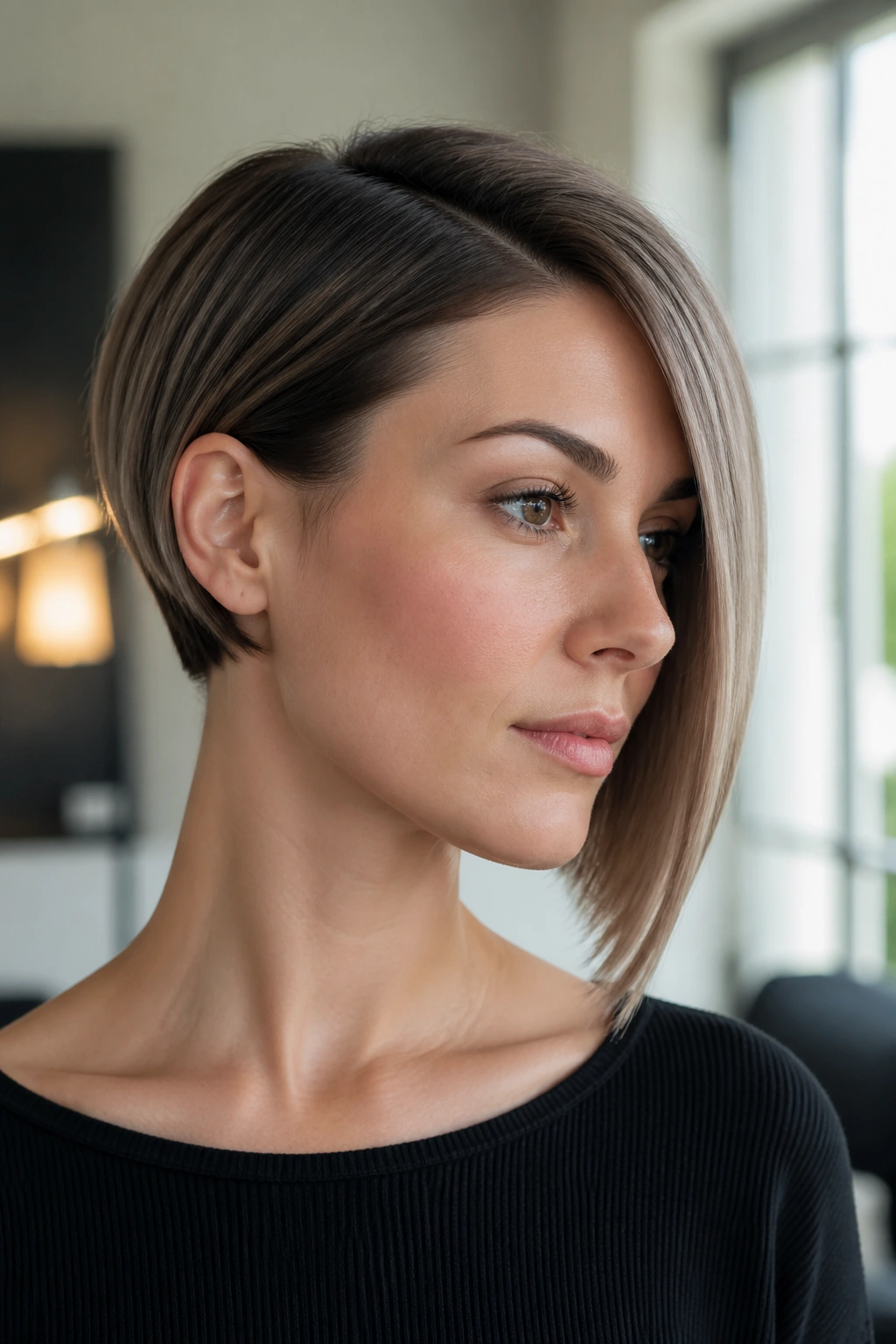
An asymmetrical bob is the boldest version on this list, but it still fits the clean military mood if the difference between sides stays controlled. One side is longer, the other shorter, and the diagonal line across the face gives the haircut its edge. Done well, it looks precise. Done badly, it looks like the salon lost interest halfway through.
The key is restraint. A one-inch difference can look thoughtful. A three-inch difference starts to feel like a different haircut altogether. I prefer this style when someone wants shape and movement but refuses to let the ends get soft or muddy. The cut needs a sharp perimeter, not a lot of extra styling tricks.
What to watch for
- Keep the longer side polished so it doesn’t fray at the ends.
- Make sure the shorter side still lands at a clean point near the jaw.
- Trim both sides together so the asymmetry stays intentional.
- Use a flat brush or iron to keep the front line visible.
This cut can be surprisingly easy if your hair naturally falls to one side. The asymmetry works with the growth pattern instead of fighting it, which is always a relief. It does show uneven growth fast, though, so the shape needs regular upkeep. If one side starts to drift too far, the design stops reading as sharp and starts reading as grown out.
This is the bob for someone who wants a little edge but not mess. That difference matters.
10. French Bob With a Clean Brow-Hitting Fringe
The French bob version in a military mood stays shorter, cleaner, and a little cheeky. It usually lands around the mouth or cheekbones, then uses a straight or gently curved fringe to keep the front tidy. The result feels compact and self-contained, which is why it works so well when you want a sharp look that still has personality.
This cut is not as strict as the blunt chin bob, but it still has enough structure to feel disciplined. The shorter length opens the neck and jaw, while the fringe keeps the shape contained. I like it when someone wants crisp lines but does not want the haircut to feel severe. There’s a difference, and it’s a useful one.
The cleanest way to finish it
- Blow-dry the fringe first so it sets flat from the start.
- Keep the ends blunt, not feathered, or the outline gets soft fast.
- Use a pea-size amount of cream or balm, nothing heavy.
- Finish with a flat brush so the curve hugs the face.
This version rewards regular trims because the proportions matter. Once the fringe starts falling into the eyes or the length drifts below the intended point, the shape loses its tidy feel. A French bob like this can look almost effortless, but it isn’t accidental. The haircut depends on exact lines, clean drying, and a stylist who knows when to stop cutting.
If you want one bob that feels neat, current in the plain-English sense of the word, and slightly sharper than a classic rounded crop, this is a smart place to land. It’s restrained without being dull. That’s a rare balance, and I always think it’s worth protecting.
