



Silver bob cuts are one of those styles that look easy only after a very careful haircut.
On the wrong shape, silver can turn flat and sleepy. On the right shape, it looks crisp, cold, and deliberate.
The color matters, sure. The cut matters just as much. Silver shows every line in the perimeter, every bend at the jaw, and every patch of uneven density near the nape. If the ends are too wispy, the shade can read dusty. If the shape is too bulky, the whole thing starts to feel helmet-like.
A cool toned bob usually depends on a clean lift to a pale yellow base, then a toner with violet or blue-violet notes. That part is familiar. The part people miss is the haircut itself — a blunt line, a soft stack, or a slight angle can change whether the silver feels icy, smoky, or just tired.
1. Blunt Jaw-Length Silver Bob
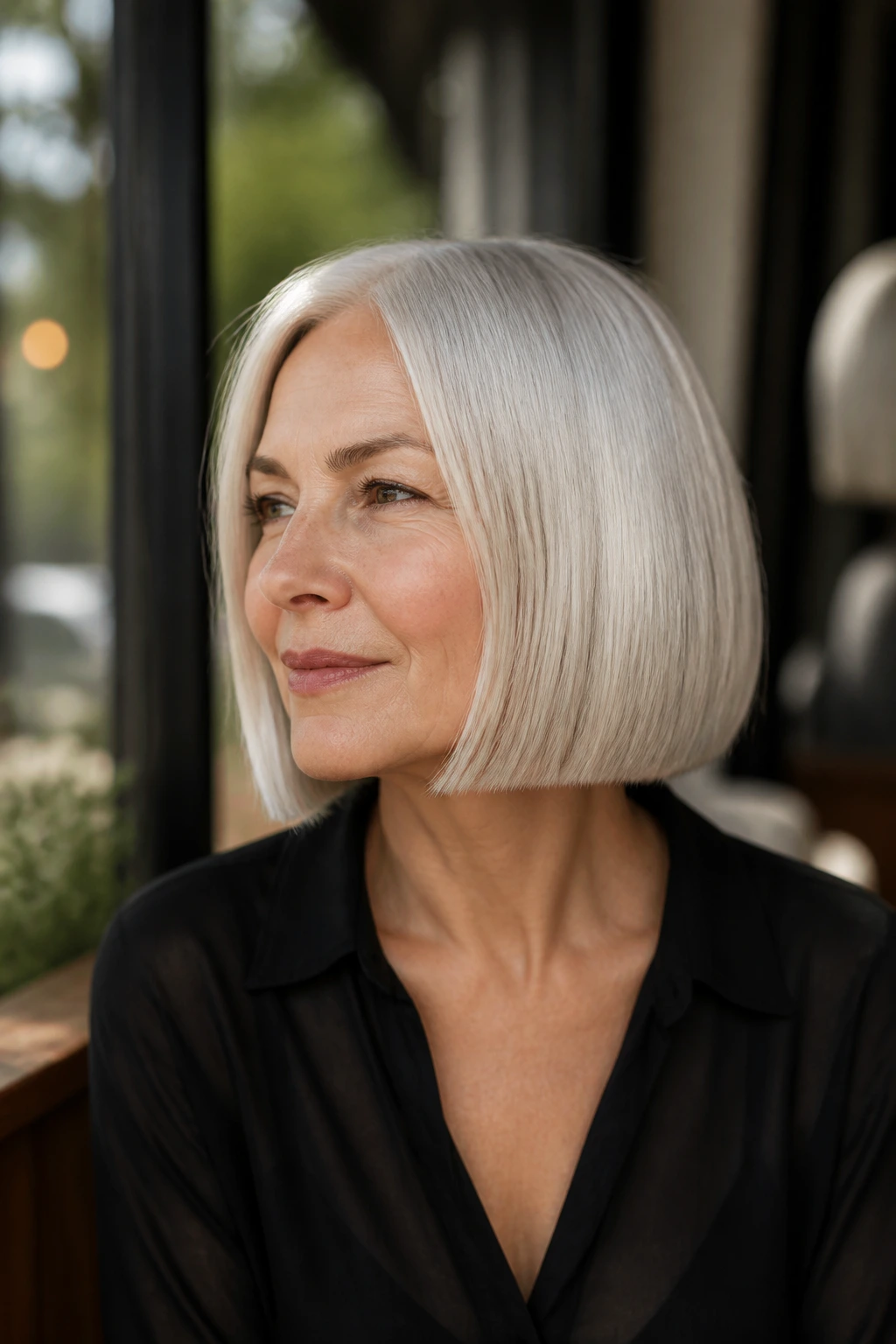
A blunt jaw-length bob is the sharpest way to wear silver.
The reason is simple. Silver hair already has a reflective finish, and a straight perimeter gives that shine a place to land. When the line sits right at the jaw, the whole cut looks tidy and intentional, not airy or fussy. I like this shape best on hair that can hold its form for a full day because the cut does not hide behind texture. It makes a statement by staying clean.
Why the blunt line matters
The best version of this cut keeps the ends almost square, with only the tiniest bit of softening at the tips. That little bevel keeps the edge from looking like a shelf, but you still want the outline to feel firm. Ask for minimal internal layers if your hair is straight to slightly wavy. Too much texture inside the shape will make the silver look broken up instead of smooth.
This cut is especially good if your silver has a pale pearl tone or a cool steel cast. The stronger the line, the more polished the color looks. If your hair has a lot of natural bulk, blunt is your friend. It removes the puffiness that can make cool silver seem heavier than it is.
A center part gives it a neat, graphic feel. A side part softens it a little and makes the jaw line look a touch longer. Either way, a light smoothing cream and a flat iron pass on the bottom half of the hair are usually enough. No need to fuss with it.
2. Silver French Bob With Micro Fringe
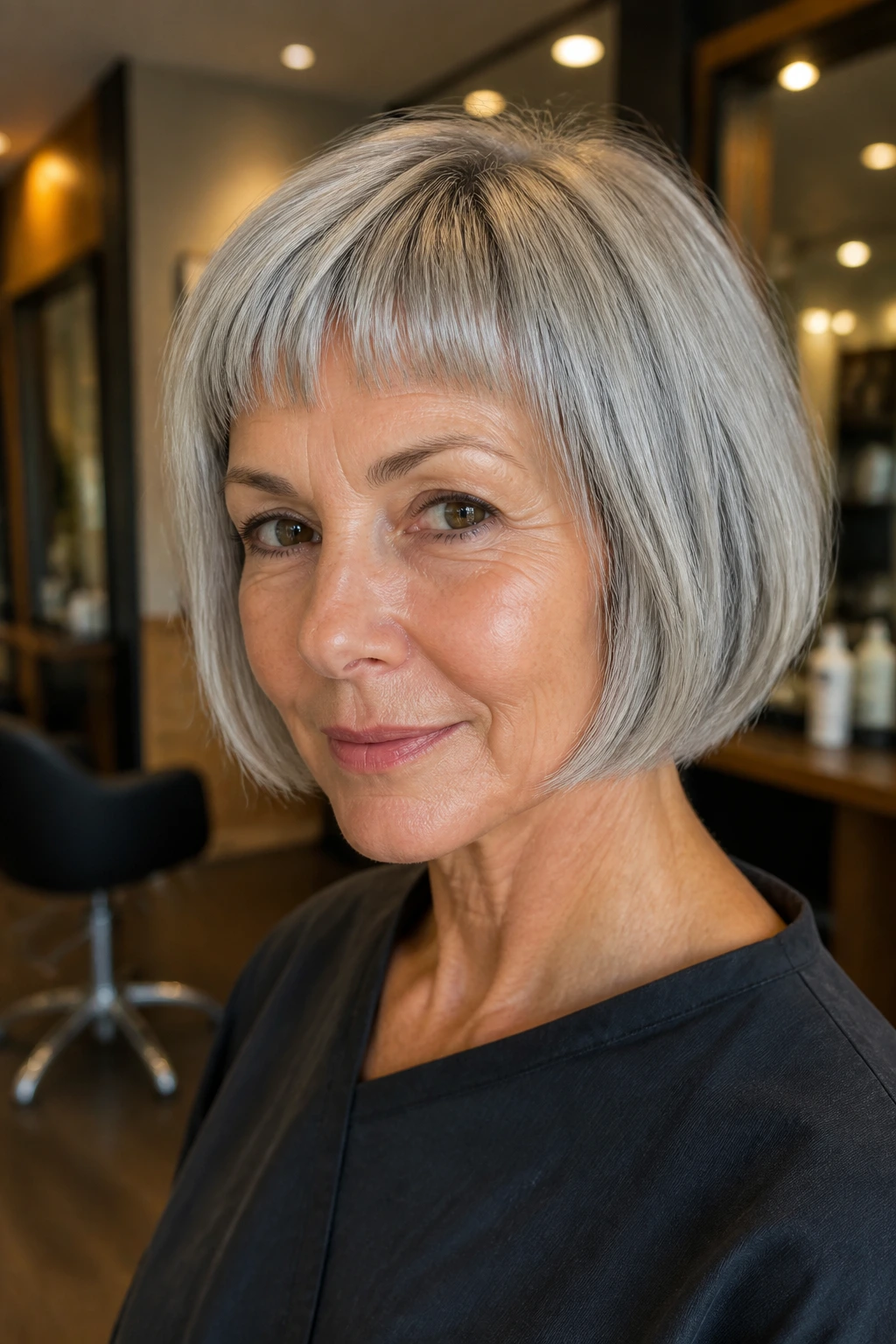
Want silver hair with a little attitude?
A French bob with a micro fringe has that slightly insistent shape that looks best when the rest of the cut stays short and neat. The bob usually sits between the cheekbone and jaw, which keeps the face open, while the fringe lands high enough to show brows and eyes. On silver hair, that cropped shape feels less severe than it sounds. The color softens the edge.
This one works because the shorter fringe keeps the whole haircut from looking too tidy. Silver can sometimes read formal, and the tiny bang breaks that up fast. If the fringe is cut with a light hand, it gives the face a lifted look. If it is cut too blunt or too short, it turns precious in a bad way. That is a tiny line to walk, and the difference is obvious in real life.
How to keep the fringe from taking over
The fringe should be dried forward first, then nudged slightly side to side with a small round brush so it does not separate in odd directions. Keep the texture soft. A dab of lightweight paste on the fingertips is enough; anything heavier makes short silver fringe look piecey and dull.
I would ask for the fringe to skim the upper brow or sit just above it, not halfway up the forehead. That small difference matters. The bob itself can stay blunt or slightly tucked under at the ends, but the fringe should move a little. It keeps the cut from feeling too architectural.
This is a strong choice for oval faces, long faces, and anyone who likes a haircut with a bit of bite. It is not shy. That is the point.
3. Soft Layered Silver Bob With Face-Framing Pieces
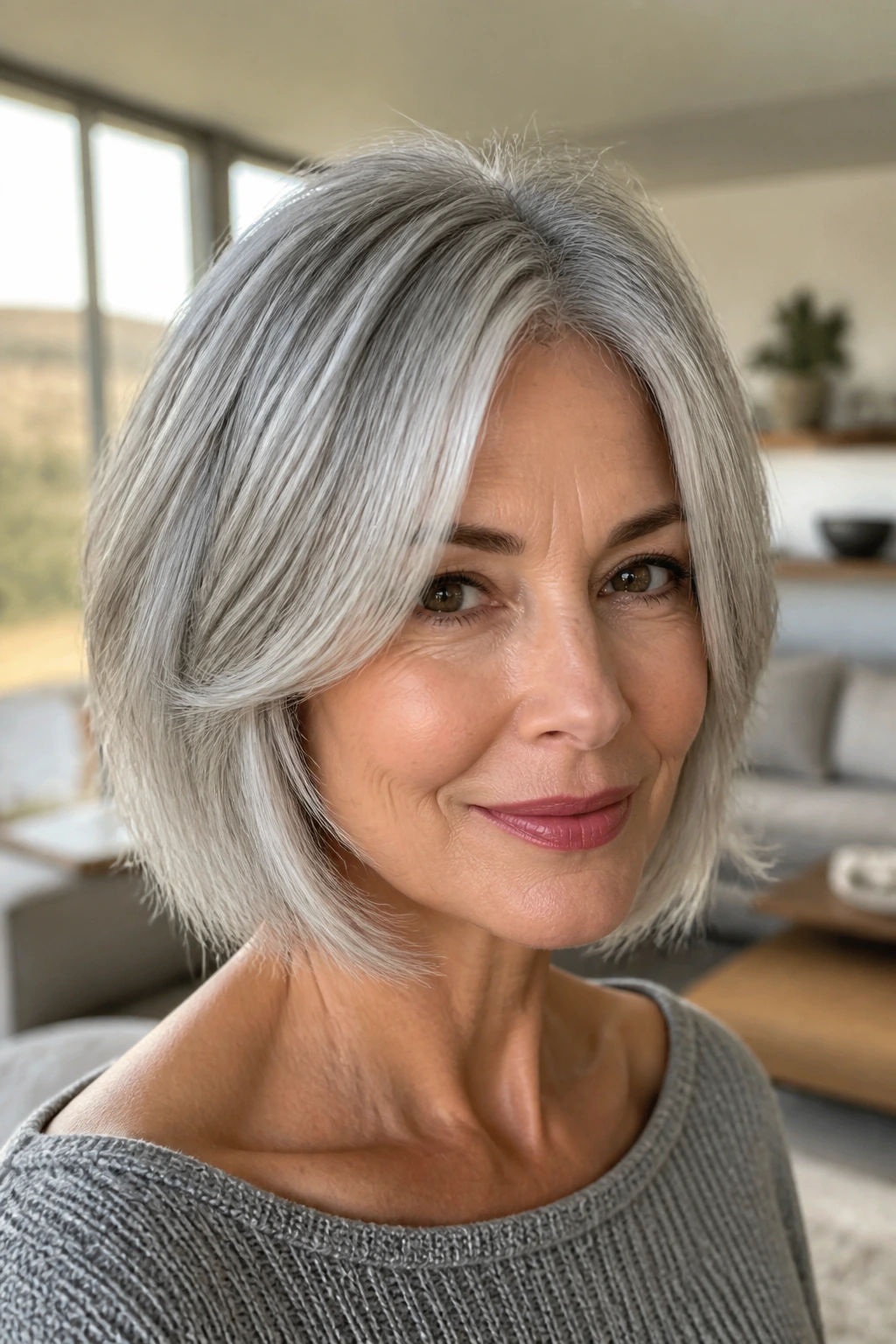
If your hair goes flat by noon, this is the fix.
A soft layered silver bob gives the color room to breathe. Instead of one hard line all the way around, the shape carries subtle movement through the mid-lengths and a couple of face-framing pieces that start near the cheekbone. That extra motion helps silver look airy, especially when the tone is cool and pale. It keeps the cut from settling into one heavy block.
What the layers should do
The trick is restraint. You want the layers to remove weight, not chase volume for its own sake. A good layered bob still has enough perimeter to hold the shape, but it gets lift where the crown tends to collapse and softness where the hair meets the face. Too many layers, and the silver starts to look shredded. I’ve seen that mistake more than once, and it ages the cut fast.
- Best for fine to medium hair that needs movement.
- Good on loose waves, since the layers show up without much styling.
- Ask for face-framing pieces that begin below the cheekbone if you want a gentle line.
- Keep the bottom edge full so the silver doesn’t look see-through.
A subtle root shadow can help here too. A root that sits one shade deeper than the mids gives the silver dimension and buys you a little grow-out time. The result feels soft, not muddy. That matters.
This is the bob I’d pick if you like your color cool but your haircut relaxed. It has enough shape to look deliberate and enough movement to keep it from feeling stiff.
4. Asymmetrical Silver Bob With a Deep Side Part
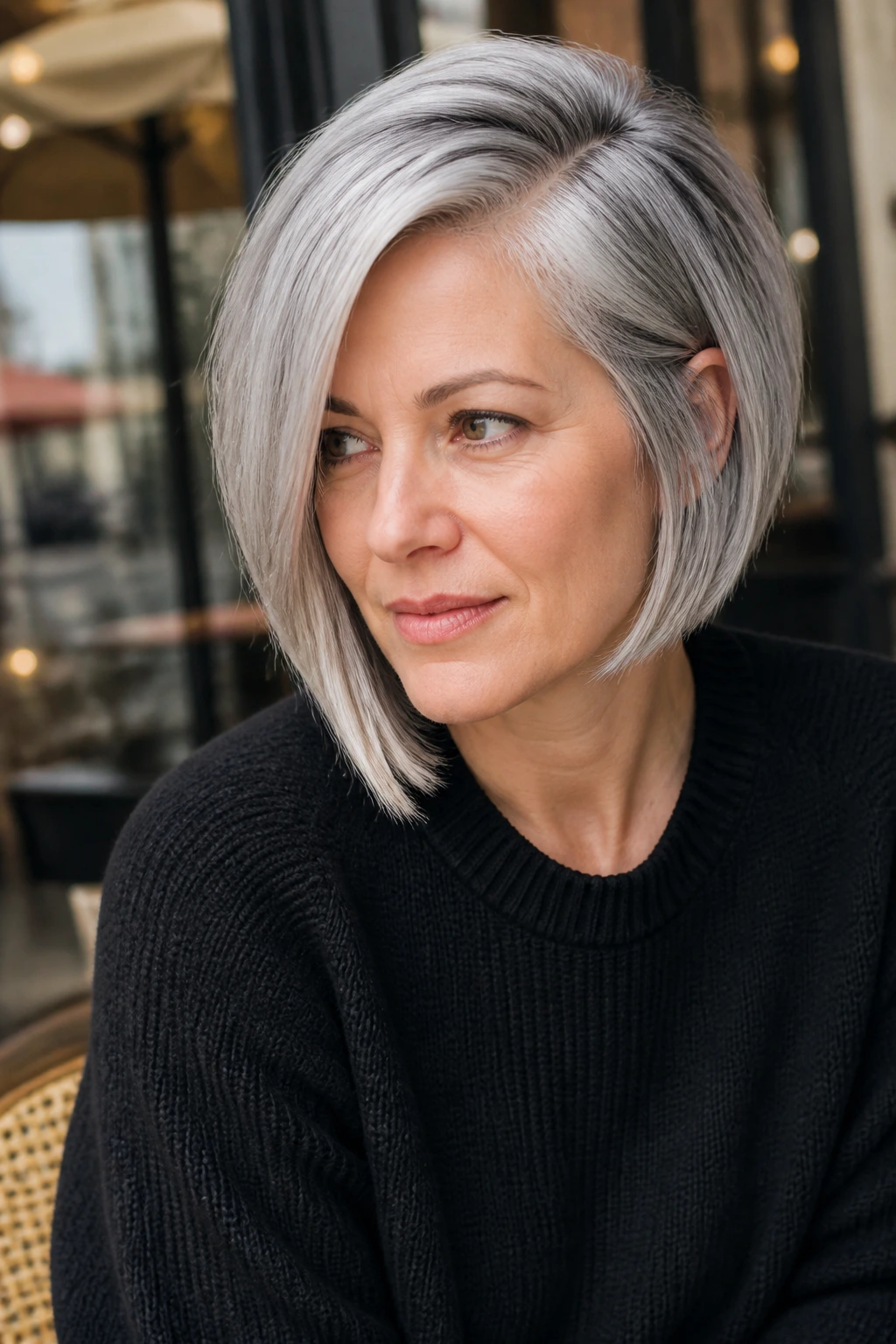
A little imbalance can make silver feel more polished.
The asymmetrical silver bob is one of those cuts that looks modern without trying to be dramatic. One side sits a bit longer — often by an inch or two — while the other side stays tighter against the jaw. Pair that with a deep side part and you get instant lift at the crown, which is useful if your hair tends to lie flat around the temples.
The asymmetry does something else too. It gives the silver a place to move. On a symmetrical bob, the eye can stop at the line. On an angled one, the eye follows the shape forward, which makes the color feel brighter and more active. That effect is subtle, but it’s there.
If your face is round or square, this cut can be especially flattering because the longer side draws the line downward. If your face is narrow, the deep part adds width where you want it. The shape is flexible that way. A blowout with a paddle brush or a quick pass of a flat iron is usually enough to show the angle.
The best versions keep the front long enough to skim the chin or just below it. Shorter than that, and the cut can feel abrupt. Longer than that, and it starts reading more like a lob than a bob. There’s a sweet spot. Stay near it.
5. Stacked Silver Bob for Fuller Crown Volume
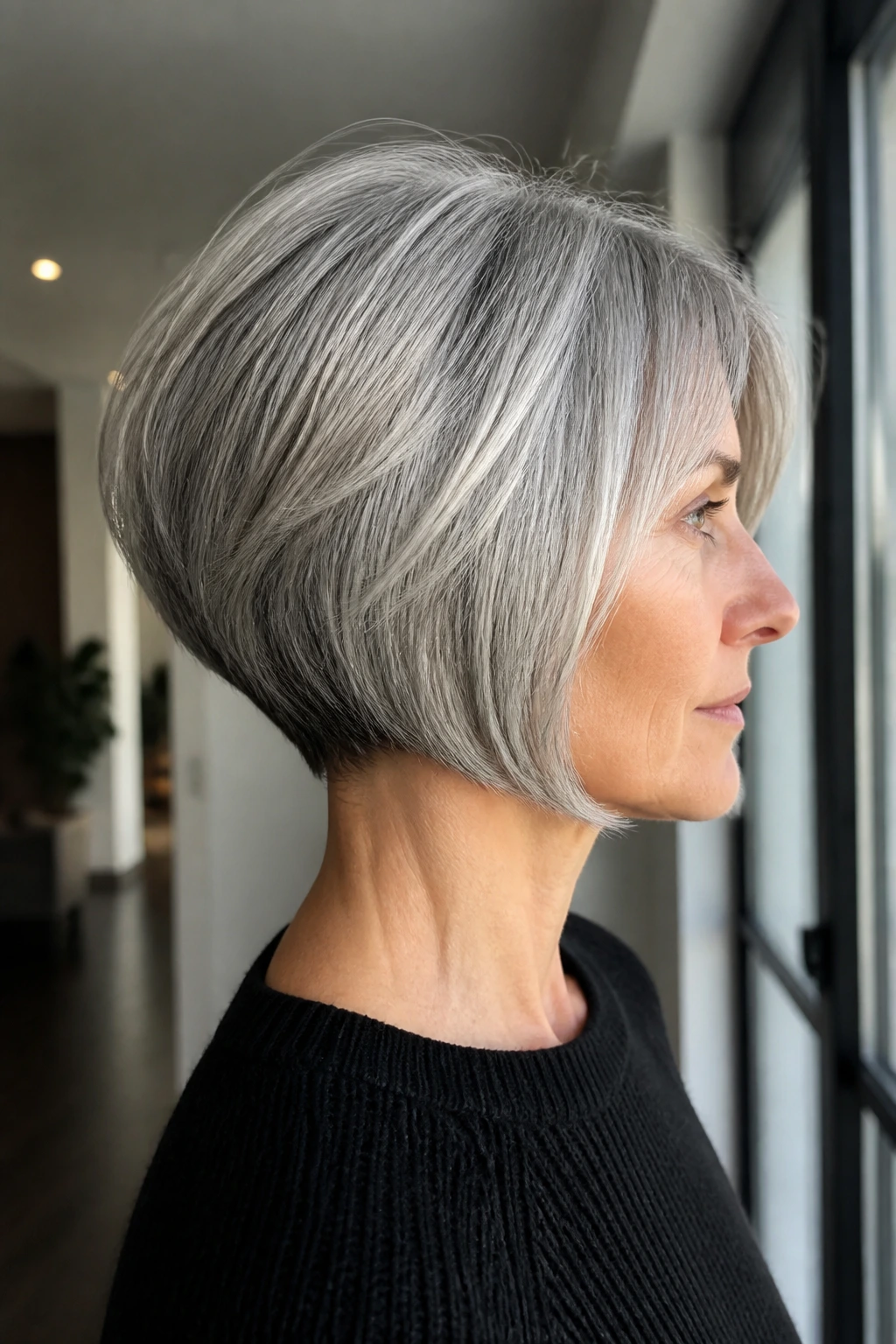
The back sits snug against the nape, then the crown rises in a neat curve.
That stacked silhouette is one of the smartest ways to wear silver if your hair is fine or tends to collapse at the crown. The graduation in the back creates lift without needing a lot of teasing or product, and silver catches the light on those curved layers in a way that makes the cut look fuller. It is tidy, but not flat. That matters more than people think.
What to ask for at the salon
- Keep the stack tight enough to build shape at the back, but not so short that it puffs out.
- Leave the front long enough to touch the jaw or chin.
- Remove bulk inside the top if the hair is thick.
- Keep the perimeter clean so the silver still has a crisp outline.
A stacked bob can go wrong if the crown is over-cut. Then you get that mushroom shape nobody wants. The back should rise, yes, but it should still blend into the top. A skilled cut gives the neck a little space and keeps the line smooth from back to front. On silver hair, that curve looks especially crisp because the tone picks up light differently across the layers.
Styling is straightforward. A round brush at the roots or a hot-air brush can add just enough lift, and a light mousse gives the crown structure without turning it crunchy. If your hair is coarse, ask for internal debulking so the back does not balloon. That one detail changes everything.
6. Silver Bob With Curtain Bangs

I keep coming back to curtain bangs on silver hair because they soften the whole look without dulling it.
Curtain bangs are a good match for a silver bob because they break up the forehead line and bring the focus back to the eyes. They start shorter in the center and sweep down toward the cheekbones, which keeps the face open. On cool silver, that bend at the front feels graceful in a real, wearable way. Not precious. Not fussy.
This is one of the easiest ways to make a bob feel less severe. The color can stay icy, but the bangs pull some softness into the frame. That helps if you have strong cheekbones, a long face, or just do not want the whole haircut to read as sharp all the time. The line around the jaw can stay clean while the front moves a little.
Too short is the enemy here.
If the fringe starts too high, the whole cut can feel choppy. Ask for the shortest point to sit around the bridge of the nose or just above the cheekbone, then let the sides drift longer. That gives the bangs a nice fall when they’re blown out away from the face. A round brush or even a medium roller brush works well. Finish with a tiny bit of cream on the ends, not the roots.
Curtain bangs also buy you some flexibility while growing them out. They can slide into face-framing pieces later, which is handy if you like changing your hair without committing to a totally new cut every few months.
7. Feathered Silver Bob for Fine Hair
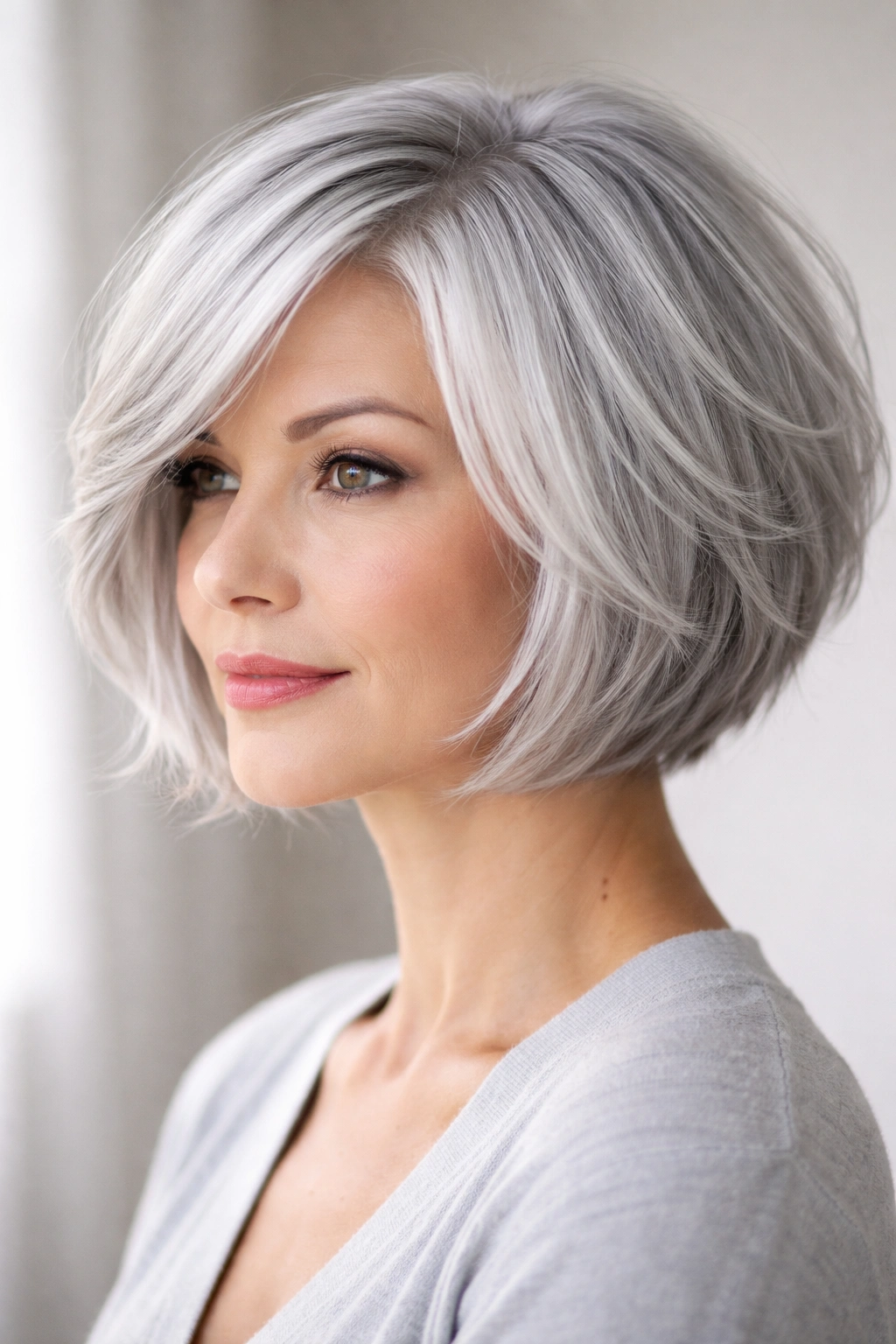
Feathering beats heavy layering when you want silver to stay airy.
A feathered bob keeps the ends soft and the mid-lengths moving, which is useful when fine hair needs body but not bulk. The look is lighter than a stacked cut and smoother than a shag. That middle ground is exactly why it works so well with silver. The color stays visible, and the shape doesn’t collapse into one flat sheet.
Where the feathering should sit
The feathering should live through the middle of the haircut, not only at the ends. That is the part most people miss. If you remove too much weight from the perimeter, the bob loses its frame and silver can start to look thin. If you keep the outline solid and feather the inside, you get lift without losing structure.
- Ask for point-cutting rather than aggressive slicing if your ends are fragile.
- Keep texture around the temples and cheek area for movement.
- Leave enough density at the bottom so the bob still has a clean line.
- Use lightweight mousse at the roots to keep the crown from settling.
I prefer this cut on straight to slightly wavy hair. It lets the feathering show without turning chaotic. On very curly hair, the shape can still work, but the feathering needs a lighter hand. Too much texturizing on curls can make the silver look frizzy at the edges, and that is hard to hide.
This is the bob for someone who wants easy movement, not a hard-edged silhouette. It is soft, but not vague.
8. Angled Silver Lob With a Sleek Finish
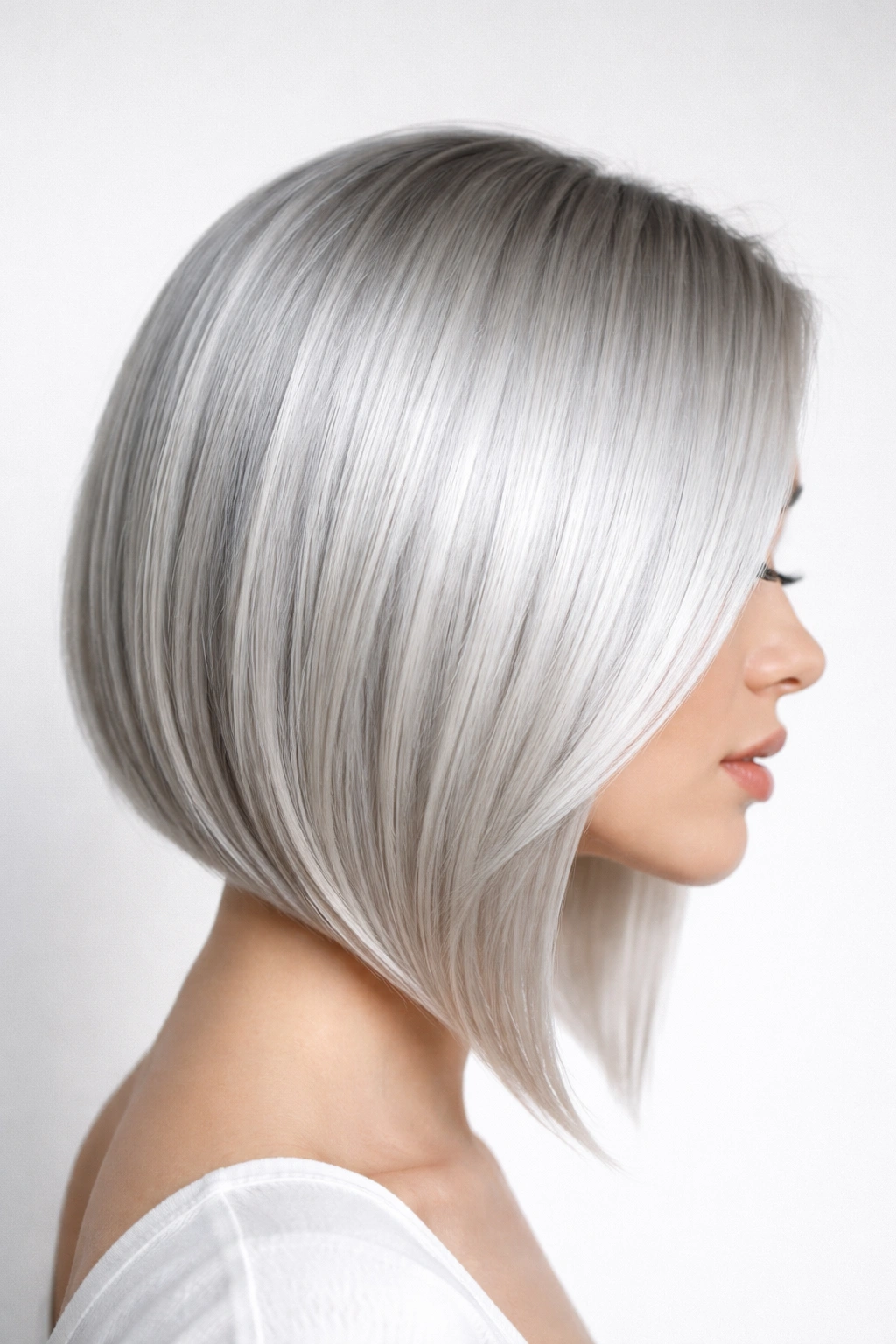
Need a little more length than a chin-length bob?
The angled silver lob gives you that breathing room while keeping the cool-toned look sharp. It usually sits around the collarbone in front and shortens slightly toward the back, so the shape still has direction. That front length is useful if you like to tuck hair behind one ear, wear a blazer collar, or keep a bit of movement around the shoulders. Silver looks elegant there because the longer line lets the tone shift in the light.
The sleek finish is what makes this cut feel clean instead of simply longer. A smooth blowout or a quick flat-iron pass shows the angle better than a rough texture does. If the ends bend under slightly, the cut feels neat. If they bend too much, it loses that long, lean shape. Small details. Big difference.
This is also a practical choice if you are growing out a shorter bob and do not want that awkward middle stage to drag on forever. The angle gives you purpose while the length builds. It does not feel like you are waiting for a haircut to happen. You already have one.
I like this shape on medium to thick hair because the extra length can carry some weight without making the style feel dull. On finer hair, a little root lift keeps it from lying too close to the head. A center part makes the angle obvious. A side part makes it softer. Both work.
9. Wavy Silver Bob With Root Shadow
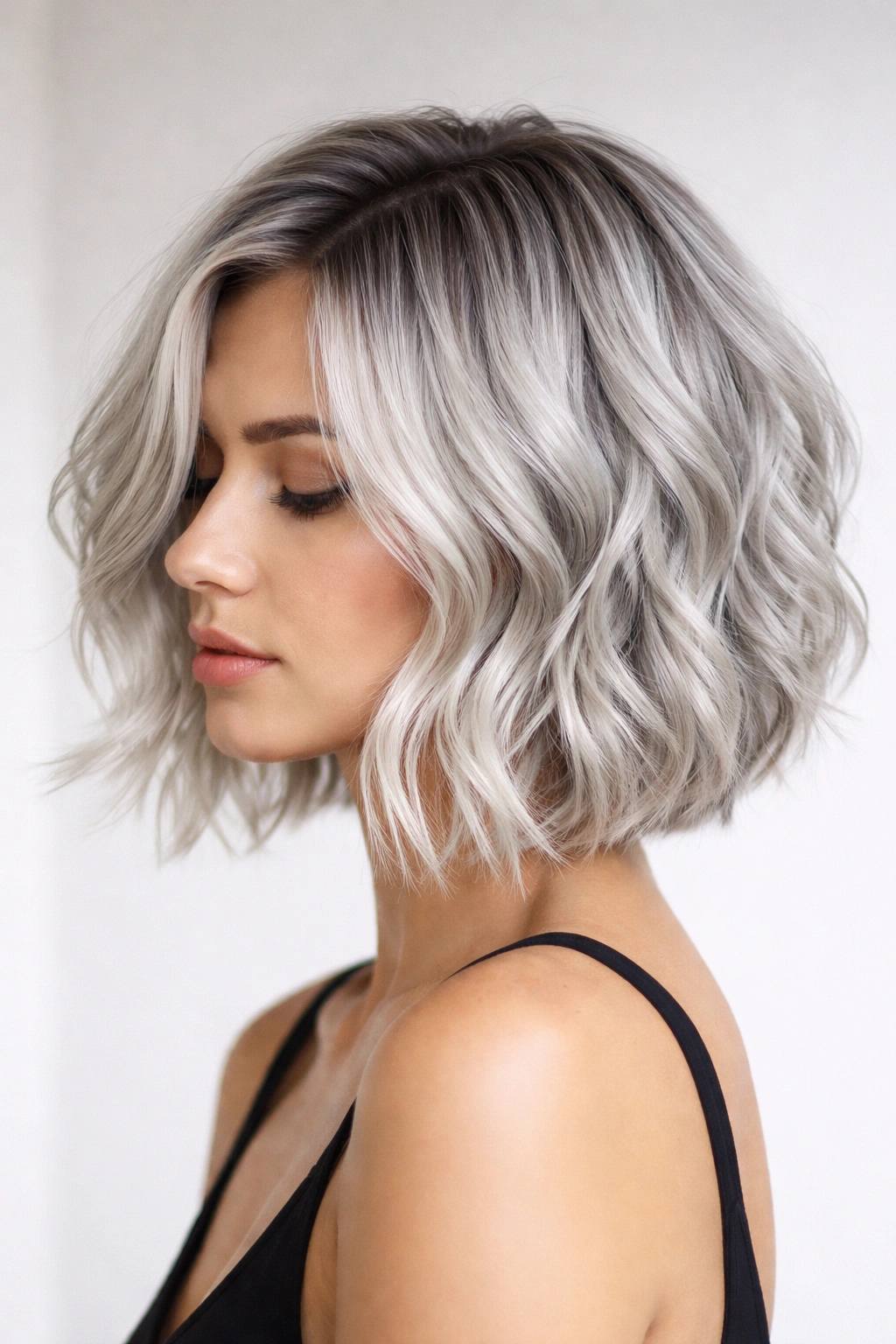
A softly waved bob is where silver stops feeling rigid.
The movement changes everything. Waves break up the surface of the color, so the silver reads dimensional instead of one flat sheet. Add a root shadow — usually a shade or so deeper than the mids — and the whole cut gains depth at the scalp. That deeper root keeps the cool tone from looking chalky and gives the grow-out a cleaner edge.
How to style the wave pattern
- Wrap sections around a 1-inch wand, alternating direction every other piece.
- Leave the last inch out so the ends stay straighter and modern.
- Let the curls cool before you touch them.
- Break the wave apart with dry fingers, not a brush.
That little root shadow is doing more work than people expect. On silver, it can make the transition from scalp to length look smoother and less stark. It also helps if your natural regrowth is warm. Instead of fighting the roots every few weeks, you let them become part of the shape. Much nicer.
This cut looks best when the waves are loose and a little undone, not beachy in the overdone way. Think soft bends, not pageant curls. A mist of flexible hairspray will keep the wave pattern from falling apart, but don’t drown it in product. Silver hair already reflects light well; it doesn’t need help becoming shiny.
If you want a bob that feels cool but not severe, this is a good one. It has movement, but it still reads clean.
10. Undercut Silver Bob With a Crisp Nape
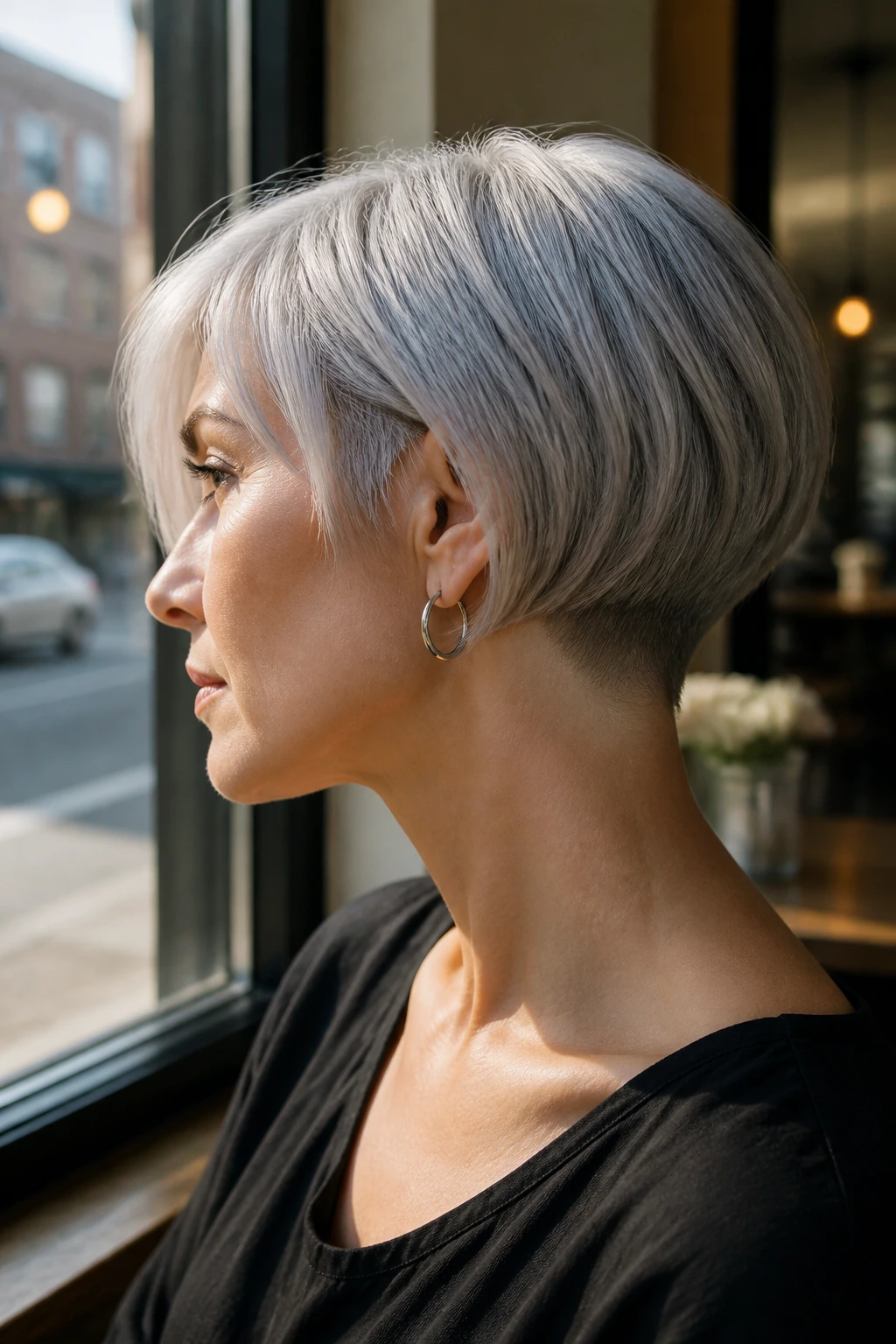
If bulk is ruining the shape, shave it off.
An undercut silver bob solves a problem that shows up a lot with dense hair: the nape swells, the sides spread, and the whole cut loses its line. Removing some of that hidden bulk at the back lets the bob sit closer to the head. That makes silver look sharper because the color isn’t fighting a thick, puffy outline. The cut stays controlled. The finish looks deliberate.
You can keep the undercut hidden or let it show a little at the nape. Hidden is easier if you want flexibility. Visible is more graphic and gives the haircut a cleaner edge. Either way, the top layers should still have enough length to move. The point is not to make the bob tiny. It is to make the weight sit where you want it.
This cut is especially useful if your hair flips out at the ends or grows wide at the bottom. A small undercut can stop that shape from expanding. It also makes styling faster, which matters more than people admit. Less bulk means less fighting with a round brush and fewer mornings spent wrestling the back into place.
A crisp nape can look brilliant with a cool silver tone. The contrast between the clean neckline and the reflective color is strong in the best way. If you want a bob that feels tidy, modern, and a little harder-edged than the softer options above, this is the one I’d point you toward first.
The best silver bob is the one that lets the color look deliberate, not accidental. That can mean blunt and jaw-length, or layered and light, or cropped at the nape with a hidden undercut. What matters is the relationship between the cut line and the tone. Get that part right, and silver stops looking like a color choice and starts looking like a complete look.
