



Feathered bob cuts solve a problem blunt bobs often create: they can sit like a helmet. Feathering softens the edge, breaks up the weight, and lets the shape move when you turn your head. That small shift makes a huge difference, especially if your hair tends to puff out at the ends or collapse at the crown.
The nice thing about a feathered bob is that it isn’t one haircut. It can be chin-grazing and airy, collarbone-length and sleek, choppy and cool, or polished enough for work without looking stiff. The trick is in where the layers start, how much weight gets removed, and whether the stylist cuts with scissors, a razor, or point-cutting. Those choices change the whole mood.
A good feathered bob cut should still look like a bob. That matters. If the layers are too short or too aggressive, you drift into shag territory, and that is a different haircut with a different personality. The sweet spot is softness around the edges and shape where the head needs it most.
1. Chin-Length Feathered Bob with Airy Ends
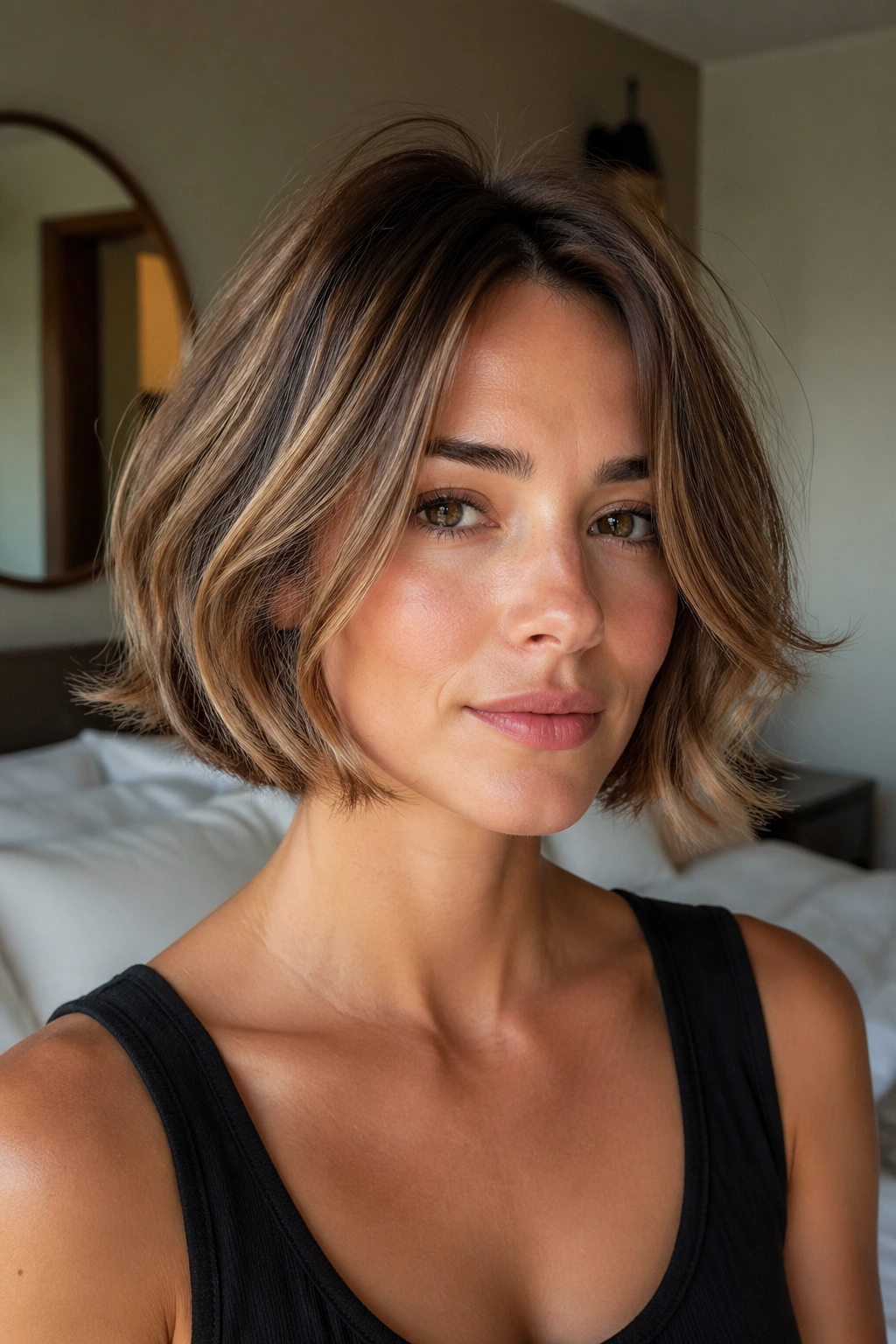
A chin-length feathered bob can make the whole face look lighter without making the haircut feel thin. That’s the balance most people want and very few cuts actually get right. The length hits in that sweet spot where the jawline shows up, but the ends don’t hang there like a blunt shelf.
Why It Works
A chin-length cut gives the feathering something to do. On shorter bobs, every small layer shows, so the feathering has to be clean and deliberate. If the ends are point-cut and slightly softened, the hair moves instead of sitting in one flat line.
This length is especially kind to hair that flips out on its own. Rather than fighting that bend, the cut makes it part of the shape. You get a little swing, a little lift, and none of the heavy bottom edge that makes a bob feel boxy.
- Ask for soft internal layers, not choppy short pieces.
- Keep the perimeter close to the chin for a tidy shape.
- Style with a round brush or large Velcro roller to encourage bend at the ends.
- Finish with a light mist of flexible hairspray, not anything crunchy.
Pro tip: if your hair grows fast around the nape, this length stays prettier longer than a super-short bob. It has room to breathe.
2. Feathered Bob with Curtain Bangs
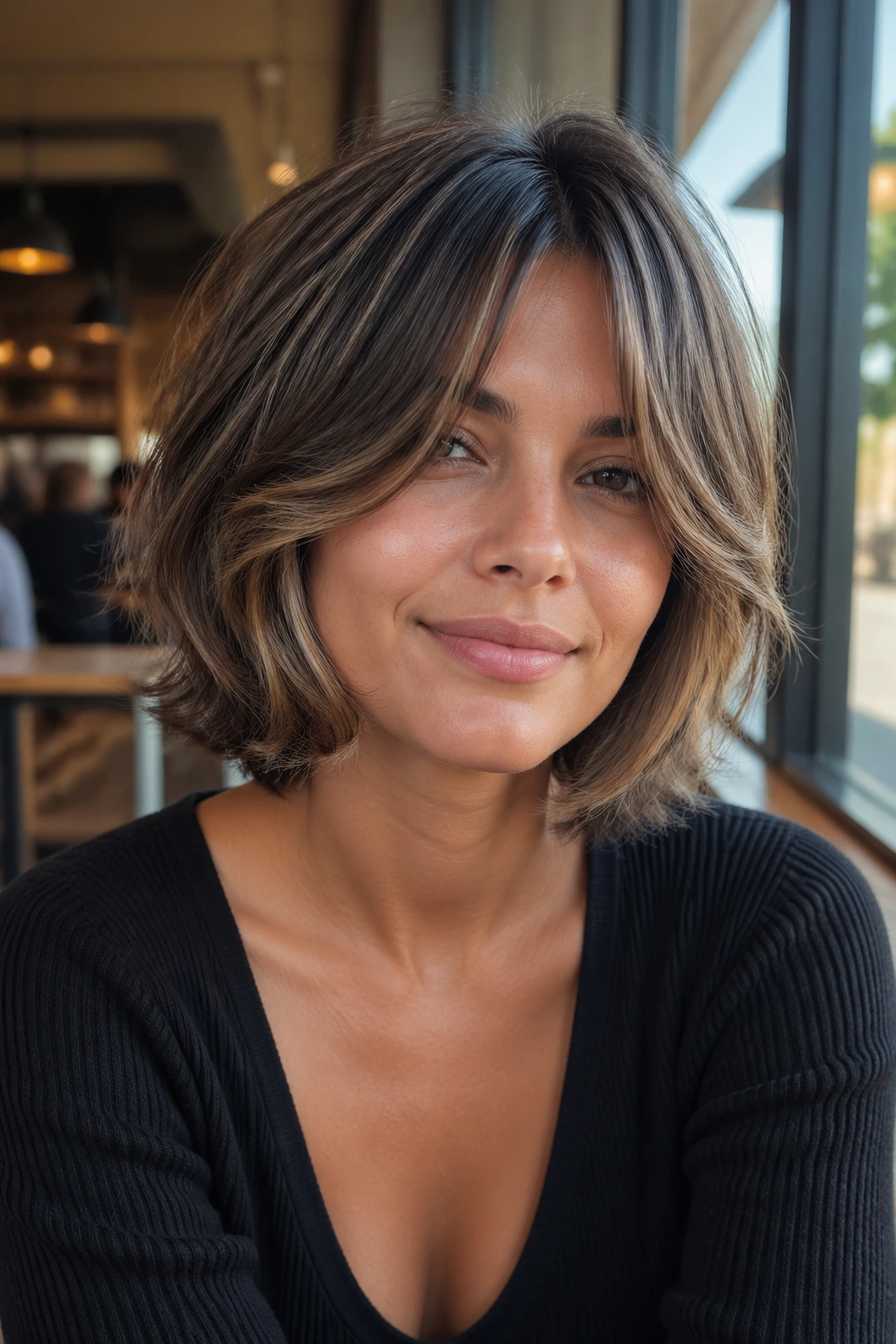
Why do curtain bangs and a feathered bob get along so well? Because both shapes want movement at the front. A heavy fringe can box a bob in. Curtain bangs do the opposite. They open the face, then sweep into the sides so the haircut feels like one piece instead of a bob with a separate bang attached.
The best version starts the fringe around the cheekbone and lets the feathering take over from there. You want the bangs to graze, not sit stiffly across the forehead. When the ends of the bob are lightly feathered, the whole cut feels soft around the eyes and jaw.
How to Ask for It
Tell your stylist you want the bangs to blend into the side layers by the time they reach the cheekbone. That detail matters. If the fringe is cut too blunt, it fights the rest of the haircut and takes daily work to tame.
This cut is forgiving during the grow-out stage, which I like a lot. Curtain bangs can be pushed to either side, tucked back, or left loose on a rushed morning. No drama. Just keep a small round brush or a flat brush around if you like a polished bend at the front.
3. Stacked Feathered Bob for Lift at the Crown
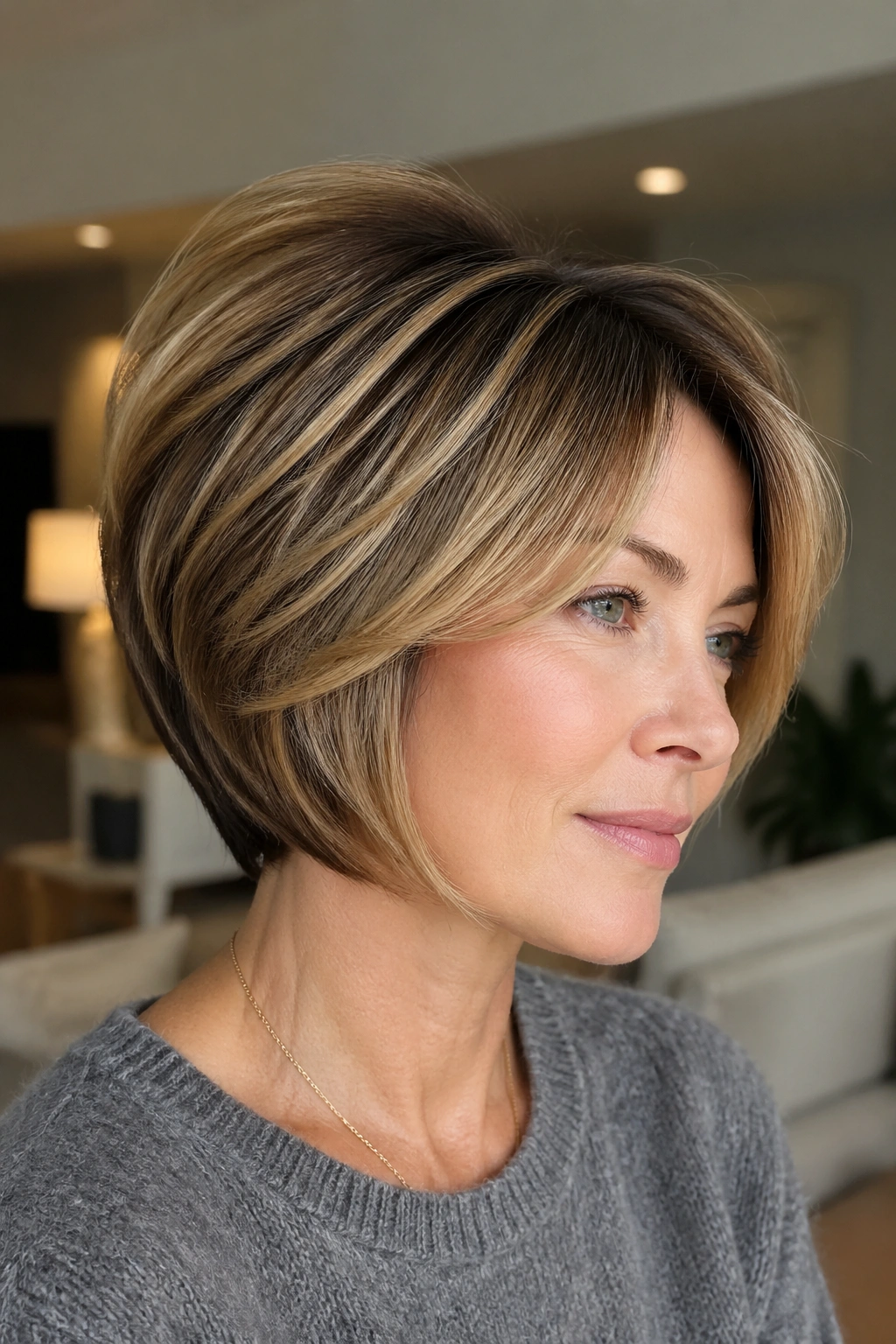
If your hair goes flat by lunchtime, this is the bob to look at. A stacked feathered bob keeps more shape in the back, so the crown doesn’t collapse the way it often does with a one-length cut. It gives the illusion of fuller hair without turning the back into a hard wedge.
The stacking should feel subtle, not architectural. I’m not talking about those severe, dated shapes that scream for hairspray. The good version uses shorter interior layers at the nape and crown, then feathers the surface so the transition stays soft.
A cut like this works especially well on straight or slightly wavy hair that needs a little push at the top. Blow-dry the roots forward and then round them back with a brush for a lifted curve. A dab of mousse at the root helps too.
- Shorter at the nape, longer toward the front
- Crown layers kept soft, not bulky
- Best when the back of the head needs height
- Looks tidy with tucked-behind-ear styling
The nice part is that it still reads as a bob from the front. You get shape without the haircut feeling overworked.
4. Side-Swept Feathered Bob
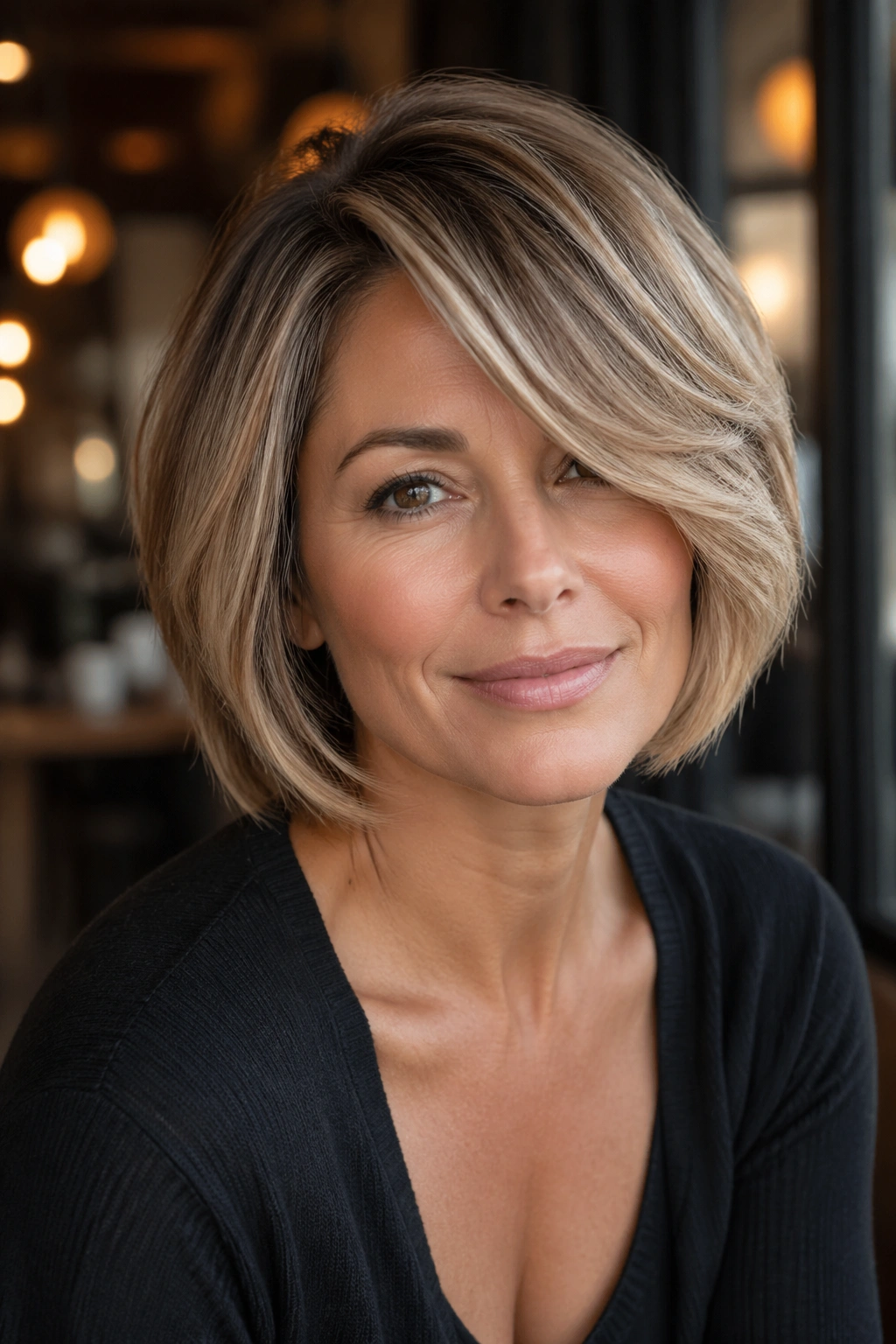
A side part changes everything. Seriously. The same bob can look stricter with a center part and softer the second you sweep it off to one side. A side-swept feathered bob brings a little asymmetry to the face, which helps if your features feel sharp or your hairline sits a bit high.
The cut itself usually works best when the front is slightly longer on the heavy side. That extra length gives the hair somewhere to fall, and the feathered ends stop the whole thing from looking like a grown-out shape. It’s one of those cuts that looks even better after the first hour of wear, which is not something every bob can claim.
I like this one for people who don’t want to fuss with perfect symmetry every morning. The side sweep gives the hair direction on its own. A quick blow-dry with the nozzle pointed from root to ends is usually enough to make the shape lie the way you want.
A flat side part can get severe fast. A soft one, with a little lift at the roots, is kinder and easier to live with.
5. French Feathered Bob with Cheekbone-Grazing Fringe
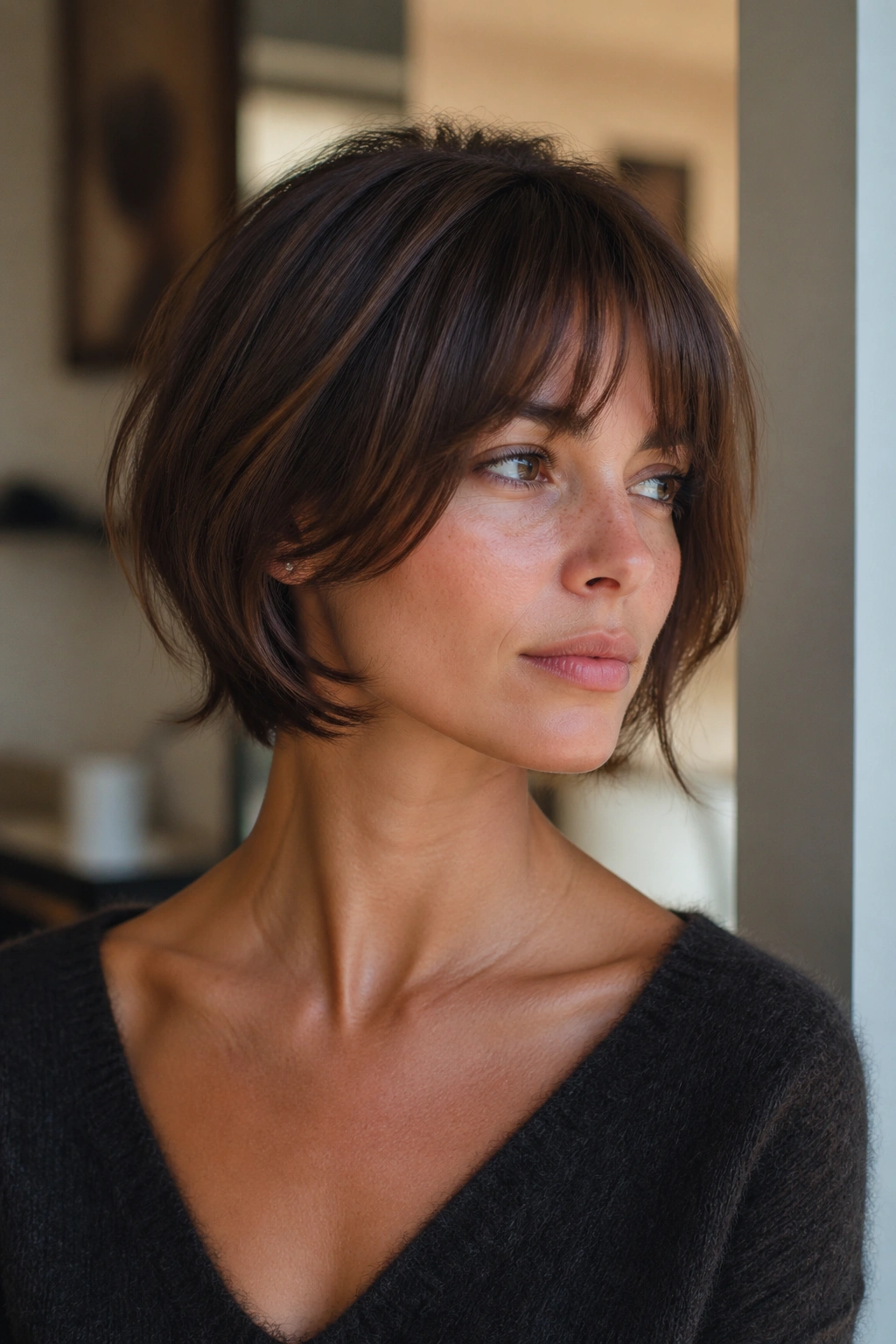
Unlike a blunt French bob, this version keeps the edges light. That single change shifts the whole feeling of the haircut from crisp and editorial to softer and more wearable. The line still sits short enough to frame the face, but the feathered perimeter takes the edge off.
The cheekbone-grazing fringe matters here. It draws attention to the middle of the face, then slips away before the cut gets heavy. If you like a bob that feels a little artsy but not fussy, this one lands in a good place. It has shape, but it doesn’t feel pinned down.
What Makes It Different
A classic French bob tends to depend on one bold line. This version depends on movement. The difference sounds small. It isn’t. Feathering around the ends and a fringe that brushes the cheekbones make the cut easier to grow out and easier to style on days when you do not want to bother with a brush.
I’d recommend this for straight to slightly wavy hair, especially if your hair already has a little natural bend. If your hair is very dense, ask for interior weight removal so the fringe doesn’t puff out around the temples.
6. Collarbone Feathered Bob
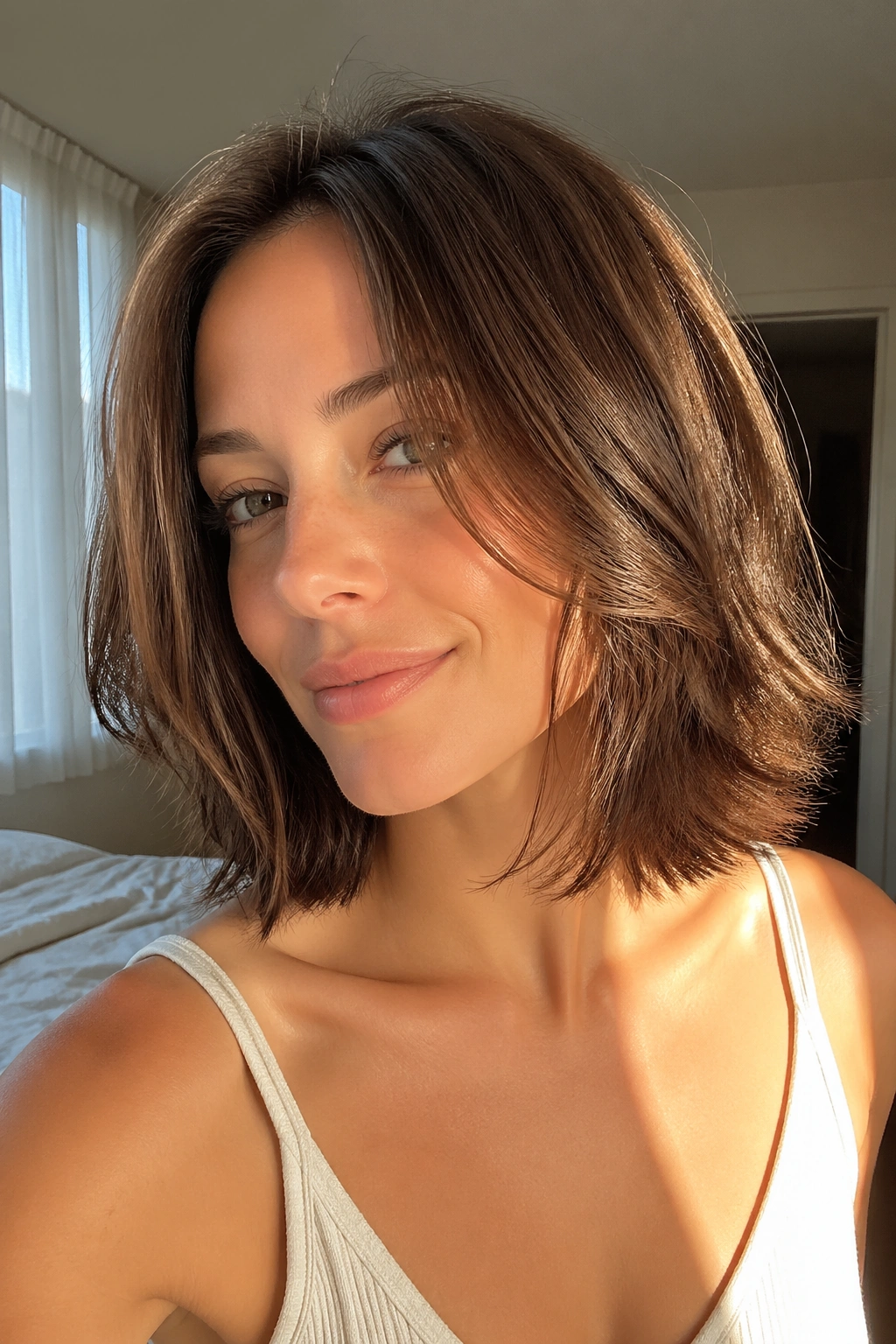
Can a bob still feel like a bob when it brushes the collarbone? Yes, and this length is one of the easiest to wear. A collarbone feathered bob gives you the clean outline of a bob with enough length to tuck behind the ear, twist into a half-up style, or let air-dry without looking too short.
The feathering matters more at this length than people expect. Longer bob lengths can get heavy in the bottom third, and that’s where the haircut starts to look limp. Soft layers through the mid-lengths keep the movement going so the ends do not just hang there.
How to Style the Ends
The easiest trick is a medium round brush and a fast blow-dry focused on the front pieces. Don’t try to curl the whole head under into one perfect shape. That often looks too set. Aim for a slight bend at the ends and a loose curve around the face.
This length is also a smart choice if you’re growing out a shorter bob. It keeps the feeling of a bob while giving you a bit more flexibility. No awkward middle stage, or at least less of one.
7. Wavy Feathered Bob with Soft S-Bends
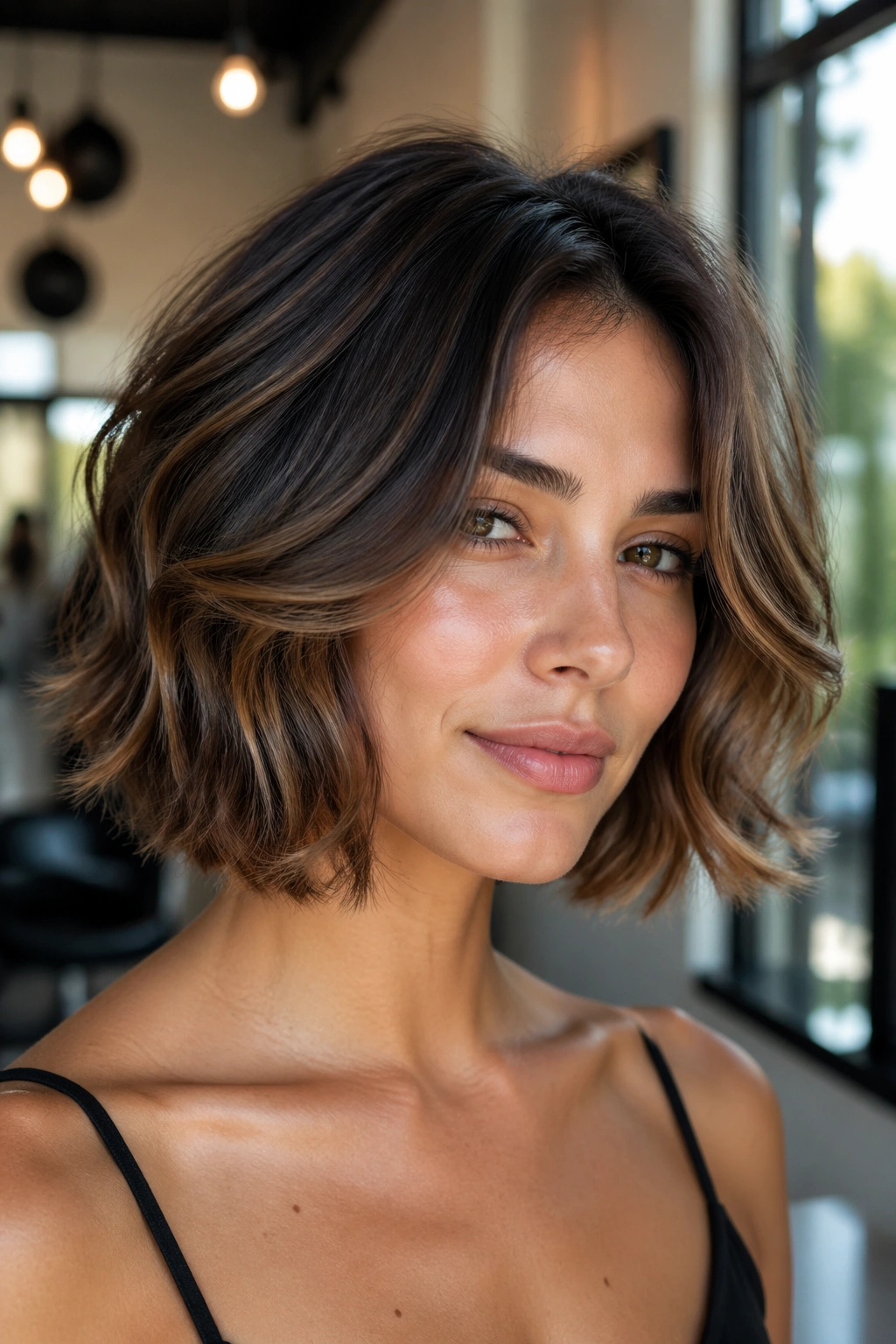
Waves and feathering are a very good pair when the bends stay loose. Tight curls at the ends can make a bob feel crowded. Soft S-bends do the opposite. They let the layers show without making the haircut look busy.
This version works because the feathering follows the wave pattern instead of fighting it. If you’ve got natural wave, you can encourage it with a diffuser and a little mousse. If your hair is straighter, a 1-inch curling iron or flat iron wave trick will do the job, as long as you leave the ends slightly straighter for that airy finish.
Use just enough product to separate the strands. Too much cream or oil and the wave falls flat. Too little and the movement frizzes out, which is a whole different headache.
A few details to keep in mind:
- Mousse at the roots for lift
- Heat protectant before any hot tool
- Diffuse on low heat so the wave keeps its shape
- Scrunch lightly once the hair cools
The point here is softness, not beach hair theatrics. Keep it loose.
8. Feathered Bob for Fine Hair
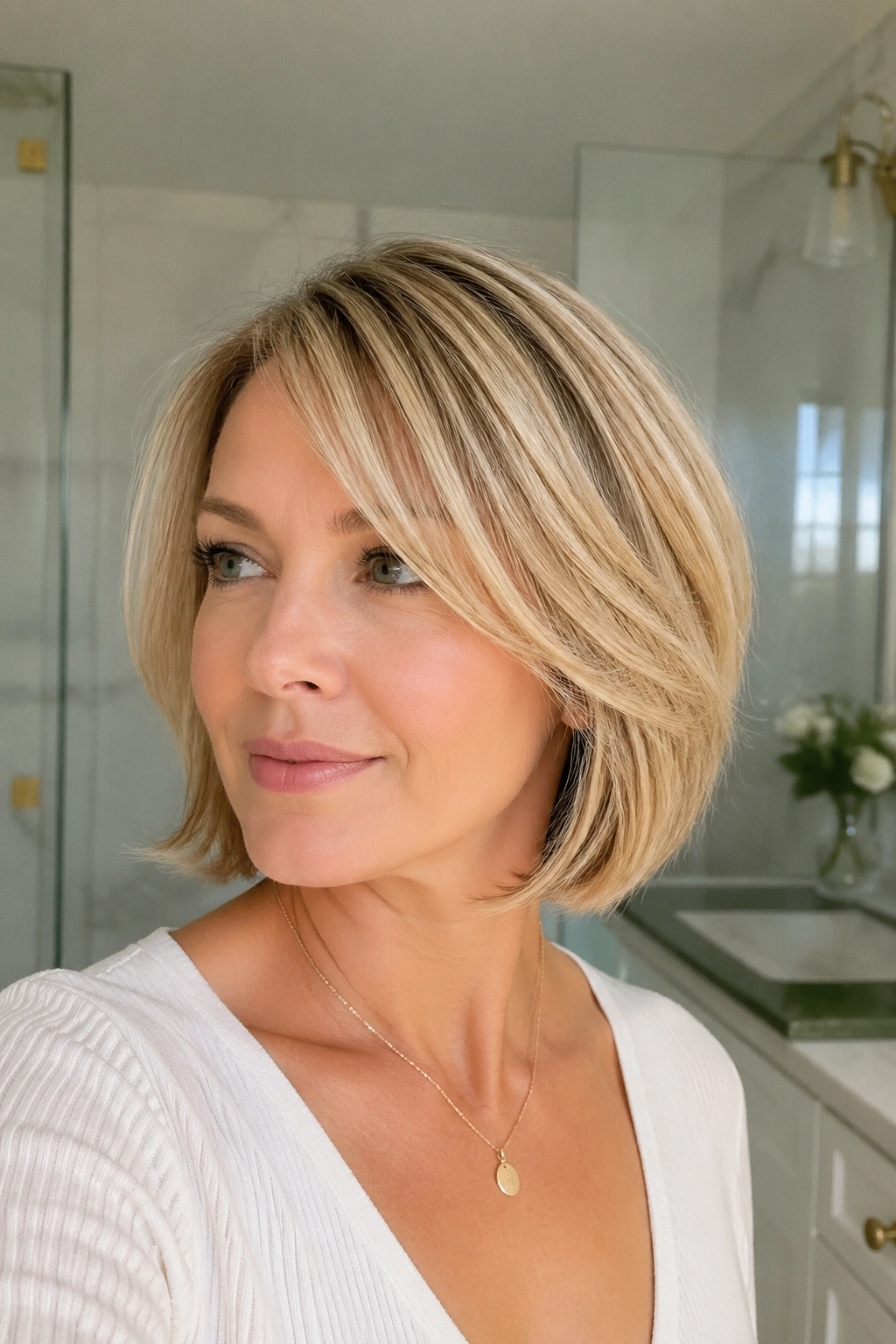
Fine hair can look sparse fast if the layers are chopped too aggressively. That’s why the right feathered bob for fine hair is all about restraint. You want movement, not wispy ends that give away every gap in density.
Picture hair that flattens at the sides and goes see-through at the bottom. This cut fixes that by keeping the perimeter clean while using gentle layering inside the shape. The result is a bob that looks fuller from the outside because the structure is still there under the surface.
The mistake people make is asking for too many short layers. That can leave the ends looking scraggly, which is the exact opposite of the soft finish they wanted. Better to keep the layers longer and use point-cutting to blur the edge.
What to Ask For
- A solid outer line so the bob keeps weight
- Longer layers through the interior, not tiny bits everywhere
- Soft face-framing pieces that start below the cheekbone
- A lightweight mousse or spray for lift, not heavy cream
Fine hair usually benefits from a quick round-brush blowout at the roots. Even five minutes can change the whole shape. And no, you do not need to pile on product to make it work.
9. Feathered Bob for Thick Hair
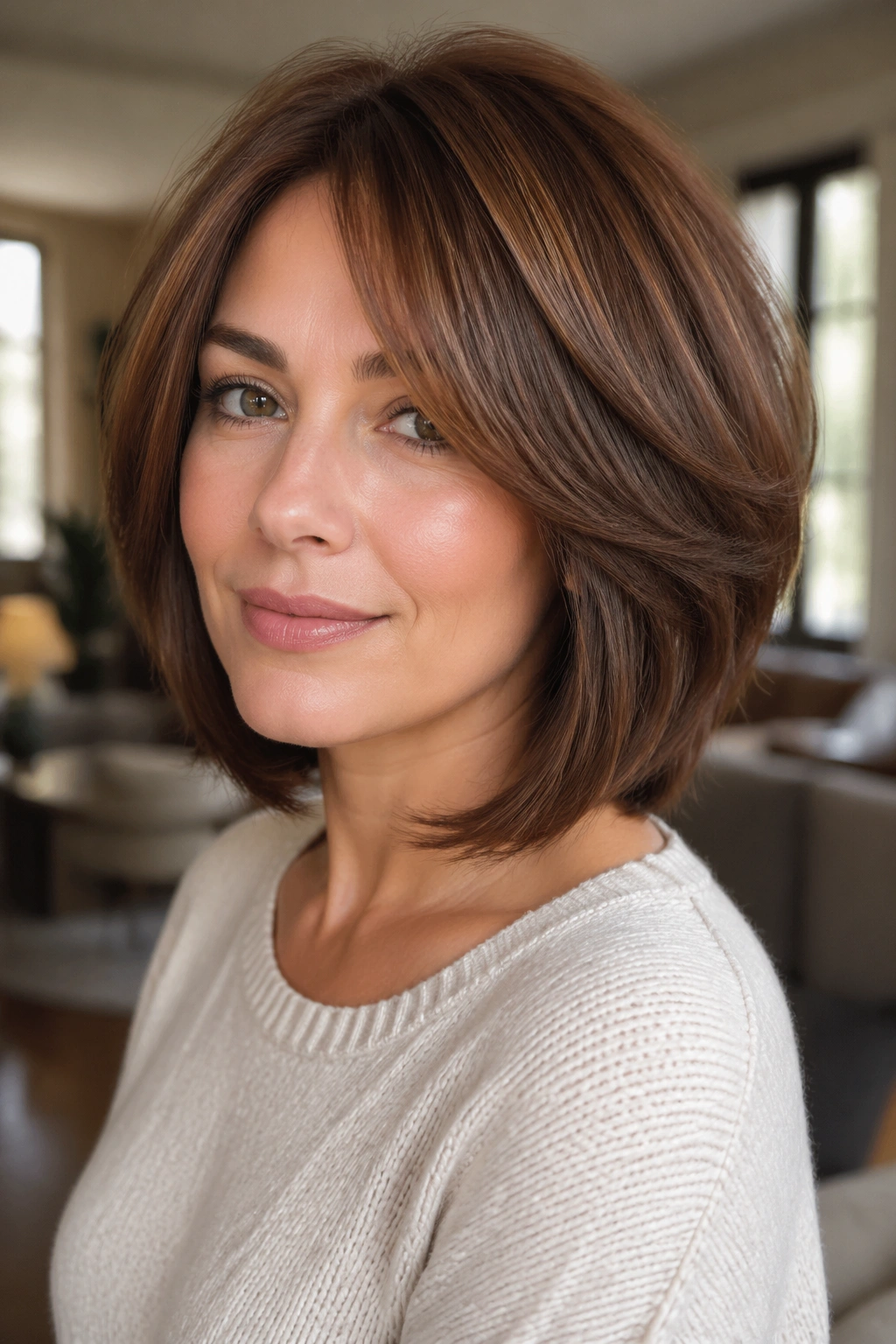
Thick hair loves a feathered bob, but only if the cutting hand has some discipline. Thick hair can become a triangle in about ten minutes if the bottom is left too blunt and the crown gets no room to move. So the goal is shape first, softness second, and less bulk where it counts.
The best thick-hair version usually keeps the outline clean while removing weight inside the haircut. That means internal layering, point-cutting, and a bit of control around the nape. If you go too wild with razoring, the ends can puff out. If you don’t remove enough weight, the bob sits heavy and triangular. There’s a narrow middle ground here.
I prefer this approach: keep the perimeter strong enough to hold the haircut, then soften the upper layers so the hair falls in a curve instead of a block. It takes more thought than just chopping off length, but that extra thought is why the haircut keeps its shape.
Thick hair also takes longer to dry. That’s not a flaw. It just means the styling plan has to be practical. A medium paddle brush for rough-drying, then a round brush on the front and bottom, usually does the job without making you stand there forever.
One more thing. Thick hair with feathered layers should move, not fray.
10. Feathered Bob for Curly or Coily Hair
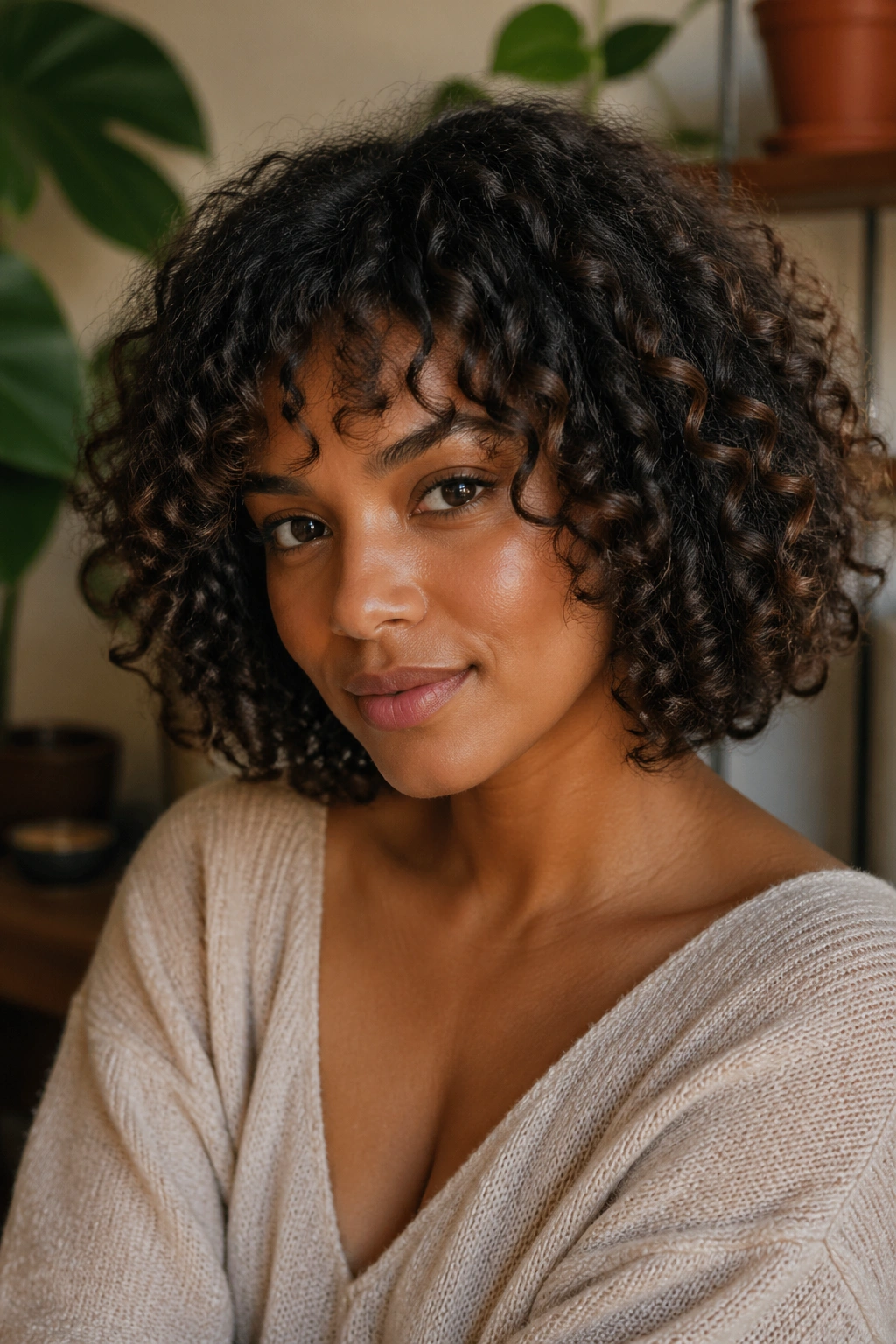
Can curls get feathering without losing their shape? Absolutely, but the haircut has to respect the curl pattern. A feathered bob on curly or coily hair should be cut in a way that lets the curls stack and fall naturally, not stretched out on a wet head and guessed at. That’s where people get into trouble.
Dry cutting or curl-by-curl cutting usually makes the most sense here. The stylist can see where the curls spring and where they shrink. Feathering happens through the interior and around the top layers, while the bottom edge stays controlled enough to keep the bob recognizable.
What to Ask For at the Chair
Ask for a shape that works with your curl type, not against it. If your curl is tight, the layers should be longer than you think. If it’s loose and springy, the feathering can sit a little higher.
A few useful details:
- Cut on dry or nearly dry hair if your curls vary a lot
- Keep the top layers soft so the crown doesn’t balloon
- Use a diffuser on low heat
- Avoid brushing once the hair has dried
The cleanest feathered curly bob looks bouncy, not frizzy. That difference lives in the cut and in the way the hair is dried.
11. Inverted Feathered Bob
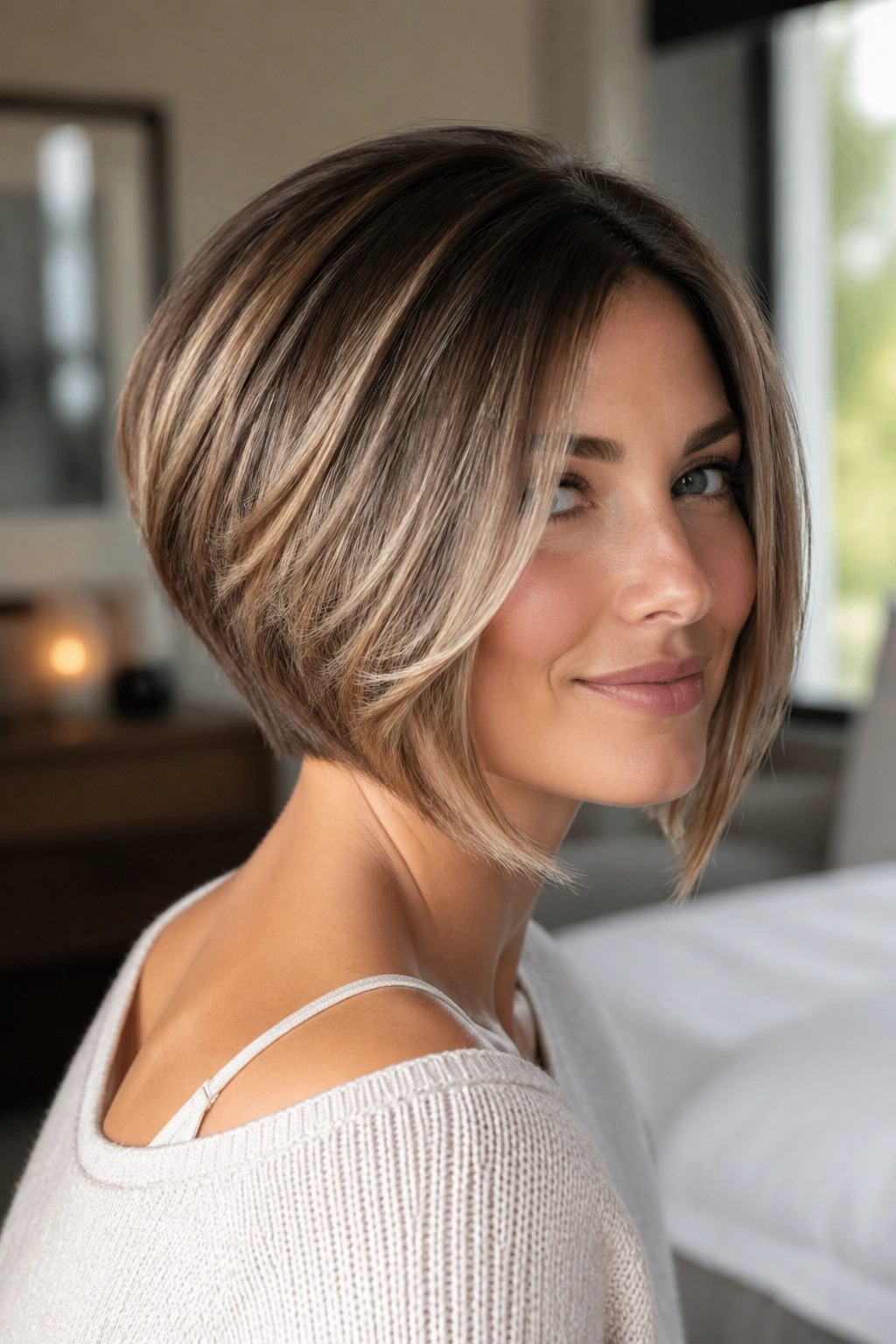
A bob doesn’t have to sit level to look polished. An inverted feathered bob is proof. The back stays shorter, the front gradually gets longer, and the whole cut creates a forward sweep that feels sharp without being harsh. Feathering softens the angle so the shape doesn’t turn severe.
Compared with a classic even bob, the inverted version pulls the eye down toward the jawline and neck. That can be a nice move if you want a little elongation or if your face shape likes diagonal lines. It’s less about softness everywhere and more about a clean shape with a soft finish.
The front pieces matter a lot here. If they’re too long, the cut starts to feel disconnected. If they’re too short, you lose the point of the inversion. I’d keep the front just long enough to graze the cheek or jaw, then feather the ends so the whole thing moves when you turn your head.
This is not the haircut I’d choose if you want the most casual, tossed-off look. It has more structure than that. But if you like a bob that feels intentional and a little sleek, it earns its keep.
12. Asymmetrical Feathered Bob
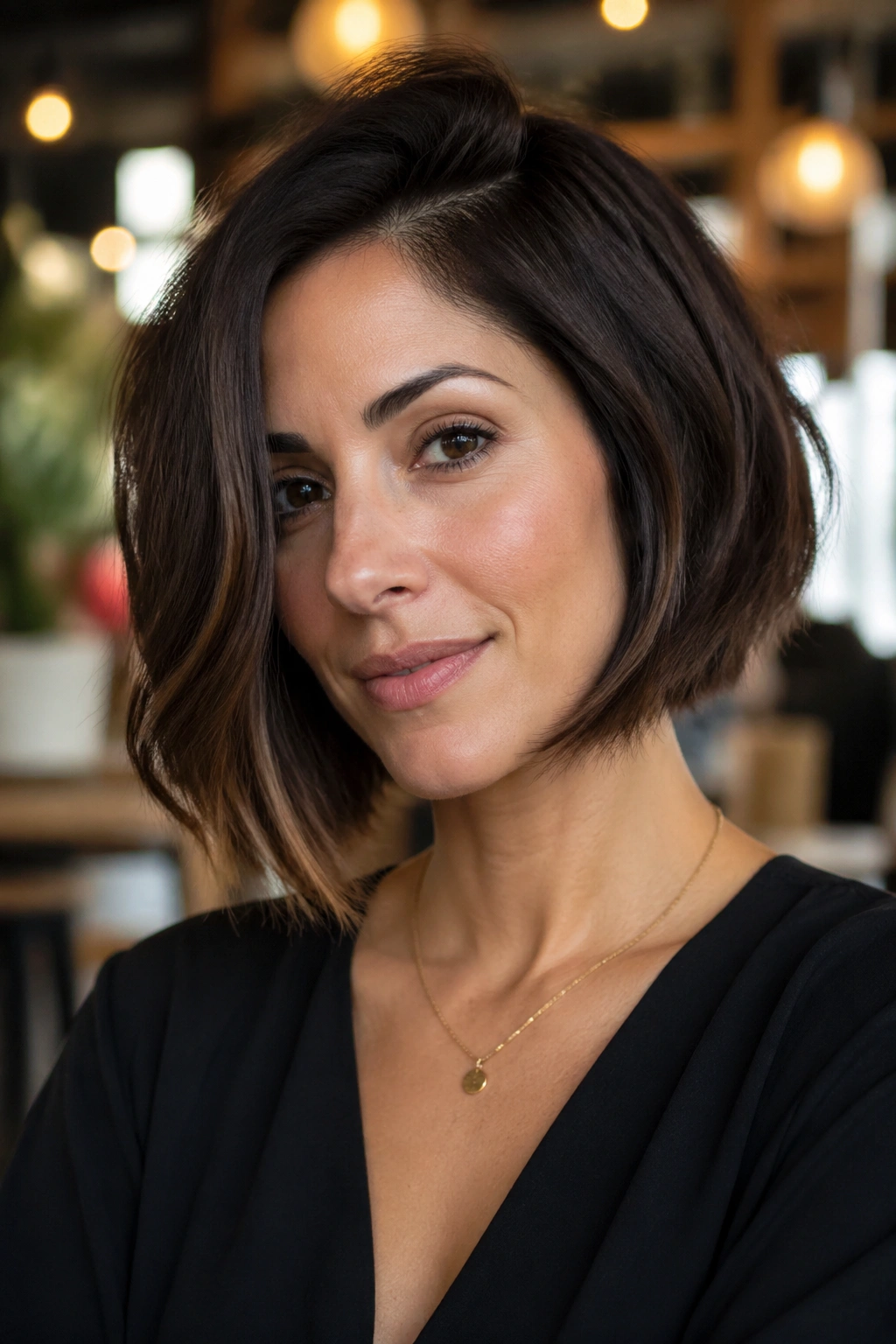
A slightly uneven bob sounds bold on paper, then you see it in the right texture and it suddenly looks easy. That’s the charm of an asymmetrical feathered bob. One side sits a touch longer, the other side is a bit shorter, and the feathering keeps the difference from feeling blunt or graphic.
I’ve always liked this cut on people who tuck one side behind the ear a lot. The asymmetry makes that habit look intentional instead of accidental. It also gives the face a little movement, which helps if you want the haircut to feel less stiff than a traditional straight-across bob.
The key is keeping the difference subtle enough that the haircut still reads as wearable every day. A small length shift at the front is usually enough. You do not need a dramatic angle to get the effect.
- Shorter side near the jaw or ear
- Longer side grazing the cheek or collarbone
- Feathered ends so the line stays soft
- Best with a side part or loose bend
A sharp asymmetrical bob can feel fashion-forward. A feathered asymmetrical bob feels easier to live in. That’s the one I’d pick for most people.
13. Razored Feathered Bob
Razoring changes the texture fast. That can be wonderful or a bit much, depending on the hair. Unlike a scissor-cut feathered bob, a razored version has softer, more broken-up ends from the start. The movement is built in. The danger is overdoing it and leaving fine hair looking frayed.
This cut works best on hair with some body or a little natural wave. Straight, slippery hair can look flat if the razor removes too much edge. Dense hair, on the other hand, can take the softness well because the razor lightens the perimeter without making the shape bulky.
What Makes It Different
A razor gives the bob a more lived-in finish. It’s less precise, more airy. That can be a win if you like hair that falls loosely and doesn’t need to be ironed into place every morning. It is not the best choice if you love crisp edges or if your hair is already fragile.
I’d ask for razor work only through the areas that need softness, not all over the head. That keeps the haircut from looking over-thinned. And if your stylist reaches for a razor, ask how much weight they plan to remove. You want an answer that sounds measured, not enthusiastic.
14. Choppy Feathered Bob with Piecey Texture
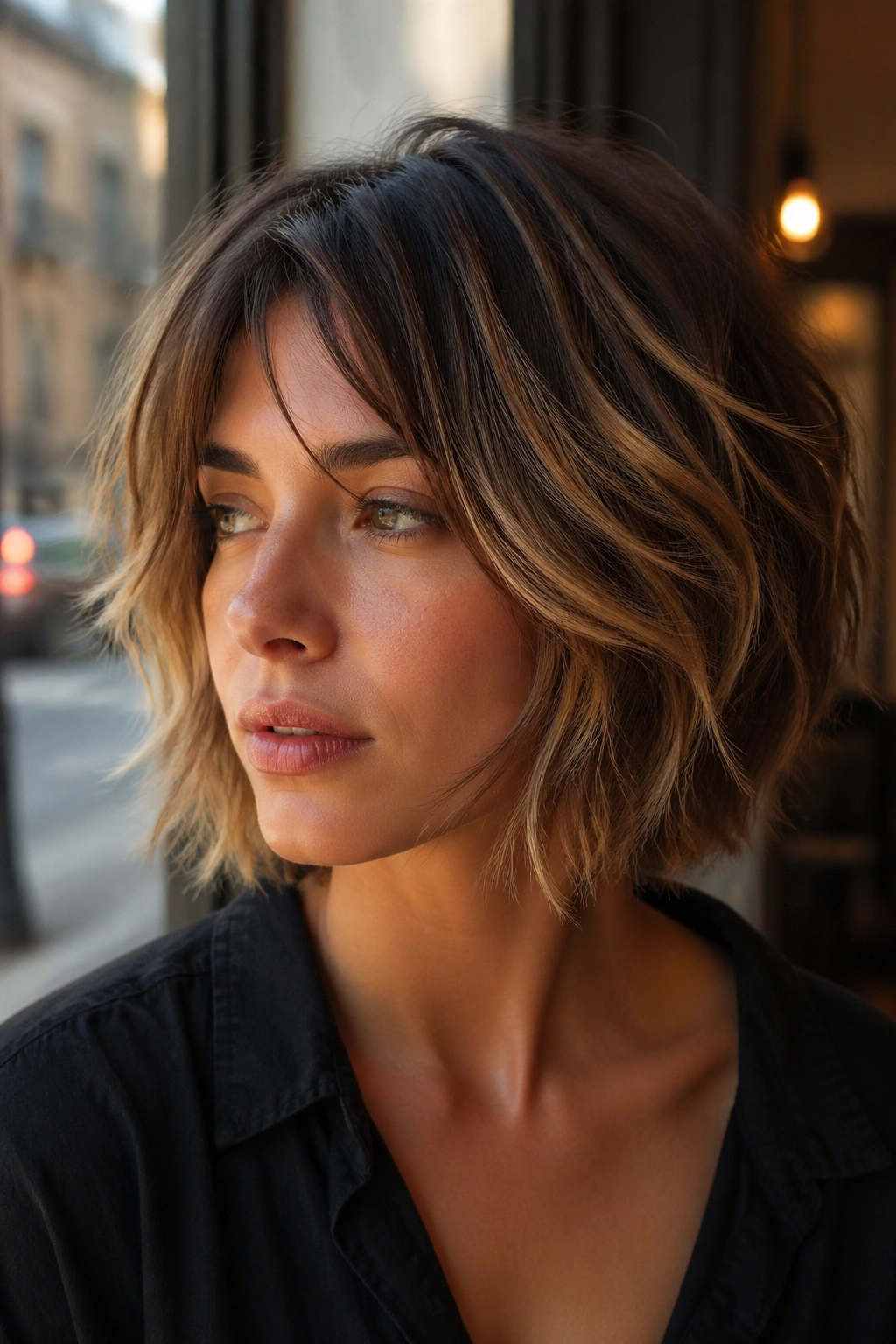
Some people want softness. Some people want a little edge. The choppy feathered bob sits right between those moods, and that’s why it keeps showing up in real life instead of only in salon photos. It has separation through the ends, but the overall shape still feels like a bob, not a shag that lost its manners.
This one is especially good when you like texture spray, dry shampoo, and a bit of separation between sections. The cut gives you the structure; the product gives you the piecey finish. A stylist usually gets there with point-cutting and a bit of internal texture, then leaves enough length around the perimeter so the haircut doesn’t collapse.
The mistake is piling on too much chop. After a certain point, the ends stop looking feathered and start looking ragged. That’s not the same thing, and it doesn’t flatter the bob line.
A few useful clues that this version may suit you:
- You like a messier finish on purpose
- Your hair holds shape with minimal product
- You want movement but not a full shag
- You don’t mind a slightly undone edge
This cut has personality. It just needs a light hand.
15. Polished Rounded Feathered Bob
A polished rounded feathered bob is the one I’d hand to someone who wants softness but still likes a tidy outline. The shape curves gently under at the ends, the crown stays smooth, and the feathering keeps the haircut from feeling heavy. It’s the neatest cut in this lineup, but not the stiffest.
What makes it work is the balance between the round silhouette and the soft internal layers. If the roundness is too strong, the bob looks dated. If the feathering is too loose, the shape loses its polish. Keep both, and you get a bob that can go from a workday blowout to a more casual air-dried finish without looking strange in either version.
I think this is the most forgiving option for people who want one haircut to do a lot. It flatters straight hair, calms thick hair, and gives finer hair a little more body at the edges. That’s a hard combo to beat.
Bring photos that show three things: the length you want, how soft you want the ends, and whether you like a side part or a center part. Those details matter more than the name of the cut. A feathered bob is really a set of small choices, and when the choices are right, the haircut looks like it belongs on you from the first day.
If you want the most wearable version, start here. It’s the quiet one in the group, and honestly, that’s why it works so well.
