



A good bob cut can do what a dozen trendier haircuts never quite manage: it makes the hair look finished, even when you’ve barely touched it. That’s the real reason classic bob cuts keep showing up in salons, on red carpets, and in ordinary morning routines where nobody has time to wrestle with a round brush for twenty minutes.
The bob is deceptively simple. A clean line, a smart length, and the right amount of weight can make fine hair look fuller, thick hair look lighter, and wavy hair look like it actually has somewhere to go. Bad bobs happen when the shape fights the hair’s natural movement. Good ones? They work with it, and that’s why they stay in rotation year after year.
There’s also a nice honesty to a bob haircut. It doesn’t hide behind layers of styling nonsense. If the cut is off, you see it. If the line is sharp, you see that too. That’s part of the charm.
Some bob cuts feel crisp and architectural. Others are softer, a little cheeky, a little undone. The trick is knowing which shape does what, and which one suits your face, your texture, and the amount of effort you’re willing to give it on a Tuesday morning. The first one sets the tone.
1. The Blunt Bob
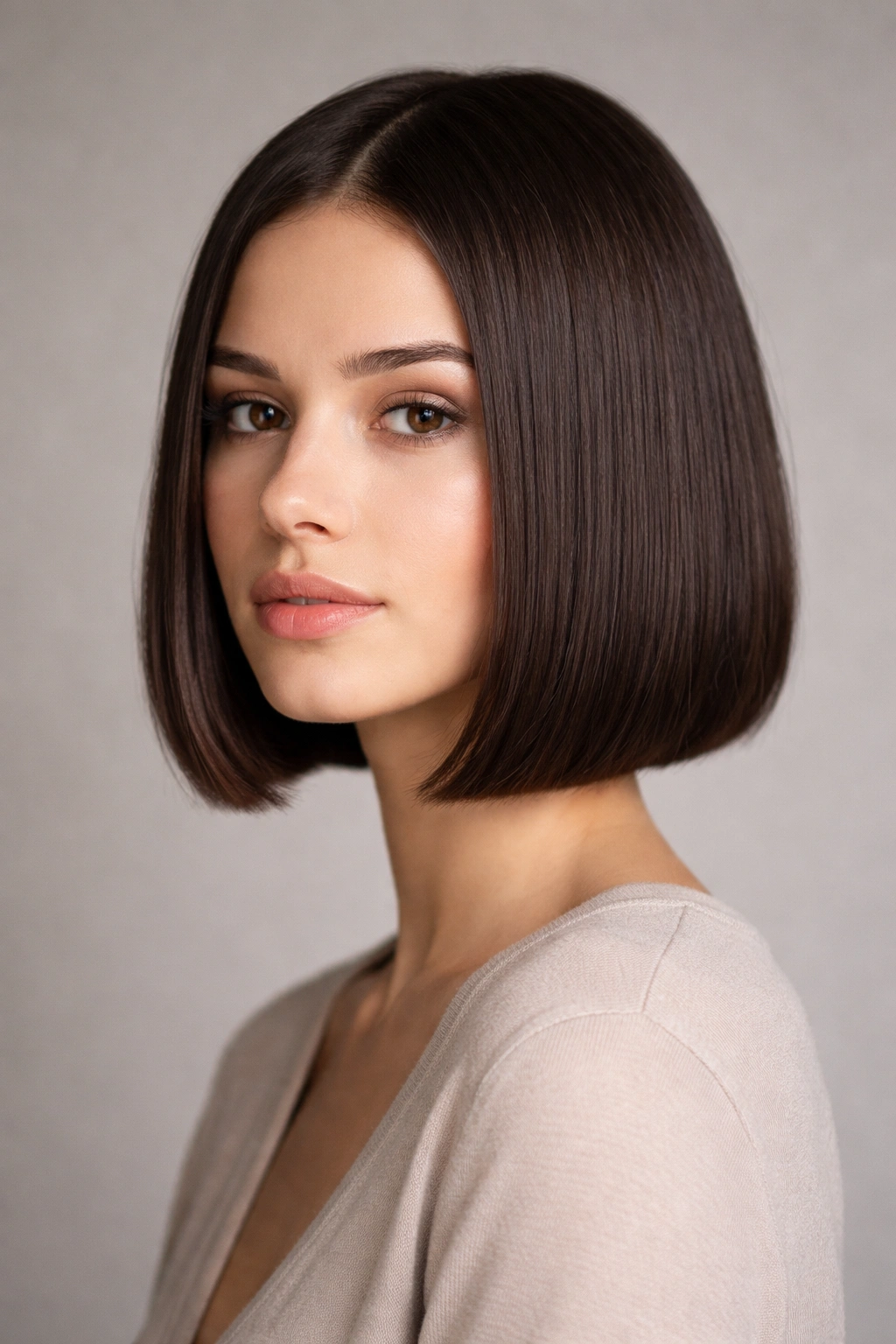
A blunt bob is the haircut equivalent of a clean white shirt. No fuss, no frills, just a strong line that lands at the jaw, chin, or just below. That straight edge does a lot of quiet work. It makes hair look denser at the ends, which is why this cut is such a smart move for fine or medium hair that tends to look wispy when it gets too long.
Why the edge matters
The blunt bob works because the eye reads that solid line as fullness. There are no soft ends to blur the shape, so the whole cut looks intentional. On straight hair, it feels crisp. On slightly wavy hair, it has a little movement without losing the shape. On curly hair, it needs more care, but the result can be gorgeous if the length is adjusted around shrinkage.
A good blunt bob should sit like it means business. If the ends are too thinned out, the whole thing loses its punch. If the line is too heavy, it can feel helmet-like. That middle ground matters.
- Length: usually chin to just below the jaw
- Best for: fine to medium hair, straight or softly wavy textures
- Styling time: low, especially if you like a flat iron or air-dried polish
- Maintenance: trim every 6 to 8 weeks to keep the line sharp
Tip: if your ends are split or frayed, a blunt bob will show it fast. Get the cut fresh, or it’ll lose that clean finish.
2. The Chin-Length Bob
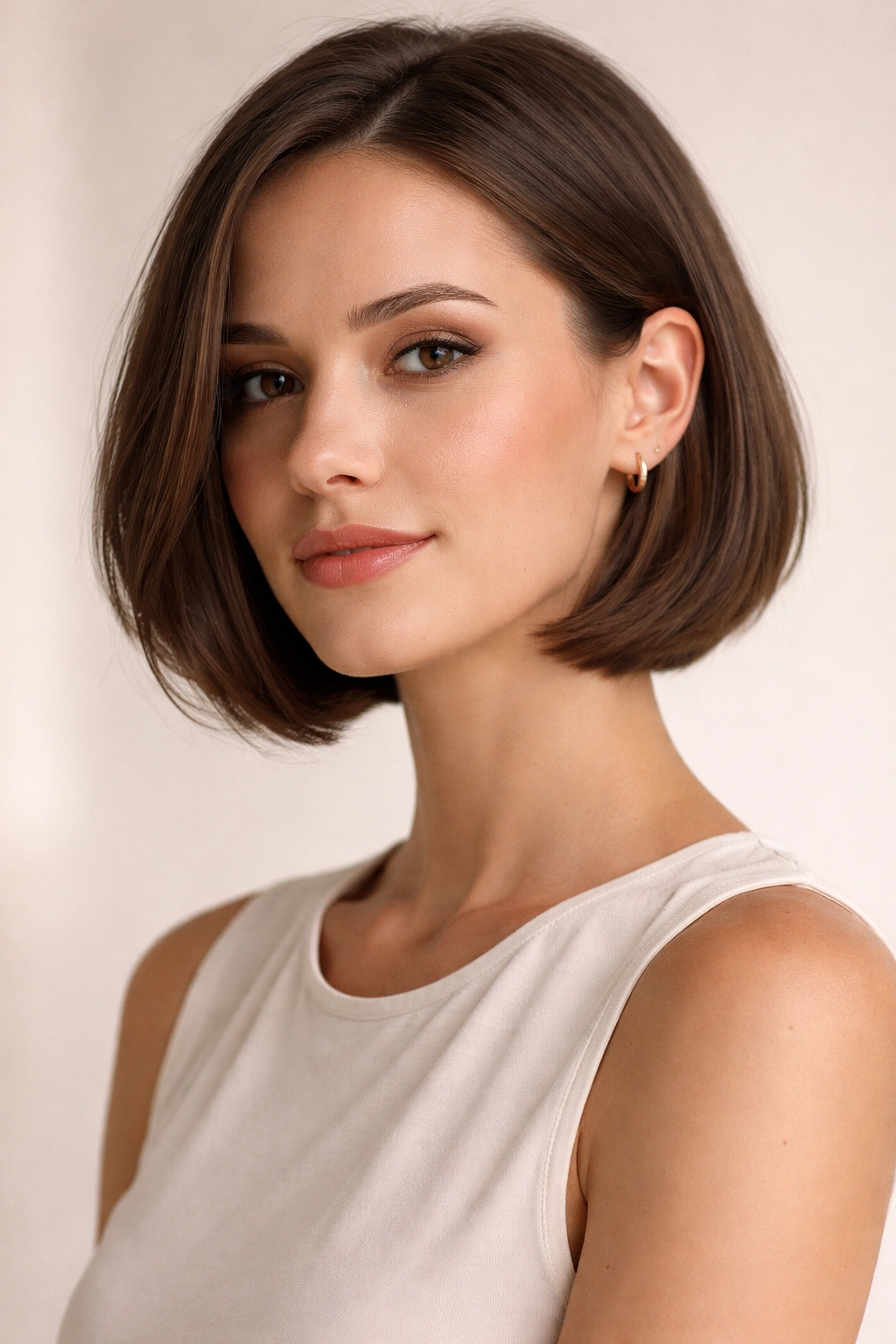
Why does a chin-length bob keep coming back? Because it lands in one of the most flattering spots on the face without feeling too short or too cautious. It draws attention to the jaw and cheekbones, and it gives the neck a bit of breathing room, which is why it often looks elegant without looking precious.
The chin-length bob also has a useful trick: it can be tucked behind the ears and still look styled. That sounds small. It isn’t. A haircut that looks decent both loose and tucked has real staying power, because life is messy and hair ends up behind your ears anyway.
How to wear it
If your face is round, a chin-length bob can work with a slight side part and ends that skim rather than hug the cheeks. If your face is long, a fuller side or center part can bring some width back in. Either way, the line should feel deliberate, not accidental.
This cut also plays well with simple styling. A bend at the ends, a little smoothing cream, and a quick blow-dry can be enough. On straight hair, it looks sharp. On wavy hair, it gets a casual edge that never feels overdone.
I like this length because it behaves. It’s short enough to feel fresh, but not so short that you need a full styling routine just to leave the house.
3. The French Bob
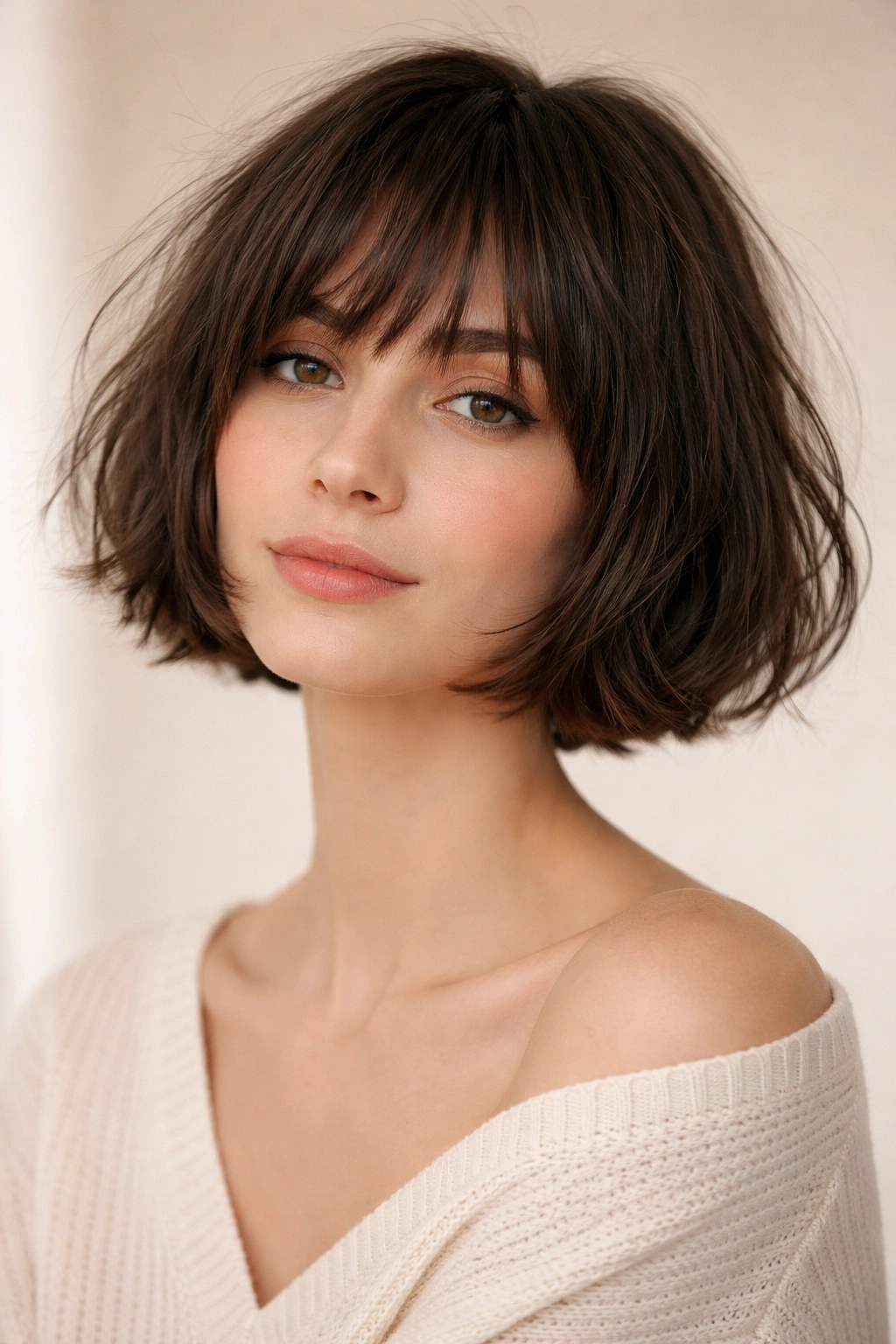
A French bob is shorter, cheekier, and a little more relaxed than the average bob haircut. It usually sits somewhere between the cheekbone and the jaw, often with a fringe that falls soft and a bit piecey instead of perfectly straight. It looks best when it doesn’t look too perfected.
That’s the secret, really. The French bob has shape, but it doesn’t beg for symmetry. A slight bend in the ends, a bit of texture at the crown, and a fringe that moves when you do — that’s the feel. It’s one of those cuts that can look expensive without trying hard, which is probably why people keep asking for it.
What makes it different
The length is part of it, but not the whole story. A French bob usually has a lighter perimeter and a softer fringe than a classic blunt bob. It frames the face in a way that feels a little flirtier and less severe. If you wear glasses, this cut can be excellent, because it leaves room for the frame instead of competing with it.
It also suits natural texture more than people think. A little wave or bend gives it life. Flat, poker-straight styling can make it feel stiff, while a soft air-dry can make it feel alive.
- Best pairing: wispy bangs or a soft micro-fringe
- Hair type: straight, wavy, or lightly curly
- Finish: matte cream, light mousse, or air-dried texture
There’s a reason this one never feels tired. It has personality baked in.
4. The A-Line Bob
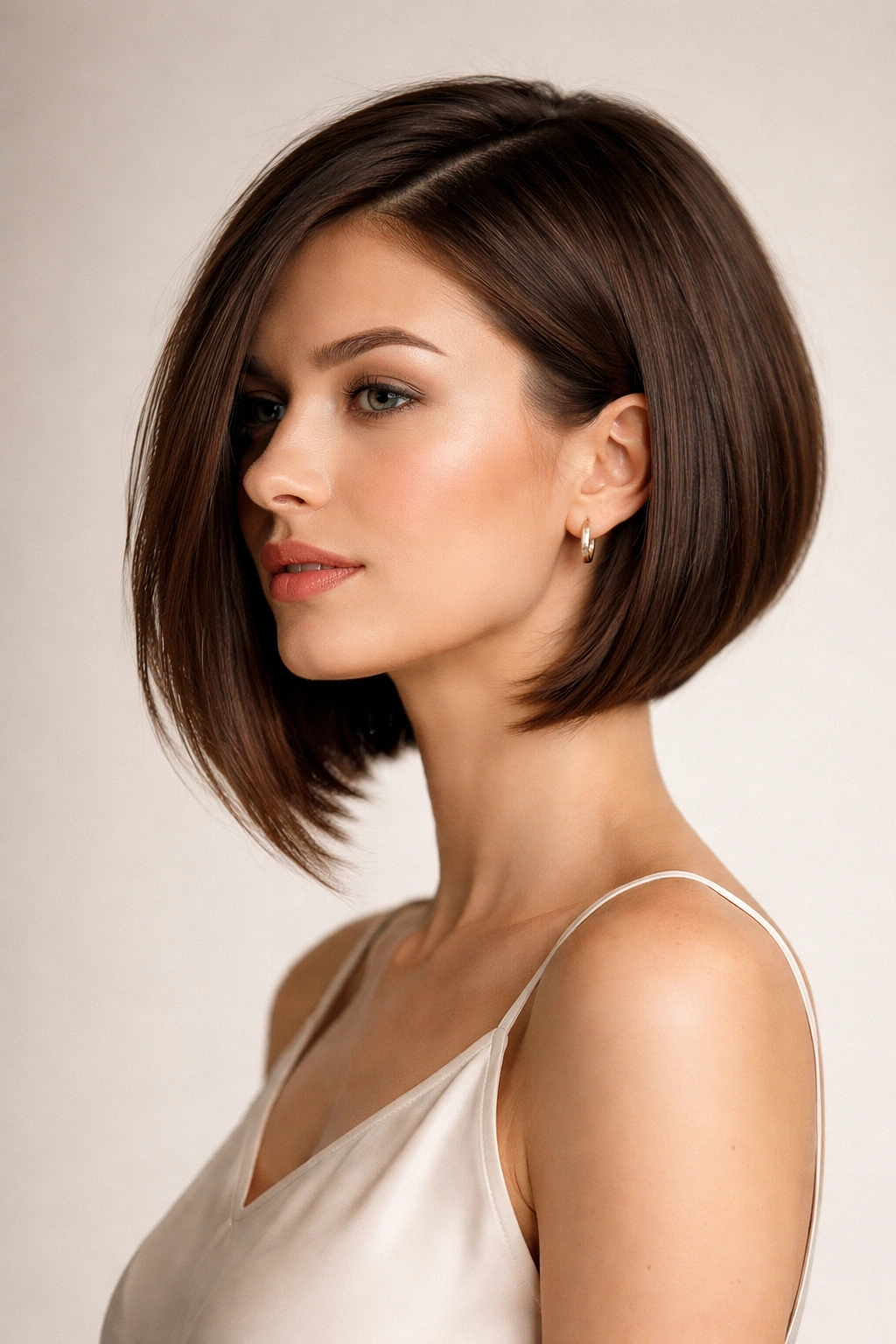
The A-line bob is all about angle. Shorter in the back, longer in the front, it gives the hair a slanted shape that can sharpen the jaw and lengthen the neck. Done well, it looks sleek and smart. Done badly, it turns into a lopsided triangle. So yes, proportion matters.
What I like about an A-line bob is that it gives you shape without forcing a dramatic move. The front pieces can graze the chin, the collarbone, or even the upper neck, while the back stays neat and lifted. That difference in length creates motion even when the hair is still.
This cut is especially useful if you want a bob haircut that feels modern but still polished. It gives volume at the back and a bit of drama in front, without going full fashion-editor sharp. If your hair tends to lay flat at the crown, the shorter back can help build a little lift.
The line should be clean, not choppy. Ask for a visible angle rather than a harsh drop unless you want a stronger statement. That tiny difference changes the whole mood.
5. The Inverted Bob
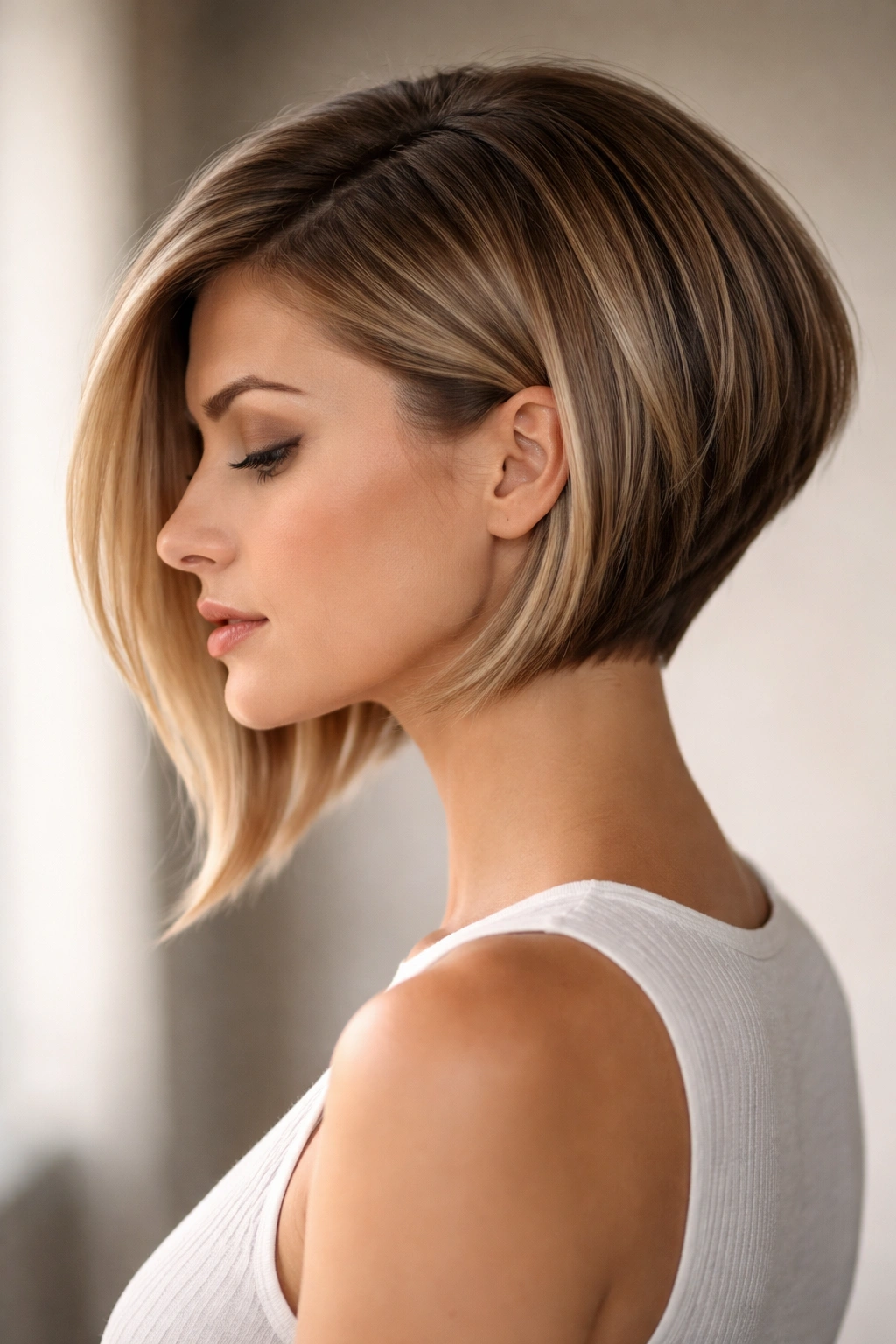
An inverted bob looks like the A-line bob’s bolder cousin. The back is stacked or carved in tighter, and the front falls longer with a steeper slope. The shape is more dramatic, the lift is more obvious, and the profile feels sharper from the side.
This is the cut for someone who wants structure. Not softness. Structure.
What makes it different
The inverted bob usually has a more pronounced curve through the nape and a fuller crown. That means the back sits higher and the front has room to swing. On straight hair, it looks polished and almost tailored. On wavy hair, it can still work, but the angle needs to be balanced so it doesn’t puff out in the wrong place.
A lot of people confuse inverted and A-line bobs. Fair enough. The difference is mostly in how steep the angle feels and how much stacking happens at the back. An A-line is often a gentler slope. An inverted bob is the one that walks in and gets noticed.
Who it suits
This cut can be a smart fix for hair that collapses at the crown. It also works nicely if you want the neck to look longer and the jaw to look cleaner. If your hair is very thick, though, the interior weight needs careful removal. Too much bulk and the back will sit like a shelf. No one wants that.
A strong inverted bob needs regular trims. Let it grow too far and the shape gets fuzzy fast.
6. The Layered Bob
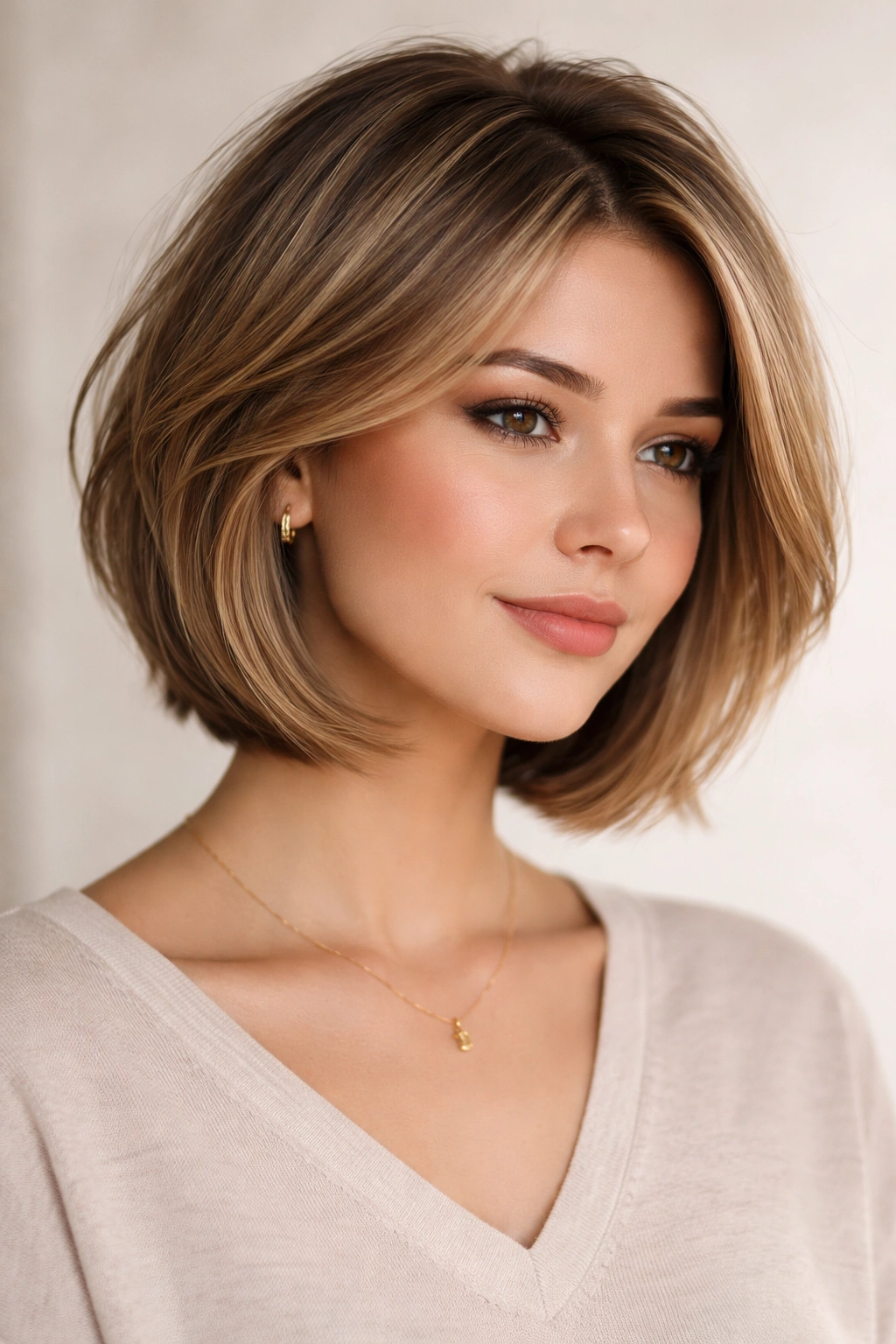
The layered bob is where the cut starts to breathe. Instead of one blunt perimeter, you get internal movement, softer ends, and a little space between the strands. It’s the bob for people who want shape but hate stiffness.
This cut can go wrong when the layers are too short or too obvious. Then the bob starts looking choppy, and not in a flattering way. The best layered bob keeps the outline intact while removing weight from inside the shape. That detail matters more than most people realize.
The sweet spot
On fine hair, subtle layers can keep the cut from falling flat. On thicker hair, they stop the bob from looking like a box. On wavy hair, they help the movement show up without needing a curling iron every day. That’s a pretty useful range.
If you’ve got a lot of hair, ask for interior layers rather than a shredded surface. If your hair is fine, keep the layers soft and longer. The ends should still read as a bob. That’s the point. Once the silhouette gets too broken up, the whole thing loses the clean bob feeling.
A layered bob is also one of the easiest styles to live with. It can be blow-dried smooth, rough-dried with cream, or tucked into a slight wave. It doesn’t demand perfection. Good thing, too.
7. The Graduated Bob
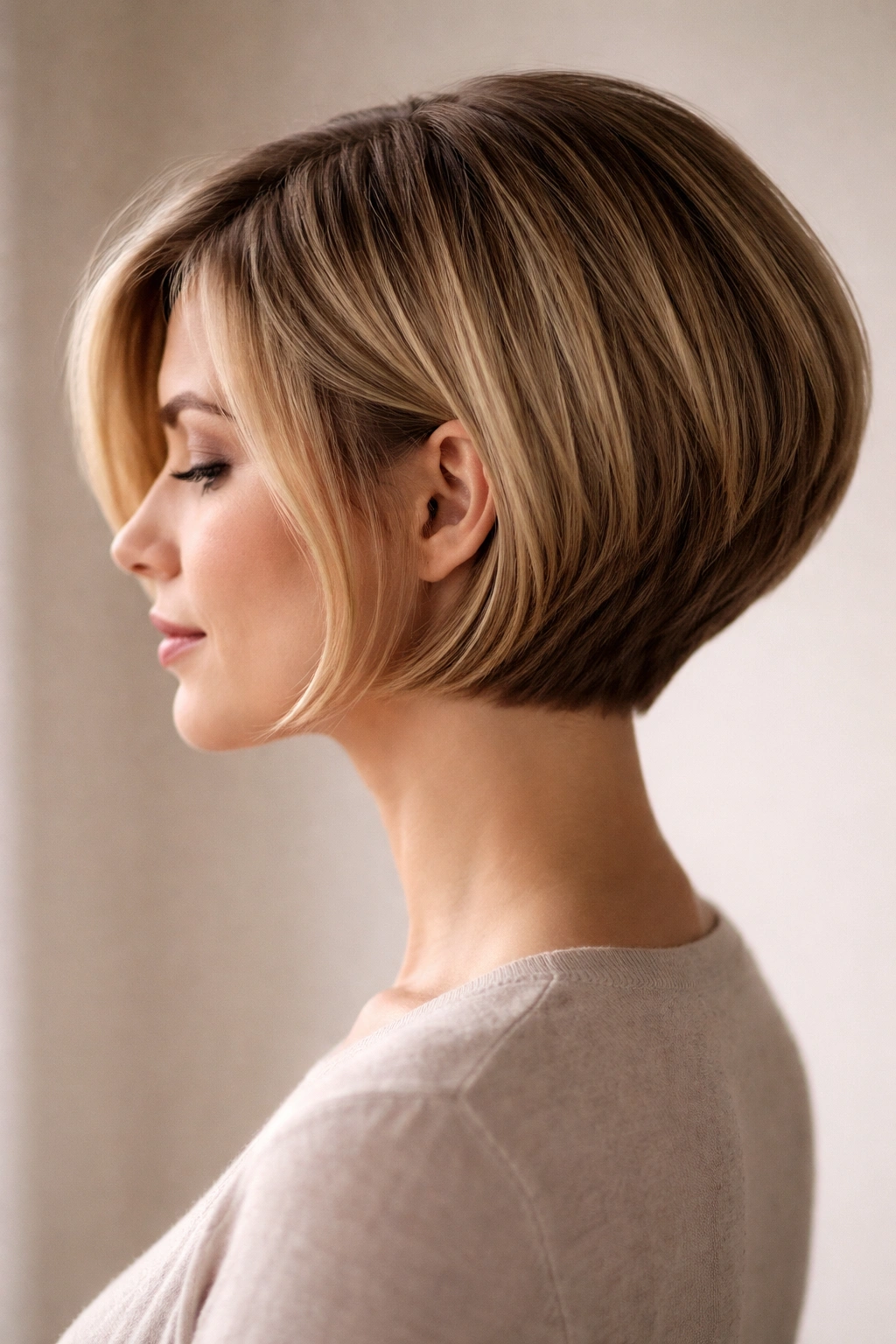
A graduated bob is built on a neat taper from the nape up toward the crown. It’s shorter in back, fuller through the middle, and softly rounded through the shape. If a blunt bob feels too flat and an inverted bob feels too sharp, a graduated bob often lands right between them.
The big advantage here is lift. The stacked structure at the back gives the crown some height, which is useful if your hair tends to sit close to the head. It also creates a tidy neckline, and that can make even a simple haircut look expensive in the best sense of the word.
Why it keeps working
The graduated bob suits hair that needs shape more than length. Dense hair can look heavy without that stacking through the back. Fine hair can look fuller because the shorter layers create the illusion of volume. The trick is moderation. Too much graduation and the cut becomes dated fast. Too little and it just looks like a regular bob with a vague slope.
- Best feature: rounded back with controlled lift
- Works well on: straight to slightly wavy hair
- Styling note: a round brush at the crown helps, but you do not need a full salon blowout
- Ask for: soft graduation, not a severe stack
It’s the kind of cut that looks neat even when the rest of the outfit is a mess. That counts for something.
8. The Long Bob
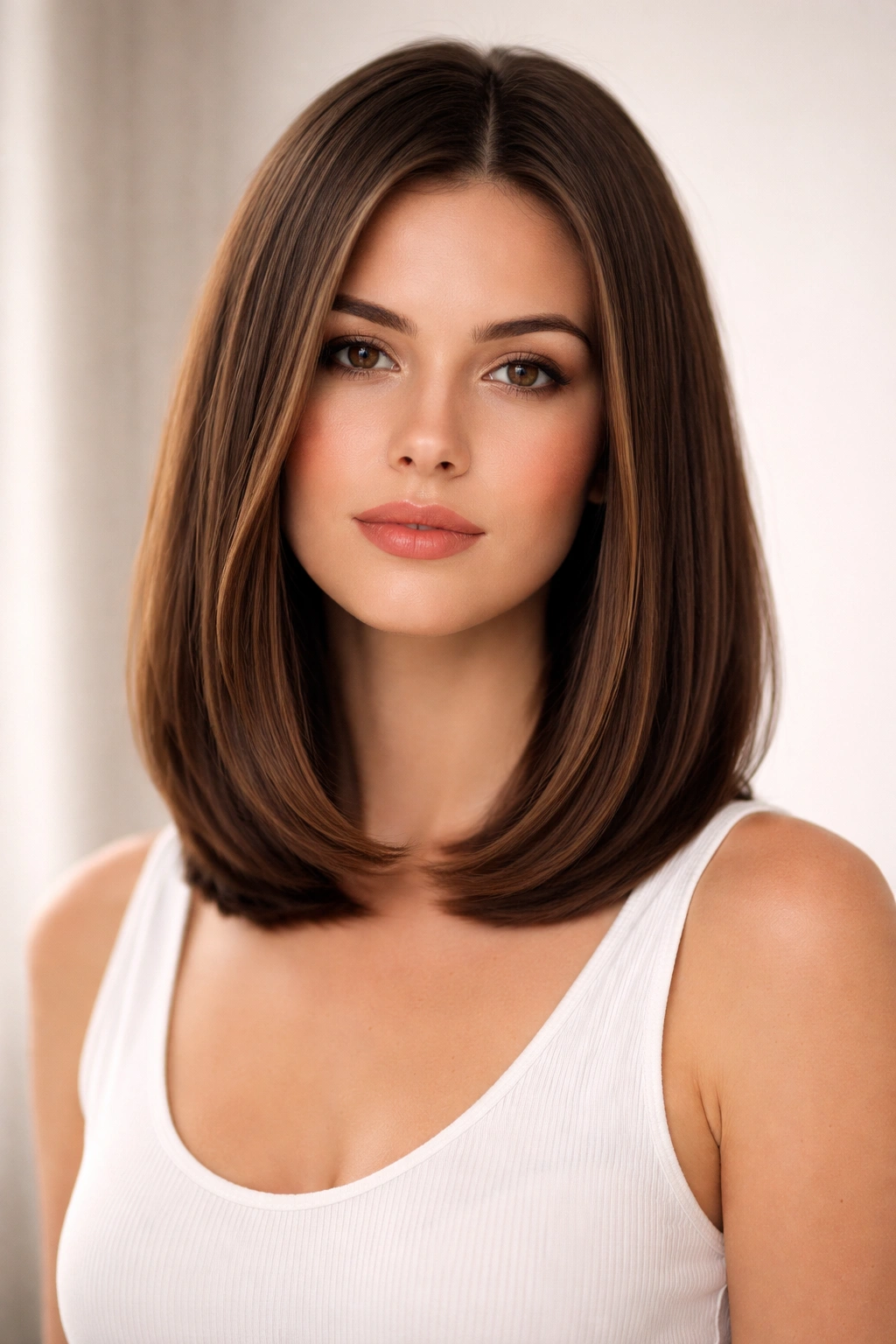
The long bob, or lob, is the bob for people who like the idea of short hair but aren’t ready to give up ponytail length altogether. It usually sits somewhere between the collarbone and the shoulders, and that extra length makes it easier to wear, easier to grow out, and easier to style in a hurry.
This is one of the most forgiving bob cuts around. You can wear it straight, curled, waved, tucked, clipped, or swept into a low half-up style. It still reads as a bob, but it gives you more room to work with. That’s why so many people end up there after shorter cuts. It’s practical without feeling boring.
The lob also works well if your hair is thick and you don’t want a chin-length shape that flares out. A shoulder-skimming line can sit more naturally on heavier hair. On fine hair, a blunt lob can look dense and glossy. On wavy hair, a slightly layered lob can feel casual in a good way.
If you want one bob cut that gives you a lot of options, this is probably the most flexible choice in the bunch. Not flashy. Just useful.
9. The Textured Bob
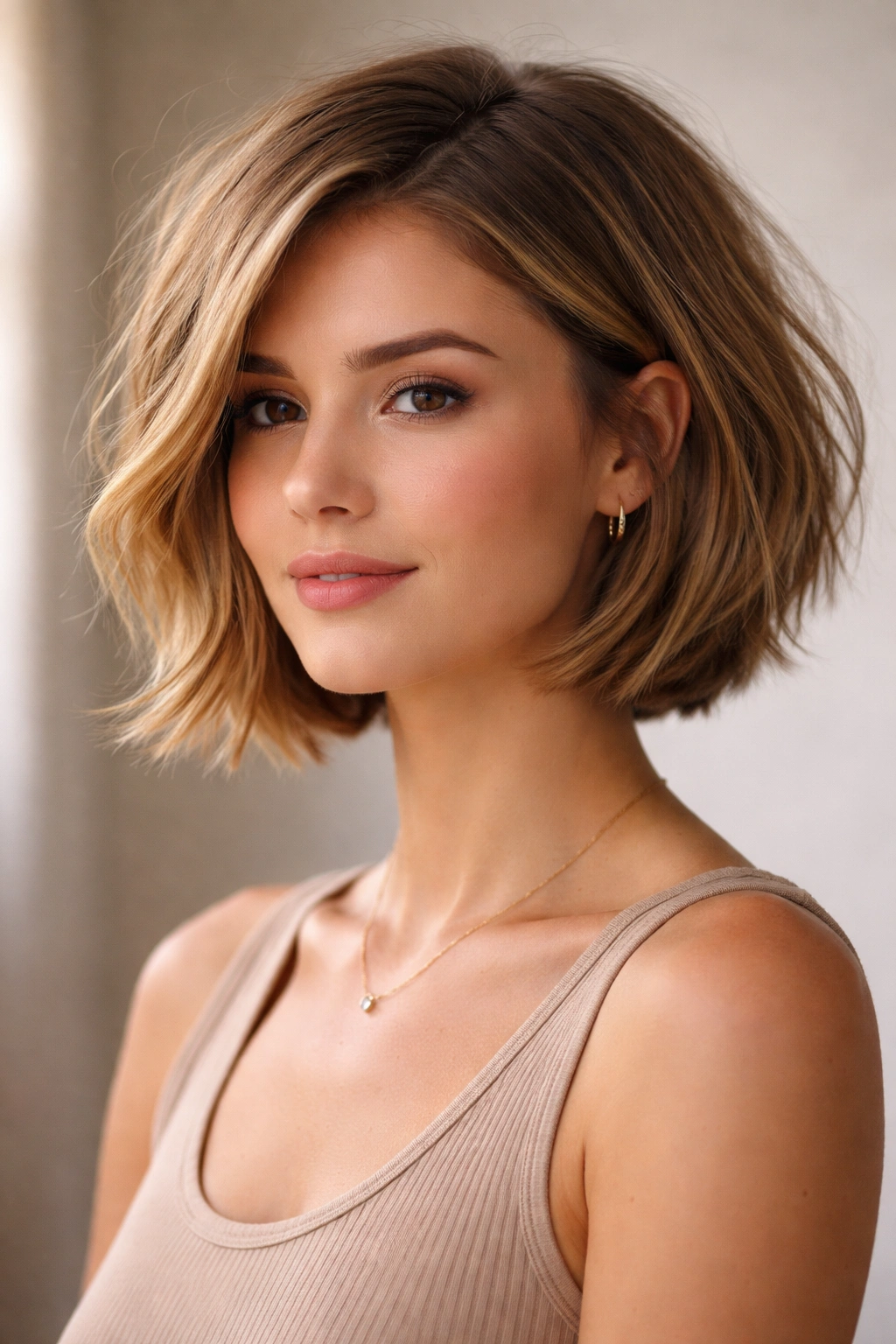
A textured bob is what happens when a bob cut gets a little air in it. The ends are softened, the interior has movement, and the finish feels piecey rather than rigid. It’s the answer for hair that looks too flat when cut in one solid line.
What makes this cut interesting is the balance. You still want to see the bob shape, but you also want the hair to move. That’s where point cutting, subtle razoring, or light internal texturizing can help. The goal is not to shred the ends into nothing. The goal is to keep the silhouette while loosening the feel.
What to watch for
Textured bobs are easy to ruin with too much thinning. If the hair is already fine, aggressive texturizing can make the ends look see-through. If the hair is very frizzy, too much texture can make styling harder, not easier. So the cut needs a careful hand.
This style shines on wavy hair, especially when you like a less polished finish. A little mousse, a bit of scrunching, and a diffuse or air-dry can bring the shape to life. It’s not the sleekest bob. That’s the point.
A textured bob looks best when it feels a little touched, not overworked. You want movement, not chaos.
10. The Sleek Straight Bob
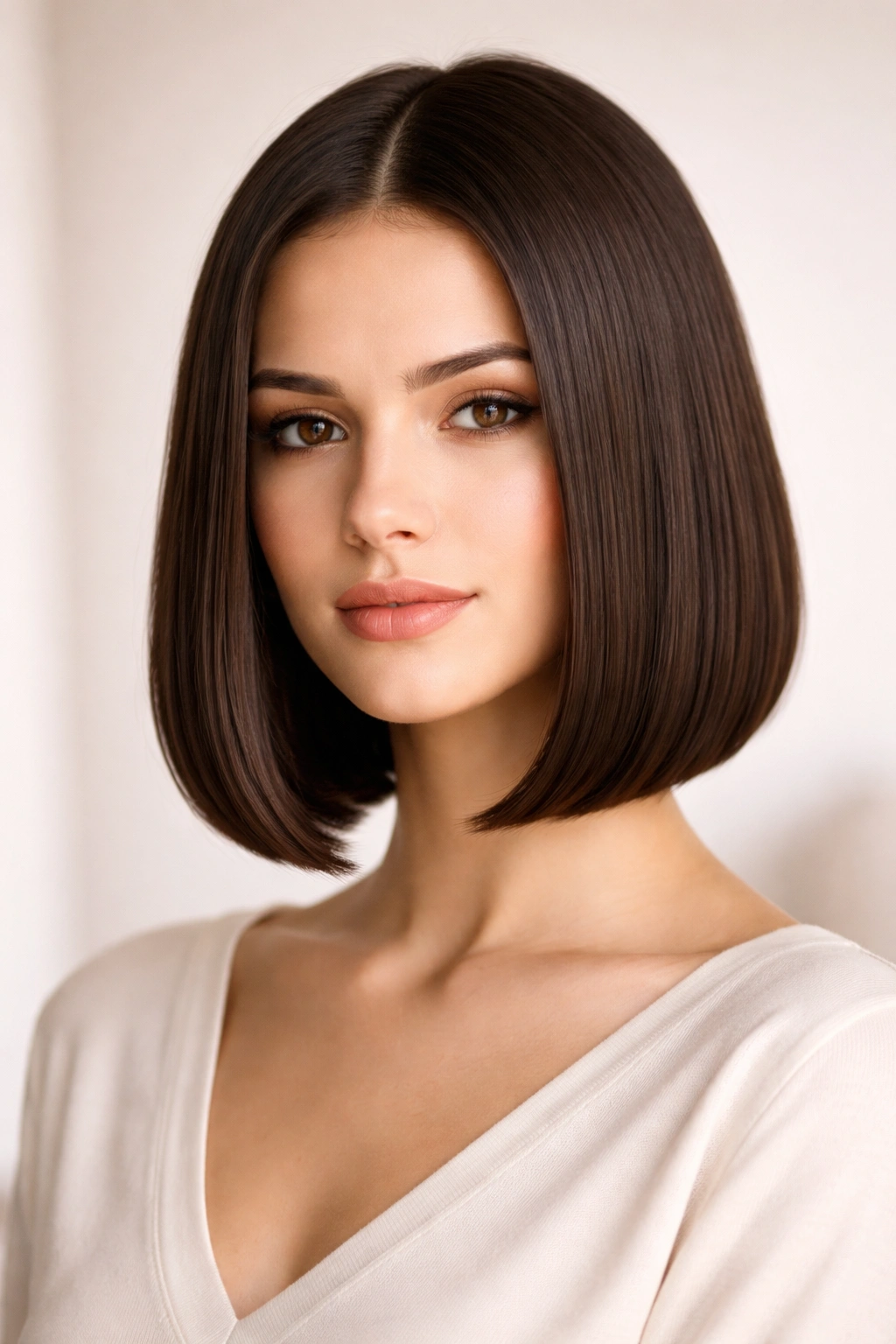
Can a bob look sharp without looking severe? Absolutely. The sleek straight bob is proof. It’s clean, reflective, and tight around the face, with enough polish to look deliberate even under bad lighting. This is the bob that loves a straightening pass, a center part, and a good smoothing serum.
The key is not to overdo the flatness. A sleek bob should look smooth, not pressed into the skull. The ends can curve in slightly, or they can sit dead straight if that suits your face shape. What matters is the finish: even, glossy, and controlled.
Styling notes
A heat protectant is non-negotiable here. So is a proper cut, because a sleek bob will expose every uneven corner. If your hair has cowlicks at the crown or flips at the ends, your stylist needs to account for that in the shape.
- Best for: straight to slightly wavy hair
- Tools: blow dryer with nozzle, paddle brush, flat iron if needed
- Finish: light oil on the ends, not at the roots
- Parting: center for symmetry, side for a softer line
This style can feel almost tailored when the ends hit at exactly the right point along the jaw. It’s elegant in a restrained way, which is probably why it never gets old.
11. The Curly Bob
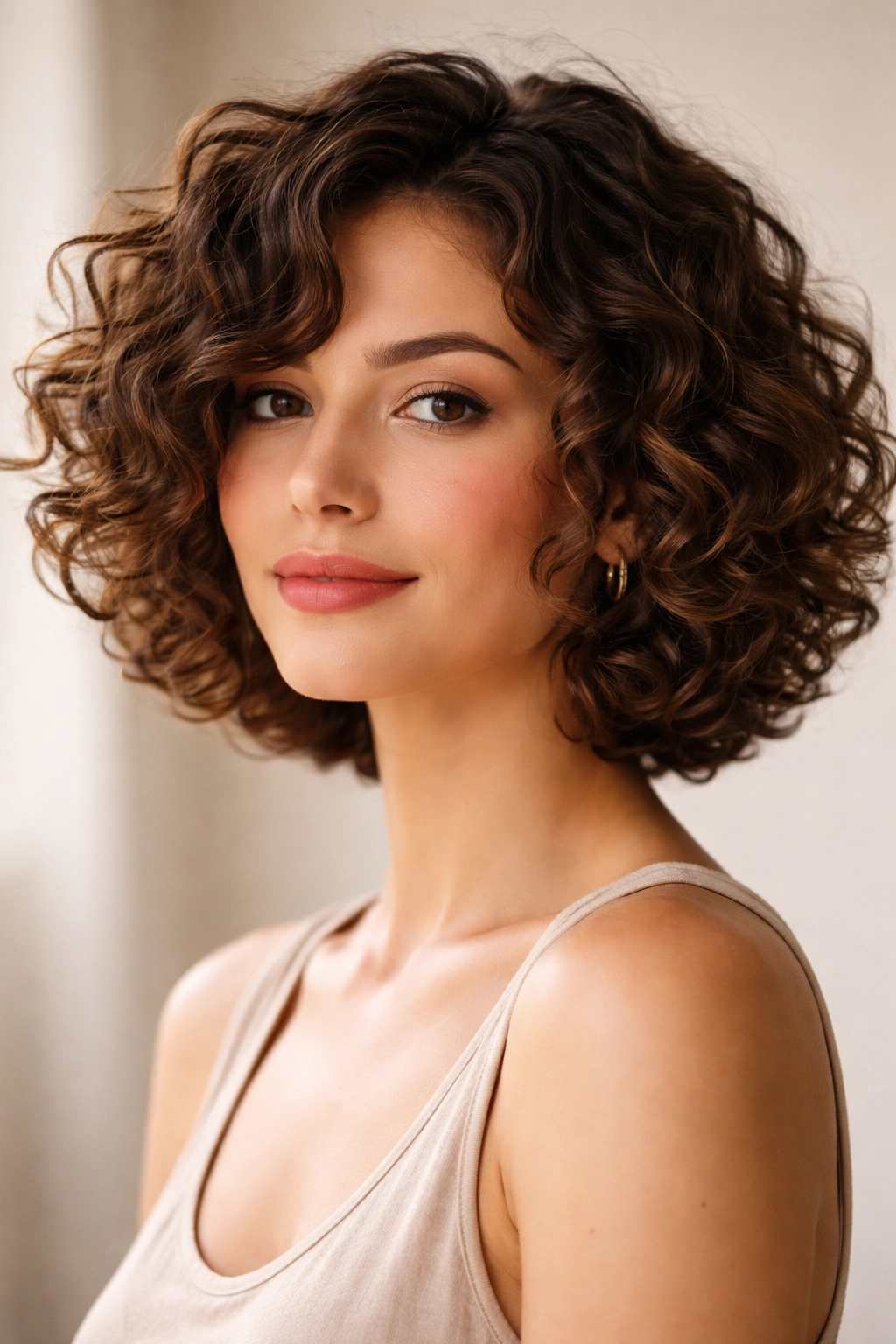
A curly bob should not fight curls. That sounds obvious, but plenty of bad bob haircuts still do. The best curly bob follows the curl pattern instead of flattening it, which gives the shape bounce, spring, and a real sense of movement.
Cutting curly hair short changes everything. The spring factor can make a bob look much shorter than the hairdresser expected, so length has to be planned with shrinkage in mind. A good curly bob often lands a little longer when wet, then settles into its true shape once dry. That’s not a mistake. That’s how curls behave.
What to ask for
A dry cut can be useful if your curls are tight or inconsistent. If your curls are looser, a curl-by-curl shaping method may be enough. The point is to keep the silhouette round enough that the hair doesn’t puff outward at the sides.
This cut can be amazing on natural texture because it gives the curls a frame. Without shape, curls can sit wide or triangular. With a bob shape, they get direction. That’s a huge difference.
The best curly bob usually has some internal layering, but not so much that the outline disappears. You still want to see the bob. You just want the curls to do the talking.
12. The Wavy Bob
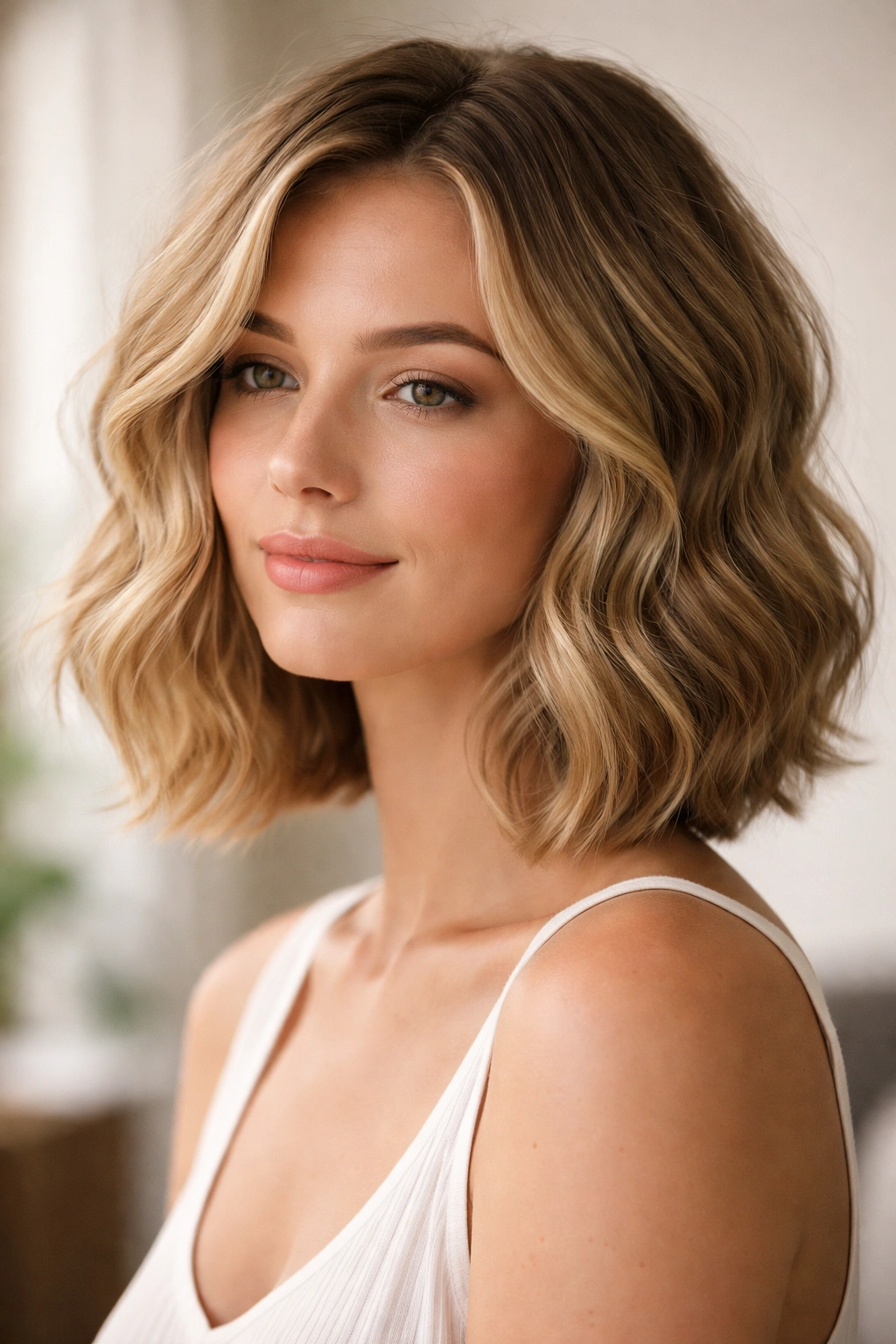
A wavy bob is the haircut that looks like it spent the morning near the ocean, even if it didn’t. The soft bend through the lengths gives the cut a relaxed, easy movement that can feel polished without being stiff. It’s one of the most wearable bob styles because it rarely looks too done.
This cut works especially well when the hair has a natural S-wave. The waves add texture, the bob shape keeps things tidy, and the result lands somewhere between casual and neat. If the hair is too blunt at the ends, waves can look boxy. If it’s too layered, the shape can go fuzzy. The sweet spot is a soft perimeter with enough weight to hold the outline.
A wavy bob doesn’t need much. A salt spray or light styling cream can help bring the bend out, and a few rough bends with a curling wand can fake the rest if your hair is stubborn. Don’t curl every strand perfectly. That’s how you lose the relaxed feel.
This is the bob I’d hand to someone who wants movement but hates spending time on their hair. It forgives a lot.
13. The Asymmetrical Bob
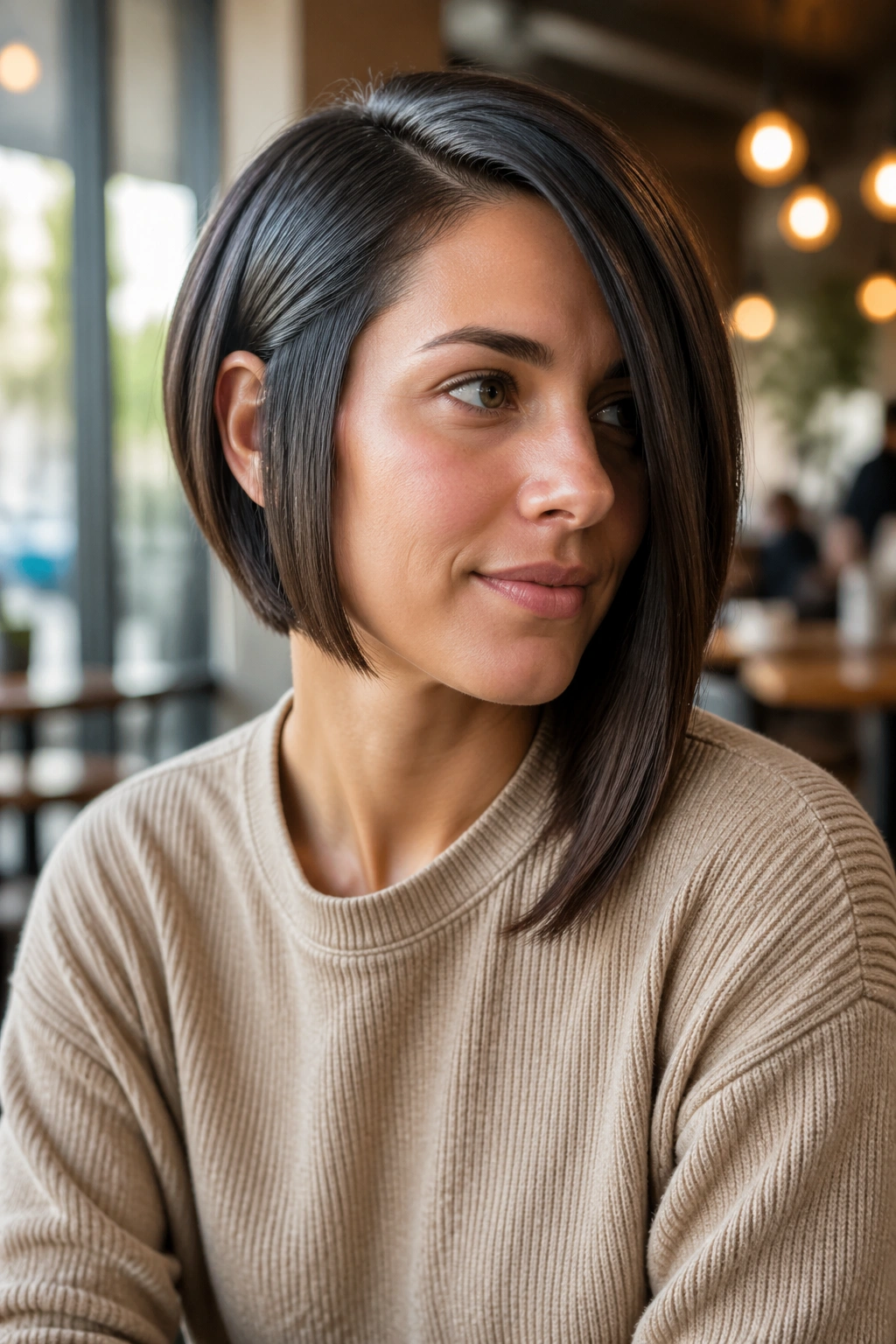
An asymmetrical bob makes a clear statement: one side is longer than the other, and the difference is the whole point. It can be subtle or dramatic, but either way it gives the haircut energy that a perfectly even shape doesn’t always have.
The magic here is balance. If the asymmetry is too extreme, it can feel costume-y. If it’s too slight, people may not notice what makes it special. The sweet spot is a visible difference that still feels wearable in everyday life. Often, one side grazes the jaw while the other falls a little lower, and the angle around the face helps guide the eye.
Who it suits
This shape works well if you want a bob that feels a little less predictable. It can sharpen softer features, and it can make straight hair look much more dynamic. On wavy textures, though, the asymmetry needs careful styling so the hair doesn’t puff unevenly.
It’s also one of those cuts that makes earrings, necklines, and glasses frames matter more. A good asymmetrical bob is a whole look, not just a haircut.
If you want a classic bob with a slight edge, this is a good place to land. It stays rooted in the bob family while refusing to behave like a plain one.
14. The Stacked Bob
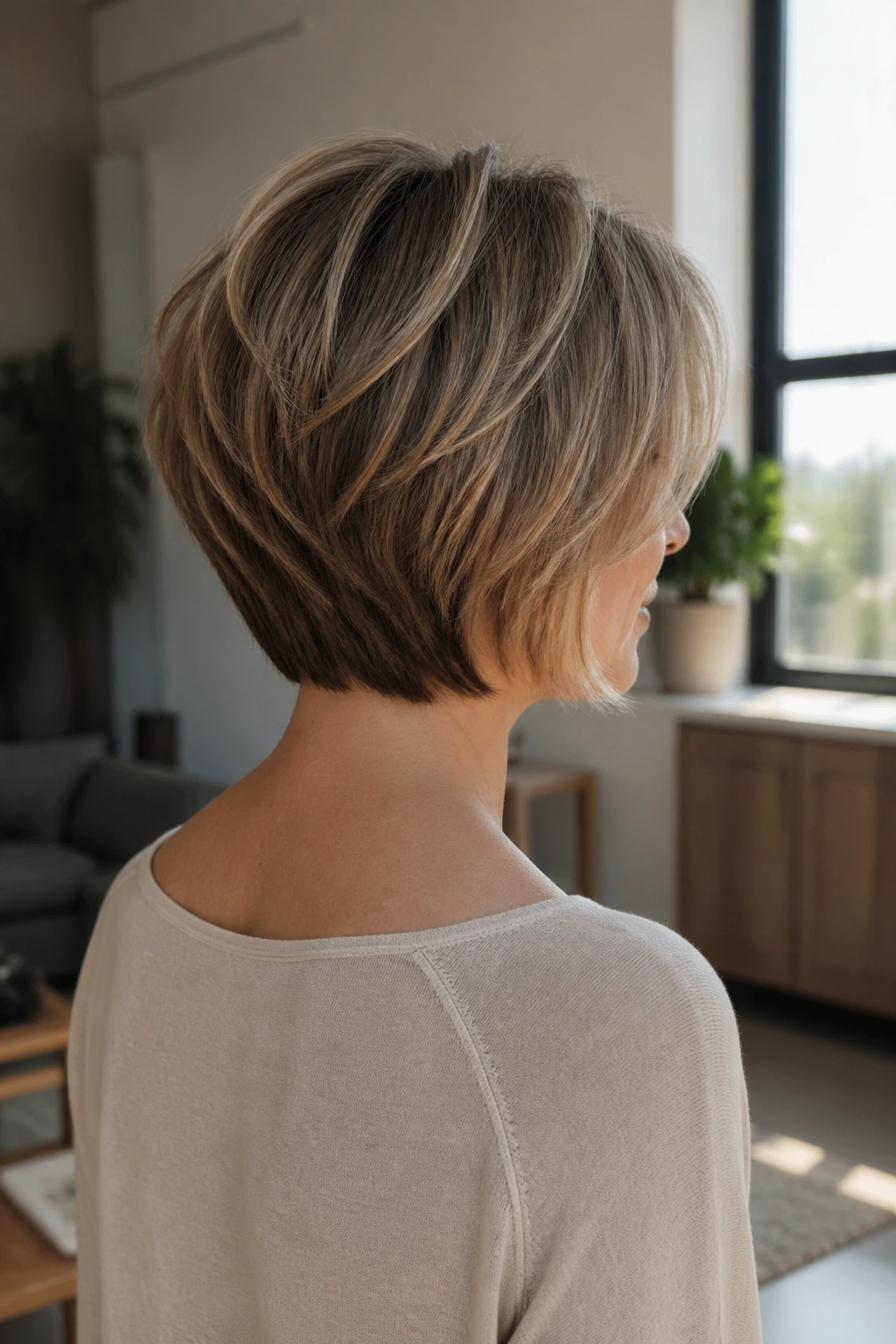
A stacked bob is built from short, layered pieces at the back that create height and shape through the crown. The result is a rounded back, a tidy neckline, and a silhouette that looks fuller from the side. It’s a strong choice for hair that needs lift without a lot of daily effort.
This cut can look especially neat on straight or slightly wavy hair. The stack through the back gives the style some natural architecture, which means you don’t always need a lot of styling to make it show up. A little volume at the roots, then a smooth finish through the sides, is often enough.
When stacked works best
If your hair is thick, a stacked bob can help remove weight and keep the back from dragging down. If your hair is fine, it can create the impression of more body, though the layering has to be handled gently. Too much stacking on fine hair can expose the scalp at the crown, and that’s not the look anyone wants.
- Best feature: built-in lift at the back
- Good for: short to medium lengths
- Styling habit: blow-dry the crown first, then smooth the side panels
- Maintenance: regular trims keep the stack from collapsing
It’s a practical cut, honestly. Not flashy. Just well-built.
15. The Side-Part Bob

A side-part bob can change the whole mood of a haircut without changing the length at all. The deep part adds lift, softens the face, and breaks up symmetry in a flattering way. Sometimes that’s all a bob needs to stop feeling too severe.
This is a useful move if your hair falls flat on top. The side part creates instant height at the roots, especially near the front. It also gives the cut a little sweep across the forehead, which can soften stronger angles or balance a face that feels very even already.
How to style the part
A side part looks best when the root at the heavier side is lifted, not plastered down. A bit of root spray, a quick blow-dry in the opposite direction, and then a gentle set back into place can give you that bend without making it look stiff.
This parting choice works across a lot of bob lengths. A chin-length cut looks a little more romantic with a side part. A lob gets a relaxed curve. A blunt bob softens just enough to feel less severe.
You don’t need a dramatic side part either. Even a small shift can change how the whole haircut sits.
16. The Center-Part Bob
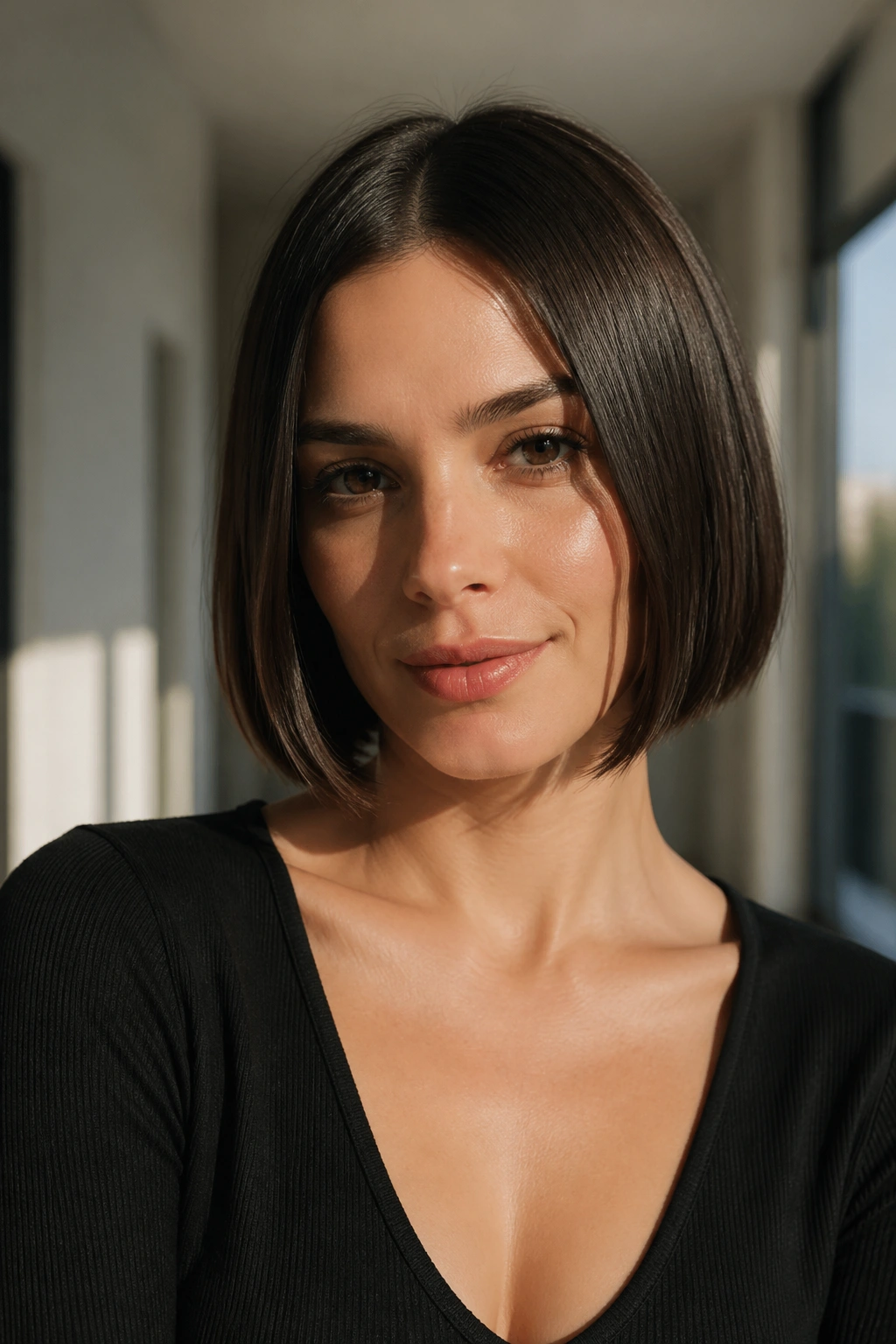
A center-part bob has a clean, calm symmetry that can make the whole face look more balanced. It emphasizes straight lines and even framing, which is why it pairs so well with sleek finishes and tidy bob shapes. There’s no drama built into the part itself. The shape does the work.
This style can look surprisingly modern without trying to be trendy. On straight hair, it gives a clean, precise effect. On wavy hair, it creates a looser version that still feels controlled. If one side of your face tends to dominate in photos, a center part can make the whole look feel more even.
It’s also a good test of a bob cut’s balance. If the line is crooked, the center part will show it. If the proportions are right, the cut almost snaps into place.
I like this parting with blunt bobs, sleek bobs, and longer lobs in particular. It gives the haircut a clear center of gravity. Some people find it severe. Fair. That’s why it’s worth pairing with a slightly softer length or a tucked-behind-the-ear moment when you want to loosen it up.
17. The Feathered Bob
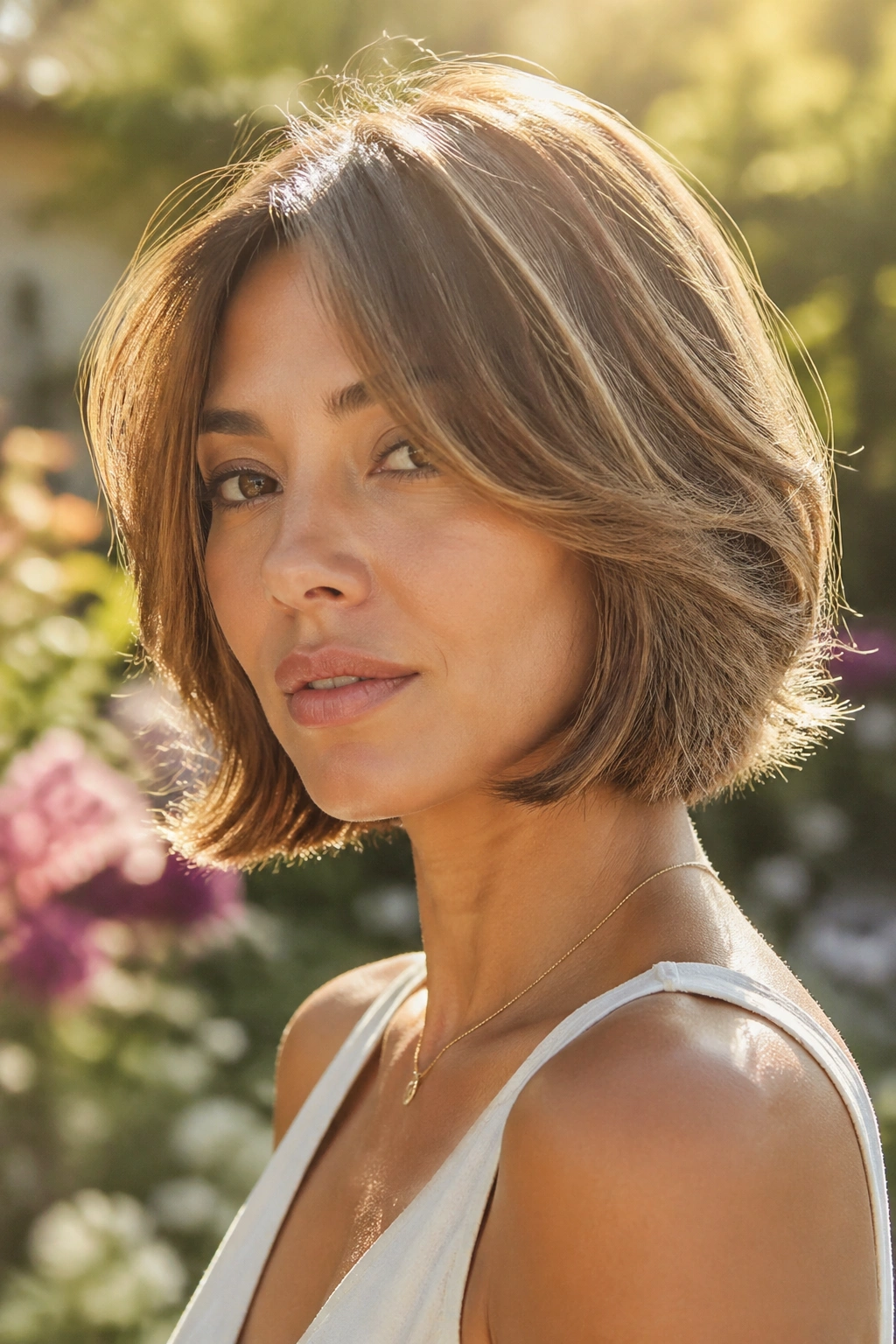
A feathered bob softens the ends so they move instead of sitting in one hard line. The feathering lightens the perimeter without stripping away the shape, which makes this cut feel airy rather than heavy. It’s a nice option when you want a bob that looks dressed but not rigid.
This style has a bit of old-school charm, but in a good way when it’s done carefully. Feathering can help thick hair feel less bulky around the jaw and neck. It can also stop the bob from looking blunt in a way that feels too severe. The end result is softer, with little pieces that catch movement as you turn your head.
Key details
- Best on: medium to thick hair
- Good for: people who want movement without losing the bob outline
- Watch out for: over-feathering, which can make the ends stringy
- Styling: a round brush or large velcro roller can help turn the ends under lightly
This cut often looks best when the feathering is subtle. You want softness, not frizz. The line should still read as a bob from across the room. That’s the part people sometimes miss.
18. The Rounded Bob
A rounded bob curves gently around the face and jaw instead of falling in a hard, straight line. It feels soft, polished, and a little more sculpted than a blunt bob, which is why it works so well when you want shape without harsh edges.
The roundness can come from the cut itself, not just the styling. A careful cut through the interior helps the hair bend inward, especially around the ends and crown. That makes the shape feel intentional even on days when you skip a full blowout. It’s a nice option for hair that naturally wants to flick out, because the curve can work with that tendency instead of fighting it.
This bob can be especially flattering if you like a frame that follows the face. It gives the jawline a softer edge and can bring a little balance to stronger features. On thicker hair, the curve keeps the cut from looking boxy. On fine hair, it can create a graceful silhouette without needing much layering.
There’s a quiet confidence to a rounded bob. Not showy. Not flat. Just well-shaped, which is usually enough.
