



A laser cut bob lives or dies by the edge.
If the ends wobble, flick out, or sink into a soft blur, the whole haircut loses its point. A clean bob is unforgiving in the best way: it shows every line, every angle, every tiny decision your stylist made with the scissors.
That’s why this haircut keeps coming back in different forms. Chin-length, collarbone-skimming, blunt, angled, curly, tucked, polished, a little undone — the shape changes, but the appeal stays the same. Precise ends make the bob look deliberate, and deliberate hair almost always looks better than hair that seems to have happened by accident.
And no, this isn’t only for pin-straight hair. The trick is choosing the right version of the bob for your texture, your density, and your tolerance for trims. Some versions want a sharp center part. Some look better with a side part. A few need a dry cut, because wet hair can lie to you in ways that are hard to fix later.
1. Chin-Length Laser Cut Bob With a Blunt Jawline
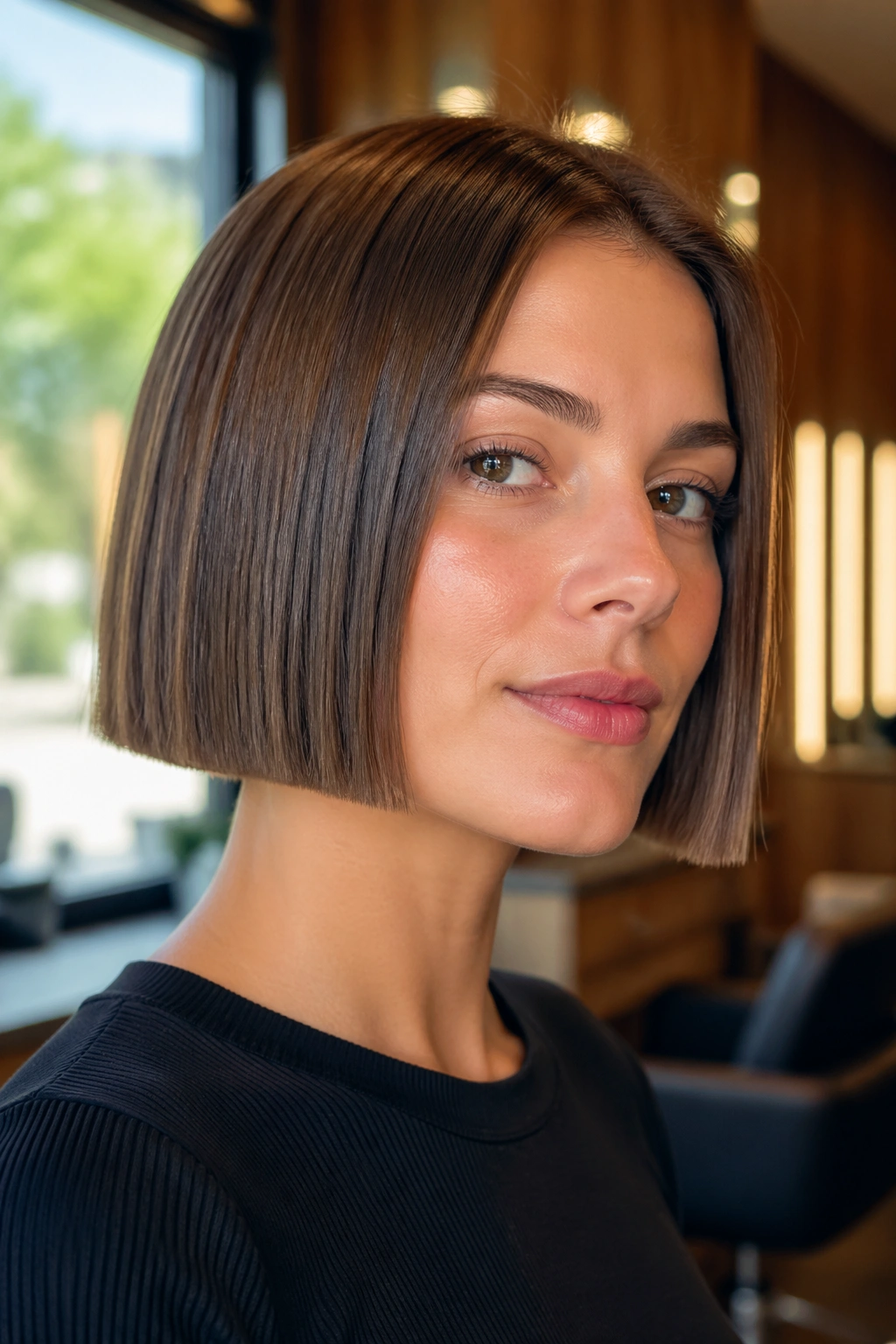
A chin-length bob is the quickest way to make the laser cut look obvious. The line sits right at the jaw, so the eye reads the perimeter first — not the layers, not the styling, just the shape. That’s the whole point.
Why the line matters
At this length, even a quarter-inch of unevenness shows. If the ends are beveled too much, the bob starts to look airy and the clean edge disappears. If the hair is cut too bluntly but not balanced around the head, it can sit like a helmet. The sweet spot is a straight, clean perimeter with only the faintest internal softening so the hair still moves.
This version is especially good when you want your cheekbones and jawline to do some work for you. It opens the face fast. It also makes earrings look better, which sounds shallow until you see how much that little frame changes the whole effect.
What to ask for at the chair
- Keep the length exactly at the chin or 1/4 inch below it.
- Ask for a blunt perimeter with minimal layering.
- If your hair kicks out at the nape, request a slightly snug neckline so it sits flat after drying.
- Skip heavy face-framing pieces unless you want the line softened on purpose.
Best tip: dry the front pieces forward, then tuck them behind the ears for the last minute of blow-drying. It helps the ends settle in the direction you actually wear them.
2. Jaw-Skimming Laser Cut Bob With a Clean Fringe

Why does a fringe change the whole haircut? Because it steals attention from the edge and gives the bob a second focal point. If the fringe is weak, the cut looks unsure. If the fringe is clean and intentional, the whole style sharpens up.
This version lands right around the jaw, often with a short, crisp fringe that stops somewhere between the eyebrows and the lashes. It has a French-bob mood, but without the fuzzy, overdone softness people sometimes add when they get nervous about bangs. I like this version when the hairline itself has some personality — a small cowlick, a slightly higher forehead, a strong brow. It plays with those features instead of pretending they aren’t there.
What makes it work
The fringe should echo the bob, not fight it. If the ends are razor-straight but the bangs are thinned to wisps, the haircut starts looking split in half. Better to keep a dense fringe with tiny micro-adjustments at the points where it curves into the temples. That gives you movement without losing the shape.
A jaw-skimming bob also needs clean corner work near the cheekbones. Those corners matter more than people think. Too much angle and the cut becomes severe. Too little, and it puffs at the sides.
For styling, a flat brush and a quick bend under at the ends are usually enough. Don’t overwork the fringe. It’s one of those cuts that looks better when it still has a little weight.
3. The Micro Laser Cut Bob
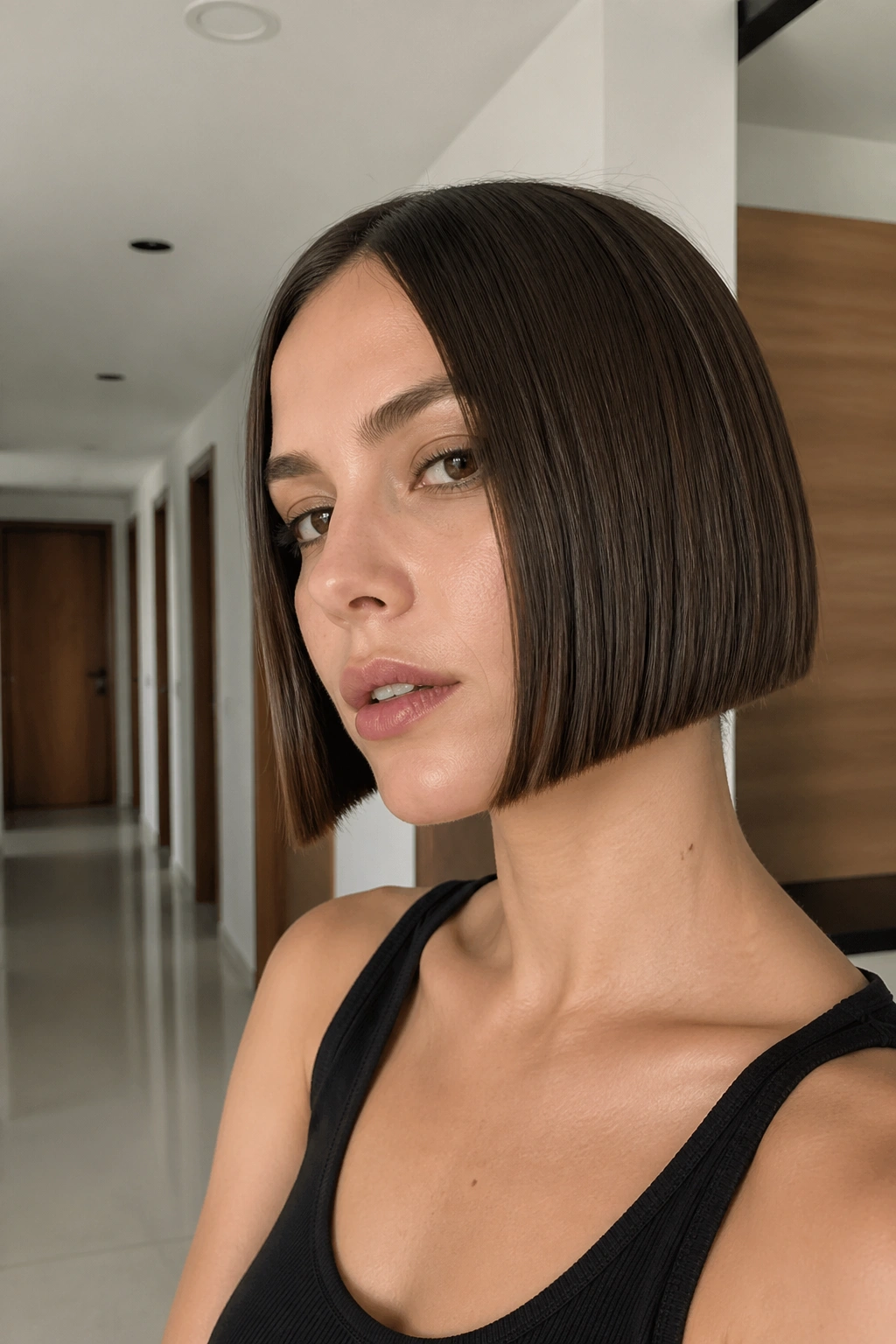
The micro bob has a reputation for being fussy. It is. That’s also why it looks so good when it’s done right.
This is the shortest version on the list, usually sitting between the cheekbone and the jaw, sometimes just grazing the top of the neck. The edge is the entire story here. There’s nowhere to hide a crooked line, and honestly, that’s part of the appeal. A micro bob looks expensive only when the perimeter is dead accurate.
A lot of people think this cut needs to be ultra-severe, but that’s not always true. The best micro bobs keep the base blunt and the interior slightly mobile, so the shape doesn’t freeze into a block. If your hair is fine, this matters even more. Fine hair at this length can go flat in a hurry, and a tiny bit of internal structure keeps the ends from looking stringy.
This cut asks for confidence and maintenance. A trim every 4 to 6 weeks is normal if you want the line to stay crisp. Let it grow too long and it can slip into that awkward halfway stage where it looks more like a failed grow-out than a deliberate bob.
It suits people who like sharp clothes, clean makeup, and a haircut that doesn’t apologize. If you want softness, choose one of the longer versions. If you want a little bite, this is the one.
4. Collarbone Laser Cut Bob With a Straight Perimeter

At collarbone length, the trick is restraint.
This version gives you the clean bob line without pinning everything above the jaw. It brushes the collarbone or sits just above it, which makes it easier to tuck, tie back, or let air-dry without panicking about every strand. The ends still need to be blunt, though. If the perimeter gets shaggy, this cut loses its shape fast.
The beauty of a collarbone bob is that it flatters a wider range of hair types than the shorter versions. Thick hair has room to fall without exploding outward. Medium hair gets enough weight to look full. Even finer textures can hold this length well if the ends are kept neat and the cut is not over-layered.
Ask for this if you want:
- A bob that still reads polished when it hits your shoulders
- A cut that can be worn straight, tucked, or softly waved
- A line that grows out more gracefully than a chin-length bob
- Enough length to keep a ponytailable front section on busy days
There’s also a practical side here. Collarbone-length bobs tend to look good in motion, not just in photos. They swing. They tuck. They fall over one shoulder without doing that awkward flip that shorter bobs sometimes pull when the weather changes or the hair catches on a coat collar.
A light bend at the ends is enough. No need to curl it into obedience.
5. Angled Laser Cut Bob That Stacks in Back
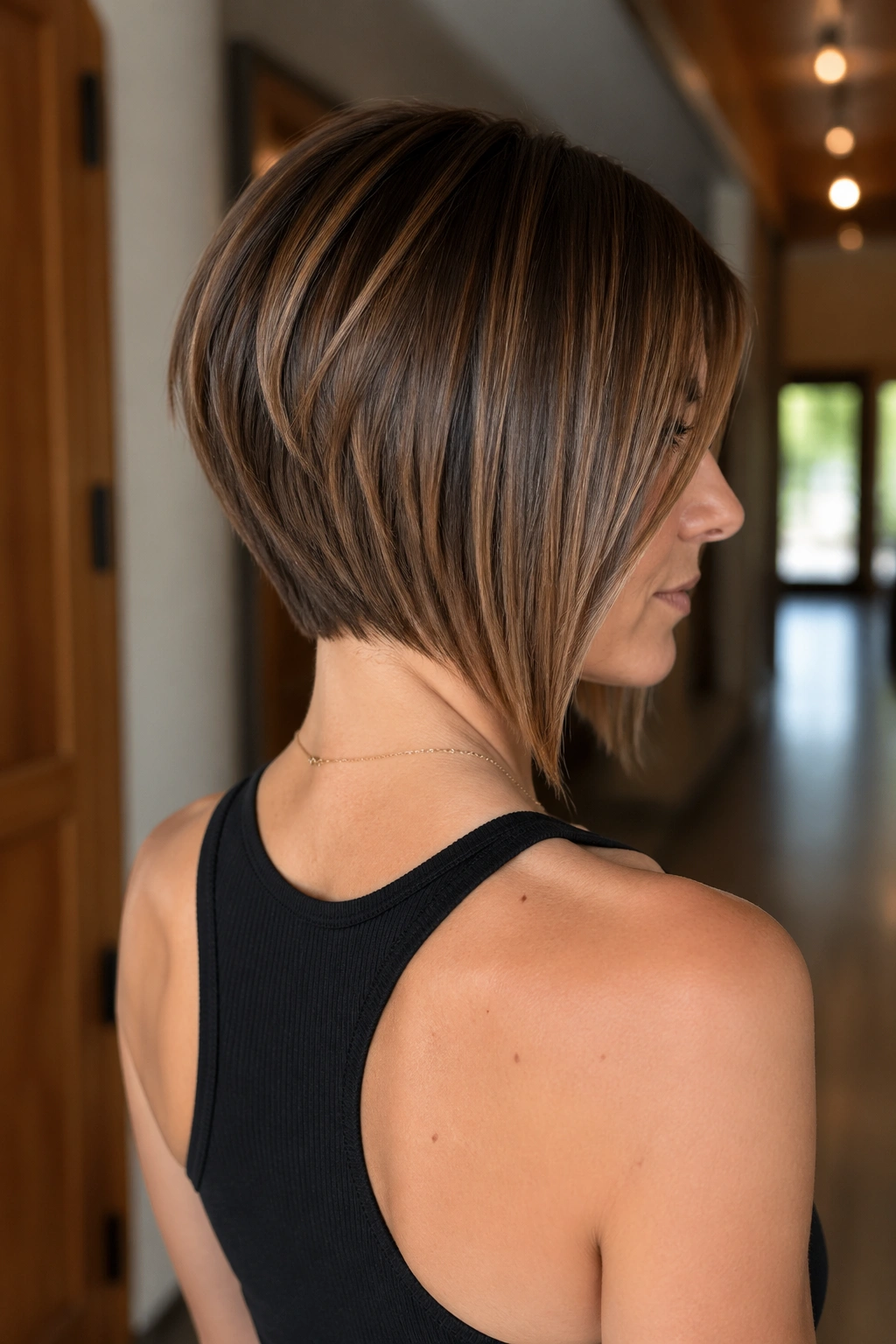
An angled bob can look like a cleanup cut if the line is wrong. When it’s right, it looks architectural.
The back sits shorter, the front drops longer, and the whole haircut creates a diagonal line that pulls the eye forward. This shape is useful if you want the clean finish of a laser cut bob but need a little more drama around the face. The angle gives movement without adding loose layers all over the place, which is a mistake I see far too often. People ask for “movement” and end up with a bob that has no edge left at all.
The back needs enough stacking to remove bulk, but not so much that the shape balloons. You want a controlled curve, not a mushroom. That means the stylist has to be careful with elevation and overdirection. Small mistakes show instantly in an angled bob because the side view matters as much as the front.
If your neck is shorter, this shape can be especially flattering. It creates space and makes the profile feel cleaner. If your hair is very fine, keep the angle modest; a dramatic A-line can make the ends look thinner than you want. Thick hair, though? Thick hair loves this version when the interior is managed properly.
Angle is a loud choice. If you want a bob that turns heads but still has a crisp end line, this is the one.
6. Center-Part Laser Cut Bob With Glassy Lines

A middle part makes a bob honest.
There’s nowhere for the cut to hide when everything falls in two equal halves. That’s why a center-part laser cut bob can look so striking. The symmetry exposes the perimeter, and if the ends are precise, the whole hairstyle reads clean from across the room. If they aren’t, you’ll know within five seconds.
This version works best when the hair is naturally straight or only slightly wavy. You can flat-iron it, of course, but the real test is what it looks like an hour after styling. A good center-part bob should still hold its line when you tuck one side behind the ear or when a bit of humidity loosens the bend.
What to watch for
- The part must sit exactly in the center of the crown, not just at the forehead.
- The ends should fall evenly on both sides, with no sneaky dip at the front.
- If your face is asymmetrical — and most faces are — the cut should be balanced to your features, not to some imaginary ruler.
- A tiny amount of serum on the mid-lengths is usually enough; too much and the bob turns limp fast.
I like this version on people who wear sharp collars, button-down shirts, or simple jewelry. It gives the whole look a clean frame without asking for much else. Keep it glossy, not greasy. That distinction matters.
7. Side-Part Laser Cut Bob That Softens the Face

A side part changes the mood fast.
The haircut stays precise, but the attitude loosens a bit. A side-part bob still has the blunt edge everyone wants from a laser cut, yet the off-center part breaks up the symmetry and brings a little movement to the front. It’s the version I’d point to if you love clean lines but don’t want the haircut to feel severe.
This shape is especially helpful when the hairline is uneven or one side naturally falls flatter than the other. A side part gives you a built-in lift at the root, which can help finer hair look fuller without teasing it into a mess. And for people with strong cowlicks, the offset part can make the whole cut behave better day to day. Not always. But often enough that it’s worth trying before you give up on a bob altogether.
Where the part should land
The part doesn’t need to be extreme. A deep side part can be dramatic, sure, but a gentle offset of 1 to 2 inches from center is often enough to change the face shape. That smaller move also helps the ends sit in a more relaxed way, which is useful if you want the bob to feel less formal.
Styling-wise, this cut works best when the roots are lifted with a round brush or a quick blow-dry at the crown, then the ends are smoothed down. You want a clean bend, not a flip. If the ends kick outward, the line stops looking sharp and starts looking accidental.
This is the bob for people who like polish but not stiffness.
8. Curly Laser Cut Bob With a Dry-Cut Perimeter

Curly hair and precision edges can absolutely live in the same haircut.
The mistake is assuming “precise” means “straight.” It doesn’t. On curls, precision means the silhouette is clean when the hair is in its natural state. That usually requires a dry cut, because wet curls lie. They shrink, spring, and shift in ways that can make a blunt line look wrong once the hair dries.
A curly laser cut bob should respect shrinkage first. A curl pattern that sits at the jaw when wet may rise to the cheekbone when dry. That’s not a flaw; it’s the whole game. A stylist who knows curly hair will often cut the shape curl by curl, keeping the perimeter even while allowing for the way each section settles.
Dry-cut details that matter
- Ask for the haircut to be shaped in its natural curl pattern.
- Bring the hair in its usual state, not brushed into submission.
- Tell the stylist how much shrinkage you see after washing.
- Keep the perimeter blunt, but allow a little curl-specific rounding where needed so the shape doesn’t look boxy.
This cut looks best when the curl clumps are healthy and defined. A dry curl cream or leave-in, used in a small amount, usually does more than heavy product ever will. Too much cream smears the line. Too little and the ends frizz out, which defeats the point of the clean edge.
It’s one of my favorite versions of the bob, honestly. It has structure without pretending texture doesn’t exist.
9. Thick-Hair Laser Cut Bob With Hidden Weight Removal
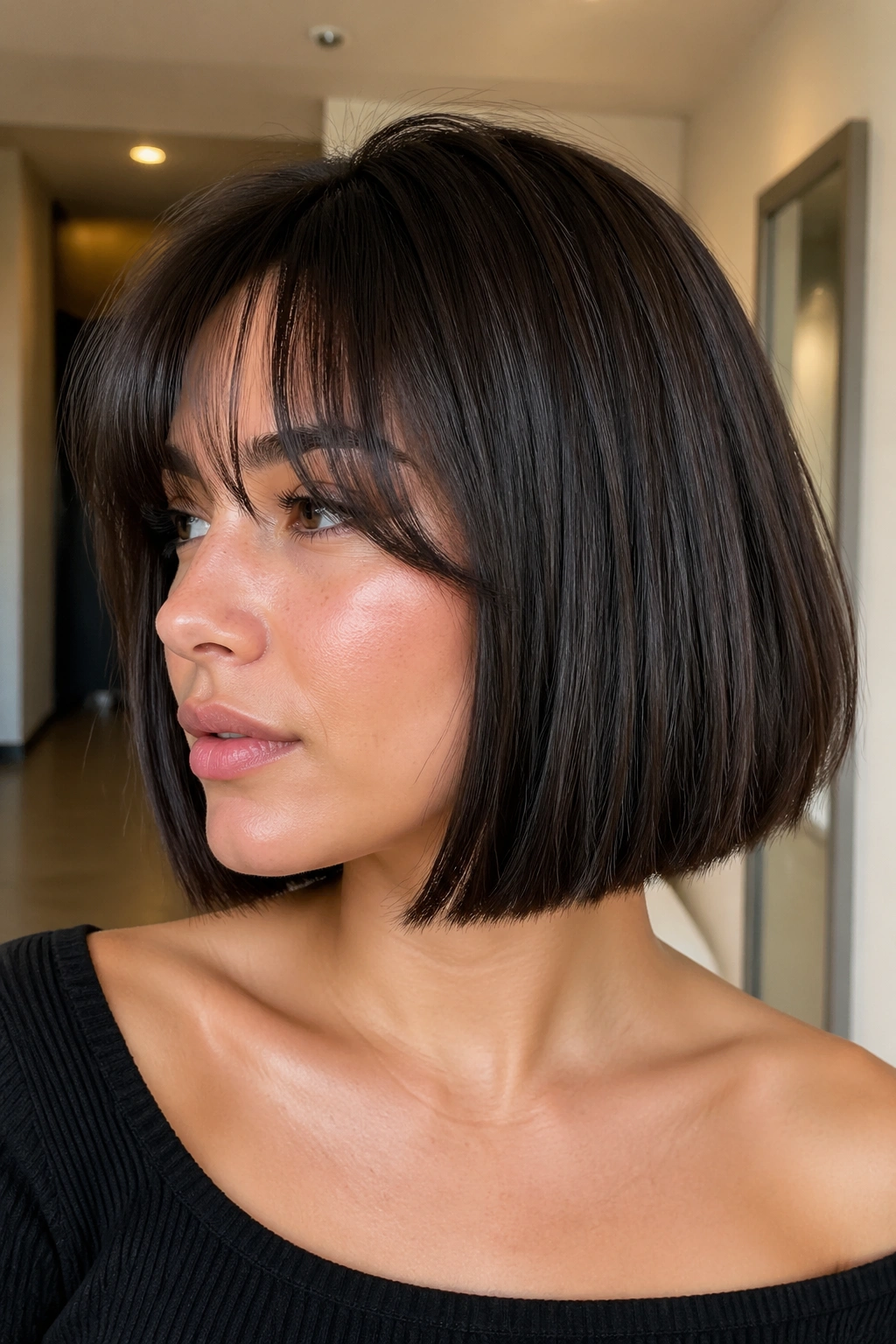
Thick hair is where this style earns its keep.
A blunt bob on dense hair can look glorious — for about six minutes. After that, if the cut isn’t managed well, the ends puff out and the shape starts sitting like a shelf. Hidden weight removal fixes that. The outside perimeter stays blunt, but the interior gets strategic debulking so the haircut lays flatter and feels lighter.
That part matters. You do not want the stylist carving through the whole bob with a razor like they’re trying to make confetti. That’s how you lose the clean edge. The reduction should live inside the haircut, not on the visible line. A good stylist will take out bulk where it creates swell, usually around the mid-back or under the crown, while leaving the outer line untouched.
Best for hair that:
- Feels dense at the nape
- Expands in humidity
- Bulges at the sides when it air-dries
- Holds shape well but looks too wide in a blunt cut
This version is also kinder on the neck. Thick hair can feel heavy fast, especially if the cut sits at the jaw or collarbone. Removing the right amount of internal weight gives the bob a cleaner swing. Too much removal, though, and the haircut loses body. That’s the trap. You want support, not hollow space.
If you’ve ever left the salon with a bob that looked sleek for one day and puffy by day three, this is probably the missing piece.
10. Grown-Out Laser Cut Bob That Still Looks Sharp
If you want the shape to last, this is the one to bookmark.
The grown-out laser cut bob is the most forgiving version on the list. The perimeter is still crisp, but the line sits slightly lower — usually somewhere between the chin and the shoulders — so you get more time between trims. That extra length changes everything. It lets the haircut move through the day without falling apart the moment it grows half an inch.
This is the bob for people who want precision but do not want to babysit it every month. The ends should still look blunt, but the stylist can leave a tiny bit of bevel so the haircut grows into itself instead of away from itself. That little bit of softness is not laziness. It’s planning.
The styling approach here is lighter too. A center part gives it a modern feel. A soft side part makes it look more relaxed. Either way, the edge should stay visible when you tuck one side behind the ear. If it disappears completely, the cut has gone too airy.
A clean grown-out bob is also one of the easiest styles to live with if you wear it with natural texture on some days and smooth it on others. It doesn’t demand one fixed look. It asks for a line that stays honest.
And that’s the real trick with any laser cut bob: the ends have to be precise enough to hold the shape, but not so fussy that you’re scared to move your head. Get that balance right, and the haircut does a lot of work for you.
