



A loc bob looks sharp or it doesn’t. There isn’t much middle ground.
Short locs expose every wobble in the shape, every crooked part, every nape that was left a little too fuzzy. That is the appeal, honestly. When the cut is clean, locs suddenly look lighter, more deliberate, and a lot more expensive-looking without needing a pile of styling tricks.
The trick is not more decoration. It is line work. A blunt edge, a tidy part, and the right length can make locs feel tailored instead of bulky, which is why the best loc bobs read so well from the front, the side, and the back. A half-inch here or there changes the whole mood.
Some people want a bob that feels soft. Some want a hard line that lands right at the jaw. A few want movement around the face but still need the shape to stay crisp. All three show up below.
1. Blunt Chin-Length Loc Bob
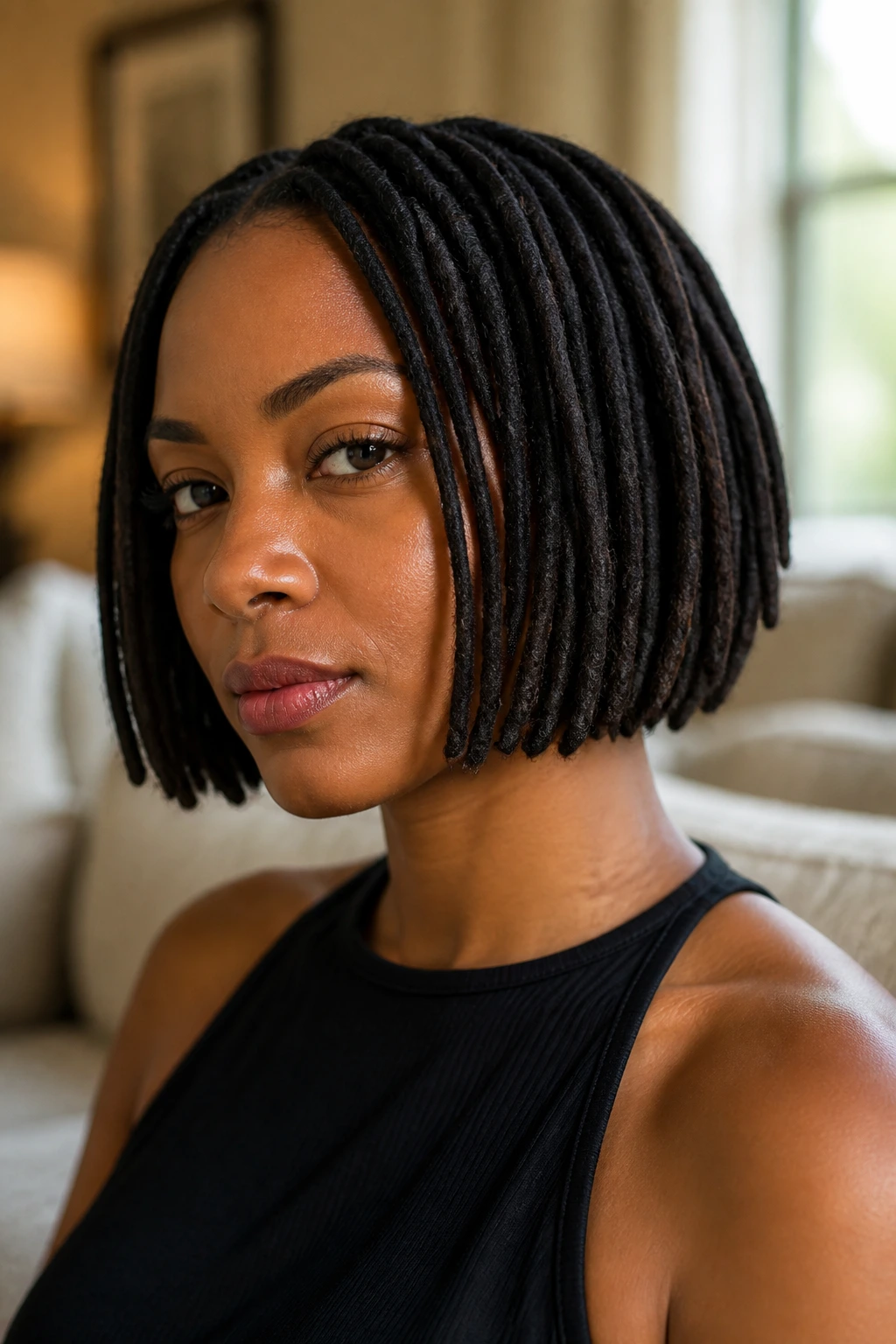
The blunt chin-length bob is the one I reach for when someone says they want their locs to look clean with almost no effort. The line sits right around the jaw, which gives the whole cut a firm edge. Nothing wisps out, nothing tries too hard. It just lands.
Why the blunt line works
A straight perimeter does a lot of heavy lifting here. Because the ends all stop at nearly the same point, your eye reads one clear shape instead of a bunch of uneven layers fighting each other. That matters even more with locs, which already have texture and thickness built in.
The cleanest versions keep the bottom row within about a quarter-inch of each other. Any more than that, and the bob starts to look like it lost its shape after a busy wash day. I also like this cut on medium-thick locs because the density helps the line hold.
- Ask for a square, blunt perimeter rather than a rounded bottom.
- Keep the parting simple: straight middle or clean side part.
- Trim loose flyaways only after the locs are fully dry.
- Leave enough length so the bob brushes the jaw, not the throat.
Tip: If the ends land unevenly, the whole bob looks puffier than it is. Fix the perimeter first.
2. Side-Part Loc Bob with a Soft Taper
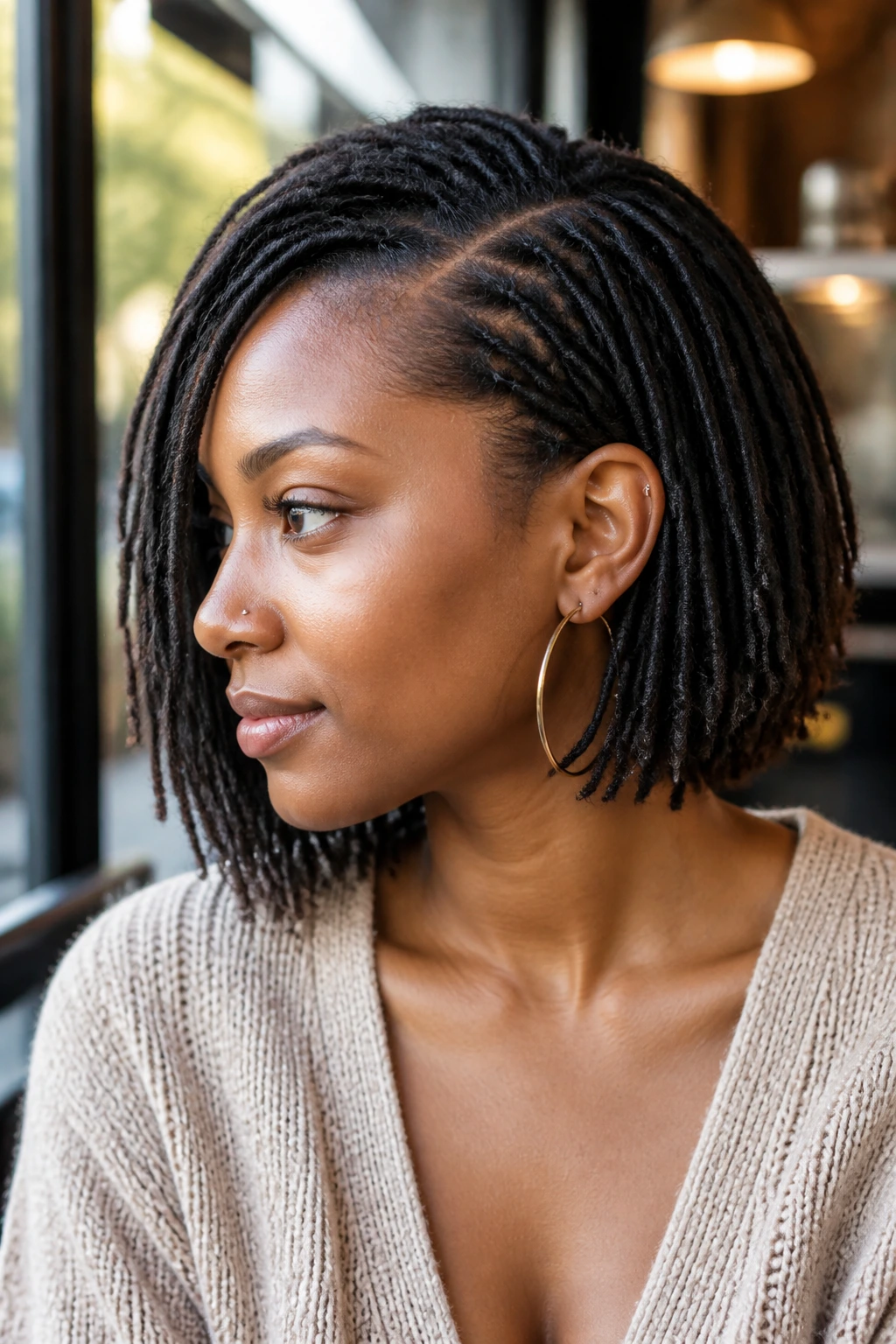
A side part fixes more awkward bob shapes than people like to admit. It breaks up the weight, opens one side of the face, and gives the cut a little swing without turning it into a shaggy mess.
The reason this works so well on locs is simple: side parts interrupt bulk. If your locs are heavy, a center line can make the whole shape feel blocky. Move the part over just 1 to 2 inches, and the bob suddenly falls with a bit more ease. You still get a neat outline. You just lose that helmet effect.
I like this shape for people who wear glasses, hoop earrings, or a blazer and want the hair to feel a little less formal. It reads polished, but not stiff. The front pieces can skim the cheekbone while the back stays neat, which is a nice little compromise.
The taper should stay soft. If the side fall becomes too dramatic, the cut stops looking like a bob and starts looking accidental. That’s a fast way to ruin something that should feel precise.
3. Middle-Part Loc Bob for a Steady, Even Line
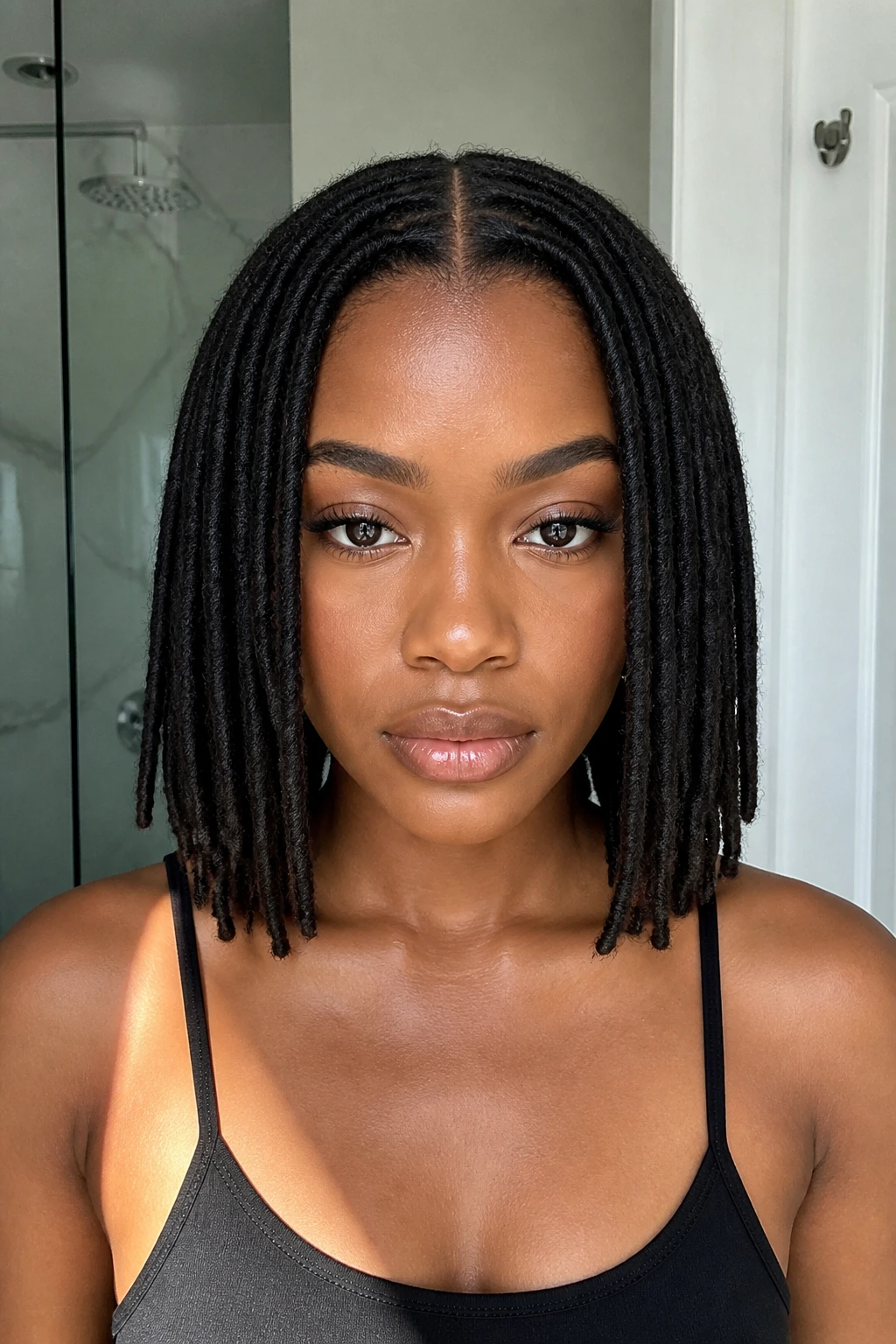
Why does a middle part look so crisp on locs? Because symmetry shows every detail. When the part is straight and the two sides match, the eye relaxes. The whole style looks intentional from the first glance.
This version is not for people who want their hair to hide in the background. It puts the face front and center. A clean center part also works well when the locs are the same thickness from root to end, because any irregularity shows up fast. That can be a good thing. If the cut is solid, the symmetry is satisfying in a way side parts sometimes are not.
How to keep the part sharp
- Make the part while the roots are slightly damp, not bone dry.
- Clip the roots flat while they set so the line stays straight.
- Redraw the part after washing instead of letting it drift.
- Use only a small amount of gel or mousse at the scalp; too much leaves buildup.
A middle-part loc bob looks especially neat when the front pieces hit at the corners of the mouth or just below the jaw. Any longer and the symmetry starts to soften. Any shorter and the whole thing feels severe in a way that can be hard to wear every day.
4. Layered Loc Bob with Face-Framing Pieces
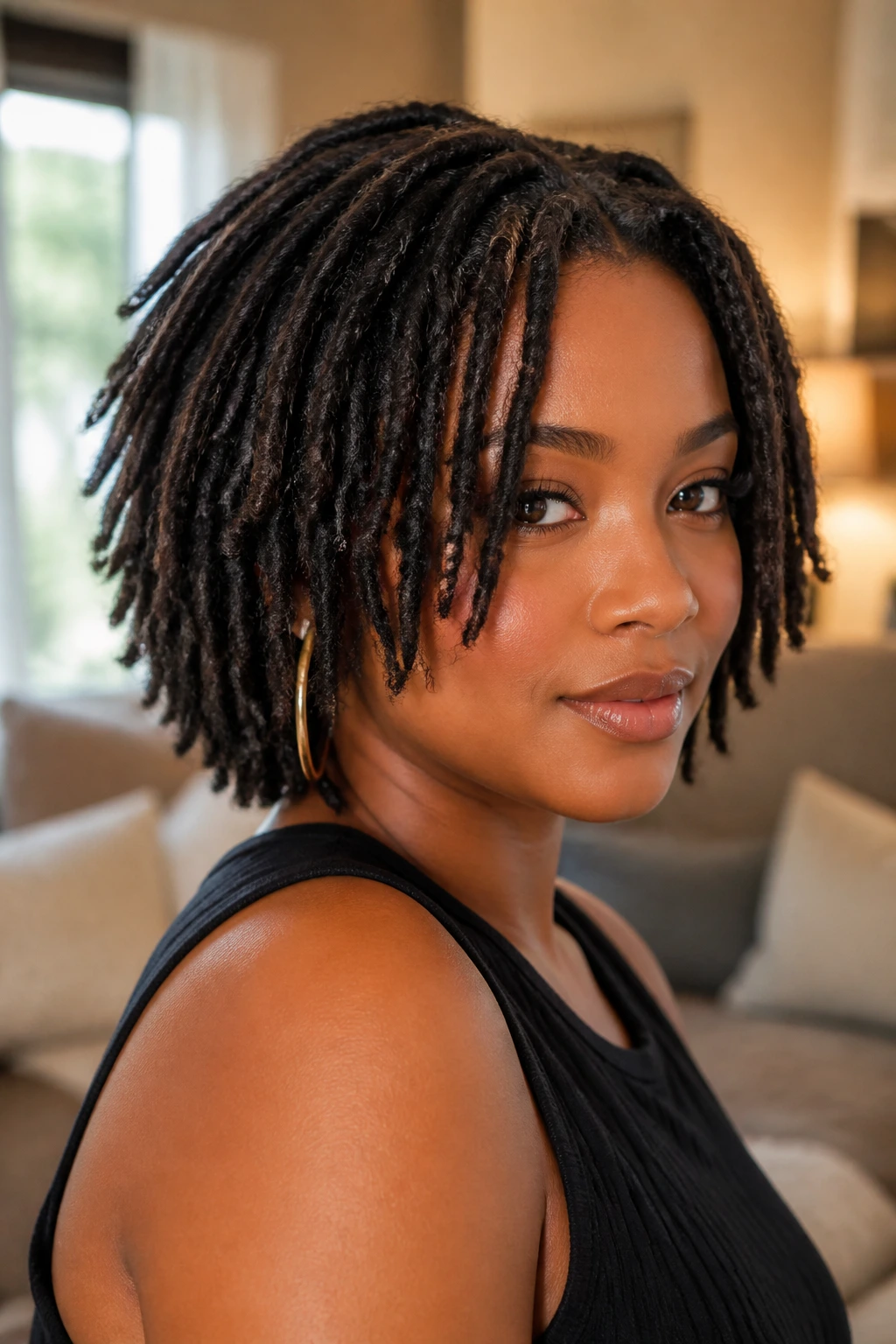
A boxy bob is usually a weight problem, not a loc problem. The bottom row has too much bulk, so the cut sits like one solid block. Layering breaks that up fast.
The trick is to keep the layers subtle. You do not want choppy ends or a thin, shredded finish. With locs, that can look messy in a hurry. What works is a gentle stagger: a few front pieces that sit 1 to 2 inches longer than the back, with enough variation to move around the face but not enough to lose the bob shape.
This version is useful if your face is fuller through the cheeks or if your locs are dense enough to sit heavy at the bottom. A little face-framing keeps the front from feeling square. It also helps if you wear the same bob tucked behind one ear all day; the shape still looks deliberate when it shifts.
- Keep the longest front pieces near the cheekbone or jaw.
- Avoid over-thinning the ends.
- Use layering to remove bulk, not to create softness everywhere.
- Ask your stylist to check the silhouette from the side, not only the front.
The whole point is to make the bob breathe a little. Not flutter. Breathe.
5. Tapered Nape Loc Bob
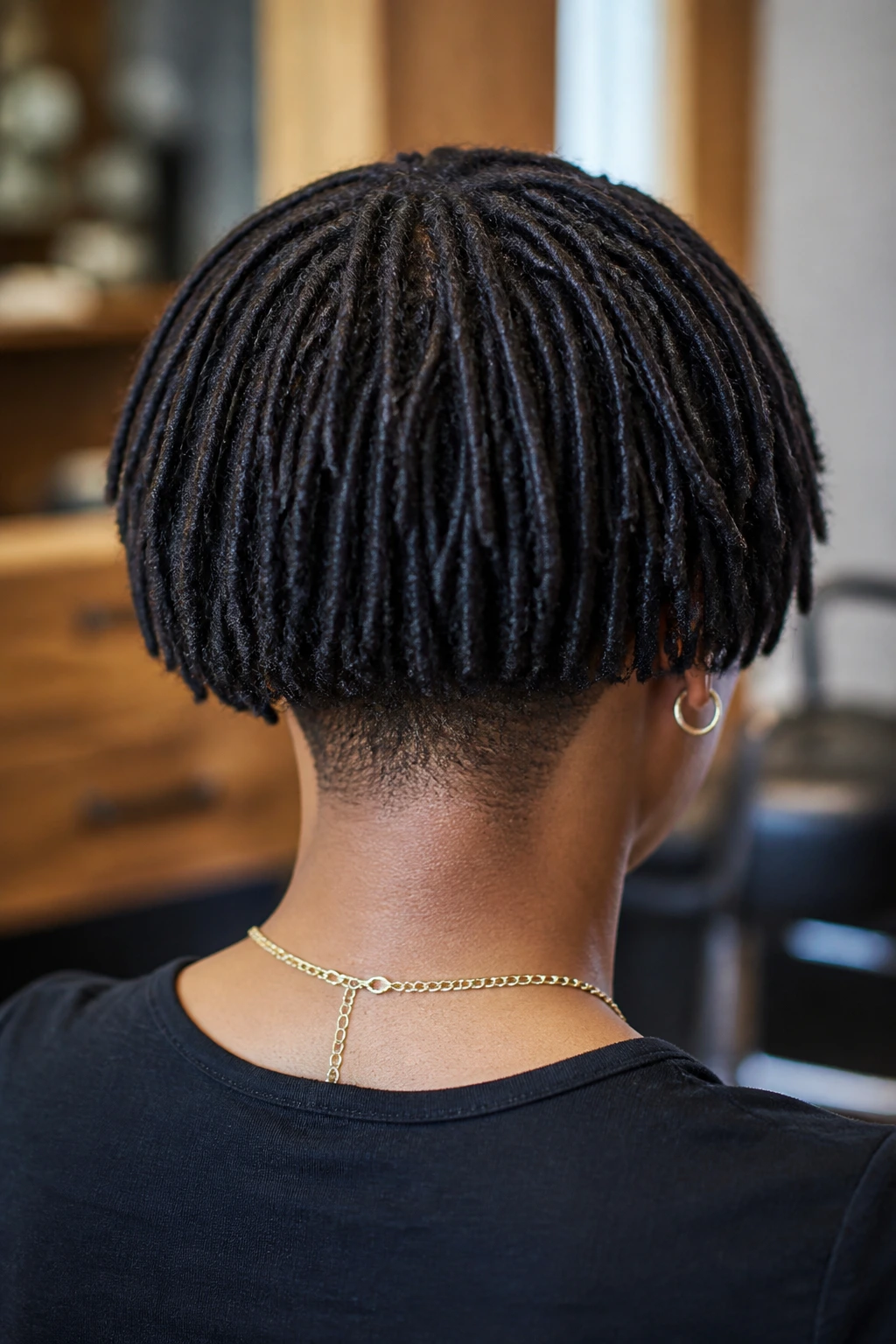
The tapered nape bob is one of those cuts that looks calm from the front and smart from the back, which is harder to pull off than people think. The neckline is shorter and cleaner, so the nape sits flatter and the bob doesn’t kick out at the back.
That matters because the back is where a lot of loc bobs go wrong. The ends pile up, the neckline gets fuzzy, and the shape starts to feel square in a bad way. A soft taper at the nape solves that. It gives the neck breathing room and keeps the bob from looking heavy when you turn your head.
I like this shape on people who wear their locs loose most of the time and do not want constant styling. It still looks put together after a scarf comes off. It still looks tidy if you tuck one side behind the ear. And because the back is slightly shorter, the whole style can handle a little grow-out before it loses its line.
There is one catch. The neckline needs regular cleanup. If the nape is left alone too long, the style starts to look puffy fastest at the back. That is where the eye goes first.
6. A-Line Loc Bob That Leans Forward
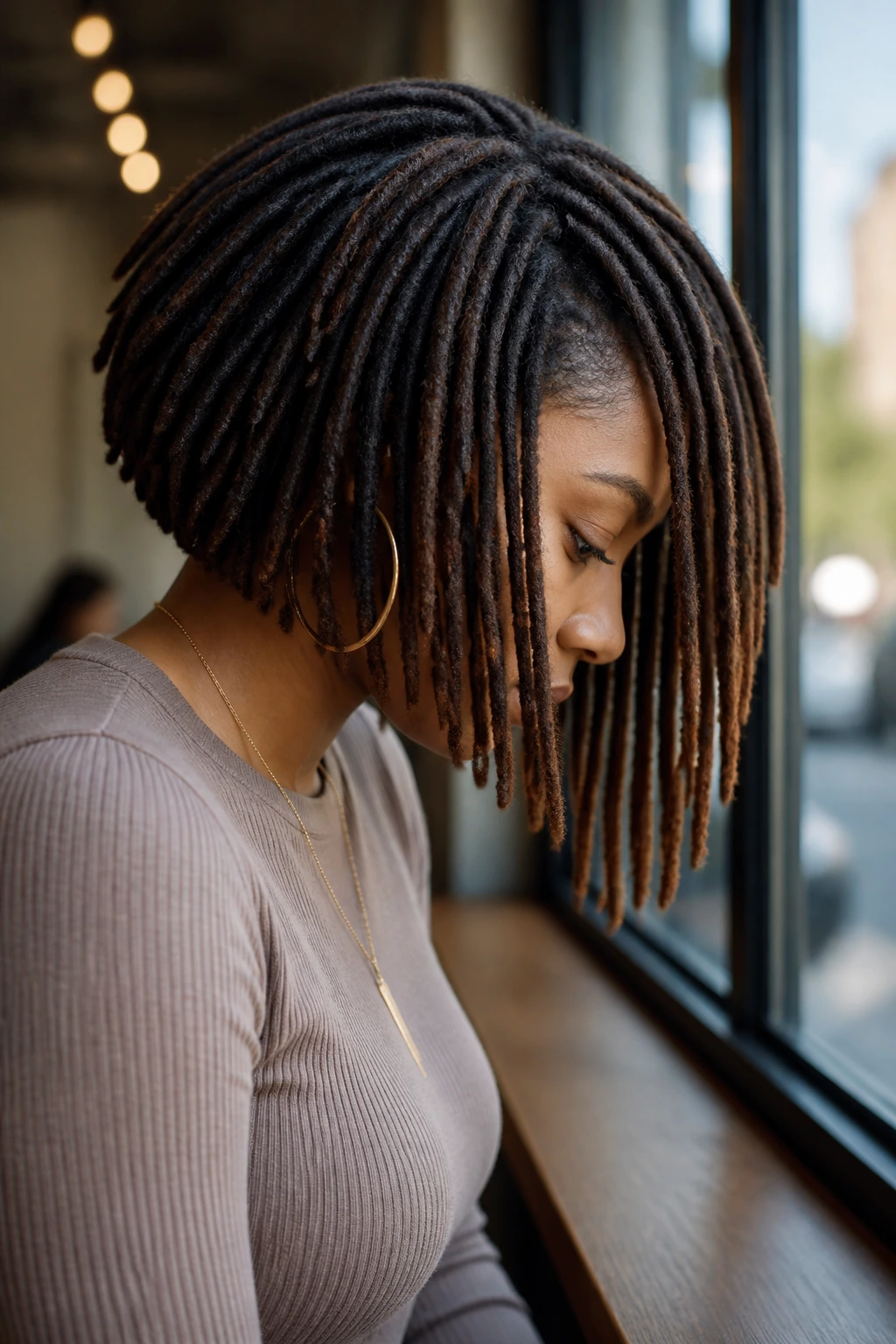
Unlike a blunt bob, the A-line version gives you movement without losing structure. The back sits shorter, the front drapes a little longer, and the whole cut leans forward in a way that feels clean rather than sharp-edged.
This is one of my favorite options for thick locs. Why? Because the angle helps manage bulk. A straight line across a heavy set of locs can look boxy almost immediately, while an A-line creates a natural drop. The front usually ends somewhere between the chin and the collarbone, depending on how dramatic you want the angle to be.
It also frames the jaw nicely. If you want the face to look a bit slimmer through the sides, this cut does that without needing curls or extra styling. The shape does the work for you.
A good A-line bob is measured, not extreme. If the front is much longer than the back, the style stops reading as a bob and starts looking like two different lengths that do not know each other. Keep the difference controlled. One to three inches is usually enough.
7. Asymmetrical Loc Bob with a Measured Drop
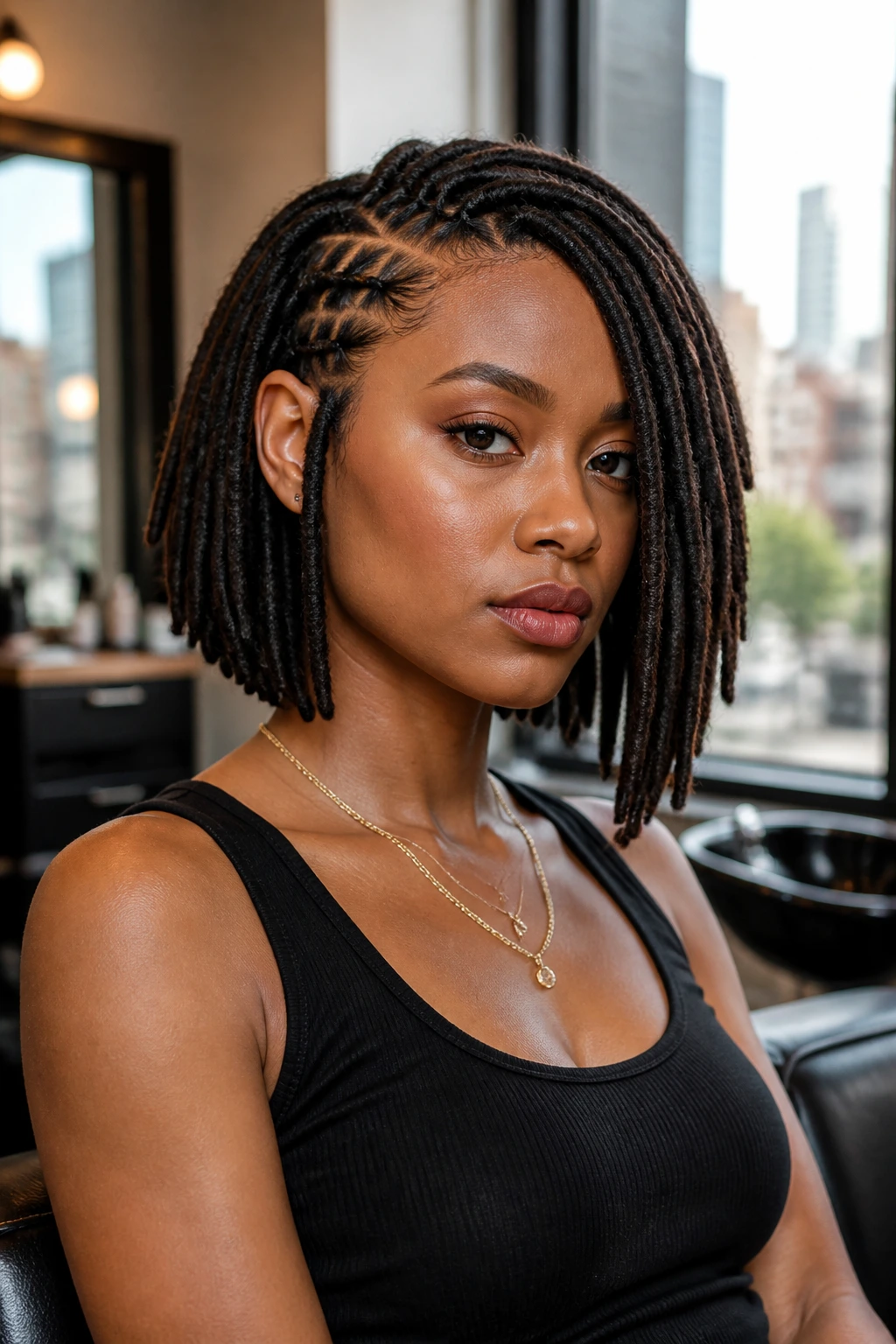
A 1-inch difference is enough. Seriously. You do not need to go wild to make an asymmetrical loc bob look interesting.
The cleanest versions keep the imbalance obvious but restrained. One side falls a little lower, the other side sits a little higher, and the overall outline still feels polished. If the drop is too extreme, the cut starts to look like a styling accident. If it’s too subtle, the asymmetry disappears once the locs settle.
What keeps it looking intentional
- Keep the parting crisp so the difference looks designed.
- Match the shorter side to the jawline or just below it.
- Keep the longer side within 1 to 2 inches of the shorter side.
- Let the ends stay blunt so the cut doesn’t turn frayed.
This style is good for people who like a little edge but do not want a full dramatic shape. It also works nicely with bold earrings or a strong brow because the uneven line gives the face some movement. The best part is that it still photographs clean from the front. From the side, though, it has a little more personality.
8. Curled-End Loc Bob
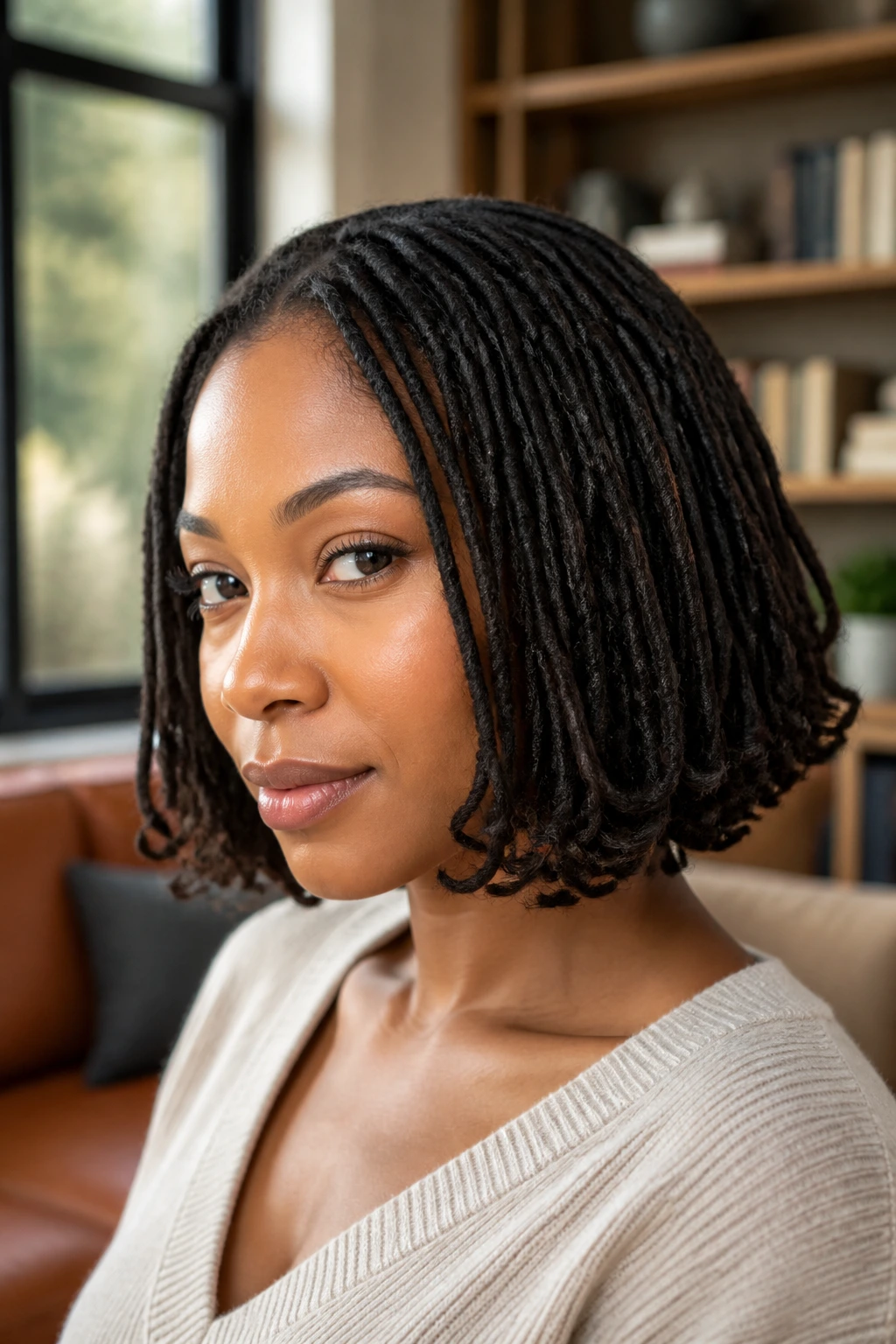
Why curl the ends of locs when the goal is sharpness? Because a controlled curl can make the bob look finished instead of heavy. Straight loc ends can sometimes sit blunt in a way that feels stiff. A soft curl at the bottom gives the cut a smoother outline.
This works best when the curl is uniform. You want the ends to bend under or around in the same direction, not pop out in different little kinks. Small flexi rods, perm rods, or even two-strand twisting the tips before drying can help, depending on how your locs are set up. The important part is patience. If the ends are not fully dry, they frizz fast.
How to get the curve
- Set the last 1 to 2 inches of each loc on small rods.
- Let them dry fully before removing the set.
- Separate the curl with your fingers, not a comb.
- Use a light mist of holding foam if your locs need help staying neat.
This style is nice for anyone who wants a bob that feels a little softer at the bottom but still neat at the roots. It has polish without looking rigid. That balance is hard to fake.
9. Beaded Loc Bob with a Clean Finish
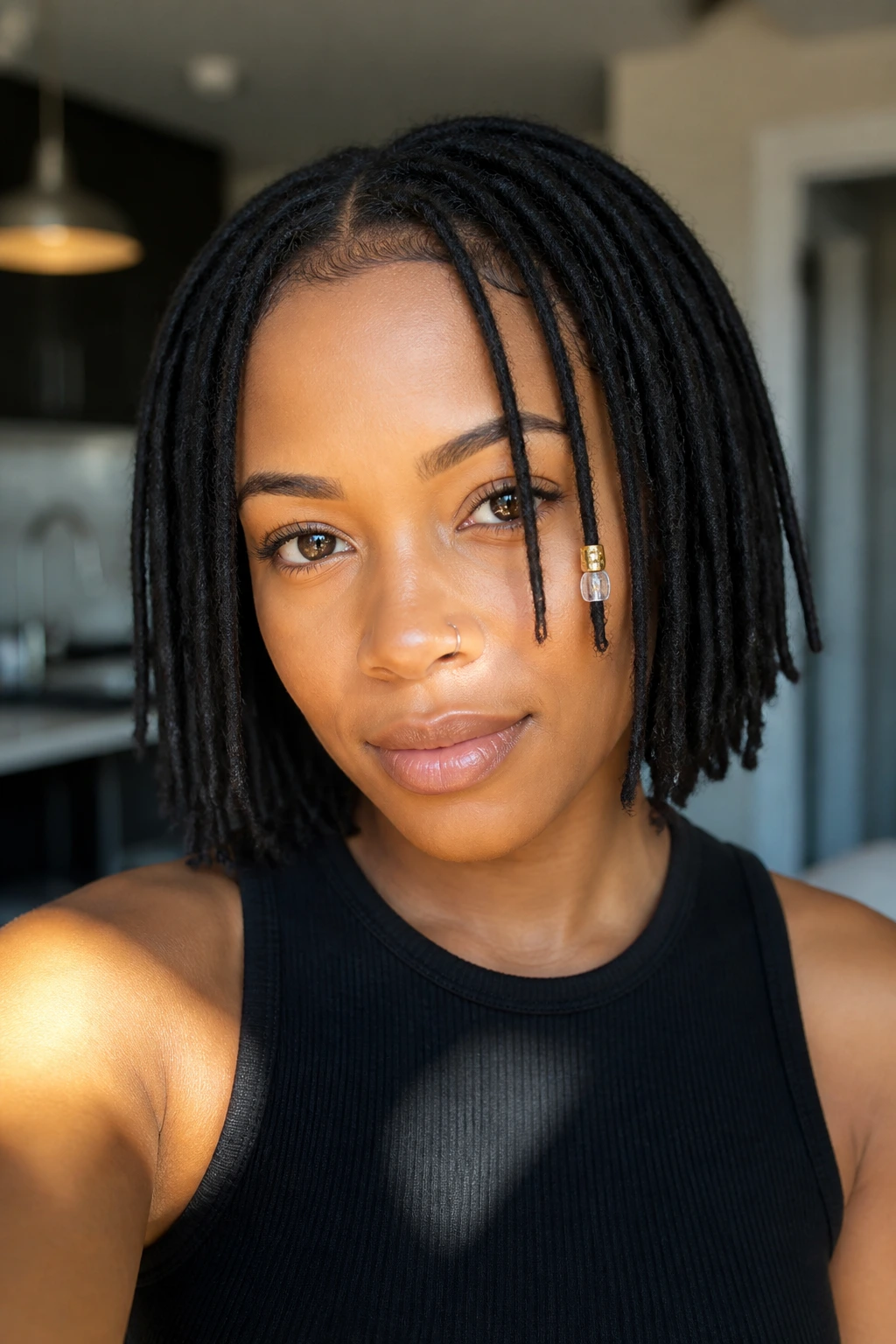
One or two beads can sharpen a loc bob. Six can make it look crowded. That difference matters more than people expect.
The best beaded versions use restraint. Think one bead at the end of a few locs, or a small cluster on one side only. Keep the bead size consistent and the color palette simple. Matte metal, clear glass, wood, and black accents tend to look cleaner than bright mixed colors when the goal is a sharp finish.
This style works because the beads create a visible stopping point. Your eye lands there. The bob suddenly feels deliberate instead of unfinished. I especially like it on chin-length cuts, where the beads can sit just above the collar without competing with the length.
- Use 2 to 4 beads total if you want the look to stay tidy.
- Keep the decorative section on one side or near the front.
- Match the bead weight to the thickness of the locs.
- Avoid piling beads at every end unless you want a more playful look.
The danger here is clutter. The style only stays clean when the beads feel like an accent, not the whole conversation.
10. Barrel-Twisted Loc Bob
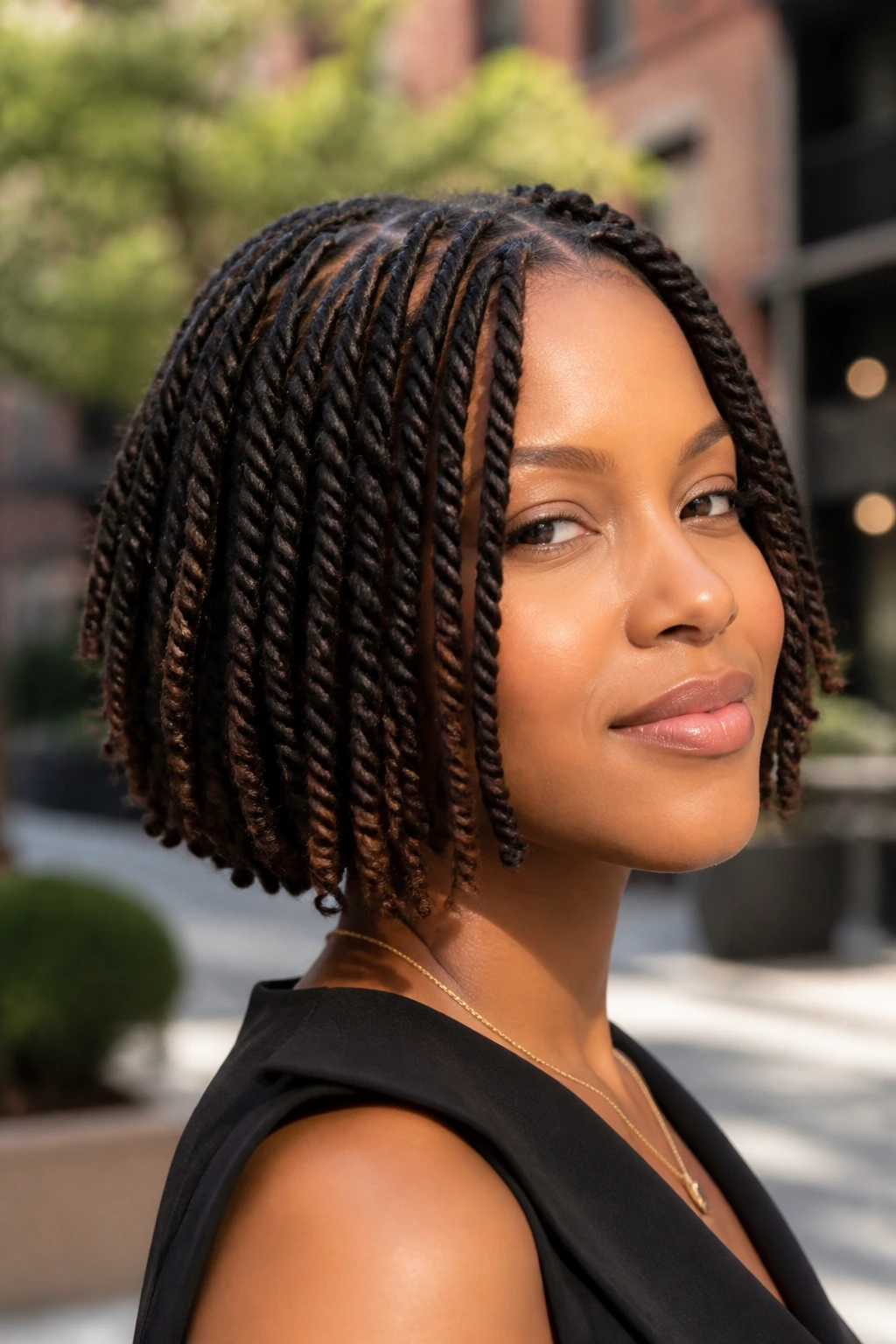
A barrel-twisted loc bob gives you a smoother, more structured version of a bob without changing the cut itself. The locs are grouped and twisted so the shape looks compressed and neat, almost like a sculpted bundle.
I like this one for days when you want the bob to sit close and controlled. The twist pattern pulls the locs together, which helps with frizz and gives the style a finished edge. It also makes a fresh retwist look even cleaner, because the whole head reads as one coherent shape instead of a lot of separate strands.
Why the twist pattern helps
- It keeps the ends grouped instead of spreading out.
- It gives the bob a tighter outline around the jaw.
- It works well for medium and thick locs that need restraint.
- It can be worn as a set style or a short-term protective look.
The style feels dressier than a plain loose bob, but not fussy. That is what I like about it. It’s neat, but not precious. If you want the hair to look controlled on purpose, this is one of the easier ways to get there.
Just do not leave the twists in too long. When they start to imprint hard, the shape loses its smooth edge.
11. Undercut Loc Bob with a Tight Back
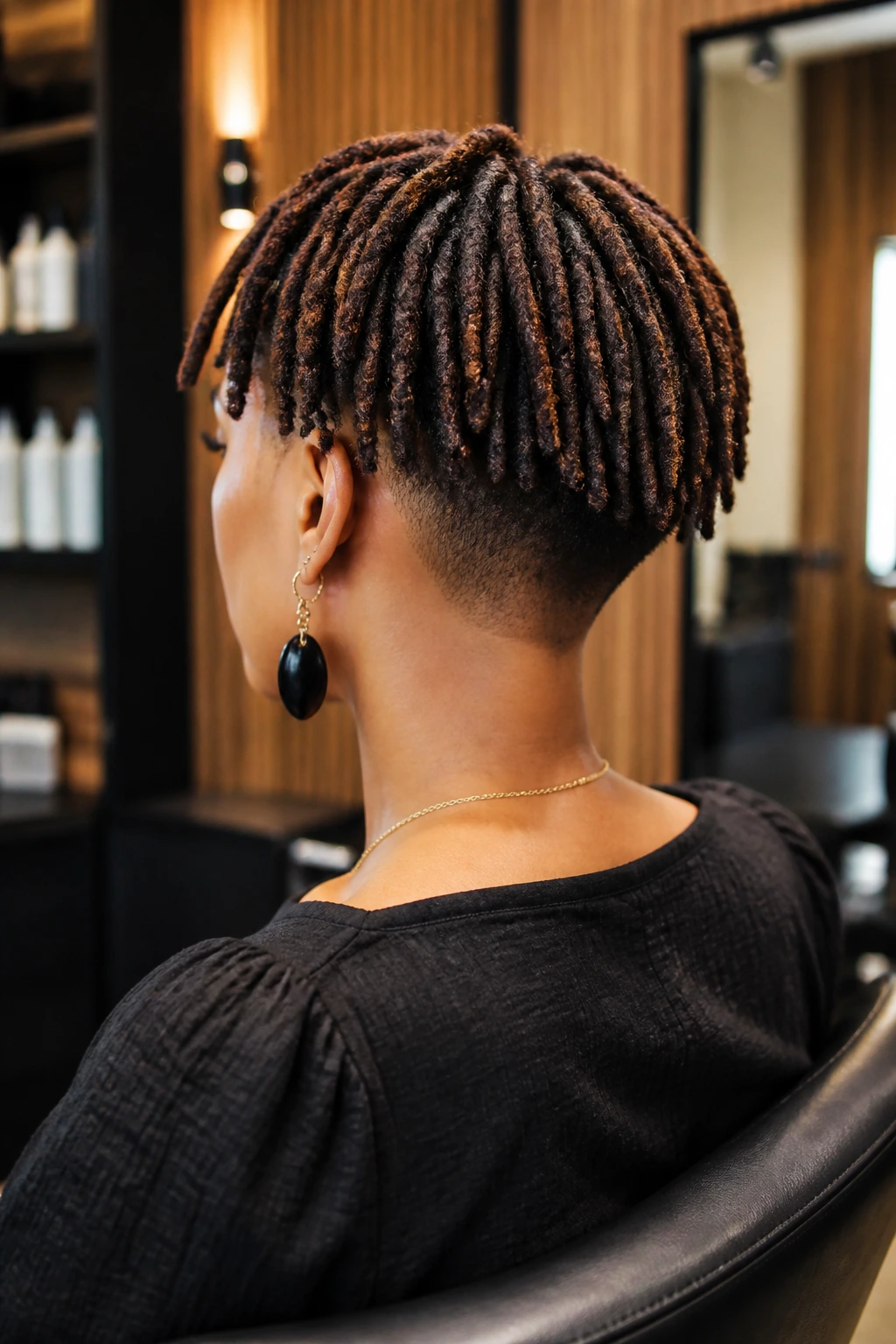
If the back of your bob keeps puffing out, the problem is usually bulk, not bad styling. An undercut solves that by taking weight out from underneath so the top layer can lie flatter and cleaner.
This is the sharpest option on the list, and it is not subtle. The exposed contrast between the shaved or closely tapered underside and the locs on top gives the bob a very clear outline. From the front, it can look like a classic loc bob. From the back, it has a much tighter finish.
The maintenance is real, though. If you do not want regular clipper cleanup, skip this one. The grow-out shows fast at the nape, especially if your hair grows dense there. Still, when it is kept fresh, the shape is hard to beat for people who want their locs to sit close to the head.
- Ask for a low undercut or tapered nape, not a high shave, if you want flexibility.
- Keep the top length unchanged so the bob still reads like a bob.
- Use the undercut to control bulk, not to create a different haircut entirely.
- Expect the shape to look best when the edges are freshly lined.
This one has attitude. Clean attitude, but attitude.
12. Loc Bob with Bangs
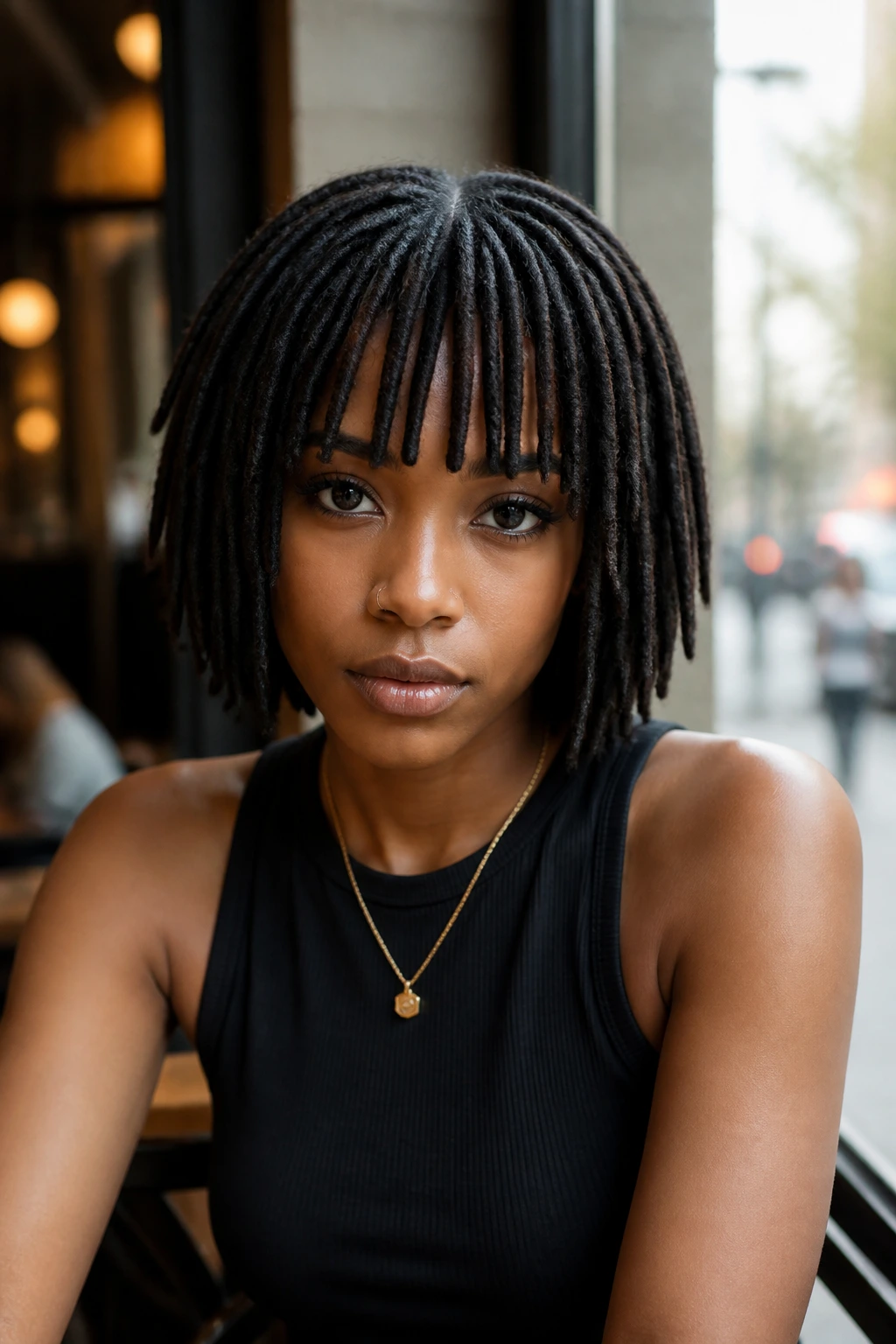
Bangs change the whole mood. A loc bob with a fringe can go soft, blunt, or slightly edgy depending on how the front is cut, but the sharpest versions usually keep the bang line neat and close to the brow.
A blunt fringe works best when the locs in front are not too thick. Heavy bangs can fall into the eyes and lose their shape before lunchtime. Side-swept bangs are easier if you want less maintenance. They also look cleaner on people whose foreheads are shorter, because they do not crowd the face.
The real trick is keeping the fringe from puffing up. Bangs touch the skin, pick up moisture, and separate faster than the rest of the bob. I would keep heavy creams off the front pieces and use only a light touch of mousse or setting foam when needed. Too much product turns the fringe into a sticky line, which is the opposite of sharp.
A loc bob with bangs works especially well when the back stays blunt and the front line is trimmed with care. It gives you shape up top and structure below. That balance is the whole point.
13. Colored Loc Bob with Crisp Roots
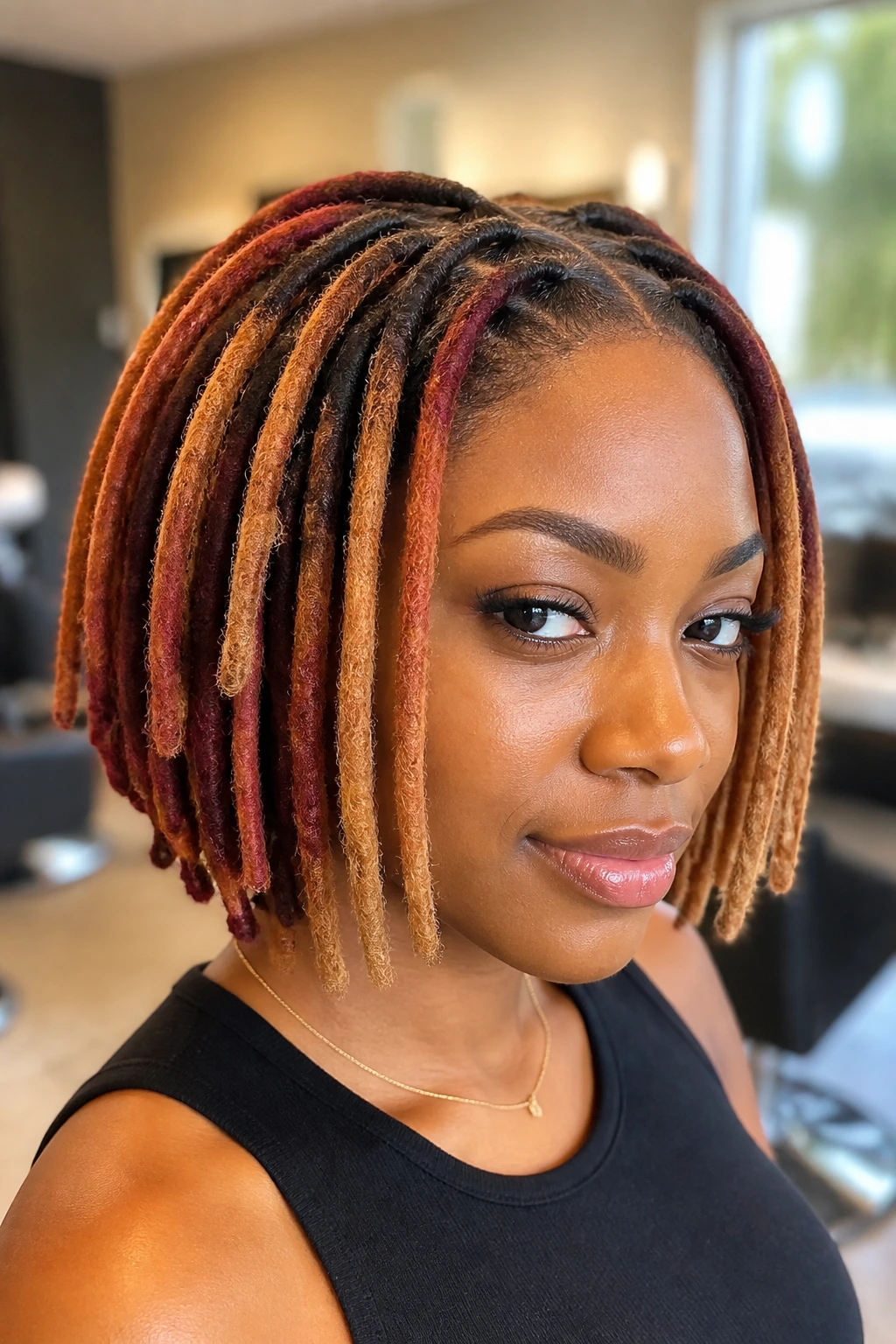
Color can make a loc bob look sharper, but only if the roots stay calm. A messy color job draws attention in the wrong places. A neat one makes the whole cut feel intentional.
The cleanest color choices usually keep a controlled base: deep brown, soft black, copper, honey, burgundy, or a two-tone blend that does not jump around too much. You can also keep the roots darker and let the mid-lengths and ends carry the color. That gives the bob depth without making the scalp line look busy.
What to ask for at the chair
- A single-root color or a very soft root shadow.
- No stripey highlights unless you want a louder look.
- Color placement that follows the cut, not random streaks.
- Healthy ends, since dry colored tips ruin a crisp outline fast.
This style is especially good if your bob already has a strong shape. Color then acts like a frame. It will not fix a bad perimeter, though. Nothing will. If the ends are uneven, bright color only makes that more obvious.
A sharp loc bob with color should still feel tidy at the root and smooth at the tips. If it starts to look patchy, the whole effect falls apart.
14. Wrapped-and-Tucked Loc Bob
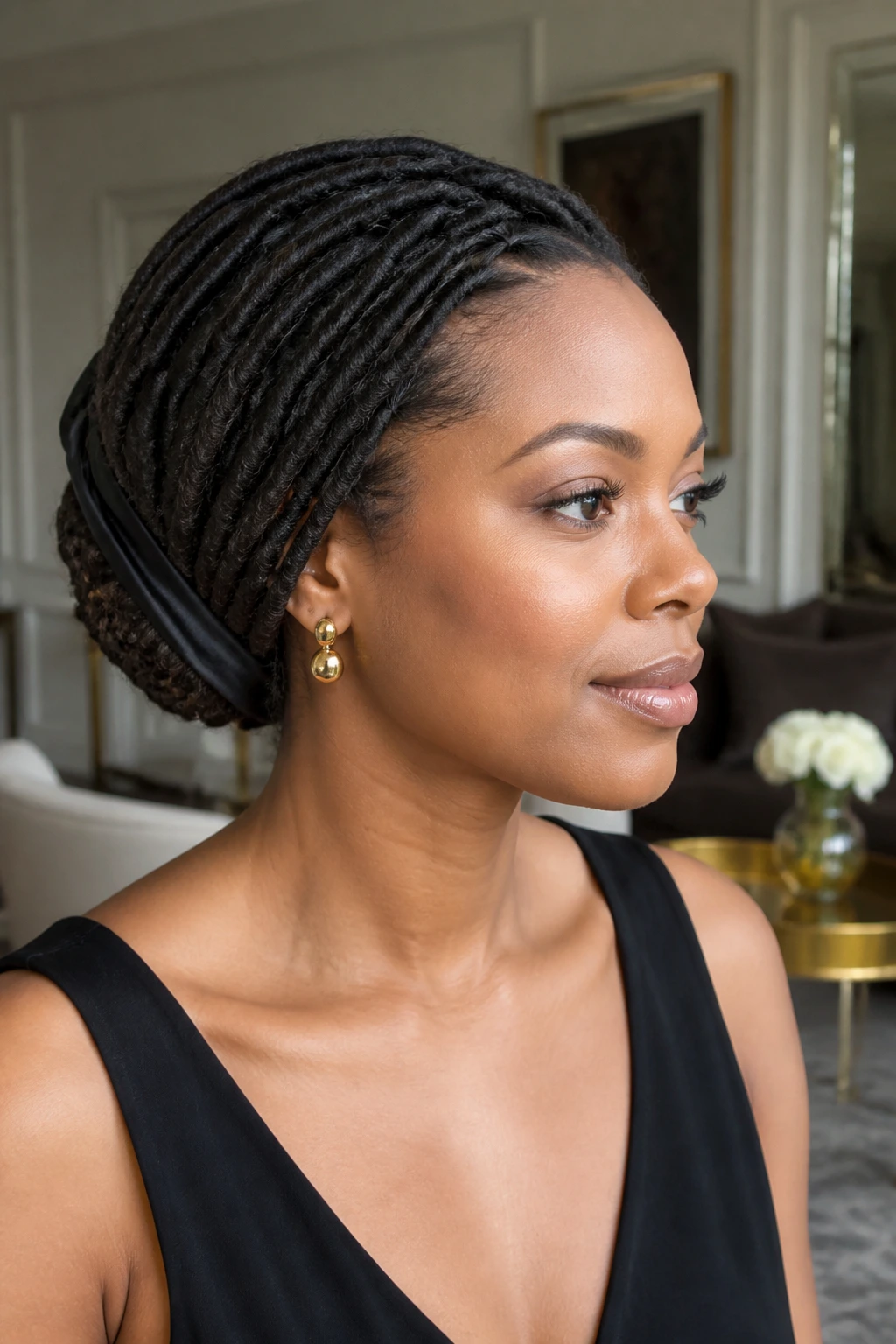
Some of the sharpest loc bobs are barely showing the locs at all. That is the point here. The wrap or tuck smooths the shape and gives you a polished outline with almost no visible frizz.
This style is one of my favorites for formal settings, humid days, or any time the roots need a break. The locs are pinned low, tucked under, or wrapped along the sides so the silhouette looks sleek from every angle. A satin scarf, a few U-pins, and a little patience can make a plain bob look incredibly neat.
How to keep it flat
- Tuck the ends under in the same direction so they do not poke out.
- Pin at the nape first, then the sides.
- Use a satin wrap to help the shape set before you leave the house.
- Keep the crown smooth; that is where bulk shows first.
This is not the style for showing off length. It is the style for showing off line. If your locs are a little fuzzy, if the ends need a breather, or if you want a clean profile under a jacket collar, this one does the job without much fuss.
It also grows out well. That matters more than people think.
15. Collarbone-Skimming Loc Bob
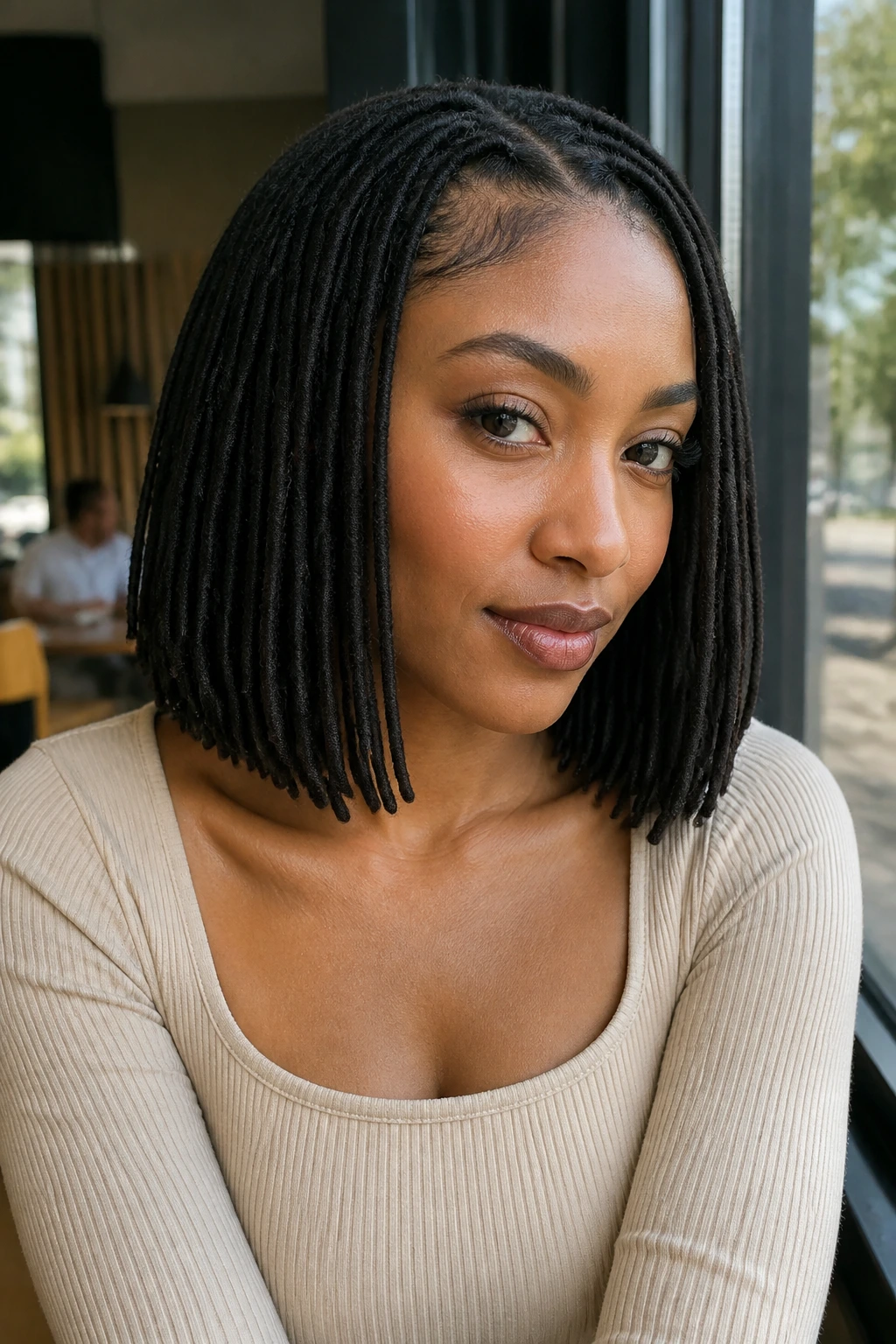
A collarbone-skimming loc bob is the safest bet when you want a crisp shape with a little more room to live in. It gives you a bob’s structure without forcing the locs to sit too close to the jaw or neck.
That extra inch or two changes everything. The hair has room to move, so it does not puff the same way a very short bob can. At the same time, the length is still short enough to read as neat. It is the sort of cut that stays tidy when you turn your head, reach for a bag, or tuck a scarf around your neck.
I like this length for thicker locs and for anyone who wants a cleaner grow-out. A chin-length bob can feel strict if you are not in the mood to trim often. This one gives you more forgiveness. It also works well if you wear your locs down most days and only switch to clips or pins now and then.
If you want one loc bob that keeps its shape without feeling severe, this is the one I would start with. It is sharp without being fussy. And that’s the sweet spot.
