



A short bob cut does one job better than almost any other haircut: it makes hair look deliberate without making your morning feel like a project. That’s the real appeal of a good bob haircut. It falls into place fast, it keeps its shape, and it usually looks better with a little movement than with hours of coaxing.
The catch is that not every bob behaves the same way. A blunt bob can sit like a clean line and barely need anything more than a quick bend at the ends. A layered bob can take the weight out of thick hair so it stops puffing at the sides. A French bob can look airy and cool, but only if the fringe and length are cut with some sense of proportion. Get the shape wrong, and you’re stuck with hair that flips, folds, or balloons in all the wrong places.
That’s why the easiest short bob cuts are never just “short.” They’re built with the hair’s natural texture in mind. The best versions use weight, direction, and length in very specific ways—usually around the jaw, the nape, and the cheekbone. Those three spots do most of the work.
Here are the short bob cuts that stay friendly on busy mornings, grow out decently, and still look like you meant it.
1. Chin-Length Blunt Bob
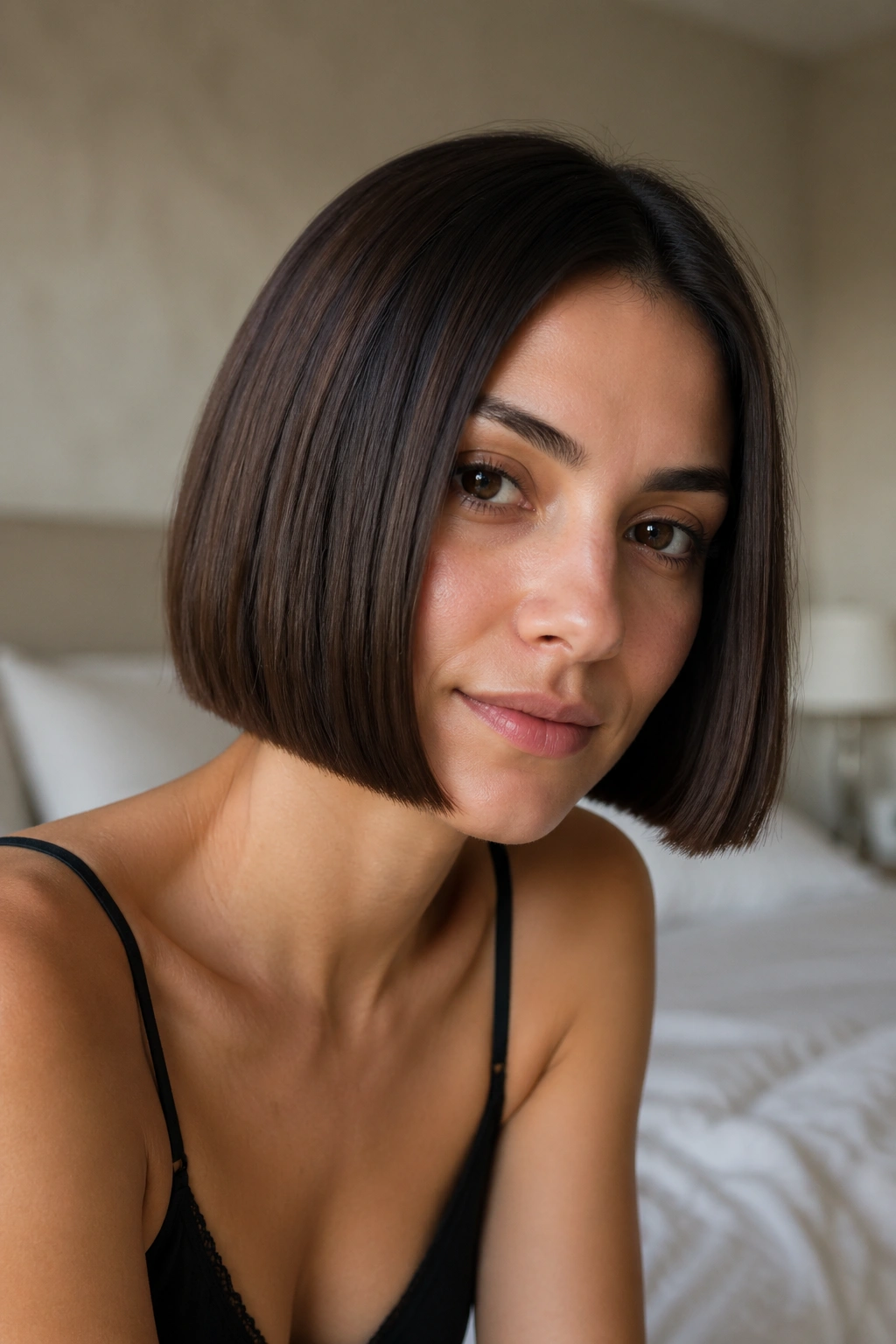
A chin-length blunt bob is the haircut equivalent of a sharp white shirt. It looks clean, direct, and far more polished than the effort it takes to style it.
The reason it works so well is the line. When the ends are cut evenly and sit right at the chin or just below it, the hair falls into a neat frame instead of scattering into awkward layers. Fine hair gets a fuller edge. Straight hair gets a crisp outline. Even wavy hair can wear this cut with a quick air-dry and a little serum on the ends.
What to ask for
- Keep the perimeter blunt, not feathered.
- Ask for the length to sit at the chin or ½ inch below it.
- Leave the layers out unless your hair is very thick.
- Use a flat brush and a dryer on low heat if the ends flip out.
My favorite part: this cut looks put together even when you barely touch it. It is a strong choice if you want a bob that behaves on day one and day three.
2. Soft Layered Bob
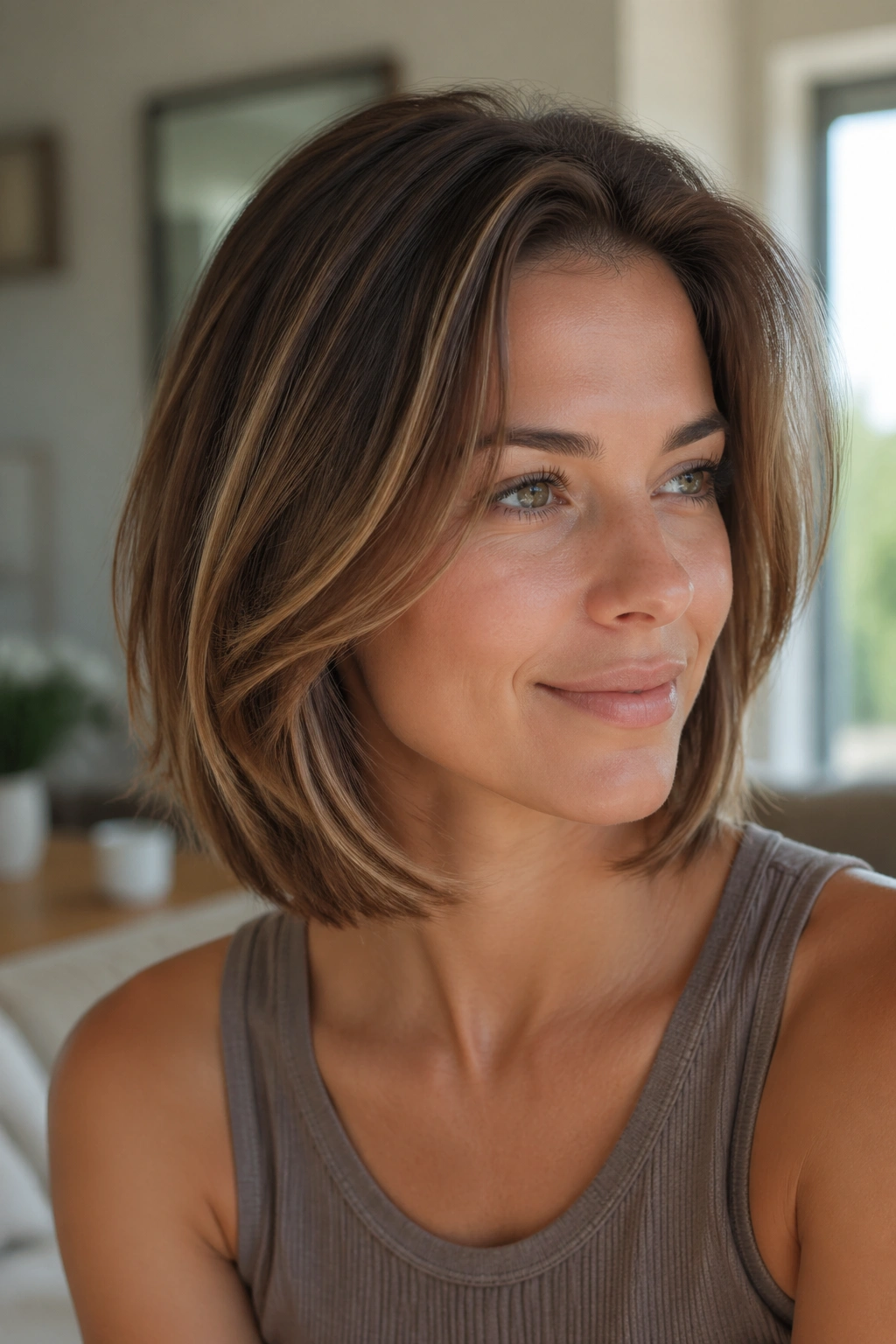
A soft layered bob is the one I’d hand to anyone with hair that feels heavy before noon. It keeps the bob shape, but the layering takes out that dense, boxy feeling that makes some short cuts look like a helmet.
The trick is restraint. You do not want choppy layers carved all over the place. You want gentle internal layers, usually starting around the cheek or just above the collarbone if the bob is slightly longer, with the shortest pieces tucked under the top layer. That gives movement without wrecking the outline. Thick hair gets less bulk. Wavy hair gets easier bend. Straight hair gets a little life.
It’s also forgiving. If you air-dry it, the layers stop the shape from collapsing into a block. If you blow it out, the layers help the ends curve instead of sticking out in a single stiff line. That’s a nice thing, honestly. Not every bob needs to shout.
This is the bob I’d pick for anyone who wants low effort with a softer finish.
3. French Bob with a Fringe

Why does a French bob look so done, even when it isn’t? Because the cut does half the styling for you.
This version sits shorter than a classic bob, usually around the lip, chin, or a touch above the jaw, with a fringe that lands near the brows or cheekbones. The hair is often cut with a slightly undone edge, which keeps it from feeling stiff. That tiny bit of looseness is the point. It gives the haircut movement, and movement hides a lot.
How to wear it without fuss
A soft fringe is easier to live with than a heavy, perfect one. Dry the bangs first, side to side, with your fingers and a small round brush if needed. Then let the rest air-dry to about 80 percent before finishing the ends with a quick bend.
- A light mousse at the roots helps the shape hold.
- A pea-sized amount of cream on the ends keeps them from puffing.
- A mist of dry texture spray gives the fringe some separation.
The best French bobs never look overworked. They look like someone knew where to stop.
4. Textured Bob with Choppy Ends
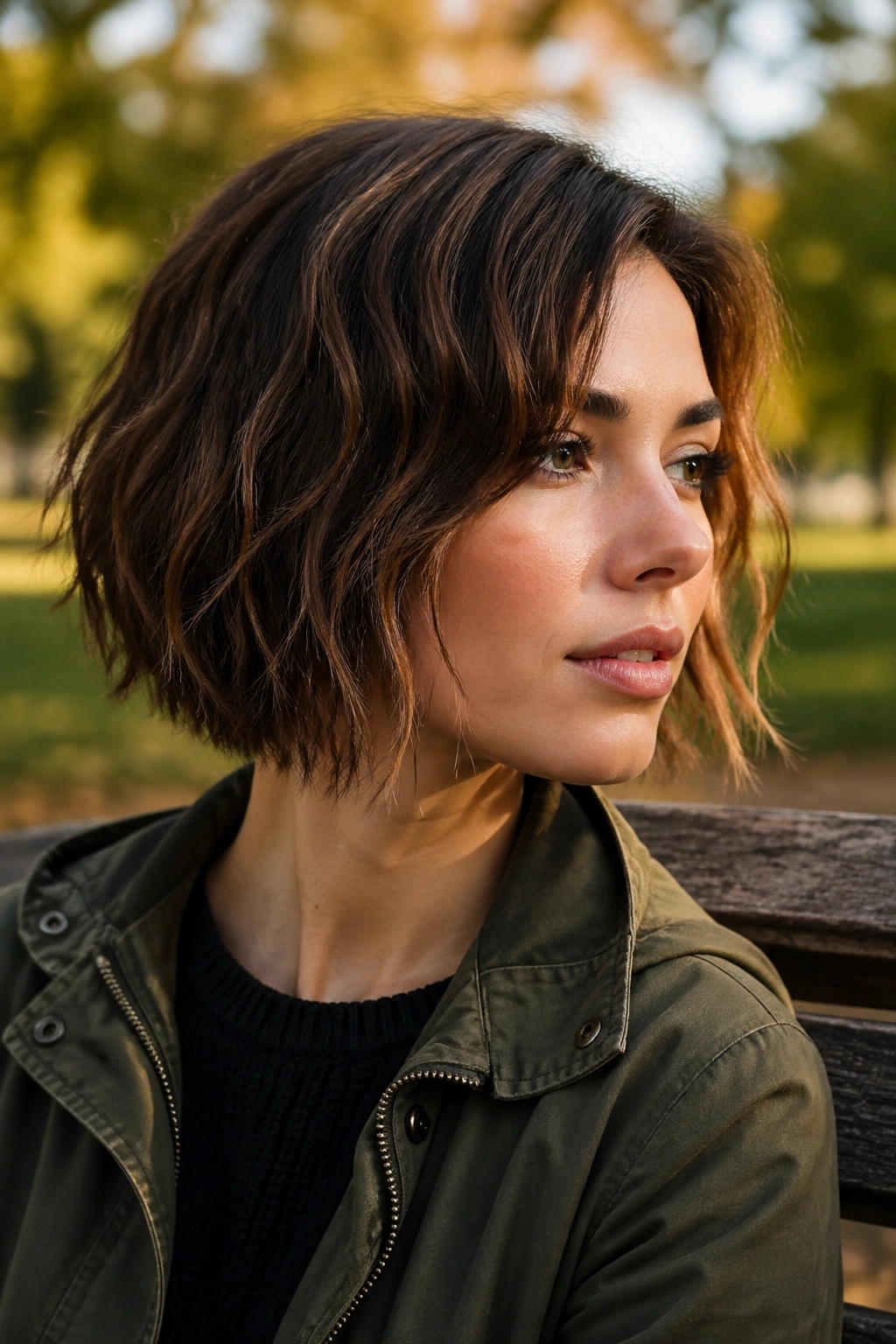
Picture a bob that still looks neat, but never feels too neat. That’s the textured version, and it’s a lifesaver for hair that goes flat in humid air or loses shape the minute you walk outside.
The key move here is point-cutting or soft razor work on the ends. That keeps the hem from looking too blunt and helps the cut sit with a little movement. It’s especially useful on medium to thick hair, because the choppier edge breaks up bulk. On fine hair, you want less aggression. Too much texturing can make the ends look thin and wispy, and nobody wants that.
- Use a sea salt spray on damp hair if you want piecey definition.
- Use a light cream if your hair tends to feel dry.
- Scrunch once, then leave it alone.
- If you blow-dry, use your fingers instead of a brush for the first pass.
It’s the kind of bob that looks better when it isn’t perfectly controlled. That’s a nice problem to have.
5. A-Line Bob
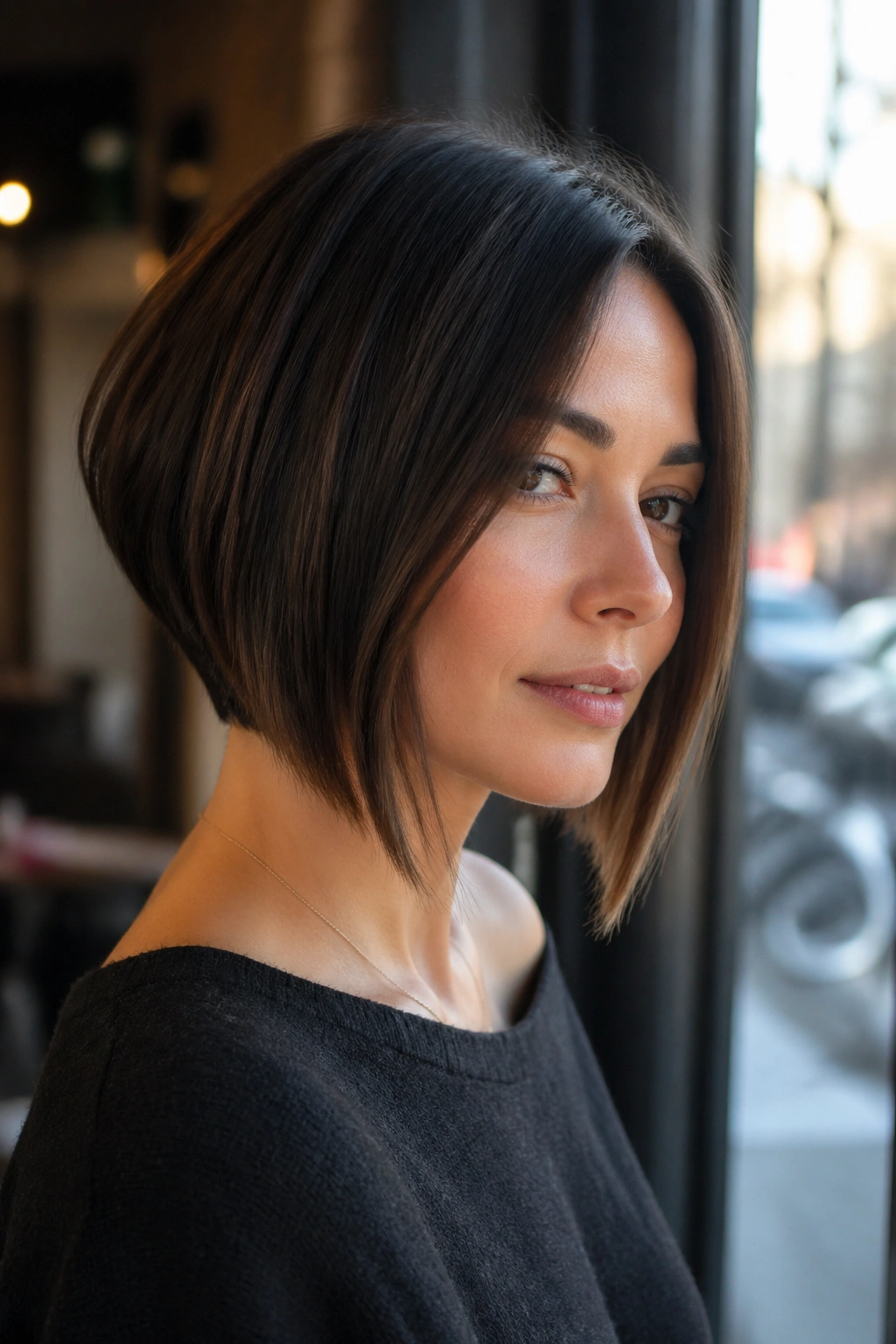
An A-line bob is shorter in the back and longer in the front, and that slight angle does a lot of heavy lifting. It gives you shape at the nape without losing the face-framing length that makes a bob feel soft rather than severe.
Compared with a blunt bob, this one feels a touch more sculpted. The front pieces can skim the jaw or dip below it, which helps if you want something you can tuck behind the ear or curl under with one pass of a round brush. The back stays tidy and light, so the haircut dries faster than longer bobs usually do.
This is one of the easiest short bob cuts if your hair grows out in awkward stages. The angle tends to blur gracefully. You will still need trims, sure, but the shape doesn’t fall apart the minute the back gets a little longer. It just starts to look more relaxed.
Best for: fine hair that needs lift, or straight hair that wants a bit of edge without constant styling.
6. Stacked Bob
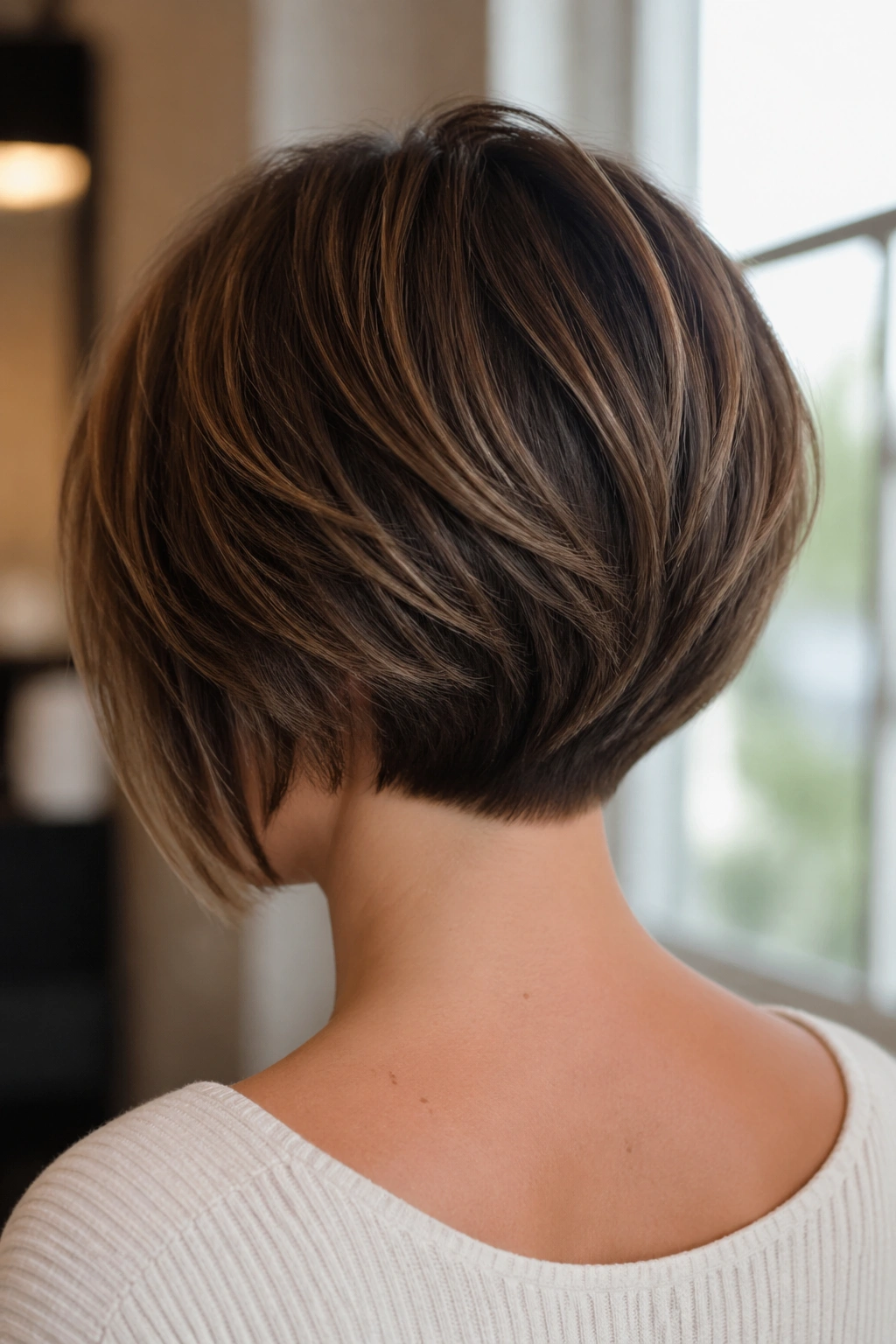
A stacked bob has a built-in curve at the back, and that’s why it works so well for people who hate wrestling with volume. The layers are shorter and more graduated through the nape, which makes the crown sit higher and the back fall into a rounder shape.
It’s a smart cut for hair that lies flat at the back of the head. You know the look: all the fullness gets dragged downward, and the top looks sleepy. A stacked bob fixes that by putting the weight where it belongs. The silhouette feels lifted without needing a lot of product.
It does ask for maintenance. Not daily drama—just regular trims so the back keeps its shape. If the layers get too grown out, the stack loses that neat slope and starts to look accidental. But when it’s fresh, it’s easy. Dry it with a round brush, lift the crown a bit, and let the cut do the rest.
Short version: it’s a shape-first bob, and that makes morning styling much less annoying.
7. Curly Bob
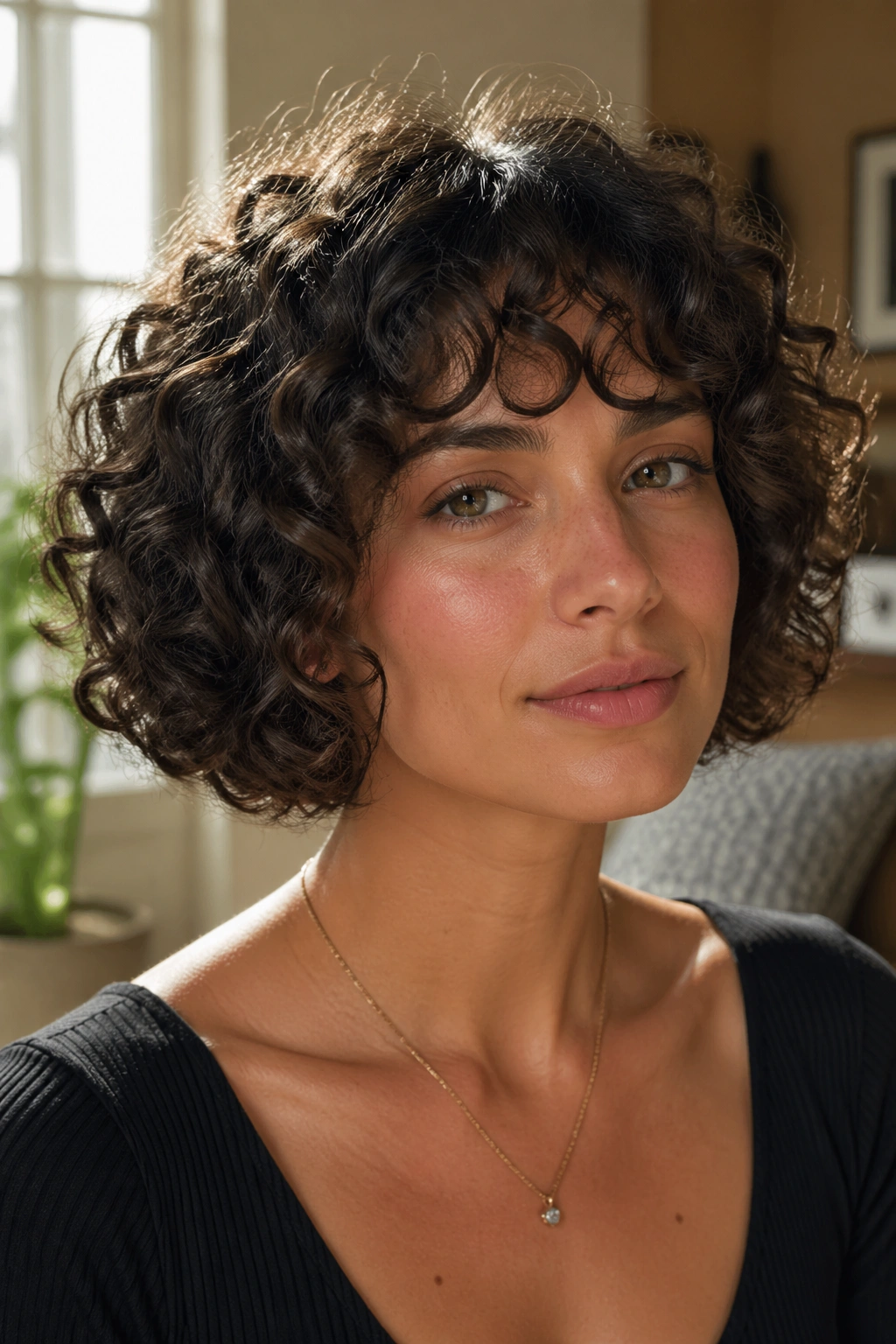
Curly bobs need different rules, because curls don’t obey the same math as straight hair. Cut them wrong, and the shape will spring up unevenly. Cut them well, and you get a short bob that looks alive even after a rough night of sleep.
Why the curl pattern matters
A dry curly cut is usually safer than a wet one, especially if your curl pattern changes from the crown to the ends. A stylist who pays attention to shrinkage can keep the bob from jumping two inches shorter than expected. That matters. A lot.
The easiest curly bob is one that leaves room for bounce. Think chin length or a touch longer, with enough space for the curl to form without stacking on itself. Heavy layers can help remove bulk, but too many short layers create a triangle shape. That’s the trap.
How to style it
- Apply leave-in conditioner to soaking-wet hair.
- Scrunch in a gel or curl cream.
- Dry with a diffuser on low heat.
- Do not touch the curls until they’re fully dry.
A good curly bob should feel soft, springy, and a little piecey. If it feels puffy at the ends, the shape probably needs less layering next time.
8. Wavy Bob with Long Layers
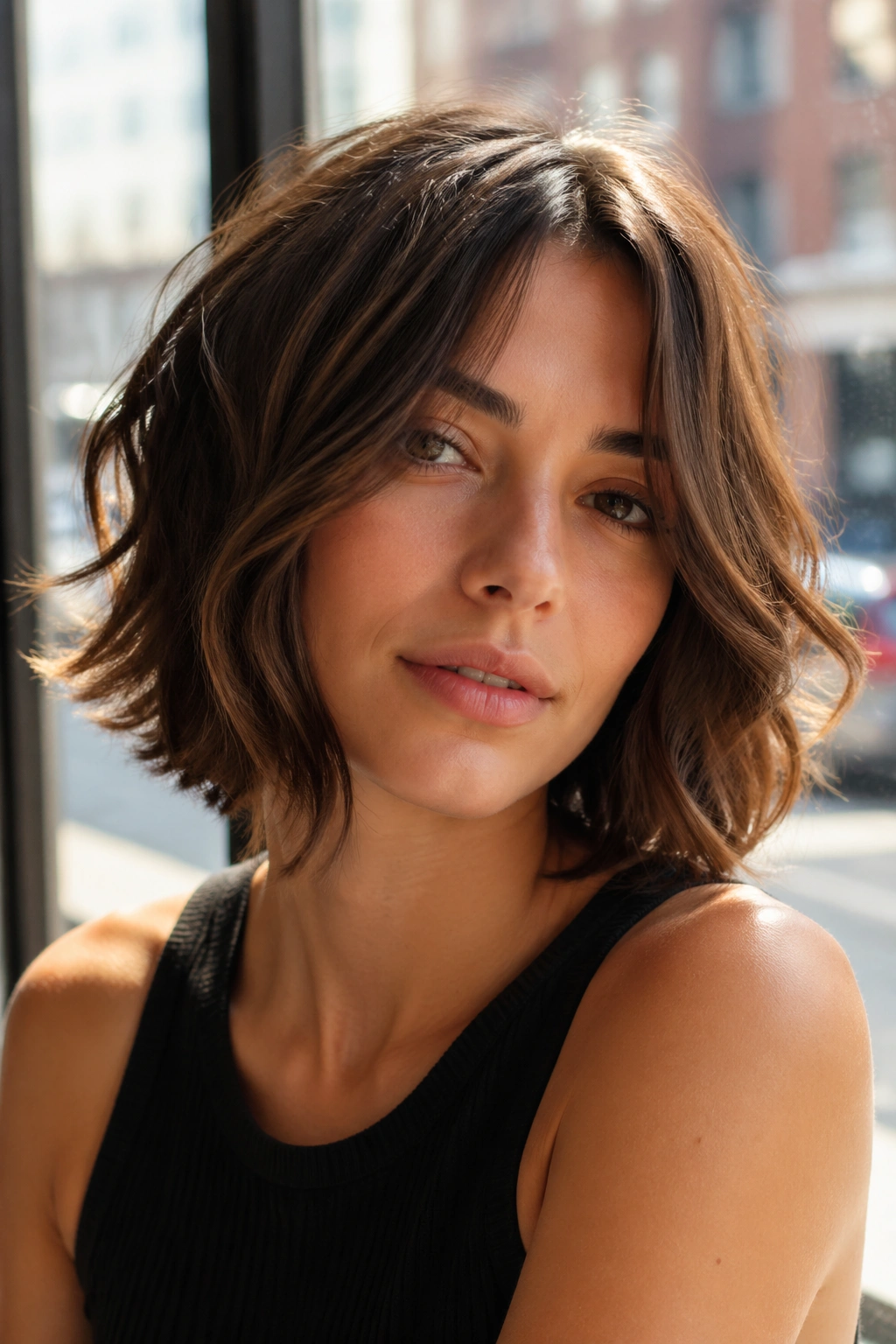
Wavy hair and bobs get along when the cut leaves some room for the wave to move. A bob with long layers does exactly that. It keeps the outline short enough to feel fresh, but the layers stop the texture from turning into a solid block.
This is a cut that loves a sloppy start. Rough-dry it to about 70 percent, add a little mousse at the roots, and let the rest air-dry if you’ve got time. A curling wand on a few random pieces can help, but it isn’t mandatory. The goal is not perfect curls. The goal is shape.
A couple of products go a long way here:
- Light mousse for root lift.
- Leave-in spray for softness.
- Tiny bit of oil on the ends if they get fuzzy.
- Texture spray only if your wave falls flat.
Long layers keep the bob from looking square, and that matters with wavy hair. Too much square, and you get puff. Too little structure, and you get shapelessness. The sweet spot is somewhere in the middle.
9. Sleek Side-Part Bob
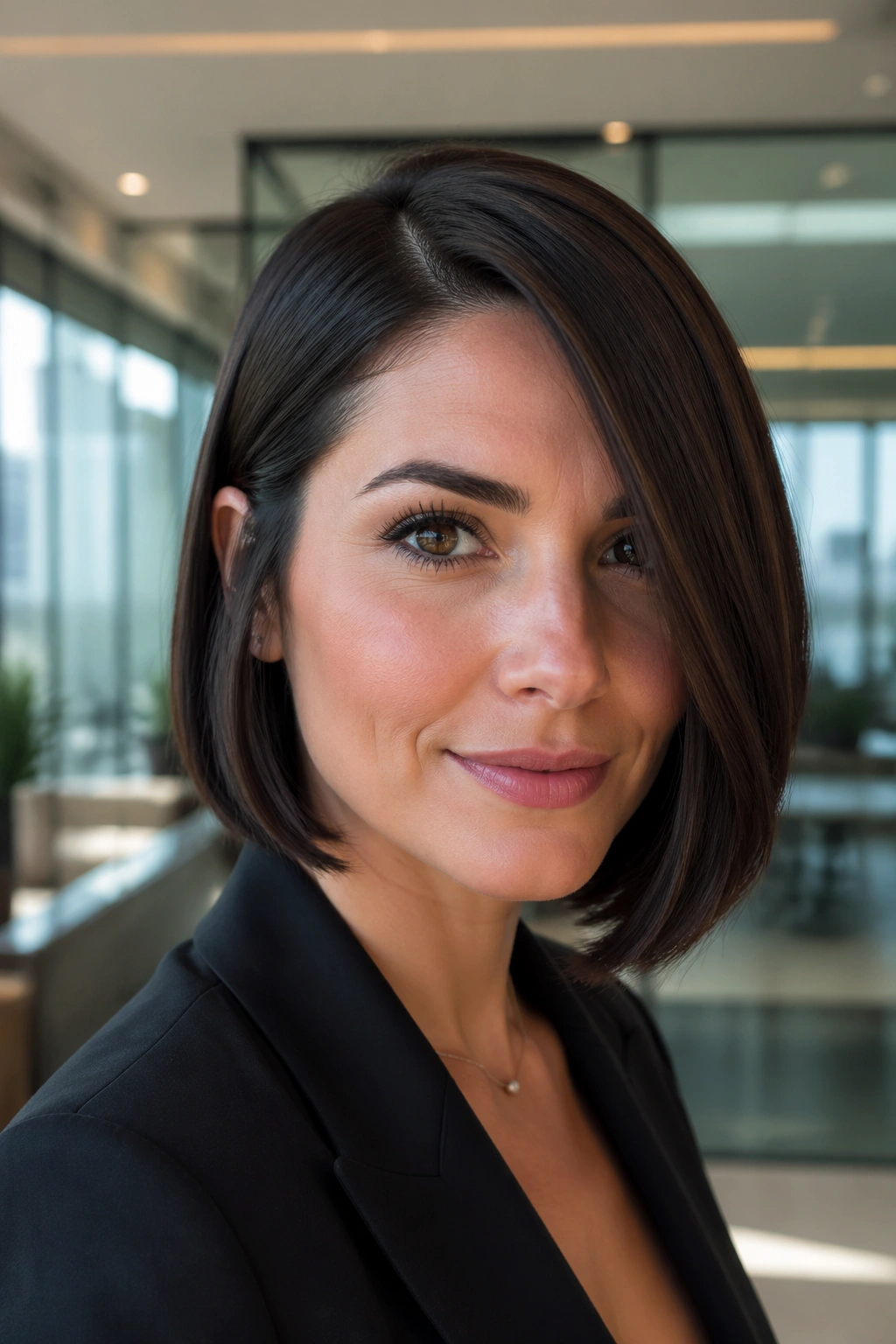
A sleek side-part bob is one of the least fussy polished cuts around. The side part does more than people give it credit for. It shifts volume, softens the face, and makes the bob feel intentional even if the rest of your routine is fairly minimal.
This cut works especially well when the length sits at the jaw or slightly below it. The side part can create a gentle sweep across the forehead, which is useful if you want something that feels softer than a center part. Straight hair takes to it fast. Slightly wavy hair can be smoothed with a brush and a heat protectant, then left with a little bend at the ends.
The styling trick is not to overdo the flat iron. One pass is enough for most people. A little shine serum at the ends adds finish without making the hair look greasy. If you want the shortest styling routine on this list, this one deserves a hard look.
Sharp, but not stiff. That’s the whole point.
10. Rounded Bob
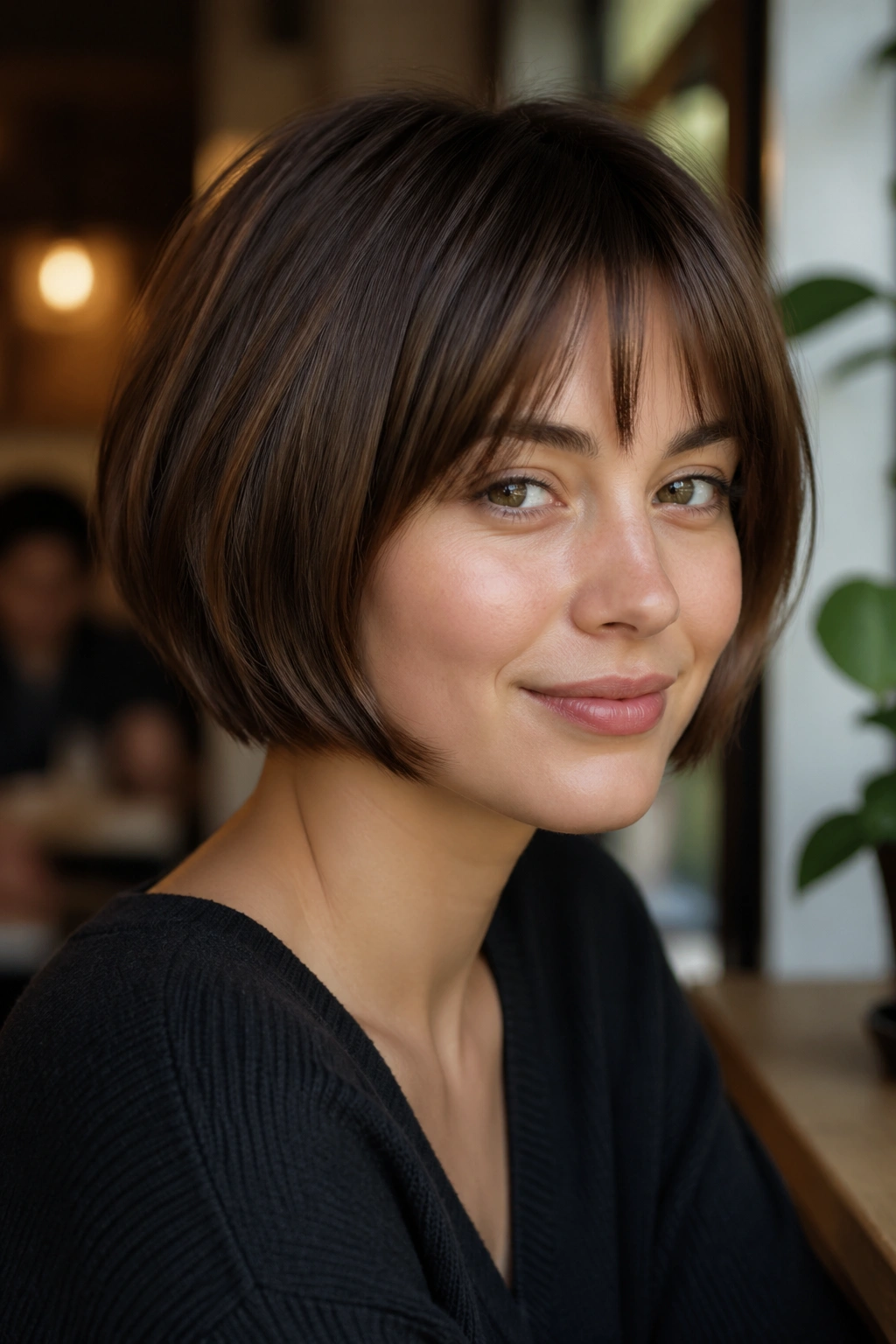
Can a rounded bob be easy to style? Yes—if you like hair that already knows where it’s going.
The shape curves gently under the jaw and around the head, so the cut itself creates the polished finish. Fine hair tends to love this because the rounded line makes it look fuller. Straight hair also gets a nice compact shape, especially when blow-dried with a medium round brush and rolled just at the ends.
The downside is that it can look too neat if you over-style it. That’s the mistake. You don’t want every strand tucked into place like a pageant crown. A little movement at the crown and some softness at the ends keeps it modern.
This cut usually behaves best when the length stays around the chin. Shorter than that, and the round shape can start to puff. Longer than that, and the curve drops out. Tiny range. Big difference.
If you like a tidy silhouette and don’t mind spending five minutes with a brush, the rounded bob is a very good bet.
11. Inverted Bob
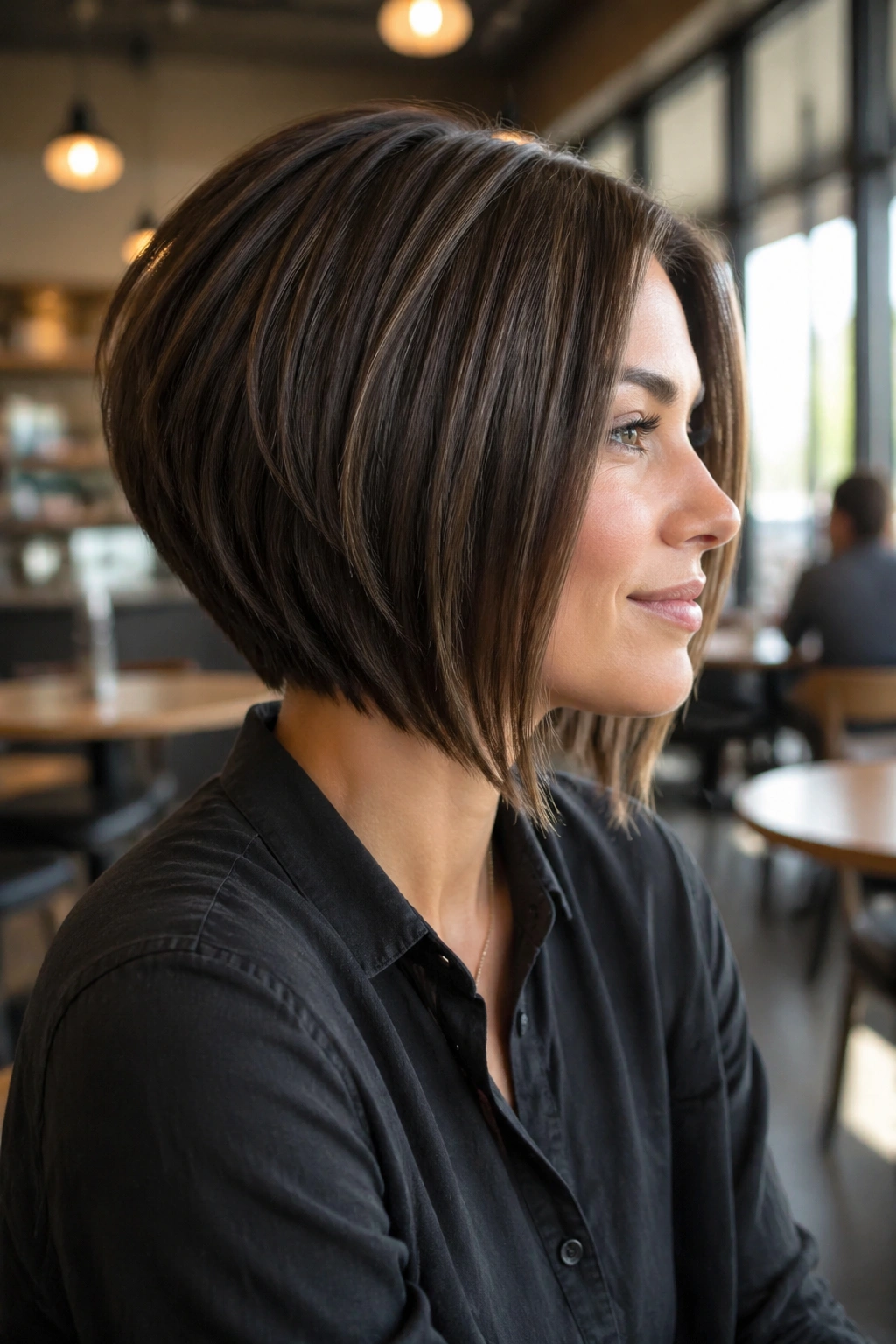
An inverted bob gets a little dramatic in the front, but the styling is still straightforward. It’s shorter in the back and longer as it moves toward the face, which creates an angle that feels sharper than a stacked bob but less rounded than a classic A-line.
The main advantage is shape. The longer front pieces give you something to tuck, wave, or smooth, while the back stays light and controlled. That means less bulk at the nape and less dragging downward as the haircut grows out. It also suits thick hair well, since the back can be built to remove weight without thinning the entire head.
Compared with a stacked bob, this one leans more geometric. Compared with a blunt bob, it feels more alive. If you want a cut that looks styled with minimal effort, this is a strong middle ground.
Ask for the front length to stop where it flatters your jaw. Too long, and the angle loses its point. Too short, and you lose the soft face-framing effect. The sweet spot is the part that makes you stop checking the mirror every 10 minutes.
12. Bob with Curtain Bangs
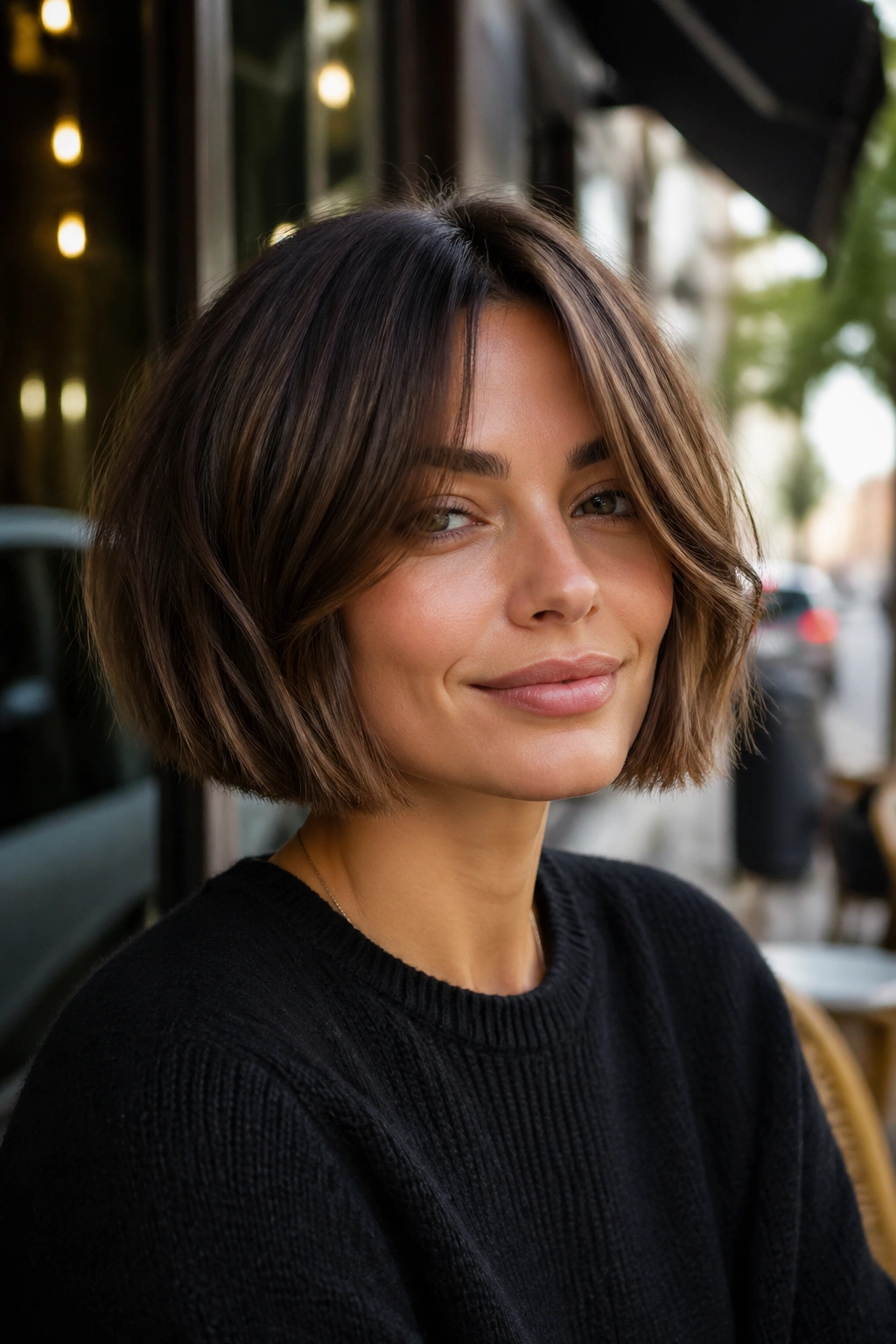
A bob with curtain bangs is one of those cuts that seems higher-maintenance than it is. The bangs do need a little attention, sure, but they also make the whole haircut feel softer and more relaxed, which saves effort on the rest of the head.
The fringe usually starts around the brow or just below it and opens toward the cheekbones. That shape matters because it blends into the bob instead of sitting on top of it like a separate piece. If your hairline or forehead feels a little exposed in shorter cuts, curtain bangs solve that without turning into a heavy fringe.
The parts worth asking for
- Keep the bang length at cheekbone level when dry.
- Ask for the center to be shorter than the sides.
- Make sure the bob itself still has enough weight at the ends.
- Dry the fringe first so it doesn’t separate weirdly.
Curtain bangs work especially well with a chin-length bob or a slightly longer bob. They make the haircut look styled even when the rest is air-dried. That’s the kind of efficiency I always appreciate.
13. Tucked-Behind-the-Ear Bob
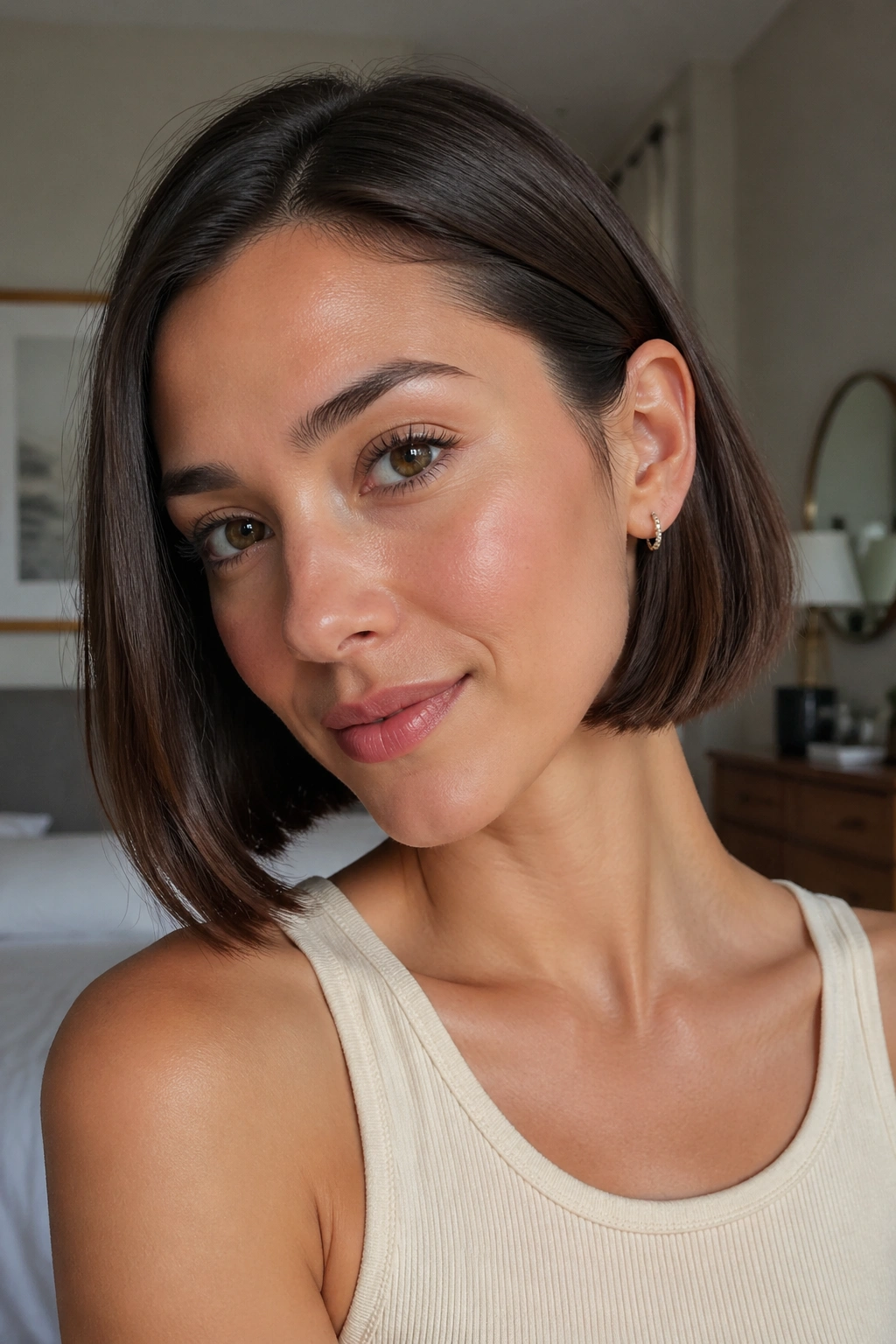
A bob that looks good tucked behind the ear sounds almost too easy, which is probably why people overlook it. But the cut needs the right balance to make that one move work. If the side pieces are too blunt or too short, the tuck can feel clunky. If they’re too long, the whole shape loses its bite.
The best version usually sits around the jaw or just below it, with enough weight through the front to stay smooth after tucking. It’s a smart choice for straight hair, but a soft wave can wear it too. The ear tuck opens the face and creates a little asymmetry, which helps the bob feel less rigid without extra styling.
This is one of my favorite cuts for people who live in sunglasses, earrings, or both. The hair gets out of the way fast. Then it falls back down and still looks intentional.
The whole trick is keeping the front pieces clean and not overly layered. Too much slicing at the face, and the tuck loses its neat shape. Keep the line tidy. Let the styling be the easy part.
14. Air-Dried Shag Bob
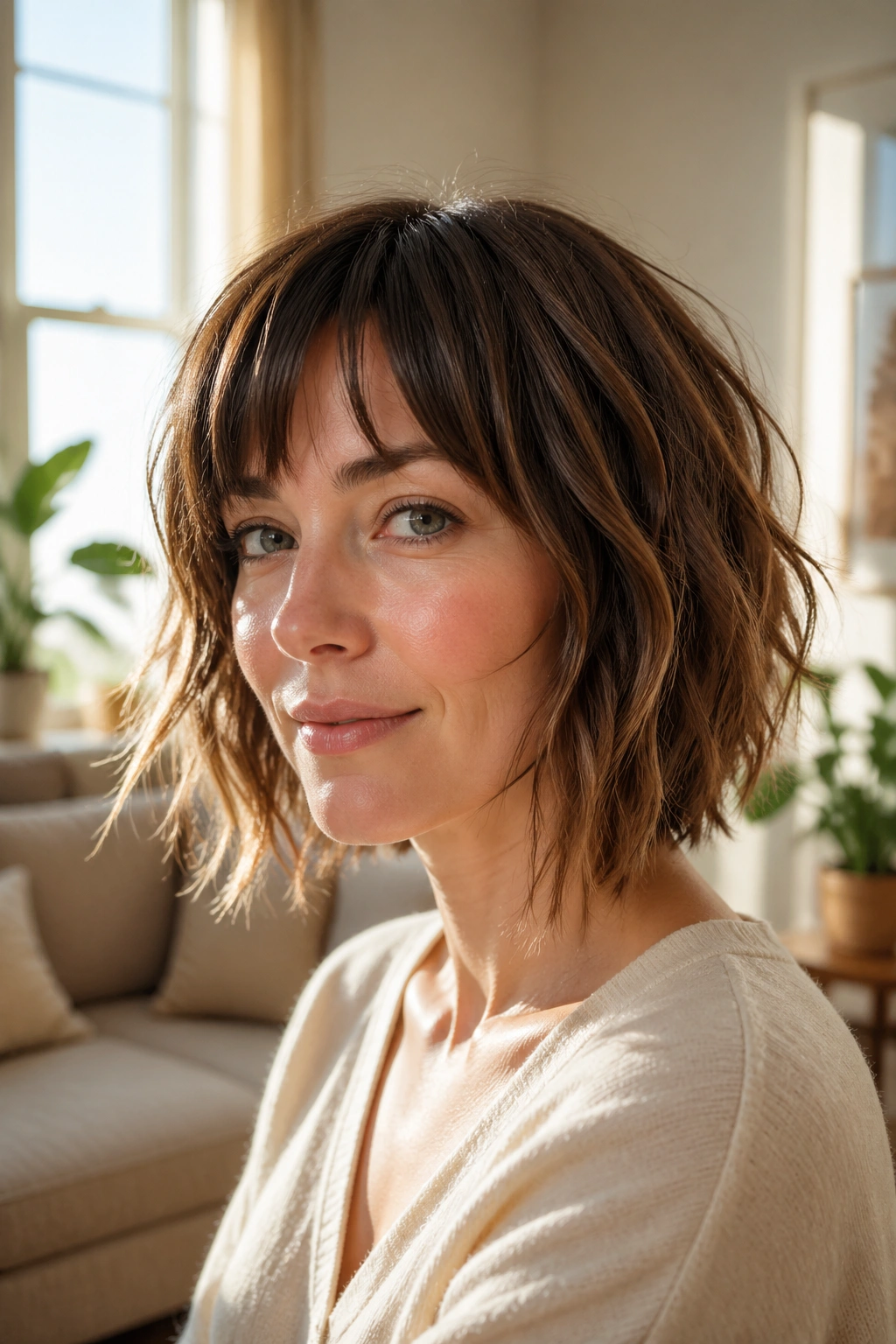
Do you want a bob that works with messy texture instead of fighting it? The air-dried shag bob is the answer.
It’s shorter than a shoulder-length shag but looser than a clean bob, with pieces that move around the face and through the ends. The haircut works best when the layers are soft enough to encourage wave, not so many that the shape frays out. On hair with a natural bend, it can look good with almost no heat at all. That’s a rare thing.
The routine that makes it work
- Apply leave-in conditioner to damp hair.
- Add a small amount of curl cream or light gel.
- Scrunch once, then leave it.
- When dry, break up the cast with dry hands.
The reason this cut styles so easily is that it never asks for symmetry perfection. A little unevenness suits it. A little fringe movement suits it too. If you hate hot tools and want a bob that can live with your natural pattern, this one has a real advantage.
Not neat. Not sloppy. Just lived-in enough to be easy.
15. Bob with Micro Bangs

Micro bangs make a short bob look bold, but the haircut itself can still be simple to wear. That surprise is part of the appeal. The bangs carry the visual interest, so the bob underneath can stay clean and fairly low fuss.
A micro fringe works best when the rest of the cut is sharp and controlled. Think chin-length or slightly shorter, with a smooth outline that keeps the overall shape from feeling chaotic. Straight hair is the easiest match. Wavy hair can wear it too, but the bang line needs a bit more help, or it can separate in a way that looks accidental.
The caveat is obvious: the fringe needs trims. The bob part usually grows out fine. The bangs are the needy part. If you can handle that one small chore, the rest of the style is quick.
Best for: people who like a strong shape and don’t mind a little edge near the forehead.
Not ideal for: strong cowlicks right at the hairline. Those will fight you, and they usually win.
16. Box Bob
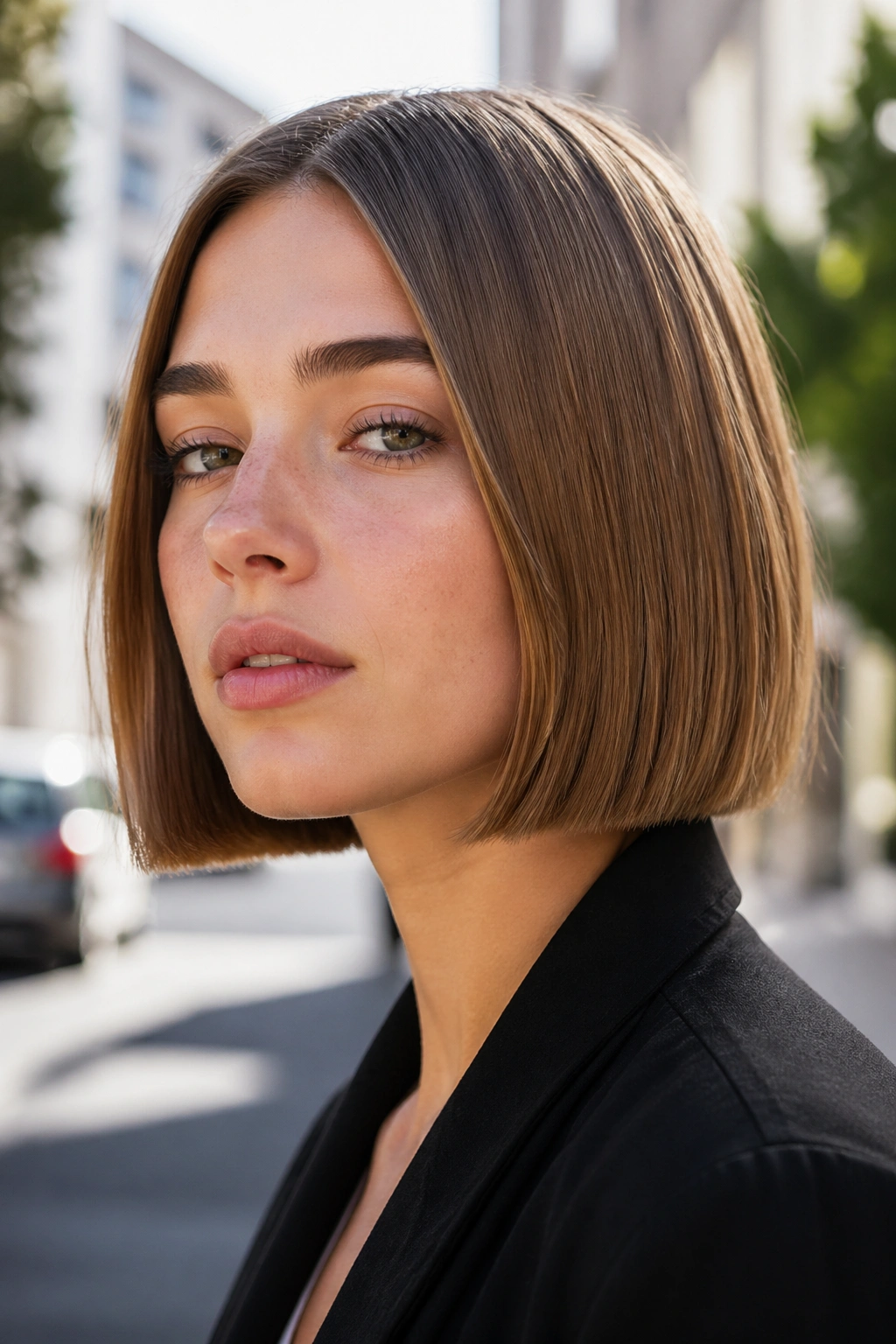
A box bob is cut with a straighter, squarer outline, and that gives it a crisp finish with very little styling. The line sits clean around the head, often at the cheek or chin, and the ends stay fuller than they would in a heavily layered cut.
This shape is especially useful for dense hair. Instead of trying to thin everything out, the cut holds some weight and uses the density to create a strong silhouette. It can also look good on fine hair if the perimeter stays blunt and the ends are not chipped away too much. The box shape gives the illusion of substance.
It is not the softest bob on this list. That’s fine. Not every cut needs to be soft. Some people look better in cleaner lines, and this one has a nice, modern honesty to it. If you air-dry it, the shape stays fairly true. If you blow-dry it smooth, it looks sharp with very little effort.
The box bob is one of those haircuts that seems plain until you wear it. Then you realize how much the outline does.
17. Graduated Bob
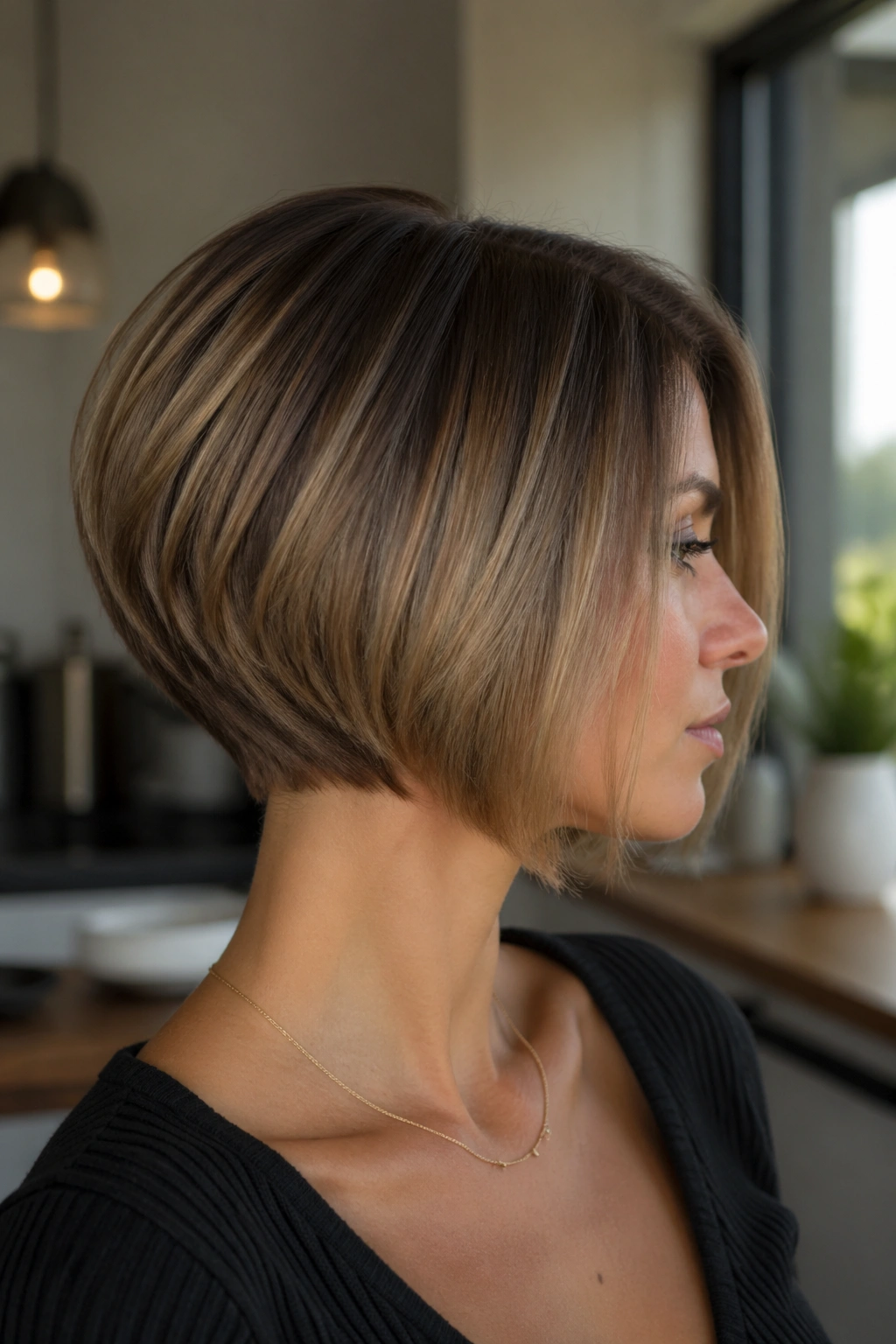
A graduated bob is all about controlled stacking from the nape upward, and it’s one of the smartest choices if you want lift without a lot of daily styling. The back is cut shorter, but the graduation is smoother and more intentional than a dramatic stacked bob.
Why the shape holds up
The nape stays snug, the crown gets a little height, and the front can be left a touch longer so the haircut doesn’t feel severe. That balance is what makes it easy. You are not chasing volume every morning. The shape is already there.
What to ask your stylist for
- A tight nape with soft graduation upward.
- Enough length in front to skim the jaw.
- No bulky layers that break the outline.
- Texturizing only where the hair is dense.
This cut is especially friendly for straight or slightly wavy hair. It holds a tidy contour, grows out in a believable way, and does not need a complicated routine. A round brush at the crown and a quick bend under the ends is usually enough.
If you like structure, this bob has it. If you like ease, that structure is doing the work for you.
18. Classic One-Length Bob
The classic one-length bob keeps showing up for a reason. It’s clean, it grows out with less fuss than people expect, and it gives you the most mileage from the least styling. There are no heavy layers to manage. No dramatic angles to babysit. Just one solid shape that does what a bob is supposed to do.
That simplicity is not boring. It’s useful. A one-length bob can be air-dried for a casual look, smoothed with a brush for something sharper, or curled under at the ends if you want a little polish. Fine hair gets a fuller edge from the blunt perimeter. Medium hair gets a tidy frame. Even thicker hair can wear it well if the length is chosen carefully, usually around the chin or jaw where the shape sits best.
If you want the shortest route to looking put together, this is still one of the strongest choices. The haircut doesn’t need a speech. It just needs a good line and a trim when the ends start to lose their shape.
And honestly, that’s what makes a bob easy to live with.
