



A bob can go hard in a hurry. Add curtain bangs, and the whole haircut relaxes.
That’s the part people often miss about bob cuts with curtain bangs: the bangs do more than frame the face. They change the mood of the entire cut. A blunt perimeter can feel sharp, even strict, but a center-parted fringe that opens from the middle and drifts toward the cheekbones takes the edge off fast. The effect is especially good when the ends are kept a little soft, not carved into a hard shelf.
The best versions don’t scream for attention. They sit around the jaw, skim the cheekbones, and move when you turn your head. A good stylist can make that softness look effortless by adjusting length by half an inch, shifting where the fringe starts, and deciding whether the ends should bend under or flick out. Tiny choices. Big difference.
Some cuts lean polished. Some look easy and lived-in. The ones below are the softest of the bunch, and they’re not all the same kind of soft — some are airy, some are rounded, some are gentle because they move, and a few work because they keep enough length to avoid that helmet shape nobody wants.
1. Chin-Length Bob With Feathered Curtain Bangs
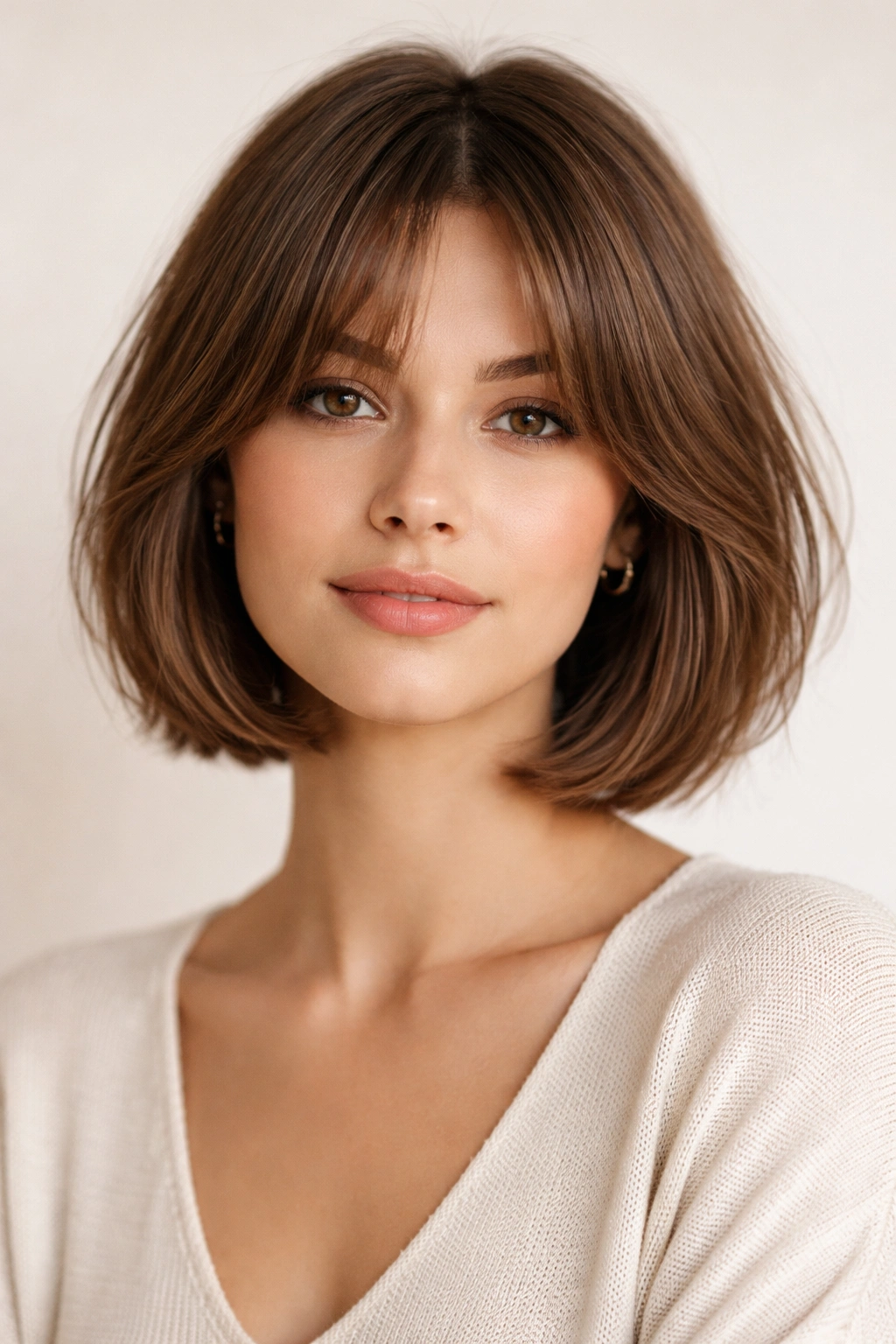
A chin-length bob is the haircut that makes curtain bangs earn their keep. Hit the jaw in the wrong place and the whole shape can look boxy; land it with a little feathering, and the face opens up in a much kinder way.
Why It Softens the Jawline
The length sits right where the face naturally tapers, so the cut gives you structure without heaviness. The feathered curtain bangs should start around the bridge of the nose and widen toward the cheekbones, which keeps the front light instead of blunt. That little shift matters.
Ask for the ends to be point-cut or lightly texturized, not hacked into jagged layers. You want the perimeter to stay clean, but the fringe needs enough softness to move. If the bangs are too short, the cut gets choppy fast. If they’re too dense, the softness disappears.
Best for: square faces, strong jaws, and anyone who wants a shorter bob without looking severe.
Styling note: Blow-dry the bangs forward first, then sweep them away from the face with a small round brush. A 1-inch brush is usually enough. Any bigger and the bend gets lazy.
One thing I’d avoid: cutting the front too blunt. A chin-length bob can handle crisp edges, but the curtain bang should stay airy.
2. French Bob With Brow-Skimming Curtains
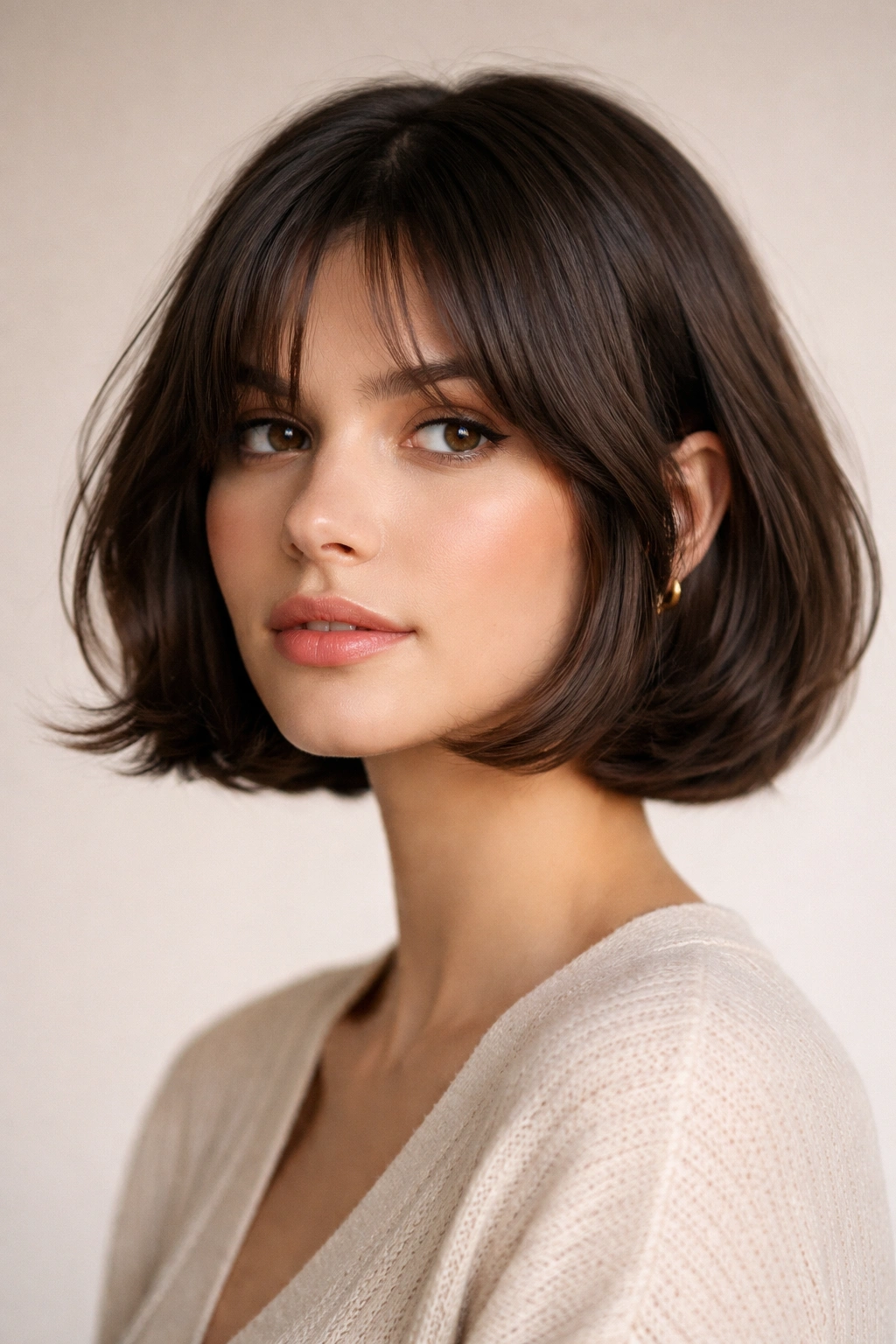
The French bob gets called chic all the time, which is fair, but chic is not the same as hard. With brow-skimming curtain bangs, it turns softer, lighter, and less precious.
The Shape That Keeps It Light
A true French bob usually sits somewhere between lip length and just below the cheekbone, with a slightly rounded outline. That rounded finish is what saves it from feeling stiff. Add curtain bangs that split at the center and brush the brows, and suddenly the haircut feels less like a statement and more like something you live in.
This cut works best when the bangs are soft enough to fold around the face instead of laying flat. A tiny bend at the ends helps a lot. So does a bit of texture through the mid-lengths. Too much layering can make it lose that neat French feel, though, so don’t let the cut get shredded.
- Good match for: fine to medium hair that needs lift near the face.
- Wear it with: a loose wave, a soft side tuck, or a barely-there bend from a flat iron.
- Avoid: cutting the fringe too short if you want softness. Brow-skim is the sweet spot.
The whole point is ease. Not perfection. Never perfection.
3. Blunt Bob With Long Face-Framing Curtains
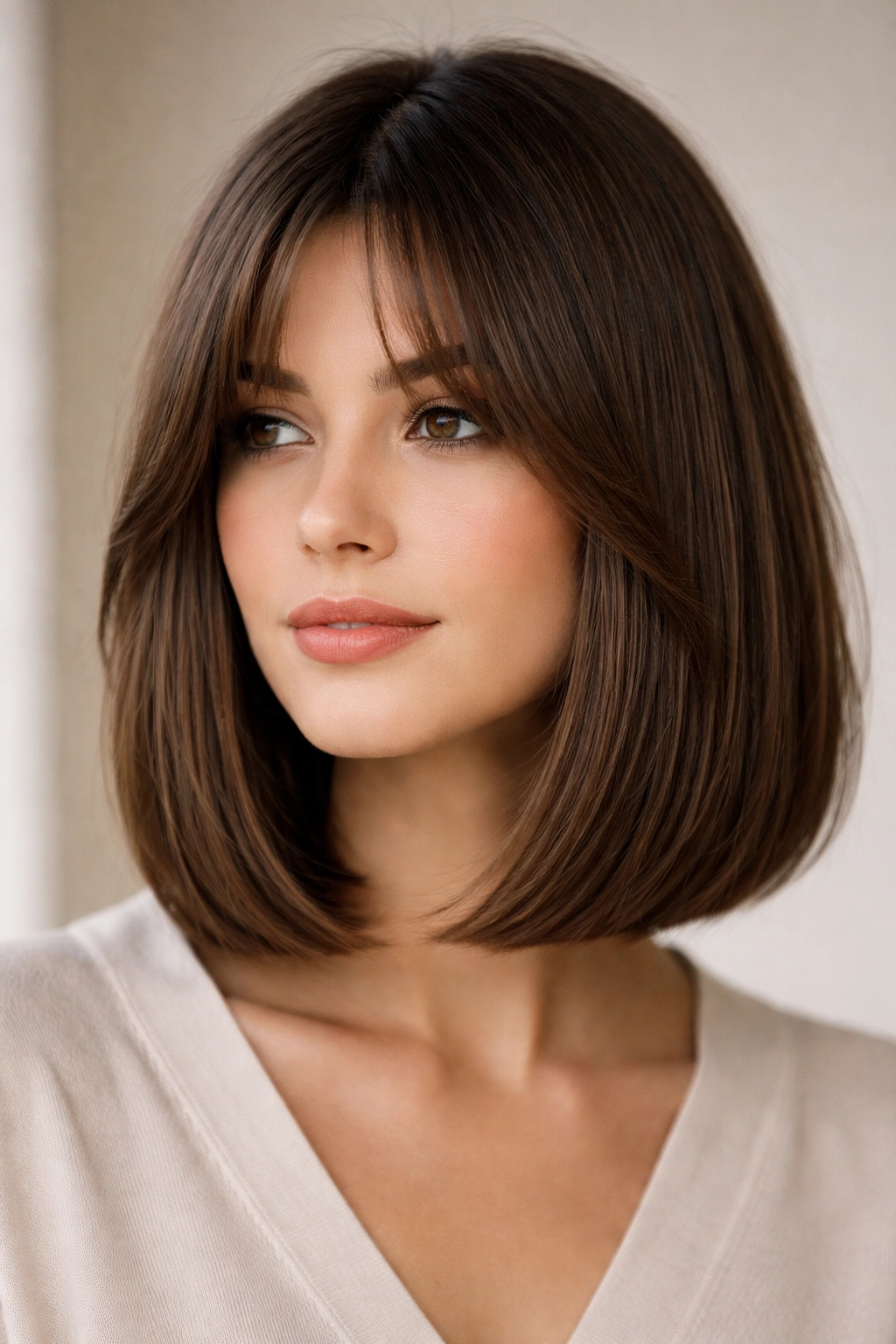
A blunt edge does not have to feel severe. That’s the mistake people make when they hear “blunt bob” and picture a haircut that could cut glass. Keep the line, but stretch the curtain bangs longer, and the look changes in a hurry.
The contrast is the magic here. The bob itself stays clean and straight, usually somewhere between chin and just below the jaw, while the fringe starts high at the center and drops into longer face-framing pieces that hit around the cheekbones or even the lip. That gives the front some movement without sanding down the sharpness of the bob.
This version is especially good if you like a neat shape but don’t want to look too severe in photos or under bright light. The long curtains soften the center part and keep the haircut from reading flat. A tiny inward bend on the ends helps, too. One pass with a flat iron, not three.
Who it flatters: oval faces, longer faces, and anyone with straight hair that tends to look too plain when it’s all one length.
What to ask for: a blunt perimeter with long, tapered curtain bangs that blend into the front pieces rather than stopping abruptly.
It’s tidy. It’s easy to style. And it has just enough softness to keep people from calling it strict.
4. Layered Lob With Airy Curtain Bangs
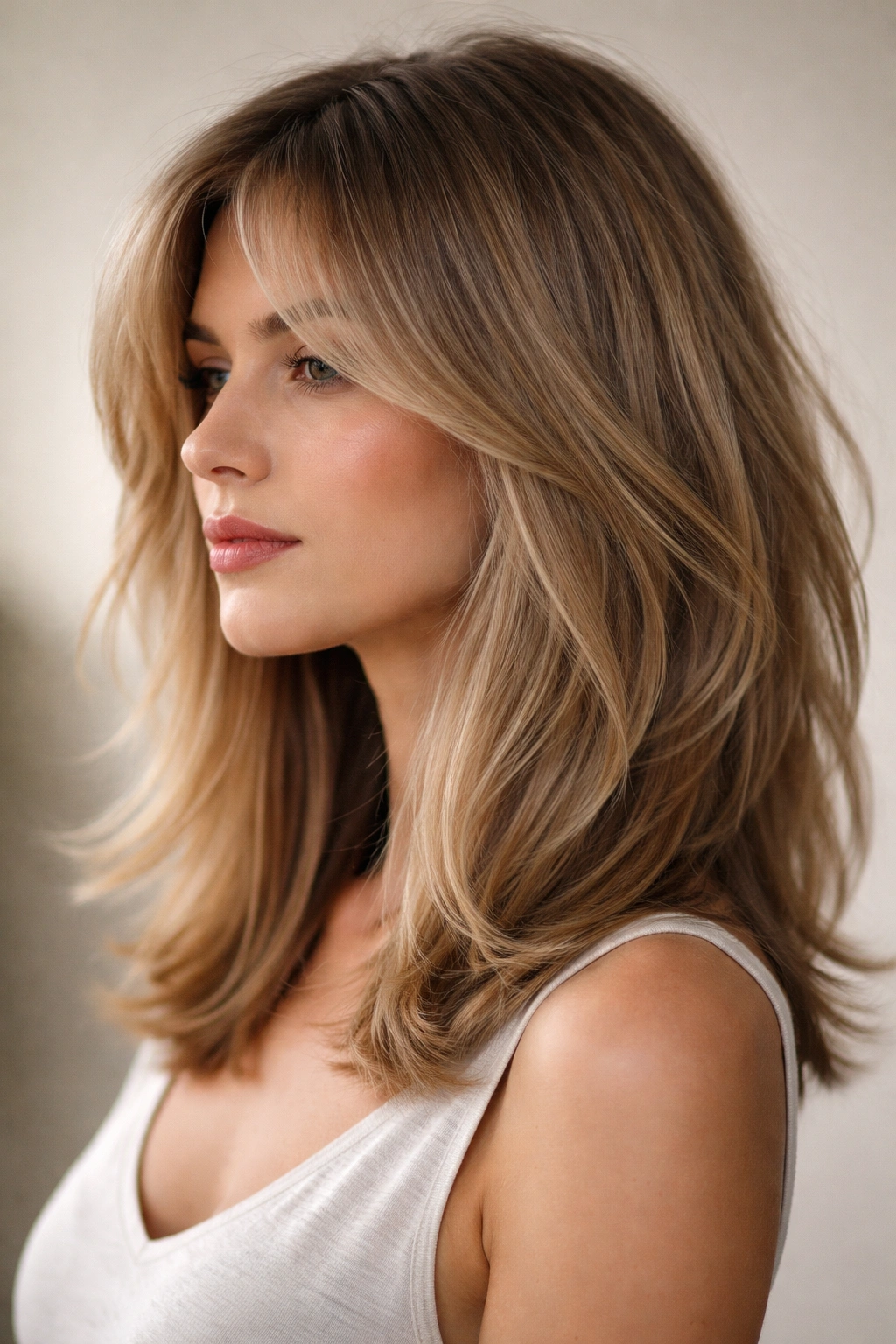
If your hair gets heavy at the ends, a layered lob with airy curtain bangs fixes more than most people expect. The extra length gives the hair room to move, and the layers stop it from hanging like a curtain — the bad kind, not the fringe kind.
How to Wear It Flat or Wavy
The lob usually lands around the collarbone, sometimes a touch above or below depending on your neck and shoulders. That length is useful because it softens the whole silhouette without forcing you into a true short bob. The curtain bangs can be cut slightly longer here, since the rest of the cut has enough lightness to balance them.
On straight hair, the layers should be subtle. You want movement, not chopped ends. On wavy hair, a few internal layers help the hair bend instead of puff. That’s the difference between soft and fuzzy, and it’s a line worth protecting.
A quick blow-dry with a medium round brush gives the bangs shape fast. If you prefer air-drying, twist the front sections once while they’re damp and let them dry away from the face. It’s a small move, but it helps the fringe keep its shape without looking too done.
Best for: thicker hair, growing-out bobs, and people who want softness without going too short.
5. Wavy Bob With Center-Part Curtains
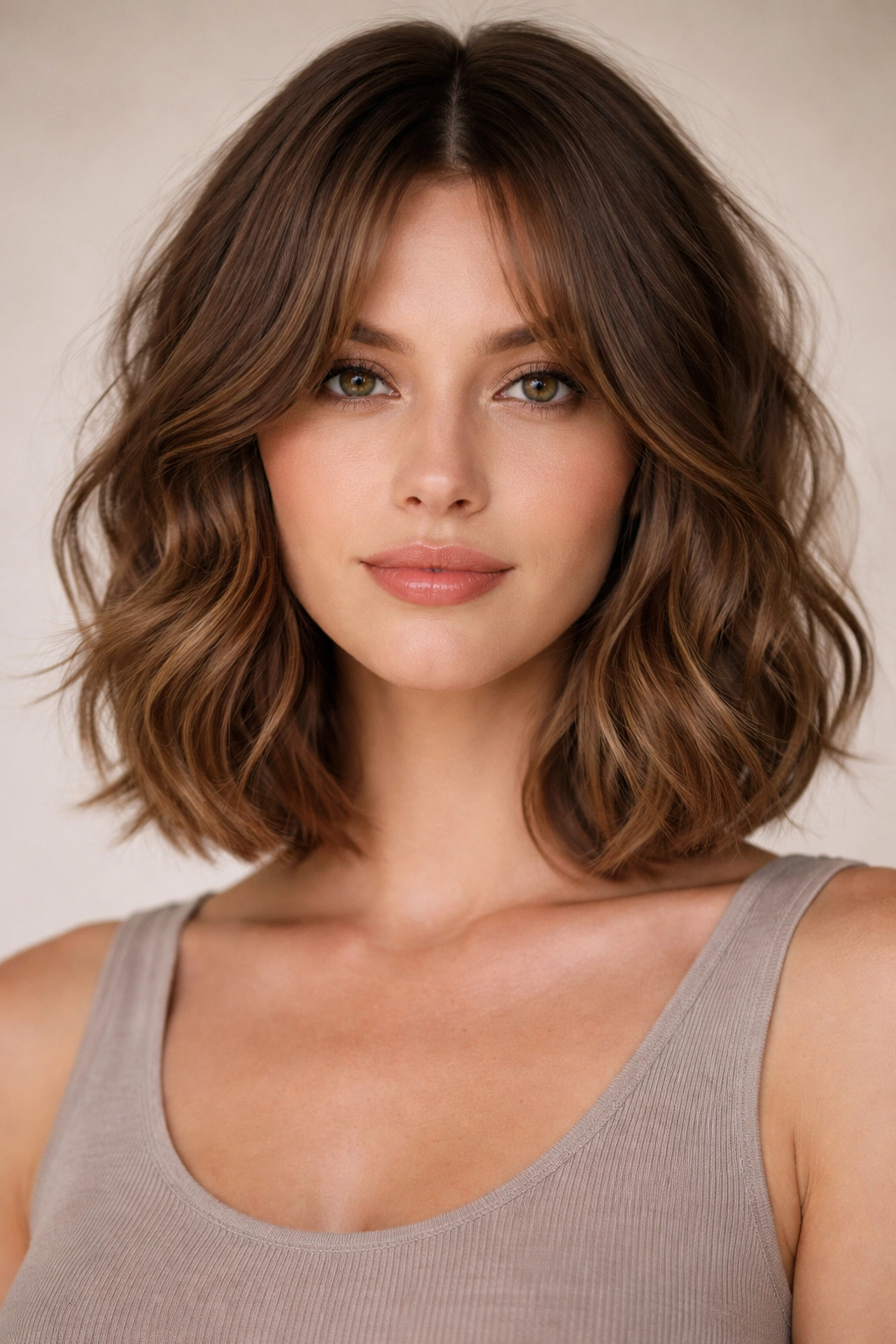
A little wave changes everything. A straight bob with curtain bangs can feel neat; add a soft wave through the mid-lengths, and the whole haircut starts to breathe.
This is one of those cuts that looks better when it’s not perfect. The waves should be loose, not curled into ringlets, and the curtain bangs should melt into the front pieces rather than sit on top of them like a separate feature. Think bend, not curl. The ends can flip slightly outward or curve under, depending on your hair’s natural pattern.
What makes this version so soft is the broken line. Straight hair can expose every edge. Wavy hair blurs them. That blurring is useful here because it keeps the bob from feeling too geometric, especially around the cheeks and jaw. If you have a natural wave, you’re already halfway there.
A light cream or mousse usually works better than heavy oil. Heavy products flatten the wave and make the bangs stick together. Nobody wants that. A soft bob needs air between the strands.
If you’ve got a round face, keep the longest front pieces below the cheekbone. That little bit of length helps stretch the face without making the style look long.
6. A-Line Bob With Soft Curtain Fringe
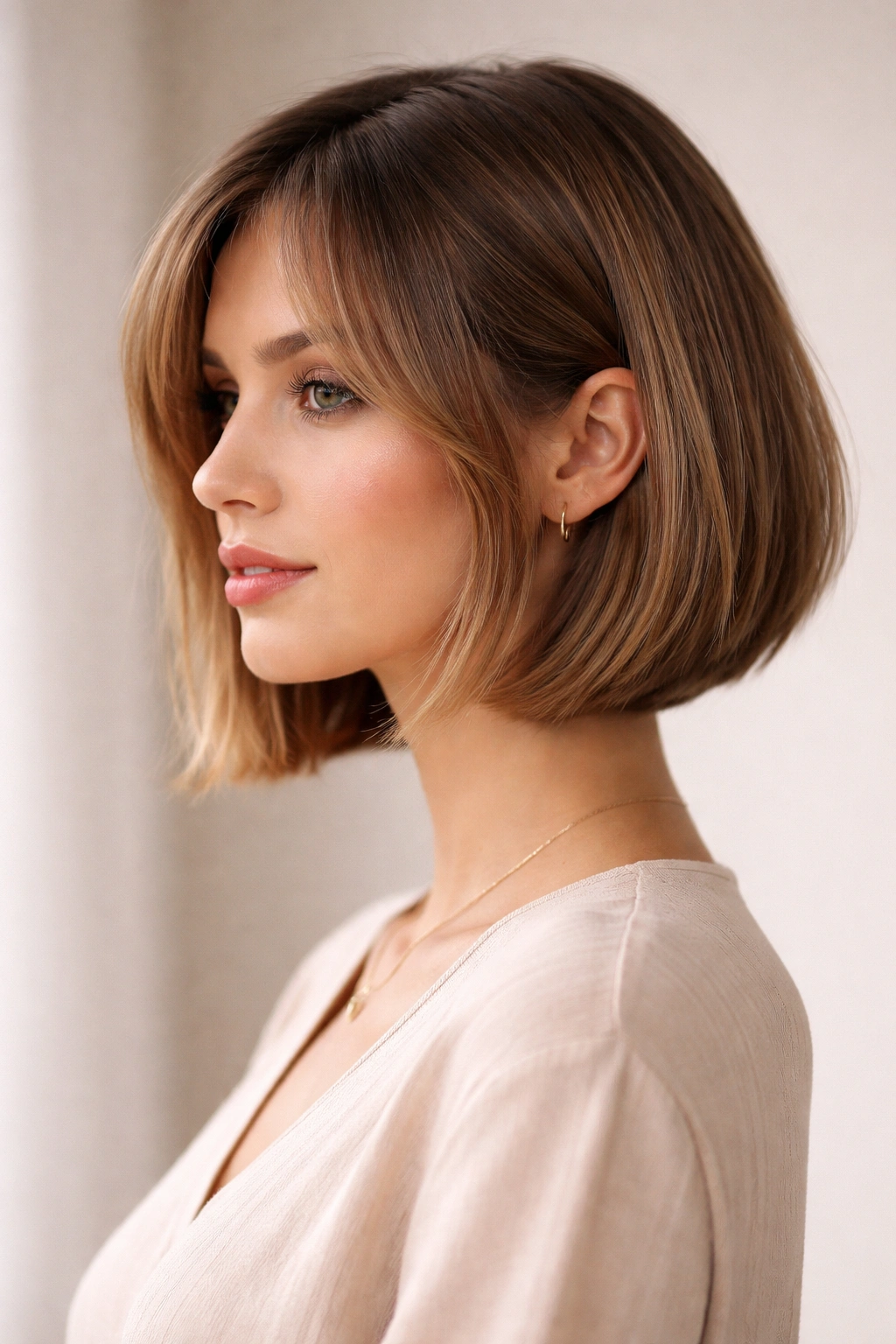
Want the back clean and the front gentle? The A-line bob does that without much fuss. It’s shorter in the back, longer in the front, and the angle gives the hair shape even before styling.
What to Ask For
- Keep the nape neat and tucked close to the neck.
- Let the front angle drop about 1 to 2 inches longer than the back.
- Cut the curtain fringe so it opens from the center and lands around the cheekbones.
- Soften the front edge with point cutting, not chunky layers.
That angle can look sharp if it’s pushed too hard, so the curtain bangs matter more here than people realize. They break up the line and stop the cut from feeling too architectural. A little softness around the face also makes the nape-to-front transition feel smoother.
This cut is a quiet helper for fine hair. The angle creates the illusion of fullness without making the whole bob heavy. On thicker hair, it removes some weight from the back, which can be a relief if you’ve ever felt your bob balloon out at the bottom.
Keep the styling simple. A blow-dry with a paddle brush for the back and a round brush for the front is enough. Do not overthink it. The shape does the heavy lifting.
7. Shaggy Bob With Split Bangs
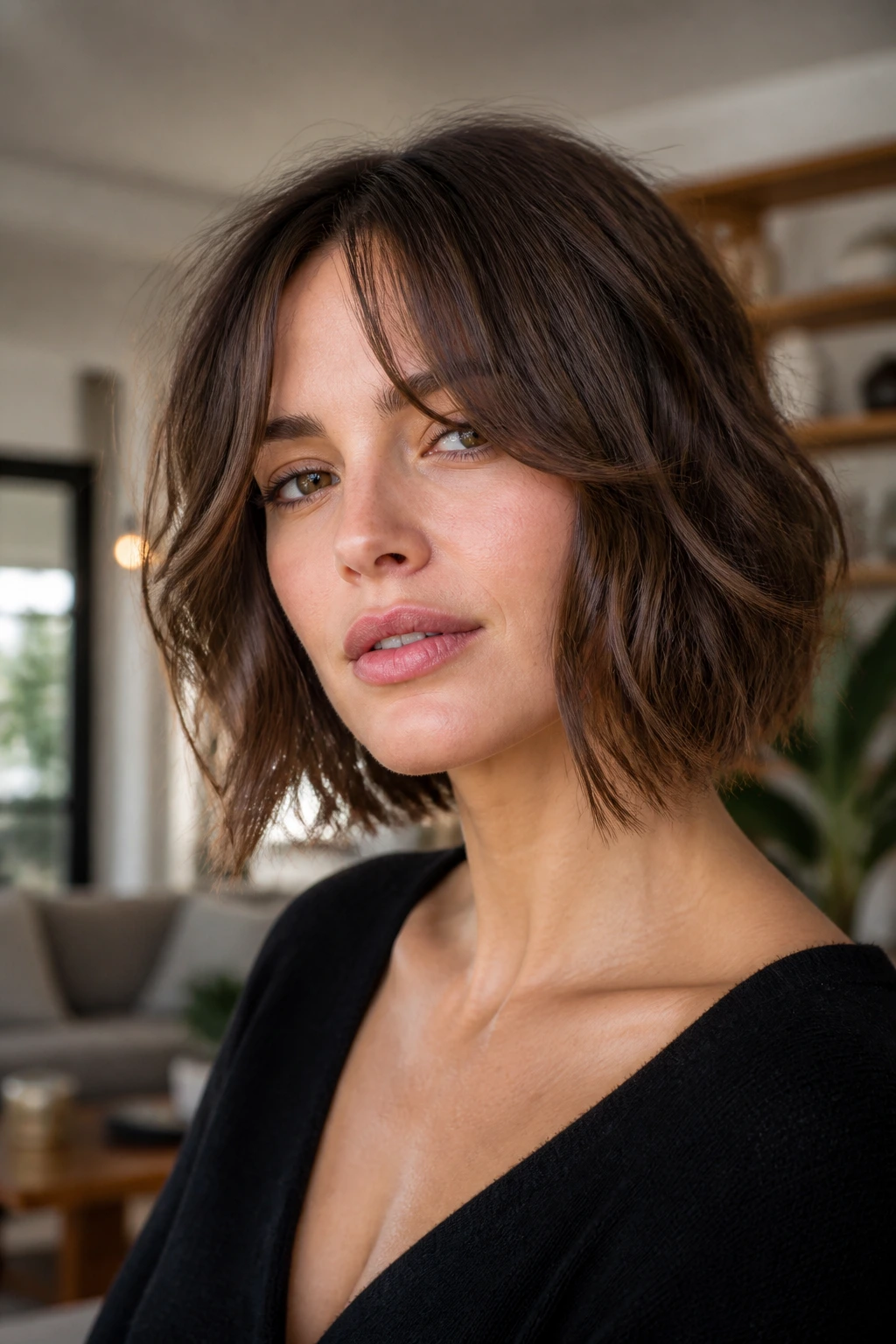
This is the softest bob on the list if you like hair that looks touched, not frozen. A shaggy bob with split bangs has movement built in, so the curtain fringe feels like part of the haircut instead of a separate piece glued to the front.
Why It Feels Softer Than a Classic Shag
A classic shag can go heavy on choppy texture. This version keeps the layers lighter and the ends less ragged, which makes it easier to wear if you want softness rather than edge. The split bangs should fall in loose pieces around the cheekbones, not in thin, stringy strips. That’s the difference between airy and overdone.
This cut works beautifully on hair that has a little natural wave or bend. Straight hair can wear it too, but it usually needs a touch of mousse or texture spray at the roots. If you use too much product at the ends, the layers separate in a messy way instead of a soft one.
Best for: medium-density hair, lived-in texture, and anyone who likes a little movement without a lot of styling.
What to watch for: too many short layers near the crown. They can make the top puffy and the ends thin.
There’s a reason this shape keeps showing up in good salons. It looks like it belongs to a real person, not a styling session.
8. Curved Bob With Rounded Curtain Bangs

Why does a curved bob feel softer than a square one? Because it follows the face instead of fighting it. The ends gently tuck under or arc around the jaw, and the curtain bangs echo that curve instead of stopping flat across the forehead.
That rounded outline matters. A square bob can look bold, but bold is not always the goal. If you want softness, the front should taper a little longer, then blend into the fringe so the haircut has a smooth visual line from temple to jaw. It’s subtle on paper. On the head, it changes the whole mood.
The Shape to Ask For
Ask your stylist to soften the perimeter around the corners of the bob, especially near the jawline. The curtain bangs should be cut to sweep away from the center and then curve back in toward the cheekbones. Not a hard bend. A soft one. If the fringe is too straight, the curved shape loses its charm.
This cut is lovely on straight or slightly wavy hair because the curve shows up without much work. A medium round brush and a quick bend at the ends are enough. If your hair naturally flips out, ask for the front slightly longer so it can settle properly.
The whole haircut feels calm. That’s the best word for it.
9. Razor-Cut Bob With Piecey Curtains
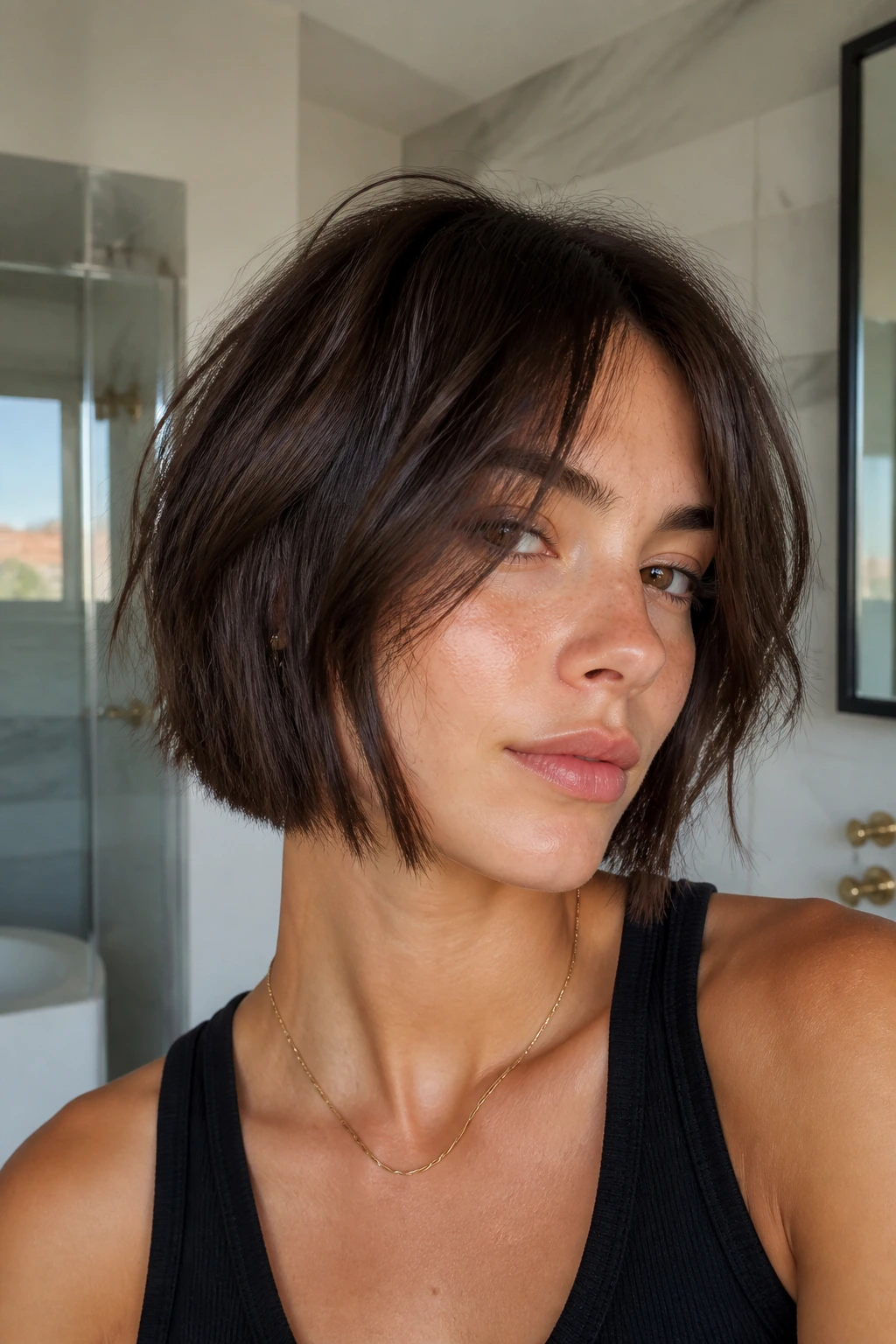
Razor cutting gets a bad reputation because people overdo it. Too much and the ends look frayed. Used carefully, though, it can make a bob feel featherlight, especially when the curtain bangs are kept piecey and soft.
This version is strongest on dense hair that tends to sit heavy at the bottom. A razor can remove bulk without chopping the shape into blocks, and the piecey fringe keeps the face from feeling covered. The softness comes from separation. Each strand has a little room, so the haircut moves when you do.
Don’t ask for this if your hair is already fine and wispy unless your stylist knows exactly how to control the blade. Fine hair can lose too much weight fast. And once that happens, it’s hard to put the fullness back.
The best styling here is loose and fast. A light cream, a rough dry with your fingers, and a tiny bend at the front are enough. If you start chasing every strand with a brush, the piecey effect disappears. That slightly undone finish is the whole point.
Soft doesn’t have to mean polished. Sometimes it just means the edges don’t look forced.
10. Italian Bob With Sweeping Fringe
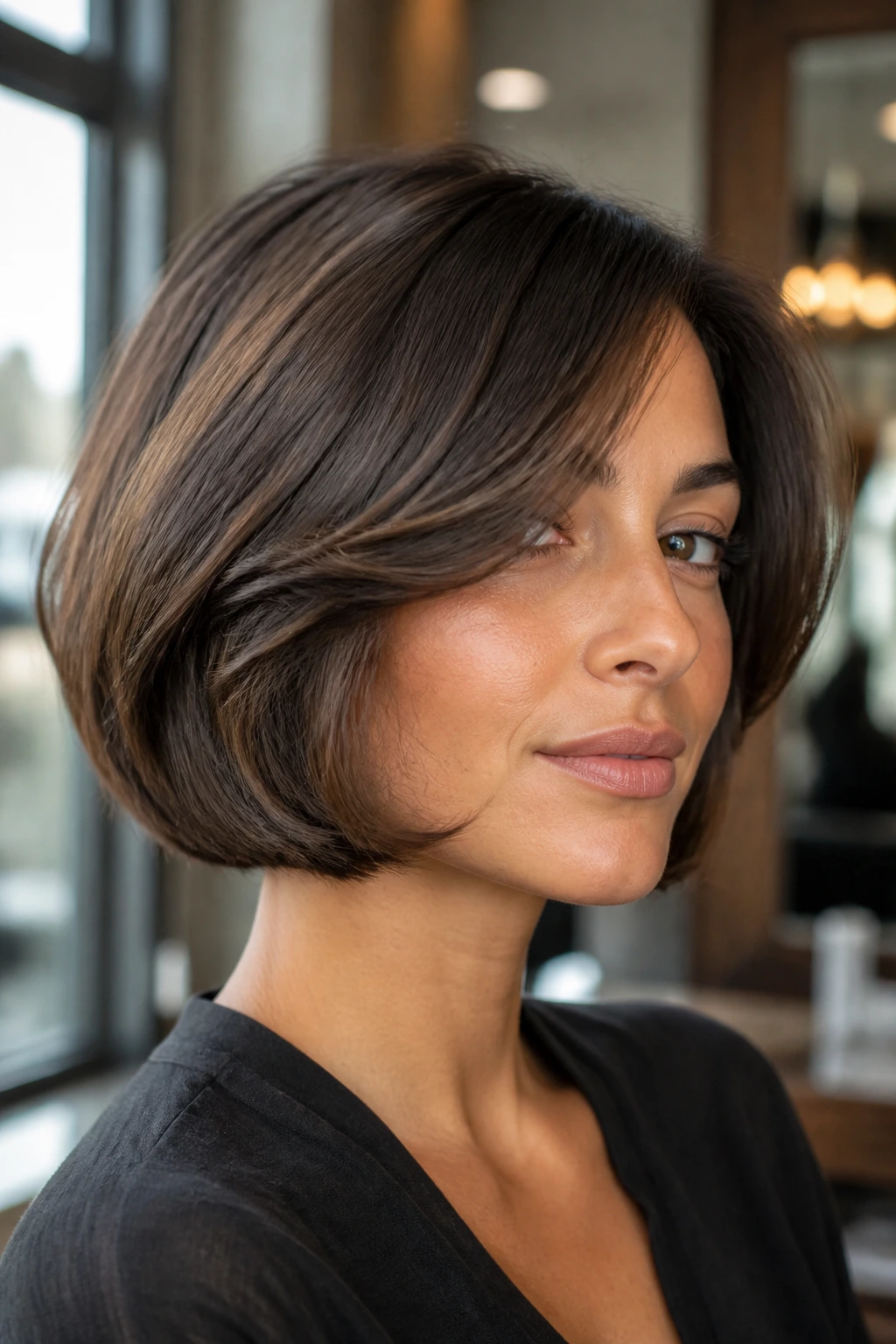
If you like a fuller bob, this is the one that looks rich without trying too hard. The Italian bob tends to sit at jaw length or just below it, with ends that feel plush rather than skinny. Add a sweeping curtain fringe, and the haircut turns lush fast.
The softness here comes from weight. Not heaviness — weight. The bob keeps enough body at the bottom to look healthy, while the fringe opens from the center and sweeps out toward the temples. That combination gives the face a gentle frame and keeps the cut from looking too airy or over-layered.
Styling from Wet Hair
Start with a volumizing mousse at the roots and a smoothing cream through the mids. That mix sounds ordinary, but it works. Blow-dry the bangs first with a medium round brush, rolling them away from the face and then back toward the sides so they fall naturally. The ends should bend under just a little, not curl into a neat bubble.
This cut is a good match for thick hair that needs shape, but it also works on medium hair if the stylist leaves enough fullness at the perimeter. Don’t let anyone thin it out too much. The silhouette needs that body.
The result is soft in a grown-up way. Full, smooth, and not fussy.
11. Curly Bob With Stretchy Curtain Bangs
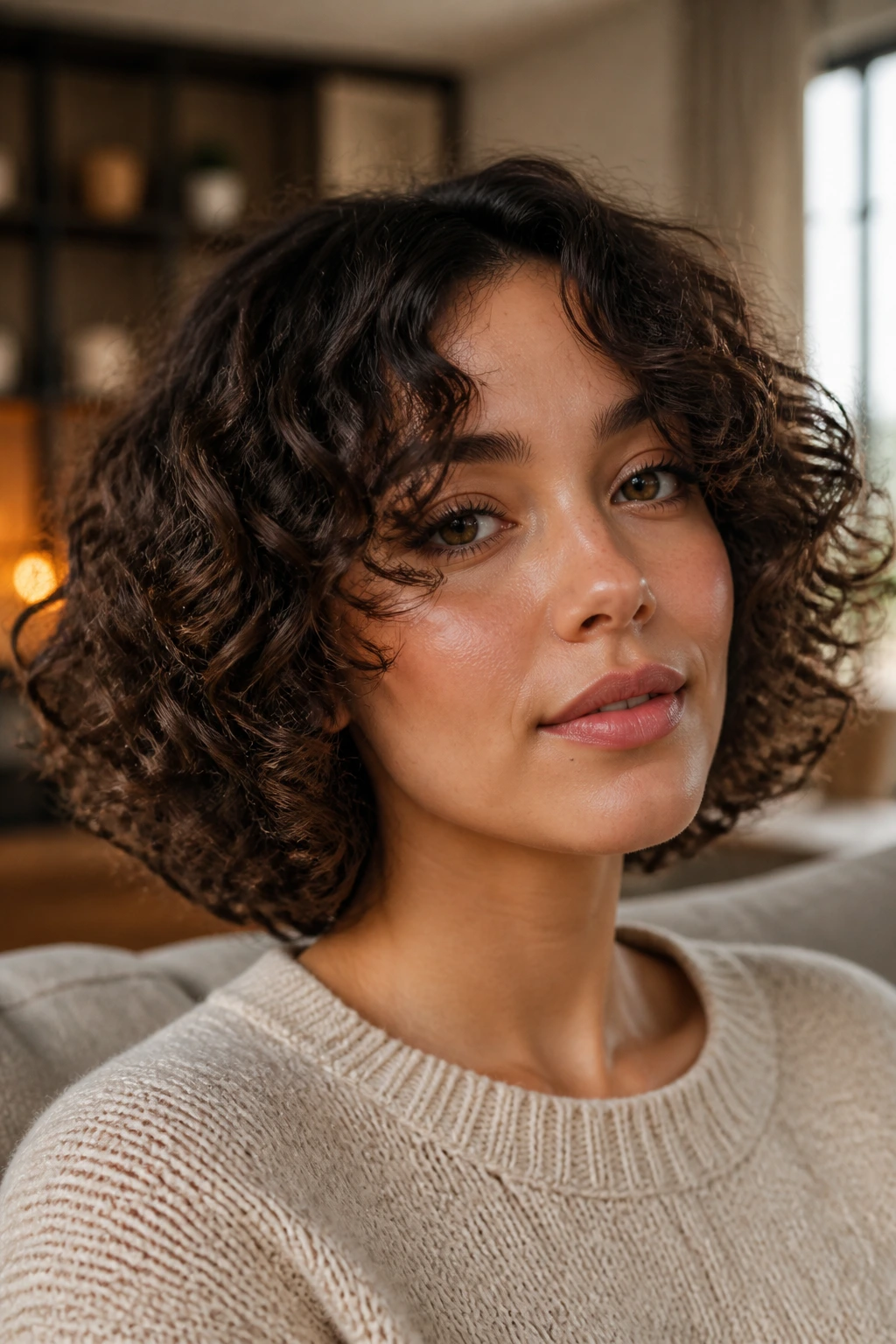
Curly hair can do curtain bangs beautifully — if the bangs are cut with enough length to shrink. That’s the part people underestimate. Curly curtain bangs need room to move, and they need to be shaped with the curl pattern in mind, not against it.
A soft curly bob usually lands around the chin or a bit below it, with the fringe starting long enough to split and fall around the cheeks. The bangs should stretch as they dry, then settle into that open-center shape naturally. If they’re cut too short, they jump up and lose the softness fast.
The Curl Pattern Matters
Tighter curls usually need longer face-framing pieces than looser waves do. That sounds obvious, but people still cut curly bangs like straight bangs and then wonder why the result feels abrupt. The curl has its own idea about length. You have to respect that.
Cutting curly hair dry is often safer because the stylist can see where the curls actually land. A curl cream or leave-in with light hold helps the bang pieces clump softly instead of frizzing apart. If the roots puff up, a little diffuser time at low heat can help — but don’t blast them. That just makes the front frizzy and the rest of the cut lose shape.
This bob looks gentle, movable, and a little romantic. Not precious. Just good.
12. Inverted Bob With Light Layers and Curtains
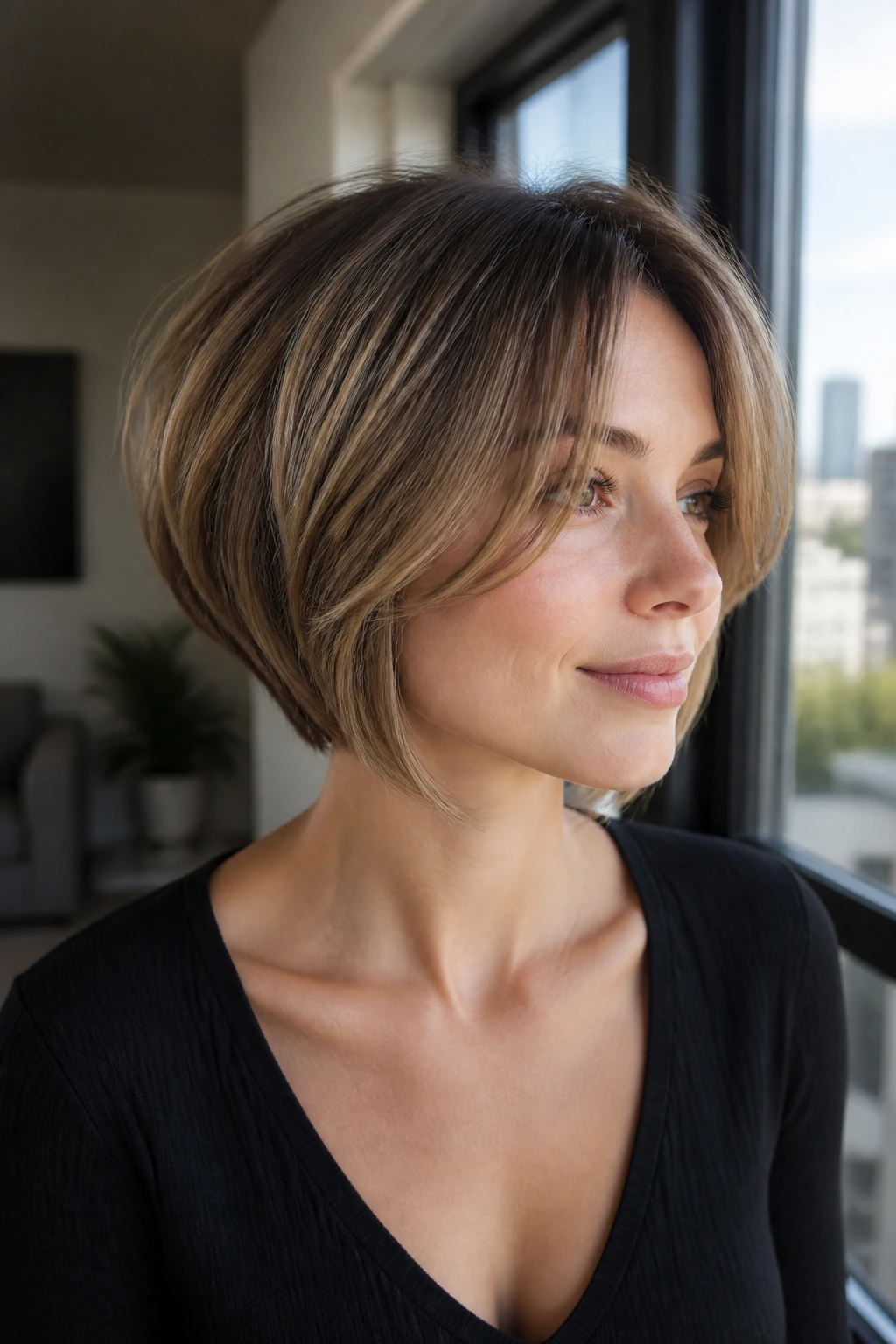
If the back of your bob keeps collapsing, an inverted shape gives it lift. The angle stacks a touch of volume near the nape, then lets the front fall longer and softer, which is a nice fix for hair that wants to lie flat.
The curtain bangs soften what could otherwise be a pretty pointed cut. That’s what makes this version work. Without the fringe, an inverted bob can feel a bit formal, even aggressive around the chin. With the right bang shape, the angle still exists, but the haircut reads more fluid and less stiff.
Light layers are the key. Too many and the front gets wispy in the wrong way. Too few and the cut turns heavy at the ends. You want enough layering to let the bob stack, but not so much that the outline disappears.
This is a smart choice for medium to thick hair, especially if your hair has trouble holding shape. The longer front pieces create a clean line from cheekbone to jaw, and that line is what keeps the look soft. A small round brush and a root lift spray are usually enough to wake it up.
Not every angled bob has to feel sharp. This one proves it.
13. Bottleneck Bob With Soft Curtain Bangs
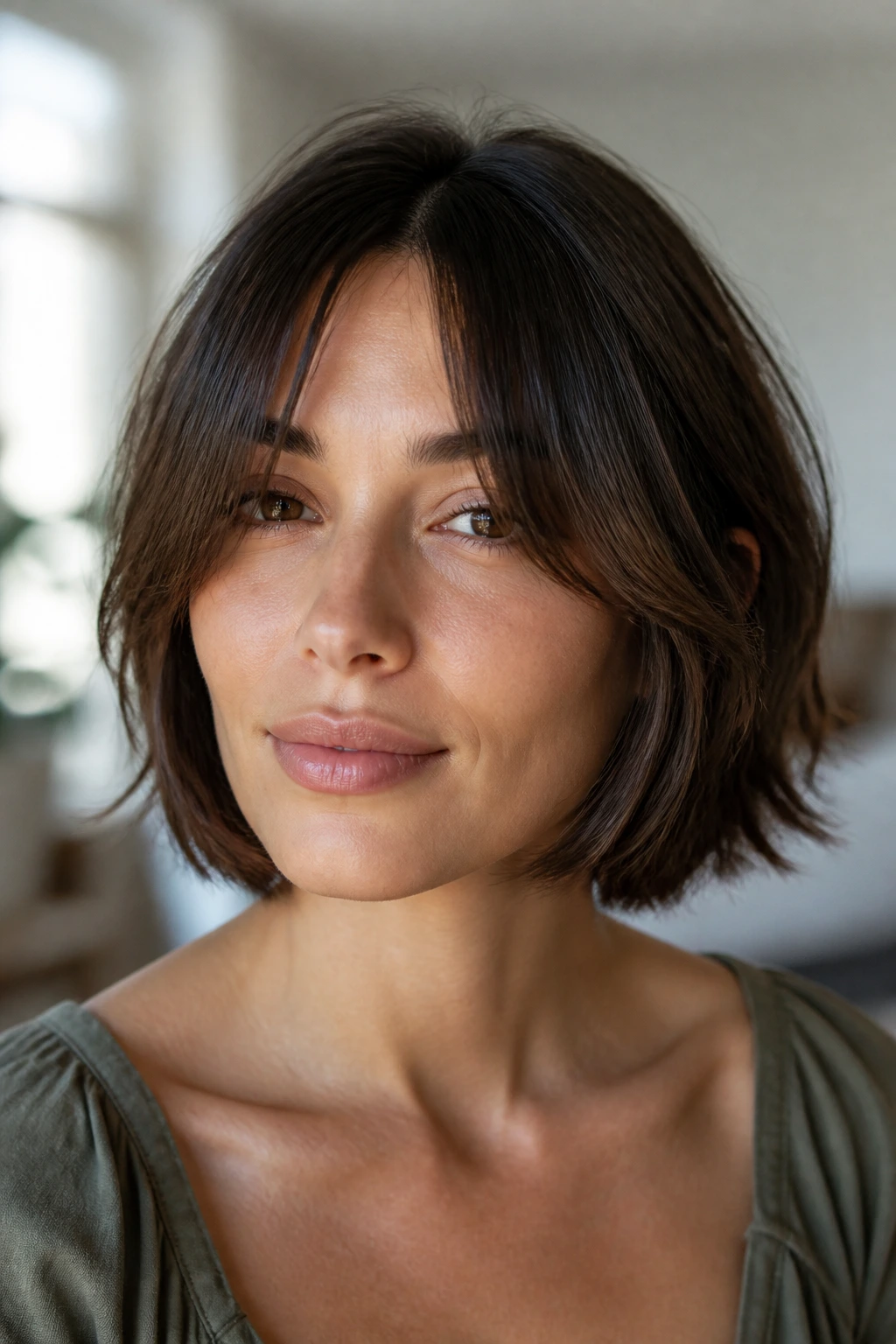
Not every soft bob needs the same width from root to ends. The bottleneck bob proves that point nicely. It starts a little narrower at the top, opens out around the cheekbones, then settles back into the bob shape near the jaw.
That changing width is what makes it feel soft. The curtain bangs are usually shorter in the center and longer at the sides, which creates a gentle opening around the face without covering too much of the forehead. It’s one of the most flattering choices if you want the eyes and cheekbones to stay visible.
What to Tell the Stylist
- Keep the center fringe lighter and slightly shorter.
- Let the side pieces graze the cheekbones.
- Preserve movement through the front, but keep the perimeter of the bob controlled.
- Avoid thick bangs that sit like a block across the forehead.
This cut is a nice middle ground for people who want softness but don’t want the haircut to disappear. It has shape. It has structure. And it still feels easy.
The bottleneck shape also grows out in a friendly way. The front gets longer first, which means you can stretch the life of the cut without it falling apart. That’s a good thing. Nobody wants a haircut that turns weird after two trims.
14. Tucked Bob With Long Curtain Bangs
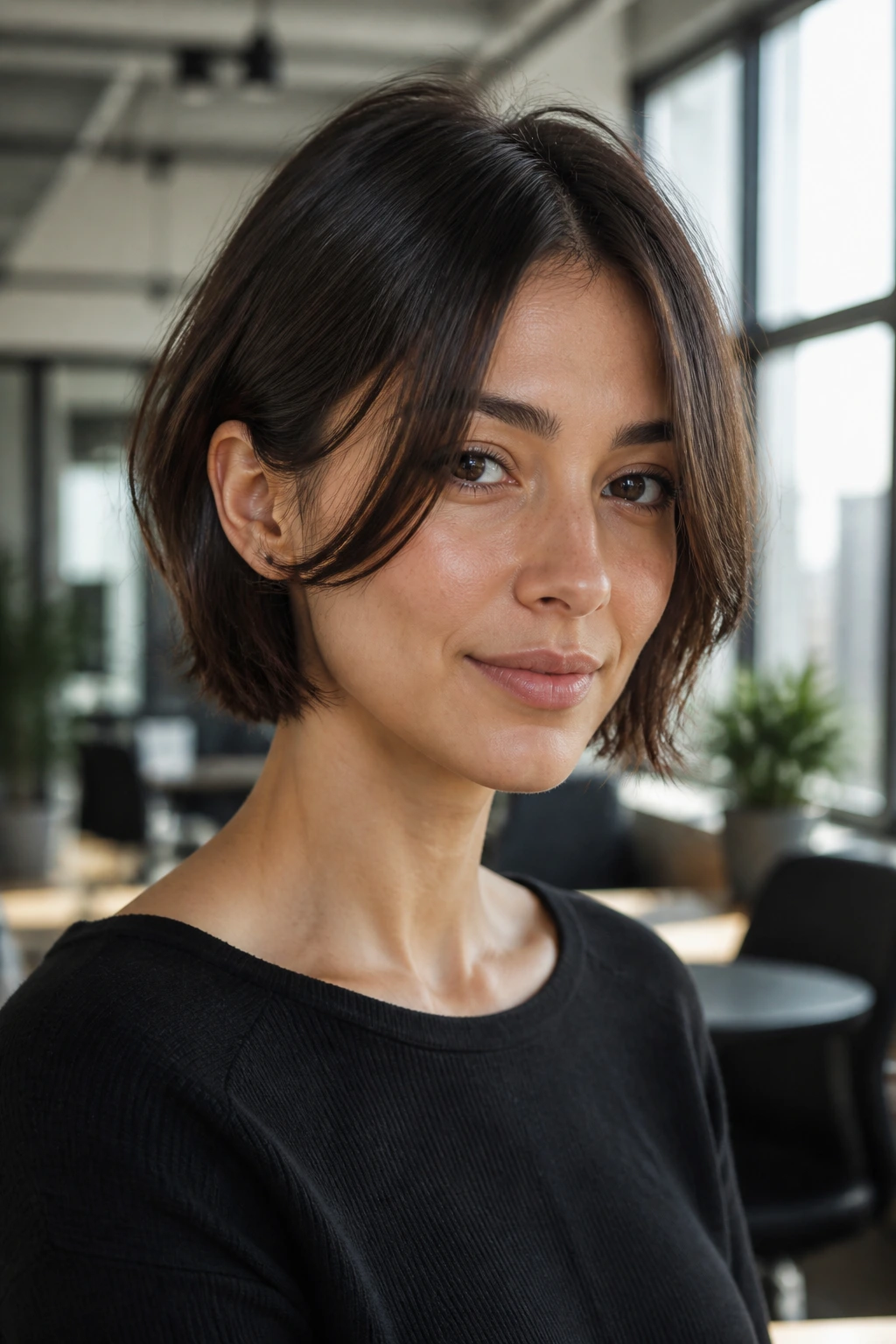
Some haircuts only look good when you fuss with them. This one looks better when you tuck it. A tucked bob with long curtain bangs gets that soft, casual feel from the simple act of sliding one side behind the ear and letting the rest fall loosely.
The bangs do a lot here. Keep them long enough to graze the cheekbones or even the lip, and they’ll soften the tucked shape instead of exposing too much of the face. That keeps the bob from looking too neat. It also gives you a little movement around the front, which is helpful if your hair is naturally straight and can look severe with a clean line.
A flat brush or medium round brush works well for this cut. Blow-dry the front away from the face first, then tuck one side back while it’s still warm so it holds its bend. A tiny bit of serum on the ends helps, but go easy. Too much and the tucked side looks greasy, which is not the goal.
This is a good office haircut, a good dinner haircut, and a good “I didn’t try too hard” haircut. Those are useful categories.
15. Collarbone Bob With Wispy Curtain Bangs
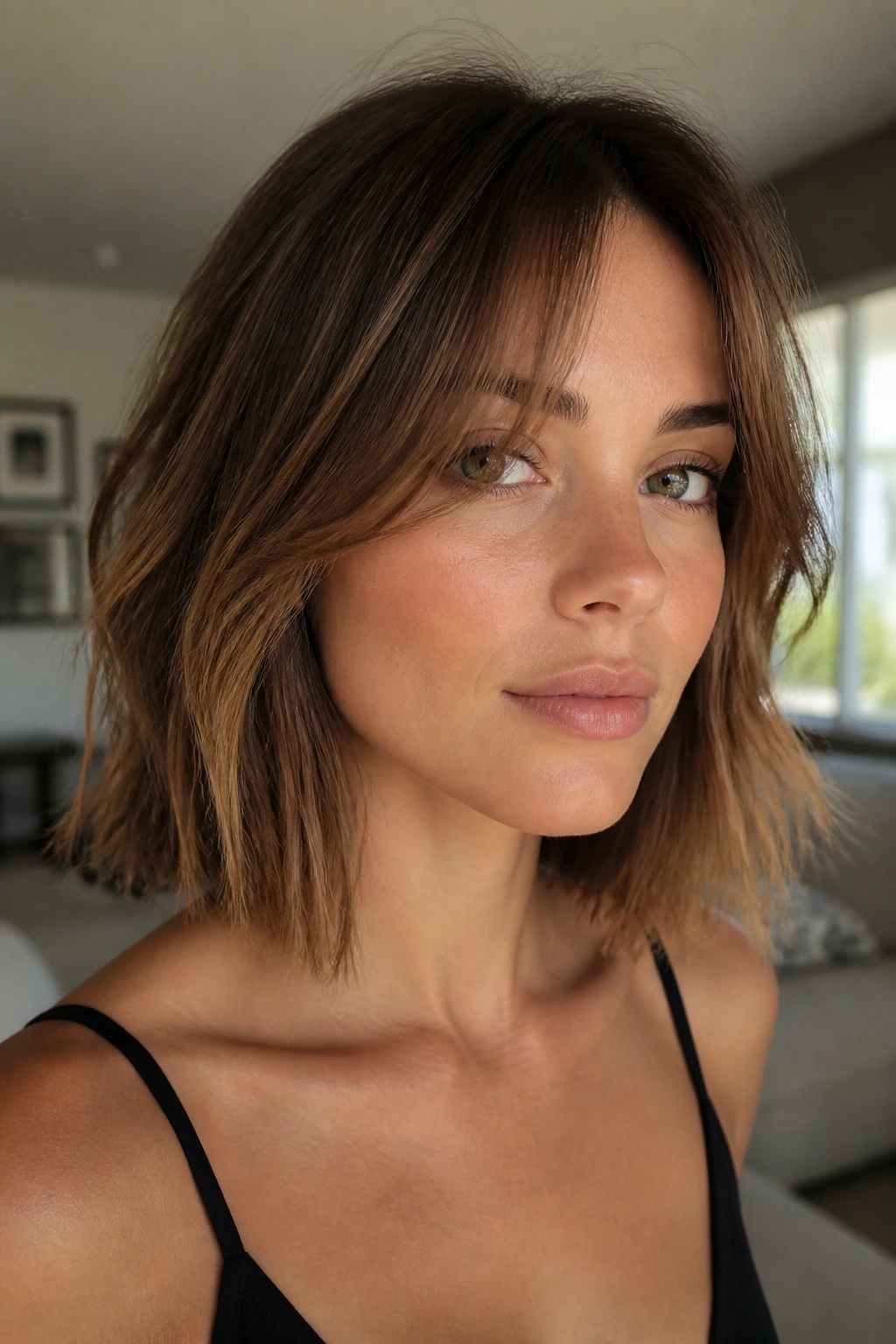
If you want the safest soft bob on the list, this is it. The collarbone bob gives you length without losing the bob shape, and wispy curtain bangs keep the front light enough to move around your face instead of sitting on it.
This cut is forgiving. That’s why so many people end up liking it more than they expected. The length works whether you wear it straight, wavy, or air-dried with a little bend. The bangs don’t need to be heavy to be useful; they only need enough length to split and frame the face. A little separation is enough.
Wispy bangs can go wrong if they’re too thin, though. There’s a difference between airy and sparse. Airy means the fringe has movement. Sparse means you can see too much scalp, and that rarely looks intentional. Keep the pieces soft, not stringy.
Why I’d recommend it: it grows out gracefully, suits most face shapes, and gives you the softness of curtain bangs without committing to a very short cut.
Best for: first-time bob wearers, people growing out layers, and anyone who wants a cut that still looks good when the blow-dry is only half done.
It’s the easiest one to live with. Sometimes that matters most.
Final Thoughts
Soft bob cuts with curtain bangs work because they balance two things that often fight each other: shape and movement. The bob gives you a clean outline. The curtain fringe breaks up the front so the haircut doesn’t feel hard or boxed in.
What changes the result most is not the trend label. It’s the small stuff — where the bob lands, how long the fringe stays in the center, whether the ends bend under or sit straight, and how much weight the stylist leaves around the jaw. Half an inch can change the whole read of the cut.
If you want the softest version possible, ask for a little length in the front and a fringe that opens gradually rather than sharply. That single choice usually does more than any styling trick.
