



A good bob on a little girl does two jobs at once. It keeps hair out of the eyes, and it still looks sweet when she’s wriggling, climbing, napping, or refusing to hold still for a brush. That balance is why baby girl bob cuts stay so beloved: they feel neat without looking severe, and they can be trimmed into shapes that suit fine hair, thick hair, curls, and the soft little cowlicks that love to pop up around the hairline.
The best part is how forgiving a bob can be. A blunt edge can make fine hair look fuller. A softer cut can stop thick hair from puffing out at the sides. A little fringe can make a face look brighter, though I’d keep it wispy if the child hates hair on her forehead. Tiny details matter more than people think. A half-inch too short can mean constant fiddling. A half-inch longer can mean the difference between a cut that sits nicely and one that flips into the eyes every ten minutes.
I’ve always thought the sweetest bob cuts for young girls are the ones that look easy in motion. Not just in a photo. The hair should fall well when she’s running around, leaning over a coloring book, or bundled into a car seat with a squashed bow and a slightly crooked part. That’s the real test.
Some styles do that better than others, and the differences are small enough that they’re easy to miss until you’ve seen them side by side. So let’s go through the shapes that actually work, not just the ones that look cute in a salon mirror.
1. Classic Chin-Length Baby Girl Bob Cut
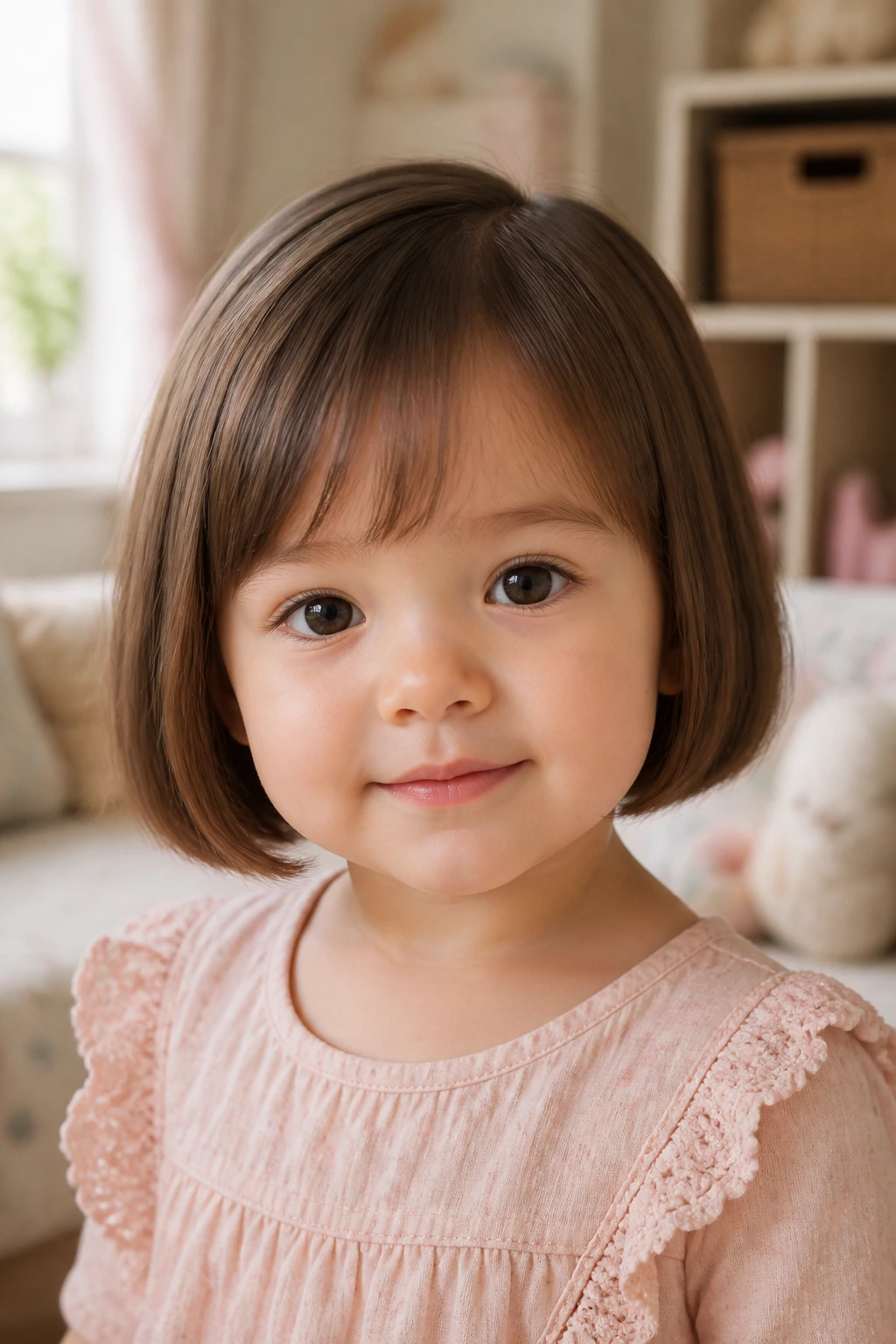
The classic chin-length bob is the one I’d trust first. It sits neatly at the jaw, keeps the neck clear, and has that tidy little shape that never looks like it’s trying too hard. On a baby girl with fine hair, it can make the whole head look fuller because the ends land in one clean line instead of disappearing into wispy layers.
Why the blunt edge matters
A blunt bob gives the hair a visual bottom. That sounds tiny, but it changes everything. Fine hair stops looking stringy. Straight hair looks thicker. Even soft waves get a neater outline, which is useful if you don’t want to fight with styling every morning.
It’s also easy to grow out. That matters. Kids do not pause their lives so a haircut can be maintained in perfect shape. A chin-length bob can slide into a slightly longer bob without looking messy, which is more than I can say for many trendy cuts adults keep trying to force on children.
- Best for fine to medium hair
- Sits cleanly under clips, headbands, or soft bows
- Needs only a quick comb and air-dry
- Looks tidy in photos and in real life
Best tip: ask for the ends to be checked while the child’s head is held straight, not tilted back. A tiny angle can make one side look longer than the other once she starts moving around.
2. Soft Layered Bob for Fine Hair
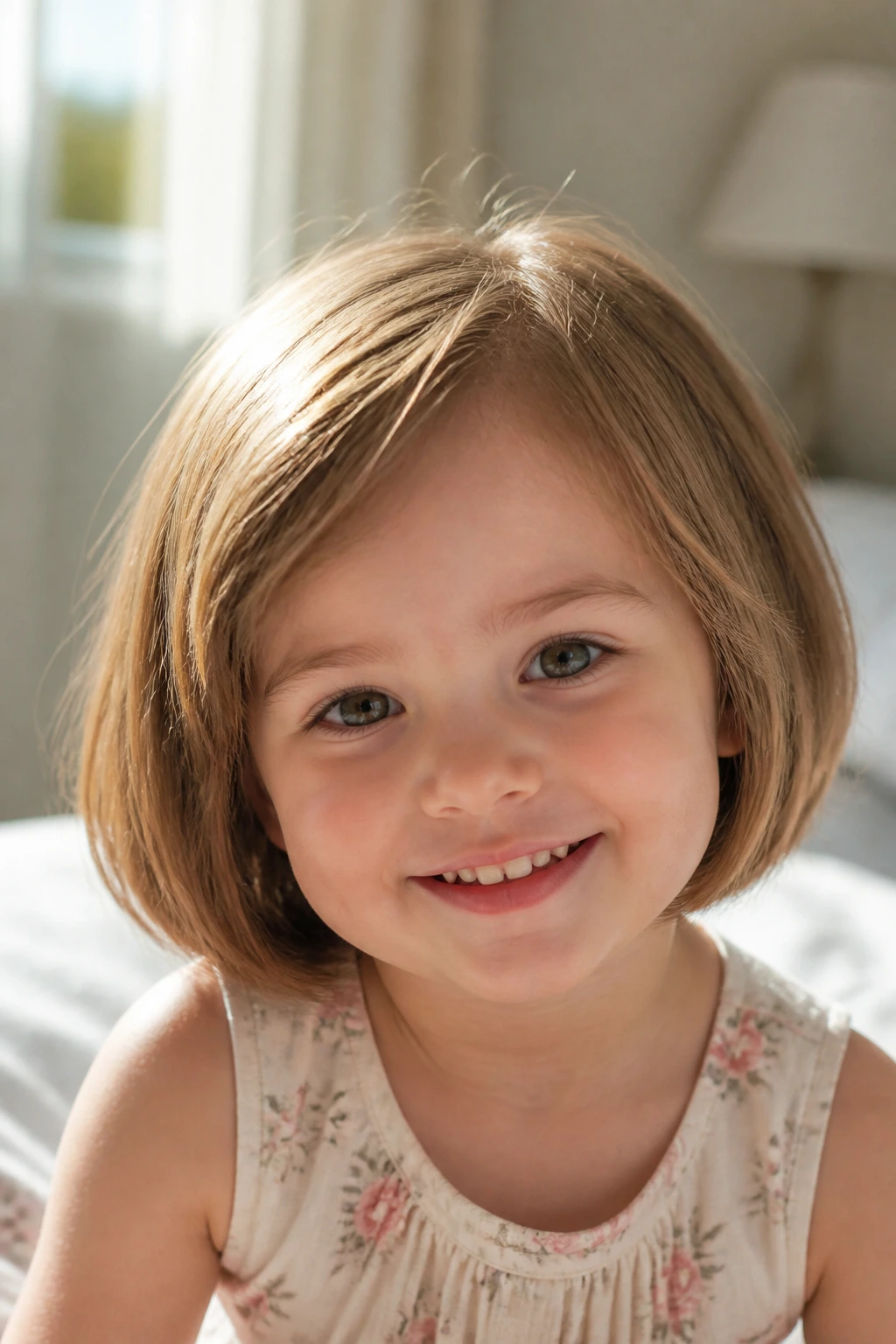
The soft layered bob is the easiest way to keep movement in short hair without making it look choppy. The trick is restraint. You want enough layering to stop the ends from sitting like a stiff sheet, but not so much that the haircut turns fluffy or uneven. On little girls, a few gentle internal layers around the crown can lift the hair without stealing its shape.
This cut works well when the hair is flat at the roots or grows in a bit of a swirl at the crown. A blunt line can sometimes make that kind of hair flip in odd ways. Soft layers smooth the transition and help the bob settle instead of sticking out at the sides. That’s especially useful for kids who hate blow-drying. The hair can air-dry and still look soft.
I like this cut for children whose hair is fine but not pin-straight. The layers give the ends some swing. Not too much. Just enough so the style doesn’t feel hard or helmet-like. And yes, it’s still adorable with a tiny clip near one temple. That part never gets old.
If you’re asking a stylist for this, say you want light layering only around the crown and back, with the bottom edge still looking full. Too many short layers can make a child’s hair puff up in all the wrong places. That’s the mistake people make when they want “more texture” and end up with less control.
3. Bob Cut with Wispy Bangs and a Soft Fringe
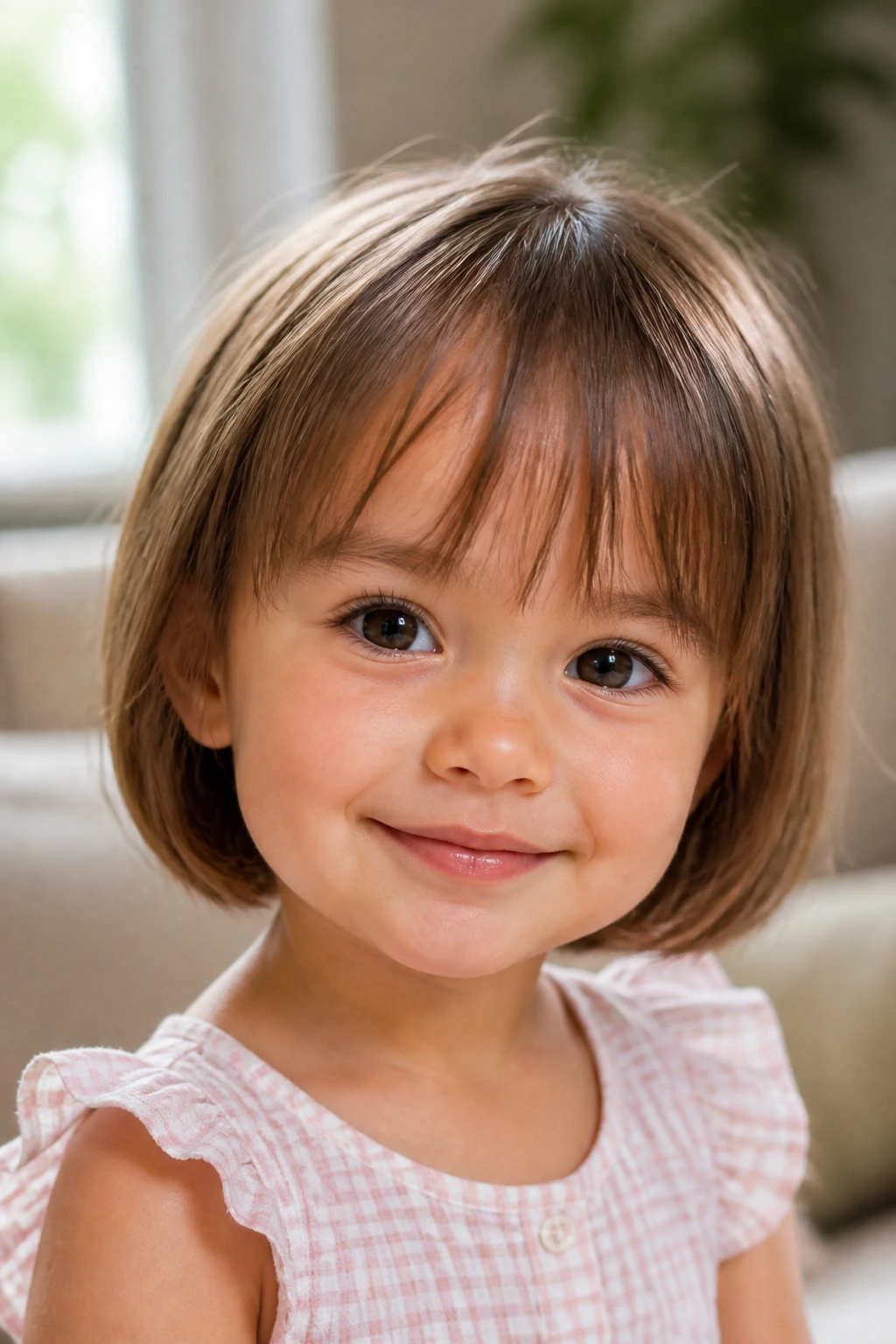
Can bangs work on a toddler bob without turning into a daily battle? Sometimes, yes—if they’re soft and light. Wispy bangs sit above the brows or just skim them, so they feel playful instead of heavy. They also soften a blunt bob, which can be useful if the child has a round face or a strong little forehead that you want to balance with a gentler line.
What to ask for at the salon
Keep the fringe thin. Not see-through thin, just light enough that it won’t trap sweat or poke the eyes every five minutes. A soft fringe should move when she blinks, not cling. The rest of the bob can stay chin-length or a touch shorter, depending on hair thickness.
I’m not a fan of dense bangs on very young children. They grow out fast, they need trims fast, and they get annoying fast. Wispy bangs are kinder. They can be swept to the side, tucked back with a tiny clip, or left to fall naturally when the hair dries.
- Keep the fringe soft, not heavy
- Trim the bangs slightly longer than you think you need
- Use a small amount of water or a damp brush to reset the part
- Avoid thick styling products; they make fine fringe look greasy
A little fringe changes the mood of a bob fast. It makes the haircut feel more playful, and the face looks open instead of boxed in. That said, if the child constantly rubs her forehead or hates anything touching it, skip bangs and keep the front pieces longer. Cute is not worth constant fidgeting.
4. Rounded Bob with Tucked-Under Ends
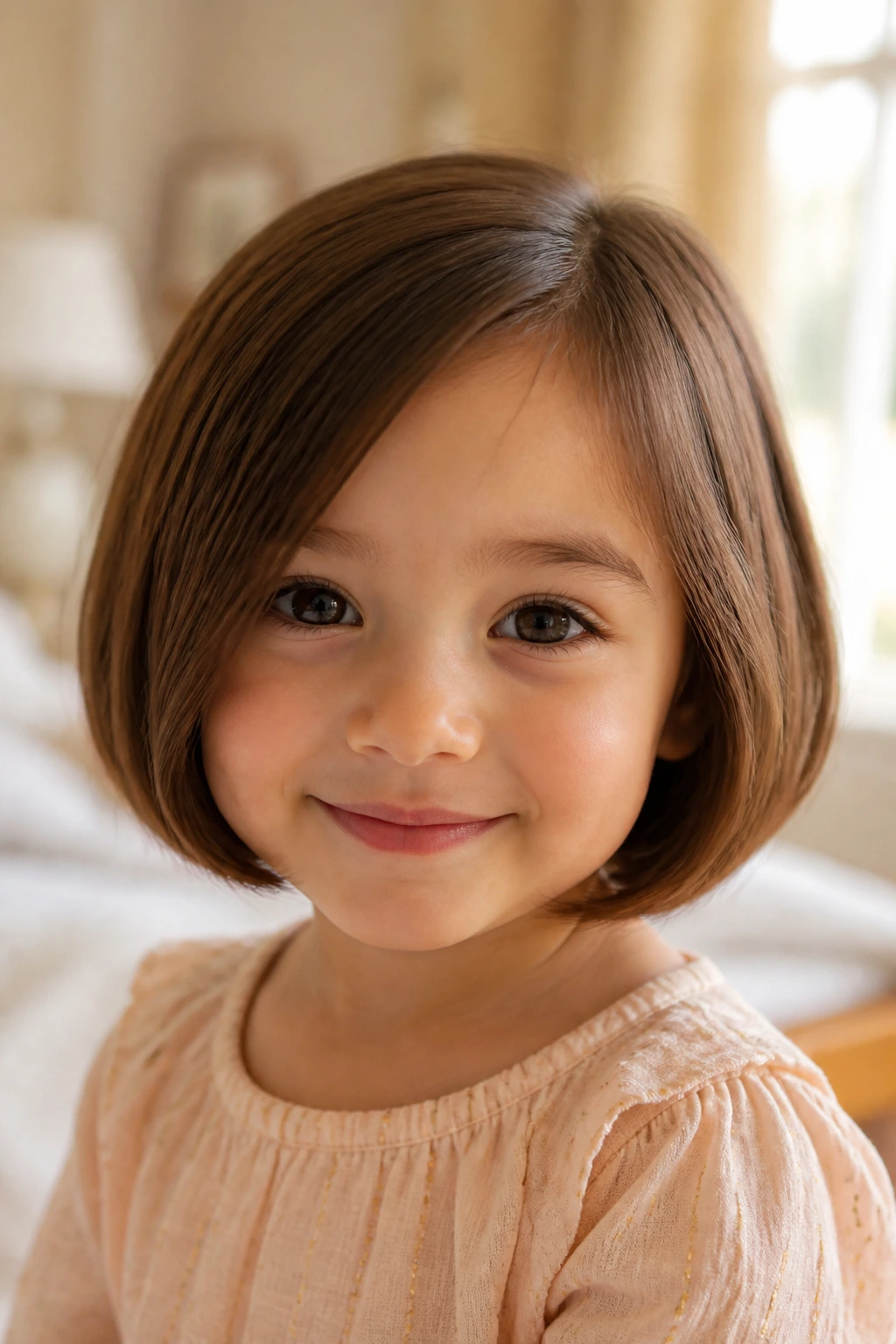
A rounded bob is one of those cuts that makes a child look put together with almost no effort. The shape curves gently inward at the ends, so the hair hugs the jaw and neck instead of sticking out. It has a soft, almost spoon-like line when it’s done well, and that line is the whole point.
Picture a child who pulls off her headband three times before breakfast. A rounded bob gives you a cleaner shape even when accessories don’t stay put. The ends tuck in on their own, especially on hair that’s straight or slightly wavy. And if the child’s hair tends to flip out at the ends, this cut helps calm that down.
The details that make it work
- The length usually sits around the jaw or just below it
- The perimeter should stay full, not razor-thin
- The stylist should soften the line near the nape so it doesn’t look boxy
- A quick brush downward after washing is often enough
There’s a little old-fashioned charm to this shape, and I mean that as a compliment. It feels neat without being stiff. If the hair is thick, keep the layers minimal; too much removal from the inside can make the silhouette puff out. If it’s fine, the rounded edge helps it look denser.
The best version of this cut is one that still moves. You want softness, not a helmet. That’s the real difference.
5. Side-Parted Wavy Bob
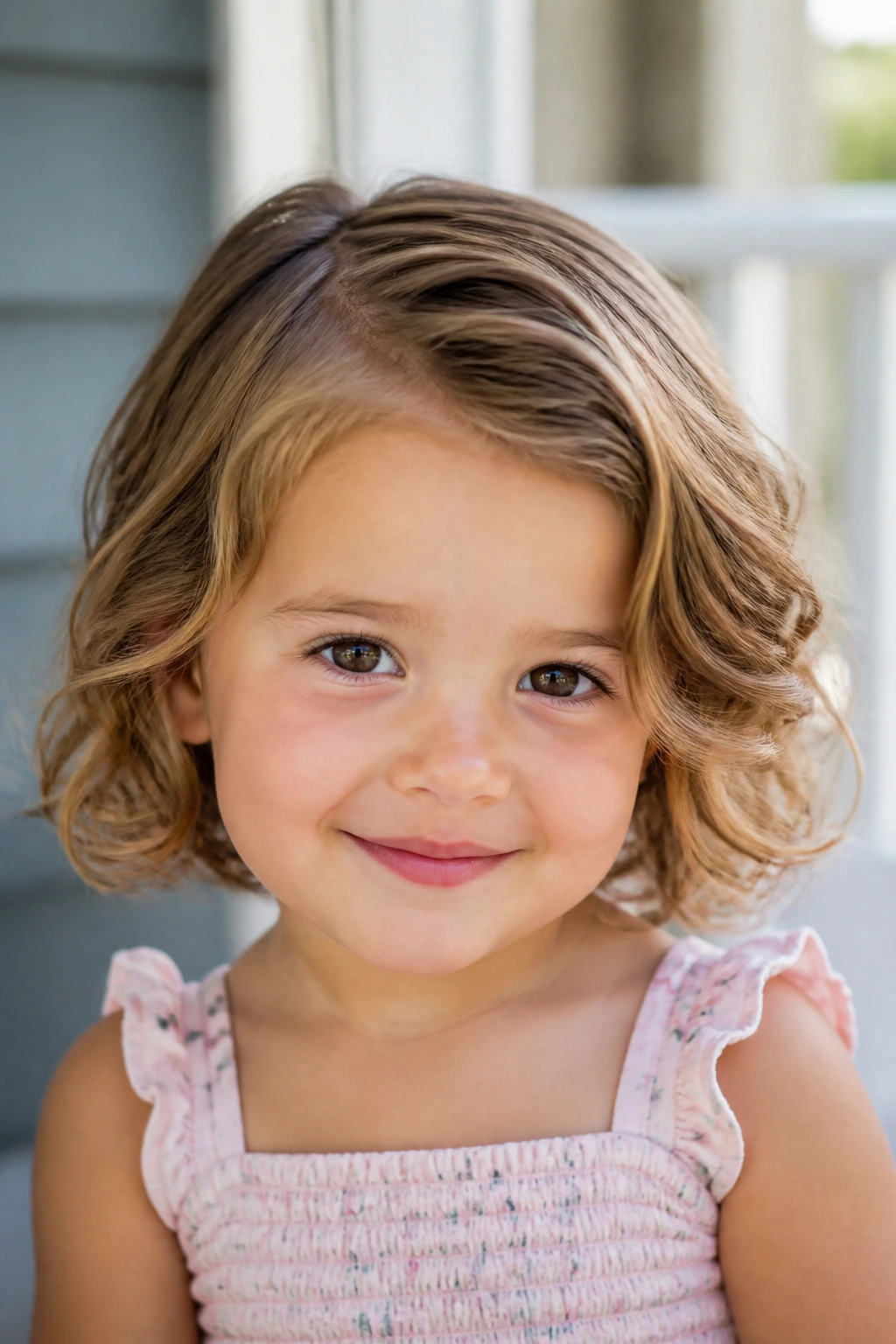
Side parts do more than people give them credit for. They change where the weight of the hair falls, which means a wavy bob can suddenly look softer, fuller on one side, and less fussy around the face. On a baby girl with a natural bend in her hair, this shape looks especially sweet because it lets the waves do the work.
I like this cut because it doesn’t fight texture. It leans into it. The hair can sit a little longer than chin length, usually somewhere between the jaw and the neck, so the waves have room to form. Shorter than that and some waves spring up too much. Longer than that and the shape starts losing its bob feel.
The side part also helps if the child has one side that lays flat and the other that flips out. That’s common. Hair is annoyingly asymmetrical that way. A side part gives the cut a bit of intentional movement, so the mismatch looks like style instead of a mistake.
If you want to keep the look soft, use a wide-tooth comb after washing and let the hair air-dry. A tiny bit of leave-in conditioner on the ends can help, but don’t drown it. Baby hair gets weighed down fast, and once it goes limp, the whole shape loses its charm.
One more thing. This is one of those cuts that looks best when it isn’t overworked. Let the waves bend where they want to bend.
6. Curly Baby Girl Bob Cut with a Rounded Shape
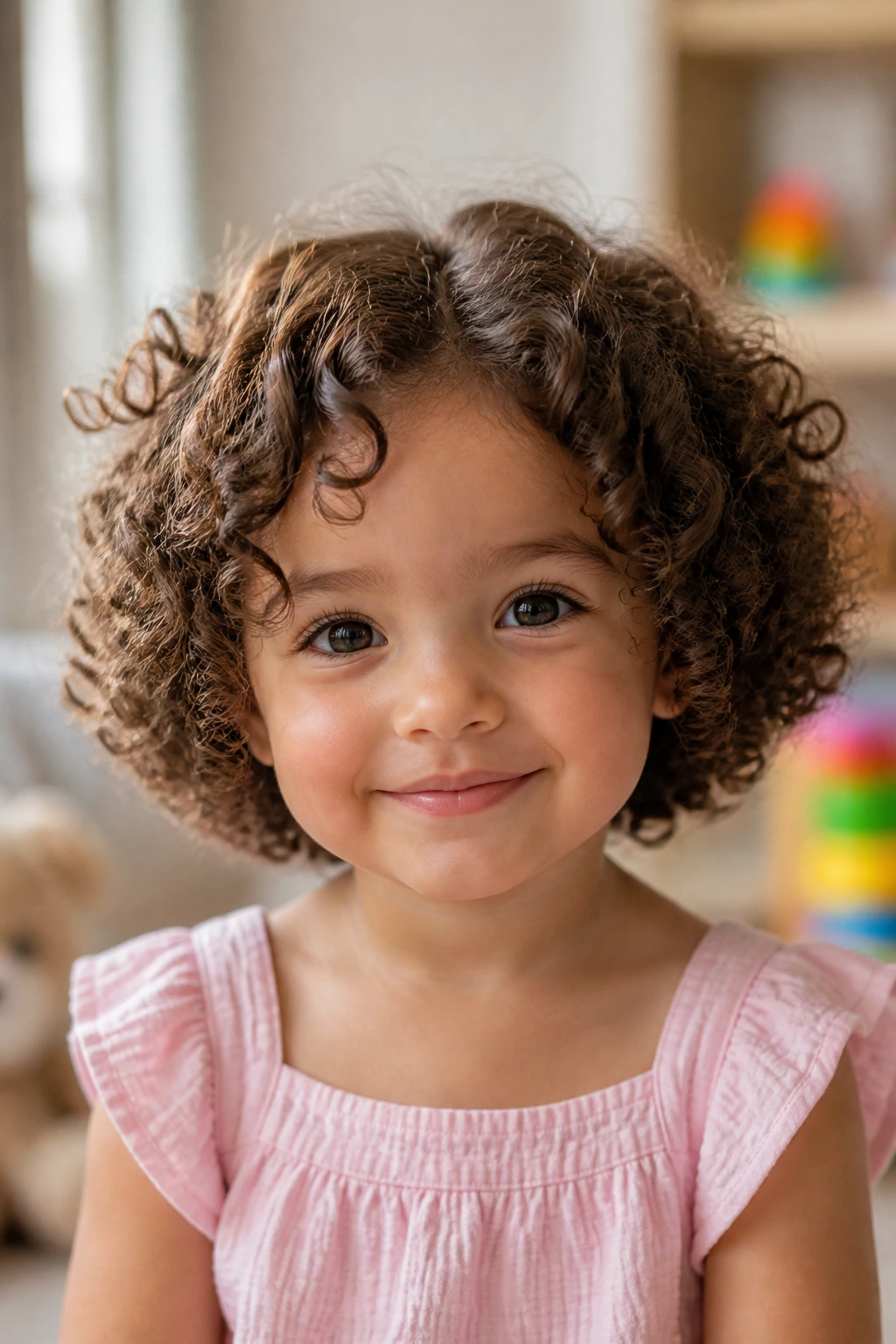
A curly bob is a different animal from a straight bob, and pretending otherwise is how people end up with a haircut that shrinks up too high. Curly hair needs room. A rounded curly bob gives that room while still keeping the shape neat around the face and neck. It’s one of the best baby girl bob cuts if the child has loose curls, springy ringlets, or a soft coil pattern that deserves space.
The main thing is length. Curly hair usually looks shorter when dry, so I’d keep it a bit longer than you think you need. Chin length when wet can become cheek length when dry. That’s not a surprise if you’ve dealt with curls before, but it still catches people out.
What makes this cut different
Unlike a straight bob, a curly bob should follow the curl pattern instead of forcing a ruler-straight edge. The outline can be slightly rounded so the curls stack neatly rather than ballooning out at the sides. Many stylists prefer to shape curls when they’re dry, or at least partly dry, because that shows where the hair actually lands.
This cut suits children who love movement in their hair and don’t mind a little volume. It’s also kinder to curls than a super-short blunt shape, which can make the ends look boxy. A bit of leave-in cream or a light curl milk can help, but keep it minimal. Curly baby hair gets heavy fast, and a lot of product just makes it limp near the roots.
If I had to choose one phrase for this haircut, it would be soft control. That’s what you want. Not control so tight it kills the curl.
7. Mini French Bob with a Tiny Fringe
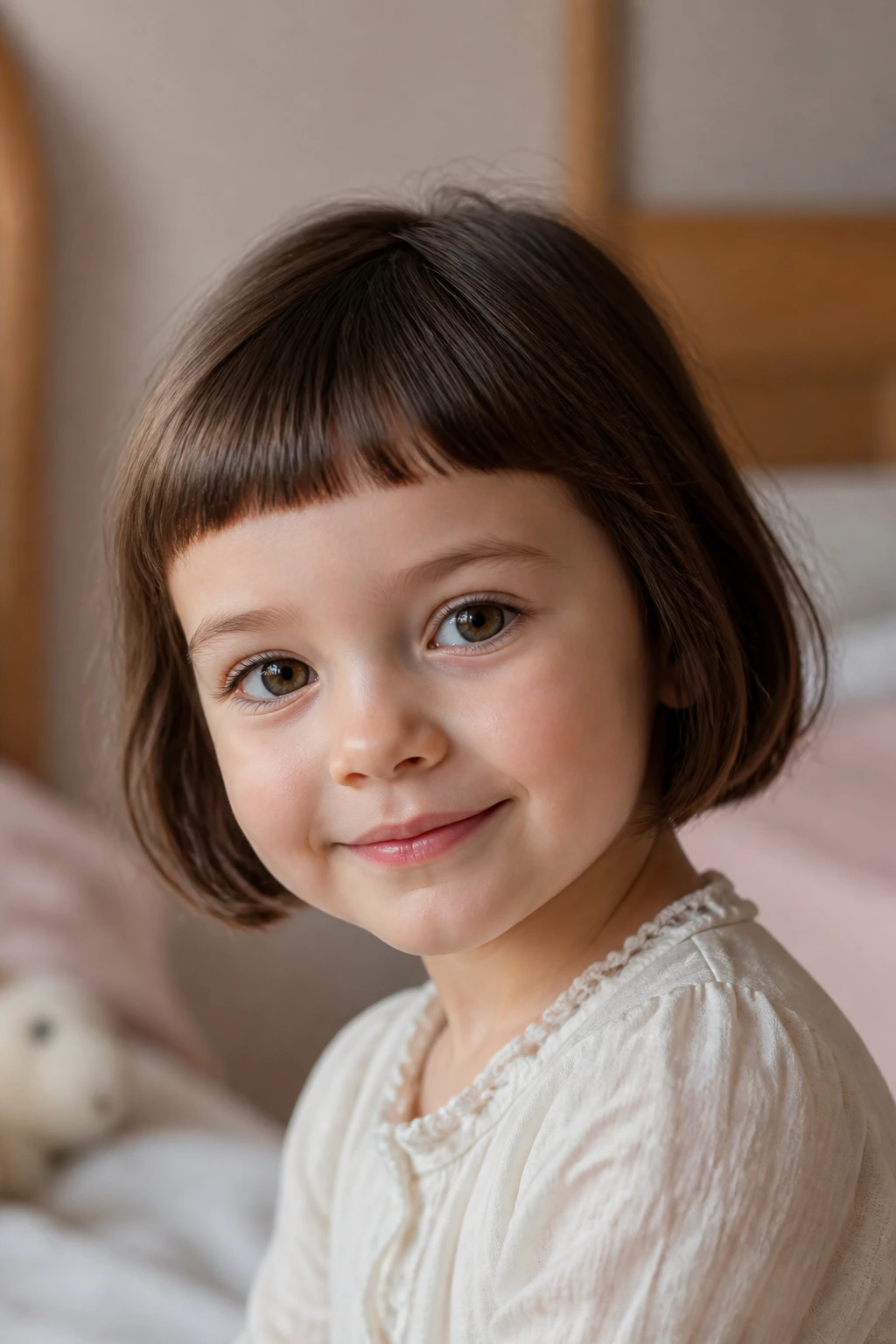
Tiny hair, big personality. That’s the appeal of a mini French bob on a little girl. It sits shorter, often around the cheek or just under the ears, with a little fringe that gives the haircut that sweet, artsy feel people love. It has a charming shape, but it is not the low-maintenance winner for every child.
I’d only pick this if the hair is naturally tidy or the child doesn’t mind regular trims. Short fringe grows into the eyes fast. Short sides can tickle around the ears. And if the child rubs her face a lot or hates things touching her forehead, the whole cut may become a battle. Cute doesn’t cancel reality.
Why it works when it works
The French bob looks best on hair that has some natural body. It frames the face beautifully because the line is compact and the fringe brings attention upward. It can be especially nice on round or oval faces, where the short shape makes the features pop a little more.
A tiny fringe should be soft, not blunt and thick. I’d keep the ends slightly textured so they move instead of sitting like a little shelf. That tiny bit of softness matters. It stops the haircut from feeling too sharp on a child’s face.
If you’re going for this shape, ask for a cheek-skimming bob with lightly textured bangs and no aggressive thinning. Too much thinning makes short hair separate in a weird way. You want the cut to feel tidy and easy, not fussy. And frankly, on a child, easy should always win.
8. Slightly Asymmetrical Bob
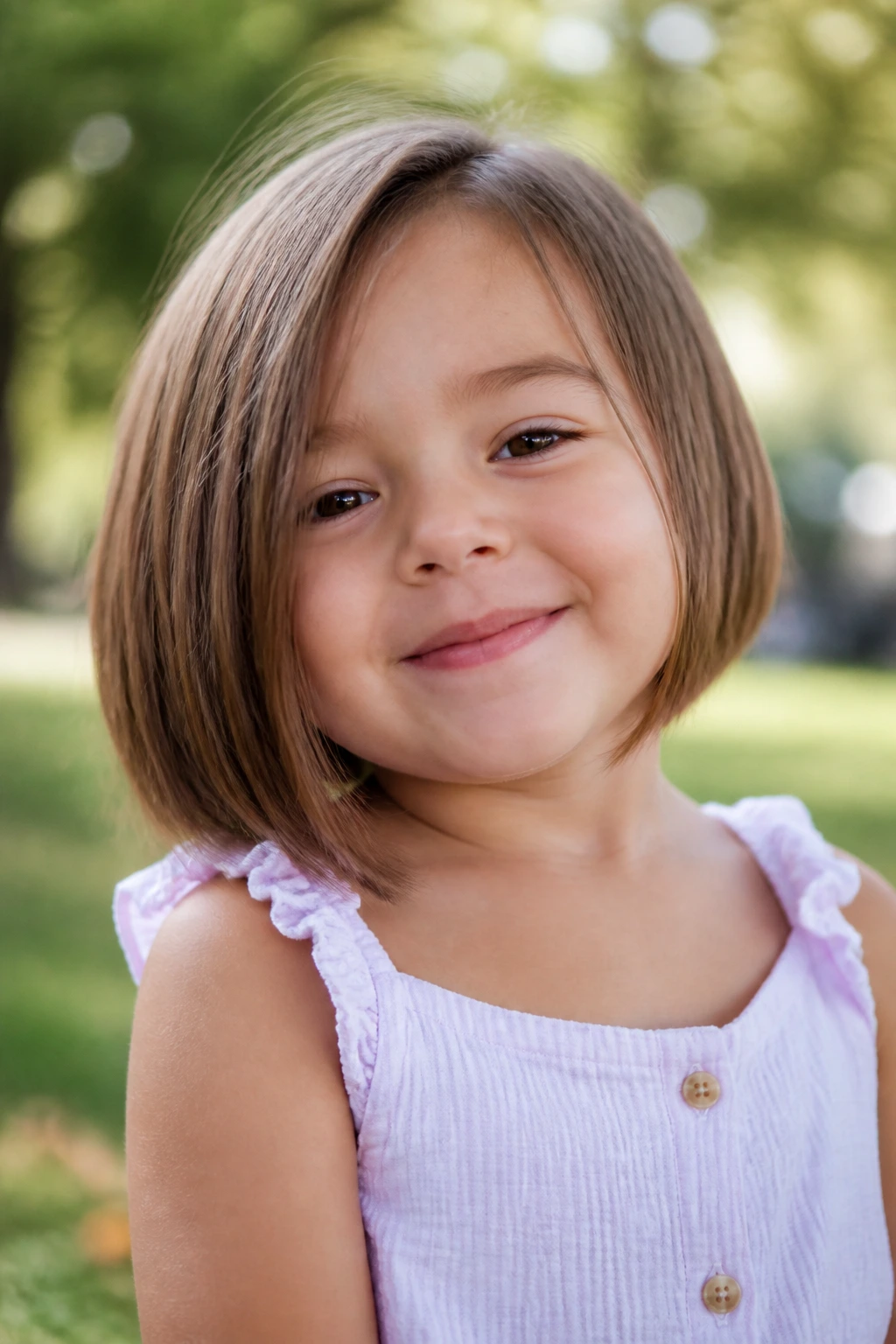
Not every bob has to be perfectly even. A slightly asymmetrical bob gives the haircut a little motion, which is handy when a child’s hair naturally falls more strongly to one side. One side sits a touch longer, the other side curves up a bit more near the jaw, and the whole cut feels relaxed without losing its shape.
This is one of my favorites for kids with a strong part line or a cowlick near the front. A perfectly symmetrical bob can sometimes fight the way the hair wants to fall. A tiny asymmetry works with it instead. The result looks intentional, even when the child has been upside down on a sofa for half the afternoon.
It also helps if one ear tends to stick out more or one side of the face is slightly fuller. That’s normal, by the way. Most children aren’t evenly shaped. Their hair doesn’t need to pretend otherwise. A tiny difference in length can soften all of that.
I wouldn’t push the asymmetry too far. Keep it subtle. We’re talking a small difference, not a dramatic editorial cut. A half-inch to one inch variation is usually enough to give the style movement while staying sweet and age-appropriate. If the difference is too obvious, the cut starts wearing the child instead of the other way around.
And that’s the line to watch. The best asymmetrical bob looks like a happy accident, not a statement piece.
9. Stacked Bob with Lift at the Nape
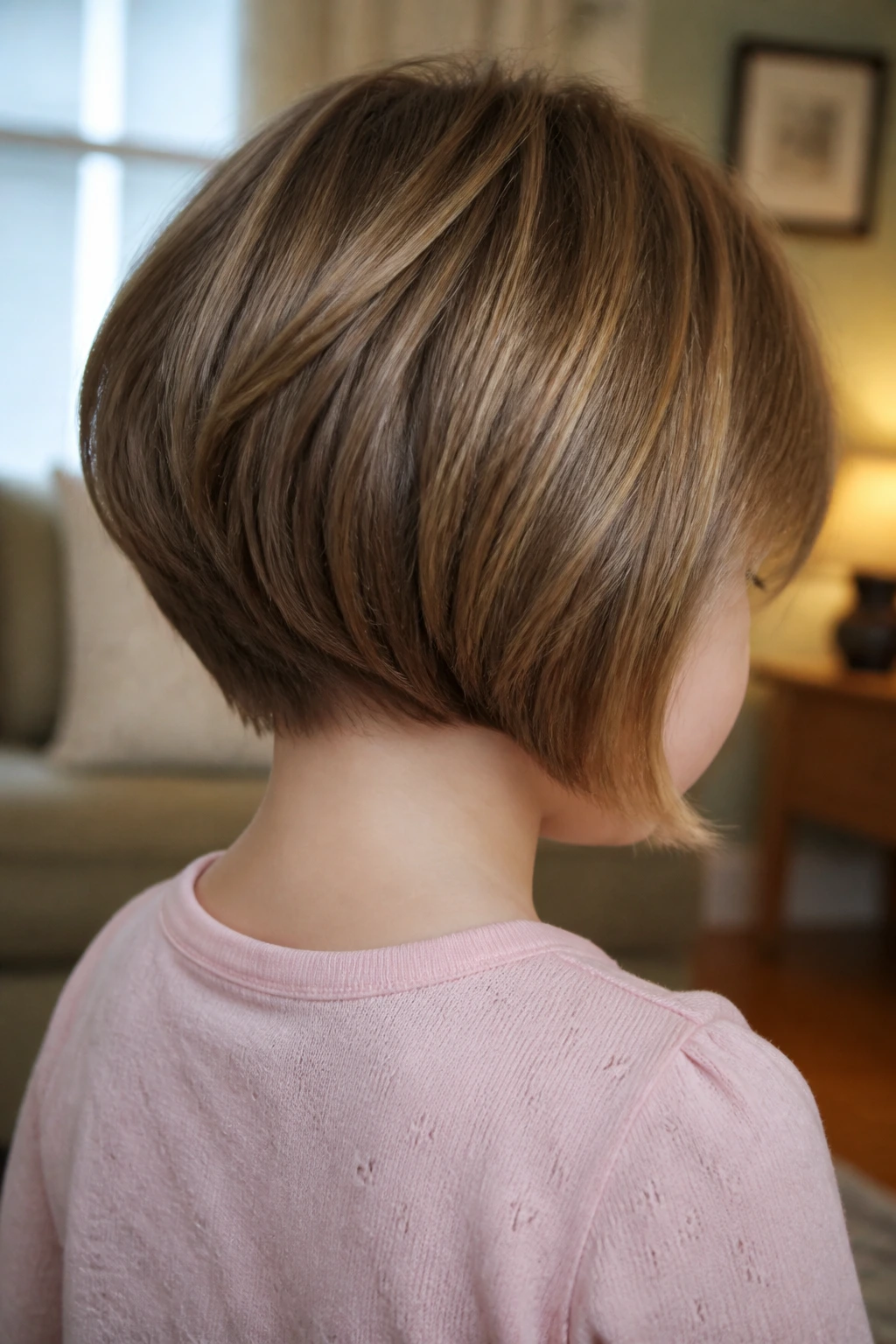
A little lift at the back can make a short haircut look fuller fast. That’s why the stacked bob has such staying power. The back is cut with shorter layers near the nape, then the length gradually becomes longer as it moves toward the front. On a baby girl with thick hair, that shape removes some weight and keeps the bob from flaring out like a triangle.
The back view matters more than most people think. If the nape is too bulky, the haircut can sit heavy against the neck and look boxy from the side. A stacked shape gives it a cleaner curve. It also makes the crown look a bit fuller, which is helpful if the hair is fine but dense enough to hold shape.
Where this cut shines
- Thick straight hair that tends to puff at the bottom
- Fine hair that needs volume at the crown
- Children who wear their hair down most of the time
- Hair that grows fast and loses shape between trims
The caution is simple: don’t over-stack it. Too much graduation can make a child’s haircut look sharp and grown-up in a way that feels off. A gentle stack is enough. You want lift, not drama.
This cut is especially neat if the child’s hairline at the nape grows in a straight line and you want that edge to stay clean. It’s one of those styles that makes brushing easier, too, because the back doesn’t bunch up. A quick comb-through after bath time usually does the trick. No elaborate styling. Thank goodness.
10. Long Bob with Soft Ends
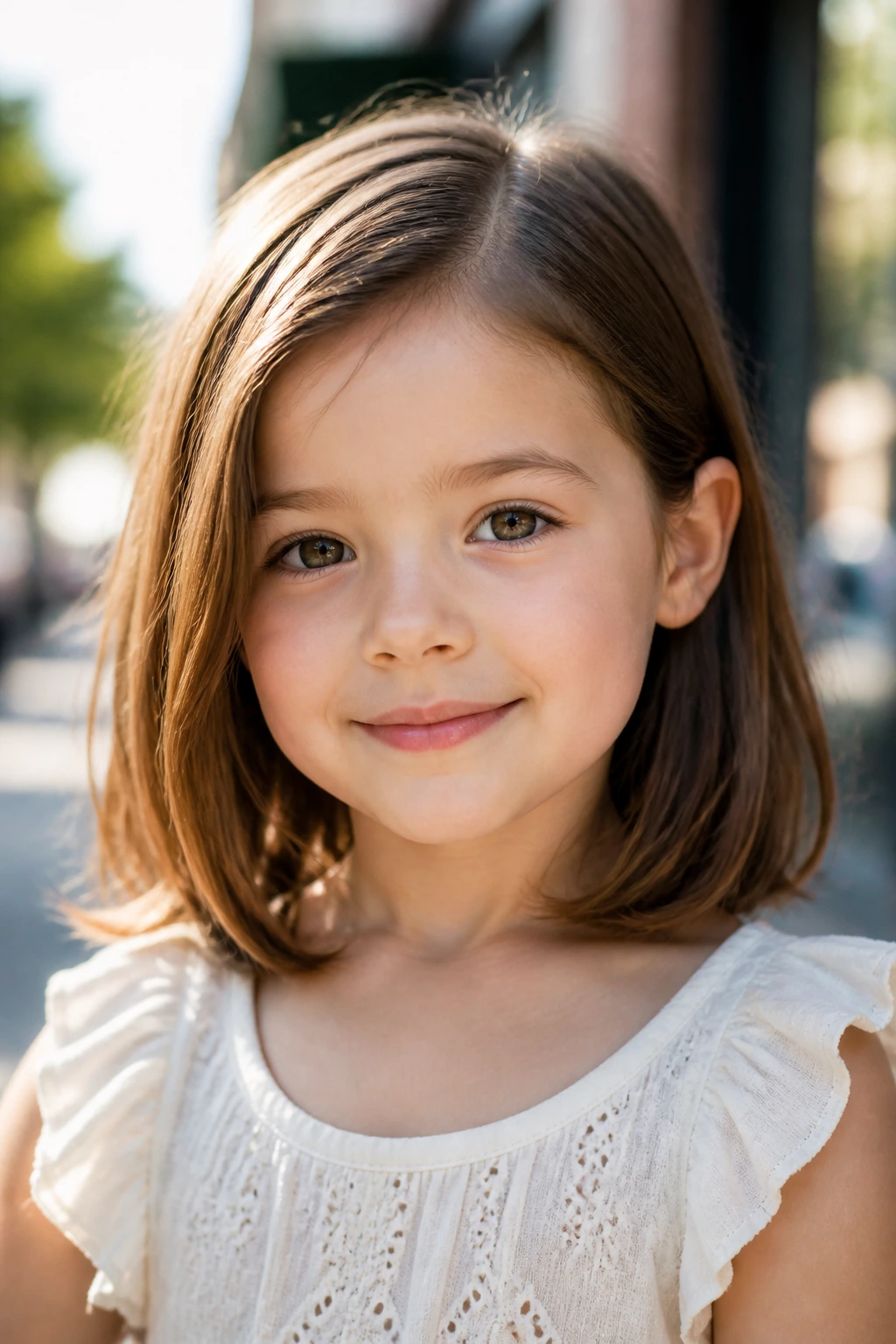
If you want the safest shape for a child whose hair is always changing, the long bob is hard to beat. It usually lands somewhere between the chin and the shoulders, which gives you enough length to tuck behind the ears, clip back, braid at the front, or leave loose when the mood is calm. It’s a gentle, flexible cut, and it grows out without looking awkward too quickly.
This is the one I’d pick for families who want a bob but are nervous about going too short. It still feels like a bob, just a softer one. The ends can be blunt or slightly feathered, depending on hair texture, and the front can frame the face without hanging in the eyes. If the child likes putting hair behind one ear, this cut makes that easy. If she hates it being touched, it stays manageable in a low ponytail or with a soft clip.
I also like this shape for mixed textures, where the front is straighter and the back bends a little. A long bob gives those differences room to settle. The haircut doesn’t force everything into one tiny box. That matters more than it sounds like it should.
There’s a quiet practical reason this cut works so well: it buys time between trims. That’s gold when you’re dealing with a child who grows hair fast one month and not at all the next. The line still looks neat, even after a few weeks of real-life wear.
If you want one bob that can handle messy mornings and sweet dress-up days, this is probably the one I’d reach for first.
A bob on a little girl should feel easy before it feels stylish. That’s the whole point, really. The best cuts keep the hair neat without turning every morning into a production, and they still leave room for clips, headbands, and the occasional stray curl that refuses to behave.
If you’re choosing between shorter and longer, I’d lean longer. A bob that grows out gracefully is worth more than a cut that looks perfect for three days and then turns into a headache. And if you’re stuck, the chin-length blunt bob or the long bob with soft ends are the two I trust most. Both are tidy. Both are forgiving. Both look lovely when a child is in motion, which is where the real test happens.
