



A messy bob cut has a very specific job to do: look easy, not accidental.
That difference matters more than people think. A bob with a little grit in it can feel modern, sharp, and relaxed all at once, but only if the shape is doing real work underneath the texture. If the perimeter is weak, the layers are random, or the ends are over-thinned, the whole thing tips into “I rushed out the door with a brush in my hand.”
The good versions always have a backbone. Maybe it’s a blunt line that keeps the shape from collapsing. Maybe it’s a soft fringe that breaks up the forehead. Maybe it’s a few hidden layers that let the hair bend instead of sit flat and stubborn. The messy part should look intentional — like you decided to stop fussing after the right amount of fussing.
There’s a reason messy bob cuts keep hanging around. They work on straight hair, wavy hair, curly hair, fine hair, thick hair, and every awkward in-between texture that refuses to behave the same way twice. The trick is choosing the version that suits your hair, your face, and your tolerance for styling. Start with the shape that gives the most control.
1. The Choppy Blunt Messy Bob
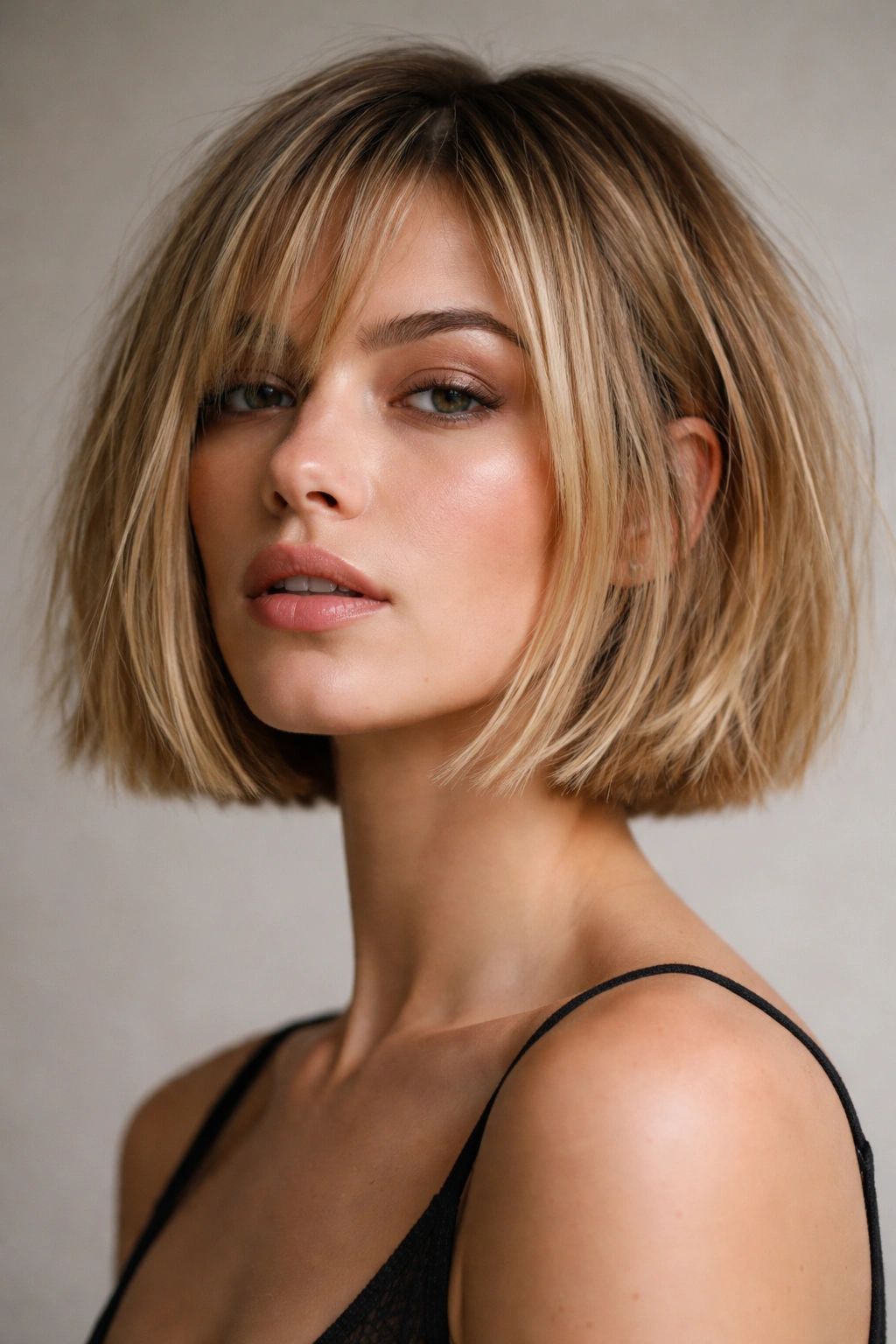
A blunt messy bob sounds contradictory until you see it in motion. The edge stays clean, so the haircut has a line, but the surface gets a little broken up so it doesn’t sit like a helmet. That contrast is the whole point.
Why It Works
The blunt edge keeps the cut from drifting into fuzz. Even if you rough-dry it, the outline still reads as deliberate because the ends sit with purpose at the jaw or just below it. That matters a lot on fine hair, where too many soft layers can make the whole thing look see-through.
I like this version when someone wants “undone” without losing polish. Ask for a perimeter that sits around the chin or a touch lower, then request light point-cutting through the last half inch. Not the whole head. Just enough to break up the line.
- Best length: chin to jaw
- Best texture: straight, slightly wavy, or fine-to-medium hair
- Styling move: rough-dry, then bend 2-inch sections with a flat iron
- Avoid: heavy thinning shears at the bottom edge
One good tip: keep the bottom line cleaner than you think you need. That’s what makes the mess look cool instead of accidental.
2. The French Bob With Soft Fringe
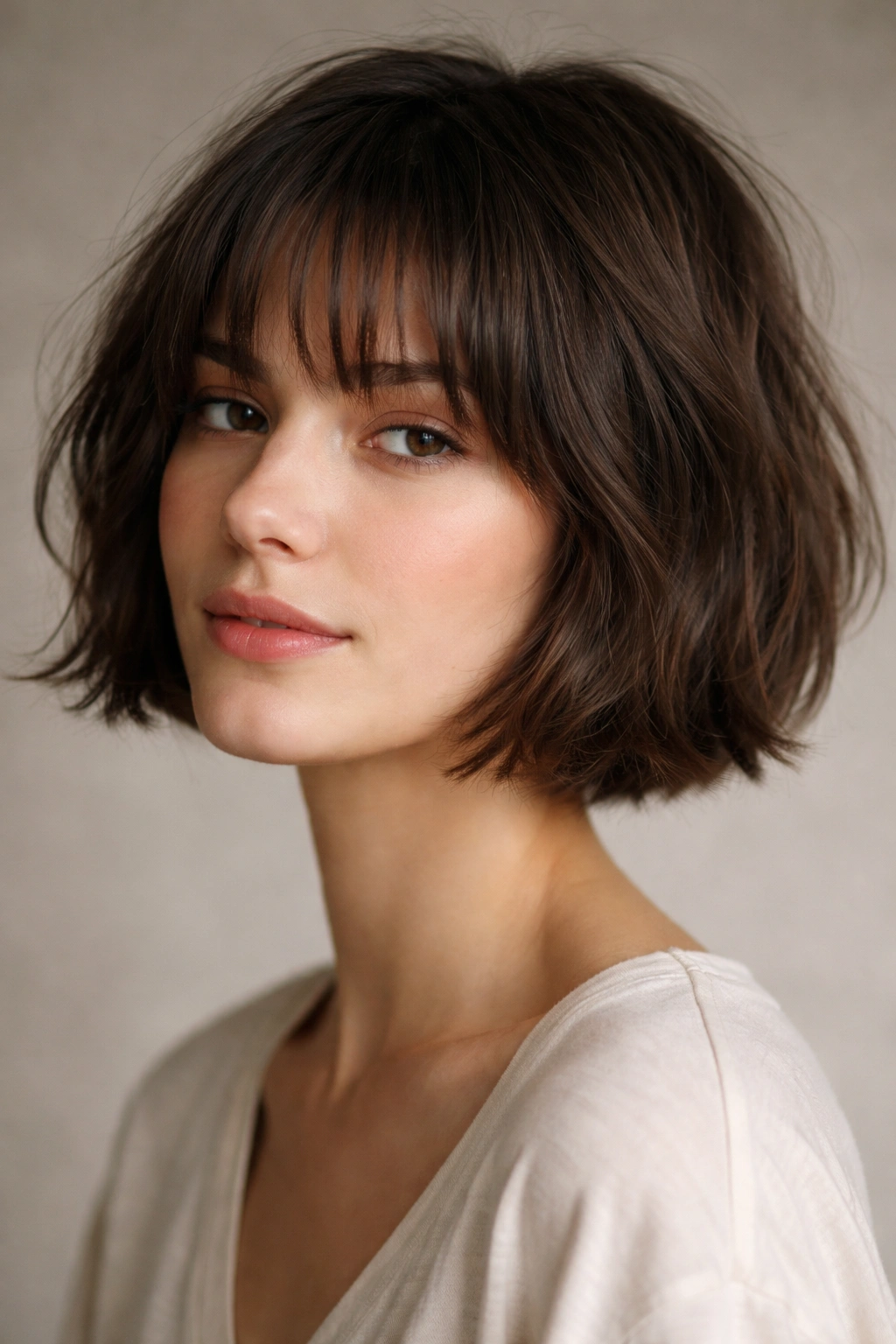
Why does the French bob always look like it knows something you don’t? Part of it is the length — usually shorter, often around the cheekbone or jaw — but the fringe does a lot of the work. A soft, slightly broken fringe takes the edge off the face and makes the whole cut feel lived-in from day one.
It’s a neat little haircut, honestly. Not fussy. Not precious. The hair can tuck behind one ear, fall forward in a crooked way, and still look intentional because the shape is compact enough to hold its own.
The fringe should not be cut like a ruler. I prefer a little movement at the ends, especially if the hairline is strong or the forehead is narrow. If the bangs are too heavy, the whole bob turns severe. If they’re too wispy, it can feel unfinished. The sweet spot sits somewhere in the middle.
This cut is especially good when you want something that dries fast and doesn’t need much heat. A small round brush, a dab of cream at the ends, and maybe a mist of texture spray are usually enough. The hair should move when you turn your head. That’s the charm.
3. The Wavy Bob With Invisible Layers
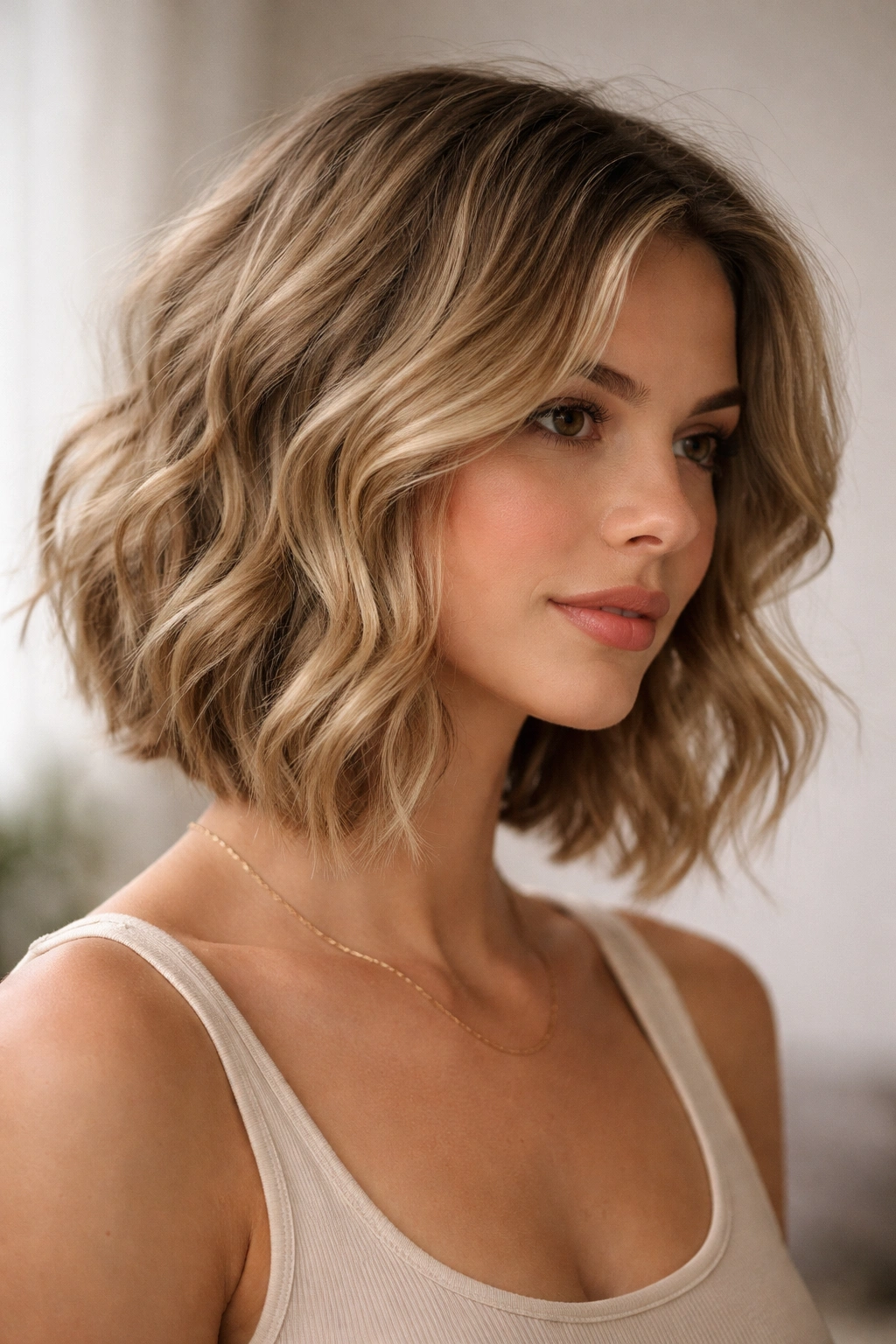
If your hair already bends on its own, invisible layers can make a messy bob look expensive without making it look styled to death. The layers are there, but they stay tucked inside the shape so the outline still feels full.
That’s the part a lot of people miss. They ask for “more texture” and end up with choppy ends everywhere. That can work on some heads, sure, but it often kills the weight line that makes a bob look like a bob. Invisible layers keep the movement where you can feel it, not where you can plainly see every snip.
How To Style It
The easiest version starts when the hair is damp, not soaked. Scrunch in a light mousse, twist a few random pieces around your fingers, and let the hair air-dry until it’s about 80 percent dry before you decide whether it needs heat. A 1-inch wand works fine, but don’t curl every section the same direction. That makes it look too done.
- Air-dry or diffuse until the root area is dry
- Bend only the mid-lengths, leaving the last inch straighter
- Break the cast with a tiny bit of cream if the hair feels crunchy
- Finish with a light spray, not a sticky one
This is one of those messy bob cuts that gets better when you stop chasing symmetry. A little unevenness reads as movement. A lot of it reads as a bad cut.
4. The Razor-Cut Bob With Feathered Ends
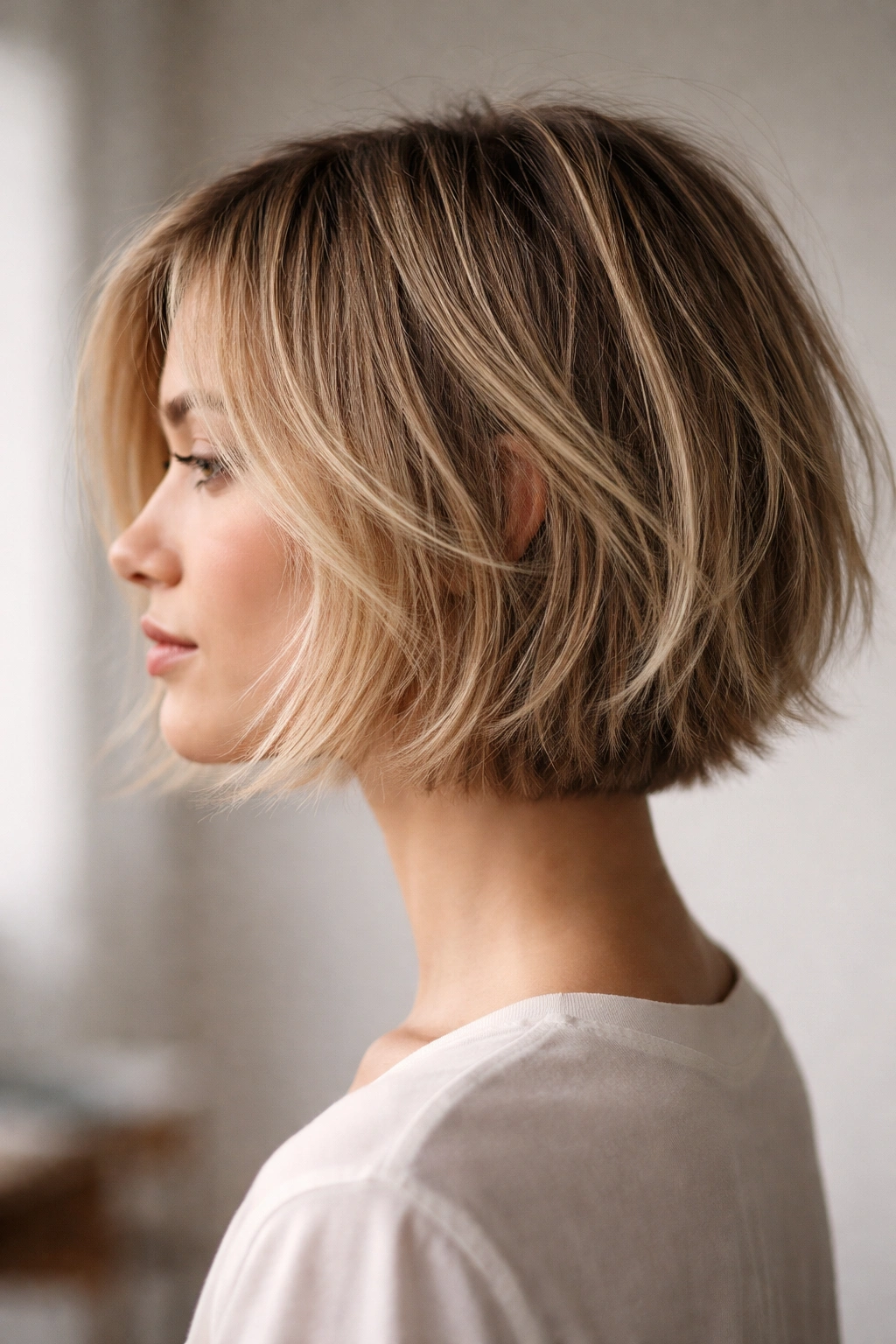
Razor cutting is not about being edgy; it’s about taking bulk out without killing movement.
On straight or slightly wavy hair, a razor-cut bob can feel airy at the ends and soft around the face. The line still exists, but it has a broken edge that catches the eye in a nicer way than a blunt chop. The hair almost looks like it’s floating a little.
The catch? Razor work can go wrong fast if the hair is already dry, porous, or frizzy. Then the ends start to look shredded instead of feathered. That’s why I only like this cut when the stylist knows how to keep the blade from chewing up the outline. The movement should come from the cut, not from damage.
It suits people who hate heavy-looking hair and want a bob that doesn’t sit flat around the neck. It also works if you like a slightly rebellious shape without pushing all the way into shag territory. Keep the styling light: a smoothing cream, a small bend through the lower half, and a touch of shine spray at the very end. Too much product kills the whole thing.
5. The Curly Bob With a Rounded Outline
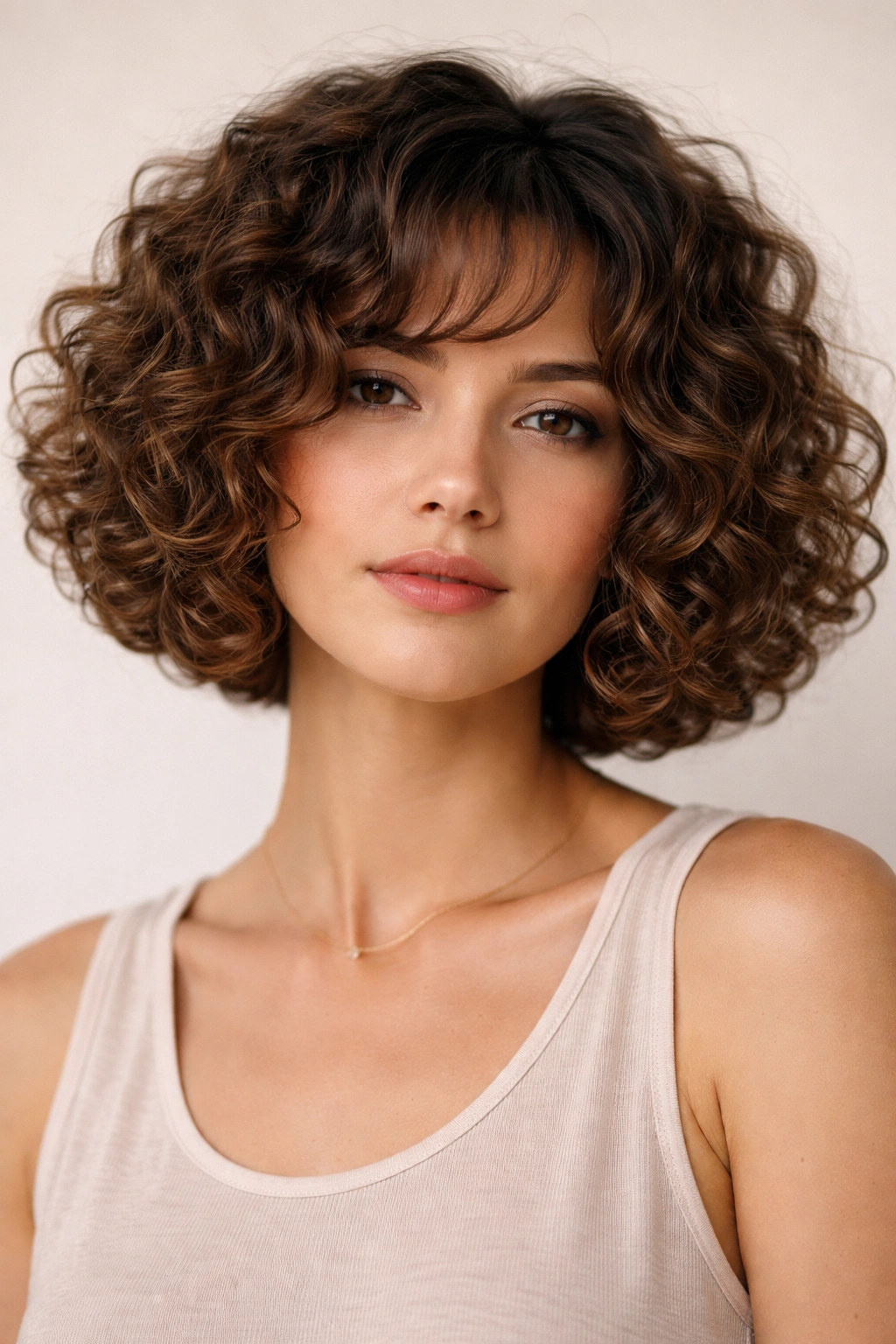
Curly hair does the messy part for you.
That sounds glib, but it’s true. A good curly bob doesn’t need fake texture sprayed all over it. It needs shape. The best versions keep the outline rounded so the curls stack softly instead of puffing out into a triangle. That outline is everything.
The cut usually works best when it’s shaped dry, curl by curl, so the stylist can see where each curl actually lands. Curly hair lies. It shrinks, it springs, it changes its mind. Cutting it wet can be fine in the right hands, but dry shaping gives a better read on length and balance.
What To Ask For
- A rounded perimeter that follows the curl pattern
- Slightly longer pieces near the front if you want softness around the cheeks
- Internal shaping, not a lot of surface-layering
- Enough length to avoid a mushroom shape at the crown
Let the curls do their own thing after that. A curl cream with a light gel on top usually works better than a mountain of products. Diffuse until about 80 percent dry, then stop touching it. Seriously. Touching it too much is how a cool curly bob turns puffy.
6. The Shaggy Bob With Curtain Bangs
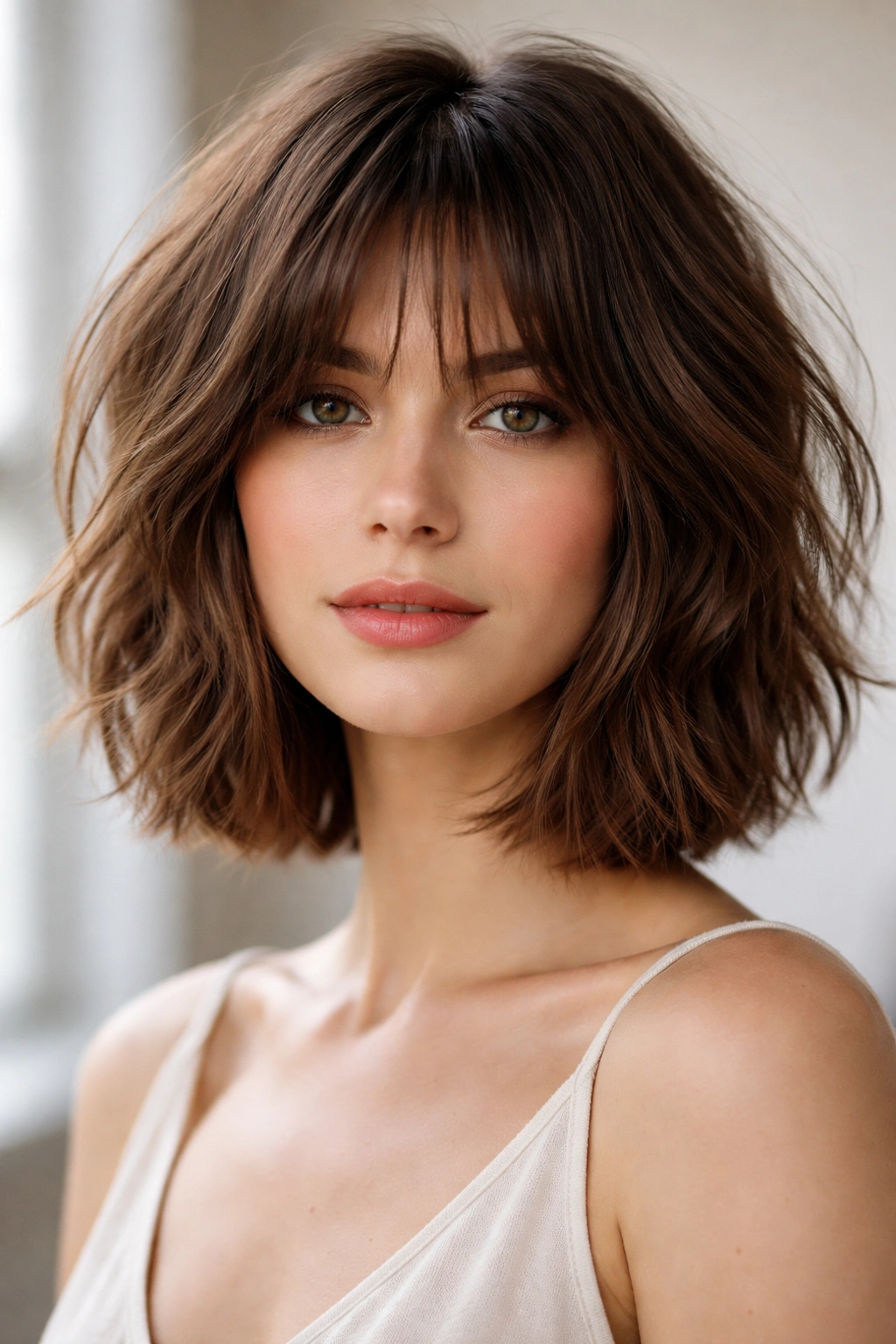
A shaggy bob is not a shag in disguise.
That distinction matters because the perimeter still needs to read as a bob. The hair can have movement, yes, and the layers can be broken up, but the cut should still hit with a clear line around the jaw or neck. Curtain bangs do a lot of the softening here. They split the difference between fringe and face frame, which keeps the whole style from looking too heavy.
This is one of the easier messy bob cuts if your hair has a natural wave. You can air-dry it, add a few loose bends with a curling wand, and let the bangs fall where they want. The shape should look airy, not scrappy. There’s a difference. Scrappy is what happens when the layers are too short everywhere and the ends stick out in odd places.
Curtain bangs also help if your face feels too open with a straight bob. They add a little motion near the eyes and cheekbones without blocking the face. I’d call this one a good middle ground: softer than a blunt bob, less unruly than a full shag, and easier to wear than a heavily layered cut that needs round-brush styling every morning.
7. The Asymmetrical Bob That Looks Deliberate
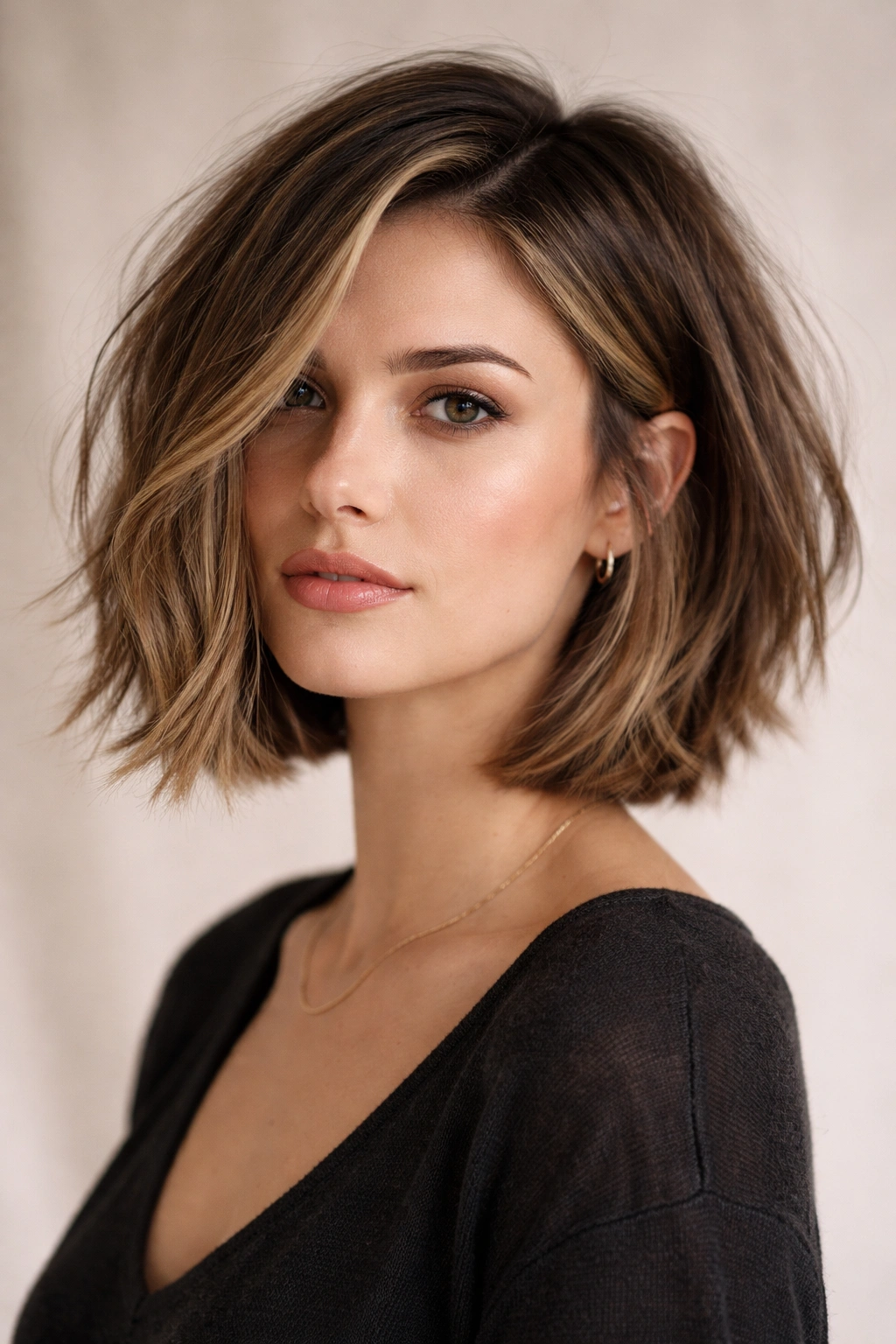
A half-inch difference from one side to the other can change the whole mood of a bob.
That’s the beauty of asymmetry. It gives the eye something to follow, which makes the cut feel intentional even when the styling is loose and imperfect. One side can skim the jaw while the other brushes the chin or collarbone. That little imbalance keeps the look from going flat.
The trick is restraint. If the difference is too dramatic, the cut starts to dominate the face in a way that can get old fast. If it’s too tiny, the shape may just look uneven. Somewhere between those two extremes is the sweet spot. You want enough angle that people notice the line, but not so much that it feels like a costume.
This cut works especially well with a side part and a little bend through the ends. It’s also one of the more forgiving ways to wear a messy bob if you like tucking hair behind one ear. The longer side can handle the tuck. The shorter side keeps the shape interesting. If you’re someone who likes structure with a little attitude, this is a solid pick.
8. The Italian Bob With Soft Volume
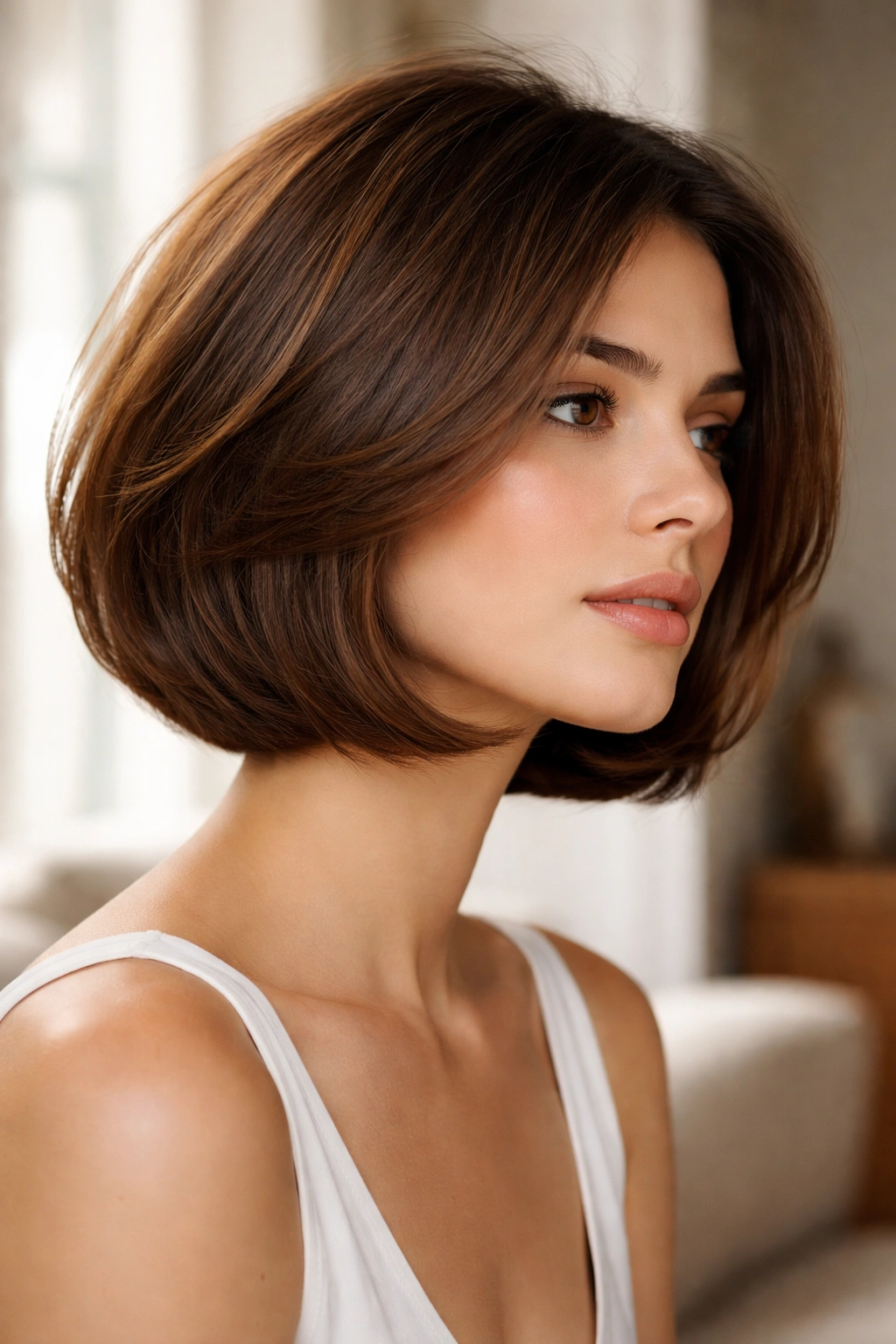
The Italian bob has body at the crown and a little swing at the ends. That’s the whole fantasy, really.
It usually sits around the chin or just below it, with enough length to feel plush but not so much that it starts behaving like a lob. The top stays smooth and full, while the lower section flips under or bends out just a touch. That subtle movement is what keeps it from feeling stiff.
I like this cut because it doesn’t need chaos to look stylish. The mess is restrained. The hair can be brushed out, tucked, or blown with a large round brush, and it still reads as cool because the shape is rich and clean. Too many layers ruin the effect. So do ends that are thinned to death.
If your hair is medium to thick, this shape can be lovely. If it’s fine, ask for volume to be built through the crown rather than chopped into the ends. The goal is fullness, not fluff. A light mousse at the roots and a bend through the bottom few inches is usually enough. Keep the finish soft. Hard flips look dated fast.
9. The Side-Part Bob With Piecey Texture
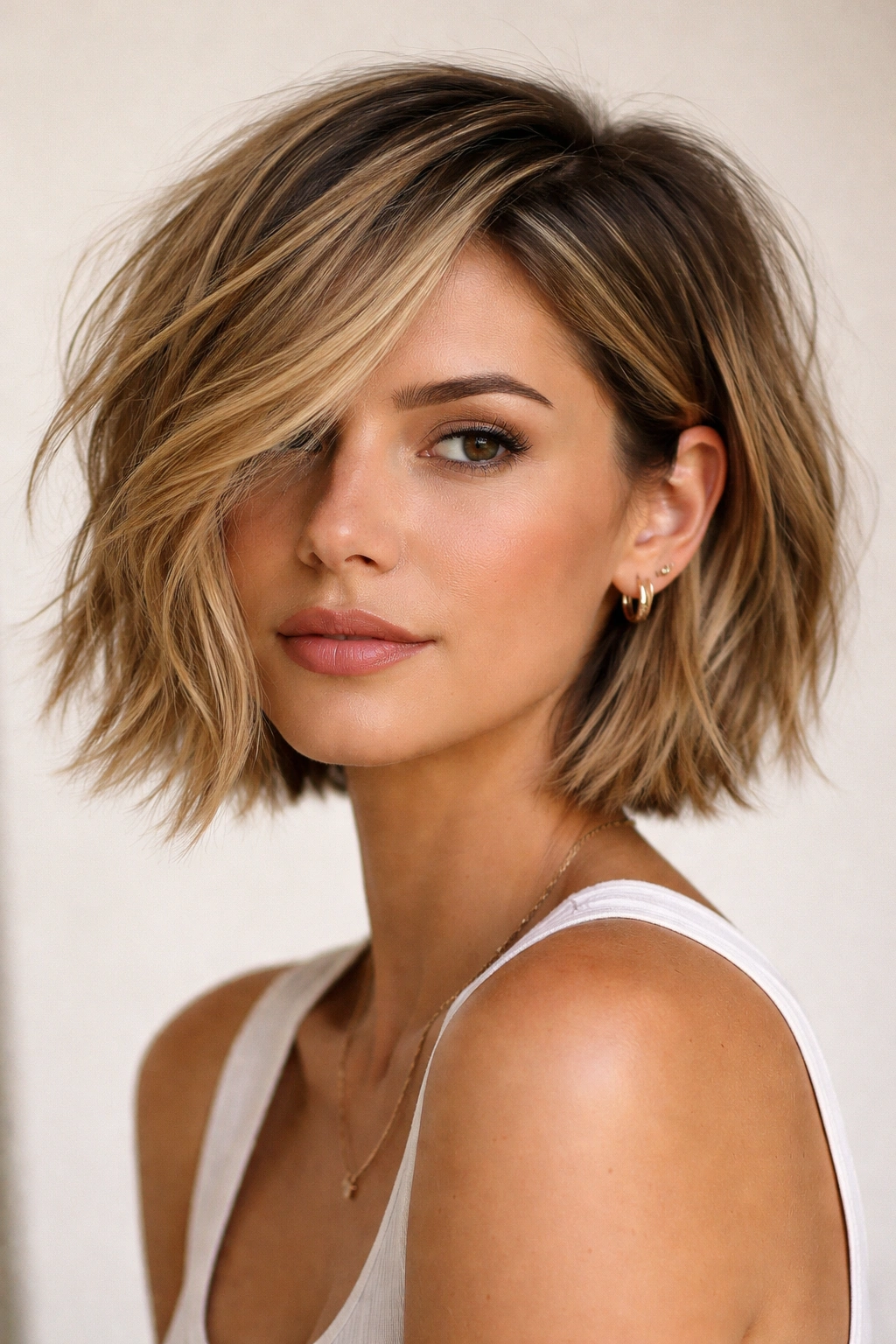
Can a side part save a plain bob? Yes, if the cut can handle it.
A side part changes the weight instantly. It lifts the roots on one side, softens the face, and makes even a simple bob feel less symmetrical and more alive. The piecey texture helps too, especially when the ends are separated just enough to show movement without looking stringy.
How To Wear It
Start with a light mousse at the roots and blow-dry the hair in the opposite direction of where you plan to part it. That little trick gives the roots extra lift. Then switch to your real part and let the front fall naturally. The hair usually settles with more body that way.
- Use a medium-hold mousse, not a stiff one
- Blow-dry the crown first
- Twist a few front pieces around your fingers while drying
- Finish with dry shampoo at the roots if the hair collapses quickly
This style is a strong choice for people whose hair falls flat at the crown by lunchtime. It’s also useful if a center part makes your face feel too long or too sharp. The side part cuts the line differently, which can be enough to soften the whole look.
10. The Jaw-Skimming Bob With Face-Framing Bits
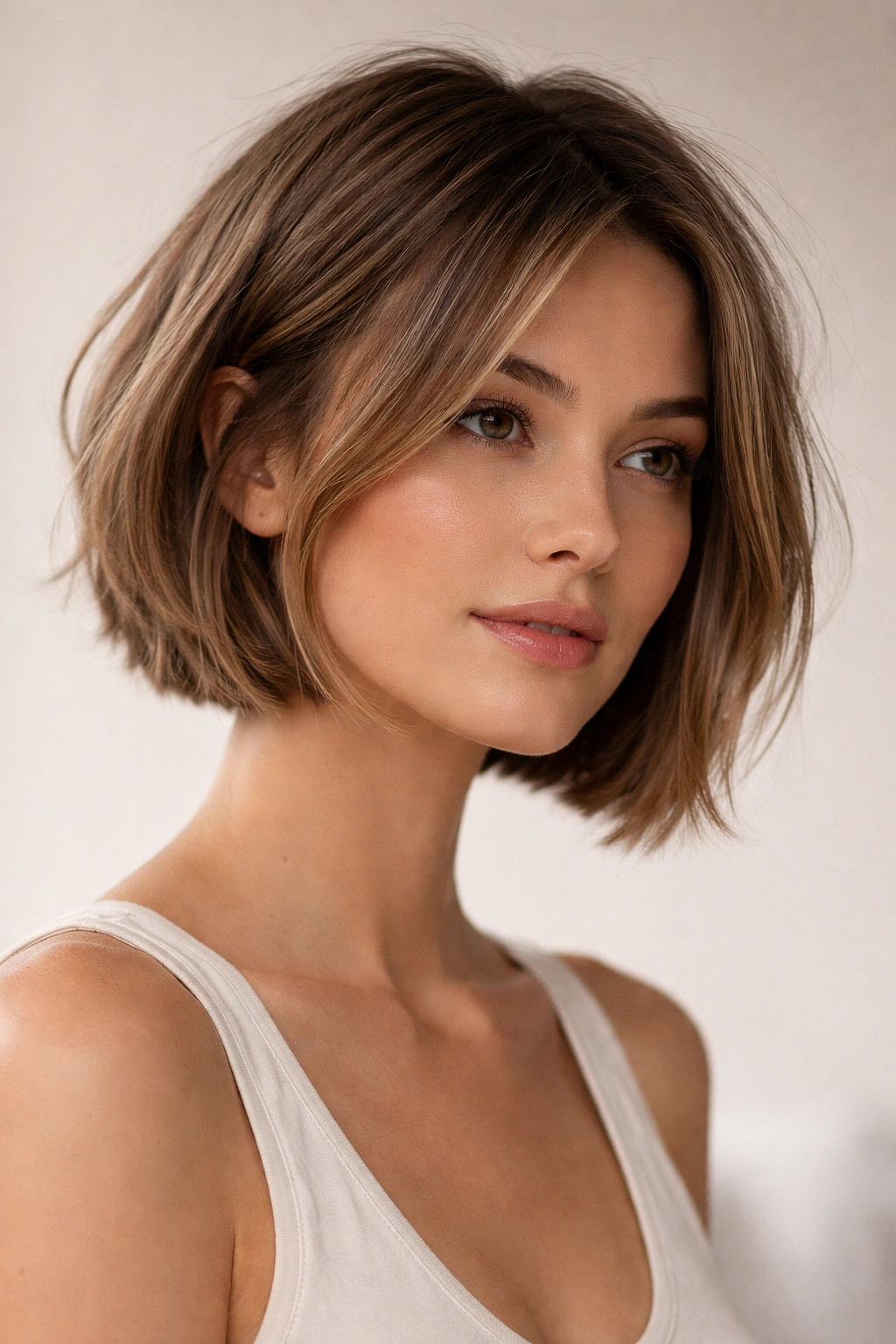
A jaw-skimming bob can be the sharpest-looking length in the bunch.
It sits right where the face has the most structure, so the details matter. If the cut ends exactly at the widest part of the jaw, it can feel boxy. If it lands a touch below that point, with a couple of longer face-framing pieces in front, the whole thing softens fast. That little shift makes a big difference.
I’m partial to this version when someone wants a bob that looks neat even when it’s slightly tousled. The face-framing bits keep it from feeling too strict, and the shorter back gives the neck some breathing room. It’s a strong shape for straight hair, but it works on waves too, especially if the bend is loose and not over-curled.
One thing I’d watch: the neckline. If the nape is too blunt and the front too busy, the cut loses its grace. Clean the back up. Let the front do the softening. That way the messy texture looks like a choice, not a rescue mission.
11. The Lob-to-Bob Hybrid
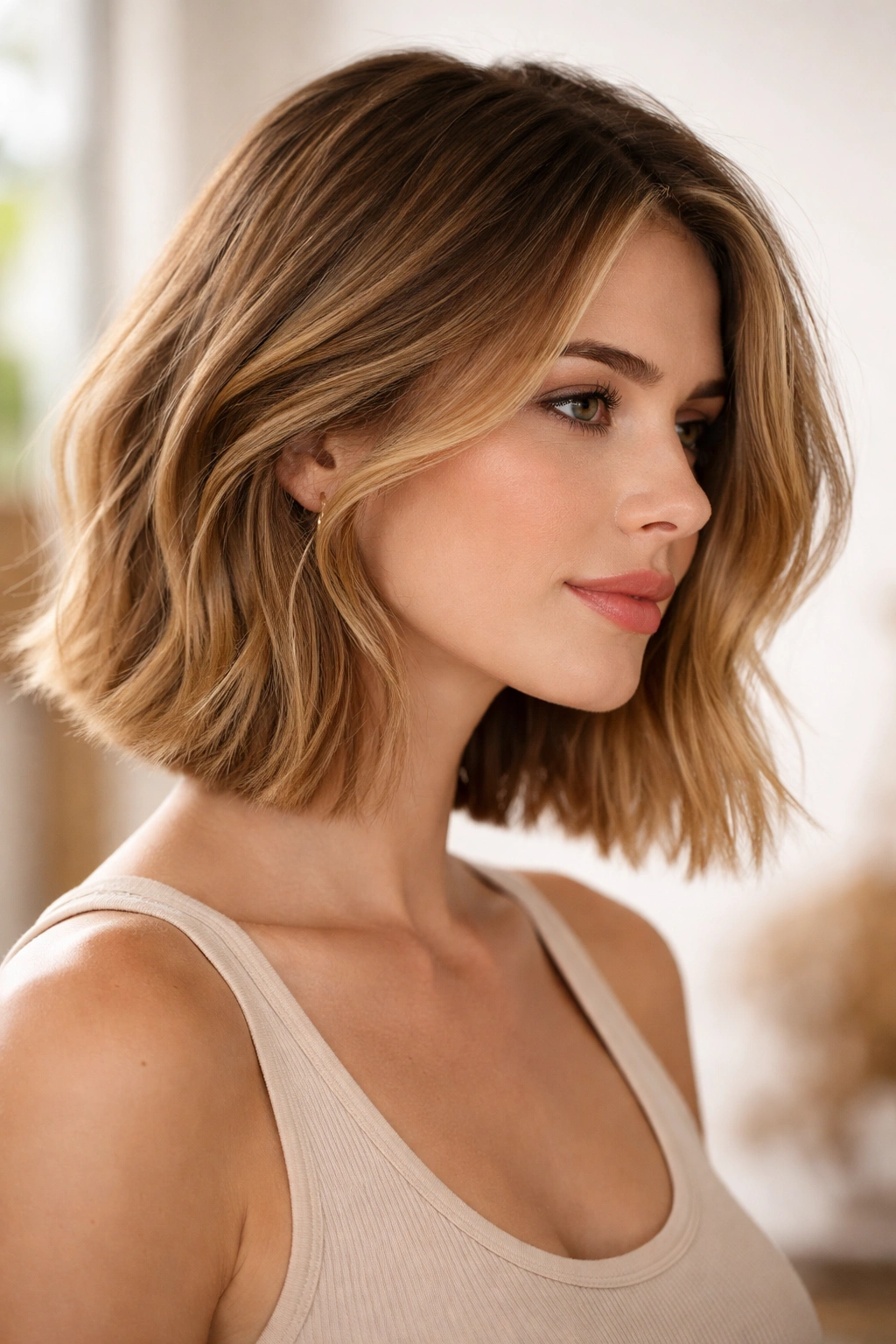
The lob-to-bob hybrid is for people who want texture without losing ponytail permission.
It lands somewhere between the chin and the collarbone, which gives it a little more flexibility than a short bob. That extra length matters on days when you want to tuck it behind the ears, tie it half-up, or let it hang with a bend and still have enough hair to work with. It’s one of the easiest messy bob cuts to live with.
The cut gets its shape from the ends more than the layers. A soft bevel or a few broken-up sections near the bottom keep it from looking heavy. The top can stay fairly simple. That’s part of the appeal. You don’t need a ton of internal layering if the length itself gives you movement.
This version is good for people who hate that “I need a haircut again already” feeling. It grows out without losing the point of the style. That’s not a small thing. A lot of bob cuts look great on day one and awkward by week six. A lob-to-bob hybrid holds its shape longer, which makes the messy finish easier to maintain without constant trimming.
12. The Wet-Texture Bob
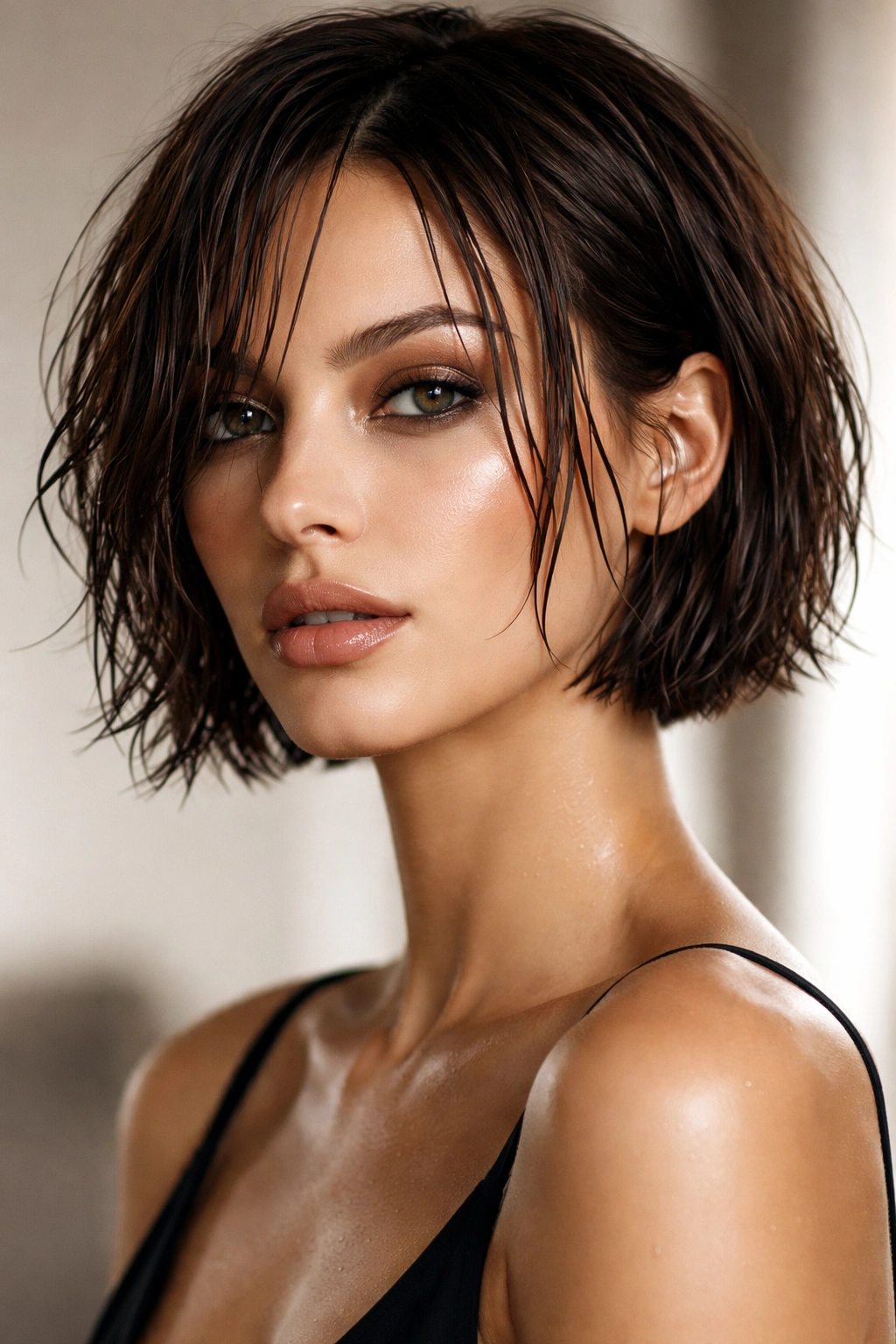
A wet-texture bob is messy in the smartest possible way—because the shine does the talking.
This look depends on control. Not too much. If the product gets heavy, the hair starts looking greasy instead of sleek. But when it’s done well, the hair has that glossy, piecey finish that makes a plain bob feel deliberate and a little dramatic. It’s a strong choice for nights out, events, or any time you want the cut to do more than sit there.
The styling is simple, but the product choice matters. A lightweight gel mixed with a small amount of cream usually works better than one dense product from root to tip. Apply it on damp hair, comb it through, and shape the part before the hair starts drying. After that, don’t touch it much. Finger-combing later ruins the finish.
What To Watch For
- Use less product at the roots than you think
- Keep the ends separated, not glued together
- Choose a bob with a clean outline underneath
- Avoid this look if your hair gets weighed down easily
The best wet bob still has movement at the ends. It shouldn’t look frozen. It should look glossy, flexible, and a little cool around the face.
13. The Airy Bob for Fine Hair
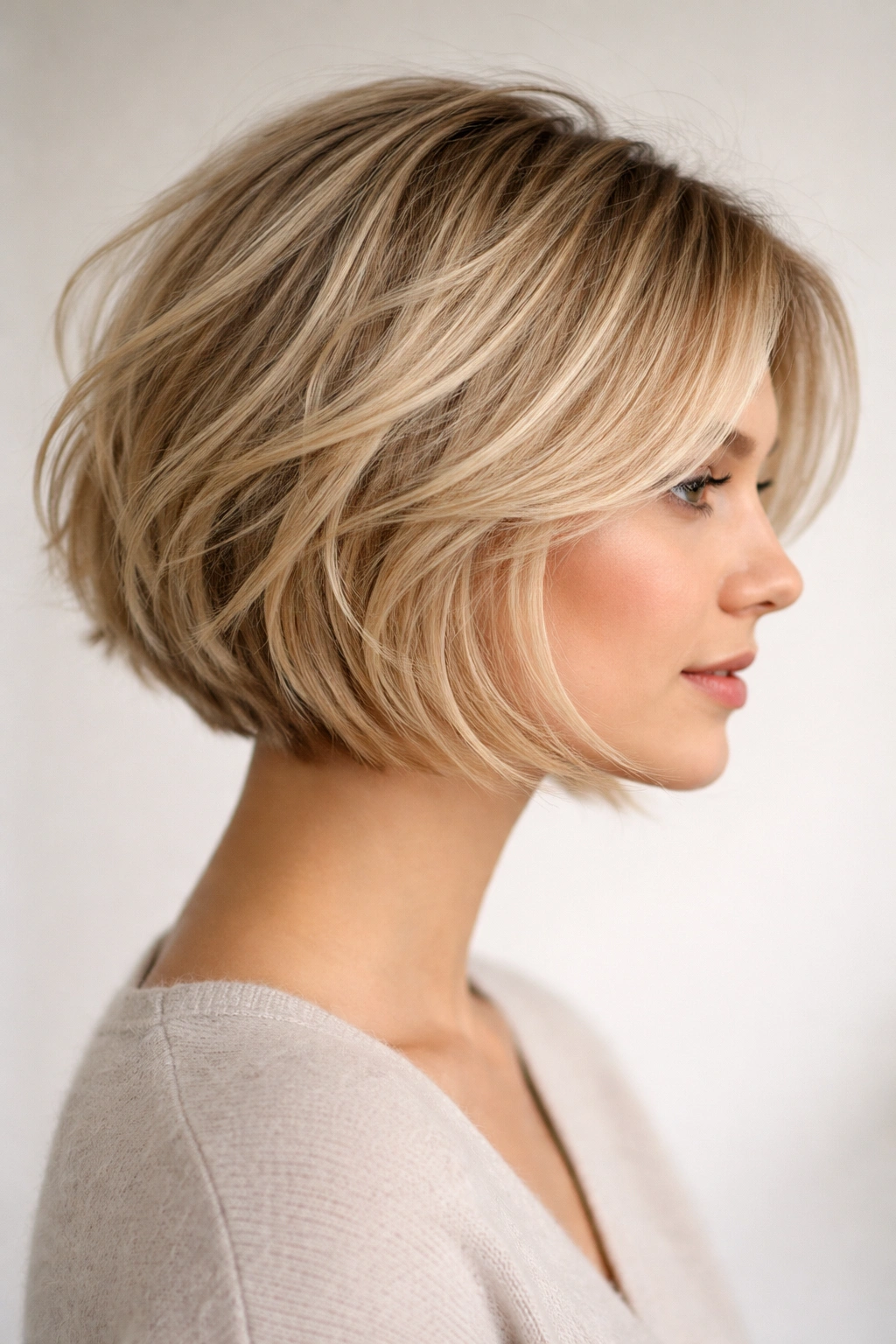
Fine hair can look thin fast if the cut is too shaggy.
That’s why the airy bob needs some discipline. The goal is lightness, yes, but not emptiness. You want a cut that removes bulk without creating transparent ends. A gentle bevel at the bottom and a few invisible layers inside the shape can give the hair lift without making the outline weak.
The mistake people make here is asking for too much texture. Fine hair does not need to be hacked up all over. It needs clean spacing between the strands so the shape looks soft and full at the same time. If the ends are sliced too hard, the bob can start to flutter around the face in a way that looks unfinished.
I like this version with a side part or a slight off-center part because it gives the crown more lift. A root spray, a quick blow-dry with a round brush, and a touch of dry shampoo at the roots can make the hair feel denser. That’s not about volume for volume’s sake. It’s about keeping the cut from collapsing by noon.
This is one of the most wearable messy bob cuts when you want something light but still neat enough for work or dinner without a full restyle.
14. The Debulked Bob for Thick Hair
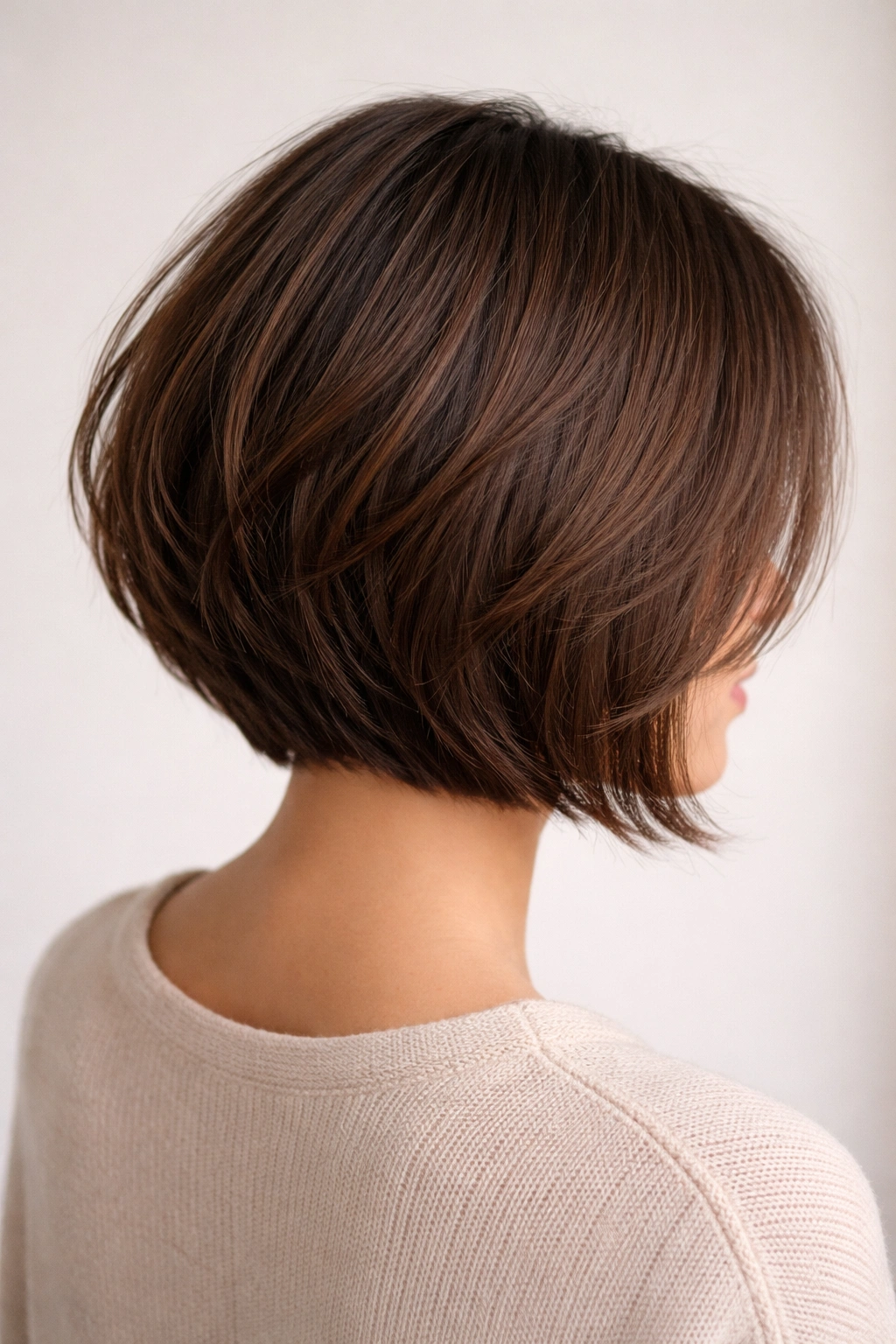
Thick hair does not need more texture everywhere.
It needs weight removed in the right places. That’s what makes a debulked bob so useful. The perimeter stays solid, which keeps the haircut from puffing out at the bottom, while the inside loses enough bulk to let the hair swing. If you remove too much from the ends, the whole thing can fan outward in that triangular shape nobody wants.
Where To Remove Weight
The sweet spot is usually inside the middle section of the cut, not the edges. That keeps the outline clean while freeing up the density underneath. A stylist might use slide cutting, internal layering, or a careful point-cut near the heavier zones around the back of the head.
Where To Leave It Alone
The bottom line should stay stronger than the rest. Same with the front if you want the bob to frame the face instead of puffing away from it. Thick hair looks its best when it has a clear edge. Messy doesn’t mean hollow.
A small amount of cream and a blow-dry with tension usually helps this cut settle into place. If your hair has a coarse feel, a smoothing serum on the mid-lengths can calm the surface without flattening the crown. The shape should move. It should not balloon.
15. The Soft Grow-Out Bob
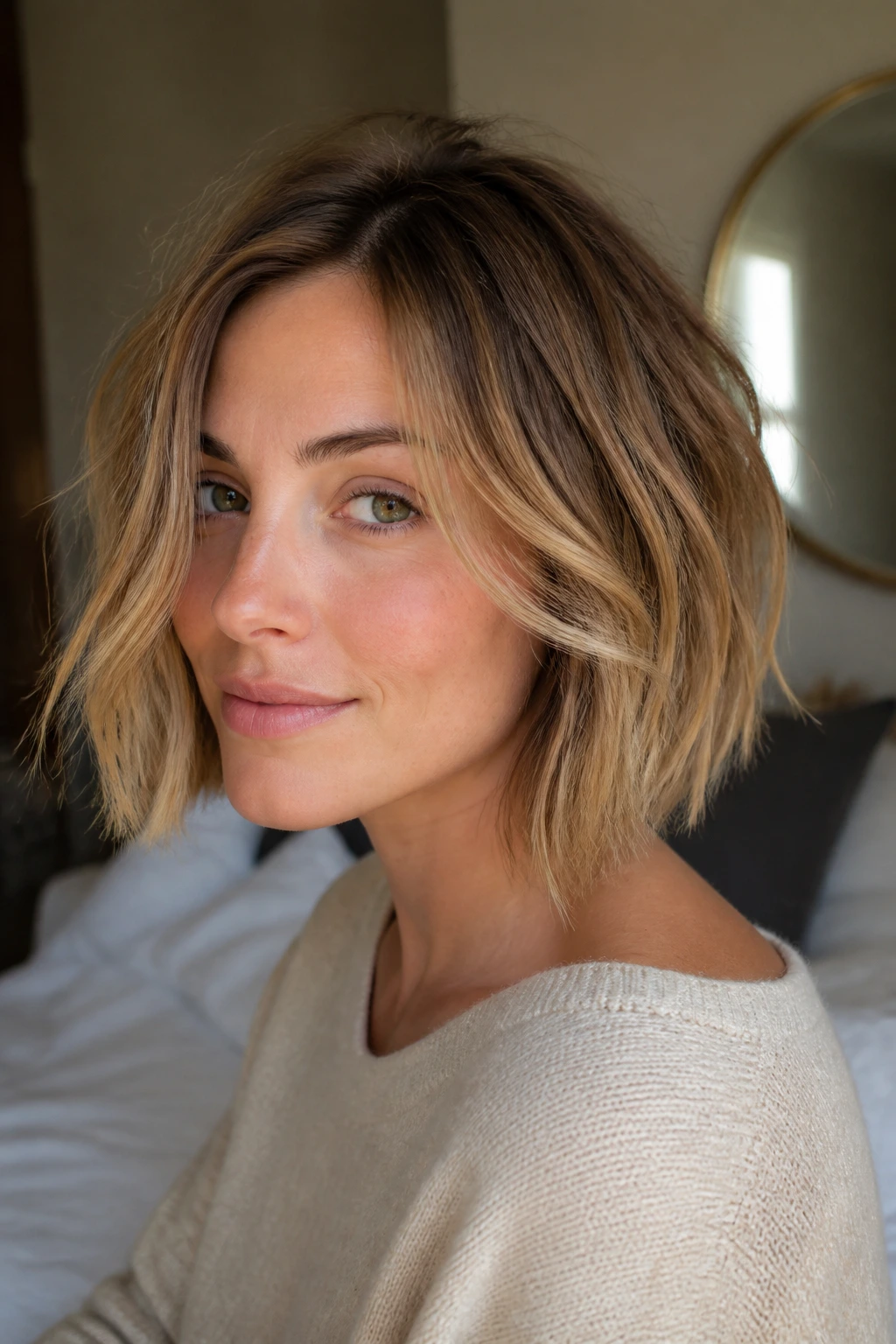
The best messy bob cut is the one that still looks decent after a long day.
That’s why I keep coming back to the soft grow-out bob. It has enough shape to look intentional on day one, and enough looseness to keep working when the hair gets a little longer and stops sitting in that crisp salon-perfect line. The front pieces usually stay a touch longer, the ends are softly broken up, and the whole cut has room to breathe.
This is the version I’d point to if someone wants one bob that doesn’t demand perfect styling every time. You can bend it, air-dry it, tuck it, pin one side back, and it still holds together. The shape is forgiving, which is exactly what makes it cool. It doesn’t beg for attention. It just behaves.
If you’re torn between a blunt bob and a shaggy one, this is the compromise I’d actually trust. Not because it’s safe. Because it stays useful. A good messy bob should make your life easier, not turn into a daily project, and the soft grow-out shape does that better than most.
