



Long bob cuts for girls sit in that sweet spot where hair still feels easy, but it no longer looks flat or awkwardly grown out. You get shape. You get movement. You also keep enough length for clips, low ponytails, braids, and the kind of half-up style that saves a messy morning.
A good lob lives somewhere between the jaw and the collarbone. Too short, and it starts acting like a classic bob. Too long, and the whole point disappears. The real charm is in that in-between space, where the ends still have weight but the cut doesn’t drag the face down.
Hair texture changes everything. Straight hair can look sleek and full with one clean line. Wavy hair wakes up with a few well-placed layers. Curly hair needs shape more than length, or it can puff out at the sides and feel heavy at the bottom. The wrong lob can widen a face or make thick hair feel bulky. The right one looks like it belongs there.
These 12 long bob cuts each solve a different problem. Some make fine hair look denser. Some soften a strong jaw. Some give curls a better shape. Some are plain on purpose, and that’s the point. Start with the cut that fits the hair you actually have, not the one that looked cute in a photo taken under soft lighting.
1. Classic Collarbone Lob
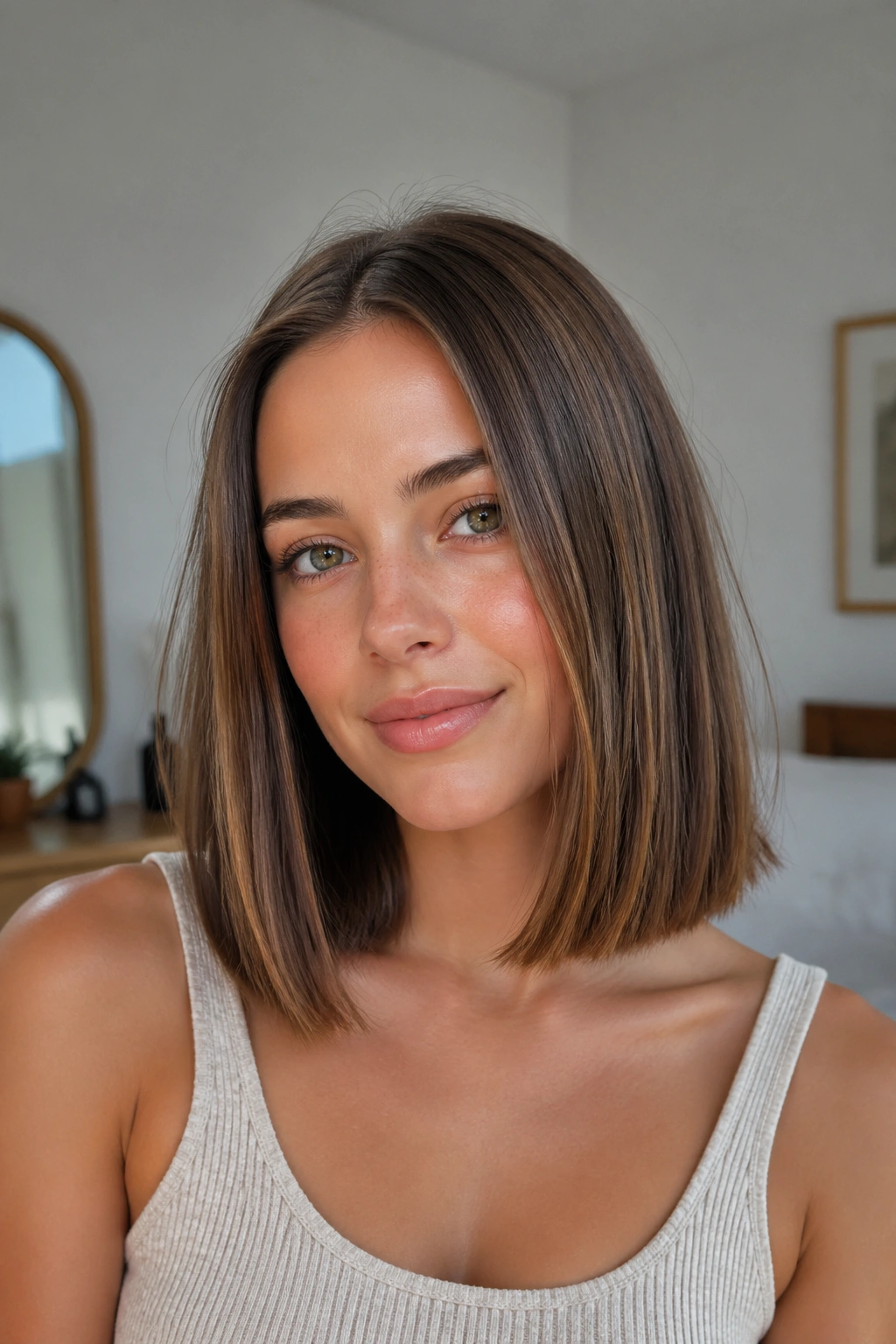
A blunt collarbone lob is the haircut I reach for when someone wants hair to look fuller fast.
That clean line does a lot of work. It lands right around the collarbone, so it still feels long, but the ends sit with enough weight to look thick and neat. On fine hair, that can be a small miracle. On thicker hair, it gives the cut a solid bottom edge instead of letting it spread out and lose shape.
It also behaves well with almost any part. Center part, side part, slight off-center part — all of them work because the cut itself is doing the heavy lifting. If the hair has a tiny natural bend, the blunt line makes that bend look intentional instead of messy.
Ask your stylist to keep the perimeter even and blunt, then take only a little weight out inside if your hair is dense. Too many layers will steal the whole point of the cut. If you want a lob that looks polished after a quick blow-dry, this is the safest place to start.
It’s tidy, not stiff. That matters.
2. Layered Lob with Face-Framing Pieces
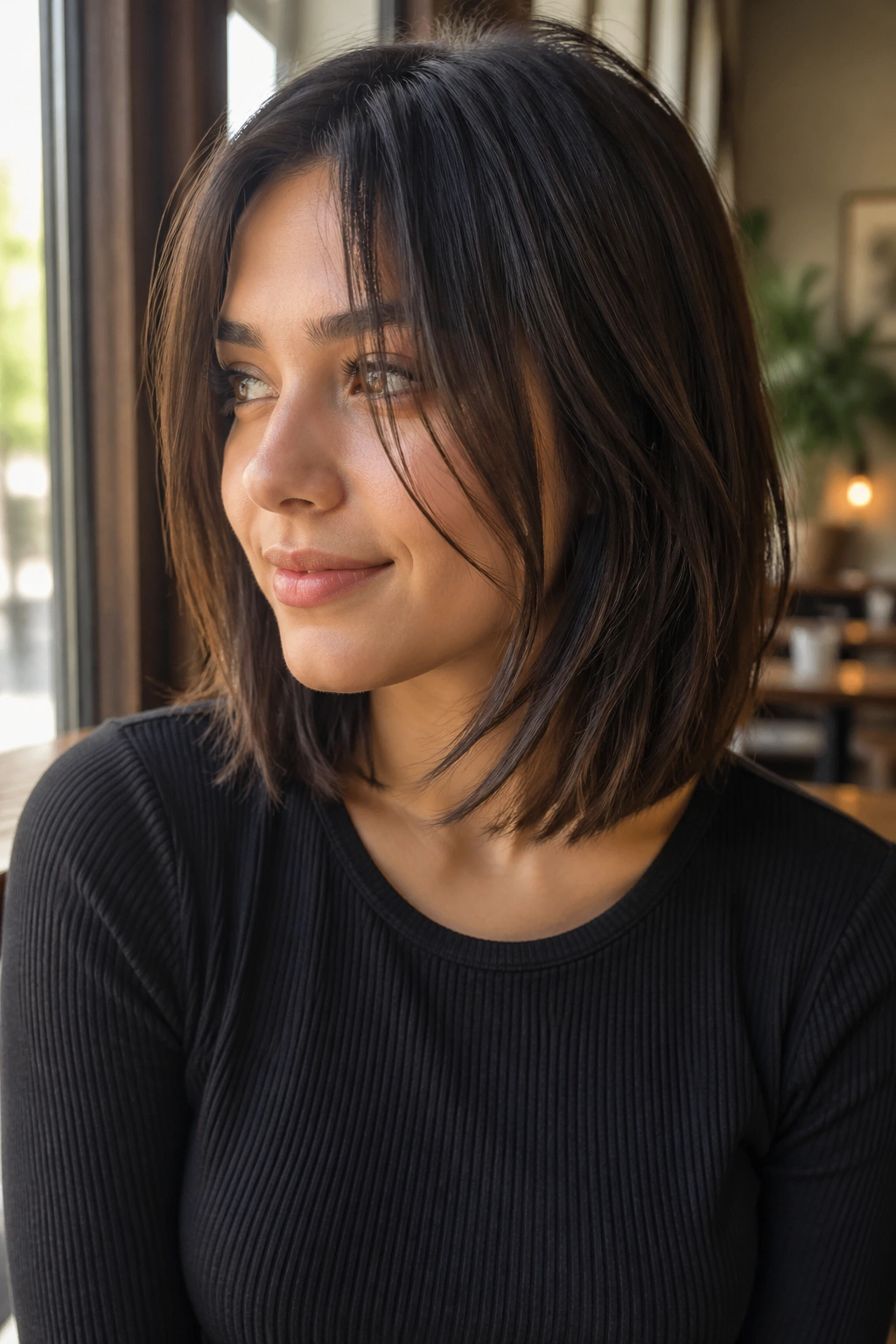
Why do some long bob cuts for girls make the face look softer the second the hair moves?
Because the shortest pieces are placed on purpose. A layered lob with face-framing strands keeps length in the back while letting the front skim the cheekbones, jaw, or chin. That little shift changes the whole feel of the cut. The hair stops sitting like a block and starts moving around the face.
Where the Shortest Pieces Should Land
The best spot depends on what you want the eye to notice first.
- Cheekbone-length pieces pull attention upward and work well if the face feels round.
- Jaw-length pieces soften a square jaw and keep the outline gentle.
- Layers that start below the chin keep more length around the face and suit girls who want the cut to stay calm, not fluffy.
The trick is balance. You want shape, not a shredded effect. A few careful layers around the front can do more than ten random chops through the bottom.
I like this lob on hair that needs movement but still wants some swing. It works with a round brush, but it also dries nicely with a little leave-in cream and a few twists at the front. If hair tends to fall flat around the cheeks, this cut gives it a better path.
One good face-framing layer can change everything.
3. Wavy Textured Lob
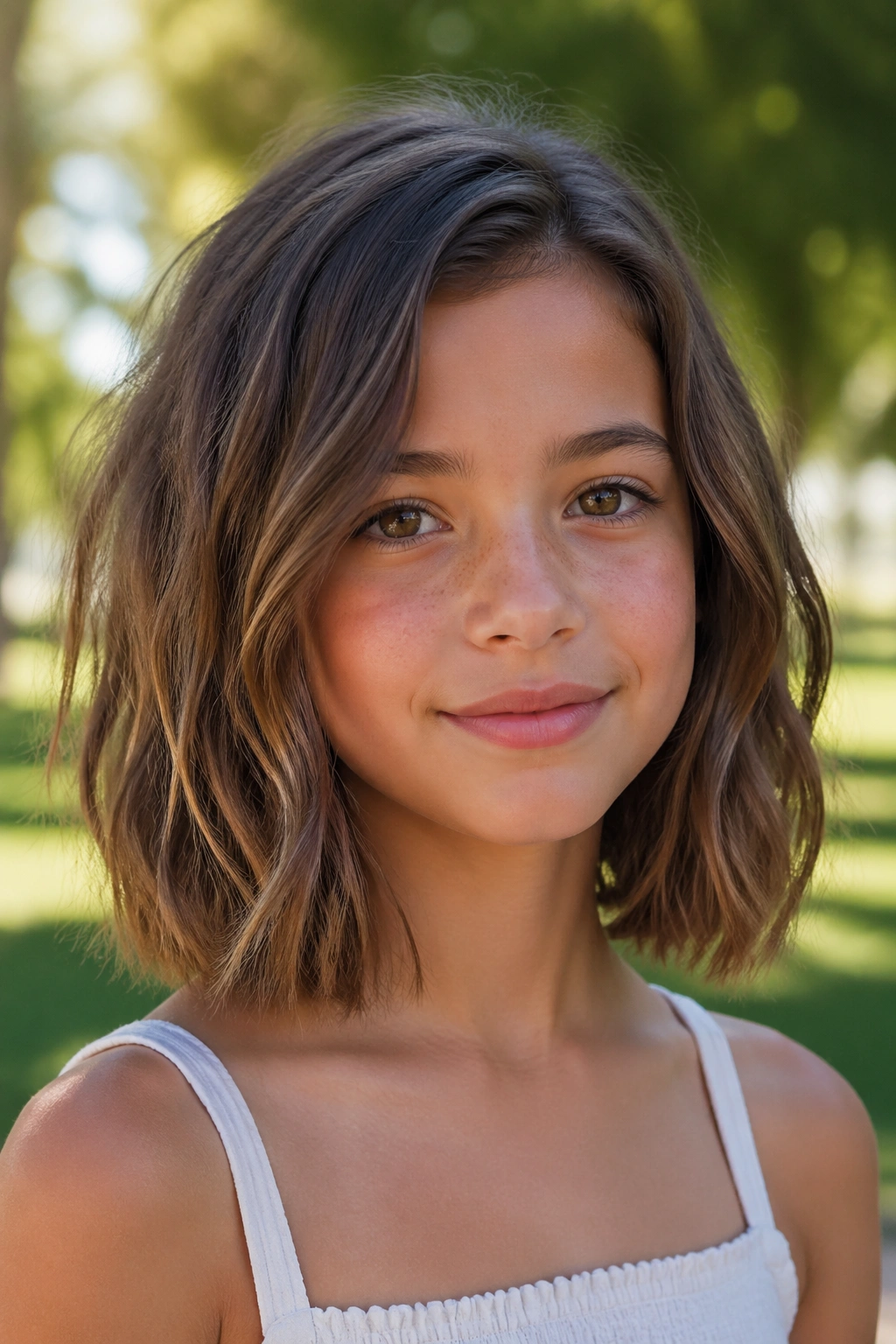
If hair dries with a bend and a little puff, this cut makes that texture look deliberate instead of random.
A wavy textured lob is built for movement. The ends are usually softened, and the layers are light enough to let the wave show through. That means less fighting the hair in the morning. Less time with a flat iron. Less of that heavy, helmet-like feeling some blunt cuts can create on wavy hair.
The best version keeps the outline long enough to feel like a lob, but not so blunt that the wave gets trapped. A few bends from a curling wand can help, but the cut should still look good when air-dried. That’s the real test.
How to Keep the Bend Soft
- Scrunch in a small amount of mousse while the hair is damp.
- Rough-dry with fingers first, then use a diffuser if you want more lift.
- Wrap only the middle section of the hair around a 1-inch curling iron for 5 to 8 seconds, then leave the ends a little loose.
- Break the waves up with clean hands, not a brush.
Do not over-layer very frizzy hair. That usually makes the ends go fuzzy before the rest of the cut has a chance to shine. When the texture is already there, the job is to shape it, not to attack it.
This one feels relaxed in the best way. Not sloppy. Just lived in.
4. A-Line Lob
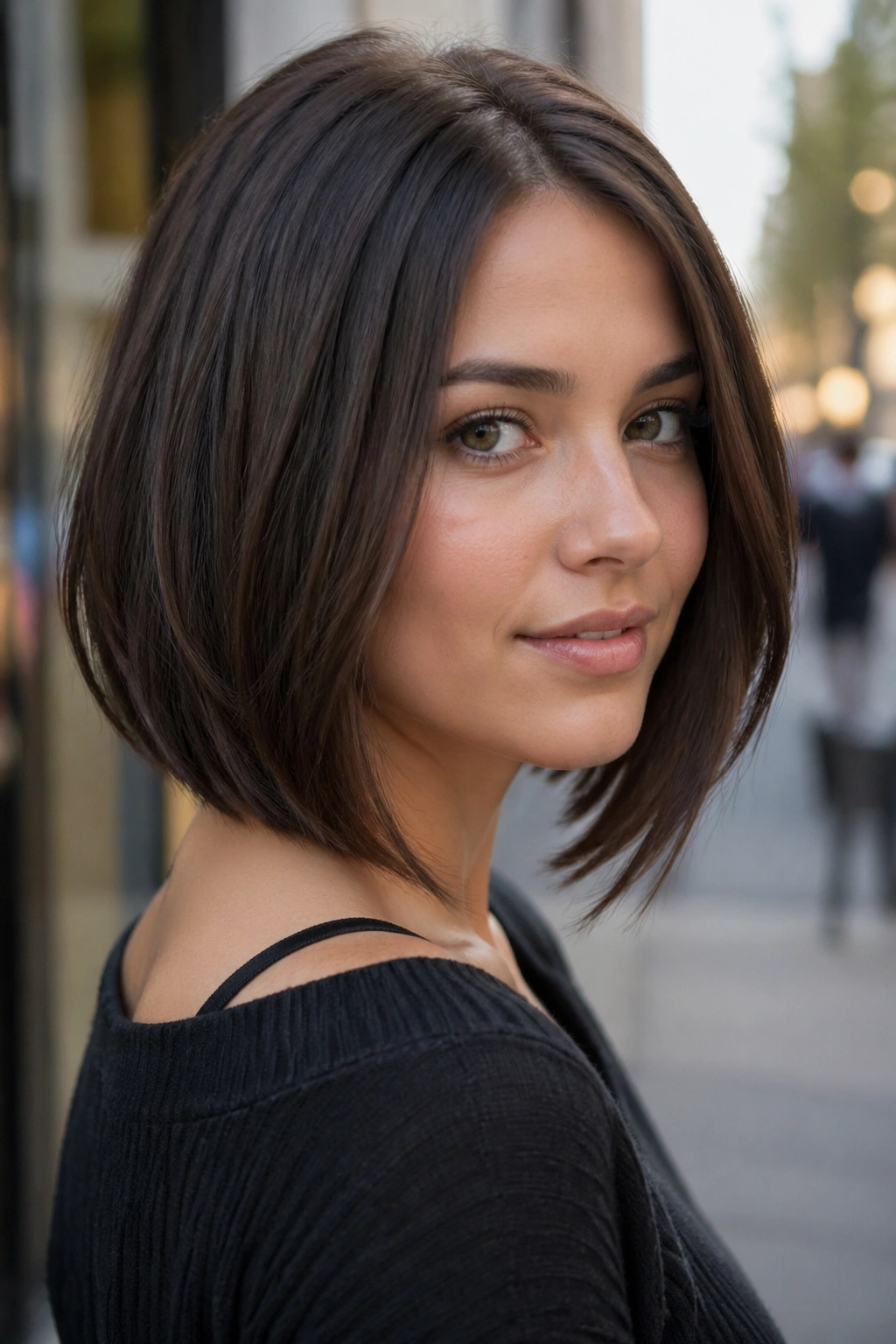
The A-line lob looks sharper than it sounds.
The shape is simple: a little shorter in the back, a little longer in the front. That gentle angle gives the neck more space and keeps the front pieces around the jawline, where they can soften the face instead of hiding it. It’s a neat trick, honestly. Small change. Big difference.
I like this version for girls with straight or slightly wavy hair because the angle shows up clearly. On very thick hair, it helps the cut sit closer to the head. On round faces, it can make the outline feel longer. On square faces, it takes some of the hardness out of the corners. The front pieces should not drop so far forward that the whole cut starts looking heavy.
Keep the angle subtle if you want it to stay soft. Usually, 1 to 2 inches of difference between back and front is enough. More than that starts becoming a statement, which is fine if that’s the plan, but it stops reading as easy.
This cut looks best when it swings. A quick blow-dry with the ends bent slightly under or out gives it life. Small angle, big payoff.
5. Choppy Lob with Curtain Bangs
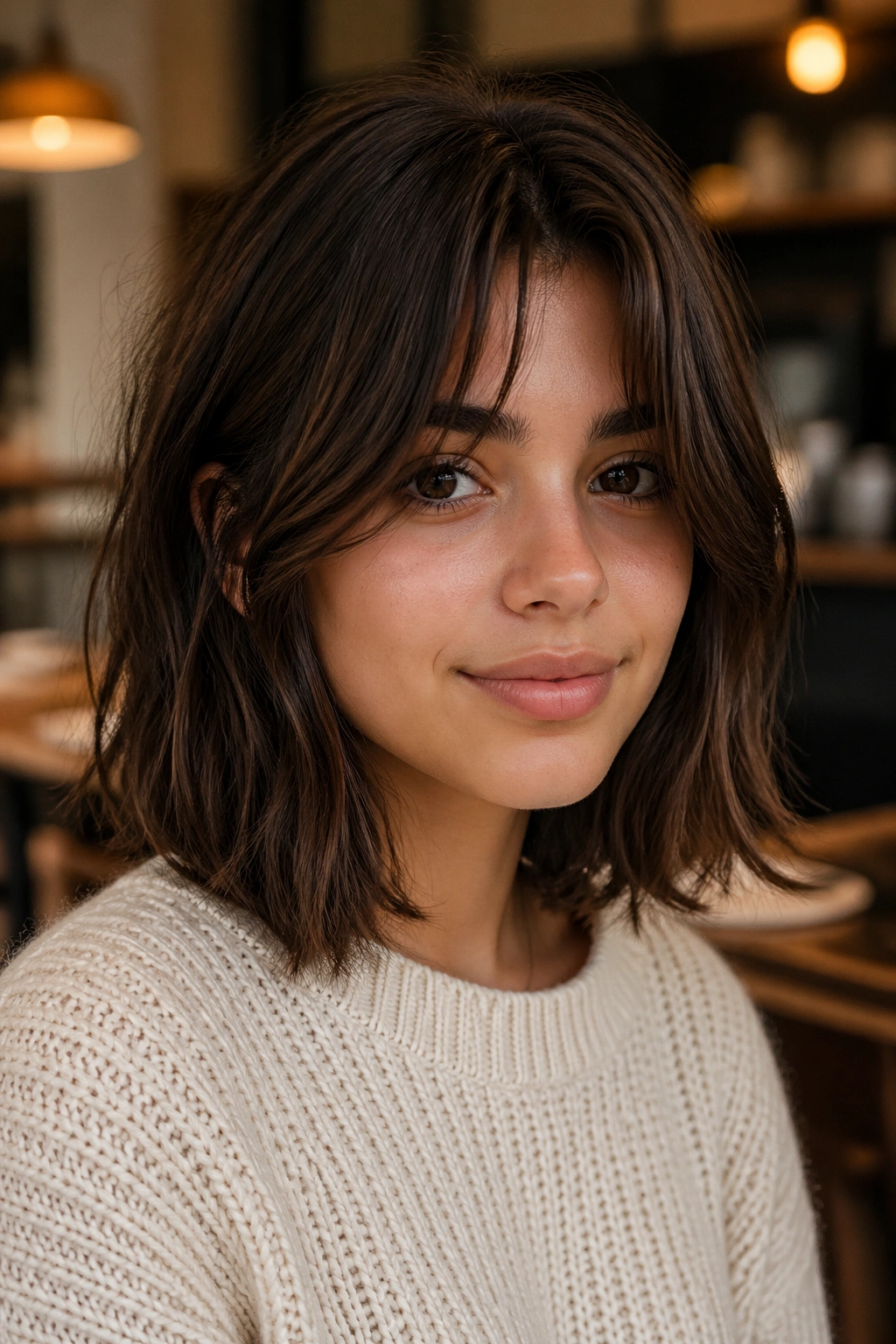
This is the lob that wakes up fine hair.
A choppy lob with curtain bangs gives you movement at the front and texture through the ends, so the whole cut looks lighter and more lifted. Curtain bangs split away from the face and soften the forehead, while the choppy ends keep the bottom from feeling too solid. Together, they create a shape that looks casual but still planned.
Why Curtain Bangs Change the Shape
The middle stays a little shorter, then the bangs open out toward the cheekbones. That pulls the eye inward and upward. It can soften a longer face, cut down some forehead length, and keep the haircut from feeling bottom-heavy.
The key is not to go wild with the thinning. On very fine hair, too much texturizing makes the ends disappear. Better to keep the pieces defined and let the bang do the visual work.
A few styling notes help here:
- Blow-dry the bangs first, using a round brush to curve them away from the face.
- Use a light texture spray on the mid-lengths, not the roots.
- Keep the ends a little undone, not perfectly round.
- Trim the bangs before they start poking into the eyes.
This cut has a bit of attitude, but not the dramatic kind. It still works for school, family photos, and those days when hair has to behave with almost no help. That’s a good haircut.
6. Side-Part Lob with Soft Long Layers
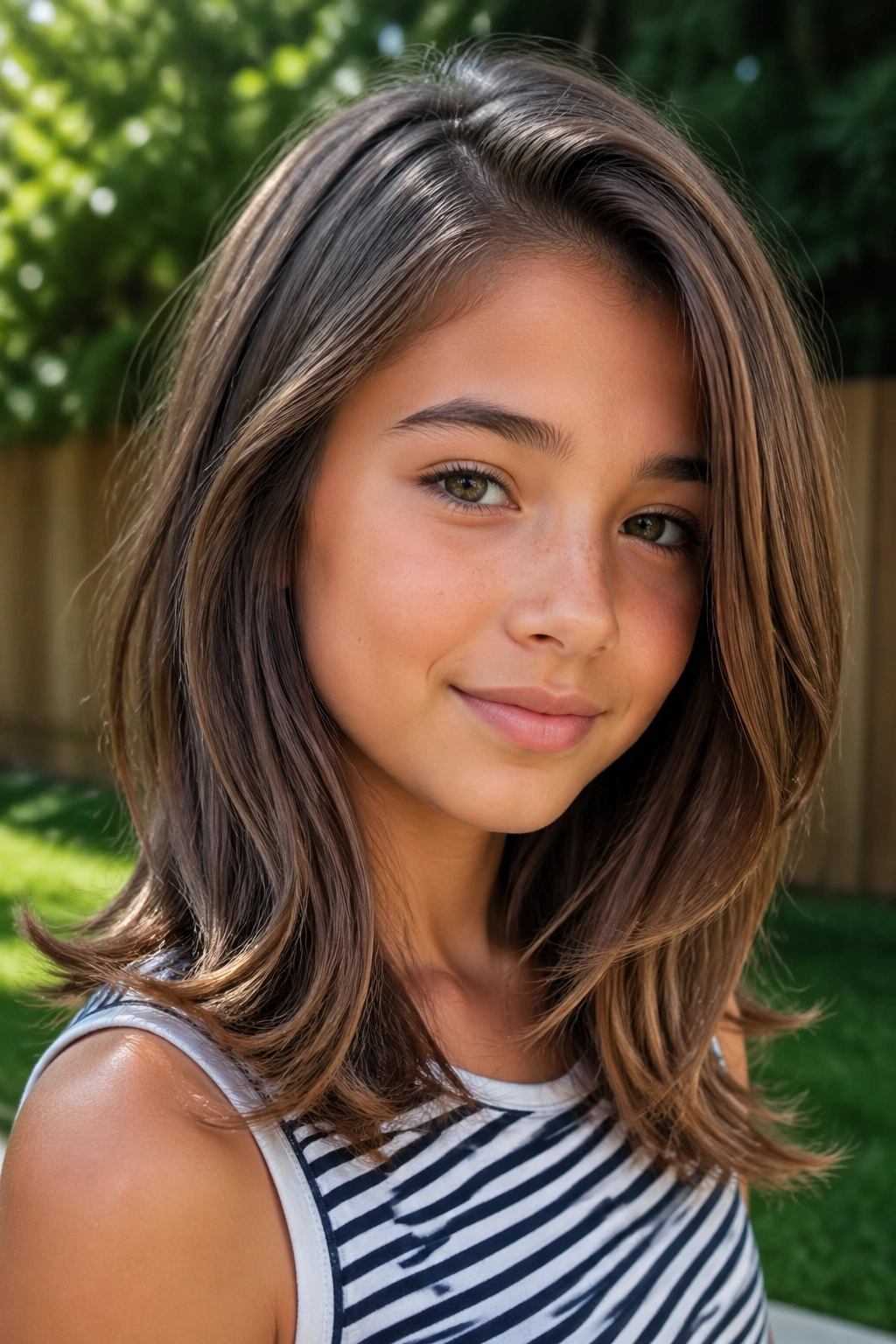
Want a lob that feels a little less neat and a little more natural?
A side-part lob shifts the weight in a way a center part never quite does. The deep or soft side part adds lift at the roots, and the long layers let the hair fall in a gentler sweep around the face. It’s a small move, but it changes the whole mood of the cut.
This is a smart choice for girls with straight hair that tends to go flat on top. A side part gives the root area some height without teasing or extra products. It also works well if the forehead feels wide or if the face needs a little asymmetry to soften it. The layers should stay long enough to move, not short enough to puff.
The part itself matters more than people think. Slide it about 2 to 3 inches off center and see what happens. Too far over, and the style can start to feel fussy. Too close to the middle, and you lose the lift.
A smoothing cream or a small amount of blow-dry lotion is often enough. Then tuck one side behind the ear and leave the other side loose. That simple split gives the cut some shape without turning it into something overdone.
Sometimes the smallest shift is the one that saves the haircut.
7. Sleek Blunt Lob with a Center Part
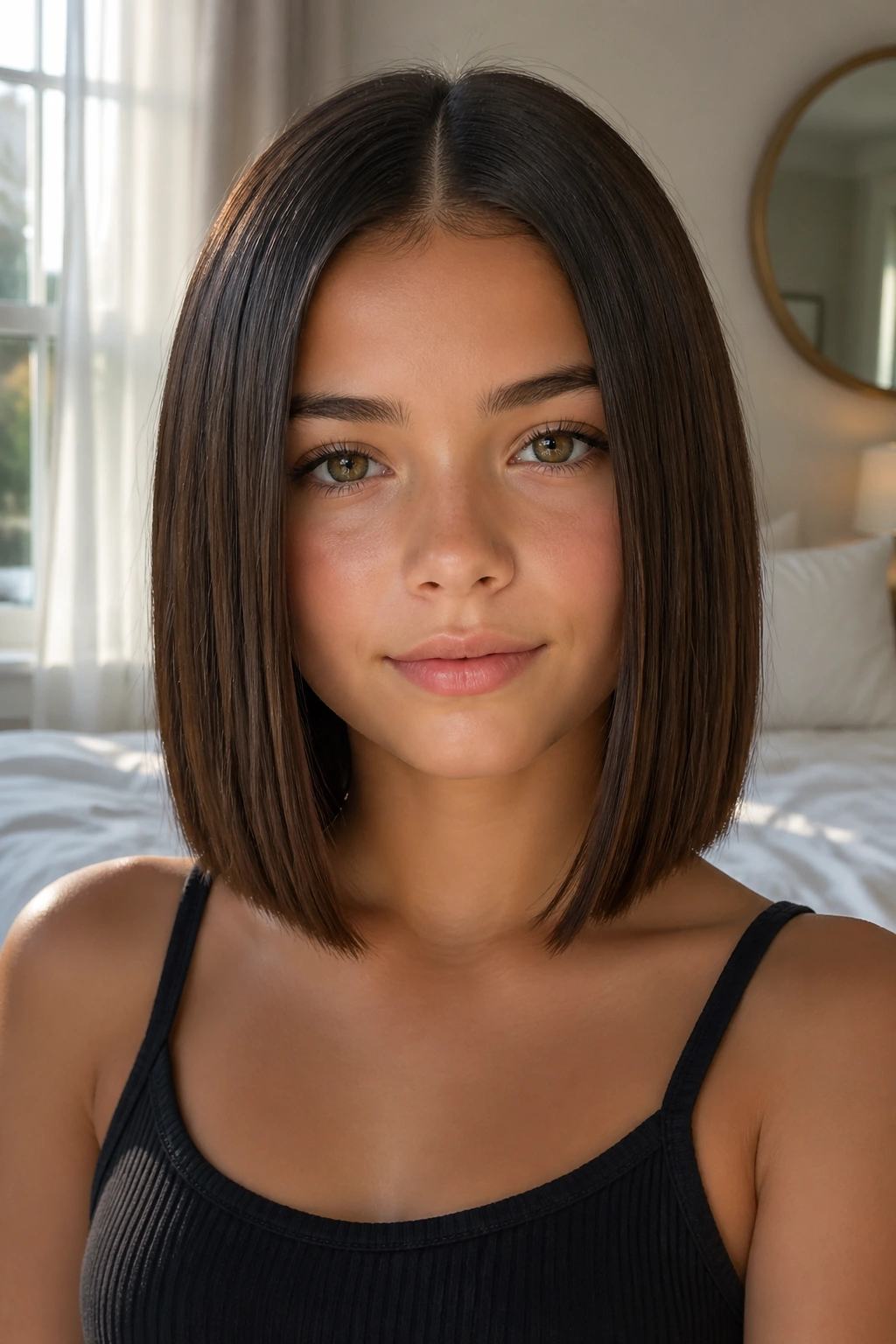
A sleek blunt lob should feel cool at the ends, smooth through the middle, and clean around the collarbone.
This is the neat one. The center part keeps the shape balanced, and the blunt edge gives the haircut a sharp bottom line that looks intentional even when the rest of the outfit is plain. It’s a good match for girls with naturally straight hair, or hair that smooths out fast with a blow-dryer and a flat iron.
The cut depends on precision. The ends need to stay even, because any crookedness shows right away. If the hair starts flipping at the bottom, the line is probably too blunt for the texture, or it needs a tiny trim. A half-inch can make a bigger difference than people expect.
How to Keep It Sharp
- Blow-dry with the nozzle pointed downward so the cuticle lies flatter.
- Use a flat iron only on the last inch or so of the ends.
- Put heat protectant on damp hair before styling.
- Finish with a tiny drop of serum between the palms, then smooth only the outer layer.
One thing I like about this cut: it looks expensive even when the styling is plain. That sounds shallow, but hair does that. The cleaner the line, the less effort it needs to look finished.
Flat ends show split ends fast. Book trims before the shape gets ragged.
8. Curly Rounded Lob
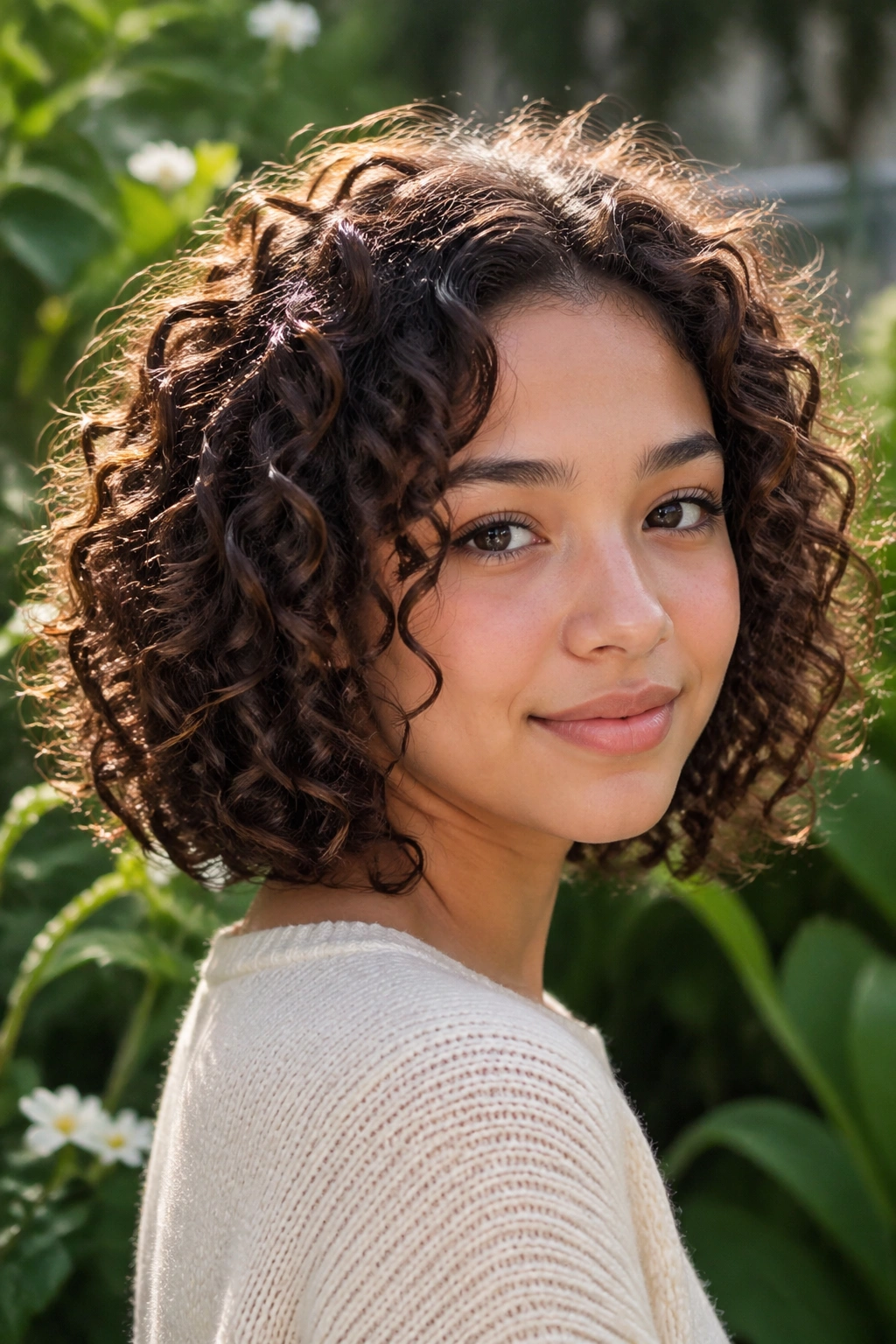
A shoulder-length cut on curly hair can turn into a triangle fast.
That’s why a rounded lob matters. Instead of keeping all the weight at the bottom, the shape follows the curl pattern and lets the hair curve around the face and neck in a softer line. It feels fuller at the right places and lighter where the bulk would otherwise build up. On curls, shape matters more than raw length.
This cut usually works best when it’s shaped dry or at least with the curls mostly set in their natural pattern. Wet curls can stretch and hide their true spring. Dry cutting helps the stylist see where the curls sit, where they bounce, and where they need more space.
Why Dry Cutting Matters
When curls shrink, they do it in their own way. One section may sit an inch shorter than another. Another may curl tighter after washing and sit right on top of the cheekbone. A dry cut lets the stylist respond to what the curls actually do, not what they look like when soaked.
For styling, a curl cream and a diffuser are enough for many girls. Scrunch gently, don’t rough it up too much, and let the shape keep some air in it. If the hair is very dense, a few internal layers can help the cut sit better without stealing the curl family feeling.
This is one of those cuts that looks easiest when it’s done carefully. Messy curls and bad shape are not the same thing.
9. Inverted Lob with a Stacked Back
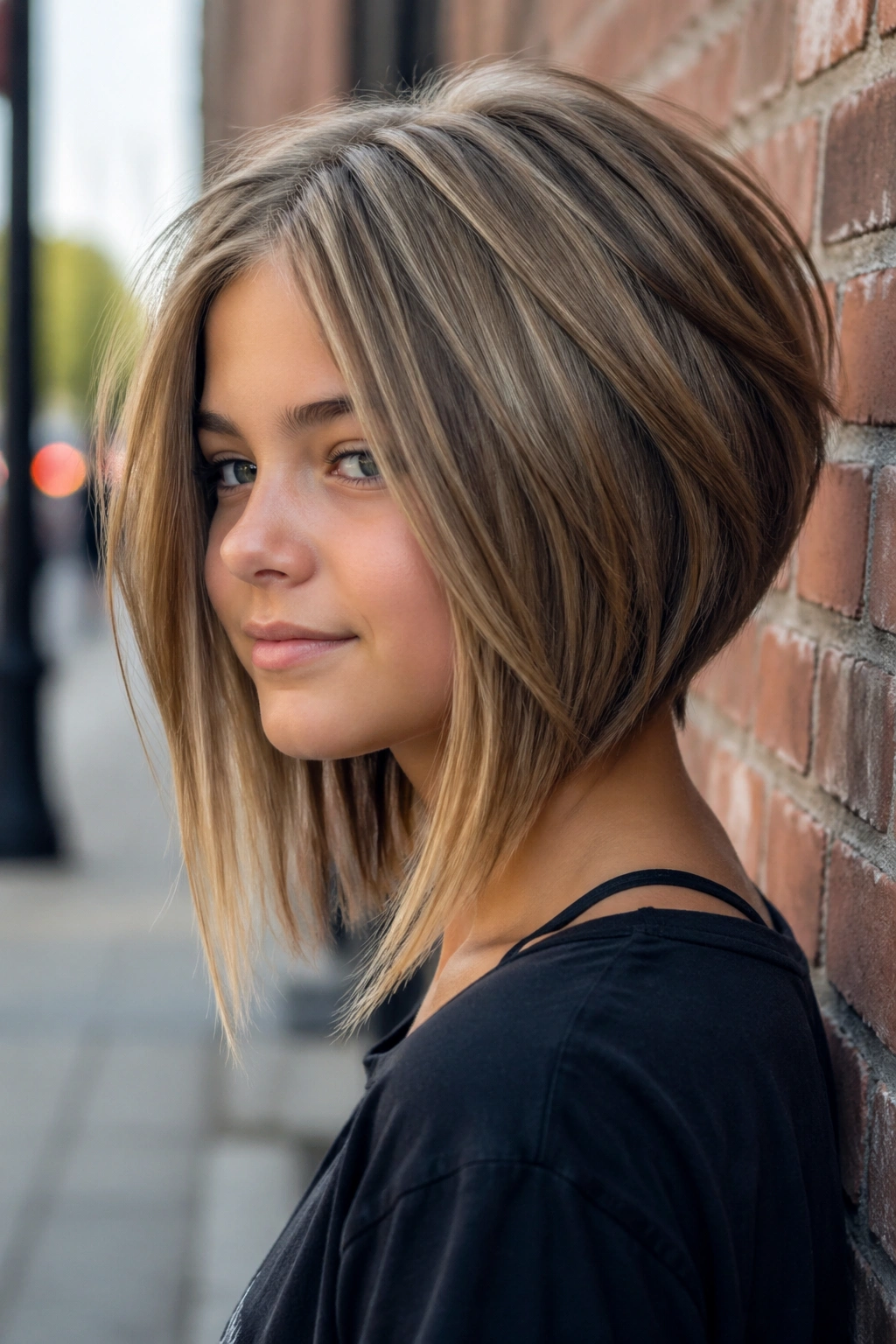
Unlike a simple A-line, the inverted lob has more lift in the back and a stronger curve into the jaw.
That stacked shape at the nape gives the cut structure. The back sits a little shorter and fuller, while the front length stays long enough to frame the face. It’s a stronger look than a blunt lob, but not as dramatic as some short stacked bobs. For girls with thick hair, this cut can take out bulk and make the whole shape sit closer to the head.
It’s especially nice on straight hair that tends to fall flat in the back. The stacked layers create movement where the hair usually just hangs. If the hair is fine, though, the stacking needs to stay soft. Too much of it and the back can look sparse.
Who Should Ask for It
- Girls with thick hair that sits heavy at the neckline.
- Girls who want a lifted shape in back and a longer front.
- Girls who like a clean outline but want more structure than a plain lob.
The maintenance is a little higher than with a blunt version. The back needs regular trimming to hold the curve, and a round brush helps the style stay smooth. It’s not a lazy haircut. But if you want the head shape to look more defined, this one does the job.
A lot of good haircuts are quiet. This one is not quiet. That’s part of the appeal.
10. Shaggy Lob with Airy Texture
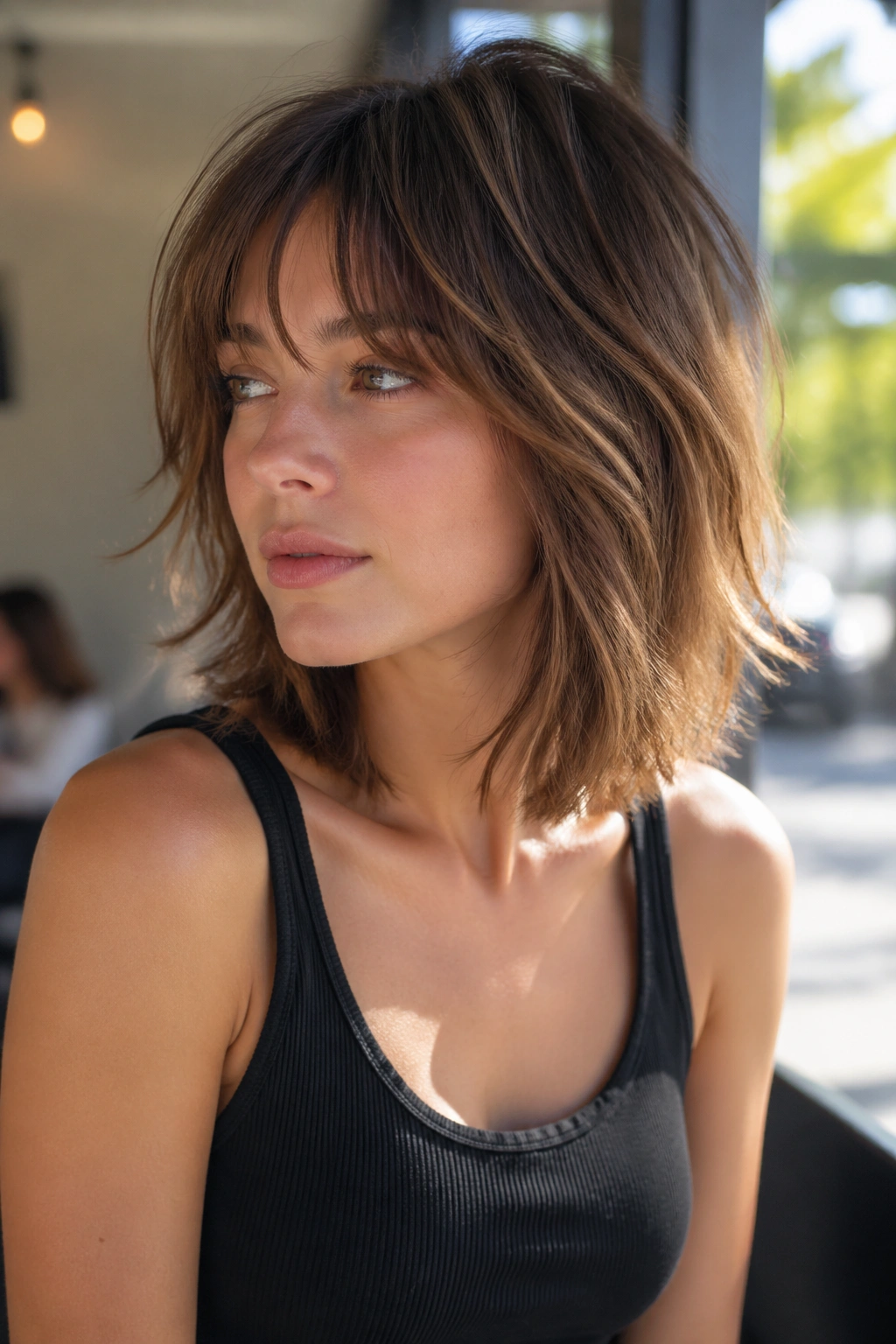
I keep coming back to the shaggy lob for girls who want movement without losing the outline of a real haircut.
The shag brings broken-up ends, airy layers, and a little mess built into the shape. That sounds casual because it is. The cut doesn’t try to sit in a perfect line. Instead, it lets the layers create lift and softness all over, especially around the crown and cheek area. On wavy hair, it can look easy in the best possible way. On straight hair, it usually needs a bit more styling to show the texture.
The thing I like most is the grow-out. A shaggy lob can look better after a few weeks because the pieces settle and the edges lose that too-fresh feeling. That makes it appealing if you don’t want to live at the salon every few weeks.
A little mousse, a little dry texture spray, and a quick finger-scrunch are often enough. If the hair is dense, the stylist may remove weight inside the cut so the ends don’t feel heavy. If the hair is fine, the layers should stay light and deliberate, or the shape can fall apart.
Not every haircut needs to look polished. Some are better when they look touched, not staged.
11. Asymmetrical Lob
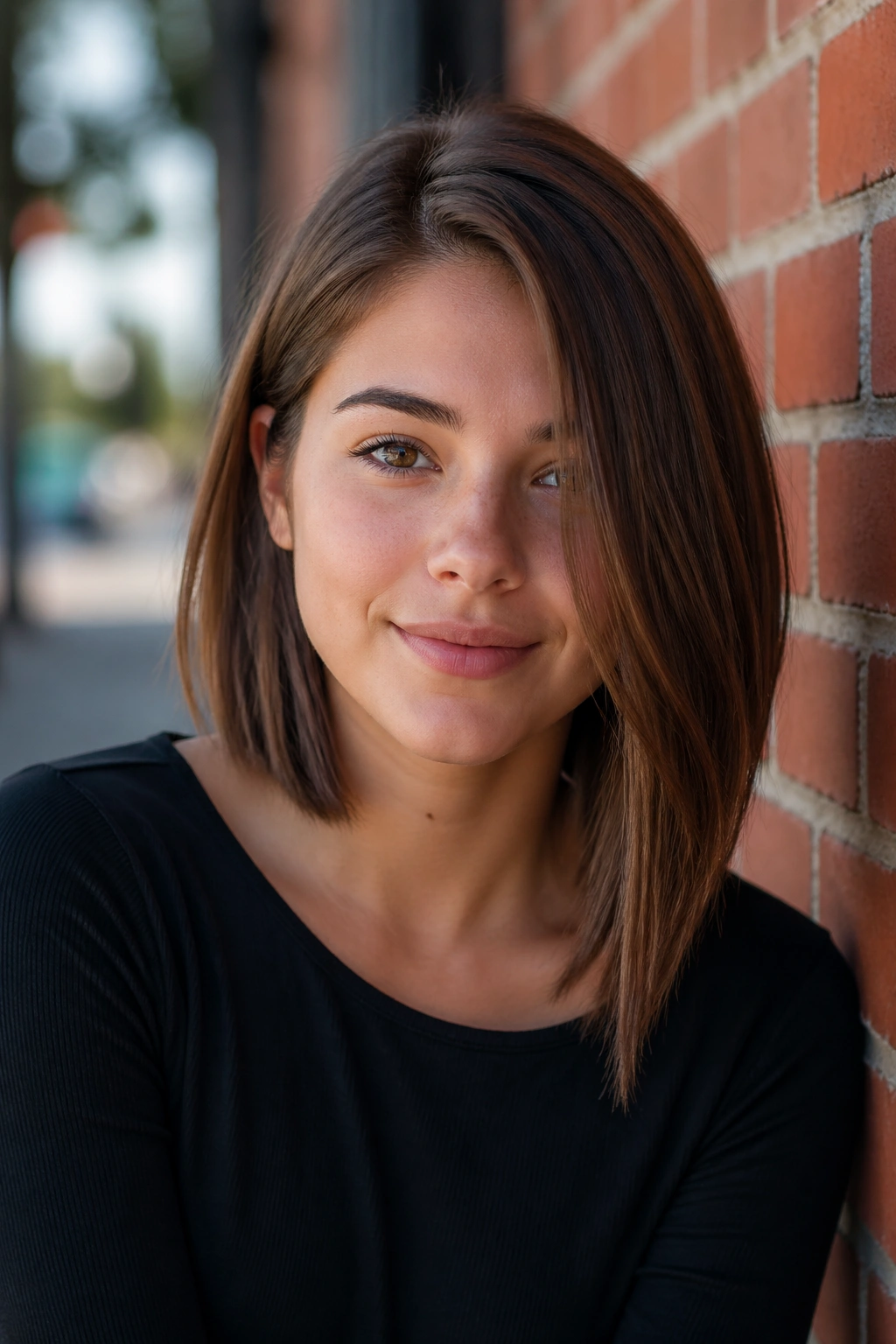
An asymmetrical lob is not loud when it’s done well.
The whole point is a small imbalance. One side hangs a bit longer than the other, usually by about 1 to 2 inches. That slight shift adds edge without turning the haircut into a costume. It can make a plain lob feel sharper, and it gives the face a little movement just from the way the lengths fall.
This works best when the difference stays controlled. A tiny asymmetry looks modern. A huge one starts fighting the rest of the haircut. If you want the cut to stay easy to wear, keep the angle subtle and let the difference show only when the hair moves or gets tucked behind one ear.
How Much Difference Is Enough
- About 1/2 inch to 1 inch gives a soft, barely-there shift.
- About 1 inch to 2 inches makes the shape obvious.
- More than that can start to feel heavy on one side unless the hair is very dense.
Straight hair shows the asymmetry most clearly. Wavy hair softens it a little. If one side always gets tucked behind the ear, this cut looks especially good because the longer side creates a line that feels deliberate.
I like this version for girls who want something a little bolder but still wearable every day. It has personality, but not a lot of drama. That’s a better deal than people expect.
12. U-Shaped Lob with Feathered Ends
Want a long bob that still works when you pull it back on a busy day?
A U-shaped lob with feathered ends is one of the easiest shapes to live with. The back sits a little fuller in the center, then curves gently toward the front, which keeps the line soft instead of boxy. Feathered ends remove some of the heaviness and help the hair move, especially if the hair is thick or tends to sit in one lump.
This shape is kinder than a hard blunt line. It still looks like a lob, but it gives the hair a softer fall around the neck and shoulders. If the hair is fine, the feathering should stay light so the ends don’t disappear. If the hair is dense, the soft edge keeps the cut from feeling bulky at the bottom.
It’s also a practical choice for girls who tuck hair behind the ears, wear headbands, or throw their hair into low ponytails and half-up styles. The curve at the back means the style keeps some shape even when it’s not worn down.
A good lob doesn’t need to fight your life. It should make mornings easier and still look like you meant to do something with your hair. This is the one I’d hand to anyone who wants shape, movement, and a grow-out that stays calm instead of awkward.
