



Light brown bob cuts have a way of looking soft without reading plain. A blunt line in honey-brown looks calmer than the same cut in jet black, and a textured bob in caramel can feel warm even when the haircut itself is very clean.
The color does half the work. Light brown softens edges in a way darker shades sometimes do not, especially around the jaw and cheekbones. That is why the same bob can look sharp on one person and flattering on another once the tone shifts a little warmer.
Too much warmth goes brassy. Too much layering goes fluffy. The best versions live in the middle: beige, honey, caramel, toasted almond, all those brown shades that still look like hair rather than dye.
That middle ground is where the good bob lives. The shapes below each use light brown differently, and the differences matter more than most salon photos let on.
1. Chin-Length Blunt Bob With a Honey-Brown Finish
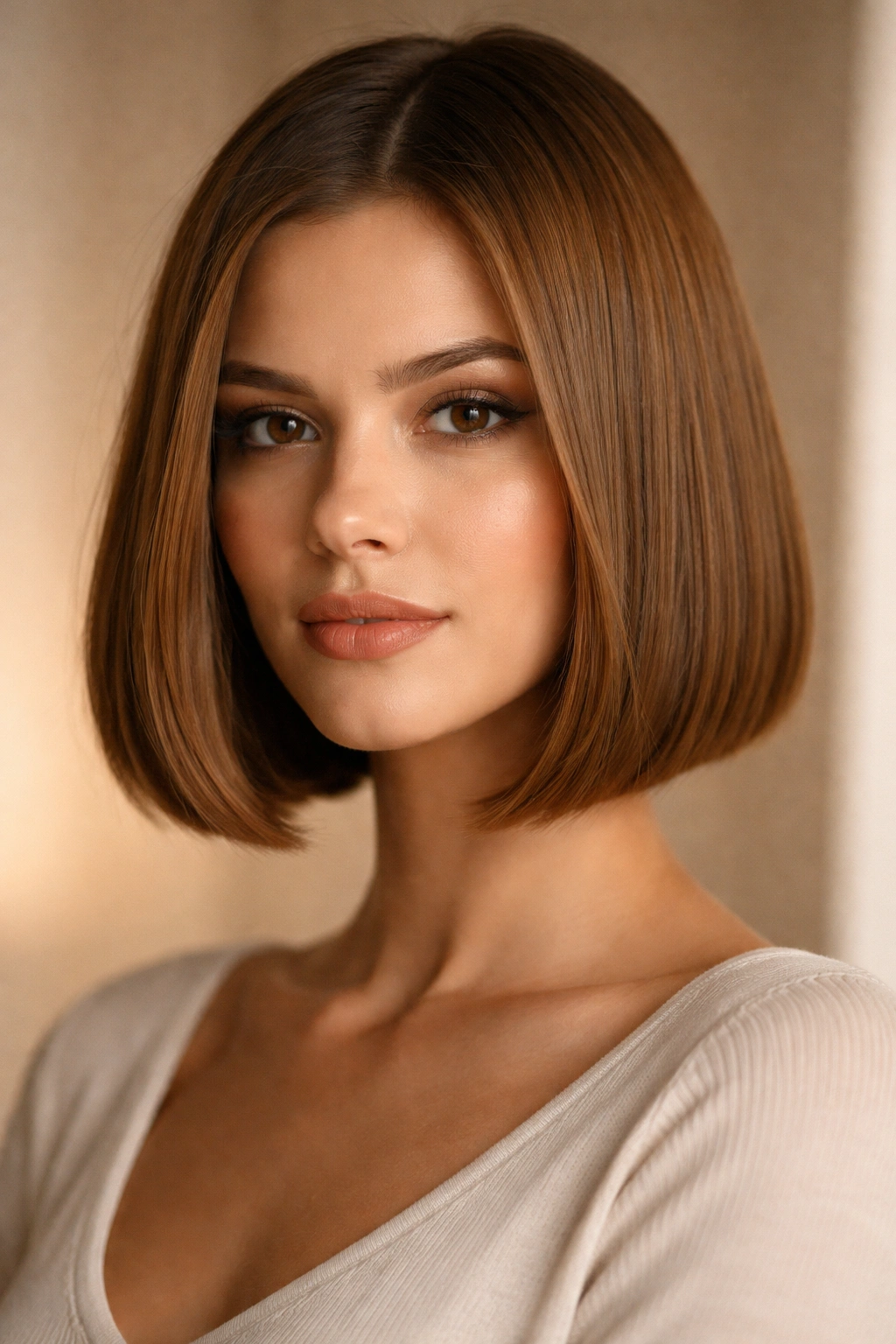
A chin-length blunt bob is the fastest way to make light brown hair look polished without feeling stiff. The line sits right where the jaw starts to curve, so the cut frames the face while the color keeps it from feeling hard. In a honey-brown shade, the whole thing reads clean, warm, and quietly expensive.
I like this shape on hair that wants to look thicker than it is. A blunt edge gives the ends weight, which means the style looks fuller even if the actual density is on the fine side. A tiny bevel at the bottom keeps it from turning boxy. Tiny. That matters.
Why It Works on Light Brown Hair
Light brown has a habit of showing every line in a haircut, which is why this style makes sense. The straight perimeter gives the color a solid surface, and the warmth in the tone keeps the bob from looking severe. If you want softness without losing structure, this is the cleanest route.
Ask for a one-length shape that hits at the chin or a hair below, with only a whisper of texturizing at the very ends. Too much point cutting makes the edge look ragged, and that kills the polished feel fast. You want a bob that looks deliberate from three feet away and even better up close.
- Best on: fine to medium hair that needs a fuller outline.
- Ask for: a blunt perimeter with a slight forward angle if you want the front a touch longer.
- Style with: a round brush, a light serum, and a side part for a softer finish.
- Avoid: over-thinning the ends, which makes light brown look flat instead of plush.
One sentence is enough here: keep the line clean.
A chin-length bob also grows out in a way that still looks intentional for a while, which is a nice bonus. If your hair likes to flip out at the ends, a quick pass with a flat brush and a blow dryer usually fixes it. The point is control, not stiffness. There’s a difference.
2. Collarbone Lob With Caramel Waves
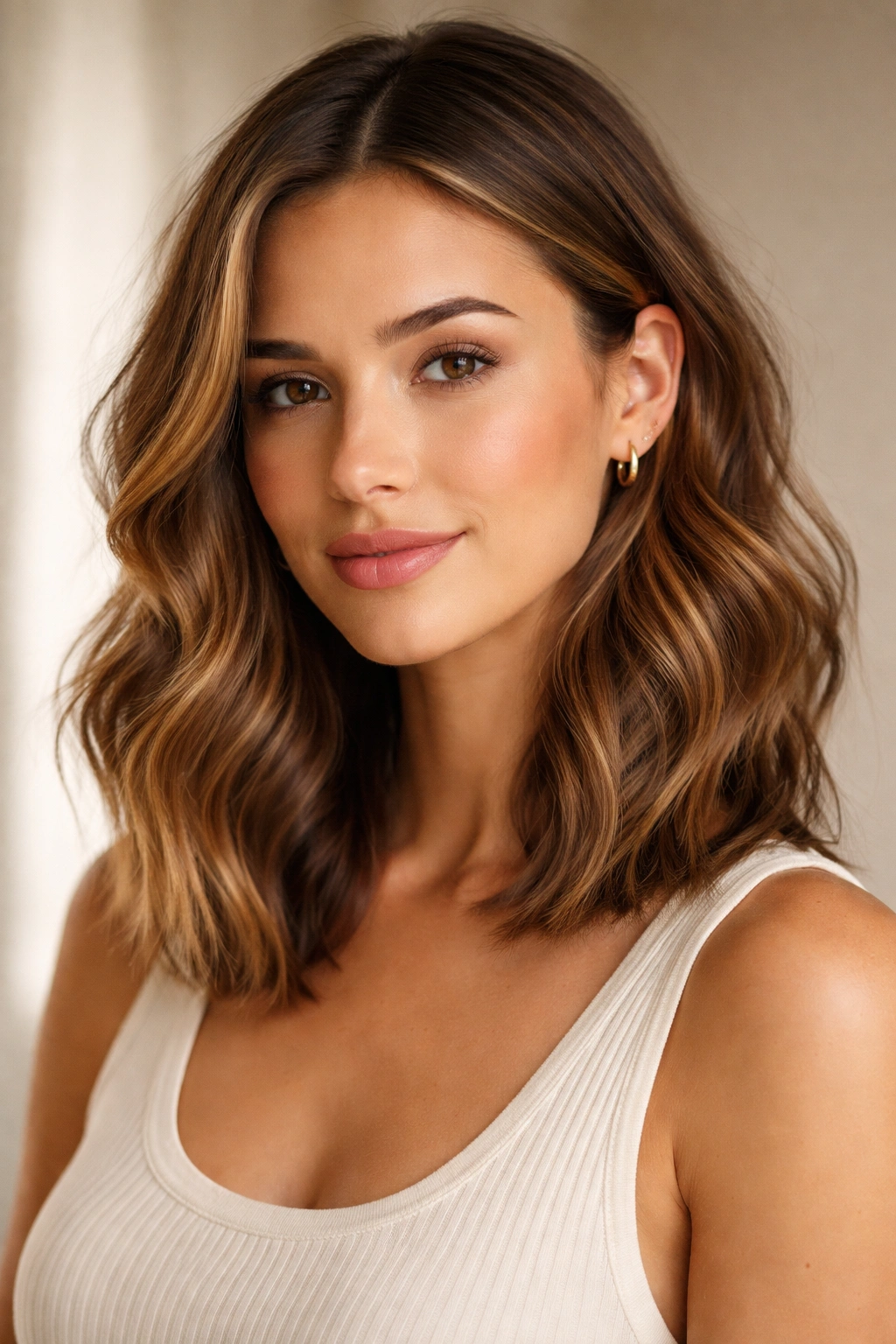
Want a bob that still gives you some room to move it around? The collarbone lob is the friendly answer. It sits long enough to tuck behind the ears, clip up, or scrape into a low knot, but it still gives that bob shape through the shoulders.
The caramel wave is what turns the cut from practical into pretty. A few soft bends through the mid-lengths make the color look warmer, because the highlights catch on the curves instead of sitting flat. That little bit of motion matters more than people think.
How to Wear the Bend
The wave should look relaxed, not crimped. A 1-inch curling iron, wrapped away from the face on one side and toward the face on the other, gives that softer bend without turning the whole head into pageant hair. Leave the last inch of the ends straight. That keeps the look modern and stops it from feeling overdone.
A collarbone lob also works well if you do not want a haircut that needs frequent babysitting. It grows out gracefully, and the extra length gives you a little insurance on days when your hair is not behaving. I’ve always thought this is the smartest choice for anyone who wants softness first and maintenance second.
The warmth should sit in the waves, not on the root. That’s the whole trick.
A few caramel ribbons around the front are enough to brighten the face. Push too much lightness through the whole head and you lose the depth that makes light brown look rich. Keep the base a touch deeper, and the waves will do the rest.
3. French Bob With Beige-Brown Bangs
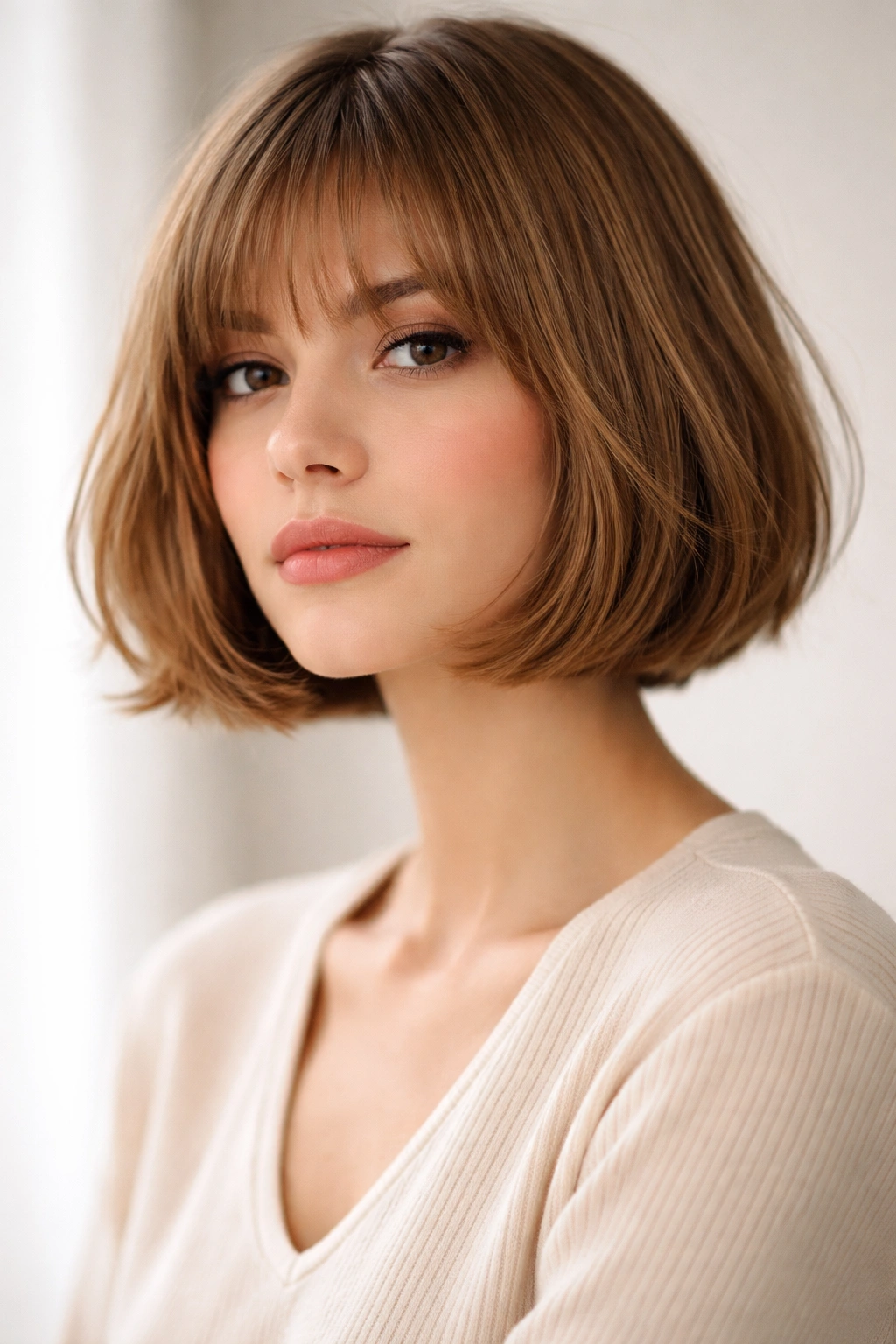
A French bob does not have to feel severe. In light brown, especially with beige-brown bangs, it can look airy and almost offhand in the best way. The cut usually sits between the cheekbone and the jaw, which gives it that short, face-framing shape people love when they want something with personality.
The fringe changes everything. A wispy bang softens the front edge so the bob does not land like a hard shelf across the face. On lighter brown hair, that fringe also breaks up the color in a nice way, especially if the shade has a hint of cream or sand rather than a heavy gold tone.
What to Ask Your Stylist For
Tell them you want the bangs to skim, not sit like a wall. Brow-grazing or just-below-brow length works well, and a little space through the ends keeps the line from feeling heavy. If your hairline has cowlicks, mention that before the scissors come out. Fringe and growth patterns argue with each other if nobody plans for them.
This cut suits straight to slightly wavy hair best. A French bob can work on curl, but the shape needs more room and a different approach at the edges. On smoother hair, the warmth reads especially well because the surface stays tidy and the bangs can fall in a soft arc.
- Works well for: smaller features, strong brows, and faces that like a shorter frame.
- Ask for: a bob that sits at the cheek or jaw with a feathered fringe.
- Use: a light styling cream and a quick finger-dry for a lived-in finish.
- Watch for: bangs that are cut too blunt, which makes the whole thing feel heavy.
Short. Soft. Unfussy. That is the sweet spot.
The maintenance is real, though. Bangs need regular trimming, and that is part of the deal. If you want the shape to keep its easy charm, stay ahead of the fringe before it drops into your eyes and starts fighting the rest of the cut.
4. Textured Wavy Bob With Amber Dimension
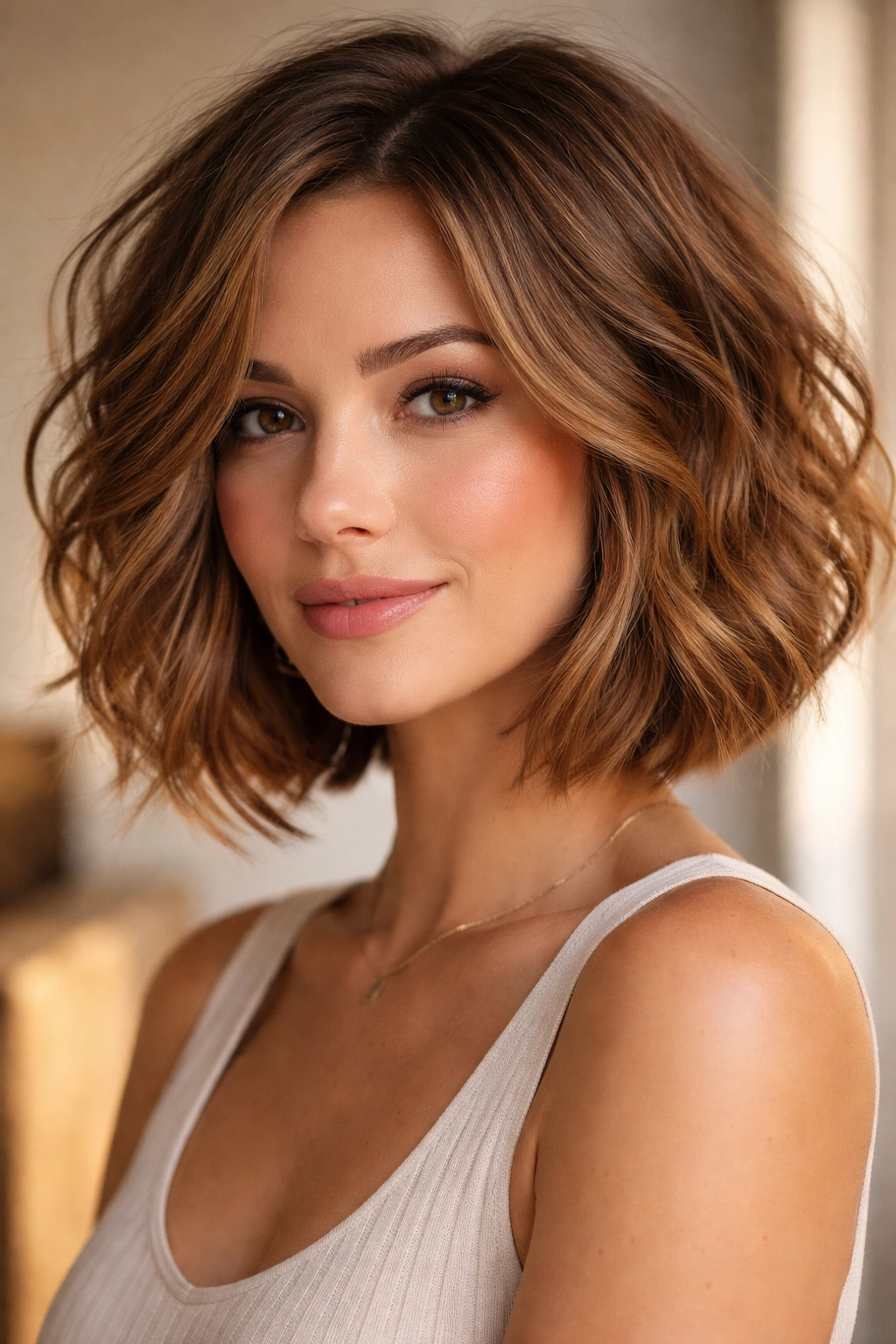
Run your fingers through a textured bob and you feel the cut before you even study it. The ends move, the layers lift, and the whole shape has a little air in it. In a warm light brown with amber dimension, that movement looks richer because the color bends with the hair instead of sitting on top of it.
This is the bob for people who like softness but do not want their hair to look too controlled. The texture gives the cut a casual feel, and the warm color keeps it from drifting into flat brown territory. Done well, it looks like hair that has a life of its own.
The Trick With Layers
The best textured bob does not have obvious, choppy layers everywhere. It has invisible shaping underneath, usually through the interior, so the surface still looks smooth while the ends have enough separation to move. That is why this cut can feel breezy instead of messy.
I like it with a side part and a little bend through the front pieces. Not uniform waves. Just enough motion to show the dimension in the color. A diffuser helps if your hair already has natural wave, and a soft mousse at the roots gives the style some lift without making it crunchy.
If your hair is thick, this cut takes weight off without leaving the bottom too thin. If your hair is finer, the texture gives it some personality without requiring a huge amount of styling. Either way, the amber tones read best when the hair is allowed to move a bit. Stillness is not really the point here.
Let the ends stay a little imperfect. That is where the charm lives.
5. A-Line Bob With a Toffee-Brown Sweep
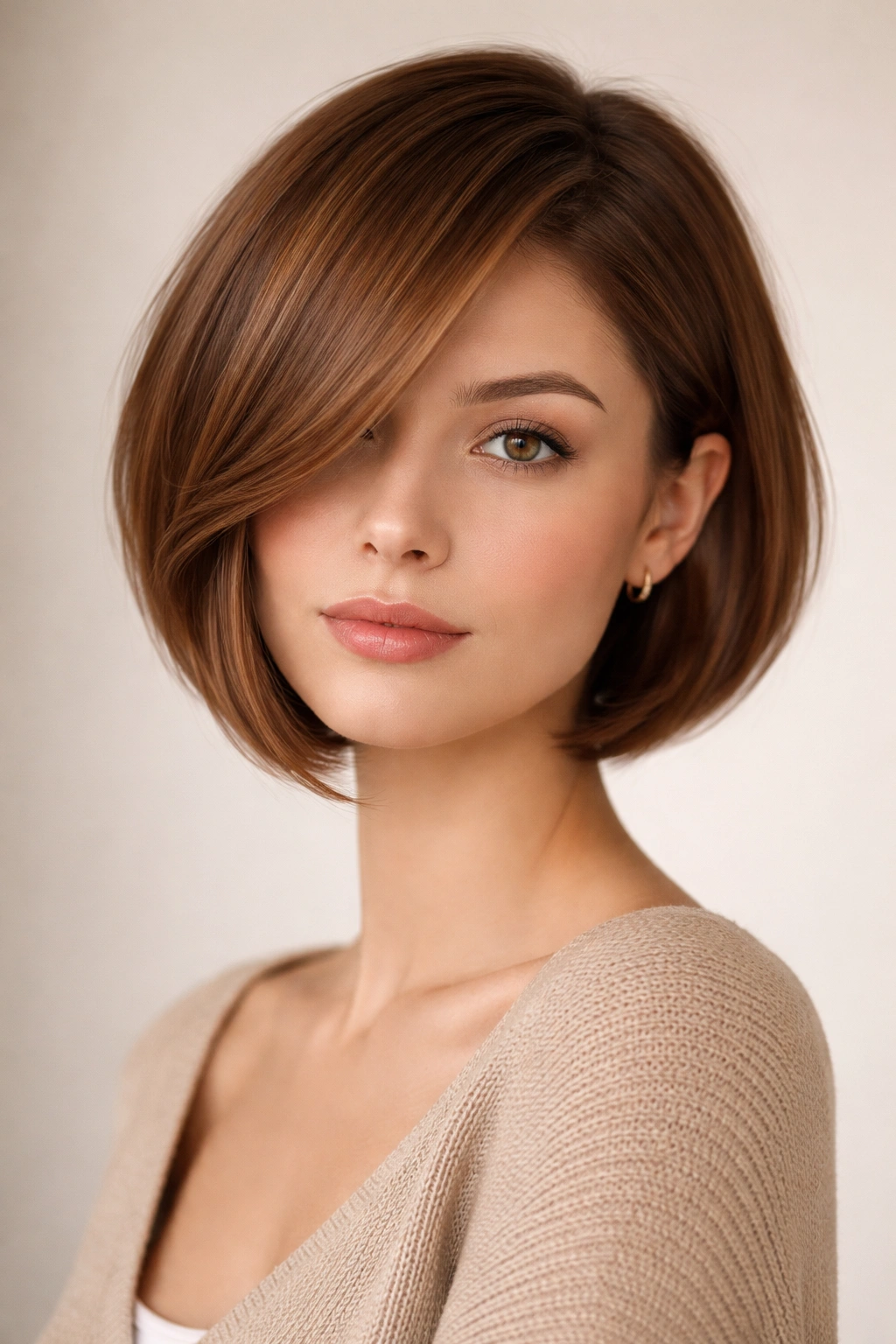
Picture the back sitting just above the nape while the front brushes the jaw. That’s the A-line bob, and it has a nice built-in drama without feeling loud. In toffee-brown, the angled line softens instead of hardens, because the lighter warmth pulls the eye forward and down in a gentle way.
This shape is one of my favorites for anyone who wants a little neck exposure and a clean profile. The shorter back lifts the silhouette, while the longer front gives the face a frame. It can look sharp, but only if the ends stay healthy and the angle stays smooth.
A small side sweep at the front makes the whole thing friendlier. It breaks the geometry just enough. The result is a bob that still has a shape you can recognize in a mirror, but it does not feel rigid or strict.
- Ask for: a subtle A-line, not a steep one.
- Keep the back: short enough to lift, but not so short that it looks stacked.
- Style with: a paddle brush and a small round brush at the ends.
- Use color: a toffee or honey glaze through the mid-lengths, with slightly deeper roots for depth.
The front should graze, not jab.
That tiny distinction makes a lot of difference. If the front corners are too pointy, the bob turns aggressive. If they curve softly, the whole haircut feels warmer and much easier to wear with everyday clothes, which is usually what people want anyway.
6. Layered Bob With Curtain Bangs and Toasted Almond Ends
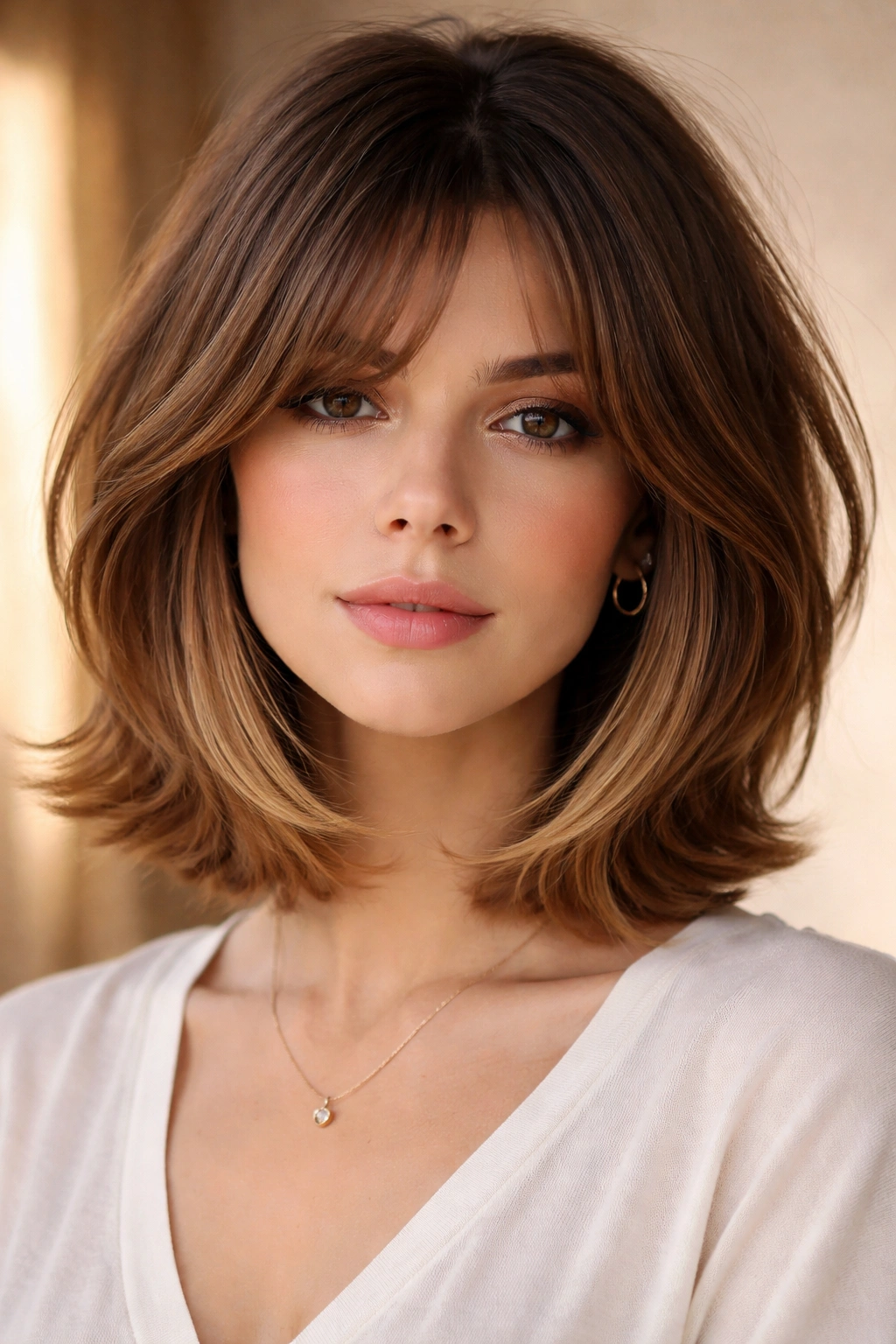
Curtain bangs are the easiest way to pull warmth toward the face. They open the front of a bob, give the eyes some room, and let the haircut feel softer without removing shape. On a layered light brown bob, that front sweep can make the whole style feel a little lighter and more open.
The color placement matters here. Keep the toasted almond tones brightest around the bangs and front pieces, then let the back stay a touch deeper. That creates a gentle frame instead of a washed-out overall look. A flat, all-over light brown can be pretty, but it rarely has the same depth.
Where the Warmth Should Sit
The lighter pieces belong around the cheekbones, jawline, and the sweep of the curtain bangs. That is where the eye lands first. If the front is too dark, the bangs disappear. If the whole head is too light, you lose the contrast that makes the layers readable.
This cut suits medium-density hair especially well. The layers keep it from ballooning at the sides, and the bangs add shape without requiring a full fringe commitment. If your hair is a little flat at the crown, a root-lifting spray and a round brush can help, but the cut does most of the heavy lifting.
There is also a nice practical side to this style. Curtain bangs grow out with less drama than blunt ones, and the layering lets the bob shift between polished and relaxed depending on how you dry it. A little bend at the ends gives it softness. A smoother blow-dry makes it look more finished.
Keep the front light, not skinny. That’s the line.
7. Sleek Side-Part Bob With a Beige Gloss
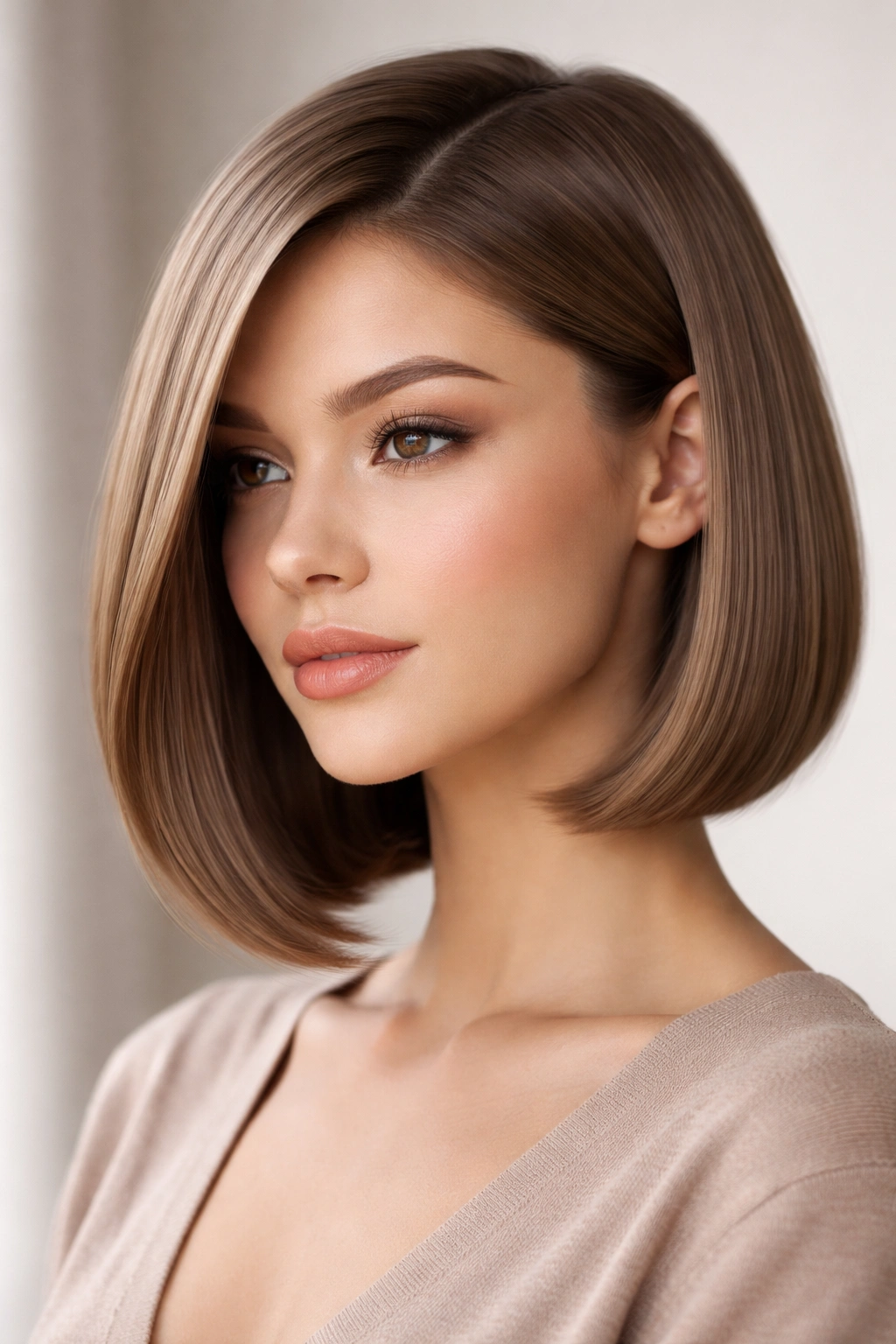
Can a straight bob still feel soft? Absolutely. The trick is sheen, part placement, and a cut that keeps the ends blunt enough to look full. In beige-brown with a glossy finish, a side-part bob looks calm rather than severe, which is a nice place to be if you like clean lines.
This version works especially well on finer hair, because the side part gives the top some lift and the sleek finish makes the hair appear denser. A glassy surface also shows off light brown in a better way than rough texture does. The shade looks smoother, warmer, and more even.
A lot of people overdo this style by flattening it too much. Don’t. Leave a little bend at the front, or tuck one side behind the ear so the silhouette has some movement. That tiny bit of asymmetry keeps the bob from looking like a helmet.
What Makes It Soft Instead of Flat
A light heat protectant, a pass with a flat iron, and a small amount of shine cream are enough. That’s it. Too much product will make the hair look greasy, and too much heat will make the brown look dull.
A side part also breaks up the shape in a flattering way. It shifts the weight slightly off center, which gives the face a softer frame than a perfect middle part can. If your features are strong, this can be a very good thing. If your hair naturally falls one way, let it.
- Best for: fine hair, straight hair, and anyone who likes a neat outline.
- Ask for: a blunt bob with a soft side part and minimal layering.
- Finish with: a beige or neutral-brown gloss for shine.
- Avoid: over-straightening the ends until they look thin.
Clean does not have to mean cold. This cut proves it.
8. Stacked Nape Bob With Chestnut Depth
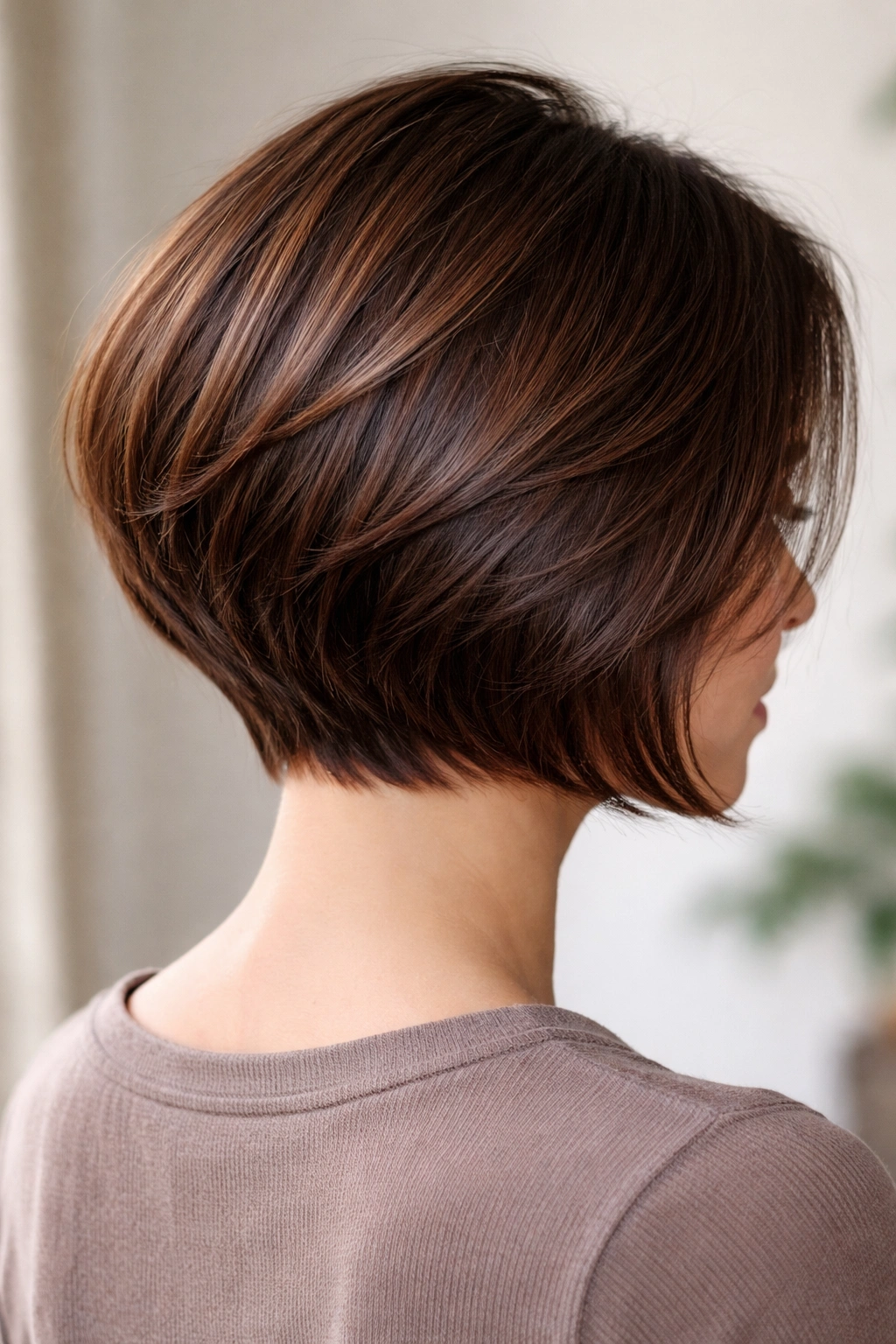
If the back of your hair collapses against your neck by noon, a stacked bob earns its keep. The shorter layers at the nape create lift, and the shape holds its body better than a one-length cut usually does. In chestnut-tinted light brown, the stacked shape looks richer because the deeper color underneath gives the crown a little shadow.
The biggest mistake with stacked bobs is going too high in the back. Then the haircut starts looking dated or overly engineered. Keep the stack moderate, and let the layers build quietly instead of shouting. The silhouette should feel rounded, not spiky.
This cut is especially good on straight to slightly wavy hair that needs shape at the back. The lift makes the head look better balanced, and the warm brown depth keeps the style from reading severe. I like a version with softer face-framing pieces so the front does not look too clipped.
- Ask for: a gentle stack with a rounded nape, not a severe angle.
- Use color: chestnut lowlights near the back and crown for depth.
- Style with: mousse at the roots and a round brush through the crown.
- Skip: razor-heavy ends, which can make the stack look airy in a bad way.
One short truth: volume at the back changes the whole outline.
That is why this cut can feel more flattering than it sounds on paper. It creates a little lift where many people need it most, and the warm brown tones stop the shape from feeling stiff. The result is practical, but not boring.
9. Feathered Shag Bob With Cinnamon-Tinted Ends
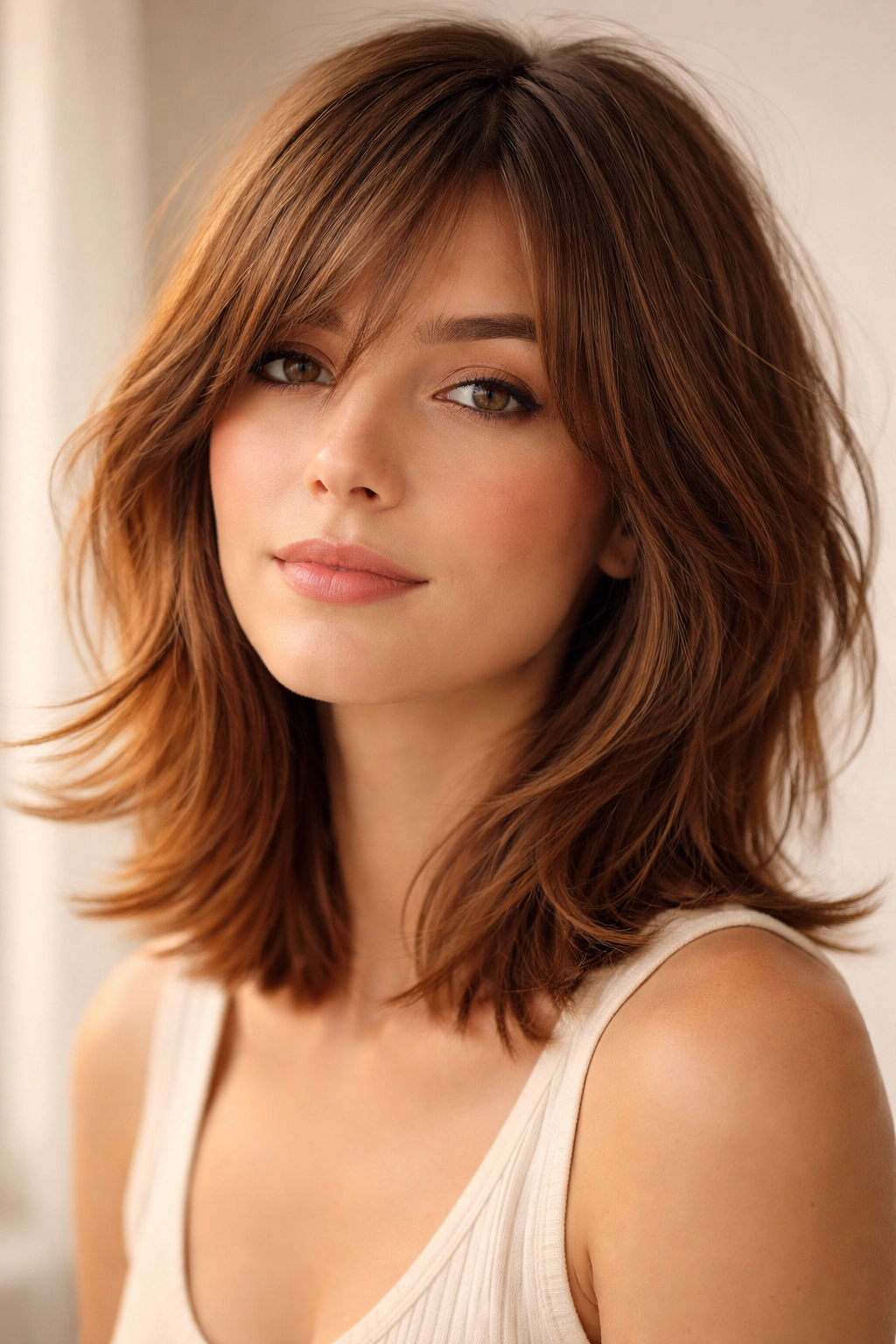
Unlike a blunt bob, this one wants movement. A feathered shag bob brings softness through the ends and around the face, so the cut looks lived-in even when it’s freshly done. With cinnamon-tinted light brown, the layers pick up warmth in a way that feels easy, almost casual.
This is a strong choice if your hair has natural wave or a bit of bend already. The shape works with that texture instead of fighting it. It also gives thick hair somewhere to go, which is useful if your bob tends to puff out at the bottom. The feathers stop that shelf-like look people hate.
What to Watch For
Too many layers can make the style look scrappy. That is the line to watch. You want feathering, not shredding. A good version has enough shape to break up the ends, but the overall outline still feels like a bob and not a mullet in disguise.
A little texture spray and some scrunching go a long way. Let the hair dry in its own direction if it wants to, then separate the ends with your fingers. The cinnamon brown tones look best when the light can move through the layers, so the goal is softness, not perfection.
This cut also works well for people who do not want to spend twenty minutes with a round brush every morning. Air-drying with a leave-in cream can be enough. If the finish looks a bit undone, that is fine. It suits the haircut.
Messy is not the same as careless. That’s the point here.
10. Rounded Bob With a Latte-Brown Curve
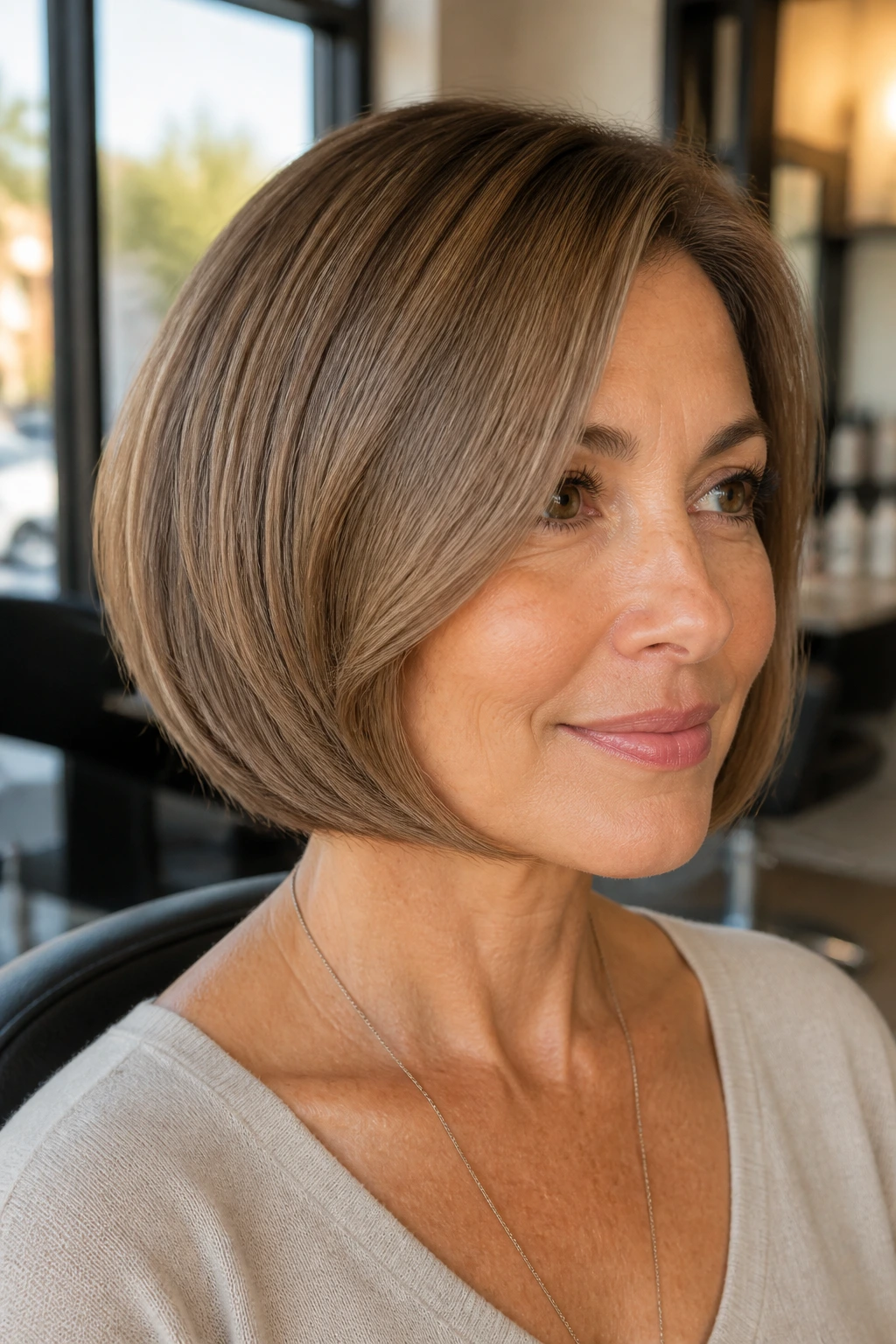
A rounded bob sounds old-fashioned until you see it in a light brown glaze. Then the shape starts to make sense. The curve hugs the head, the ends turn under a little, and the whole haircut feels plush in a way that flat bobs often do not.
This is the softest option on the list, and I mean that in a useful way. The rounded silhouette makes the color look smoother, and the light brown tone keeps the shape from feeling heavy. If you want warmth first and attitude second, this is a very strong choice.
Why the Curve Flatters
The curve works because it follows the natural shape of the head instead of fighting it. That makes the bob feel settled and calm. A latte-brown tone with a little beige in it keeps the surface bright enough to avoid dullness, especially around the front.
It suits denser hair well because the rounded shape can remove bulk without making the outline uneven. It also works on medium hair that needs a bit of body. A round brush and a small bend at the ends are enough to keep it from falling flat, though a loose blowout will give it a nicer finish if you like a smoother look.
The face-framing pieces should stay soft and slightly longer than the back corners. That tiny difference keeps the cut from looking like a helmet, which is the one thing a rounded bob can slip into if the edges are cut too evenly. The warmth should stay gentle, not golden. Think latte, toasted milk, beige honey.
If your goal is a soft warm look rather than a hard edge, this is the cut I would put near the top of the list. It is friendly to everyday styling, easy on the eyes, and especially good when the color stays in that warm brown family instead of drifting too orange. Clean shape. Gentle color. That combination does the work.
