



A carved bob doesn’t look accidental. The line lands where it should, the ends sit with intention, and the whole cut has that rare feeling of being made rather than merely trimmed.
Carved bob cuts are for people who like shape. Not fluff. Not soft, wandering layers that lose their nerve by lunch. A good carved bob holds a perimeter so clean you can almost trace it with your finger, and that precision is what gives the haircut its edge.
What makes the style work is the silhouette. The eye follows the line from the cheek to the jaw to the nape, and when that path is clear, the haircut does a lot of the styling on its own. That is the part people miss when they ask for a bob and end up with something vaguely triangular or padded at the bottom.
The ten shapes below keep that carved feeling, but each one plays a different game with the face, neck, and hair density. Some are hard and graphic. Some bend a little at the front. Some use bangs or graduation to make the outline look even sharper. The trick is picking the one that works with your hair’s habits, not the one that looked good from one angle on a screen.
1. Jaw-Length Blunt Carved Bob
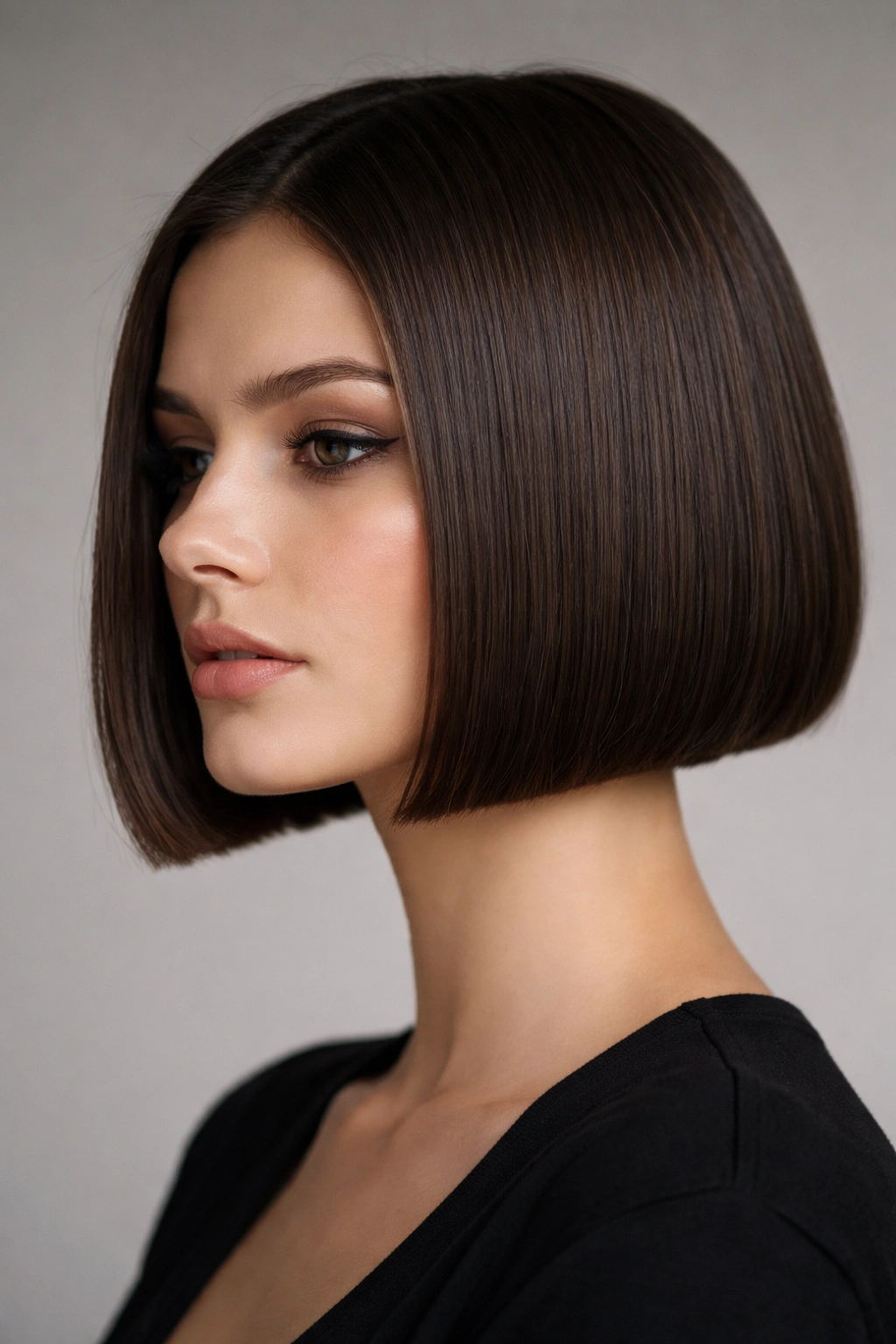
If you want the cleanest carved bob possible, start here. A jaw-length blunt bob is the haircut that says exactly what it means and then stops talking. No softness at the bottom. No fussy taper. Just a straight perimeter that sits right at the jaw and makes the face look deliberate.
Why the jaw line matters
The jaw is a strong visual anchor. When a bob ends there, it gives the face a clear frame, which is why this cut can look so crisp on fine hair and so polished on thicker hair when the bulk is removed inside, not at the edge. The key is keeping the perimeter heavy and even. If the ends get over-texturized, the whole shape loses its punch.
A blunt bob also photographs differently from a layered cut. You see the line first, then the movement. That order matters. If you like sharp outlines, this is the one that delivers them without much styling drama.
What to ask for at the salon
- A one-length perimeter that sits at or just below the jaw.
- Shears, not a razor, if you want a hard edge.
- Minimal graduation at the nape so the shape doesn’t puff out.
- Internal debulking only if your hair is dense enough to need it.
This cut works best when the ends are sealed and tidy, not wispy. A flat brush and a quick bend under the ends is usually enough. If you have cowlicks around the hairline, ask your stylist to check the fall dry, because a jaw-length blunt bob can kick out awkwardly if that area is ignored.
2. Angled Carved Bob with a Longer Front
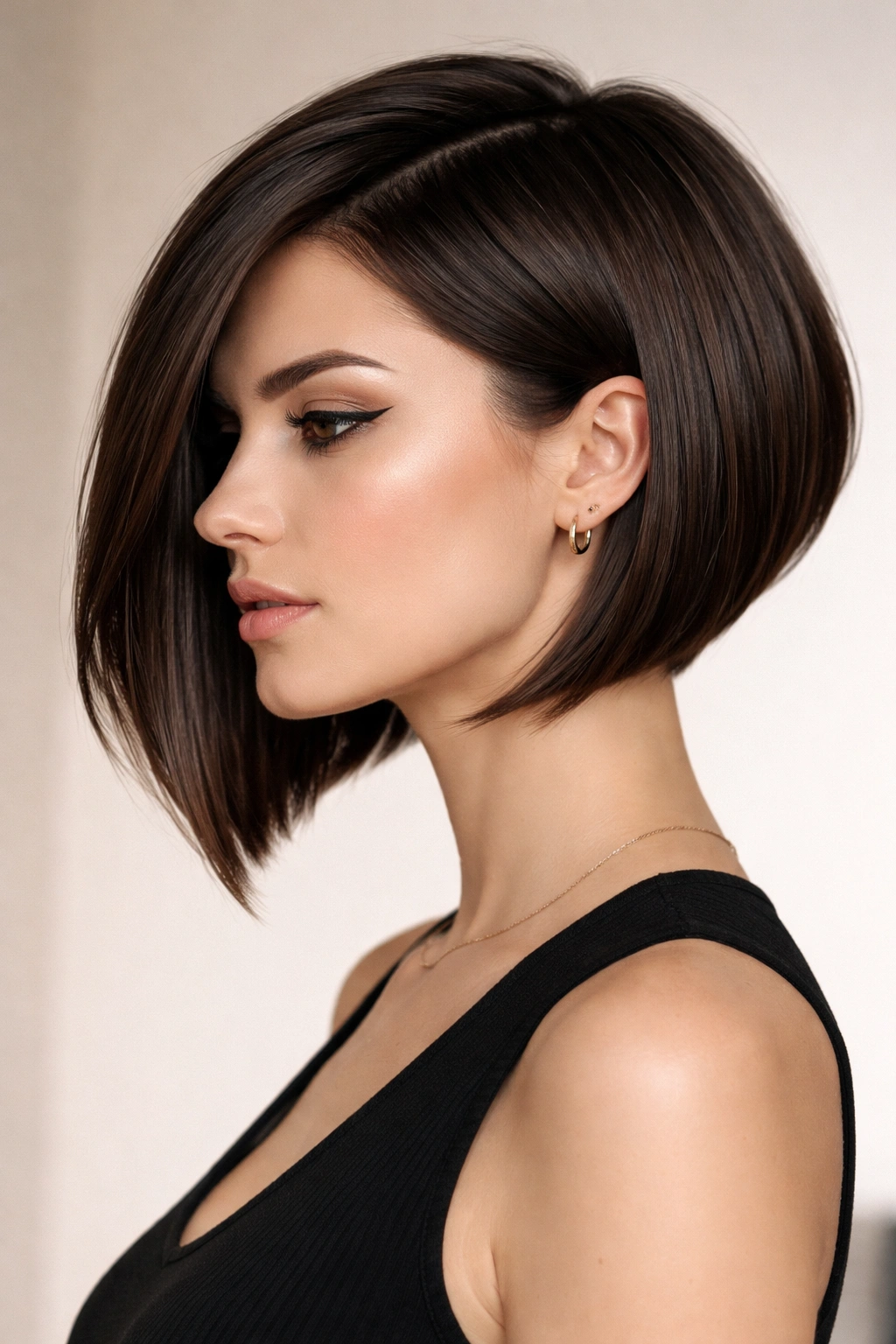
Why does a bob look sharper the minute the front drops an inch lower than the back? Because the eye loves direction. An angled carved bob gives you that clean line from back to front, and it makes the whole cut feel longer, leaner, and a little more architectural.
The angle does a lot of face-shaping work. A slight forward slope can lengthen a round face, soften a heavier chin, or bring balance to strong cheeks. If the angle is too steep, the cut starts to look obvious in a bad way. The sweet spot is usually a difference of about 1 to 2 inches from the nape to the front.
How the angle changes the face
The back stays tucked and tidy, while the front pieces skim the jaw or just graze below it. That contrast is what gives the style its carved feeling. You get movement without losing the perimeter, which is a hard balance to hit.
It also grows out more gracefully than a blunt crop. The line stays readable even when the cut is a little past its freshest point. That matters if you like structure but don’t want to sit in a salon chair every few weeks.
Best for: straight to wavy hair, square or round faces, anyone who wants a sharp profile from the side.
A middle or slightly off-center part keeps the shape from feeling too severe. If your hair flips out at the front, ask for the ends to be beveled just enough to sit under, not curled into a big round shell.
3. Box Bob with a Clean, Square Perimeter
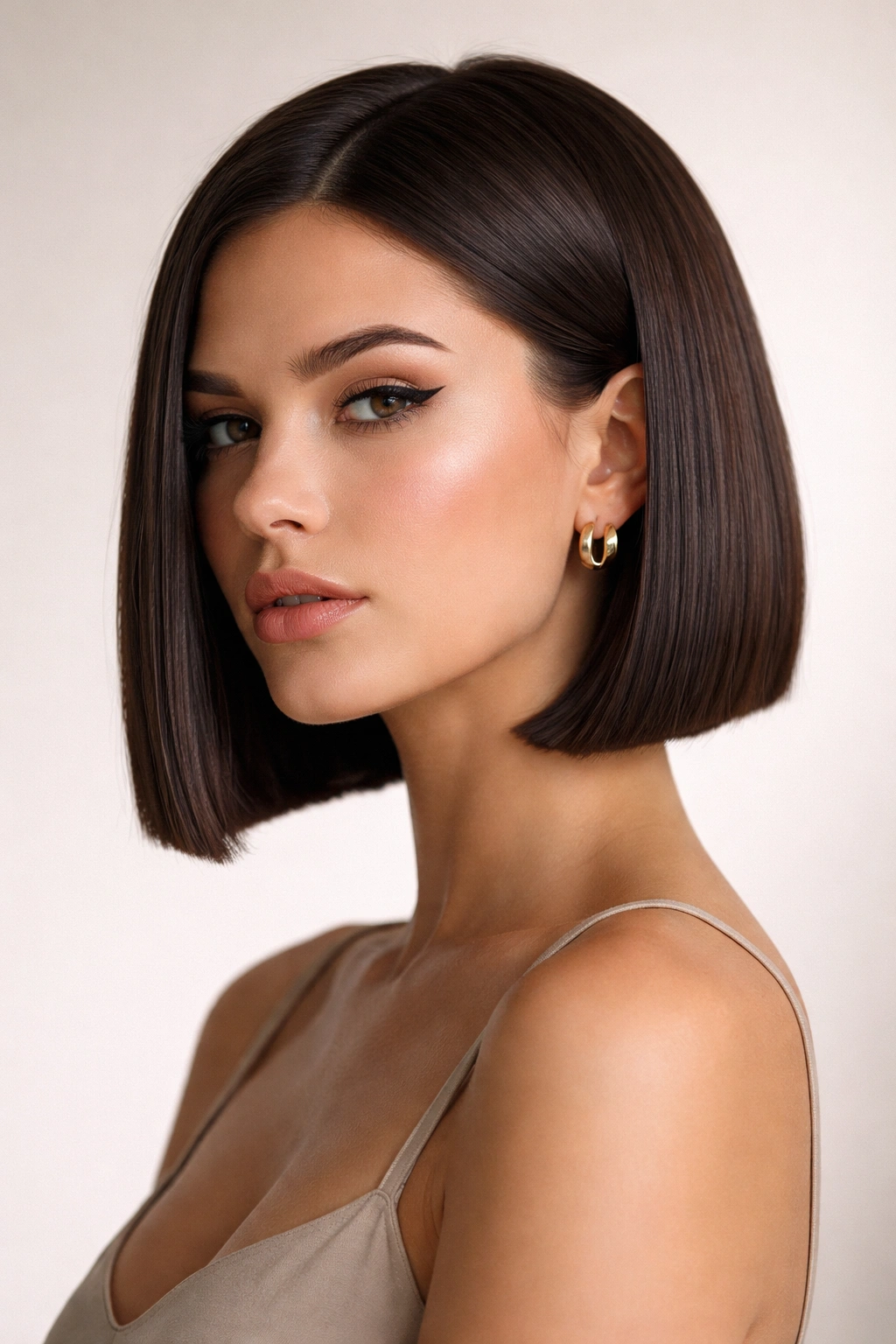
Picture a bob that seems to sit in one perfect plane. That’s the box bob, and when it’s cut well, it has a calm, almost graphic force to it. The sides hang with equal weight, the corners stay visible, and the whole shape feels square in the best possible way.
This cut is a favorite on straight hair because straight hair shows the line honestly. There’s nowhere to hide, which is the point. The perimeter is the haircut. If the edge is uneven or the density is too thin at the bottom, the illusion falls apart fast.
What makes it read boxy
- The length usually sits between the chin and the top of the neck.
- The side sections stay close to the same length as the back.
- Layers are kept internal, if they show up at all.
- The finish is smooth, not fluffy.
A box bob suits people who like strong outlines and low-friction styling. It can look especially good with blunt ends and a deep side part, because that adds a little tension to an otherwise even shape. And tension is useful here. Too much softness makes it look like a regular bob that gave up halfway through the cut.
This is also one of the better options if you have thick hair and want the bulk to feel controlled rather than chopped around. Ask for a blunt baseline with subtle weight removal inside the head shape. The line stays firm, but the inside doesn’t feel like a helmet.
4. Micro Carved Bob That Skims the Ear
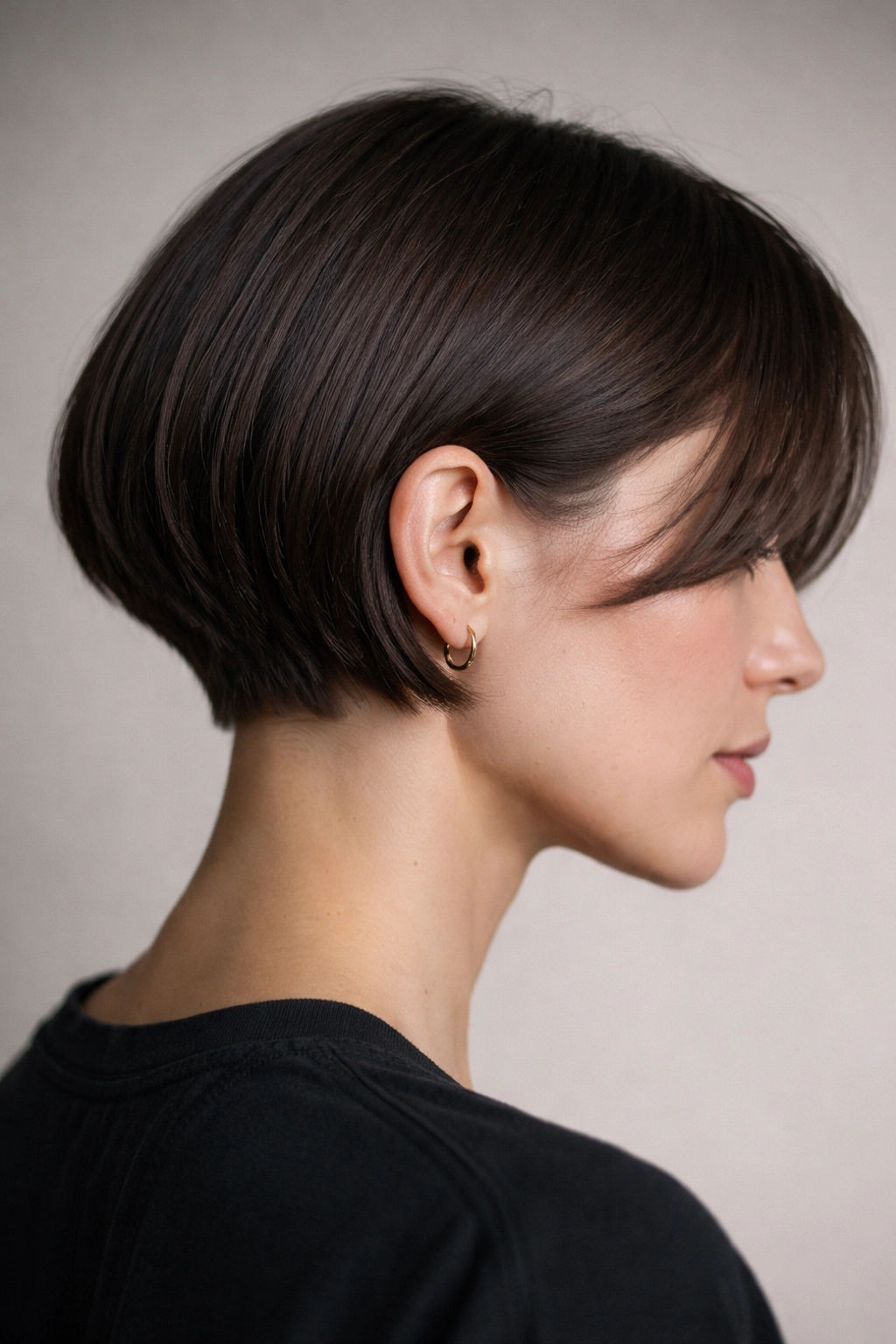
Shorter is not softer. A micro carved bob sits right around the ear or just below it, and that tiny bit of length gives the cut an almost cool, unfussy edge. It’s the kind of bob that looks simple until you try to grow one out and realize how exact it has to be.
The whole point is precision. The neckline is visible. The ears matter. The cut has to sit neatly against the head, or the shape turns awkward fast. This is not a haircut for people who want to tuck things away and forget about them. It asks for regular shaping, usually every 4 to 6 weeks, because a quarter-inch too much or too little changes the whole line.
What to watch for
A micro bob can be gorgeous on fine hair because it gives the illusion of density. The ends look compact, and the style has a kind of built-in polish even when you air-dry it. On thick hair, it needs more careful internal shaping so the sides don’t balloon out.
The ear-level length also makes jewelry and necklines look sharper. That sounds minor, but it matters. A short carved bob frames earrings, collars, and glasses in a way longer bobs just don’t.
Best for: oval faces, strong jawlines, and anyone who likes a clean neckline.
Ask your stylist to check how the hair falls when dry and to keep the edge visible without over-thinning it. A micro bob can go limp if too much weight is removed from the middle, and then the whole thing loses the crisp little snap that makes it work.
5. A-Line Carved Bob with a Steep Drop
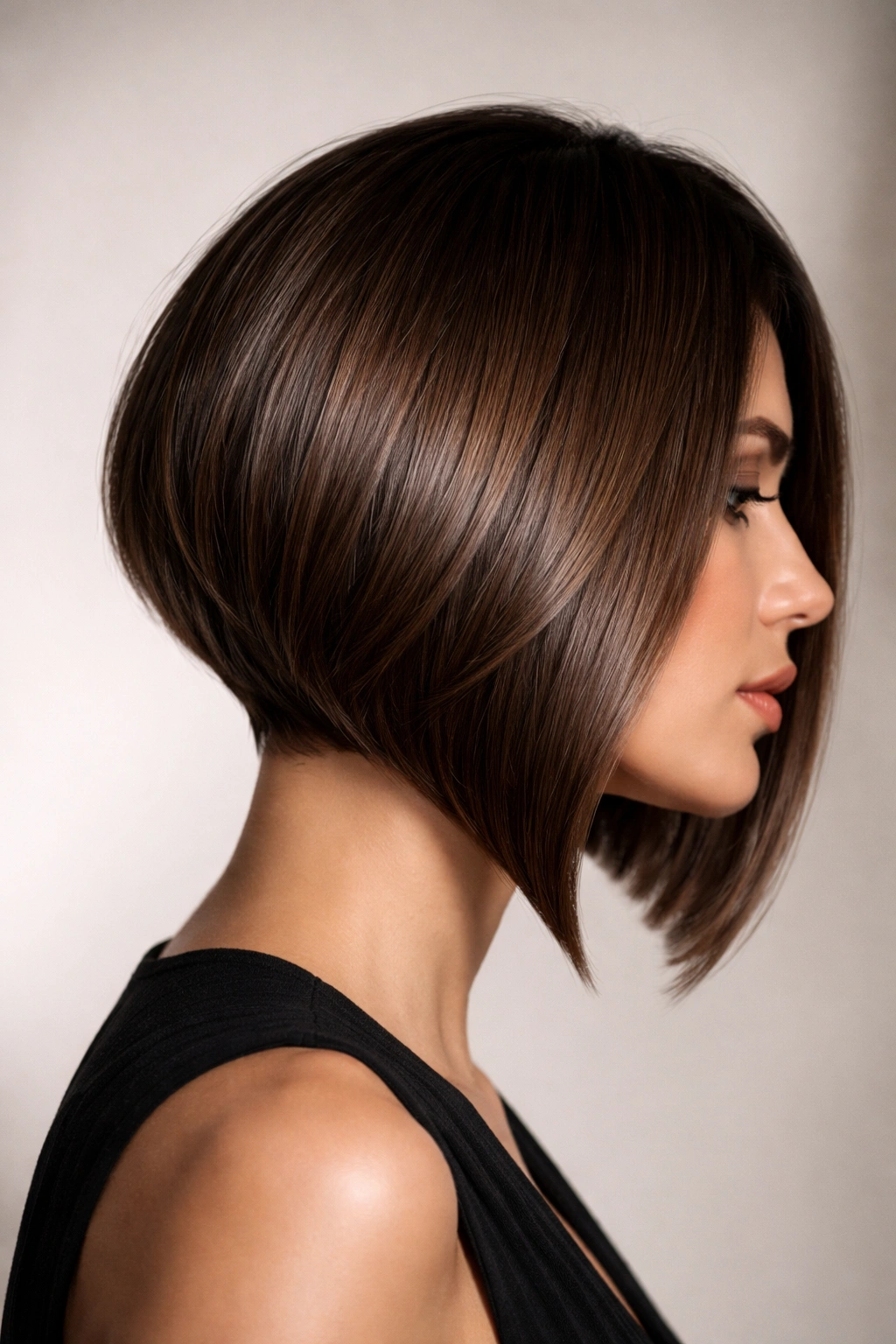
The first thing you notice is the weight. An A-line carved bob carries more length in the front, and that drop creates a very clean diagonal that feels sharp without being harsh. It’s the sort of cut that looks like it was measured with intent, which is exactly why it works.
A good A-line bob can sharpen the neck and pull the eye forward. It’s especially useful if you want some coverage around the cheek or jaw but still want the back to stay tight. The steepness of the line can be subtle or dramatic, but once the front starts falling several inches longer than the nape, the shape takes on real attitude.
Why the bevel matters
The ends shouldn’t just hang there. They need a little bevel, either from the cut itself or from the way you blow-dry them, so the line feels finished and not floppy. A dead-straight A-line can look severe in a nice way, but if the ends fray out, the elegance goes away fast.
This cut is a solid choice for anyone with a broad forehead or a shorter neck, because the forward movement draws attention away from the center of the head and toward the line itself. It also gives thick hair somewhere to go. Instead of puffing at the sides, the cut follows a controlled slope.
A side part usually helps the shape. So does keeping the front long enough to graze the collarbone if you want more drama. The line should feel sleek, not stretched thin.
6. Inverted Carved Bob with a Tight Nape
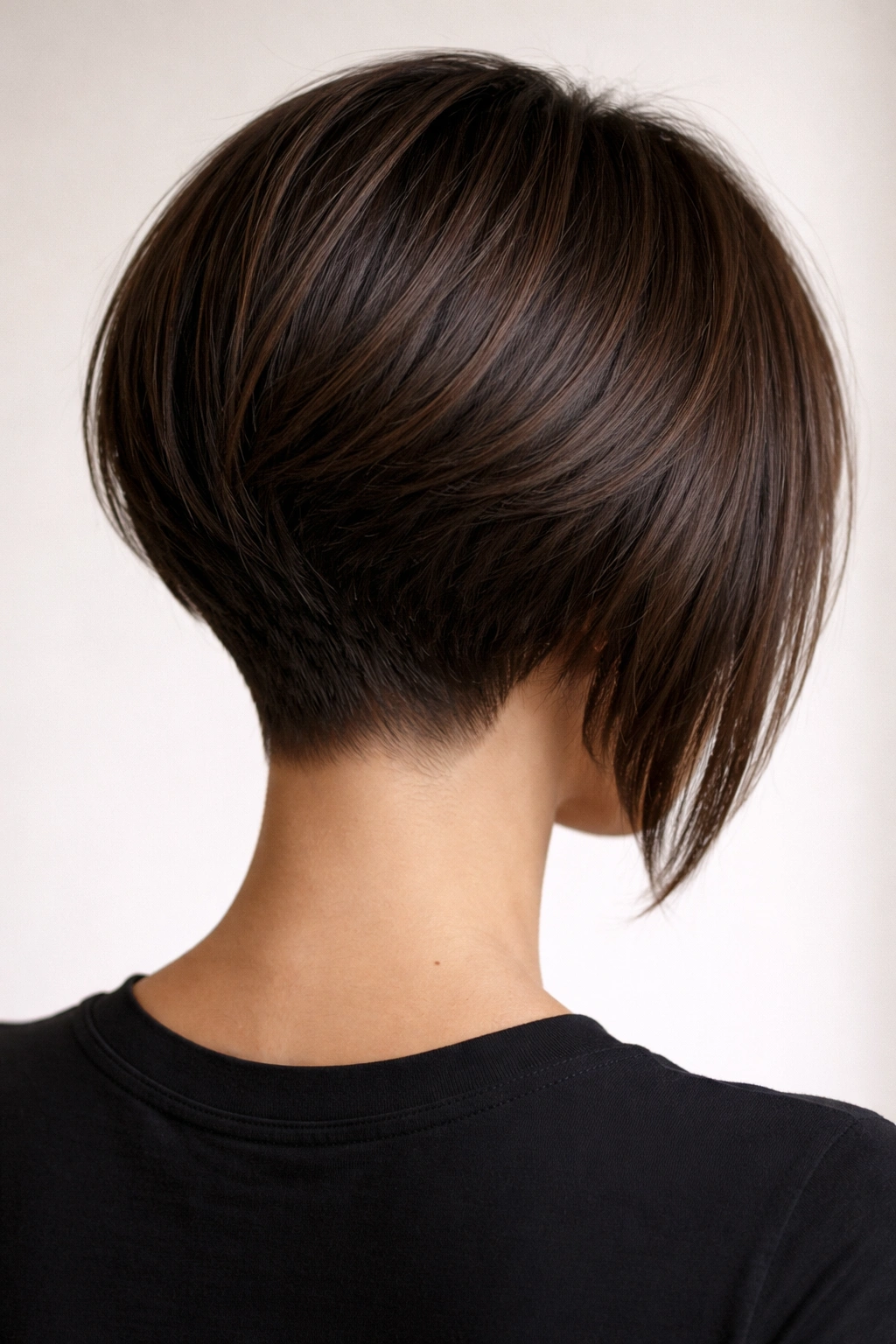
A good inverted bob does something most people notice only after a second look: it lifts the back without making the whole haircut look puffy. The nape hugs close, the crown gets a little more height, and the front pieces fall forward with a clean edge. It’s compact, but not cramped.
This is one of the most practical carved bob cuts for thick hair. Why? Because the graduation in the back removes weight where hair tends to bulk up. The result is a shape that sits closer to the head and keeps the outline neat even when the weather is not cooperating.
The nape matters most
The lower back section is where the whole haircut either succeeds or slides into mushroom territory. That’s why the nape needs careful shaping. The shortest pieces should taper cleanly into the neck, not stack so high that the back looks bulky from a distance.
When it’s done right, the cut feels crisp from every angle. From the front, you get length. From the side, you see the lift. From behind, you get that tucked, sculpted finish that makes the haircut look expensive without trying too hard. And no, that is not a throwaway compliment. A nape that sits properly changes everything.
Best for hair that fights volume
- Thick, straight hair that tends to spread outward.
- Wavy hair that needs structure.
- Anyone who wants more lift in the crown.
- People who like a clean neckline with some shape in front.
This isn’t the easiest bob to cut well, so precision matters. Ask for a tight graduation in the back and a smooth connection into the front. If the transition is clunky, the shape will show it immediately.
7. Asymmetrical Carved Bob with One Longer Side
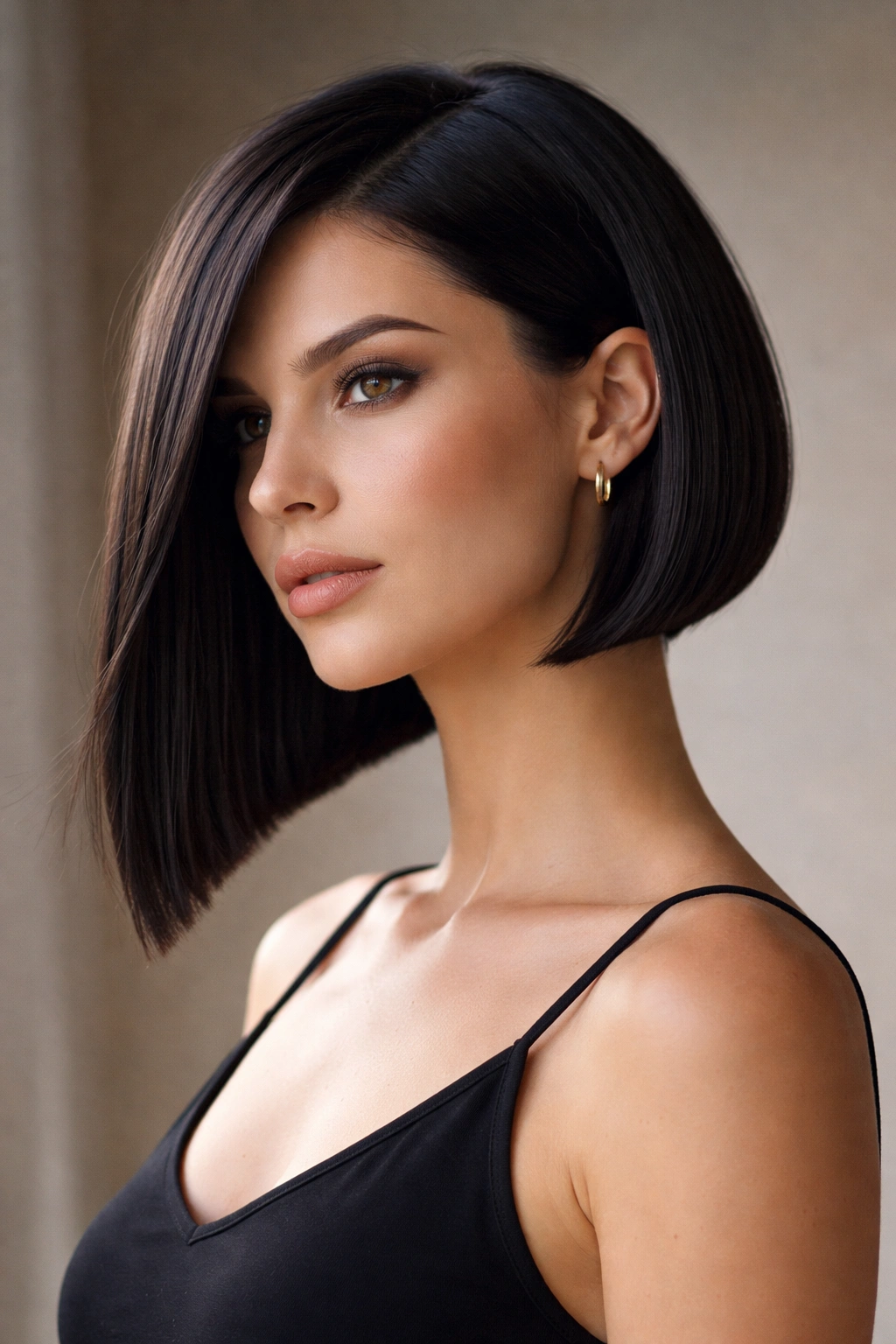
Why does asymmetry feel so sharp? Because the eye expects balance and then gets a little jolt instead. A carved asymmetrical bob uses that effect on purpose, with one side longer than the other and a perimeter that still stays clean enough to read as a deliberate shape.
This is not about wild contrast. A good asymmetrical bob usually keeps the difference controlled — maybe 1.5 to 3 inches between sides, depending on the face and the hair texture. More than that, and the style starts drifting from carved into theatrical. Unless that is your thing, and fair enough.
How to keep it from looking lopsided
The trick is making the shorter side look purposeful, not accidental. A strong side part helps. So does keeping the ends blunt rather than feathered, because feathering makes the asymmetry feel vague instead of clear.
This cut can be a smart move if one side of the face is slightly fuller or if you like showing off one ear and leaving the other side a little longer. It also works well with bold earrings, glasses, or a noticeable lip color. The haircut gives you a built-in focal point.
Best for: oval and heart-shaped faces, straight to lightly wavy hair, people who like structure with a small twist.
If your hair is very curly, the asymmetry needs extra planning because curls shrink unevenly. A stylist who cuts it dry or cuts to the curl pattern will usually do better than one who only works on wet hair and hopes for the best.
8. French Carved Bob with a Strong Fringe
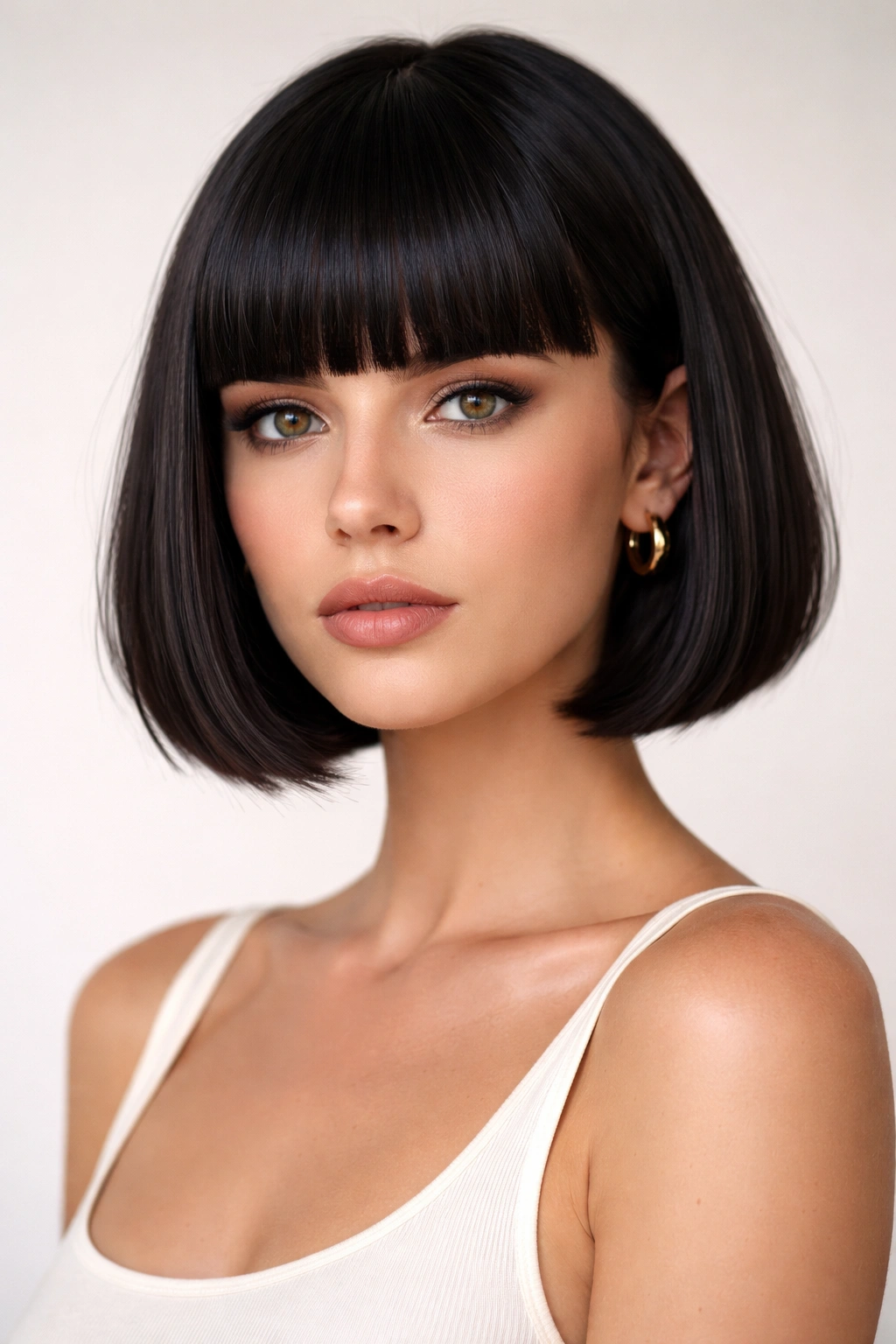
A fringe can make a carved bob look sharper than a longer perimeter ever will. The French version keeps the overall bob compact and pairs it with a straight or softly curved fringe that lands across the forehead like a clean line. One strong horizontal line up top, one strong perimeter below. That’s the whole point.
This cut has a bit of attitude, but it’s not noisy. The bang line breaks up the face and draws attention to the eyes, while the bob keeps the rest of the shape tidy. If you like a haircut that feels both polished and slightly rebellious, this is a good place to land.
The fringe sets the mood
A full fringe gives the bob its strongest graphic edge. A shorter micro fringe pushes the style into sharper territory, though that works better on people who like a little drama near the brow. If you want something easier to live with, a heavier fringe that can be brushed slightly to the side gives you more flexibility.
The rest of the cut should stay simple. No choppy layers. No fluff around the mouth. The line of the bob needs to stay readable so the fringe doesn’t swallow the whole look.
A French carved bob is especially nice on straight hair and soft waves that can be smoothed with a quick round-brush pass. It’s less forgiving on very curly hair unless you want the fringe to have its own texture story. That can be lovely, but it is a different haircut than the one most people picture.
9. Curved Carved Bob with Beveled Ends
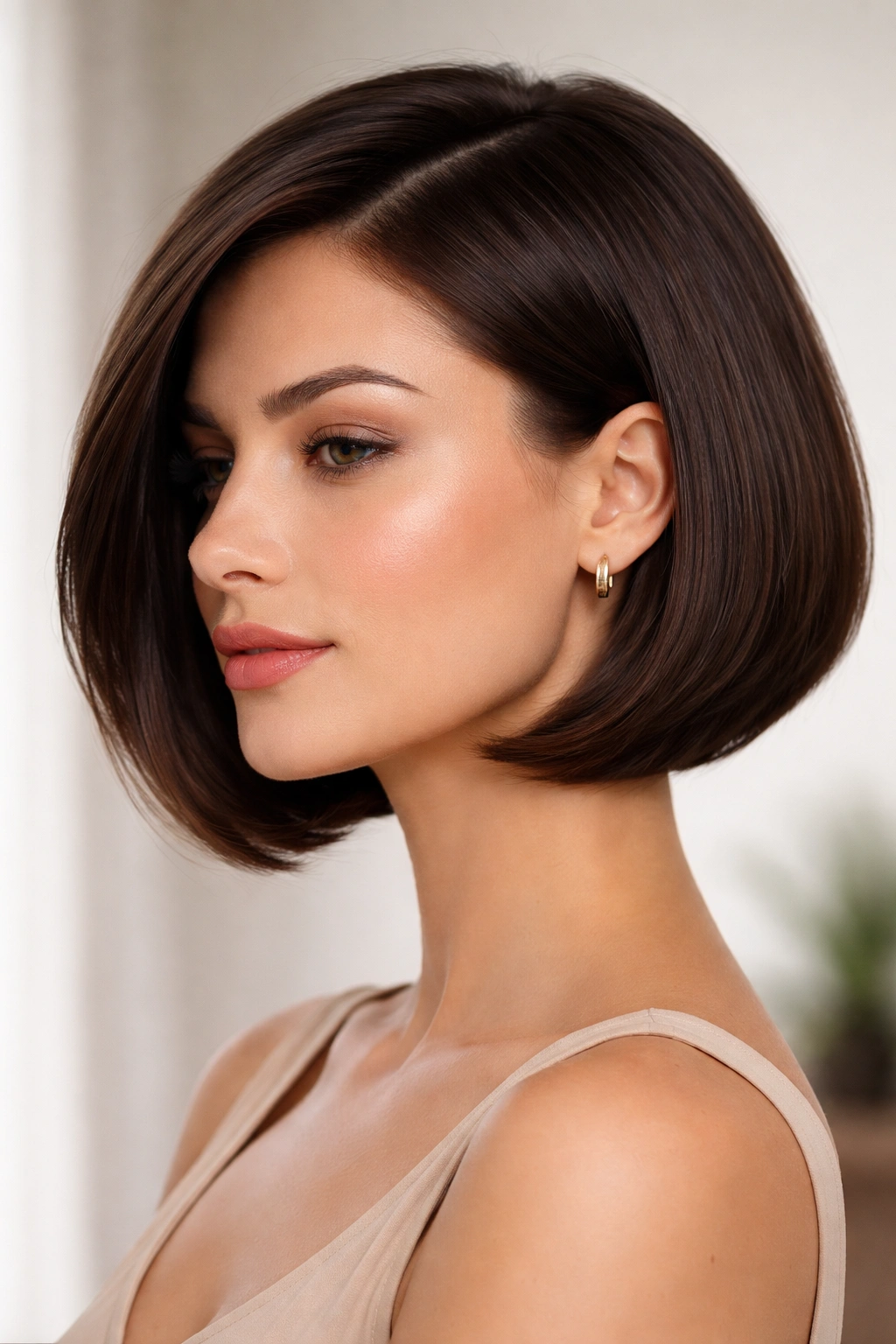
A straight edge can be powerful, but a slight curve changes the mood in a good way. The curved carved bob keeps the line precise while allowing the ends to turn under just enough to soften the outline. It’s still sharp. It just has a quieter finish.
This is the bob for people who want structure without a hard corner sitting at the jaw. The bevel keeps the line clean, especially around the cheek and mouth area, where a blunt edge can sometimes feel too boxy. A small inward bend makes the haircut move with the head instead of just sitting on it.
Why beveling keeps the line alive
When the ends are beveled, the bob looks considered from the side and front. The curve pulls the eye inward, which can narrow a wider face or make a stronger jaw feel less angular. The haircut still reads as carved because the perimeter stays defined.
A round brush or a large paddle brush can help here, but don’t overdo the bend. You want the ends to tuck, not curl into a roll. That tiny difference matters. One looks sleek. The other looks like a prom rehearsal.
Styling notes that actually matter
- Blow-dry from root to end, keeping tension low.
- Direct the brush slightly under the last inch of hair.
- Use a light cream or smoothing serum, not a heavy oil.
- Finish with a cool shot to lock the shape.
This version suits people who like polish but don’t want the haircut to feel severe. It also grows out in a flattering way, since the bevel buys you a little extra time before the line looks blunt in a tired way.
10. Collarbone Carved Bob with Razor-Clean Ends
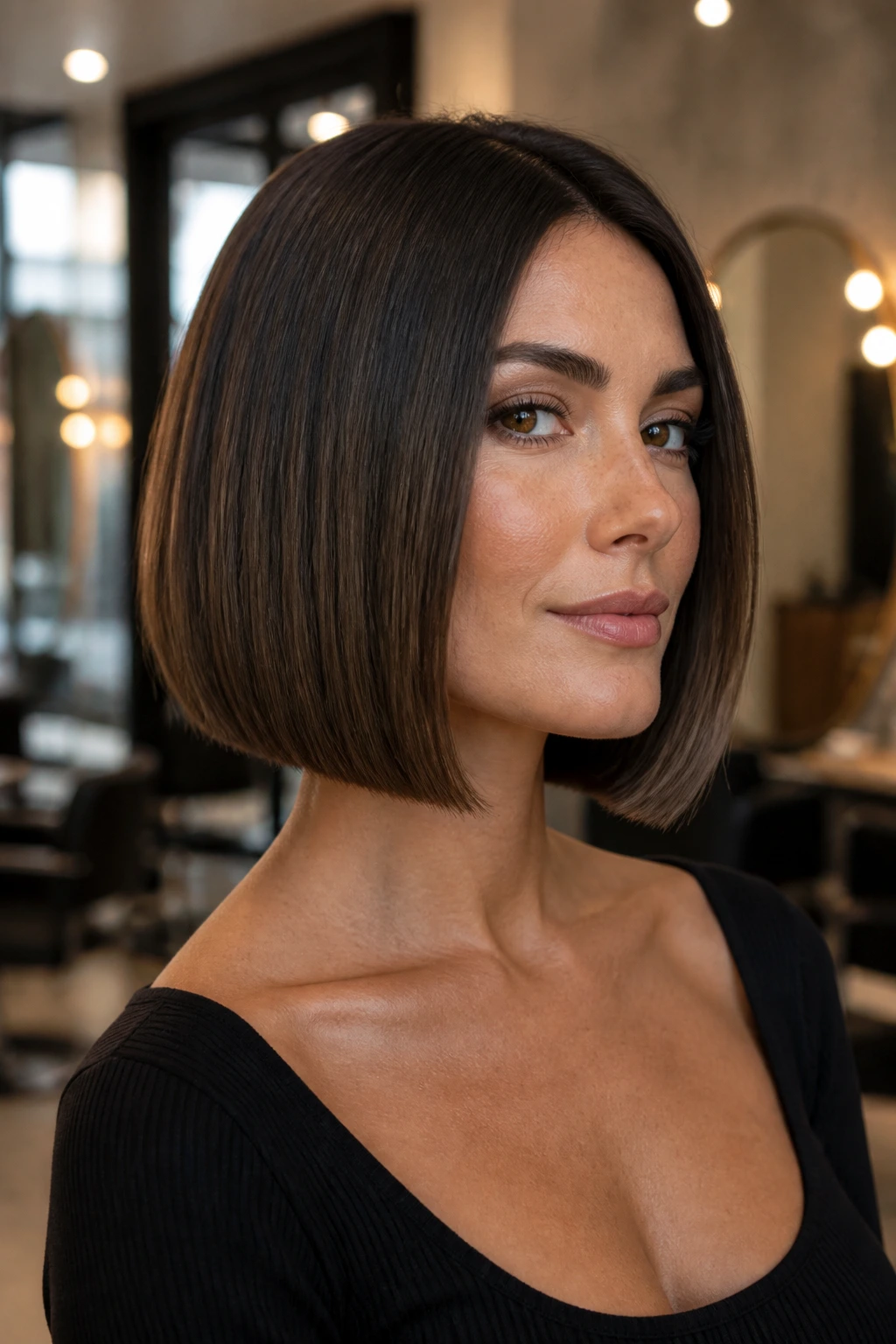
Not every sharp bob has to sit at the jaw. A collarbone-length carved bob gives you a longer line, more swing, and a little more room to play with texture while still keeping the perimeter crisp. It’s a strong choice for anyone who likes the look of a bob but wants enough length to tuck behind the ear or pull into a tiny clip without losing shape.
The longer length changes the feeling of the cut. Instead of reading as strict, it reads as sleek. The edge still matters, though. If the ends get too wispy, the whole point disappears. Clean ends are what keep this from becoming a plain medium-length haircut.
How to keep the line from disappearing
Ask for the perimeter to stay blunt and for any layering to stay hidden high in the interior. That gives you movement without breaking the outline. If you like a center part, this length can look very elegant. If you prefer a side part, the line drops across the face in a way that feels softer but still controlled.
This is also a smart length for people who are growing out a shorter bob and do not want to lose shape in the process. The collarbone gives the hair a place to land. It’s forgiving, but not dull.
A slight bend at the ends helps the cut stay polished on straight hair. On wavy hair, a smoothing cream can keep the perimeter from frizzing out at the shoulders, which is where longer bobs often lose their clean edge. And if your hair is dense, ask for weight removal inside the shape rather than at the perimeter. You want the line to stay full enough to read from across a room.
