



A bob haircut never has to sit still. The best tousled bob cuts look like they were shaped by movement, not locked in place with a helmet of spray.
That’s the appeal, really. A relaxed bob can be airy and undone without looking careless, and the difference comes down to where the weight sits, how the ends are cut, and how much texture is built into the shape. A blunt edge can still feel soft. A layered bob can still look neat. The magic is in the details.
And those details matter more than people think. A jaw-length cut with point-cut ends behaves very differently from a one-length bob with a bit of bend through the middle. One gives you that lived-in, easy feel. The other can slide into “I forgot to brush my hair” territory fast.
The styles below all live in that sweet spot between polished and relaxed. Some are sharper, some are softer, and some lean a little rebellious. All of them work because they leave room for movement, which is the whole point.
1. French Tousled Bob With Piecey Ends
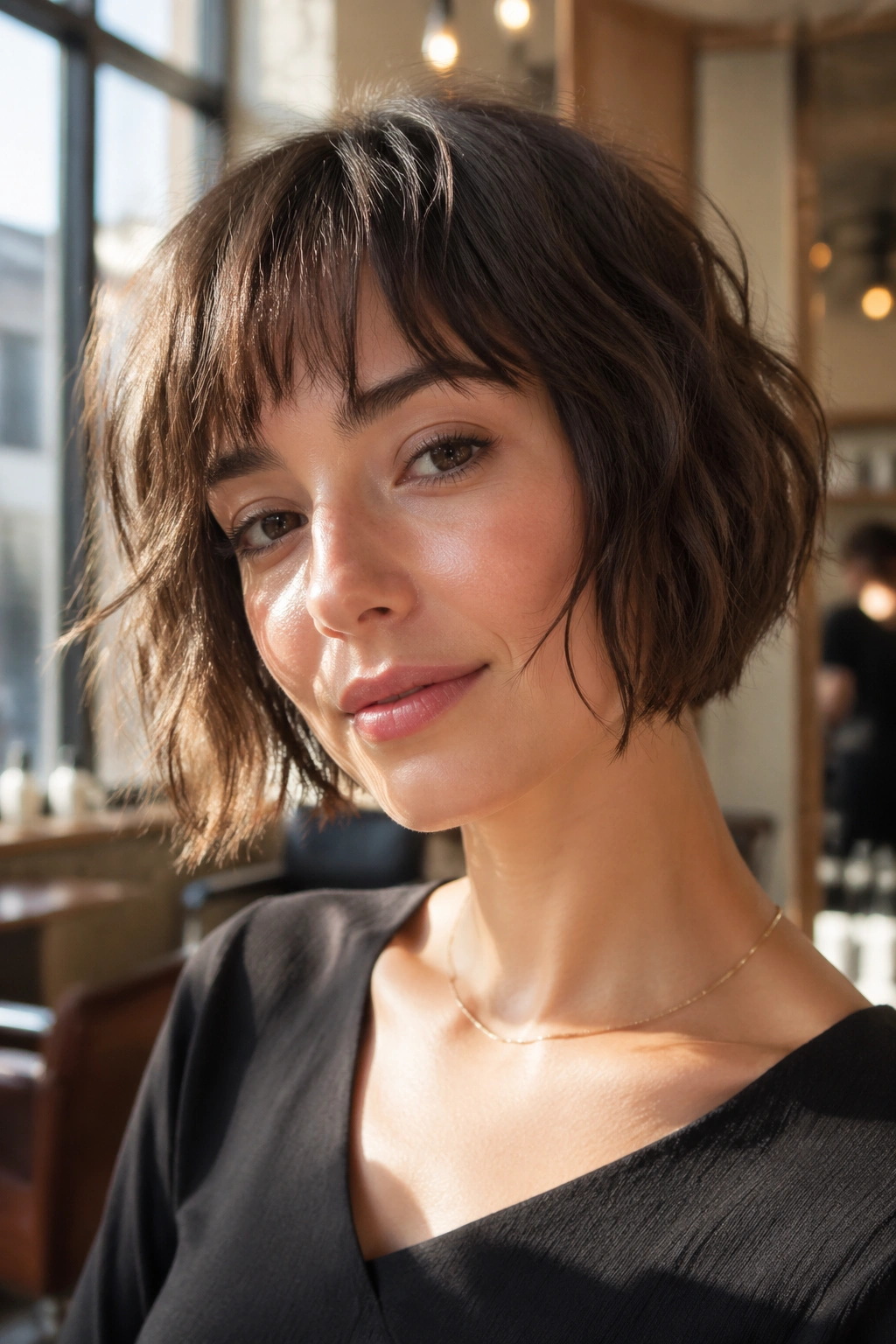
A French bob has a certain attitude. Not loud. Not fussy. Just a short, cheek-skimming cut that looks like it belongs on someone who never overthinks their hair, even though, of course, it usually takes a little thought.
What makes this version work is the ends. They’re not carved into a hard line; they’re point-cut so the perimeter breaks into tiny pieces instead of one solid block. That small shift changes everything. The shape sits close to the face, but the finish stays light, which is why this cut feels relaxed instead of severe.
Why It Looks So Easy
A good French bob usually lands somewhere between the mouth and the jawline, with just enough internal texture to keep the sides from puffing out. If your hair is straight, a small bend from a 1-inch iron gives it that slightly slept-in look without turning it into waves for the sake of waves. If your hair is wavy already, you can usually air-dry it with a little cream and be done.
- Best length: jaw to lip level
- Best texture: straight, fine, or softly wavy hair
- Best styling move: tuck one side behind the ear and leave the other loose
- Best product: a light cream or soft paste, not a crunchy wax
My one rule here: keep the ends soft, or the whole cut starts to feel blunt and boxy.
2. Collarbone Bob With Curtain Bangs
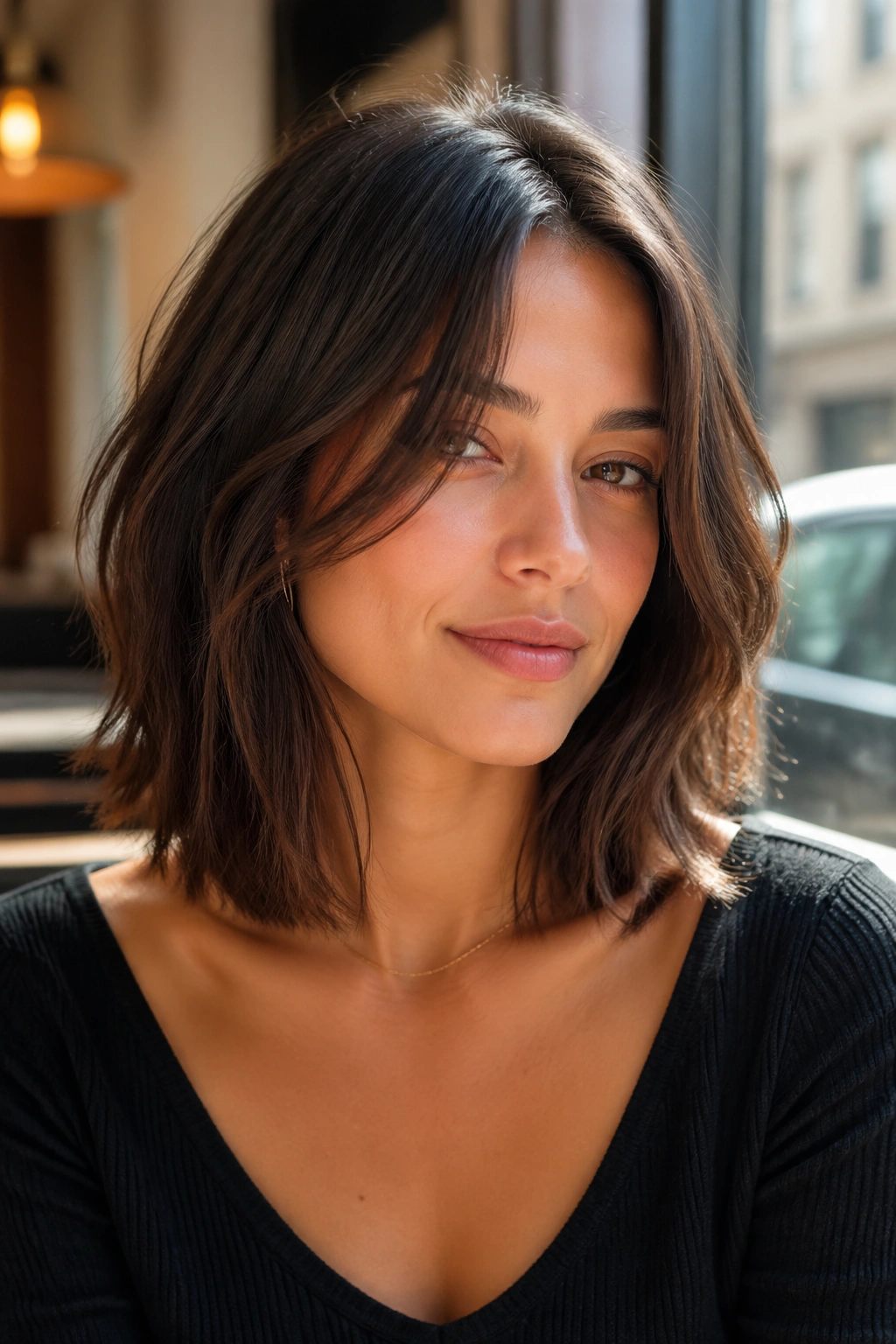
A collarbone bob gives you breathing room, and curtain bangs stop it from looking too orderly. That combo is hard to beat if you want a cut that can be worn loose on busy days and a little more styled when you feel like doing the whole mirror routine.
Unlike a chin-length bob, this version keeps more length around the shoulders, so it moves differently when you turn your head. The curtain fringe opens the face without cutting straight across the forehead, which helps the whole style feel less formal. It’s also kinder during grow-out, which matters more than salon photos admit.
If your hair is thick, ask for the bangs to be thinned at the ends so they don’t sit like a curtain rail. If your hair is fine, the front pieces should start a little lower, around the cheekbone, so the fringe has room to fall instead of splitting in odd places. The best version has a bend near the ends and a loose center part, nothing too perfect.
This is the cut I’d hand to someone who wants movement first and precision second. You still get shape, but you don’t get trapped by it.
3. Chin-Length Bob With Soft Waves
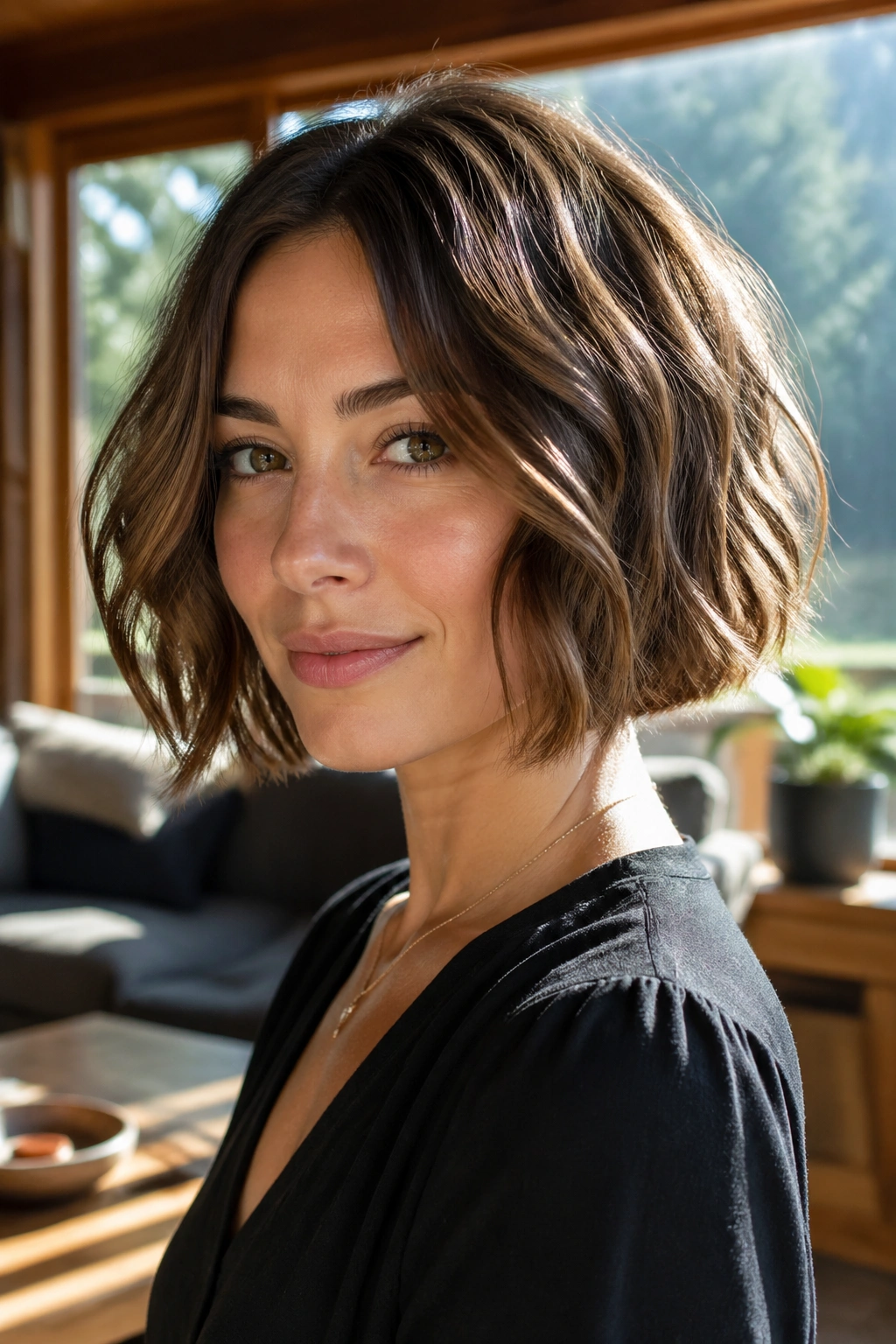
A chin-length bob is one of those cuts that looks innocent until you see it moving. Then it gets interesting. The ends skim the jaw, the wave opens around the cheekbones, and the whole thing feels a little lighter than a straight bob of the same length.
It works best when the wave is soft, not curled into polished loops. Think S-bends, not pageant hair. A flat iron can do this easily: take 1-inch sections, bend once near the cheek, then again closer to the ends. The point is to keep the texture irregular enough that it doesn’t look shaped by a ruler.
This length flatters people who want structure without too much commitment. It also gives fine hair a little more body at the bottom, which can stop the cut from collapsing flat by noon. Thick hair can wear it too, but the inside needs some debulking so the sides don’t swing outward like a triangle. That’s the line most people miss.
It lives and dies by movement.
A little salt spray, a quick scrunch, and you’re there. Add too much product and the softness disappears, which is a shame because the softness is the whole reason to pick this cut in the first place.
4. Razor-Cut Tousled Bob With Airy Ends
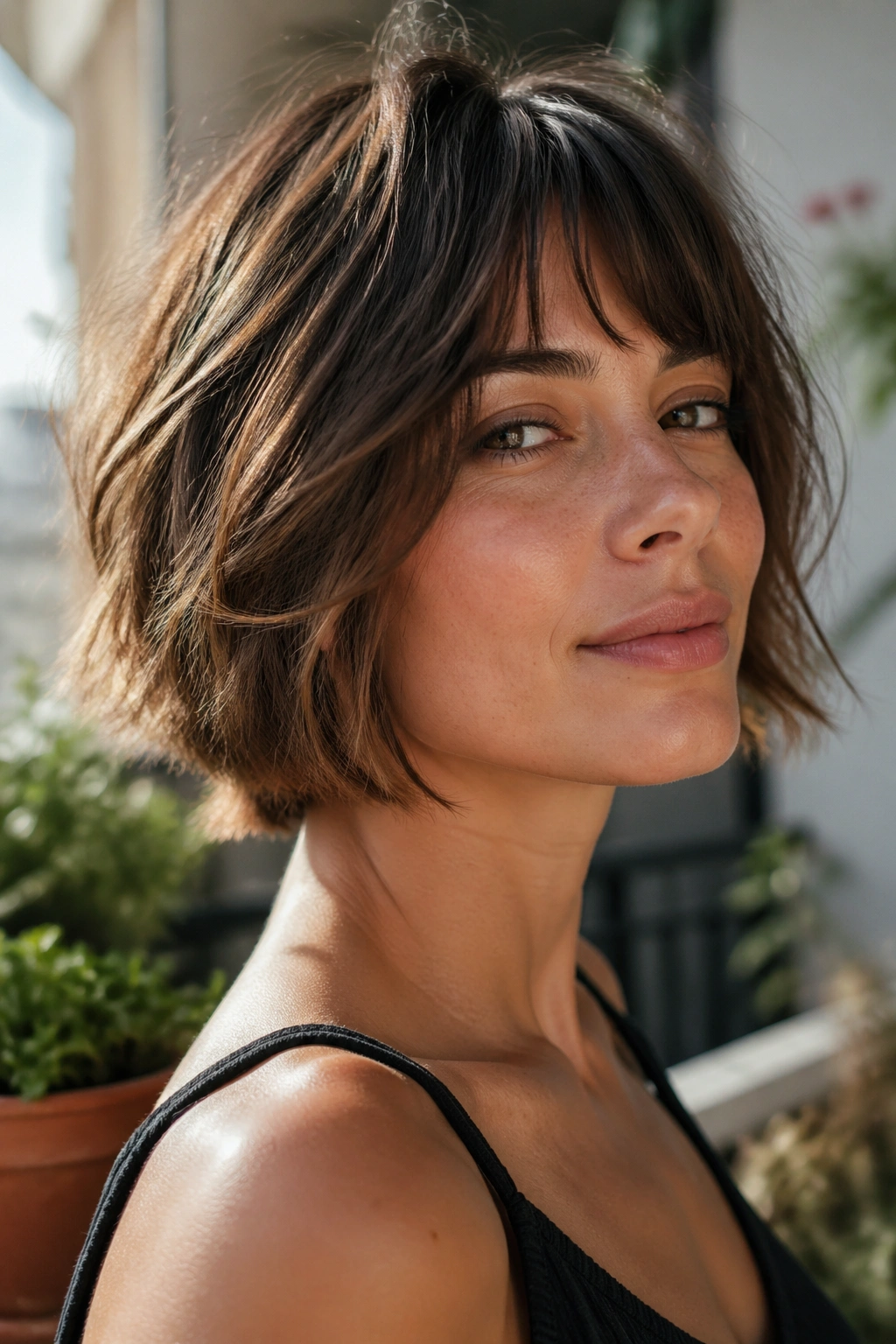
A razor can make a bob look lighter without making it thin. That’s the part people get wrong. A good razor cut removes bulk at the ends and creates a little irregularity, so the line doesn’t sit there looking stamped on.
What the Razor Changes
The finish is less blocky, more broken up. On wavy hair, that means the ends can separate into soft little strands instead of one heavy shelf. On straight hair, the razor gives the bob a fluttery edge that moves when you turn your head, especially if the cut lands around the cheek or jaw.
How to Style It
Work a pea-sized amount of mousse through damp hair, then rough-dry it until it’s about 80 percent dry. After that, twist a few pieces around your fingers, or tap in a touch of texture spray near the ends. Do not load up on oils. Razor-cut bobs can go stringy fast if you overdo shine products.
- Best for hair that feels dense or heavy at the bottom
- Best length: chin to just below the jaw
- Best finish: loose, separated, slightly fuzzy at the edges
- Best caution: very damaged ends can look frayed instead of airy
This is one of my favorite relaxed bob cuts for people who hate looking “done.” It has shape, but it doesn’t look sealed shut.
5. Wavy A-Line Bob With Longer Front Pieces
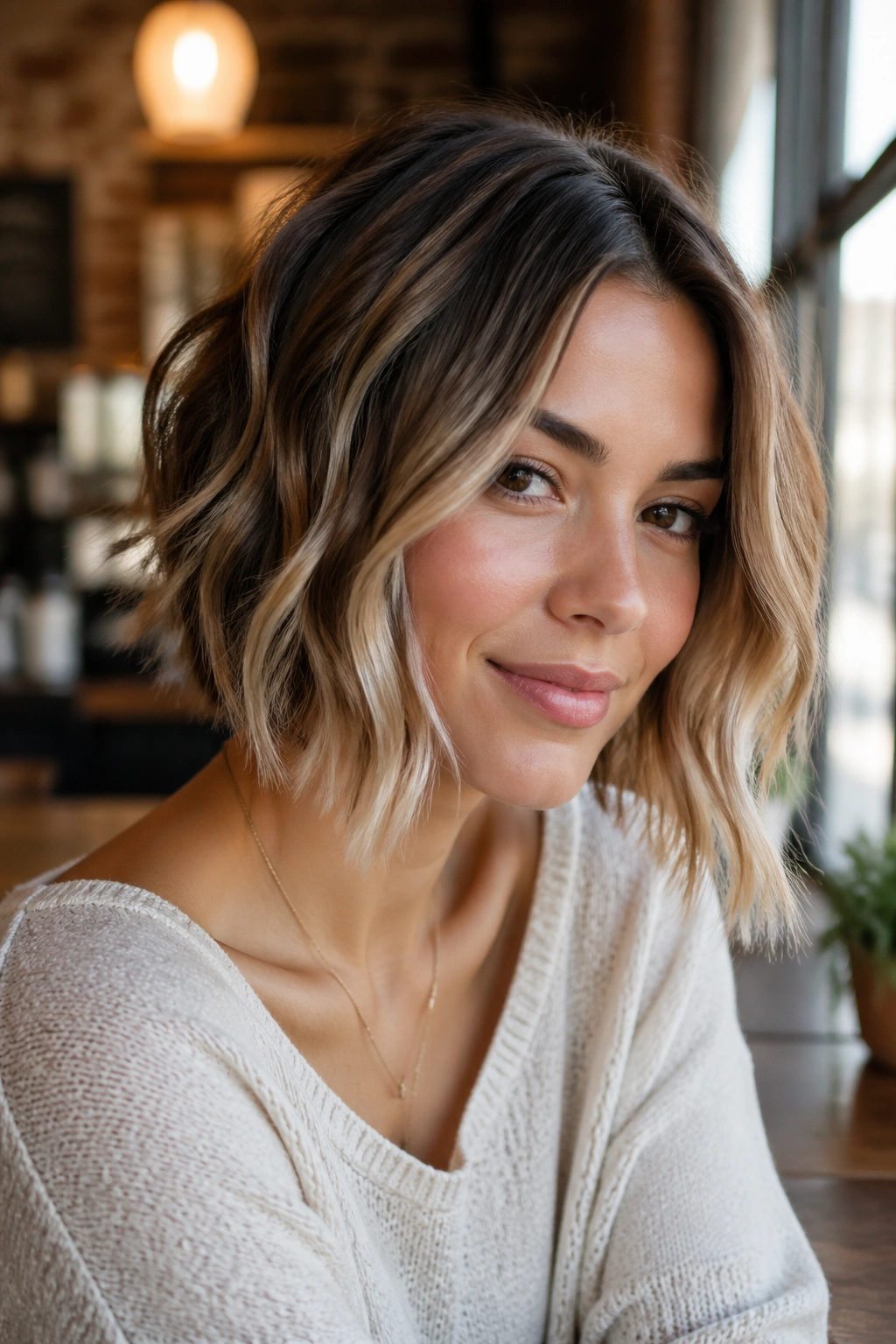
Why does this shape look relaxed instead of severe? Because the line tilts forward instead of sitting flat across the face. That small angle does a lot of work.
The back is usually shorter, with the front pieces falling a little longer toward the collarbone or jaw. That difference opens up the neck and makes the bob feel less boxy. Add a loose wave and the effect turns even softer, because the ends stop reading as one solid line. They move in layers, even if the cut itself is clean.
How to Wear It
Ask for a gentle A-line, not a sharp wedge. A sharp wedge can feel dated fast, and it tends to push the whole style into “I’m here for the geometry” territory. A softer version keeps the slope subtle, which is nicer if you want a relaxed look that still has shape.
If you wear a middle part, leave the front pieces a touch longer so they frame the cheekbones. If you wear a side part, the longer side can skim the collarbone and give you a nice bit of swing. Either way, keep the wave loose. A 1.25-inch iron or a large round brush is enough.
I like this cut on someone who wants their bob to feel a little more directional. Not stiff. Just directed.
6. Curly Tousled Bob With Rounded Shape
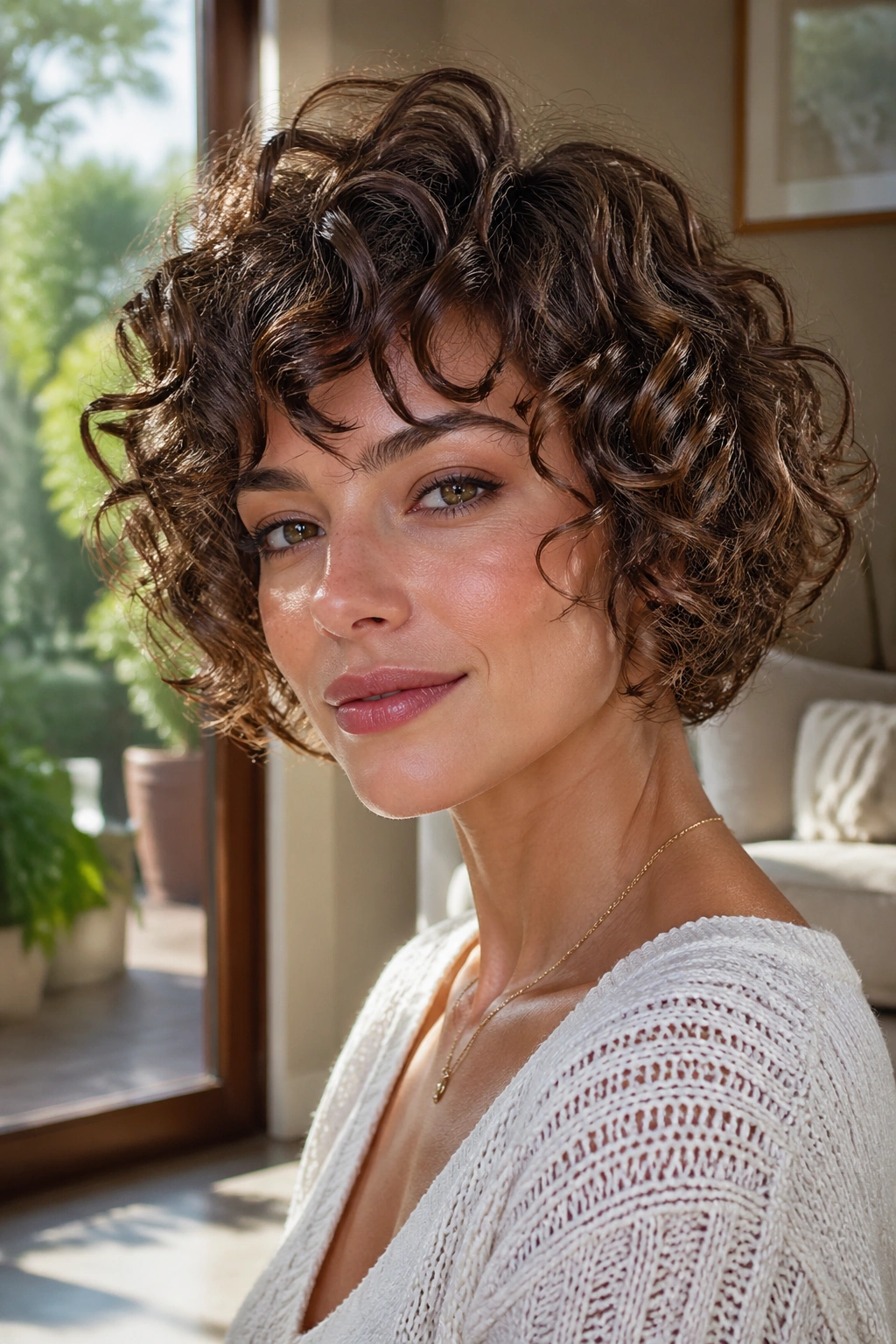
Curly bobs look best when you stop fighting the curl. That sounds obvious, but a surprising number of people still ask for the hair to be cut like straight hair and then wonder why the shape blows out sideways. Curly hair has its own rules. Ignore them and you get triangle city.
A rounded bob keeps the silhouette soft around the head, which helps curls pile up in a shape that feels balanced rather than wide. The best length usually lands between the chin and the collarbone, depending on how springy the curl is. Too short, and the volume can jump up fast. Too long, and the curl pattern can stretch into a drapey shape that loses the bob feeling.
The real trick is in the layering. You want enough interior shape to reduce bulk, but not so many layers that the curl clumps break apart and the cut turns fuzzy. A stylist who cuts curls dry, or mostly dry, can see where the shape naturally wants to sit. That’s worth asking for. Hair that looks neat when wet can surprise you in the mirror once it dries, and not always in a good way.
Use a curl cream, scrunch upward, and diffuse on low heat until the roots lift and the ends feel set but not stiff. Then stop touching it. Seriously. Curly tousled bob cuts lose their charm the minute they’re picked at all afternoon.
7. Shaggy Bob With Crown Layers
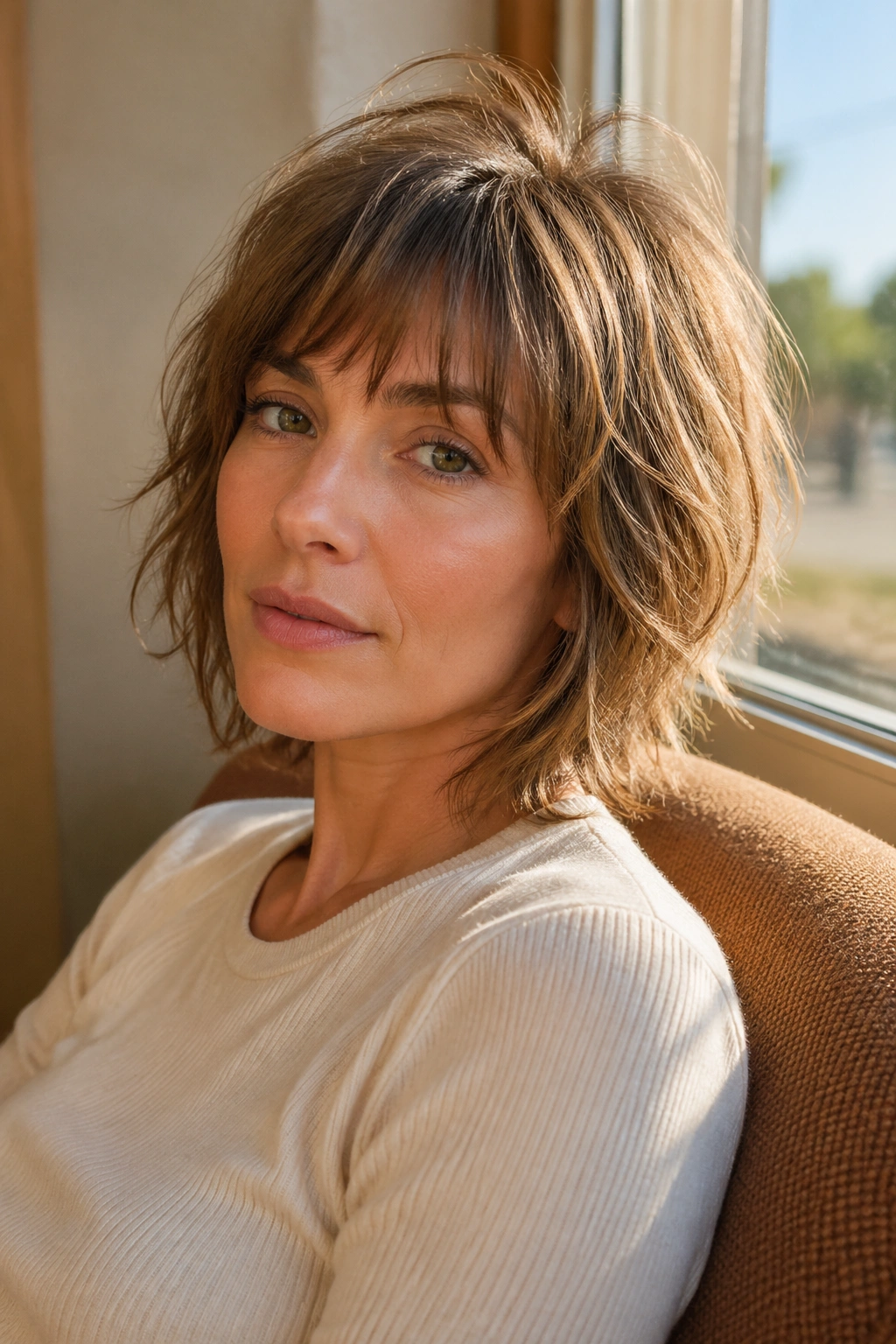
Picture a bob that still looks good after a long day, a car ride, and two weather changes. That’s the shaggy bob with crown layers. It has that slightly rebellious shape that never quite sits flat, which is exactly why it works so well for a relaxed look.
The crown layers are what keep it from becoming a triangle or a heavy block. By cutting shorter pieces around the top and upper sides, the hair gets lift without needing a ton of heat. The lower section stays a little longer, so the shape still reads as a bob instead of a full shag. There’s a fine line there, and a good cut respects it.
Key Details That Matter
- Ask for crown layers that start high enough to lift the root, but not so high that the top goes wispy
- Keep the fringe soft and broken, not blunt
- Use a light mousse at the roots for grip
- Finish with a dry texture spray, not hairspray that freezes the ends
One thing I like about this cut is that it forgives a rough styling day. It tends to look better after some movement, which is rare and useful. If you air-dry it, twist a few damp sections around your fingers and leave the ends alone. The point is not symmetry. The point is life.
8. Blunt Bob With Soft Bend
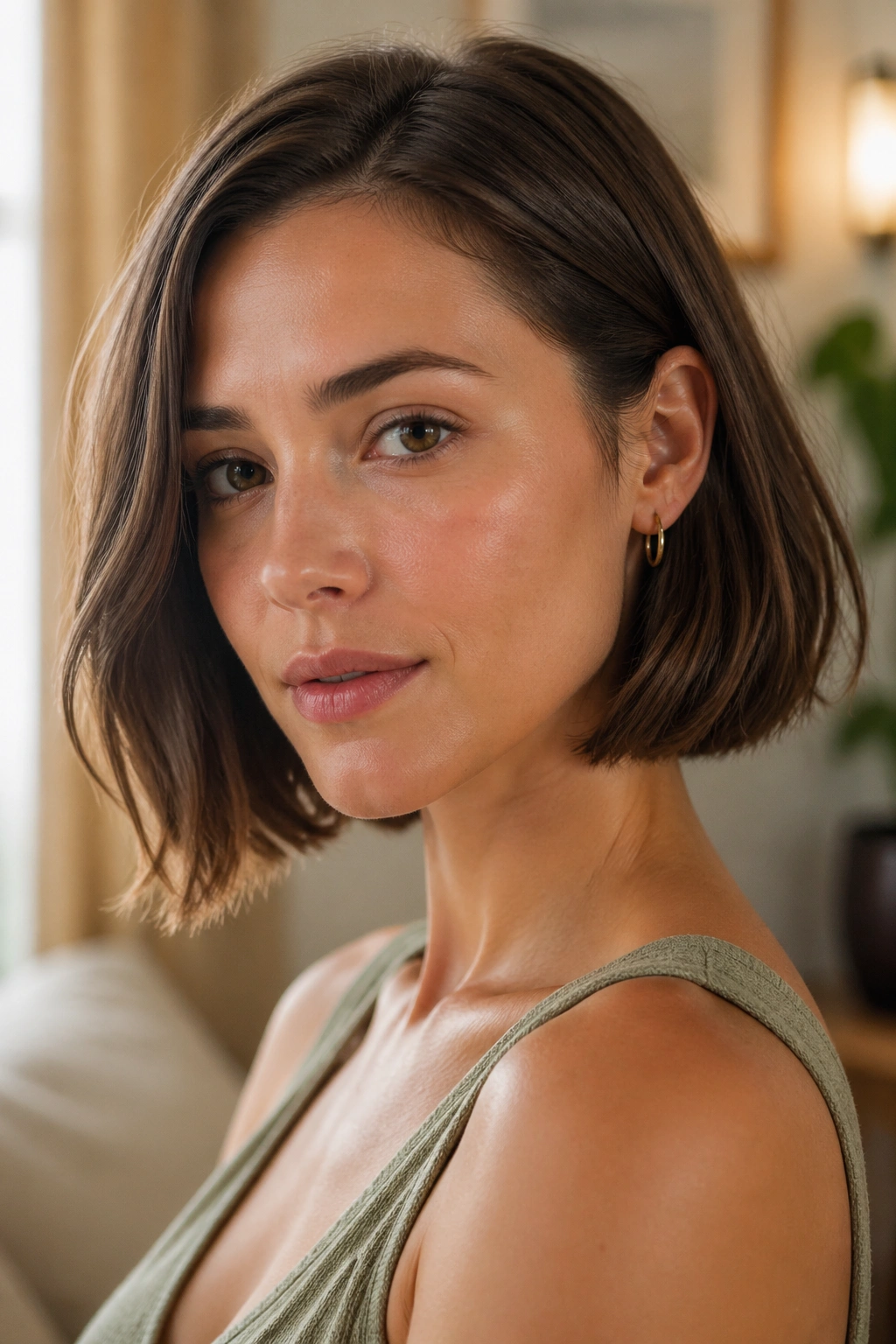
Unlike a razor-y shag, this bob keeps a clean edge at the bottom. That’s the whole appeal. It gives you the visual weight of a blunt line, but the styling keeps it from feeling too strict.
The cut itself is simple: one solid perimeter, usually around the jaw or slightly below it. The softness comes from styling, not the scissors. A loose bend through the mid-lengths, created with a straightener or a large barrel iron, breaks up the seriousness of the line. The result feels modern, but not overworked.
This is a strong choice if your hair is fine and needs the illusion of fullness. A blunt edge makes the ends look thicker. A slight bend keeps the shape from looking like a helmet. Those two things together can be better than heavy layering, which sometimes steals density from the bottom and leaves you chasing volume you never quite get back.
If you want the softest version, part it just off center and tuck one side behind the ear. That tiny asymmetry makes the cut feel less rigid. I’d pick this for someone who likes a neat shape but doesn’t want a crisp salon finish every morning. It’s the kind of bob that looks better when it moves a little.
9. Side-Part Bob With Grown-Out Texture
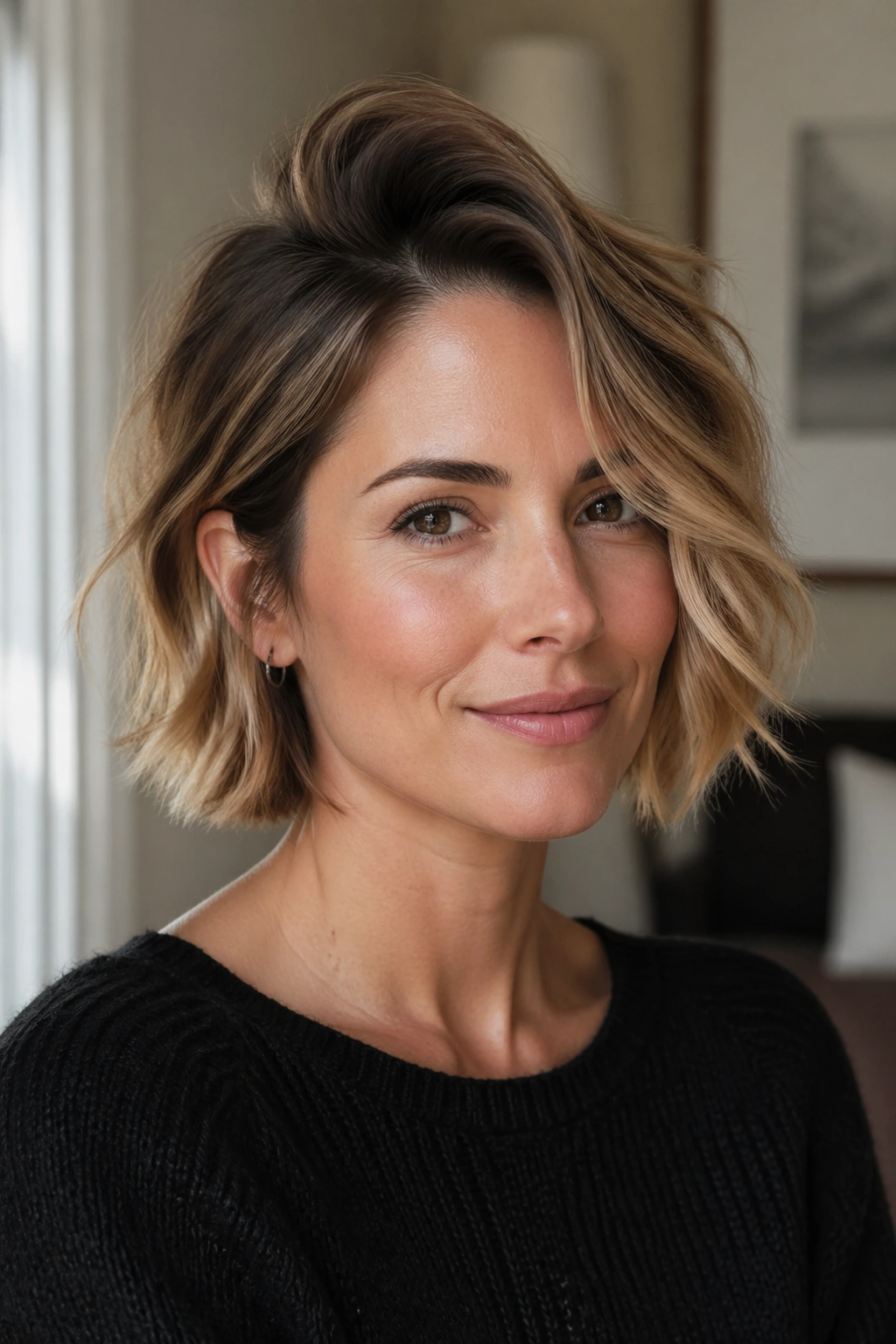
A side part can rescue a bob that feels too perfect. It breaks the symmetry, shifts the weight, and makes the whole cut look like it was worn for a while, which is often exactly the goal.
The grown-out texture matters here. You do not want every strand obedient. A little separation around the ends, a bit of soft lift at the crown, and one side that brushes the cheek make the cut feel lived in instead of freshly pressed. That off-center line is also useful if you have a cowlick that refuses to behave in a middle part. Sometimes the easiest fix is to stop arguing with your hair.
This style works well on fine hair because the side part creates the illusion of more root lift. It also works on thicker hair, as long as the underneath is trimmed enough to keep the shape from spreading out like a fan. A loose wave through the mid-lengths helps, but it should stay irregular. If both sides are curled the same way, the cut starts to look staged.
Messy doesn’t have to mean random.
A small amount of dry shampoo at the roots and a finger-combed finish near the ends are usually enough. The goal is to make the hair look a little worn in, not neglected. There’s a difference, and it’s bigger than people think.
10. Inverted Bob With Undone Nape
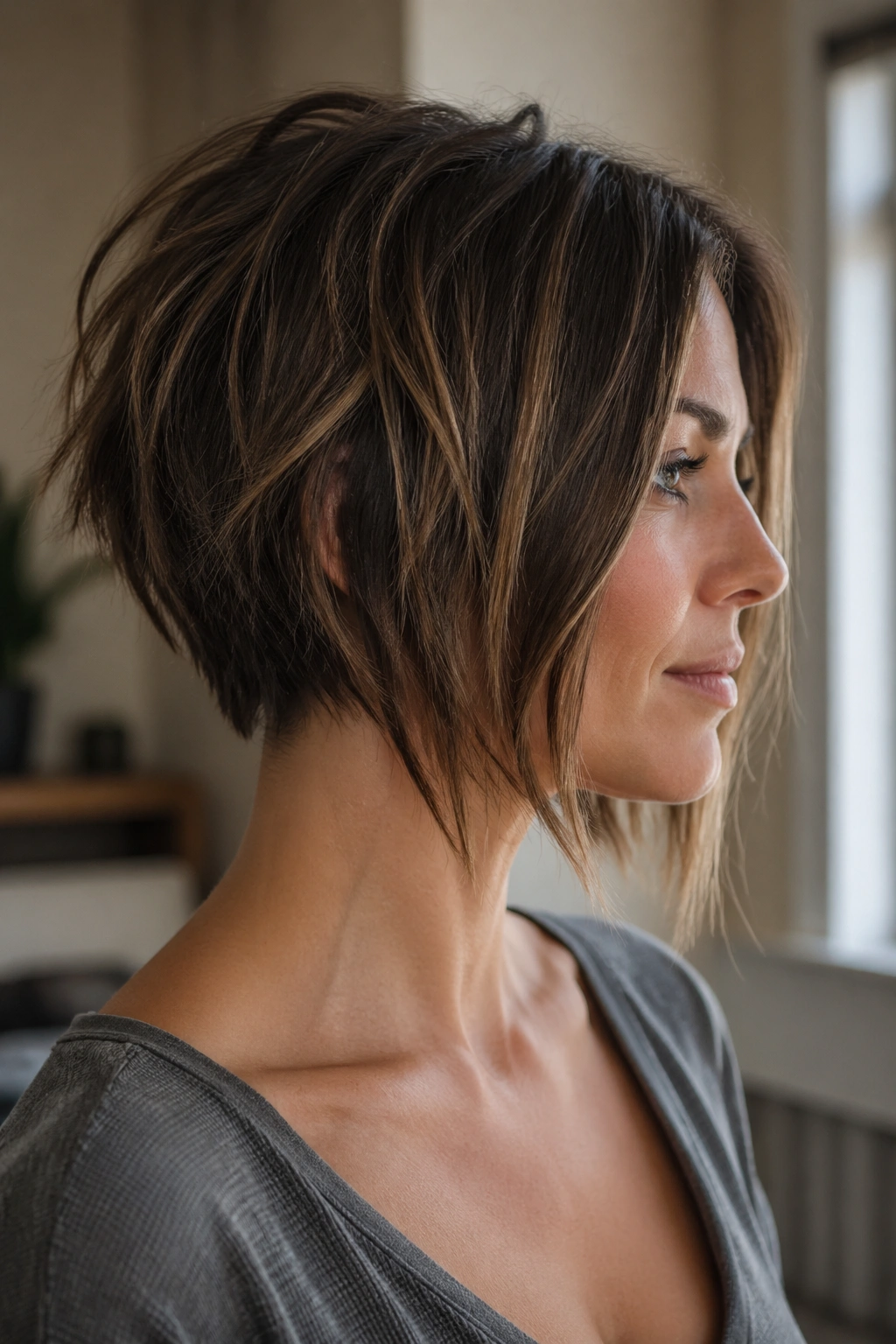
An inverted bob gives you drama at the back without making the front feel heavy. The nape is shorter, the front angles longer, and the whole cut gets a quiet lift that feels tidy on purpose. When it’s styled with a loose finish, it stops reading as sharp and starts reading as easy.
Why the Nape Matters
The back of the haircut carries most of the shape. If the nape is stacked too high, the cut can look dated or stiff. Keep it soft and you get that lifted back view without a hard shelf. The front should fall in smooth, slightly bent pieces that skim the jaw or neck, depending on how much length you want.
How to Keep It Relaxed
Ask for the stacking to be subtle, not dramatic. Then style the front with a round brush or a quick bend from a flat iron, leaving the ends a little imperfect. A spray wax or light texturizer works better than heavy oil here because it keeps the ends from collapsing.
- Best for hair that loses volume fast at the crown
- Best with a side part or a loose off-center part
- Best if you want a little shape in back without full shag energy
- Best avoided if you want zero styling and zero maintenance
I’ve always thought this is one of the more underrated bob cuts. It gives structure without shouting about it.
11. Micro Bob With Gritty Texture
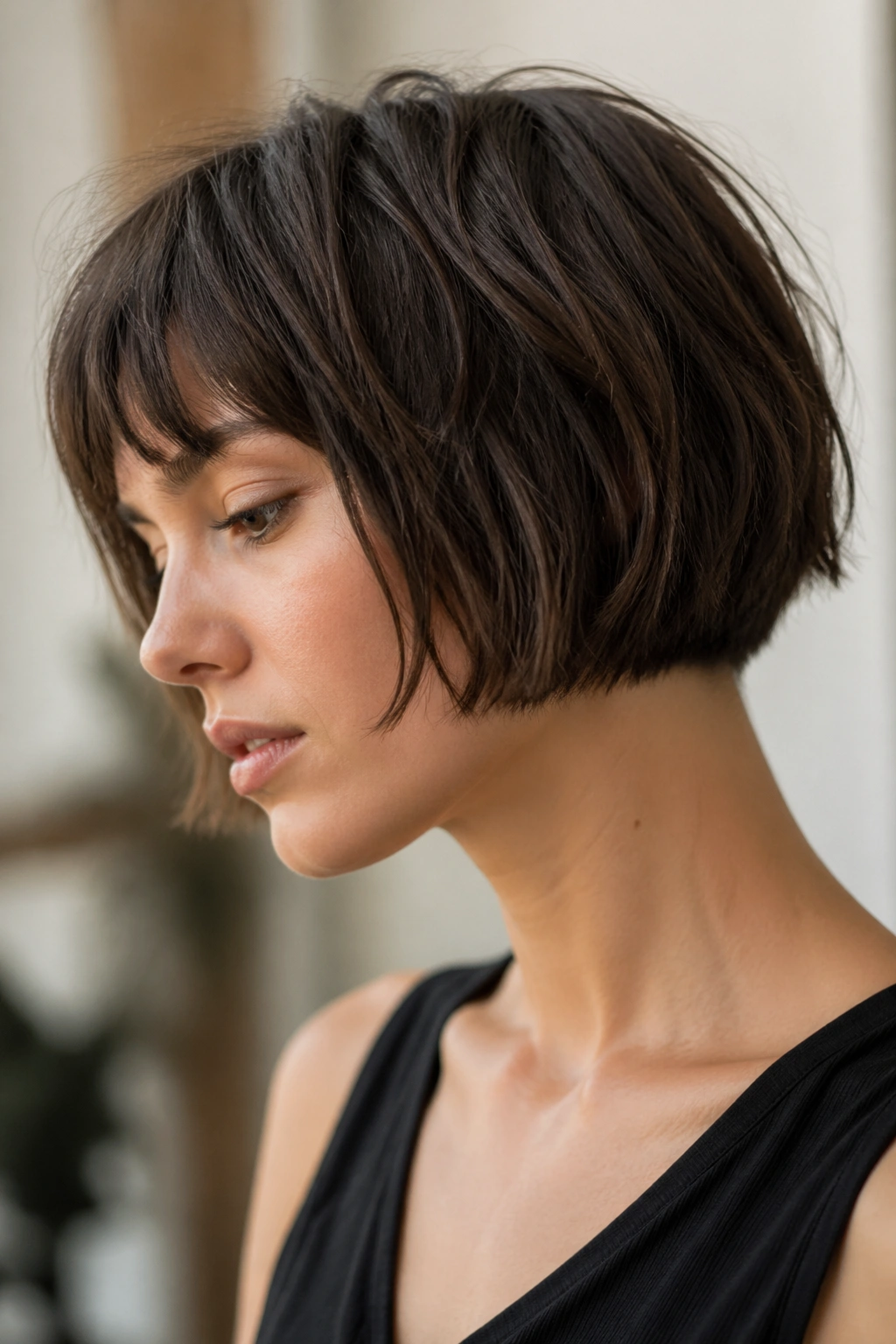
Short hair can still look lived-in. In fact, a micro bob can look even cooler when it’s not too polished, because the short length makes every line visible. That means the texture has to be intentional, even when it looks casual.
A micro bob usually sits between the chin and the lips, sometimes a touch higher. The trick is keeping enough softness through the ends so the cut doesn’t feel like a hard shape cut with kitchen scissors. Point-cutting and a little internal texture help here, especially if the hair is straight and wants to lie flat.
This is a strong pick for people who like a sharper outline but don’t want the finish to look rigid. It can be styled with barely more than a rough blow-dry and a dab of paste rubbed between the palms. If you want a piecey result, pinch a few ends near the front and let the back stay loose. Don’t overthink it. The cut has to carry some of the work.
It is not the most forgiving cut if you hate trims. Shorter bobs show growth faster. But if you like a crisp shape with a rough edge, this one has a lot of personality without sliding into effortful territory.
12. Long Tousled Bob With Beachy Movement
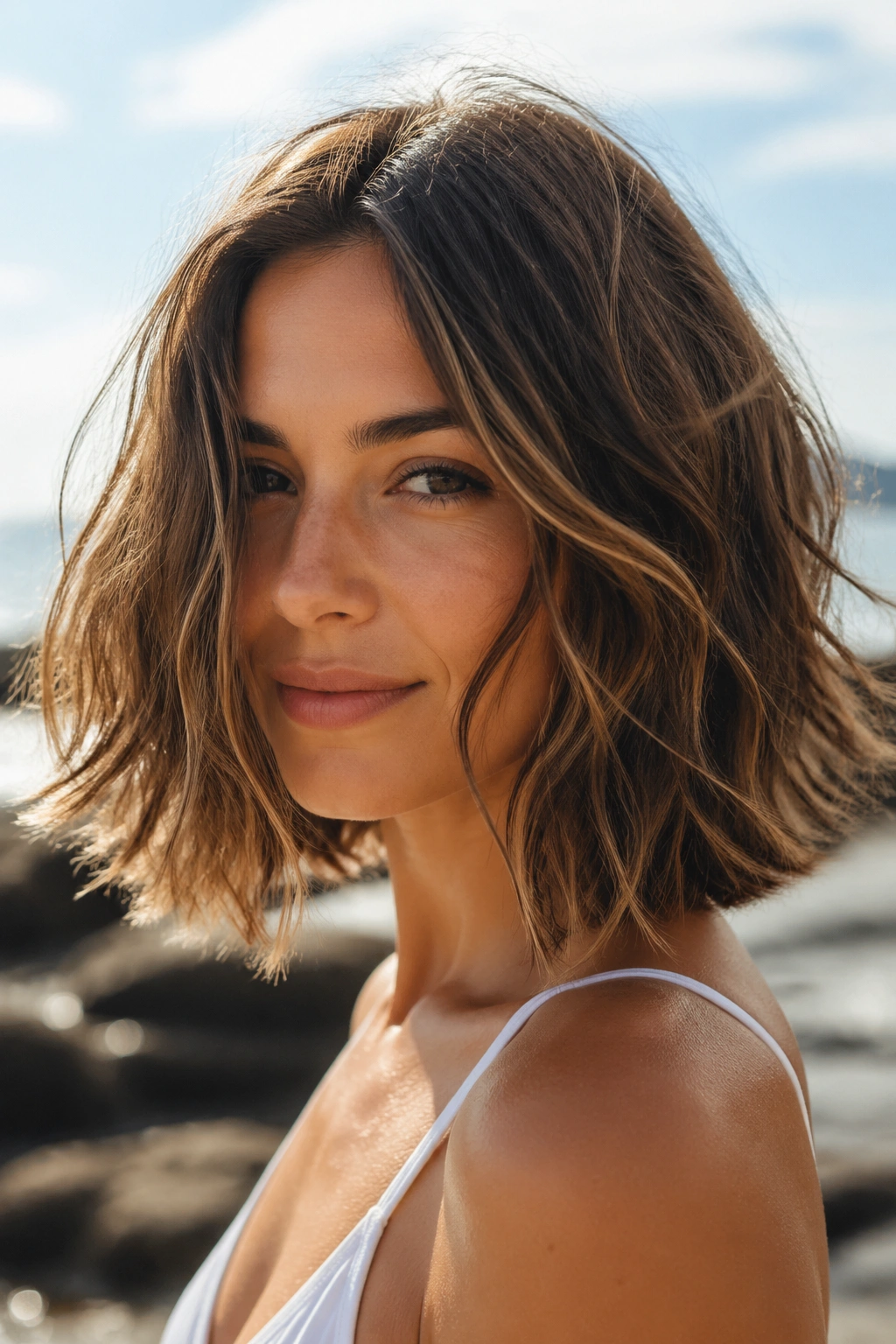
If you’re not ready to let go of length, this is the easiest place to land. A long tousled bob keeps the collarbone in play, which means you still get a little swing, a little weight, and a lot less commitment than shoulder-length layers that keep growing into something else entirely.
The beachy movement comes from bend, not curl. That matters. You want the hair to look like it bent around the air as it dried, not like each section was set to perfection. A large-barrel iron, a soft wave clip, or even a twist-and-dry routine can do the job. Keep the ends loose. Keep the waves uneven. That’s the part people fight, and it’s usually the part that makes the style look best.
What to Ask For
- Length that sits at the collarbone or just below
- Face-framing pieces that start around the cheekbone
- Soft layers through the mid-lengths, not a chopped-up top
- Ends that are point-cut so the line doesn’t feel heavy
This is the bob I’d suggest to someone who wants a relaxed look with the safest grow-out. It plays well with natural texture, which is probably why it stays such a dependable salon choice. It doesn’t demand much, but it still looks intentional when you give it a little movement.
Final Thoughts
Relaxed bob haircuts work because they leave room for air, bend, and a little unevenness. That sounds simple. It is simple. But the cut still needs structure underneath, or the “undone” part goes sideways fast.
The best choice is the one that matches your texture, not the one that looks the most polished in a flat photo. Fine hair usually likes cleaner edges and soft bends. Thicker or curlier hair tends to do better with internal shape and less blunt bulk.
Ask for movement in the cut, not just movement in the styling. That one detail changes everything, and it’s the difference between a bob that looks worn on purpose and a bob that looks like it gave up halfway through the morning.
