



A good bob can do more for a fuller face than a shelf full of contour products. The best bob cuts for chubby faces do not hide your cheeks; they change the shape of the hair so the eye travels down, not straight across. That little shift matters more than people think.
The wrong bob stops right at the widest part of the face and adds a hard horizontal line. The right one slips below the jaw, angles forward, or builds a bit of lift at the crown so the whole shape looks longer and lighter. Length placement, side parting, and how the ends are cut all pull their weight here. Hair texture does too.
And no, there isn’t one magic bob for everyone with a rounder or fuller face. A cut that flatters soft cheeks on straight hair can look flat on waves, and a bob that looks airy on thick hair can sit heavy on fine strands. The cut has to work with your hair, not against it.
That is the real difference between a bob that feels fussy and one that makes your face look balanced without trying too hard.
1. Collarbone-Length A-Line Bob With Longer Front Pieces
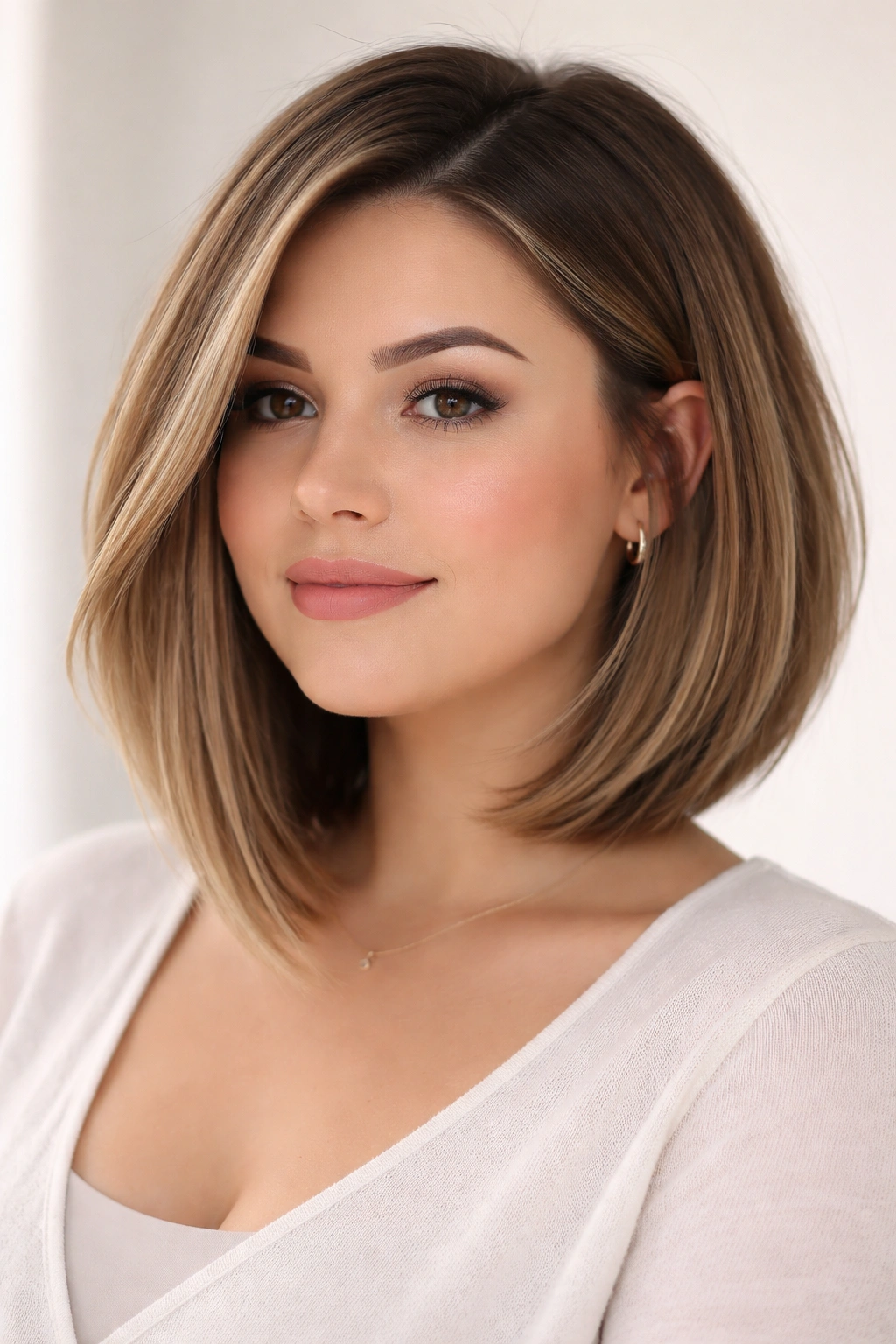
A collarbone-length A-line bob is one of those cuts that quietly does the most. The front pieces skim below the chin, the back stays a touch shorter, and that diagonal line gives the face room to breathe. On fuller cheeks, that angle matters. It pulls the eye downward and away from the widest part of the face.
Why the front length matters
The front should not stop right at the jaw. That is the trap. A bob that lands exactly there can box in the face and make the lower half look wider than it is.
Ask for the front to graze the collarbone or sit just above it, with a back that rises only a little. The shape should feel clean, not severe. One of my favorite things about this cut is how little effort it needs once the shape is right. A round brush, a quick bend through the ends, and you’re done.
- Keep the front 1 to 2 inches longer than the back.
- Ask for soft point cutting at the ends, not a blunt shelf.
- Part slightly off center to break up width.
- Style the front forward, then tuck one side behind the ear.
Best tip: keep the ends airy. A hard, heavy edge at cheek level works against the whole point of the cut.
2. Deep Side-Part French Bob
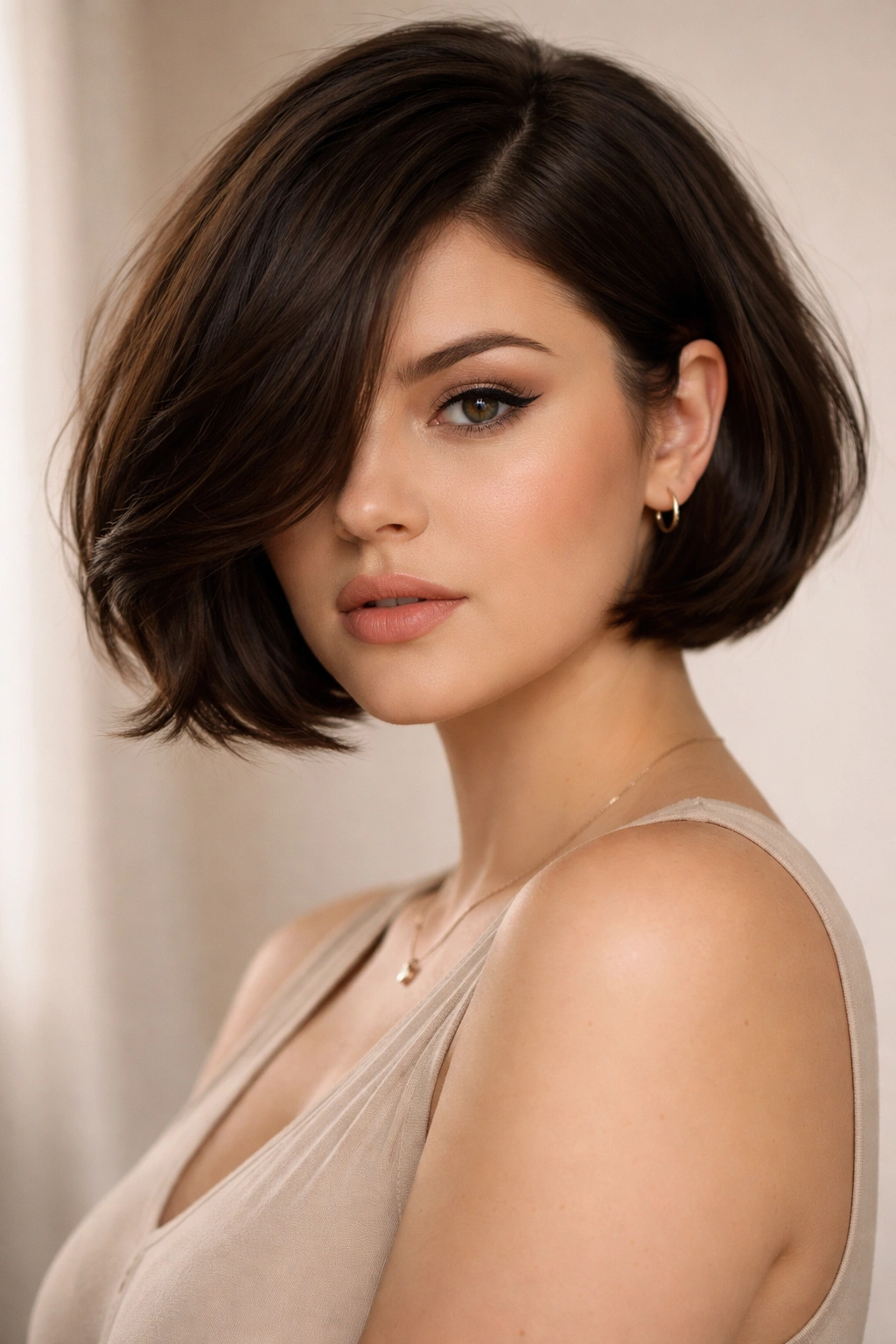
A deep side part does more face-slimming work than most people expect. It shifts the visual weight to one side and creates a diagonal line across the face, which is much kinder to soft cheeks than a straight middle split. On a French bob, that parting change can turn a cute cut into a face-shaping one.
This works especially well when the bob sits near the jaw but not on it. The side part lets one side fall softly across part of the cheekbone while the other side opens the face and shows a little neck. That asymmetry keeps the look from turning square or blocky.
I like this cut on hair that already has a little bend, because the movement makes the side sweep look lived-in instead of stiff. If your hair lies flat, ask for some root lift at the crown and a soft bend through the top half. No need for curl-machine curls. That would be too much.
A deep side-part French bob is also one of the easiest styles to dress up or down. It looks sharp with an ear tuck and a red lip, and it still works when you let it air-dry with a light cream. The only real mistake is parting it too far to one side without enough balance in the cut. Then it starts to look lopsided rather than flattering.
3. Layered Collarbone Bob With Soft Ends
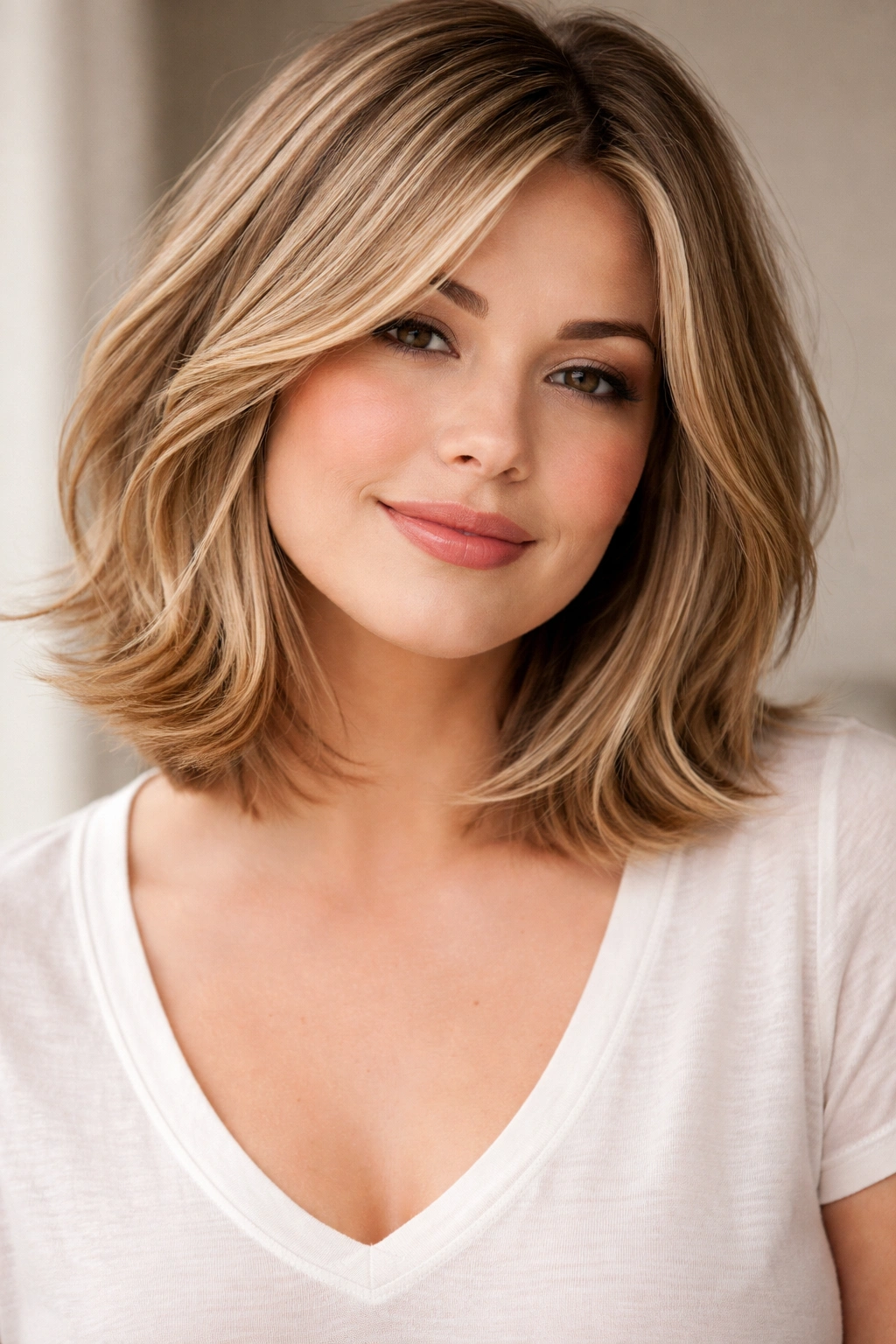
Why does a layered collarbone bob flatter fuller cheeks so well? Because it removes the heavy block that makes some bobs feel boxy. Instead of one solid curtain of hair stopping at the same place on both sides, you get movement that follows the face and softens the outline.
The layers should be subtle. I’m talking about internal layers, not choppy steps that start right at the cheeks. The goal is a bob that sways when you turn your head, not one that looks ragged from the front. Keep the perimeter long enough to skim the collarbone, then let the inside release some weight.
Heavy hair needs room to move.
How to wear the movement
Blow-dry with a medium round brush and keep the ends slightly tucked under or turned just enough to skim the neck. If you wear it wavy, leave the front pieces a touch straighter than the rest. That small contrast keeps the face-framing strands from puffing out where you least want them to.
This cut is a strong choice if you want something softer than a blunt bob but still neat enough for work. It also grows out well, which is handy because layered cuts can start to look shabby when the shape collapses. Ask your stylist to avoid short layers at cheek level. Those can widen the face fast.
4. Inverted Bob With Stacked Back
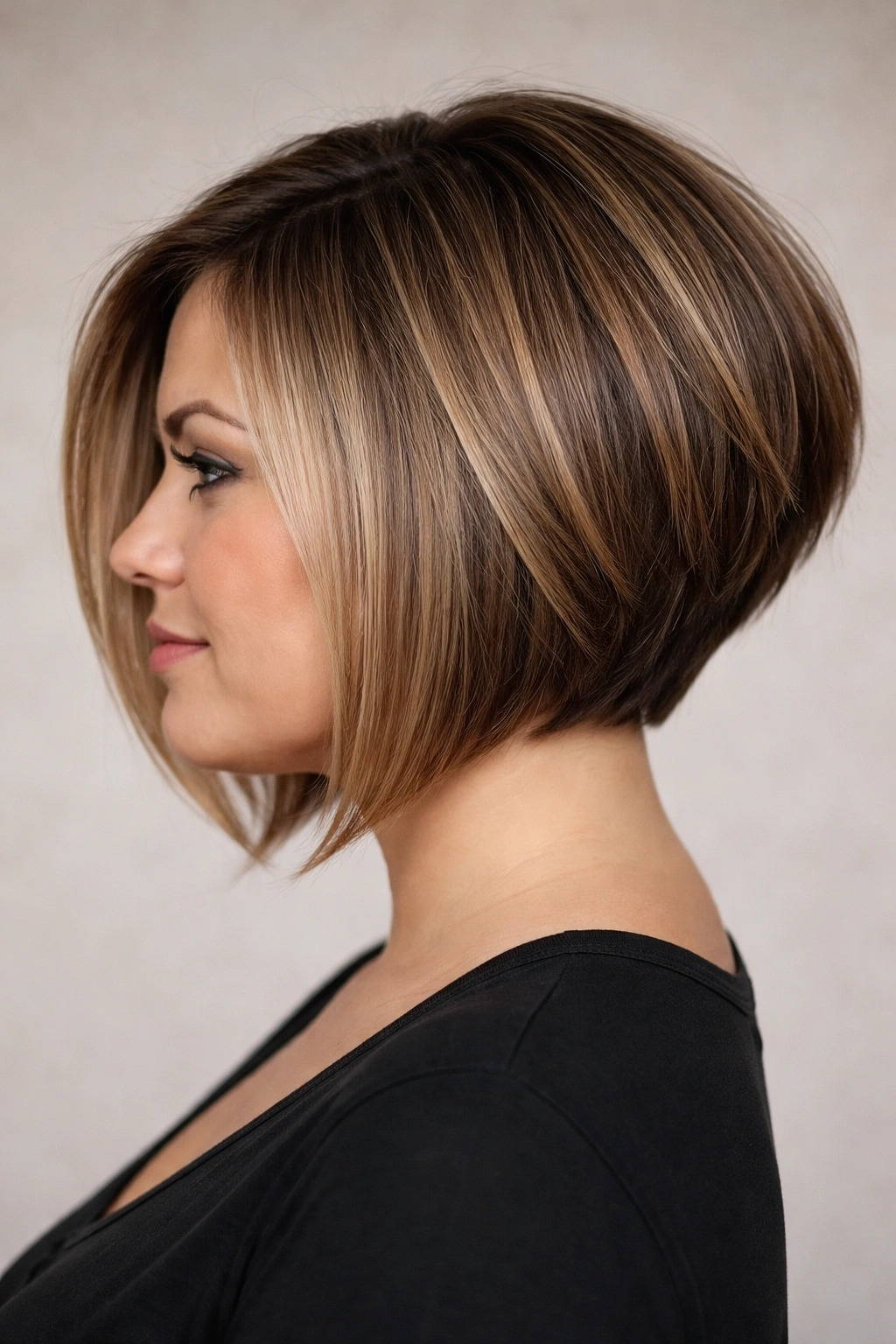
If your hair grows straight out at the sides, an inverted bob can clean up the shape in a hurry. The stacked back gives lift at the crown, while the longer front pieces keep the face from looking boxed in. Done well, it feels sharp and lifted, not puffy or dated.
The lift at the back is doing a lot of the work here. It adds height where the eye wants to travel upward, and that vertical movement helps a fuller face look longer. The front stays longer for a reason. That extra length creates a soft frame around the jaw instead of a hard stop at it.
- Ask for a gradual stack at the nape, not a bulky shelf.
- Keep the front below the jaw, not at it.
- Use a flat brush and direct the ends inward just a touch.
- Trim it often enough that the back does not lose its shape.
Too much stacking is where people get into trouble. The cut can start to look stiff if the back is overbuilt, and stiff hair around a fuller face usually feels harsh. The best version has a clear shape but still moves. A little swing in the front keeps it modern. A lot of puff in the back does not.
5. Wavy Lob With a Side Sweep
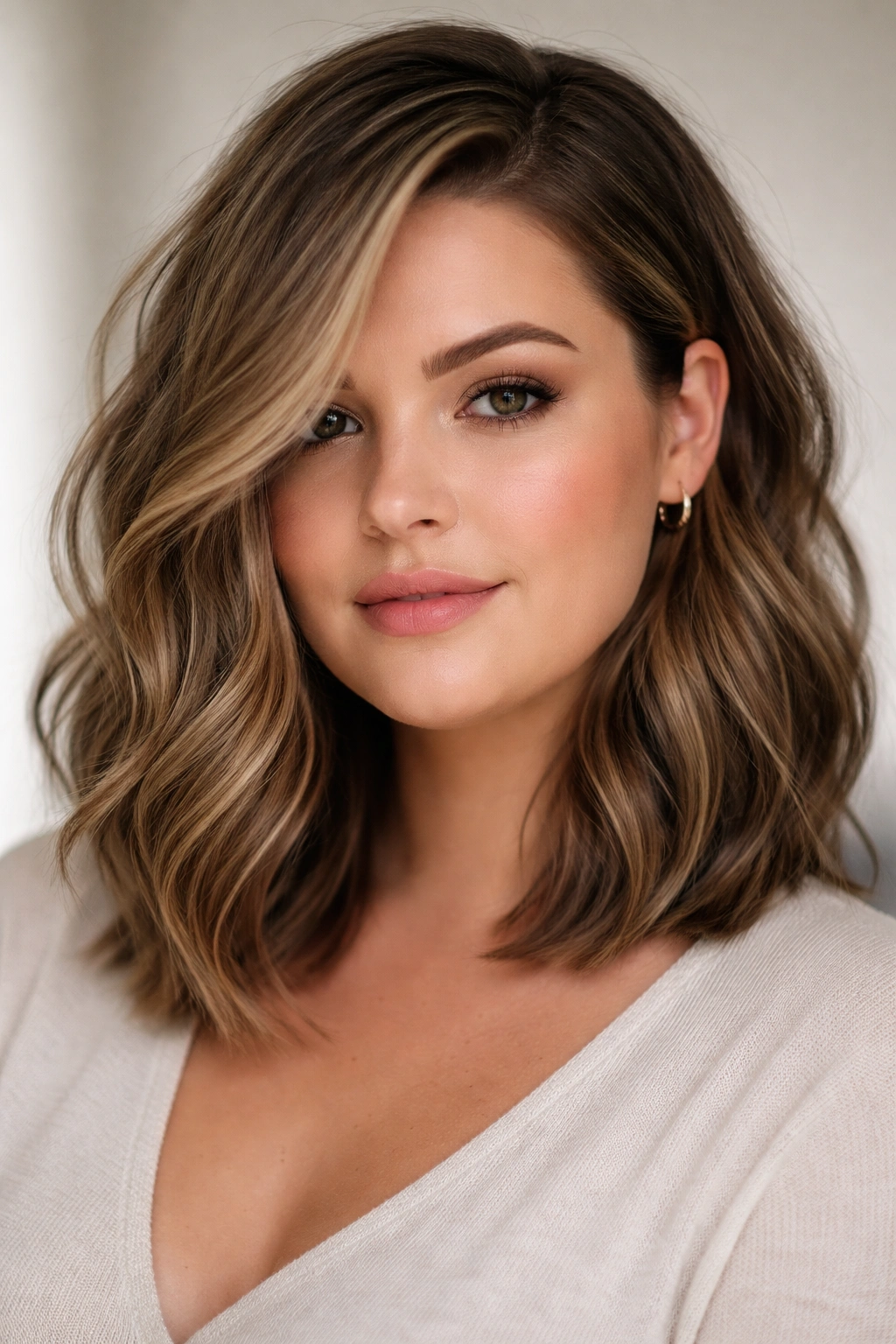
A wavy lob is one of the easiest ways to slim a rounder face without going short-short. The length lands around the collarbone or a little below, which gives the face a long frame to sit inside. Add a side sweep, and the whole cut starts pulling the eye diagonally instead of side to side.
That diagonal line is the secret. Waves break up width. A smooth, straight line across the cheeks does the opposite. If you already have a natural wave, this cut can look almost unfairly good with minimal styling. If your hair is straighter, a 1-inch wand or a loose bend with a flat iron is enough. You do not want tight ringlets. Those can bulk up the sides and make the face feel wider.
One of the reasons I keep coming back to this cut is that it feels easy in real life. You can wear it polished, messy, or somewhere in between, and it still holds the right shape. The side sweep helps the front fall across one cheek without swallowing the whole face. That little asymmetry is doing a lot.
For best results, keep the wave pattern loose near the face and fuller through the ends. If every curl sits at cheek level, the cut loses its slimming effect fast. The trick is to let movement happen lower down.
6. Angled Bob With Curtain Bangs
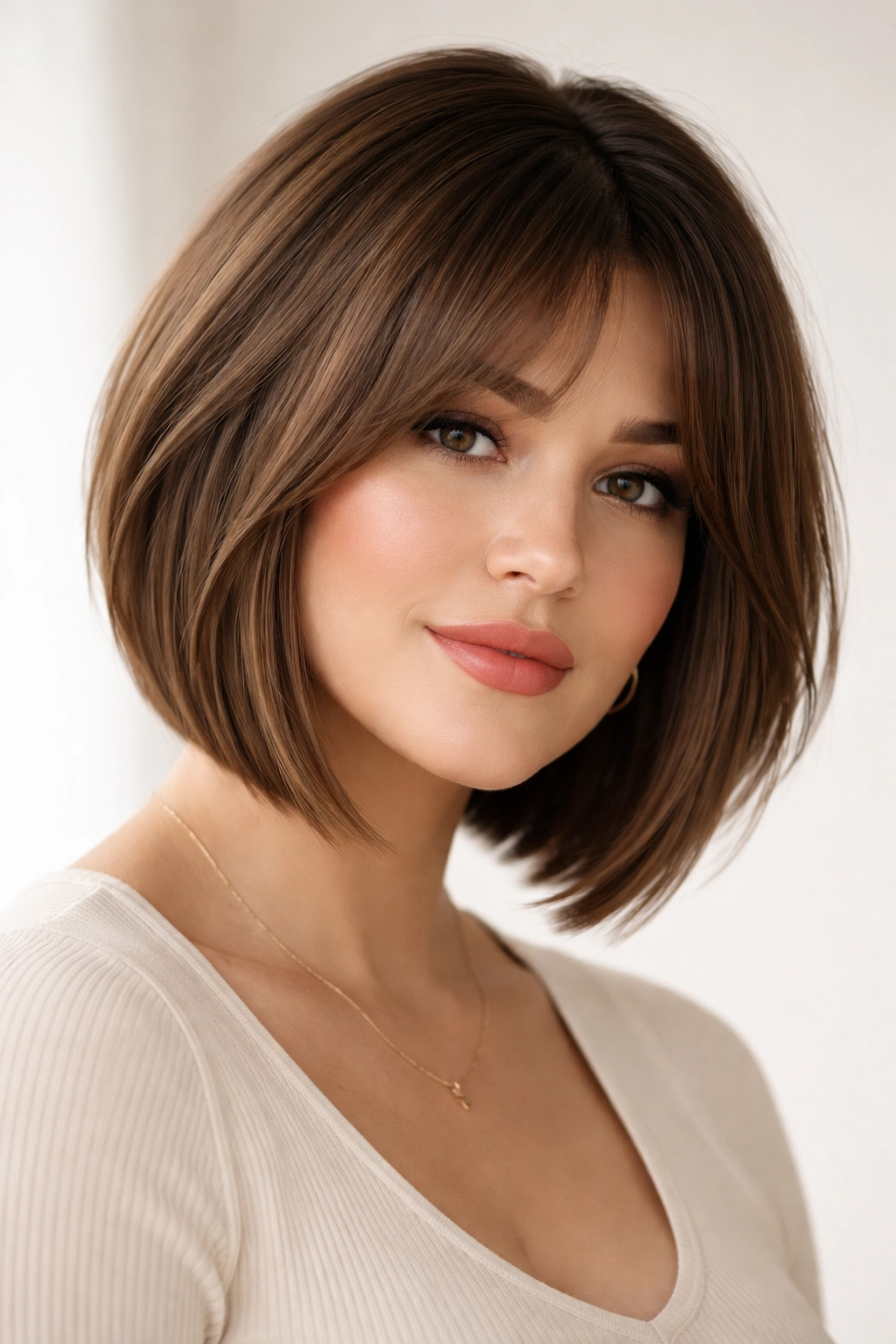
Curtain bangs are softer than a straight fringe, and that softness matters on a fuller face. A straight-across bang can chop the face in half and bring the eye right to the widest part. Curtain bangs part in the middle, slide out toward the cheekbones, and leave a little space in the center. That open space changes everything.
This bob works especially well when the front is angled slightly longer than the back. You get the lengthening effect of the angle and the face-framing effect of the fringe without a heavy wall of hair. The bangs should start around brow level and blend into the front pieces by the cheekbone. If they stop too high, they can feel short and boxy. If they are too dense, they press down on the face.
It’s a good choice for someone who wants a bob with movement but doesn’t want to rely on waves every day. The fringe gives you shape even when the rest of the hair is straight. That matters. Not everyone wants to spend ten minutes fighting a curling wand before breakfast.
I’d ask for the curtain bangs to be kept light through the center and slightly longer at the temples. That keeps the line soft and helps the bob frame the face instead of closing it in.
7. Textured Blunt Bob With Soft Internal Layers
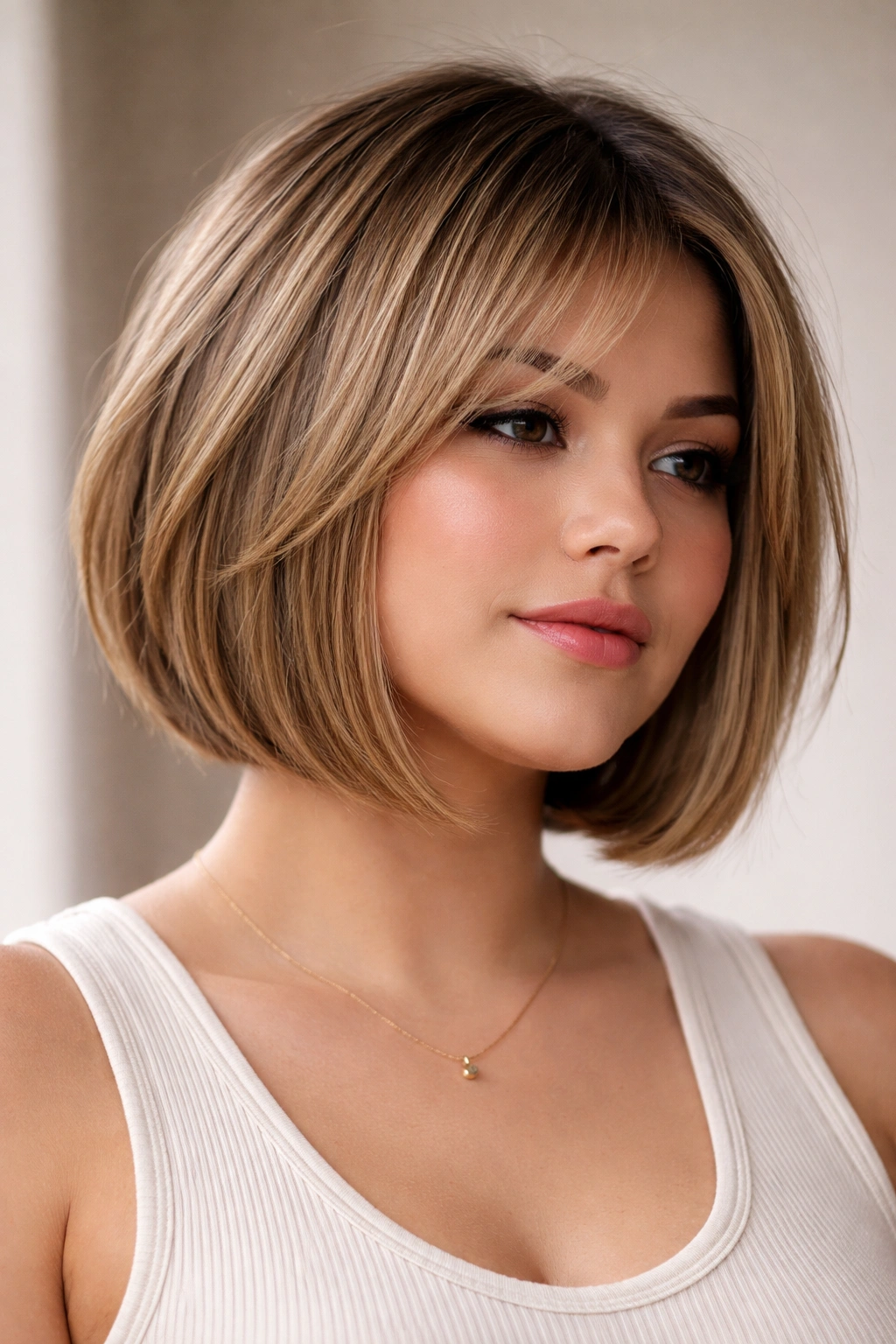
A blunt bob can be slimming when the line sits in the right place. The mistake is not the blunt edge itself. The mistake is dropping that edge right at the jaw and leaving it heavy all the way through. Put the blunt line just below the chin, then soften the inside with hidden layers, and the cut starts doing different work.
What to ask your stylist
- Cut the perimeter one finger below the jaw or lower.
- Remove bulk inside the bob, not at the outline.
- Point-cut the ends so they do not read as a single hard shelf.
- Keep the front pieces a little longer than the center back.
That combination gives you the clean shape people like in a blunt bob, but without the blocky look that can widen the face. It also helps thick hair sit flat enough to feel sleek. If your hair is fine, ask for only a little internal texture. Too much and the shape can go wispy fast.
A textured blunt bob is one of those cuts that needs a bit of discipline when you style it. Use a smoothing cream, blow-dry downward, and keep the roots polished. A fuzzy perimeter ruins the effect. The line should look deliberate, not battered by the weather.
8. Asymmetrical Bob
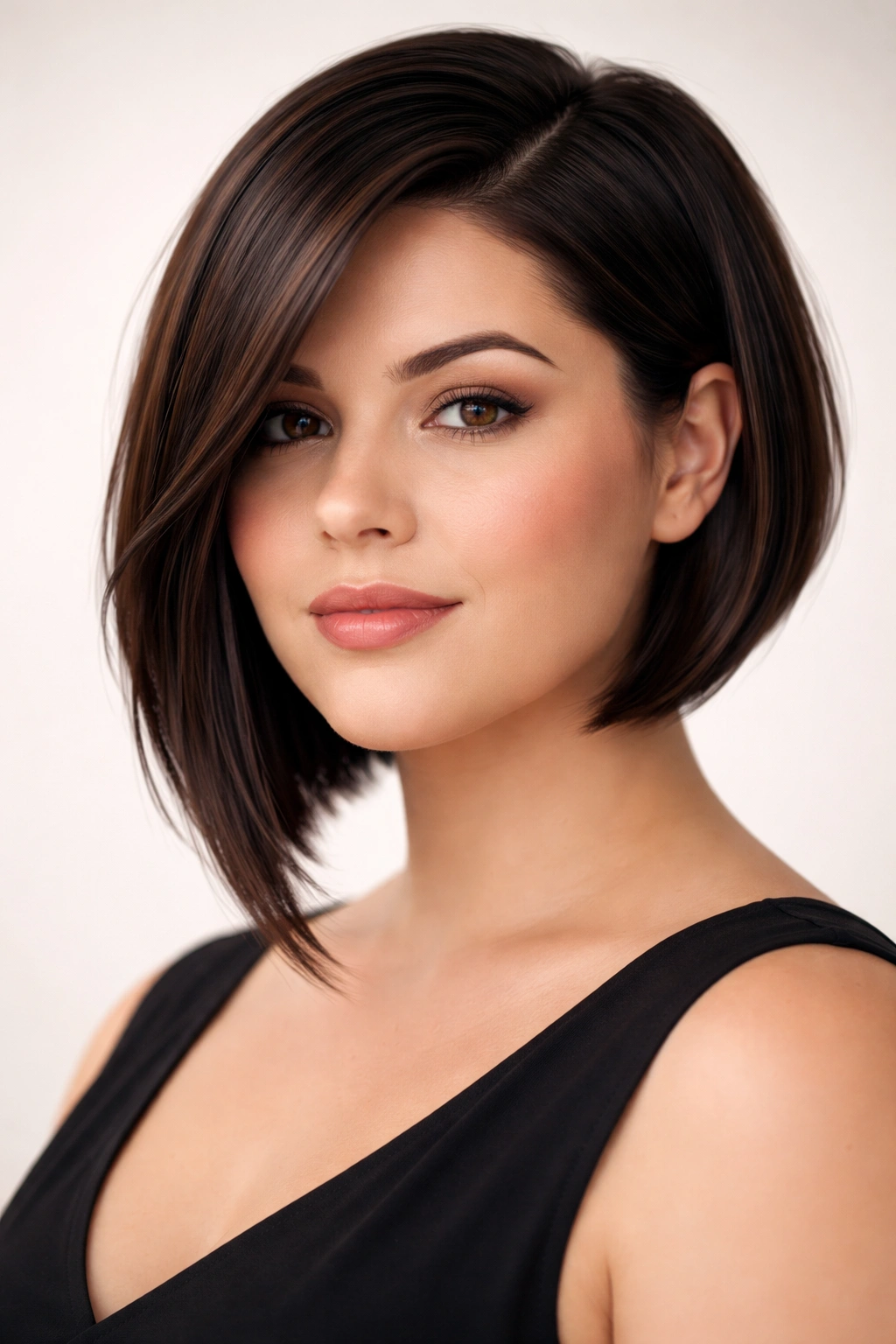
A one-sided bob is basically a cheat code for a fuller face. The eye follows the longer side down, and that diagonal line makes the face look less circular. The cut also gives you a little drama without asking for a full makeover, which I appreciate. Not every haircut needs to shout.
The difference between flattering and awkward is usually the size of the imbalance. Keep one side only 1 to 1.5 inches longer than the other. More than that, and the shape can start to feel costume-y unless that is the look you want. A soft side part makes this cut even better because it keeps the hair from sitting squarely across both cheeks.
This is a good cut for someone who likes structure but not fuss. The asymmetry does some of the styling work for you. You can wear it smooth, tuck the shorter side behind the ear, or add a bend through the longer side for extra movement. Each version keeps the face from reading as wide.
One small warning: if your hair has a strong natural swirl at the crown, mention it before the cut starts. An asymmetrical bob depends on clean direction. A cowlick that kicks one side up can throw the line off fast.
9. Rounded Bob With Feathered Ends
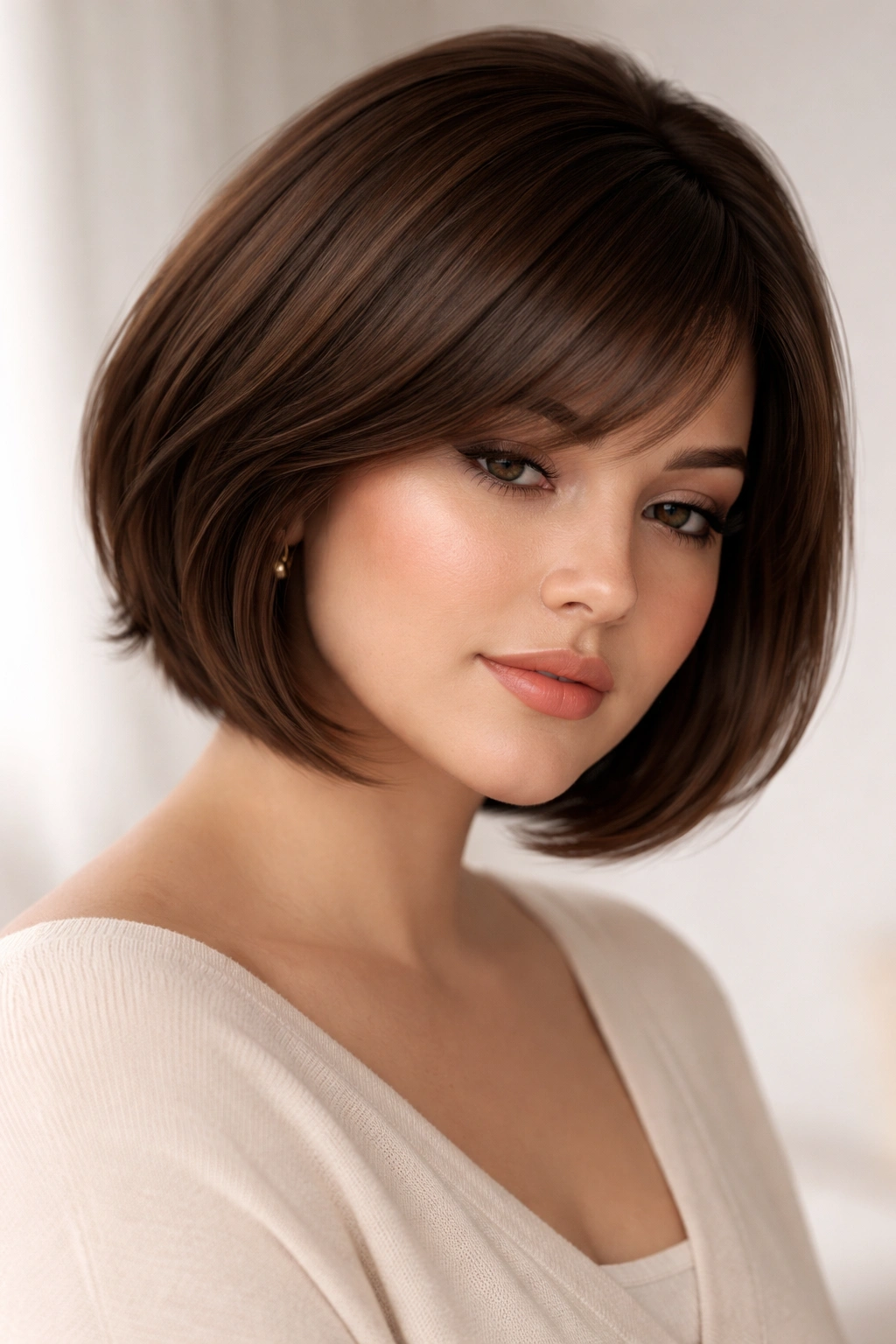
Can a rounded bob slim the face? Yes — if the curve stays soft. The rounded shape should follow the head without flaring out at the cheeks. Feathered ends keep the bottom from feeling bulky, which is where this cut either works or fails. Too much roundness around the face widens it. A controlled curve does the opposite.
This is a smart pick for straight or slightly wavy hair that wants to sit in place. The silhouette feels tidy and polished, but it should still have a little movement at the ends. Ask for the front to stay slightly longer than the back, then feather the perimeter so it hugs the neck instead of sitting like a shelf. That small bevel makes a big difference.
Styling it without puffiness
Use a round brush only at the roots. Leave the ends alone or give them the lightest bend. If you round-brush the whole length, the bob can balloon out at cheek level, and that’s exactly what you do not want. A tiny amount of serum at the tips keeps it smooth without making it greasy.
Rounded bobs are a bit underrated because people assume they add width. They can, if they’re cut too short. Longer versions with softened edges have a much more elegant line.
10. Shaggy Bob With Choppy Pieces
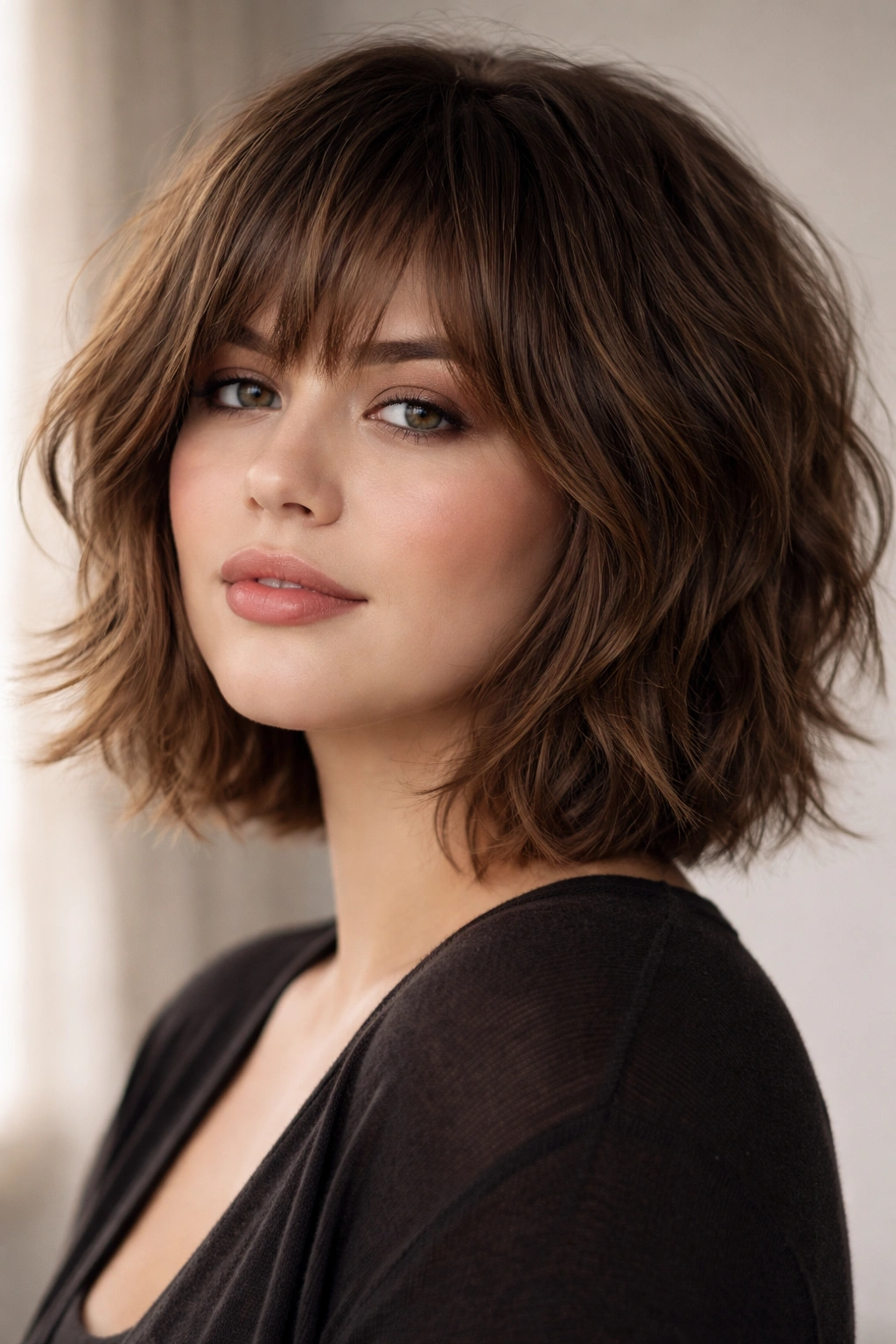
Thick hair and a square-ish face can make a plain bob turn into a helmet. A shaggy bob breaks up that mass. The cut uses choppy pieces, point cutting, and light layers to keep the outline loose so the face does not get buried under one heavy shape.
The best part is the texture. It keeps the eye moving. Instead of one straight line from ear to ear, you get small shifts in length around the cheekbone and jaw. That movement reads as softer and slimmer, especially when the hair has a little wave or bend. If your hair is straight, a quick rough-dry with mousse gives it enough lift to keep the shape from falling flat.
- Ask for point-cut ends instead of a blunt edge.
- Keep the shortest face-framing piece below the cheekbone.
- Use a light mousse or texture spray, not heavy cream.
- Avoid over-thinning fine hair; it can go see-through fast.
One thing I would not do is chase too much shag if your hair is already fine. You end up with a wispy cut that looks tired by noon. A good shaggy bob should feel airy, not sparse. There’s a difference.
11. Side-Swept Crown-Volume Bob
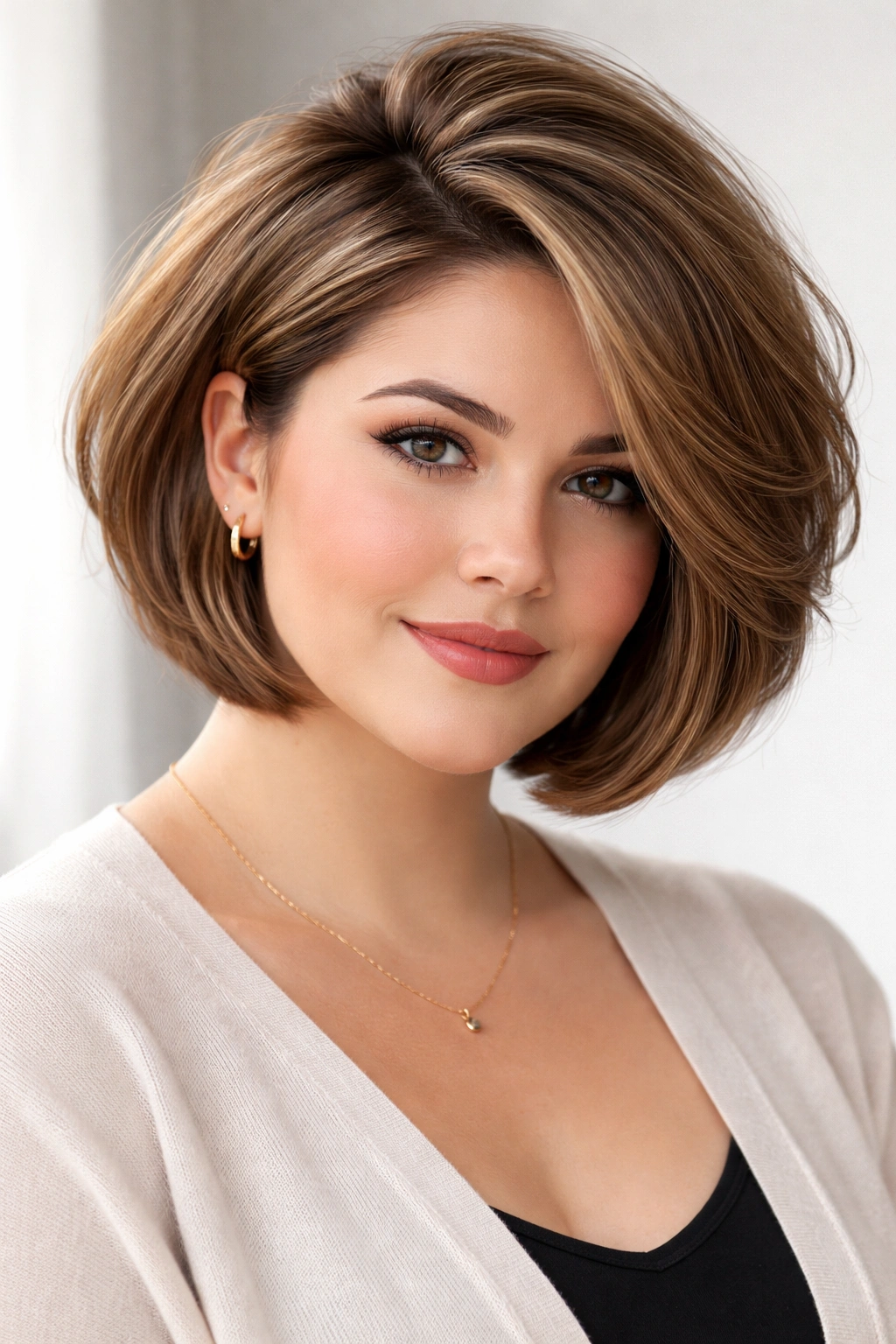
A side-swept bob with volume at the crown is a quietly smart choice for fuller faces. The extra lift on top creates vertical space, which lengthens the face in a way that side width never can. The sweep across the forehead softens the front, while the lifted crown keeps the whole shape from lying too close to the cheeks.
I like this cut on hair that tends to go flat around the roots. A little crown height changes the profile fast. Blow-dry the roots upward, then direct the front section across the forehead and slightly to one side. If the sides are too full, the face looks wider. If the crown has the right lift, everything feels more balanced.
The styling is not hard, but it does need a bit of intention. A vent brush, a root-lifting mousse, and a quick cool shot at the end are enough for most hair types. If you want extra hold, clip the crown up while the hair cools. That’s an old trick, and it works.
What I like here is the mix of softness and shape. It does not rely on severe angles or a harsh fringe. It simply gives the face somewhere to go.
12. Soft Box Bob With a Tucked Nape
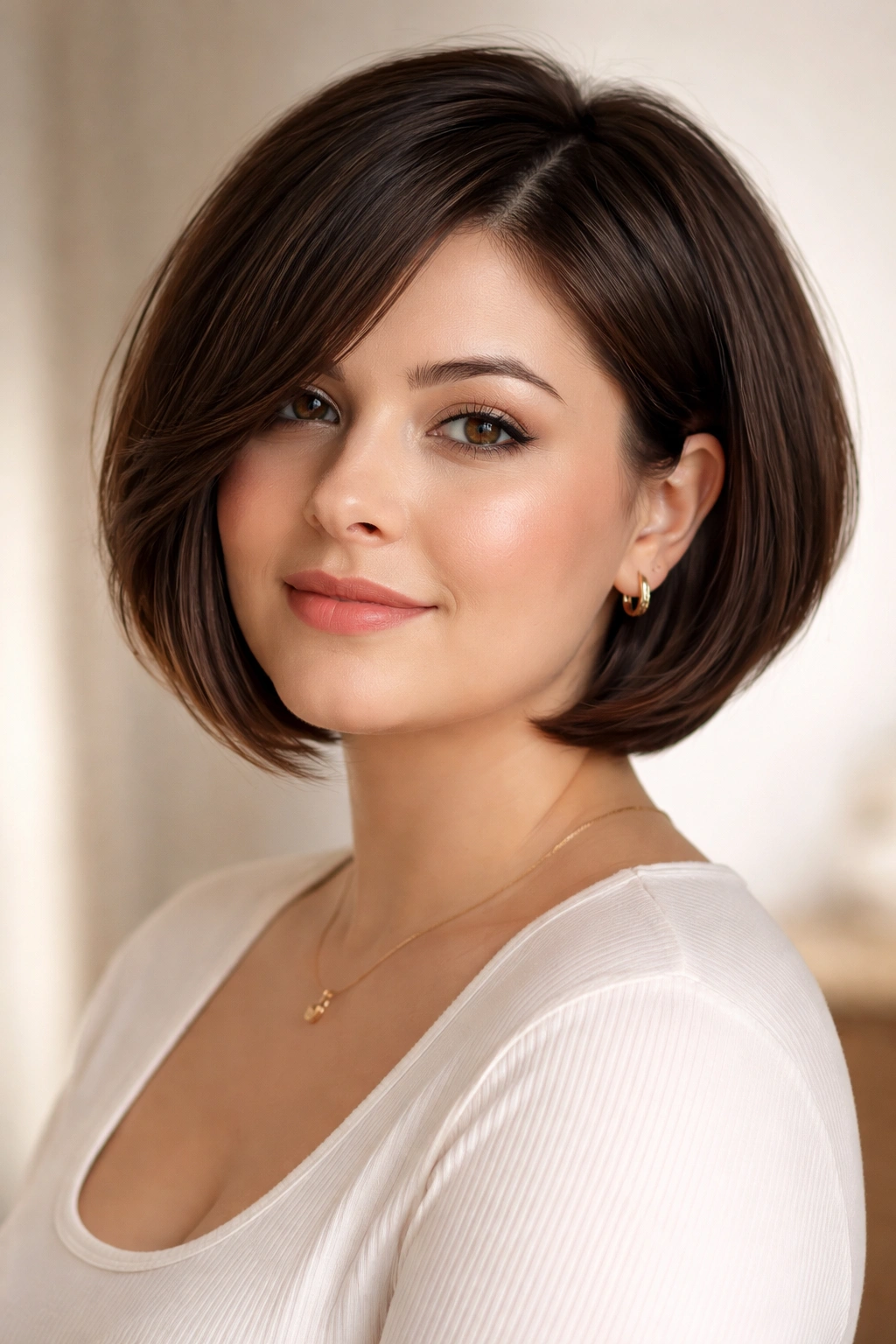
Unlike a sharp box bob, this version keeps the corners soft. That matters more than people think. A hard square shape can sit like a frame around a fuller face and make the cheeks look wider. A soft box bob keeps the structure but eases off the edges so the silhouette feels cleaner.
The nape should sit neatly tucked, with the front just past the chin and the ends beveling in slightly. That little inward bend prevents the side panels from jutting out at the jaw. It also gives straight hair a crisp shape without making it feel severe. Think of it as a disciplined bob, not a stiff one.
This cut is a good fit if you like clean lines and low-fuss styling. It works especially well on hair that lies naturally straight, because the shape shows clearly. If your hair is wavy, you may need a quick flat-iron pass near the front so the corners stay soft instead of flipping outward.
My recommendation: ask for a boxy outline with softened corners and a touch of length in front. That gives you the neatness people like in this style without the wide, flat look that can fight a rounder face.
13. Chin-Length Bob With a Long Fringe
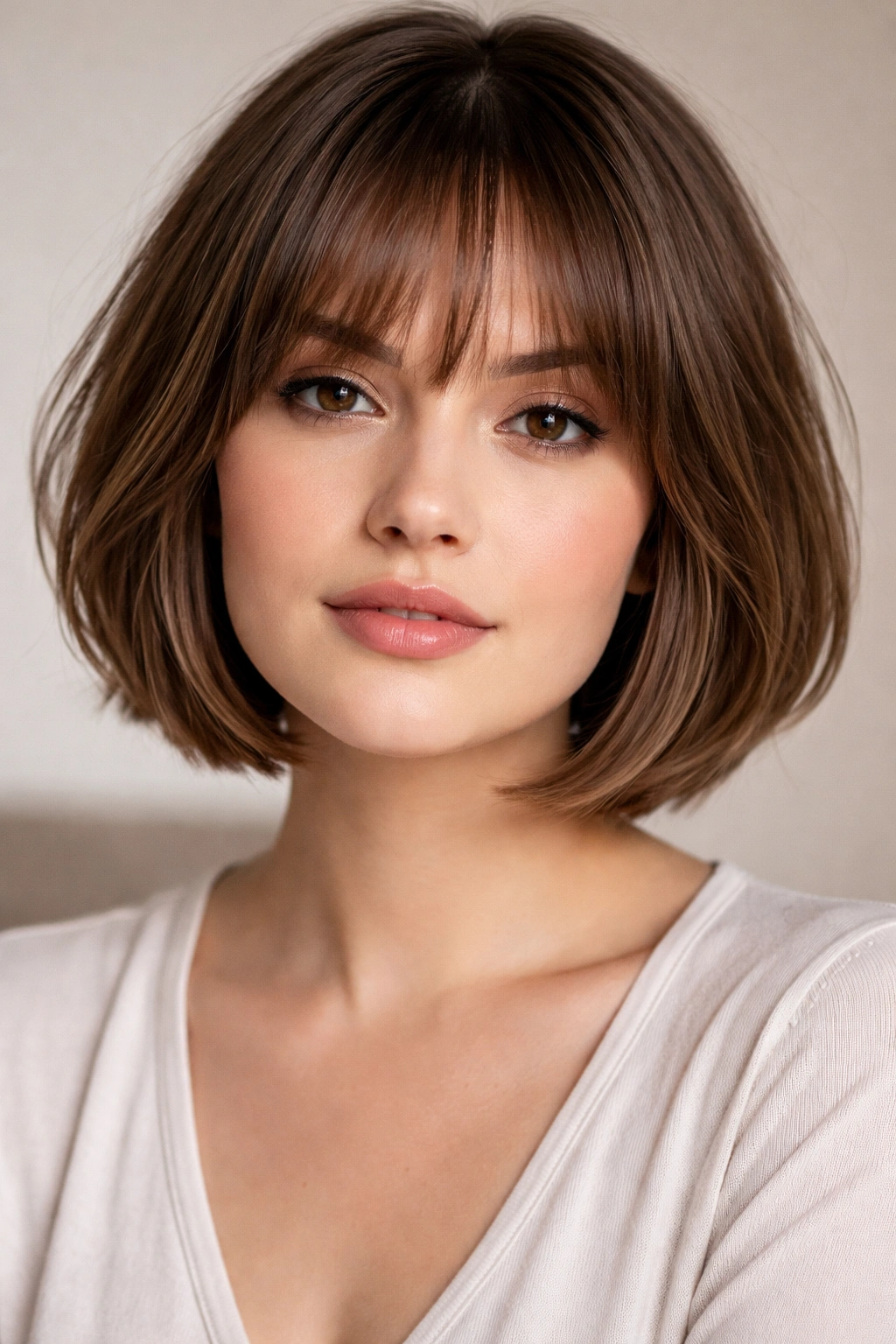
A chin-length bob can still slim the face if the fringe does the right job. The trick is not to make the bangs heavy. A long fringe that skims the brows and opens out toward the temples gives the face a frame without cutting it off. That is what keeps this style from turning blunt and boxy.
Why the fringe matters
The fringe should be light in the center and longer at the sides, almost like a soft curtain that has been shortened a little. That shape draws attention to the eyes and cheekbones instead of the width of the jaw. If the bangs are dense and sit straight across, they can drag the whole cut down. If they’re too wispy, they vanish. There’s a sweet spot.
- Keep the fringe long enough to brush the brows.
- Blend the side pieces into the bob at cheek level.
- Ask for a chin-grazing line, not a jaw-clipping one.
- Use a round brush only at the fringe, not all over the head.
Small warning: this cut can look short on a very short neck if the bob is cut too high. Let the stylist keep a touch of length in front. That tiny bit makes the line feel more graceful.
14. Sleek Glass Bob With a Center Part
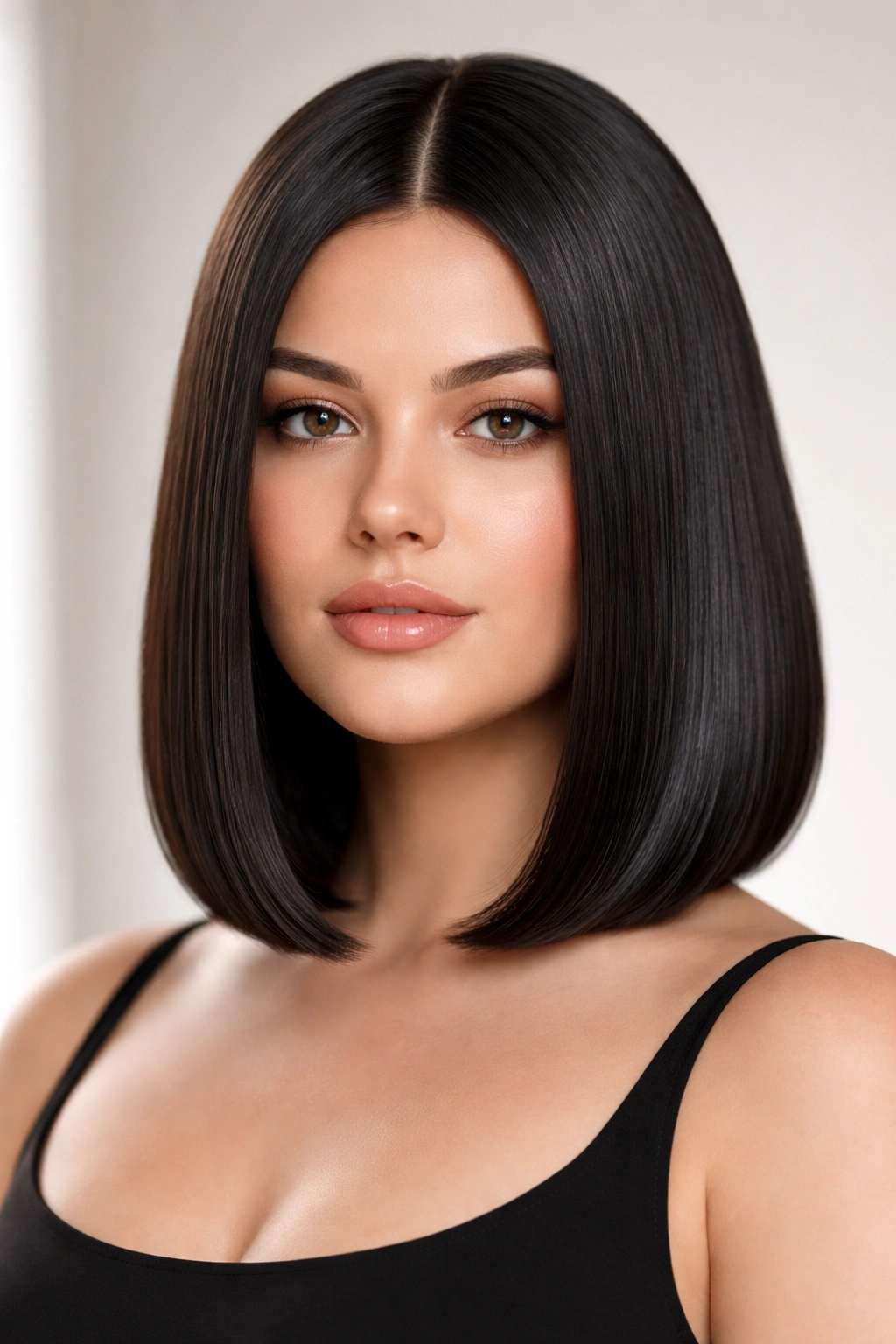
A slick, glassy bob can look slimmer than a fluffy one when the cut is long enough. The shine and the straight line create one clean column from crown to ends, which gives the face a longer outline. The catch is length. If this bob stops at the jaw, it can become too boxy. Past the chin is where it starts working.
A narrow center part helps because it divides the face in a clean vertical line. That division can be flattering on fuller cheeks, especially when the hair is tucked close to the head near the temples. The ends should be polished, not bulky. A slight inward bevel at the tips keeps the line sleek without looking flat.
This is the bob for someone who likes a sharper, more modern finish. It does ask for more upkeep than a wavy or shaggy version. Heat protectant, a good brush blow-dry, and a light serum are part of the deal. Skip heavy oils. They can make the cut look limp, and limp is not the goal.
The wrong glass bob is one that ends too high and spreads out at the sides. The right one falls like a smooth curtain and makes the face seem longer by default.
15. Curly Bob With a Sculpted Shape
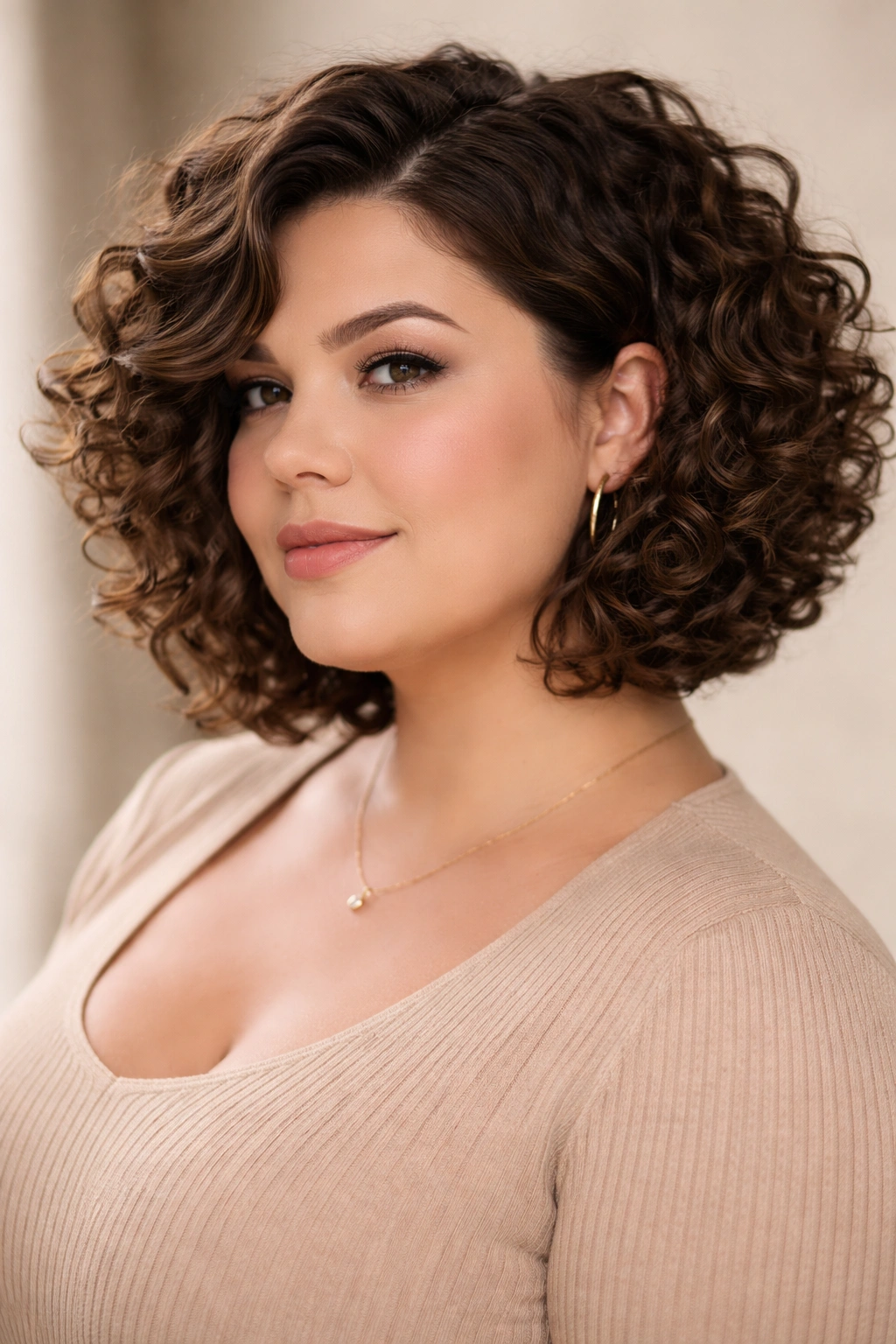
What if your hair is curly, coily, or wavy and you do not want to fight it? A curly bob can be one of the most flattering shapes for a fuller face, but only if the cut respects shrinkage and curl pattern. Cut it wrong, and the sides puff out. Cut it well, and the curls stack into a soft, lifted frame.
The shape should be sculpted while the hair is dry or mostly dry, because curls lie about their length when they are wet. Ask for the longest curls to land below the jaw when stretched. That gives you room for shrinkage. The sides should be shaped so the curl mass does not sit right at the cheeks. A little extra length at the front helps the face look longer.
How to shape the curl line
- Let the stylist cut according to how your curls fall in real life.
- Keep bulk off the temples and cheek area.
- Use curl cream in small amounts so the hair stays defined, not swollen.
- Diffuse on low heat to keep the top from collapsing.
A curly bob has a lot of personality. It also has a short fuse if the cut is lazy. The shape should feel intentional from every angle, especially around the front.
Final Thoughts
The smartest bob cuts for fuller faces all do one of three things: they extend the front, lift the crown, or break up the width with angle and movement. That is the whole game. Not every bob needs to be long, and not every flattering bob needs to be sleek.
Bring photos, sure, but bring the right kind. Show the stylist the hair texture you actually have, not just the shape you like. A cut that looks airy on thick, straight hair can sit heavy on waves, and a cut that looks soft on curls may turn into a triangle if the weight is left in the wrong place.
The best bob should feel lighter the moment you tuck it behind one ear. That is usually the sign you got the shape right.
