



Oval faces make bob shopping a little easier, and a little trickier. Easier because the proportions already give you room to play. Tricker because a bob can either sharpen everything in the right way or flatten the face into one long, forgettable shape.
The best bob cuts for oval faces do one of three jobs: they stop at the jaw and make it look clean, they angle forward and bring the eye toward the cheekbones, or they add texture so the haircut doesn’t sit there like a helmet. That second part matters more than people think. A bob that is technically the right length can still miss the mark if the ends are too heavy, the part is too stiff, or the styling fights the natural fall of your hair.
Hair texture changes the whole story. Fine hair usually likes blunt edges and a little root lift. Thick or wavy hair often looks better with some internal layering so the cut moves instead of bulking out at the sides. And if you’ve got an oval face, you can wear more than one bob length without throwing the shape off. The real question is what you want the haircut to say.
Some bobs look sharp and polished. Some look soft and easy. A few can do both, which is why they stay on my shortlist when someone wants a haircut that frames the face without getting precious about it.
1. Chin-Length Blunt Bob for Oval Faces
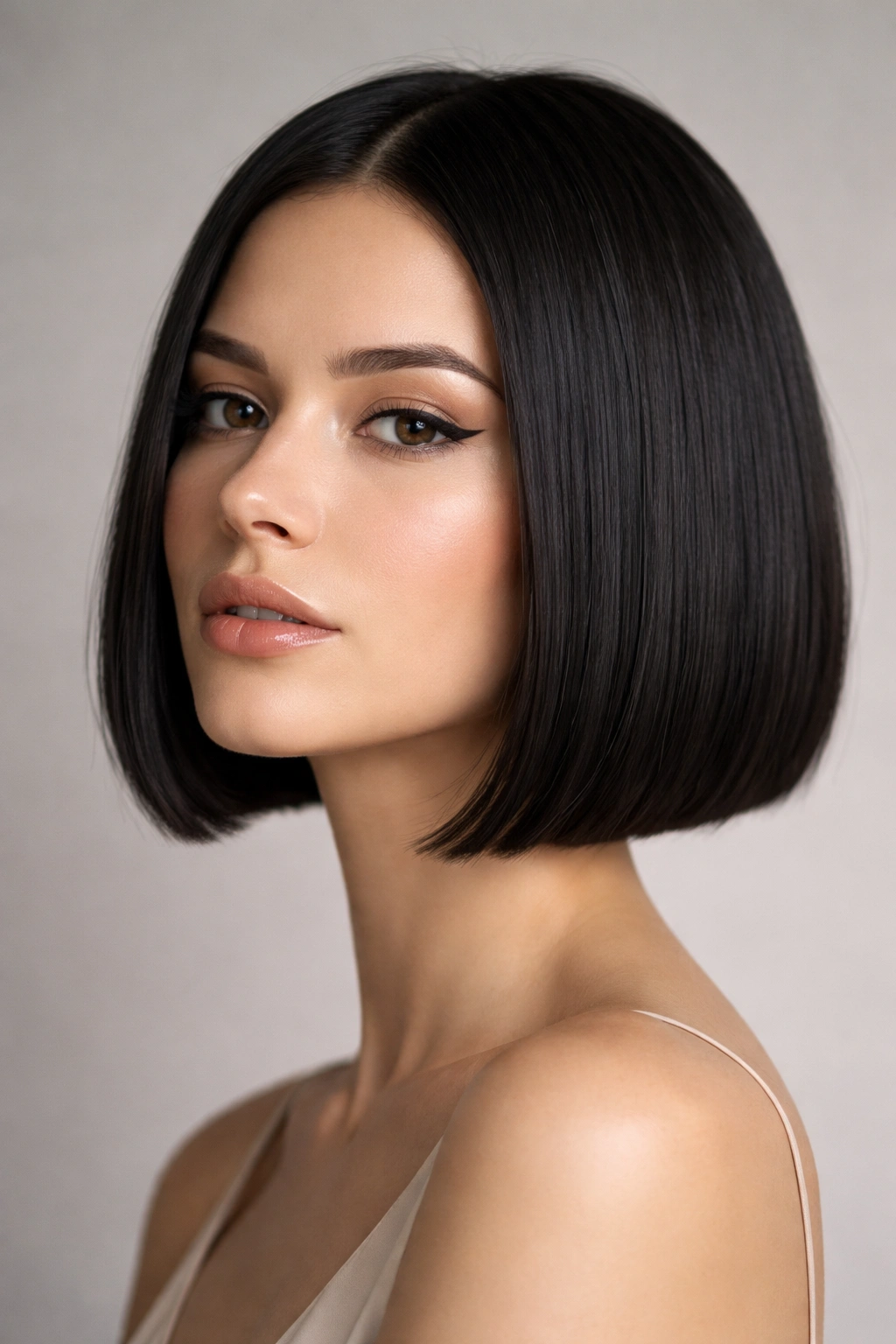
A chin-length blunt bob is one of those cuts that looks simple until you see how much work it does. On an oval face, that clean edge lands right where the jaw starts to matter, which gives the lower half of the face more shape without crowding the cheeks. It feels direct. No fuss, no fluff.
The blunt line is the frame. That is the whole trick.
If your hair is straight or only slightly wavy, this cut tends to look especially strong because the outline stays clear. Fine hair gets a denser look from the blunt edge, while thicker hair gets a cleaner shape if the ends are trimmed with precision. I like this version best when the goal is a neat line that makes earrings, necklines, and cheekbones stand out.
One small warning: don’t let the cut drift too far below the chin if you want the framing effect to stay obvious. Once it slides past that point, it starts acting more like a grown-out lob than a true bob. A quick trim every 6 to 8 weeks keeps the shape crisp.
2. Soft A-Line Bob with a Longer Front
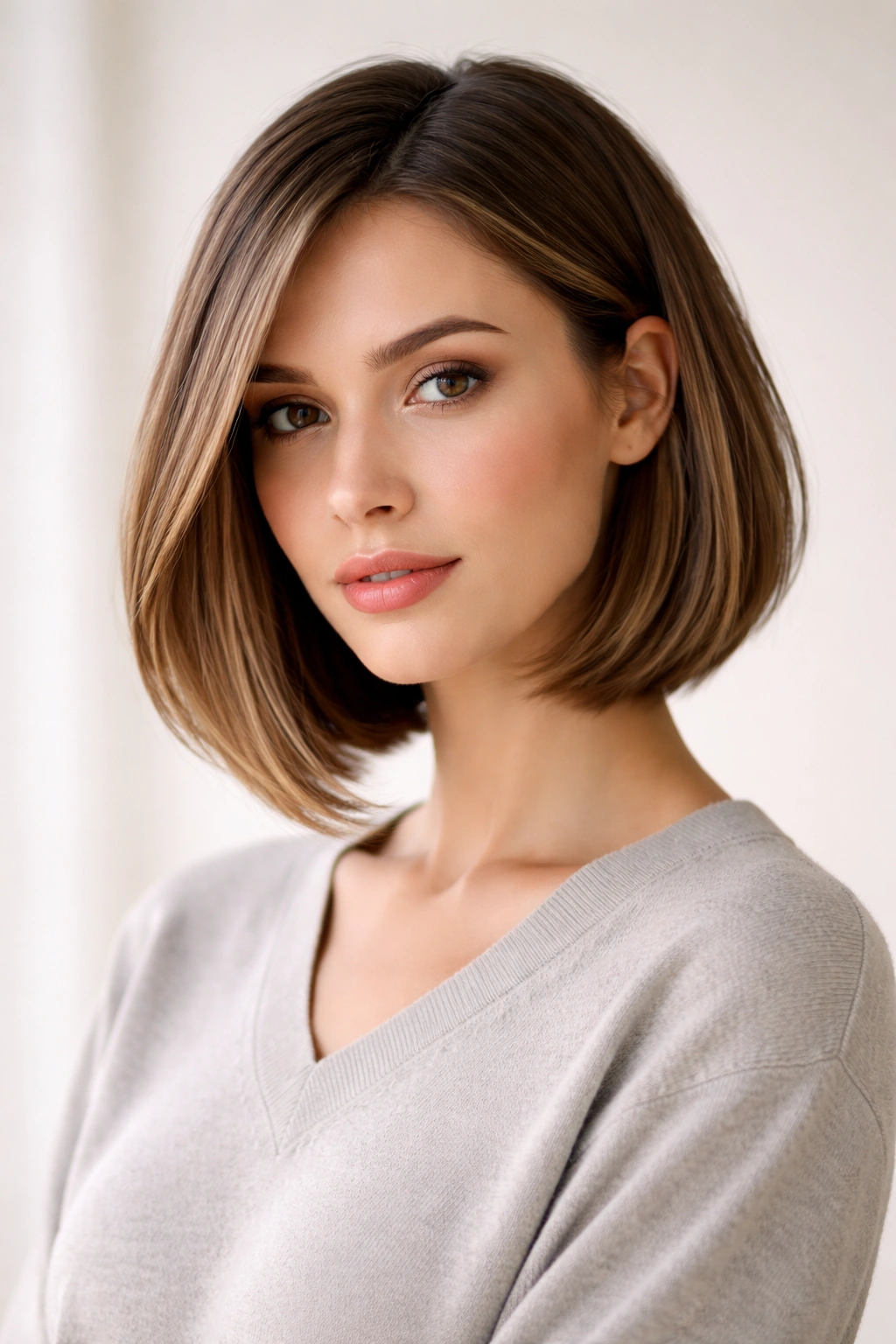
A soft A-line bob is for the person who wants shape without a hard edge. The back sits a little shorter, the front grazes the chin or just below it, and the whole cut leans forward in a gentle slope. On an oval face, that front angle does a nice job of pulling attention toward the mouth and jaw without making the haircut feel severe.
Would this work if you hate drama? Yes. That’s the point.
What Makes It Work
- The front pieces should usually land around the chin or slightly below it.
- The back can sit about 1 to 1½ inches shorter, depending on hair density.
- Thick hair benefits from this angle because it removes some bulk from the back.
- Fine hair needs the angle kept soft, or the front can start to look stringy.
The cut is especially useful if you like to tuck one side behind your ear. That little move shows off the angle in a way that straight-down styling never does. If you want movement without losing the clean bob feel, this is one of the smartest choices on the list.
3. French Bob with Short Bangs
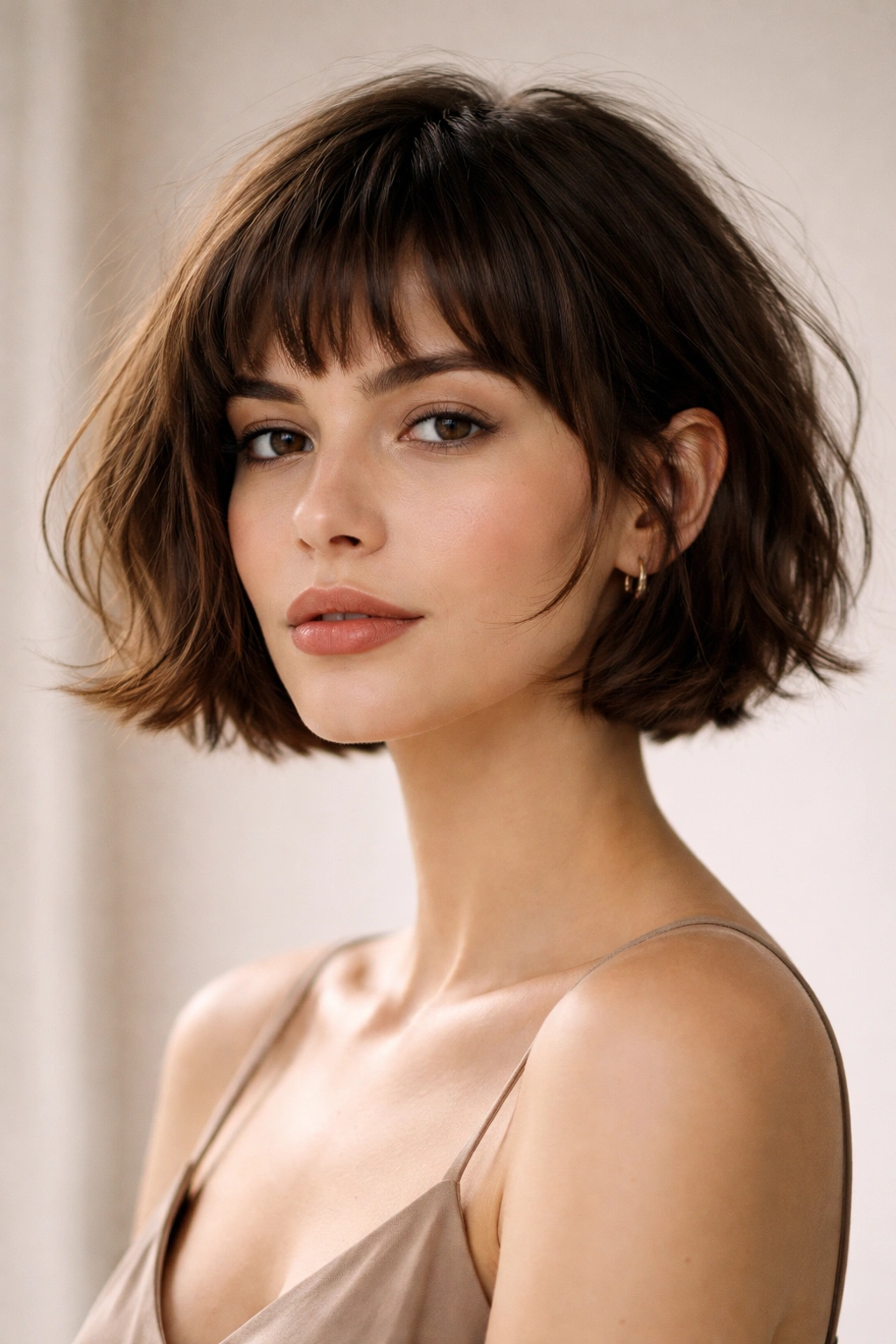
A French bob feels a little cheeky in the best way. It usually sits around the cheekbone to jaw area, and the short fringe gives it attitude that a longer bob just can’t fake. On oval faces, that short front edge can bring the eyes forward and make the whole haircut feel sharp without turning boxy.
Why It Flatters
The shorter length opens up the neck and leaves the face visible, which is useful on an oval shape because you don’t need much correction. The bangs are the interesting part. A short fringe draws attention upward and can make the brows and eyes feel more central, especially if the rest of the cut is kept light and a little tousled.
How to Wear It
A tiny bit of texture paste at the ends goes a long way. So does an air-dry if your hair has some natural bend. You do not want this cut flattened into a stiff cap. It needs a little separation, a little mess, and a bit of movement around the temples.
If you never wear bangs, this may feel too committed. That’s fair. But if you want a bob with personality, the French version has plenty.
4. Collarbone-Length Lob with Loose Ends
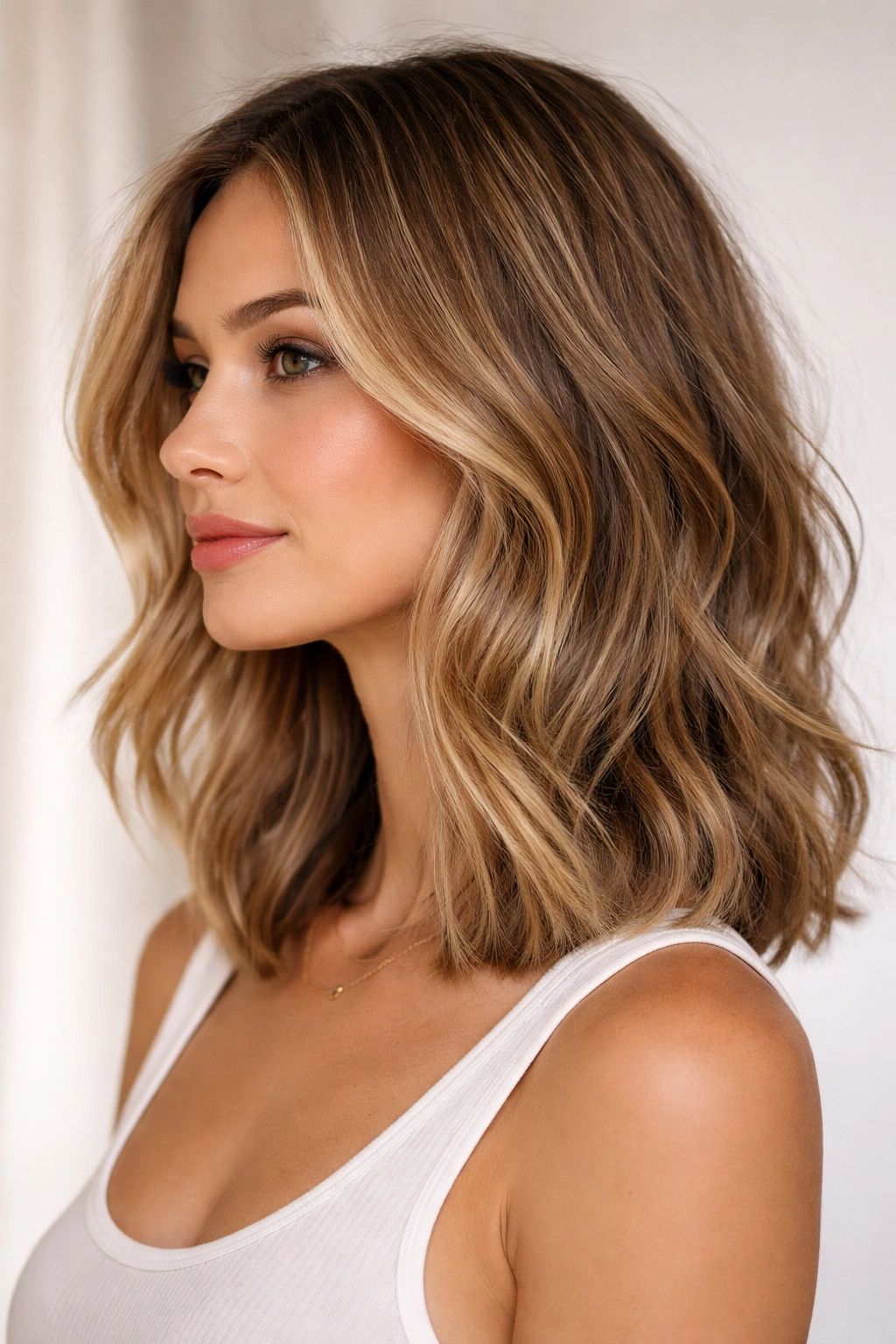
If you’re not sure how short you want to go, the collarbone lob is the safest place to start, and I mean that in a good way. It still reads as a bob, but the extra length gives you room to curl it, tuck it, wave it, or leave it plain. On an oval face, that length usually lands in a flattering spot because it skims the line between the jaw and the neck.
The nice thing about this cut is how little it fights you. If your hair naturally bends outward at the ends, the lob can handle that better than a shorter blunt bob. If your hair is straight, a small bend at the bottom creates enough shape to keep the look from getting flat. You don’t need a lot.
A few useful details matter here:
- Keep the longest pieces near the collarbone, not past it.
- Ask for soft, loose ends rather than heavy layering.
- Add waves from mid-length down if you want more framing near the face.
- If you wear glasses, this length keeps the frame from getting crowded.
This is the bob for people who want movement, options, and a haircut that doesn’t demand a complicated morning.
5. Sleek Side-Part Bob for Oval Faces
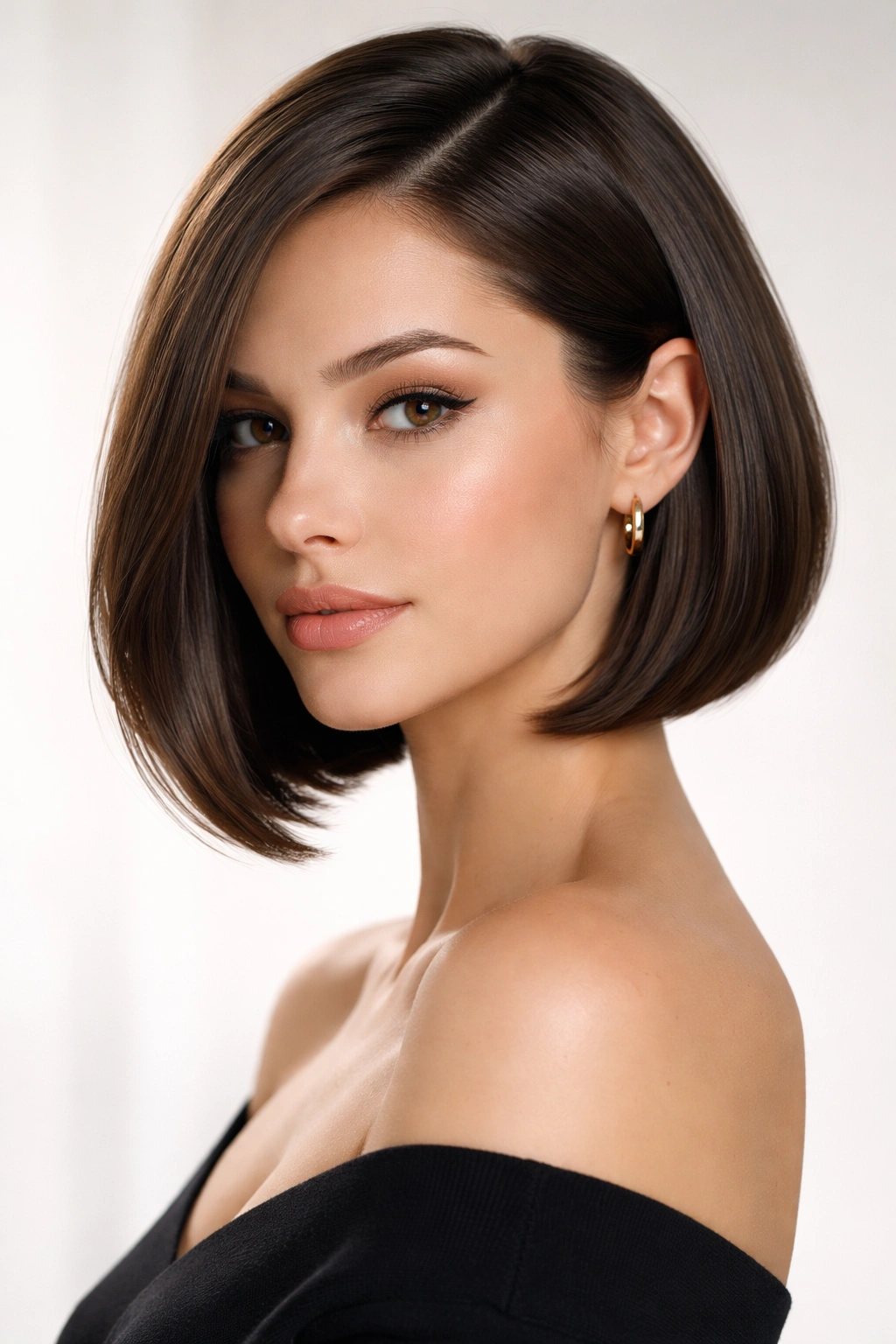
A side part changes the whole silhouette. With an oval face, that matters because the shape already has symmetry on its side; a deep part gives you a little asymmetry without throwing anything off. The result is sleek, a touch dramatic, and often more face-framing than a centered part ever is.
I like this cut when the hair is naturally straight or when someone is willing to spend a few minutes with a blow dryer and a flat brush. The line of the part adds lift at the crown, which is useful if your hair lies flat on top. Then the bob itself can sit at the jaw or chin and sweep across one side in a way that feels deliberate.
The best version keeps the ends smooth, not pin-straight to the point of looking severe. A light serum on the ends helps, but don’t overdo it. Too much product and the whole thing collapses into a wet ribbon. Too little and the cut can frizz at the sides. That in-between point is where this bob really works.
6. Layered Bob with Feathered Ends
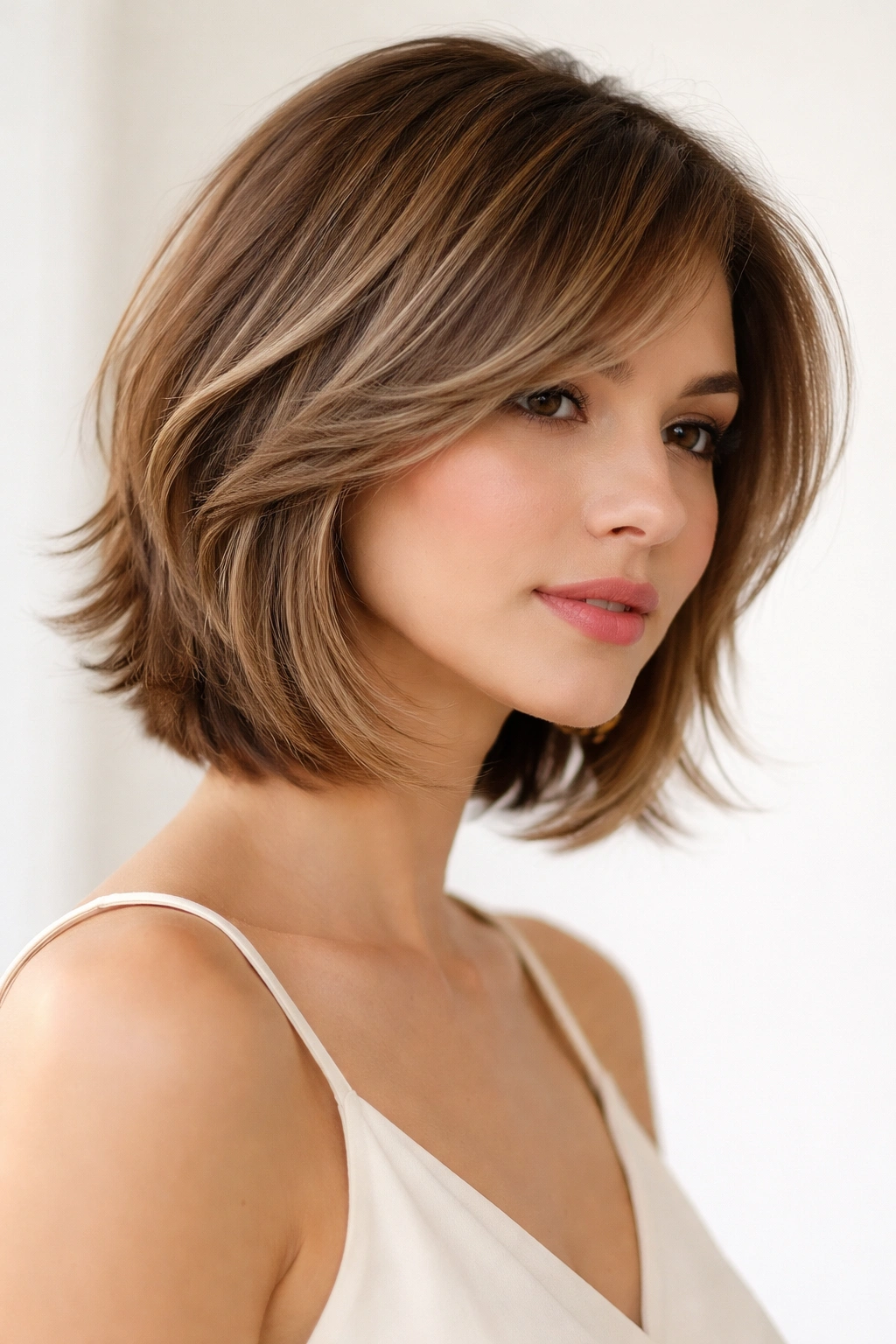
Unlike a blunt bob, this cut gives the hair room to breathe. The layers are soft, the ends are feathered, and the outline is still bob-like without feeling boxed in. On an oval face, that matters because you can keep the jaw visible while taking some heaviness out of thick or coarse hair.
Why It Feels Different
The movement comes from the edges, not from a choppy top layer. That’s the part a lot of people get wrong. If the layers start too high, the haircut can puff out at the cheeks and widen the face in a way you probably don’t want. Keep the shaping lower, around the cheekbone to jaw area, and the result stays light.
Ask For This
- Soft internal layers, not short surface layers.
- Feathered ends that move instead of stacking.
- A perimeter that still reads as a bob when it air-dries.
- Slightly longer front pieces if you want more framing.
This cut suits thick hair, coarse strands, and anyone tired of their bob sitting like a brick. It also buys you a little forgiveness on days when you don’t style it perfectly, which is more useful than people admit.
7. Curly Bob Shaped at the Cheekbones
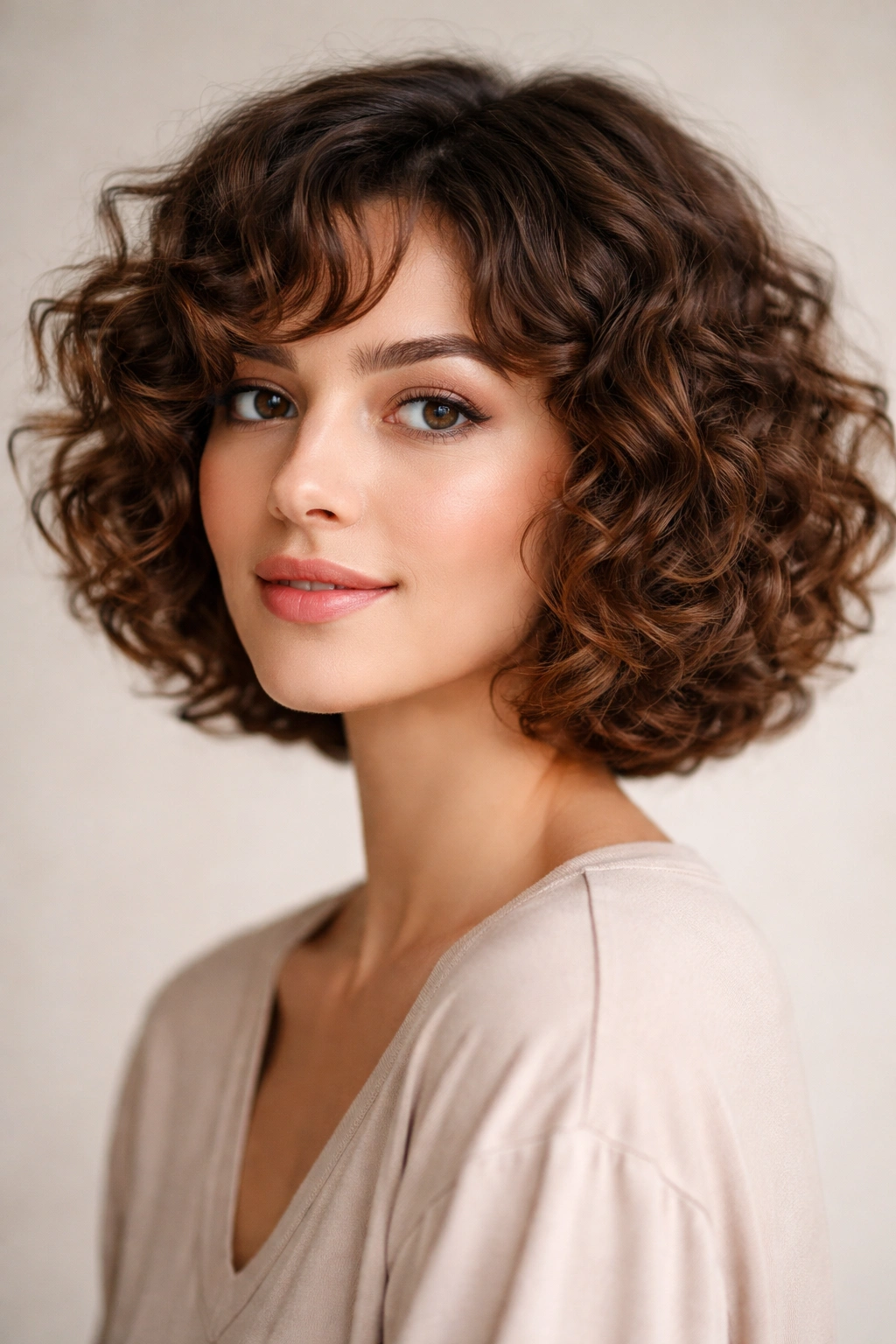
What happens when curls meet an oval face? You get a lot of room to show off shape, but only if the cut respects the curl pattern. A curly bob that’s shaped around the cheekbones can frame the face beautifully because the volume sits where your features already have definition. Too low, and the curl mass drags downward. Too high, and the cut can turn round in a way that swallows the face.
Cut Shape
Ask for a dry cut or a curl-by-curl shape if your texture is loose to medium curly. The goal is to let the curls spring into their own form rather than forcing them into a straight-line bob that fights back the second you wash it. The front pieces can land near the cheekbones, which creates a nice halo around the face.
Styling
A curl cream or light gel, worked through wet hair, usually does enough. Then a diffuser on low heat sets the shape without blasting the curl pattern apart. Scrunching a little at the ends helps, but don’t keep touching it once it starts drying.
What To Avoid
Heavy thinning shears. They can leave curls frizzy at the sides and make the cut look uneven.
8. Asymmetrical Bob with a Longer Front Side
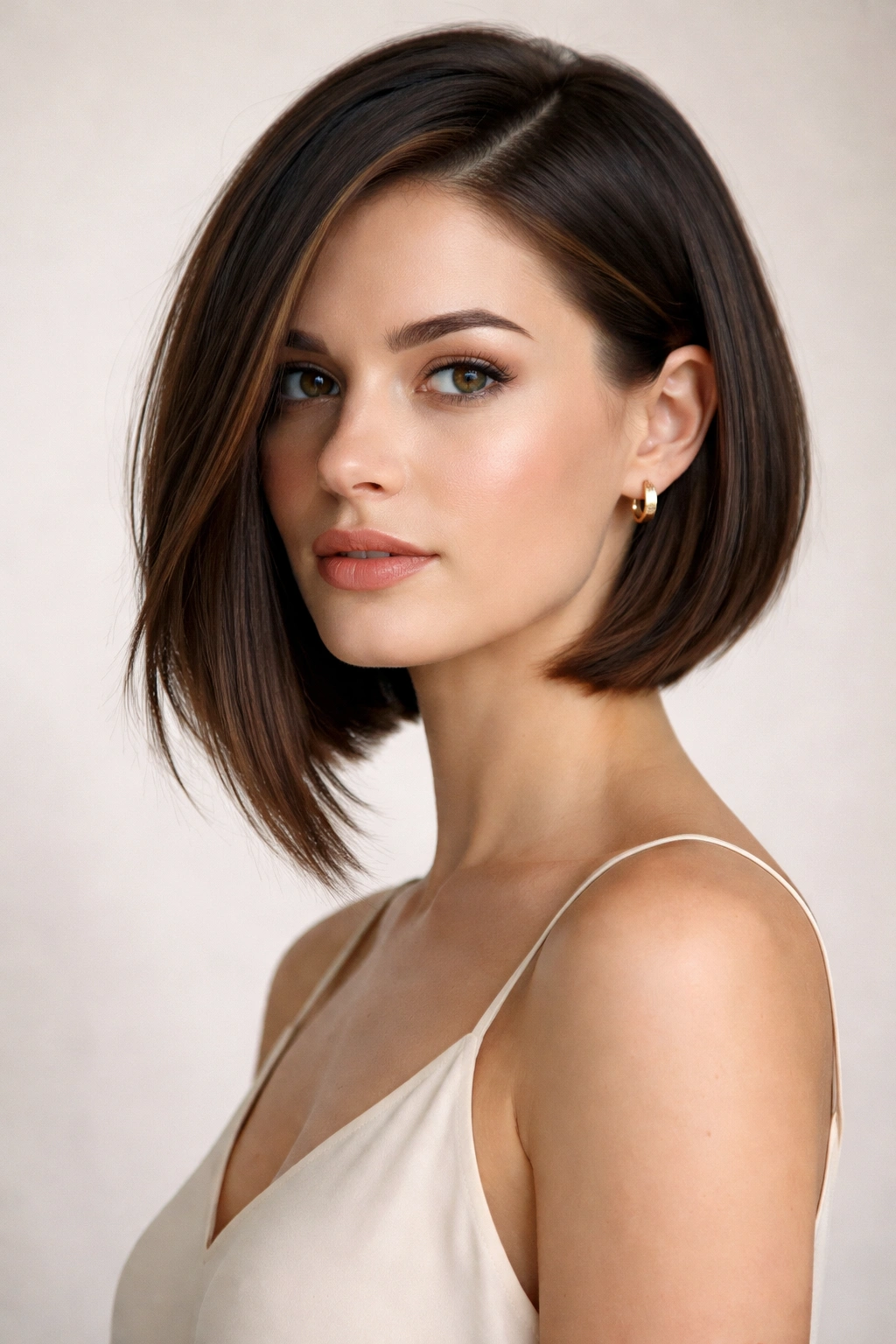
A little asymmetry goes a long way on an oval face. This bob keeps one side longer than the other, and that diagonal line naturally draws the eye downward and forward. It gives the haircut movement even before you style it, which is why people who want a more modern shape often land here.
The difference between the two sides does not need to be huge. One to 2 inches is usually enough to read clearly. Go too far and the cut starts feeling gimmicky. Keep it subtle and the shape looks intentional, not loud. That’s the sweet spot.
This style works especially well if you like sleek finishes or want the haircut to look interesting from the side. It also plays nicely with a deep part, since the longer side can sweep across the cheek and soften the jaw. I’d choose it for straight to slightly wavy hair, because the angle shows best when the outline stays visible.
One catch: it needs regular trims. The shape loses its edge faster than a symmetrical bob, and once the lengths start to blur together, the whole point disappears.
9. Box Bob with Clean Corners
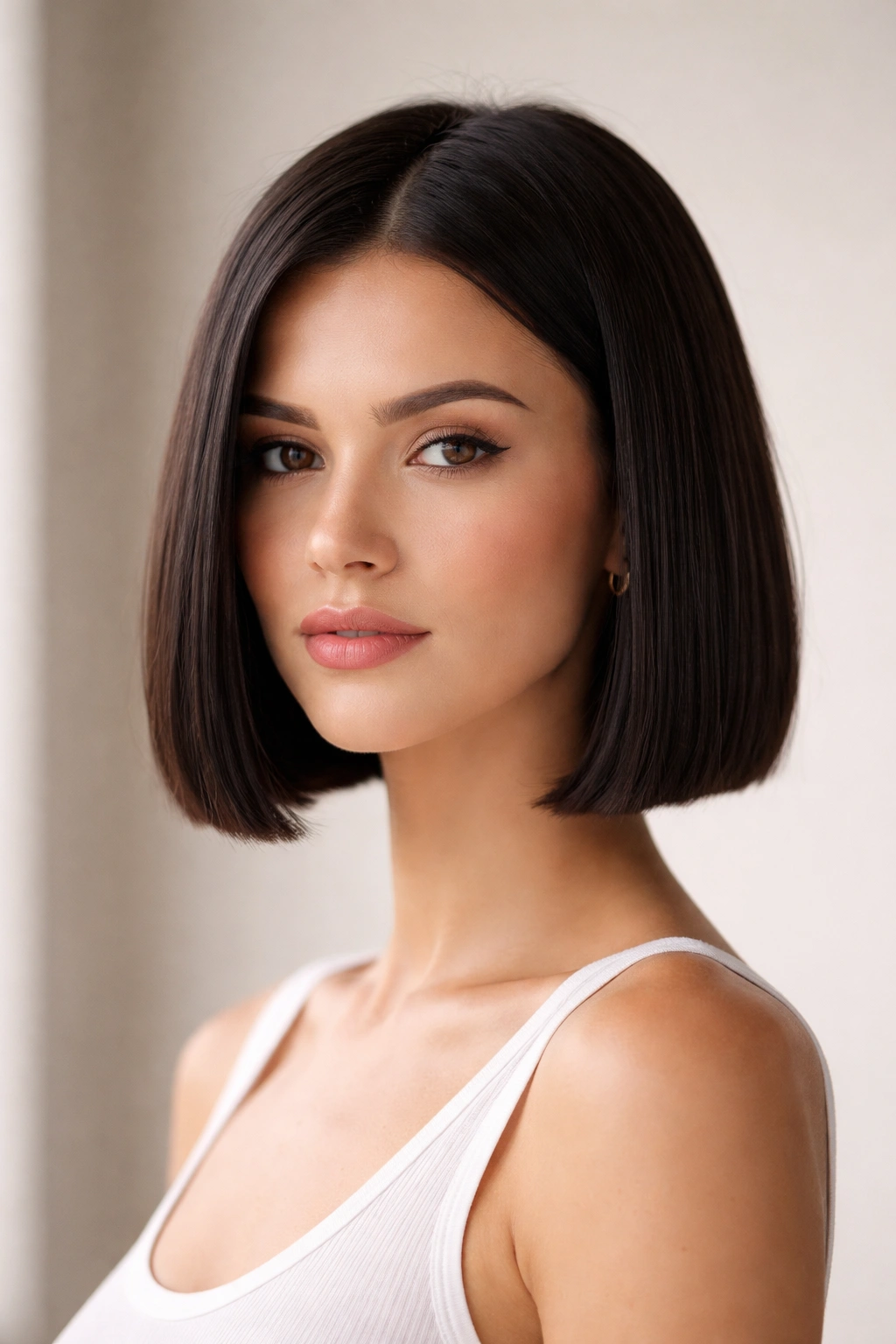
A box bob is the blunt cousin with sharper opinions. The perimeter sits clean and straight, often around the jaw, and the corners stay visible instead of being rounded off. On an oval face, that squared-off shape can make the cheekbones look more prominent and the jaw feel more defined.
This cut is a strong choice if your hair is straight, dense, or naturally heavy. It holds shape well and looks especially good when the ends sit crisp rather than soft. If you like structure, this is your friend. If you want softness, probably not.
Key Details
- Keep the length around chin to jaw level.
- Ask for a blunt perimeter with minimal internal layering.
- Let the corners sit a touch longer than the center if you want more edge.
- Style with a flat brush or a quick bend at the ends, not big curls.
The corners should read as corners. If they get too rounded, the box bob loses the thing that makes it interesting. It’s a clean, graphic cut, and the oval face gives it a nice canvas to sit on.
10. Shaggy Bob with Broken-Up Texture
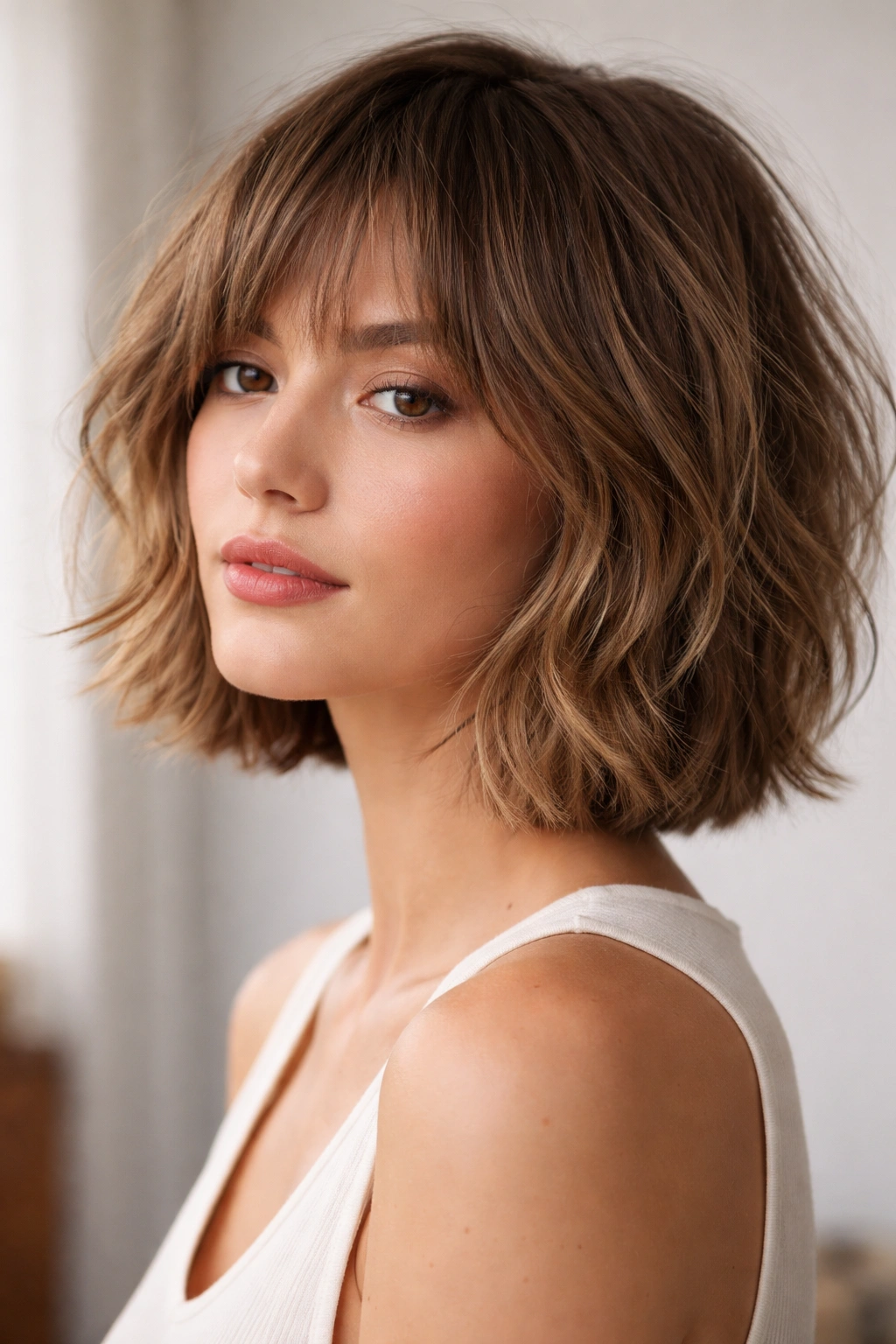
Why does a shaggy bob look so easy? Because it isn’t trying to hold one perfect line. The movement is built into the cut, with broken-up ends and airy layers that keep the shape from sitting flat against the face. On an oval face, that texture can soften the outline without hiding the features.
This version is especially useful if your hair tends to get puffy at the sides or if you like the feel of second-day hair more than freshly blown-out hair. A little dry texture spray, a rough blow-dry, or even air-drying with some scrunching can give it the right lived-in feel. The haircut does not need to be polished to work.
It’s a good pick for wavy hair and medium-density strands that need a little release around the jaw. If you have very fine hair, you may want to keep the layers lighter so the shape doesn’t collapse. If you have very thick hair, the shaggy texture keeps the sides from getting triangular.
And yes, it can still look neat. Messy doesn’t have to mean careless.
11. Inverted Bob with Lift at the Back
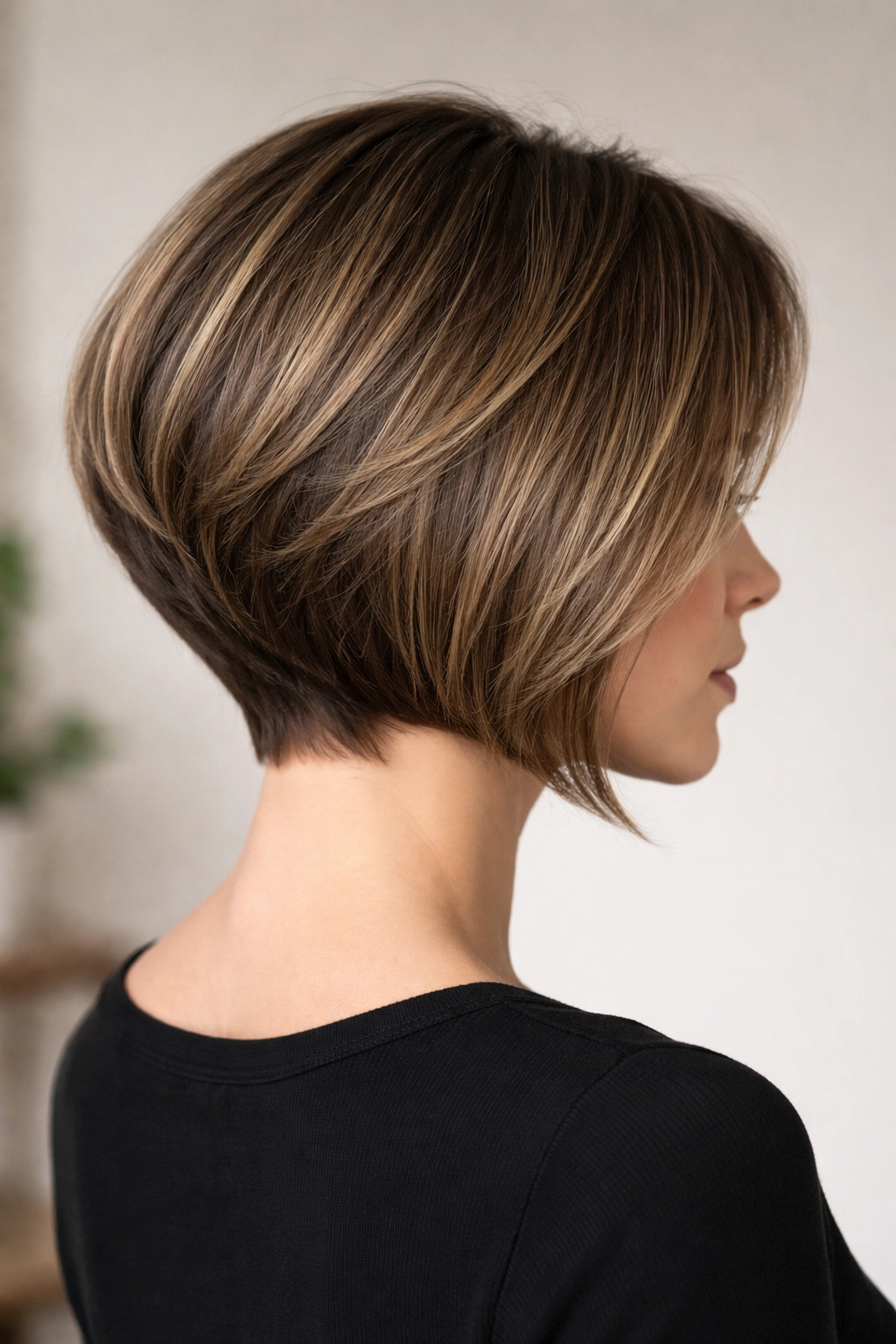
The inverted bob is one of the smartest ways to add structure to an oval face without messing with the overall balance. The back sits shorter and higher, which gives lift near the nape, while the front drapes longer toward the chin. That contrast creates a clean line from back to front, and it gives the neck a longer look.
I like this cut when the hair needs shape more than softness. It has a bit of built-in architecture, which is useful if your strands fall flat at the back of the head or if you want the haircut to look styled even on low-effort days. It also photographs well from the side, though that’s not the reason to wear it. The real win is the silhouette.
The catch is maintenance. The angle grows out fast, especially if your hair grows straight or heavy. And if your texture is curly, the shape needs a stylist who knows how your curl pattern moves when it dries. Otherwise the back can puff out and ruin the line.
For oval faces, though, the front length usually lands in a flattering zone. It frames without crowding.
12. Bob with Curtain Bangs for Oval Faces
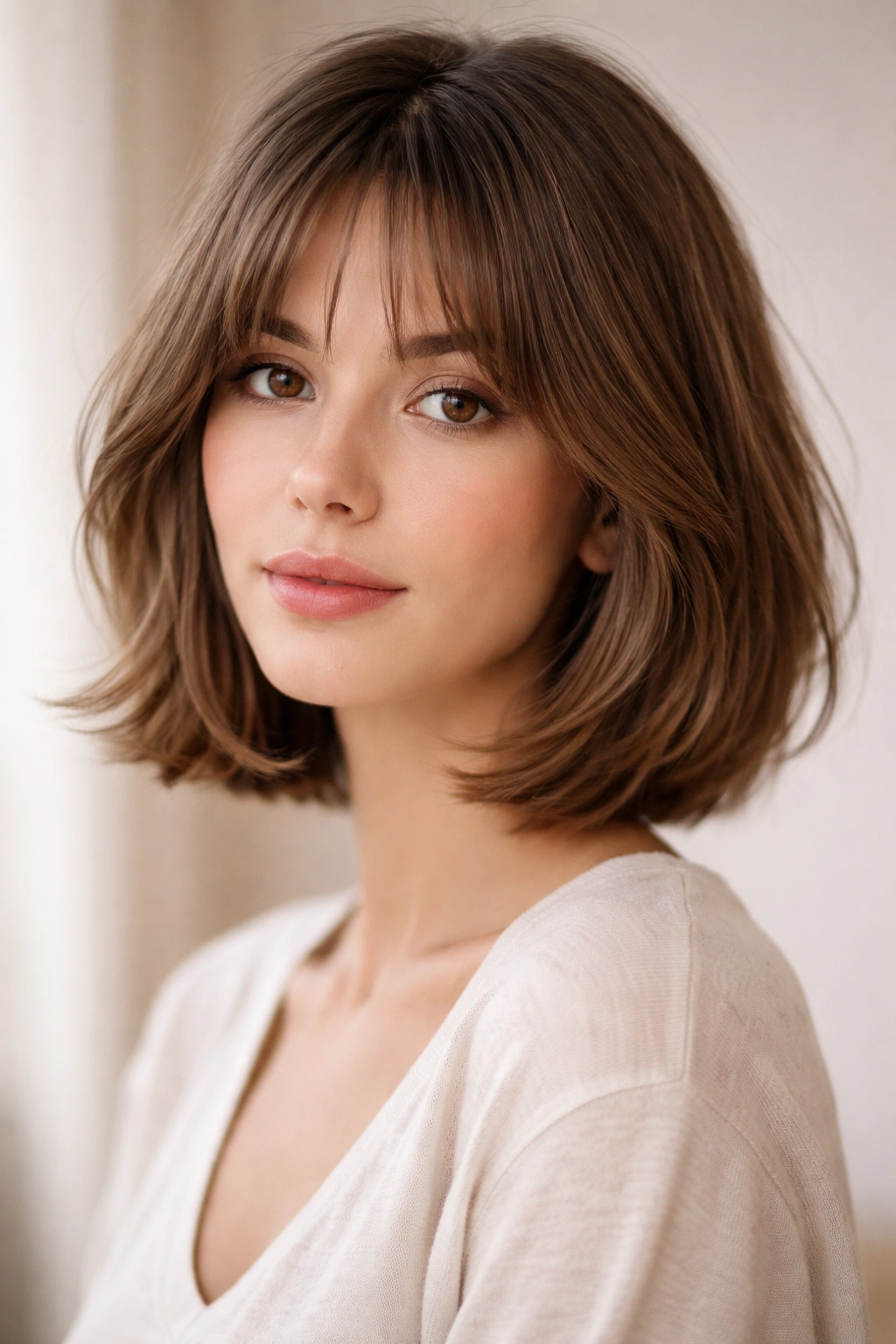
Curtain bangs can make a bob feel softer without hiding your face. They split down the middle, skim the brow area, and taper toward the cheekbones, which gives oval faces a nice bit of movement around the eyes. The whole cut feels less rigid because the fringe opens the front instead of closing it off.
Face Frame
The best curtain bangs start around the eyebrow or cheekbone, depending on how much forehead you want to show. A longer face-framing piece at the sides helps the bangs blend into the bob instead of sitting like a separate piece. That blend matters. Without it, the haircut can look chopped in half.
Styling Note
A round brush and a quick blow-dry away from the face are usually enough. You want the bangs to curve, not curl. If they flip too much, they can feel dated fast.
Best Match
- Straight or wavy hair with a little bend.
- Oval faces that want softness around the eyes.
- Bobs that hit the jaw or collarbone.
- Anyone who wants a fringe without a blunt forehead line.
I’d avoid this combo if you hate styling bangs at all. They are forgiving, but not invisible.
13. Tucked-Behind-the-Ears Rounded Bob
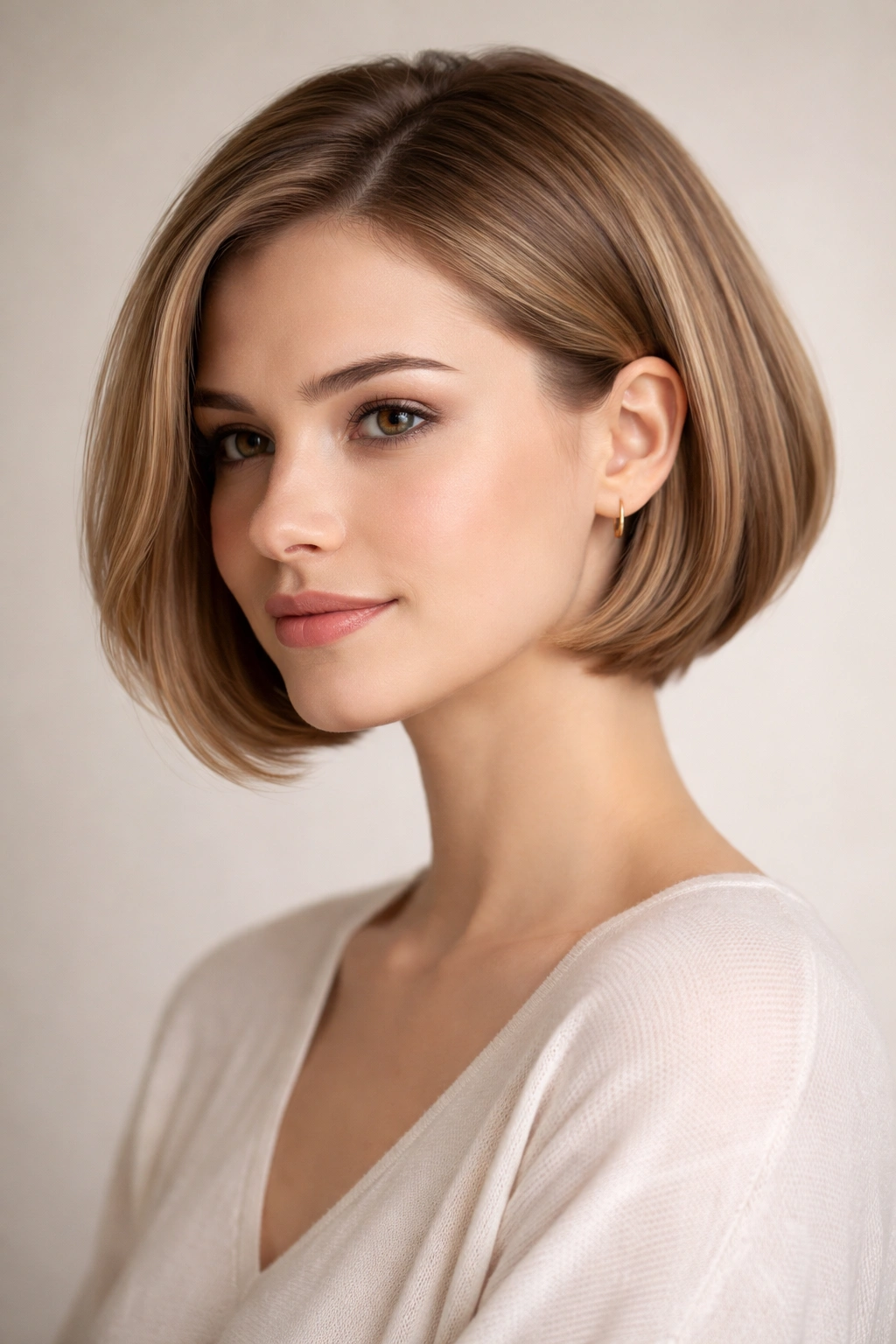
This is the haircut for someone who is always tucking hair behind one ear, then fixing it again five minutes later. A rounded bob with enough length to tuck cleanly can look neat, soft, and a little polished without feeling stiff. On an oval face, that tucked shape opens the cheekbone area in a nice way and keeps the face from getting buried under too much hair.
The rounded outline matters here. Instead of a hard boxy edge, the perimeter bends gently toward the jaw, which makes the whole cut feel easier to wear. It’s a good middle ground for people who want structure but don’t want the flatness of a blunt cut. Hair that sits somewhere between straight and wavy tends to handle this especially well.
A few things make this cut work:
- The sides need enough length to stay tucked without fighting back.
- The top should have a little height so the shape doesn’t go flat.
- Heavy layering can ruin the rounded outline.
- Earrings look better with this cut than you might expect.
If you like to show your face rather than hide behind your hair, this bob is quietly excellent.
14. Wavy Bob with Airy S-Bends
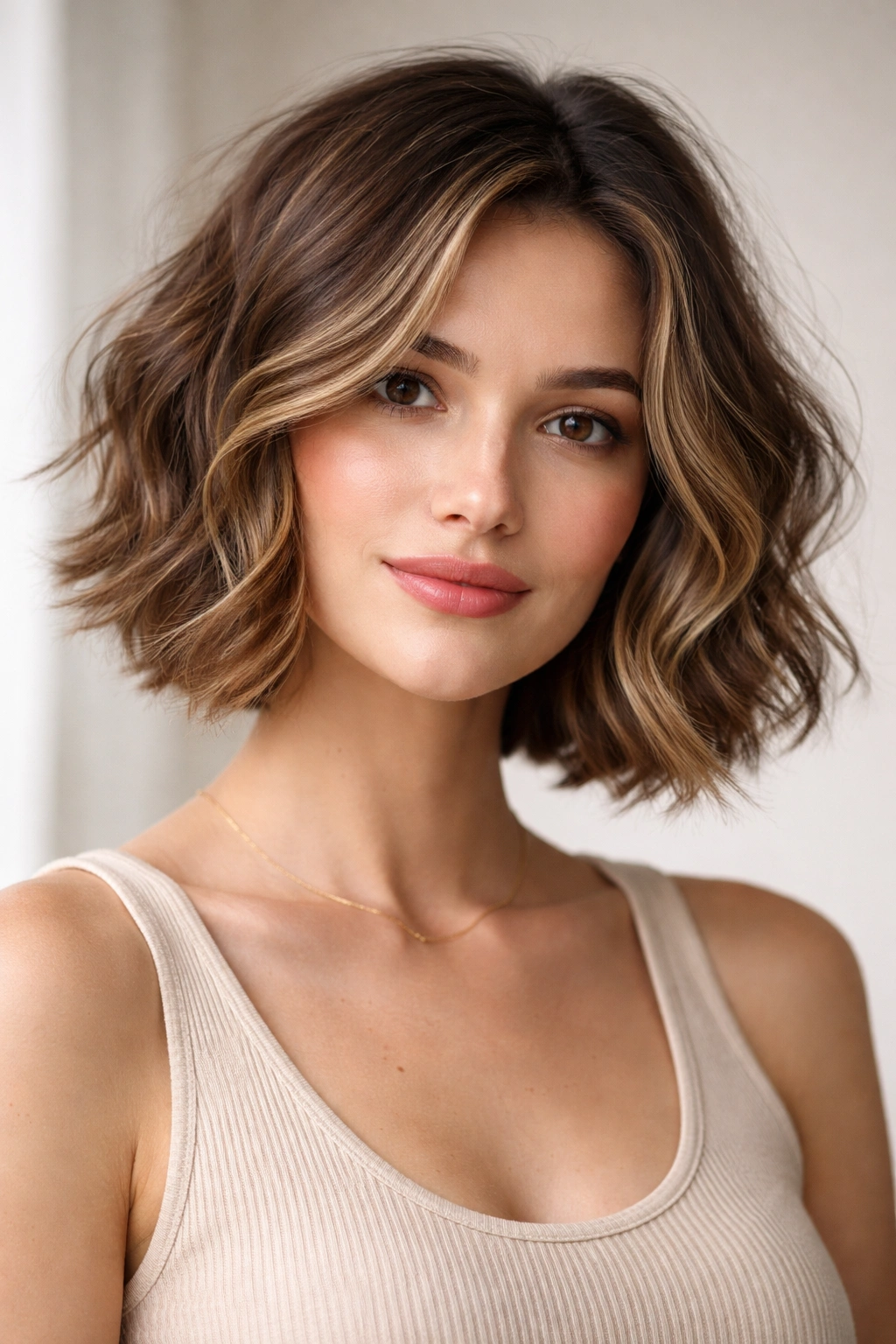
A straight bob and a wavy bob are cousins, not twins. The wavy version adds width in the places that help an oval face most, especially around the cheekbones and jaw. Soft S-bends keep the line moving, which makes the haircut feel less formal and a lot easier to wear on casual days.
This cut works well when your natural texture already has some bend, because you can lean into it instead of fighting it. If your hair is straight, a 1-inch curling iron or a flat iron bend can create soft curves without turning the whole bob into ringlets. The key is keeping the waves loose and leaving the ends a little undone.
Compared with a sleek bob, this one looks softer and less sharp. That can be a plus if your face is already defined and you want the hair to relax the shape a bit. It also suits people who don’t want to style every strand into place. A little frizz at the ends is not the enemy here.
If you want the cut to feel easy but still face-framing, this is a strong pick.
15. Deep Side-Part Bob with Side-Swept Fringe for Oval Faces
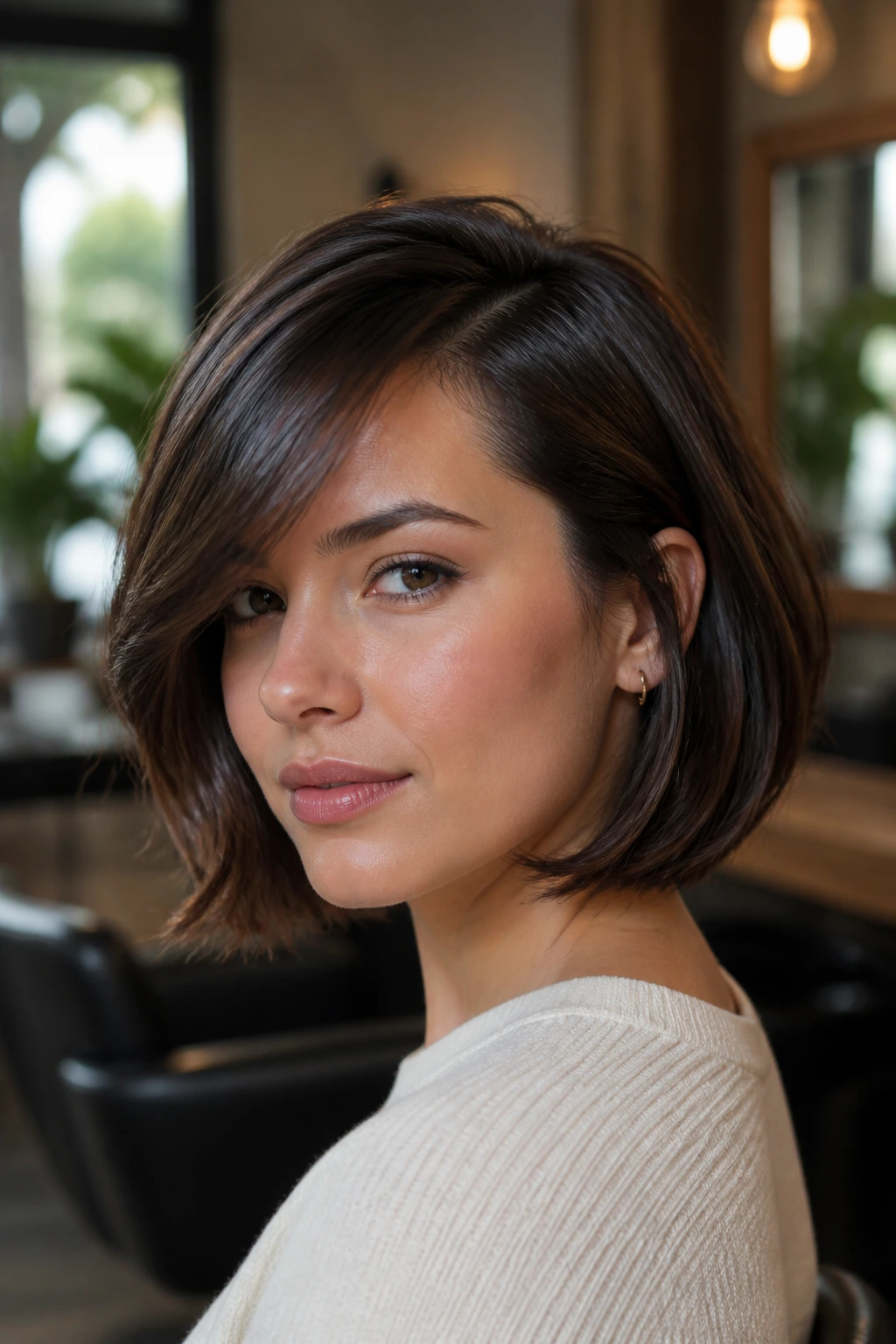
If I had to pick one bob that gives the most face-framing effect without going short-short, this would be high on the list. A deep side part creates lift at the crown, the fringe sweeps across one side of the forehead, and the bob itself can sit at the jaw or just below it. The result is soft, directional, and flattering in a way that doesn’t feel overworked.
The side-swept fringe does a lot of quiet work. It softens the forehead, points the eye toward the cheekbones, and gives the haircut a little swing when you move. On an oval face, that matters because the face already has balance; the fringe adds character without correcting anything that needs correcting.
This version suits straight, wavy, and even lightly curly hair as long as the part can hold. If your hair tends to fall flat at the root, use a touch of volumizing mousse before blow-drying the front away from the face. If your hair is thick, ask for enough internal removal so the fringe doesn’t feel heavy.
This is the bob I’d choose for someone who wants the safest kind of drama: visible, flattering, and easy to live with.
