



A good bob does not try too hard.
That is part of the reason bob cuts for women keep coming back in salons, in street style photos, and in real life, where hair has to survive wind, coffee runs, humid mornings, and the occasional bad blow-dry. The shape does a lot of the work for you. A clean line at the jaw, a soft curve under the chin, or a little angle through the front can make hair look deliberate even when you did very little to it.
The best part? A bob can be sharp, soft, polished, messy, sleek, or a little rebellious without losing its shape. That flexibility is why the cut hangs around while flashier styles fade out. A blunt chin-length bob reads crisp. A French bob feels breezy. A layered bob for fine hair can fake thickness where there was none an hour earlier. Small changes, big difference.
And the details matter. Where the weight sits, how the ends are cut, whether the front grazes the jaw or the collarbone, whether the fringe is blunt or feathered — that’s where a bob either looks expensive or just looks like a haircut. The styles below are the ones that keep earning a second look because they wear well, grow out decently, and still feel current even when the rest of your hair decisions are a mess.
1. Classic Chin-Length Bob for Women
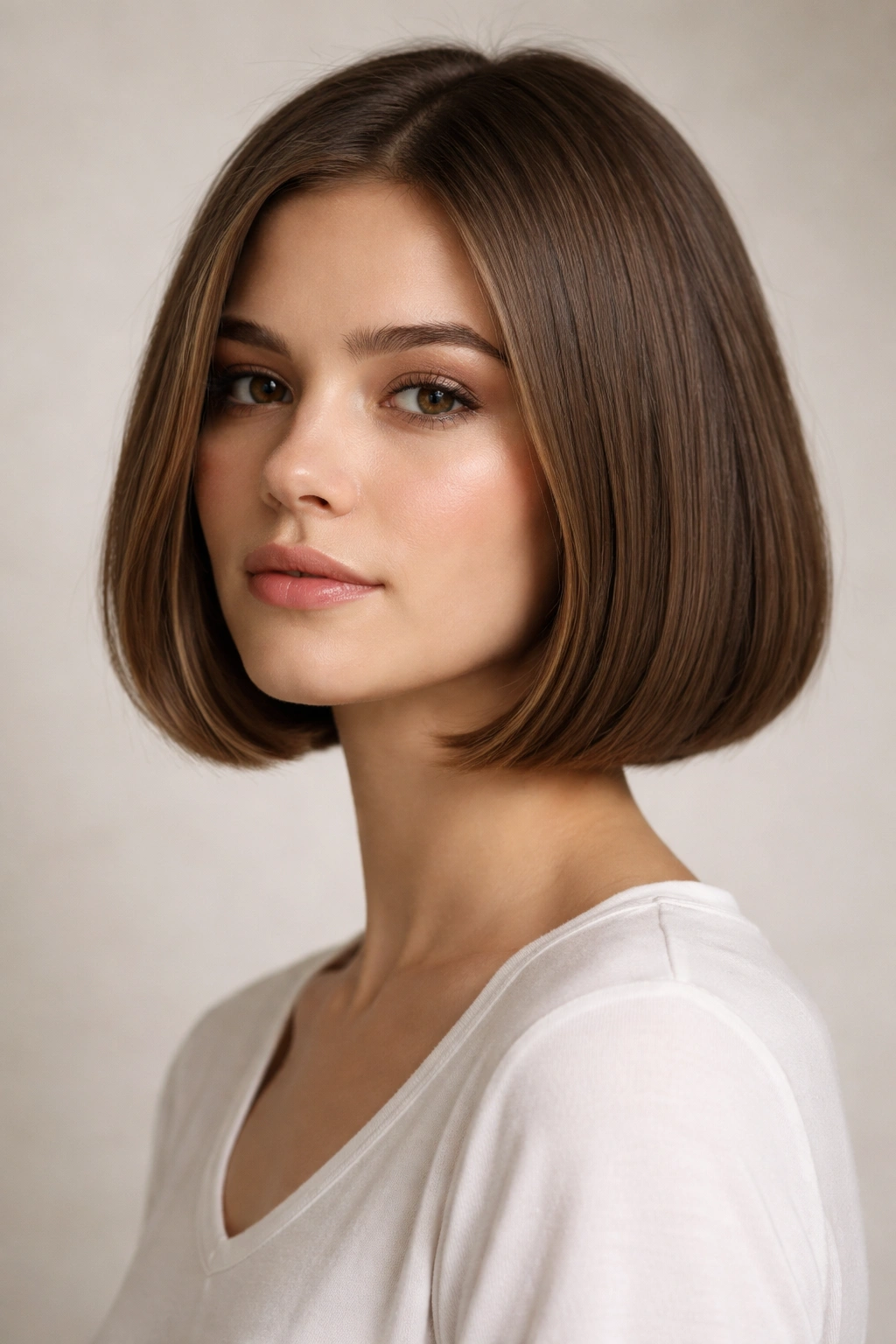
The chin-length bob is the one people picture first, even when they think they’re being more adventurous than that. It lands right around the jaw, usually with a clean perimeter and very little fuss. The charm is in the line. Straight hair shows it off in a crisp way, while wavy hair gives it a little softness without wrecking the shape.
Why the Line Matters
A chin-length cut frames the face without swallowing it. It can make the neck look longer, sharpen the jaw, and keep the whole silhouette tidy. If your hair tends to spread out or hang heavy, this cut pulls everything into focus fast.
- Best for oval, heart, and square face shapes
- Works with fine hair when the ends stay blunt
- Needs a trim about every 6 to 8 weeks
- Easy to tuck behind the ears without losing the shape
My favorite part: this is one of the few cuts that looks intentional even when air-dried with a little bend at the ends.
If you want a bob that feels classic instead of trendy, this is the one to start with. Bring a photo that shows the side view as well as the front. The side view tells the whole story.
2. Blunt Bob With a Hard, Clean Edge
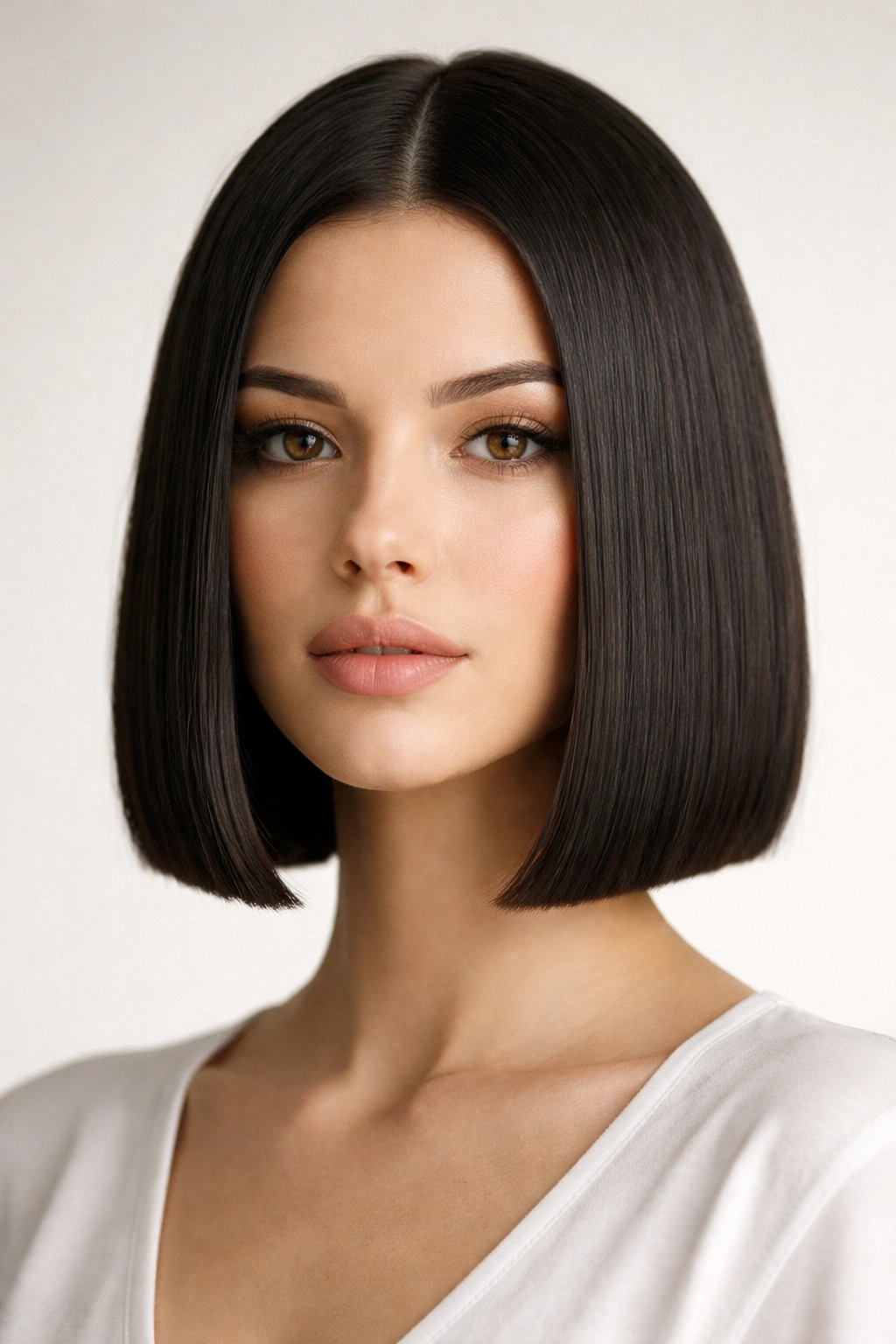
A blunt bob makes a bigger statement than most people expect. The cut line is the point. No wispy ends, no overworked layering, no apology. Just a firm edge that lands at the chin, mouth, or just below.
That hard finish does something useful: it gives thin or medium hair a denser look because the eye reads the line as fullness. On straight hair, it can look almost architectural. On slightly wavy hair, it softens a touch while still keeping its shape. If you like clothes with clean tailoring, this haircut belongs in your orbit.
The catch is that a blunt bob shows everything. A crooked blow-dry, a frayed end, or a heavy cowlick near the part stands out more than it would on a shaggy cut. So this is not the one to ask for if you want to hide behind texture.
I like it best when the finish is simple: center part, a flat brush, and a quick pass with a round brush under the ends. That’s enough. Overstyling kills the point. The blunt bob works because it looks precise without seeming fussy, and that balance is hard to fake.
3. French Bob With Soft Bangs
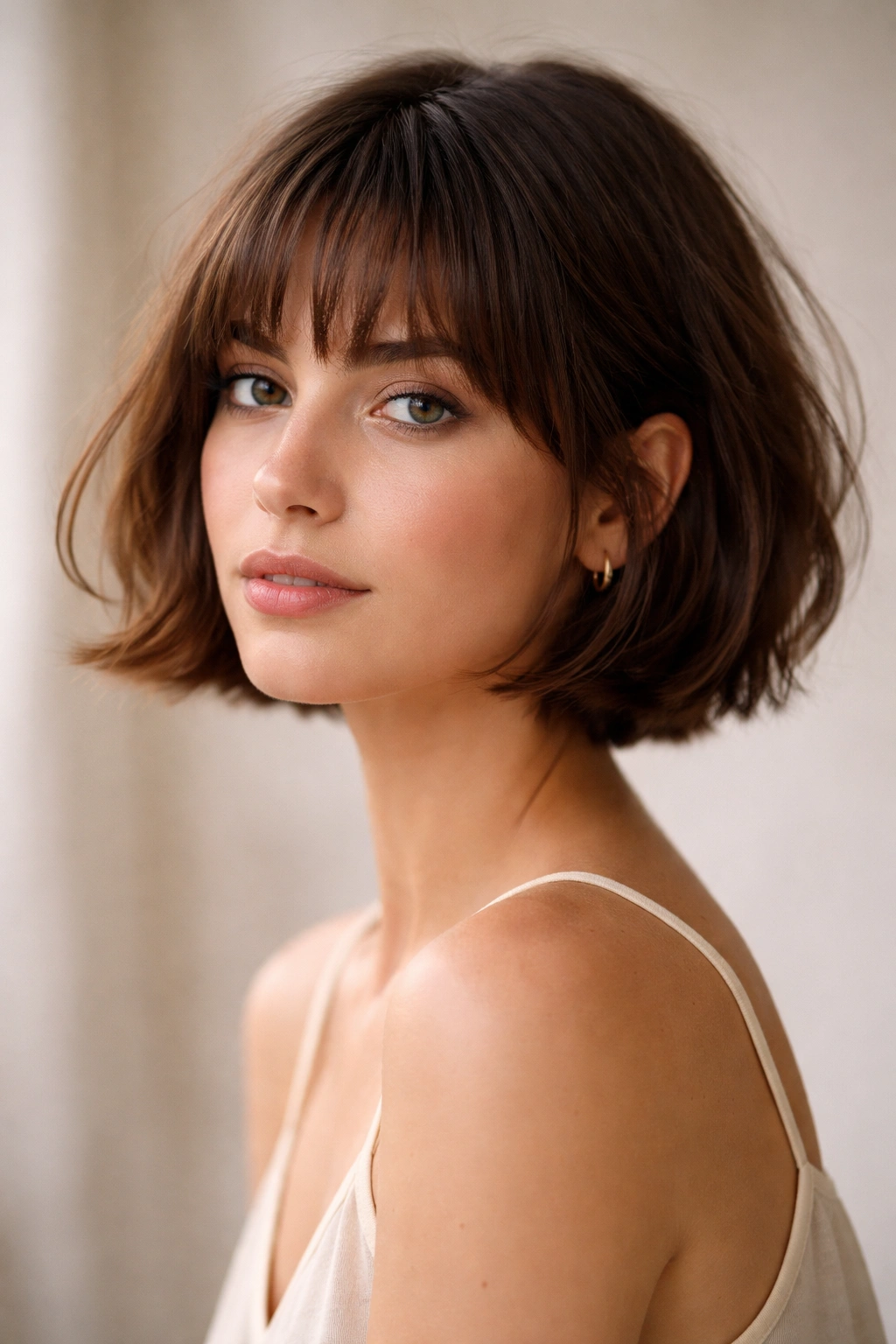
Why does the French bob still look good after all these years? Because it never tries to look overworked. The cut usually sits shorter than a chin-length bob, often around the cheekbone or lip area, and the fringe is softer than a heavy blunt bang. It has that slightly undone, slightly elegant feel that looks better when it is not too polished.
What Makes It Different
The French bob has less structure than a blunt bob and more charm than a standard crop. It usually has some bend, a little movement through the ends, and bangs that skim the brow instead of sitting like a helmet. That tiny bit of softness keeps it from looking severe.
This cut is lovely on hair with a natural wave, because the texture gives the shape some life. If your hair is pin-straight, you can still wear it, but you’ll want a light bend through the ends so it does not look flat and boxy.
How to Wear It
- Blow-dry the fringe first so it does not separate in odd directions
- Use a small round brush on the ends, curving them inward or outward by a half-inch
- Keep the layers minimal unless your hair is thick and wants to puff up
- Let a little texture stay in the crown; that’s part of the charm
A French bob is best if you want a haircut with personality but no drama. It has a point of view. Just not a loud one.
4. Layered Bob for Women With Fine Hair
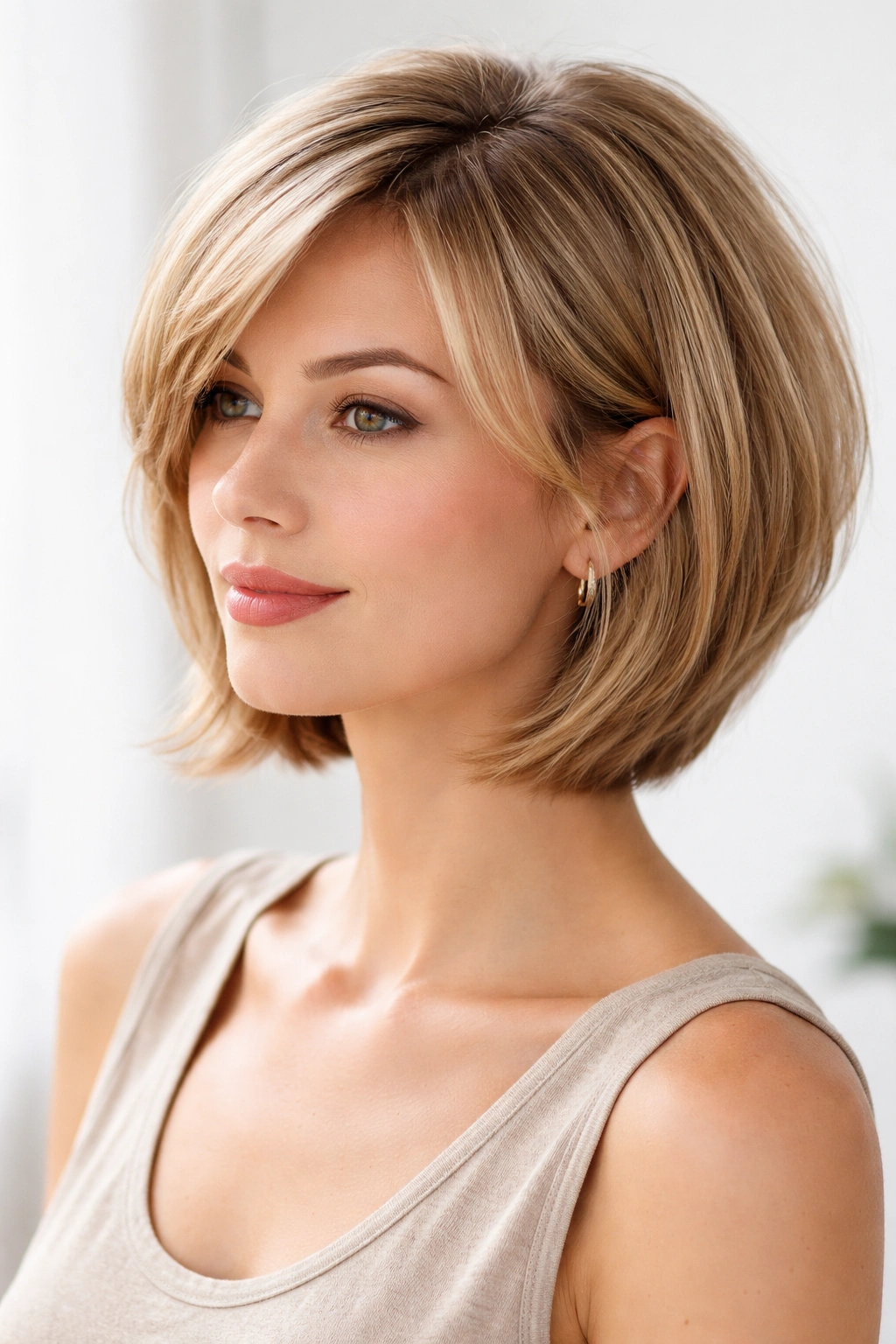
If your hair tends to collapse by lunchtime, layers can be a gift — but only if they’re cut with restraint. A layered bob for fine hair is not about carving in obvious steps. It’s about removing enough weight to create lift while keeping the perimeter full enough to look healthy.
This is the cut I’d recommend when someone wants movement without the see-through ends that make fine hair look thinner. The trick is to keep the internal layers soft and strategic. Around the crown, a little lift helps. Around the bottom, you want enough density to hold the outline.
What Helps It Work
- A root-lifting mousse on damp hair
- Blow-drying with the head slightly tilted forward
- A round brush only at the crown, not everywhere
- A trim that keeps the ends blunt enough to feel full
One thing I see all the time: too many layers can make fine hair look stringy. That’s a bad bargain. A better version of this cut keeps the shape compact and gives the movement in the right places, usually through the top half and around the face.
For straight or slightly wavy fine hair, this bob can make the whole head look fuller without asking you to spend half an hour styling it. That matters. A lot.
5. Textured Bob With Piecey Ends
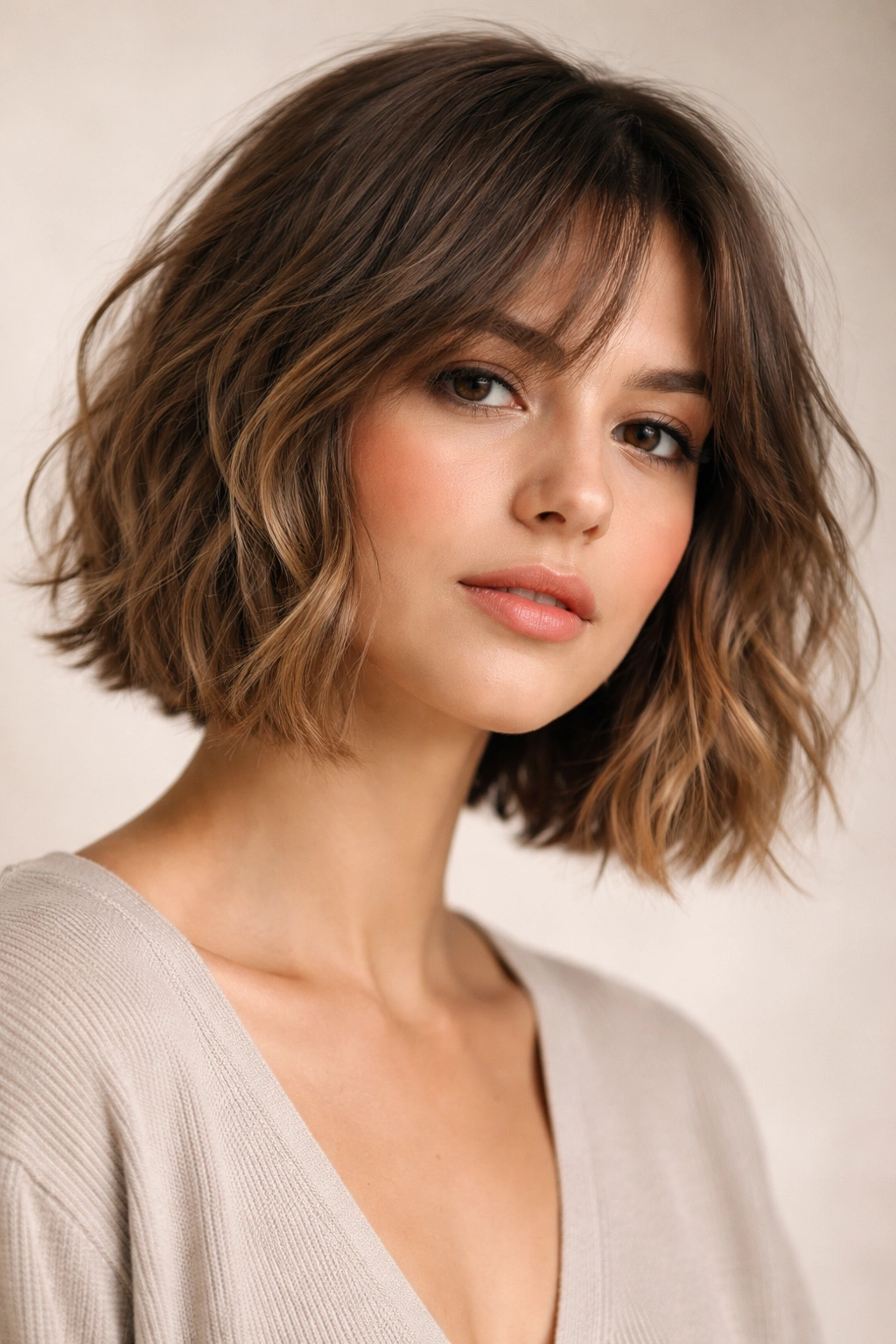
Some bobs look polished. This one looks touched by hand, in the best way. The textured bob keeps the outline of a bob but breaks up the ends so they move in little separate pieces instead of one heavy sheet. That makes it a favorite for hair that already has some bend or grit.
The cut usually uses point cutting or a light razor technique, though the exact method depends on the hair. The point is not to shred the ends. It’s to soften them just enough that they fall with a little irregularity. Hair that has a natural wave tends to love this treatment, because it turns “messy” into “intentional” without much effort.
I’d skip this if your hair is very fragile or prone to split ends. A rough texture can make damaged hair look frayed fast. But on healthy hair, especially medium density hair, the shape can be excellent. It takes a simple outfit and makes it feel less stiff.
A touch of styling cream through the mids and ends is usually enough. Too much product flattens the whole point. You want separation, not grease.
6. A-Line Bob With a Slight Forward Angle
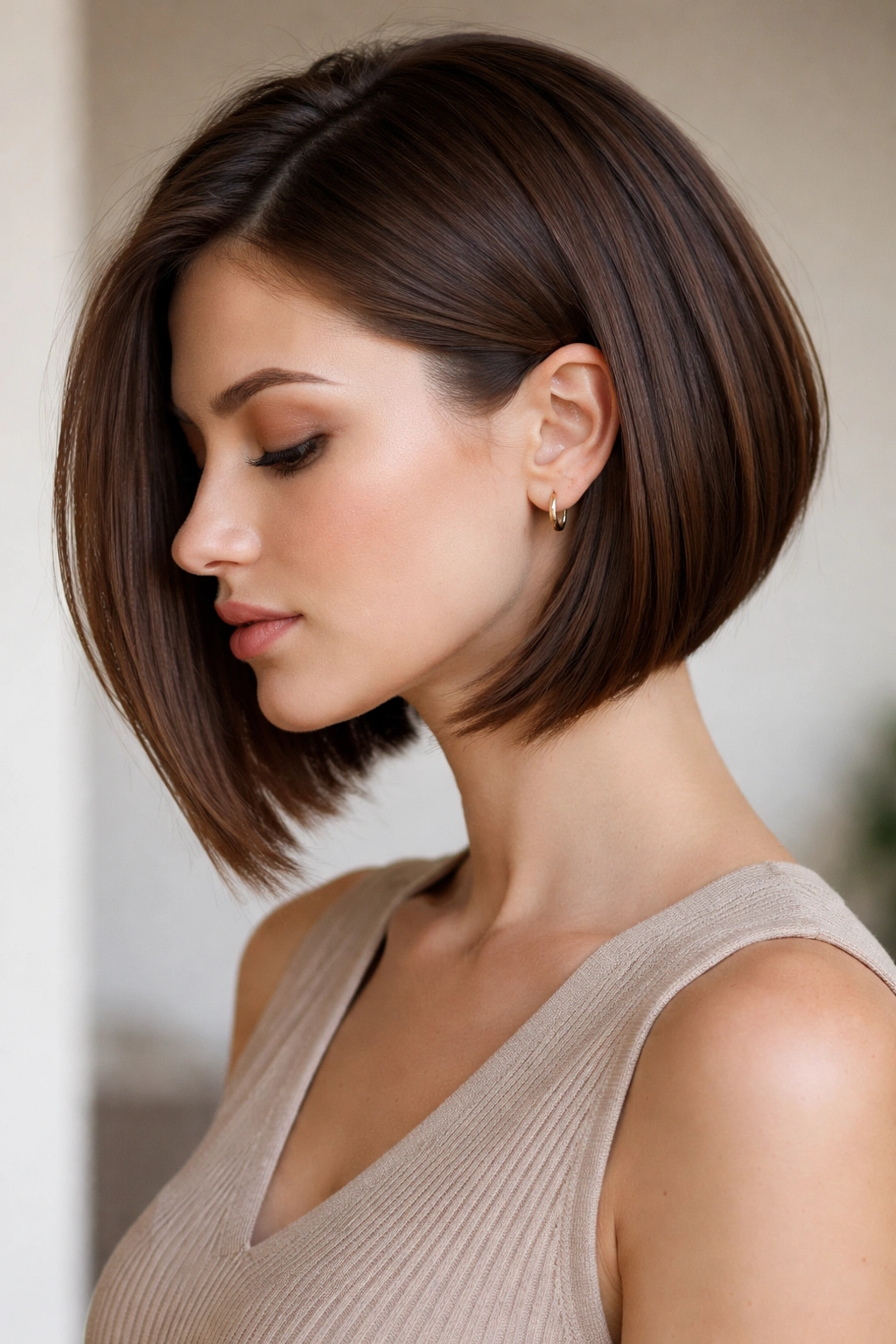
An A-line bob does one thing better than almost any other cut: it pulls the eye forward. The back sits a bit shorter, and the front gradually gets longer toward the chin. That angle can sharpen the jaw, lengthen the neck, and give straight hair a clean directional line.
Unlike a blunt bob, which reads more even and compact, the A-line has motion built into the shape itself. It is especially nice if you want a bob that feels a little more modern without becoming trendy or fussy. The angle can be subtle or bold. I prefer subtle, honestly. A dramatic front can tip into costume territory if the rest of the cut is not balanced.
This shape works well on thick hair because it removes bulk from the back. On medium hair, it creates a neat, polished profile. If your hair grows out fast, the angle also helps the cut stay interesting a bit longer, since the front keeps its line even as the back softens.
Wear it with a side part for a little sweep, or tuck one side behind the ear to show off the angle. It has enough structure to do the job on its own.
7. Inverted Bob That Stacks in the Back
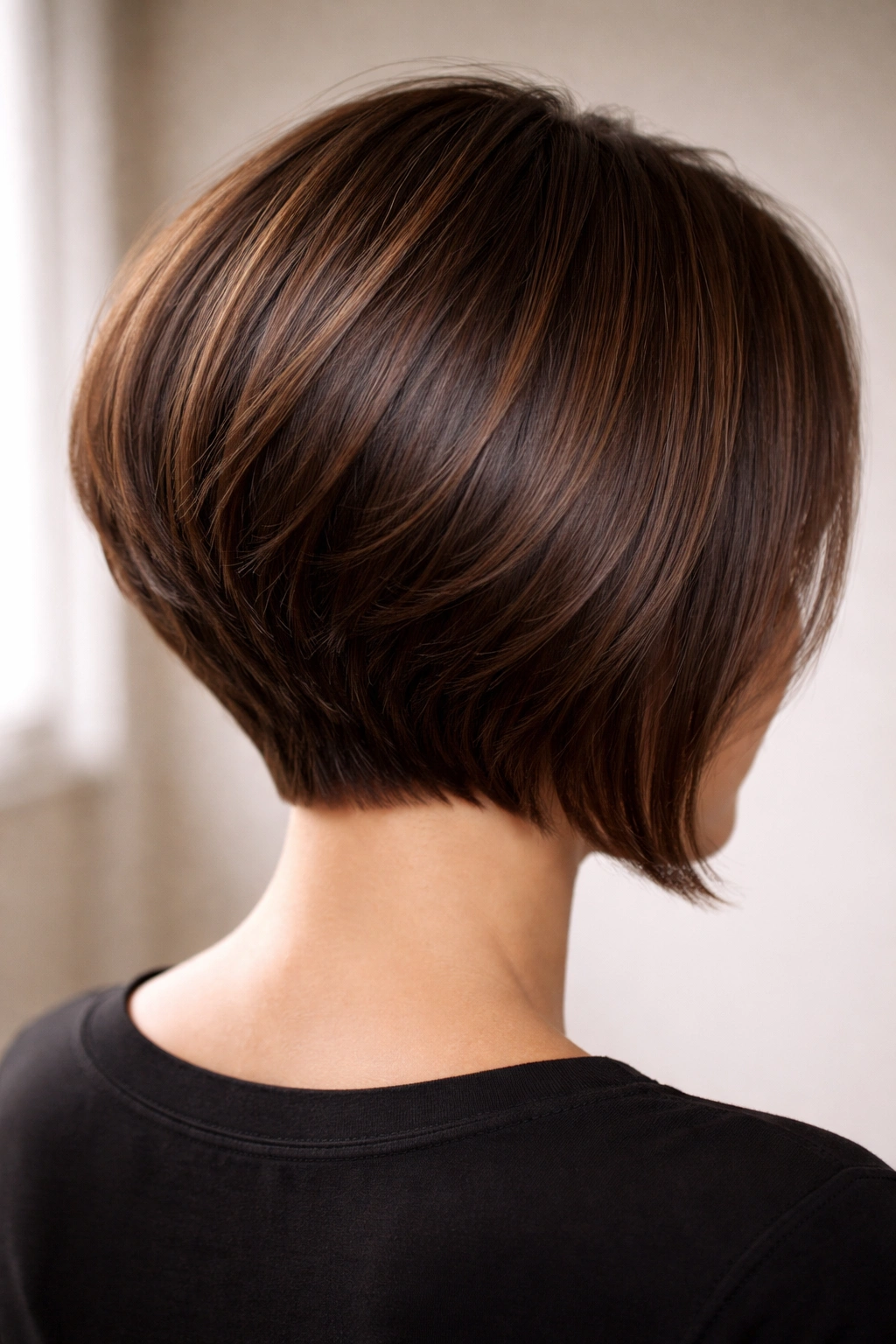
A stacked inverted bob has more lift in the back than an A-line, and you can feel the difference the second it’s dried. The crown sits fuller, the nape is shorter, and the shape curves under with a tighter line. It’s a strong choice when you want the back of the head to look clean and rounded instead of flat.
What to Ask for at the Salon
Ask for graduation through the back, not choppy layers all over the head. Those are not the same thing. A good stacked bob keeps the perimeter visible while building volume above it. If the stacking is too aggressive, the cut can turn puffy in a way that dates fast.
- Keep the nape tight and neat
- Ask for a smooth transition from back to side
- Avoid over-thinning the ends
- Use a blow-dry brush to round the back under
This cut is especially flattering if you like a profile that looks finished from the side. It can also help hair that grows low in the back and tends to lie flat against the neck. The shape lifts before the eye even notices what happened.
If you want body without long layers, this is a strong bet. It looks like somebody paid attention. Because they did.
8. Long Bob That Skims the Collarbone
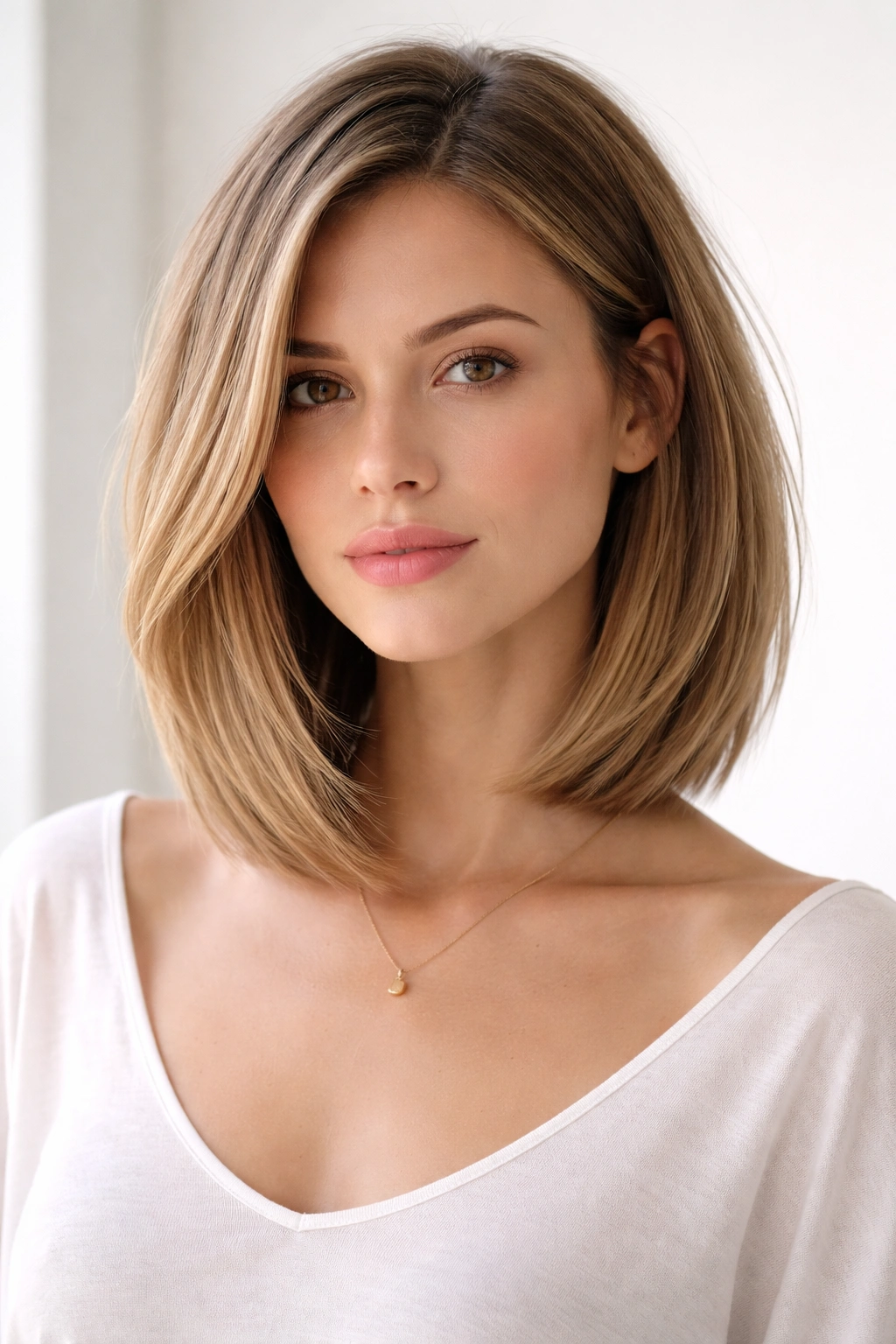
The long bob is the easiest bob to live with. It gives you the shape and swing of shorter hair, but it keeps enough length to tuck, twist, pin, or throw into a tiny knot when you’re over it. That’s why it stays in heavy rotation.
This cut works especially well when the front grazes the collarbone and the back stays a little shorter. Hair falls in a smooth curtain over the shoulders instead of flipping awkwardly at the jaw. That matters more than people think. A cut that lands exactly at the wrong spot can feel annoying every single day.
The long bob suits almost every hair type because it leaves room for styling. Straight hair can go sleek. Wavy hair can look relaxed. Thick hair can lose some bulk without feeling chopped off. You can also grow it out without the awkward middle stage being a disaster.
I like this one for people who are nervous about going too short. It is a bob, yes, but it behaves more gently. Less shock, more wearability.
9. Curly Bob That Respects the Curl Pattern
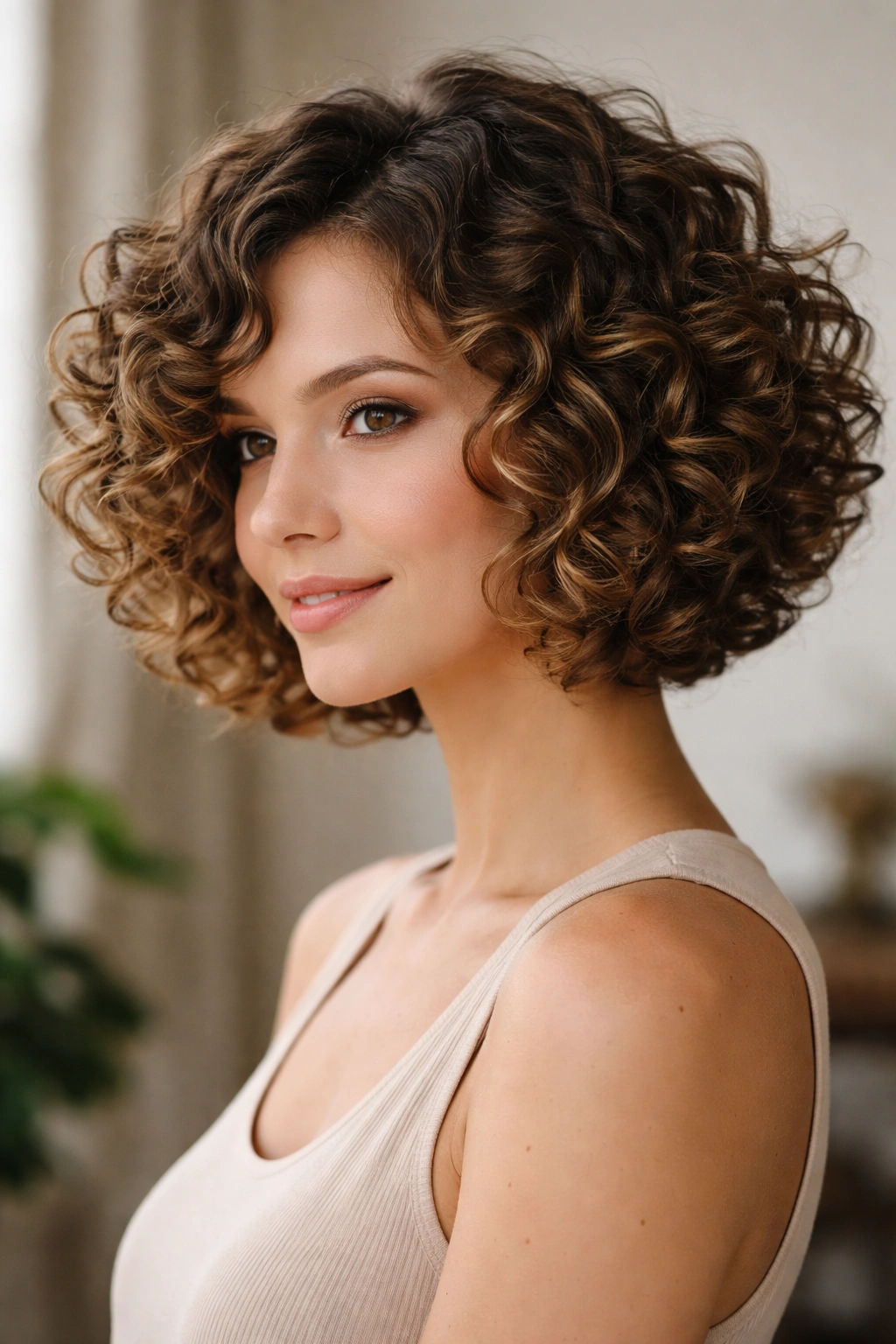
Can curls live in a bob without turning into a triangle? Absolutely — if the cut respects the curl pattern instead of fighting it. A curly bob needs shape, not force. The best versions are cut dry or cut in a way that lets the stylist see how each curl springs up on its own.
The goal is to keep the bottom line controlled while letting the curls stack with enough space to move. That usually means removing bulk where it swells and leaving enough length for the curls to form a nice curve. If the ends are too heavy, the bob can droop. If they’re too thinned out, the shape gets fluffy and wild in a bad way.
How to Avoid the Mushroom Effect
Keep the sides balanced with the back. That sounds simple, but it’s the thing people get wrong. A curly bob should follow the head shape and the curl pattern together. If one part is too short, the whole cut leans odd.
A curl cream, a diffuser, and a scrunch with a microfiber towel can make the difference between defined shape and dry fuzz. This cut does best when it’s given room to be curly, not treated like straight hair with a perm.
10. Wavy Bob With Curtain Bangs
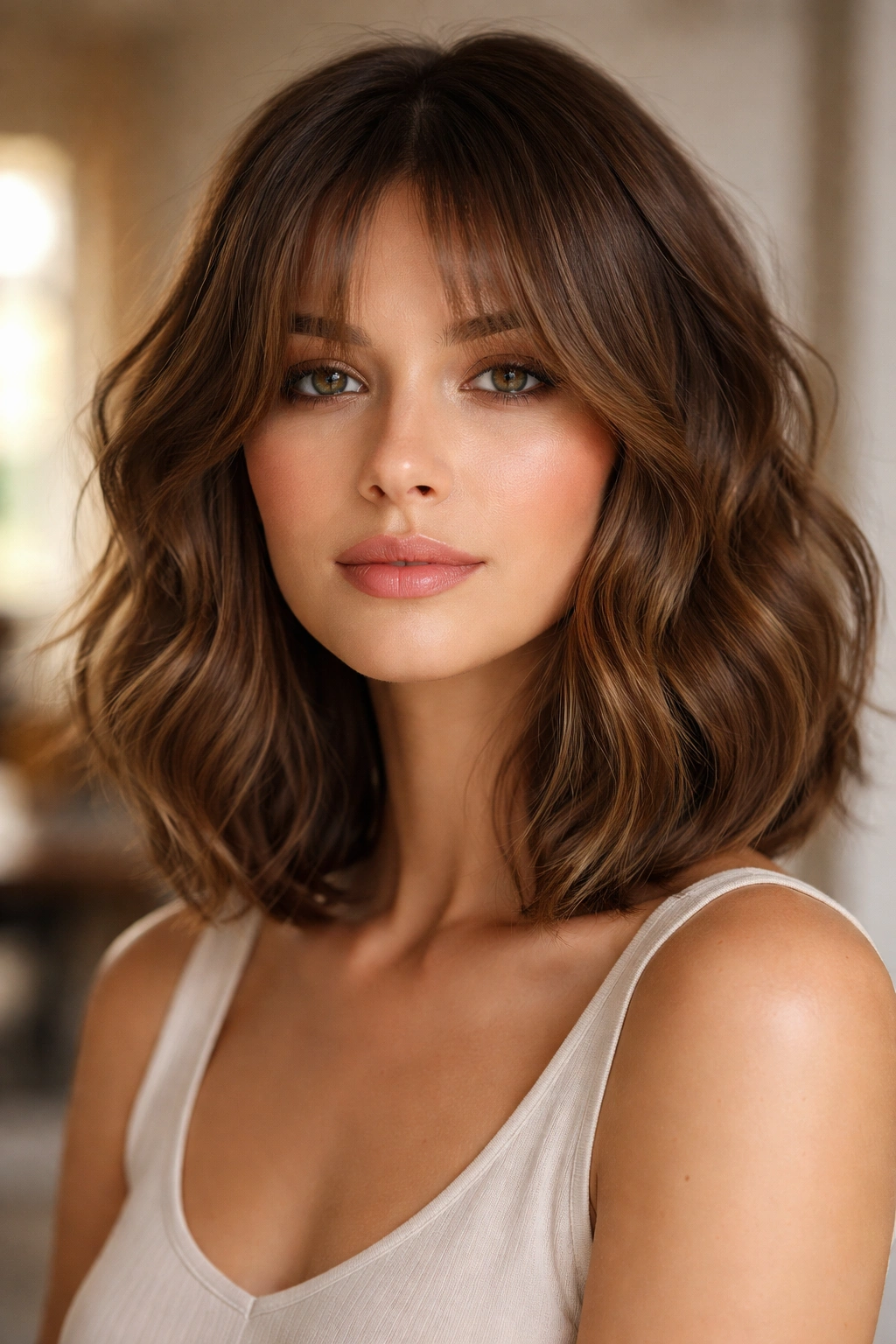
A wavy bob with curtain bangs has a kind of easy charm that looks better when it is slightly lived in. The bangs open at the center and fall away from the face, which softens the forehead and blends nicely into cheek-level waves. It’s flattering without trying to be precious.
Think of this cut as friendly structure. The bob gives the lower half of the shape, and the bangs keep the front from feeling too plain. On fine to medium hair, the curtain fringe adds movement without needing a huge amount of length. On thicker hair, it helps break up weight around the face so the whole cut breathes.
The styling part is not hard, but it does matter. A round brush or a large roller set at the fringe keeps the curtain shape from collapsing. If you let the bangs dry in a flat, center-splitting strip, they lose the whole effect. A soft bend is better than a perfect swoop.
This one suits people who want a bob that feels relaxed but not random. There’s a difference.
11. Side-Part Bob With a Deep Sweep
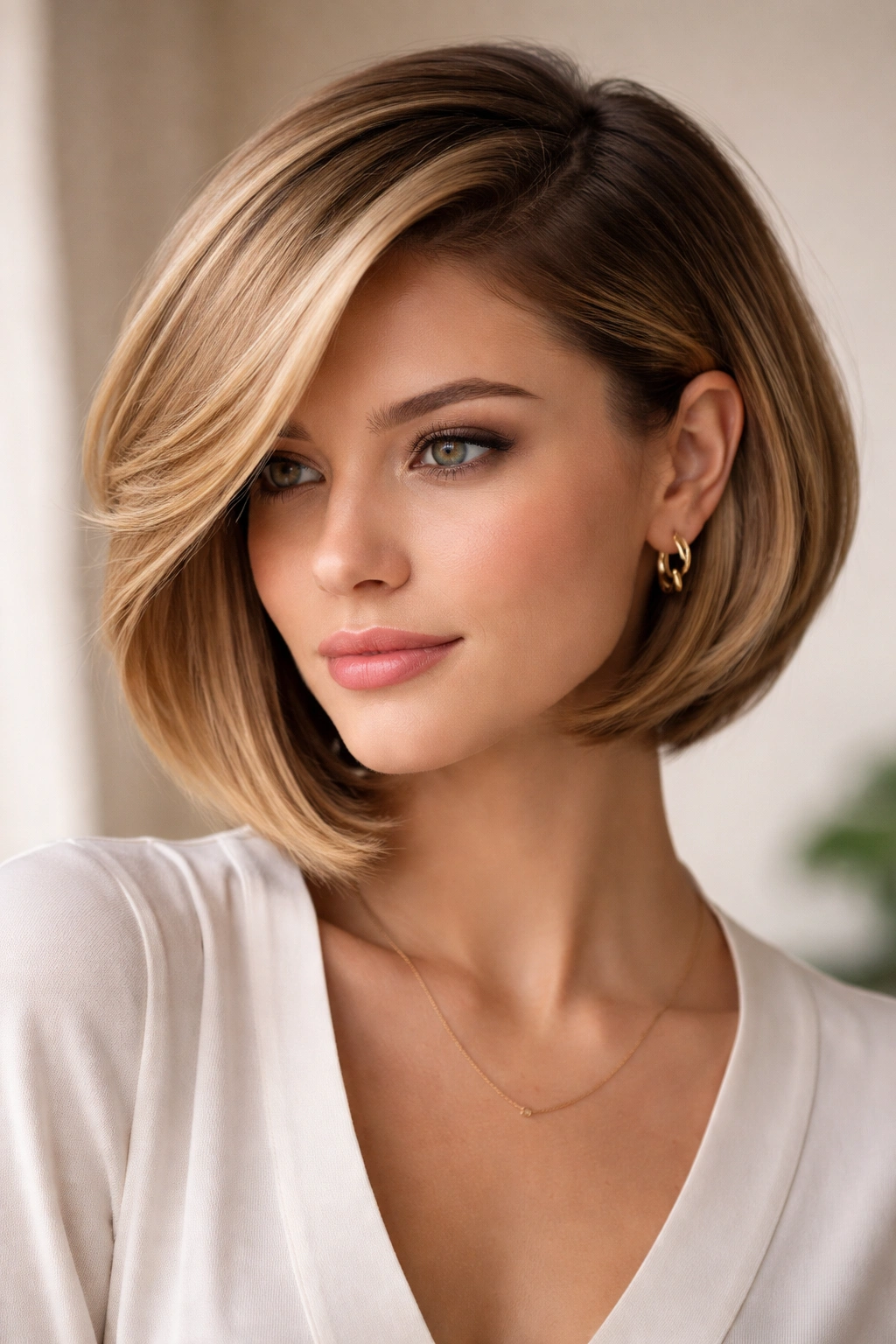
A side-part bob has a little more drama than a center part, and I mean that in the useful sense, not the theatrical one. The deep sweep creates volume on one side and gives the face a diagonal line that can soften a round face or keep a square face from feeling too boxy.
The part itself does a lot of the styling work. Hair naturally lifts a bit at the roots when it’s shifted off center, which helps if your hair tends to sit flat. The cut can be blunt, angled, or softly layered; the side part changes the mood more than people realize.
I like this bob because it’s one of the easiest ways to make a simple cut feel fresh without touching the length. It also lets you change the look day to day. Wear it deep for polish. Move it just slightly off center for a quieter feel.
If you’ve worn a center part for years and everything feels a little too symmetrical, this is a clean way to break that habit without making a dramatic chop.
12. Middle-Part Bob With Balanced Face Framing
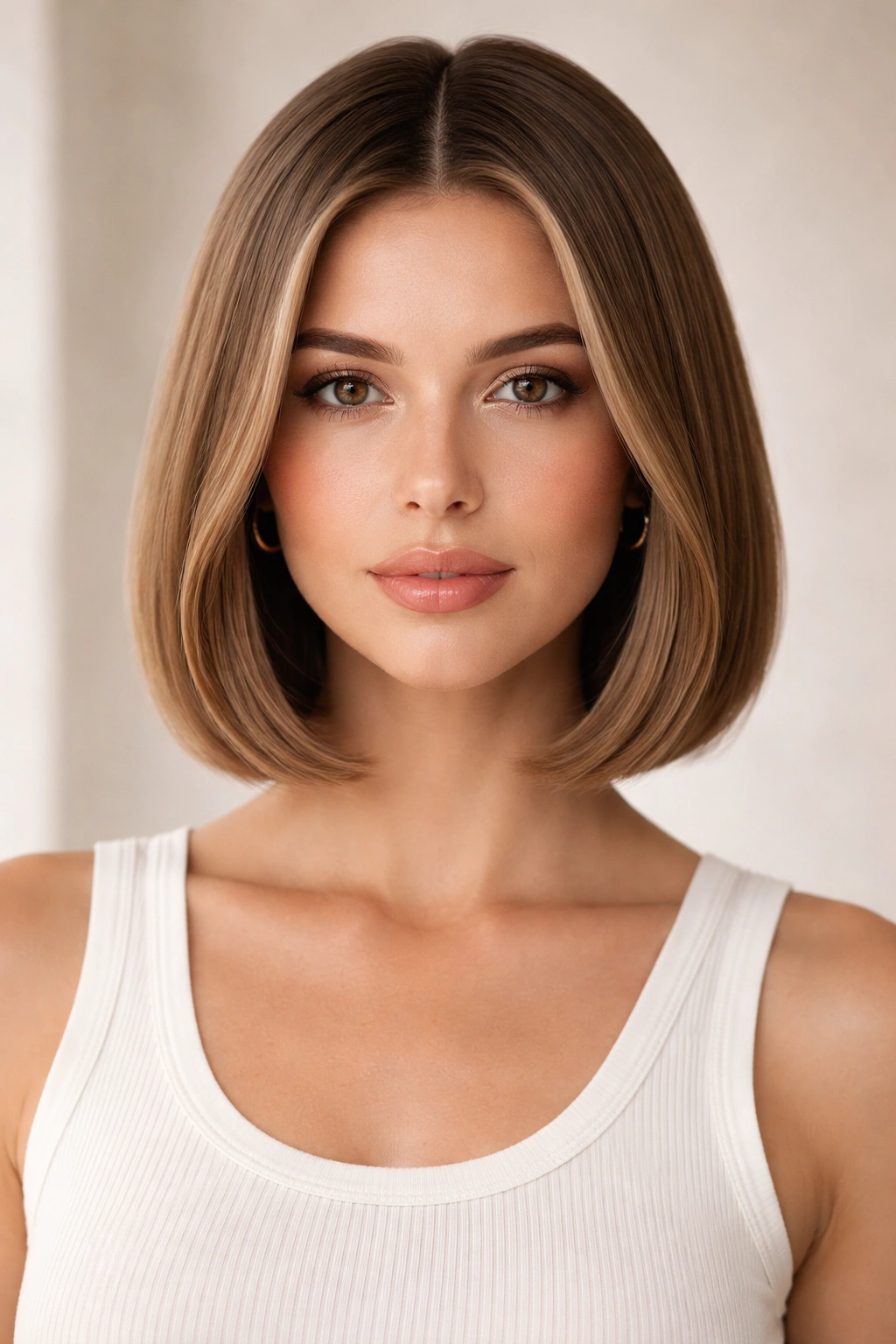
A middle-part bob can look severe if the cut is wrong. When it is right, though, it gives you a clean, even frame that feels sharp and calm at the same time. The key is balance. The two sides have to fall with almost identical weight, or the whole thing looks off.
Compared with a side-part bob, the center part keeps attention on the face instead of the hairline. That works nicely if you want symmetry or if your features already carry strong balance. It also makes the jaw line more visible, which is part of the reason it can look so polished with very little effort.
For this cut, a slight curve at the ends helps prevent a flat curtain effect. A straight-down, chin-length version can look severe in a bad way if the hair is too thin. A tiny bevel under the ends softens the finish just enough.
I’d pair this with minimal styling and a clean fabric collar or simple neckline. The cut itself is the point. Everything else should step back a little.
13. Box Bob With a Square Outline
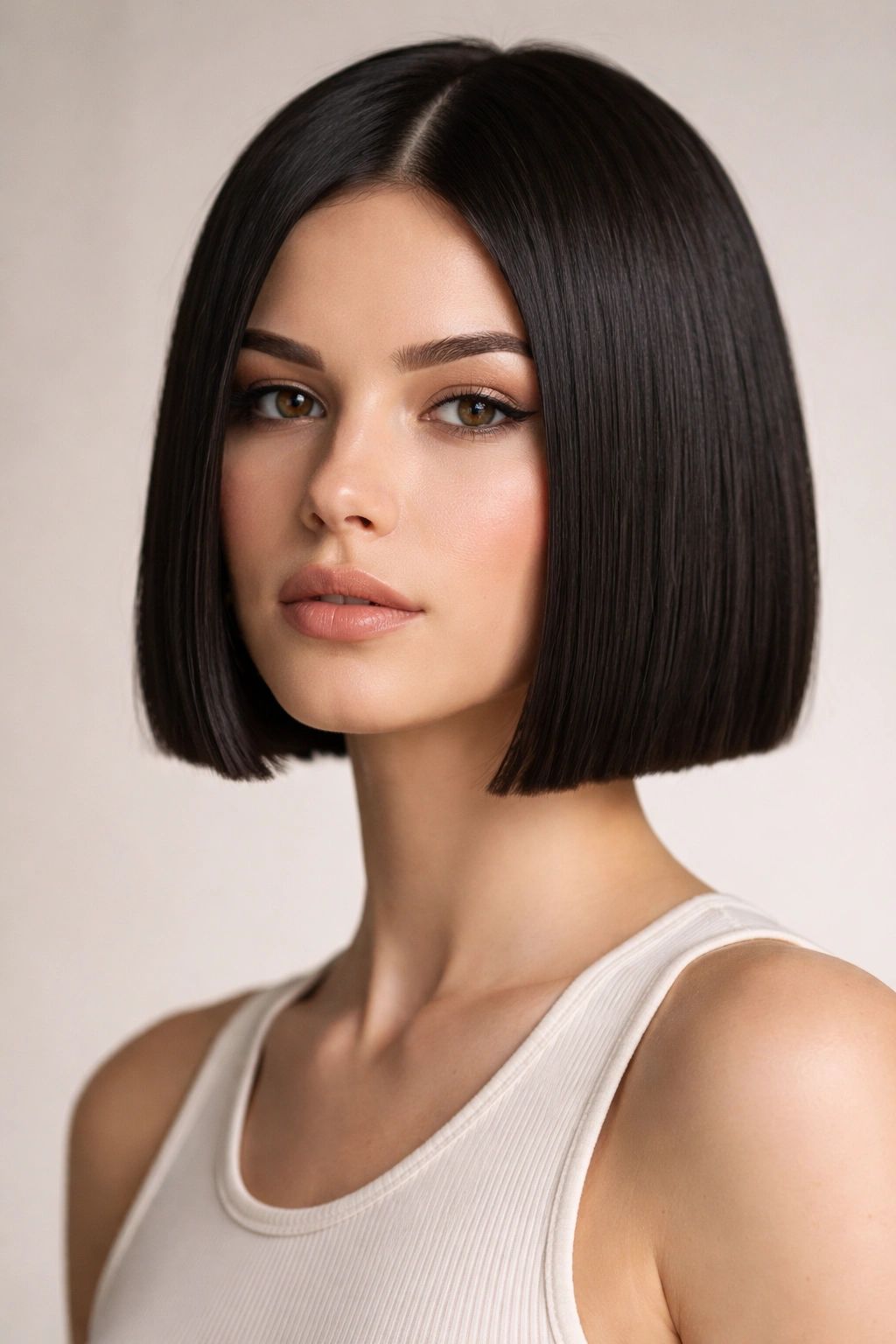
The box bob has a strong shape and does not apologize for it. The outline is square, the ends are blunt, and the sides usually fall in a straight line rather than curving inward. That gives the cut a bold, almost graphic feel.
Key Details That Make It Work
- Keep the perimeter heavy and clean
- Avoid too much layering at the bottom
- Use a straight blow-dry or a paddle brush for finish
- Ask your stylist to check the line from front to back under natural light
This bob can look especially striking on straight hair, where the shape reads clearly. It also holds up well if you like a fashion-forward look that still feels wearable. The boxy outline can sharpen softer features, though I would not call it the easiest cut for everyone. It has personality. That’s the whole point.
If you want a bob that stands apart from the softer, wavier cuts without drifting into anything fussy, the box bob is worth a close look. It can look expensive in the right hands. In the wrong hands, it just looks square, so the cut quality matters a lot.
14. Jaw-Length Bob With Micro Bangs
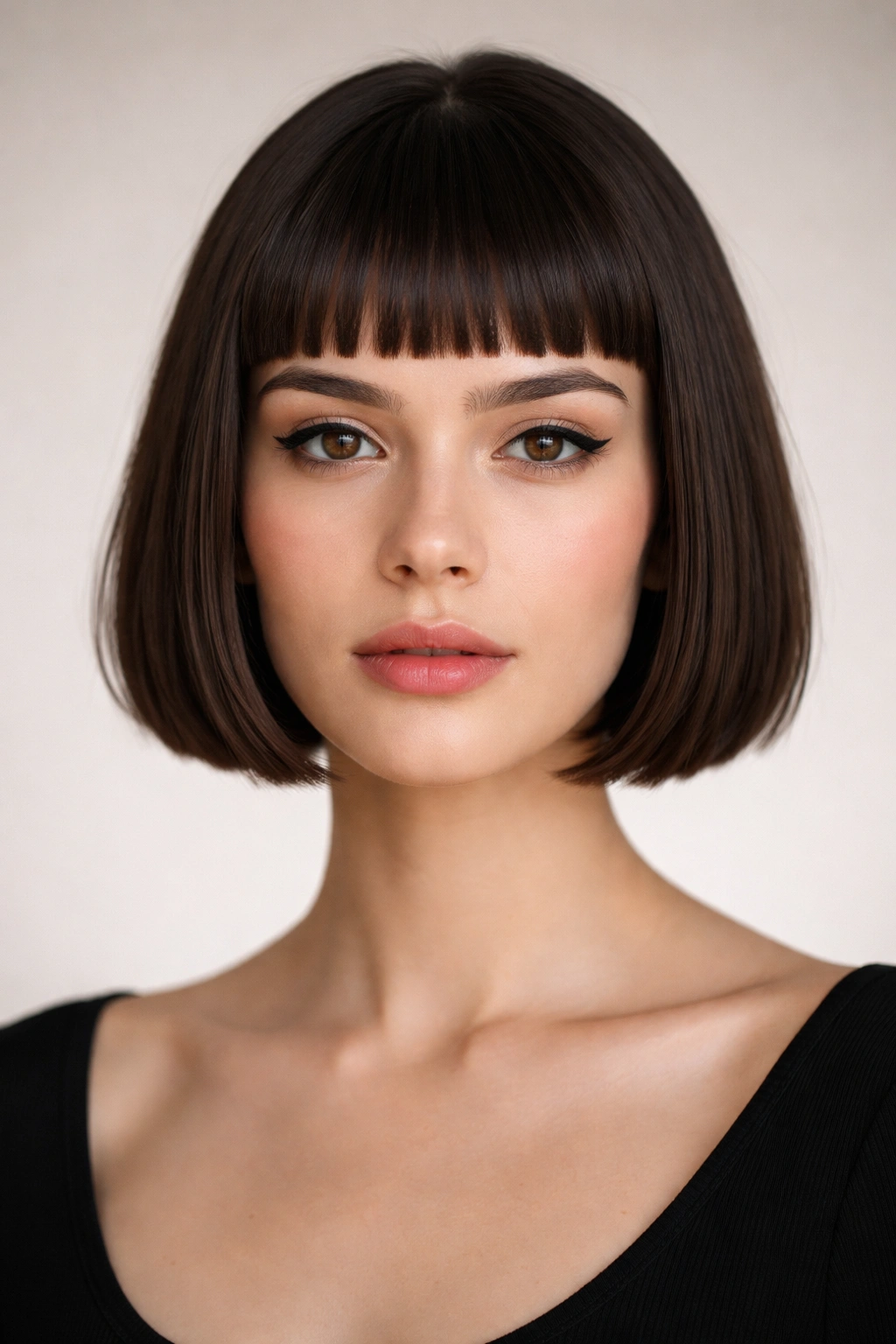
A jaw-length bob with micro bangs is not shy. The short fringe pulls attention upward, while the cut itself lands right around the jaw, which makes the lower face feel crisp and very present. It is one of those styles that can look incredible on the right person and a little costume-like on the wrong one.
Micro bangs work best when the rest of the haircut is clean. If the bob is too layered or too fuzzy, the whole thing starts fighting itself. A smooth finish helps the fringe feel intentional rather than random. I also think this cut is strongest when the brows and forehead are part of the look — you need a face shape and personal style that can carry the short fringe.
The maintenance is not casual. Bangs need regular trimming, and the bob line has to stay neat or the whole effect loses its edge. But if you love haircuts that feel editorial and a little daring, this one has real presence.
I would not call it easy. I would call it memorable.
15. Shaggy Bob With Airy Layers
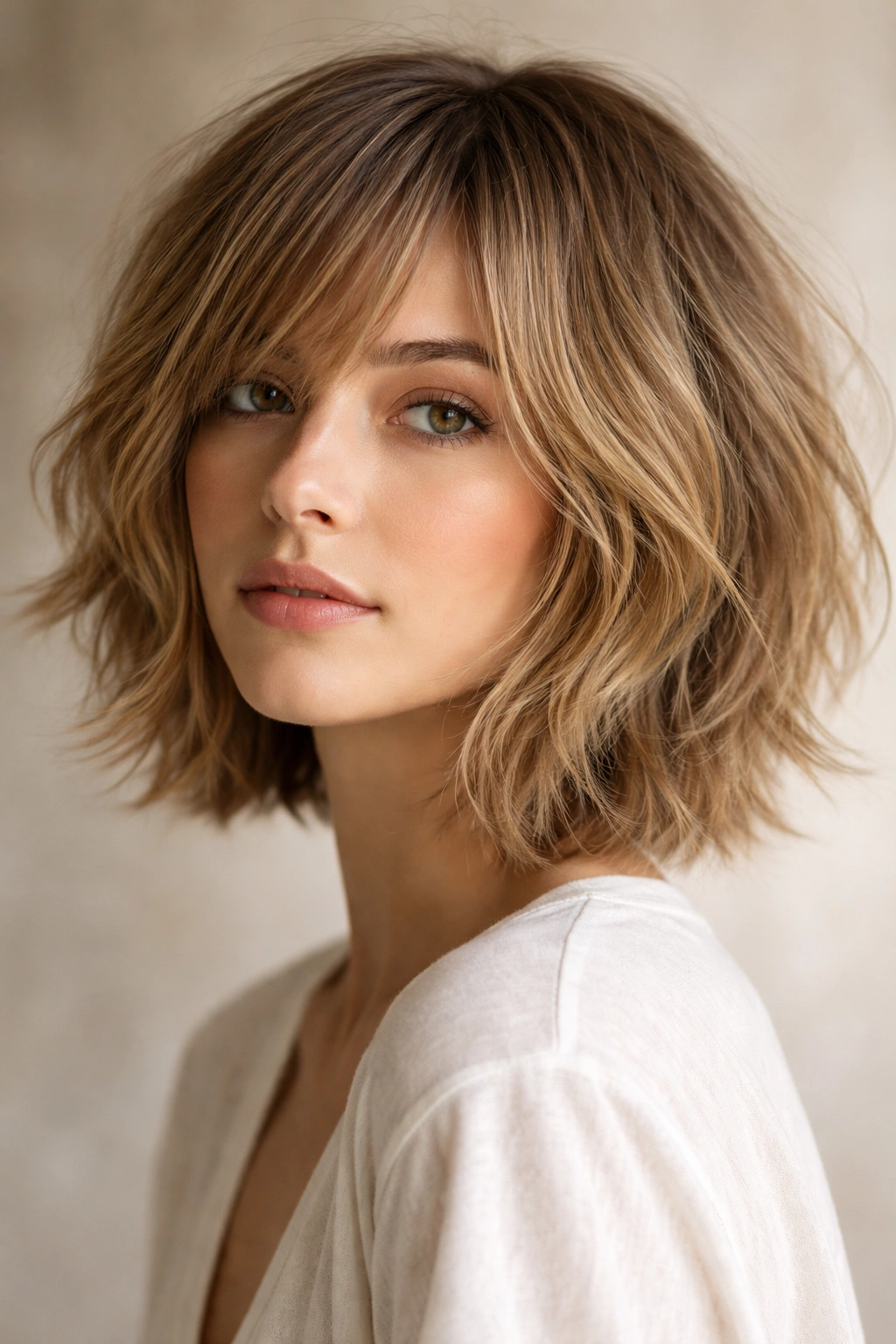
What happens when a bob gets a little rebellious? You get the shaggy bob — and it can be excellent when it is cut with some restraint. The shape is loose, layered, and full of movement, but it still needs enough structure to stay a bob instead of turning into a general cloud of hair.
How to Keep It From Getting Frizzy
The best shaggy bob keeps the weight line visible around the chin or mouth, while the interior layers do the softer work. That balance matters. Too much chopping and the ends get ragged. Too little and the cut just sits there.
A salt spray or light texturizing cream helps separate the layers after drying. I’d skip heavy oils unless the hair is coarse and dry, because they can collapse the airy feel. This cut shines when it looks touched and not overdone.
A shaggy bob suits people who want movement more than polish. It also works well if your hair is naturally wavy and refuses to lie in one neat direction. You do not need to fight that. Sometimes the best move is to cut for the bend you already have.
16. Sleek Angled Bob With a Glossy Finish
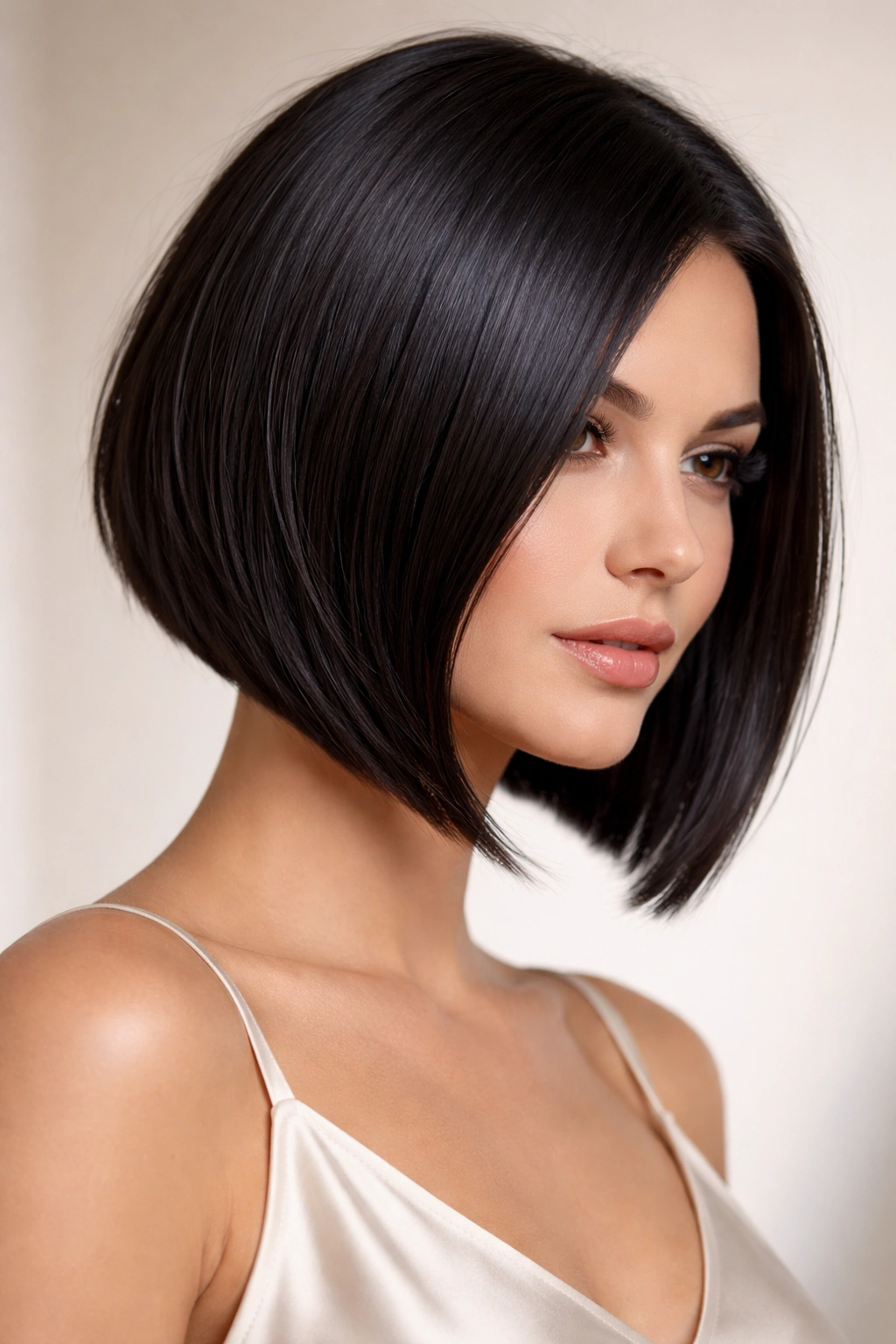
A sleek angled bob is all about precision. The front is longer, the back is shorter, and the whole cut is smoothed until the surface lies clean and reflective. It is a stronger, glossier cousin of the A-line bob, and it has a more polished edge.
One reason this cut reads so well is that the angle is obvious without being exaggerated. The line from the nape toward the front creates a nice sweep across the face. On straight hair, it can look razor-sharp. On hair that bends, a flat iron and heat protectant help keep the finish tidy, though you do not want to press it bone-flat if the hair is prone to looking limp.
What Makes the Shape Hold
- A precise part
- A trim that keeps the angle clean
- Smoothing cream or heat protectant before styling
- A pass with a flat iron only on the surface, not every section to death
This is one of those cuts that likes good condition hair. Split ends and dryness show fast. If your hair is healthy, the result can look very clean and elegant without slipping into stiffness. That takes a good cut and a light hand.
17. Choppy Bob With Razor-Cut Movement
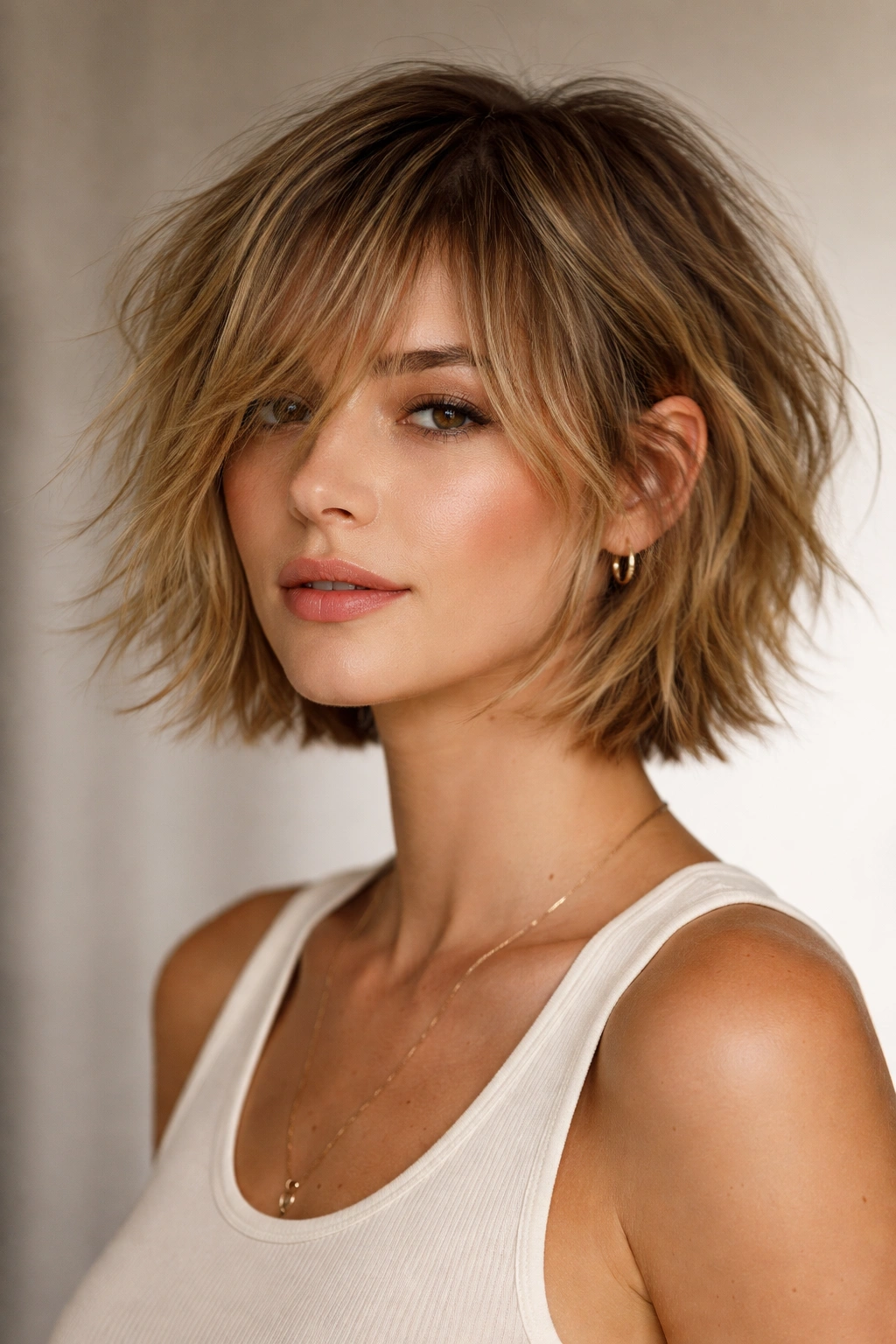
A choppy bob gives hair a little edge without making it feel wild. The cut uses uneven bits of texture to break up the line, which is useful when hair falls too neatly or looks heavy at the bottom. You still get the bob shape, but the finish moves in more directions.
This cut often looks best on medium-density hair with some natural bend. The razored pieces catch light differently from the blunt sections, so the hair looks more alive. That kind of movement is nice when you want the style to look easy, though it does need care. A choppy bob on already frizzy hair can cross the line into sloppy fast.
I like this version with a little rough-dry styling. A diffuser, a small amount of mousse, and a quick scrunch can give the ends enough separation. Do not drown it in product. That’s the fastest way to ruin the texture and make everything clump together.
If the blunt bob is the crisp blazer, the choppy bob is the leather jacket. Same basic outfit, different attitude.
18. Graduated Bob With a Rounded Back
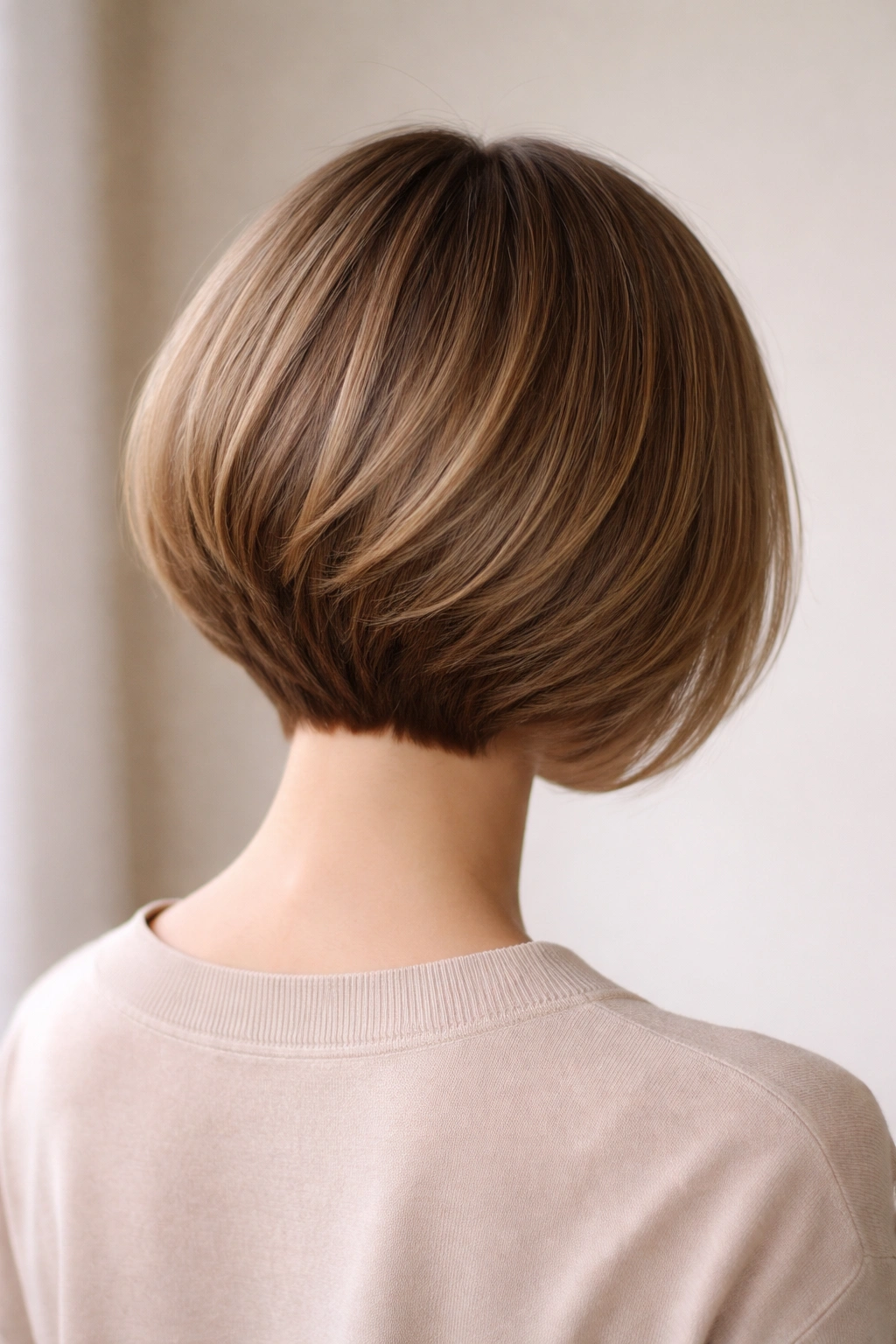
A graduated bob and a stacked bob are cousins, but they are not twins. The graduated version is softer in the back and more rounded through the shape, which can make it feel less severe than a heavily stacked cut. The buildup of weight at the back gives the haircut its curve, while the front usually stays a little longer.
That rounded silhouette is especially flattering if your hair naturally sits flat at the crown or if you want the back of the head to look fuller. It creates a tidy curve at the nape that feels neat when you turn your head. On thick hair, graduation removes some heaviness without destroying the shape.
This cut can age well because it does not rely on a flashy trick. It depends on balance. The back has to be shaped carefully so the curve does not puff out, and the front has to be long enough to keep the whole cut from looking helmet-like.
If you want structure with a softer outline than a razor-clean blunt bob, this is worth considering. It has polish, but it does not shout.
19. Asymmetrical Bob With One Longer Side
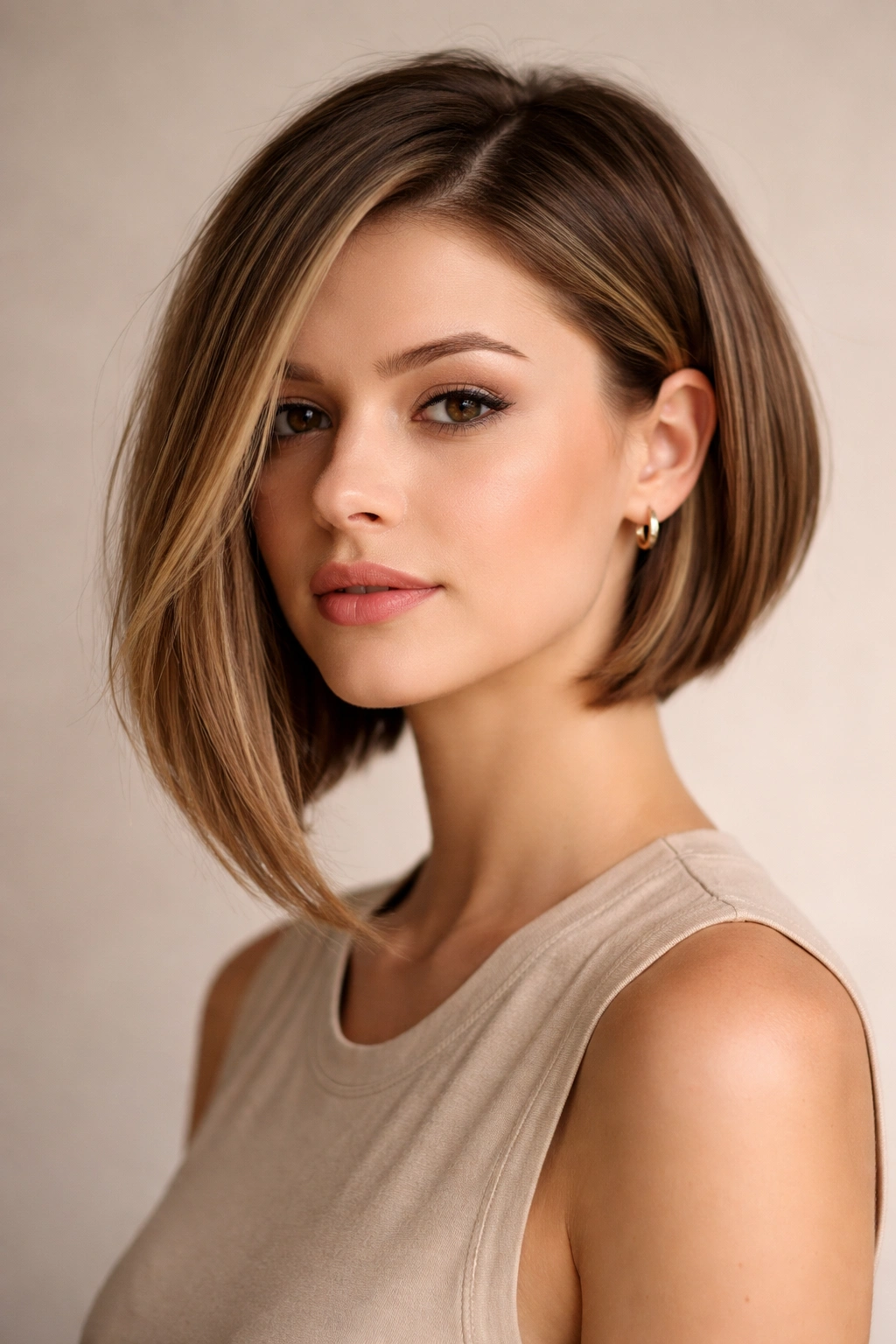
One side a little longer. That’s all it takes to change the mood completely.
An asymmetrical bob keeps the bob framework but breaks the mirror image, and that tiny imbalance gives the cut movement before the hair even moves. It can be subtle — just a half-inch difference — or much bolder, with one side grazing the collarbone while the other sits near the jaw. I prefer the subtle version most of the time. It feels smarter and less theatrical.
Why It Gets Attention
The asymmetry pulls the eye across the face instead of stopping it dead at the same point on both sides. That can soften strong features or sharpen softer ones, depending on how the rest of the cut is built. It also looks good tucked behind one ear, which lets the longer side show off a little.
- Ask how much difference the stylist plans to leave
- Keep the shorter side clean so the shape still reads as a bob
- Use a flat brush to show the diagonal line
- Trim regularly, since uneven lengths grow out in odd ways
This is a strong choice for someone who wants something classic with a twist. Not loud. Just clever.
20. Collarbone Bob With Soft Internal Layers
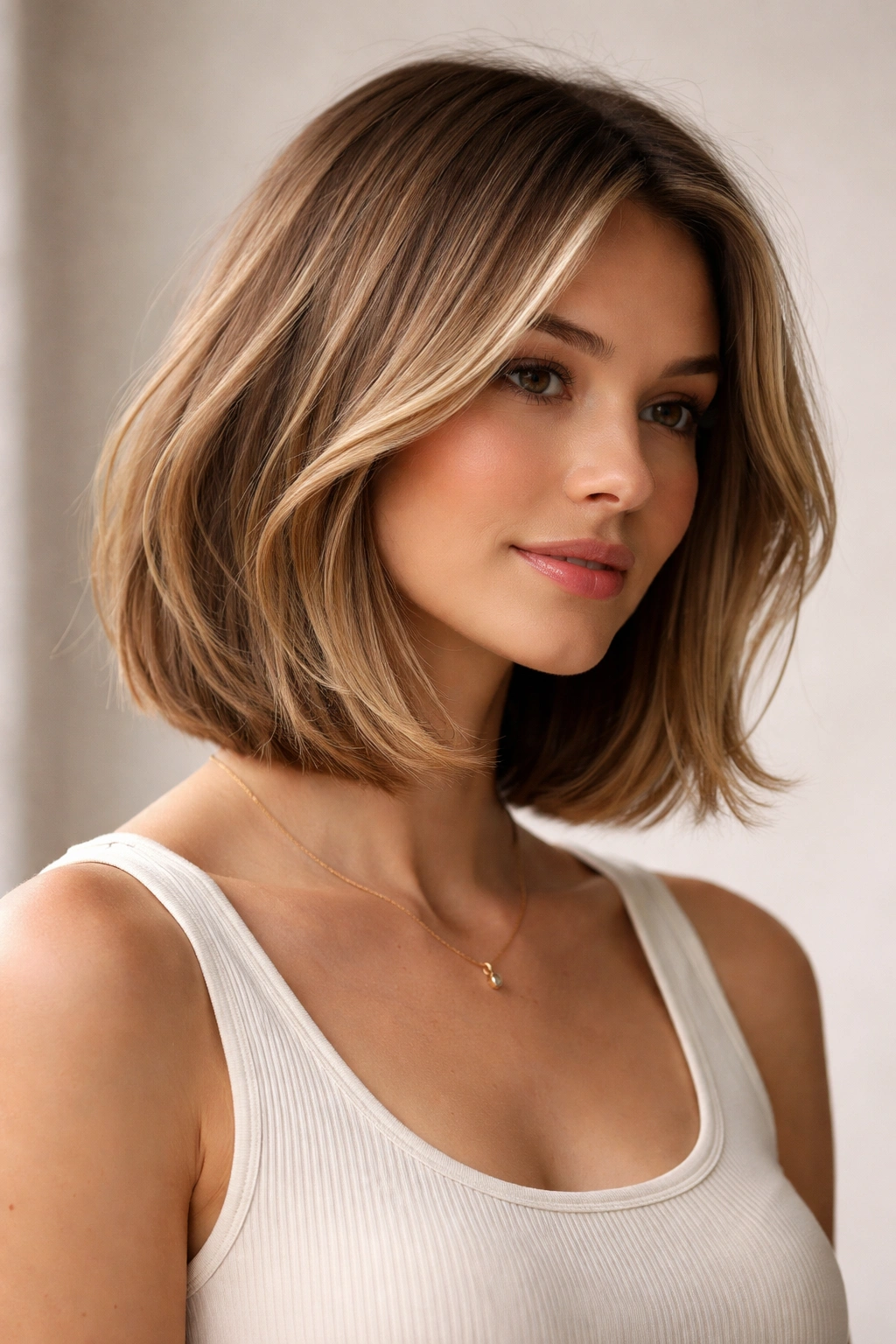
A collarbone bob with soft internal layers might be the most forgiving cut on this list. It gives you enough length to tuck hair over the shoulders, enough shape to call it a bob, and enough softness to avoid the blocky feel that longer cuts sometimes get.
The internal layers are the quiet part. You do not see them first, but you feel them when the hair falls. They keep the shape from turning into one heavy curtain and help the ends swing instead of sit there. That makes this cut especially useful for medium to thick hair that needs movement without losing its body.
I like this version when a client wants a bob that can be worn sleek one day and air-dried the next without looking like two different haircuts. It is also easy to grow out. That matters. A cut that works for eight weeks and then turns miserable is not doing enough.
If you want a bob that behaves well, looks polished, and does not demand a daily performance, this is a strong final stop.
Final Thoughts
The best bob cuts for women keep doing the same thing over and over: they shape the face, hold their line, and make styling feel manageable. That is the real appeal. Not novelty. Not drama for its own sake. Just hair that knows what it is doing.
I always think the smartest bob is the one that suits your habits, not the one that looks the most dramatic in a photo. If you air-dry a lot, work with texture. If you like clean lines, keep the perimeter blunt. If your hair is thick, let the cut take out weight where it counts. Tiny decisions. Huge payoff.
Bring a couple of reference photos, yes, but also pay attention to the details in the cut itself: where the ends land, how the back is built, whether the front opens the face or boxes it in. That’s where a bob becomes yours.
