



A short bob gets sharper the second you add bangs. The haircut stops floating around the face and starts making a point.
Short bob cuts with bangs can be crisp, soft, airy, or a little rebellious, depending on where the line falls and how much forehead you let show. That’s the part people miss. They think bangs are a garnish, but on a bob they’re doing real work — changing balance, weight, and the way the cut moves when you turn your head.
The mistake is asking for fringe that fights the cut. A chin-length bob with heavy, wide bangs can look boxy fast. A tiny bob with wispy bangs can look unfinished if the density is off. The sweet spot is matching the bang shape to the body of the bob, so the haircut feels intentional from every angle, not just from the front.
If you get the line, the texture, and the bang length to agree, the whole thing clicks. And that’s where the fun starts.
1. Blunt Micro Bob with Brow-Grazing Bangs
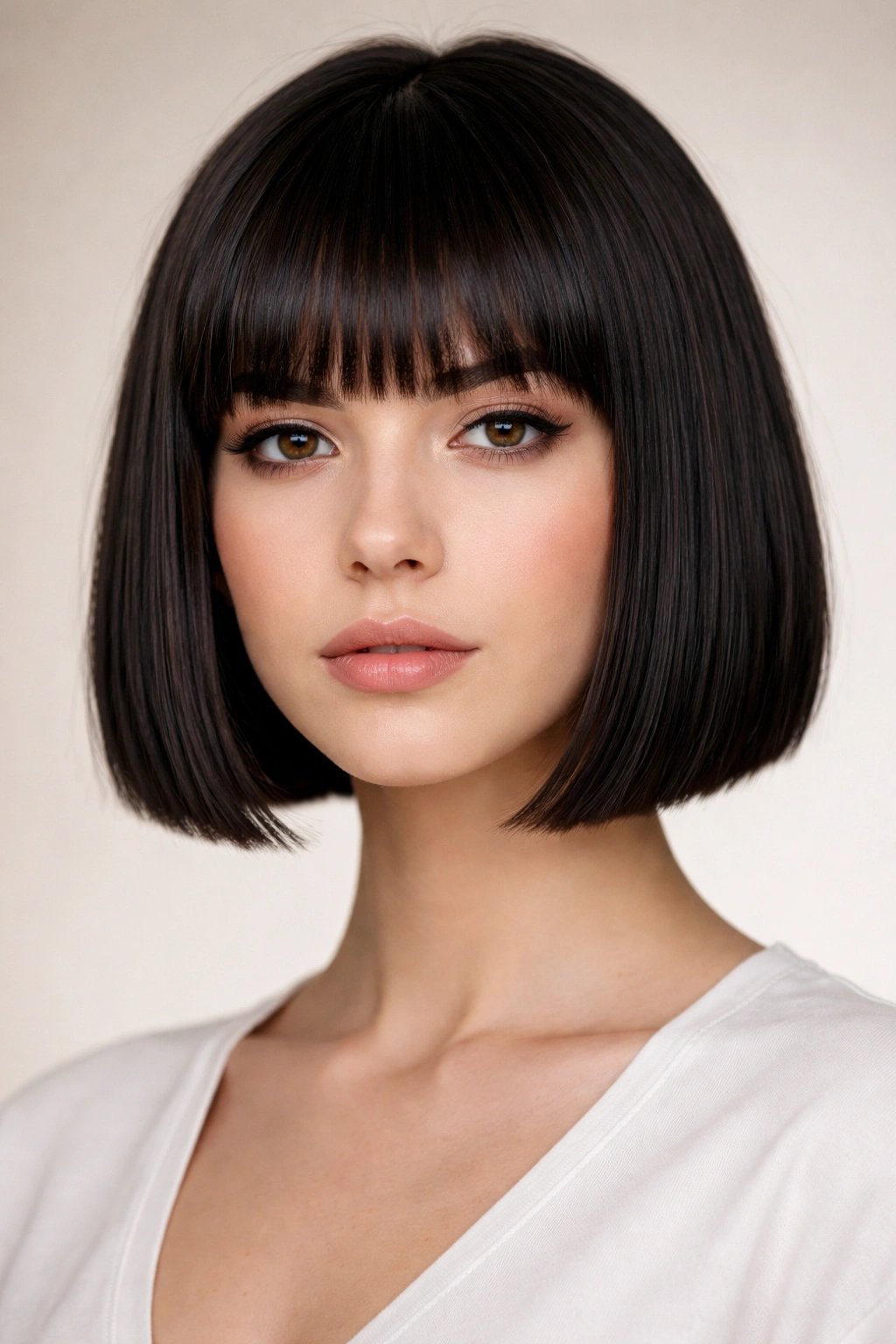
A blunt micro bob with brow-grazing bangs is the strictest cut in the group, and that’s exactly why it looks so clean. The perimeter sits close to the jaw, sometimes a little higher, and the fringe lands right at the brows or a hair above them. Nothing is hiding. Nothing is pretending to be soft.
This cut loves hair that already behaves. Fine to medium strands get a lift from the blunt edge, because the straight line makes the ends look denser. On thicker hair, the shape can feel sharp in a good way, but you’ll want your stylist to remove bulk inside the bob so it doesn’t puff out at the sides. If your hair is very wavy, you can still wear it, but you’ll probably spend more time with a flat iron or round brush.
Why It Looks So Precise
The blunt edge gives the eye one clean line to follow. The bangs do the same thing up top, which is why the whole haircut feels neat without needing much decoration.
- Ask for the bob to sit just below the cheekbone or right at the jaw if you want the face to stay open.
- Keep the bangs straight across or only slightly curved so they don’t swallow the forehead.
- Use a small round brush, about 1 inch, to push the fringe under just a touch.
- A pea-sized amount of lightweight cream is enough; too much product makes the ends look greasy fast.
Best for: straight hair, fine hair, and anyone who wants a cut that looks deliberate after a five-minute blow-dry.
2. French Bob with Wispy Bangs
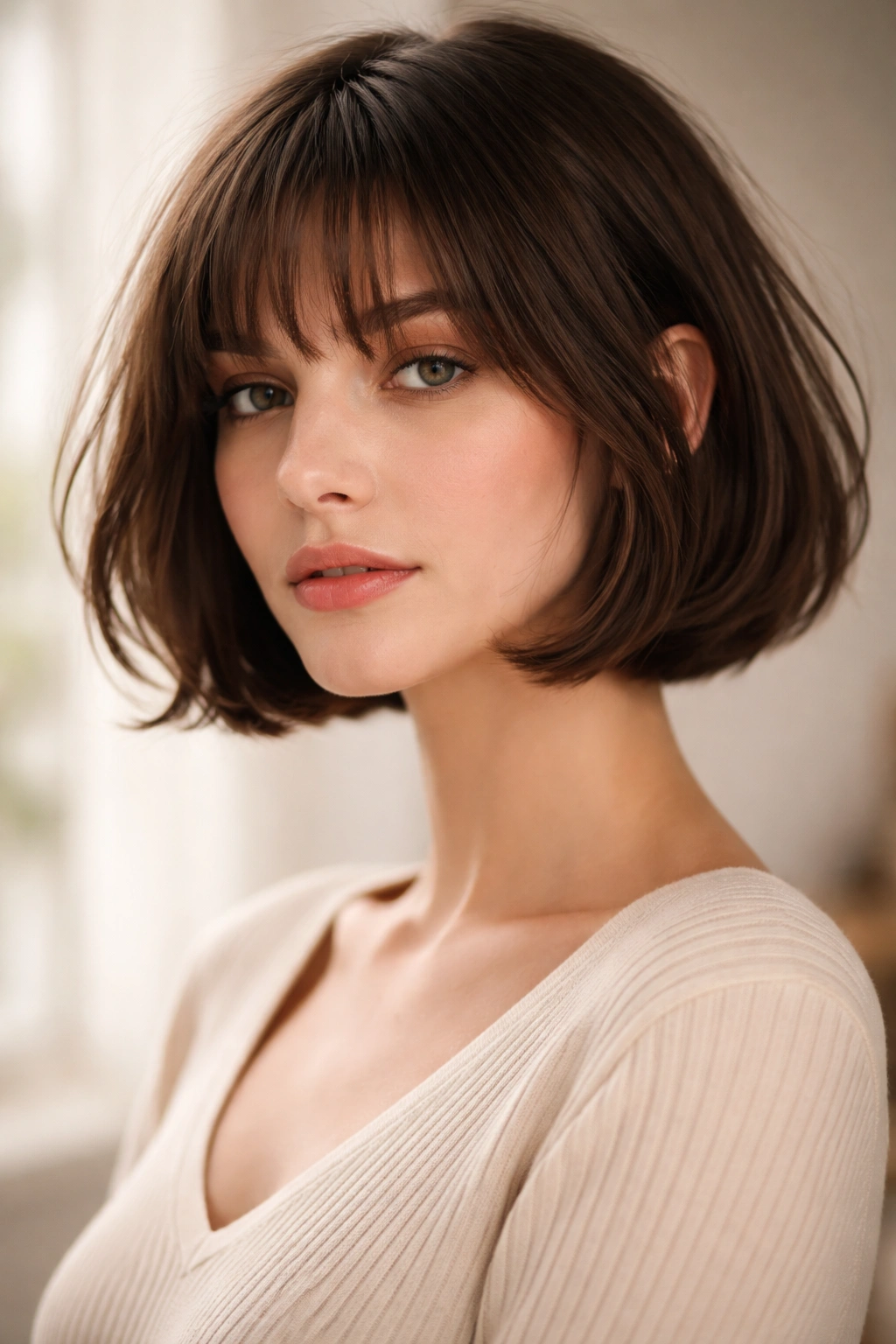
The French bob with wispy bangs is softer, but it is not vague. That’s the difference. The length usually lands around the cheekbone or just below the ear, and the fringe breaks up across the forehead instead of drawing one hard line. It has that slightly undone feel people chase, yet the structure is still there if the cut is good.
I like this style for hair that has a little bend. Air-dried waves make it better, not messier. The wispy fringe keeps the face light, which is helpful if you don’t want the bob to feel severe or heavy around the eyes. It also grows out with less drama than a blunt bang, which matters more than people admit.
A neat French bob can look a bit smug in the best way. The trick is not overworking it. Scrunch in a small amount of mousse, blast the roots for 30 seconds, and let the ends fall where they want. If the fringe looks too neat, it loses the whole point.
One small warning: too many layers can wreck this cut. You want softness, not thinness.
3. A-Line Bob with Full Straight Bangs
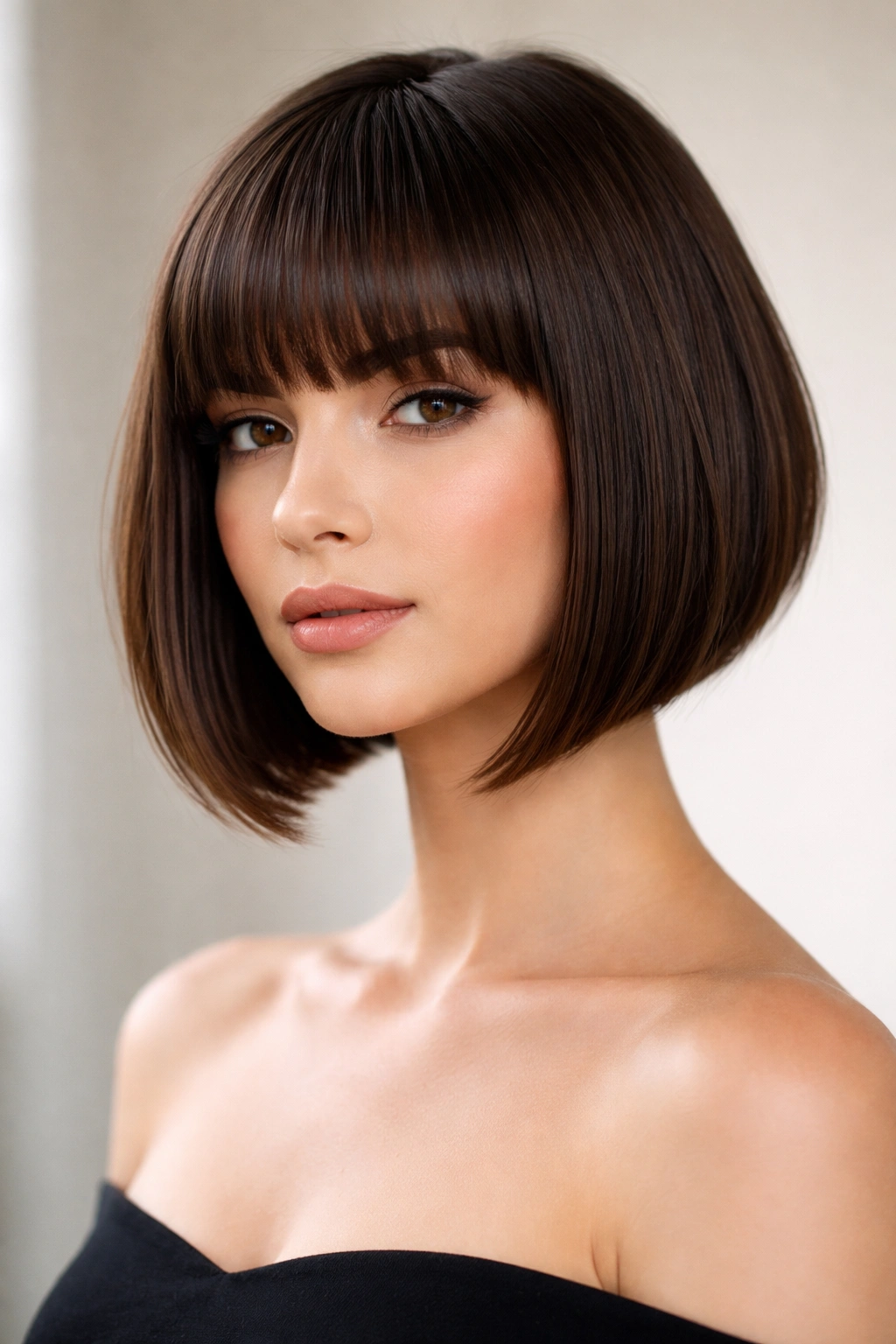
Want a bob that keeps the neck open and still gives you a strong front view? This is the one. The A-line shape is longer in the front and slightly shorter in the back, so the eye gets a clean diagonal instead of a flat shelf. Add full straight bangs, and the haircut suddenly feels more architectural.
The bang matters here because it anchors the front weight. Without it, the angle can look a little too sleek and commercial. With it, the style gains balance. It also suits people who like a polished look but don’t want to wear their hair pinned back all the time.
How to Style the Angle
The angle looks best when the ends are tucked in just a little. A flat brush can help, but a medium round brush gives you a softer bend through the front pieces.
- Dry the bangs first so they don’t get cowlicked by the rest of the hair.
- Direct the front sections forward, then turn the brush under for the last 1 to 2 inches.
- Keep the back smoother and flatter than the front; that contrast is the whole point.
- If your hair is thick, ask for internal debulking, not choppy layers.
A-line bob cuts with bangs are a smart choice when you want shape without fluff. It reads clean from the side, too, which is half the appeal.
4. Choppy Bob with Piecey Fringe
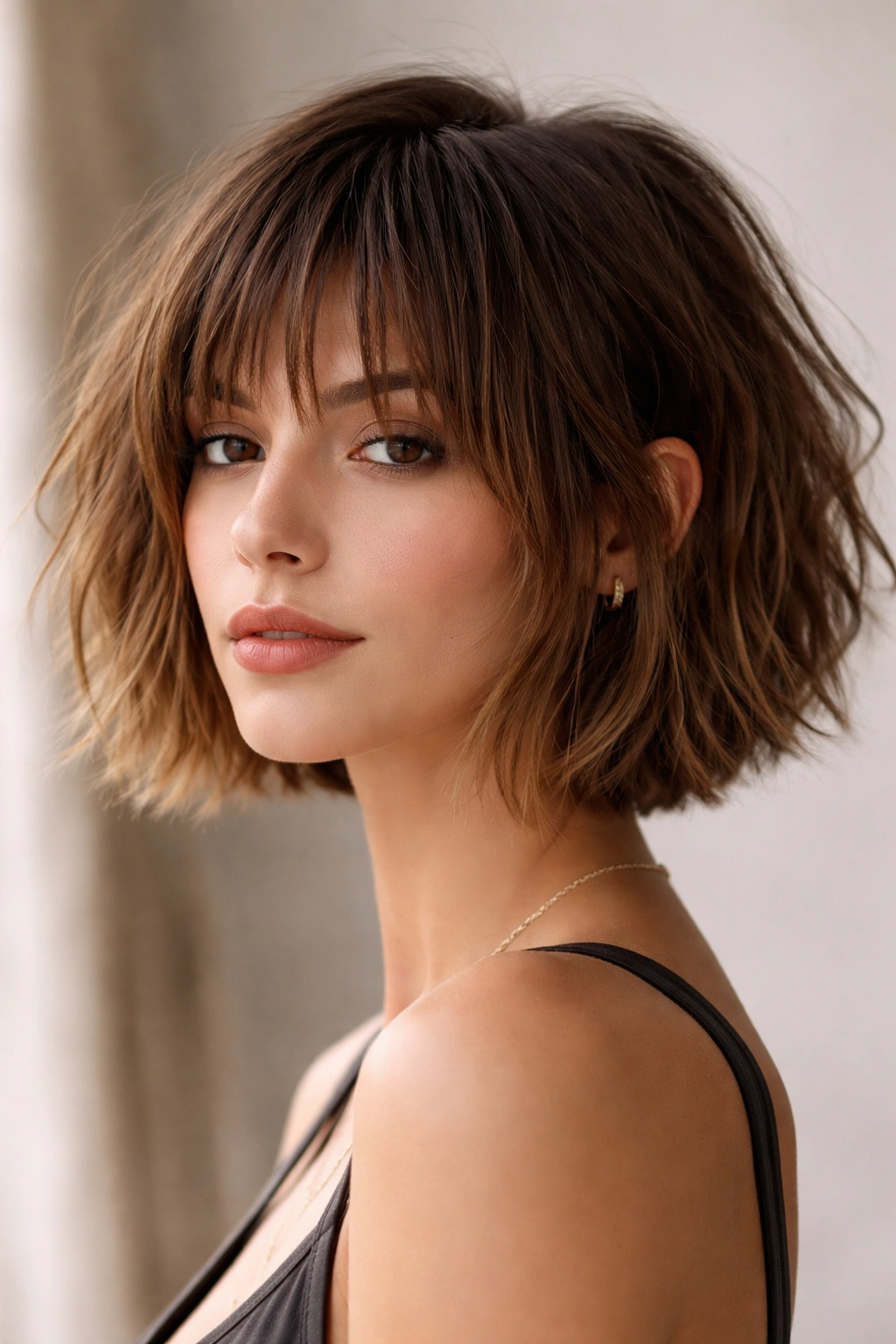
You know that cut that looks effortless until you try to recreate it yourself? This is usually the one. A choppy bob with piecey fringe works because the ends aren’t all fighting for the same line. The texture breaks the bob into smaller sections, and the bangs are cut to move rather than sit still.
That movement is useful if your hair goes flat by lunch. The jagged edges create shadow and separation, which makes the whole style look fuller than it really is. On straight hair, a little styling paste at the ends can fake that piecey effect. On wavy hair, you may barely need anything.
What to Ask For
- A bob that hits between the chin and the top of the neck.
- Layers that are softly broken, not razored to death.
- Bangs that skim the brows and split into little sections.
- A dry-cut finishing trim, if your stylist works that way, so the fringe lands in the right place once it settles.
This is one of those short bob haircuts with bangs that gets better when it is not too neat. Don’t chase a perfect outline. Chase texture that holds for six hours.
5. Curly Bob with Curly Bangs
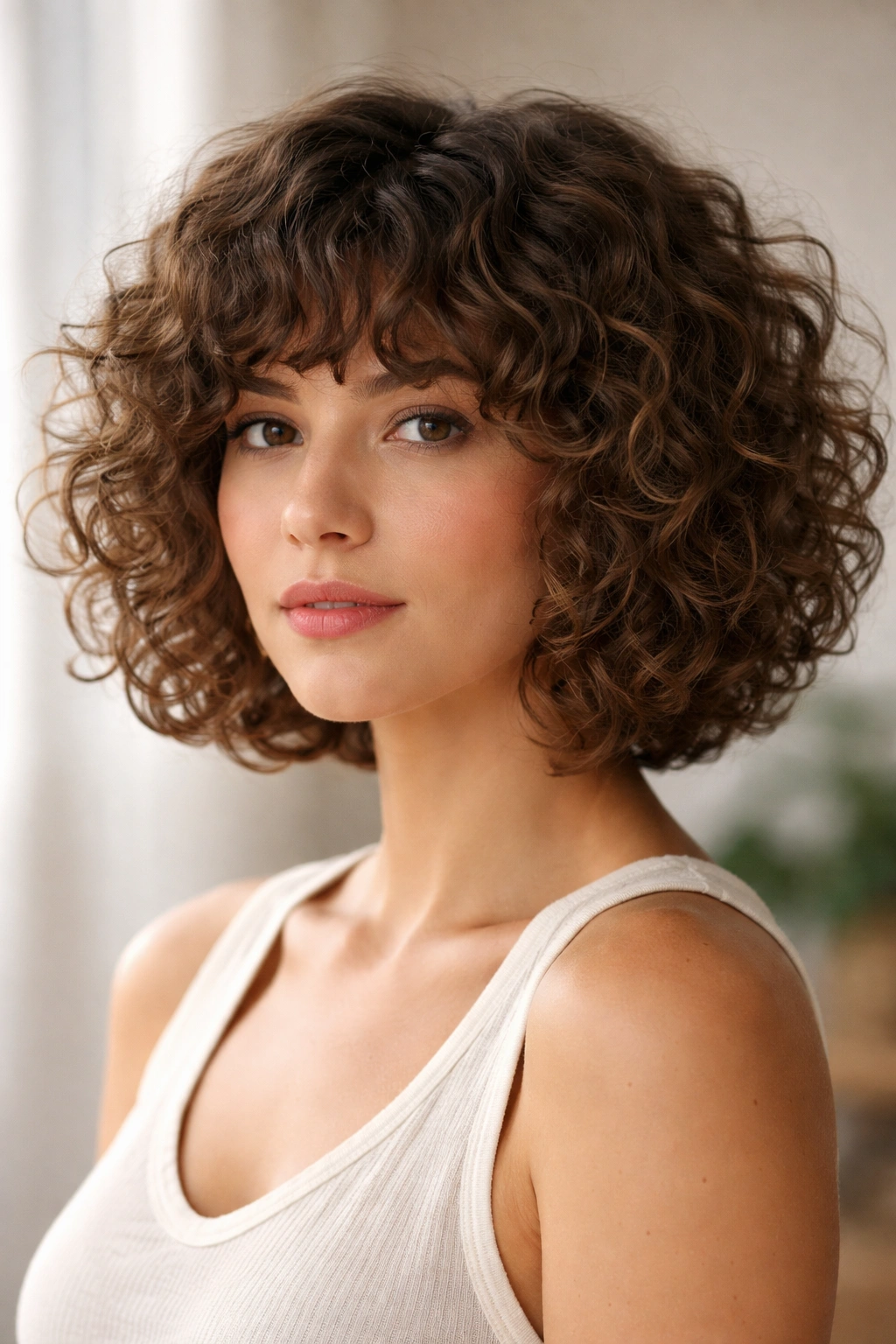
Curly hair likes a bob that respects its own shape. If you cut it too blunt and too square, the ends can turn into a triangle. If you cut it with too much layering, the top can puff while the bottom disappears. The curly bob with curly bangs sits in the middle, and when it’s done well, it looks alive from every angle.
The bangs need to be cut dry or close to dry. Wet curls lie to you. They spring up in strange ways, and then the fringe ends up half an inch shorter than you expected. A good curly fringe should graze the brows or curl in a soft arc above them. It should not look like a helmet.
Air-dried curls usually suit this shape, but a diffuser helps if your roots collapse. Use a light gel or curl cream, then scrunch the bangs separately with your fingers so they don’t fuse into one heavy panel. If the fringe feels too short on day one, wait. Curl shrinks, and it shrinks in a way that still surprises people.
Seriously, this cut can be gorgeous. It just needs patience and a stylist who understands curl pattern, not just curl type.
6. Side-Parted Sleek Bob with Side-Swept Bangs
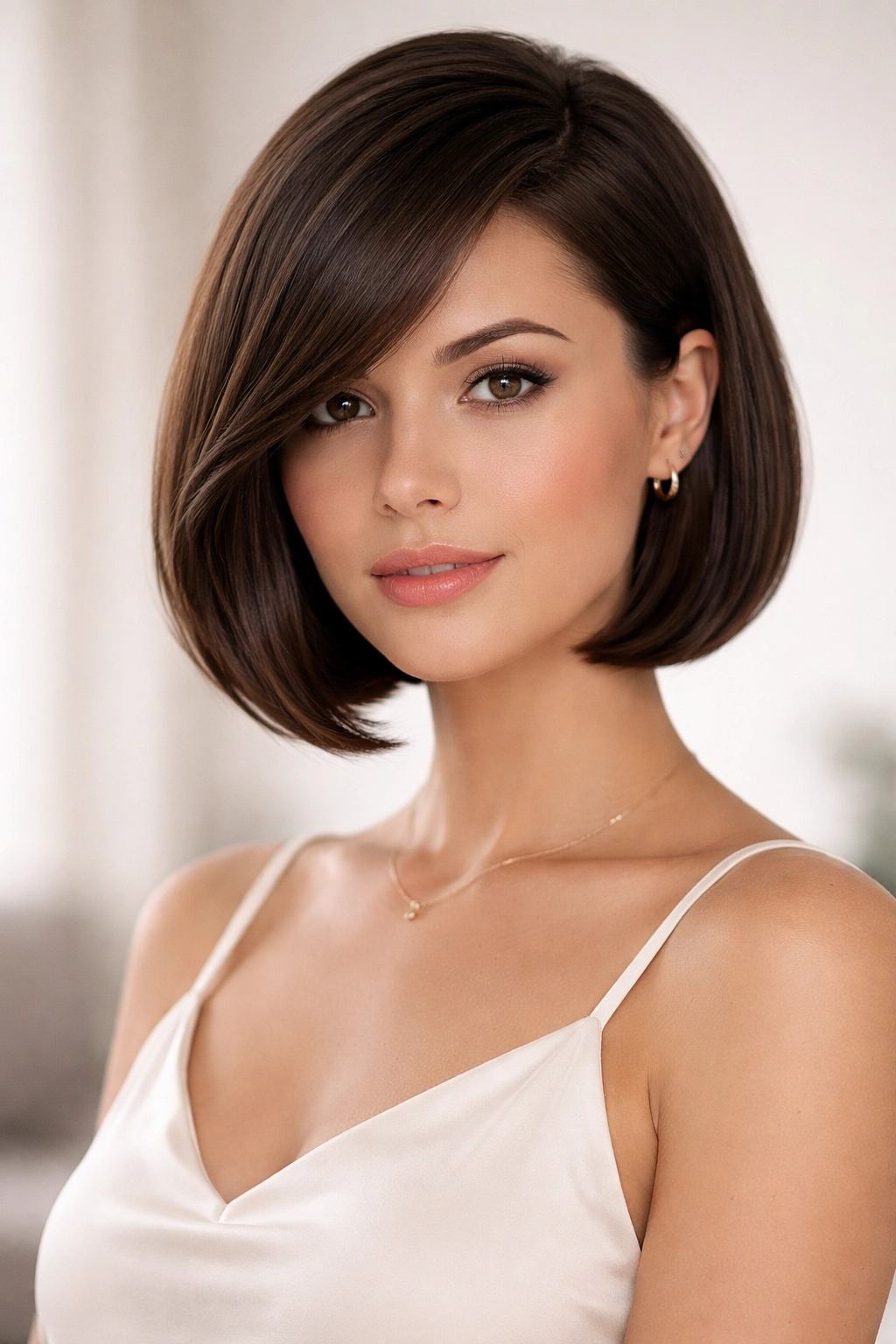
Unlike a heavy straight fringe, this cut keeps more of the forehead open. That sounds small. It isn’t. A side-parted sleek bob with side-swept bangs changes the mood from blunt to easy, and it does it without losing polish.
This version works especially well if your face is already strong in the middle — a pronounced brow, a sharp jaw, or a high forehead. The side-swept bang softens the front without hiding it. The bob itself stays sleek, usually resting around the jaw or just above the shoulders if you want a slightly longer short cut. The whole look is smoother than shaggy styles, which makes it useful if you like a cleaner silhouette.
The styling part is straightforward. Blow-dry the front away from the part, then let the fringe fall diagonally across one temple. A lightweight serum on the ends keeps the shine, but don’t pile it on or the shape collapses.
This is the bob I’d hand to someone who wants bangs but does not want to look like they are wearing bangs every second of the day.
7. Rounded Bob with Arched Bangs
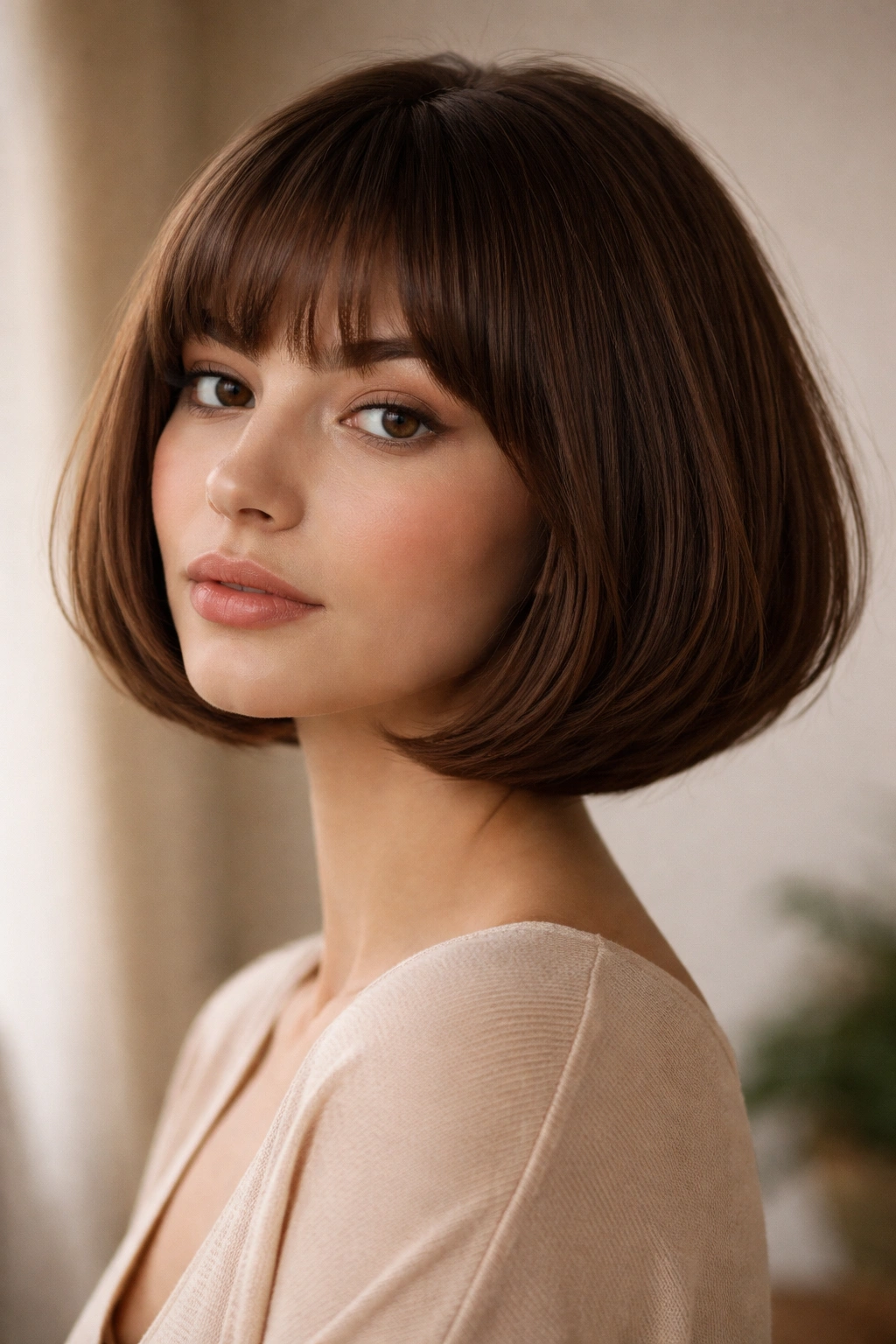
A rounded bob with arched bangs is a little old-school, and I mean that in a good way. The curve of the haircut follows the head instead of fighting it, so the shape feels full and finished. The bangs mirror that curve with a soft arch, which keeps the front from looking flat or harsh.
This cut is a quiet fix for hair that tends to spread outward. The rounded line brings the ends inward at the jaw, while the arched fringe opens the center of the face just enough. It’s especially nice on oval and heart-shaped faces, though a good stylist can adapt it for others by adjusting the bang length a few millimeters at a time. Those few millimeters matter. A lot.
What Makes It Hold Its Shape
The roundness comes from the blow-dry as much as the cut. Use a medium brush and direct the ends under while the hair is still warm. Then let it cool before touching it.
- Keep the perimeter soft and curved, not boxy.
- Aim for bangs that arc from the outer brow toward the center.
- Use a heat protectant with a little grip, not a slippery oil.
- Finish with a light mist of flexible spray so the shape doesn’t go helmet-stiff.
This one looks especially good when the rest of the outfit is simple. The haircut does the talking.
8. Shaggy Bob with Curtain Bangs
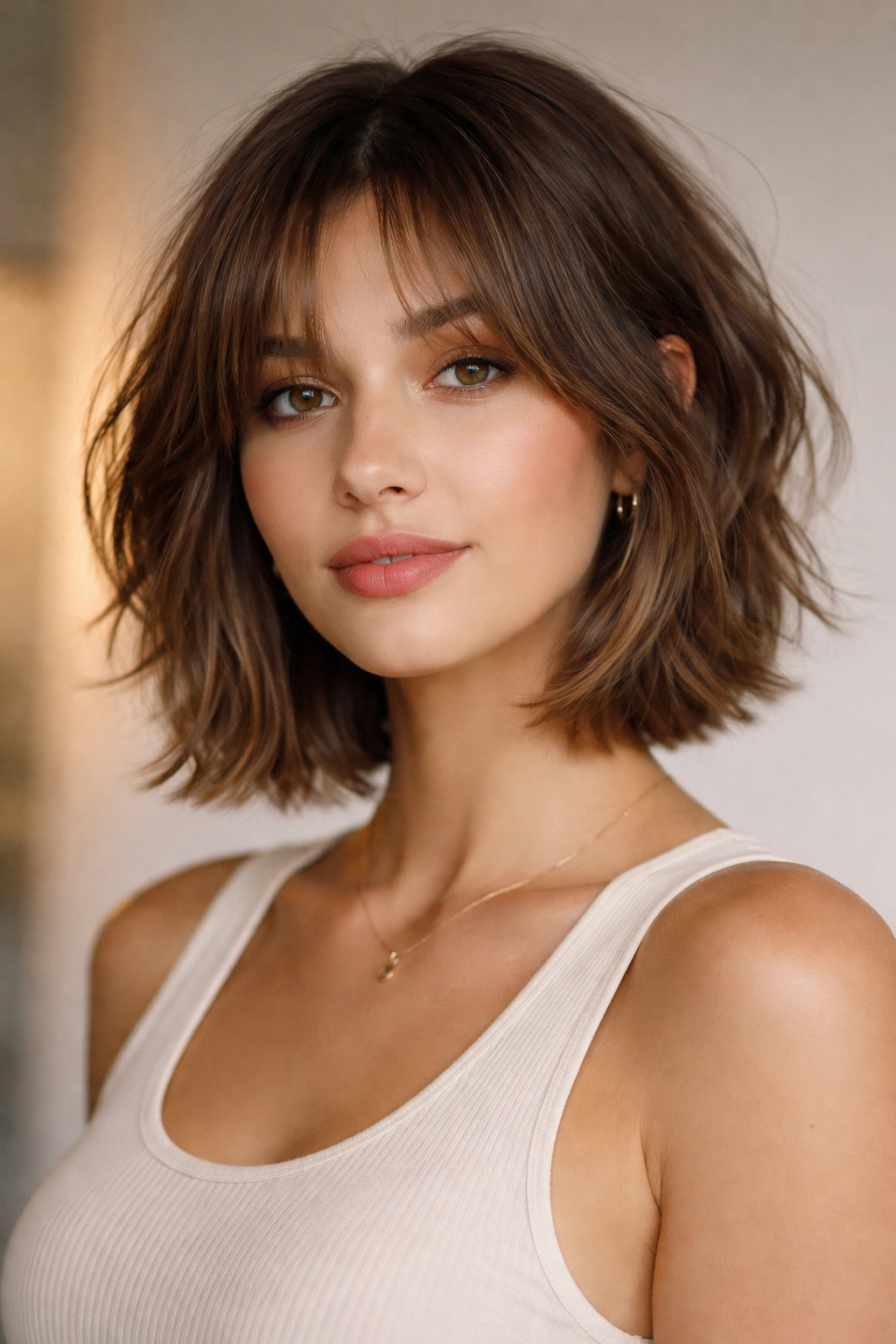
Need movement without giving up the bob shape? Curtain bangs are the easy answer. A shaggy bob with curtain bangs has enough layers to feel loose, but the length still stays in bob territory, usually at the chin or a touch below. The fringe parts in the middle and falls away from the face, which is why it plays so nicely with texture.
The shag part matters more than people think. You want the layers around the crown and cheekbones to feather out, not stack up in obvious steps. That keeps the cut from turning into a triangle as it grows. With curtain bangs, the center is usually a little shorter than the sides, so the bangs blend into the front layers instead of sitting on top of them like a separate piece.
How to Wear It
A quick bend with a blow-dryer brush is enough most days. Wrap the front pieces away from the face, then let them cool before you touch them.
- Keep the part slightly off-center if you want the fringe to fall naturally.
- Use a texturizing spray at the mids, not the roots.
- Ask for layers that start around the cheekbone.
- Trim the curtain sections every 6 to 8 weeks if you want the split to stay open.
This is one of the least fussy short bob cuts with bangs, and that alone makes it worth a look.
9. Angled Bob with Bottleneck Bangs
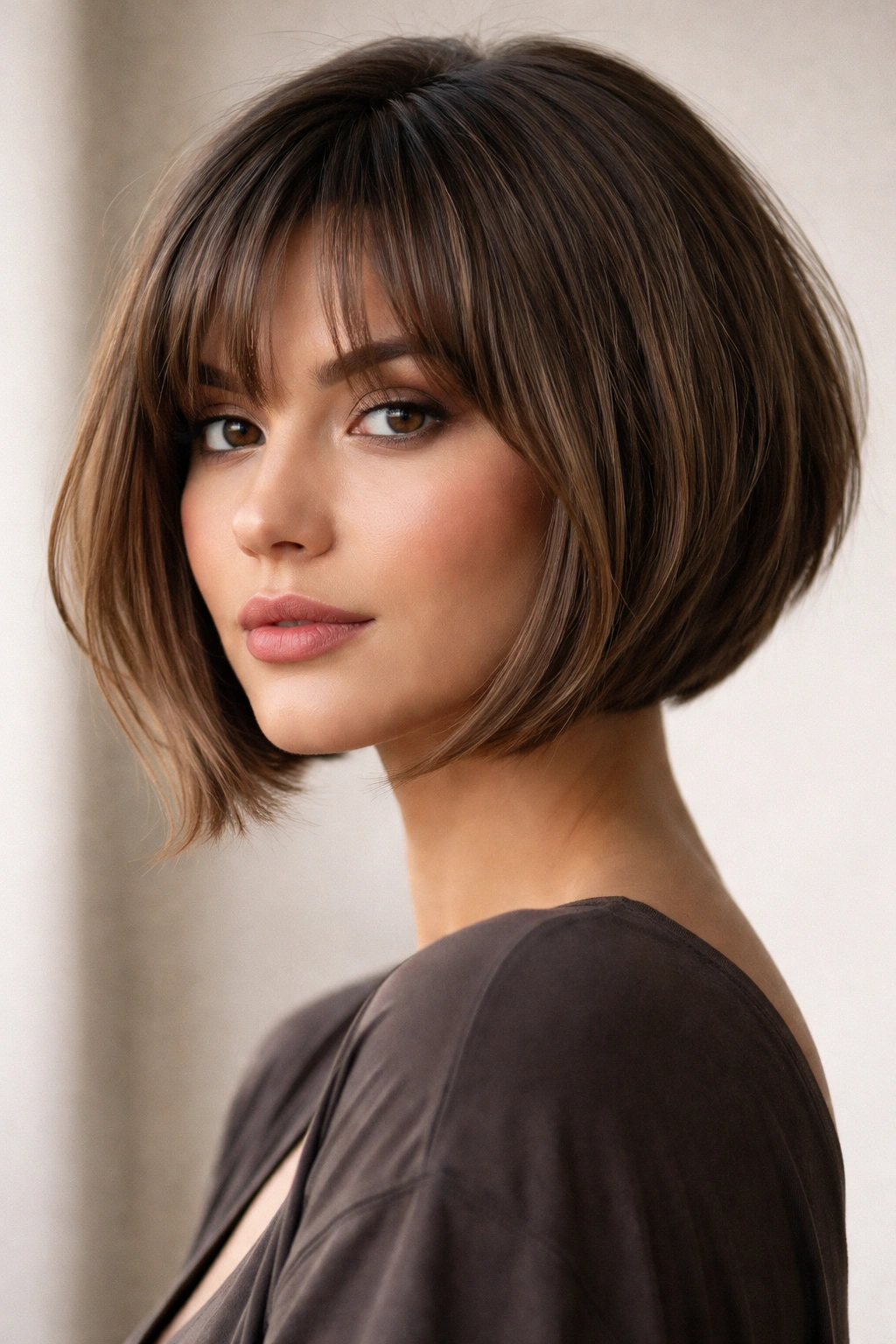
The angled bob with bottleneck bangs is for someone who likes structure but doesn’t want a hard front edge. The bob is shorter in the back and longer toward the face, which creates motion before the hair even moves. The bangs are narrow at the top, then open out as they drop, so they frame the eyes without boxing them in.
That shape does a useful thing: it gives you the feel of bangs without the full wall across the forehead. If your hairline has cowlicks or your front pieces separate in odd places, bottleneck bangs can be easier to live with than a blunt line. They forgive a lot. Maybe that’s why stylists keep coming back to them.
- Best on medium to thick hair that needs direction at the front.
- Keep the shortest point around the center of the forehead.
- Let the side pieces reach the cheekbone.
- Blow-dry the center first, then the sides, so the shape opens cleanly.
I’d choose this cut for someone who wants a little drama but not a heavy maintenance routine. The angle gives you the drama anyway.
10. Layered Bob with Feathered Bangs
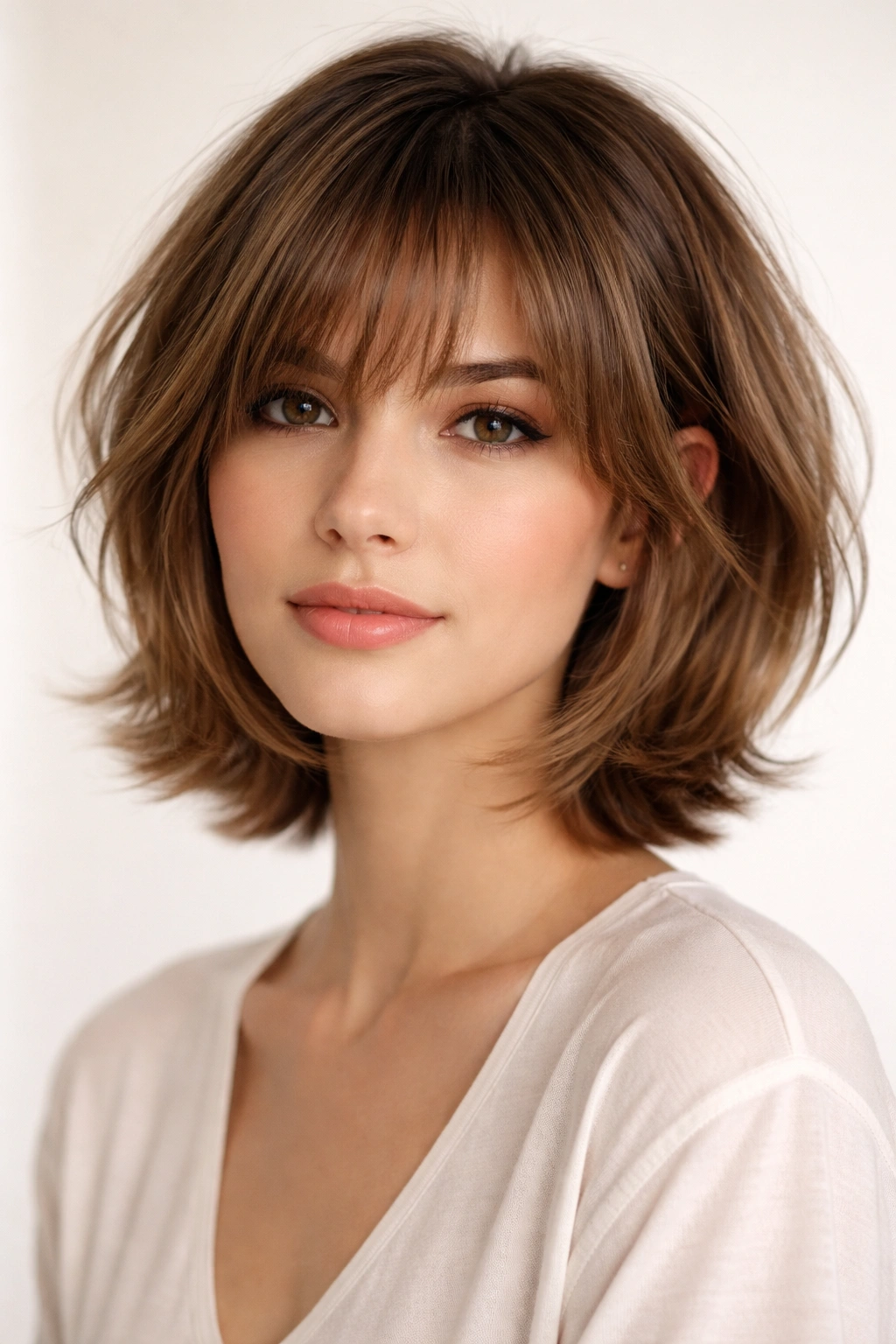
Picture a bob that never sits still in a bad way. That’s the layered bob with feathered bangs. The layers are there to break up weight, and the fringe is sliced softly so it moves with the rest of the cut instead of hanging like a curtain. It feels lighter than a blunt bob, but it still reads as a bob, not a shag pretending to be one.
This style helps thick hair most, because thick hair can easily look square at short lengths. Feathering removes that blocky feel. On finer hair, the layers need to stay controlled or the whole shape can get wispy too fast. That is the main trade-off. You want air, not fragility.
The Details That Matter
- Keep the layers longest around the jaw so the bob still has a clear outline.
- Feather the bangs with a point-cutting technique, not heavy thinning shears.
- Dry the fringe forward, then brush it slightly sideways at the end.
- Use a lightweight mousse at the roots if the crown falls flat.
The nicest thing about this cut is the way it grows out. It softens instead of turning awkward overnight. That alone is worth something.
11. Chin-Length Blunt Bob with Baby Bangs
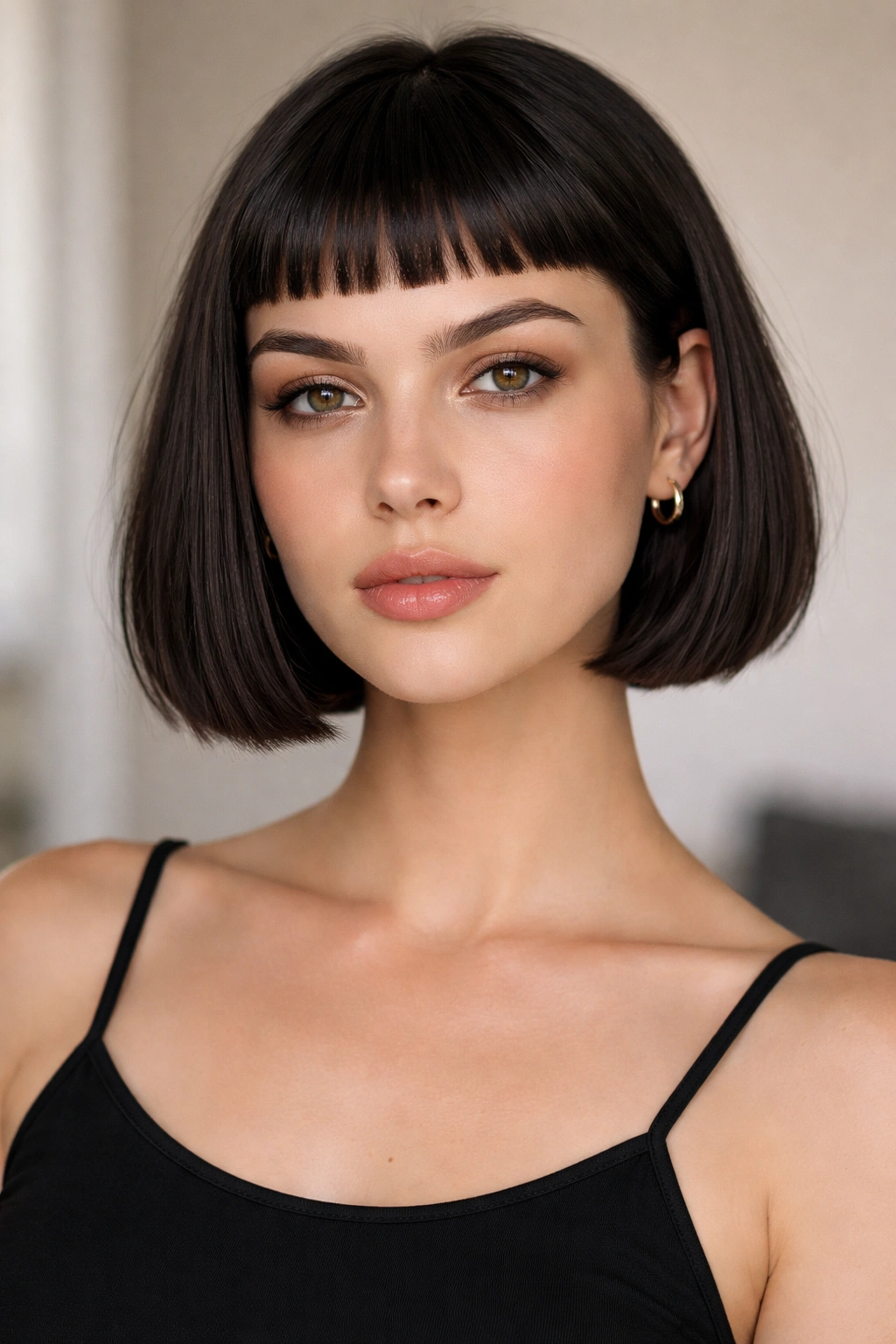
A chin-length blunt bob with baby bangs is not shy. It puts the face right out there and asks the rest of the look to keep up. The straight perimeter hits at or just below the chin, while the bangs stop well above the brows. The contrast is the point — long in the body, short in the fringe.
I like this cut on people who want something crisp and a little graphic. It works best when the hair has enough density to hold the blunt line without gaps. If your hair is very fine, the bob can still work, but the bangs need to be cut with care so they don’t expose too much scalp. That’s a real risk with baby bangs. They look easy. They are not easy.
The maintenance is also different. You’ll be trimming the fringe more often than the bob, and the line has to stay deliberate or it starts to look accidental. But when the proportions are right, the haircut has a lot of personality without needing much styling.
A tiny dab of smoothing cream and a flat brush is usually enough. Anything more makes the fringe look stiff, and stiff is the enemy here.
12. Tucked-In Bob with Long Side Bangs
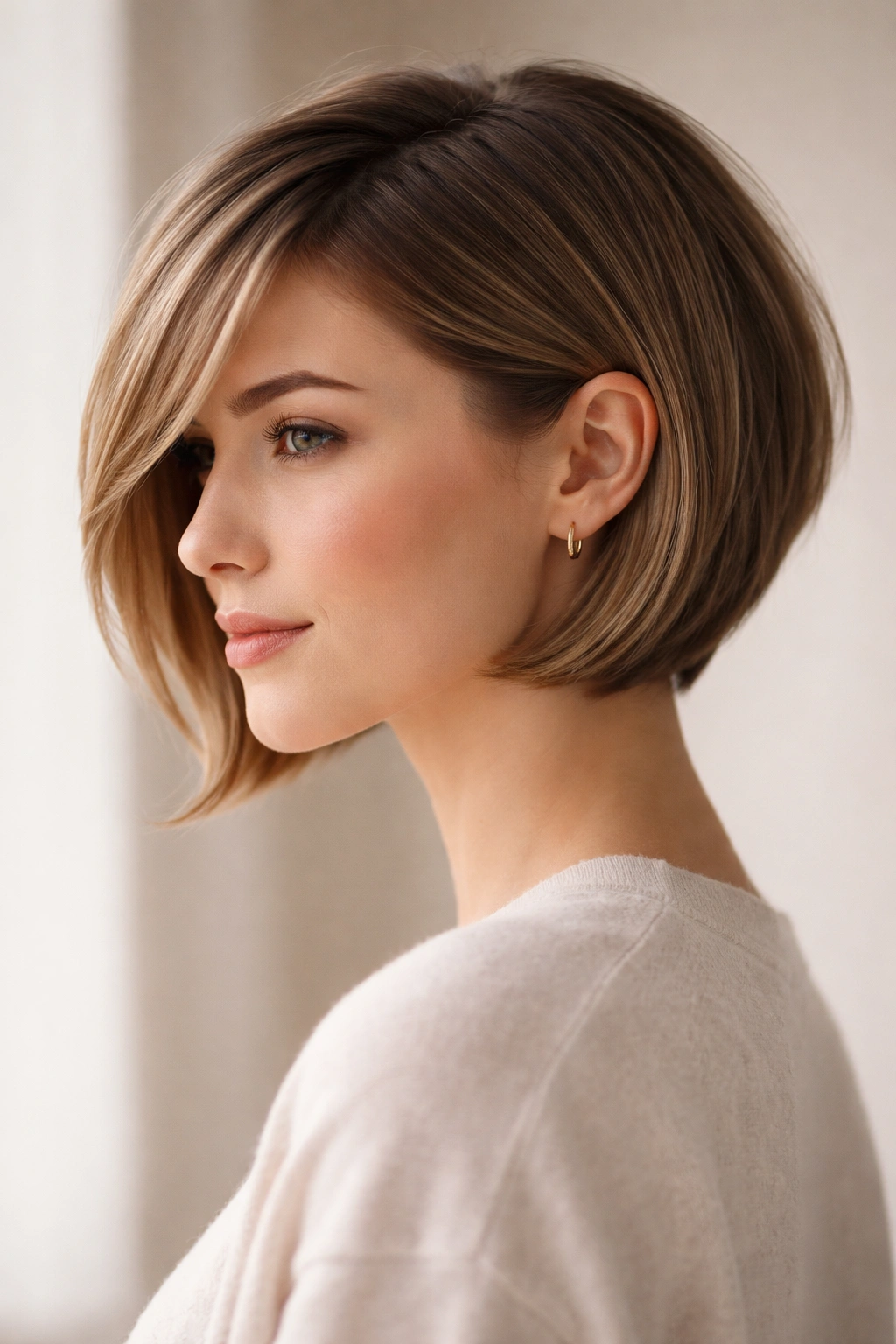
Compared with a blunt fringe, long side bangs give you breathing room. That’s why the tucked-in bob with long side bangs works so well for people who want a short haircut but hate the feeling of hair sitting squarely on the face. The ends curve inward toward the neck, and the bangs sweep down long enough to tuck behind the ear when needed.
This is one of the more forgiving short bob styles with bangs. It grows out cleanly, it can be dressed up or down, and it doesn’t require the kind of daily precision a micro fringe demands. If you’re the type who wants to wash, rough-dry, and leave, this is a smart place to land.
Why It’s So Easy to Live With
The long bang does two jobs. It softens the forehead and gives you a built-in escape hatch when you want hair off your face. The tucked-in ends keep the bob neat even when the rest of the styling is lazy.
- Ask for a cut that lands right at the jaw or a little below.
- Keep the side bang long enough to tuck behind one ear.
- Use a blow-dryer nozzle to direct the ends inward.
- Finish with a touch of wax on the bang tips if they separate too much.
This is the kind of haircut that doesn’t ask for much and still looks considered.
13. Inverted Bob with Dense Forehead-Framing Bangs
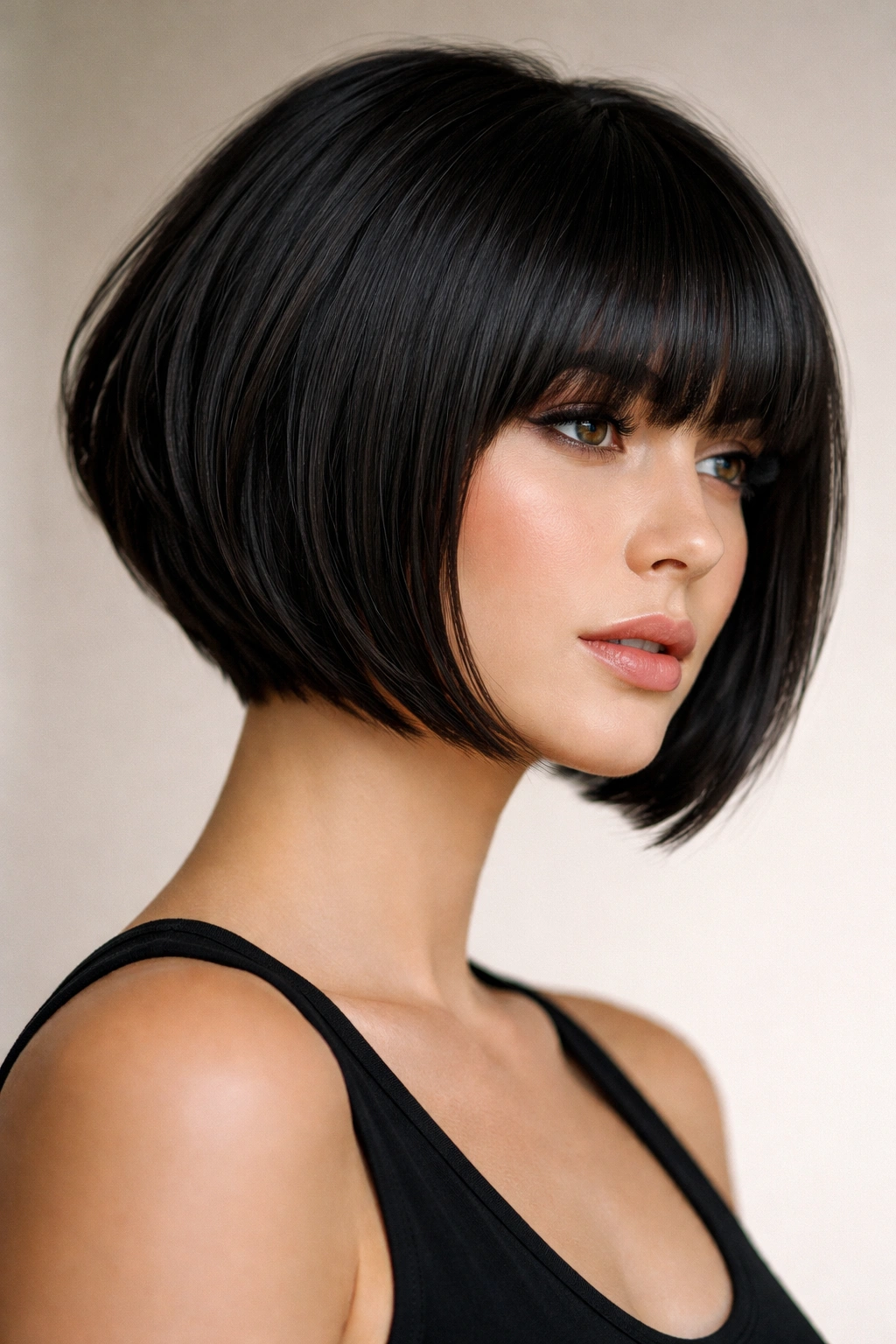
Can a short bob feel dramatic without being fussy? Yes, if the back is stacked and the front is controlled. An inverted bob with dense forehead-framing bangs gives you lift at the crown and a strong curtain across the front, so the haircut has a built-in shape even before you touch it with a brush.
The stacked back is what lifts the whole silhouette. It makes the neck look longer and the front pieces look more purposeful. Dense bangs, when cut with enough softness at the edge, keep the front from getting too open. This is a good option for thick straight hair, and it can work on coarse hair too if the inside weight is removed cleanly.
Ask for These Details
- Shorter layers at the back of the head, not just a vague “angle.”
- Bangs that start dense at the center but soften at the sides.
- A front length that reaches the cheekbone or chin, depending on face shape.
- Internal texturizing only where the hair bulks up; too much thinning will ruin the line.
This cut wants a little commitment. It rewards it, too. If you like a bob that looks shaped even on a sleepy day, keep this one near the top of the pile.
14. Wavy Bob with Grown-Out Bangs
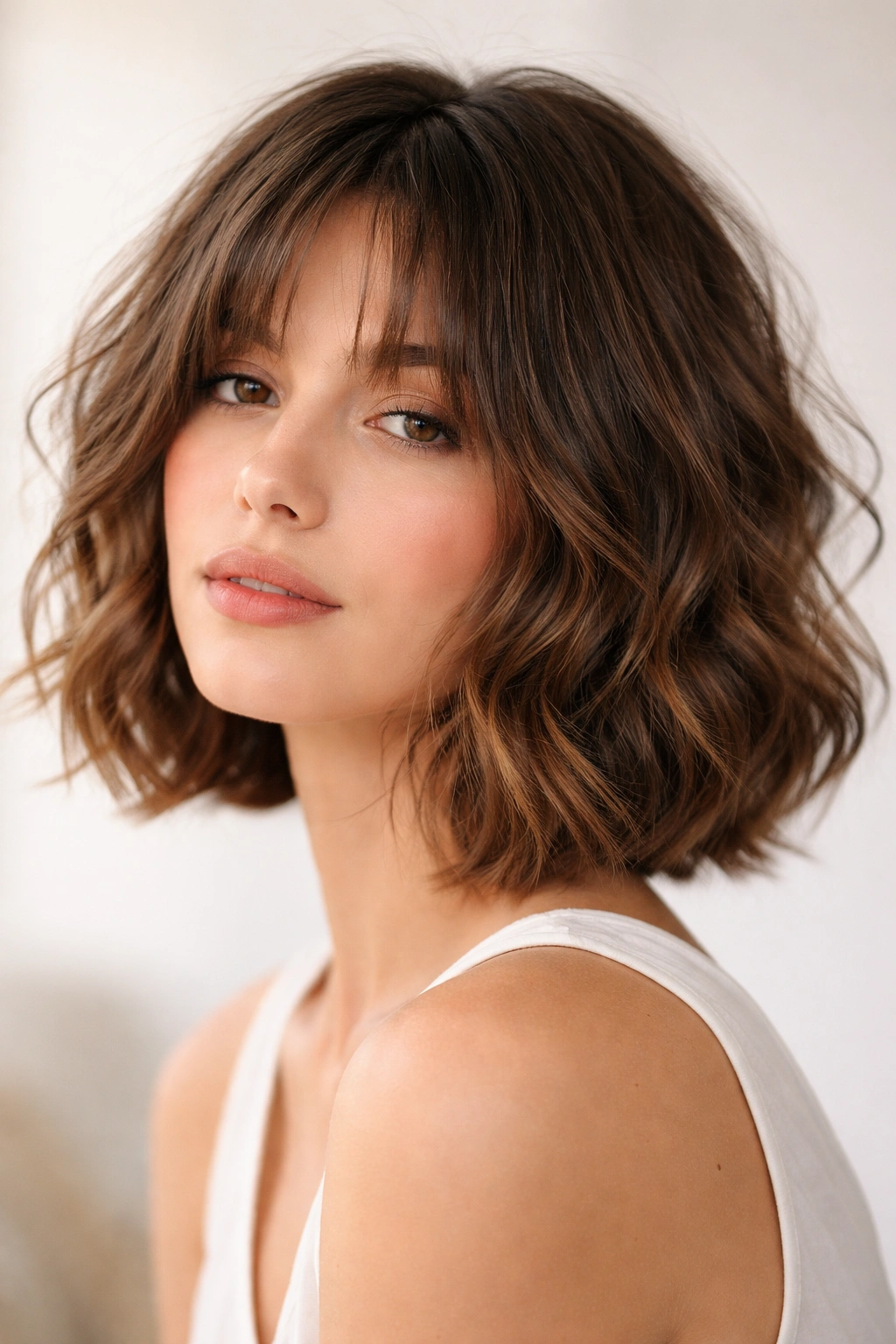
A wavy bob with grown-out bangs is what happens when you stop fighting your hair and let it settle into a useful shape. The bob usually sits around the chin, and the fringe has reached that middle stage where it brushes the cheeks instead of sitting squarely on the forehead. That in-between length is useful. It looks relaxed, and it is easier to pin back if needed.
The wave softens everything. You do not need perfect bends or polished ends here. A little sea-salt spray or mousse at the roots, a quick twist with your fingers, and you’re halfway there. If the bangs split a little in the center, fine. That can look better than forcing them straight down.
I think this is one of the most livable options in the whole group. It still reads as a bob with bangs, but it doesn’t demand that you babysit the fringe every morning. It also survives grow-out without looking sloppy, which is rare.
The only real caution is shape control. If the layers get too short, the wave can puff out. Keep the line loose, not jagged.
15. Jaw-Length Bob with Narrow Fringe
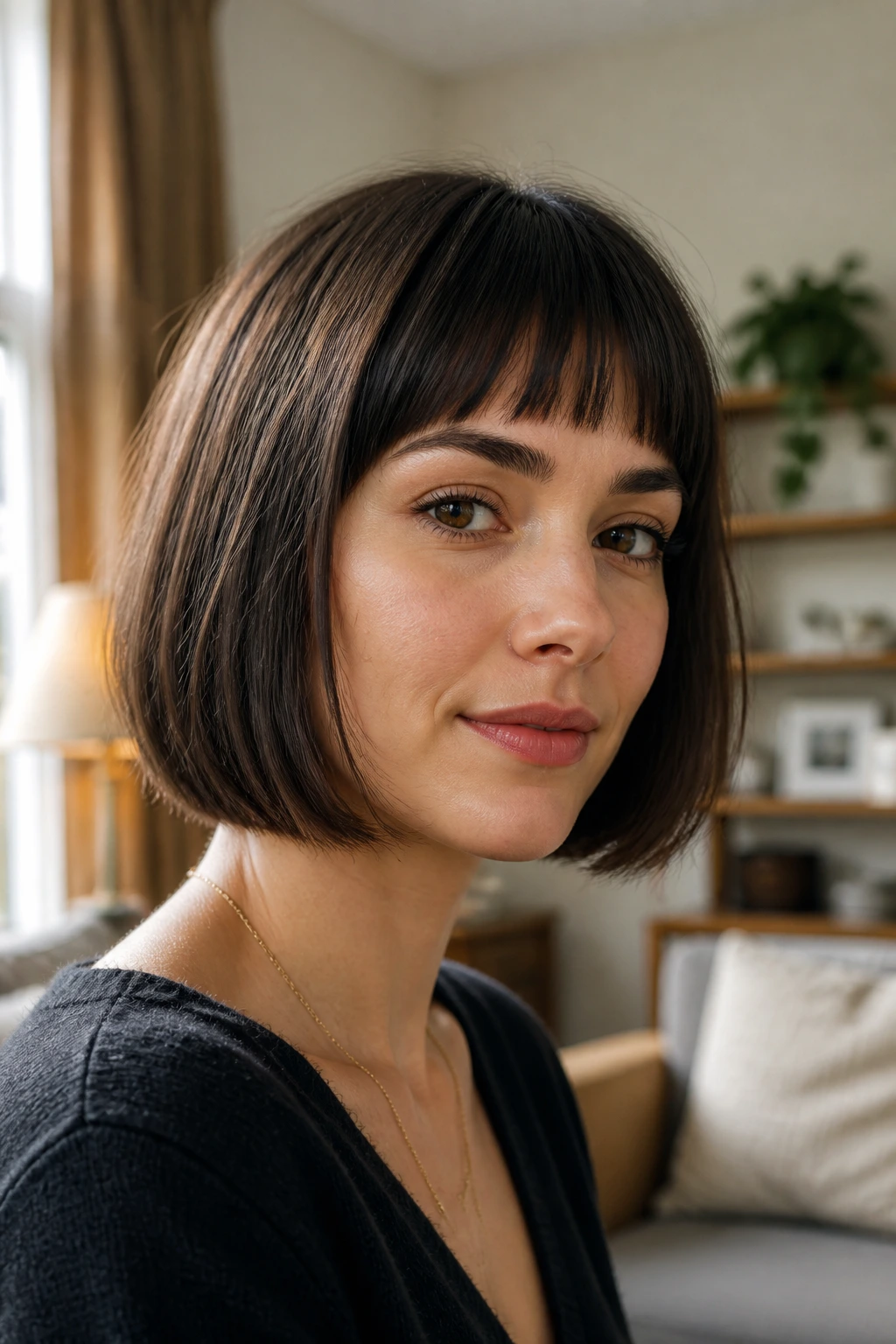
A jaw-length bob with narrow fringe is the cleanest compromise between bare-faced and fully fringed. The bob itself sits right at the jaw, which keeps the cut short and neat, while the fringe stays narrow enough to show skin at the temples. That bit of openness matters. It stops the haircut from closing in around the face.
This shape works especially well for people who want bangs but dislike the feeling of a full curtain across the forehead. The narrow fringe can be centered, slightly off-center, or broken into soft sections, depending on how much coverage you want. It also handles grow-out better than a blunt straight bang, because the sides can blend into the front pieces instead of forming a hard line.
I’d ask for this if you like structure, but not stiffness. It is polished without looking lacquered, and it doesn’t rely on heavy styling to make sense. A small round brush, a quick bend at the ends, and a light touch of spray are usually enough.
If you want one short bob that stays neat, softens well, and still gives you the face-framing effect of bangs, this is the one I’d keep on the shortlist.
