



Grey hair has a habit of telling on a bad cut. Too much bulk, and it puffs out. Too little structure, and it hangs there looking tired by lunchtime.
That’s why grey bob cuts work so well when they’re done with a little intention. A bob gives silver, charcoal, pewter, and white strands a shape to live in. It can make the colour look crisp instead of washed out, and it can turn texture that feels awkward in a long style into something clean and purposeful.
The nice part is that a bob doesn’t have to be severe. Some grey bob hairstyles are sharp and glossy, with a straight line that hits the jaw. Others are softer, with layers, bends, and fringe that make the whole cut feel lighter. The trick is picking the version that suits your hair’s thickness, your face shape, and how much time you want to spend getting ready.
Grey hair is also honest in a way dyed hair sometimes isn’t. It shows movement, shine, frizz, and ends with no mercy. So the best cuts respect that. They don’t fight the hair. They work with it.
1. Chin-Length Blunt Grey Bob
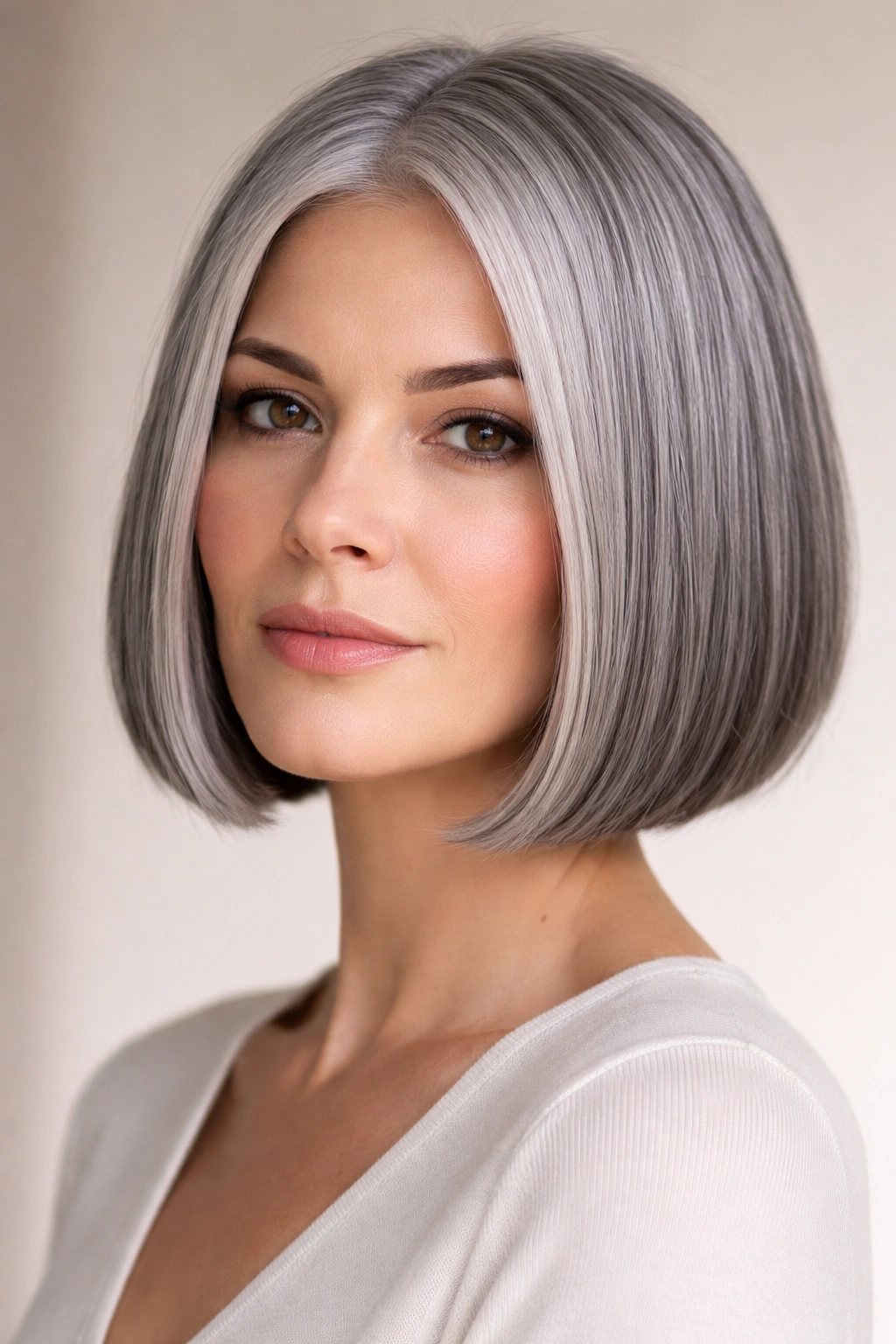
A blunt grey bob at the chin is one of those cuts that looks expensive even when the styling is dead simple. The line is the point. Clean ends, no obvious layering, and a length that sits right around the jaw give silver hair a strong frame, which is exactly what many people want once grey starts changing the way their hair falls.
Why the blunt edge works
The blunt edge makes the colour look denser. That matters if your grey is fine, because a wispy cut can make it seem thinner than it really is. A straight line across the bottom gives the eye something solid to land on, and that little bit of structure keeps the style from looking soft in a bad way.
It also plays nicely with natural shine. Grey hair often reflects light well, especially when it’s healthy and smooth, and a blunt line lets that shine read as deliberate. You don’t need a complicated finish here. A round brush, a quick blow-dry, and a touch of smoothing cream are usually enough.
Best for
- Fine to medium hair that needs more visual weight
- Straight or slightly wavy textures
- Anyone who wants a polished grey bob haircut without layers getting in the way
Pro tip: ask for the ends to be cut dry if your hair has a lot of bend. Grey hair can spring up more than you expect once it’s cut wet, and a dry finish helps the stylist see the real shape.
2. Soft Layered Side-Part Bob
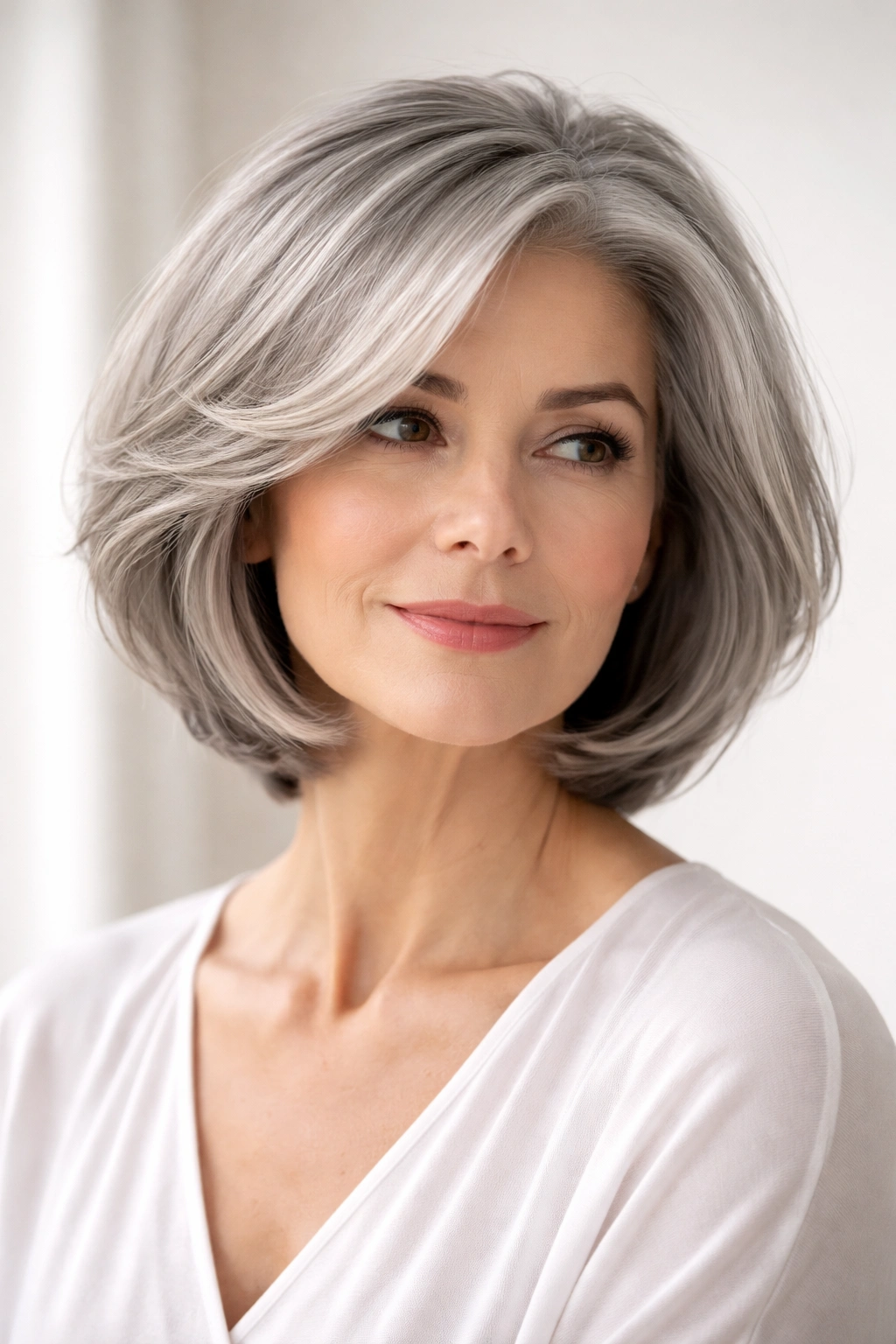
Why does a side part make a bob look richer? Because it breaks the symmetry just enough to keep grey hair from flattening into a helmet shape. A soft layered side-part bob is one of my favourite answers for hair that falls limp on top but still has enough body through the ends to hold movement.
The layers here should be gentle, not choppy. You want the cut to skim and lift, especially around the crown and the cheekbones. That keeps the style airy and stops the sides from puffing out in the wrong places. Grey strands can get a little wiry, and this cut gives them somewhere useful to go.
How to style it
A side part works best when it is not cut in a hard, perfect line every day. Shift it a little, depending on where your hair naturally wants to sit. Then use a small round brush or a flat brush with the dryer aimed downward so the surface lies smooth but not stiff.
A light mousse at the roots helps this bob keep shape without feeling crunchy. You do not need much. A golf-ball-sized amount is usually plenty for shoulder-skimming hair, maybe a little less if your hair is fine.
This is one of those styles that rewards a small amount of mess. Not chaos. Just movement.
3. Wavy Textured Grey Bob
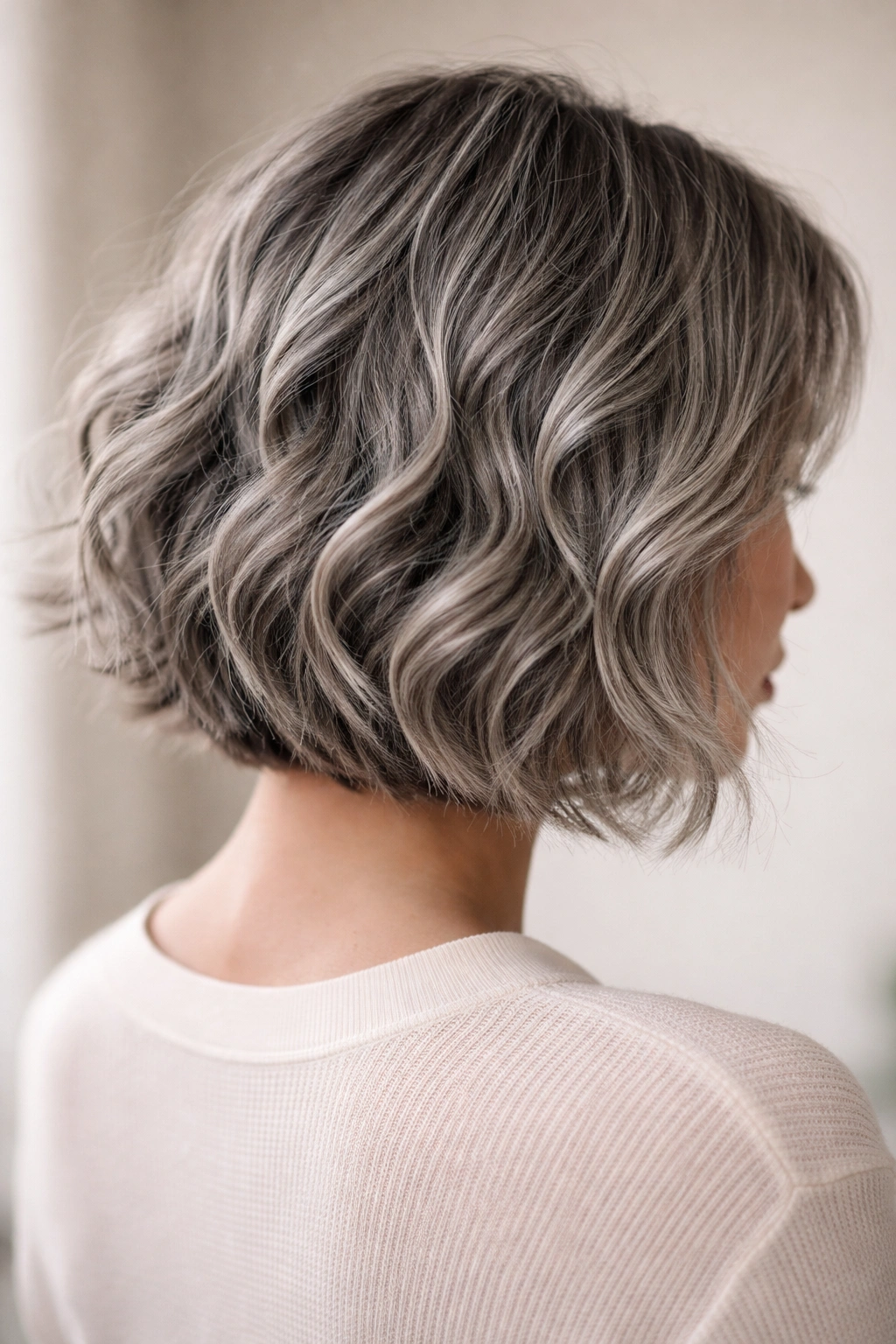
Some grey bob cuts look best when they stop pretending hair is meant to be perfectly still. A wavy textured bob leans into the bend, the lift, and the little uneven pieces that make silver hair look lived-in instead of overworked. If your natural wave turns up around the mid-lengths, this cut can be a relief.
The texture changes the whole mood. Instead of one smooth surface, you get little flashes of silver and charcoal that catch the eye as the hair moves. That mixed tone is gorgeous on grey hair, especially when the cut isn’t too heavy at the ends. The shape should feel loose, not puffy.
A lot of people try to fight wave with too much brushing. Bad idea. A wavy bob usually looks better after you scrunch in a bit of leave-in conditioner, rough-dry it to about 80 percent, and let the rest air-dry. If you want more definition, twist two-inch sections around your fingers while it’s still damp.
A cut like this can be forgiving on busy mornings. It doesn’t need every strand to behave. In fact, the slight irregularity is part of the appeal.
4. Angled Grey Bob With a Tapered Nape
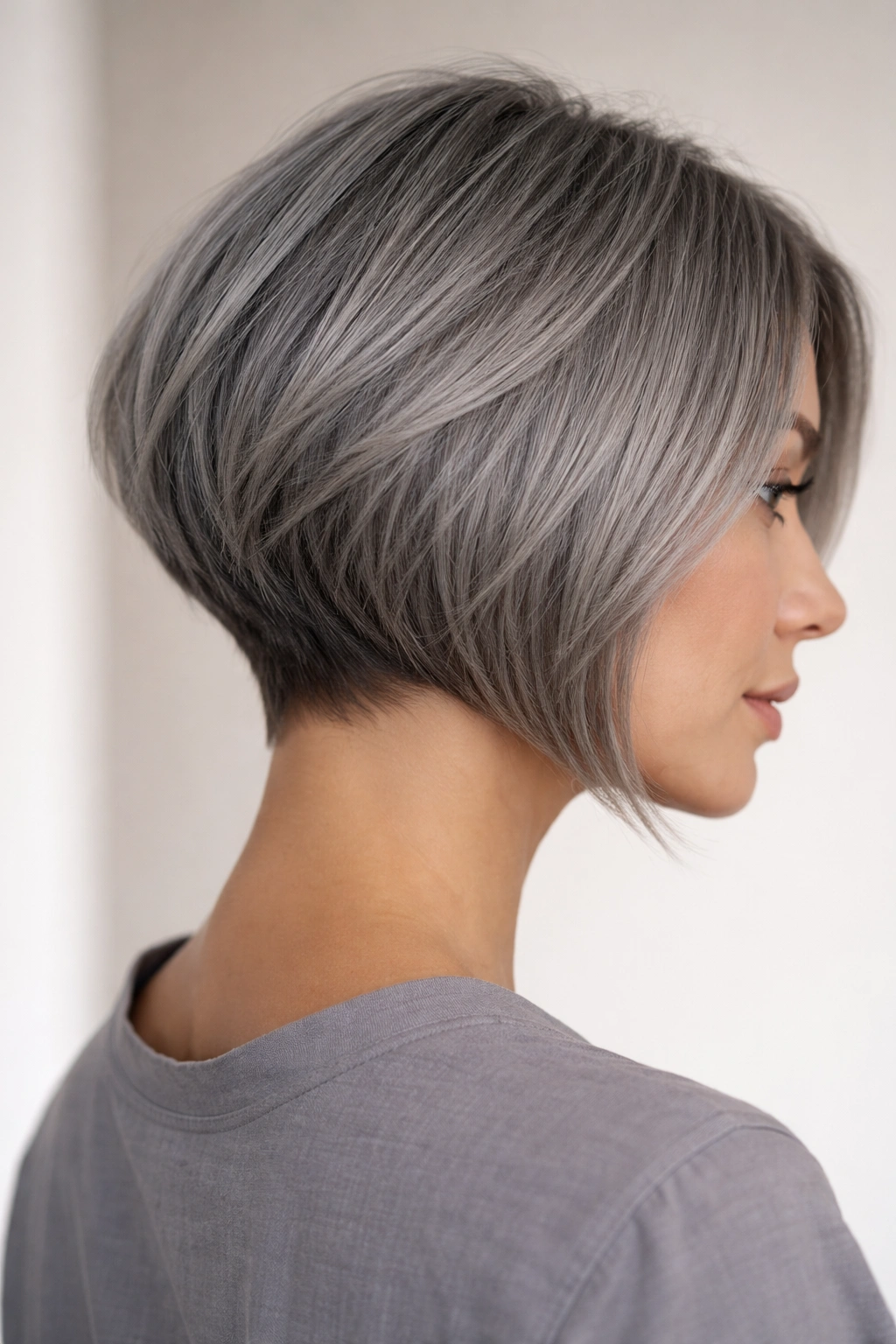
If you like a bob that has a little edge, the angled grey bob is the one that changes the profile immediately. Shorter in the back and longer in the front, it gives the neck a clean line while letting the front pieces skim the jaw and collarbone. The shape feels precise without being fussy.
The tapered nape is what makes this cut look sharp. It removes bulk where hair often gathers and turns heavy, especially if your grey strands are coarse or thick. Up front, the longer length creates that sleek forward slope that makes the whole cut look intentional from every angle.
What to ask your stylist for
- A clearly shorter back that hugs the nape
- Longer front pieces that graze the jawline
- Soft graduation through the back so it does not stack too hard
- A finish that follows your hair’s natural growth pattern at the neck
This cut is especially good if your hair tends to kick out at the ends. The angle helps control that. It also looks strong with a deep side part or a tucked-behind-the-ear finish, which can make grey hair look sharper than a glossy blowout ever could. There’s a reason this shape keeps coming back. It does a lot without looking busy.
5. Feathered Grey Bob With Curtain Bangs
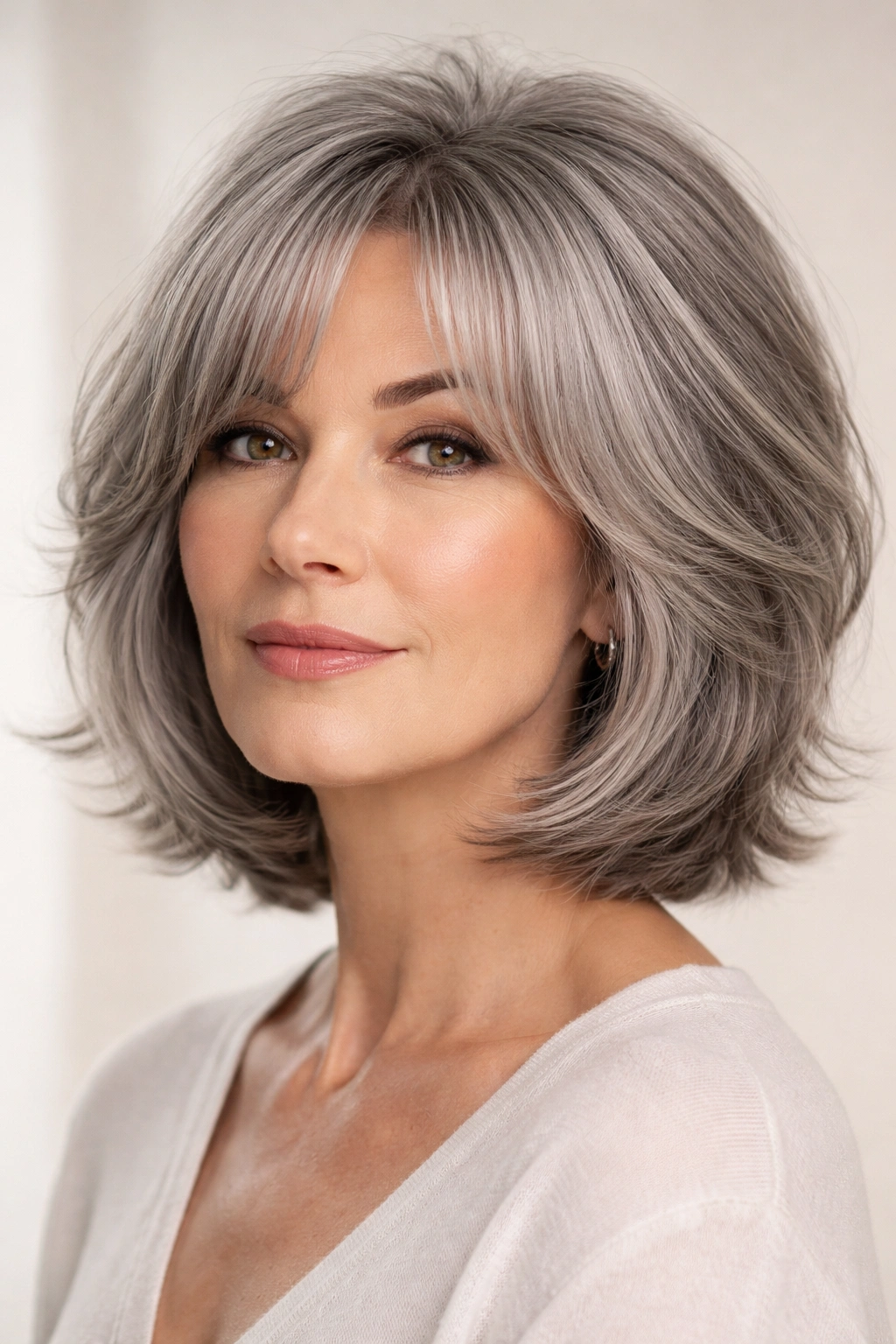
Curtain bangs change the whole conversation. In a feathered grey bob, they soften the forehead, pull the eye inward, and keep the cut from feeling too square. That matters if your face is narrow, long, or just a little tired of blunt lines. The bangs take the pressure off the rest of the bob.
The feathering should be light. Think airy ends, not old-fashioned feathering that flips out like it belongs on a different decade’s office hallway. You want movement through the sides and a little softness around the cheekbones so the grey looks dimensional, not blocky. On hair with a mix of silver and darker strands, that feathered texture can be lovely because it lets the tones mix instead of sitting in one flat sheet.
How to ask for it
Tell the stylist you want curtain bangs that blend into the sides of the bob, not a separate fringe sitting on top. That blending matters. If the bangs are too thick, they can make grey hair look heavy around the face, and nobody needs that.
A small round brush helps here, but don’t force the bangs into a perfect curve. Just bend them away from the face and let the ends move. A light mist of heat protectant and a bit of dry texture spray on the mid-lengths is usually enough. The point is softness with shape. Not fluff.
6. Rounded Curly Grey Bob
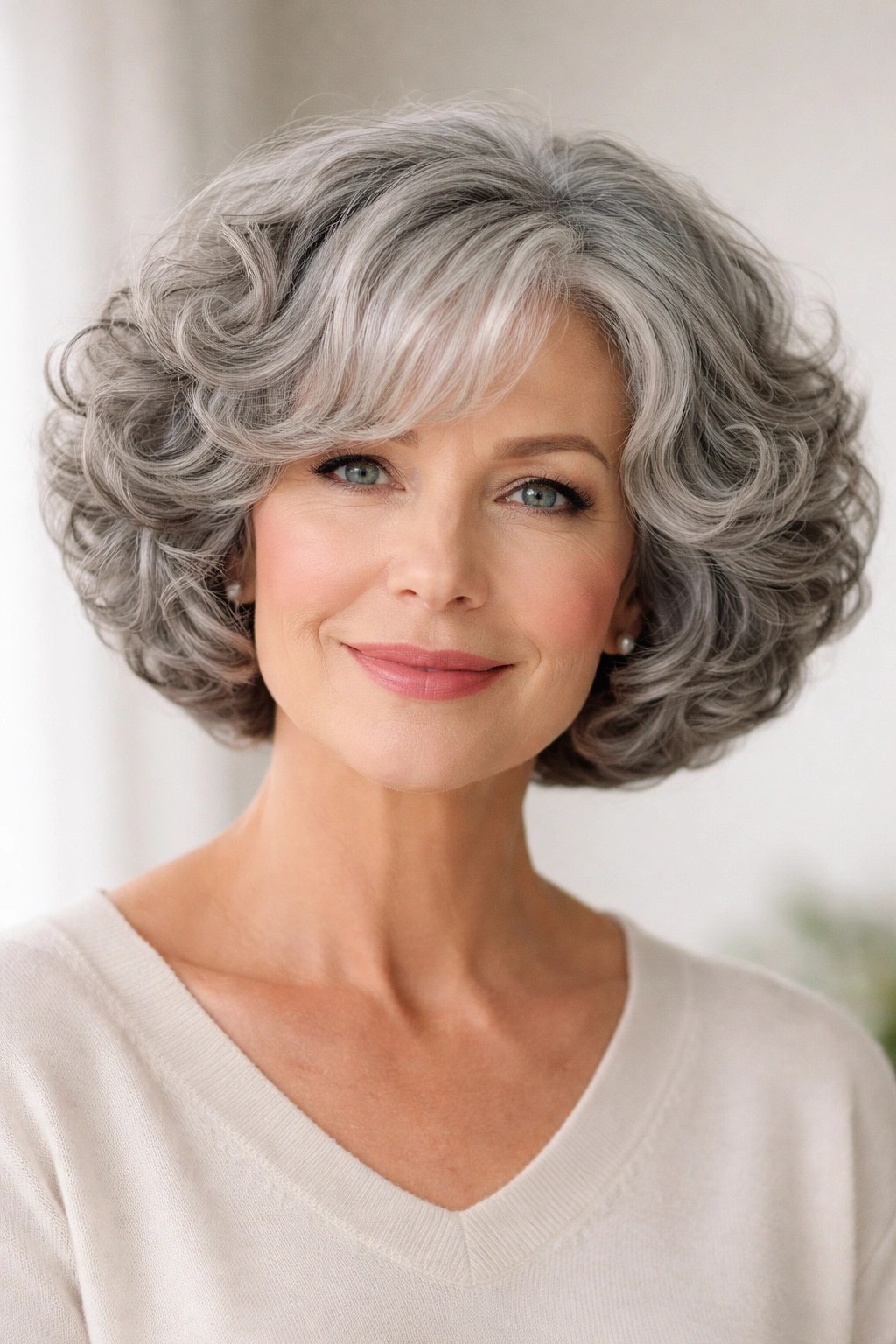
Curly hair and grey hair together can be gorgeous, but they need a cut that respects both. A rounded curly bob gives the curls room to spring without making the sides look triangular or boxy. The overall shape stays close to the head, then opens slightly around the cheeks and jaw. It feels balanced.
The mistake people make here is cutting curls into a shape that looks fine when wet and awkward once dry. Grey curls can shrink, swell, and separate in ways that surprise even experienced stylists, so this is one cut worth doing with someone who understands curl pattern. A rounded bob should lift at the crown and curve outward in a controlled way, not balloon.
What I like about this style is the way it shows off salt-and-pepper tones. Curls naturally create depth, and grey strands tend to sit on top of darker ones in interesting layers. That gives the cut movement even when you haven’t styled it much.
A curl cream and a diffuser usually do the job. Use enough product to clump the curls, but not so much that the bob turns heavy and shiny in a sticky way. If you need a quick refresh, wet your hands, scrunch the ends, and let the shape come back on its own.
7. Shaggy Grey Bob With Choppy Ends
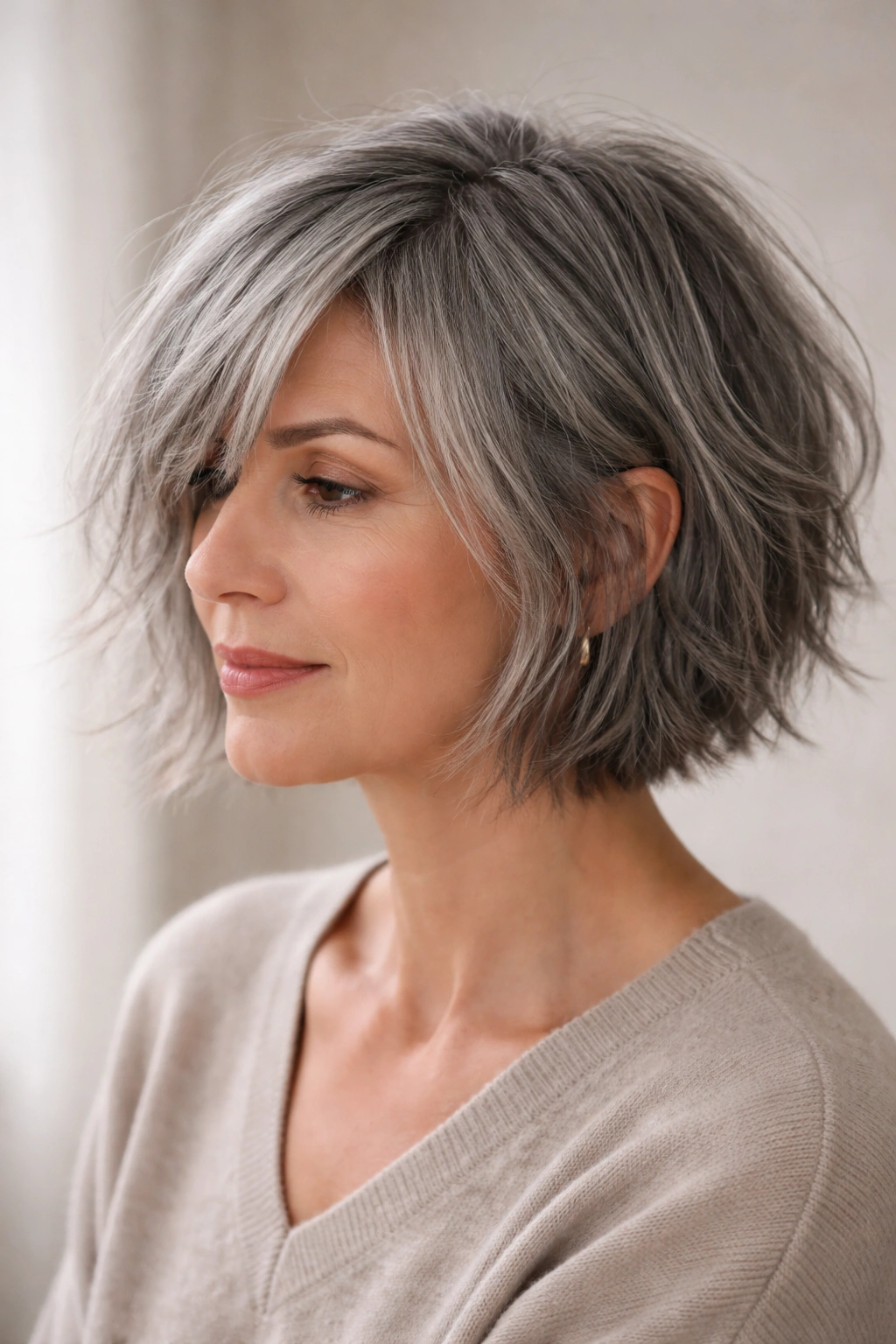
The shaggy grey bob is for people who do not want their hair to behave like a spreadsheet. It has broken-up ends, uneven movement, and a little attitude. Done well, it looks relaxed in a smart way, like the cut landed naturally even though someone clearly knew what they were doing.
This style is especially good for grey hair with a bit of wave or a coarse texture. Choppy ends stop the cut from turning into a solid block, and that helps the colour look more layered. One of the problems with some grey cuts is that they make the whole head look the same from root to tip. A shag interrupts that. You get shadows, lighter pieces, and little flickers of shape.
Styling notes
- Use a lightweight cream, not a heavy oil
- Scrunch the mid-lengths while the hair is damp
- Let the ends stay a little piecey
- Skip over-brushing, which can make the layers puff out
This is not the neatest bob on the list. That is the point. It suits people who want a grey haircut that feels cool without trying too hard. And yes, it can still look polished if the fringe and crown are handled well.
8. Stacked Grey Bob With Lift at the Crown
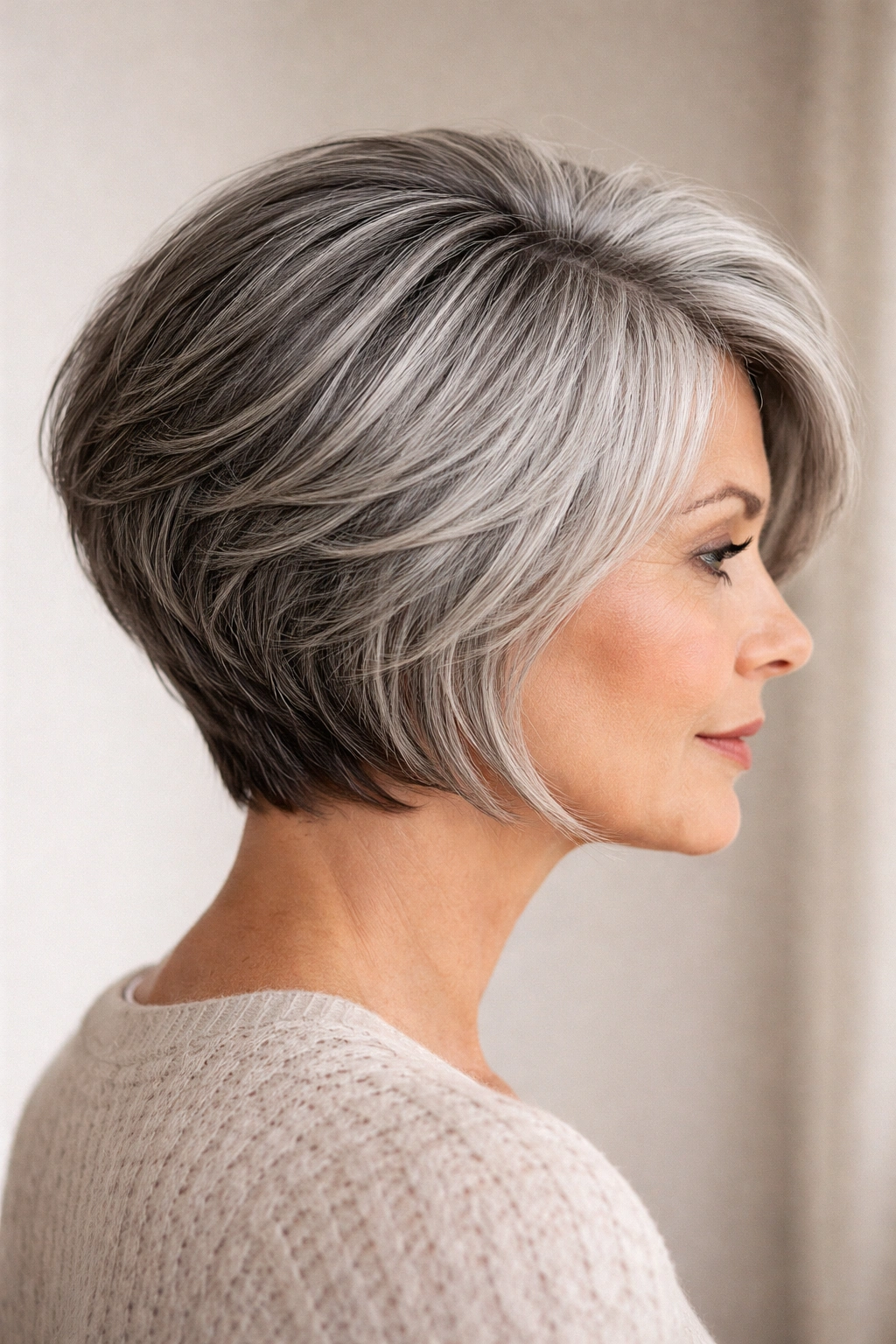
A stacked bob changes the silhouette fast. Shorter layers at the back build lift at the crown, while the front stays smooth enough to keep the shape elegant. On grey hair, that lift can be a lifesaver if your strands lie flat or if the top of your head tends to collapse by midmorning.
The stack needs to be controlled. Too much graduation and you get a wedge that feels dated. Too little and the shape loses its purpose. The sweet spot is a rounded back that rises neatly behind the ear and then falls into longer front pieces. That gives the hairstyle depth and helps the grey tones look dimensional.
If your hair is thick, this cut removes some of the weight that usually makes grey bobs sag. If your hair is finer, the crown lift gives the illusion of fullness without needing tons of product. A root-lifting spray at the base and a quick blow-dry with a vent brush usually do enough.
This is one of those styles that looks especially good from the side. The back has shape, the top has height, and the overall line feels structured without being severe. If your current cut keeps collapsing, this is the one that fixes that problem at the root.
9. Sleek Grey Bob Tucked Behind the Ear
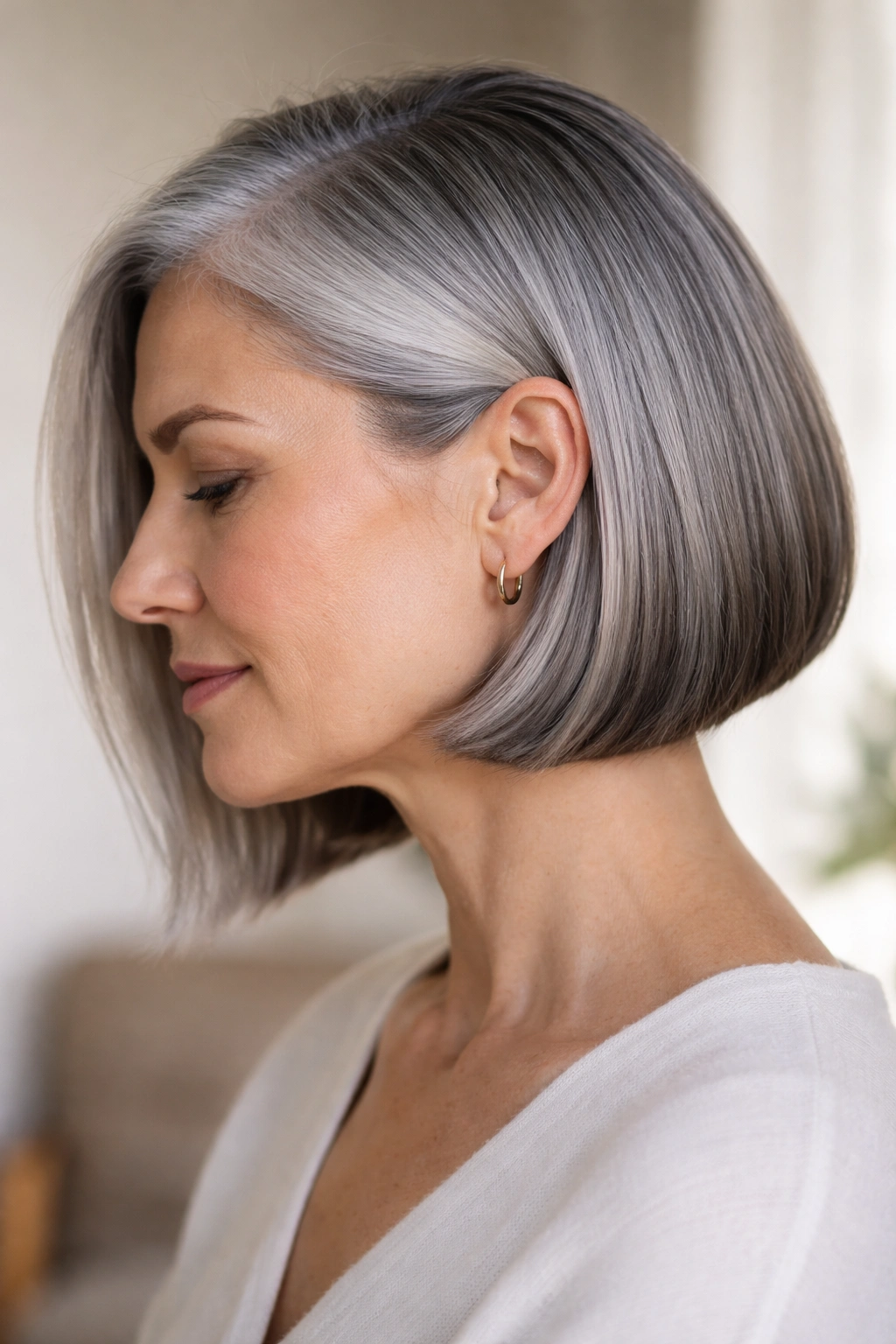
A sleek grey bob tucked behind the ear is a clean, direct style that lets the colour do the talking. It is less about volume and more about finish. When the strands are smooth and the ends sit neatly, the grey reads almost like polished metal. Crisp. Cool. Easy to wear.
The beauty of this cut is that it can look dressed up with almost no extra work. A center part makes it feel modern and pared back. A deep side part turns it a little softer. Tucking one side behind the ear adds a hint of asymmetry, which is useful if your face shape needs a break from perfect lines.
What makes it different
Unlike a shaggy bob, this cut relies on control. The ends should be blunt or only lightly layered, and the surface should lie close to the head. That means a smoothing serum or a light cream will do more for you than piles of styling product ever will.
I’d choose this bob for hair that already has a bit of natural shine and does not need much shape support. It suits straight textures especially well, though a soft wave can work if you blow it smooth first. If you want a grey hairstyle that looks sharp with a blazer, a knit sweater, or even a plain T-shirt, this is the one that behaves.
10. French Grey Bob With Wispy Fringe
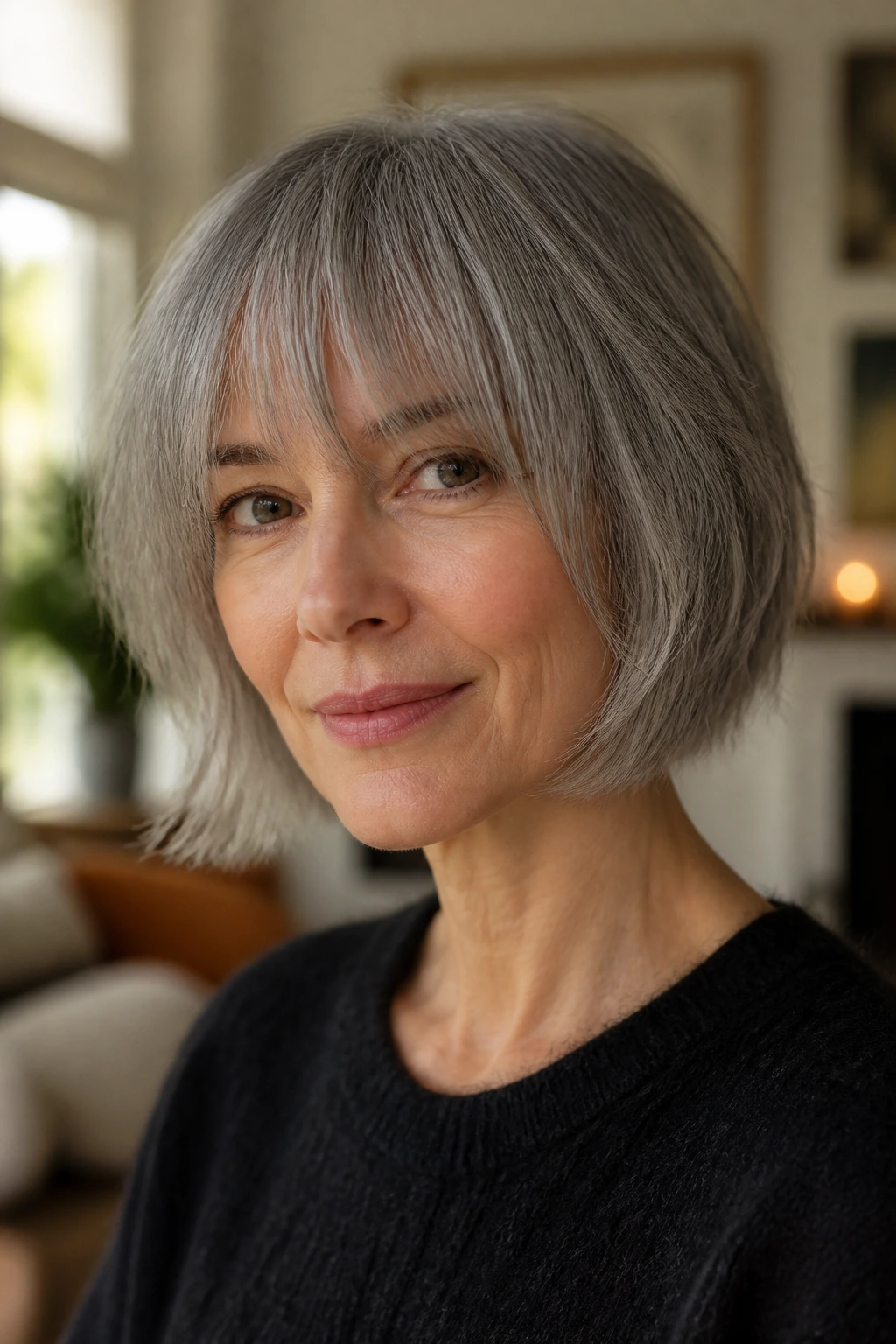
Not every grey bob needs to look crisp. The French bob proves that. With its shorter length, soft fringe, and slightly undone finish, it gives grey hair a little romance without making it sugary. The cut usually sits around the cheekbones or just below the ears, which is short enough to feel fresh but long enough to soften the face.
The fringe matters most here. A wispy or lightly broken fringe keeps the style from looking harsh, especially on hair that has gone fully silver or white. It draws attention to the eyes and gives the bob a little personality. On textured grey hair, the fringe should be cut carefully so it doesn’t separate into odd little pieces or sit too heavy across the forehead.
This cut loves a bit of imperfection. A little bend at the ends. A tiny bit of movement near the cheek. The sort of thing that looks like you spent ten minutes on it, even if you spent five. If your hair dries with a natural wave, you’re already halfway there. A small flat iron can tidy the fringe, but don’t smooth every strand to death. The softness is what keeps it stylish.
A French bob suits someone who wants grey hair to feel modern, a little artsy, and not overly polished. It has a nice tension to it: neat enough to look intentional, loose enough to stay interesting. That balance is hard to fake.
Grey bob cuts work because they give the hair a shape that matches the colour’s personality. Some people need a blunt line. Others need lift, movement, or a fringe that breaks the face up a little. The right cut is less about following a rule and more about noticing what your hair already wants to do, then shaping it so it looks deliberate instead of accidental. If you choose one of these styles and ask for the details with care, the result usually feels cleaner, brighter, and easier to live with.
