



Natural hair likes shape, but it also likes room to breathe. Twists and curls for natural hair do both at the same time, which is why they stay in heavy rotation when you want definition without flattening the coil pattern.
The right style can make a bob look fuller, a longer length look more controlled, and a stretch of grown-out roots look deliberate instead of messy. That matters more than people admit. A twist set that is too tight at the scalp or too wet at the ends will show you its mistakes fast — usually by lunchtime.
I’ve always liked styles that look better on day two than they do in the mirror the minute you finish them. Twists are good at that. They soften, they settle, they move a little, and if you prep them well, they give you that sweet spot between polished and lived-in.
The trick is picking the right twist or curl pattern for the hair you actually have, not the hair in a filtered photo. Some styles want a damp set and a long dry time. Some need stretched hair, a hooded dryer, or a few flexi-rods on the ends. Some are better for short bobs, some for shoulder-length coils, and some for the days when you need your edges to stop fighting you. The first style below is the cleanest place to start.
1. Classic Two-Strand Twist-Out
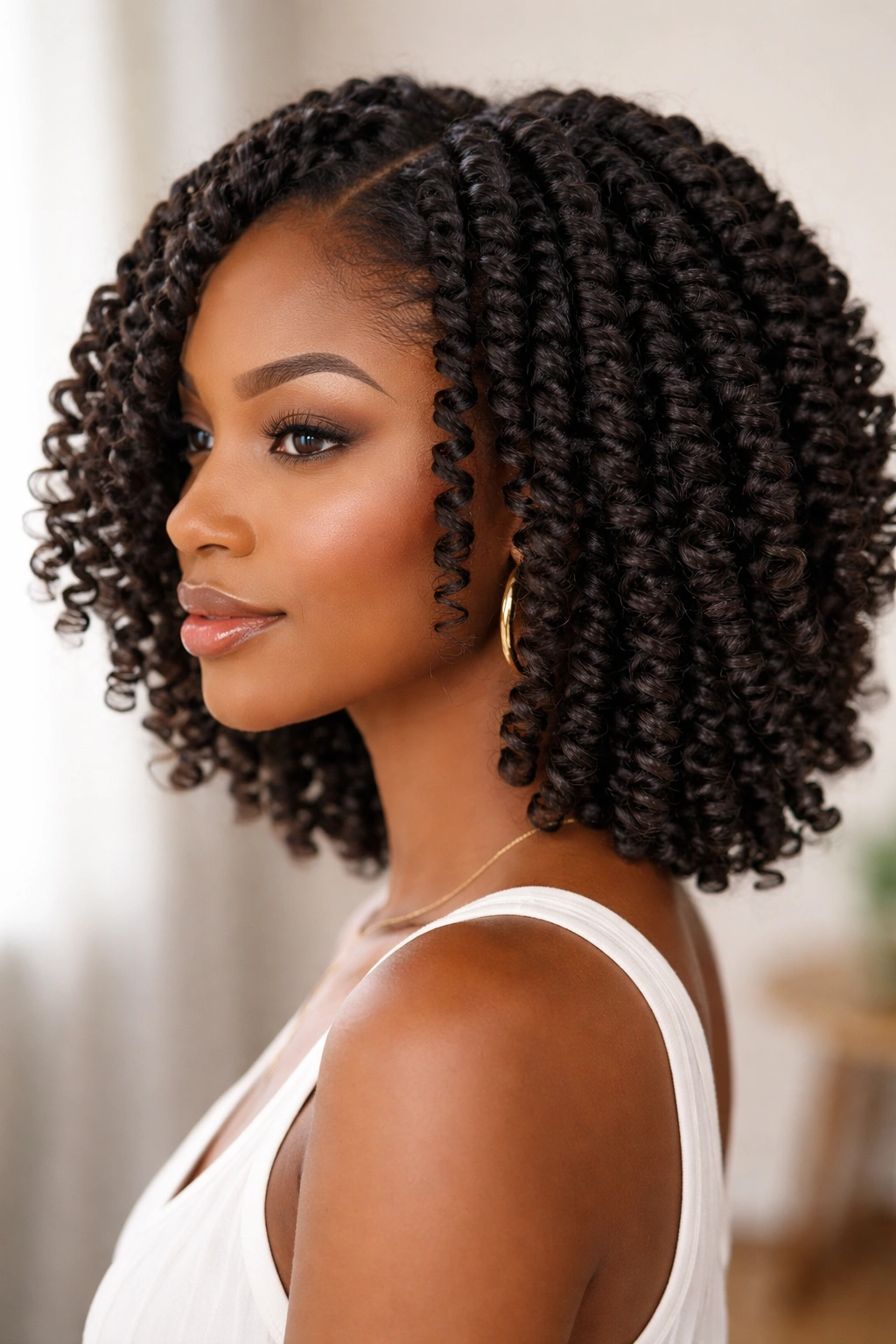
The classic twist-out earns its place because it does a lot without looking fussy. It gives natural hair a soft, stretched shape with visible pattern, and it works on a huge range of lengths — from a neat bob to longer coils that need a little swing. If you want a style that can look finished without getting stiff, this is the one.
A good twist-out starts before the twisting even starts. Your hair should be damp, not dripping, and fully detangled. I like a leave-in first, then a cream with some slip, then a small dab of gel on the ends if they tend to fray. Too much product makes the twist mushy and slow to dry. Too little leaves the set fuzzy before you even unravel it.
Patience matters here.
Twist each section with even tension from root to tip. Keep the parts clean. If one side of a twist is thicker than the other, the whole style will look lopsided once you separate it. Let the hair dry all the way through before you take anything down — the center of a twist can stay damp long after the outside feels dry. That damp center is where a lot of twist-outs go wrong.
When you unravel, use a tiny bit of oil on your fingertips and separate only once or twice per twist. Then fluff the roots with a pick, not your hands. That gives you shape without turning the whole style into a halo. On a bob, this style can make the cut look fuller at the ends; on longer hair, it gives body without the heavy drag that braids sometimes create.
2. Chunky Flat Twists with a High Puff
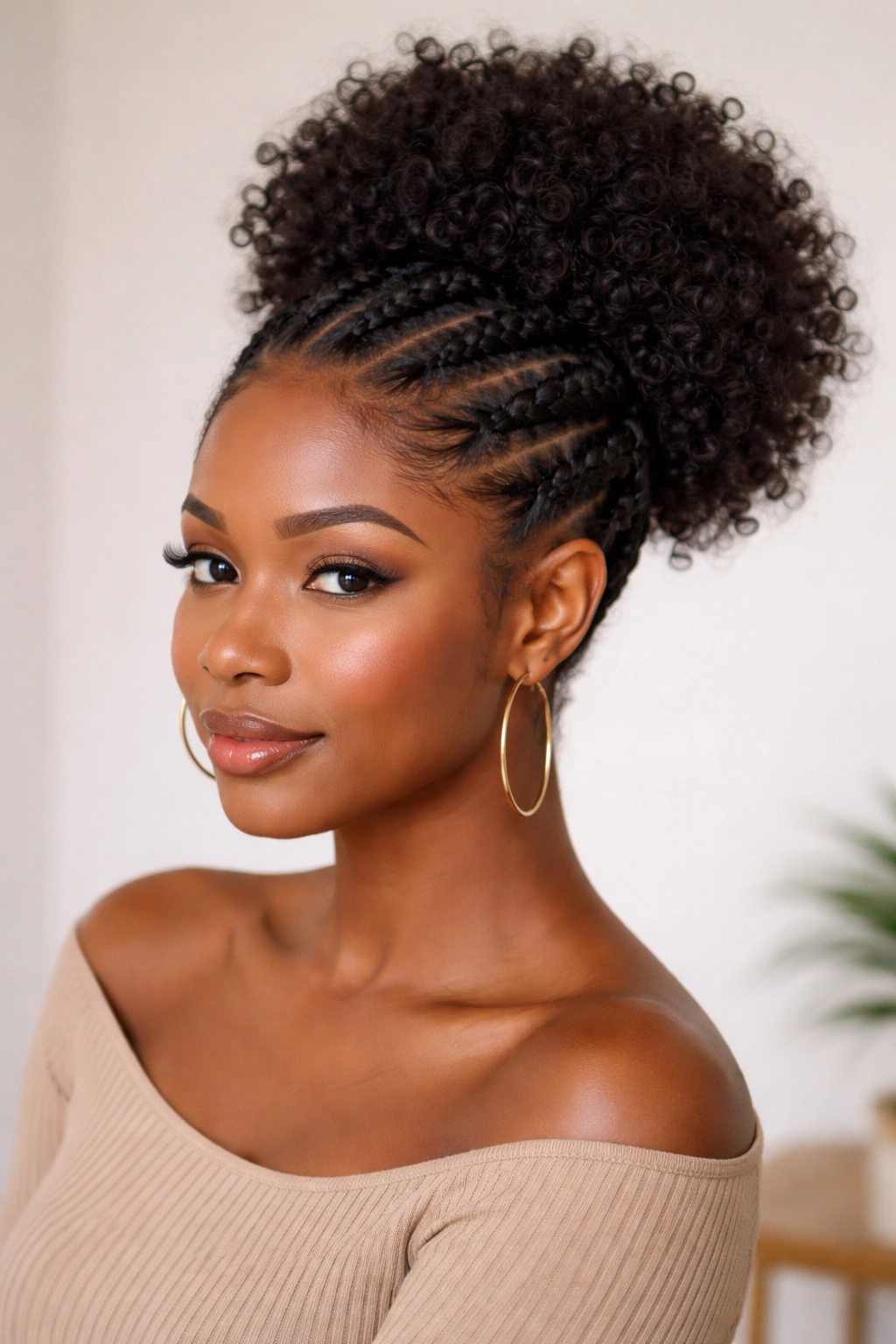
Flat twists give you structure before they give you volume. That’s the whole appeal. The scalp lines look neat, the crown stays polished, and the puff at the back or top gives you lift without making the style feel overworked.
Why It Works
Flat twists hug the head, which means they control frizz in the areas that get handled most — the hairline, crown, and sides. The puff carries the personality. It keeps the style from feeling too strict, and that soft contrast is what makes it look good on curly hair.
I like this style when the front of my hair needs to stay put but I still want movement somewhere. The trick is not to chase perfection with the puff. Let it breathe a little.
How to Set It Up
- Part the hair into 4 to 6 sections, depending on density.
- Apply a light gel or edge control only along the part lines.
- Flat twist close to the scalp, then stop once you reach the crown.
- Gather the loose hair into a puff with a satin scrunchie, not a tight elastic.
A small amount of product goes a long way here. If you pack the roots with cream, the part lines can look greasy by the next day. If your hair is short or bob-length, keep the twists chunky and the puff soft. It looks intentional, not forced. And that balance is the whole point.
3. Mini Twists That Stay Neat for Days
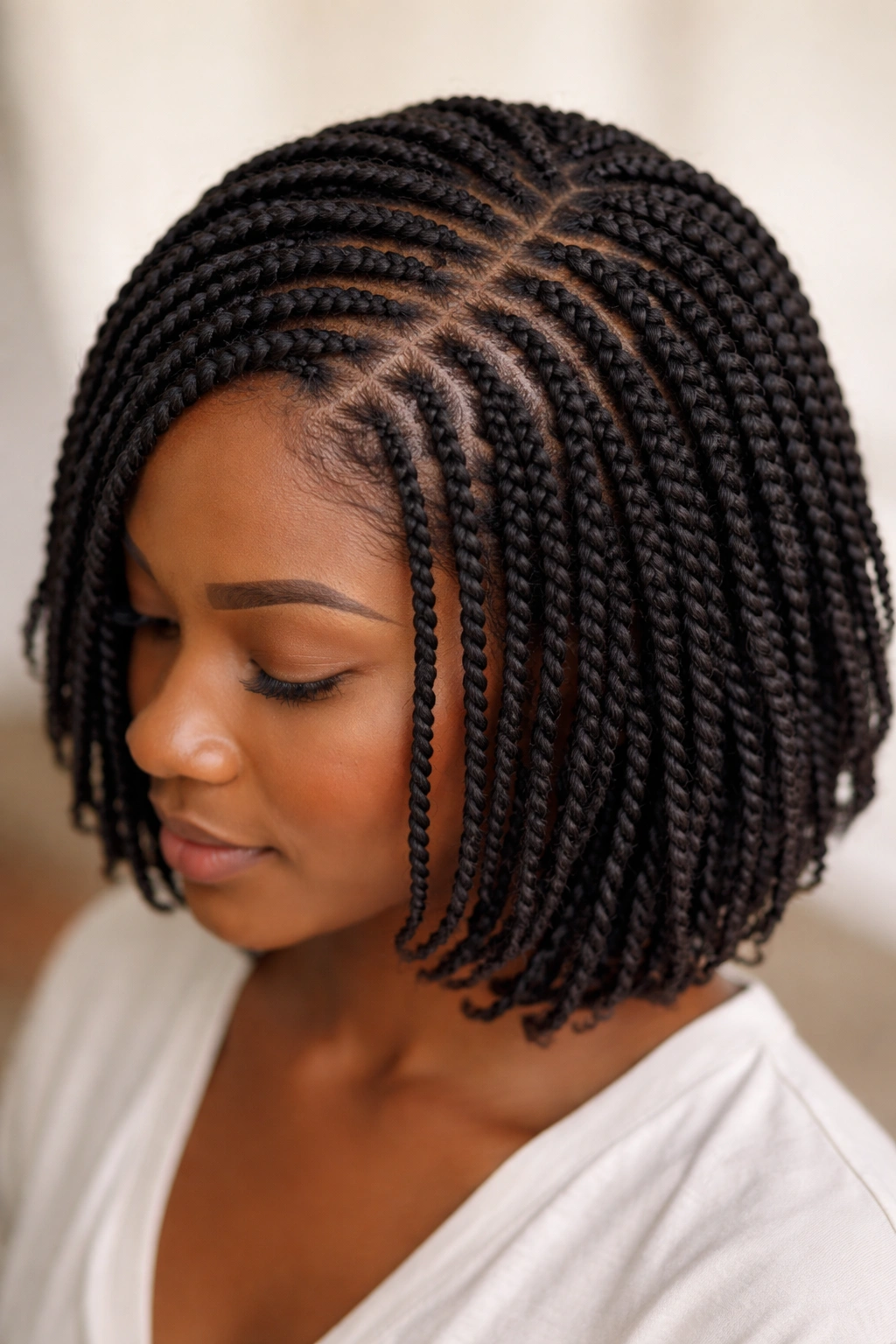
Want a style that still looks orderly after a rough week? Mini twists are the answer. They take more time up front, yes, but they buy you a lot of quiet in return. Less daily styling. Less manipulation. Less of that feeling that your hair needs fixing every morning.
The section size matters more than people think. Aim for pieces about the width of a pencil or a skinny straw if your hair is dense, and a little wider if your hair is fine. Tiny sections hold shape longer, but they also need more drying time. That’s the trade-off, and there’s no clean way around it.
What to Watch For
- Start with fully detangled hair so the twists sit flat.
- Use a light leave-in and a cream with slip.
- Smooth the ends with a touch of gel or a tiny bit of butter.
- Let them dry overnight, or use a hooded dryer if the roots stay cool.
Mini twists are not the style to rush. If you twist hair that is too wet, the roots swell and the twists look fuzzy almost immediately. If you load on too much product, they can feel heavy and start to separate at the base. Keep them neat, keep them small, and sleep with a satin bonnet or scarf every night. They’ll repay you by looking tidy longer than most curly styles do.
4. Twist-and-Curl Ends with Flexi Rods
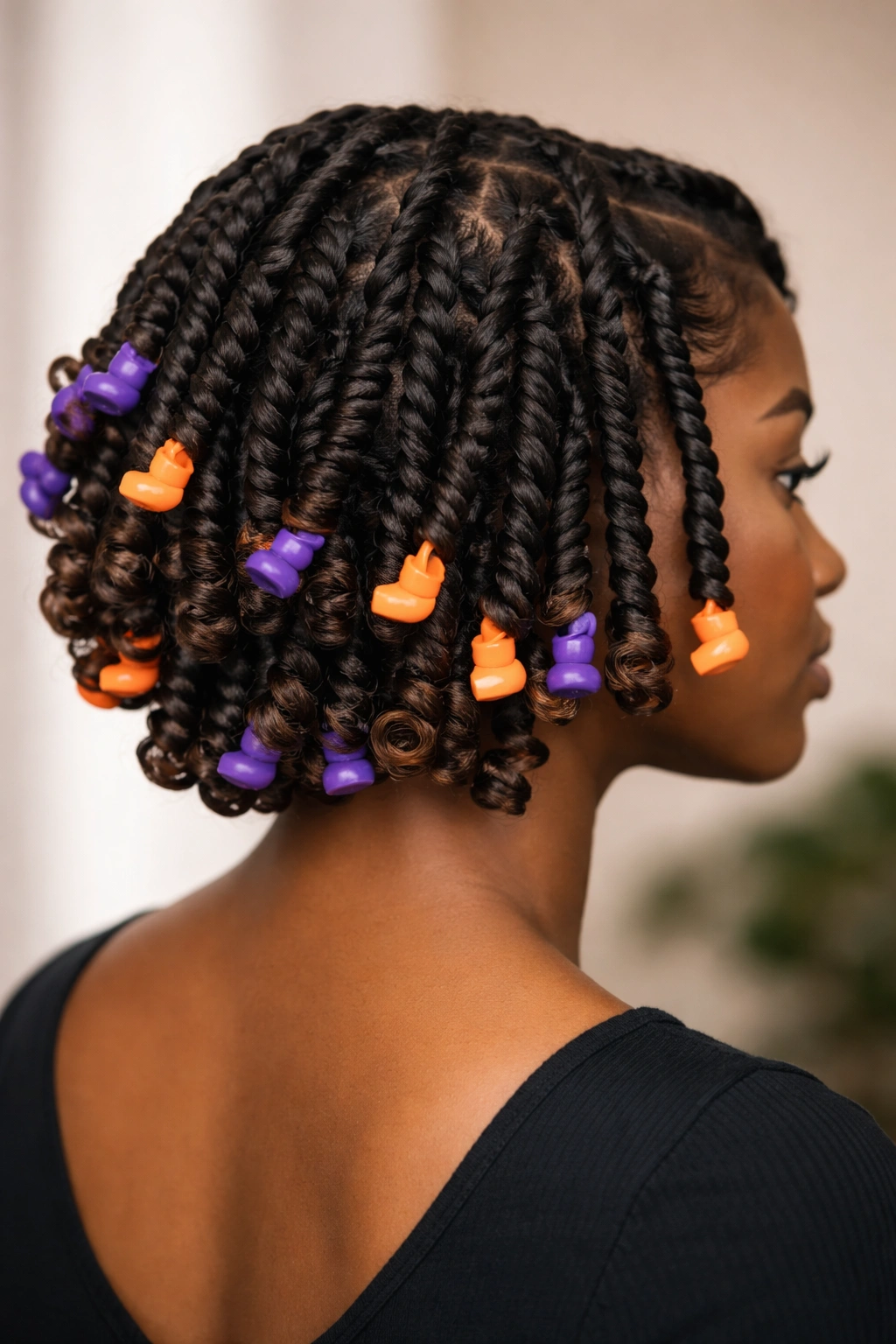
You twist the root, then wrap the last inch around a flexi-rod. That little move changes everything. Instead of a blunt twist end, you get a springy curl that bounces at the bottom and gives the whole style a softer finish.
This works especially well when you want twists but don’t love the look of frayed tips. It’s also a nice choice if your hair is cut in layers, because the curled ends help the layers blend instead of sticking out in awkward little angles. A twist-and-curl set can look fancy without needing heat. That part matters.
Rod Size Changes the Finish
- 1/2-inch rods give tighter, springier curls.
- 3/4-inch rods create a softer curl with more length showing.
- 1-inch rods work when you want a loose bend, especially on longer hair.
Use a setting foam or lightweight mousse on the last few inches before you roll. Not a heavy cream. Heavy product makes the curl collapse while it dries. If you have a hooded dryer, use it on low heat until the rods feel cool all the way through. If you air-dry, give yourself enough time. Half-dry rod sets are a waste of energy and make the ends puff in a strange way.
This style is neat, but it’s not lazy. The payoff is in the end of the hair, where a tiny curl can make the whole style feel finished.
5. Bantu Knot-Out Curls
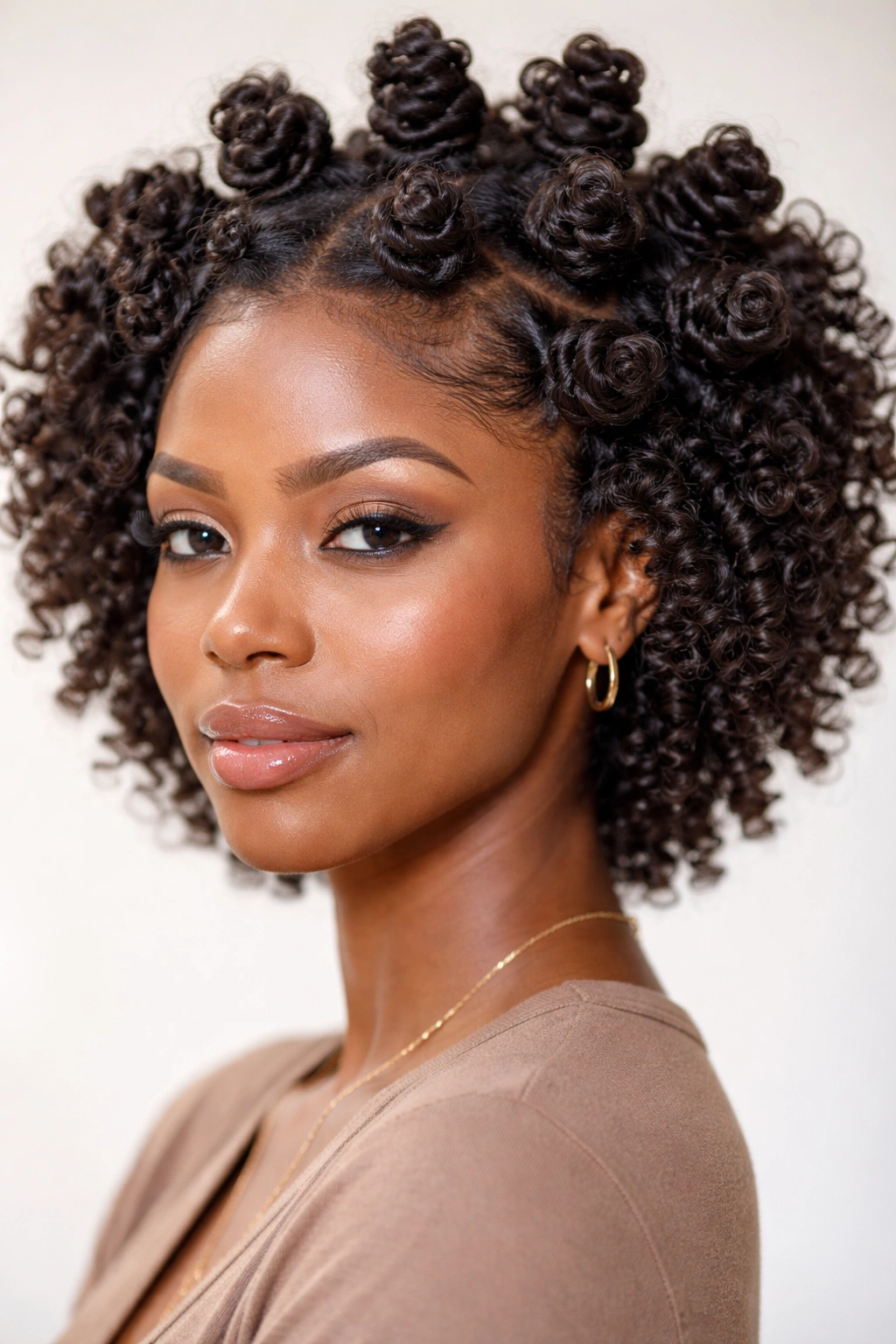
Small knots. Big payoff. Bantu knot-outs give natural hair tight, springy curls that sit somewhere between a coil and a curl, and they have a playful shape that flat twists can’t quite copy. On short hair, they can look bold and sculpted. On longer hair, they create a dense, rounded pattern that feels full from root to tip.
The part sizes decide the whole result. Smaller knots give tighter curls. Larger knots give chunkier bends. If you want a softer look, keep the sections medium and smooth the hair with foam before you knot it. Do not knot dripping-wet hair. The center stays damp for ages, and the style ends up puffy instead of defined.
A lot of people skip the prep and regret it. The roots need to be cleanly parted, the hair needs enough slip to coil without snagging, and the knots need to sit close enough to the scalp that they dry evenly. If the base is lumpy, the finished curl will be lumpy too. That’s not a mystery. It’s just mechanics.
Take the knots down only when they’re dry to the core. Not “mostly dry.” Dry. Let them cool if you used heat. Then separate the curls with coated fingertips and stop before you turn them into frizz. Bantu knot-outs have a lively, springy look that can be hard to beat when the hair wants definition and a bit of drama.
6. Passion Twists for Lightweight Length
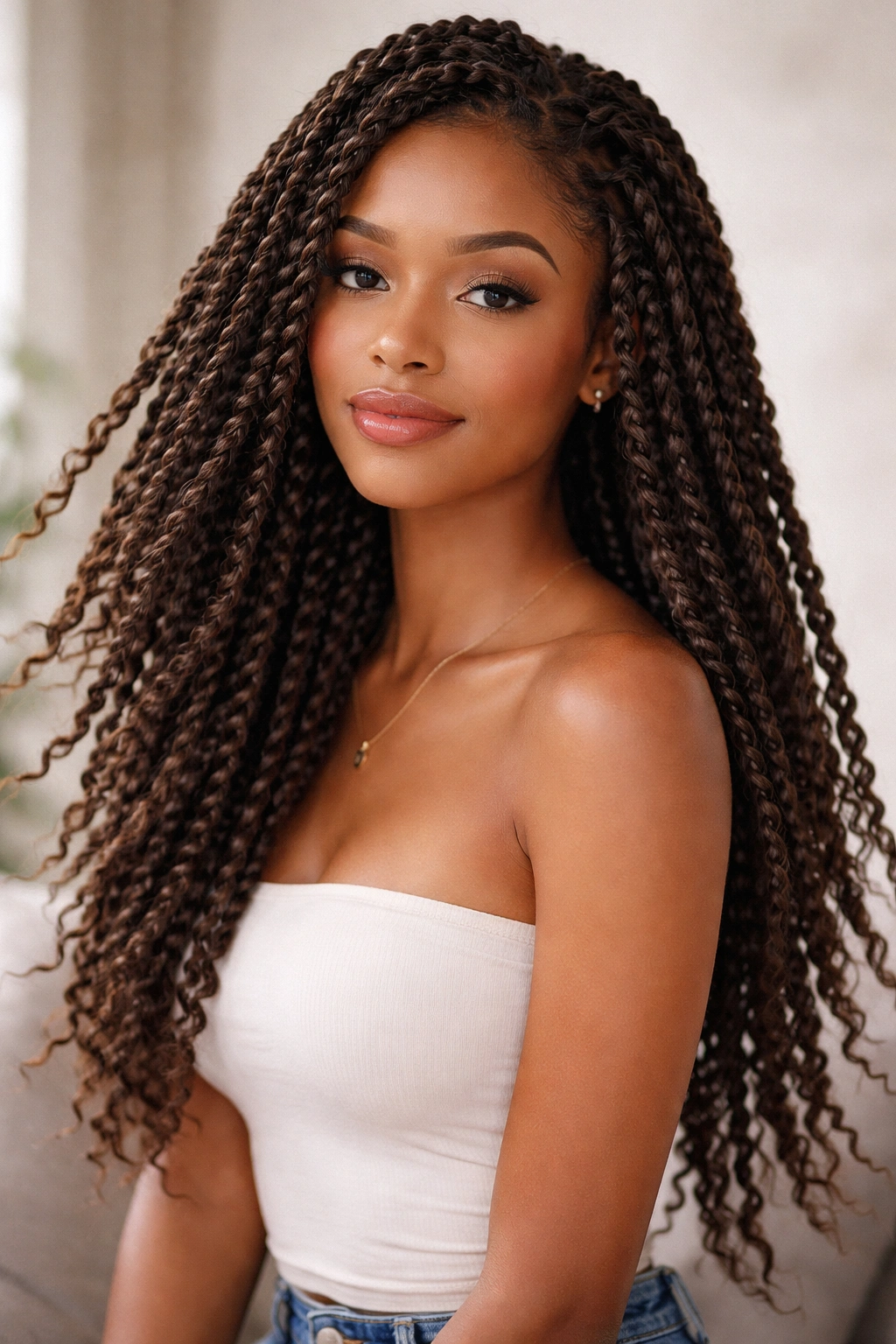
Passion twists are not the same thing as classic two-strand twists. They use extension hair, which gives the style a softer, looser movement and a bit more length than your own hair might give on its own. If you want a protective style that feels less rigid than many installed twists, this is the one people keep coming back to.
The finish is the part I like most. Passion twists have a more relaxed look than sleek rope twists, and they move with you instead of sitting stiffly in place. They also hide a lot of everyday wear, which is useful if you want a style that can stretch out appointments a little longer. That said, heavier packs of hair can tug at the roots if the sections are too large. Keep the parts sensible.
For best results, work with neat part lines, a light gel at the root, and extension hair that feels soft rather than bulky. You want movement, not a helmet. If your natural hair is short, this style can still work, but the base should be secure and the braiding at the root should not feel tight. Edges do not like unnecessary pressure.
This is a good pick when you want a fuller look and less daily handling. It is not the fastest style to install, but it gives a lot back if you wear it for a while.
7. Flat-Twist Mohawk with Full Curls on Top
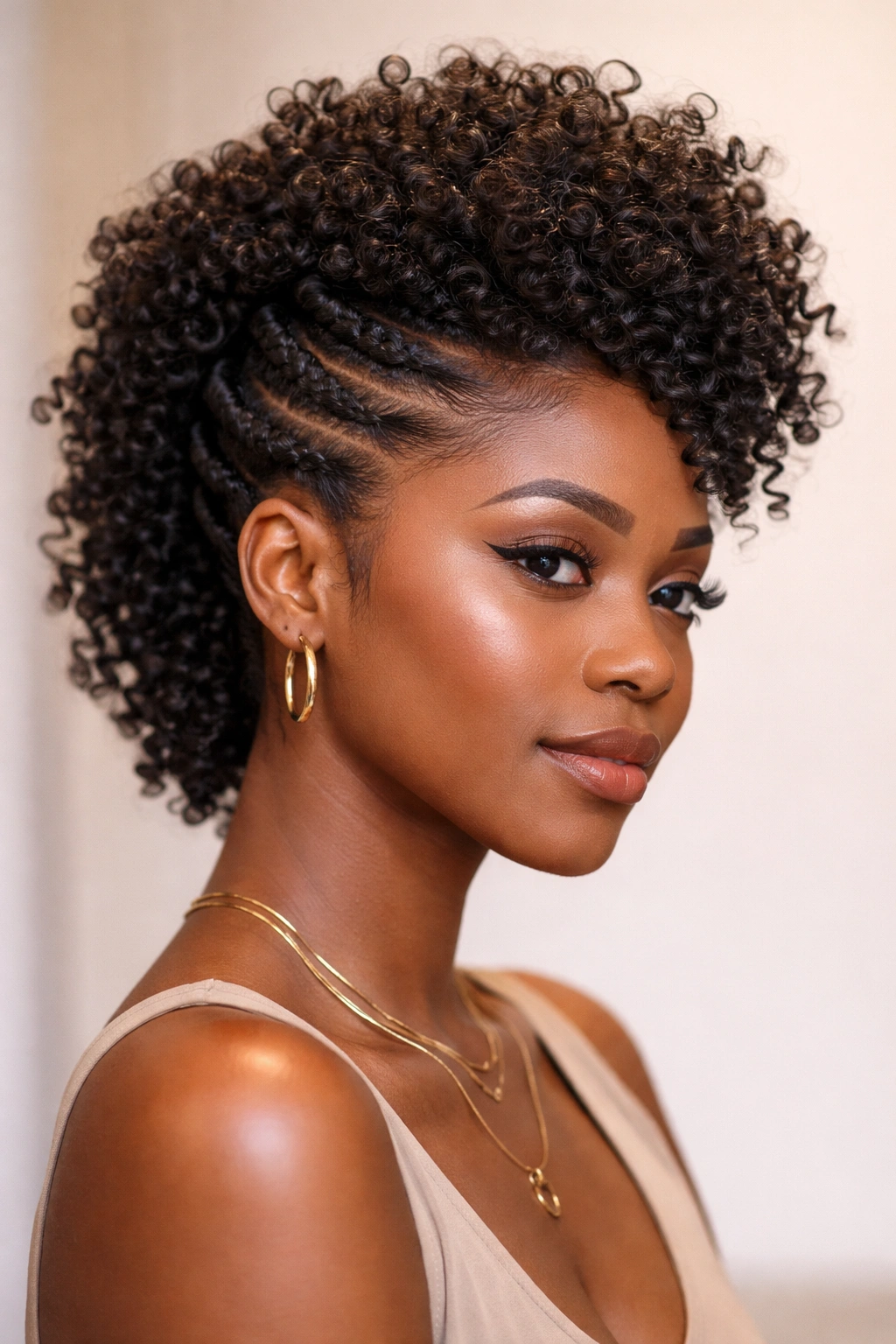
A flat-twist mohawk is one of those styles that looks like you worked harder than you did. The sides lie close to the head, the center stays full, and the whole shape makes natural curls look tall and confident without becoming bulky at the sides.
It’s a smart style for short natural hair, especially when you want to show off texture instead of hiding it. The sides can be flat-twisted straight back or angled toward the crown, and the center can stay loose, get set on rods, or be left in a chunky twist-out. I like the center with some lift at the roots, because otherwise the style can look too flat in the middle.
Where to Put the Lift
- Keep the side sections snug but not tight.
- Leave the crown section slightly larger for height.
- Pick the roots lightly after the style dries.
- Use pins that match your hair color if you need to tuck anything down.
This style looks especially good on a bob because the neckline stays clean and the top gets all the visual energy. It also works when you want your curls to feel a little more styled than a plain wash-and-go. Just be careful with tension around the temples. Flat styles can be lovely, and they can also be too tight. The difference shows up fast.
8. Side-Part Crown Twists with Loose Ends
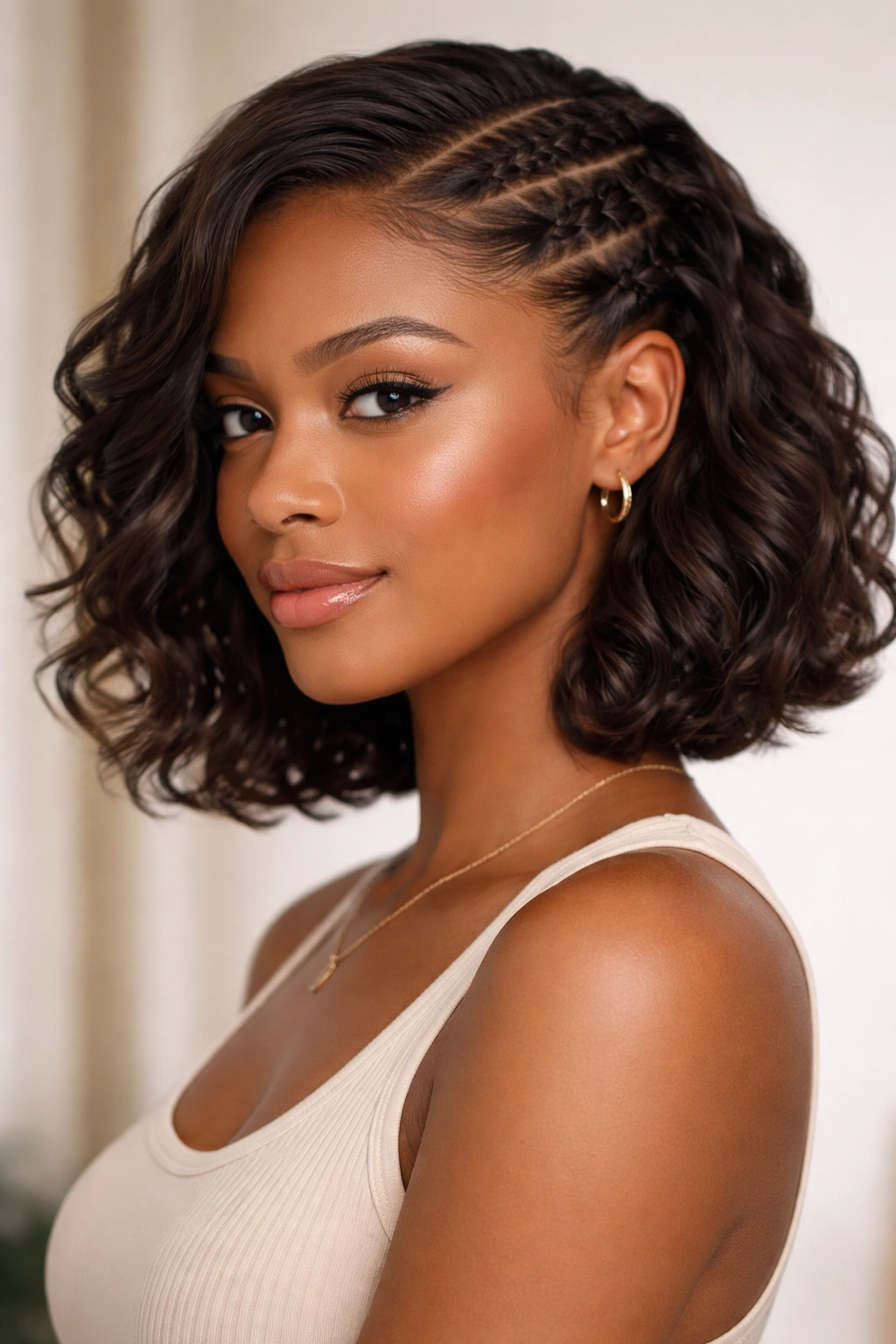
Why does a side part change the whole mood of a style? Because it shifts the weight. A side-part crown twist takes that idea and uses it to frame the face, lift the top, and keep the rest of the hair soft around the shoulders or jawline.
This style is good when you want something elegant without making it formal in a stiff way. The twist runs along the crown or hairline, then tucks into a low shape, while the loose ends or curls fall to one side. On a bob, it can make the haircut look fuller and more curved. On longer hair, it gives a smooth shape without hiding the length.
I like leaving a few shorter pieces out around the temples when the hair wants softness there. It stops the style from looking too severe. And if your hair has layers, do not fight every strand into the twist. Some pieces belong in the frame, not the structure.
A side-part style also helps when one side of your hair is a little flatter than the other. The asymmetry covers that neatly. Use a few pins under the crown, smooth the visible part line with a small brush, and let the loose ends do their job. They should move a little. If they don’t, the style feels cramped.
9. Perm Rod Set with Twisted Roots
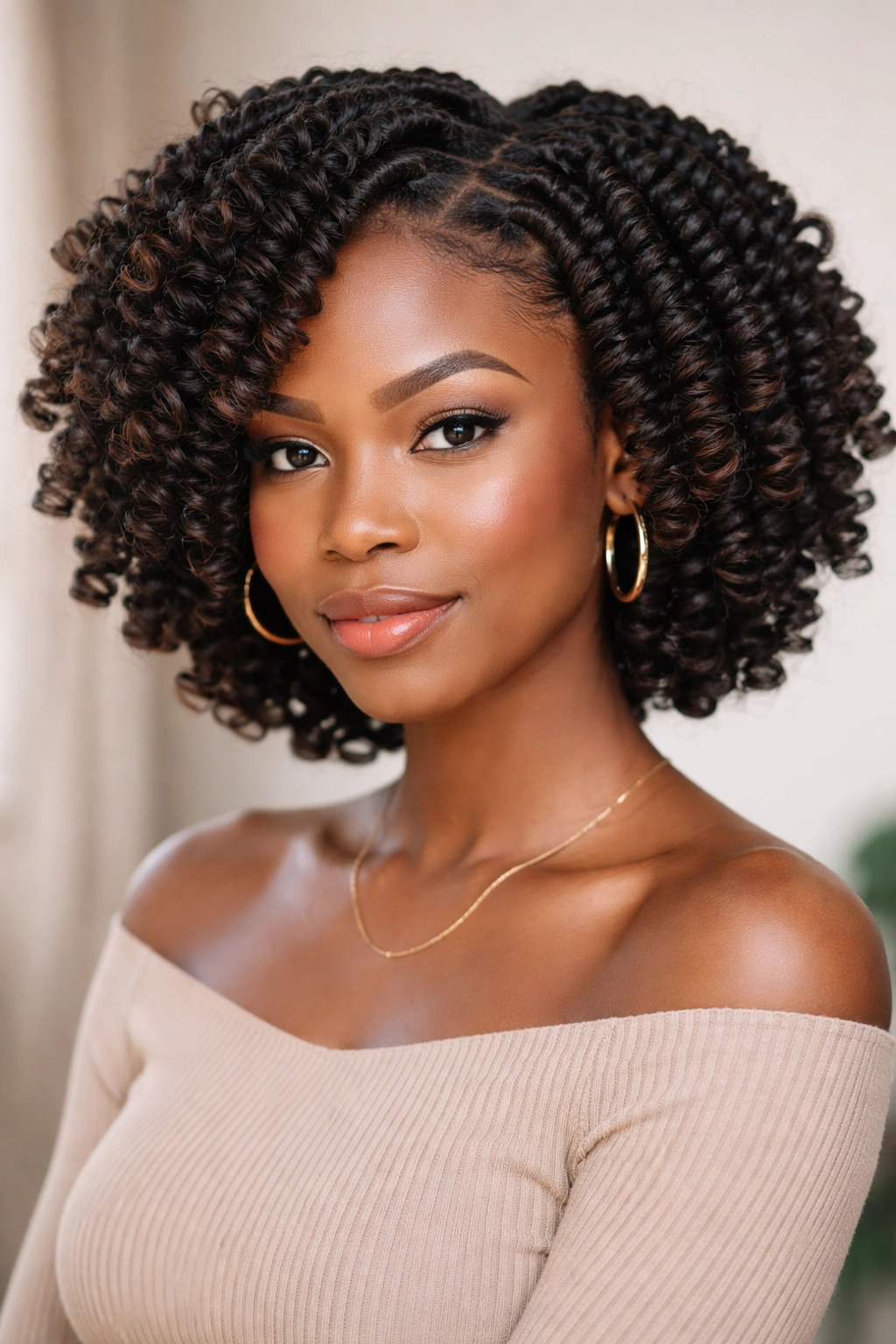
A perm rod set with twisted roots is what I reach for when I want the ends to look clean instead of fuzzy. The base gets twisted for control, then the ends are rolled onto rods for a uniform curl. It’s a hybrid set, which is why it has such a tidy finish.
The rod gives you shape at the bottom, but the twist keeps the root from puffing out too much. That’s useful on natural hair that likes to swell at the ends before the rest of the style is ready. If you’ve ever finished a set only to find the last inch looking dry and messy, this solves part of that problem.
Rod Sizes Worth Using
- 1/4-inch rods for tight, springy curls.
- 1/2-inch rods for a balanced curl with more bounce.
- 3/4-inch rods for a softer, looser finish.
Set the hair with a light mousse or setting foam. A heavy butter will slow drying and can leave the rods slippery. Remove them only when the hair is fully dry from root to tip. I’m repeating that because it matters. A damp rod set falls apart fast, and no amount of fluffing fixes that.
This style is especially good if your curl pattern is loose at the ends or if you want definition that reads clean in photos and in real life. The twist-root detail is a small thing. It makes a bigger difference than it should.
10. Bob-Length Two-Strand Twists
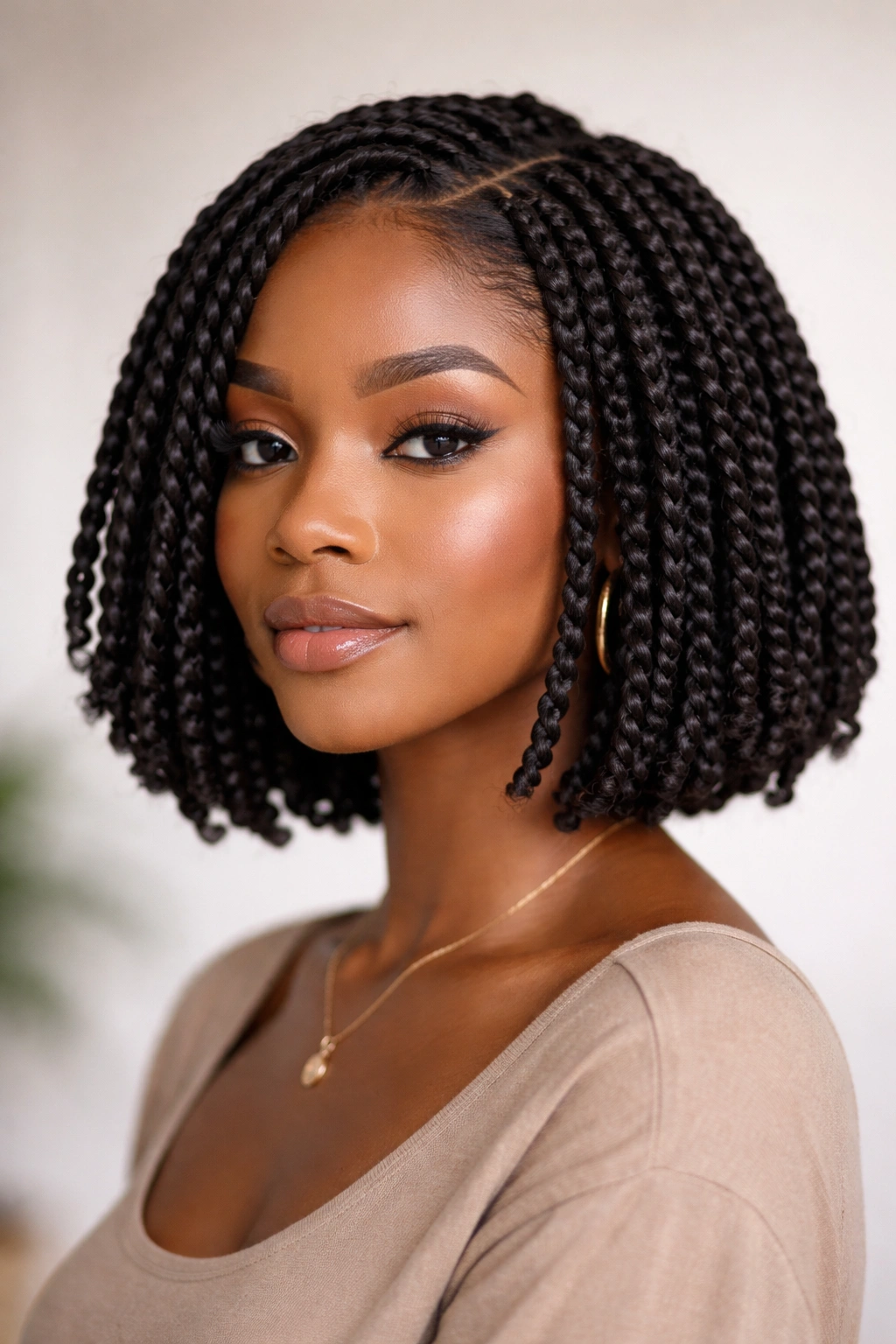
Bob-length two-strand twists are underrated. They give shape, they don’t drag on the neck, and they show off the line of a haircut in a way longer twists sometimes can’t. If your natural hair sits at chin length, jaw length, or just grazing the shoulders, this style can look sharp without trying too hard.
The cleanest bob twists are the ones with even parting and a consistent twist size. A blunt bob looks especially neat when the twists all land at the same general length. A layered bob can handle a little variation, but the difference should feel intentional, not accidental. That’s a fine line. You can see it fast in the mirror.
What I like about this style is the speed. Shorter hair means less twisting time and faster dry time, which makes it practical when you want something polished without spending half the day in front of a mirror. Keep the sections small enough to show the shape, but not so small that the bob turns into a fuzz ball.
If the ends stick out, tuck them under or add a tiny curl on the finish. That keeps the bob reading as a bob, not as a loose cloud. On natural hair, the cut and the twist work together. If one is off, the whole style feels off.
11. Rope Twists for a Smooth Spiral Finish
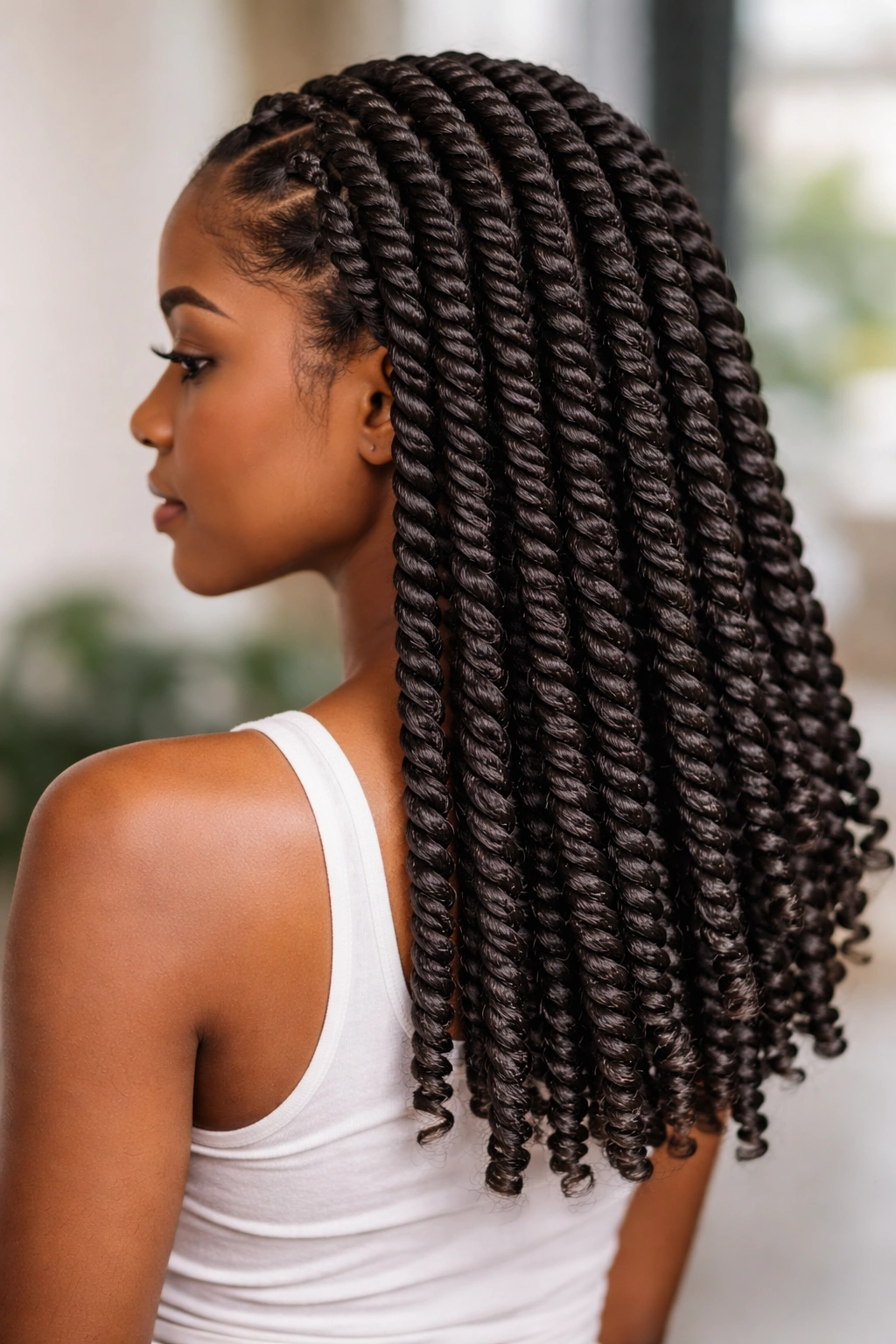
Rope twists look smoother than standard two-strand twists because the strands are wound more tightly together. The finish has a neat spiral line that can look sleek, shiny, and a little more polished than a looser twist style. If your hair likes to swell at the sides, rope twists keep that under control better than you’d expect.
They work best on hair that has been stretched a bit. Not straightened — stretched. A quick blow-dry on low heat or a well-set banding method can help if your curl pattern shrinks hard and eats up length. Rope twists also reward restraint. Use less cream than you think you need, because too much product makes the strands slip and separate.
This style is good when you want a longer-lasting twist with a cleaner edge. It’s also a nice choice for people who don’t like the fluffy look that some twist-outs give after a day or two. Rope twists sit flatter and stay a little neater, which some days is exactly what you want.
You can wear them loose, pin them back, or gather them into a low bun. They’re flexible that way. Just don’t overload the roots. The style should feel smooth, not heavy.
12. Twisted Half-Up, Half-Down Curls
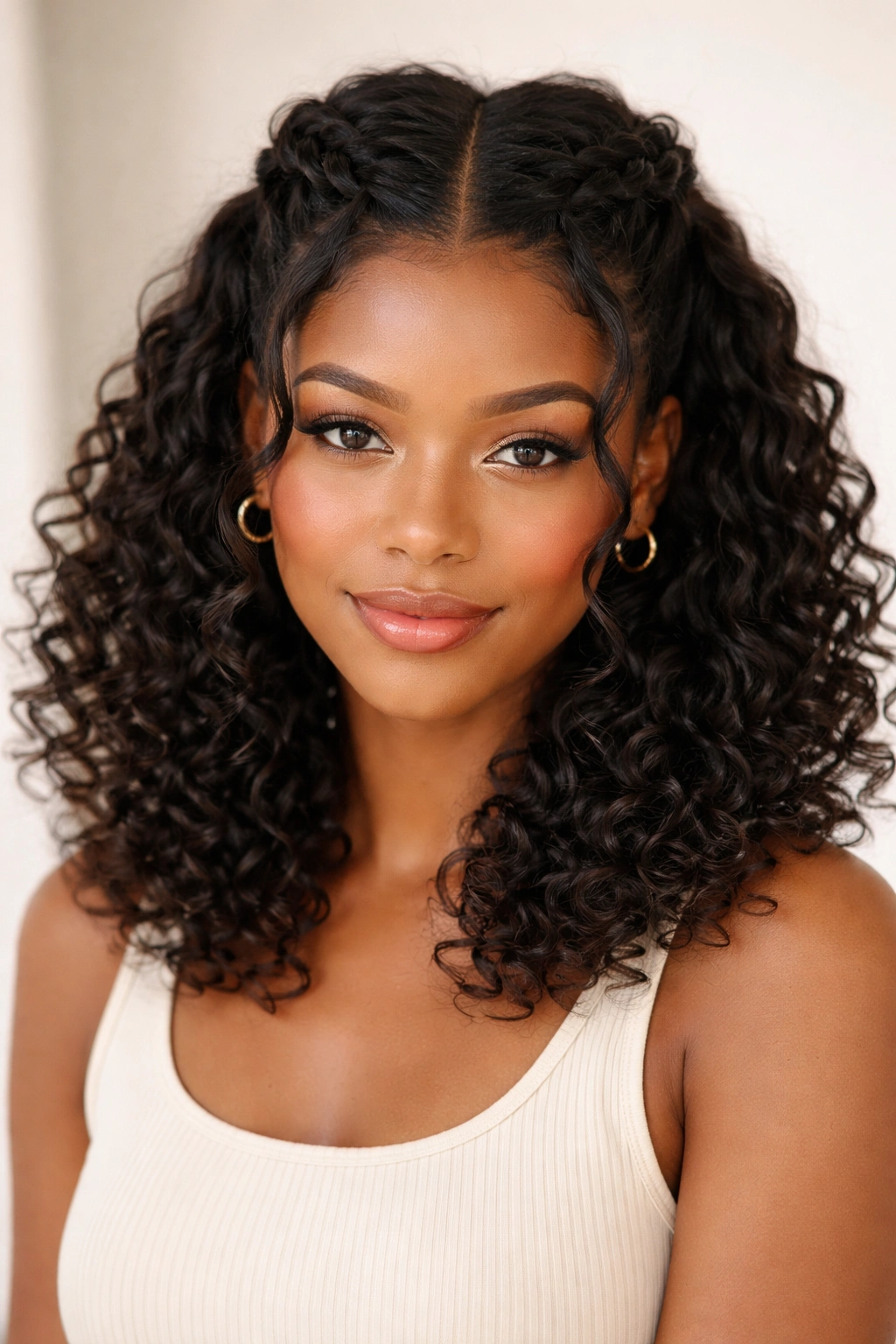
You need your hair off your face, but you do not want a full updo. That’s where the half-up, half-down twist style earns its keep. It gives you control at the crown and still lets the rest of the curls do their thing.
The front section usually carries most of the structure. You can twist back two chunky sections, make a small crown twist across the hairline, or pull the top into a half bun and let the rest fall free. I like this style when the back of the hair is still fresh enough to show off texture, but the front needs a little help staying tidy. That combo is common with natural hair, especially when the front gets handled more than the back.
A few clips can make this style look more finished than a tight elastic ever will. Clips hold without dents. Tight bands leave marks and, on finer strands, can flatten the top in a way that’s hard to undo.
If your hair is layered or your bob is growing out, this is also a smart way to blend lengths. The twists control the shorter pieces near the front while the curls below keep the style soft. It’s easy to wear, and that counts for a lot.
13. Finger Coils for Tight, Defined Ringlets
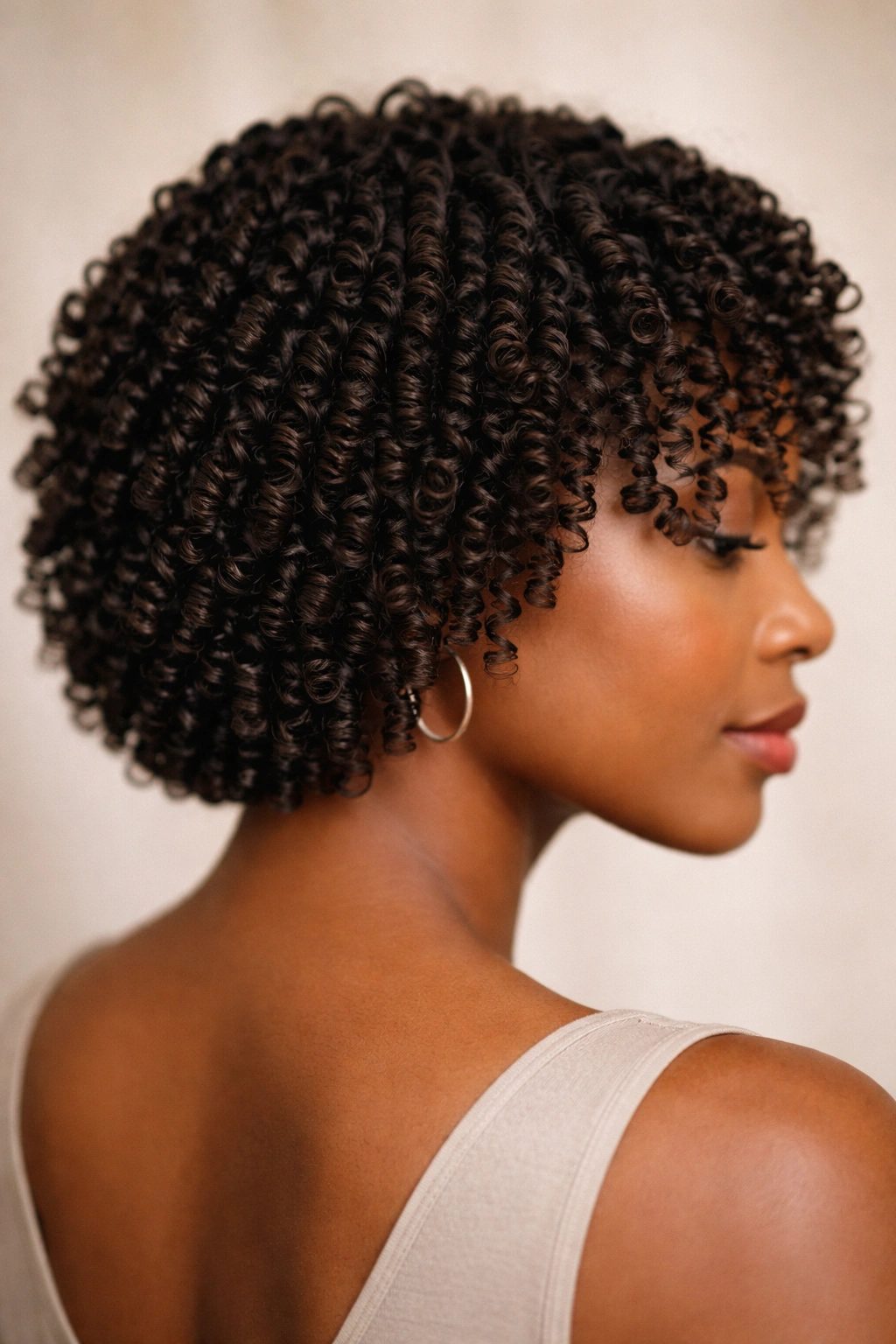
Why do finger coils still look crisp after other styles start to puff? Because each curl is shaped one at a time. There’s no guessing with finger coils. You see the curl form under your fingers, and you know right away whether the section is too big, too dry, or too loaded with product.
This style works well on short natural hair and bob cuts, especially when you want strong curl definition without relying on heat. Use tiny sections, smooth on a gel or curl custard, and twirl each piece in the same direction from root to tip. The coil should spring back on itself when you let go. If it hangs loose, the section is too large or the product has too much slip.
How to Keep Coils Neat
- Keep every section roughly the same size.
- Coil on damp, not soaking, hair.
- Don’t separate the coils until they are fully dry.
- Use a light hold gel if your hair tends to frizz fast.
Finger coils are not quick. Let’s be honest about that. They take time, and the patience tax is real. But the payoff is a clean, defined pattern that can hold its shape longer than many looser styles. If you want a curl pattern that looks deliberate from root to end, this is one of the most satisfying options.
14. Twisted Updo for Weddings and Events
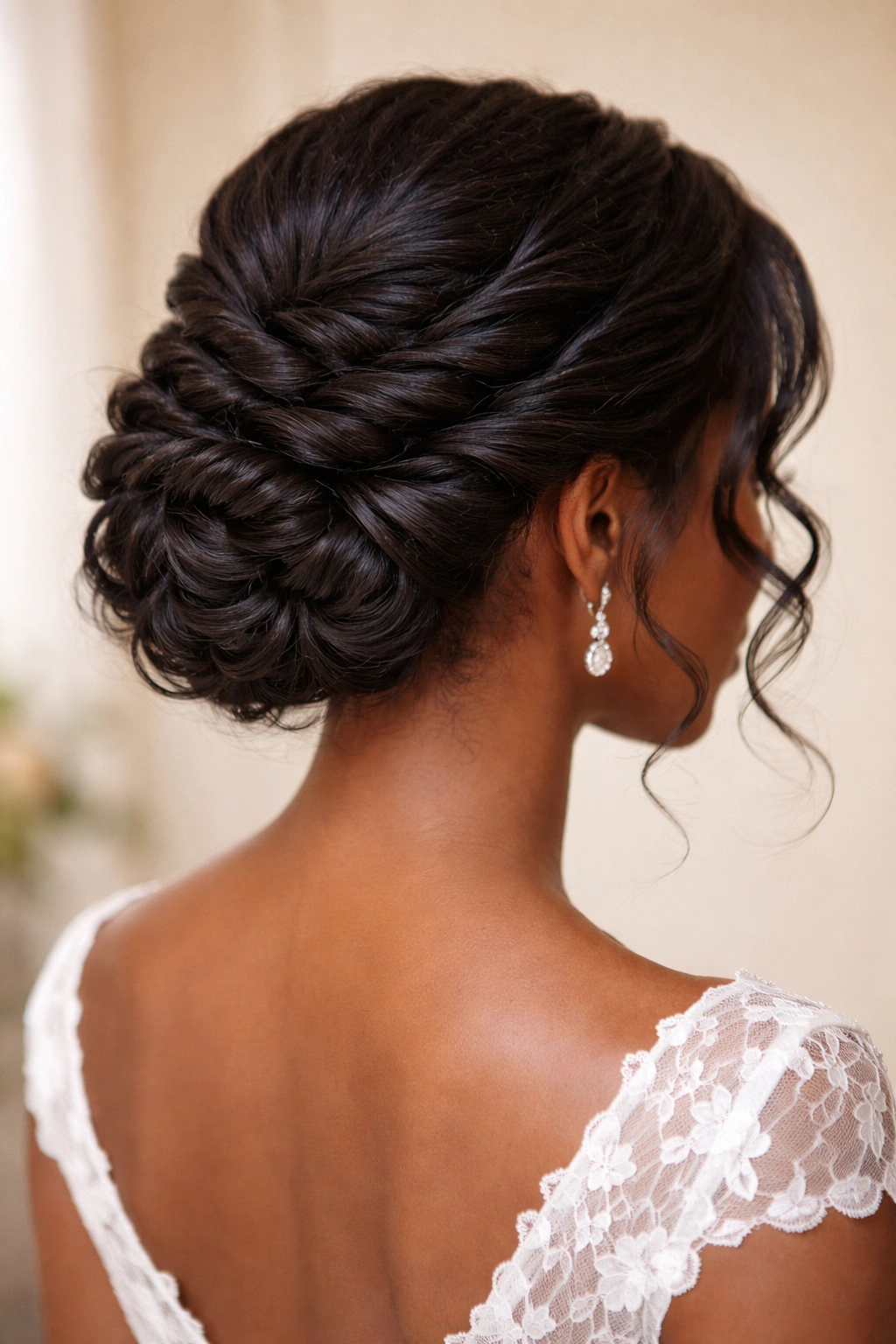
For a wedding, a work event, or a dinner where you want your neck free, a twisted updo makes a lot of sense. It takes the familiar feel of twists and turns them into something pinned, tucked, and more formal without looking stiff or overdone.
Start with medium-sized twists or flat twists, depending on how much hair you want to keep under control. Then pin the lengths into a low bun, a rolled chignon, or a side tuck. The shape can be soft and rounded, or a little more sculpted if you want the silhouette to stand out. A few face-framing curls make the whole thing feel less severe. The style gets better when it leaves a little movement around the face.
U-pins are useful here because they hold the shape without punching a bunch of visible holes into the style. Match the bobby pins to your hair color if you can. It sounds fussy. It makes a difference. And if you want shine, use a tiny amount of lightweight oil on the finished twists, not enough to make them slick.
This is the kind of style that looks good from the front and still holds up when you turn your head. That matters more than the glossy photo angle. A good updo has to work in motion.
15. Wash-and-Go Curls with Twisted Front Sections
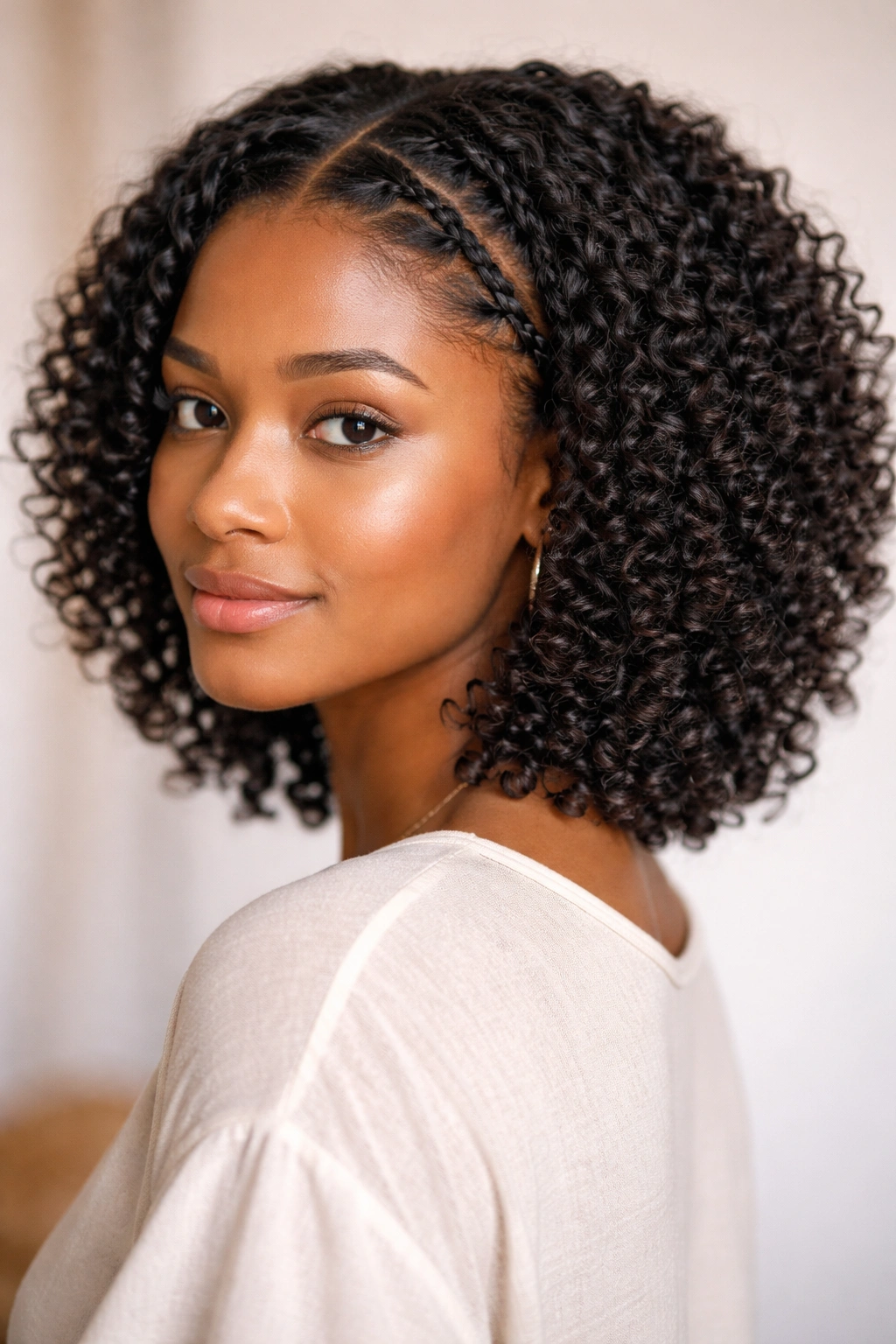
A wash-and-go can look more finished when the front is twisted. That little trick does a lot. It keeps the hairline neat, gives the style a clear shape, and lets the rest of your curls stay free and soft.
This is a smart option when your front section frizzes faster than the rest or when you want a quick style that still feels intentional. Twist just the front hairline, the temples, or a small crown section, then leave the back in defined curls. You don’t need to twist everything to get a polished look. Sometimes the front is the only part that needs help.
That’s especially useful on growing bobs. The shorter front pieces can shrink differently from the rest, and a few tiny twists smooth that difference out. It keeps the shape clean without forcing the whole head into a full set. If your curls are already defined, this style takes very little extra time.
Refresh the front with a mist of water and a drop of leave-in if the twists start to dry out during the week. Keep the products light. The goal is tidy structure at the hairline, not a crunchy cast. And if you want a quick win on busy mornings, this is one of the easiest places to get it.
Final Thoughts
The styles that work best on natural hair are the ones that respect the texture instead of trying to bully it into something else. Twists give structure. Curls give movement. Put them together with the right parting, the right amount of product, and enough drying time, and the result usually looks better than the rushed version you almost talked yourself into.
If you want length retention, lean toward mini twists or rope twists. If you want shape, try a twist-out, a bob-length set, or a flat-twist mohawk. If you want speed, the half-up styles and twisted front sections are hard to beat. That’s the real filter, honestly: not what looks pretty in a still photo, but what fits your hair, your time, and your patience.
Dry the hair fully. That’s the boring rule that saves the whole look.
And if you sleep on satin, keep your part lines clean, and separate curls with a light hand, you’ll get more out of almost any twist-and-curl style than you expect.
