



French bob cuts have a useful trick: they make ordinary hair look intentional. The line lands at the jaw or just below it, the ends sit clean, and a little bend at the bottom does most of the visual work.
That is why the cut keeps hanging around in salons and on real people with real schedules. It works with a quick blow-dry, with air-drying, with a flat iron bend, and even with hair that never behaves perfectly before coffee. There’s a reason so many short cuts feel fussy and then vanish from your life. A good French bob does the opposite.
The catch is shape. Get the length wrong by even an inch and the whole thing can tip from sharp to awkward, which is why the best versions are never random; they are tailored to your cheekbones, jawline, and how much movement your hair actually has. Start with the cut that matches your texture, not the one that looks cutest on a model, and the rest gets easier.
1. The Classic Jaw-Length French Bob
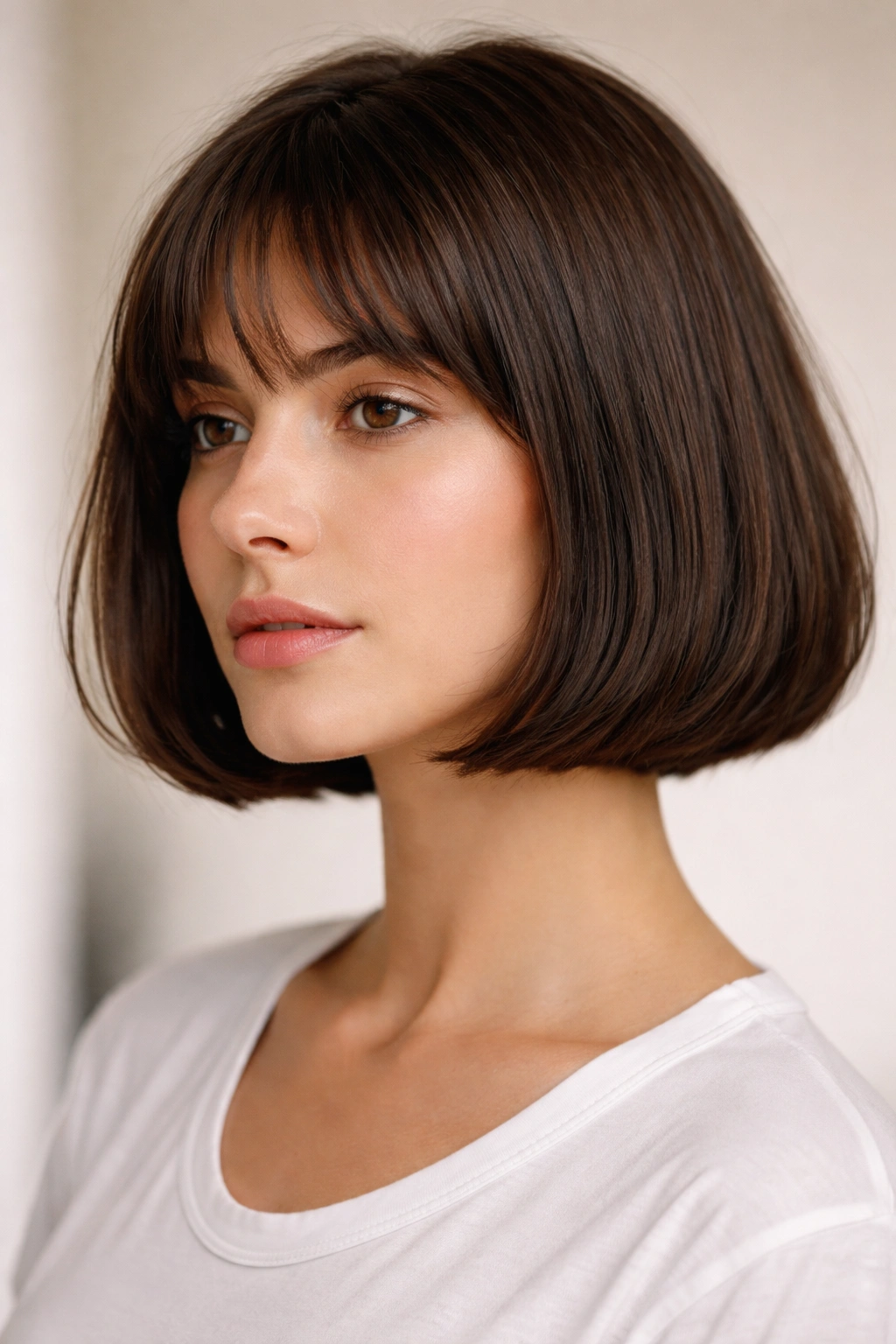
This is the version most people picture first, and for good reason. A classic French bob usually sits right at the jaw or a hair below it, with a blunt perimeter that makes the whole cut feel crisp. There’s no need for dramatic layering here. The shape does the heavy lifting.
Why the blunt edge matters
A clean line at the bottom gives short hair its backbone. Without it, the cut can start to look wispy or accidental, which is the fastest way to lose that Parisian feel. The blunt edge also makes hair look denser, especially if your strands are fine or medium in thickness.
It’s a cut that behaves well on a weekday morning. A quick rough-dry, a round brush pass on the ends, and you’re done.
- Best for: straight, wavy, and lightly textured hair
- Length sweet spot: jawline to just under the jaw
- Style time: about 10 to 15 minutes
- Maintenance: tidy trims every 6 to 8 weeks
Pro tip: Ask for the ends to be slightly beveled under if your hair flips out at the nape. A tiny bend looks softer than a hard shelf.
2. French Bob Cut With Full Blunt Bangs
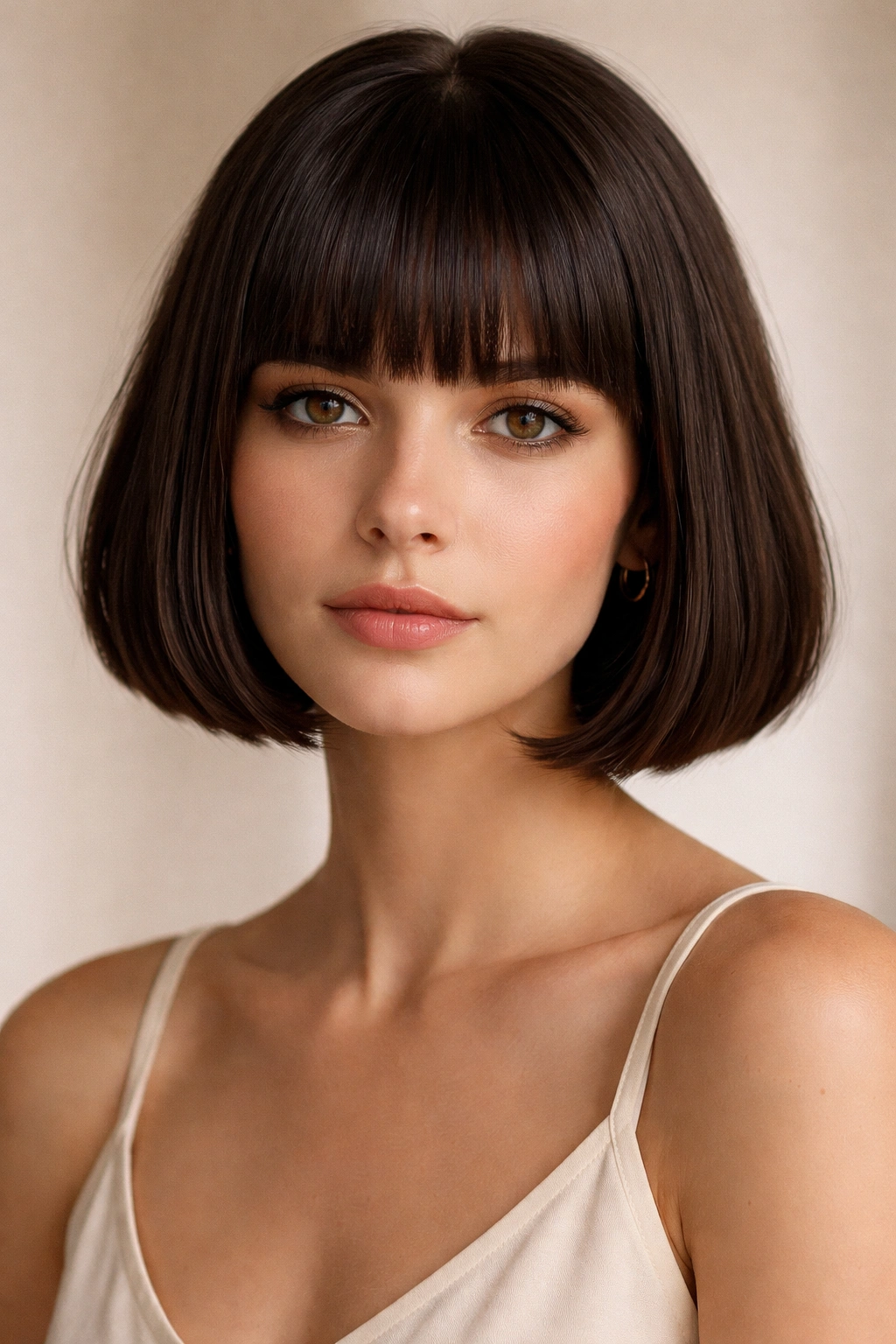
Full bangs change everything. Add them to a French bob and the whole cut becomes more graphic, more focused around the eyes, and a little more unapologetic. I like this version when the rest of the look is simple — plain tee, sharp collar, gold hoops, done.
The fringe should sit thick enough to look deliberate, not see-through. If the bangs are too thin, they separate by lunch and the shape loses its punch. A dense fringe also makes the bob feel less exposed, which matters if you like short hair but do not want every feature out on display.
Who should try it
This pairing works well if you have:
- medium to thick hair that can hold a fringe
- brows you like showing off
- a face shape that benefits from shortening the forehead visually
- patience for regular fringe trims
The styling rule is simple. Dry the bangs first, before the rest of the hair gets warm and fluffy. Use a small round brush or a flat brush, aim the airflow side to side, and stop the moment the fringe sits flat against the forehead without looking stuck there. Too much product weighs it down fast.
A full-bang French bob can look expensive in the best sense of the word. Not flashy. Just finished.
3. Soft French Bob Cut With Curtain Bangs
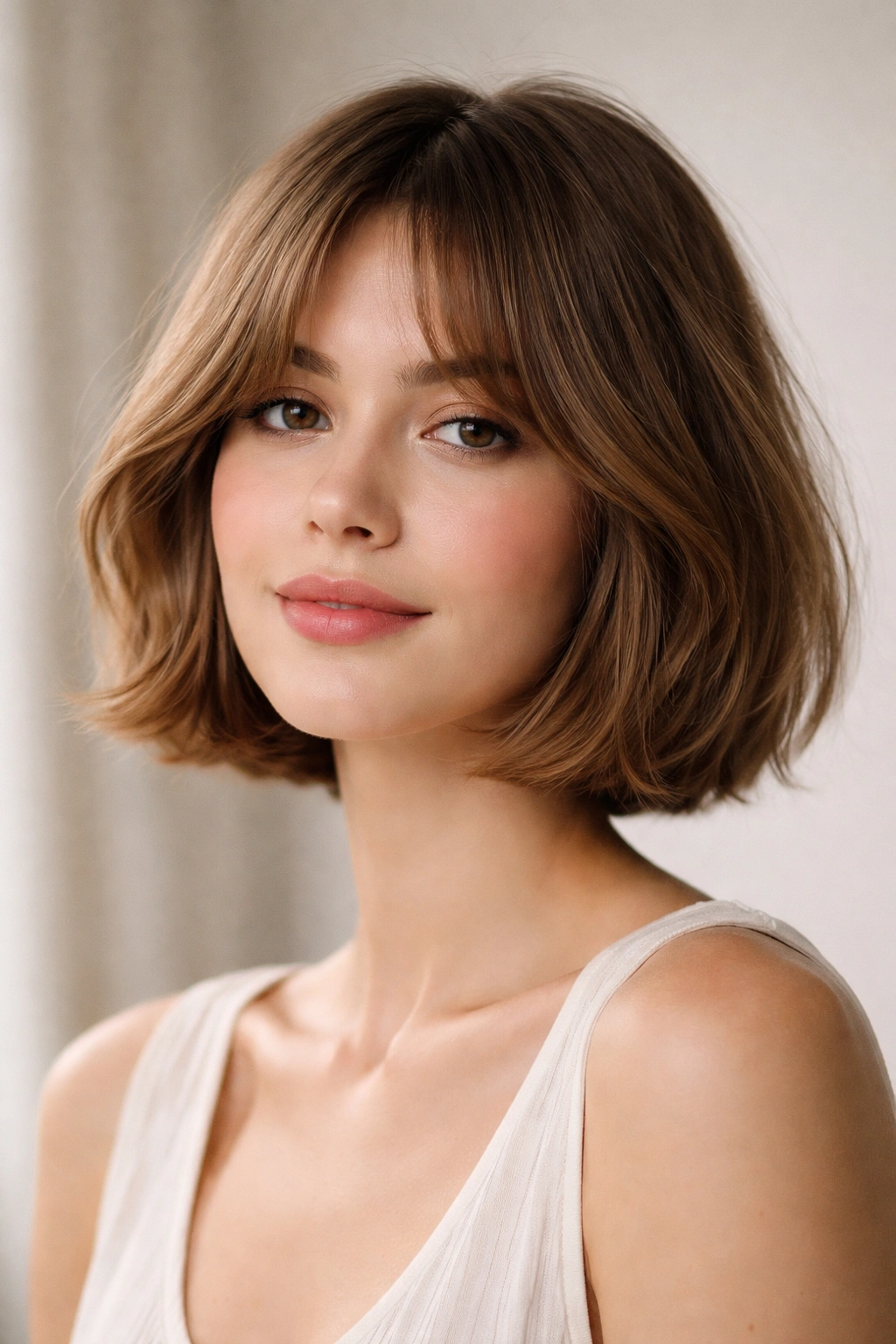
Want softness without losing the bob’s line? Curtain bangs are the obvious answer, but the trick is keeping them light enough to move. They should part cleanly in the middle and sweep toward the cheekbones, not drop into the face like heavy drapes.
The reason this version works so well is balance. The bob still gives you structure, while the bangs break up the width around the face. That makes the cut feel friendly instead of severe, which is helpful if you’re nervous about going short.
Best face shapes for curtain bangs
Curtain bangs do a lot for:
- round faces, because the sweep adds length
- square faces, because the softness eases the jaw
- long faces, when the fringe is cut a little fuller and not too short
Keep the shortest point of the fringe around the eyebrow to cheekbone zone, then let the sides taper. That range gives you flexibility. You can tuck them back on lazy days or blow them forward when you want the cut to look more styled.
A 1-inch round brush or a small bend with a flat iron is enough. Anything more starts to look overworked.
4. Wavy French Bob for Fine Hair
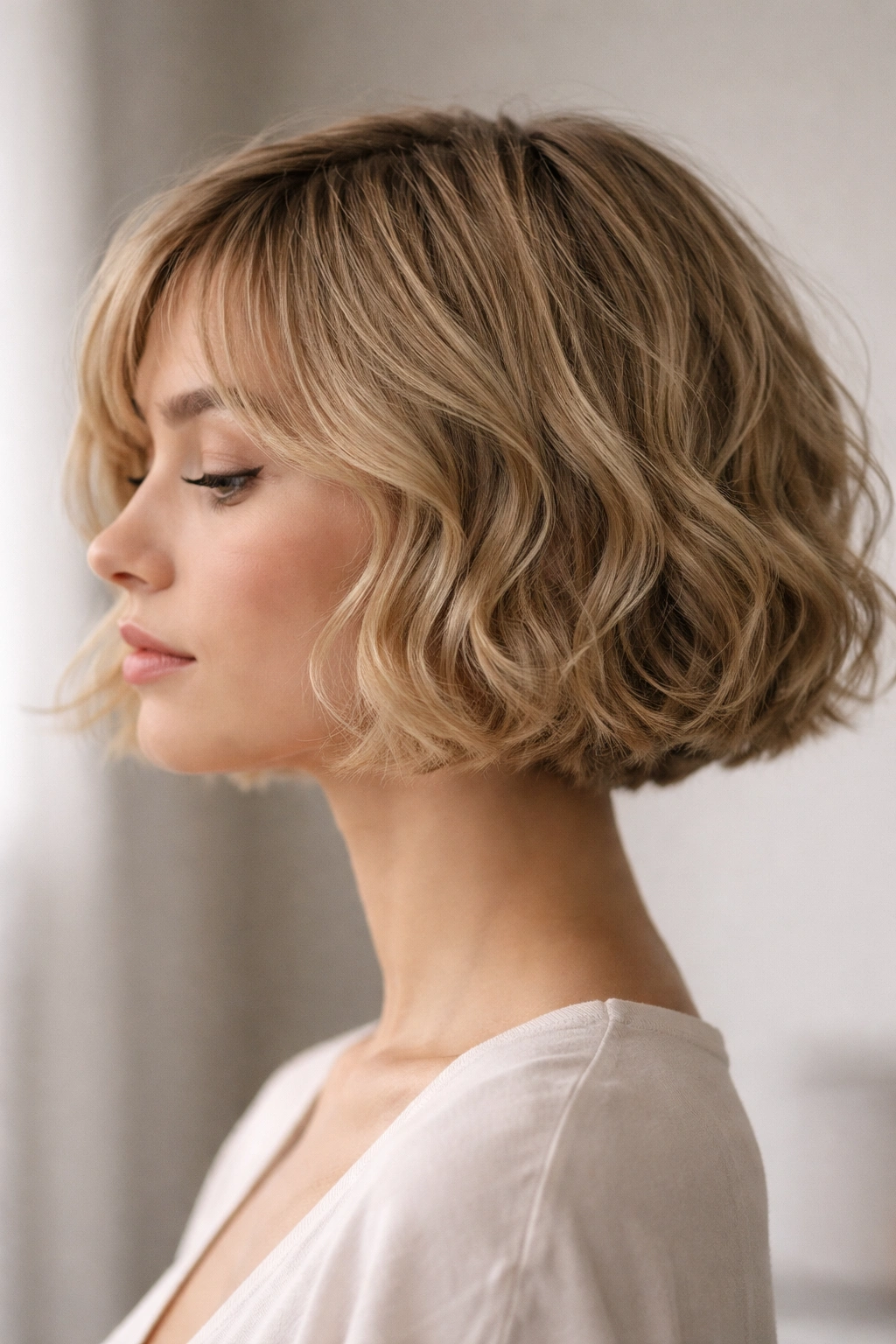
If your hair goes flat by lunch, this version earns its keep. A wavy French bob can make fine hair look fuller without turning it into a giant triangle, and that is a small miracle when you’ve spent years fighting collapse at the roots.
The secret is keeping the bottom line strong while adding movement through the middle. You want bend, not curl. A loose, irregular wave reads soft and chic; a ringlet-heavy finish can make the cut feel too busy and smaller than it really is.
How to build body without puff
A few things help here:
- apply mousse at the roots on damp hair
- rough-dry until the hair is about 80% dry
- use a 1 to 1.25-inch curling iron only on random sections
- leave the ends straight or just slightly bent
- break up the wave with your fingers, not a brush
That last point matters. Brushing out the wave too hard can flatten the whole shape in five seconds. Fingers keep the texture airy and casual.
Fine hair often looks better in a bob when the ends are blunt and the top is lifted just enough to show some space between the strands. Tiny detail. Big difference.
5. Textured French Bob for Thick Hair
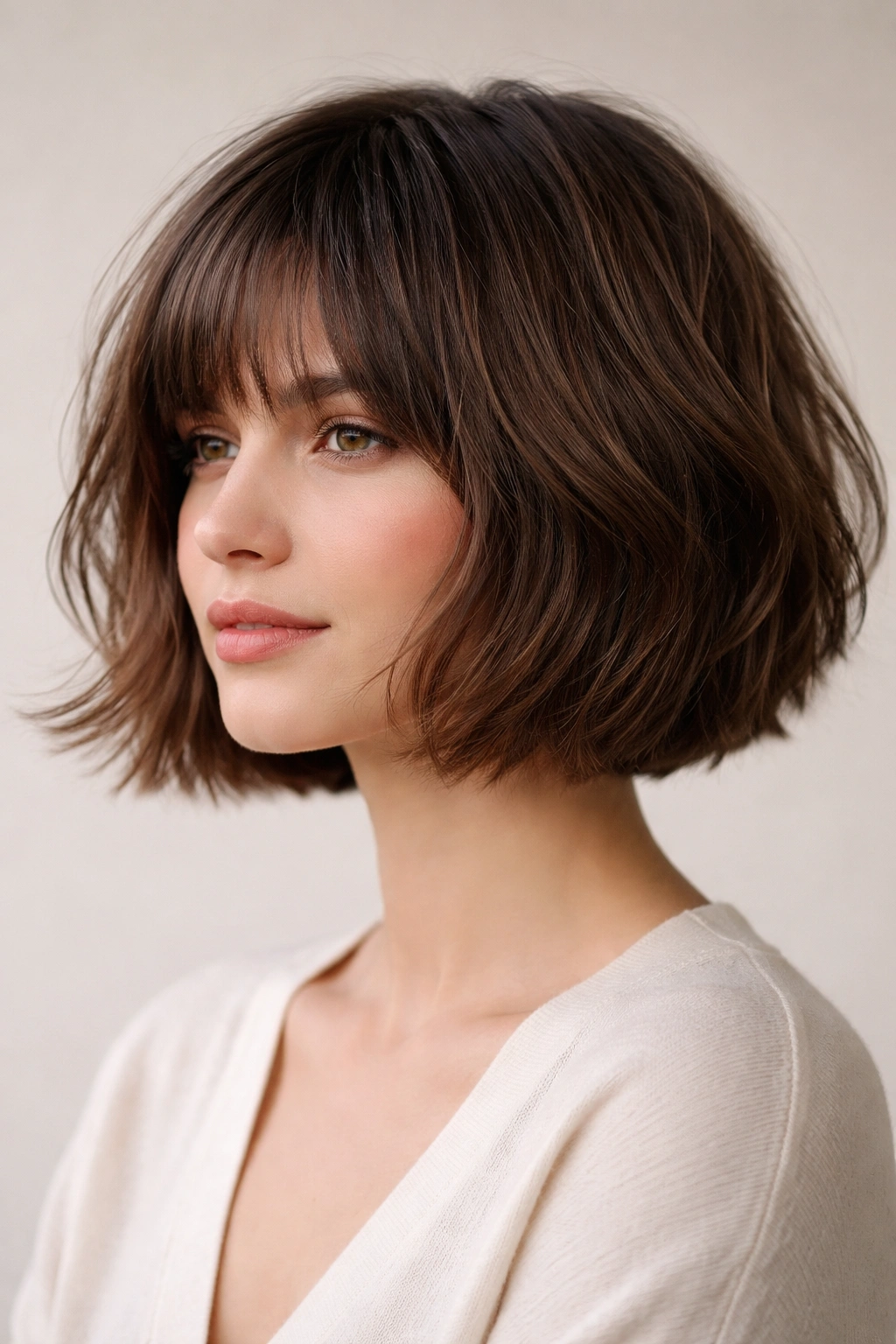
Thick hair usually looks better in a French bob when the scissors remove bulk inside the shape, not from the bottom line. That’s the part people get wrong. They think thick hair needs to be thinned everywhere, and then they end up with ends that look ragged instead of controlled.
The better version keeps the perimeter solid and uses internal shaping to take out some of the weight. That might mean point-cutting into the ends, soft internal layers, or a little debulking around the back. The surface should still look full. You want movement, not holes.
A textured French bob is one of those cuts that gets better when the hair is slightly imperfect. A bit of frizz at the crown, a little bend near the jaw, and the whole thing looks lived in instead of stiff. Thick hair can carry that better than most textures because it has enough mass to hold the outline.
If your hair tends to balloon in humidity, ask for less layering than you think you need. Seriously. Too many layers can make thick hair spread outward like a mushroom. A firmer outline and smart weight removal usually win.
The salon wording that helps
Say you want:
- a blunt outer line
- internal weight removal, not heavy layers
- soft movement around the cheekbones
- a shape that still feels full when air-dried
That gives a stylist enough direction without turning the appointment into a game of hair roulette.
6. Chin-Length French Bob With a Side Part
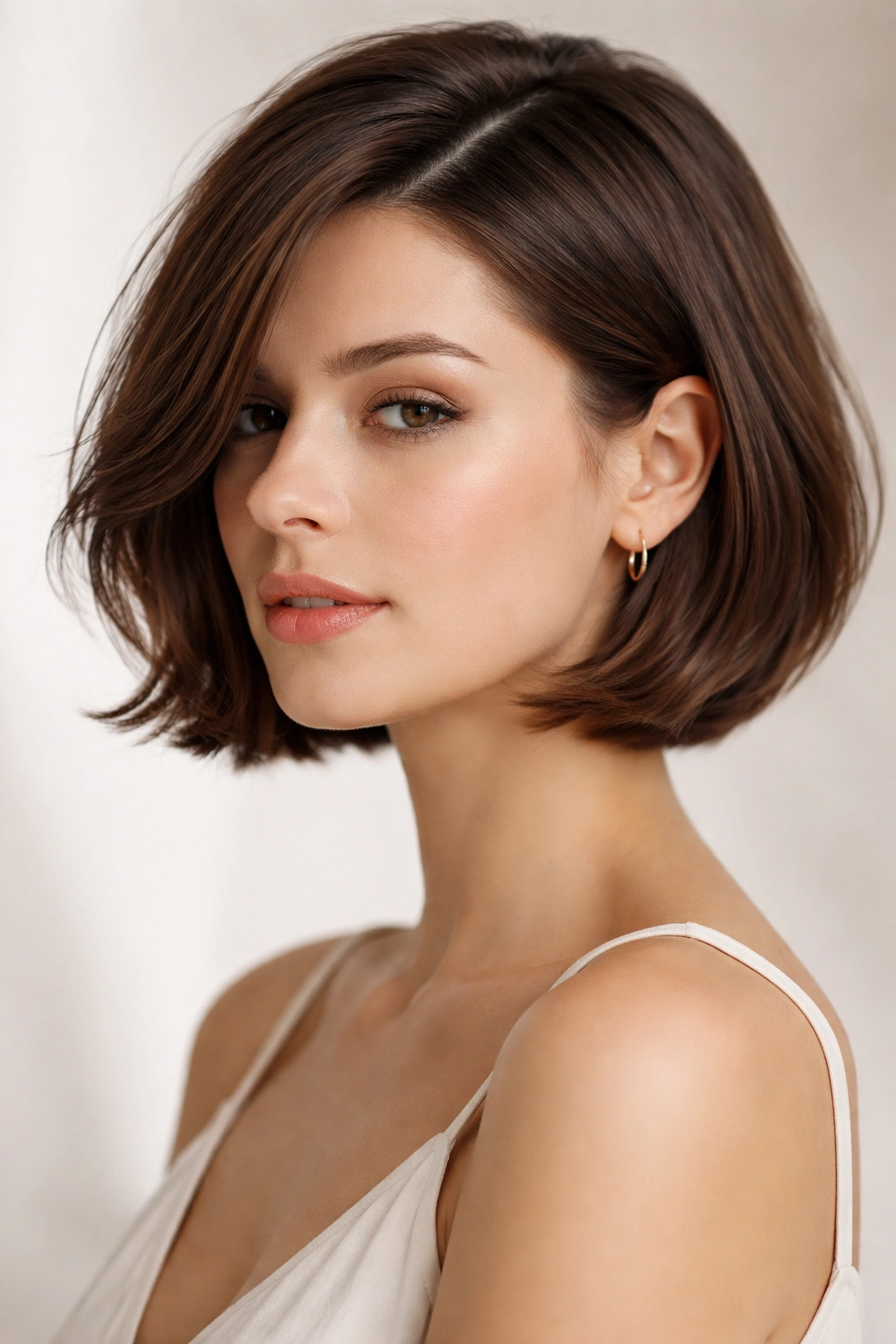
A side part changes the whole mood. The center part French bob feels cleaner and more graphic. Shift the part over, and the cut suddenly gets easier around the forehead, softer across the cheek, and a little more romantic without trying too hard.
This version is especially good if your hair naturally falls flatter on one side. Instead of fighting that, use it. A side part lets you work with the way the root wants to lift, which gives the crown a little more height and keeps the style from collapsing into your face.
Where to place the part
Don’t drag it too far over unless you want a strong asymmetrical look. Usually, one to two inches off center is enough. That small shift gives the bob more movement while keeping it believable for everyday wear.
A side-part French bob does a nice job with long faces, because it breaks up the vertical line. It also softens a strong forehead without hiding it completely, which I prefer to a heavy fringe when you want the face to stay open.
A quick tuck behind one ear finishes the look fast. One side is neat, the other side moves. That little imbalance keeps the cut from feeling too proper.
7. Curly French Bob With a Rounded Shape
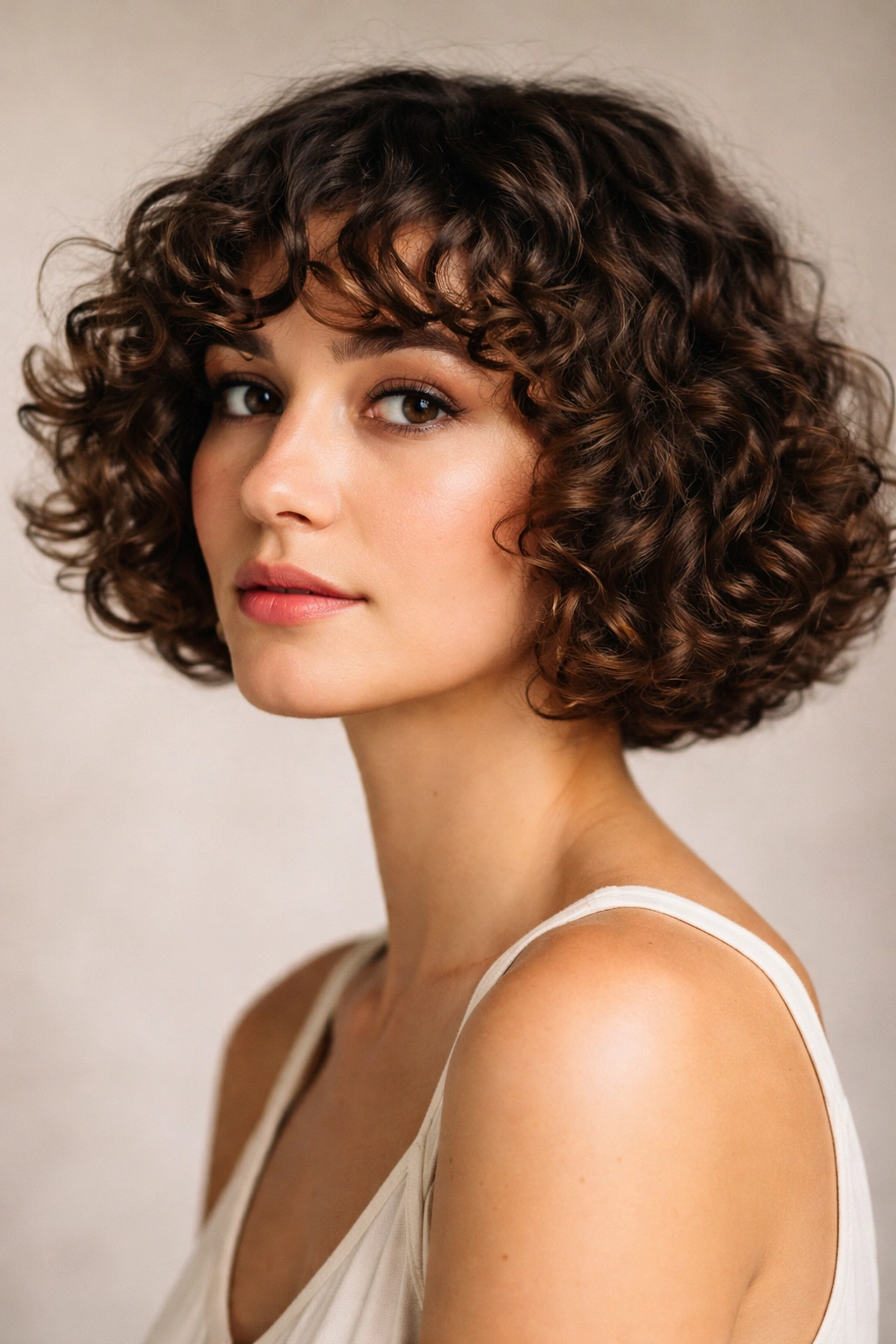
Curly hair in a French bob feels plush when it’s cut with the curl pattern in mind. That’s the key. If the cut ignores shrinkage, you get a bob that looks fine when wet and way shorter than expected once it dries. No one enjoys that surprise.
The rounded version works because it respects the curl’s natural spring. Instead of forcing a straight outline, the shape follows the curl’s arc and leaves a little room for bounce. On curls, the ideal length often lands at the chin or slightly below so the dry shape still reads as a bob.
What the curl pattern needs
Curly French bobs usually do best with:
- a dry or mostly dry cut, if the stylist works that way
- hydration before styling
- a leave-in cream or light gel
- a diffuser on low heat
- enough length to allow for shrinkage
One thing people miss: curly bobs look better when the lower edge is clean, even if the interior has some softness. Too many choppy layers can make the silhouette frizz out. A rounded outline gives the curls a place to land.
This cut can feel bold in photos and easy in real life. That’s a rare combination, and I respect it.
8. Sleek French Bob With Tucked Ends
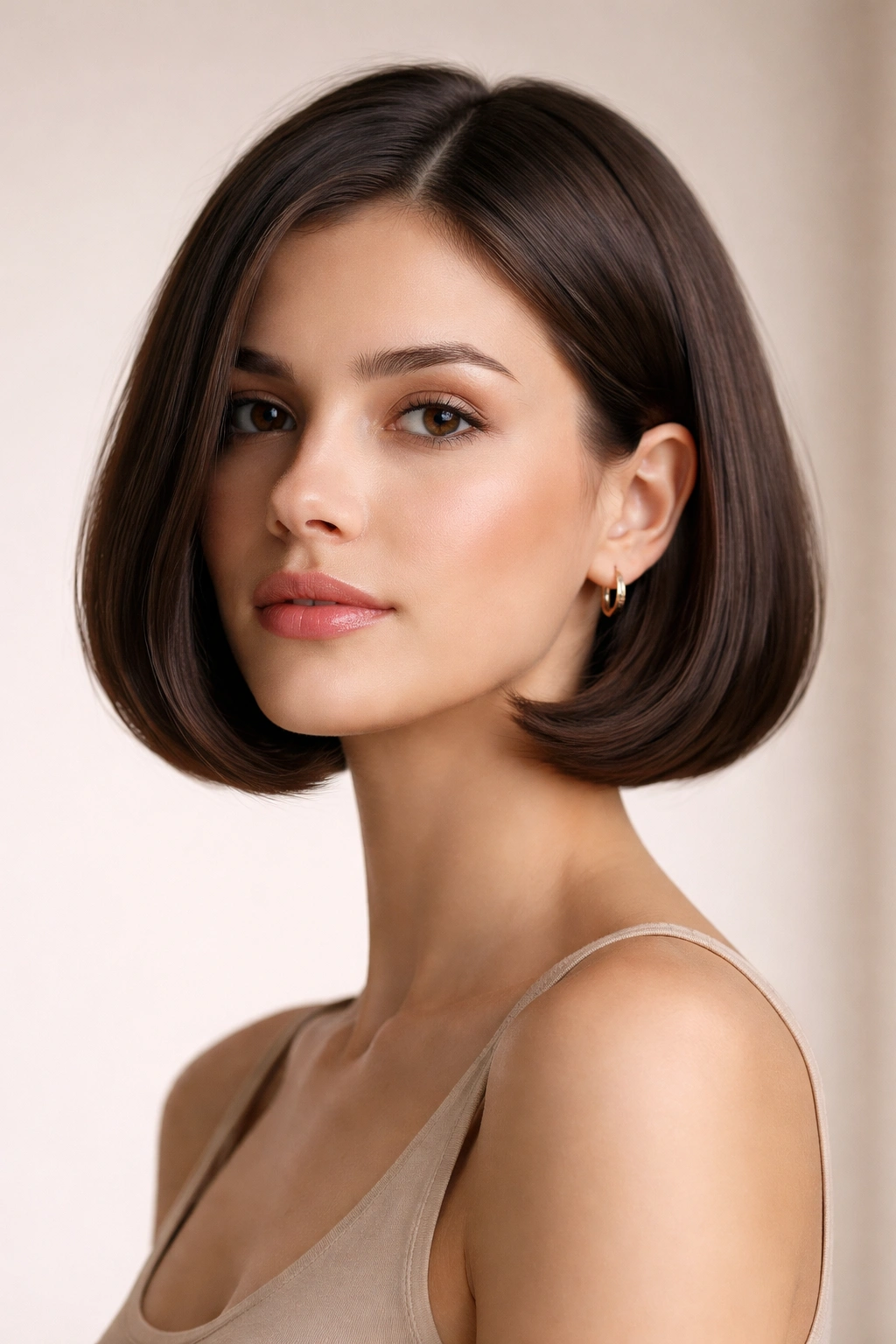
A sleek French bob is not boring if the outline is clean. In fact, it can look sharper than the textured versions because every line is visible. The length usually sits at or just under the jaw, and the ends curve under in a controlled way instead of flipping out.
This version is a good pick when your hair is naturally straight or only slightly wavy. It also suits anyone who likes a polished finish but does not want a stiff, helmet-like bob. The difference is in the bend. A slight inward tuck at the ends keeps the shape soft enough to wear with jeans.
A round brush and a blow-dryer nozzle can do most of the work. Aim the airflow down the hair shaft, keep the brush moving, and stop once the ends have a smooth curve. A pea-sized amount of smoothing cream is plenty. More than that, and the cut can start to look greasy near the jaw.
Small things that matter
- tuck the front pieces behind the ears for a clean line
- keep the part neat but not painted on
- use light shine spray only on the outer layer
- avoid heavy oils near the roots
The result should feel precise, not lacquered. That’s the difference between chic and trying too hard.
9. Layered French Bob That Moves Instead of Floats
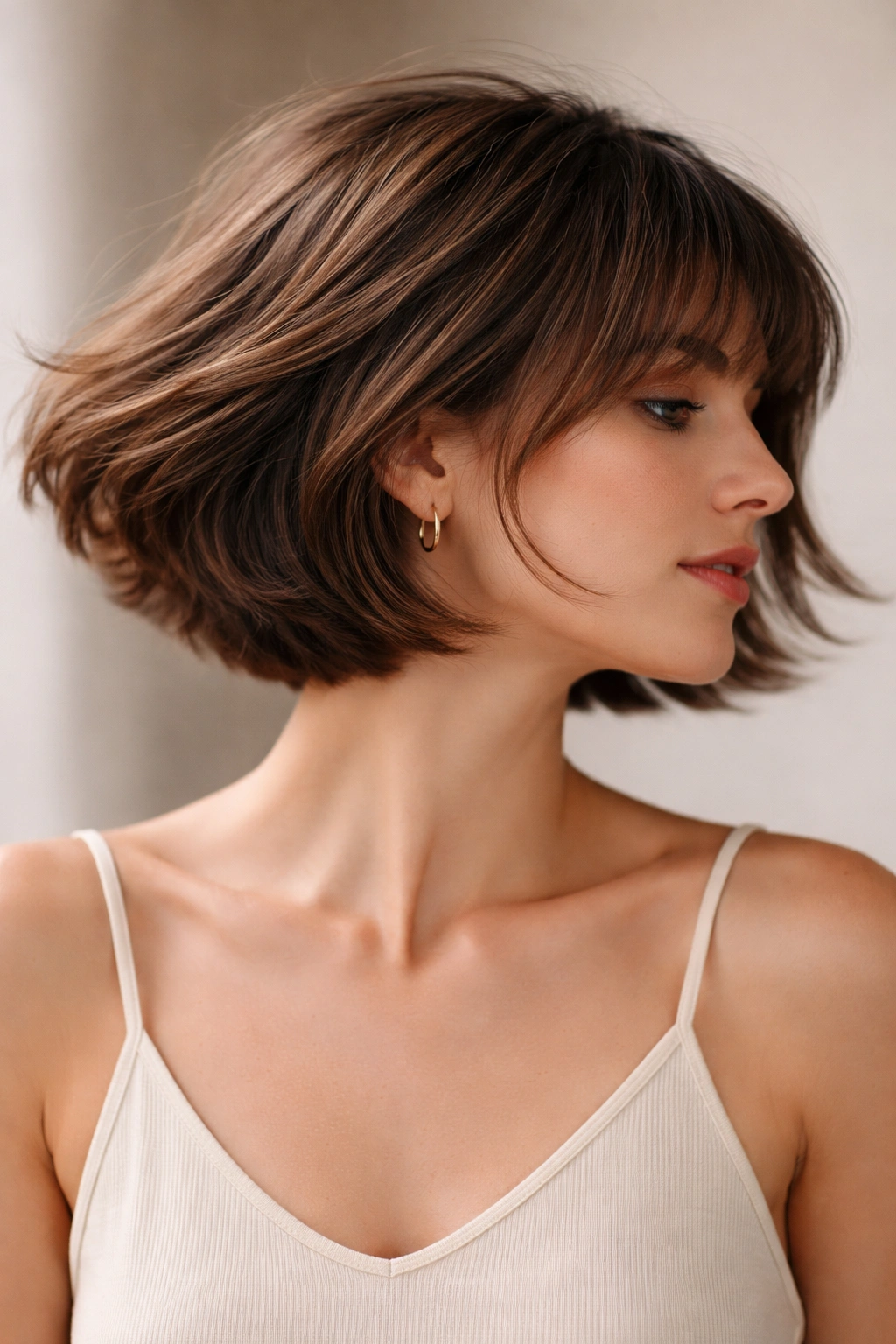
Why do some bobs move and others feel heavy? Usually because the layers are sitting in the wrong place. A good layered French bob should still have a clear outer line, but the inside can be softened so the hair bends and swings instead of hanging like one block.
This is where people get nervous, and I get it. Too many layers can wreck the shape. But a little internal layering — tucked underneath the top surface — gives the hair room to move when you turn your head. That matters if you hate flatness and want the cut to feel lighter at the ends.
Where layers should live
The best movement tends to come from:
- soft internal layers between the cheekbone and jaw
- light removal at the back of the head
- no choppy pieces at the very bottom line
- face-framing softness that doesn’t break the perimeter
That last part matters a lot. If the perimeter gets shredded, the French bob loses its structure and starts to look like a grown-out shag wearing a bob costume.
A layered version works well for hair that gets bulky in one area and limp in another. The cut can redistribute that weight so the shape sits more evenly. It’s subtle, but you can feel the difference the first time you tuck it behind your ears.
10. French Bob With Micro Bangs
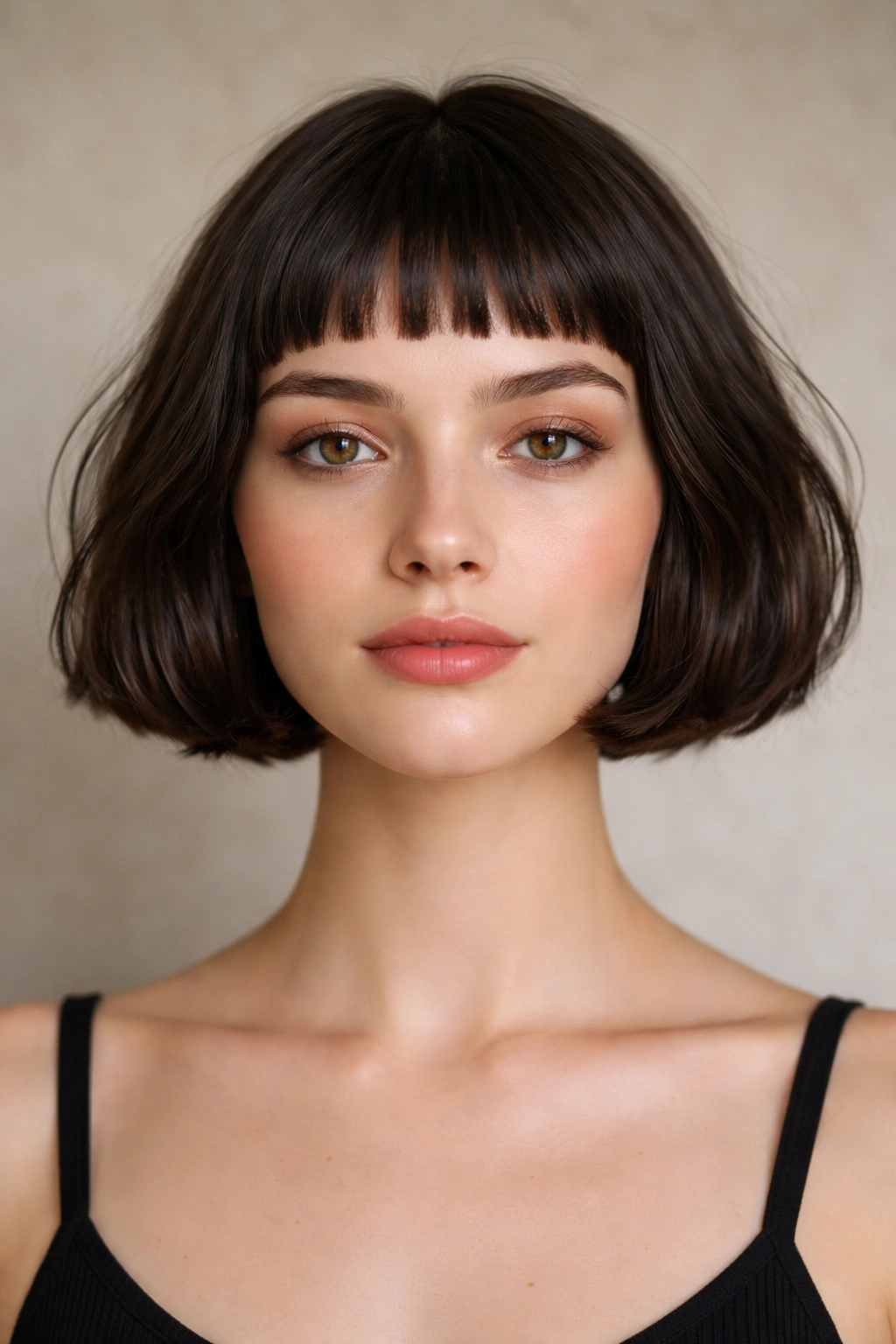
Micro bangs are the cut’s loudest move, and they are not for hiding. That’s the first thing to know. If you want to soften your features quietly, this is not the route. If you want a French bob with a little bite, though, micro bangs do the job fast.
The fringe sits well above the brows, which pulls the eye upward and makes the face look more open. The bob underneath can stay simple and chin-skimming, so the contrast between the two shapes does the work. I like this on people who wear strong glasses, bold lipstick, or sharp collars. The cut can hold its own.
The maintenance is real. Micro bangs need regular trimming, and they show cowlicks more than longer fringe styles do. Straight hair usually handles them best, though a soft wave can still work if the fringe is cut with enough texture.
A quick reality check
- they grow out visibly faster than longer bangs
- they need a dry styling pass most mornings
- they are unforgiving if the forehead is very short
- they look best when the bob stays clean and simple
A micro-bang French bob is a choice, not a compromise. That’s why it looks cool when it works.
11. Air-Dried French Bob for Natural Texture

If you shower at night and hate hot tools, this cut has a real job to do. The best air-dried French bob starts with a shape that already has enough structure to survive without a round brush marathon. Ask for that at the salon, because the haircut matters more here than any product.
The hair should land in a way that supports its own movement. Slightly stronger edges around the jaw help a lot. So does a touch of softness in the top layers, especially if your natural texture bends in odd places. Air-drying with a bob that was cut too flat can leave you with a helmet shape at the top and loose ends below. Not cute.
What to ask for at the salon
Say you want:
- a French bob that works with air-drying
- enough shape at the ends to sit on its own
- soft texture through the interior
- no heavy thinning at the bottom
After washing, scrunch in a light mousse or cream, then leave the hair alone until it’s mostly dry. If the front pieces misbehave, twist them once or twice while damp and let them fall into place. That small move keeps the cut from separating in odd directions.
This is one of my favorite versions for real life. It forgives bedhead. It forgives humid weather. It even forgives the occasional rushed morning, which is more than I can say for half the bob cuts people save on their phones.
12. Inverted French Bob With a Subtle Nape Lift
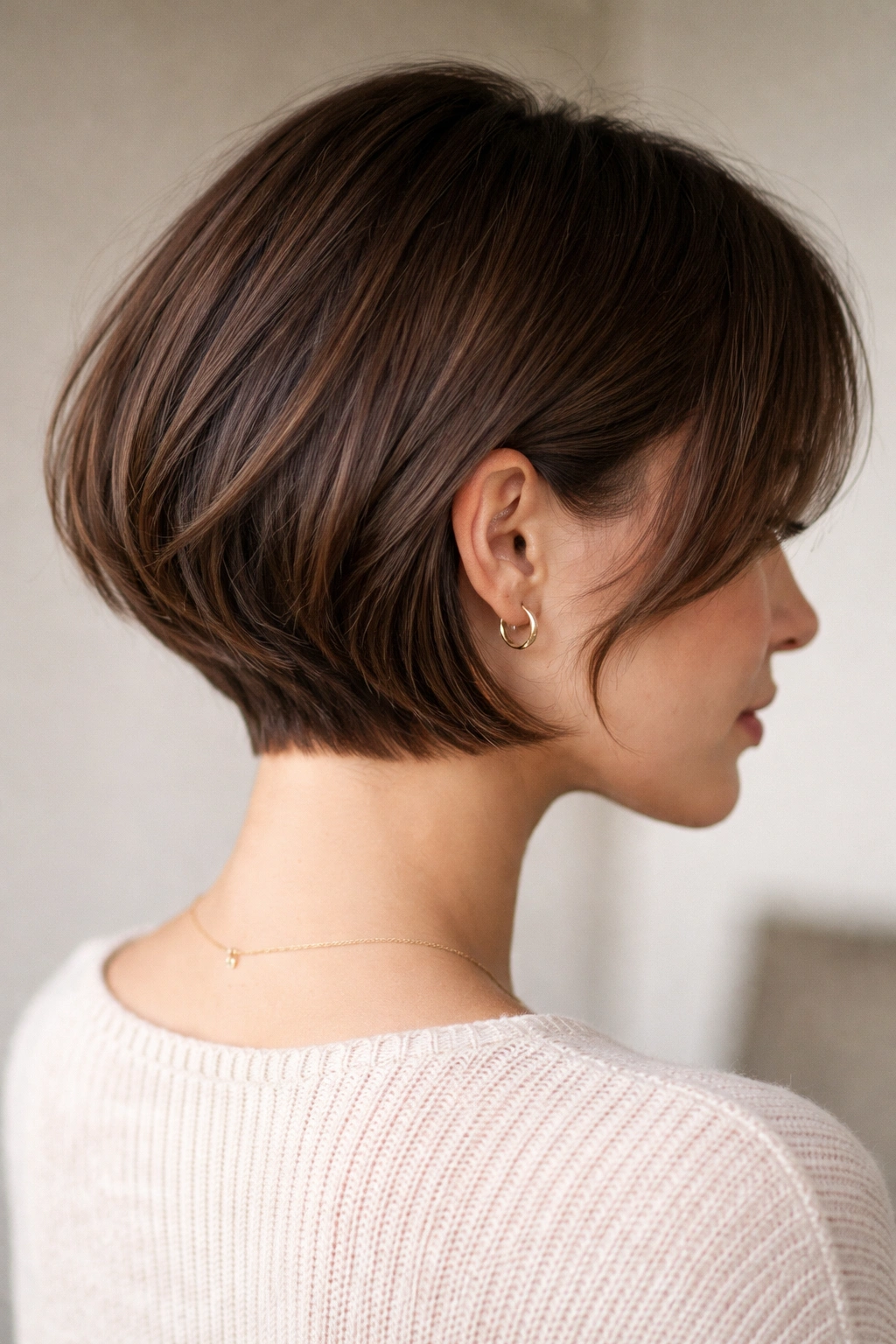
An inverted French bob is not the same thing as a sharp stacked bob. The difference is restraint. The back sits a little shorter, the front stays closer to jaw length, and the slope between them is gentle enough to wear every day without feeling costume-y.
That subtle lift at the nape can be a smart move if your hair tends to drag at the back of the neck or sit heavy under coats. It also gives fine to medium hair a little help at the crown. The shape feels light, but not flimsy.
Who it suits
This cut is a good fit if you want:
- extra lift at the back
- a cleaner neckline
- a bob that feels neat from the side view
- a shape that still tucks behind the ears
It is less friendly to very curly hair unless the stylist knows exactly how your curl pattern contracts. Too much angle can turn into a wedge once the hair dries.
I like the inverted French bob when it’s kept subtle. Half an inch to an inch of difference between the nape and the front is often enough. More than that, and the cut starts reading as a different style entirely.
13. French Bob With Face-Framing Pieces
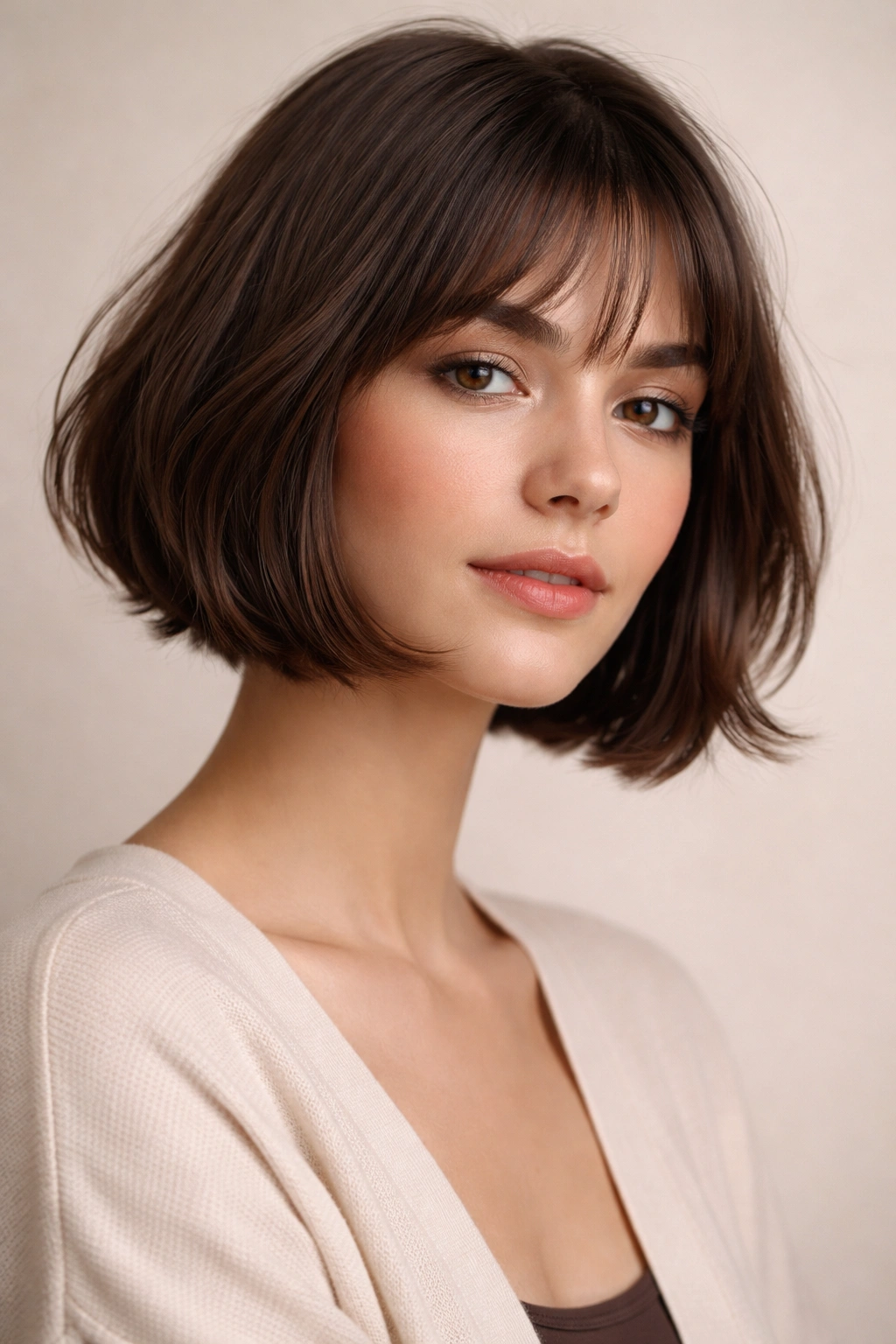
A little face framing can soften short hair fast. That’s the whole appeal here. You keep the bob’s clean base, then add a few longer pieces near the cheekbone or mouth to take the edge off the line.
This version is useful if you like the idea of a French bob but worry it will feel too blunt around the face. Those few pieces create movement without chopping the whole cut into layers. The shape still reads as a bob, just a friendlier one.
The key is restraint. Face-framing pieces should be noticeable when you move, not so many that the perimeter disappears. If half the front is layered away, the cut stops looking like a French bob and starts looking like a grown-out shag with ambition.
How much is enough
A good rule of thumb:
- keep the shortest pieces around cheekbone level
- let the longest front bits graze the jaw
- keep the back clean and solid
- avoid slicing too many layers into the sides
This is a smart choice for first-timers. It lets you keep the drama of short hair while giving your face a little extra softness around the edges.
14. Deep Side-Part French Bob for an Easy Lift
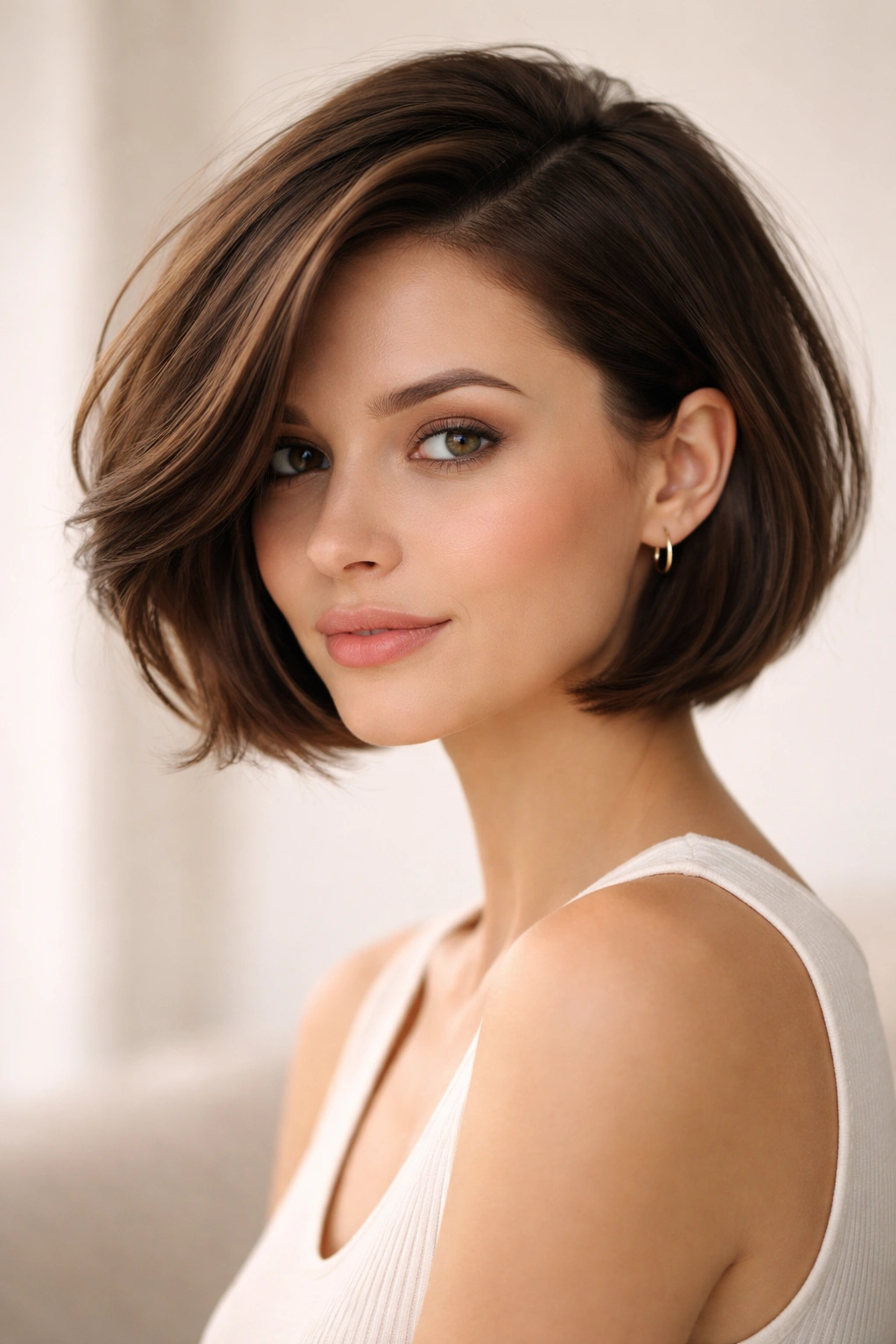
If your hair wants volume on one side and sulks on the other, a deep side part can do the heavy lifting for you. That asymmetry gives the bob instant character, even when the rest of the styling is almost nonexistent.
The cut itself can stay simple. What changes is the root lift and the way the front pieces fall. A deep side part lifts the top line, opens one eye a little more than the other, and gives the bob a shape that feels casual rather than overdone.
How to style the part
- flip the part while the hair is still damp
- clip the heavier side at the root for 10 minutes
- blow-dry with the airflow aimed upward at the roots
- finish with a touch of dry shampoo if the crown collapses
This works especially well on fine or straight hair that needs a nudge. It also plays nicely with a tucked side or one front piece falling loose. That tiny asymmetry keeps the cut from looking too polished for everyday wear.
Some haircuts need a lot of styling to wake up. This one doesn’t.
15. The Low-Maintenance French Bob That Grows Out Well

The French bob I keep recommending is the one that still looks good when it has grown out an inch. That is the quiet difference between a cut you admire for a week and a cut you actually live in.
The low-maintenance version keeps the jawline or cheekbone length, but the edges are soft enough to avoid a hard shelf as it grows. The bangs, if there are any, stay modest — curtain length, wispy fringe, or none at all. The shape doesn’t depend on perfect styling every morning, which matters more than people admit.
A good grow-out is not boring. It buys you time. It also means your bob can survive scarf friction, rain, sleeping on one side, and all the other small annoyances that make high-maintenance hair feel like a second job.
What I like most is the flexibility. On a clean day, it looks sharp. On a messy day, it still reads as deliberate. That is the sweet spot for a chic everyday look, and honestly, it’s the reason the French bob keeps winning over people who swear they “can’t do short hair.” They usually can. They just needed the right version.
