



A rainbow bob can look razor-sharp or strangely busy, and the difference usually comes down to the cut before the color even goes on. In rainbow bob cuts, the haircut gives the palette a shape; without that shape, the shades fight each other and the whole thing loses its edge. Keep the line clean, and the color starts reading like design instead of decoration.
Short hair is a blessing here. A bob keeps bold color close to the face, where even tiny shifts in placement matter, and it puts the ends on display in a way longer hair never does. That means a blunt line, a stacked nape, a curled-under front, or a choppy texture can change the mood of the same rainbow from graphic to playful to almost sneaky. The cut is the frame.
There’s also the maintenance question nobody likes to talk about until the first fade shows up. Bright pigments cling differently to pre-lightened hair, and the shortest layers lose polish fastest at the ends, so the smartest versions are the ones that still make sense when the shine softens. A good rainbow bob haircut doesn’t rely on perfection.
Some of the strongest versions are loud for ten seconds and then reveal a second personality when the hair moves. That’s the fun part. And it starts with the right silhouette.
1. Blunt Prism Bob
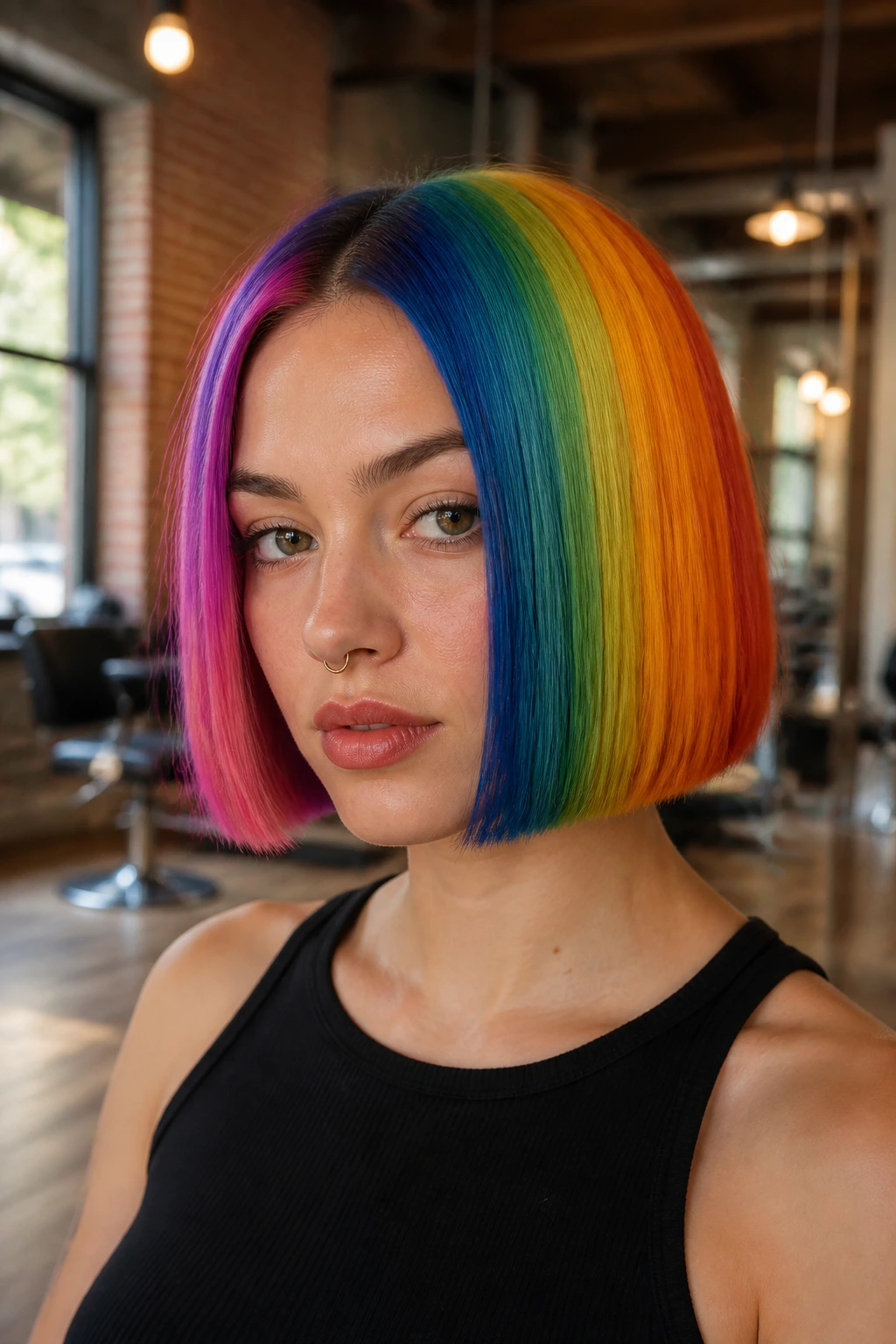
Blunt lines make rainbow color look expensive, not chaotic. A chin-length or jaw-skimming bob with a hard perimeter gives every shade a place to stop, which matters more than people think when you’re working with red, orange, yellow, green, blue, and violet all at once.
That edge does a lot of work.
On a blunt prism bob, the color can sit in clean vertical slices, or it can melt across the surface in tidy bands. Either way, the haircut keeps the visual noise under control. If the ends are wispy, the rainbow starts to blur at the bottom and the whole thing loses the punch that makes a bob so good for this kind of color.
This one loves straight hair and a smooth blowout. A center part makes the geometry feel deliberate, while a slight bend at the ends gives the color a little flick without wrecking the line. Ask for a clean perimeter with minimal internal layering if you want the shades to look crisp from root to tip.
A blunt bob also gives you a clear read on fading. When the color begins to soften, you’ll know exactly where the fade sits, because the shape stays honest. That can be a blessing or a curse, depending on how much upkeep you like, but I’d take that honesty over a messy silhouette any day.
2. Hidden Underlayer Rainbow Bob
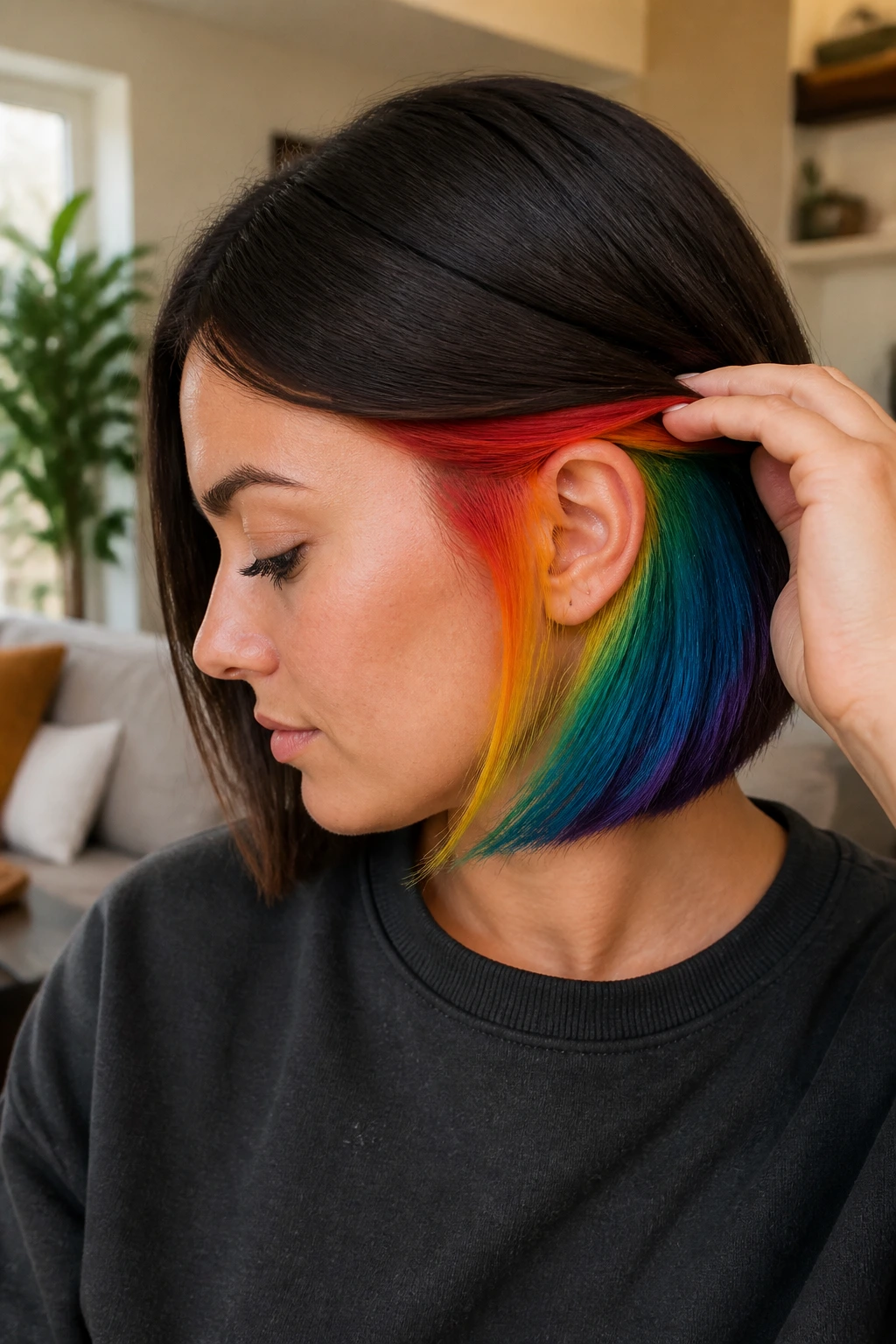
This is the easiest rainbow bob to wear if you want the color to appear on your terms. The top layer stays calm, maybe in a deep brunette, black, or cool blonde tone, and the rainbow hides underneath like a secret you only reveal when you tuck the hair behind your ear or swing it up into a clip.
A good underlayer placement usually starts around the temple and drops through the nape, where the shortest pieces can hold the brightest saturation. Keep the veil on top a little longer—often about 1 to 2 inches more than the colored section—so the rainbow stays covered when you want it quiet.
How to make it work
- Ask for the underside to be pre-lightened evenly from front to nape, or the color will flash patchy when the hair moves.
- Keep the top veil dense enough to hide the rainbow at rest, but not so heavy that it flattens the bob.
- Use one bright anchor shade near the face if you want the color to show in motion.
- Flip the ends under or tuck one side back when you want a quick reveal.
The nice thing about this version is that it doesn’t demand the same level of social courage every day. Some mornings you want the rainbow to shout. Some mornings you want it to stay tucked away until you decide otherwise. This cut gives you both.
3. Angled Rainbow Bob with a Sharp Front Line
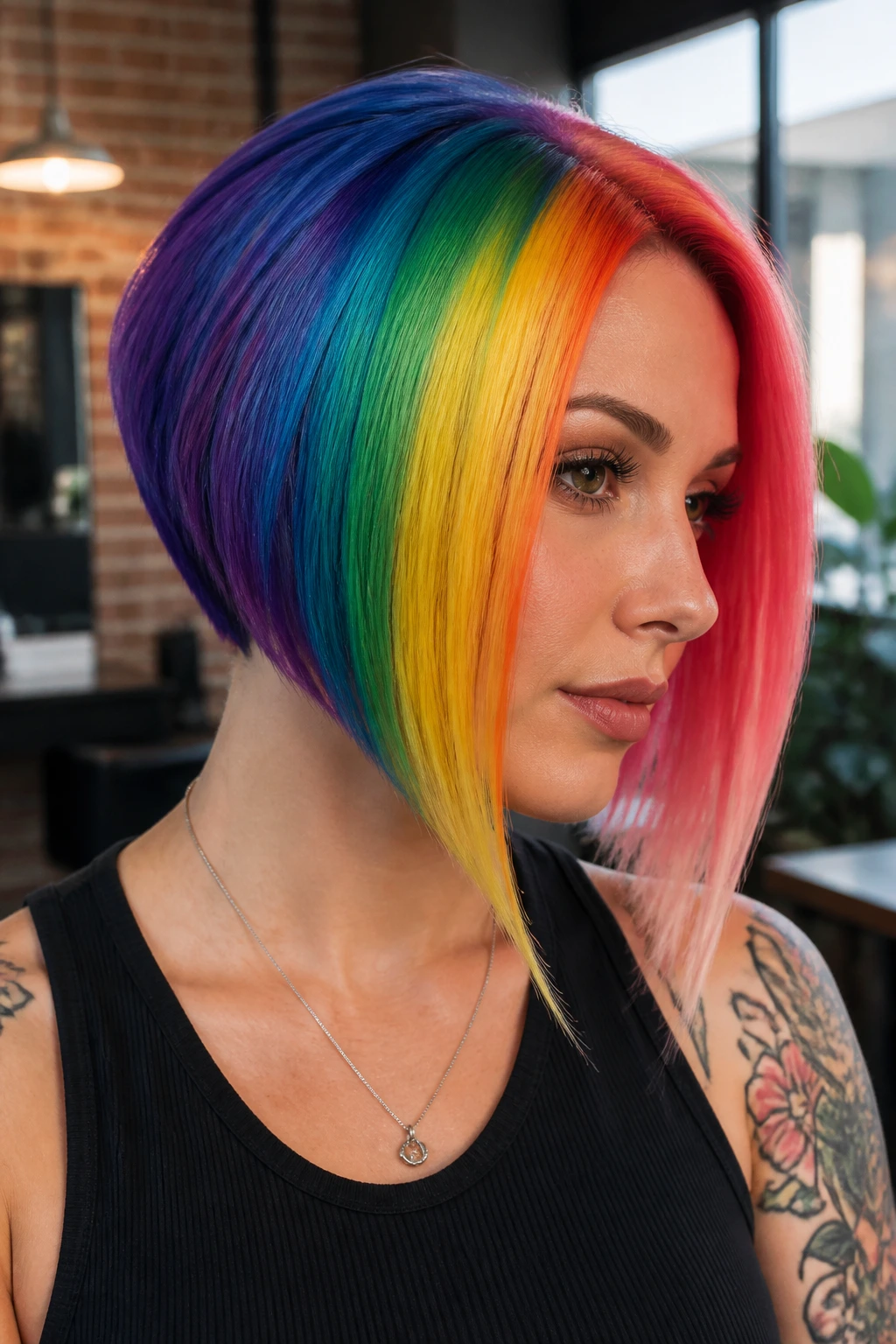
Why does an angled bob make rainbow color look sharper? Because the longer front pieces create a built-in path for the eye to follow, and that path gives the color movement even when the hair is perfectly still. A straight-across rainbow can look flat on the wrong cut. A diagonal line gives it direction.
The back sits shorter, often hugging the nape, while the front lengths skim the jaw or slide a touch past it. That shift lets you place cooler shades near the back and warmer or brighter shades near the face, which creates a nice little tug of color without turning the whole haircut into a circus.
Where the brightest shade should land
If the front pieces are the longest part, that’s where the loudest color should usually live. Think electric orange, hot pink, or a lime stripe that catches the eye the second the head turns. The back can handle deeper violet, indigo, or teal because the shorter length keeps those tones compact and clean.
This cut works well if you like structure. It also makes the rainbow look intentional when the bob swings from side to side, which is half the appeal. Straight hair shows the angle most clearly, but a soft bend with a round brush or a 1-inch iron adds a little swing without hiding the line.
I’d steer this one toward anyone who wants drama without fluff. The angle does the talking, and the rainbow just backs it up.
4. Choppy Neon Bob with Piecey Ends
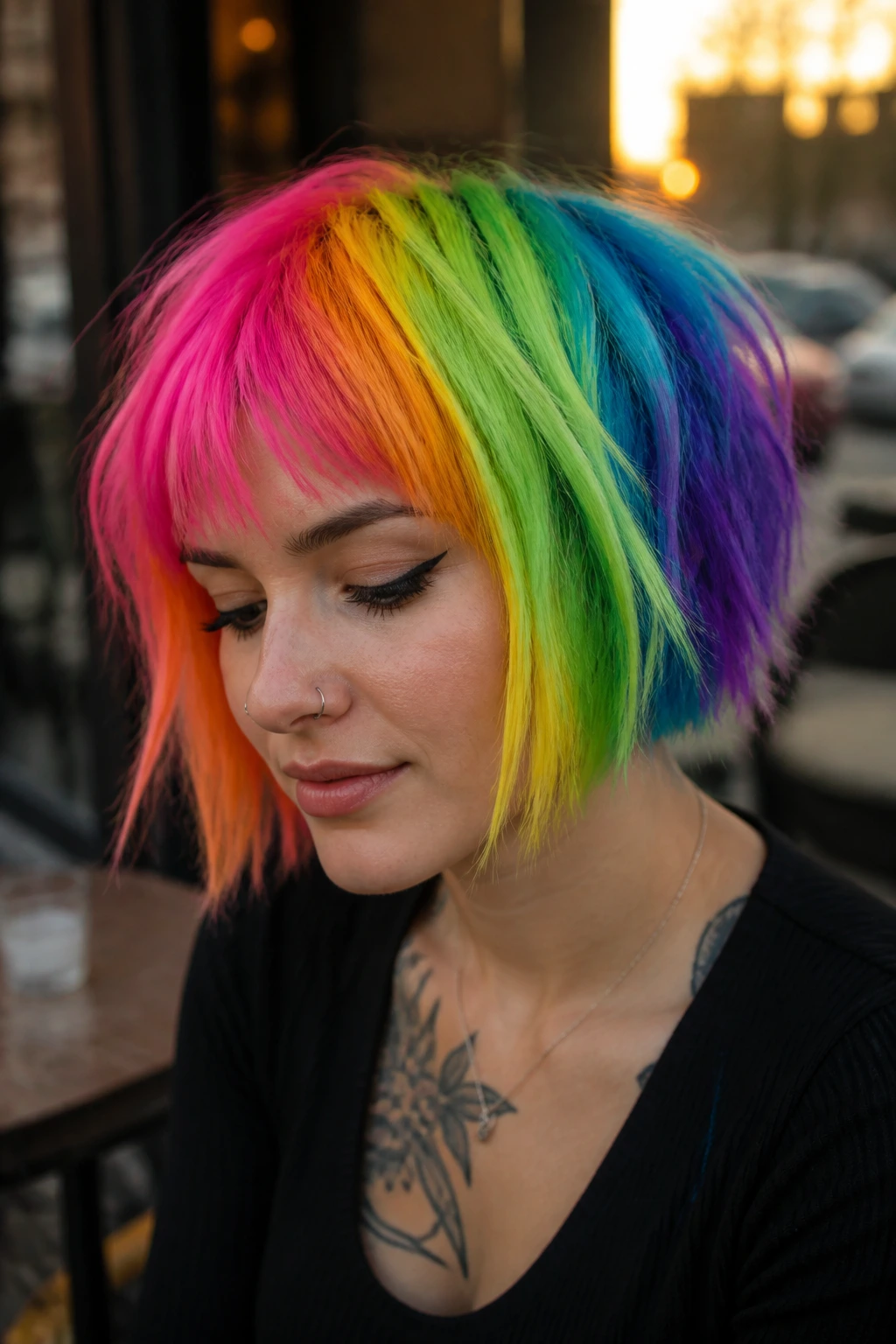
A choppy neon bob is for the person who likes their hair to look a little unruly in a good way. The cut has broken-up ends, internal texture, and just enough separation to let each neon panel breathe instead of blending into a single flat block.
That separation matters with bright color.
When the layers are piecey, the shades can sit in small, visible sections—cobalt against lime, coral against aqua, magenta against acid yellow. The eye reads those breaks as movement. If the cut is too soft, neon colors flatten together and lose the crisp little sparks that make them fun in the first place.
What to ask for at the salon
- Point-cut ends instead of a blunt finish if you want soft movement.
- Keep the shortest internal layers around the crown, not all over the head.
- Ask for color panels that are 1/2 inch to 1 inch wide, so each tone has room to show.
- Avoid over-thinning the bottom edge, or the bob starts to look frayed instead of choppy.
A little mess is good here. Too much is not. I’ve seen neon bobs lose their shape fast when the ends are razored to death, because the color ends up looking like it’s hanging off the haircut instead of living in it.
This is the style I’d pick for someone who likes a rough-dry finish, a flat iron bend, or a beachy wave with a bit of grit. It doesn’t need to look polished every second. That’s the point.
5. Pastel Color-Melt Bob
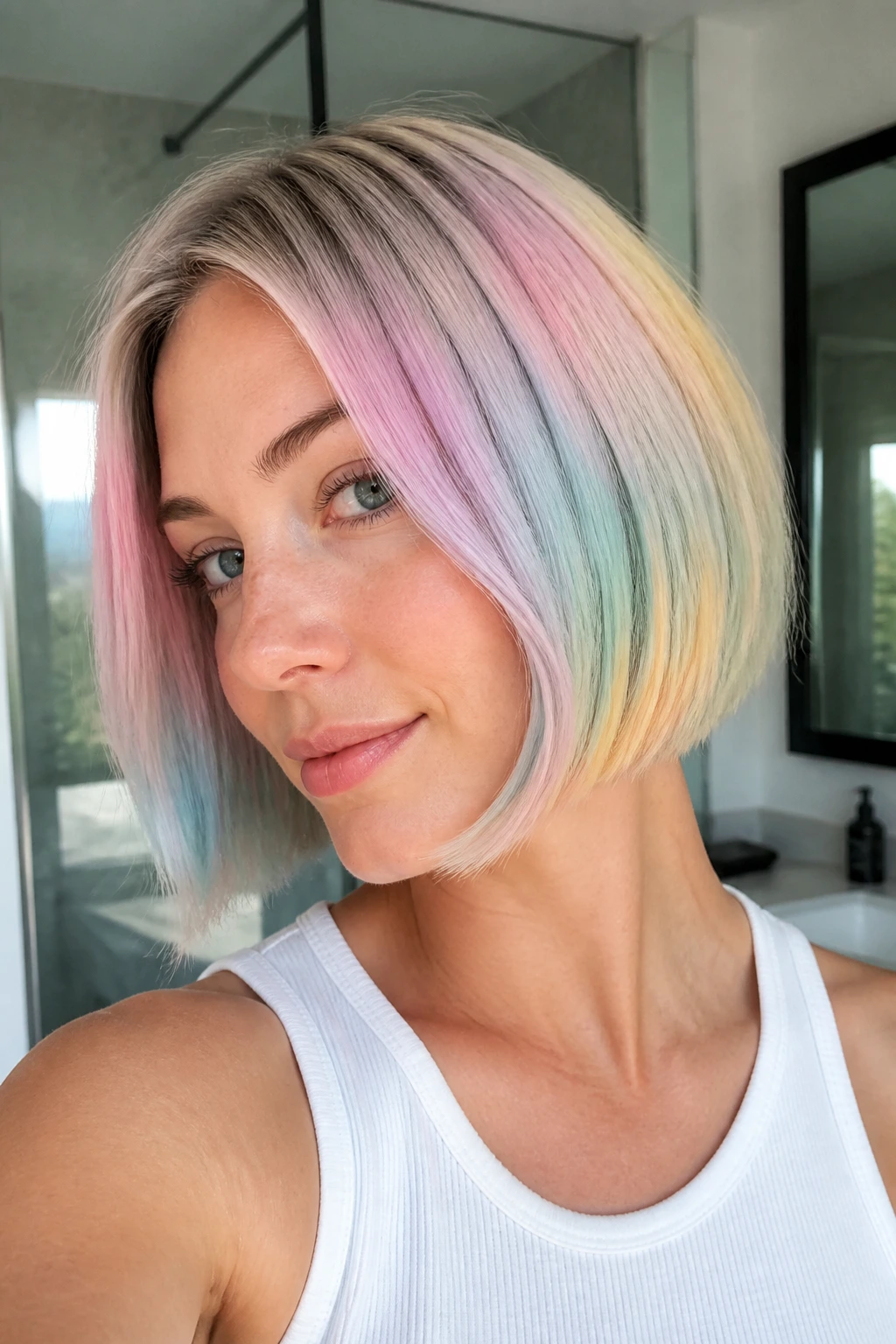
Pastels ask for patience. They also ask for a strong base, because soft lavender, peach, mint, and baby blue don’t have the same impact on a weak blonde canvas that they do on a clean, pale one. A level 9 or 10 blonde base gives them room to stay clear instead of turning muddy.
The best pastel rainbow bob doesn’t look striped. It melts. One shade slides into the next with a little blur at the seam, so you get a cotton-candy effect rather than a hard line between colors. That softness pairs well with a bob that has a gentle bevel at the ends or a slight undercurve at the neckline.
A root shadow helps here. It gives the grow-out a softer edge and keeps the scalp area from looking overprocessed, which can happen fast when the rest of the bob is all lightness and shine. Without a deeper root, pastel color can feel almost too airy, like it’s floating away from the head.
Cool water and a gentle cleanser matter more than people admit. Pastels wash out quickly, and the paler shades—especially pinks and yellows—can fade into something washed and tired if the hair gets stripped too often. I like this version for someone who wants bold color with a softer voice, because it still turns heads without shouting from across the room.
6. Split-Dye Rainbow Bob
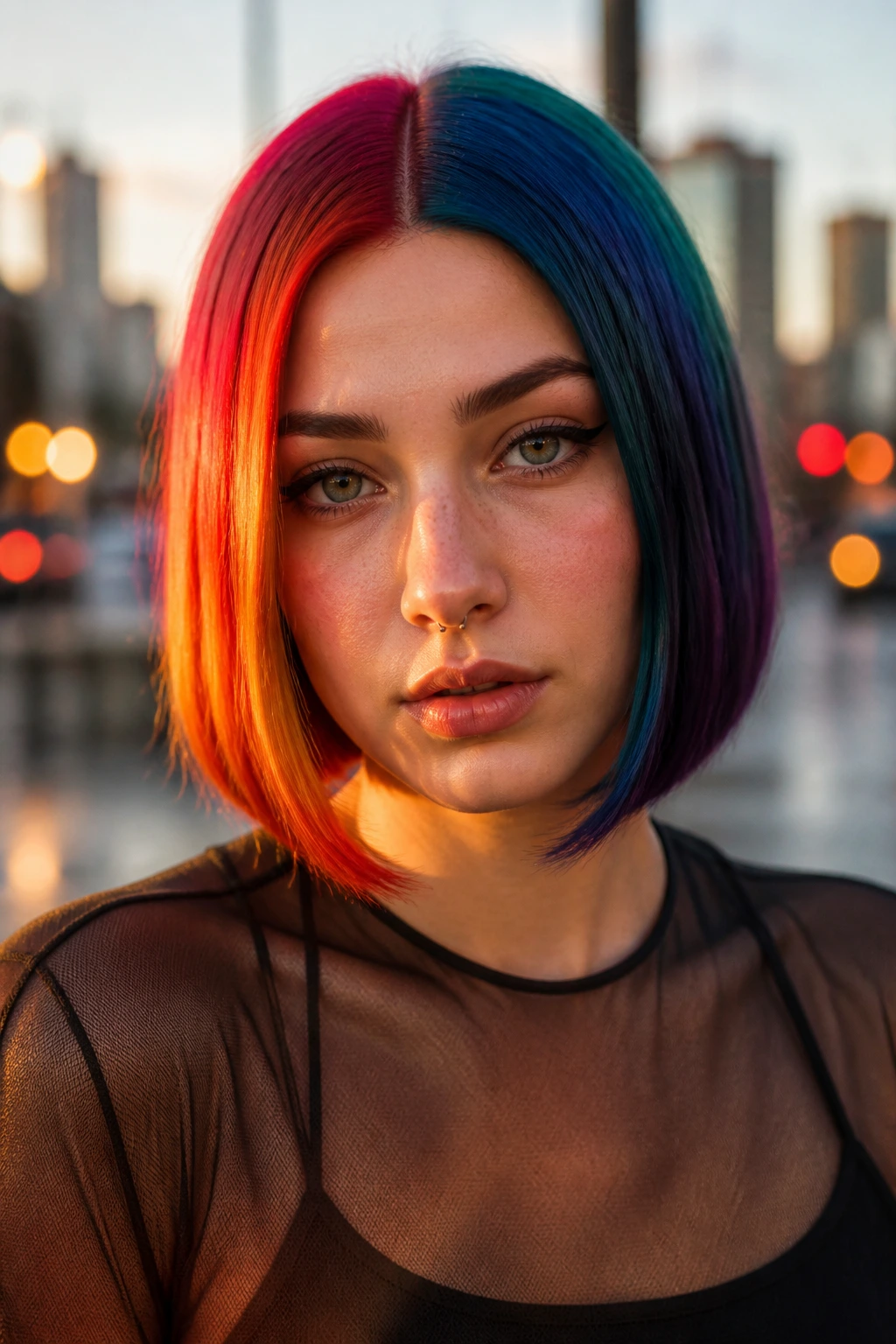
Unlike a full-head rainbow, split-dye color keeps the drama organized. One side can hold warm tones—red, orange, gold—while the other side leans cool with blue, violet, and green. Or you can push the contrast harder and do one saturated side against one pastel side. Either way, the visual split gives the bob a clean, graphic edge.
A center part makes the divide feel exact. A deep side part changes the whole mood, because it lets one color dominate the face frame while the other side works as the surprise. That’s a handy trick if you want the haircut to shift depending on how you wear it.
This version also forgives asymmetry in the cut a little more than people expect. If one side of the bob is a touch longer, the split dye can make it look intentional. The eye reads the color boundary before it notices a tiny length difference.
The one thing I’d be careful about is the placement of the color line itself. Keep it clean and slightly back from the hairline, maybe a half-inch or so, so the grow-out doesn’t look like a blunt stripe slapped on the forehead. Done well, a split rainbow bob feels bold in a controlled way. That’s rare, and I like it.
7. Curly Rainbow Bob with Painted Ribbons
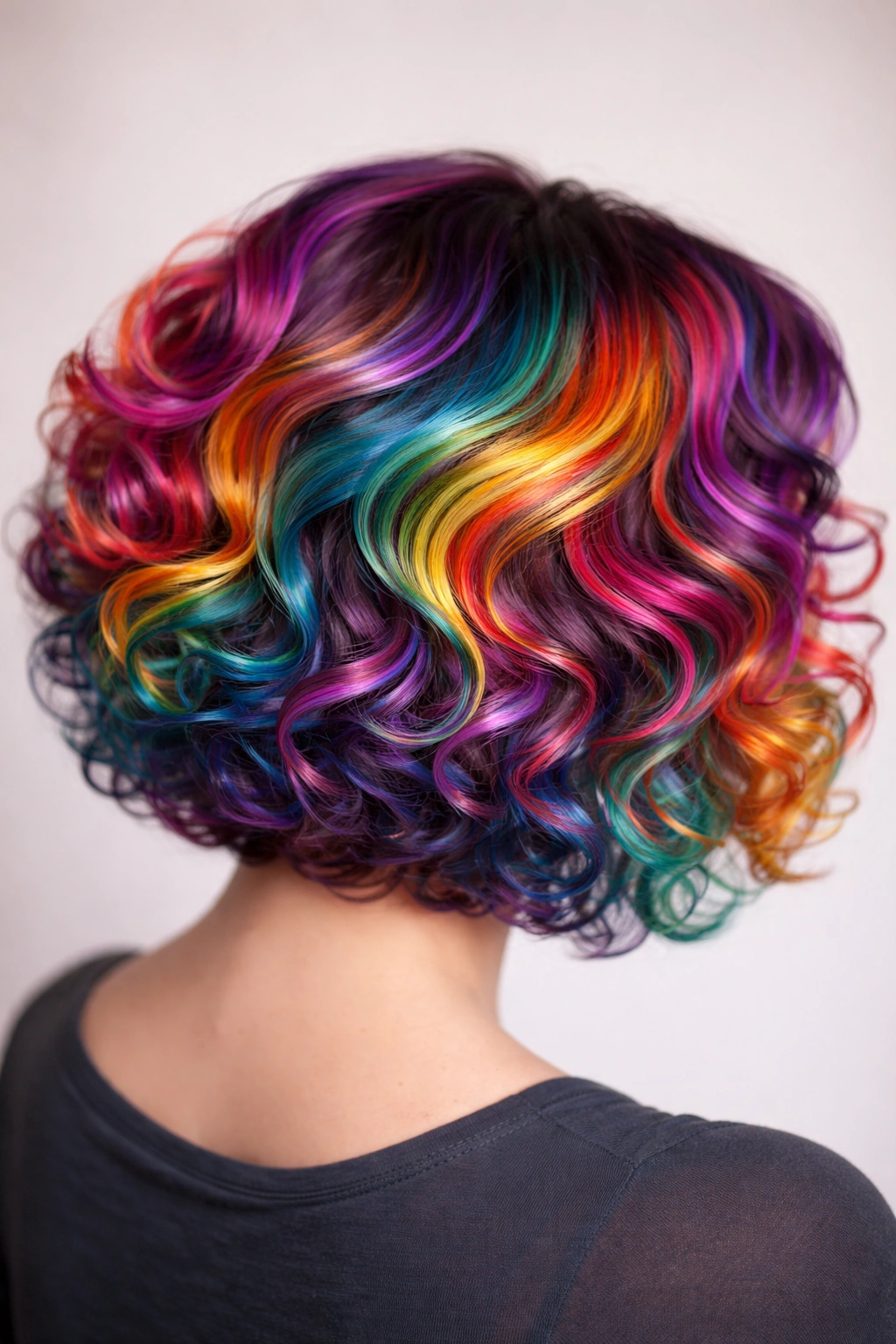
Can curls handle rainbow color without turning muddy? Absolutely—if the color follows the curl pattern instead of fighting it. Curly bobs have their own built-in movement, so the rainbow should be painted in ribbons that respect the coils, not chopped into hard bands that disappear once the hair shrinks up.
The trick is to place color where the curl opens. That usually means the outer curve of the spiral gets the brightest tone, while the inner curve holds a darker or more muted shade. When the hair dries, the color seems to move with the curl instead of sitting on top of it like paint.
How to paint curls so the shades stay clear
- Work in curl families, not straight sections.
- Keep bright tones slightly separated so the colors don’t blend into one heavy block.
- Use 2 to 3 main shades per visible area instead of trying to cram in all seven rainbow colors at once.
- Diffuse on low heat and stop while the hair is still a little damp to preserve shape.
A curly rainbow bob can be loud or soft, but it should always be deliberate. If too many shades pile into one coil cluster, the pattern gets noisy fast. Give the curls room and the color will do half the styling for you.
I like this version for people who already have natural texture and want to work with it instead of flattening it into submission. It looks alive. That’s the whole charm.
8. Micro Bob with a Neon Money Piece
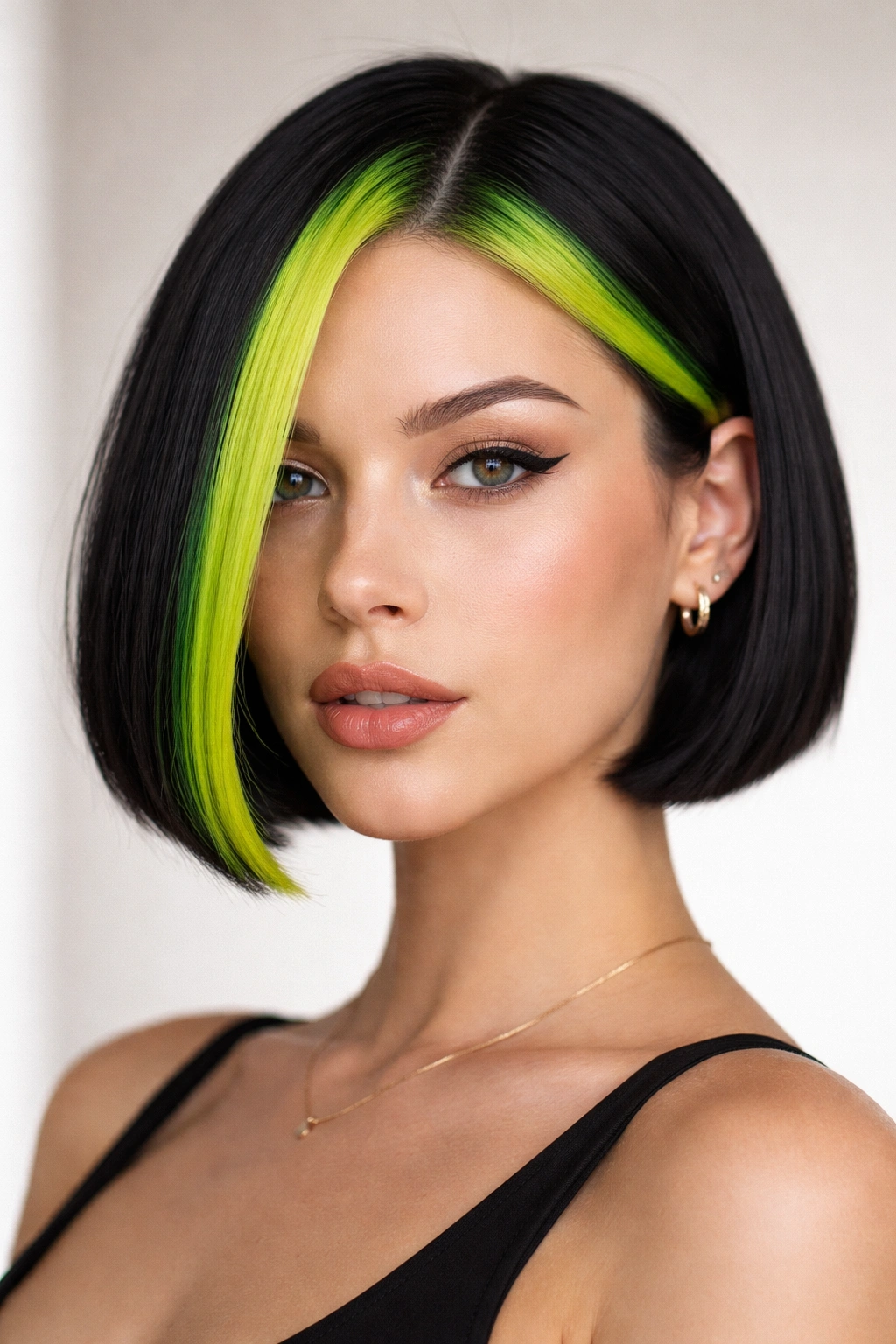
If you have ever wanted a haircut that looks like a clean line with a flash of attitude at the front, this is the one. A micro bob sits higher than a classic chin-length bob, often grazing the jaw or landing just above it, and the neon money piece at the front acts like a neon frame around the face.
The back stays blunt and compact. The front panels carry the drama. That contrast gives the style its bite, because the haircut itself is almost minimalist while the color does the loud work.
A money piece that’s about 1/2 inch to 1 inch wide is enough if you want a strong front flash without turning the whole haircut into a stripy helmet. Lime, cobalt, electric pink, and bright tangerine all make sense here. So does a two-tone front, where the inner slice is one shade and the outer slice is another.
This cut works especially well with sharp makeup, glasses, or bold earrings, because the color sits close to the eyes and cheekbones. It also gives you a lot of impact for the amount of hair involved, which is handy if you like shorter hair but still want people to know you made a choice. A micro bob doesn’t whisper.
It does, however, need shape. Once the line starts to collapse, the whole thing loses its confidence fast, so a trim schedule that keeps the perimeter crisp matters more here than on longer bobs.
9. Stacked Rainbow Bob with Lift at the Back
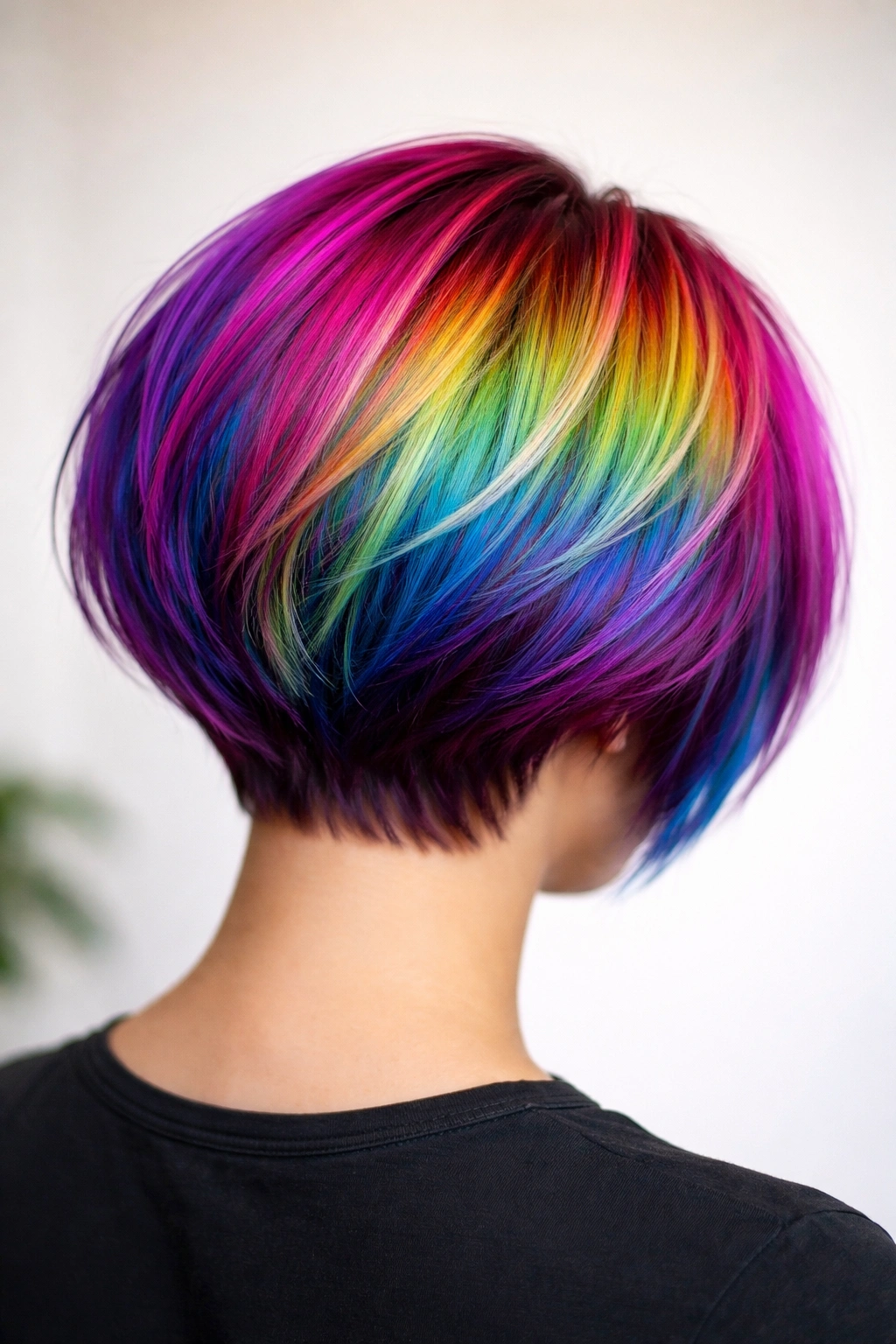
A stacked bob gives rainbow color something many versions lack: lift. The back is graduated so the nape sits shorter and the crown sits fuller, which creates a little shelf effect that makes color layers look more dimensional than they would on a flat cut.
That shape is a gift for dense hair, and a small blessing for fine hair too. On thick hair, the stacked back removes weight without making the ends look thin. On finer hair, the lift can make the whole rainbow appear fuller because the color has more surface to climb over.
Why the shape matters
A stacked bob lets you put deeper shades at the nape and brighter shades closer to the crown, where the lifted shape catches the eye first. When the hair moves, the color seems to roll up the head instead of sitting in one flat block. It’s a clean effect. Very clean, actually.
The catch is that the cut has to stay precise. If too much bulk gets removed from the wrong spot, the stack collapses and the color loses its structure. Ask for graduation in the back, not random thinning, and keep the side lengths soft enough that the bob still feels wearable from the front.
This is one of my favorite versions for someone who likes a bold color story but doesn’t want the silhouette to feel too soft or too round. It has backbone. That matters more than people think.
10. Wavy Peekaboo Rainbow Lob
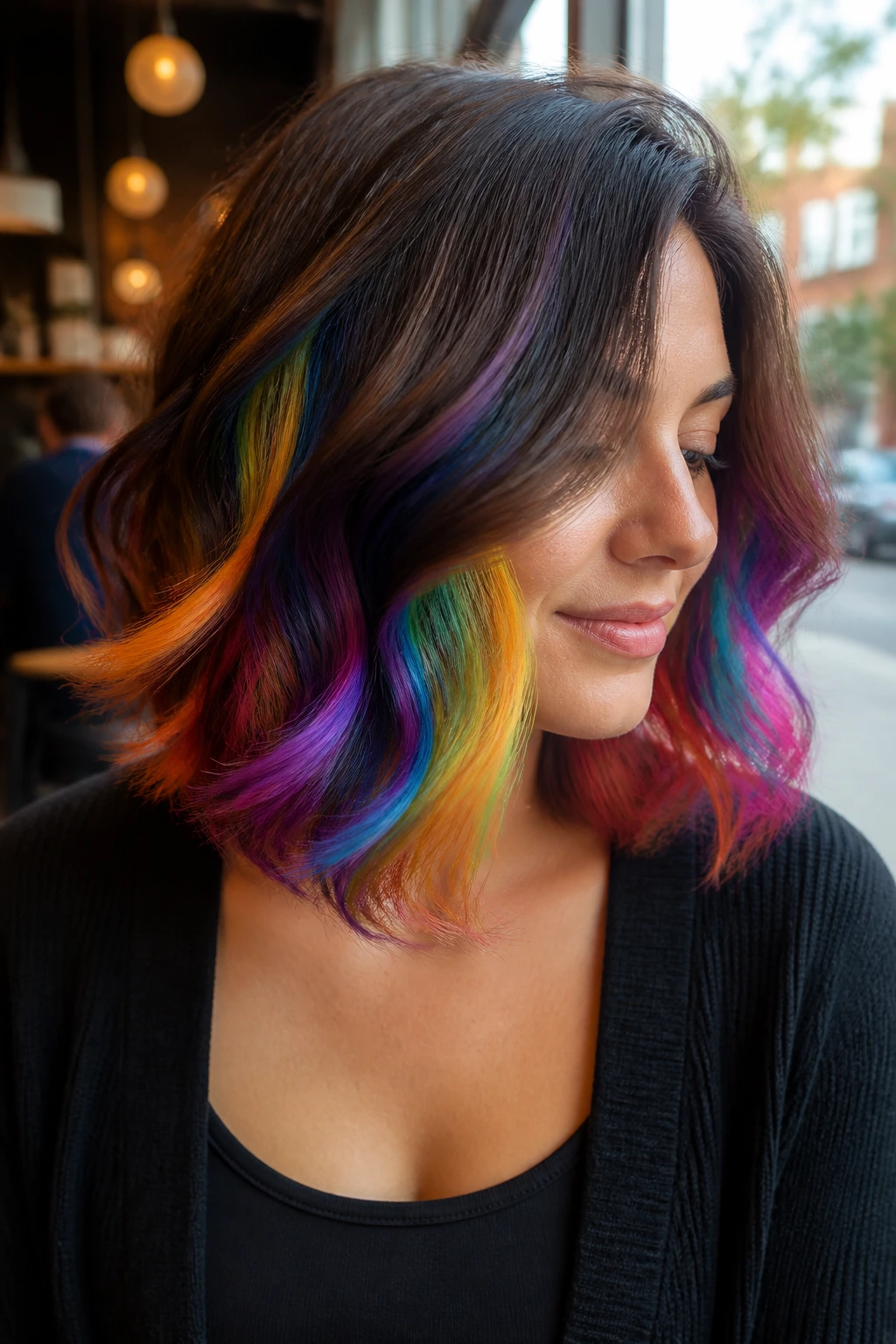
If you want the longest wear from a rainbow bob, the lob version is the one that keeps paying off. It sits a little longer than a classic bob—usually somewhere around the jaw to just above the shoulders—so the color has more room to breathe, and the hidden rainbow ribbons show up best when the hair bends into loose waves.
The peekaboo placement is half the appeal. A few saturated panels can live underneath the top layer, then flash through when the waves break apart or the wind catches the ends. It feels less rigid than a blunt rainbow bob, and that can be a good thing if you want bold color without the severe outline that some shorter cuts carry.
This cut is forgiving in a way that a micro bob is not. The extra length softens grow-out, gives the colorist more room to blend, and makes it easier to tuck one side behind the ear when you want the color to show. You can wear it sleek, bend it with a curling iron, or let it air-dry into a loose wave and still get enough movement to keep the rainbow interesting.
I’d point a lot of people here first, honestly. It keeps the spirit of rainbow bob cuts intact, but it leaves you a little more room to live in the style instead of babysitting it. If you want color that still feels deliberate after a few weeks and hair that doesn’t fight you every morning, this is the one that stays sensible without getting boring.
