



A tucked behind the ear bob cut can change a haircut faster than a fresh blowout. One side suddenly opens up. The cheekbone gets a little spotlight, the jawline looks cleaner, and even a plain T-shirt starts to feel more deliberate.
That tiny tuck does a lot of work. It can make a blunt bob look sharper, soften a strong fringe, or take the weight out of thick hair that wants to sit like a helmet by mid-afternoon. It also solves a quiet styling problem most people don’t talk about: some bobs look good only from the front, and then fall flat the second you move. A good ear tuck fixes that.
The trick is choosing the right cut for the tuck you want. A blunt bob, a French bob, a shaggy bob, a curly bob — they all behave differently once one side slides behind the ear. Some need structure. Some need movement. Some need just enough length to stay tucked without popping back out the minute you turn your head.
And that’s where these 10 tucked behind the ear bob cuts earn their keep. They are not the same haircut in different shoes. Each one has its own shape, mood, and level of effort, which is exactly what makes the ear-tuck version worth paying attention to.
1. The Chin-Length Blunt Bob With a Clean Ear Tuck
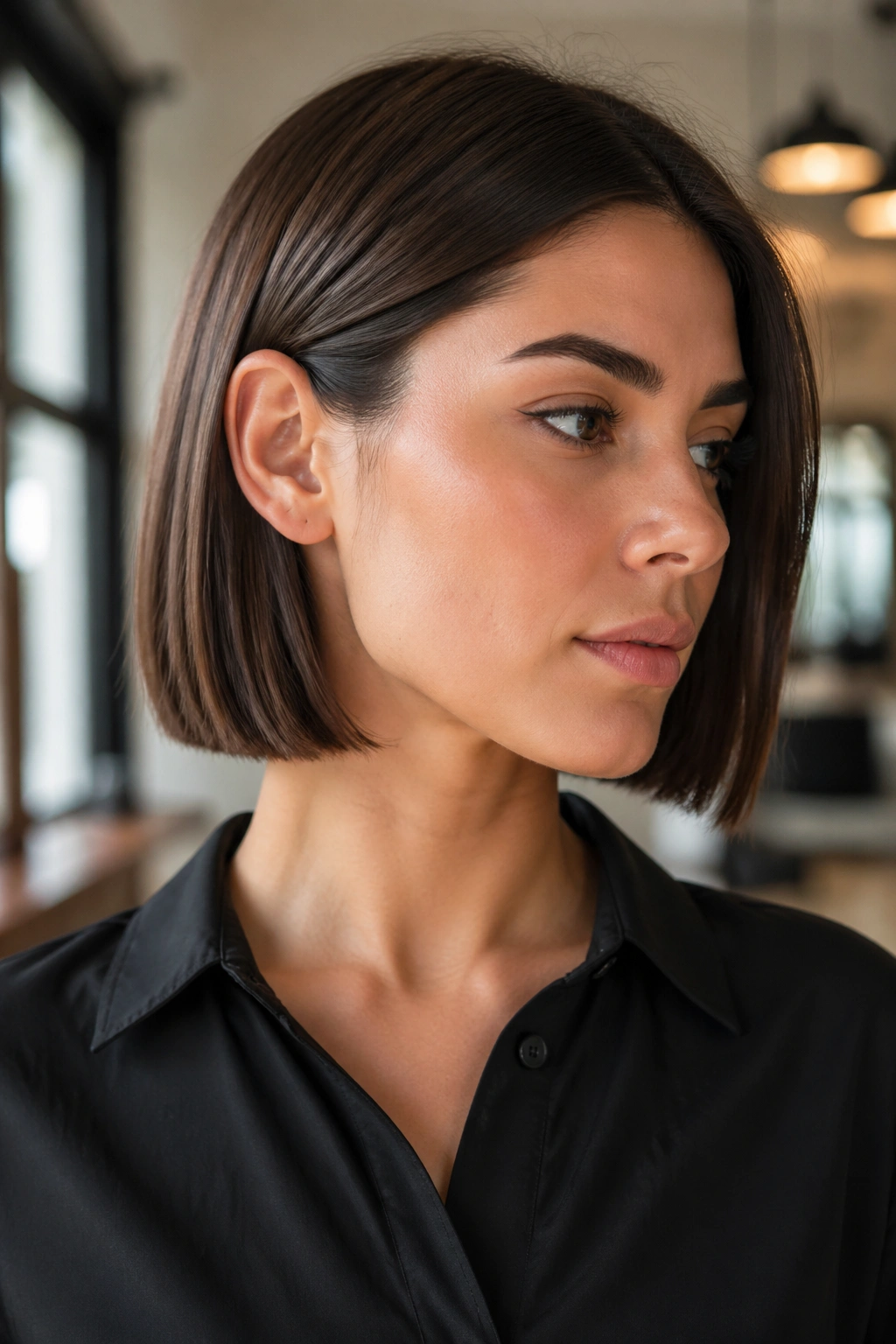
This is the bob I recommend when someone wants the haircut to do the talking for them. The line is crisp, the shape is tidy, and the tuck behind the ear turns that blunt edge into something a little more interesting than “just a bob.”
Why It Works
A chin-length blunt bob keeps its strongest point right at the jaw, which means the tuck opens the face without stealing the cut’s shape. If the hair is too long, the tuck can look lazy. Too short, and the ear starts to fight the length. Chin-length sits in the sweet spot.
The blunt edge matters more than people think. It gives the haircut a visible finish, so when one side goes behind the ear, the exposed side feels intentional instead of half-done. Fine hair gets extra density from the straight line. Medium hair gets a cleaner outline. Thick hair gets better control, as long as the ends are trimmed with enough weight left in them.
Quick Details To Ask For
- Length: hits right around the chin, or a touch below it
- Shape: one-length perimeter with minimal layering
- Part: soft off-center part, not a severe deep part
- Texture: smooth ends, no ragged thinning at the bottom
- Styling: flat brush or round brush, then tuck one side while the hair is still warm
That last part matters. Warm hair remembers the tuck better. Cool hair can still be coaxed back out if it has too much spring.
Best tip: tuck the side with the flatter growth pattern, not the side that already wants to flare out. You’ll spend less time fixing it, and the haircut will sit closer to the head without extra clips.
2. The Side-Part French Bob That Lets One Side Slip Behind the Ear

A side-part French bob is the easiest way to make a tucked bob look deliberate instead of fussy. It has that slightly undone feel people chase, but the shape still lands in the right place, which is why it works so well with one ear tucked and the other side left loose.
The short fringe or cheek-skimming front pieces give the haircut motion right where you want it. Then the tuck exposes one cheekbone and leaves the rest of the hair free enough to move. The result is not polished in the stiff sense. It feels lived in. A little casual. Still exact.
This cut loves natural bend. If your hair has a soft wave, you can let it air-dry with a bit of mousse, twist the front sections once, and tuck one side after it’s mostly dry. If your hair is straighter, use a light bend from a 1-inch curling iron at the ends only. Don’t curl the whole head into ringlets. That kills the point.
It’s also one of the better choices for earrings. Small hoops, old-school studs, even one chunky earring on the tucked side — all of that works because the bob creates a frame without swallowing the ear. The haircut feels French not because it’s trying hard, but because it leaves a little room for the face to breathe.
Keep the finish soft. That’s the whole game.
3. The Wavy Collarbone Bob With One Side Tucked

Why does a wavy bob tucked behind one ear look so easy? Because the waves do half the work before you even touch the hair. They break up the outline, so the ear tuck reads like a styling choice instead of a rescue move.
A collarbone length gives this cut room to move. Shorter than that, and the wave can puff up around the ears. Longer than that, and the tuck loses some of its clean shape. At collarbone level, the ends brush the neck, the tuck stays put better, and the front pieces still fall forward enough to frame the face on the loose side.
The nice thing about this cut is that it likes a little mess. Not chaos. Just enough irregularity to keep it from looking frozen. I’d use a sea salt spray or a light mousse at the roots, then rough-dry with fingers until the hair is about 80 percent dry. After that, hit a few random sections with a curling wand, leaving the ends out on some pieces so the texture stays loose.
How To Wear It
- Tuck only one side, and leave the other side broken up with waves
- Use a side part if you want more lift at the crown
- Mist a flexible hairspray onto the tucked side so it stays flat without looking glued
- Pull a few face-framing pieces forward if the tuck feels too severe
This is a good cut for thick hair that wants movement, but it also suits finer hair when you want body without big volume. The wave keeps the ear tuck from feeling flat. That’s the whole point.
4. The Asymmetrical Bob That Uses the Ear Tuck as Part of the Shape
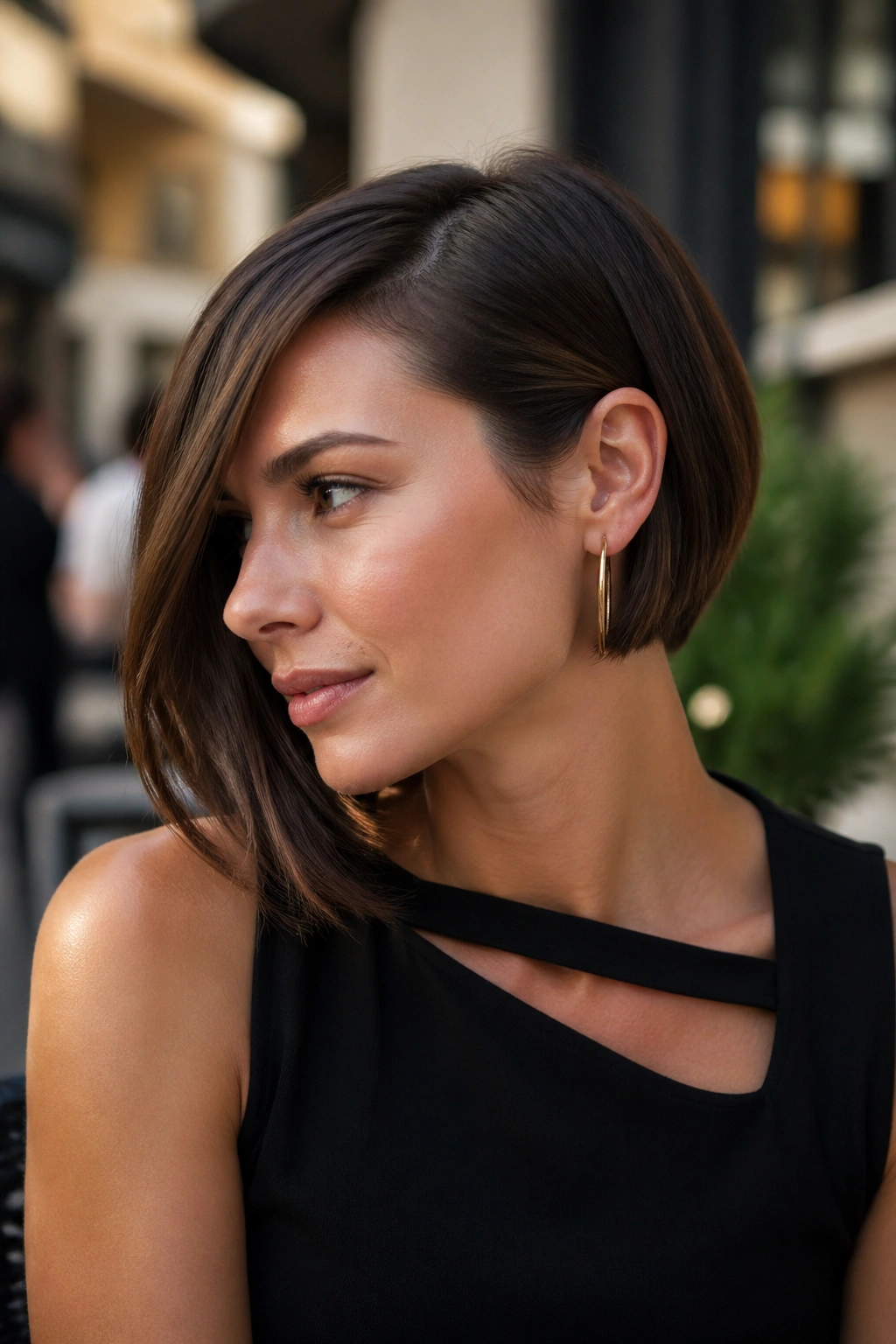
You know that person who always looks like their haircut has a point of view? This is usually the one. An asymmetrical bob is built to look slightly off-center, so when one side goes behind the ear, the shape gets better, not worse.
That long front side gives you a line to show off. The shorter side keeps the cut from sagging. Put those together and the ear tuck becomes part of the design. Not a workaround. A choice.
The best version of this cut usually has one side that grazes the jaw or just below it and the opposite side that sits a bit shorter, often with a subtle angle from back to front. That angle matters because the tucked side can sit sleek against the head while the longer side falls forward and makes the whole haircut look sharper. It’s a clever cut, honestly. A little dramatic, but not loud.
Key Details To Keep In Mind
- Angle: keep the front side visibly longer, but not so long that it turns into a lopsided lob
- Texture: smooth or lightly tousled, depending on how hard you want the line to read
- Ear tuck: tuck the shorter side for a cleaner profile, or the longer side if you want the length to show
- Best match: strong cheekbones, angular jawlines, or anyone who likes a little edge
If you wear glasses, this bob gets even better. The frame, the asymmetry, and the tuck all start talking to each other. The haircut does not need much else. Maybe a little shine cream. That’s enough.
5. The Curly Bob That Tucks Without Fighting the Curl

A curly bob tucked behind the ear can be gorgeous, but only if the cut respects the curl pattern. Force curls into a straight line and they spring back in weird places. Leave enough room for the coil, and the tuck starts to look elegant instead of cramped.
The thing most people get wrong is length. Curly hair shrinks. Sometimes a lot. So a bob that lands at chin length when wet may sit much shorter once it dries. A better starting point is often just below the chin, or even brushing the top of the neck, depending on how tight the curl is. That gives the tucked side some slack. It also keeps the side you leave out from puffing up into a triangle.
A good curly bob has shape around the face, not just a blunt perimeter. That can mean soft layers, carefully placed shaping, or a dry cut done curl by curl. The ear tuck should reveal the cheek and temple while leaving a few curls free near the jaw. Those loose curls matter. They keep the cut from looking too neat, which is usually the wrong move with curls anyway.
No, you do not need to flatten the curls to make this work.
A leave-in conditioner, a gel with some hold, and a diffuser can do most of the heavy lifting. Once the hair is dry, tuck one side gently and don’t keep redoing it. Curly hair hates being fussed over. If the tuck slips a bit during the day, that can look better than forcing it back into place.
6. The Sleek Glass Bob That Needs a Perfect Ear Tuck
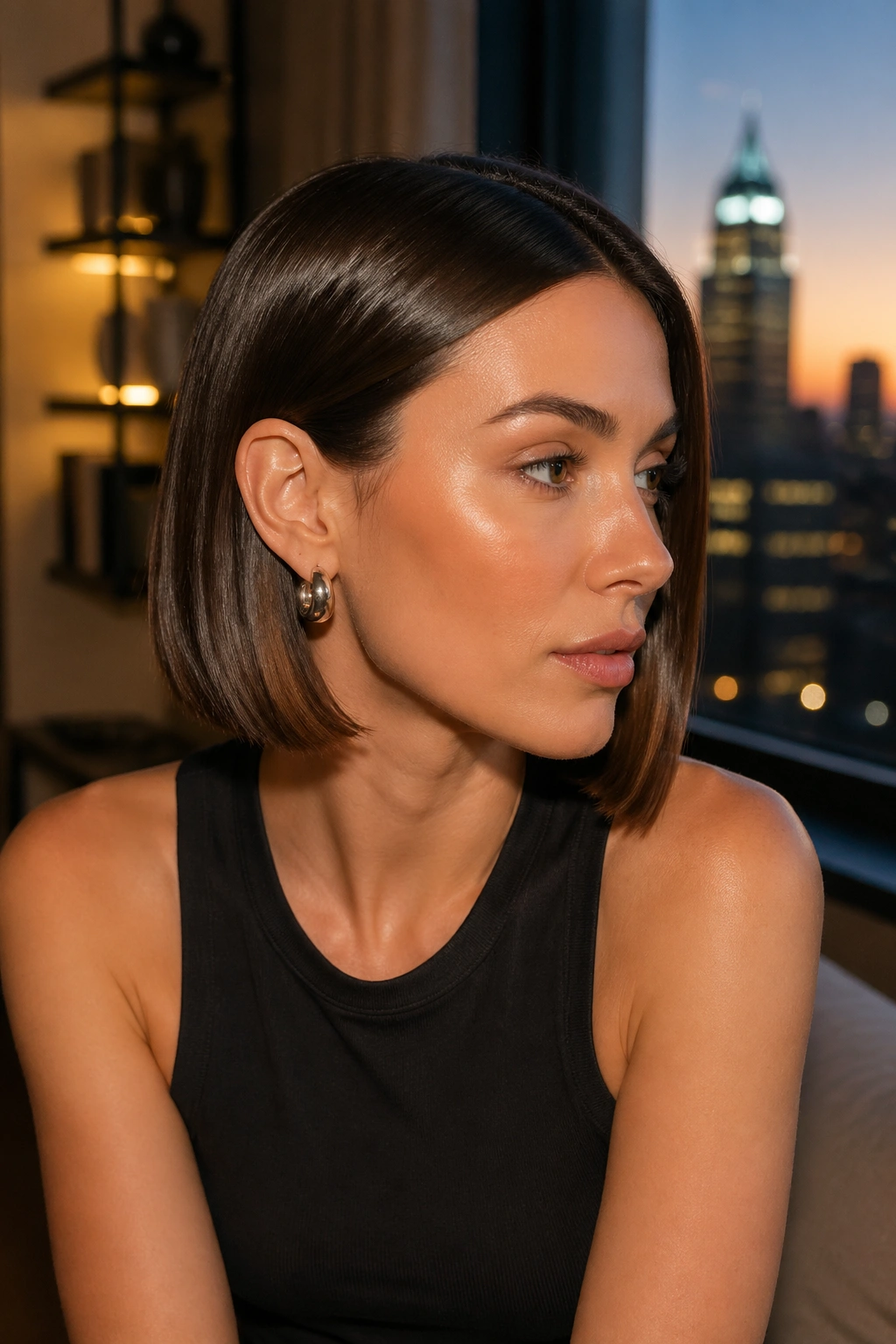
Unlike the wavy and curly versions, a sleek glass bob has no interest in pretending it woke up this way. It wants shine, control, and a line so clean it almost feels architectural. The ear tuck is what keeps that sharpness from turning severe.
This is the bob for straight hair, or for hair that can be blow-dried straight without too much drama. The ends should sit smooth. The surface should look even. And the tuck should land in one tidy move, not a bunch of pinched sections fighting for attention behind the ear. If you’re going for this look, think less “casual tuck” and more “placed there on purpose.”
The best part of a glass bob is the contrast. The front can be tucked so flat it almost disappears behind the ear, while the rest of the cut stays glossy and still. That contrast is what gives the style its charge. You can wear it with a deep side part, a middle part, or a subtle side part, but the surface has to stay clean.
A heat protectant, a paddle brush, and a flat iron with a fine edge are the tools that matter here. Finish with a pea-sized amount of serum on the ends, not the roots. Too much product near the crown makes the hair collapse, and then the whole sleek idea falls apart.
If your hair frizzes easily, this style can be a little demanding. Not impossible. Demanding. That’s a fair trade if you want the kind of bob that looks sharp in a collar, with earrings, or under a blunt brow line.
7. The Layered Airy Bob That Shows Movement When Tucked
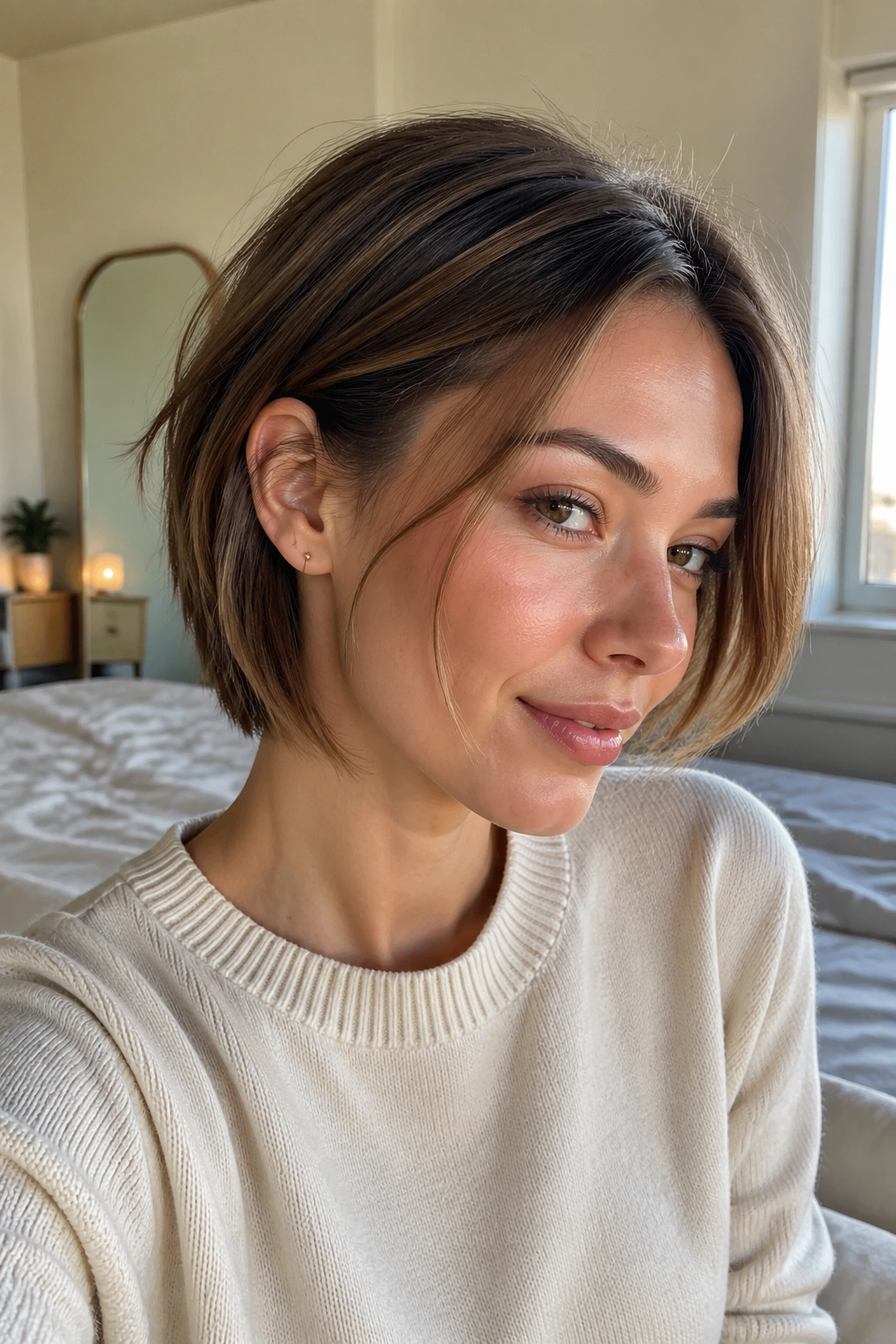
A layered bob tucked behind the ear can look lively in a way a blunt cut never quite can. The point is movement. You want the hair to swing, separate, and lift a little when it moves, so the tuck reveals shape instead of just removing hair from one side of the face.
Where the Layers Should Sit
Keep the shortest movement around the cheekbone and jaw, not chopped all through the ends. That keeps the perimeter from getting wispy. The worst version of this haircut is over-layered ends that fray out like old ribbon. The better version has soft internal layers that let the bob bend, but still keeps enough weight to tuck neatly.
A layered bob works especially well on medium to thick hair. Fine hair can wear it too, but the layers need to be careful and not too high. Otherwise the tuck exposes a flat spot near the ear and the whole style starts looking thin. I like a bit of fullness at the crown with movement through the sides. That balance matters more than people think.
What To Tell Your Stylist
- Ask for internal layers, not choppy ends
- Keep the perimeter at chin to jaw length
- Leave enough weight around the ear so the tuck doesn’t pop out
- Use a round brush at the roots, then a light texture spray through the mids
This cut has a nice little trick. The tucked side opens the face, while the layered side keeps the hair from feeling boxed in. It’s one of the easiest ways to make a bob feel fresh without making it fussy.
8. The Micro Bob That Sits Close and Tucks Fast
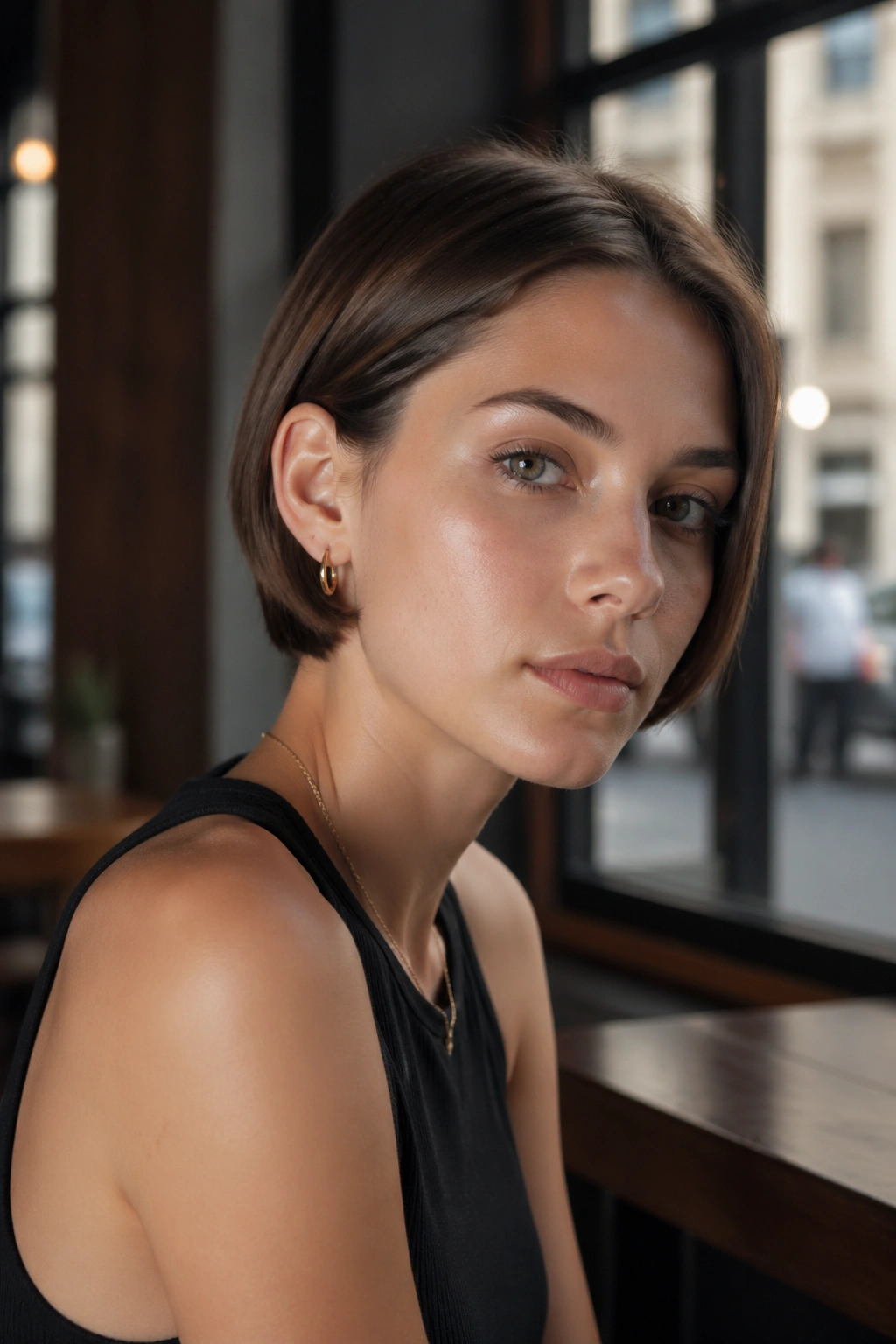
A micro bob is not shy, and the ear tuck makes that obvious. The cut sits close to the head, usually around the mouth, jaw, or just under the ear, so the tuck has almost no distance to travel. That’s what gives it its bite.
This is a great cut if you like a strong outline and don’t want your hair hanging around your neck all day. The shape feels neat, cool, and a little severe in the best way. A tucked side can sharpen the jawline fast, especially if the ends are cut clean and the back is slightly tighter than the front. It also works well with strong brows, a bare ear, or a necklace that deserves some space.
The micro bob does not need much styling. That’s part of the appeal. Blow-dry it smooth with a small brush, bend the ends inward just a touch, and tuck one side. If the hair is too fluffy, it loses the point. If it’s too slick, it can look harsh. Somewhere between those two is where it lives.
This cut flatters straight hair, but it can also work on hair with a subtle wave if the surface is controlled. Thick hair needs careful debulking in the interior so the shape does not balloon out. Fine hair benefits from the clean line because it makes the cut look fuller than it is.
One thing, though: if you hate seeing your neck, this is not your cut. The micro bob loves space. It shows it off.
9. The Soft A-Line Bob With a Gentle Forward Angle
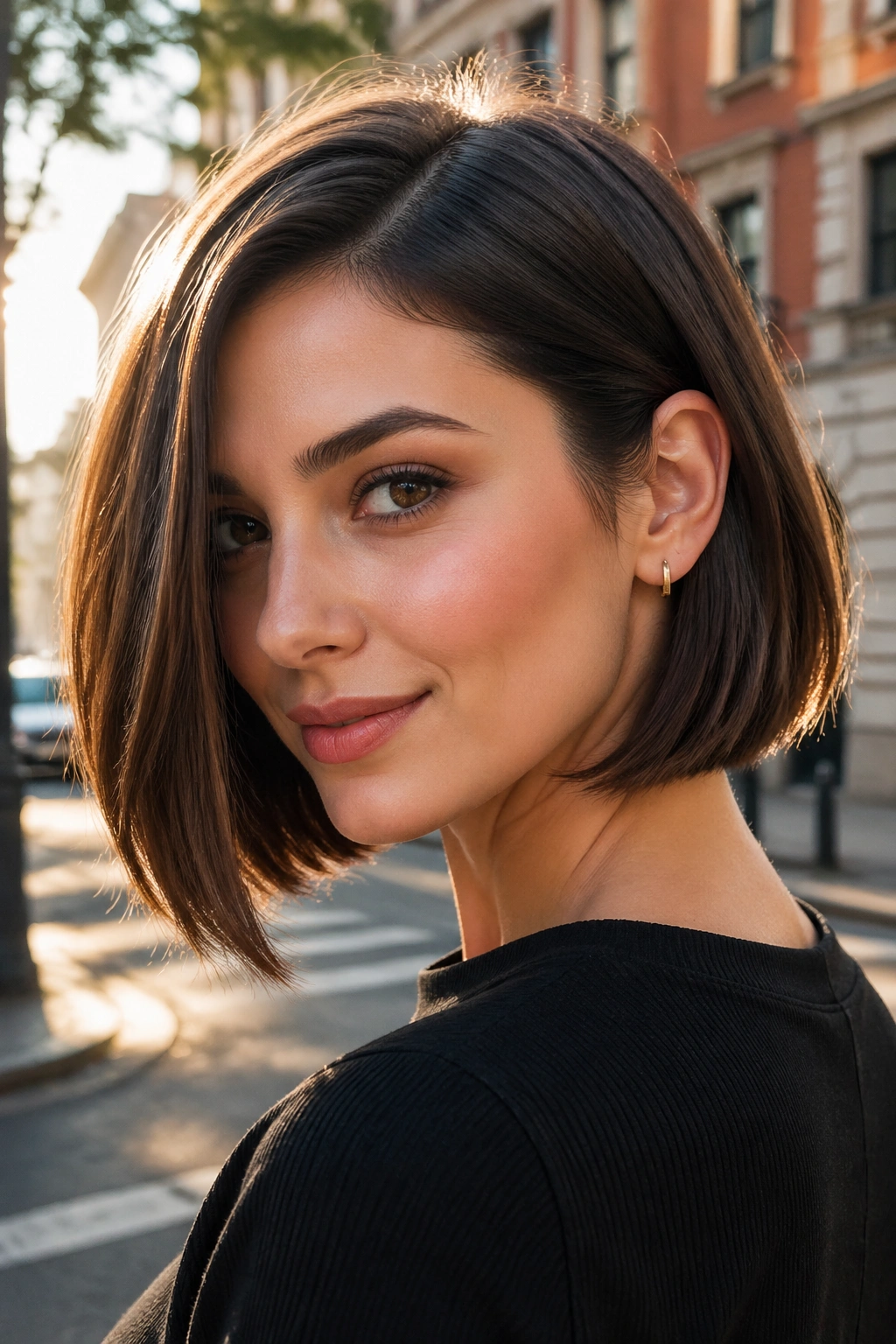
Why does the A-line bob tuck so well? Because the shape is already helping you. The front pieces are longer, the back is shorter, and that forward slope naturally wants to slip behind the ear without losing the line.
The best version is soft, not steep. If the angle is too dramatic, the tuck can start to feel pointy and overdone. But when the front only drops a bit longer than the back, the result is clean and easy. The ear tuck opens one side of the face while the front angle still gives the haircut a sense of direction.
This is a smart choice for rounder faces, because the forward angle adds vertical line without making the haircut look severe. It also works well for thicker hair, since the shape removes bulk in the back and leaves the front pieces to do the framing. There’s a nice practicality to it. The style moves with your head instead of fighting it.
How To Ask For It
- Keep the front about 1 to 2 inches longer than the back
- Ask for a gentle slope, not a sharp wedge
- Leave enough weight at the ends so the tuck stays clean
- Style with a smooth blow-dry and a soft side part if you want extra lift
A soft A-line bob is one of those cuts that looks expensive without trying to look expensive. I like that about it. It’s quiet, but not boring. And when one side is tucked, the whole thing gets a little sharper.
10. The Shaggy Bob With Pieces Left Out on Purpose
A shaggy bob tucked behind the ear works because it refuses to be too neat. That is the whole charm. You tuck one side, leave a few pieces out around the face, and let the texture do the rest.
This cut leans on movement more than polish. The layers are softer, the ends are a bit broken up, and the front pieces often sit near the cheekbones or lips rather than falling in one clean block. That means the tuck doesn’t erase the haircut. It shows it off. The loose pieces around the ear keep the look from becoming too flat, which is a real risk with shag cuts if you force every strand into place.
It’s a very good cut for people who air-dry their hair or who want a bob that can survive a long day without needing constant fixing. A little texture spray, a dab of cream on the ends, and a rough bend with fingers is usually enough. If your hair is naturally wavy, even better. If it’s straighter, you can still wear this look — just don’t smooth every piece into one plane.
The ear tuck here should feel almost accidental, even if it isn’t. Leave one front section loose, maybe a fringe piece or a bent tendril, and tuck the rest. That small imbalance is what makes the style feel alive.
And honestly, that’s the reason this cut stays interesting. It doesn’t ask for perfect symmetry. It asks for a little attitude, a little mess, and the nerve to leave one piece hanging where it wants.
