



Black bob cuts can look severe, soft, glossy, or expensive depending on one thing: the line.
That sounds simple. It isn’t.
On Black hair, the perimeter, the part, and the weight placement all change how a bob sits against the face. A blunt edge that looks neat on a mannequin can puff out once it meets density, shrinkage, or a little bit of movement. A cut that looks too “done” on straight hair can look flat and lifeless on curls if the shape isn’t carved with the texture in mind.
That is the whole game.
The best versions of this haircut respect the natural body of the hair while still keeping the outline crisp. Some land right at the chin. Some lean forward. Some skim the jaw and feel almost graphic. A few rely on finish more than shape, which is why a silk press, a clean middle part, or a tight wet look can change everything in a matter of minutes. The styles below stay in that sharp lane without turning stiff or dated.
1. Chin-Length Blunt Bob for Black Hair
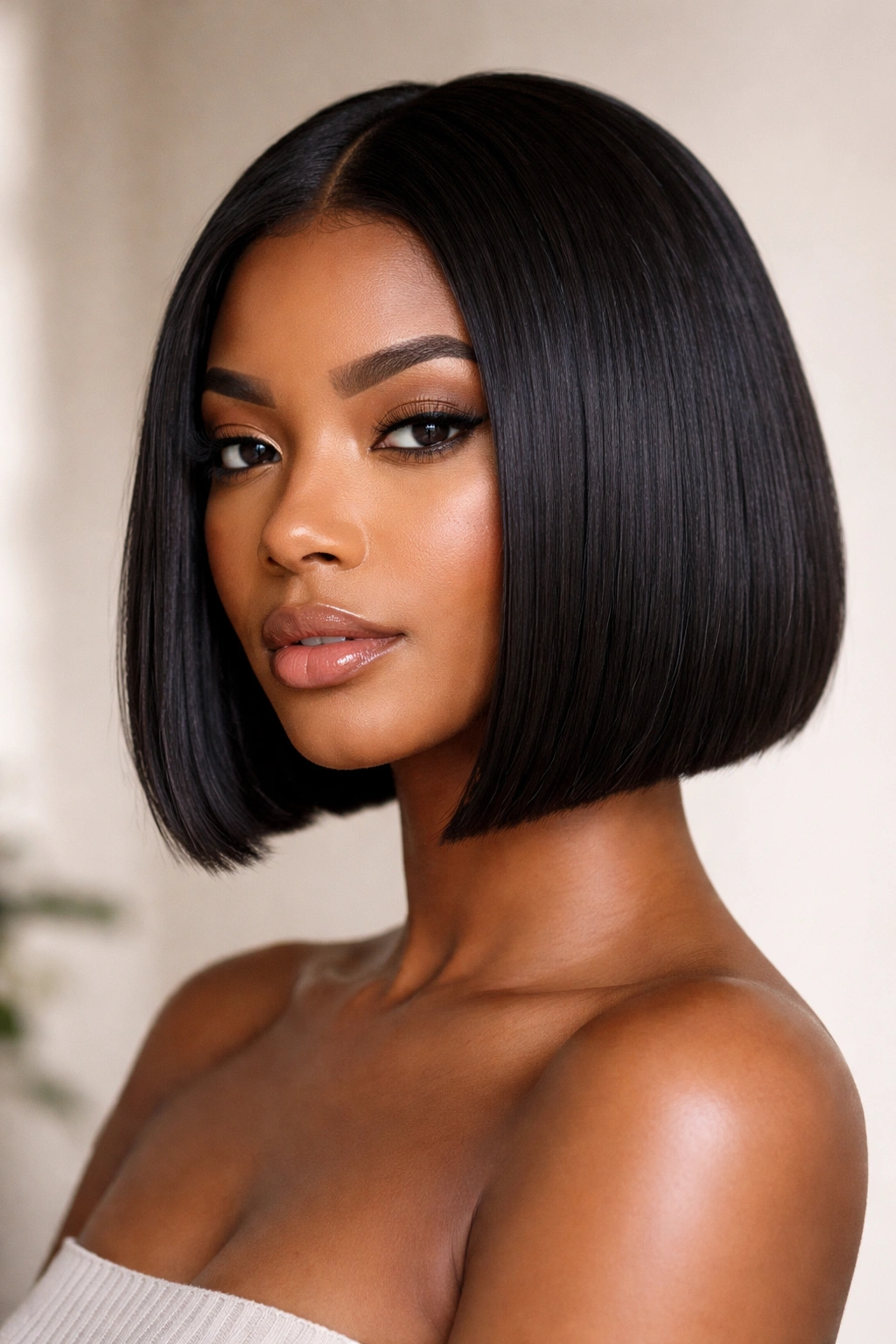
A chin-length blunt bob is the haircut that makes a face look framed instead of hidden. The ends sit right at the jaw or a hair below it, and that placement gives the whole style a clear edge. On Black hair, the most important detail is the perimeter: it needs to be even all the way around, with no accidental softness sneaking in at the bottom.
This cut works because it turns density into shape. Instead of fighting fullness, it uses it. A blunt hemline makes the bob read polished even when the styling stays simple, which is why I like it so much on relaxed hair, silk-pressed natural hair, and even a well-made sew-in or wig unit.
Why this line reads so clean
When the cut lands at the chin, the eye stops at the face instead of dropping down the neck. That makes cheekbones, jawlines, and earrings stand out more. It also keeps the bob from collapsing into a triangle, which is the problem with too much layering on fuller hair.
- Ask for minimal internal layering so the bottom line stays solid.
- Keep the length at the chin or no more than half an inch below it.
- Wrap the hair at night with a silk scarf so the ends stay tucked and smooth.
- Trim every 6 to 8 weeks if you want the edge to stay exact.
Best move: flat iron in small 1-inch sections and stop once the bend disappears. Two passes are enough for most hair; three starts to look cooked.
2. Deep Side-Part Sleek Bob
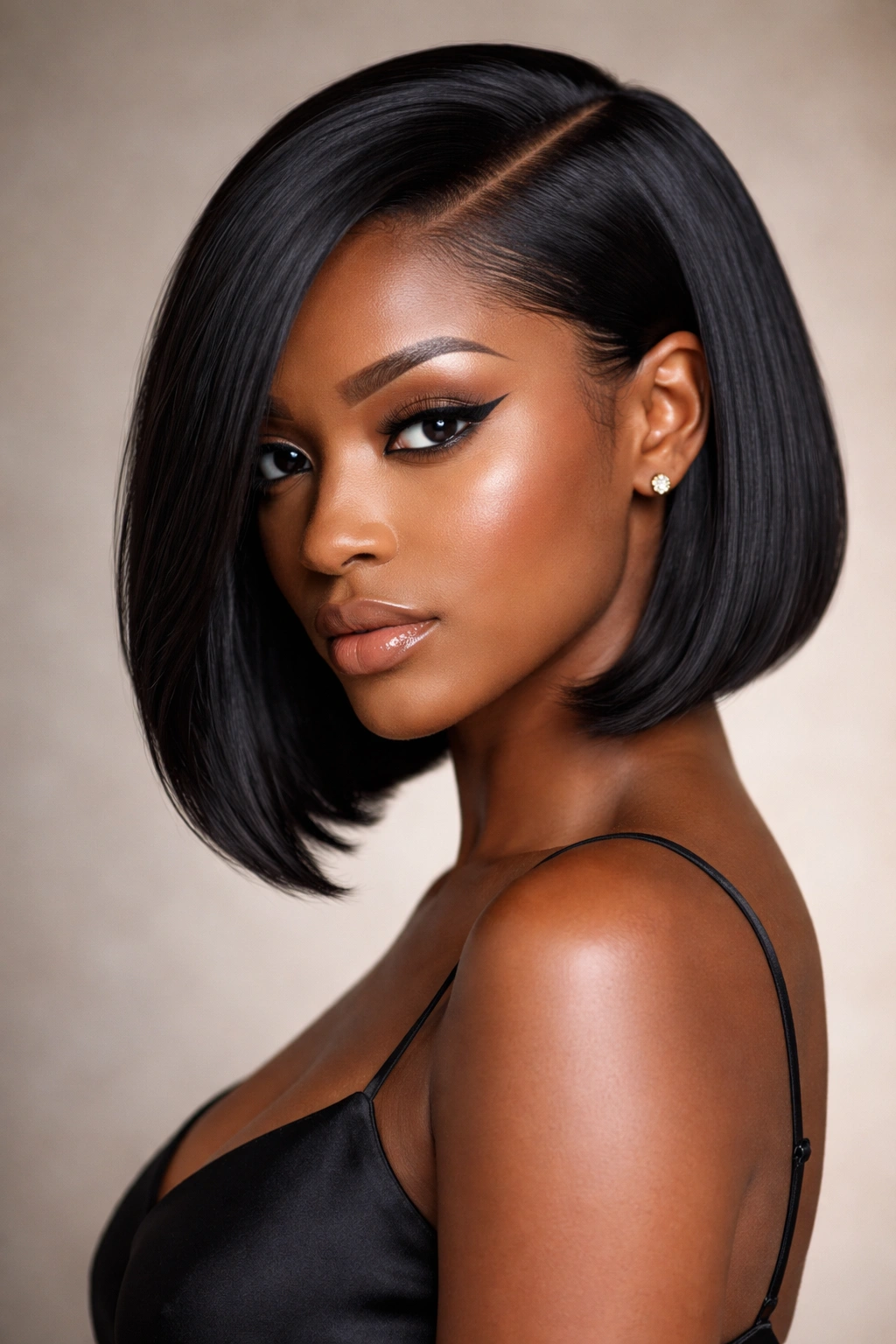
A deep side part changes a bob fast. It creates instant shape without changing the cut at all, and on Black hair that matters because a small shift in the part can make the whole style feel sharper. One side falls closer to the cheekbone, the other side gets tucked or skimmed back, and suddenly the bob has attitude.
What I like here is the balance. The side with more hair feels glamorous, but the line is still controlled. If the roots are flat and the ends are straight, the cut looks deliberate instead of heavy. That is the difference between a sleek bob and a sleepy one.
This style works especially well when the hair has been silk pressed or installed with a clean finish. A rat-tail comb helps set the part while the hair is still warm, and a little clip at the crown keeps the lift from collapsing while it cools.
A deep side part also gives you a nice escape hatch on days when the middle looks too severe. Shift the part about 2 to 3 inches off center, tuck one side behind the ear, and let the other side skim the cheek. Done.
3. Angled Bob With Longer Front
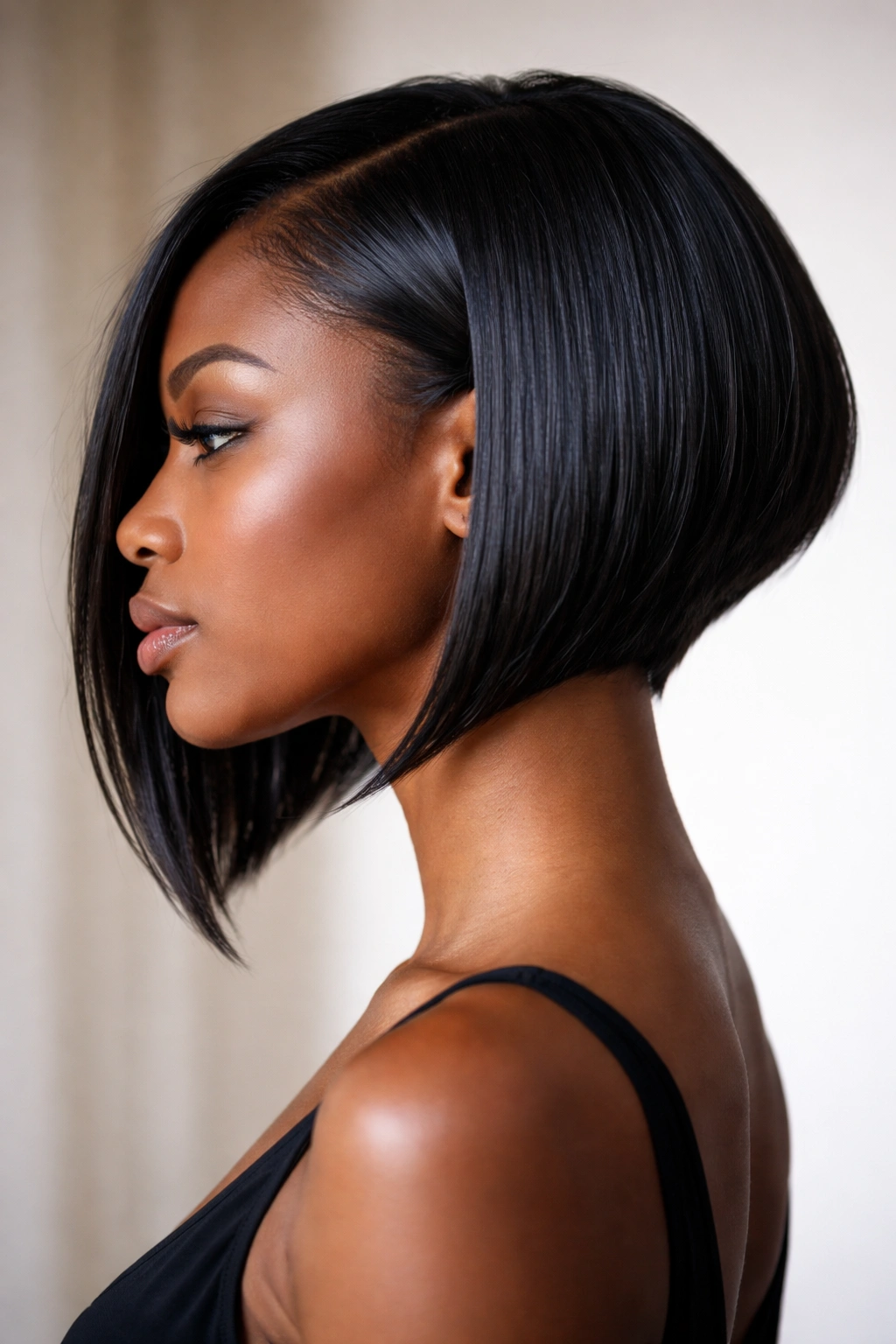
Want a bob that feels sharp but still has movement? The angled bob is the answer. The back stays shorter, the front stretches forward, and the line slants down in a way that looks clean from every angle. It is one of the easiest black bob cuts to wear if you want drama without going all the way into ultra-short territory.
The angle does a lot of the visual work. It gives the illusion of length in front while keeping the neck exposed in back, which makes the shape feel lighter than a straight one-length bob. On thicker Black hair, that front-to-back shift keeps the style from puffing out at the sides.
How to ask for it
- Tell your stylist you want the front 1 to 2 inches longer than the back.
- Ask for a clean nape with no bulky shelf in the rear.
- Keep the front line blunt, not feathered.
- If your hair is dense, ask for just enough internal removal to help the bob lie flat.
This cut suits round and heart-shaped faces especially well because the longer front pieces create a narrow frame. It also grows out more gracefully than a micro bob, which is handy if you do not love salon upkeep every few weeks.
4. Micro Bob at the Jawline
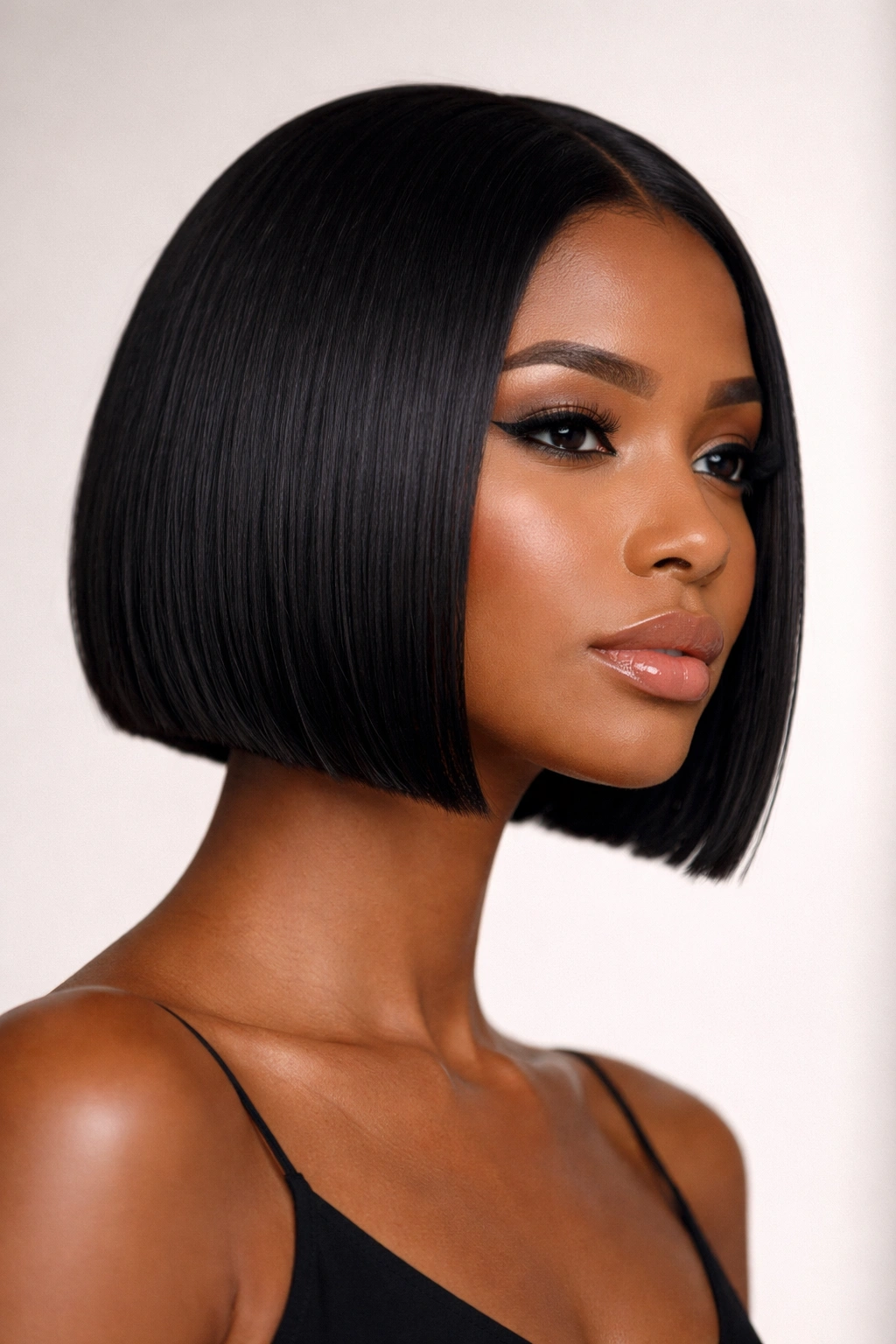
There is nowhere to hide in a micro bob. The ends sit right at the jawline, sometimes even a touch above it, and that is exactly why the cut looks so crisp. It is tiny, neat, and a little severe in the best way.
This style is not for people who want softness. It is for people who like a haircut with a point of view. On Black hair, the jawline bob works especially well when the hair is straightened or molded close to the head, because any puffiness at the root can blur the whole shape.
It also does a nice thing for jewelry and necklines. Big hoops, a high collar, a bare shoulder — all of it looks better when the bob stops cleanly at the jaw. That is not an accident. Shorter lengths draw attention to the face and the line of the neck.
A few things to keep in mind:
- Keep the nape extra clean so the back does not look boxy.
- Trim every 3 to 5 weeks if you want the length to stay precise.
- This shape looks strongest when the ends stay blunt, not chipped.
- It pairs well with a strong side part or a dead-center part.
It is a haircut with opinions. That is the point.
5. Silk-Press Bob With a Middle Part
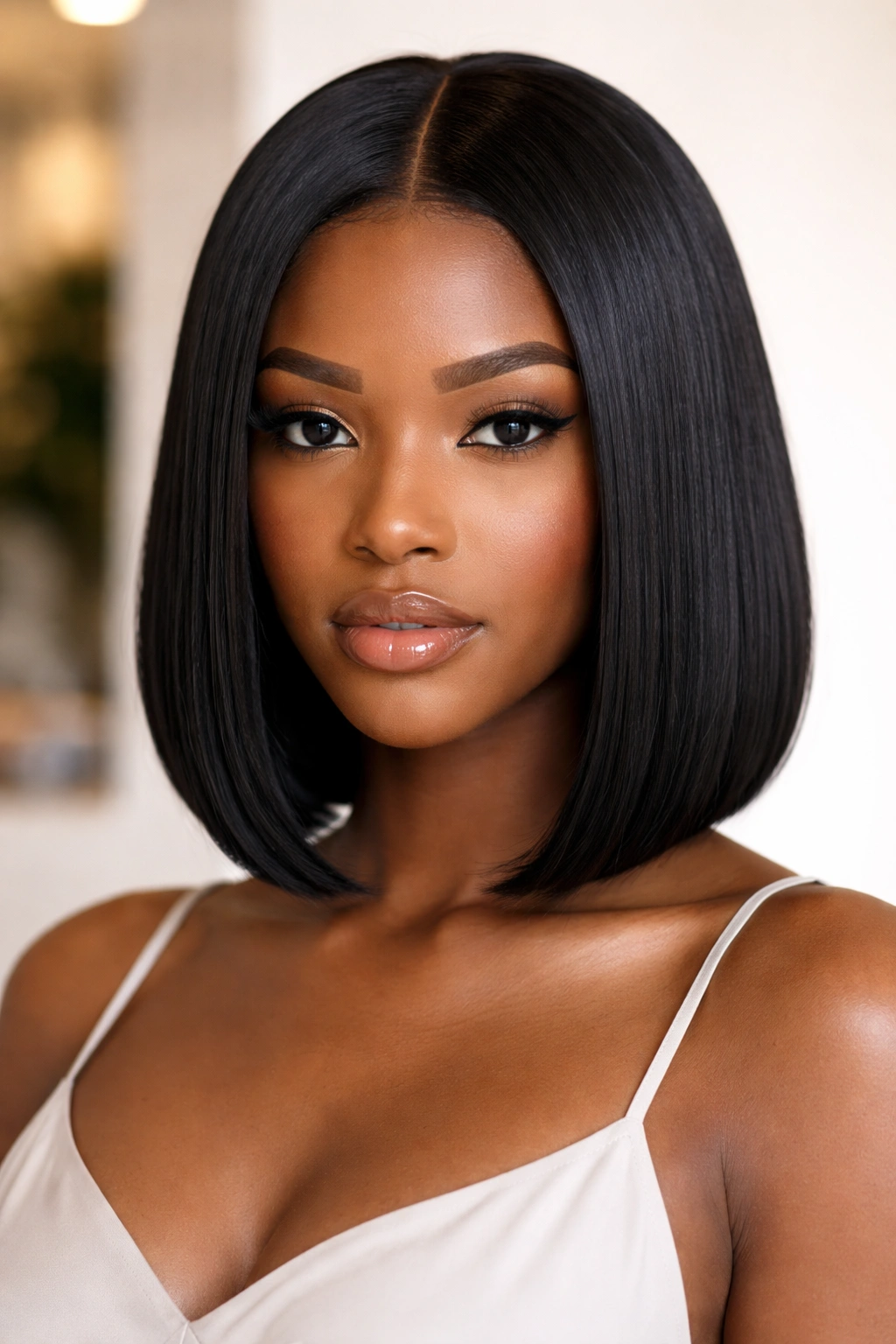
If you want a sleek bob on natural hair without committing to relaxer, the silk-press bob is the move. The middle part gives it symmetry, and symmetry is what makes this style look so tidy. When the hair is pressed smooth from root to end, the cut suddenly reads sharper than it did in its natural texture.
The trick is not chasing bone-straight hair at all costs. It is about controlled smoothness. Use a heat protectant, blow-dry the hair in sections, and flat iron in small passes — the kind that are wide enough to be useful but small enough to keep the edges clean. A huge iron on a short bob often makes the ends curl under in a weird way.
How to keep the finish smooth
- Start with hair that is fully detangled and blown dry.
- Flat iron in 1/2-inch to 1-inch sections.
- Use a light serum on the ends only, not near the roots.
- Wrap the hair every night with a silk scarf or bonnet.
- Avoid heavy oils that make the bob look greasy by day two.
The middle part can be unforgiving if the crown is bulky, so keep the root area as flat as you can. Once that part line is laid down, the rest of the haircut almost takes care of itself.
6. Inverted Bob With a Clean Nape
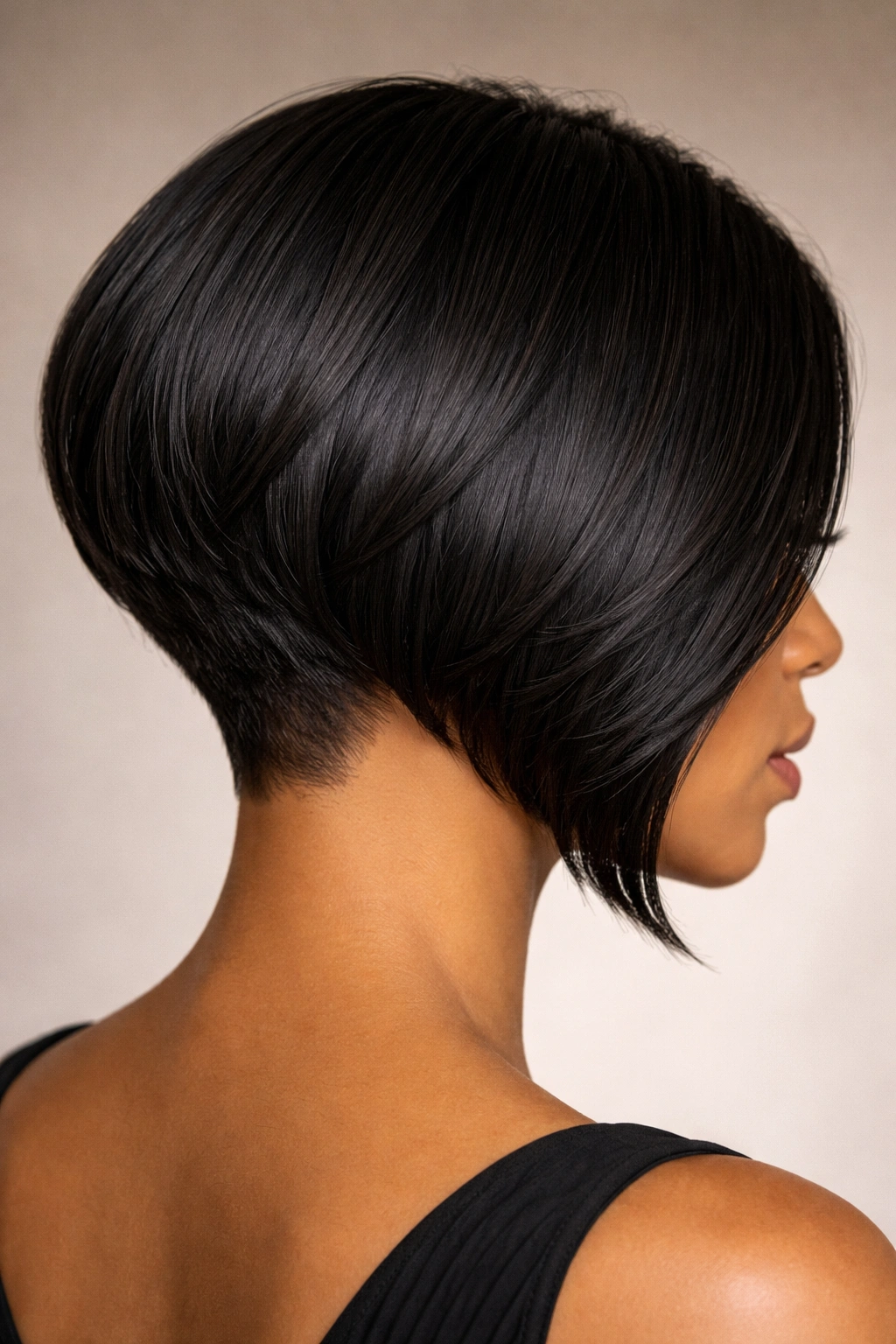
An inverted bob looks sharper than a simple angled bob because the short back does more of the visual lifting. The nape is cut tight and neat, the crown carries just enough height, and the front pieces drop forward in a clean slope. On thicker Black hair, that shorter back can save the style from feeling too heavy.
What makes this version worth a look is the structure. A stacked or slightly graduated back gives the haircut shape without relying on layers that fray at the ends. You get lift where you want it, and you get a neat neckline that looks good even when the rest of the style is tucked behind the ears.
It works especially well if your hair tends to sit flat at the crown. The cut creates its own volume, so you do not have to tease or over-style it every morning. That matters. Nobody wants to spend twenty minutes building height only to lose it the second they step outside.
If you ask for this cut, make sure the stylist understands the difference between stacked and bulky. There should be shape, not a shelf.
7. French Bob With a Soft Curve
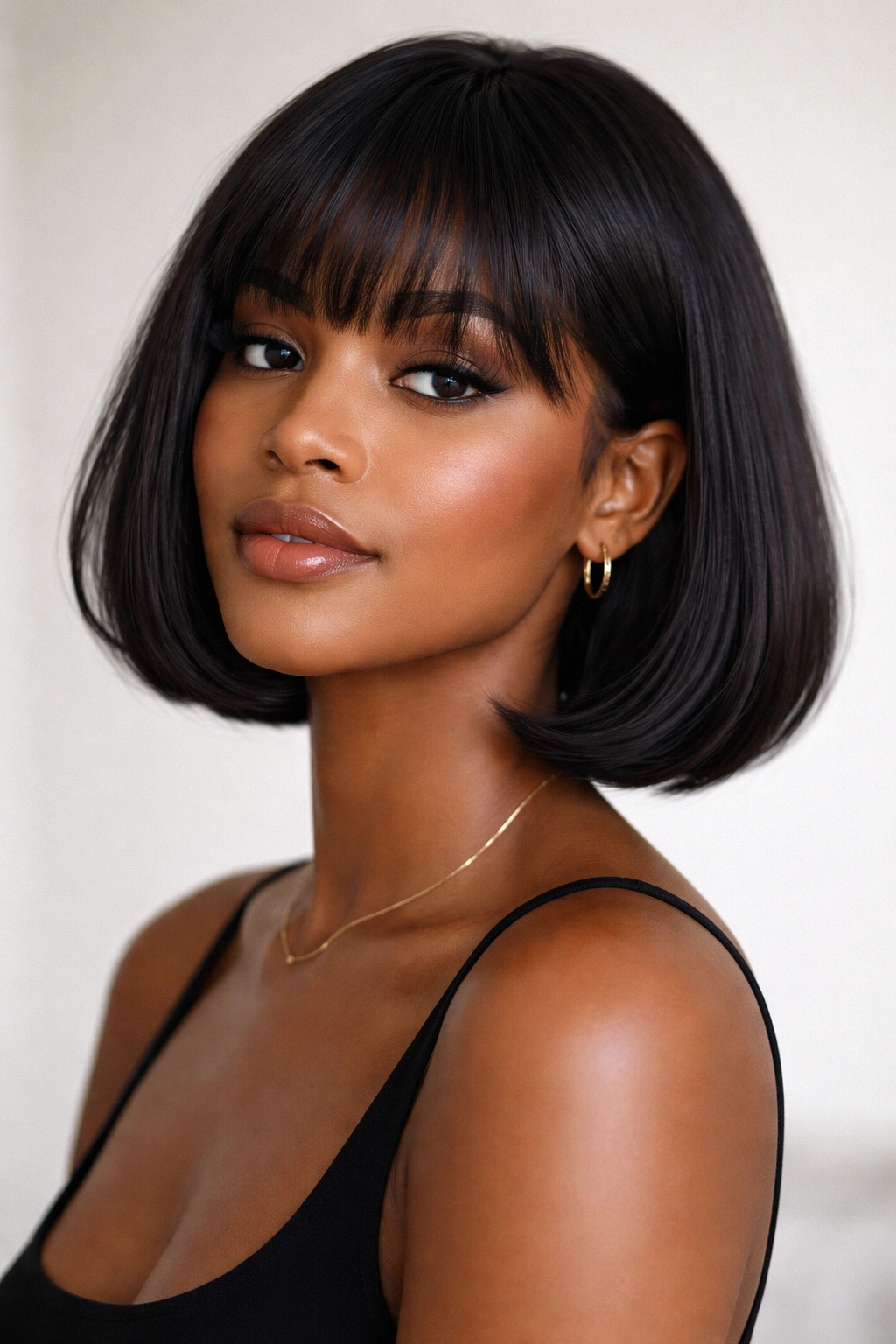
A French bob is the kind of cut that looks easy until you try to wear it yourself. Then you realize the “easy” part is all in the precision. The length usually sits around the cheekbone or just below it, and the ends curve in slightly so the whole shape feels neat instead of boxy.
On Black hair, this cut gets interesting because softness does not have to mean messiness. A gentle inward bend at the ends can still look crisp if the line is even and the fringe, if there is one, is trimmed carefully. I like this one on people who want a sharper bob without the hard edges of a classic blunt cut.
The beauty of a French bob is that it has a little romance to it, but not in a fussy way. It can sit with a side part, a short fringe, or no bangs at all. The shape itself carries the look.
One good rule: if the curve gets too round, the style loses its bite. Keep the shape close to the face. That is where the charm lives.
8. Asymmetrical Bob With One Longer Side
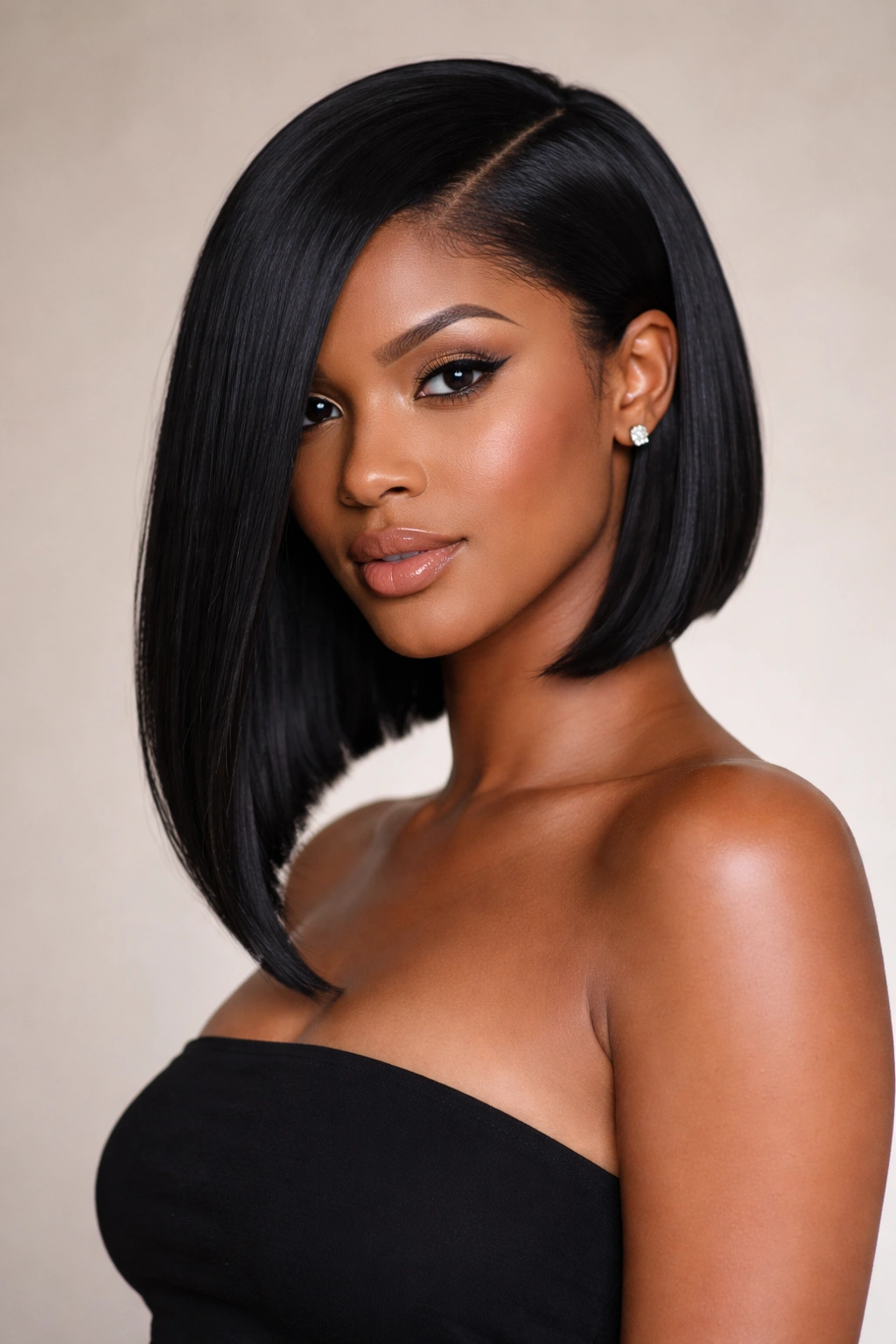
An asymmetrical bob is for the days when a clean haircut still needs a little edge. One side is left longer than the other, usually by 1 to 2 inches, and that small imbalance gives the whole style energy. It looks intentional when the lines are exact. It looks accidental when they are not.
The key is precision. The shorter side should still be substantial enough to hold shape, and the longer side should fall in a smooth line rather than a sagging point. On Black hair, this cut can look especially sharp when the part is deep and the side with more length is tucked just slightly behind the shoulder.
What keeps it from looking messy
- Keep the difference in length noticeable but not extreme.
- Ask for a blunt bottom line on both sides.
- Pair it with a side part so the longer side has a clear direction.
- Avoid too much texturizing at the ends.
This bob works well if you like a little movement without giving up neatness. It also photographs in a strong, graphic way from the front, which is why it shows up so often on red carpets and at events where the hair has to read from a distance.
9. Glass-Hair Bob
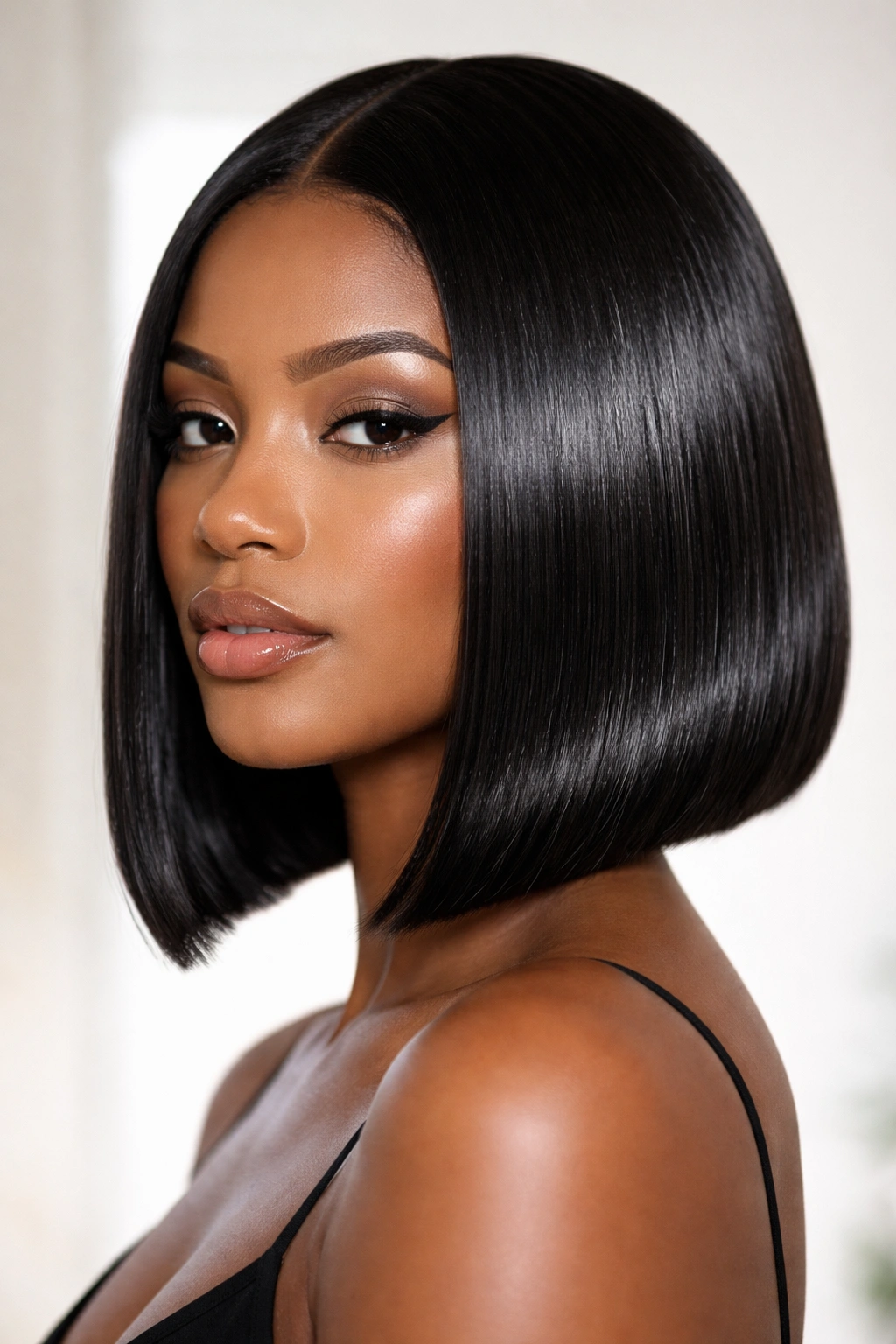
Why does a glass-hair bob look so polished? Because every strand is pushed into the same direction. There is no loose puff, no fuzzy halo, no wandering ends. Just shine, line, and a shape that feels almost reflective.
That finish works best on a blunt bob or a slightly angled bob, because the smoother the cut line, the easier it is to get that mirrorlike effect. On Black hair, a glass-hair finish often starts with a good blow-dry, then moves into careful flat ironing with very small sections. The goal is not to crush the hair. It is to make the surface lie flat enough that the light moves across it evenly.
How to get that surface
- Blow-dry with a nozzle and a paddle brush until the hair is fully dry.
- Flat iron in thin slices, not thick chunks.
- Use a tiny amount of serum at the very end, mostly on the tips.
- Finish with a light shine spray or a soft oil mist.
- Do not pile on product near the roots, or the bob starts to separate and look limp.
This style is demanding in a quiet way. It rewards neat prep, and it punishes shortcuts. If your ends are uneven or your part is crooked, the whole illusion breaks.
10. Tucked-Behind-the-Ear Bob
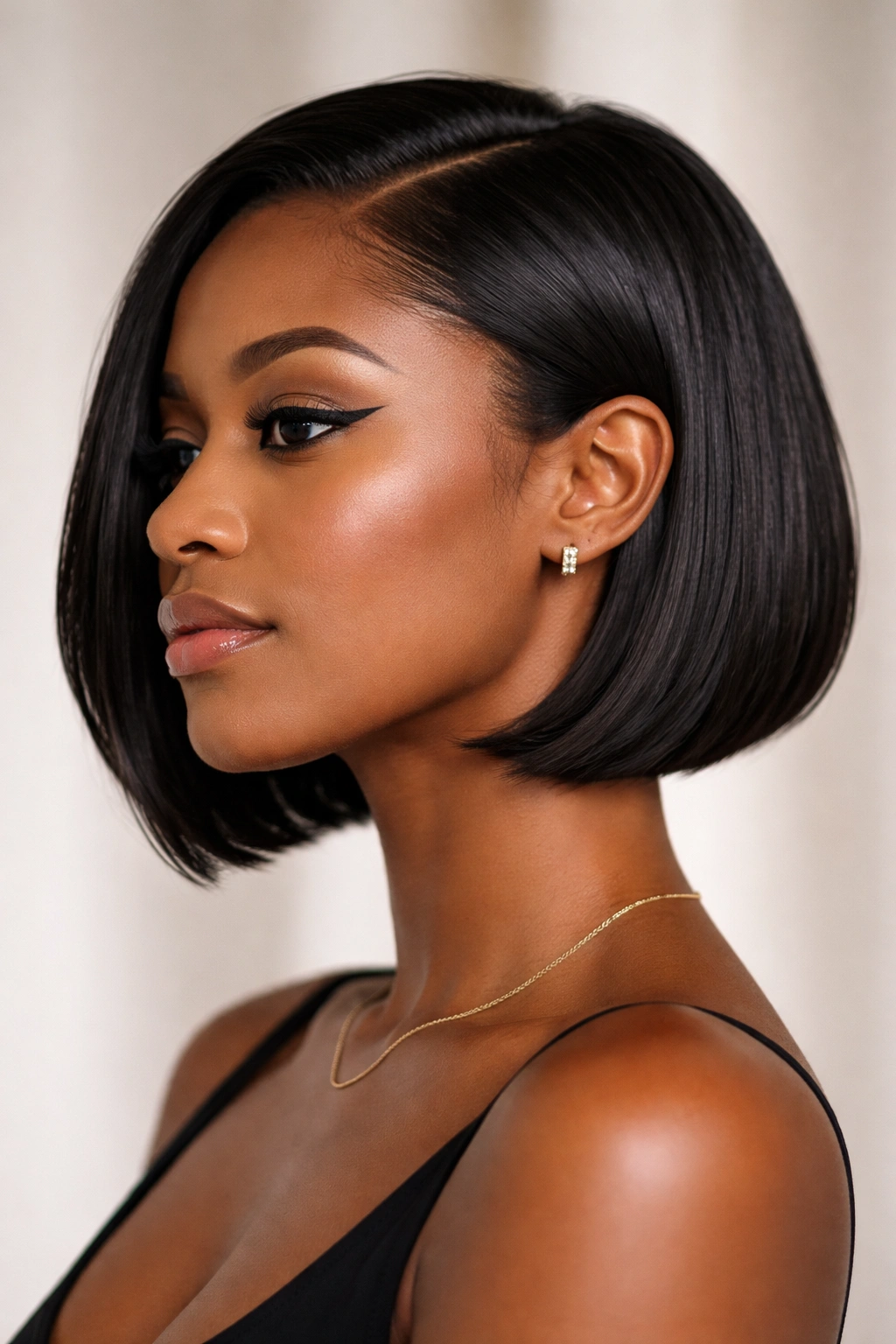
A bob that tucks behind one ear has a sneaky way of looking more polished than a style with twice the effort. It opens up the face, shows off the jaw, and makes the cut feel sharp even when the rest of the styling stays simple. One side gets exposed. The other side stays smooth and close.
This works best when the length sits right around the jaw or just below it, because hair that is too short falls out of the tuck and hair that is too long starts to droop. On Black hair, especially when it has been straightened or pressed, that tucked shape can hold the outline nicely without a pile of pins.
It is a small move with a lot of payoff. You can wear it with hoops, a strong brow, a bold lip, or a plain tee and still look put together. I like that kind of haircut. It doesn’t need a speech.
If the hair keeps slipping loose, use a tiny hidden pin near the back of the ear instead of loading the side with clips. Too many pins spoil the clean line.
11. Blunt Bob With Straight-Across Bangs
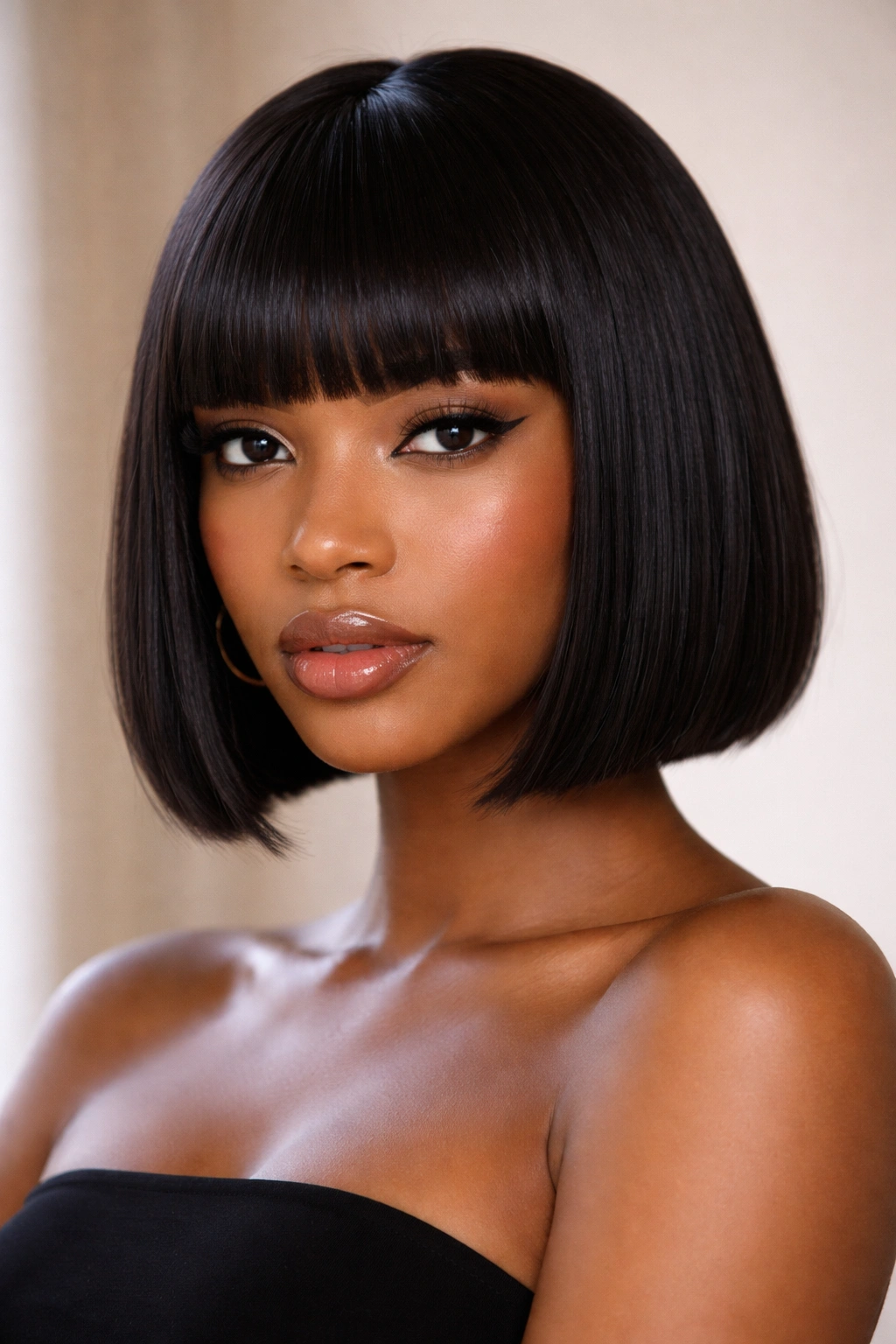
Bangs change the whole feeling of a bob. Add a straight-across fringe, and the haircut becomes sharper, faster. On Black hair, this combination can look especially striking because the density gives the bangs a fuller line — they do not tend to look wispy unless they are cut too thin.
The secret is keeping the fringe honest. It should sit at the brow or just above it, with enough weight that it falls as a proper line. If the bangs are too long, they collapse into the eyes. If they are too thin, they look disconnected from the bob.
Bang maintenance that actually helps
- Dry the bangs first so they do not twist while the rest of the hair sets.
- Trim them every 2 to 3 weeks if you want the line to stay neat.
- Use a small round brush or paddle brush to keep them from splitting.
- Keep the temples slightly softer than the center if your hairline needs a little room.
This cut is not the low-effort choice. I would never call it that. But when it is done well, it makes the face look framed, direct, and a little editorial. That can be a wonderful thing.
12. Defined Curly Bob With a Crisp Outline
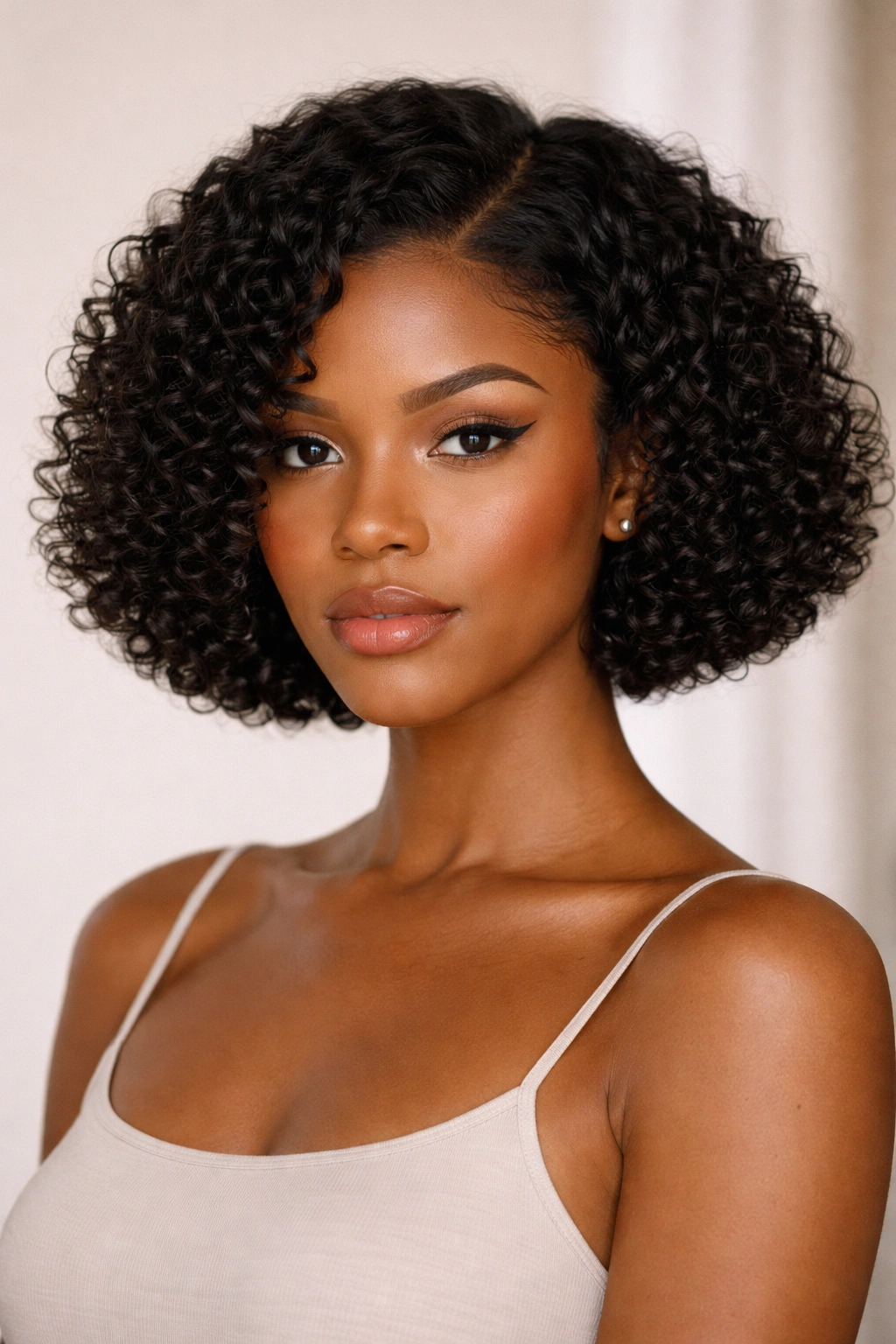
Can a curly bob look sleek and sharp? Absolutely. The trick is to treat the outline like the important part and the curl definition like the finish. If the silhouette is neat, the texture can do its own thing inside that frame.
This is a smart choice for natural curls that still want structure. A good curly bob sits at the chin or just below it, with enough weight to keep the ends from frizzing out into a cloud. The cut usually works best when it is shaped dry, because curls lie and shrink in ways that are hard to judge wet.
The routine that keeps curls in line
- Shape the bob on stretched or fully dry curls if possible.
- Use a gel or cream with enough hold to form a clean cast.
- Diffuse on low heat until the curls are set.
- Avoid over-layering the crown, or the top gets round while the bottom gets thin.
- Refresh with a little water and product mix instead of rewetting the whole head.
What makes this version so good is the contrast. The outline stays tidy, but the texture keeps it from feeling stiff or flat. You get movement, shape, and a haircut that still reads as deliberate from across the room.
13. Shoulder-Grazing Lob With Sharp Ends
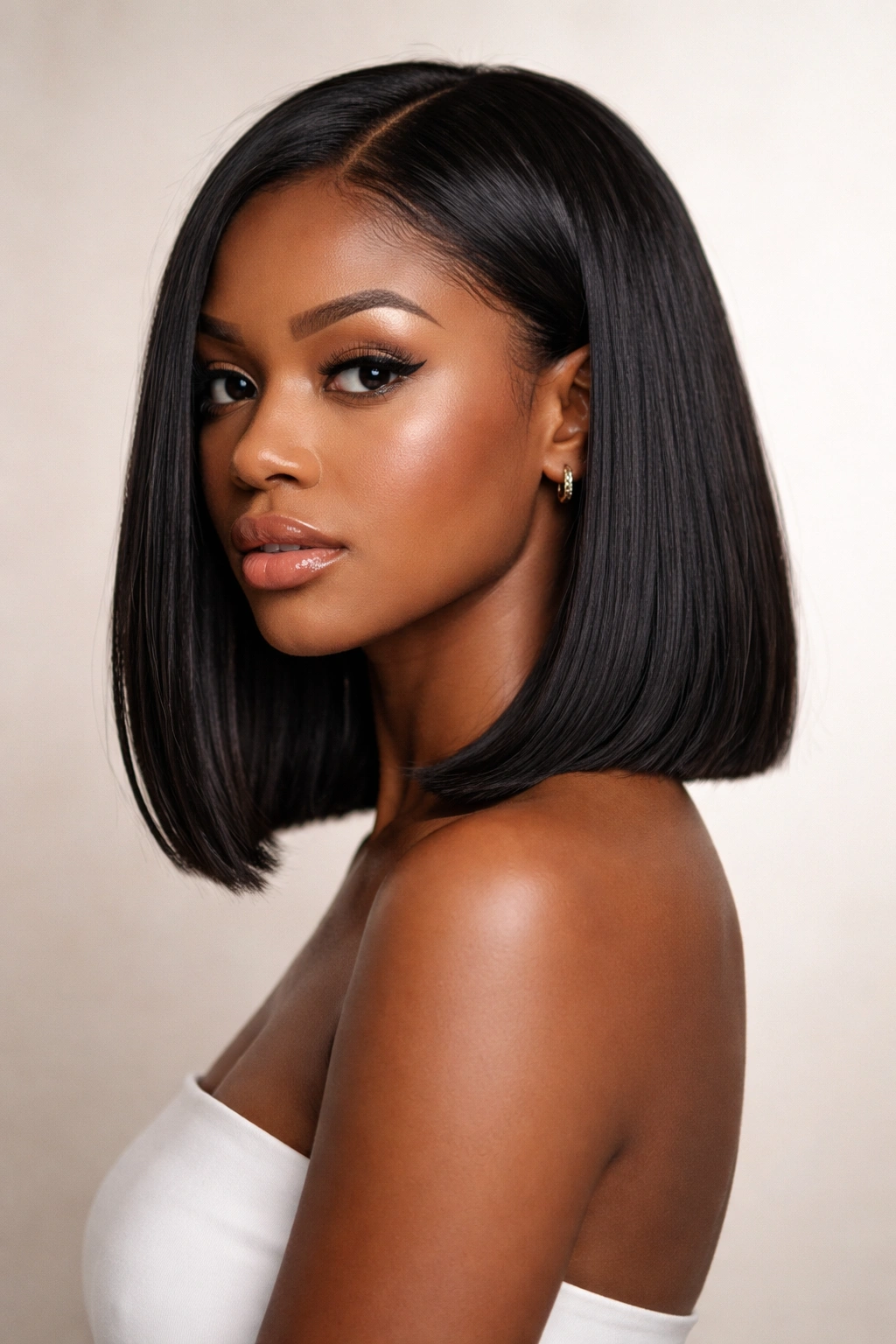
A lob is the easy answer when you want bob energy without giving up length. It grazes the shoulders or sits just above them, and with a blunt finish it still feels crisp. On Black hair, this is often the most forgiving option because it gives you room to wear the style straight, curled under, tucked, or pulled back partway.
The important part is the end line. A shoulder-length cut can go soft fast if the bottom is too feathered. Keep the hem blunt and the layers restrained, and the whole look holds together better. That makes the lob a good middle ground for people who like neat hair but do not want to visit the salon every few weeks.
It also gives you more styling choices than a short bob. You can do a deep side part one day and a center part the next. You can wear it sleek and flat, or add a subtle bend at the ends so it brushes the collarbone.
If the chin-length bob feels too severe, this is the safer bet. It still looks sharp. It just gives you a little more breathing room.
14. Stacked Bob With Lift at the Back
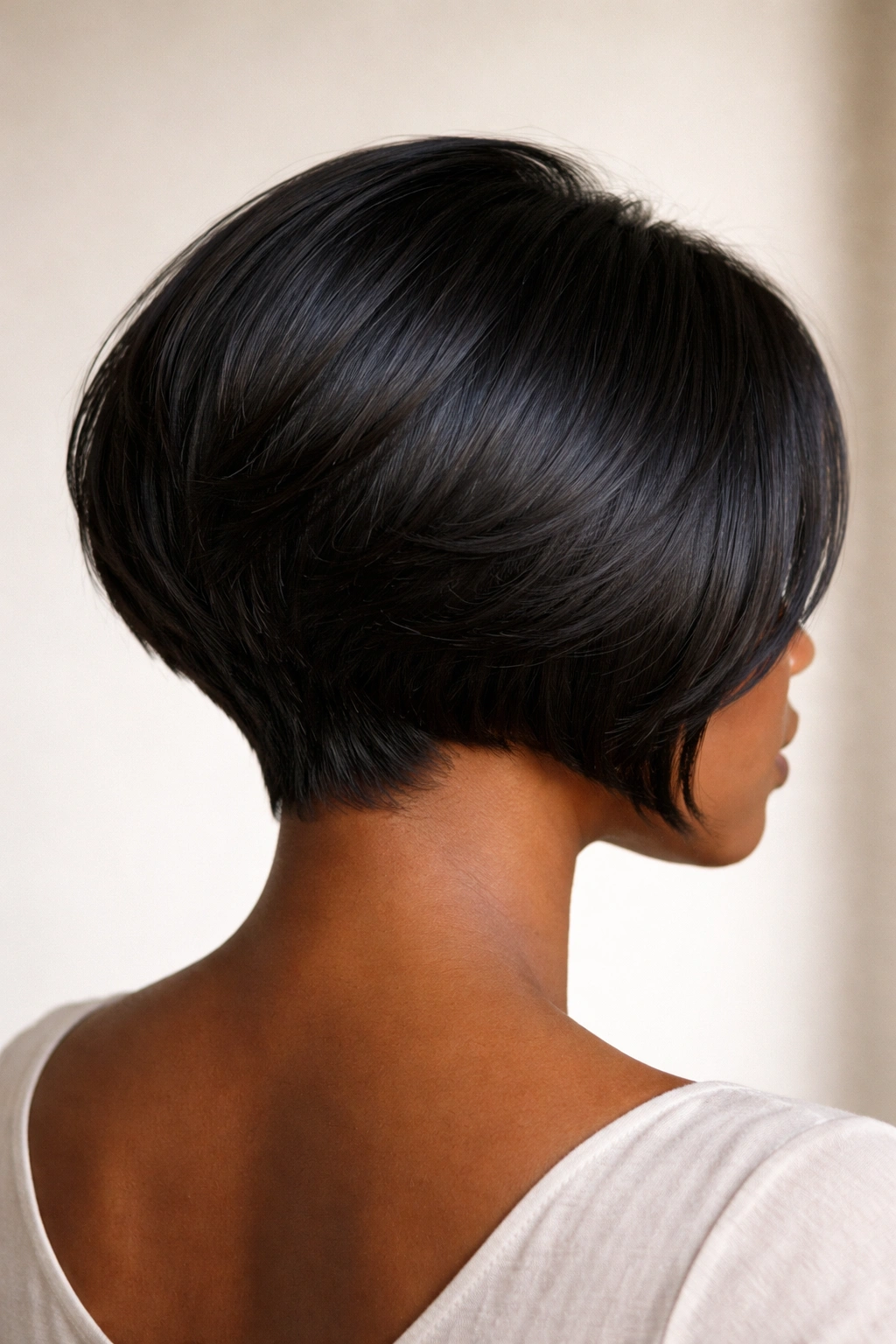
If your hair tends to fall flat at the crown, a stacked bob brings the shape back to life. The back is cut shorter and built with a controlled graduation, so the nape sits tight while the crown lifts just enough to keep the profile interesting. On thicker Black hair, that shape can be a relief.
The danger with a stacked bob is going too round. That is where the haircut starts to look heavy instead of precise. The back should have structure, not volume for the sake of volume. A good stacked bob gives you lift without making the head look helmet-shaped.
Who should ask for it
- People with thick or dense hair that needs shape at the crown.
- People who want a shorter cut but still need some body in the back.
- People who are happy trimming every 4 to 6 weeks to keep the stack neat.
- People who like a dramatic side profile.
The nape needs attention here. If the neckline grows out unevenly, the whole style loses its edge fast. That is the tradeoff. You get shape, but you have to keep the back clean.
15. Wet-Look Bob With a Razor Part
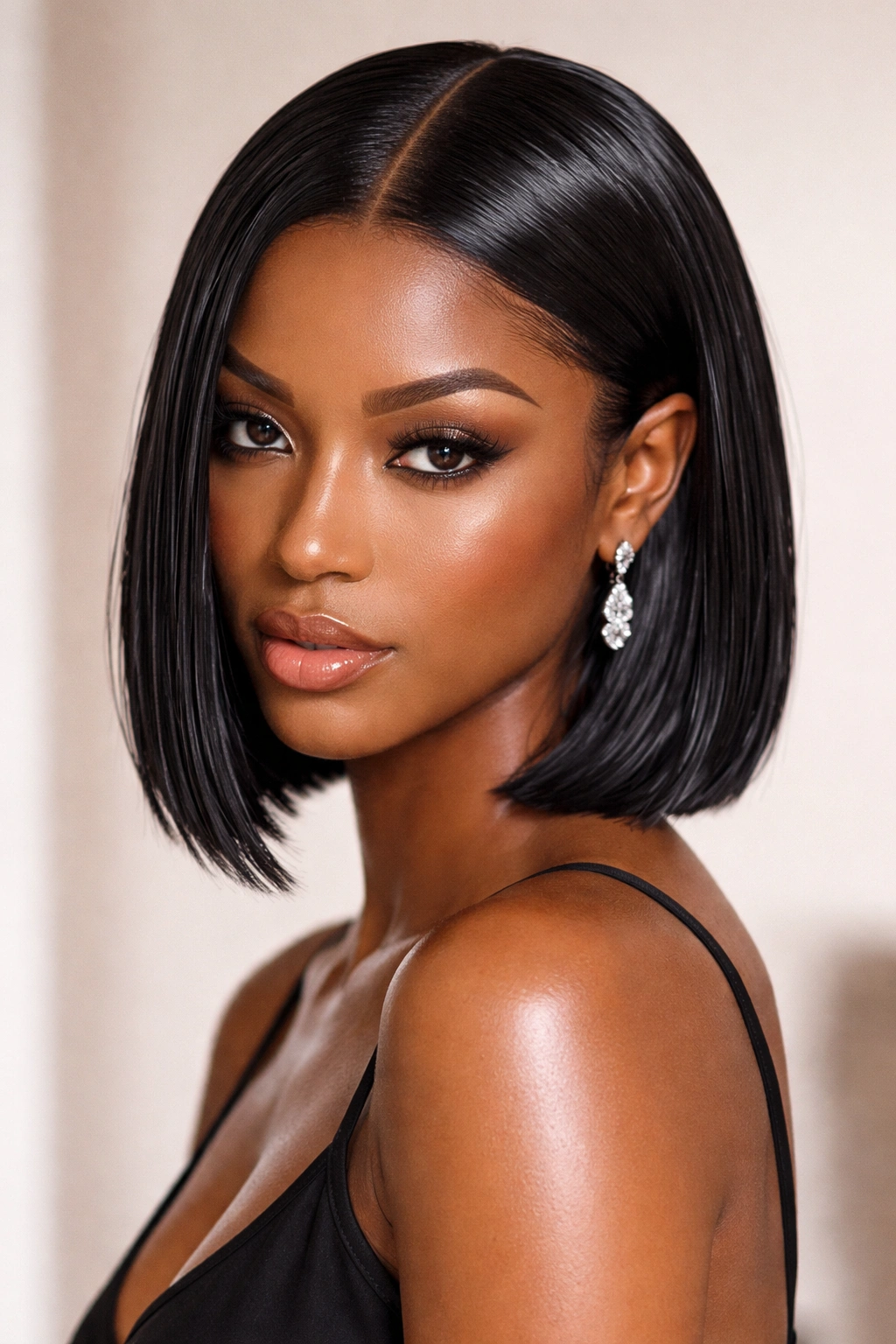
The wet-look bob is not subtle, and that’s the charm. The hair sits smooth, the part is sharp, and the finish has that fresh-from-the-stylist feel even when the rest of the outfit is plain. On Black hair, it works especially well with a blunt cut because the shine and the line reinforce each other.
This style is more about styling than cutting, but the cut still matters. The bob should have enough bluntness that the wet finish doesn’t expose uneven ends. A razor-clean part — center or side — helps anchor the whole look. Then the product does the rest.
Use gel on damp hair, comb it through from roots to mid-lengths, and keep the ends defined rather than crunchy. A small amount of shine spray can help, but too much turns the style heavy. That is the mistake people make. They pile on product until the hair looks wet in a bad way.
A wet-look bob is a strong choice for evenings out, formal settings, or any day when you want your hair to feel deliberate. It also pairs well with bold earrings, because the smooth shape keeps the face open.
Final Thoughts
The sharpest black bob cuts tend to do the same three things: they keep the perimeter clean, they respect the hair’s natural density, and they do not overcomplicate the finish. A great bob does not need ten tricks. It needs a line you can trust.
If you are choosing between two lengths, I usually lean shorter. Hair grows. Shape goes fast. A bob that lands a little above where you thought it should often reads cleaner once you wear it in real life, especially when the hair has some natural fullness.
And if the cut is already good, do not drown it in product. A silk wrap, a proper part, and a trim at the right time will do more than a shelf full of creams ever will. That is the part people forget.
