



A fluffy bob with bangs has a very specific kind of magic. It makes hair look lighter, fuller, and more awake, even when the actual density is doing you no favors. If your hair falls flat at the roots or hangs close to the head by lunchtime, the right bob can change the whole mood of it.
The catch is that not every bob gets there the same way. Some need a sharper perimeter to fake thickness. Others need layers placed with a light hand so the crown doesn’t collapse. Bangs matter too, and more than most people think. A fringe can lift the eye line, open the face, and keep a cut from feeling too heavy at the forehead.
I’ve always liked bobs that move a little when you walk. Too stiff, and they start to feel helmet-like. Too shredded, and they can look airy in the wrong way, especially if the ends lose their shape. The sweet spot is somewhere between soft and deliberate, with enough texture to catch the eye and enough structure to keep the style from going fuzzy.
Before picking a specific cut, it helps to know what actually creates that plush, full look in the first place.
What Makes a Bob Look Full Instead of Flat
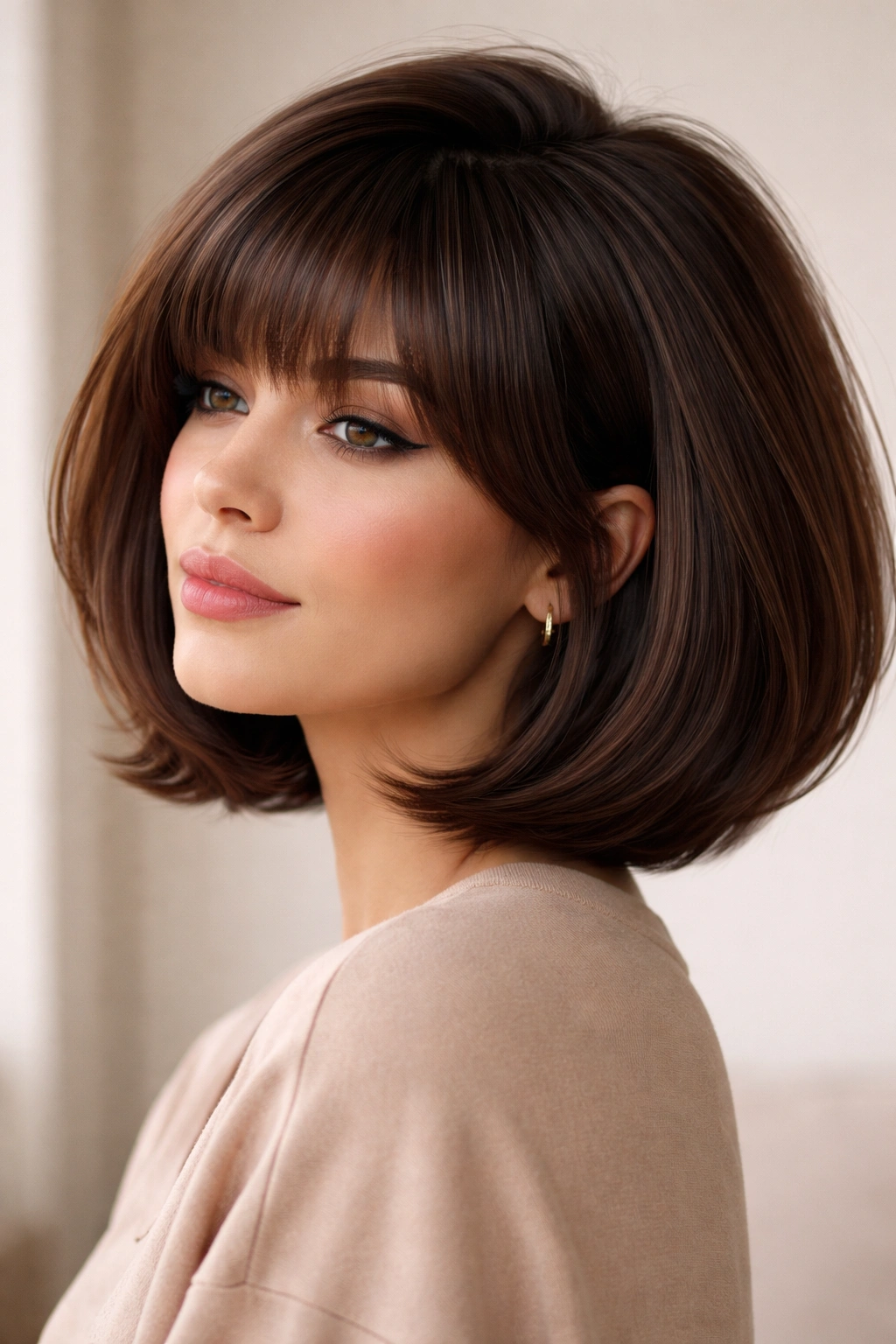
Volume in a bob is mostly about weight placement. That sounds dry, but it’s the whole game. If the crown is too heavy, the hair sinks. If the ends are too thinned out, the shape turns wispy and thin. A good fluffy bob keeps enough thickness through the perimeter while using just enough internal shaping to let the hair lift instead of hang.
Bangs do more than decorate the forehead. They change where the eye goes, which is half the battle with short hair. A well-cut fringe can make the top half of the face feel more balanced and can make the haircut seem fuller even when the hair itself isn’t dense. That’s why a blunt line, a feathery curtain bang, and a tiny micro fringe all create different effects.
The Three Places That Matter Most
- The crown: A little shorter through the top layers gives the root room to rise.
- The perimeter: Keeping the bottom line strong makes the bob look thick, not stringy.
- The fringe: Bangs should connect to the rest of the cut instead of sitting on top of it like an afterthought.
A lot of people ask for “more layers” when what they really need is smarter layers. That is not the same thing. Too many choppy layers can leave the outline weak, and once the outline is weak, the whole bob starts looking smaller than it should. I like cuts that keep a clean edge and then add movement where the hair needs air.
If you want the fluffy finish to last, styling matters too. A root-lifting mousse, a round brush, and a quick blast of cool air do more than most expensive products ever will.
How to Ask for the Right Bob Shape at the Salon
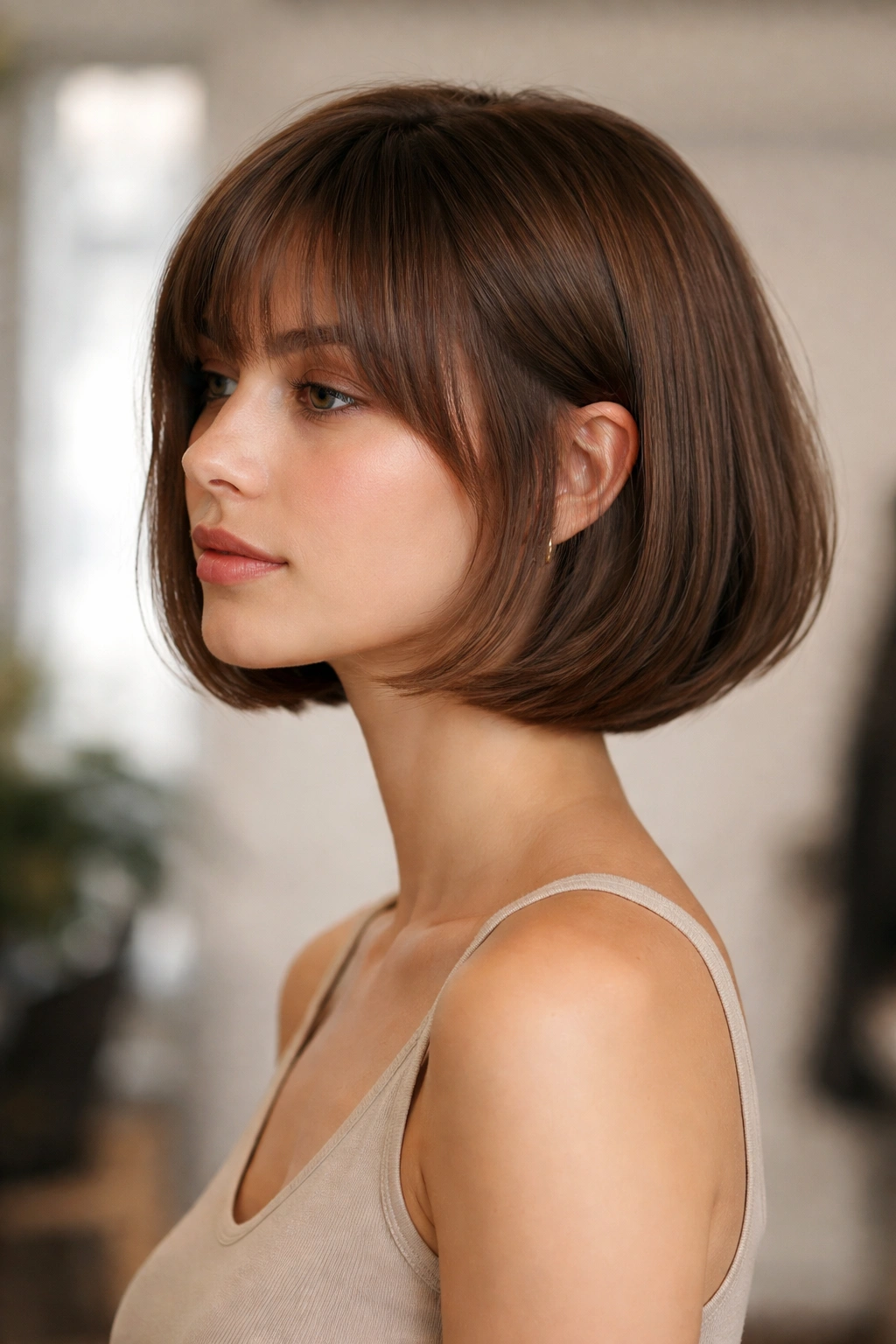
Bring photos, but bring the right ones. One photo should show the length you want. Another should show the fringe. People often hand over a single reference picture and assume the stylist will decode everything from that one image. That is how you end up with bangs that are two inches shorter than expected and a bob that sits in the wrong place on the jaw.
Say where you want the length to land. Chin length, jaw length, just below the ears, collarbone skimming — those details matter. Tell the stylist whether you want the hair to curve under, flip out a little, or fall straight. Those are not minor choices. They change the whole silhouette.
Useful Words to Use
- “I want movement without losing the outline.”
- “Please keep the perimeter full.”
- “I need the bangs to soften the face, not cover it.”
- “I style with a round brush” or “I usually air-dry.”
- “My hair goes flat at the crown” if that’s true. Say it plainly.
The best salon consultations are boring in the best way. No fancy language. No guessing. Just a clear talk about weight, length, and how much effort you’re willing to put into styling every morning. That last part matters more than people admit. A cut that looks perfect only when you spend 40 minutes on it is not the same thing as a cut that works when you’re running late.
1. Curtain-Bang French Bob
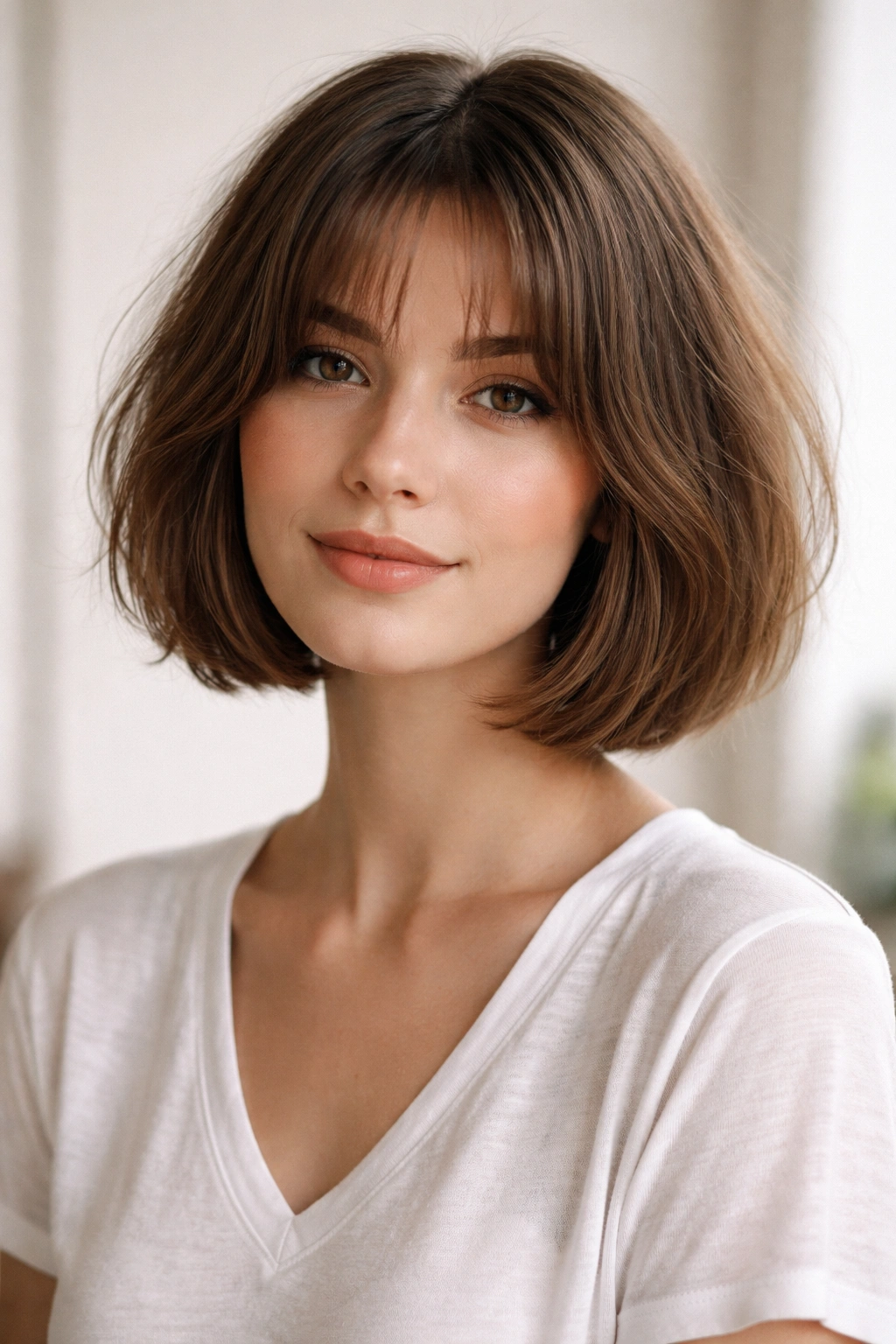
Soft curtain bangs are the easiest way to make a chin-length bob feel airy instead of boxy. They part in the middle, fall away from the face, and keep the forehead open so the whole cut doesn’t read as heavy. I like this shape because it gives you softness without dragging the bob into full shag territory.
Why It Works
The best part is the balance. The bob stays compact around the jaw, which gives the haircut structure, but the curtain fringe pulls the eye outward and upward. That little shift matters. It makes the face look more open, and it makes the crown feel less pressed down.
Ask for bangs that are shortest around the cheekbone and longer at the ends, not a blunt curtain that sits like a curtain rod. The bob itself should skim the jaw or sit just below it. If it hits too low, the look can lose that neat French-bob snap.
- Best for: Fine to medium hair, especially if you want movement without a huge amount of layering.
- Ask for: Soft internal layers, a jaw-length perimeter, and curtain bangs that blend into the front pieces.
- Style with: A lightweight mousse and a 1.25-inch round brush.
- Watch out for: Fringe that starts too high. It can make the face look narrower than you want.
My favorite trick: bend the bangs away from the face first, then back toward it. That tiny zigzag gives the fringe a natural fall instead of a stiff curl.
2. Choppy Chin-Length Bob with Micro Bangs
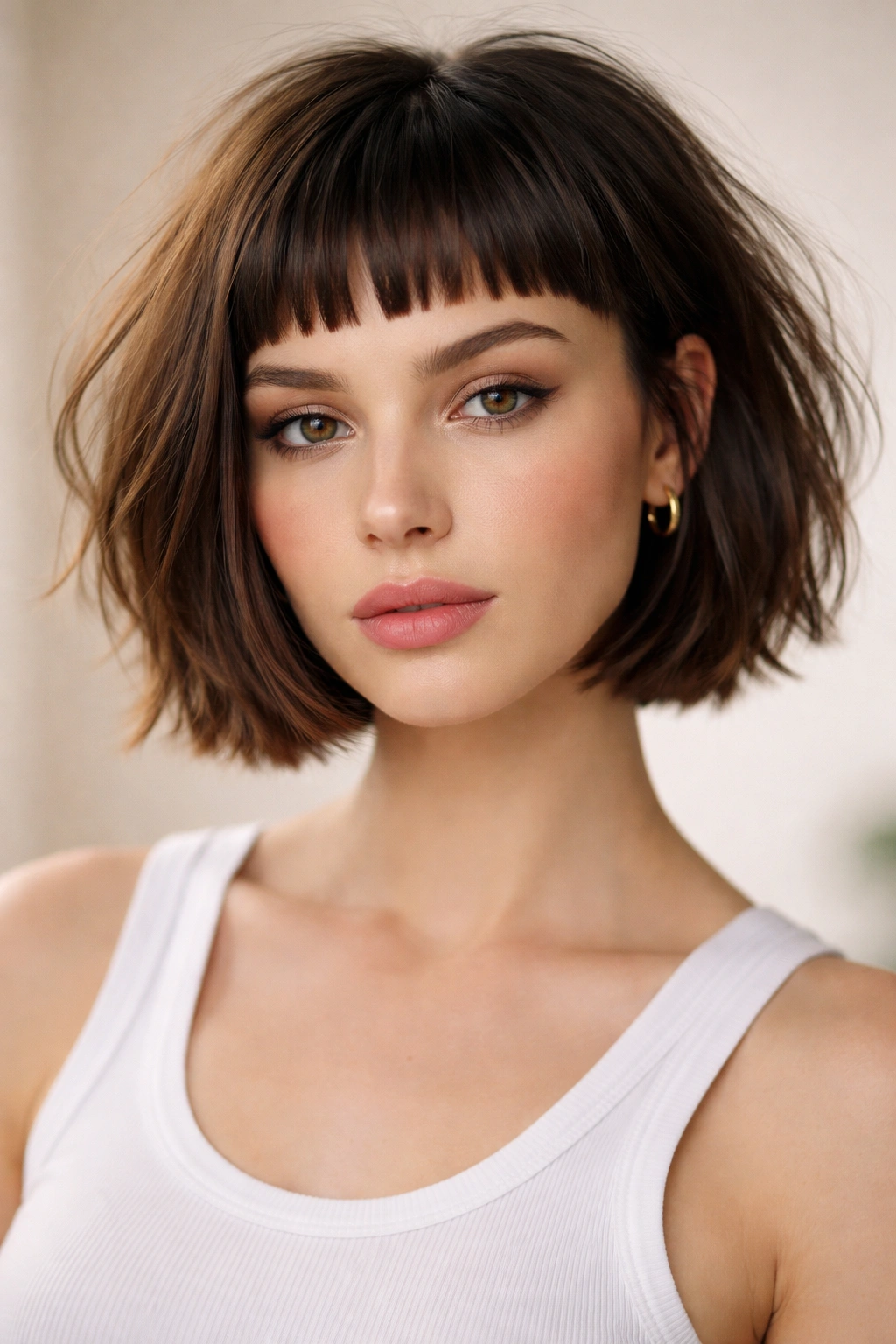
Micro bangs can make a bob look fuller at the crown because they free up the forehead. That sounds a little backwards, but it works. When the fringe is short and sharp, the eye moves up fast, and the haircut reads as bold and compact. Pair that with a choppy chin-length bob and you get a shape that feels alive without needing a ton of styling.
The trick is to keep the texture controlled. I do not love micro bangs when the rest of the cut is overthinned. That combo can start to look scraggly. What you want here is short fringe, yes, but with a solid outline at the bottom so the bob still has weight.
This is one of the best choices for straight hair that tends to lie flat. The shorter bangs break up the front, and the choppy ends stop the bob from looking like one clean block. It has attitude. It also shows off brows and cheekbones in a way that makes the haircut feel more intentional.
If your hair has a cowlick right at the front, be careful. Micro bangs can fight hard against a stubborn growth pattern, and that morning battle gets old fast. For the right person, though, this cut is sharp, youthful, and surprisingly good at faking density.
3. Rounded Layered Bob with Brow-Grazing Fringe
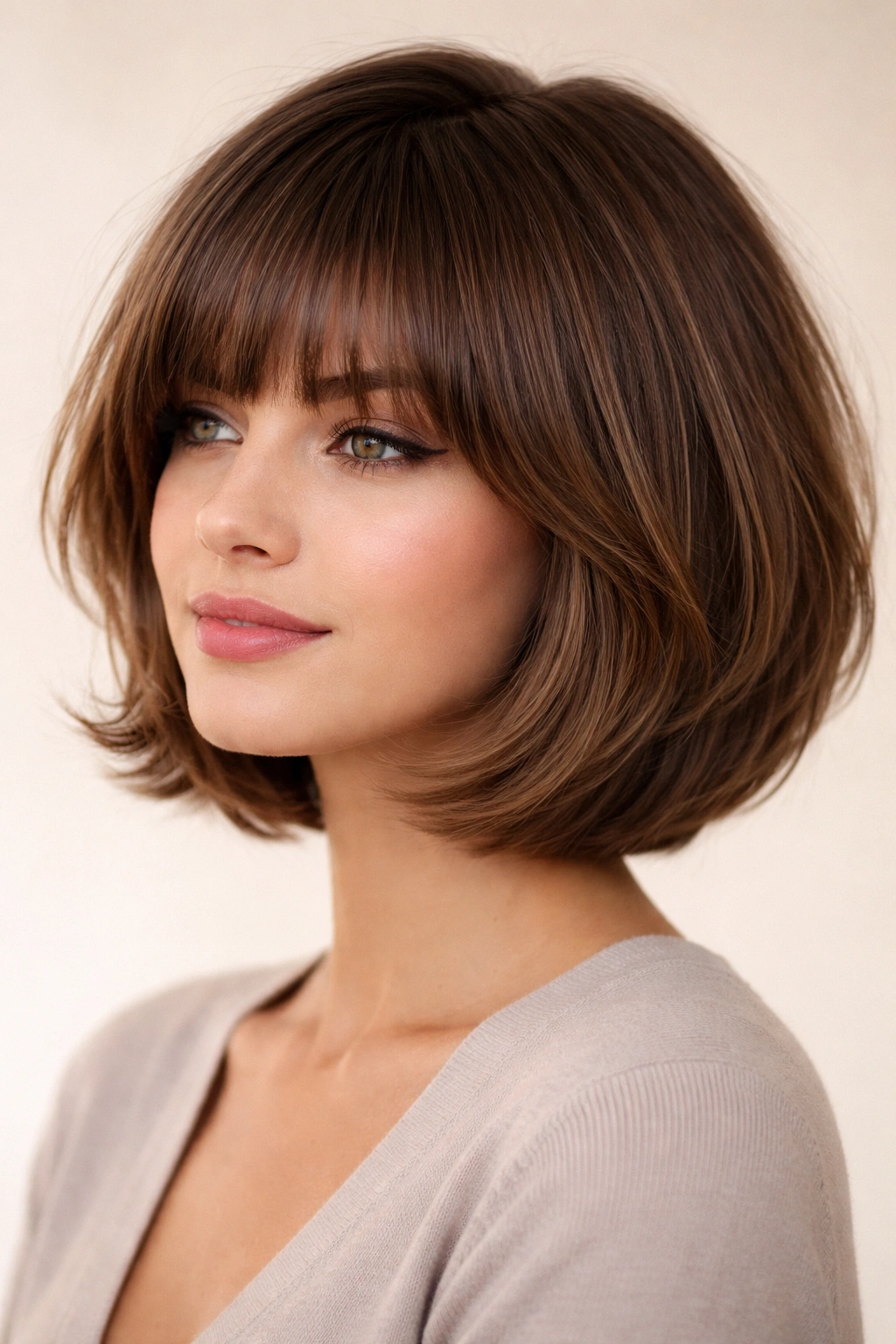
Can a bob feel soft and full without looking shaggy? Yes. A rounded layered bob does exactly that, especially when the bangs skim the brows instead of slicing across the forehead. The shape almost wraps around the head, which makes the hair look plush from every angle.
The secret is in the curve. Instead of cutting the layers in a flat, choppy way, the stylist keeps the silhouette rounded so the widest point sits around the cheek and temple area. That gives the illusion of fullness on the sides, where a lot of bobs go limp. Brow-grazing bangs help because they create a dense-looking front without crowding the eyes.
How to Style It
Start with a volumizing spray at the roots and a pea-sized amount of mousse through the mid-lengths. Blow-dry the bangs first, because they set the tone for the rest of the cut. Then use a round brush to guide the ends under just a little. Not a curl. Just a bend.
This style is especially good if your hair has a slight wave but tends to puff at the ends. The rounded shape keeps the wave looking polished. It also hides a lot of the awkward grow-out stage, which is a nice side benefit if you don’t love frequent trims.
4. A-Line Bob with Side-Swept Bangs
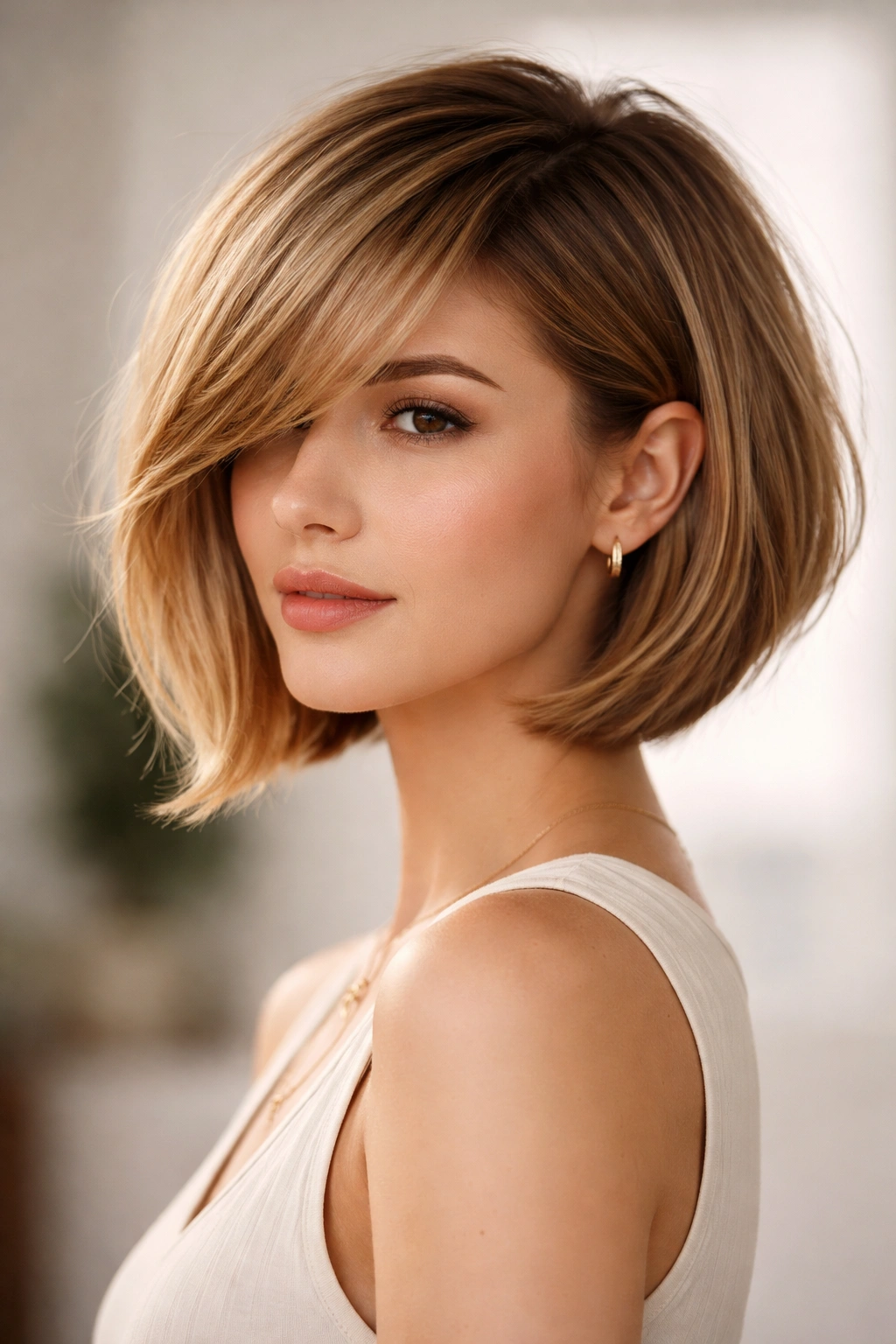
Picture hair that sits flatter at the back of the head but needs more lift around the face. An A-line bob solves that problem fast. The back stays shorter, the front gets longer, and the diagonal shape gives the haircut instant movement. Side-swept bangs soften the forehead and keep the whole thing from feeling severe.
This is the cut I reach for when someone wants volume without a lot of obvious layering. The angle does a lot of the work. Because the front is longer, the bob has a built-in sense of motion. The side bangs also prevent the haircut from becoming too symmetrical, which can make flat hair look even flatter.
- Best for: Round faces, square jaws, and hair that needs shape around the cheek line.
- Ask for: A gentle A-line, not an extreme stack in the back.
- Style with: A root-lifting blow-dry and a deep side part for extra height.
- Avoid: Heavy fringe that lands straight across the forehead. It fights the angle.
This one looks polished even when it’s a little messy. That matters. A bob should still look good when it’s not at its most cooperative.
5. Shaggy Bob with Bottleneck Bangs
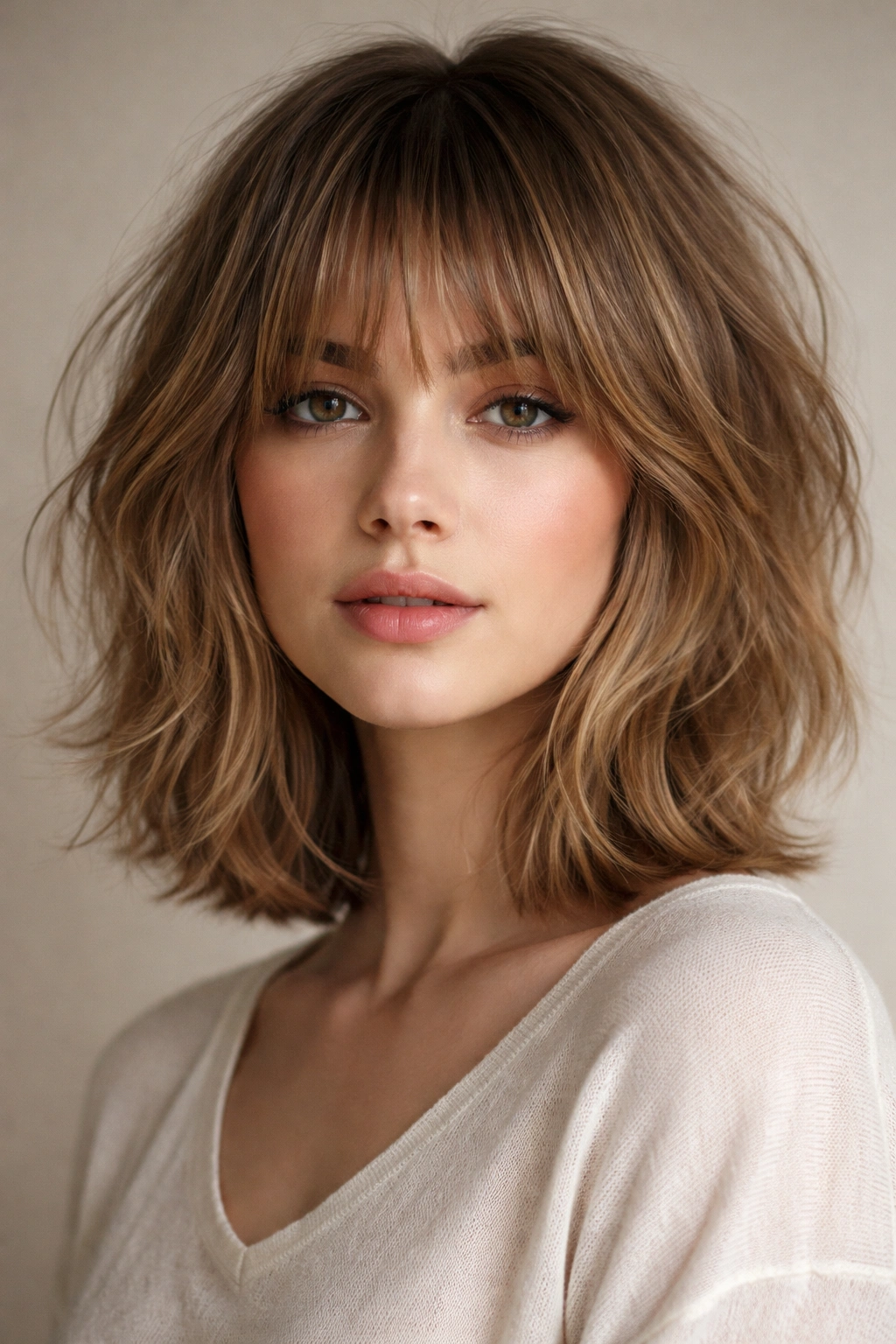
A shaggy bob with bottleneck bangs has that easy, lived-in feel that makes hair look thicker than it is. The bangs start narrow near the center, then widen softly toward the temples, so they frame the face without boxing it in. The rest of the cut carries the same idea: movement, air, a little roughness around the edges.
I like this cut most on hair with a natural bend. Wavy hair loves it. Straight hair can wear it too, but it needs texture spray or a curling wand if you want the shape to show. The cut works because the layers are placed to keep the ends light while leaving enough bulk through the middle. That middle section is what keeps the bob from collapsing into a flat sheet.
There’s a line you do not want to cross here. Too much razor work, and the ends start to fray. Too little, and the cut loses its shaggy energy. The best version looks piecey, not thinned out.
This is also one of the easier bob styles to grow out. The bangs blend into the sides, the layers soften over time, and you don’t get that hard “I need a haircut now” line quite as fast. If you like hair that feels a bit undone, this one has real charm.
6. Blunt Bob with Piecey See-Through Bangs
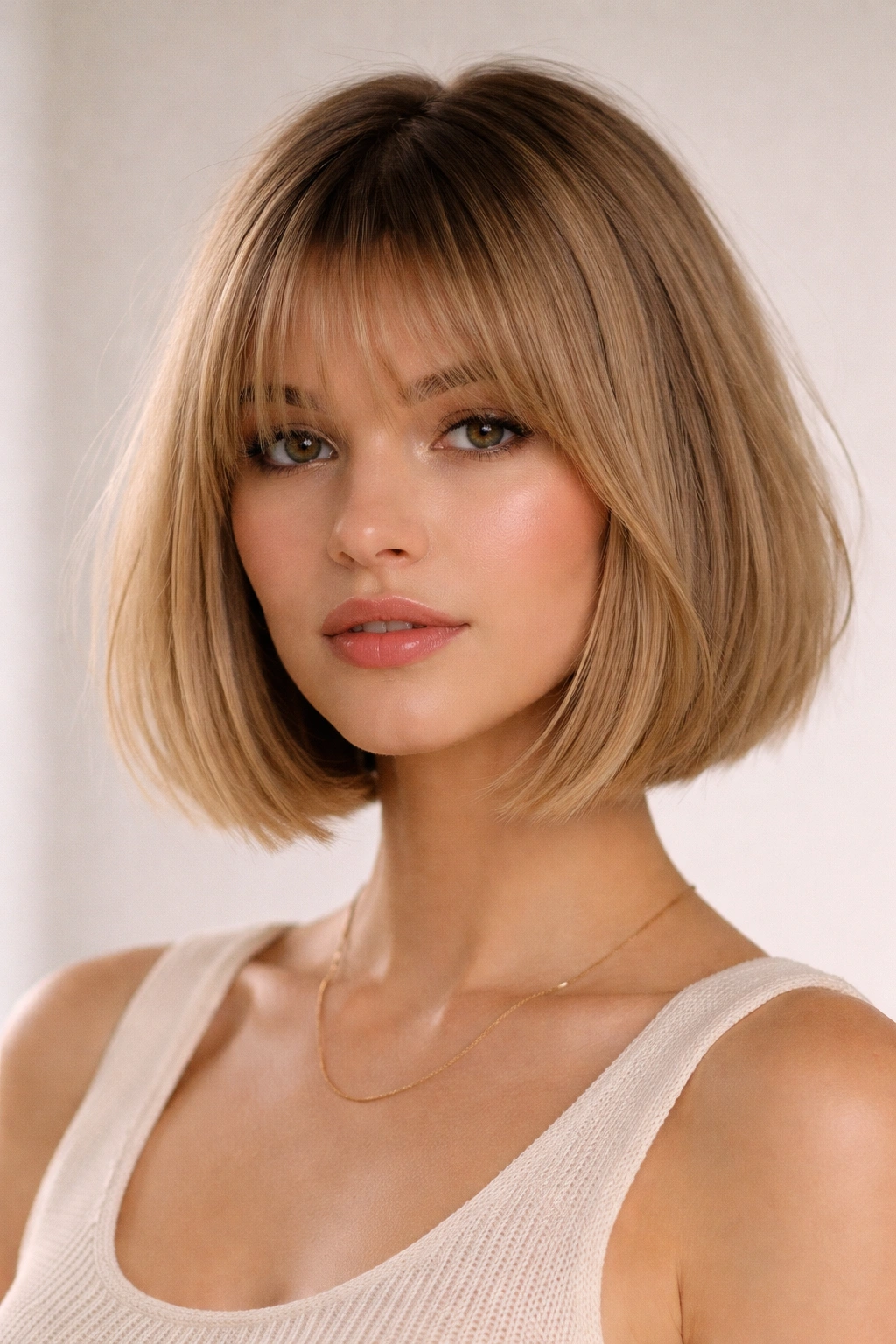
Unlike a heavily layered shag, a blunt bob keeps the perimeter thick. That’s the whole point here. When the ends are cut clean and straight, the hair looks denser, even if the actual amount of hair is modest. Add piecey see-through bangs, and you get lift at the front without hiding the face behind a solid curtain.
This shape is a quiet fix for fine hair. Not flashy. Effective. The blunt line makes the ends look fuller, while the airy fringe stops the top from feeling heavy. I like this combination for people who want a neat shape that still has a little softness around the eyes.
The bangs need to be cut with a light hand. You want separation, not gaps. The wispy pieces should fall in tiny groups, not as one flat sheet. A tiny dab of styling cream or a bit of pomade rubbed between the fingers is enough to keep them in place.
If you like structure but hate stiff hair, this is a good compromise. It works in an office, looks tidy on day two, and still has enough texture to avoid feeling severe. A flat iron on the ends — one soft bend inward — is often all it needs.
7. Collarbone Bob with Feathered Fringe
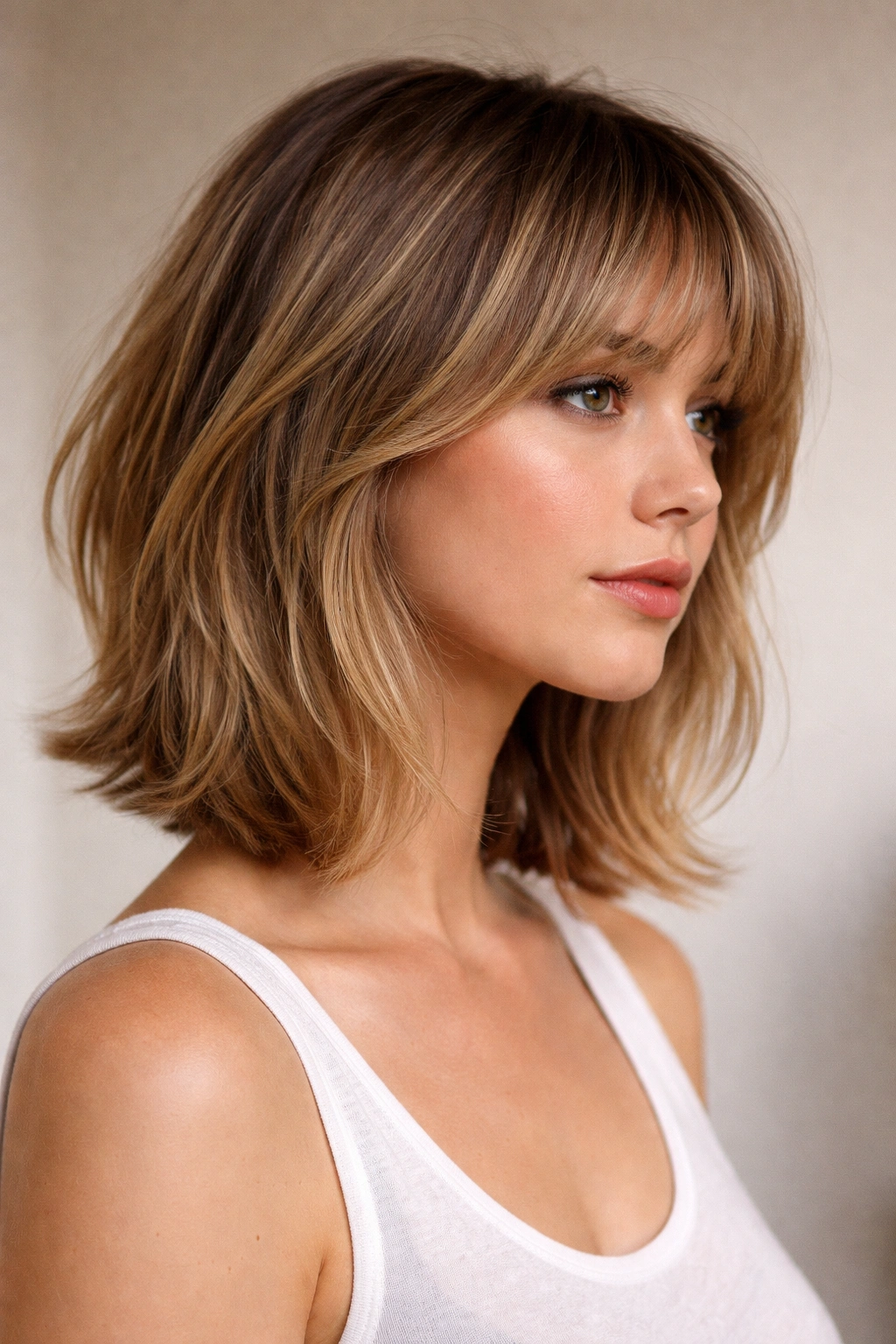
If chin-length feels too short, stop at the collarbone. That extra length gives the hair more swing, and it gives thicker hair a place to sit without puffing out around the cheeks. Feathered fringe keeps the front light, which is useful when you want volume but not a heavy bang line.
Why It Gives Volume Without the Bulk
The collarbone bob has a built-in advantage: gravity isn’t fighting a short perimeter as much, so the hair can move instead of sticking out. That makes it a nice option for medium to thick hair that needs shape, not more thickness in the wrong places. The feathered fringe softens the whole front and stops the cut from feeling too blunt around the eyes.
- Best for: Anyone growing out a shorter bob, plus people with thicker hair that needs a little release.
- Ask for: Soft layers through the front, a collarbone length, and fringe that tapers toward the cheekbones.
- Style with: A large round brush or hot brush for a smooth bend.
- Skip: Heavy, blocky bangs. They fight the lightness of the fringe.
This cut is one of my personal favorites when someone wants volume but also wants the hair to still feel grown-up. It has shape. It has movement. And it does not demand that you fake perfect styling every morning.
8. Tucked-Under Bob with Arched Bangs
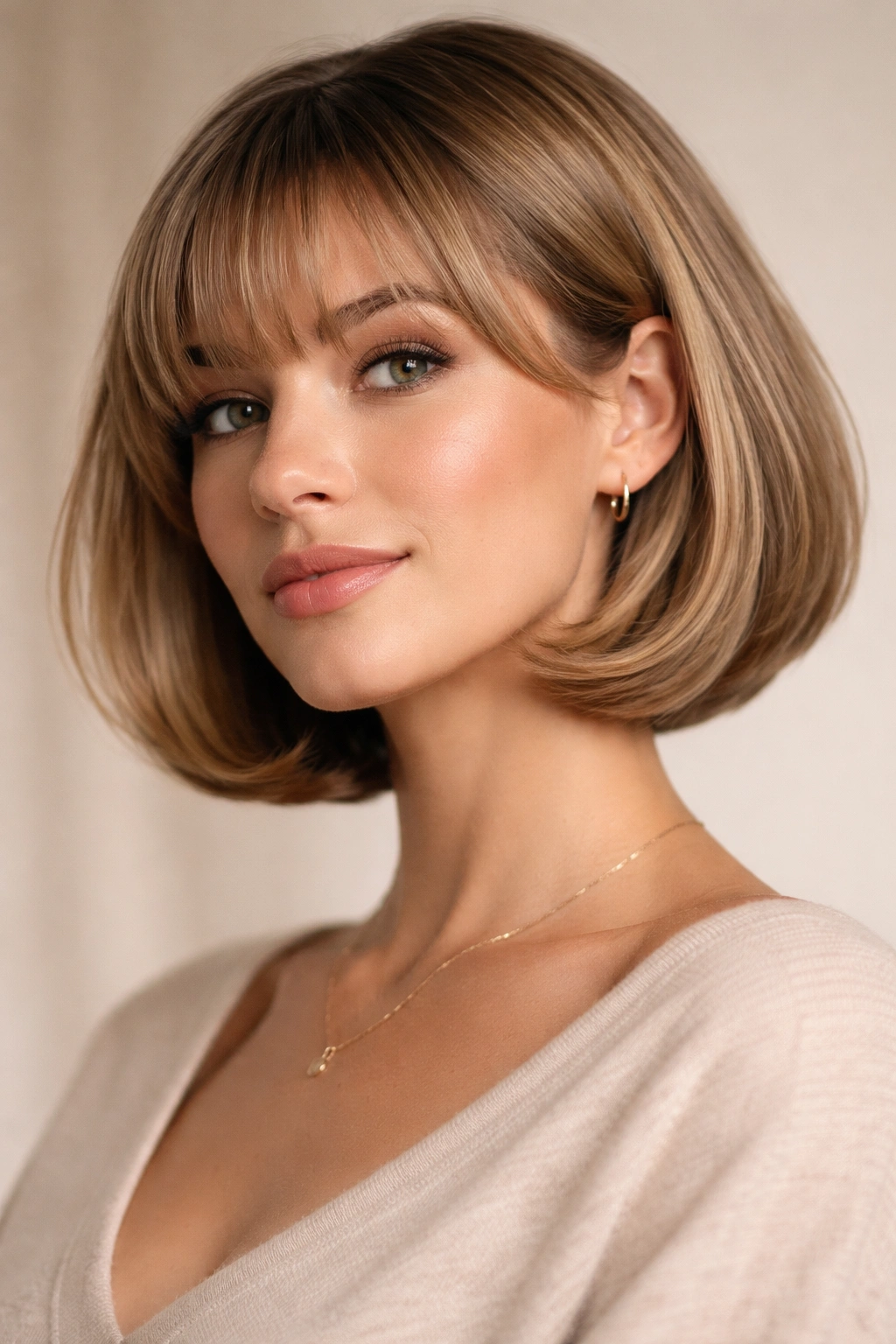
When the ends curl under the jaw and the bangs arc just above the brows, the whole haircut looks more deliberate. That tucked-under finish is one of the oldest bob tricks for a reason. It makes the outline look full, neat, and a little plush, especially on hair that has enough body to hold a bend.
The arched bang matters here because a straight fringe would fight the curve of the cut. An arched line keeps the eyes open and gives the forehead some space. It also makes the haircut feel more polished than overly casual. Think smooth, not stiff. Controlled, not shellacked.
What I like about this shape is how forgiving it is on coarse or medium-textured hair. Those textures often hold a round-brush finish better than fine hair does, which means the tuck lasts longer. A soft volumizing spray at the roots and a medium brush are usually enough. You do not need a ton of product. Too much, and the ends lose that clean curve.
This is one of those cuts that looks expensive without trying to look expensive. Which, to me, is better.
9. Jaw-Length Bob with Baby Bangs
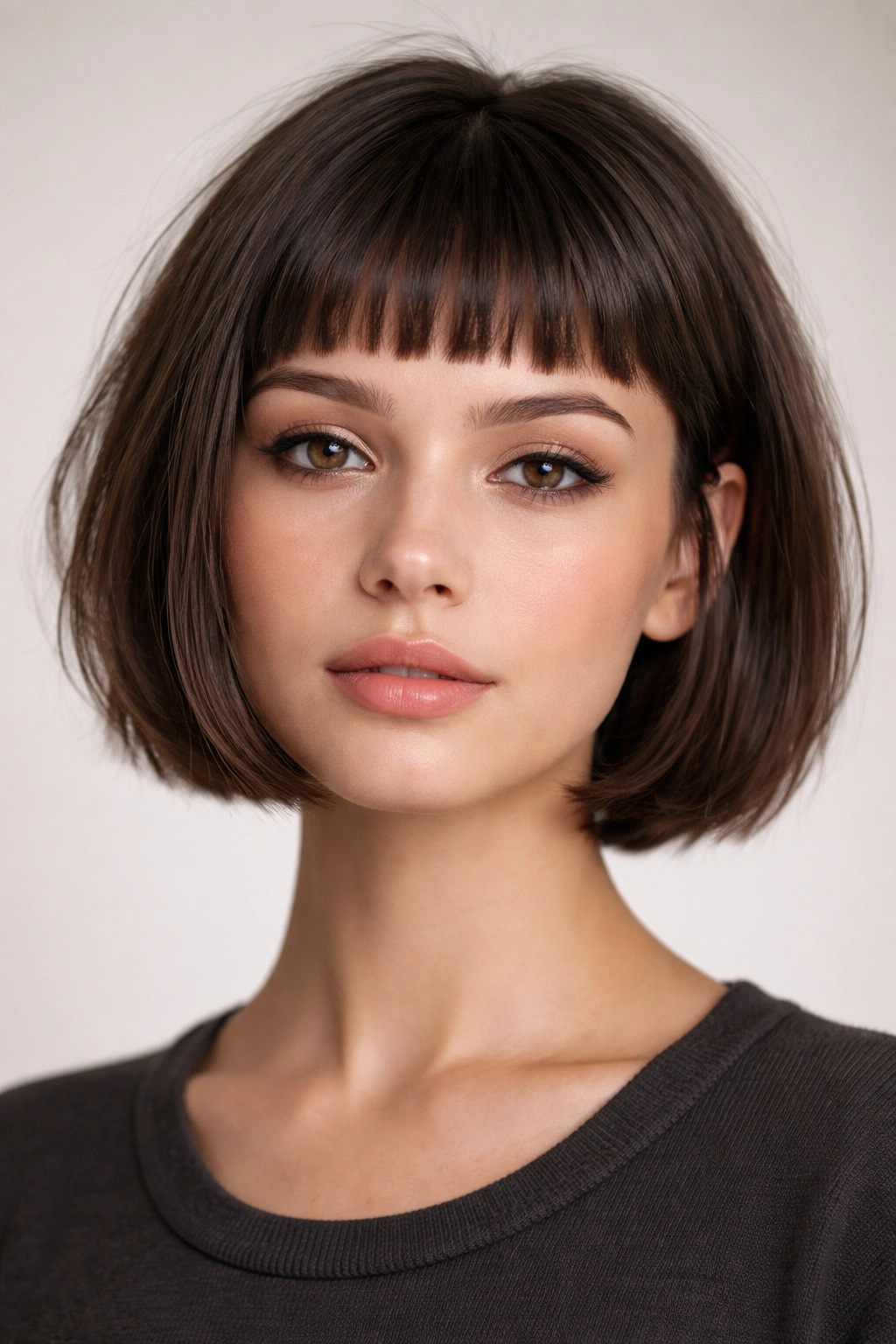
This is the boldest cut on the list, and it can look surprisingly full. Baby bangs change the balance of the face immediately. They expose more forehead, which lets the jaw-length bob become the main event. The haircut feels compact and graphic, and that compactness can make the hair appear thicker than it is.
The short fringe also keeps the front from swallowing the face. That matters when the bob itself is clipped right around the jaw. The result is a clean frame that reads as strong rather than plain. It works best when the ends are blunt or only lightly textured. If you take too much weight out of the sides, the shape can start to lose its punch.
I would not call this the easiest bob on the list. It asks for confidence, and it asks for regular trims. Baby bangs grow fast, and once they cross the eyebrow line, the whole shape changes. If you don’t mind that, fine. If you want a haircut that disappears into the background, skip this one.
For the right person, though, it is fantastic. It gives the face a sharp frame and makes even thin hair look deliberate.
10. Wavy Bob with Curtain Bangs and Face-Framing Layers
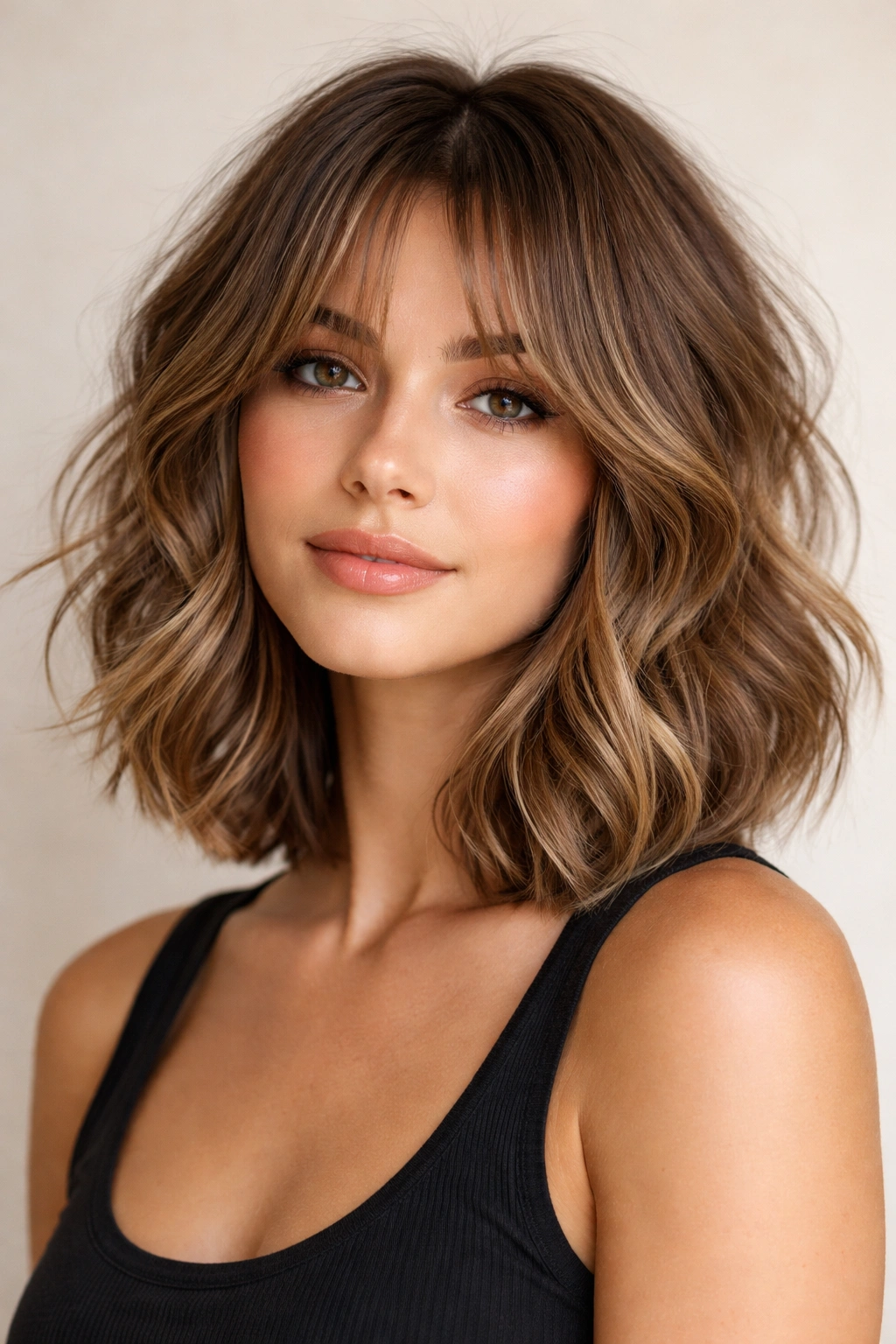
If your hair dries with a bend on its own, this one is a gift. A wavy bob with curtain bangs and face-framing layers uses that natural motion instead of fighting it. The bangs split softly at the center, the front pieces skim the cheekbones, and the wave does the rest.
This cut feels lighter than a blunt bob, but it still has enough shape to look full. The face-framing layers are what keep the waves from turning into one wide mass. They break things up just enough so each section can move. That movement creates volume without making the haircut feel overworked.
A little salt spray or a wave cream goes a long way here. Scrunch the ends, diffuse on low heat if you need speed, then leave the crown alone as much as possible. Hands in the hair too early will flatten the lift you’re trying to keep. Let it set. That patience pays off.
This is a good choice if you want a bob that feels casual on purpose. Not messy. Just relaxed. There’s a difference, and this cut knows it.
11. Inverted Bob with Long Split Bangs
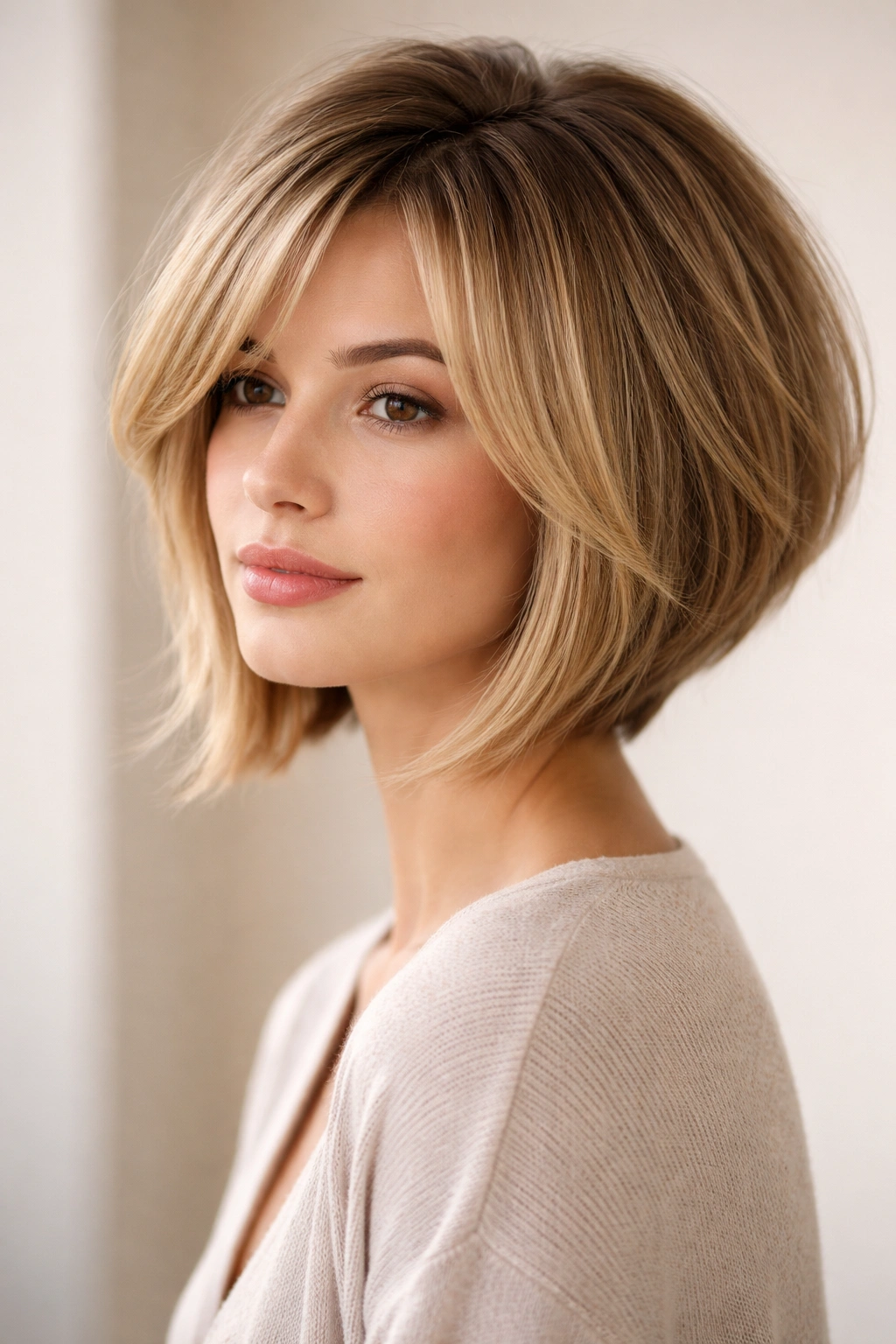
Unlike an even bob, an inverted cut stacks the back and leaves the front longer. That extra angle changes everything. It gives the crown a built-in lift and creates a stronger silhouette through the nape and jaw, which is helpful if the back of your hair tends to lie flat or look bulky in the wrong place.
Long split bangs soften the geometry. Without them, this cut can feel sharp and a little severe. With them, the face gets a soft frame and the hair keeps its lift. That mix is what makes the style work. You get structure at the back and movement around the front, which is a pretty good deal if you ask me.
What to Ask For
- A moderate stack in the back, not a dramatic wedge.
- Long bangs that split naturally near the center or just off-center.
- Clean front pieces that connect into the lengths.
- A blow-dry shape that curves under slightly at the ends.
This style suits thicker hair well because the inversion removes bulk where you don’t need it and keeps shape where you do. Fine hair can wear it too, but the stack should stay gentle. Too much graduation and the top can look tiny. Nobody wants that.
12. Tousled Parisian Bob with Soft Eyebrow Bangs
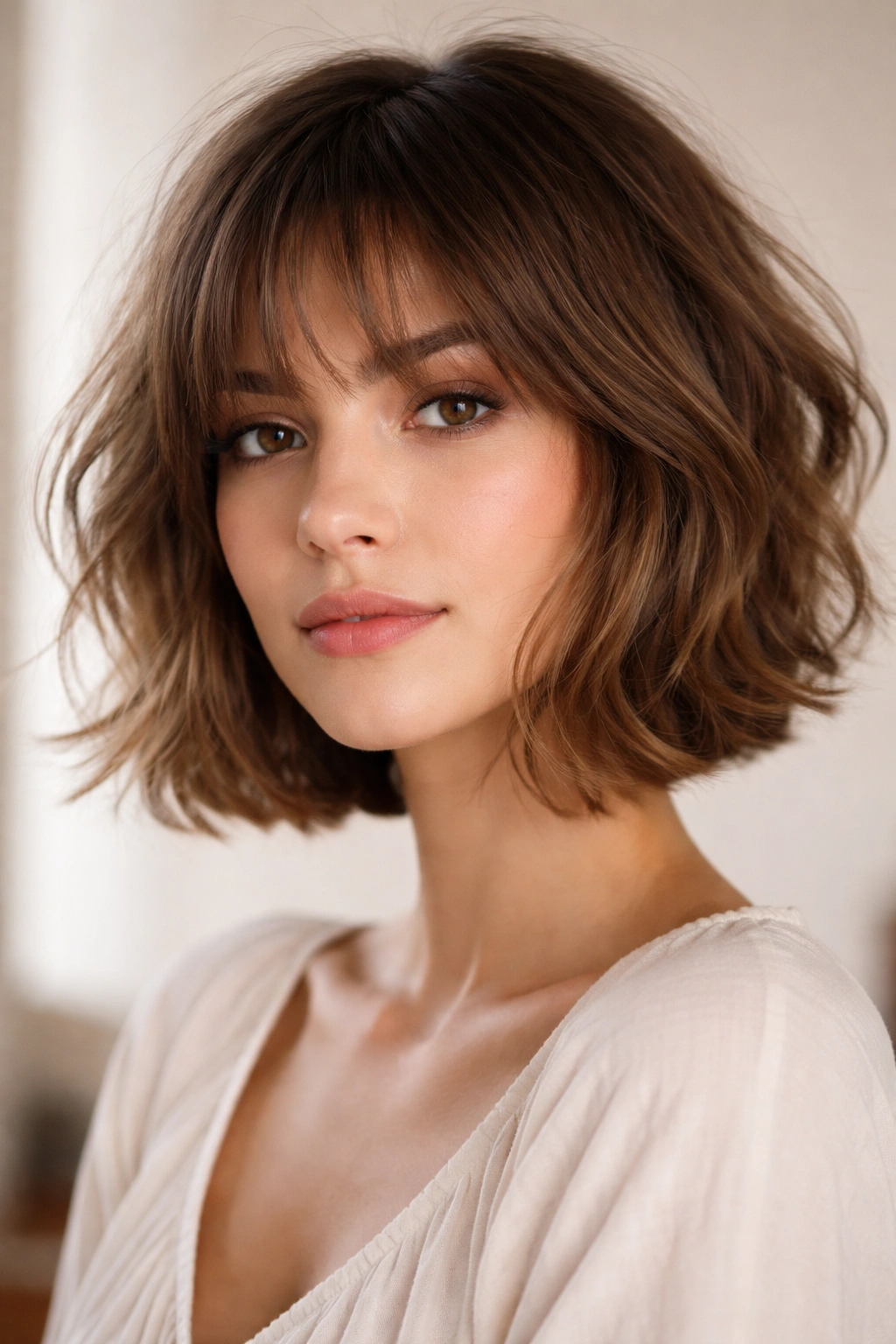
A tousled Parisian bob is the kind of cut that looks a little better when it is not trying too hard. It sits somewhere between polished and relaxed, with soft eyebrow-grazing bangs and enough internal movement to keep the silhouette from going dull. The shape is usually a bit longer than a classic French bob, which gives it a looser feel.
I like this one for straight-to-wavy hair that gets puffy if you overstyle it. The trick is to keep the ends soft and the fringe light. You want the bangs to skim the brows, not sit in a heavy block. A small round brush or even a quick finger-dry can be enough if the cut has been shaped well.
The volume here comes from restraint. That sounds backward, but it’s true. You do not need a lot of visible layering. You need smart removal of bulk inside the shape and a bit of bend through the front. Too much texture, and the elegance disappears. Too little, and it turns flat. The good version lives between those two.
This is the bob for people who want movement that feels casual, not cute. There’s a difference, and this style leans into the grown-up side of softness.
Styling Mistakes That Flatten a Fluffy Bob
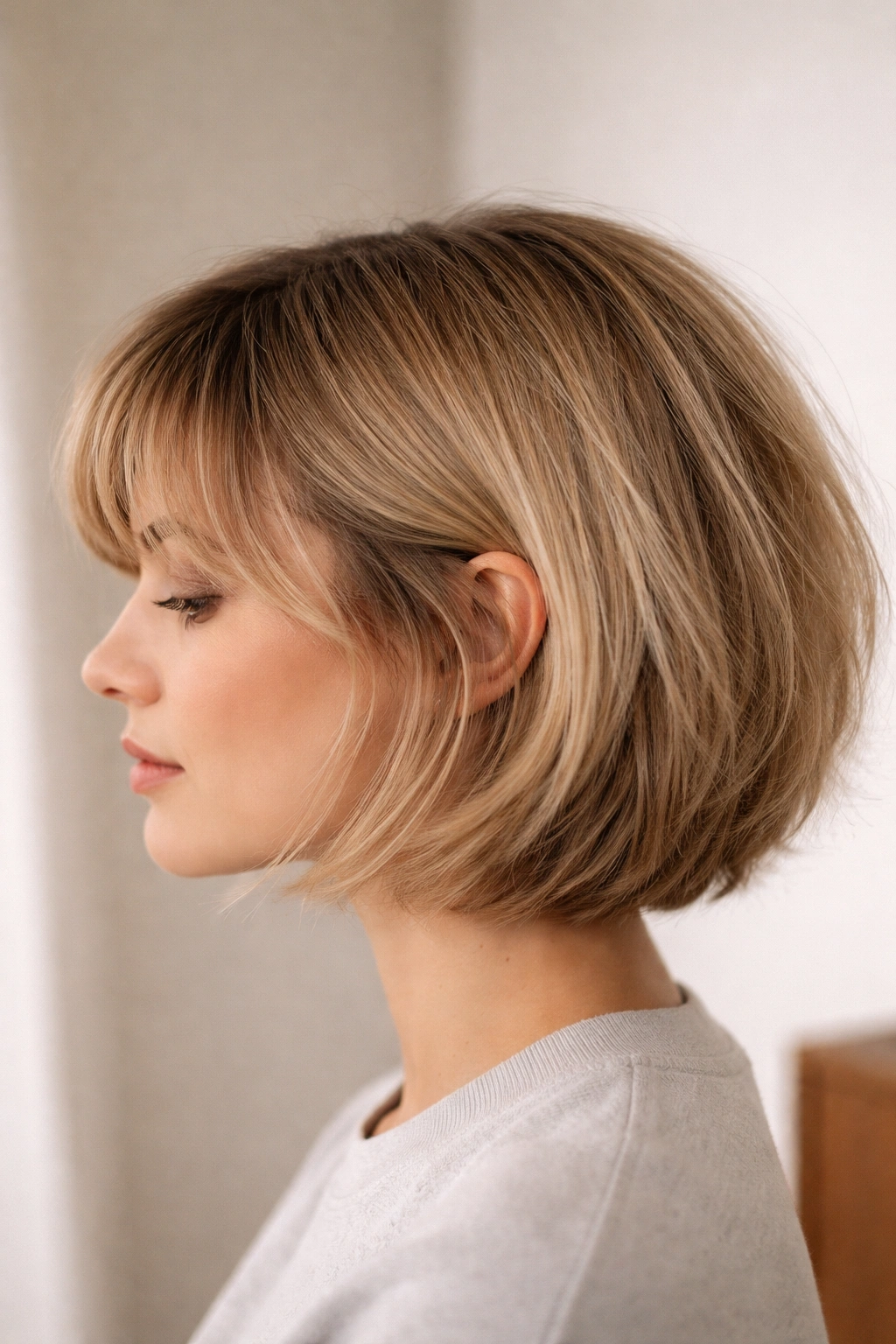
The fastest way to kill volume is to overload the roots with heavy product. Oil near the crown, thick cream through the top, or a leave-in that was meant for dry curls can drag the whole shape down before you even leave the bathroom. Keep richer products from the scalp area. Use them on the ends if you need them.
Another common mistake is cutting the bangs too short because you want them to look bold right away. Short bangs can be great, but if they sit above your natural face balance, they make the rest of the haircut look smaller. A little extra length at the start is usually safer. You can always trim more. Hair does not grow backward.
Blow-drying in one direction until the hair is dry can also flatten a bob. Lift at the roots with your fingers first, then use the brush to shape the ends. If the crown dries pressed down, the cut loses its bounce. That happens fast. One lazy drying session can undo a week of good styling.
And yes, over-thinning the ends is still a problem. A fluffy bob needs air, but it also needs a solid edge. Without that line, it stops looking full and starts looking tired.
Final Thoughts

The best bob for volume is not always the shortest one, or the trendiest one, or the most layered one. It’s the one that puts weight in the right place and keeps the bangs working with the shape instead of fighting it. That’s the real trick.
If your hair is fine, start with a sharper outline and softer fringe. If it’s thick, use shape to remove bulk where it tends to puff. If it waves on its own, don’t wrestle it into submission. Use the bend. Hair usually looks better when the cut makes room for how it already behaves.
I’d choose a bob with bangs over a plain blunt chop almost every time. The fringe changes the whole mood. It can make the style softer, fuller, sharper, or more lived-in, depending on the cut. And that’s the fun part, really — the same haircut can do a lot of different jobs when the shape is thoughtful.
